Mar 16, 2026
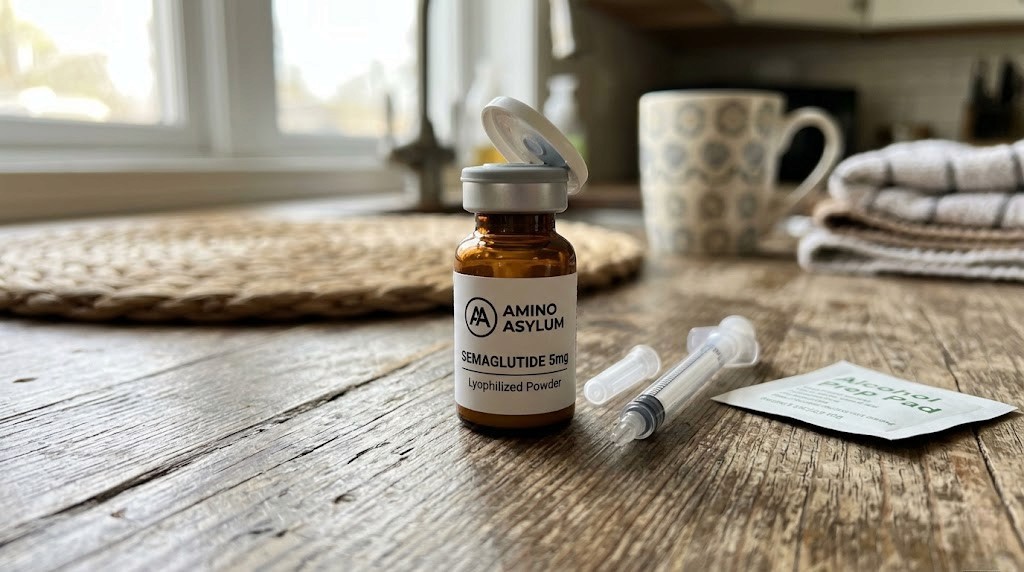
Before you place another order from Amino Asylum, you need to know something. The website is gone. The warehouse has been raided by the FDA. The payment pages, the customer service channels, the social media accounts, all of it, dead. If you were relying on Amino Asylum for your semaglutide supply, you are not alone in scrambling for answers right now. Thousands of customers woke up one morning to find their go-to vendor had simply vanished, and the reasons behind that disappearance should concern anyone who has ever purchased grey-market peptides.
This is not a simple case of a business closing its doors.
The FDA did not send a polite letter. They sent agents. They seized inventory. They shut down operations in what became one of the most significant enforcement actions against a grey-market peptide vendor in recent memory. And the details that have emerged since paint a picture that every peptide researcher needs to understand, whether they bought from Amino Asylum or not. The lessons here apply to anyone navigating the complicated world of grey-market peptides, and the risks extend far beyond one shuttered website.
This guide covers everything. What Amino Asylum was, what they sold, how their semaglutide products actually tested, why the FDA came knocking, and what the red flags looked like in hindsight. More importantly, it covers what you should do now. How to evaluate vendors properly. How to handle semaglutide reconstitution safely. How to protect yourself in a market where the next Amino Asylum is always one FDA raid away. SeekPeptides has been tracking this story closely because it affects every single person in the peptide research community.
What was Amino Asylum
Amino Asylum operated as a grey-market vendor selling peptides, SARMs, and various research compounds. They were not a pharmacy. They were not FDA-regulated. They existed in that murky space between legitimate pharmaceutical supply and outright black-market operations, a space that attracts both genuine researchers and people simply looking for affordable alternatives to prescription medications.
The appeal was obvious.
Pricing sat well below what compounding pharmacies charged for similar products. A vial of semaglutide from a legitimate compounding pharmacy like Empower or Olympia Pharmacy might cost several hundred dollars. Amino Asylum offered what appeared to be the same compound at a fraction of the price. For people paying out of pocket for weight loss peptides, that price difference was the entire reason they shopped there. And the product catalog was extensive. Beyond semaglutide, they stocked tirzepatide, various SARMs, ancillary compounds, and even prescription medications like metformin, all available without a prescription.
Their customer base grew rapidly through word of mouth on Reddit forums, peptide discussion groups, and social media channels. The brand developed a cult following among budget-conscious researchers who traded vendor reviews and shared experiences with various products. Shipping typically took 7-10 days, which was considered reasonable for a grey-market operation. Customer service existed but was inconsistent. Some buyers reported helpful interactions while others described complete radio silence when problems arose.
But here is the thing about grey-market vendors that most people do not consider until it is too late. There is no regulatory body ensuring product quality. There is no recourse if something goes wrong. There is no guarantee that what the label says matches what the vial contains. And when a vendor disappears, every customer is left holding vials of unknown substances with no way to verify their contents. Understanding peptide safety and risks means understanding this fundamental vulnerability.
Amino Asylum semaglutide products
Amino Asylum offered semaglutide in two primary configurations. The 5mg vial was their standard offering, popular among researchers just starting their protocols. The 10mg vial came in a 2ml solution at a concentration of 2.5mg per 0.5ml, designed for researchers running higher doses or longer protocols. Both products were marketed and sold without prescriptions, without medical oversight, and without the regulatory framework that governs legitimate pharmaceutical distribution.
Understanding the concentration matters. If you were working with the 10mg vial, you were dealing with a pre-mixed solution at 2.5mg per 0.5ml. That concentration required careful measurement using an insulin syringe, and even small errors could result in significantly wrong dosing. For context on how proper semaglutide dosing in units works, the math needs to be precise every single time. A 10mg semaglutide dosage chart becomes critical when working with these concentrations, and Amino Asylum provided none with their products.
No dosage instructions came with any order.
Think about that for a moment. A compound that pharmaceutical companies package with detailed prescribing information, dosage escalation schedules, and warnings about potential side effects was being sold with zero guidance. Customers were left to figure out their own dosage charts using online resources, Reddit threads, and guesswork. The 5mg vials required proper reconstitution before use, and without clear instructions, reconstitution errors were almost inevitable for inexperienced researchers. The question of how much bacteriostatic water to mix with 5mg semaglutide has a specific answer, and getting it wrong means every subsequent dose is wrong too.
The pricing was the primary draw. Amino Asylum undercut legitimate pharmacies significantly, making their semaglutide accessible to people who could not afford or did not want to go through the traditional healthcare system. This attracted a massive customer base. It also attracted the attention of regulators who saw a company selling prescription medications without authorization, marketing products for human consumption, and using trademarked pharmaceutical terms in their advertising.
For researchers who purchased the 5mg vials, the 5mg semaglutide mixing chart would have been essential information. For those with the 10mg product, a proper 10mg mixing chart was equally critical. Amino Asylum provided neither. The semaglutide reconstitution chart that researchers needed had to come from third-party sources, introducing yet another layer of potential error into the process.
Quality and testing: what we actually know
This is where the Amino Asylum story gets complicated. Because there is some testing data. And it is not all bad. But the picture it paints is far from complete, and understanding the difference between limited testing and comprehensive quality assurance is crucial for anyone evaluating peptide vendors.
Finnrick, an independent testing organization, analyzed two samples of Amino Asylum semaglutide in February of the year before the raid. Both were 5mg vials. The results showed 99.93% and 99.74% purity respectively. Those numbers look impressive. They earned Amino Asylum a tentative "A" rating from Finnrick, suggesting the semaglutide in those particular vials was legitimate and highly pure.
Two samples.
That is the entirety of the independent testing data. Two vials out of thousands sold. Two snapshots from a single point in time. There is no way to know whether the next batch, or the batch before, or the batch six months later, contained the same quality product. Legitimate pharmaceutical manufacturers test every batch. They maintain stability data. They follow Good Manufacturing Practices. They document chain of custody from raw material to finished product. Amino Asylum did none of this, at least not in any way that was transparent to customers. For a deeper understanding of why this matters, our guide to peptide testing labs explains what real quality verification looks like.
Here is what makes the testing picture even murkier. Reports emerged that some Amino Asylum products were spiked with undisclosed compounds. Not necessarily the semaglutide specifically, but across their product line. When a vendor has been found to include ingredients not listed on the label, even strong purity results for specific samples cannot be taken as blanket assurance for everything they sell. The integrity of the entire supply chain comes into question.
Amino Asylum did not provide official third-party Certificates of Analysis with their orders. This is a fundamental red flag that experienced researchers know to watch for. A CoA is not just a piece of paper. It represents a commitment to transparency. It means a vendor has paid an independent laboratory to verify their product and is willing to share those results with customers. When a vendor skips this step, they are asking you to trust them on faith alone. And faith is a poor substitute for data when you are injecting a substance into your body.
The FDA raid and shutdown
It happened around June 18 of the year federal agents arrived. The FDA raided the Amino Asylum warehouse, and within hours, the entire operation ceased to exist in any functional capacity. The website went offline. Payment pages were removed. Communication channels went silent. Customer service stopped responding. Social media accounts went dark. For thousands of active customers, many of whom had orders in transit or were mid-protocol, the shutdown was sudden and absolute.
This was not a surprise to people paying attention.
The FDA had previously sent warning letters to Amino Asylum. These letters, which are public record, outlined specific violations and gave the company an opportunity to come into compliance. Amino Asylum ignored them. In the world of federal regulatory enforcement, ignoring FDA warning letters is roughly equivalent to ignoring a tornado warning while standing in an open field. The question was never whether enforcement action would come. It was when.
The raid represented one of the most significant enforcement actions against a grey-market vendor in the peptide and research chemical space. The FDA does not typically devote resources to small operations. The scale of Amino Asylum, combined with their brazen marketing of products for human consumption, their sale of prescription-only medications without authorization, and their use of trademarked pharmaceutical terms in advertising, made them a high-priority target. They were not quietly selling research chemicals with appropriate disclaimers. They were operating as an unlicensed pharmacy in everything but name.
The implications rippled through the entire grey-market peptide community. Forums exploded with posts from panicked customers. People mid-way through their semaglutide protocols suddenly had no source. Others had just placed orders that would never arrive. Some had paid via Venmo, a payment method with limited buyer protection, and had no way to recover their money. The shutdown became a cautionary tale, but the lessons it teaches are ones that apply to every grey-market transaction, not just those involving Amino Asylum.
Understanding current peptide regulation helps explain why this happened. The regulatory landscape for peptides has been tightening steadily, and vendors who operate outside the rules face increasing scrutiny. SeekPeptides has been documenting these enforcement trends because they directly affect how researchers access the compounds they study.
Red flags that were always there
Hindsight makes everything clearer. But the truth is, the warning signs at Amino Asylum were visible long before the FDA showed up. Experienced researchers spotted them. Many chose to ignore them because the prices were right. Understanding these red flags is not about shaming anyone who bought from Amino Asylum. It is about building the pattern recognition you need to protect yourself with every vendor you evaluate going forward.
Every single one of the following red flags existed in plain sight for months or even years before the raid. Some customers noticed and moved on. Others noticed, weighed the risks against the savings, and decided the price justified the gamble. And others never noticed at all because nobody taught them what to look for. That last group is the most vulnerable, and it includes a large percentage of people entering the peptide research space for the first time through vendors like Amino Asylum. If you are new to this, our guide on getting started with peptides covers the fundamentals that help you recognize these warning signs before you hand over your money.
No certificates of analysis
This was the most glaring issue. Legitimate vendors provide CoAs as standard practice. They want you to see independent verification of their products because it builds trust and demonstrates quality. Amino Asylum did not include CoAs with orders and did not make them readily available on their website. The Finnrick testing mentioned earlier was conducted independently, not commissioned by Amino Asylum. When a vendor does not voluntarily provide testing data, it raises an immediate question: what are they hiding? Every vendor on our best peptide vendors guide provides third-party testing documentation.
Payment through Venmo
At various points, Amino Asylum limited payment options to Venmo. This is a massive red flag for any commercial transaction, let alone one involving research compounds. Venmo offers minimal buyer protection compared to credit cards. It is designed for splitting dinner checks, not purchasing peptides. When a vendor cannot or will not accept standard payment methods, it typically means payment processors have already identified them as high-risk and cut them off. That should tell you everything about how the financial industry views their operations.
No dosage instructions
Sending out compounds that require precise dosing without any instructions is negligent at best. Semaglutide has a specific escalation protocol for a reason. Starting too high can cause severe gastrointestinal side effects, including nausea so intense that people end up in emergency rooms. The standard medical approach starts at 0.25mg weekly and gradually increases over months. Without instructions, new users had no guidance on how many units equals 0.25mg or how to properly calculate their doses using a syringe dosage chart.
Undisclosed compounds in products
Reports of products containing ingredients not listed on the label represent the most dangerous red flag of all. When you inject a substance, you need absolute certainty about what is in that vial. Undisclosed compounds mean unknown interactions, unknown side effects, and unknown risks. This alone should have been enough to give any researcher pause, regardless of how good the price was or how positive other reviews seemed.
Selling prescription medications
Amino Asylum did not limit themselves to grey-area research peptides. They sold prescription medications like metformin, which requires a prescription for good reason. Selling prescription drugs without authorization is not a regulatory grey area. It is a federal crime. Any vendor willing to cross that line should not be trusted with your health, regardless of what else they sell. The willingness to break clear laws suggests a fundamental disregard for the rules that exist to protect consumers.
Metformin is a well-established diabetes medication with a generally strong safety profile when prescribed appropriately. But "when prescribed appropriately" is the key phrase. It requires kidney function monitoring. It has contraindications with certain medical conditions and medications. It can cause lactic acidosis in rare cases, a condition that can be fatal. Selling it without a prescriber evaluating the patient removes every safety guardrail that makes this medication acceptably safe. And if Amino Asylum was willing to sell metformin this way, what does that tell you about their approach to selling semaglutide, a newer and more complex medication with its own serious potential side effects including blood clot concerns and other risks that require medical monitoring?
Trademarked pharmaceutical terms
Using trademarked names and pharmaceutical terminology in advertising is both illegal and revealing. It shows a company that either does not understand or does not care about the boundaries that legitimate businesses respect. These terms carry legal weight because they represent specific products manufactured under specific conditions, and misusing them misleads consumers about what they are actually purchasing.
Grey-market semaglutide risks you need to understand
The Amino Asylum shutdown is a case study, but the risks it illustrates apply to every grey-market semaglutide purchase. These are not hypothetical concerns. They are documented, real-world problems that affect real people every single day. If you are buying semaglutide outside of regulated channels, you need to understand exactly what you are accepting.
Contamination and purity concerns
Without regulated manufacturing environments, contamination is always possible. Bacterial endotoxins, heavy metals, residual solvents, and cross-contamination with other compounds can all occur in facilities that do not follow Good Manufacturing Practices. Even if the active ingredient is pure, contaminants can cause serious reactions ranging from injection site infections to systemic illness. Understanding what color semaglutide should be is one basic check, but it cannot detect most contaminants. If your semaglutide appears red or discolored, that is an obvious warning sign, but clear solution does not guarantee safety.
The problem with contamination is that you usually cannot detect it. A vial can look perfectly clear, reconstitute perfectly normally, and still contain bacterial endotoxins at levels that cause fever, chills, and potentially dangerous immune reactions. Heavy metal contamination produces no visible change in the solution. Residual solvents from the synthesis process are invisible and odorless at the concentrations typically found in poorly manufactured peptides. This is precisely why laboratory testing exists, and why vendors who skip it are asking you to accept risks you cannot evaluate on your own. The complete peptide safety guide covers what these contaminants can do to the body and how to minimize your exposure.
Cross-contamination deserves special attention. Grey-market vendors often manufacture or repackage multiple compounds in the same facility, sometimes using the same equipment. If the same workspace handles SARMs, various peptides, and prescription medications, trace amounts of one compound can end up in another. You might think you are injecting semaglutide alone, but you could be getting trace amounts of whatever else was processed on that equipment before your vial was filled. Legitimate pharmaceutical manufacturing solves this through dedicated production lines, validated cleaning procedures, and batch testing that screens for common contaminants. None of these safeguards existed at Amino Asylum in any documented capacity.
The reconstitution process adds another layer of risk. If you are mixing your own semaglutide from lyophilized powder, you need proper bacteriostatic water and sterile technique. Grey-market vendors may sell the peptide but leave you entirely on your own for reconstitution supplies and procedures. Every step in the mixing process introduces potential contamination if not handled correctly.
Dosing errors and their consequences
Semaglutide is not a compound where approximate dosing is acceptable. The difference between a therapeutic dose and one that causes severe side effects is surprisingly small. With grey-market products, you face multiple dosing challenges simultaneously. The concentration may not match the label. Your reconstitution ratio may be off. Your syringe measurement technique may introduce errors. And without proper dosage charts specific to your vial concentration, you might not even realize your calculations are wrong.
Consider the math. If a 5mg vial is reconstituted with the wrong volume of bacteriostatic water, every single dose drawn from that vial will be incorrect. Some people use the semaglutide dosage calculator available through SeekPeptides to double-check their math, which is smart. But a calculator can only work with the information you give it. If the vial does not contain what the label says, your calculations start from a false premise.
The consequences of dosing errors range from mild to serious. Too little, and you experience no benefit while believing the compound does not work. Too much, and you may face intense bloating, acid reflux, dizziness, persistent burping, and fatigue severe enough to disrupt daily life. Some users report insomnia and even feeling unusually cold when doses are too high too fast.
No medical oversight or recourse
When you buy from a grey-market vendor, you have no prescribing physician to call when problems arise. You have no pharmacy to verify interactions. You have no insurance covering adverse events. If something goes wrong, you are on your own, possibly too embarrassed to tell a doctor where you got the compound in the first place.
This isolation is dangerous, and it is one of the most underappreciated risks of grey-market purchasing.
Legal exposure
Purchasing prescription medications without a prescription exists in a legal grey area that is grayer for the seller than the buyer, but that does not mean buyers face zero risk. Understanding the legal landscape around peptides is essential for anyone involved in this space. The regulatory environment is shifting rapidly, and what was tolerated yesterday may be prosecuted tomorrow.
Supply chain disruption
This is the risk that Amino Asylum customers experienced firsthand. When your vendor disappears, your protocol stops. If you are mid-way through a semaglutide treatment cycle, sudden cessation can cause withdrawal symptoms and rebound effects. The body adjusts to GLP-1 receptor agonist activity, and removing that activity abruptly is not the same as a planned discontinuation. You may experience rapid appetite return, mood changes, and gastrointestinal shifts that make the adjustment unpleasant. Understanding how long you should stay on semaglutide and having a plan for transitioning off is important, but impossible when your supply vanishes overnight.
How to evaluate semaglutide vendors properly
The Amino Asylum situation is a masterclass in what happens when vendor evaluation gets skipped in favor of price shopping. Price matters. Nobody is suggesting you should overpay for peptides. But price should be one factor among many, not the only factor. Here is a systematic approach to evaluating any semaglutide vendor, whether they operate in the grey market or through legitimate pharmaceutical channels.
Third-party testing verification
This is non-negotiable. Any vendor worth considering should provide Certificates of Analysis from independent, accredited laboratories. Not in-house testing. Not a screenshot of results. Actual certificates from recognized labs that you can verify independently. Our peptide testing labs guide explains what to look for in a legitimate CoA and how to verify that the testing lab actually exists and is properly accredited.
The CoA should show identity confirmation (it is actually semaglutide), purity percentage, endotoxin testing, sterility testing, and heavy metals screening. If a vendor provides only purity data without the other tests, that is incomplete. A 99% pure peptide that is contaminated with bacteria is not safe to inject regardless of its purity score.
Payment method diversity
Legitimate businesses accept standard payment methods. Credit cards, debit cards, and established payment platforms all provide buyer protection and indicate that payment processors have vetted the business. If a vendor only accepts cryptocurrency, Venmo, Zelle, or wire transfers, proceed with extreme caution. These payment methods offer minimal recourse if something goes wrong.
Regulatory compliance indicators
Does the vendor have proper business registration? Do they have a physical address? Can you find information about their ownership and management? Do they have appropriate disclaimers on their website? Are they transparent about the regulatory status of their products? Legitimate vendors in the compounded semaglutide space operate within a regulatory framework and are transparent about it.
Product documentation
Every product should come with clear documentation. Concentration, volume, lot number, expiration date, storage instructions, and reconstitution guidelines (if applicable) should all be included. If you receive a vial with nothing but a label showing the compound name and dose, that is a problem. Proper documentation demonstrates that a vendor takes their products seriously and cares about customer safety.
Customer service accessibility
Can you actually reach someone if you have a problem? Is there a phone number, email address, or support ticket system? How quickly do they respond? A vendor that is difficult to reach before you buy will be impossible to reach after something goes wrong. Test the support system before making a purchase.
Community reputation beyond price
Reviews that focus exclusively on price and shipping speed while ignoring quality verification should not carry much weight. Look for reviewers who discuss testing their products independently, who report specific quality metrics, and who have used the vendor consistently over time. A vendor can have great reviews for months and then quietly change suppliers, altering product quality without any visible change to the customer.
Compare multiple vendors systematically. Our reviews of Direct Meds, PeterMD, Levity, BelleHealth, Lavender Sky, BPI Labs, WeightCare, Elevate Health, Belmar Pharmacy, and Strive Pharmacy provide detailed assessments of each vendor across multiple criteria, not just price.
Semaglutide basics for context
Whether you came to Amino Asylum as an experienced peptide researcher or a newcomer looking for affordable weight loss support, understanding how semaglutide actually works helps you make better decisions about sourcing, dosing, and expectations. This is not just academic knowledge. It directly affects your safety and results.
How GLP-1 receptor agonists work
Semaglutide is a GLP-1 receptor agonist. That means it mimics a hormone your body naturally produces called glucagon-like peptide-1. This hormone does several things simultaneously. It signals the pancreas to release insulin when blood sugar rises. It slows gastric emptying, meaning food stays in your stomach longer and you feel full sooner. It acts on appetite centers in the brain to reduce hunger. And it may have direct effects on metabolic rate, though this is still being studied.
The native GLP-1 hormone your body produces has a half-life of only a few minutes. It gets broken down almost immediately after release. Semaglutide has been engineered to resist that breakdown, giving it a half-life of approximately seven days. This is what makes once-weekly dosing possible and what makes the compound so effective compared to the naturally occurring hormone. The structural modifications that extend its half-life also mean it accumulates in the body over time, which is why dose escalation protocols start low and increase gradually. Your body needs time to adjust to having sustained GLP-1 receptor activation rather than the brief pulses it normally experiences.
Beyond weight loss, research has identified potential cardiovascular benefits, neuroprotective effects, and improvements in metabolic markers like blood sugar and cholesterol. These findings are from clinical trials with pharmaceutical-grade semaglutide under medical supervision. Whether grey-market semaglutide delivers the same benefits depends entirely on whether it actually contains what it claims to contain at the stated concentration, which brings us right back to the quality question that defines the grey-market experience.
The weight loss effect comes primarily from reduced appetite and slower digestion. People on semaglutide simply eat less because they feel satisfied sooner and stay satisfied longer. This is not a stimulant effect. It is not thermogenic in the traditional sense. It works by changing how your body processes and responds to food at a fundamental hormonal level. Understanding the relationship between GLP-1 and branded medications like Ozempic helps clarify what you are actually using when you purchase semaglutide from any source.
The question of whether semaglutide suppresses appetite immediately comes up frequently. Most users notice some effect within the first week, but the full appetite-suppressing benefit develops over several weeks as the body adjusts to the compound. This is one reason why the standard protocol involves gradual dose escalation, and it is also why the first week on semaglutide can vary so much from person to person.
Proper dosing protocols
The standard medical dosing protocol for semaglutide starts at 0.25mg per week for the first four weeks. This is a deliberately low starting dose designed to let the gastrointestinal system adjust. After four weeks, the dose increases to 0.5mg weekly. Subsequent increases happen at four-week intervals, moving to 1mg, then 1.7mg, and potentially up to 2.4mg per week for weight management.
Every step in this escalation exists for a reason.
The gastrointestinal system needs time to adapt to delayed gastric emptying. The appetite regulation centers in the brain need time to adjust to sustained GLP-1 receptor activation. The pancreatic beta cells need time to calibrate their insulin response to the new signaling pattern. Rushing this process does not get you to results faster. It gets you to the bathroom faster, bent over with nausea that can last for days. Emergency room visits from aggressive semaglutide dosing are not theoretical. They happen regularly, and they happen most often to people who start too high because nobody told them not to.
Skipping ahead, which many Amino Asylum customers did without guidance, invites severe nausea, vomiting, and other GI distress. Understanding how many units equals 0.5mg or how many units equals 1mg is crucial for accurate dosing. Many researchers find the conversion charts for semaglutide dosage in units helpful for translating milligram doses into syringe units, especially when working with unit-based dosing charts.
For those working with 5mg vials, the 5mg/2ml dosage chart provides the specific measurements needed. For 10mg vials, the 10mg vial dosage chart covers the different concentration calculations. The dosage chart in milliliters offers another perspective for researchers who prefer volumetric measurement over unit-based calculations.
Some people wonder how fast semaglutide works and how long it takes to see results. The timeline varies significantly between individuals, but most research suggests noticeable appetite changes within 1-2 weeks and measurable weight changes within 4-8 weeks. Looking at one month results and before and after comparisons provides realistic expectations, though individual variation is substantial.
Reconstitution fundamentals
If you received lyophilized (freeze-dried) semaglutide from Amino Asylum or any other vendor, proper reconstitution is the foundation of everything that follows. Get this wrong and every dose you draw will be inaccurate. The process is not complicated, but it requires attention to detail and the right materials.
You need bacteriostatic water, not sterile water. The benzyl alcohol in bacteriostatic water provides antimicrobial protection that helps preserve the reconstituted peptide over multiple uses. The amount of water you add determines the concentration, which determines how much you draw for each dose. Our 5mg reconstitution chart and 10mg reconstitution chart provide the specific volumes and resulting concentrations for each common configuration.
The peptide reconstitution calculator simplifies this process by letting you input your vial size and desired concentration to get exact water volumes. For researchers new to the process, our comprehensive guide on how to reconstitute peptides covers every step from gathering supplies to verifying your final concentration.
When adding water to a lyophilized peptide, aim the stream at the side of the vial, not directly onto the powder. Let the powder dissolve gradually. Do not shake the vial. Gentle swirling is acceptable if needed, but aggressive agitation can damage the peptide structure. The reconstituted solution should be clear. If it appears cloudy, discolored, or contains particulates, do not use it.
The amount of bacteriostatic water you add determines everything that follows. Add 1ml to a 5mg vial and you get a concentration of 5mg/ml. Add 2ml to the same vial and the concentration drops to 2.5mg/ml. These different concentrations require different volumes per dose, and mixing them up is one of the most common errors researchers make. If you previously used Amino Asylum 10mg vials at 2.5mg/0.5ml and now switch to a 5mg lyophilized vial that you reconstitute yourself, the syringe volumes for equivalent doses will be completely different. Using the 5mg/ml dosage chart for your specific reconstitution volume prevents this kind of error. The semaglutide mixing chart provides a comprehensive reference for all common vial sizes and water volumes, and for anyone working with the 10mg format, the 10mg bacteriostatic water mixing guide covers the specific calculations needed.
One more detail that Amino Asylum customers frequently missed. The syringe you use matters. Insulin syringes come in different scales, most commonly U-100 and U-40. Using the wrong syringe scale for your calculations results in dosing errors of up to 2.5 times the intended amount. That mistake alone could explain severe side effects that some Amino Asylum customers attributed to product quality when the real problem was measurement error. Our semaglutide syringe dosage conversion chart clarifies which syringe scale matches which calculation method.
Safe semaglutide research practices
Whether you previously purchased from Amino Asylum or you are considering other sources, safe handling practices do not change based on where your semaglutide comes from. These protocols protect both the integrity of the compound and your health.
Storage requirements
Semaglutide, both reconstituted and lyophilized, should be stored in a refrigerator at 2-8 degrees Celsius (36-46 degrees Fahrenheit). This is not optional. Room temperature storage degrades the peptide rapidly, reducing potency and potentially creating degradation products you do not want to inject. Understanding why refrigeration is necessary comes down to basic chemistry: proteins denature at higher temperatures.
How long does reconstituted semaglutide last? In the refrigerator, most sources recommend using it within 28 days, though some compounded formulations may have different stability windows. Our guide on how long compounded semaglutide lasts in the fridge covers the specifics. The question of whether semaglutide expires after 28 days depends on several factors including the formulation, storage conditions, and preservatives used.
What if your semaglutide gets warm? This happens more often than people realize, especially during shipping or power outages. If you accidentally left semaglutide out overnight, the impact depends on the ambient temperature and duration of exposure. Our article on what happens when semaglutide gets warm explains the degradation process. If your semaglutide arrived hot from a vendor that shipped without cold packs, that is both a product quality concern and a vendor quality concern.
Knowing how long semaglutide can be out of the fridge and how long it can remain unrefrigerated helps you make informed decisions about whether a temperature excursion has compromised your product. Checking the semaglutide shelf life and understanding how long semaglutide stays good are part of responsible research practice. And yes, using expired semaglutide is a question that comes up regularly, with important implications for both safety and efficacy.
Injection technique
Proper injection technique matters for both safety and effectiveness. Semaglutide is administered subcutaneously, meaning into the fat layer just beneath the skin. The best injection sites for semaglutide include the abdomen (avoiding a two-inch radius around the navel), the front of the thigh, and the upper arm. Rotating injection sites helps prevent lipodystrophy, which is the breakdown or buildup of fat tissue at the injection site.
Our detailed guide on how to inject GLP-1 compounds covers the complete process, including where to inject and the best injection sites for weight loss. Some researchers experience injection site reactions including redness, swelling, or itching, which are typically mild and resolve on their own. Using a peptide injection pen can simplify the process for those who find standard syringes difficult to use.
The best time of day to take semaglutide is a common question. Consistency matters more than specific timing, though many researchers prefer morning administration. Pick a day of the week and a time, and stick with it. The half-life of semaglutide is approximately seven days, which is why once-weekly dosing is the standard protocol.
Managing side effects
Side effects are common, especially during dose escalation. Understanding how semaglutide makes you feel helps set realistic expectations. The most frequently reported side effects include nausea (which typically improves over the first few weeks), constipation, and reduced appetite. Less common but still notable effects include fatigue, dizziness, and changes in taste.
If you experience constipation, our guide on treating semaglutide-related constipation provides practical management strategies. For those dealing with acid reflux, managing semaglutide acid reflux covers dietary adjustments and other approaches. Some people also wonder about longer-term effects like whether semaglutide gives you energy, impacts on sexual health, effects on estrogen levels, or whether it shows up in blood work.
Diet plays a significant role in how well you tolerate semaglutide and how effectively it works. A proper semaglutide diet plan focuses on nutrient-dense foods that are easy to digest. Understanding the best foods to eat on semaglutide and which foods to avoid can significantly reduce side effects while maximizing results. The question of whether you can drink alcohol on semaglutide comes up frequently, and the answer requires nuance.
What to do if you are not seeing results
This section is especially relevant for former Amino Asylum customers who may have been using products of uncertain quality. If you were not losing weight on semaglutide purchased from Amino Asylum, the first question to ask is whether the product was legitimate. Purity issues, degradation from improper storage during shipping, or incorrect reconstitution could all explain poor results.
But product quality is not always the issue.
Some people experience a genuine semaglutide plateau even with verified pharmaceutical-grade products. If you are four weeks into semaglutide with no weight loss, multiple factors could be at play. Dose may be too low. Dietary habits may be counteracting the appetite reduction. Metabolic adaptation may be occurring. Understanding how long it takes for semaglutide to suppress appetite helps calibrate expectations, and knowing whether semaglutide works right away prevents premature conclusions about product quality.
Our comprehensive semaglutide tips guide covers strategies for maximizing results. Some researchers find that they can lose weight on semaglutide without exercise, while others benefit significantly from combining the compound with physical activity. Learning about how fast you can lose weight on semaglutide and when weight loss typically begins helps establish a realistic timeline for evaluating your results.
Semaglutide combinations and enhanced protocols
Many Amino Asylum customers were interested in combining semaglutide with other compounds for enhanced results. This is an area where quality sourcing becomes even more critical because you are now introducing multiple variables. Common combinations include semaglutide with B12, which some compounding pharmacies offer as a pre-mixed formulation. The semaglutide B12 dosage chart and compounded semaglutide with B12 dosage chart are essential references for this combination.
Other popular combinations include semaglutide with glycine, the semaglutide glycine B12 blend, semaglutide with methylcobalamin, semaglutide with L-carnitine, niacinamide with semaglutide, and semaglutide with pyridoxine. Each of these combinations has specific considerations regarding dosing, timing, and potential interactions.
Some researchers wonder about combining semaglutide with other weight loss compounds. The question of whether you can take phentermine and semaglutide together or berberine and semaglutide together requires careful consideration of mechanisms and potential interactions. Understanding the difference between semaglutide and tirzepatide also helps researchers decide which GLP-1 approach best suits their goals, and the side effect comparison between the two is particularly informative.
Alternatives after the Amino Asylum shutdown
If you were relying on Amino Asylum for your semaglutide, you need a new plan. The good news is that options exist across a spectrum of legitimacy, cost, and accessibility. The bad news is that many of those options carry the same risks that ultimately brought Amino Asylum down.
Compounding pharmacies
These represent the most legitimate alternative to branded pharmaceutical semaglutide. Compounding pharmacies like Empower Pharmacy and Olympia Pharmacy operate under state pharmacy board oversight, follow USP compounding standards, and provide proper documentation including CoAs. They cost more than grey-market sources, but they provide the quality assurance and legal protection that grey-market vendors cannot.
The compounded semaglutide dose chart is an important resource for anyone transitioning from grey-market products to compounding pharmacy products, as concentrations and dosing may differ. For those interested in financing options, some providers offer semaglutide through afterpay and similar payment plans.
Other GLP-1 options
Semaglutide is not the only GLP-1 receptor agonist available. Tirzepatide (the active ingredient in Mounjaro) is a dual GIP/GLP-1 agonist that some studies suggest may be even more effective for weight loss. The semaglutide vs tirzepatide dosage chart helps compare the two compounds, and our guide on switching between the two covers the transition process. The conversion chart provides equivalent dosing, and for those curious about combining approaches, we cover alternating semaglutide and tirzepatide as well.
Other compounds in the comparison landscape include phentermine, sermorelin, tesofensine, and retatrutide. Each has different mechanisms, different side effect profiles, and different levels of research supporting their use. Understanding these differences helps you make informed decisions about which approach best fits your research goals.
For those wondering if semaglutide does not work will tirzepatide work, the answer depends on the reason semaglutide was ineffective. If the issue was product quality from a grey-market source, the compound itself may work fine when sourced properly. If the issue was genuine non-response to GLP-1 agonism, the dual mechanism of tirzepatide might provide the additional GIP-receptor activation needed for results.
Evaluating grey-market alternatives
Some former Amino Asylum customers will inevitably turn to other grey-market vendors. If you choose this route, apply every lesson from the Amino Asylum shutdown. Demand CoAs. Verify testing independently. Use payment methods with buyer protection. Start with small orders. Test products through independent laboratories before committing to a full protocol. Our complete guide to grey-market peptides provides a comprehensive framework for navigating this space as safely as possible.
Check vendor reputations on multiple platforms, not just one forum. Cross-reference claims with independent data. And understand that even the most careful evaluation cannot fully eliminate the risks inherent in unregulated product sourcing. The common mistakes that beginners make often include trusting a single source of vendor reviews, and this extends to experienced researchers who let their guard down with familiar vendors.
What the Amino Asylum shutdown means for the peptide community
The Amino Asylum raid was not an isolated event. It was a signal. The FDA is paying closer attention to grey-market vendors than ever before, and the enforcement actions are getting more aggressive. For the peptide research community, this means the landscape is changing, and adapting to that change is not optional.
Several implications deserve attention.
First, the era of large-scale grey-market vendors operating openly is ending. Amino Asylum made themselves an easy target by marketing products for human consumption, selling prescription medications, and ignoring FDA warning letters. But smaller vendors who take the same risks simply have not attracted the same level of scrutiny yet. The keyword is yet. As enforcement resources expand and regulatory priorities shift, more vendors will face similar actions. Following peptide regulation news helps you stay ahead of these changes.
Second, the shutdown has accelerated a broader conversation about product quality in the grey market. More researchers are demanding CoAs. More vendors are providing them. Independent testing services are seeing increased demand. This is a positive development, even if it was born from a negative event. Quality standards in the grey market were long overdue for improvement, and enforcement actions, unfortunately, are often the catalyst.
Third, the event highlights the importance of education and community in navigating peptide research safely. Having access to accurate dosage calculation resources, comprehensive peptide dosage charts, reliable dosing guides, and a community of experienced researchers is more valuable now than ever. Platforms like SeekPeptides exist precisely because this information needs to be centralized, verified, and accessible.
Fourth, the Amino Asylum situation demonstrates why redundancy in sourcing matters. Relying on a single vendor for any research compound is a protocol vulnerability. When that vendor disappears, your research stops. Experienced researchers maintain relationships with multiple vendors and keep backup supplies of critical compounds. They also understand proper peptide storage and post-reconstitution storage to maximize the usable life of their inventory.
Fifth, and perhaps most practically, the shutdown has reminded everyone that grey-market purchases require a different mindset than buying from established pharmacies. You are not a customer in the traditional sense. You have no consumer protections. The transaction is built entirely on trust, and trust without verification is just hope. Hope is not a strategy when it comes to compounds you inject into your body. Every purchase from a grey-market vendor should be treated as an experiment, one where you verify independently, start cautiously, and maintain the awareness that this vendor could disappear tomorrow.
For newcomers to peptide research, the Amino Asylum story contains a fundamental truth: price should never be the primary factor in vendor selection. The cheapest option often carries the highest hidden costs, whether those costs come in the form of degraded products, health risks, or a complete loss of investment when a vendor gets shut down. Our getting started with peptides guide helps new researchers build a solid foundation, and understanding what peptides actually are and how they work provides the knowledge base needed for safe research.
Essential tools for safe semaglutide research
Regardless of where you source your semaglutide, having the right tools and knowledge makes your research safer and more effective. The semaglutide dosage calculator helps you convert between milligrams and units for any vial concentration. The general peptide calculator covers other compounds you might be working with. The peptide reconstitution calculator takes the guesswork out of mixing, and the peptide cost calculator helps you compare the true cost of different vendors and concentrations.
Understanding conversions is fundamental. Knowing how many mg is 40 units, 50 units, or 60 units depends entirely on the concentration of your reconstituted solution. The semaglutide units to mg conversion guide provides the formulas you need, while specific articles on conversions like 20 units to mg, 25 units to mg, 30 units to mg, and 10 units to mg cover the most common measurements researchers encounter.
Wondering if a specific dose is appropriate? Resources covering whether 50 units is a lot or 20 units is too much provide context for evaluating your dosing relative to standard protocols. Converting units to milliliters is another common need, and our guides on 20 units to ml and 40 units to ml simplify this calculation.
For broader peptide research beyond semaglutide, the peptide injections guide covers everything from supply selection to injection technique. Understanding what a peptide injection entails, learning about peptide expiration, knowing how long peptides last refrigerated versus at room temperature, and understanding how long peptides take to work all contribute to a safer, more effective research practice.
Comparing your options: a framework
Factor | Grey-market vendors | Compounding pharmacies | Telehealth with Rx |
|---|---|---|---|
Cost | Lowest | Moderate | Highest |
Quality assurance | Variable, often none | USP standards, CoAs | FDA-approved products |
Legal status | Grey area | Legal with prescription | Fully legal |
Medical oversight | None | Prescriber required | Full oversight |
Recourse if problems | None | Pharmacy board complaints | Full medical and legal |
Supply reliability | Can disappear overnight | Stable, regulated | Most stable |
Product documentation | Minimal to none | Complete CoAs, labeling | Full prescribing info |
Dosing guidance | None provided | Included with Rx | Physician managed |
This comparison is not meant to tell you what to choose. It is meant to ensure you understand exactly what you are trading when you opt for the lowest price option. Every column represents a different risk-reward profile, and only you can decide where your comfort level sits. But go in with your eyes open. The Amino Asylum customers who were most surprised by the shutdown were the ones who never considered that it could happen.
Think about this from a cost perspective that includes hidden expenses. A grey-market vial might save you a hundred dollars compared to a compounding pharmacy. But if that vial is underdosed by 30%, you are effectively paying more per milligram of actual semaglutide than you would from a verified source. If the product is degraded and you do not see results, you have wasted the entire purchase price plus weeks of your time. And if a contaminated product causes a health issue requiring medical attention, the cost comparison becomes absurd. The cheapest option is only cheapest when it actually works and does not harm you.
The compounding pharmacy route requires a prescription, which means a medical consultation. Some people view this as a barrier. Experienced researchers view it as a feature. That consultation creates a medical record of your semaglutide use, which becomes invaluable if you ever need emergency care or develop complications. It also means someone with medical training has evaluated whether semaglutide is appropriate for you specifically, accounting for your medical history, medications, and individual risk factors. That evaluation has genuine value that the grey market simply cannot replicate.
For a deeper comparison of the two most popular GLP-1 compounds, the semaglutide versus tirzepatide comparison page provides a comprehensive analysis. Understanding the differences between injectable and oral peptide formats and the distinction between research and pharmaceutical grade peptides further informs your sourcing decisions.
Building a safety-first protocol
If the Amino Asylum experience teaches one thing, it is that preparation matters more than price. Here is how to build a semaglutide research protocol that accounts for the real-world risks of vendor disruption, quality variation, and regulatory change.
Start with education. Before you buy a single vial, understand what you are working with. Read about how peptides work at a fundamental level. Study the safety and risk profile. Learn how to calculate dosages yourself rather than relying on a vendor to do it for you. Understand the reconstitution process thoroughly.
Then verify independently. Whatever vendor you choose, send a sample to an independent testing lab before using the product. Yes, this costs money. Yes, it delays your protocol start. And yes, it could save your health. The cost of one independent test is trivial compared to the cost of injecting an unknown substance for weeks or months.
Document everything. Keep records of your vendor, lot numbers, reconstitution volumes, doses, timing, and any effects you experience. If something goes wrong, this documentation becomes invaluable for medical professionals trying to help you and for the community learning from your experience.
Have a discontinuation plan. Know how to safely taper off semaglutide before you start. Understand what withdrawal symptoms look like. Have enough supply to execute a controlled taper rather than an abrupt stop if your vendor goes offline.
Stay informed about the regulatory landscape. The rules governing peptide research and sales are evolving. What was available freely last year may be restricted next year. Vendors that seemed stable can face enforcement actions without warning. Following peptide regulation news is not optional for anyone serious about sustained research. Understanding where the regulations are heading helps you anticipate disruptions and adjust your sourcing strategy before you are forced to by another vendor shutdown.
Connect with a community. Isolated researchers are vulnerable researchers. Being part of a knowledgeable community means access to vendor warnings, quality reports, protocol advice, and support when things go wrong. SeekPeptides provides exactly this kind of community, with evidence-based guides, experienced researchers, and comprehensive resources covering everything from managing GLP-1 fatigue to understanding GLP-1 and hair loss.
Frequently asked questions
Is Amino Asylum still operating?
No. Following the FDA raid on their warehouse, Amino Asylum ceased all operations. Their website went offline, payment pages were removed, and all customer communication channels became unresponsive. There is no indication that operations will resume.
Was Amino Asylum semaglutide real?
Independent testing by Finnrick of two 5mg vial samples showed 99.93% and 99.74% purity, suggesting those specific vials contained legitimate semaglutide. However, only two samples were tested, which cannot verify the quality of all products sold. Reports of undisclosed compounds in other Amino Asylum products further complicate the picture. For help understanding what genuine semaglutide looks like, check our guide on what color semaglutide should be.
What should I do with leftover Amino Asylum semaglutide?
If you have unopened vials, you have no reliable way to verify their contents or quality. Sending a sample to an independent peptide testing lab is the only way to know what you have. If you choose not to test, the safest option is to not use the product. Understanding compounded semaglutide expiration and how long vials last in the fridge can help you assess whether the product has degraded if significant time has passed.
Can I get a refund for my Amino Asylum order?
If you paid via Venmo or similar peer-to-peer platforms, recovery options are extremely limited. Credit card purchases may have chargeback options depending on your card issuer and how much time has passed. Contact your payment provider directly to explore your options.
Where should I buy semaglutide now?
The safest option is through a licensed compounding pharmacy with a valid prescription. Our guides to Empower Pharmacy, Olympia Pharmacy, and other reputable vendors provide detailed evaluations. If you choose grey-market sources, apply rigorous vendor evaluation using the criteria outlined in our grey-market peptides guide.
I was mid-protocol when Amino Asylum shut down. What do I do?
If possible, continue your protocol with semaglutide from a verified source to avoid abrupt discontinuation. If you cannot obtain a new supply quickly, understand that stopping semaglutide suddenly may cause appetite rebound and other transitional effects. Focus on maintaining the dietary habits you developed while on semaglutide, and consult a healthcare provider if you experience significant symptoms.
Why did the FDA target Amino Asylum specifically?
Multiple factors made Amino Asylum a priority target: marketing products explicitly for human consumption, selling prescription medications without authorization, using trademarked pharmaceutical terms in advertising, ignoring FDA warning letters, and operating at a scale that made the public health risk significant. The combination of these factors, not any single one, triggered the enforcement action.
Could this happen to other peptide vendors?
Yes. Any vendor operating outside regulatory frameworks faces potential enforcement action. The risk is highest for vendors who sell prescription medications, market products for human consumption, operate at large scale, or have already received warning letters. Staying informed about peptide regulation developments helps you anticipate which vendors might face scrutiny next.
External resources
For researchers serious about safe, informed peptide research, SeekPeptides offers the most comprehensive resource available. Members access evidence-based protocols, verified vendor information, dosing calculators, and a community of experienced researchers who have navigated these exact challenges. When the next grey-market vendor disappears, and one will, having a trusted knowledge base and community makes the difference between scrambling and adapting.
In case I do not see you, good afternoon, good evening, and good night. May your vendors stay transparent, your vials stay verified, and your protocols stay safe.