Feb 5, 2026
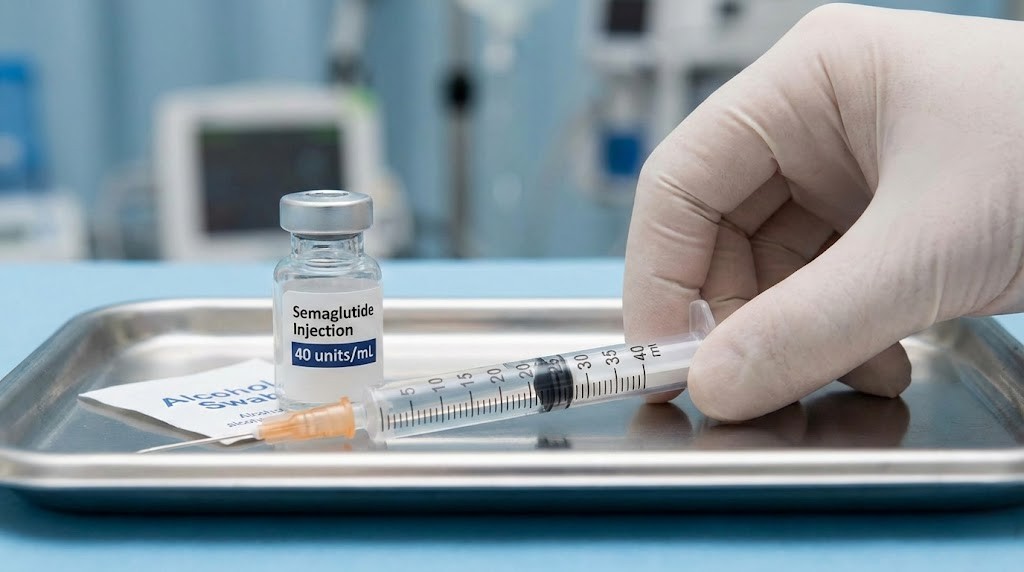
What if the answer to "how many mg is 40 units of semaglutide" is not one number, but four completely different numbers?
That is the reality of semaglutide dosing. And it catches thousands of people off guard every single day. The number of milligrams in 40 units depends entirely on the concentration of the semaglutide solution sitting in your vial. Get this wrong, and you could inject a fraction of your intended dose. Or you could inject several times more than you should. The FDA has documented cases of patients accidentally taking five to twenty times their prescribed amount because of exactly this kind of confusion.
This is not a small detail. It is the detail.
If you are using compounded semaglutide from a vial (not a pre-filled Ozempic or Wegovy pen), then "40 units" on your insulin syringe could deliver 0.4 mg, 1.0 mg, 2.0 mg, or even 4.0 mg of semaglutide. The difference between the lowest and highest of those numbers is tenfold. One is a gentle starting dose. Another could land you in the emergency room. Understanding the relationship between units, milligrams, and concentration is not optional. It is essential for anyone self-administering this medication. This guide from SeekPeptides will walk you through the complete conversion, show you exactly how to calculate your dose, and give you the reference charts you need to verify every injection before the needle touches your skin. The semaglutide dosage calculator can help you double-check your math, but reading this entire guide first is the smartest move you can make.
The short answer: 40 units could be 0.4 mg, 1 mg, 2 mg, or 4 mg
There is no single answer to this question. That statement alone confuses most people, because they expect a straightforward conversion the way you might convert inches to centimeters. But semaglutide does not work that way. The answer changes based on what concentration you are using.
Why there is no single answer
When you draw 40 units on an insulin syringe, you are drawing a specific volume of liquid. That volume is always 0.4 mL. Always. Regardless of concentration. But the amount of active semaglutide dissolved in that 0.4 mL of liquid varies dramatically depending on how concentrated the solution is.
Think of it like sugar in water. A cup of lightly sweetened water and a cup of heavily sweetened water look the same. They occupy the same volume. But the amount of sugar in each cup is vastly different. Your semaglutide vial works the same way. Two vials can look identical, contain the same amount of liquid, yet deliver completely different doses because one solution is more concentrated than the other. The peptide reconstitution calculator helps illustrate this concept if you want to explore how dilution affects concentration.
The concentration variable everything depends on
Concentration tells you how many milligrams of semaglutide are dissolved in each milliliter of liquid. It is written as mg/mL on the vial label. Common compounded semaglutide concentrations include 1 mg/mL, 2.5 mg/mL, 5 mg/mL, and sometimes 10 mg/mL. Each concentration produces a different milligram dose when you draw the same number of units.
Here is what 40 units delivers at each common concentration:
Concentration | 40 Units (0.4 mL) Delivers |
|---|---|
1 mg/mL | 0.4 mg |
2.5 mg/mL | 1.0 mg |
5 mg/mL | 2.0 mg |
10 mg/mL | 4.0 mg |
Look at that range. The same 40 units on the same syringe delivers anywhere from 0.4 mg to 4.0 mg. That is a tenfold difference. If your provider prescribes 1 mg and you have a 5 mg/mL vial, you need only 20 units, not 40. Drawing 40 units from that vial gives you double your prescribed dose. This is exactly the kind of error the FDA has flagged as dangerous. The how to calculate peptide dosages guide covers the mathematics behind these conversions in more detail.
Every single time you draw from a vial, you need to know your concentration. No exceptions.
Understanding semaglutide concentrations
Concentration is the single most important variable in semaglutide dosing from a vial. Without knowing it, every unit measurement is meaningless. With it, every calculation becomes straightforward. This section will make sure you understand concentrations thoroughly enough to dose safely every time.
What concentration means in practical terms
Concentration describes density. Specifically, it describes how many milligrams of semaglutide peptide are dissolved in each milliliter of solution. A vial labeled 5 mg/mL contains five milligrams of semaglutide in every single milliliter of liquid. A vial labeled 2.5 mg/mL contains half that amount in the same volume.
The practical implication is simple. Higher concentration means you need fewer units on your syringe to reach the same milligram dose. Lower concentration means you need more units. If you are prescribed 1 mg of semaglutide and your vial is 5 mg/mL, you only need 20 units. But if your vial is 2.5 mg/mL, you need 40 units to get that same 1 mg. Same dose in milligrams. Different volume drawn. Different number on the syringe. This distinction trips up more people than any other aspect of peptide dosing.
Common compounded semaglutide concentrations
Compounding pharmacies produce semaglutide in several standard concentrations. The most common ones you will encounter are:
1 mg/mL - A lower concentration, often used for initial titration doses. Requires larger volumes for higher doses, which can be less comfortable to inject.
2.5 mg/mL - One of the most widely used concentrations. Provides a good balance between volume and precision for doses in the 0.25 mg to 1.25 mg range.
5 mg/mL - Another extremely popular concentration. Allows for smaller injection volumes at higher doses, making it practical for the full range of the dosing schedule.
10 mg/mL - A highly concentrated formulation. Only small volumes are needed, which means tiny markings on the syringe and greater risk of measurement error.
The concentration your pharmacy provides may not be the same as what a friend or family member uses. It may not be the same as what an online forum discusses. And it may change between refills if your pharmacy switches formulations. Never assume. Always check. The peptide calculator can help you verify your specific concentration and dose.
How to find your concentration on the vial label
Every compounded semaglutide vial should have a label from the pharmacy. Look for a number followed by "mg/mL" or "mg per mL." It might read "Semaglutide 5 mg/mL" or "Semaglutide Injection 2.5mg/mL." Sometimes the label lists total content instead, such as "Semaglutide 12.5 mg / 2.5 mL." In that case, divide the total milligrams by the total milliliters to get the concentration: 12.5 divided by 2.5 equals 5 mg/mL.
If you cannot find the concentration on your vial, do not inject. Call your pharmacy. Call your provider. This is not information you can afford to guess. Understanding peptide vial labeling is a critical skill for anyone who self-administers injectable peptides.
Ozempic and Wegovy pen concentrations
Brand-name semaglutide pens work differently. Ozempic pens come in concentrations of 1.34 mg/mL (for the 0.25 mg and 0.5 mg dose pens) and 2.68 mg/mL (for the 1 mg and 2 mg dose pens). But here is the key difference: you do not need to know these concentrations because the pen dial displays your dose directly in milligrams. You turn the dial to 0.25 mg, 0.5 mg, 1 mg, or 2 mg, and the pen delivers exactly that amount.
Wegovy pens are even simpler. Each pen is pre-filled with a single dose. You press the button, and the entire contents deliver. No measuring. No converting. No concentration math.
The unit-to-milligram conversion problem exists primarily with compounded semaglutide drawn from multi-dose vials using insulin syringes. That is where the real risk lives, and that is what this guide focuses on. If you are exploring the differences between pharmaceutical and compounded versions, the research vs pharmaceutical peptides comparison provides useful context.
The complete semaglutide units to mg conversion formula
Now for the math. It is simpler than you might expect. Once you understand this one formula, you can convert any number of units to milligrams at any concentration. You will never need to search for this answer again.
The formula explained step by step
The conversion formula is:
Dose in mg = (Units / 100) x Concentration (mg/mL)
That is it. Three numbers. One multiplication. One division. Here is why the formula works. A standard U-100 insulin syringe holds 100 units per 1 mL of liquid. So when you draw 40 units, you are drawing 40/100 of a milliliter, which equals 0.4 mL. Multiply that volume (0.4 mL) by the concentration (mg per mL) and you get the number of milligrams in your syringe. The peptide dosage calculation guide covers additional examples using this same formula for other peptides.
The reverse formula is equally useful:
Dose in units = (Dose in mg / Concentration in mg/mL) x 100
Use this when your provider prescribes a milligram amount and you need to figure out how many units to draw. For example, if your provider prescribes 0.5 mg and your vial is 2.5 mg/mL: (0.5 / 2.5) x 100 = 20 units.
Worked examples for 40 units at each concentration
Example 1: 40 units from a 1 mg/mL vial
(40 / 100) x 1 = 0.4 x 1 = 0.4 mg
This is well below a typical therapeutic dose for weight management. At this concentration, 40 units is essentially a starting-phase dose.
Example 2: 40 units from a 2.5 mg/mL vial
(40 / 100) x 2.5 = 0.4 x 2.5 = 1.0 mg
This falls right in the middle of the standard dose escalation schedule. It corresponds to the typical week 9 through week 12 dose on the Wegovy protocol. For many people exploring peptides for fat loss, this is a clinically meaningful dose.
Example 3: 40 units from a 5 mg/mL vial
(40 / 100) x 5 = 0.4 x 5 = 2.0 mg
This is a high therapeutic dose, approaching the maximum maintenance level. If you were supposed to receive 1 mg and accidentally drew 40 units from a 5 mg/mL vial, you would be injecting double your intended dose. This is exactly the type of error that leads to hospitalizations.
Example 4: 40 units from a 10 mg/mL vial
(40 / 100) x 10 = 0.4 x 10 = 4.0 mg
This exceeds any approved semaglutide dose. The maximum FDA-approved dose for weight management (Wegovy) is 2.4 mg weekly. Drawing 40 units from a 10 mg/mL vial gives you nearly double the maximum recommended dose. This would be a serious overdose.
Quick reference conversion charts for every common concentration
Conversion chart for 1 mg/mL concentration:
Units on Syringe | Volume (mL) | Dose (mg) |
|---|---|---|
5 units | 0.05 mL | 0.05 mg |
10 units | 0.10 mL | 0.10 mg |
20 units | 0.20 mL | 0.20 mg |
25 units | 0.25 mL | 0.25 mg |
30 units | 0.30 mL | 0.30 mg |
40 units | 0.40 mL | 0.40 mg |
50 units | 0.50 mL | 0.50 mg |
60 units | 0.60 mL | 0.60 mg |
80 units | 0.80 mL | 0.80 mg |
100 units | 1.00 mL | 1.00 mg |
Conversion chart for 2.5 mg/mL concentration:
Units on Syringe | Volume (mL) | Dose (mg) |
|---|---|---|
5 units | 0.05 mL | 0.125 mg |
10 units | 0.10 mL | 0.25 mg |
20 units | 0.20 mL | 0.50 mg |
25 units | 0.25 mL | 0.625 mg |
30 units | 0.30 mL | 0.75 mg |
40 units | 0.40 mL | 1.00 mg |
50 units | 0.50 mL | 1.25 mg |
60 units | 0.60 mL | 1.50 mg |
80 units | 0.80 mL | 2.00 mg |
100 units | 1.00 mL | 2.50 mg |
Conversion chart for 5 mg/mL concentration:
Units on Syringe | Volume (mL) | Dose (mg) |
|---|---|---|
5 units | 0.05 mL | 0.25 mg |
10 units | 0.10 mL | 0.50 mg |
20 units | 0.20 mL | 1.00 mg |
25 units | 0.25 mL | 1.25 mg |
30 units | 0.30 mL | 1.50 mg |
40 units | 0.40 mL | 2.00 mg |
50 units | 0.50 mL | 2.50 mg |
60 units | 0.60 mL | 3.00 mg |
80 units | 0.80 mL | 4.00 mg |
100 units | 1.00 mL | 5.00 mg |
Conversion chart for 10 mg/mL concentration:
Units on Syringe | Volume (mL) | Dose (mg) |
|---|---|---|
5 units | 0.05 mL | 0.50 mg |
10 units | 0.10 mL | 1.00 mg |
20 units | 0.20 mL | 2.00 mg |
25 units | 0.25 mL | 2.50 mg |
30 units | 0.30 mL | 3.00 mg |
40 units | 0.40 mL | 4.00 mg |
50 units | 0.50 mL | 5.00 mg |
60 units | 0.60 mL | 6.00 mg |
80 units | 0.80 mL | 8.00 mg |
100 units | 1.00 mL | 10.00 mg |
Print these charts. Tape them to your refrigerator. Keep them wherever you store your semaglutide. Checking a chart takes five seconds. Recovering from an overdose takes days. The peptide dosage chart resource provides similar reference tables for other injectable peptides if you use more than semaglutide alone.
Where 40 units falls in the standard dosing schedule
Understanding where your dose sits within the clinical protocol matters. It tells you whether you are in the early escalation phase, the middle titration period, or the maintenance stage. It also helps you identify whether something has gone wrong with your calculations.
The FDA-approved dose escalation timeline
The FDA-approved semaglutide dosing schedule for weight management (Wegovy) follows a gradual escalation over 16 weeks before reaching the maintenance dose:
Time Period | Weekly Dose | Purpose |
|---|---|---|
Weeks 1 through 4 | 0.25 mg | Initial tolerability |
Weeks 5 through 8 | 0.5 mg | Continued titration |
Weeks 9 through 12 | 1.0 mg | Mid-range escalation |
Weeks 13 through 16 | 1.7 mg | Near-maintenance |
Week 17 onward | 2.4 mg | Full maintenance |
This gradual approach exists for a critical reason. GLP-1 receptor agonists like semaglutide cause dose-dependent gastrointestinal side effects. Ramping up slowly gives the body time to adjust, reducing the severity of nausea and vomiting that can derail treatment. Skipping steps or accidentally taking a higher dose disrupts this entire process. Anyone interested in the best peptides for weight loss should understand that proper titration is what separates successful outcomes from miserable experiences.
When you might be prescribed 40 units
The number "40 units" only makes sense alongside a concentration. Here is where 40 units falls in the dosing schedule at each concentration:
At 1 mg/mL (40 units = 0.4 mg): This is between the week 1-4 dose (0.25 mg) and the week 5-8 dose (0.5 mg). You might be prescribed this during initial titration or as a custom intermediate step.
At 2.5 mg/mL (40 units = 1.0 mg): This is the standard week 9-12 dose. A common and clinically appropriate dose level.
At 5 mg/mL (40 units = 2.0 mg): This is between the week 13-16 dose (1.7 mg) and the maintenance dose (2.4 mg). An advanced dose for experienced users.
At 10 mg/mL (40 units = 4.0 mg): This exceeds the maximum approved dose of 2.4 mg. Unless specifically directed by a physician for an off-label purpose, this would be considered a dangerous overdose.
If your math tells you that your dose exceeds 2.4 mg, stop. Recheck your concentration. Recheck your calculation. Use the semaglutide dosage calculator to verify. And contact your healthcare provider before injecting.
Compounded vs brand-name dosing differences
Brand-name pens (Ozempic, Wegovy) eliminate unit confusion entirely. The dose dial shows milligrams. You select your dose and inject. There is no concentration math, no unit-to-mg conversion, and no room for the type of calculation errors that plague compounded vial users.
Compounded semaglutide, on the other hand, requires you to perform the conversion every single time. The compounding pharmacy determines the concentration. Your provider prescribes the milligram dose. And you are responsible for translating that milligram dose into the correct number of units on your syringe. This three-party system creates multiple opportunities for miscommunication. A provider might prescribe "5 units" meaning 5 units on the syringe, but the patient might interpret that as "0.5 on the syringe" (which is 50 units). These misunderstandings lead to dangerous outcomes. For a deeper look at how compounded and brand-name formulations compare, the research vs pharmaceutical peptides comparison is worth reading.
The difference between injectable and oral peptides also factors into this conversation. Oral semaglutide (Rybelsus) uses completely different dosing measured solely in milligrams, with no unit conversions required at all.
FDA warnings about semaglutide dosing errors
This is not theoretical. The FDA has issued formal safety alerts about semaglutide dosing errors from compounded products. People are being hospitalized. Understanding these warnings could save you from a dangerous mistake.
Real cases of dangerous overdoses
The FDA issued a public safety communication alerting healthcare providers, compounders, and patients about dosing errors with compounded injectable semaglutide. The reports were alarming. Patients had injected five to twenty times their intended dose. One documented case involved a provider who prescribed 5 units, but the patient drew 50 units, a tenfold overdose. Another patient, unable to reach their telemedicine provider for clarification on dosing instructions, searched online for guidance and ended up injecting five times the intended amount.
The consequences were severe. Hospitalizations. Acute pancreatitis. Severe dehydration from uncontrollable vomiting. Dangerously low blood sugar levels. Gallstone formation. These are not mild inconveniences. They are medical emergencies that required emergency room visits and inpatient care.
The most common calculation mistakes
The FDA identified several patterns in these dosing errors:
Confusing units with other measurements: Patients confuse "units" on an insulin syringe with milliliters or milligrams. They are not the same thing. One hundred units equals 1 mL on a U-100 syringe, but the milligram dose depends entirely on concentration.
Not accounting for concentration changes: A patient who switches from a 2.5 mg/mL vial to a 5 mg/mL vial but draws the same number of units will get double their previous dose.
Misreading syringe markings: Small syringes have tiny markings. Drawing to the wrong line, especially in poor lighting or without reading glasses, leads to significant dosing errors.
Following generic online advice: Dosing instructions found online might reference a different concentration than what a patient has. Following them without verifying concentration leads directly to over- or under-dosing.
Learning about common peptide mistakes beginners make helps identify and avoid these pitfalls before they cause harm.
Why compounded semaglutide carries higher risk
The FDA does not review compounded drugs for safety, effectiveness, or quality the way it reviews brand-name pharmaceuticals. Compounded semaglutide products can vary in concentration from pharmacy to pharmacy. They may not come with standardized dosing instructions. Some labels are unclear or difficult to read. Some prescribers provide inadequate guidance on how to measure doses.
Additionally, compounded semaglutide requires the patient to physically draw liquid from a vial using a syringe. This manual step introduces human error into every single injection. Brand-name pens were specifically engineered to remove this step. The pre-filled, pre-measured design of Ozempic and Wegovy pens exists precisely because manual vial drawing is inherently riskier.
None of this means compounded semaglutide is unusable. Millions of people use it safely. But it does mean that education is not optional. Understanding your concentration, your formula, and your syringe is the price of entry. Resources on peptide safety and risks should be required reading for anyone in this situation.
How to verify your dose before injecting
Follow this verification protocol before every injection:
Step 1: Read your vial label. Identify the concentration in mg/mL.
Step 2: Confirm your prescribed dose in milligrams with your provider documentation.
Step 3: Apply the formula: Units = (Dose in mg / Concentration in mg/mL) x 100.
Step 4: Cross-reference your calculated units with a dosage chart for your specific concentration.
Step 5: Use an online calculator like the semaglutide dosage calculator as a third check.
Step 6: Draw the dose slowly, checking the syringe markings in good lighting.
Step 7: If anything seems off, stop. Recheck. Call your provider if uncertain.
Seven steps. Thirty seconds. That is all it takes to prevent a potentially dangerous mistake. Make it a habit.
How to measure 40 units on an insulin syringe
Knowing the math is half the equation. The other half is physically drawing the correct amount into your syringe. If you have never used an insulin syringe before, this section is essential. If you have, it serves as a critical refresher.
Reading a U-100 insulin syringe correctly
U-100 means the syringe is calibrated so that 100 units equals 1 mL. This is the standard insulin syringe used for semaglutide injections. The barrel of the syringe has numbered markings and smaller tick marks between them. The numbers typically appear at every 10-unit increment: 10, 20, 30, 40, 50, and so on up to the maximum capacity of the syringe.
To draw 40 units, you pull the plunger back until the top edge of the rubber plunger (the edge closest to the needle) aligns with the "40" marking on the barrel. Not the bottom edge of the plunger. Not the middle. The top edge. This distinction matters, especially on larger syringes where the plunger is thicker. Misreading by even a few units could change your milligram dose meaningfully, particularly at higher concentrations.
The peptide injections guide includes visual references for proper syringe reading if you want additional guidance.
The difference between 0.3 mL, 0.5 mL, and 1 mL syringes
Insulin syringes come in three standard sizes, and choosing the right one affects both accuracy and comfort:
0.3 mL syringe (30 units maximum): The smallest option. Each tick mark represents 0.5 or 1 unit depending on the manufacturer. This syringe is ideal for small doses (below 30 units) because the markings are easier to read and the precision is highest. However, it cannot hold 40 units. If your dose is 40 units, this syringe is too small.
0.5 mL syringe (50 units maximum): A mid-size option. Each tick mark typically represents 1 unit. This syringe can hold 40 units with room to spare. It offers good precision for doses in the 10 to 50 unit range. For a 40-unit dose, this is often the ideal choice because the markings are large enough to read clearly while still being precise. The peptide dosing guide recommends choosing a syringe size that matches your dose range for maximum accuracy.
1 mL syringe (100 units maximum): The largest standard size. Markings are more compressed, making them harder to read for smaller doses. However, this syringe accommodates any dose up to 100 units. If you are taking 40 units, this syringe works but requires more careful reading of the closely spaced markings.
For a 40-unit semaglutide dose, the 0.5 mL syringe provides the best combination of capacity and readability.
Step by step drawing technique
Here is how to properly draw 40 units of semaglutide from a vial:
Wash your hands thoroughly with soap and water. Dry them completely.
Clean the vial stopper with an alcohol swab. Allow it to air dry. Do not blow on it.
Draw air into the syringe by pulling the plunger back to the 40-unit mark. This air will replace the liquid you withdraw, preventing a vacuum in the vial.
Insert the needle through the center of the rubber stopper. Push the plunger down to inject the air into the vial.
Invert the vial so the syringe hangs below it. The needle tip should remain submerged in the liquid.
Pull the plunger back slowly to the 40-unit mark. Watch for air bubbles as you draw.
Check for air bubbles. If you see any, gently flick the syringe barrel with your finger to move bubbles to the top (near the needle). Then slowly push the plunger to expel just the air. Draw back to 40 units again if needed.
Remove the needle from the vial. The syringe should show exactly 40 units of clear liquid with no visible air bubbles.
Air bubbles reduce your actual dose. A large bubble in a 40-unit draw could mean you are actually injecting 35 or 36 units of semaglutide with 4 or 5 units of air. While a small amount of subcutaneous air is not directly dangerous, it does mean you are getting less medication than intended. Take the time to remove bubbles. If you are new to injectable peptides, the getting started with peptides guide covers the fundamentals of safe injection practices.
Proper technique with mixing peptides and bacteriostatic water also applies to the reconstitution process if your semaglutide arrives in lyophilized (freeze-dried) form.
Converting other common semaglutide unit amounts
While this guide focuses on 40 units, many people search for other unit conversions too. This section provides comprehensive charts so you have a single reference for any amount you might encounter.
10 units, 20 units, and 25 units conversions
These smaller amounts typically correspond to early-phase dosing or starting doses.
Units | At 1 mg/mL | At 2.5 mg/mL | At 5 mg/mL | At 10 mg/mL |
|---|---|---|---|---|
10 units | 0.10 mg | 0.25 mg | 0.50 mg | 1.00 mg |
20 units | 0.20 mg | 0.50 mg | 1.00 mg | 2.00 mg |
25 units | 0.25 mg | 0.625 mg | 1.25 mg | 2.50 mg |
Notice how 10 units at 2.5 mg/mL delivers 0.25 mg, the standard starting dose. Meanwhile, 10 units at 10 mg/mL delivers 1.0 mg, a dose that belongs in weeks 9 through 12 of the escalation schedule. Same syringe reading. Completely different clinical implications. This is why the peptide dosage chart always lists concentration alongside unit amounts.
50 units, 60 units, 80 units, and 100 units conversions
These larger amounts correspond to mid-range and high-dose protocols.
Units | At 1 mg/mL | At 2.5 mg/mL | At 5 mg/mL | At 10 mg/mL |
|---|---|---|---|---|
50 units | 0.50 mg | 1.25 mg | 2.50 mg | 5.00 mg |
60 units | 0.60 mg | 1.50 mg | 3.00 mg | 6.00 mg |
80 units | 0.80 mg | 2.00 mg | 4.00 mg | 8.00 mg |
100 units | 1.00 mg | 2.50 mg | 5.00 mg | 10.00 mg |
At higher concentrations, even moderate unit amounts produce extremely large milligram doses. Eighty units at 5 mg/mL is 4.0 mg, nearly double the maximum approved dose. One hundred units at 10 mg/mL is 10 mg, more than four times the maximum. These numbers should never appear in a responsible dosing protocol for standard weight management. If your calculations produce numbers like these, recheck everything. The peptide calculator serves as a quick sanity check for any conversion that produces an unexpectedly high or low result.
Master conversion chart (all units, all concentrations)
This comprehensive table covers every common unit amount at every standard concentration. Bookmark this page or save this table.
Units | mL | 1 mg/mL | 2.5 mg/mL | 5 mg/mL | 10 mg/mL |
|---|---|---|---|---|---|
5 | 0.05 | 0.05 mg | 0.125 mg | 0.25 mg | 0.50 mg |
10 | 0.10 | 0.10 mg | 0.25 mg | 0.50 mg | 1.00 mg |
15 | 0.15 | 0.15 mg | 0.375 mg | 0.75 mg | 1.50 mg |
20 | 0.20 | 0.20 mg | 0.50 mg | 1.00 mg | 2.00 mg |
25 | 0.25 | 0.25 mg | 0.625 mg | 1.25 mg | 2.50 mg |
30 | 0.30 | 0.30 mg | 0.75 mg | 1.50 mg | 3.00 mg |
35 | 0.35 | 0.35 mg | 0.875 mg | 1.75 mg | 3.50 mg |
40 | 0.40 | 0.40 mg | 1.00 mg | 2.00 mg | 4.00 mg |
45 | 0.45 | 0.45 mg | 1.125 mg | 2.25 mg | 4.50 mg |
50 | 0.50 | 0.50 mg | 1.25 mg | 2.50 mg | 5.00 mg |
60 | 0.60 | 0.60 mg | 1.50 mg | 3.00 mg | 6.00 mg |
70 | 0.70 | 0.70 mg | 1.75 mg | 3.50 mg | 7.00 mg |
80 | 0.80 | 0.80 mg | 2.00 mg | 4.00 mg | 8.00 mg |
90 | 0.90 | 0.90 mg | 2.25 mg | 4.50 mg | 9.00 mg |
100 | 1.00 | 1.00 mg | 2.50 mg | 5.00 mg | 10.00 mg |
This one table answers nearly every semaglutide unit-to-mg conversion question. Whether someone searches for 20 units, 40 units, or 80 units, the answer is here at every common concentration. Understanding how to calculate peptide dosages gives you the ability to extend this table to any concentration or any unit amount not listed.
Semaglutide storage and handling after drawing a dose
Proper storage protects the integrity of your semaglutide. A degraded peptide does not just become less effective. It can become unpredictable in its effects. Every dose you draw should come from properly stored medication.
Refrigeration requirements
Semaglutide should be stored in the refrigerator at 36 to 46 degrees Fahrenheit (2 to 8 degrees Celsius). This range maintains the stability of the peptide molecule. Do not freeze semaglutide. Freezing can damage the molecular structure and render the medication ineffective or dangerous.
Store the vial upright in the main body of the refrigerator, not in the door. Refrigerator doors experience temperature fluctuations every time they open. The main shelf area maintains more consistent temperatures. Keep the vial away from the back wall of the refrigerator as well, where temperatures can occasionally drop below freezing.
For Ozempic pens that have been opened, storage at room temperature (59 to 86 degrees Fahrenheit) is acceptable for up to 56 days. Wegovy pens can stay at room temperature for up to 28 days after first use. But compounded semaglutide in vials should remain refrigerated between uses unless the compounding pharmacy specifies otherwise. The peptide storage guide provides detailed temperature management advice for all types of peptide preparations.
How long semaglutide lasts after reconstitution
Compounded semaglutide vials come with a "Beyond Use Date" (BUD) set by the compounding pharmacy. This is typically 30 to 90 days from the date of compounding when stored properly in the refrigerator. Once that date passes, the medication should be discarded regardless of how much liquid remains.
There is an important distinction here. The Beyond Use Date assumes proper storage throughout. If your vial has been left at room temperature for an extended period, the effective life may be shorter. Once re-refrigerated, the countdown does not reset. Time spent at elevated temperatures accelerates degradation. The guide on how long reconstituted peptides last in the fridge explores this topic in detail, including how different peptides respond to temperature fluctuations.
Related storage considerations worth reviewing include how to store peptides after reconstitution and how long peptides last in the fridge. For those who keep backup supplies, understanding how long peptides last in powder form and room temperature peptide stability is equally important.
Signs your semaglutide has gone bad
Inspect your semaglutide before every injection. Clear is good. Here is what to watch for:
Cloudiness or turbidity: Fresh semaglutide solution should be clear and colorless. Any haziness indicates protein aggregation or bacterial contamination. Do not use it.
Particles or floaters: Visible specks, fibers, or floating particles mean the solution has degraded or become contaminated. Discard the vial.
Color change: Semaglutide should be colorless. Any yellow, brown, or other discoloration indicates chemical degradation.
Unusual odor: While semaglutide has minimal smell, any strong or unusual odor suggests bacterial growth.
Expired Beyond Use Date: Even if the liquid looks fine, expired medication may have reduced potency or unknown degradation products. Do not risk it.
When in doubt, discard and use a fresh vial. The cost of a wasted vial is trivial compared to the consequences of injecting degraded medication. Understanding whether peptides expire helps set appropriate expectations for shelf life across all peptide products.
Injection site rotation and technique for semaglutide
Once you have confirmed your 40-unit dose and drawn it correctly, the final step is proper injection technique. Where and how you inject affects absorption, comfort, and long-term tissue health.
Approved injection sites
Semaglutide is a subcutaneous injection, meaning the needle goes into the fatty tissue just beneath the skin. Three areas of the body are approved for semaglutide injections:
The abdomen. This is the most popular site. Inject at least two inches away from the navel. Avoid the area around scars and the waistline. The abdomen provides consistent absorption and is easy to access without assistance. Most people find it the least painful site due to the amount of subcutaneous tissue available.
The front of the thigh. Use the area between the hip and the knee, focusing on the front and outer portions. Avoid the inner thigh, where blood vessels and nerves are closer to the surface. The thigh is a good alternative for people who rotate away from the abdomen and can be accessed easily when sitting.
The back of the upper arm. The injection site should be at least three inches below the shoulder and three inches above the elbow. This area can be difficult to reach and may require help from another person to pinch the skin and inject simultaneously. It provides excellent absorption but is the least convenient of the three options.
The peptide injections guide includes detailed anatomical references for each site. If you are new to self-injection, the overview of peptide injections provides foundational knowledge that applies to semaglutide and all other subcutaneous peptides.
Rotation patterns
Never inject in the same spot twice in a row. Repeated injection at the same location causes lipohypertrophy, a condition where the subcutaneous tissue thickens and hardens into lumps. These lumps are not just cosmetic concerns. They alter absorption rates, making your dose unpredictable. A 40-unit injection into a lump of thickened tissue may absorb slower, faster, or incompletely compared to the same injection into healthy tissue.
Here are two effective rotation strategies:
The clock method (single site): Imagine a clock face around your injection area. Inject at the 12 o-clock position one week. Then 3 o-clock the next week. Then 6. Then 9. Each injection should be at least one inch away from the previous one. This keeps you within the same general area but prevents repeated tissue trauma at any single point.
The site-switching method (multiple sites): Alternate between your three approved sites on a rotating schedule. Abdomen one week. Left thigh the next. Right thigh after that. Upper arm. Then back to the abdomen. This gives each area maximum recovery time between injections.
Keep a simple log of where you inject each week. A sticky note on your vial or a note on your phone works perfectly. The peptide cycle planning guide discusses rotation in the context of longer-term protocols.
Common injection mistakes to avoid
Even experienced self-injectors make preventable errors. Here are the most frequent ones:
Injecting cold medication. Semaglutide straight from the refrigerator is colder than body temperature. Cold injections sting more and may cause a localized reaction. Remove the vial 15 to 30 minutes before injection to let it warm to room temperature naturally. Do not microwave it, run it under hot water, or use any artificial heating method.
Skipping the alcohol swab. Clean the injection site with an alcohol swab and let it air dry before injecting. Skipping this step introduces bacteria directly into subcutaneous tissue through the needle puncture.
Injecting at the wrong angle. Subcutaneous injections use a 90-degree angle (straight in) for areas with adequate fat tissue, or a 45-degree angle for leaner areas. Injecting too shallow delivers the medication intradermally (into the skin itself), causing a painful welt and poor absorption. Injecting too deep could reach muscle tissue, altering absorption kinetics.
Withdrawing the needle too quickly. After pushing the plunger all the way down, hold the needle in place for six to ten seconds before withdrawing. This allows the full dose to disperse into the tissue and prevents medication from leaking back out through the needle track.
Rubbing the injection site. Do not massage or rub the area after injection. Light pressure with a clean cotton ball or gauze is fine if there is minor bleeding, but vigorous rubbing can spread the medication away from the intended depot and may increase bruising.
Proper technique applies across all injectable peptides. Resources on the list of injectable peptides cover technique variations for different peptide types. Some people also prefer alternative delivery methods, and the peptide injection pen guide explores pen-based systems that simplify the injection process.
Side effects to watch for at the 40-unit dose level
Side effects from semaglutide are dose-dependent. The higher the milligram dose, the more likely you are to experience gastrointestinal effects. Since 40 units represents a different milligram dose at each concentration, your side effect risk varies accordingly.
Gastrointestinal effects
Nausea is the most frequently reported side effect of semaglutide. In clinical trials, 43.9 percent of participants on the 2.4 mg maintenance dose reported nausea compared to 16.1 percent on placebo. Vomiting occurred in 24.5 percent of semaglutide users versus 6.3 percent on placebo.
At 40 units with a 2.5 mg/mL concentration (1.0 mg dose), gastrointestinal effects are moderate. Most people at this dose level have been titrating for 8 weeks already and have developed some tolerance. At 40 units with a 5 mg/mL concentration (2.0 mg dose), the side effect profile intensifies. This is a near-maximum dose that produces more pronounced GI symptoms.
Other common gastrointestinal effects include:
Diarrhea
Constipation
Abdominal pain or cramping
Bloating and gas
Acid reflux or heartburn
Decreased appetite (this is both a therapeutic effect and a side effect)
Most of these effects are transient. They tend to peak during the first week or two after a dose increase and then gradually diminish. Understanding what to expect helps people avoid prematurely discontinuing a medication that works well for them. The timeline for semaglutide appetite suppression explains how GI effects relate to the broader mechanism of action.
When side effects indicate a dosing problem
Normal side effects are uncomfortable but manageable. Abnormal reactions can signal that something went wrong with your dose calculation. Watch for these warning signs:
Severe, uncontrollable vomiting that lasts more than 24 hours or prevents you from keeping down any fluids. Normal nausea from semaglutide is persistent but not violent. Projectile or continuous vomiting suggests a significantly higher dose than intended.
Intense abdominal pain that goes beyond cramping, especially pain that radiates to the back. This could indicate pancreatitis, a known risk with GLP-1 receptor agonists that increases dramatically at supratherapeutic doses.
Symptoms of hypoglycemia: shakiness, confusion, rapid heartbeat, extreme hunger, sweating, dizziness. While semaglutide alone rarely causes hypoglycemia, an overdose can push blood sugar dangerously low, especially if combined with other diabetes medications.
Fainting or extreme dizziness, which may indicate severe dehydration from excessive fluid loss through vomiting or diarrhea.
If you experience any of these symptoms, especially after your first injection or after a concentration change, seek medical attention immediately. Recalculate your dose while you wait. Many adverse events from semaglutide are linked to accidental overdoses rather than normal therapeutic dosing.
Managing nausea and other common reactions
For normal, expected side effects at your correctly calculated 40-unit dose, these strategies help:
Eat smaller meals. Semaglutide slows gastric emptying. Your stomach empties food more slowly than before treatment. Eating large meals on top of slowed emptying creates a recipe for nausea. Five small meals throughout the day work better than three large ones.
Stay hydrated. Sip water throughout the day. Do not gulp large amounts at once, as this can trigger nausea on its own. Clear broths, electrolyte drinks, and diluted juices help replace fluids if vomiting occurs.
Avoid trigger foods. Greasy, fried, and heavily spiced foods tend to worsen GI symptoms. Bland, easily digestible foods like rice, bananas, toast, and lean proteins are better tolerated during dose adjustments.
Time your injection wisely. Some people tolerate semaglutide better when injecting before bed, so the peak nausea period occurs during sleep. Others prefer morning injections. Experiment to find what works for your body.
For those exploring peptides for gut health, understanding GI side effects from GLP-1 agonists is particularly relevant, as the mechanisms overlap significantly.
Switching between concentrations safely
This scenario happens more often than people expect. Your pharmacy changes suppliers. Your provider switches your prescription. Your refill arrives with a different concentration on the label. Whatever the reason, switching concentrations is one of the most dangerous moments in compounded semaglutide use if handled carelessly.
What happens when your pharmacy changes your vial concentration
Imagine you have been drawing 40 units from a 2.5 mg/mL vial for weeks. That gives you 1.0 mg. You have tolerated it well. Then your new vial arrives at 5 mg/mL. If you draw the same 40 units out of habit, you will inject 2.0 mg, double your established dose. You will likely experience severe nausea, vomiting, and potentially more serious complications.
Pharmacies do not always flag concentration changes explicitly. The vial label contains the information, but if you are not looking for a change, you may not notice one. This is why reading the vial label before every single injection is non-negotiable. Treat it like checking a rearview mirror before changing lanes. You do it every time, even if you think you know what is there.
Recalculating your dose for the new concentration
The process is straightforward but essential:
Step 1: Identify the new concentration on the vial label.
Step 2: Confirm your prescribed milligram dose with your provider (it should not change just because the concentration changed).
Step 3: Apply the formula: Units = (Dose in mg / New Concentration in mg/mL) x 100.
Step 4: Verify the result against the conversion charts earlier in this guide.
Step 5: Confirm the new unit amount with a dosage calculator.
Example: You are prescribed 1.0 mg. Your old vial was 2.5 mg/mL (requiring 40 units). Your new vial is 5 mg/mL. New calculation: (1.0 / 5.0) x 100 = 20 units. You now draw half as many units to get the exact same milligram dose. The medication amount is identical. Only the volume changes.
This is the exact scenario the FDA flagged in their safety alerts. People switch concentrations and keep drawing the same number of units. Do not be one of those people.
Double-checking with your provider
When a concentration change occurs, contact your prescribing provider or the compounding pharmacy. Ask them to confirm three things:
The new concentration on your vial
Your prescribed milligram dose (unchanged)
The new number of units you should draw
Having all three numbers confirmed by a professional eliminates guesswork entirely. Save this information in writing. Take a photo of the vial label alongside your confirmed dosing instructions. Keep this record accessible for reference. The peptide therapy online guide discusses how to communicate effectively with telemedicine providers about dosing questions.
Remember that concentration changes may also affect storage considerations. A higher concentration vial might have a different Beyond Use Date or different stability characteristics. Check the label for this information as well. Proper storage applies to all lyophilized and liquid peptide formulations.
Semaglutide vs tirzepatide dosing comparison
Many people exploring semaglutide also consider tirzepatide (Mounjaro, Zepbound). The dosing systems differ significantly, and understanding both prevents confusion if you switch or compare notes with others.
Semaglutide and tirzepatide are both GLP-1 receptor agonists, but tirzepatide is a dual-agonist that also activates GIP receptors. The detailed semaglutide vs tirzepatide comparison covers the full pharmacological differences. Here, the focus is specifically on how their dosing systems compare.
Tirzepatide dosing follows its own escalation schedule: 2.5 mg for weeks 1 through 4, then 5 mg, 7.5 mg, 10 mg, 12.5 mg, and up to 15 mg at maintenance. These are larger milligram numbers than semaglutide, but the two drugs have completely different potency profiles. A 5 mg dose of tirzepatide is not comparable to 5 mg of semaglutide. They are different molecules with different receptor binding affinities.
The unit conversion challenge exists for compounded tirzepatide just as it does for compounded semaglutide. Tirzepatide vials come in various concentrations, and the same formula applies: Units = (Dose in mg / Concentration in mg/mL) x 100. The tirzepatide dosing guide walks through the specific calculations for that peptide.
Relevant tirzepatide resources for comparison include the tirzepatide dosing in units article, the 2.5 mg tirzepatide unit conversion guide, and the microdosing tirzepatide chart for people exploring lower doses. The tirzepatide before and after results offer perspective on outcomes, while understanding whether tirzepatide causes fatigue helps with side effect expectations.
If you are exploring alternatives to brand-name semaglutide formulations, the Ozempic alternatives guide surveys available options. Newer dual and triple agonists like retatrutide are also entering the research landscape. The retatrutide vs semaglutide comparison examines how this next-generation compound differs. For retatrutide specifically, the retatrutide dosage calculator, dosage chart, and cost guide provide practical dosing context.
The combination of cagrilintide with semaglutide is another emerging area of interest. Resources on cagrilintide and semaglutide, cagrilintide dosing, cagrilintide for weight loss, and the CagriSema dosing protocol cover this combination therapy in depth.
Building your broader understanding of peptide dosing
Semaglutide is one peptide among many that requires careful dose calculation. The skills you develop mastering semaglutide unit-to-mg conversions transfer directly to other injectable peptides. If you are using or considering additional peptides, the same mathematical principles apply.
The peptide reconstitution calculator handles the specific math for reconstituting lyophilized peptides with bacteriostatic water, a process that creates the concentration you then use for dosing calculations. Understanding how much bacteriostatic water to add to peptides and choosing the right bacteriostatic water are foundational skills for this process. The guide on water for mixing peptides covers the distinctions between different diluent options.
If you use peptides alongside semaglutide, knowing how many peptides you can take at once helps you structure protocols responsibly. The peptide stacks guide and peptide stack calculator assist with combining multiple compounds. For those also using healing peptides, resources on BPC-157, TB-500, and the BPC-157 vs TB-500 comparison are popular starting points. Dosing calculators for these peptides, including the BPC-157 dosage calculator and the TB-500 dosage calculator, follow the same concentration-based logic as semaglutide.
Growth hormone releasing peptides like ipamorelin, sermorelin, and CJC-1295 also require concentration-based calculations when drawn from vials. The CJC-1295 dosage calculator applies the same formula you learned in this guide. For anyone exploring peptides for specific goals, SeekPeptides offers dedicated categories including peptides for muscle growth, peptides for anti-aging, and fast injury healing.
The what are peptides guide and the how peptides work explainer provide the foundational science for anyone wanting to understand the biochemistry behind these dosing calculations.
Weight management context for semaglutide dosing
Forty units of semaglutide does not exist in a vacuum. It exists within a weight management protocol that involves far more than a weekly injection. Understanding the broader context helps you get more from your treatment.
Semaglutide belongs to the GLP-1 receptor agonist class. It works by mimicking the incretin hormone GLP-1, which slows gastric emptying, reduces appetite, and influences brain regions that control food intake. The result is a significant reduction in hunger and calorie consumption. Clinical trials demonstrated average weight loss of 14.9 percent of body weight with the 2.4 mg maintenance dose over 68 weeks.
But medication alone tells only part of the story. Diet, exercise, sleep, and stress management all influence outcomes. The people who achieve the best results with semaglutide combine the medication with sustainable lifestyle changes. Understanding what peptides are used for beyond weight loss provides perspective on the broader therapeutic landscape. Some users combine semaglutide with other supportive peptides. The concept of using peptides alongside Ozempic for healing has gained traction as people address muscle preservation and gut health during weight loss.
For women specifically, peptides for weight loss in women covers the hormonal nuances that affect semaglutide response. Women over 40 face additional considerations detailed in the peptides for women over 40 guide, including the intersection of menopause and GLP-1 therapy discussed in peptides for menopause weight loss. Men have their own physiological considerations covered in peptides for men and fat burning peptides for men.
Specific weight management topics worth exploring include peptides for weight loss and muscle gain, the role of bioactive precision peptides for weight loss, strategies for targeting belly fat with peptides, and approaches for reducing visceral fat. For broader context on what works, the best fat burning peptide and best peptide for fat loss roundups compare options. Additional compounds worth researching include AOD-9604, tesofensine, lipo-C peptide, and the emerging GLP-3 peptide.
Tracking results provides motivation and data. The peptides before and after results page and the peptide transformation documentation show what realistic timelines and outcomes look like.
Legal and sourcing considerations for semaglutide
Where your semaglutide comes from matters. The source affects quality, concentration accuracy, labeling clarity, and ultimately your safety when converting units to milligrams.
Brand-name semaglutide (Ozempic, Wegovy, Rybelsus) is manufactured by Novo Nordisk under strict FDA oversight. Every pen delivers exactly the labeled dose. Compounded semaglutide, while legal when prescribed by a licensed provider and prepared by a licensed compounding pharmacy, does not undergo the same FDA review process. Quality can vary between pharmacies.
Understanding peptide legality is the first step. The question of whether doctors can prescribe research-grade peptides addresses a common source of confusion. For those working with providers, the peptide therapy near me guide and the peptide therapy clinics guide help locate legitimate prescribers. The peptide therapy cost guide covers pricing across different sourcing options.
Vendor quality matters enormously when accurate concentrations are life-and-safety important. The best peptide vendors resource evaluates sourcing options, while the grey market peptides guide discusses the risks of less regulated sources. Third-party verification through peptide testing labs can confirm that what is on the label matches what is in the vial. Staying current on peptide regulation news is important because the legal landscape continues to evolve.
Alternative delivery methods exist for those who prefer not to inject. Sublingual peptides, nasal spray peptides, peptide capsules, and the oral tirzepatide option each have their own dosing considerations. Understanding how peptides compare to SARMs is also useful for anyone evaluating different classes of performance and body composition compounds.
Proper understanding of peptide calculator mg for weight loss applications ties everything together. The peptide cost calculator helps estimate total treatment expenses when factoring in concentration, dose, and vial size. Whether you found your provider through a clinic or telehealth platform, resources from SeekPeptides exist to help you navigate every aspect of peptide use safely and effectively. The BPC-157 5mg dosing guide is one example of the specific, actionable dosing content available for individual peptides. And for growth hormone alternatives, the HGH alternatives overview covers that entire category. The best peptides for women guide narrows the conversation to female-specific applications across all peptide categories.
Frequently asked questions
Is 40 units of semaglutide a high dose?
It depends entirely on your vial concentration. At 1 mg/mL, 40 units delivers 0.4 mg, a relatively low dose that falls between the first and second phases of the standard escalation schedule. At 2.5 mg/mL, 40 units delivers 1.0 mg, a moderate mid-range dose. At 5 mg/mL, 40 units delivers 2.0 mg, a high dose near the maximum approved maintenance level of 2.4 mg. At 10 mg/mL, 40 units delivers 4.0 mg, which exceeds the maximum approved dose and would be considered dangerous without specific medical guidance. The semaglutide dosage calculator can confirm what your specific 40-unit dose translates to in milligrams.
Can I split my 40-unit dose into two injections?
There is no clinical data supporting split-dose semaglutide administration, and the FDA-approved protocols call for a single weekly injection. Splitting the dose could alter the pharmacokinetic profile, potentially reducing effectiveness or causing uneven drug levels throughout the week. Some providers do prescribe split dosing off-label to manage side effects, but this should only be done under direct medical supervision. Do not split your dose on your own without guidance from your prescriber.
What happens if I accidentally inject more than 40 units?
The consequences depend on how much more you injected and what concentration you are using. A few extra units at a low concentration may cause only mild additional nausea. But a significant overshoot at a high concentration could cause severe vomiting, dehydration, abdominal pain, and potentially pancreatitis. If you believe you have injected significantly more than intended, contact your healthcare provider immediately or seek emergency care. Monitor for severe nausea, uncontrollable vomiting, sharp abdominal pain, and signs of low blood sugar. Do not attempt to "compensate" by skipping your next dose without medical guidance.
How do I know if my concentration is 2.5 mg/mL or 5 mg/mL?
Check the vial label. Every compounded semaglutide vial should clearly state the concentration in mg/mL. Look for text like "Semaglutide 2.5 mg/mL" or "Semaglutide 5 mg/mL." If the label lists total content (for example, "12.5 mg / 5 mL"), divide the total milligrams by the total milliliters to calculate the concentration. In that example, 12.5 divided by 5 equals 2.5 mg/mL. If your label is unclear, illegible, or missing, do not inject. Contact your compounding pharmacy for clarification. The peptide vial research guide covers label interpretation in more detail.
Do Ozempic pens use units or milligrams?
Ozempic pens display doses in milligrams, not units. The dose selector on the pen allows you to dial in your prescribed milligram amount directly. The three Ozempic pen types deliver 0.25 mg or 0.5 mg (lower-dose pen), 1 mg (mid-dose pen), and 2 mg (highest-dose pen). You do not need to perform any unit-to-mg conversion when using an Ozempic pen. The unit conversion challenge applies specifically to compounded semaglutide drawn from multi-dose vials using insulin syringes.
Can I use the same syringe for semaglutide and insulin?
No. Do not mix semaglutide and insulin in the same syringe. While both use U-100 insulin syringes for administration, they must be drawn and injected separately. Mixing medications in the same syringe can alter the stability, absorption, and effectiveness of both drugs. Use a separate, clean syringe for each injection. If you take both semaglutide and insulin, inject them at different sites and use different syringes for each.
What is the safest way to verify my dose before I inject?
Use a three-point verification system. First, calculate manually using the formula: Units = (Dose in mg / Concentration in mg/mL) x 100. Second, cross-reference your result with the concentration-specific conversion charts in this guide. Third, confirm using an online semaglutide dosage calculator. If all three methods produce the same answer, you can inject with confidence. If any of them disagree, recheck your concentration on the vial label and recalculate before proceeding. The Jay Campbell peptide calculator and the free peptide reconstitution calculator are additional verification tools worth bookmarking.
SeekPeptides members gain access to detailed dosing protocols, concentration-specific calculators, and expert-reviewed guides that go far beyond basic conversion charts. If you are serious about getting your semaglutide dosing right every single time, membership provides the tools and knowledge to eliminate guesswork from every injection. From dose calculators to storage guides to complete administration protocols, everything is designed to make peptide use as safe and effective as possible.
In case I do not see you, good afternoon, good evening, and good night. May your conversions stay accurate, your concentrations stay verified, and your injections stay safe.