Feb 9, 2026
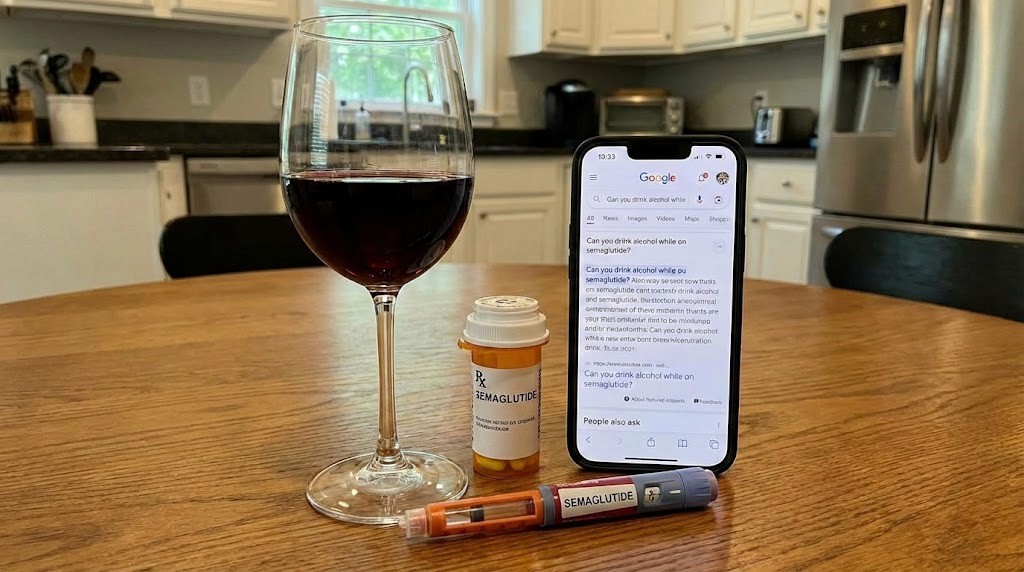
Before you pour that next glass of wine, you need to know something. Semaglutide changes the way your body handles alcohol. Not in an obvious way. Not in a way your prescriber probably mentioned during that rushed appointment. But in ways that matter, ways that affect everything from how quickly you get intoxicated to how your liver processes each sip, and even whether your weight loss stalls for weeks because of a single weekend of cocktails.
Here is the short answer. There is no official warning on the semaglutide label about alcohol. The FDA did not include a specific contraindication. And technically, yes, you can drink while taking semaglutide. But "technically allowed" and "actually a good idea" are two very different things, and the gap between them is where most people run into trouble.
The reality is more nuanced than any simple yes or no. Semaglutide slows your stomach emptying. It changes your reward pathways in the brain. It alters how your liver metabolizes ethanol. A glass of wine that used to give you a gentle buzz might now make you dizzy, nauseous, or leave you with a hangover that lasts two days. Or you might find that you simply do not want that glass of wine anymore, that the craving has quietly disappeared without you noticing.
This guide covers everything you need to know about mixing semaglutide and alcohol. From the actual science of how GLP-1 receptor agonists interact with ethanol metabolism, to the practical strategies that let you enjoy an occasional drink without derailing your progress or risking a dangerous blood sugar crash. We will look at what the clinical trials actually found, what real users report, and what the emerging research from Yale and other institutions reveals about a surprisingly protective effect that nobody expected.
Whether you are just starting semaglutide or you have been on it for months and wondering why your tolerance has changed, this is the guide you will want to bookmark.
How semaglutide changes the way your body processes alcohol
To understand why drinking on semaglutide feels different, you need to understand what the drug actually does inside your body. Semaglutide is a GLP-1 receptor agonist. It mimics a hormone called glucagon-like peptide-1 that your gut naturally produces after eating. This hormone tells your brain you are full, slows down how quickly food leaves your stomach, and helps regulate blood sugar by stimulating insulin release.
Simple enough. But here is where alcohol enters the picture.
Delayed gastric emptying and alcohol absorption
One of semaglutide's primary mechanisms is slowing gastric emptying. Food stays in your stomach longer. You feel full faster. This is great for weight loss. But it also means alcohol sits in your stomach longer before reaching your small intestine, where most absorption happens.
Research from Virginia Tech measured this effect directly. In a human study, people taking GLP-1 medications had significantly slower increases in breath alcohol concentration compared to non-users. After 20 minutes of drinking, those on GLP-1 drugs reached an average breath alcohol concentration of 0.017 g/dL. The control group hit 0.037 g/dL. That is more than double the speed of absorption without the medication.
This sounds like it might be protective. Slower absorption, less intoxication, right?
Wrong. The problem is what happens next.
Because alcohol absorbs more slowly, you might feel fine after your first drink. You might feel fine after your second. So you keep drinking at your normal pace. But the alcohol is accumulating, and when it finally does absorb, it hits all at once. What felt like moderate drinking can suddenly feel like you had twice as much. The delayed onset creates a false sense of control that leads many semaglutide users to accidentally overdrink.
The liver enzyme effect: Yale's surprising discovery
Researchers at Yale School of Medicine uncovered something remarkable about how GLP-1 receptor agonists affect liver function during alcohol consumption. In their study, mice receiving GLP-1 medications showed decreased levels of a liver enzyme called Cyp2e1. This enzyme is responsible for breaking down alcohol into acetaldehyde, a toxic metabolite that causes many of the unpleasant effects of drinking.
Fewer toxic metabolites sounds beneficial. And in many ways it is. The researchers suggested that GLP-1 receptor agonists may offer hepatic protection even for people who continue drinking. The liver produces less of the compound that damages it.
But there is a tradeoff.
Less enzymatic breakdown means alcohol stays in your bloodstream longer. Blood alcohol levels rise higher and take longer to drop back down. A drink that would normally clear your system in two hours might linger for three or four. The Yale researchers specifically warned that people on GLP-1 medications might find themselves above the legal blood alcohol limit from an amount of drinking that would not normally put them there.
Think about that for a moment. Your normal two-glass-of-wine dinner could leave you legally impaired to drive when it never would have before.
The brain reward pathway connection
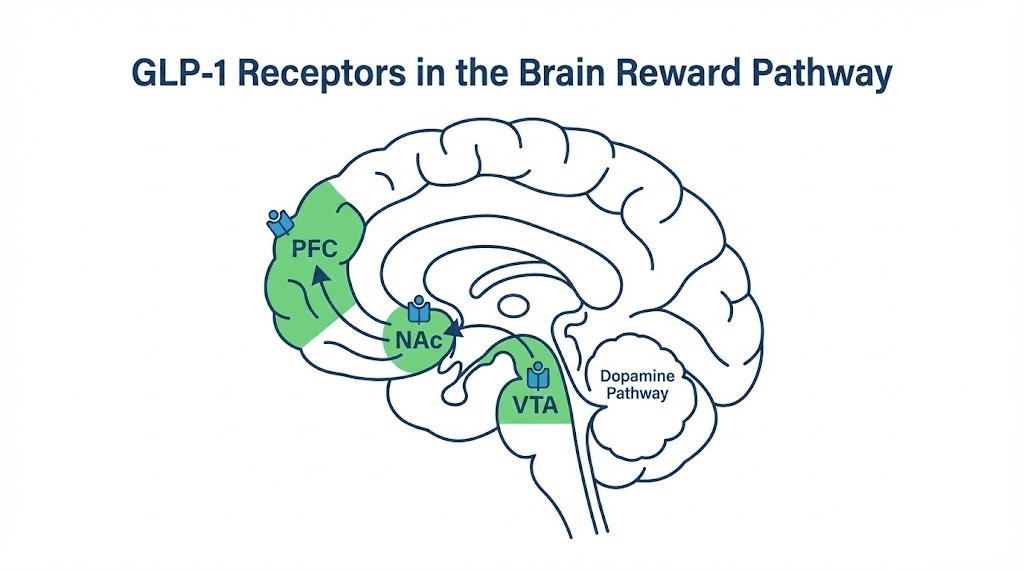
Perhaps the most fascinating change semaglutide makes relates to your desire to drink in the first place. GLP-1 receptors are not just in your gut and pancreas. They are expressed throughout reward-related brain regions, including the ventral tegmental area, the nucleus accumbens, and the prefrontal cortex. These are the same areas involved in addiction and reward processing.
By targeting these receptors, semaglutide blunts dopamine release and reduces reward signaling. In practical terms, alcohol becomes less rewarding. The buzz feels less satisfying. The craving to have another drink diminishes. Many users report that their relationship with alcohol fundamentally changes, not through willpower, but through a genuine neurological shift in how they experience the reward.
A Phase 2 clinical trial published in JAMA Psychiatry tested this directly. In 48 participants with alcohol use disorder, those receiving semaglutide showed significant reductions in drinks per drinking day, weekly alcohol craving scores, and total grams of alcohol consumed. The drug did not just help them want to drink less. It actually changed how their brains responded to alcohol at a fundamental level.
Animal studies confirmed the mechanism. Exenatide, another GLP-1 receptor agonist, blocked alcohol-induced dopamine release in the nucleus accumbens in mice. It also eliminated the locomotor stimulation and conditioned place preference that typically accompany alcohol consumption. The reward signal that makes drinking feel good was simply gone.
The real risks of drinking on semaglutide
Understanding the mechanisms helps, but what you really need to know are the practical risks. Not all of them are obvious, and several can catch even informed users off guard.
Blood sugar crashes: the hidden danger
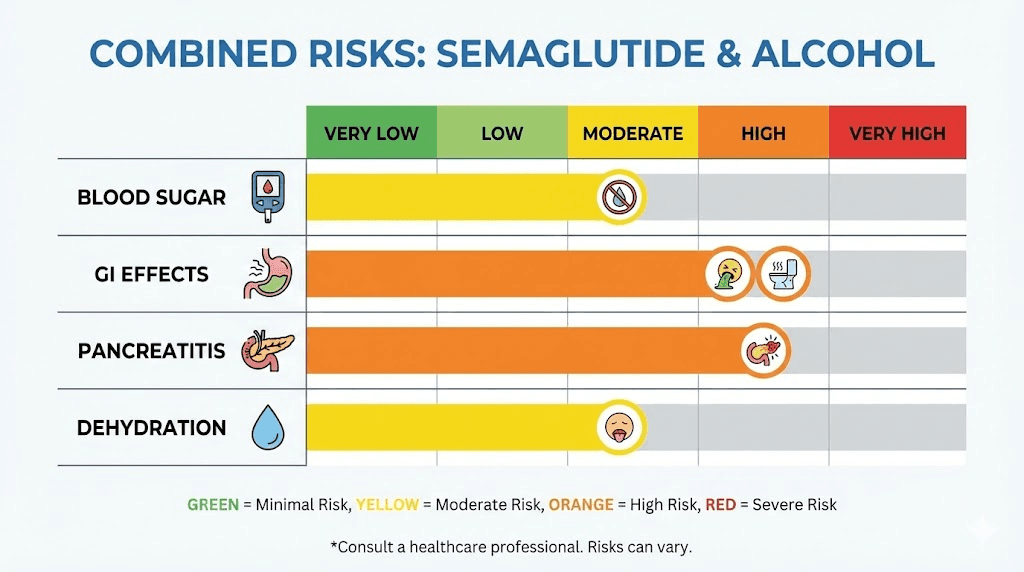
Semaglutide works partly by stimulating insulin release when blood sugar rises. On its own, this rarely causes hypoglycemia because the drug is glucose-dependent, meaning it only triggers extra insulin when blood sugar is elevated. But alcohol throws a wrench into this system.
Your liver performs two critical jobs simultaneously. It processes alcohol and it maintains blood sugar through a process called gluconeogenesis. When you drink, your liver prioritizes alcohol metabolism. It essentially puts blood sugar maintenance on hold. Meanwhile, semaglutide is still promoting insulin release from your meal earlier that day. More insulin, less glucose production. The result can be a dangerous drop in blood sugar.
The symptoms of hypoglycemia overlap uncomfortably with the symptoms of being drunk. Dizziness. Confusion. Slurred speech. Shakiness. Sweating. If you are out drinking with friends, nobody is going to look at you swaying slightly and think "low blood sugar." They are going to think you have had too much. And you might think so too, reaching for water instead of the glucose tablet or juice you actually need.
This risk multiplies if you are taking semaglutide alongside other diabetes medications like insulin or sulfonylureas. The combined blood sugar lowering effect of semaglutide plus insulin plus alcohol can create a perfect storm for a hypoglycemic episode.
Eating before you drink is not optional here. It is a safety requirement.
Gastrointestinal amplification
The most common side effects of semaglutide are gastrointestinal. Nausea affects roughly 20% of users. Vomiting, diarrhea, and abdominal pain are also common, especially during dose escalation. Now add alcohol to that equation.
Alcohol irritates the stomach lining directly. It increases acid production. It relaxes the lower esophageal sphincter, promoting reflux. Every single one of these effects compounds the GI side effects that semaglutide already causes.
Users consistently report that drinking on semaglutide produces worse nausea than either one alone. Some describe hangovers that last 48 hours from amounts of alcohol that previously caused no hangover at all. Others report vomiting from a single glass of wine, something that never happened before starting the medication.
The timing matters too. Drinking within 24-48 hours of your weekly semaglutide injection, when drug levels peak, tends to produce the worst GI symptoms. Users who wait until mid-week or later between doses often tolerate alcohol somewhat better, though individual responses vary widely.
The pancreatitis concern
Pancreatitis is a serious inflammation of the pancreas that causes severe abdominal pain, often requiring hospitalization. Both semaglutide and alcohol are independent risk factors for this condition. Using them together raises legitimate concern.
The data on semaglutide and pancreatitis is mixed but generally reassuring. A meta-analysis of randomized clinical trials found no increased risk of acute pancreatitis with semaglutide compared to placebo. In major trials, the incidence was less than 1%. However, post-marketing surveillance data tells a slightly different story, with some studies showing that patients exposed to GLP-1 receptor agonists were roughly twice as likely to develop pancreatitis compared to non-users.
Heavy alcohol consumption is responsible for up to 70% of chronic pancreatitis cases. If you are combining a medication that carries even a small pancreatitis risk with a substance responsible for the majority of pancreatitis cases, you are stacking risk factors. This does not mean a glass of wine will send you to the hospital. But it does mean that binge drinking while on semaglutide is genuinely dangerous, more dangerous than binge drinking alone.
Signs of pancreatitis include severe pain in the upper abdomen that radiates to the back, nausea, vomiting, fever, and a rapid pulse. If you experience these symptoms after drinking on semaglutide, seek medical attention immediately. Do not dismiss it as a bad hangover.
Dehydration and kidney stress
Both semaglutide and alcohol are dehydrating. Semaglutide reduces fluid intake because you eat and drink less. Alcohol is a diuretic that increases urine output. Together, they create significant dehydration risk.
Dehydration worsens every other side effect. It intensifies nausea. It accelerates electrolyte imbalances. It stresses the kidneys. For people already dealing with the appetite-suppressing effects of semaglutide who may not be eating or drinking enough, adding alcohol can push dehydration into territory that feels genuinely awful.
Kidney injury is a recognized rare side effect of semaglutide, typically occurring in the context of severe dehydration from GI symptoms. Alcohol compounds this risk. If you are going to drink, aggressive hydration before, during, and after is not a suggestion. It is a necessity.
How alcohol undermines your weight loss on semaglutide
Even if you experience none of the medical risks above, alcohol can quietly sabotage the very reason you started semaglutide in the first place. Weight loss.
The calorie problem nobody wants to hear about
A standard glass of wine contains 120-150 calories. A pint of craft beer runs 200-350 calories. A margarita can pack 300-500 calories. A single night out with three or four drinks easily adds 600-1500 calories to your daily intake. And these are not calories your body can use productively. They are metabolic dead weight.
Semaglutide produces weight loss primarily by reducing caloric intake through appetite suppression and satiety signaling. The typical caloric deficit on semaglutide ranges from 300-500 calories per day. One evening of moderate drinking can erase three to five days of deficit. One weekend of social drinking can eliminate an entire week of progress.
The math is brutal and it does not care about your intentions.
Fat metabolism goes on hold
Your body cannot store alcohol. It has no mechanism for it. So when alcohol enters your system, your liver drops everything else to metabolize it first. Including fat burning.
Under normal conditions, your body cycles between burning carbohydrates and burning fat for energy. When you drink, fat oxidation essentially stops. Your liver shifts entirely to processing ethanol and its metabolites. Any fat you would have been burning during those hours gets stored instead. Any food you eat while drinking gets preferentially converted to fat because the normal metabolic pathways are occupied.
This effect persists for hours after your last drink. Depending on how much you consumed, fat metabolism can remain suppressed for 12-24 hours. On semaglutide, where the delayed gastric emptying keeps alcohol in your system even longer than normal, this metabolic pause may last longer still.
For someone trying to lose weight, this is the equivalent of hitting pause on your entire weight loss protocol every time you have a few drinks.
The appetite rebound effect
One of semaglutide's greatest benefits is appetite suppression. You simply do not think about food as much. Cravings diminish. The constant mental chatter about what to eat next goes quiet. Alcohol disrupts this.
Alcohol lowers inhibitions and impairs decision making. It also directly stimulates appetite through effects on ghrelin and other hunger hormones. The careful, moderate eating that semaglutide enables can disappear after two drinks, replaced by late-night pizza orders and snacking that would never have happened sober.
Many semaglutide users report that alcohol is the single biggest trigger for dietary lapses. Not stress. Not boredom. Not holidays. Alcohol. Because it simultaneously adds empty calories AND removes the appetite control that the medication provides.
Sleep disruption compounds the problem
Alcohol fragments sleep architecture, reducing REM sleep and deep sleep even when total sleep duration seems adequate. Poor sleep increases cortisol. Elevated cortisol promotes visceral fat storage and increases appetite. It also reduces insulin sensitivity, partially counteracting what semaglutide is trying to achieve.
The result is a cascade. You drink, you sleep poorly, you wake up hungrier with worse blood sugar control, you eat more, and the weight loss stalls. One night of drinking can ripple through three or four days of suboptimal physiology.
This is not to say you can never drink on semaglutide. It is to say that the impact is larger than most people assume, and understanding the full picture helps you make better decisions about when and how much.
What semaglutide users actually experience with alcohol
The clinical data is important, but real-world experiences often tell a richer story. Here is what semaglutide users consistently report about their changing relationship with alcohol.
Reduced desire to drink
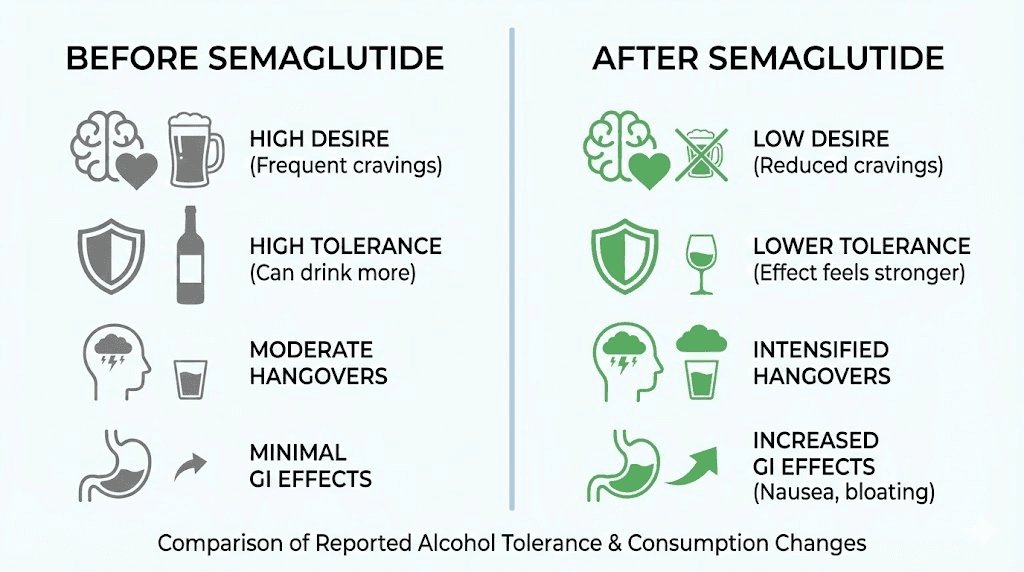
This is the most commonly reported change. People who previously enjoyed a nightly glass of wine find they simply do not want it anymore. Weekend social drinkers discover they are perfectly content with sparkling water. The craving is not just managed or suppressed. It is gone.
This aligns perfectly with the neuroscience. GLP-1 receptor activation in the brain reduces dopamine signaling in reward pathways. Alcohol becomes less rewarding at a neurological level. Users are not exercising willpower. Their brains have genuinely recalibrated what feels rewarding.
A study published in Scientific Reports confirmed this at population scale. Analyzing data from people with obesity, researchers found that both semaglutide and tirzepatide significantly reduced alcohol consumption. The average number of drinks per occasion dropped, and the odds of binge drinking were significantly lower in the medication groups.
For some people, this is an unexpected bonus. For others, it represents a genuine shift in social identity. When drinking was central to socializing, losing the desire can feel disorienting even when it is objectively positive.
Dramatically lower tolerance
The second most common report. One drink feels like three. Two drinks feel like five. Users describe getting "way too drunk" from amounts that previously caused mild effects at most.
This makes sense given the pharmacology. Delayed gastric emptying changes absorption patterns. Reduced liver enzyme activity slows clearance. The same volume of alcohol produces a higher, longer-lasting blood alcohol concentration. Your previous tolerance benchmarks are no longer valid.
This catches people off guard, especially in social settings where they are drinking at their old pace. The feedback loop that normally tells you "I'm feeling this, time to slow down" is delayed, and by the time it arrives, you have already consumed far more than your new threshold.
Worse hangovers
Even modest drinking produces disproportionate hangovers for many semaglutide users. The combination of delayed alcohol clearance, dehydration, and GI sensitivity creates hangovers that are more intense and longer lasting.
Two-day hangovers from moderate drinking. Multi-day GI disturbances. Headaches that do not respond to typical remedies. These are not uncommon reports. For some users, the hangover experience alone is enough to eliminate drinking from their routine entirely.
Nausea amplification
If you are already experiencing nausea from semaglutide, especially during the early weeks or after a dose increase, alcohol will almost certainly make it worse. Some users report that even the smell of alcohol triggers nausea when they are on the medication.
This is particularly relevant during the dose escalation phase. Most semaglutide protocols start at a low dose and increase over several weeks to minimize side effects. Adding alcohol during this sensitive period is one of the most common mistakes new users make.
Complete indifference to alcohol
Some users go beyond reduced desire to complete indifference. Alcohol holds no appeal whatsoever. They can sit at a bar with friends, look at the drink menu, and feel absolutely nothing. No craving. No curiosity. No social pull. Just nothing.
This mirrors what the JAMA Psychiatry trial found in participants with diagnosed alcohol use disorder. The medication did not just reduce consumption. It reduced craving itself. For people who previously struggled with their relationship to alcohol, this effect can be life-changing.
Safe drinking guidelines while on semaglutide
If you choose to drink while taking semaglutide, these evidence-based guidelines will help you minimize risk and avoid the worst outcomes.
The golden rules
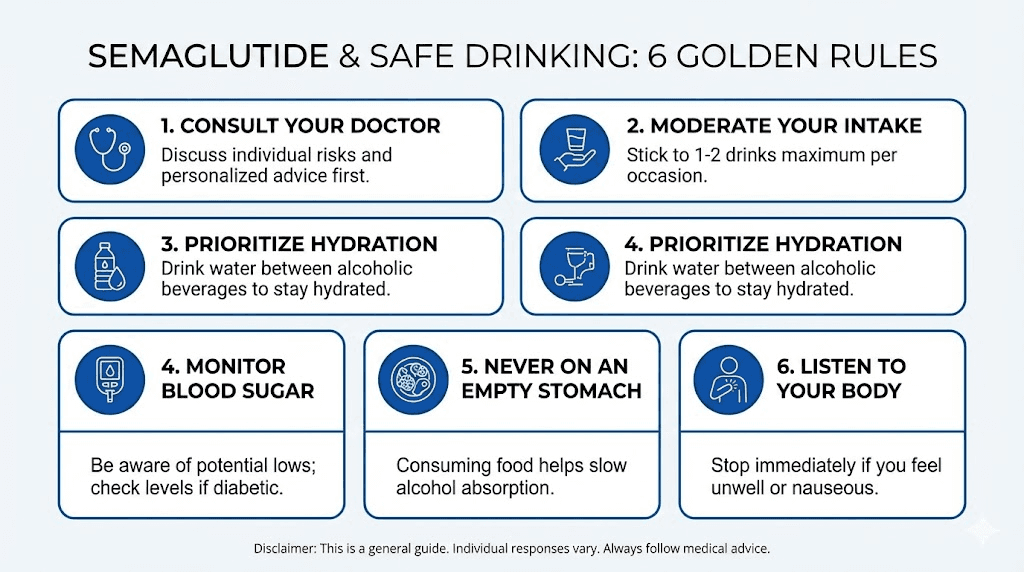
Rule 1: Always eat first. Never drink on an empty stomach while taking semaglutide. This is not general advice that applies to everyone. This is a specific safety requirement. Eating before drinking slows alcohol absorption further, stabilizes blood sugar, and provides a buffer against GI irritation. A meal containing protein and healthy fats is ideal, something like grilled chicken with avocado, or salmon with roasted vegetables. The protein slows gastric emptying naturally, and the fats coat the stomach lining.
Rule 2: Cut your previous intake in half. Whatever you used to drink comfortably, your new baseline is approximately half that. If you used to handle four drinks in an evening, start with two. If two was your normal, try one. You can always adjust upward cautiously after seeing how your body responds, but starting at your old level is asking for trouble.
Rule 3: Hydrate aggressively. Drink one full glass of water for every alcoholic drink. Not a sip. A full glass. Start hydrating before you begin drinking and continue after you stop. Keep a water bottle by your bed. This single habit prevents the majority of hangover symptoms and reduces dehydration risk.
Rule 4: Time your drinking around your injection. Avoid alcohol within 48-72 hours of your semaglutide injection, when drug levels peak and GI sensitivity is highest. If you inject on Friday, Saturday night is the worst time to drink. Mid-week, three to four days after your injection, tends to be the most tolerable window.
Rule 5: Monitor your blood sugar. If you are taking semaglutide for diabetes or blood sugar management, check your glucose before drinking, during extended drinking sessions, and before bed. Have glucose tablets or juice readily accessible. Tell whoever you are with that you are on medication that can cause low blood sugar, so they know what to watch for.
Rule 6: Never drive. Your blood alcohol concentration is less predictable on semaglutide. The Yale research showed higher and longer-lasting BAC from the same amount of alcohol. Your old "I'm fine after two beers" rule no longer applies. Use rideshare, designate a sober driver, or stay home. No exceptions.
What to drink: a practical guide
Not all alcoholic beverages are created equal when you are on semaglutide. The goal is to minimize sugar, calories, and gastric irritation while still allowing yourself a social drink.
Best choices:
Dry wine (red or white), approximately 120-130 calories per glass, low sugar, moderate alcohol content
Light beer, approximately 100 calories per 12 ounces, lower alcohol content means slower intoxication
Spirits neat or on the rocks (vodka, gin, whiskey), approximately 100 calories per 1.5 ounce shot, no added sugar
Spirits with soda water and lime, low calorie, no sugar, the carbonation can actually help settle mild nausea
Avoid:
Cocktails with sugary mixers (margaritas, pina coladas, daiquiris), 300-500+ calories each, massive sugar content spikes blood glucose then crashes it
Sweet wines and dessert wines, high sugar content undermines blood sugar stability
Craft IPAs and stouts, 200-400 calories per pint, high carbohydrate content
Shots meant for rapid consumption, bypasses the normal pacing that lets you gauge your new tolerance
The smartest approach: Order your first drink as a spirit and soda water. Sip it slowly. Assess how you feel after 30 minutes. If you feel good, you might have a second. If you feel any nausea, dizziness, or excessive intoxication, switch to plain water for the rest of the evening. This gives you a low-calorie, low-sugar option that provides useful feedback about your current tolerance.
What to do if you feel sick after drinking
Despite your best precautions, you might still feel unwell. Here is what to do.
For nausea: Stop drinking immediately. Sip room-temperature water or ginger tea slowly. Eat plain crackers or toast if you can tolerate it. Lie on your left side, which helps reduce nausea. Avoid lying flat on your back, which can worsen reflux. If nausea is severe and you cannot keep water down, seek medical attention for possible dehydration.
For suspected low blood sugar: Consume 15 grams of fast-acting carbohydrate immediately. This could be 4 ounces of juice, 3-4 glucose tablets, or a tablespoon of honey. Wait 15 minutes and check again if you have a glucose monitor. Do not rely on feeling better as the sole indicator. Symptoms of low blood sugar and intoxication overlap, making self-assessment unreliable.
For severe symptoms: If you experience severe abdominal pain, persistent vomiting, confusion, loss of consciousness, or chest pain, call emergency services. These could indicate pancreatitis, severe hypoglycemia, or alcohol poisoning, all of which are more dangerous when semaglutide is in your system.
Semaglutide and alcohol use disorder: the emerging research
One of the most exciting developments in GLP-1 research has nothing to do with weight loss or diabetes. It is the growing evidence that semaglutide may help people with alcohol use disorder.
The JAMA Psychiatry trial
Published in JAMA Psychiatry, this Phase 2 double-blind randomized trial enrolled 48 adults with diagnosed alcohol use disorder at an academic medical center. Over 9 weeks of treatment, participants receiving low-dose semaglutide showed remarkable results compared to placebo.
Drinks per drinking day dropped significantly. Weekly alcohol craving scores fell. In a post-treatment laboratory setting where participants could choose to drink, those who had received semaglutide consumed fewer grams of alcohol and achieved lower breath alcohol concentrations. The effect persisted even after the treatment period ended.
These findings provide the first prospective clinical evidence that semaglutide can reduce both the behavior and the underlying craving that drives alcohol use disorder. Larger trials are now underway to confirm these results and determine optimal dosing for this application.
The Virginia Tech research
Researchers at Virginia Tech published complementary findings in Scientific Reports. Analyzing data from individuals with obesity, they found that both semaglutide and tirzepatide reduced alcohol consumption. Average drinks per occasion decreased. Binge drinking episodes became significantly less frequent. The results held even when controlling for other factors like changes in social behavior or weight loss progress.
Their follow-up research measured physiological and perceptual effects during actual alcohol consumption. People on GLP-1 medications reported feeling less stimulated and less sedated by alcohol. The subjective experience of intoxication was dulled, not just the craving for it.
What this means for you
If you have started semaglutide and noticed that your interest in alcohol has decreased, you are not imagining it. This is a real, measurable, neurobiologically mediated effect. Your brain is literally responding differently to alcohol because of the medication.
For people who consider their alcohol consumption problematic, this can be transformative. The reduction happens naturally, without the white-knuckle struggle that characterizes most attempts to cut back. For people who enjoy moderate social drinking and do not want to give it up, understanding this effect helps set realistic expectations about how your relationship with alcohol may change.
It is worth noting that not everyone experiences this reduction in cravings. Individual responses vary based on genetics, baseline drinking patterns, semaglutide dosage, and other factors. Some users continue to enjoy alcohol normally. Others lose interest completely. Most fall somewhere in between.
Special situations: navigating social drinking on semaglutide
The clinical guidelines are helpful, but life does not happen in a controlled laboratory. Here is how to handle the situations that actually come up.
Weddings, parties, and celebrations
Social pressure to drink is real. When everyone around you is raising a toast, holding a glass of water can feel awkward. Here is the strategy.
Get a club soda with lime in a cocktail glass. Nobody can tell the difference from across the room. If someone offers you a drink directly, a simple "I'm on a medication that does not mix well with alcohol" ends the conversation immediately. Most people respect medical reasons without needing details.
If you do choose to drink at an event, stick to one drink early in the evening. Nurse it slowly. Switch to sparkling water after that. The social requirement is to have a glass in your hand, not to finish it.
Business dinners and networking
Similar strategy. Order a mocktail, a tonic water, or a single glass of dry wine that you sip throughout the meal. In professional settings, nobody is watching your consumption closely enough to notice. And the people who do notice will likely assume you are health-conscious, which is not exactly a disadvantage professionally.
Date nights
If drinking is part of your date night routine, this is an opportunity to upgrade that routine. Explore non-alcoholic cocktails, which have improved dramatically in quality. Try interesting tea or coffee after dinner instead. Share a single bottle of wine between you instead of each having your own.
Being open with your partner about why you are drinking less is important. "My medication makes alcohol hit harder" is honest and simple. Hiding the change or pretending nothing is different creates unnecessary confusion.
Holidays and vacations
Vacations are where the wheels most commonly come off for semaglutide users. The combination of relaxed routines, social drinking, unfamiliar food, and time zone changes that might affect your injection schedule creates a perfect storm.
Plan ahead. Decide before the trip what your drinking limit will be. Bring electrolyte packets for hydration support. Maintain your injection schedule precisely. Pack glucose tablets if you are managing blood sugar. And accept that your vacation might look slightly different than it would have before semaglutide. That is not a loss. You are still on vacation.
The weight loss calculation: is drinking worth the trade-off?
This is the question that every semaglutide user eventually confronts. And it is a deeply personal calculation that nobody else can make for you. But here are the numbers to help you decide.
The weekly math
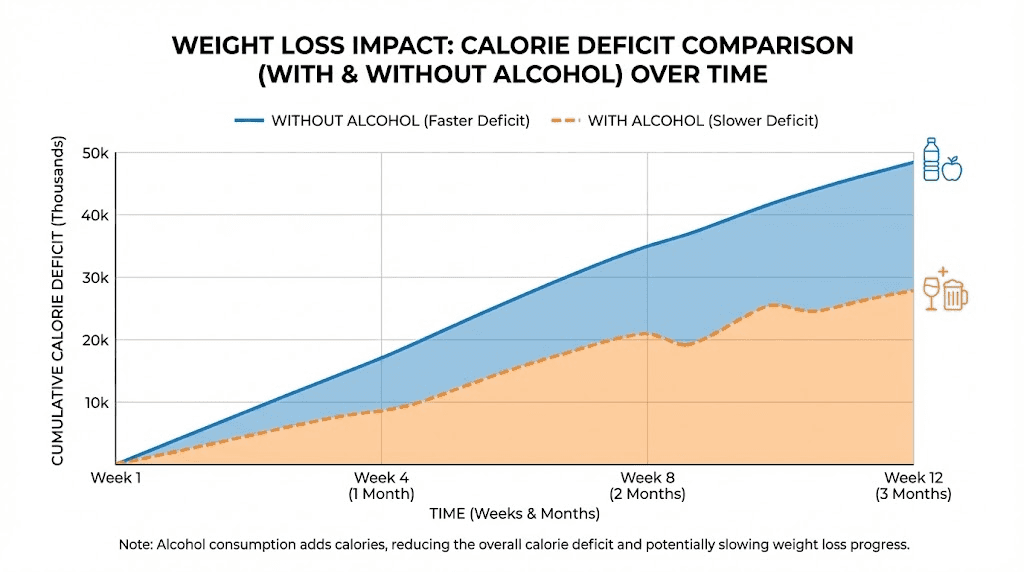
A typical weekly calorie deficit on semaglutide: 2,100-3,500 calories (300-500 per day).
A typical weekend of moderate social drinking: 600-1,200 calories in alcohol alone, not counting the late-night food that often accompanies it.
That means moderate weekend drinking can erase 30-50% of your entire weekly deficit. Over a month, that could be the difference between losing 4 pounds and losing 2 pounds. Over six months, 12 pounds versus 24 pounds. Over a year of treatment, you might look back and realize that weekend drinks cost you 20-30 pounds of potential progress.
The stall factor
Beyond raw calories, alcohol causes multi-day metabolic disruption. Fat oxidation pauses. Sleep quality drops. Cortisol rises. Insulin sensitivity decreases. A single heavy drinking session can stall visible weight loss for one to two weeks, not because you gained fat overnight, but because the metabolic ripple effects take that long to resolve.
Many semaglutide users who report "plateaus" or "stalls" in their weight loss are drinking regularly without connecting the dots. When they eliminate or dramatically reduce alcohol, the scale starts moving again within two to three weeks.
The honest assessment
Ask yourself three questions.
First: how important is your weight loss goal, and how much are you paying for semaglutide to achieve it? If you are spending hundreds of dollars per month on medication, is it rational to undermine that investment with $50 in weekend drinks?
Second: how important is alcohol in your life currently? If it is deeply tied to your social relationships and stress management, eliminating it entirely might create more stress than the calories justify. Harm reduction, drinking less rather than not at all, might be the sustainable approach.
Third: what does the evidence show about your specific pattern? Track your weight loss for a month with drinking and a month without. The data will make the decision for you.
There is no universally right answer. Some people thrive with complete abstinence. Others maintain excellent progress with one or two drinks per week. The key is making a conscious, informed choice rather than defaulting to old habits that no longer serve you.
Alcohol and different forms of semaglutide
The form of semaglutide you take matters when considering alcohol use. There are important differences between the injectable and oral versions.
Injectable semaglutide (Ozempic, Wegovy)
Injectable semaglutide is administered once weekly via subcutaneous injection. Drug levels peak approximately 1-3 days after injection and then gradually decline until the next dose. This creates a predictable pattern where GI side effects and alcohol sensitivity tend to be highest in the days immediately following injection.
The practical implication: if you want to have a drink, do it in the second half of your injection cycle when drug levels are lower. If you inject on Monday, Friday or Saturday will typically be more tolerable than Tuesday or Wednesday. This is not a guarantee of zero issues, but it gives your body the best chance of handling alcohol without severe side effects.
Oral semaglutide (Rybelsus)
Oral semaglutide is taken daily, which means there is no cyclical variation in drug levels. Side effects and alcohol sensitivity are more consistent from day to day. There is no "better" time to drink during the week because drug levels remain relatively steady.
There is an additional consideration with oral semaglutide. The medication must be taken on an empty stomach with no more than 4 ounces of plain water, and you must wait at least 30 minutes before eating or drinking anything else. Alcohol on an empty stomach is already risky on semaglutide. The mandatory fasting window for oral semaglutide makes morning-after drinking particularly problematic if you are taking your medication first thing in the morning.
If you plan to drink in the evening, take your oral medication first thing in the morning as directed, eat breakfast 30-45 minutes later, and proceed with your day normally. The medication will be absorbed well before any alcohol enters your system.
Compounded semaglutide
Many people use compounded semaglutide from pharmacies, which may come at different concentrations and formulations. The same general principles apply: delayed gastric emptying, altered liver metabolism, and enhanced GI sensitivity all occur regardless of the source. However, with compounded formulations, exact drug levels may be less predictable, so extra caution with alcohol is warranted.
If you are using compounded semaglutide, the same injection timing strategy applies. Wait until the second half of your dosing cycle for any alcohol consumption, and start with much less than your historical tolerance would suggest.
When to absolutely avoid alcohol on semaglutide
While moderate, occasional drinking may be acceptable for many semaglutide users, there are specific situations where alcohol should be completely avoided.
During dose escalation
The first weeks of semaglutide treatment and each dose increase are when GI side effects peak. Your body is adjusting to the medication. Adding alcohol during this period dramatically increases the likelihood of severe nausea, vomiting, and gastrointestinal distress. Wait until you have been stable at your current dose for at least two to three weeks before testing alcohol tolerance.
If you are taking insulin or sulfonylureas
The combination of semaglutide, diabetes medications that lower blood sugar, and alcohol creates serious hypoglycemia risk. If this applies to you, discuss alcohol use specifically with your prescriber. You may need dose adjustments or additional monitoring protocols.
If you have a history of pancreatitis
Prior pancreatitis is a red flag with GLP-1 medications generally. Adding alcohol to that picture is adding unnecessary risk. Complete avoidance is the safest approach.
If you are experiencing active GI symptoms
If semaglutide is already causing nausea, vomiting, diarrhea, or abdominal pain, alcohol will make all of these worse. Get your GI symptoms under control first, then consider whether alcohol is appropriate.
If you are pregnant or trying to conceive
Semaglutide is not recommended during pregnancy, and neither is alcohol. If pregnancy is a possibility, both substances should be avoided. Semaglutide should be discontinued at least two months before planned conception.
If you have liver disease
Semaglutide alters liver enzyme activity related to alcohol metabolism. If you already have compromised liver function, the combined effects of the medication and alcohol could be unpredictable and potentially harmful. Discuss your specific situation with a hepatologist or gastroenterologist.
The timeline: how alcohol tolerance changes during semaglutide treatment
Your relationship with alcohol evolves as your semaglutide treatment progresses. Understanding this timeline helps you anticipate changes rather than being caught off guard by them.
Weeks 1-4: the adjustment period
This is when everything changes. You are on a starting dose of 0.25mg (Ozempic) or 0.25mg (Wegovy), and your body is getting used to the medication. GI side effects are most common during this window. Alcohol tolerance drops noticeably, often dramatically. Many users discover their changed tolerance the hard way during this period.
Recommendation: avoid alcohol entirely for the first two to four weeks. Let your body adjust. Learn how the medication affects you without the confounding variable of alcohol.
Weeks 4-12: dose escalation
You are increasing your dose every four weeks per the standard protocol. Each increase brings a new wave of GI adjustment. Your tolerance to alcohol may fluctuate with each dose change, getting slightly better as you stabilize at a dose, then worsening again when the dose increases.
Recommendation: if you drink at all during this phase, limit it to one drink per occasion. Test your tolerance carefully at each new dose before assuming the previous limits still apply.
Months 3-6: stabilization
By now, most users are at or approaching their target dose. GI side effects have usually improved significantly. Your alcohol tolerance has reached a new equilibrium, lower than pre-semaglutide but relatively predictable.
This is when you can start to understand your new relationship with alcohol. Some people find they can comfortably have one to two drinks without significant issues. Others find that even one drink produces enough negative effects that it is not worth it. Both experiences are normal.
Months 6 and beyond: the new normal
Your tolerance stabilizes but remains lower than your pre-semaglutide baseline. Most users have settled into a pattern by this point, either drinking less than before, drinking rarely, or not drinking at all. The neurological effects on reward pathways are well established, and for many users, the desire for alcohol remains permanently reduced regardless of what they "decide" about drinking.
Some users report that tolerance partially recovers over time, while others find it remains at its reduced level indefinitely. There is not enough long-term data to predict which experience you will have, which is another reason to approach alcohol with caution throughout treatment.
Comparing semaglutide and tirzepatide: does the alcohol interaction differ?
Many people considering semaglutide are also evaluating tirzepatide (Mounjaro, Zepbound). The alcohol interactions share significant overlap but have some important differences.
Both medications slow gastric emptying and affect brain reward pathways. Both produce reduced alcohol tolerance, enhanced GI sensitivity, and decreased craving in many users. The Virginia Tech study found alcohol reduction effects with both drugs.
However, tirzepatide is a dual GIP/GLP-1 receptor agonist, meaning it activates an additional receptor pathway that semaglutide does not. GIP receptors are also expressed in reward-related brain areas, so the effect on alcohol craving and consumption may differ in subtle ways. Some users switching from semaglutide to tirzepatide report different alcohol tolerance profiles, though systematic comparative data is limited.
The gastric emptying effects may be more pronounced with tirzepatide at higher doses, which could mean even more delayed alcohol absorption and higher peak blood alcohol concentrations. If you are switching between medications, reassess your alcohol tolerance from scratch rather than assuming it will be the same.
Dosing differences between the two medications also matter. Tirzepatide reaches higher absolute doses (up to 15mg) compared to semaglutide (up to 2.4mg for Wegovy), and the relationship between dose and alcohol sensitivity has not been formally studied for either drug.
Frequently asked questions
Can one glass of wine hurt on semaglutide?
A single glass of wine is unlikely to cause serious harm for most semaglutide users who are otherwise healthy. However, it may produce more nausea, a stronger buzz, or a worse hangover than you expect. The safest approach is to try it on a day when you have no obligations, at home, after eating a full meal, so you can assess your individual response without consequences.
How long after my semaglutide injection should I wait to drink?
Wait at least 48-72 hours after your injection for the best tolerance. Drug levels peak 1-3 days after injection, and GI sensitivity is highest during this window. Drinking three to four days after injection gives your body the most recovery time.
Does semaglutide make you more drunk?
Yes, effectively. Semaglutide delays alcohol absorption through slowed gastric emptying and reduces liver enzyme activity that breaks down alcohol. This means blood alcohol concentrations rise higher and stay elevated longer from the same amount of drinking. You will feel the effects of alcohol more intensely and for a longer duration.
Will drinking on semaglutide ruin my weight loss?
Occasional, moderate drinking (one to two drinks per week) is unlikely to derail your weight loss significantly. Regular drinking (multiple times per week or more than two drinks per session) will measurably slow your progress. The caloric impact, metabolic disruption, and appetite rebound from alcohol can reduce your weight loss by 30-50% compared to what you would achieve without drinking.
Can semaglutide help with alcohol addiction?
Emerging evidence suggests yes. The JAMA Psychiatry trial showed significant reductions in craving and consumption in people with alcohol use disorder. Larger clinical trials are underway. However, semaglutide is not currently approved for this indication, and anyone struggling with alcohol use disorder should work with an addiction specialist rather than self-treating with semaglutide.
Is beer or wine safer than liquor on semaglutide?
No specific type of alcohol is inherently "safer" on semaglutide. The total amount of ethanol consumed matters more than the form. However, drinks with lower sugar content (dry wine, light beer, straight spirits) are better choices for weight management and blood sugar stability. Sugary cocktails are the worst option because they combine alcohol calories with sugar calories while spiking and then crashing blood sugar.
Should I tell my doctor I drink while on semaglutide?
Yes. Always be honest with your prescriber about alcohol consumption. They need this information to monitor for pancreatitis risk, adjust diabetes medications if applicable, and provide appropriate guidance. Many prescribers do not proactively ask about alcohol, so bring it up yourself during appointments.
Can I drink non-alcoholic beer or wine on semaglutide?
Non-alcoholic options are generally fine on semaglutide. They do not carry the blood sugar risks, liver metabolism effects, or intoxication concerns of regular alcohol. However, they do contain calories (typically 50-100 per serving) and some contain small amounts of residual alcohol (up to 0.5% ABV), which is negligible for practical purposes.
External resources
JAMA Psychiatry: Semaglutide in adults with alcohol use disorder trial
Yale School of Medicine: GLP-1 receptor agonists and liver protection during alcohol consumption
For researchers serious about optimizing their protocols and understanding drug interactions, SeekPeptides offers evidence-based guides, comprehensive safety databases, and a community of thousands who navigate these exact questions.
In case I do not see you, good afternoon, good evening, and good night. May your blood sugar stay stable, your stomach stay settled, and your decisions stay informed.