Feb 11, 2026
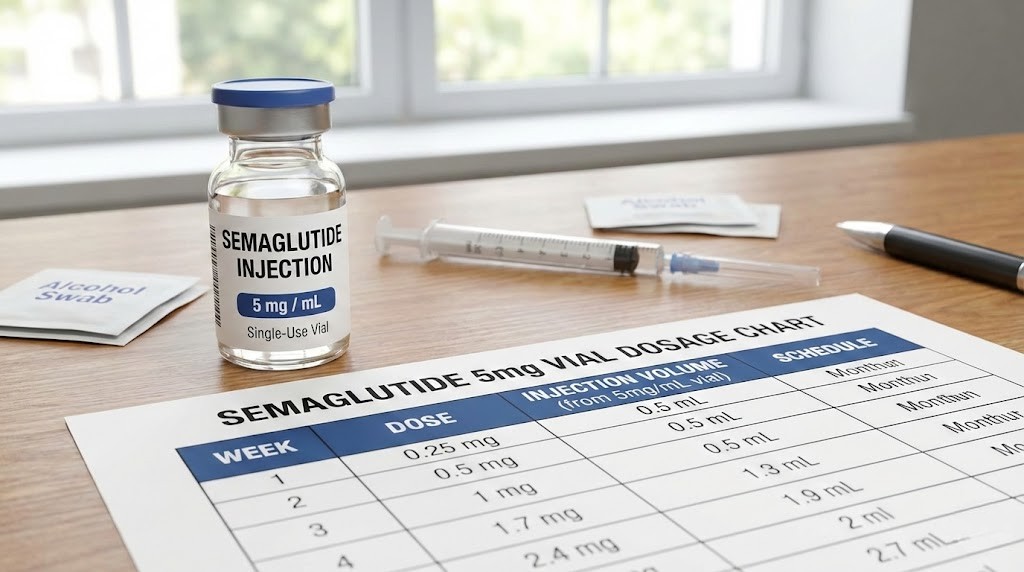
You have a 5mg vial of semaglutide sitting in front of you. The powder looks simple enough. But between reconstitution math, syringe markings, and weekly dose escalation, simple becomes complicated fast. One miscalculation means wasted product. Or worse, an incorrect dose that throws off your entire protocol.
The 5mg vial is one of the most common concentrations available for research purposes, and for good reason. It offers enough semaglutide to cover the critical early weeks of a titration schedule, the period where getting the dose right matters most. Too much too soon triggers nausea that derails protocols. Too little wastes time and money.
This guide breaks down every calculation, every syringe marking, and every scenario you will encounter with a semaglutide 5mg vial. Whether you are reconstituting with 1ml, 2ml, or 3ml of bacteriostatic water, you will find the exact dosage chart for your specific concentration. No guessing. No estimation. Just precise numbers backed by established research protocols and the math to prove them. You will also learn why reconstitution volume matters, how to read an insulin syringe correctly, and what the standard titration schedule looks like from week one through maintenance dosing.
Understanding semaglutide and the 5mg vial format
Semaglutide is a GLP-1 receptor agonist with a 94% sequence homology to human glucagon-like peptide-1. That structural similarity is what makes it so effective. The peptide binds to GLP-1 receptors throughout the body, triggering a cascade of metabolic effects that include increased insulin secretion, decreased glucagon release, delayed gastric emptying, and reduced appetite signaling in the hypothalamus.
What sets semaglutide apart from other weight management peptides is its half-life. At approximately 7 days, semaglutide reaches steady-state plasma concentration after 4 to 5 weeks of weekly administration. This prolonged half-life comes from two key structural modifications. The first promotes albumin binding, which slows renal clearance. The second shields the molecule from degradation by DPP-4 enzymes, which would otherwise break it down within minutes.
The result is a peptide that requires only once-weekly subcutaneous injection. For researchers and individuals working with compounded formulations, the 5mg lyophilized vial is the standard starting point.
Why the 5mg vial is the most practical starting point
The 5mg vial contains enough semaglutide for approximately 4 to 20 weeks of dosing, depending on where you are in your titration schedule. At the standard starting dose of 0.25mg per week, a single 5mg vial provides 20 individual doses. That is 20 weeks of coverage from one vial.
Even at the common maintenance dose of 0.5mg per week, you still get 10 weeks. Only at the highest research doses of 2.4mg weekly does the vial deplete quickly, lasting roughly 2 doses. This makes the 5mg vial ideal for the initial titration phase where doses are lowest and the margin for error is smallest.
Compared to 10mg vials, the 5mg format offers several advantages for newcomers. Smaller total volume means less waste if reconstitution goes wrong. Lower overall investment reduces financial risk. And the math is simpler when you are learning to calculate concentrations for the first time.
Lyophilized powder versus pre-mixed solutions
The 5mg vial arrives as a lyophilized powder, a freeze-dried form that preserves peptide stability during shipping and storage. Before use, this powder must be reconstituted with bacteriostatic water. The reconstitution process is where most dosing errors originate, which is exactly why understanding the math behind it matters so much.
Pre-mixed liquid formulations exist, but they carry limitations. Shorter shelf life. Less flexibility in concentration. And you cannot verify purity or quality the same way you can with lyophilized powder. The lyophilized format gives researchers complete control over their concentration and protocol.
Reconstitution guide for the semaglutide 5mg vial
Reconstitution is the single most important step. Get it wrong and every dose afterward is wrong too. The concept is straightforward: you are dissolving 5mg of powdered semaglutide into a measured volume of bacteriostatic water to create a solution of known concentration.
The concentration you end up with depends entirely on how much water you add.
The concentration formula
Here is the formula. Memorize it.
Concentration (mg/ml) = Total peptide (mg) / Total water (ml)
For a 5mg vial:
5mg + 1ml water = 5mg/ml
5mg + 2ml water = 2.5mg/ml
5mg + 2.5ml water = 2mg/ml
5mg + 3ml water = 1.67mg/ml
Each concentration creates different syringe measurements for the same dose. A 0.25mg dose from a 5mg/ml solution requires only 5 units on an insulin syringe. That same 0.25mg dose from a 2.5mg/ml solution requires 10 units. From a 1.67mg/ml solution, it requires 15 units. The peptide reconstitution calculator at SeekPeptides handles this math instantly, but understanding the underlying formula means you can verify any calculation independently.
Step-by-step reconstitution process
Gather your supplies first. You need the 5mg semaglutide vial, a vial of bacteriostatic water (BAC water), alcohol swabs, and a sterile syringe with needle. A U-100 insulin syringe works for both reconstitution and dosing.
Step 1: Wipe the rubber stopper of both the semaglutide vial and the BAC water vial with an alcohol swab. Let them air dry for 10 seconds.
Step 2: Draw your chosen volume of BAC water into the syringe. For the most common reconstitution, draw 2.0ml to create a 2.5mg/ml concentration.
Step 3: Insert the needle through the rubber stopper of the semaglutide vial. Angle the needle so it touches the inside wall of the vial, not the powder directly.
Step 4: Depress the plunger slowly, allowing the water to run down the glass wall. This is critical. Forcing water directly onto the powder creates foam and can damage the peptide structure.
Step 5: Remove the syringe. Gently swirl the vial in a circular motion. Do not shake. Shaking creates air bubbles and can denature the semaglutide. Swirl for 30 to 60 seconds until the powder dissolves completely. The solution should be clear and colorless.
Step 6: Label the vial with the reconstitution date, concentration (2.5mg/ml if you used 2ml), and the expiration date (28 days from reconstitution). Refrigerate immediately at 2 to 8 degrees Celsius.
If you notice any cloudiness, particles, or discoloration after reconstitution, do not use the solution. These signs indicate degradation or contamination. For detailed reconstitution techniques for other concentrations, the semaglutide reconstitution chart covers every scenario.
Which reconstitution volume to choose
The volume you choose affects measurement precision. Here is the tradeoff.
1ml of water (5mg/ml concentration): Creates the most concentrated solution. Each unit on an insulin syringe equals 0.05mg (50mcg). Advantages include a smaller injection volume, which some people prefer. The disadvantage is that small dosing errors are magnified. Missing by just one unit means a 50mcg error. For 5mg/ml concentration charts, the measurement precision demands careful attention.
2ml of water (2.5mg/ml concentration): The most popular choice. Each unit equals 0.025mg (25mcg). This strikes the best balance between injection volume and measurement precision. A one-unit error equals only 25mcg, which is well within acceptable tolerance for most protocols. The 5mg in 2ml dosage chart is the standard reference most researchers use.
2.5ml of water (2mg/ml concentration): Each unit equals 0.02mg (20mcg). Even more forgiving on measurement precision. Good for those who want extra margin for error but prefer a moderate injection volume.
3ml of water (1.67mg/ml concentration): Maximum measurement precision. Each unit equals approximately 0.0167mg (16.7mcg). Best for researchers who want the most granular dose control. The tradeoff is a larger injection volume at higher doses.
For most people, 2ml of BAC water creating a 2.5mg/ml solution is the recommended standard. It provides adequate measurement precision while keeping injection volumes manageable across the entire titration range. The semaglutide mixing chart breaks this down further with visual references.
Complete semaglutide 5mg vial dosage chart (2.5mg/ml concentration)
This is the chart you came for. Based on the standard reconstitution of 5mg semaglutide in 2ml bacteriostatic water, creating a 2.5mg/ml concentration. All measurements use a U-100 insulin syringe where 100 units equals 1ml.
Standard titration schedule
Phase | Weeks | Weekly dose | Volume (ml) | Insulin syringe units | Doses from 5mg vial |
|---|---|---|---|---|---|
Month 1 | 1-4 | 0.25mg | 0.10ml | 10 units | 20 doses |
Month 2 | 5-8 | 0.50mg | 0.20ml | 20 units | 10 doses |
Month 3 | 9-12 | 1.0mg | 0.40ml | 40 units | 5 doses |
Month 4 | 13-16 | 1.7mg | 0.68ml | 68 units | ~2.9 doses |
Maintenance | 17+ | 2.4mg | 0.96ml | 96 units | ~2.1 doses |
At 2.5mg/ml, the math is clean and predictable. Every 10 units on the syringe delivers exactly 0.25mg. This makes dose escalation intuitive. Going from 0.25mg to 0.50mg simply means doubling from 10 units to 20 units. From 0.50mg to 1.0mg means doubling again to 40 units.
Notice how the number of available doses from a single 5mg vial decreases dramatically as the dose increases. At the starting dose of 0.25mg, one vial lasts 20 weeks. At the highest maintenance dose of 2.4mg, that same vial provides barely 2 injections. This is why many researchers plan their vial purchases around their titration timeline.
Vial supply planning by titration phase
Here is what your vial consumption looks like across the full standard protocol:
Phase | Weekly dose | Total mg used (4 weeks) | 5mg vials needed |
|---|---|---|---|
Weeks 1-4 | 0.25mg | 1.0mg | Partial vial (20% used) |
Weeks 5-8 | 0.50mg | 2.0mg | Continuing first vial (60% total) |
Weeks 9-12 | 1.0mg | 4.0mg | ~1 full vial |
Weeks 13-16 | 1.7mg | 6.8mg | ~1.5 vials |
Weeks 17-20 | 2.4mg | 9.6mg | ~2 vials |
For the complete first 20 weeks, you need approximately 4.7 vials of 5mg semaglutide. Use the peptide cost calculator to estimate your total investment based on current pricing from your supplier.
Dosage charts for alternative reconstitution volumes
Not everyone reconstitutes with 2ml. Some researchers prefer different concentrations for various reasons. Here are the complete dosage charts for the three most common alternative volumes.
5mg in 1ml (5mg/ml concentration)
This higher concentration minimizes injection volume but requires precise measurement. One unit on the insulin syringe equals 0.05mg. It is best for experienced researchers who are comfortable with small-volume measurements.
Weekly dose | Volume (ml) | Insulin syringe units |
|---|---|---|
0.25mg | 0.05ml | 5 units |
0.50mg | 0.10ml | 10 units |
1.0mg | 0.20ml | 20 units |
1.7mg | 0.34ml | 34 units |
2.4mg | 0.48ml | 48 units |
The advantage here is obvious. Even at the maximum 2.4mg dose, you are only injecting 0.48ml. That is less than half a milliliter. The disadvantage is equally obvious. At the starting dose of 0.25mg, you are measuring just 5 units. On an insulin syringe, the difference between 4 units and 6 units represents a 40% dosing error. That level of precision demands steady hands and good lighting. For the full breakdown, refer to the semaglutide 5mg dosage chart reference.
5mg in 2.5ml (2mg/ml concentration)
A middle ground between the 2ml and 3ml reconstitutions. Each unit equals 0.02mg.
Weekly dose | Volume (ml) | Insulin syringe units |
|---|---|---|
0.25mg | 0.125ml | 12.5 units |
0.50mg | 0.25ml | 25 units |
1.0mg | 0.50ml | 50 units |
1.7mg | 0.85ml | 85 units |
2.4mg | 1.20ml | 120 units (requires 3ml syringe) |
Notice the problem at the 2.4mg dose. It exceeds the 1ml capacity of a standard U-100 insulin syringe. You would need a 3ml syringe for the higher doses, which reduces measurement precision because the graduation marks are spaced further apart. This makes the 2mg/ml concentration workable for lower doses but impractical at maintenance levels.
5mg in 3ml (1.67mg/ml concentration)
Maximum precision for dose measurement, but injection volumes become large at higher doses.
Weekly dose | Volume (ml) | Insulin syringe units |
|---|---|---|
0.25mg | 0.15ml | 15 units |
0.50mg | 0.30ml | 30 units |
1.0mg | 0.60ml | 60 units |
1.7mg | 1.02ml | 102 units (exceeds U-100 syringe) |
2.4mg | 1.44ml | 144 units (requires 3ml syringe) |
At 1.67mg/ml, you hit the 1ml syringe ceiling at the 1.7mg dose level. For the initial titration months when doses are low, this concentration is excellent. For maintenance dosing, it becomes impractical. Most researchers who start with 3ml reconstitution switch to higher concentration vials when they reach the maintenance phase.
Concentration comparison at a glance
Water volume | Concentration | Units per 0.25mg | Units per 1.0mg | Units per 2.4mg | Best for |
|---|---|---|---|---|---|
1.0ml | 5.0mg/ml | 5 units | 20 units | 48 units | Experienced users, low volume preference |
2.0ml | 2.5mg/ml | 10 units | 40 units | 96 units | Most users (recommended standard) |
2.5ml | 2.0mg/ml | 12.5 units | 50 units | 120 units* | Those wanting extra precision at low doses |
3.0ml | 1.67mg/ml | 15 units | 60 units | 144 units* | Maximum precision, low dose protocols only |
*Exceeds U-100 insulin syringe capacity. Requires 3ml syringe.
The conversion chart for semaglutide dosage in units provides an even more detailed breakdown with every possible dose increment.
Reading an insulin syringe for semaglutide dosing
If you have never used an insulin syringe before, the markings can be confusing. Understanding these markings is not optional. It is essential. Getting this wrong means getting your dose wrong.
U-100 insulin syringe basics
A U-100 insulin syringe is calibrated so that 100 units equals 1ml. This means:
1 unit = 0.01ml
10 units = 0.10ml
50 units = 0.50ml
100 units = 1.00ml
The syringe has graduation marks every 1 or 2 units, depending on the specific syringe size. A 0.5ml (50 unit) syringe typically has marks every single unit, giving you the finest measurement precision. A 1.0ml (100 unit) syringe usually has marks every 2 units, which is still adequate for most semaglutide dosing.
When measuring your dose, hold the syringe at eye level with the needle pointing up. The bottom of the rubber plunger (the flat edge closest to the needle) should align with your target unit marking. If the rubber plunger has a dome shape, read from the flat bottom edge, not the curved top.
Converting dose to syringe units
Here is the universal conversion formula:
Syringe units = (Desired dose in mg / Concentration in mg/ml) x 100
Example with 2.5mg/ml concentration:
0.25mg dose: (0.25 / 2.5) x 100 = 10 units
0.50mg dose: (0.50 / 2.5) x 100 = 20 units
1.00mg dose: (1.00 / 2.5) x 100 = 40 units
The semaglutide dosage calculator performs this conversion automatically. Plug in your vial concentration and desired dose, and it returns the exact syringe units. But always verify manually using the formula above. Double-checking prevents errors that compound over weeks of dosing.
Common syringe reading mistakes
Three errors account for most dosing mistakes with insulin syringes.
Mistake 1: Reading the wrong edge of the plunger. The dome-shaped rubber stopper inside the syringe has a top curve and a flat bottom. Always read from the flat bottom edge. Reading from the top of the dome adds approximately 1 to 2 units of error.
Mistake 2: Not holding the syringe at eye level. Parallax error, the optical illusion caused by viewing at an angle, can shift your reading by 2 to 3 units in either direction. Always bring the syringe up to eye level for measurement.
Mistake 3: Confusing U-100 with U-40 syringes. U-40 syringes are calibrated differently. 40 units equals 1ml instead of 100 units equaling 1ml. Using a U-40 syringe with calculations meant for U-100 syringes results in a dose that is 2.5 times too high. Always verify the syringe type before drawing up any dose. The markings "U-100" or "U-40" are printed on the syringe barrel.
For a comprehensive breakdown of syringe types and their applications, the semaglutide syringe dosage chart covers every syringe configuration in detail.
The standard semaglutide titration protocol explained
Semaglutide requires gradual dose escalation. This is not a suggestion. It is a requirement backed by clinical trial data showing that slower titration reduces gastrointestinal side effects by 40 to 60% compared to starting at full dose.
The reason is physiological. GLP-1 receptor agonists slow gastric emptying, meaning food sits in your stomach longer than usual. When your body is not adapted to this effect, the result is nausea, sometimes severe enough to stop the protocol entirely. Gradual escalation gives the GI system time to adapt.
The 5-phase titration schedule
Phase 1 (Weeks 1 through 4): 0.25mg per week
This is the initiation phase. The dose is subtherapeutic for weight management. Its sole purpose is acclimation. Most people tolerate this dose with minimal or no side effects. Some may notice mild appetite suppression and occasional nausea after meals, particularly large or high-fat meals.
With a 2.5mg/ml solution, draw 10 units each week. Inject on the same day each week, at approximately the same time. Consistency matters because the 7-day half-life means plasma levels stay most stable with regular weekly intervals.
Phase 2 (Weeks 5 through 8): 0.50mg per week
The first therapeutic dose level. At 0.50mg, most individuals begin experiencing noticeable appetite reduction. Clinical data from the STEP 1 trial showed meaningful weight reduction beginning at this dose level, though full therapeutic effects require higher doses.
Draw 20 units from your 2.5mg/ml solution. This is where gastrointestinal side effects most commonly appear. Approximately 20% of individuals experience nausea during this phase. It typically peaks during the first 1 to 2 weeks after each dose increase and subsides as the body adjusts.
Phase 3 (Weeks 9 through 12): 1.0mg per week
A significant step up. The dose doubles from the previous phase. Draw 40 units. At 1.0mg, appetite suppression becomes pronounced and consistent. Researchers tracking weekly outcomes typically note the most dramatic changes in appetite and satiety during this phase.
This is also where some individuals find their effective maintenance dose. Not everyone needs to escalate to 1.7mg or 2.4mg. If you are achieving your research objectives at 1.0mg with manageable side effects, there is no clinical requirement to increase further. The semaglutide dosage for weight loss guide discusses how to determine your optimal maintenance level.
Phase 4 (Weeks 13 through 16): 1.7mg per week
Draw 68 units from your 2.5mg/ml solution. This dose level showed significantly enhanced efficacy in clinical trials compared to 1.0mg, with the STEP trials demonstrating a clear dose-response relationship for weight reduction. However, gastrointestinal side effects also increase proportionally.
At 1.7mg, a single 5mg vial provides less than 3 weekly doses. You will need to reconstitute a new vial approximately every 2.5 weeks at this dose level. Plan your vial supply accordingly.
Phase 5 (Week 17 and beyond): 2.4mg per week
The maximum dose used in major clinical research. Draw 96 units, which is nearly the full capacity of a 1ml insulin syringe. The STEP 1 trial demonstrated a mean body weight reduction of 14.9% at this dose after 68 weeks, with 86.4% of participants achieving at least 5% weight loss and 69 to 79% achieving 10% or more.
At 2.4mg per week, a 5mg vial provides barely 2 doses. Most researchers at this dose level transition to 10mg vials for more practical supply management.
When to pause or slow down the titration
The schedule above is a guideline, not a mandate. Several situations warrant pausing at a dose level for additional weeks before escalating:
Persistent nausea: If nausea lasts beyond 2 weeks at any dose level, stay at that dose for an additional 2 to 4 weeks. Do not increase until nausea has subsided to mild or absent levels for at least 7 consecutive days.
Vomiting: Any vomiting more than once per week is a signal that the dose is too high for your current adaptation level. Consider dropping back to the previous dose for 2 weeks before attempting the increase again.
Adequate response: If you are achieving satisfactory results at a lower dose, there is no requirement to escalate. Many individuals find their optimal balance at 0.5mg or 1.0mg and remain there long-term. The semaglutide side effects profile worsens at higher doses, so finding the minimum effective dose is a sound strategy.
Medication interactions: Certain medications interact with semaglutide in ways that amplify effects or side effects. If you are combining semaglutide with other compounds, a slower titration gives you better data on how the combination affects you.
How many weeks does a 5mg vial last?
This is one of the most practical questions and the answer depends entirely on your dose level.
Vial duration by dose
Weekly dose | mg used per week | Weeks per 5mg vial | Approximate months |
|---|---|---|---|
0.25mg | 0.25 | 20 weeks | ~5 months |
0.50mg | 0.50 | 10 weeks | ~2.5 months |
1.0mg | 1.0 | 5 weeks | ~1.25 months |
1.7mg | 1.7 | ~2.9 weeks | ~3 weeks |
2.4mg | 2.4 | ~2.1 weeks | ~2 weeks |
But remember the 28-day rule. Once reconstituted, the solution should be used within 28 days. At the 0.25mg starting dose, you will only use 1mg of the 5mg vial within that 28-day window. That leaves 4mg unused when the vial expires.
Minimizing waste from the 28-day expiration
This is where practical planning meets reconstitution math. If you are starting at 0.25mg and the vial expires in 28 days, you face potential waste of 4mg from a single vial. Here are strategies to minimize that waste.
Strategy 1: Reconstitute only what you need. Instead of reconstituting the entire 5mg vial, some researchers split their reconstitution. Add 0.8ml of BAC water to create a higher concentration, draw out only what you need for 4 weeks, then re-cap and store the remaining powder (still unreconstituted) in the freezer. This approach works but carries contamination risk with repeated needle punctures.
Strategy 2: Start at a higher dose if appropriate. Some protocols begin at 0.50mg instead of 0.25mg, which uses 2mg across the 28-day window. Discuss this with your healthcare provider to determine if it is appropriate for your situation.
Strategy 3: Use the accelerated titration approach. Spend 2 weeks at each dose level instead of 4 weeks. This uses more semaglutide within the 28-day window but increases the risk of gastrointestinal side effects. This approach is only appropriate for individuals who have previously tolerated GLP-1 agonists.
Strategy 4: Accept the waste and factor it into cost. Many researchers simply reconstitute the full vial, use what they need for 28 days, and discard the remainder. The peptide cost calculator can help you determine the true per-dose cost when accounting for this waste.
For a more detailed analysis of waste minimization across different vial sizes, the compounded semaglutide dose chart guide covers multi-vial planning strategies.
Storage and stability of reconstituted semaglutide
Proper storage is not a minor detail. It is the difference between a potent solution and an expensive vial of degraded protein. Semaglutide is a peptide, and peptides are sensitive to temperature, light, and bacterial contamination.
Before reconstitution (lyophilized powder)
Unreconstituted semaglutide powder should be stored at -20 degrees Celsius (-4 degrees Fahrenheit) for long-term storage. At this temperature, the lyophilized powder remains stable for months to years. If freezer storage is not available, refrigeration at 2 to 8 degrees Celsius (36 to 46 degrees Fahrenheit) works for short to medium-term storage of weeks to months.
Keep the vial in its original packaging or wrapped in foil to protect from light. Semaglutide degrades with UV exposure. Even ambient room light, over extended periods, can reduce potency.
After reconstitution
Once reconstituted, the rules change.
Temperature: Refrigerate at 2 to 8 degrees Celsius (36 to 46 degrees Fahrenheit). Do not freeze reconstituted semaglutide. Freezing causes ice crystal formation that can damage the peptide structure, reducing potency unpredictably.
Duration: Use within 28 days of reconstitution. After 28 days, bacterial growth risk increases even with bacteriostatic water, and peptide degradation becomes significant. Some researchers report maintaining potency for longer periods, but 28 days is the evidence-based safety threshold.
Light protection: Store in a dark location. The refrigerator is ideal because it provides both temperature control and darkness. If storing in a light-exposed area, wrap the vial in aluminum foil.
Contamination prevention: Always swab the vial stopper with alcohol before each needle insertion. Use a new sterile needle for each draw. Limit the number of punctures through the rubber stopper, as repeated puncturing can introduce contaminants and causes rubber coring (small rubber particles breaking off into the solution).
The semaglutide storage guide covers advanced stability considerations, including what to do if your refrigerator temperature fluctuates or if the vial was accidentally left at room temperature.
Injection technique for subcutaneous semaglutide
Semaglutide is administered subcutaneously, meaning into the fat layer just beneath the skin. The injection technique is straightforward but must be performed correctly to ensure full dose delivery and minimize discomfort.
Recommended injection sites
Three areas are standard for subcutaneous semaglutide injection:
Abdomen: The preferred site for most individuals. Inject at least 2 inches (5 centimeters) away from the navel. Avoid areas with scars, bruises, or stretch marks. The abdomen provides consistent absorption rates and ample subcutaneous tissue in most body types.
Front of the thigh: The middle third of the front or outer thigh. Avoid the inner thigh and the area directly above the knee. Thigh injections are convenient for self-administration and provide good subcutaneous tissue depth.
Back of the upper arm: The outer, back portion of the upper arm. This site is more difficult for self-injection and is typically used when someone else is administering the injection.
Research shows no clinically significant difference in absorption between these three sites. The choice comes down to personal comfort and convenience. Rotate between sites each week to prevent lipodystrophy, the formation of lumps or depressions in the fat tissue that can occur with repeated injection in the same location.
Injection procedure
Step 1: Wash your hands thoroughly with soap and water.
Step 2: Draw your calculated dose from the reconstituted vial using the appropriate syringe. After drawing, hold the syringe needle-up and tap gently to move any air bubbles to the top. Push the plunger slightly to expel the air. A tiny drop of liquid at the needle tip confirms the air is cleared.
Step 3: Clean the injection site with an alcohol swab. Let it air dry for 10 seconds. Injecting through wet alcohol can sting.
Step 4: Pinch a fold of skin at the injection site with your non-dominant hand. This lifts the subcutaneous fat away from the underlying muscle.
Step 5: Insert the needle at a 45 to 90-degree angle. For most body types with adequate subcutaneous fat, 90 degrees (straight in) is appropriate. For leaner individuals, 45 degrees ensures the needle reaches the fat layer without penetrating muscle.
Step 6: Depress the plunger slowly and steadily. Fast injection increases discomfort and can cause the solution to track back along the needle path.
Step 7: After the plunger is fully depressed, wait 5 to 10 seconds before withdrawing the needle. This allows the full dose to disperse into the tissue and prevents leakage.
Step 8: Withdraw the needle and release the skin pinch. Do not rub the injection site. Rubbing can cause irritation and may affect absorption. A small drop of blood or liquid at the site is normal and does not indicate a failed injection.
Dispose of the used syringe in a sharps container. Never reuse needles or syringes. For more injection guidance specific to semaglutide injection techniques, the detailed guide covers nuances for different body compositions.
Managing side effects during dose escalation
Nearly every semaglutide user experiences some gastrointestinal side effects, particularly during dose increases. Understanding what to expect, why it happens, and how to manage it makes the difference between completing a successful protocol and abandoning it prematurely.
Common side effects and their frequency
Clinical trial data from the STEP program provides precise frequency data:
Side effect | Frequency at 2.4mg | Typical onset | Typical duration |
|---|---|---|---|
Nausea | 44% | Days 1-3 after dose increase | 1-2 weeks (usually adapts) |
Diarrhea | 30% | Days 1-5 after dose increase | 1-2 weeks |
Vomiting | 24% | Days 1-3 after dose increase | Usually resolves within days |
Constipation | 24% | Gradual onset | Can persist (manageable) |
Abdominal pain | 20% | Variable | 1-2 weeks |
Headache | 14% | Days 1-2 | Usually brief |
Fatigue | 11% | Variable | Improves with adaptation |
Two mechanisms drive the nausea. The first is delayed gastric emptying. Semaglutide slows the rate at which food leaves your stomach, causing that persistent full, slightly queasy feeling. The second mechanism is central. GLP-1 receptors exist in the area postrema of the brainstem, the region that controls the vomit reflex. Semaglutide activates these receptors directly, independent of gut effects.
Practical strategies for managing nausea
Nausea is the side effect most likely to derail a protocol. Here is what works.
Eat smaller, more frequent meals. Large meals overwhelm a stomach that is already emptying slowly. Five small meals work better than three large ones. This is the single most effective strategy.
Avoid high-fat foods during the first 48 hours after injection. Fat slows gastric emptying on its own. Combined with semaglutide, high-fat meals sit in the stomach for hours, amplifying nausea.
Stay hydrated. Dehydration worsens nausea. Sip water throughout the day rather than drinking large amounts at once, which can trigger fullness and nausea.
Inject before bed. Some researchers find that injecting in the evening means sleeping through the peak nausea window, which typically occurs 8 to 16 hours after injection.
Ginger. Ginger root, ginger tea, or ginger capsules have demonstrated anti-nausea properties through serotonin receptor antagonism. Clinical evidence supports its use for chemotherapy-induced nausea, and many semaglutide users report benefit.
If nausea persists beyond 3 weeks at any given dose, or if vomiting occurs more than twice per week, consider the extended titration approach described in the semaglutide side effects management guide. Slowing down the dose escalation is always preferable to abandoning the protocol entirely.
Comparing the 5mg vial to other vial sizes
The 5mg vial is not your only option. Understanding how it compares to other sizes helps you choose the right format for your stage of the protocol.
5mg versus 10mg vial
Factor | 5mg vial | 10mg vial |
|---|---|---|
Best phase | Initiation and early titration | Maintenance dosing |
Weeks at 0.25mg | 20 weeks | 40 weeks |
Weeks at 1.0mg | 5 weeks | 10 weeks |
Weeks at 2.4mg | ~2 weeks | ~4 weeks |
28-day waste risk | Lower (less total peptide) | Higher (more peptide may expire) |
Cost per mg | Usually higher | Usually lower (bulk discount) |
Reconstitution volume | 1-3ml recommended | 2-4ml recommended |
The practical guidance is straightforward. Start with 5mg vials during the first 8 weeks when doses are low. Transition to 10mg vials once you reach the 1.0mg weekly dose level. This minimizes waste during the initiation phase and maximizes value during the maintenance phase.
For the complete reconstitution instructions for larger vials, the 10mg mixing chart provides the same level of detail as this guide.
5mg vial versus compounded semaglutide
Compounded semaglutide arrives as a pre-mixed liquid, typically in concentrations of 5mg/ml or 2.5mg/ml. No reconstitution required. For researchers who find the reconstitution process intimidating or error-prone, compounded options remove that variable entirely.
The tradeoff is cost and flexibility. Compounded solutions are generally more expensive per milligram. And once the concentration is set by the compounder, you cannot adjust it. With lyophilized powder, you control the concentration by choosing your reconstitution volume.
For a full breakdown of compounded versus lyophilized options, the compounded semaglutide dose chart covers all the differences.
Semaglutide 5mg vial and the clinical research behind the dosing
The dosing schedule for semaglutide is not arbitrary. Every dose level and every escalation timeline comes from rigorous clinical research. Understanding the science behind the numbers helps you appreciate why the protocol works the way it does.
The STEP trial program
The Semaglutide Treatment Effect in People with obesity (STEP) program is the largest clinical research program for semaglutide and weight management. It includes multiple trials, each examining different aspects of the 2.4mg dosing protocol.
STEP 1 enrolled 1,961 adults with overweight or obesity (BMI of 30 or greater, or 27 or greater with at least one weight-related condition). Participants receiving 2.4mg weekly semaglutide lost an average of 14.9% of their body weight over 68 weeks, compared to 2.4% in the placebo group. 86.4% achieved at least 5% weight loss. These results established the 2.4mg dose as the primary research target.
STEP 2 studied participants with both obesity and type 2 diabetes. Weight reduction was 9.6% with semaglutide versus 3.4% with placebo. The lower absolute weight loss compared to STEP 1 reflects the metabolic challenges specific to type 2 diabetes, but the improvement remained highly significant.
STEP 5 examined long-term outcomes over 104 weeks (2 years). Mean weight loss of approximately 15% was maintained at the 2-year mark, demonstrating that semaglutide produces sustained weight management benefits, not just short-term results. This long-term data is particularly important for establishing the durability of the dose-escalation protocol.
The dose-response relationship is clear across these trials. Higher doses produce greater weight reduction, but with diminishing returns and increasing side effects. The 0.25mg to 2.4mg titration schedule represents the optimal balance identified through these extensive research programs.
Why the escalation schedule exists
Early clinical development tested faster escalation schedules. The results were predictable. Faster dose increases led to higher rates of nausea (up to 60% versus 44% with standard titration), more vomiting, and significantly higher protocol discontinuation rates. The current 4-week-per-dose-level schedule was specifically designed to minimize GI side effects while reaching therapeutic doses in a reasonable timeframe.
Research also shows that the GI tract adapts to GLP-1 receptor agonism through receptor desensitization. With repeated exposure at each dose level, the nausea response decreases. This adaptation takes approximately 2 to 4 weeks, which is why the standard protocol allows 4 weeks at each level before escalating.
Understanding this science helps you make better decisions about your own titration. If you tolerate a dose easily after 2 weeks, your body may be ready for escalation. If you are still experiencing significant nausea at week 4, your body needs more time, regardless of what the schedule says. SeekPeptides members access detailed adaptation tracking tools that help identify optimal escalation timing based on individual response patterns.
Advanced dosing considerations
The standard titration covers most situations. But real-world use often involves scenarios that the basic chart does not address. Here are the most common advanced considerations.
Missed dose protocols
You will miss a dose eventually. It happens. The protocol for handling it depends on how much time has passed since the missed injection.
Missed by 1 to 2 days: Inject the missed dose immediately. Resume your regular schedule the following week. Do not double the dose to make up for the missed injection.
Missed by 3 to 4 days: Skip the missed dose entirely. Wait for your next regularly scheduled injection day and administer the normal dose. Because semaglutide has a 7-day half-life, some drug remains in your system even 4 days after a missed dose.
Missed by 5 or more days: If more than 5 days have passed, resume at your normal dose on your next scheduled day. If you have missed 2 or more consecutive weeks, consider whether to resume at your current dose or step back one dose level. After 2 or more missed weeks, the GI adaptation partially reverses, which means restarting at a full dose may cause nausea that you had previously overcome.
For a comprehensive guide to managing interruptions, the semaglutide protocol management article covers all disruption scenarios.
Combining semaglutide with other peptides
Many researchers combine semaglutide with other peptides for synergistic effects. Common combinations include:
Semaglutide + BPC-157: BPC-157 supports GI health, which can potentially mitigate some of semaglutide's gastrointestinal side effects while providing its own healing benefits. The BPC-157 dosage calculator helps determine appropriate dosing for this combination.
Semaglutide + Tirzepatide: These should NOT be combined simultaneously as they act on overlapping pathways. Some researchers transition from one to the other. The semaglutide to tirzepatide conversion chart maps equivalent dose levels for transitioning.
Semaglutide + CJC-1295: Some research protocols combine GLP-1 agonists with growth hormone secretagogues. The CJC-1295 dosage calculator and the Ipamorelin versus CJC-1295 comparison provide context for these combination approaches.
Semaglutide + B12: Vitamin B12 is commonly co-administered with semaglutide, both for metabolic support and because some compounded formulations include it. The semaglutide B12 dosage chart covers the combined protocols, and the compounded semaglutide with B12 chart details pre-mixed formulation dosing.
Always research potential interactions before combining any compounds. The peptide stack calculator at SeekPeptides helps evaluate common combinations and their compatibility.
Dose adjustment based on response
The standard titration is a starting framework. Individual responses vary significantly. Here are signs that your dose may need adjustment:
Signs the dose is too high:
Persistent nausea beyond 3 weeks at current dose level
Regular vomiting (more than once per week)
Severe constipation not responding to hydration and fiber
Food aversion (inability to eat adequate nutrition)
Rapid weight loss exceeding 1.5% of body weight per week
Signs the dose is too low:
No noticeable change in appetite or satiety
Minimal or no reduction in food intake
Weight has plateaued for 4 or more weeks
No gastrointestinal effects whatsoever (some mild effects indicate the drug is working)
Signs you are at the right dose:
Moderate appetite suppression (eating less without feeling starved)
Steady, sustainable weight changes
Mild or no side effects
Improved satiety (feeling satisfied with smaller portions)
Stable energy levels throughout the day
Finding the right dose is a process. The week-by-week results tracking guide helps you evaluate your response objectively rather than relying on subjective impressions.
Semaglutide 5mg vial versus brand-name formulations
Researchers often ask how a 5mg lyophilized vial compares to branded products like Ozempic or Wegovy. The active molecule is identical. Semaglutide is semaglutide. The differences lie in formulation, delivery system, and regulatory status.
Ozempic is a pre-filled pen device approved for type 2 diabetes, available in 0.25mg, 0.5mg, 1.0mg, and 2.0mg dose settings. The pen automates dosing, eliminating reconstitution and manual measurement. However, it is significantly more expensive per milligram than lyophilized vials and is locked to fixed dose increments.
Wegovy is the weight management formulation, available in pre-filled pens at 0.25mg, 0.5mg, 1.0mg, 1.7mg, and 2.4mg. It follows the exact titration schedule described in this guide. Like Ozempic, convenience comes at a substantial cost premium.
Lyophilized 5mg vials, typically sourced from research suppliers or compounding pharmacies, offer the same molecule at a fraction of the cost. The tradeoff is that you handle reconstitution and dosing yourself. For researchers comfortable with these processes, and this guide gives you every tool to be comfortable, the 5mg vial provides significant cost advantages.
The semaglutide versus tirzepatide comparison page offers a broader perspective on how semaglutide stacks up against the other major weight loss peptide in the GLP-1 class.
Troubleshooting common issues with the 5mg vial
Even with careful preparation, issues arise. Here are the most common problems and their solutions.
The powder did not fully dissolve
If visible particles or undissolved powder remain after reconstitution, do not shake the vial. Continue gently swirling for several minutes. The powder can take up to 5 minutes to fully dissolve, especially with smaller water volumes that create higher concentrations. If particles persist after 10 minutes of gentle swirling, the peptide may be aggregated. This can happen if the water was forced directly onto the powder instead of along the vial wall, or if the BAC water was too warm.
The solution appears cloudy or colored
Properly reconstituted semaglutide should be clear and colorless. Cloudiness may indicate protein aggregation, contamination, or degradation. A yellow or brown tint indicates oxidative degradation. In either case, do not use the solution. Discard the vial and reconstitute a fresh one.
Air bubbles in the vial after reconstitution
Small bubbles are normal and do not affect the peptide. They will dissipate within an hour if the vial is left undisturbed in the refrigerator. Large bubbles or persistent foam suggest the reconstitution was too aggressive. The solution is still usable, but let it rest in the refrigerator for 30 minutes to 1 hour before drawing a dose.
Difficulty drawing accurate small doses
At the 5mg/ml concentration, a 0.25mg dose requires only 5 units, which is extremely small and difficult to measure accurately. Three solutions work. Switch to a 0.3ml (30-unit) insulin syringe, which has finer graduation marks for small volumes. Or reconstitute with more water (2ml or 3ml) to reduce the concentration, making each dose require more syringe units. The peptide calculator helps you determine the optimal concentration for your specific needs.
The vial appears to contain less than 5mg
Lyophilized peptides can appear as a tiny pellet, a thin film on the glass, or a loose powder. The visual amount does not reliably indicate the actual peptide content. 5mg of peptide is a very small amount, roughly the weight of a grain of salt. Unless you have an analytical balance, you cannot visually verify the contents. Trust the labeled amount from reputable suppliers and focus on proper reconstitution technique.
Syringe needle bending when puncturing the stopper
Rubber vial stoppers can be tough to puncture with thin insulin needles. Insert the needle with firm, steady pressure at a slight angle. If using a particularly thin gauge needle (31G or smaller), consider using a slightly larger gauge (29G or 28G) for reconstitution, then switching to the finer needle for drawing doses. This preserves stopper integrity and reduces needle deflection.
Semaglutide versus tirzepatide for the 5mg vial user
If you are working with semaglutide 5mg vials, you have likely considered tirzepatide as well. Both are GLP-1 based peptides for weight management research, but they work differently.
Semaglutide is a pure GLP-1 receptor agonist. Tirzepatide is a dual GIP and GLP-1 receptor agonist, targeting two incretin pathways simultaneously. The SURMOUNT-1 trial demonstrated up to 22.5% body weight reduction with tirzepatide at the highest dose (15mg weekly), compared to semaglutide's 14.9% in STEP 1.
But raw efficacy numbers do not tell the full story. Side effect profiles differ. Cost structures differ. And individual response varies significantly. Some researchers respond better to semaglutide, some to tirzepatide. The tirzepatide versus semaglutide dosage chart provides a direct dose-equivalency comparison if you are considering a switch.
For those exploring tirzepatide, the tirzepatide dose chart, reconstitution chart, and dosage chart in ml provide the same level of detail as this semaglutide guide.
The key question is not which peptide is "better." It is which peptide produces the best outcome for your specific situation, tolerability profile, and research goals. SeekPeptides provides comprehensive comparison tools and member-exclusive protocols for both compounds to help you make an informed decision.
Building your complete semaglutide toolkit
Working with a 5mg vial requires more than just the vial and a syringe. Here is everything you need for a complete, well-organized protocol.
Essential supplies
Semaglutide 5mg vials (quantity based on your planned protocol duration)
Bacteriostatic water (30ml vial provides enough for multiple reconstitutions)
U-100 insulin syringes (1ml/100-unit for standard use, 0.5ml/50-unit for low-dose precision)
Alcohol swabs (isopropyl alcohol pads for sterilizing vial stoppers and injection sites)
Sharps container (for safe needle disposal)
Aluminum foil (for light protection during storage)
Labels (date of reconstitution, concentration, expiration)
Recommended tracking tools
Keeping accurate records transforms a guessing game into a data-driven protocol. Track these metrics weekly:
Dose administered (mg, units, date, and time)
Injection site (for rotation tracking)
Side effects (type, severity 1 to 10, duration)
Body weight (same time, same conditions each week)
Body measurements (waist, hips, chest, if relevant)
Appetite changes (subjective 1 to 10 scale)
Energy levels (subjective 1 to 10 scale)
Vial tracking (reconstitution date, volume remaining, expiration)
This data tells you whether your dose is right, when to escalate, and whether the protocol is producing the desired outcomes. Without tracking, you are relying on memory and impression, both notoriously unreliable. SeekPeptides members get access to built-in progress tracking tools and protocol management dashboards that make this process seamless.
Frequently asked questions
How many units is 0.25mg of semaglutide from a 5mg vial?
It depends on your reconstitution volume. With 2ml of bacteriostatic water (2.5mg/ml concentration), 0.25mg equals 10 units on a U-100 insulin syringe. With 1ml of water (5mg/ml), it equals 5 units. With 3ml of water (1.67mg/ml), it equals 15 units. Always calculate based on your specific concentration using the semaglutide dosage calculator.
Can I use regular sterile water instead of bacteriostatic water?
Technically yes, but it is strongly discouraged. Regular sterile water lacks the 0.9% benzyl alcohol preservative that inhibits bacterial growth. Without it, your reconstituted solution has no protection against contamination from repeated needle punctures. If using sterile water, you must use the entire vial within 24 hours or risk bacterial growth. Bacteriostatic water extends usability to 28 days. For more on this topic, the peptide reconstitution guide covers water types in detail.
What happens if I accidentally inject too much semaglutide?
An accidental overdose typically produces amplified gastrointestinal side effects: severe nausea, vomiting, and diarrhea. Because of semaglutide's 7-day half-life, these effects can last for days. There is no antidote. Management is supportive, focusing on hydration and anti-nausea measures. If symptoms are severe, seek medical attention. This is why accurate measurement and the double-checking habit are so important.
How do I know if my semaglutide has gone bad?
Several indicators suggest degradation. The solution turns cloudy, yellow, or develops visible particles. There is an unusual smell. The solution was stored above 8 degrees Celsius for extended periods, or it has been more than 28 days since reconstitution. When in doubt, discard and reconstitute a fresh vial. The cost of wasted peptide is far less than the cost of injecting degraded or contaminated product.
Can I travel with a reconstituted semaglutide vial?
Yes, but maintain the cold chain. Use an insulated travel case with ice packs that maintain 2 to 8 degrees Celsius. Semaglutide can tolerate brief excursions to room temperature (up to 30 degrees Celsius for a few hours), but prolonged warmth accelerates degradation. For air travel, carry the vial in your carry-on bag, as checked luggage holds can reach freezing temperatures. The semaglutide storage guide covers travel-specific considerations in detail.
Is the 5mg vial enough for the full titration?
No. A single 5mg vial is not enough for the complete standard titration from 0.25mg to 2.4mg. The full 20-week titration uses approximately 23.5mg of semaglutide total. You will need approximately 4 to 5 vials to complete the entire escalation schedule. However, one 5mg vial is more than enough for the first 4 to 8 weeks of the initiation phase when doses are lowest.
Should I reconstitute the entire 5mg vial at once?
For simplicity and to minimize contamination risk, yes, reconstitute the entire vial at once. Calculate your weekly usage and plan your reconstitution around the 28-day expiration window. If you will not use the full vial within 28 days (common during the low-dose initiation phase), you have the options discussed in the waste minimization section above. Most researchers find the simplest approach is to reconstitute the full vial and accept some waste during the low-dose weeks.
Why do some charts show different dose levels than mine?
Different sources may reference different titration protocols. The standard pharmaceutical protocol uses 0.25, 0.50, 1.0, 1.7, and 2.4mg dose levels. Some compounding pharmacies and research protocols use slightly different increments, such as 0.25, 0.50, 0.75, 1.0, 1.25, 1.5, 1.75, 2.0, and 2.4mg. The more granular approach allows for finer dose titration but takes longer to reach maintenance levels. Both approaches are valid. The semaglutide dosing chart in units covers multiple titration protocols for comparison.
External resources
For researchers serious about optimizing their semaglutide protocols, SeekPeptides offers the most comprehensive resource available, with evidence-based guides, proven protocols, dosing calculators, and a community of thousands who have navigated these exact questions.
In case I do not see you, good afternoon, good evening, and good night. May your reconstitutions stay precise, your titrations stay gradual, and your protocols stay consistent.