Feb 11, 2026
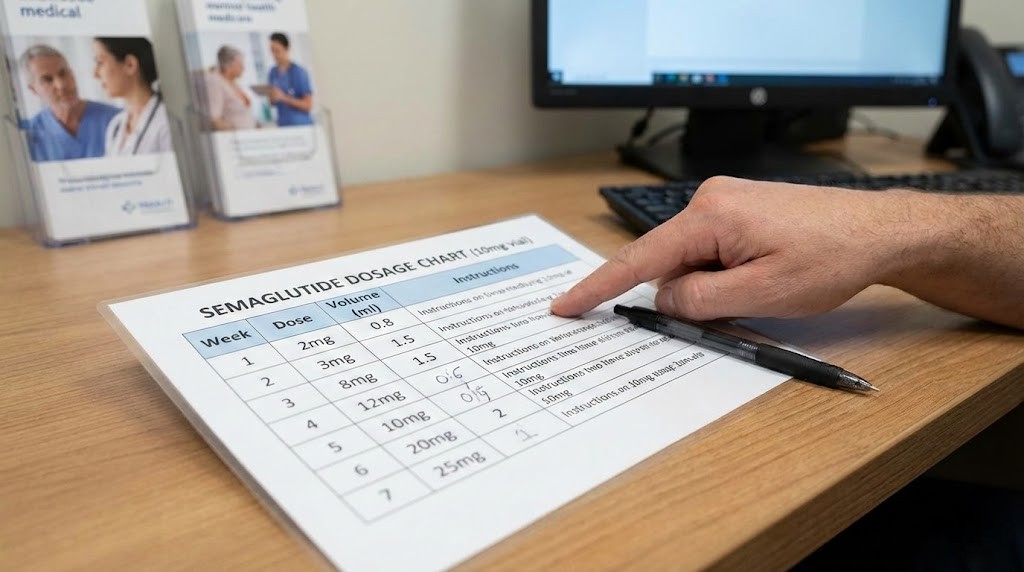
You are wasting semaglutide. Maybe not all of it. But if you are drawing doses from a 10mg vial without a precise dosage chart, you are almost certainly losing product to guesswork, rounding errors, and incorrect unit conversions. That lost peptide is not just a scientific inconvenience. It is money dissolving into bacteriostatic water. One miscalculated reconstitution ratio can throw off every single dose you draw for the next several weeks. And the problem compounds. A researcher who adds 2mL of water when the protocol calls for 3mL has just created a concentration 50% stronger than intended. Every tick mark on that insulin syringe now delivers more than expected.
The margin between a therapeutic dose and an uncomfortable wave of nausea is not as wide as most people assume. The semaglutide dosage calculator can help you verify your math, but understanding the full dosage chart from reconstitution through final escalation is what separates a structured protocol from a costly experiment in trial and error.
This guide covers every detail of the semaglutide 10mg dosage chart. Reconstitution ratios. Unit-to-milligram conversions. Weekly escalation schedules pulled from clinical trial data. Storage rules that protect potency. And the common mistakes that cause researchers to burn through vials faster than necessary. Whether you are starting your first vial or transitioning from a 5mg format, this is the reference you keep next to the syringe.
What the semaglutide 10mg vial actually contains
Open the box and you will find a small glass vial. Inside is not a liquid. It is a freeze-dried powder, a white to off-white cake of lyophilized semaglutide sitting at the bottom of the vial. This is the raw peptide in its most stable form, waiting for reconstitution before it becomes anything usable.
The 10mg label refers to the total amount of active semaglutide peptide in that vial. Not the volume. Not the concentration. Just the mass of the active compound. Everything else, the concentration per milliliter, the number of units per dose, the number of weeks the vial will last, all of that depends entirely on how much bacteriostatic water you add during reconstitution. This single decision shapes your entire dosing experience.
It is worth understanding what this vial is not. It is not Ozempic. It is not Wegovy. Those are prefilled injection pens manufactured by Novo Nordisk with fixed concentrations and pre-measured doses built into the delivery device. You click a dial, inject, and the pen handles the math for you. A 10mg research vial of compounded semaglutide offers no such convenience. You are responsible for the reconstitution, the concentration calculation, and the volume measurement for every single injection. The compounded semaglutide dose chart walks through those differences in detail.
The 10mg vial has become the most common format in the compounded peptide space for a practical reason. It offers the best balance between cost efficiency and shelf life. A 5mg vial runs out quickly once you reach maintenance doses above 1mg per week. A 10mg vial, reconstituted properly, can last anywhere from four weeks at the highest dose to nearly a year at starting doses. That flexibility makes it the default choice for most protocols. If you are comparing the two formats, the semaglutide 5mg dosage chart provides side-by-side numbers.
Compounded semaglutide is synthesized to the same amino acid sequence as the branded versions. The peptide itself is identical, a 31-amino acid GLP-1 receptor agonist with a C-18 fatty acid chain that extends its half-life to roughly seven days. That long half-life is what allows once-weekly dosing. It is also what makes accurate dosing so important. An error does not wash out of the system in hours. It lingers for days.
Reconstitution ratios for 10mg semaglutide
Reconstitution is where precision starts. The amount of bacteriostatic water you add to the 10mg vial determines the concentration of every dose you will draw. Get this step wrong and every subsequent measurement is off. There is no way to fix a bad reconstitution without starting over with a new vial.
Three reconstitution volumes are commonly used with 10mg semaglutide vials. Each creates a different concentration.
Standard reconstitution: 10mg plus 3mL bacteriostatic water
This is the most widely recommended ratio. Adding 3mL of bacteriostatic water to a 10mg vial produces a concentration of 3.33mg per mL. It is the standard because it strikes a balance between dose precision and practical syringe volumes. At this concentration, most doses fall within a readable range on a standard U-100 insulin syringe. The math is straightforward. You do not need to draw impossibly small volumes for lower doses, and you do not need excessively large volumes for higher doses. For a deeper look at this specific ratio, the semaglutide reconstitution chart for 10mg breaks down every step.
At 3.33mg/mL, one unit on a U-100 insulin syringe equals 0.01mL, which delivers exactly 33.3 micrograms of semaglutide. That number becomes the building block for every dose calculation.
Higher concentration: 10mg plus 2mL bacteriostatic water
Adding only 2mL creates a concentration of 5mg per mL. This is a more concentrated solution. Smaller injection volumes. Less fluid under the skin. Some researchers prefer it because the injections feel smaller, and the math can be slightly simpler for certain dose levels. The semaglutide 5mg/2mL dosage chart covers this concentration in full.
The trade-off is reduced precision at lower doses. At 5mg/mL, a 0.25mg dose requires drawing only 5 units on the syringe. That is a tiny volume. The difference between 5 units and 6 units represents a 20% dosing error. For someone just starting at 0.25mg weekly, that margin matters.
Lower concentration: 10mg plus 4mL bacteriostatic water
This ratio produces 2.5mg per mL. The injection volumes are larger, but the precision at lower doses improves significantly. A 0.25mg dose requires 10 units instead of 7.5, making it easier to measure accurately. This option works well for people who prioritize measurement accuracy over injection comfort, especially during the early weeks of a protocol when doses are small.
The question of how much bacteriostatic water to mix with 10mg semaglutide comes down to your priorities. Precision favors more water. Smaller injections favor less. The 3mL standard is the most common because it handles both concerns reasonably well.
Reconstitution ratio comparison table
Water volume | Concentration | 1 unit equals | 0.25mg dose | 1.0mg dose | 2.4mg dose |
|---|---|---|---|---|---|
2mL | 5.00 mg/mL | 50.0 mcg | 5 units | 20 units | 48 units |
3mL | 3.33 mg/mL | 33.3 mcg | 7.5 units | 30 units | 72 units |
4mL | 2.50 mg/mL | 25.0 mcg | 10 units | 40 units | 96 units |
The reconstitution process step by step
Clean the rubber stopper on the semaglutide vial with an alcohol swab. Let it dry. Draw your chosen volume of bacteriostatic water into a sterile syringe. Insert the needle through the stopper at a slight angle. Here is the critical part. Do not spray the water directly onto the powder cake. Direct the stream against the glass wall of the vial and let it trickle down gently. Semaglutide is a delicate peptide. Aggressive mixing damages the molecular structure.
Once the water is in the vial, do not shake it. Do not swirl it vigorously. Tilt the vial gently. Let it sit for a few minutes. Tilt again. The powder should dissolve completely into a clear solution within five to ten minutes. If it remains cloudy or has visible particles after fifteen minutes, something may have gone wrong, either with the reconstitution technique or the peptide itself. The complete reconstitution guide covers troubleshooting in detail, and the mixing peptides with bacteriostatic water article addresses common technique errors.
Use the peptide reconstitution calculator from SeekPeptides to double-check your concentration before drawing your first dose. A two-second verification can prevent weeks of incorrect dosing.
Complete semaglutide 10mg dosage chart by week
This is the chart you came here for. The standard semaglutide dose escalation protocol spans a minimum of 16 weeks before reaching the full maintenance dose. Each phase lasts four weeks. Some researchers extend individual phases if side effects require a slower approach. The numbers below assume you are using the standard 3.33mg/mL concentration from a 10mg vial reconstituted with 3mL of bacteriostatic water.
Dosage chart at 3.33 mg/mL concentration (10mg plus 3mL)
Phase | Weeks | Weekly dose | Units to draw (U-100) | Volume (mL) |
|---|---|---|---|---|
Phase 1 | 1 to 4 | 0.25 mg | 7.5 units | 0.075 mL |
Phase 2 | 5 to 8 | 0.50 mg | 15 units | 0.15 mL |
Phase 3 | 9 to 12 | 1.00 mg | 30 units | 0.30 mL |
Phase 4 | 13 to 16 | 1.70 mg | 51 units | 0.51 mL |
Phase 5 | 17 onward | 2.40 mg | 72 units | 0.72 mL |
At 7.5 units for the starting dose, you are working between the 7 and 8 unit marks on most insulin syringes. This is where practice and good lighting matter. Some researchers round to 7 or 8 units, which changes the actual dose slightly. Seven units delivers approximately 0.233mg. Eight units delivers approximately 0.267mg. Neither deviation is dangerous at this early phase, but consistency matters over time.
For those who want every dose in milligrams converted to milliliters, the semaglutide dosage chart in mL provides exactly that. And if you think in units rather than milliliters, the semaglutide dosing chart in units is the faster reference.
Dosage chart at 5.00 mg/mL concentration (10mg plus 2mL)
Phase | Weeks | Weekly dose | Units to draw (U-100) | Volume (mL) |
|---|---|---|---|---|
Phase 1 | 1 to 4 | 0.25 mg | 5 units | 0.05 mL |
Phase 2 | 5 to 8 | 0.50 mg | 10 units | 0.10 mL |
Phase 3 | 9 to 12 | 1.00 mg | 20 units | 0.20 mL |
Phase 4 | 13 to 16 | 1.70 mg | 34 units | 0.34 mL |
Phase 5 | 17 onward | 2.40 mg | 48 units | 0.48 mL |
Notice how the 5mg/mL concentration produces cleaner numbers at most dose levels. Ten units for 0.5mg. Twenty for 1.0mg. That simplicity is appealing. But five units for the starting dose is genuinely difficult to measure accurately with most consumer-grade insulin syringes. If precision at low doses matters to you, the 3mL reconstitution is safer. The semaglutide 5mg/mL dosage chart addresses this trade-off thoroughly.
How to read a U-100 insulin syringe
A U-100 insulin syringe is calibrated so that 100 units equals 1 mL. Each small tick mark on a standard 1mL syringe represents 1 unit, which is 0.01mL. On a 0.5mL syringe, each tick mark still represents 1 unit, but the barrel is narrower, which actually improves precision for smaller volumes.
When drawing your dose, hold the syringe at eye level. The meniscus, the curved surface of the liquid, should sit right at the target line. Read from the bottom of the curve, not the top. This detail sounds trivial. It is not. At small volumes, reading from the wrong part of the meniscus can change your dose by a full unit. The semaglutide syringe dosage chart includes visual references for reading these markings correctly, and the conversion chart for semaglutide syringe dosage maps out every common dose level.
Some researchers prefer 0.3mL syringes for the early phases when doses are small. The narrower barrel makes each unit mark physically larger and easier to read. Then they switch to a 1mL syringe once doses exceed 30 units. This is a practical optimization, not a requirement.
Unit calculations explained
This is where most dosing errors originate. The relationship between milligrams, milliliters, and syringe units confuses even experienced researchers. Let us break it down until the math is second nature.
The fundamental formula
Volume to draw (mL) = desired dose (mg) divided by concentration (mg/mL).
That is it. One formula. Everything else is just plugging in numbers. The peptide dosage calculation guide walks through the algebra step by step if you want the full derivation.
Calculations at 3.33 mg/mL
For a 0.25mg dose: 0.25 divided by 3.33 equals 0.075mL, which is 7.5 units on a U-100 syringe.
For a 0.5mg dose: 0.5 divided by 3.33 equals 0.15mL, which is 15 units.
For a 1.0mg dose: 1.0 divided by 3.33 equals 0.30mL, which is 30 units. Clean number. Easy to draw.
For a 1.7mg dose: 1.7 divided by 3.33 equals 0.51mL, which is 51 units.
For a 2.4mg dose: 2.4 divided by 3.33 equals 0.72mL, which is 72 units.
At this concentration, the commonly asked question of how many mg is 50 units of semaglutide has a specific answer: 50 units at 3.33mg/mL delivers 1.665mg. And 40 units of semaglutide at this concentration delivers 1.332mg. The answer always depends on the concentration, which is why knowing your reconstitution ratio is non-negotiable.
Calculations at 5 mg/mL
For a 0.25mg dose: 0.25 divided by 5 equals 0.05mL, which is 5 units.
For a 0.5mg dose: 0.5 divided by 5 equals 0.10mL, which is 10 units.
For a 1.0mg dose: 1.0 divided by 5 equals 0.20mL, which is 20 units.
For a 1.7mg dose: 1.7 divided by 5 equals 0.34mL, which is 34 units.
For a 2.4mg dose: 2.4 divided by 5 equals 0.48mL, which is 48 units.
Cleaner numbers across the board. But that 5-unit starting dose remains the weak point. If you want to explore what 20 units of semaglutide translates to at different concentrations, the conversion depends entirely on which ratio you used.
Common dose-to-unit conversion table (3.33 mg/mL)
Desired dose (mg) | Volume (mL) | Units on U-100 syringe |
|---|---|---|
0.125 | 0.0375 | 3.75 units |
0.25 | 0.075 | 7.5 units |
0.375 | 0.1125 | 11.25 units |
0.50 | 0.15 | 15 units |
0.75 | 0.225 | 22.5 units |
1.00 | 0.30 | 30 units |
1.25 | 0.375 | 37.5 units |
1.50 | 0.45 | 45 units |
1.70 | 0.51 | 51 units |
2.00 | 0.60 | 60 units |
2.40 | 0.72 | 72 units |
Bookmark this table or save it on your phone. Having the numbers in front of you during dose preparation eliminates calculation errors. Better yet, use the peptide calculator on SeekPeptides for real-time verification. The conversion chart for semaglutide dosage in units provides even more dose points for uncommon increments.
Avoiding measurement errors
Three common mistakes ruin unit accuracy.
First, air bubbles in the syringe barrel displace liquid volume. A bubble sitting at the 10-unit mark means you are drawing 10 units of air and solution combined, not 10 units of solution. Always tap the syringe with the needle pointing up, flick it gently, and push any bubbles out before drawing to your target volume.
Second, inconsistent angle when reading the syringe. Tilt the syringe even slightly and the meniscus shifts against the markings. Hold it perfectly level at eye height every time.
Third, forgetting about dead space. Every syringe has a small volume of solution that remains in the hub after injection, trapped in the space between the plunger and the needle attachment. Most standard insulin syringes are designed as low-dead-space devices, but some cheaper syringes lose 2 to 5 units of product per injection. Over a full vial, that loss adds up. The common peptide mistakes beginners make article covers this issue and several others.
How long does a 10mg semaglutide vial last?
This depends on two things. Your weekly dose. And whether the reconstituted solution stays stable long enough to use all of it.
Vial longevity by dose level
Weekly dose | Doses per 10mg vial | Duration |
|---|---|---|
0.25 mg | 40 doses | 40 weeks |
0.50 mg | 20 doses | 20 weeks |
1.00 mg | 10 doses | 10 weeks |
1.70 mg | 5.9 doses | ~6 weeks |
2.40 mg | 4.2 doses | ~4 weeks |
Here is the problem. Reconstituted semaglutide has a recommended stability window of 28 days when stored at 2 to 8 degrees Celsius. At the 0.25mg starting dose, a 10mg vial theoretically provides 40 weeks of doses, but the solution degrades long before you use it all. This means at lower doses, a significant portion of the vial goes to waste unless you have a strategy.
Some researchers use smaller vials for the early dose escalation phases. A 5mg vial at 0.25mg weekly lasts 20 weeks. Still beyond the 28-day window, but the loss is smaller. Others reconstitute the 10mg vial, draw multiple doses into separate syringes, and freeze the pre-loaded syringes for later use. This approach has practical considerations regarding stability that the compounded semaglutide fridge stability guide addresses.
The 10mg vial becomes the clear value choice once you reach 1.0mg weekly or higher. At that dose level, the vial lasts 10 weeks, well within a reasonable stability window even with some buffer. At 2.4mg weekly, you consume the entire vial in about four weeks, matching the 28-day guideline almost perfectly.
Cost efficiency analysis
Think about cost per milligram, not cost per vial. A 10mg vial typically costs less per milligram than two separate 5mg vials of comparable quality. The savings become meaningful at maintenance doses where consumption is high. For detailed cost comparisons across different peptide formats, the peptide cost guide breaks down real numbers, and the peptide cost calculator lets you run your own scenarios.
The practical recommendation: use 5mg vials during the first eight weeks of dose escalation when weekly consumption is low. Switch to 10mg vials once you reach Phase 3 at 1.0mg weekly. This minimizes waste while maximizing cost efficiency.
The standard dose escalation protocol
Gradual titration is not optional. It is the foundation of safe semaglutide use. The standard escalation protocol exists because the body needs time to adjust to GLP-1 receptor activation. Jumping straight to a full dose invites a cascade of gastrointestinal side effects that can derail the entire protocol. Understanding how long semaglutide takes to work requires patience through this ramp-up period.
Phase 1: 0.25mg weekly (weeks 1 through 4)
This is the introduction phase. The dose is too low to produce significant weight loss or appetite suppression in most people. That is by design. The goal here is to let the GI tract adapt to GLP-1 receptor stimulation. The stomach slows its emptying rate. The intestines adjust their motility patterns. These changes need to happen gradually.
At 0.25mg, most researchers report mild or no side effects. Some notice subtle appetite changes toward the end of the four weeks. Others feel nothing at all and wonder if the peptide is working. It is. The receptors are engaging. The physiological changes are beginning. They just have not reached the threshold for noticeable effects yet. For anyone wondering how long semaglutide takes to suppress appetite, the answer usually falls somewhere in Phase 2 or Phase 3.
Phase 2: 0.5mg weekly (weeks 5 through 8)
This is where things start to shift. Most people begin noticing reduced appetite. Food noise, that constant background hum of thinking about meals and snacks, begins to quiet. Portions shrink naturally. The craving for high-calorie, high-reward foods starts to fade.
Side effects become more common at this dose. Mild nausea after meals. Slight stomach discomfort. These typically resolve within the first week or two of Phase 2 as the body continues to adapt. If they persist strongly throughout the full four weeks, that is useful information for deciding whether to extend this phase before escalating further.
The how fast does semaglutide work article provides realistic timelines for these initial effects. Weight loss during Phase 2 is usually modest, often 1 to 3 pounds depending on starting weight, dietary patterns, and activity level.
Phase 3: 1.0mg weekly (weeks 9 through 12)
One milligram is a clinically significant dose. In the STEP 1 trial, participants who reached and maintained this dose level showed meaningful weight loss over the study period. Appetite suppression is typically strong and consistent at 1.0mg. Many researchers find this to be their effective maintenance dose and choose not to escalate further.
This phase also tends to bring more noticeable GI side effects for some people. Nausea, constipation, or occasional diarrhea may appear or intensify. These are direct consequences of GLP-1 receptor activation in the gut. They are not dangerous, but they require attention. Dietary adjustments help significantly, smaller meals, reduced fat intake, adequate hydration.
At 1.0mg weekly from a 10mg vial reconstituted with 3mL, you draw 30 units per injection. This is one of the cleanest measurement points on the syringe, right at the 30-unit mark with no estimation required. The vial lasts 10 weeks at this dose. Practical. Efficient. The peptide dosing guide offers context on how this compares to dosing protocols for other peptides.
Phase 4: 1.7mg weekly (weeks 13 through 16)
This dose pushes deeper into appetite suppression territory. Weight loss accelerates for most researchers at this level. The 1.7mg dose was not part of the original STEP trial protocol for semaglutide 2.4mg (which used 0.25, 0.5, 1.0, 1.7, then 2.4), but it serves as a crucial intermediate step that reduces the jump between 1.0mg and 2.4mg.
Drawing 51 units on the syringe is straightforward. The measurement falls just above the 50-unit mark (halfway on a 1mL syringe). Side effects at 1.7mg are manageable for most people who tolerated Phase 3 well. The body has had 12 weeks of graduated exposure at this point, and the GI system has made significant adaptations.
Phase 5: 2.4mg weekly (week 17 onward)
This is the maximum recommended dose from the clinical trials. At 2.4mg weekly, semaglutide produced its most impressive outcomes. The STEP 1 trial demonstrated a mean body weight reduction of 14.9% at the 2.4mg maintenance dose over 68 weeks, compared to just 2.4% in the placebo group. Among participants, 86.4% achieved at least 5% body weight loss, and between 69% and 79% achieved 10% or greater loss across the various STEP trials.
Not everyone needs to reach 2.4mg. Some people achieve their goals at 1.0mg or 1.7mg with manageable side effects and choose to stay there. Pushing to the maximum dose when a lower dose is working adds side effect burden without guaranteed additional benefit for that individual. The decision depends on response, tolerance, and goals.
At 2.4mg weekly, a 10mg vial lasts approximately 4.2 weeks. You will go through vials quickly at this level, which is why cost-conscious researchers pay close attention to per-milligram pricing. The peptide therapy cost guide helps with this analysis.
What the STEP trials actually showed
The STEP trial program was a series of large, randomized, double-blind, placebo-controlled studies that established semaglutide 2.4mg as a weight management intervention. The numbers deserve specific attention because they inform expectations.
STEP 1 enrolled adults with obesity or overweight with at least one weight-related comorbidity. The 14.9% mean weight loss at 68 weeks was unprecedented for a GLP-1 receptor agonist at the time. STEP 2 focused on adults with type 2 diabetes and showed a mean weight loss of approximately 9.6%, lower than STEP 1 but still clinically meaningful given the metabolic complexity of diabetes.
STEP 3 combined semaglutide with intensive behavioral therapy and reported approximately 16% mean weight loss. STEP 4, a withdrawal study, demonstrated that weight regained after stopping semaglutide, reinforcing that the drug works best as an ongoing intervention rather than a short course. This finding has implications for how long to stay on semaglutide for weight loss and understanding semaglutide withdrawal symptoms.
The data is clear. Semaglutide works. But it works within a structured dosing framework. Skipping the escalation, overdosing, or underdosing all compromise results. The chart exists for a reason.
Semaglutide 10mg versus 5mg vial comparison
The choice between a 10mg and 5mg vial is not just about having more or less peptide. It affects reconstitution strategy, dose precision, vial longevity, cost per dose, and how often you need to reconstitute a fresh vial.
When to choose the 10mg vial
Choose 10mg when your weekly dose is 1.0mg or higher. At these maintenance doses, you consume peptide quickly enough to use the vial within its stability window. The cost per milligram is lower with 10mg vials from most suppliers. You reconstitute less frequently, which means fewer opportunities for contamination or reconstitution error. And you have enough volume in the vial to avoid the frustration of switching vials mid-escalation phase.
The semaglutide 10mg vial dosage chart provides a dedicated reference for this specific format. Researchers on maintenance protocols at the higher dose levels will find the 10mg vial to be the most practical option by a significant margin.
When to choose the 5mg vial
Choose 5mg for the initial dose escalation phases, weeks 1 through 8, when you are dosing at 0.25mg or 0.5mg weekly. At these low doses, a 10mg vial contains far more peptide than you can use within 28 days. A 5mg vial still contains more than you will use, but the waste is smaller in absolute terms.
The 5mg vial also makes sense for people testing semaglutide for the first time. If the protocol does not work out, if side effects are intolerable, if priorities change, the financial loss from an unused 5mg vial is half that of a 10mg vial. The 5mg dosage chart covers the full escalation protocol scaled for this smaller vial.
Comparison at a glance
Feature | 5mg vial | 10mg vial |
|---|---|---|
Best for | Starting doses (0.25 to 0.5mg) | Maintenance doses (1.0mg and up) |
Cost per mg | Higher | Lower |
Duration at 0.25mg/week | 20 weeks (theoretical) | 40 weeks (theoretical) |
Duration at 2.4mg/week | ~2.1 weeks | ~4.2 weeks |
Reconstitution frequency | More frequent at high doses | Less frequent |
Waste at low doses | Less absolute waste | More absolute waste |
There is a middle-ground approach that some experienced researchers use. They start with a 5mg vial for Phase 1 and Phase 2, then transition to 10mg vials once they reach Phase 3. This minimizes waste during the low-dose ramp and maximizes value during the high-consumption maintenance period. The semaglutide mixing chart can help you plan reconstitution volumes regardless of which vial size you select, and the 10mg-specific mixing chart addresses the larger vial directly.
Storage and stability after reconstitution
You have reconstituted your vial. The solution is clear. Now what? Storage is where potency is either preserved or destroyed. The rules are simple, but they are strict.
Temperature requirements
Reconstituted semaglutide must be stored at 2 to 8 degrees Celsius. That is standard refrigerator temperature. Not the freezer. Not the door shelf where temperatures fluctuate every time you open the fridge. Place the vial in the main compartment, toward the back, where the temperature is most stable.
A thermometer inside the refrigerator is not excessive. It is baseline diligence. If your fridge runs warm (above 8 degrees), the degradation rate increases. If it freezes (below 0 degrees), ice crystals can damage the peptide structure. Either extreme compromises the product. The detailed peptide storage guide covers optimal conditions for all peptide types, and the question of whether compounded semaglutide needs refrigeration is answered unambiguously: yes.
The 28-day use window
Once reconstituted, plan to use the solution within 28 days. This timeline comes from stability data showing that the peptide maintains its potency and sterility within this window under proper refrigeration. After 28 days, the risk of bacterial contamination increases (even with the 0.9% benzyl alcohol preservative in bacteriostatic water), and the peptide itself may begin to degrade.
Some researchers report using solutions beyond 28 days without obvious issues. That is anecdotal. Clinical data supports the 28-day limit. Pushing beyond it is a personal decision with accepted risk. The how long peptides last in the fridge article examines stability timelines across multiple peptide types, and the reconstituted peptide fridge longevity guide provides even more detail.
Signs of degradation
Clear solution turning cloudy. Visible particles floating in the liquid. Color change from clear to yellowish. Any of these signs indicate that the peptide has degraded or the solution has been contaminated. Do not inject it. Discard the vial and reconstitute a new one. If you are questioning whether your semaglutide is still viable, the guide on using expired semaglutide explains what to look for and when to draw the line.
Travel considerations
Traveling with reconstituted semaglutide requires a cold chain solution. A small insulated bag with ice packs maintains proper temperature for several hours. For longer trips, a portable mini-fridge or a hotel refrigerator works. The vial should never sit at room temperature for more than a brief period during dose preparation.
If you are traveling for more than 28 days, consider bringing an unreconstituted vial along with bacteriostatic water and syringes. Peptides in powder form are far more stable than reconstituted solutions and do not require refrigeration during short-term transport, though they should be kept cool and away from direct sunlight. The room temperature peptide stability guide outlines exactly how long unreconstituted peptides remain viable outside the fridge.
Pre-reconstitution storage
Before adding water, semaglutide powder should be stored in a cool, dry place away from light. Refrigeration extends shelf life but is not strictly required for the lyophilized form over shorter periods. Most suppliers provide a manufacturing date and an expiration date on the vial. Respect the expiration date. The do peptides expire article dispels common myths and clarifies what those dates actually mean.
Managing side effects during dose escalation
Side effects are not a sign that something is wrong. They are a sign that the drug is working. GLP-1 receptor agonists slow gastric emptying, reduce appetite, and alter gut motility. These mechanisms produce results. They also produce discomfort that ranges from negligible to significant, depending on the individual, the dose, and the escalation speed.
The gastrointestinal timeline
Across the STEP trials, GI side effects followed a consistent pattern. They peak around week 20 of the protocol, which corresponds to the early weeks on the maximum 2.4mg dose. After that peak, side effects decrease even as the dose remains constant. The body adapts. The gut adjusts. What felt unbearable at week 20 often feels manageable or even absent by week 30.
Nausea is the most commonly reported side effect. It averages about 8 days per episode in most clinical reports. That means the worst of any given bout of nausea typically resolves within about a week. Some people experience it with every dose escalation. Others experience it once and never again. The unpredictability is frustrating, but knowing the average duration helps set realistic expectations.
Nausea management strategies
Eat smaller meals. This is the single most impactful dietary change. Semaglutide slows stomach emptying, so a large meal sits in the stomach longer than usual, amplifying the feeling of fullness to the point of nausea. Smaller, more frequent meals bypass this bottleneck.
Reduce fat intake. Fatty foods are the slowest to leave the stomach under normal conditions. Add GLP-1 receptor agonist-induced gastroparesis and fatty meals become a reliable nausea trigger. Lean proteins, complex carbohydrates, and vegetables are better tolerated.
Stay hydrated. Dehydration worsens nausea and contributes to constipation, another common side effect. Aim for consistent water intake throughout the day rather than large volumes at once.
Time your injection strategically. Some researchers find that injecting at bedtime allows the peak nausea period to occur during sleep. Others prefer morning injections so any discomfort resolves before the end of the day. Experiment to find what works for your body.
When to hold versus reduce the dose
If side effects at a new dose level are significant but manageable, hold at that dose for an additional two to four weeks before escalating. The protocol timeline is a guideline, not a rigid mandate. Extending Phase 2 from four weeks to six or eight weeks is better than pushing to Phase 3 while still struggling with nausea at 0.5mg.
If side effects are severe, vomiting multiple times per day, inability to keep fluids down, persistent diarrhea, reducing back to the previous dose level is the appropriate response. Stay at the lower dose until symptoms resolve completely, then attempt the escalation again. Some people need two or three attempts at a given dose level before tolerating it comfortably.
The why not losing weight on semaglutide guide addresses the frustration of stalling at lower doses and discusses strategies for moving forward productively. Understanding the full peptide safety profile helps contextualize these side effects within the broader picture.
Other reported side effects
Constipation affects approximately 24% of users in clinical studies. It tends to appear in the mid-escalation phases and responds well to increased fiber intake, hydration, and gentle movement. Diarrhea is less common but occurs in some individuals, particularly during dose increases.
Injection site reactions, redness, swelling, or itching at the injection point, occur in a minority of users and are typically mild and transient. Rotating injection sites between the abdomen, thigh, and upper arm reduces the likelihood of persistent irritation. The peptide injection guide covers proper technique for minimizing site reactions.
Hair thinning has been reported by some GLP-1 agonist users, though the mechanism is debated. It may be related to the rapid weight loss itself (telogen effluvium) rather than a direct drug effect. The GLP-1 hair loss guide examines the evidence and potential mitigation strategies.
Common dosing mistakes with 10mg vials
These errors cost money, waste product, and compromise results. Every single one is preventable with awareness and basic attention to process.
Mistake 1: wrong reconstitution volume
This is the most consequential error. Adding 2mL instead of 3mL creates a solution that is 50% more concentrated than intended. Every dose drawn from that vial is 50% stronger than the chart suggests. At the 2.4mg dose level, you would actually be injecting 3.6mg, well above the studied maximum. At the 0.25mg starting dose, you would be getting 0.375mg, not catastrophic but enough to trigger unnecessary side effects right from the beginning.
The fix is simple. Decide on your reconstitution volume before you open the bacteriostatic water. Write it down. Verify it with the reconstitution calculator. Then draw the water slowly and carefully to the correct mark on the syringe. The guide on bacteriostatic water volumes covers the principles behind choosing the right amount.
Mistake 2: confusing units and milligrams
Units on a syringe are not milligrams. This seems obvious when stated plainly, but under the cognitive load of a new protocol, people make this mistake more often than anyone wants to admit. Drawing "25 units" when you mean "0.25mg" delivers 0.833mg at the 3.33mg/mL concentration. That is more than three times the intended dose in Phase 1.
Always express your target dose in milligrams first, then convert to units using the formula or chart. Never work backward from units unless you have already verified the conversion. The semaglutide reconstitution chart makes this conversion explicit for every common dose level.
Mistake 3: skipping dose escalation steps
Impatience is understandable. Results at 0.25mg are minimal. The temptation to jump straight to 1.0mg or higher is real. Resist it. The escalation protocol was designed around tolerability data from thousands of clinical trial participants. Those who ramped slowly had better adherence, fewer severe side effects, and ultimately better long-term outcomes than those who tried to accelerate. The getting started with peptides resource emphasizes this principle across all peptide protocols.
Mistake 4: not accounting for dead space
Standard insulin syringes leave a small amount of liquid in the hub and needle after the plunger is fully depressed. This "dead space" typically holds about 0.5 to 1 unit of solution. Over the life of a vial, this adds up. At 1 unit of dead space per injection and 10 injections per vial at 1.0mg weekly, you lose approximately 10 units, which is roughly 0.33mg or one-third of a dose.
Low-dead-space syringes minimize this loss. They are designed with a plunger that extends all the way to the needle base, leaving virtually no trapped volume. If you are serious about maximizing your vial, these syringes are a worthwhile investment.
Mistake 5: incorrect storage
Leaving a reconstituted vial on the counter overnight. Storing it in the freezer "to keep it extra fresh." Placing it on the refrigerator door where temperature swings occur every time the door opens. All of these compromise the peptide. The how to store peptides after reconstitution guide covers the exact conditions needed to maintain potency throughout the 28-day window.
Switching between semaglutide doses and formulations
Life changes. Vial sizes change. Suppliers change. Knowing how to transition between different semaglutide formats without disrupting your protocol is a practical skill that comes up more often than you might expect.
From a 5mg vial to a 10mg vial
This is the most common switch, usually happening when a researcher moves from early dose escalation to maintenance. The transition is straightforward. Finish your current 5mg vial or discard any remaining solution past the 28-day mark. Reconstitute the new 10mg vial at your chosen ratio. Recalculate your unit measurements based on the new concentration.
The critical detail: if you used a different water volume for the 5mg vial than you plan to use for the 10mg vial, the concentration changes and so does the number of units per dose. Check every number against the 5mg mixing chart and the 10mg mixing chart before drawing your first dose from the new vial.
From branded to compounded semaglutide
Some researchers transition from branded Ozempic or Wegovy to compounded semaglutide vials. The peptide is chemically identical, but the delivery mechanism is completely different. With branded products, you are using a prefilled pen with predetermined concentrations. With compounded vials, you handle reconstitution and dose measurement yourself. The compounded semaglutide guide addresses this transition in depth.
When switching, verify that your compounded dose matches the branded dose you were on. A common error is confusing the branded pen dose (e.g., "1mg click") with the vial dose and drawing the wrong volume. Double-check every conversion. Use the semaglutide dosage calculator as verification.
From semaglutide to tirzepatide
Some researchers explore switching to tirzepatide, a dual GIP/GLP-1 receptor agonist that works through a different mechanism. This is not a simple one-to-one dose swap. The potency profiles, side effect patterns, and escalation timelines differ significantly between the two peptides. The semaglutide to tirzepatide dose conversion chart provides the most commonly referenced equivalence ratios, and the full conversion guide walks through the transition protocol.
The general principle: start tirzepatide at a lower dose than you might expect based on your semaglutide dose. The dual receptor activity means that tirzepatide at a theoretically "equivalent" dose may feel significantly stronger. The switching from semaglutide to tirzepatide dosage chart maps this out clearly, and the semaglutide versus tirzepatide comparison page provides a broader analysis of the two compounds.
For those considering the reverse switch, the tirzepatide to semaglutide conversion chart covers dose mapping in the other direction, and the switching from tirzepatide to semaglutide dosage chart details the timeline.
Advanced dosing considerations
The standard five-phase escalation works for most people. But not everyone follows a textbook path. Some situations require adjustments, alternative approaches, or supplementary strategies that go beyond the basic chart.
Weight-based dosing considerations
The standard semaglutide protocol does not adjust for body weight. Whether someone weighs 180 pounds or 350 pounds, the starting dose is 0.25mg and the maximum is 2.4mg. This is based on the clinical trial design, which used fixed dosing across weight categories.
However, the clinical reality is that heavier individuals may need to reach higher doses to achieve comparable appetite suppression effects. Some researchers note that they do not feel significant appetite reduction until reaching 1.7mg or 2.4mg, while lighter individuals may experience strong effects at 1.0mg or even 0.5mg. The chart provides the ceiling, but the effective maintenance dose is individual. The peptide calculator for weight loss can help frame dosing within the context of body composition goals.
Microdosing approaches
A growing number of researchers explore semaglutide at doses below the standard 0.25mg starting point. Doses as low as 0.0625mg or 0.125mg per week, sometimes called microdosing, aim to minimize side effects while still providing some degree of appetite modulation. The theory is that even minimal GLP-1 receptor stimulation can influence food reward pathways and metabolic signaling.
From a practical standpoint, microdosing from a 10mg vial reconstituted with 3mL requires drawing extremely small volumes. A 0.125mg dose is only 3.75 units at 3.33mg/mL concentration, a volume that pushes the limits of syringe accuracy. Reconstituting with 4mL or 5mL of water creates a more dilute solution and makes these tiny doses easier to measure. The semaglutide with B12 dosage chart covers one popular microdosing variation.
Semaglutide with B12 combinations
Some compounding pharmacies offer semaglutide formulated with cyanocobalamin (vitamin B12). The rationale is that GLP-1 receptor agonists can reduce B12 absorption over time due to their effects on gastric acid production and gut motility. Pre-combining B12 with semaglutide addresses this potential deficiency proactively.
The dosing charts for combined formulations differ from standalone semaglutide because the concentration per milliliter reflects both the semaglutide content and the B12 content. Do not assume that a semaglutide-B12 blend at "10mg/mL" means the same thing as a standalone 10mg vial reconstituted to a certain concentration. Read the label. Check the numbers. The semaglutide with B12 complete guide breaks down these formulations and the compounded semaglutide with B12 dosage chart provides the specific numbers.
Combining semaglutide with other peptides
Some researchers stack semaglutide with other peptides that target complementary pathways. BPC-157 for gut health support during the GI-heavy early weeks is one example. The BPC-157 dosage calculator can help with that particular combination. Others explore combinations with AOD-9604 for additional fat metabolism support or TB-500 for recovery.
Stacking requires careful attention to interactions, injection timing, and cumulative side effects. The peptide stacking guide covers the fundamentals, and the best peptide stack for weight loss addresses combinations specifically oriented toward body composition improvement. Planning cycles with multiple peptides benefits from the peptide cycle planning guide and the peptide stack calculator.
Plateau strategies
Weight loss plateaus on semaglutide are common and expected. They do not necessarily mean the drug has stopped working. They often mean that the body has reached a new equilibrium point where energy expenditure matches the reduced intake. The plateau might last two weeks. It might last six. The temptation to increase the dose beyond 2.4mg exists, but clinical data beyond that dose point is limited for weight management specifically.
Before increasing dose, evaluate the non-pharmacological variables. Has caloric intake crept up? Has activity decreased? Has stress or sleep quality changed? Sometimes the plateau breaks with behavioral adjustments rather than dose increases. The why not losing weight on semaglutide article provides a systematic troubleshooting framework.
Newer compounds like retatrutide and combination therapies like cagrilintide with semaglutide (CagriSema) represent the next wave of GLP-1 based interventions for those who have maximized semaglutide monotherapy. The retatrutide versus semaglutide comparison examines these options side by side.
The broader context: semaglutide within the GLP-1 landscape
Semaglutide does not exist in isolation. It is one compound in a rapidly expanding class of GLP-1-based peptides, and understanding where it sits in that landscape helps researchers make informed protocol decisions.
Tirzepatide, the dual GIP/GLP-1 agonist, has shown even greater weight loss in head-to-head comparisons. The SURMOUNT trials reported mean weight loss exceeding 20% at the highest tirzepatide doses. The tirzepatide versus semaglutide dosage chart and the semaglutide versus tirzepatide dosage chart compare the escalation schedules directly. For researchers considering tirzepatide, the tirzepatide dose chart and the tirzepatide 10mg dosage chart provide the same level of detail covered here for semaglutide.
Retatrutide, a triple agonist targeting GLP-1, GIP, and glucagon receptors simultaneously, represents the frontier of this drug class. Phase 2 data showed weight loss exceeding 24% at the highest dose, surpassing both semaglutide and tirzepatide. The retatrutide dosage chart for weight loss covers the emerging data on this compound.
CagriSema, a combination of cagrilintide (an amylin analog) and semaglutide, is another pipeline compound showing promise. The CagriSema dosing guide examines what is known so far. These newer compounds do not invalidate semaglutide. They expand the options. Semaglutide remains the most studied, most widely available, and most extensively validated GLP-1 agonist for weight management.
For researchers who want the broadest possible perspective on peptide-based weight loss approaches, SeekPeptides maintains a comprehensive library that covers peptides for weight loss from first principles through advanced protocols. The best peptides for weight loss overview ranks compounds by evidence quality and practical application.
Injection technique and administration
Correct injection technique matters more than most people realize. A sloppy injection wastes product, causes unnecessary discomfort, and can lead to inconsistent absorption.
Semaglutide is administered subcutaneously, into the fat layer just beneath the skin. The three standard injection sites are the abdomen (at least two inches from the navel), the front of the thigh, and the back of the upper arm. Rotate between these sites. Using the same spot repeatedly can cause lipodystrophy, localized changes in fat tissue that affect both aesthetics and absorption consistency.
Clean the injection site with an alcohol swab. Let it dry completely. Pinch a fold of skin between your thumb and forefinger. Insert the needle at a 45 to 90 degree angle, depending on the amount of subcutaneous fat at the site. Inject slowly. Count to ten before withdrawing the needle. This allows the solution to disperse into the tissue rather than leaking back out through the needle track.
Do not massage the injection site afterward. Massage can accelerate absorption and alter the pharmacokinetic profile. The seven-day half-life of semaglutide depends on slow, sustained release from the subcutaneous depot. Let it work at its own pace. The complete injection guide covers technique for all subcutaneous peptides, and the injection pen guide addresses those who prefer pen devices over syringes.
Whether you are new to self-injection or experienced, the getting started with peptides guide covers the basics in a format designed for beginners, while the injectable peptides overview contextualizes semaglutide within the broader landscape of subcutaneous peptide administration.
Understanding the science behind semaglutide dosing
Semaglutide is a glucagon-like peptide-1 receptor agonist. That is a mouthful. Here is what it means in practical terms.
GLP-1 is a hormone your body produces naturally after meals. It tells the pancreas to release insulin. It tells the brain you are full. It slows stomach emptying so nutrients absorb more gradually. These are normal functions that happen every time you eat. The problem is that natural GLP-1 gets broken down within minutes by an enzyme called DPP-4. Its effects are fleeting.
Semaglutide mimics GLP-1 but with a structural modification, a C-18 fatty acid chain, that allows it to bind to albumin in the blood. This binding extends the half-life from minutes to approximately seven days. One injection provides a full week of GLP-1 receptor activation. The result is sustained appetite suppression, improved glycemic control, and metabolic effects that accumulate over time.
The dose escalation matters because these receptors need time to adapt to sustained activation. Native GLP-1 pulses briefly after meals. Semaglutide maintains activation around the clock. The gut, the brain, and the pancreas all need to recalibrate to this new signaling pattern. That recalibration is what the four-week phases provide. For anyone who wants to understand peptides at a foundational level, the what are peptides article provides that starting point.
The dose-response relationship is not linear. Going from 0.25mg to 0.5mg doubles the dose but does not double the effect. Going from 1.0mg to 2.4mg increases the dose by 140% but the additional weight loss in trials was more incremental. This is why some researchers find their optimal dose below the maximum. The 10mg vial gives you the flexibility to find that sweet spot without committing to pre-measured branded pens. The peptide dosage chart reference covers dosing principles that apply across the entire peptide class.
Alternative delivery methods
While subcutaneous injection is the standard route for semaglutide, the peptide space has expanded to include other delivery approaches. Oral semaglutide (Rybelsus) exists as a branded tablet for diabetes management, though it requires specific administration conditions, take it on an empty stomach with a small sip of water, wait 30 minutes before eating or drinking anything else.
Sublingual peptide delivery has gained attention in the research community. The sublingual peptides guide examines the bioavailability and practical considerations of this route. Nasal delivery is another alternative explored for certain peptides, covered in the nasal spray peptides article, though nasal semaglutide is not widely available.
For the 10mg vial dosage chart covered in this guide, subcutaneous injection remains the default. The concentrations, unit calculations, and escalation schedules described here all assume subcutaneous administration. Other routes would require different dosing entirely due to varying bioavailability.
Lifestyle factors that influence semaglutide efficacy
The dosage chart gets you the right amount of peptide into your body. What happens after that depends on what you do with the rest of your day.
Protein intake matters enormously. During semaglutide-assisted weight loss, the reduced caloric intake puts muscle mass at risk. Adequate protein, generally 0.7 to 1.0 grams per pound of lean body mass, helps preserve muscle while the body draws energy from fat stores. The appetite suppression that semaglutide provides can make hitting protein targets harder because the desire to eat decreases across all food categories, not just calorie-dense junk food.
Resistance training complements the protein strategy. It signals the body that muscle is being used and should be maintained. Weight loss without exercise tends to include a higher proportion of lean mass loss. Weight loss with resistance training skews the ratio toward fat loss. The peptides for weight loss and muscle gain guide examines this interplay in detail, and the broader peptides for muscle growth resource covers the full range of peptides that support lean mass retention.
Alcohol consumption becomes more noticeable on semaglutide. Many users report that even small amounts of alcohol produce stronger effects, slower elimination, and more pronounced next-day consequences. The question of whether you can drink on semaglutide has a nuanced answer: technically yes, but the experience changes significantly for most people. Reduced tolerance is a common report.
Sleep quality, stress levels, and hydration all influence outcomes. These are not placebo factors. Cortisol affects insulin sensitivity and fat storage. Poor sleep disrupts hunger hormones. Dehydration concentrates side effects and impairs metabolic function. The 10mg dosage chart gives you the pharmacological foundation. Everything else you do builds on top of it.
Choosing a semaglutide supplier
The 10mg vial is only as good as the peptide inside it. Supplier quality varies dramatically across the compounded peptide space. A low-cost vial with subpotent or degraded semaglutide will not follow the dosage chart properly regardless of how precise your reconstitution and measurement techniques are.
Third-party testing is the baseline requirement. Any reputable supplier provides a certificate of analysis (COA) showing purity, typically 98% or higher for pharmaceutical-grade semaglutide. The COA should be from an independent lab, not the manufacturer internal testing. Ask for it. If the supplier cannot produce one, look elsewhere.
Proper shipping matters too. Lyophilized semaglutide is more stable than reconstituted solution, but it still benefits from cold chain shipping during hot months. A vial that sat in a 120-degree delivery truck for hours may arrive looking fine but have reduced potency. The best peptide vendors guide evaluates suppliers on these criteria and more.
The broader question of quality and trust in the research peptide space is one that SeekPeptides addresses through its educational resources, vendor evaluations, and community discussions. Making informed purchasing decisions is part of executing a successful protocol. The peptide vial research article provides context on what to look for when evaluating any peptide product.
Semaglutide 10mg dosage chart for specific populations
While the standard escalation protocol applies broadly, certain populations warrant additional considerations when using the 10mg dosage chart.
Women
Women may experience more pronounced GI side effects during certain phases of the menstrual cycle, particularly around ovulation and the luteal phase, when progesterone naturally slows gastric motility. Adding semaglutide on top of this hormonal gastroparesis can amplify nausea and bloating. Some women find that timing their weekly injection relative to their cycle reduces these effects. The peptides for weight loss in women guide addresses sex-specific considerations in detail.
Individuals with higher body weight
People starting above 300 pounds may find that lower doses (0.25mg and 0.5mg) produce minimal noticeable effects. This does not mean the protocol is failing. It means the therapeutic threshold for perceptible appetite suppression is higher in the context of greater body mass. Patience through the early phases pays off. The effects compound as the dose escalates. The best peptide for visceral fat loss article examines approaches specifically targeting the metabolically active fat stores that respond well to GLP-1 therapy.
Older adults
Age-related reductions in renal function can affect semaglutide clearance. The peptide is primarily degraded through proteolysis rather than renal excretion, so kidney function is less critical than with some other drugs. However, older adults tend to have lower baseline body water, which affects distribution volume. They may also be more sensitive to GI side effects. A more conservative escalation, extending each phase to six weeks instead of four, is a reasonable modification that some researchers adopt.
Frequently asked questions
How many units is 0.25mg of semaglutide from a 10mg vial?
It depends on your reconstitution volume. If you added 3mL of bacteriostatic water (creating a 3.33mg/mL concentration), 0.25mg requires 7.5 units on a U-100 insulin syringe. If you added 2mL (creating 5mg/mL), 0.25mg requires 5 units. The number of units always depends on the concentration, which depends on how much water you added. Use the semaglutide dosage calculator to verify your specific setup.
Can I use a 10mg vial for the entire dose escalation from 0.25mg to 2.4mg?
Mathematically, a 10mg vial contains enough semaglutide for the first 16 or more weeks of escalation at the standard schedule. The practical limitation is the 28-day stability window for reconstituted solution. At 0.25mg weekly, you would only use 1mg of the 10mg in 28 days, wasting 9mg. Most researchers use a smaller vial for Phase 1 and Phase 2, then switch to the 10mg vial for Phase 3 onward. The reconstitution chart helps plan this transition.
What happens if I miss a dose?
If fewer than 5 days have passed since the missed dose, take it as soon as you remember and then resume your regular schedule. If more than 5 days have passed, skip the missed dose and take the next one on the regular day. Do not double up. Semaglutide half-life is approximately 7 days, so a single missed dose does not eliminate all circulating drug. The levels drop, but they do not hit zero.
Is the 10mg vial more cost-effective than the 5mg?
Generally yes, on a per-milligram basis. A 10mg vial from most suppliers costs less than two 5mg vials. The savings increase at higher doses where vial consumption is faster and waste is minimal. At lower doses where waste is significant, the cost advantage narrows. The peptide cost calculator can model this for your specific supplier pricing.
How do I know if my semaglutide has gone bad?
Visual inspection is the first step. Reconstituted semaglutide should be a clear, colorless solution. Cloudiness, particles, or color changes indicate degradation or contamination. Beyond visual signs, reduced efficacy (appetite suppression fading despite consistent dosing) can suggest the peptide has lost potency. This is another reason the 28-day rule exists. The expired semaglutide guide covers this in full.
Can I inject semaglutide from the 10mg vial using an injection pen instead of a syringe?
Some researchers use reusable pen devices compatible with standard vials. These pens allow dial-based dosing that some find more intuitive than reading syringe markings. The pen must be compatible with the vial size and must allow accurate setting of the required volume. The injection pen guide reviews available options.
What is the difference between research-grade and pharmaceutical-grade semaglutide in 10mg vials?
Pharmaceutical-grade semaglutide meets the quality standards defined by regulatory pharmacopeias (USP, EP). It comes with complete documentation, third-party purity testing, and compliance with Good Manufacturing Practice (GMP) standards. Research-grade peptides may have lower purity, less documentation, or inconsistent manufacturing conditions. For any protocol involving self-administration, pharmaceutical-grade is the standard. The peptide formula guide explains grading standards across the industry.
Should I shake the vial before drawing a dose?
No. Never shake a reconstituted peptide vial. Shaking introduces air bubbles and can damage the peptide through mechanical stress. If the solution has settled after sitting in the refrigerator, gently roll the vial between your palms for 10 to 15 seconds. This mixes the contents without creating turbulence. The reconstitution guide emphasizes gentle handling throughout the entire process.
External resources
STEP 1 trial results published in the New England Journal of Medicine
World Health Organization obesity overview and global statistics
The semaglutide 10mg dosage chart is not complicated once you understand the relationships between reconstitution volume, concentration, and syringe units. But it demands precision. Every variable connects to the next. Get the water volume right and the concentration follows. Get the concentration right and the unit calculations follow. Get the unit calculations right and the dose escalation follows. It is a chain. Break any link and the entire protocol drifts off course.
SeekPeptides members access structured protocols, dosage verification tools, and community support that remove the guesswork from this process. The semaglutide dosage calculator, the reconstitution calculator, and the deep-dive articles referenced throughout this guide are all part of that ecosystem. When precision matters, having the right tools is not a luxury. It is a requirement.
In case I do not see you, good afternoon, good evening, and good night. May your reconstitutions stay precise, your doses stay consistent, and your results stay on track.