Feb 27, 2026

Day one. You take that first injection. Then you wait.
Day three, maybe a flicker of reduced appetite. Day seven, the scale has not moved. Day fourteen, you wonder if this is actually working or if you wasted your money on something that sounds too good to be true.
This is reality for most people starting semaglutide.
The timeline between that first injection and seeing actual weight loss on the scale is not instant, and it is not the same for everyone. Some people notice changes within the first two weeks. Others wait four to six weeks before the numbers start dropping. And a small group sees barely anything for the first month, then suddenly the weight starts falling off like it was waiting for permission. Understanding how fast semaglutide works requires knowing how the medication operates in your body, why the dose starts low and builds gradually, and what factors accelerate or slow down your personal timeline. It also helps to know what signs to look for beyond the scale, because semaglutide starts working long before you see pounds disappearing.
This guide covers every phase of the semaglutide weight loss timeline, from the first week on semaglutide through month twelve and beyond. You will learn what clinical trials show about average weight loss at each stage, what semaglutide one month results actually look like, and exactly what you can do to speed up your results. Whether you are just starting or already a few weeks in and wondering if something is wrong, this is the most complete breakdown of when semaglutide weight loss actually begins.
How semaglutide works for weight loss
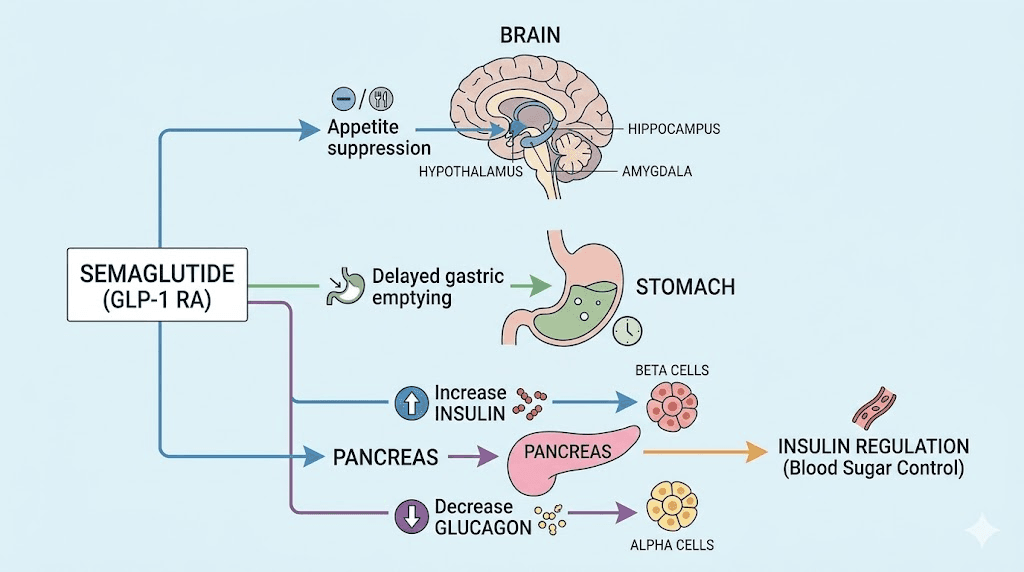
Before diving into timelines, you need to understand the mechanism. Semaglutide is a GLP-1 receptor agonist peptide that mimics a hormone your body naturally produces called glucagon-like peptide-1. This hormone plays a central role in appetite regulation, blood sugar control, and how your brain perceives hunger and fullness.
When you inject semaglutide, it binds to GLP-1 receptors throughout your body. The effects cascade through multiple systems simultaneously.
In the brain, semaglutide acts on the hypothalamus, the region responsible for hunger signaling. It reduces appetite by making you feel fuller sooner and keeping that fullness lasting longer between meals. Many people describe it as the volume knob on their hunger being turned way down. Food thoughts that used to dominate their day simply fade into the background. For a deeper look at this process, our guide on how long it takes for semaglutide to suppress appetite breaks down the timeline of appetite changes specifically.
In the stomach, semaglutide slows gastric emptying. Food stays in your stomach longer, which contributes to that prolonged feeling of fullness. This is also why some people experience semaglutide bloating or nausea early on, particularly when eating portions that were normal before starting the medication.
The pancreas responds too. Semaglutide enhances insulin secretion when blood sugar is elevated and suppresses glucagon, the hormone that raises blood sugar. This dual action helps stabilize energy levels throughout the day, which is why some people report feeling more consistent energy rather than the spikes and crashes they experienced before. You can read more about whether semaglutide gives you energy in our detailed guide.
Here is the critical point. None of these effects happen at full strength from day one. The starting dose of semaglutide is intentionally low, just 0.25 mg per week, which is a fraction of the therapeutic dose. This means your body is getting a gentle introduction to the medication while the full weight loss effects build over weeks and months as the dose increases.
If you are wondering whether semaglutide suppresses appetite immediately, the answer varies. Some people feel appetite changes within days. Others take weeks. The medication is working either way. It just takes time for the effects to reach their peak, especially at the starting dose. Understanding how long GLP-1 medications take to start working helps set realistic expectations from the beginning.
For those exploring different forms, compounded semaglutide follows similar pharmacological principles, though the formulation may differ from brand-name versions. Some researchers also explore oral semaglutide drops or sublingual semaglutide as alternative delivery methods, each with slightly different absorption timelines.
The dose escalation schedule and why it matters
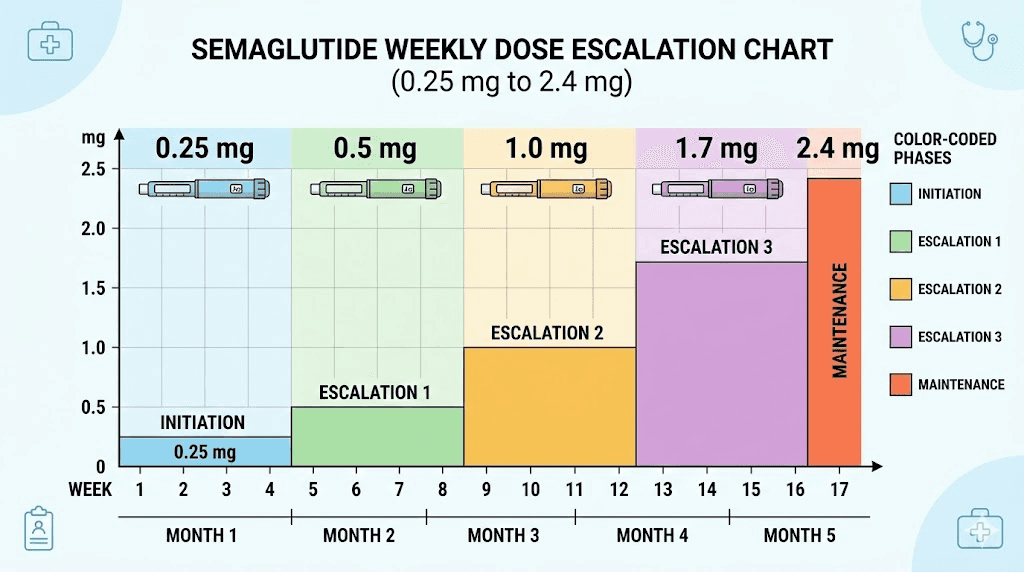
The dose escalation schedule is the single biggest reason people feel frustrated in the first month. They expect dramatic weight loss from injection one. But the protocol is designed to start low and build gradually over 16 weeks.
Here is the standard Wegovy (semaglutide 2.4 mg) dose escalation:
Weeks 1 to 4: 0.25 mg once weekly
Weeks 5 to 8: 0.5 mg once weekly
Weeks 9 to 12: 1.0 mg once weekly
Weeks 13 to 16: 1.7 mg once weekly
Week 17 onward: 2.4 mg once weekly (maintenance dose)
At 0.25 mg, you are taking roughly 10% of the full therapeutic dose. That is not a typo. You are starting at one-tenth of the dose where clinical trials showed the most impressive results. This explains why weight loss in the first four weeks is often modest or nonexistent for many people. The medication is barely at working strength.
Why start so low? Gastrointestinal side effects. Nausea, constipation, dizziness, and burping are the most common side effects of GLP-1 medications. By titrating the dose upward every four weeks, your body has time to adjust. People who jump straight to higher doses report significantly more nausea and are more likely to quit treatment altogether.
If you are using semaglutide measured in units rather than milligrams, understanding the conversion chart for semaglutide dosage becomes essential. The semaglutide dosage calculator on SeekPeptides can help you determine exactly how many units equal 0.25 mg based on your vial concentration.
For those using compounded versions, the compounded semaglutide dose chart and the semaglutide 5mg/ml dosage chart provide concentration-specific guidance for measuring your dose accurately.
The practical takeaway here is simple. Do not judge semaglutide by the first four weeks. You are not on the real dose yet. The medication needs 16 weeks of escalation before you reach full therapeutic strength. Real, consistent, significant weight loss typically accelerates after week 8 and hits full stride after week 16.
Week-by-week semaglutide weight loss timeline
Now for what you actually came here for. A detailed breakdown of what to expect at each phase of your semaglutide journey, based on clinical trial data and real-world experiences.
Weeks 1 to 2: the adjustment phase
Dose: 0.25 mg weekly.
Most people do not lose significant weight in the first two weeks. Some see a drop of 1 to 3 pounds. Others see nothing. A few even gain a pound or two due to water retention or changes in eating patterns.
What IS happening, even if the scale is not moving, is that semaglutide is beginning to interact with your GLP-1 receptors. Many people report subtle appetite changes during this period. You might notice you get full faster at meals. You might find yourself thinking about food less often. These small shifts are the earliest signals that the medication is active in your system.
Common experiences during weeks 1 to 2 include mild nausea (especially after eating large meals), decreased interest in snacking, slight changes in food preferences, and occasional fatigue. Choosing the best time of day to take semaglutide can help manage side effects during this initial phase. Many people find that injecting on the same day each week and picking the right injection site reduces discomfort.
Do not panic if the scale has not budged. You are on the lowest dose. This is the adjustment phase, not the weight loss phase.
Weeks 3 to 4: first signs of change
Dose: still 0.25 mg weekly.
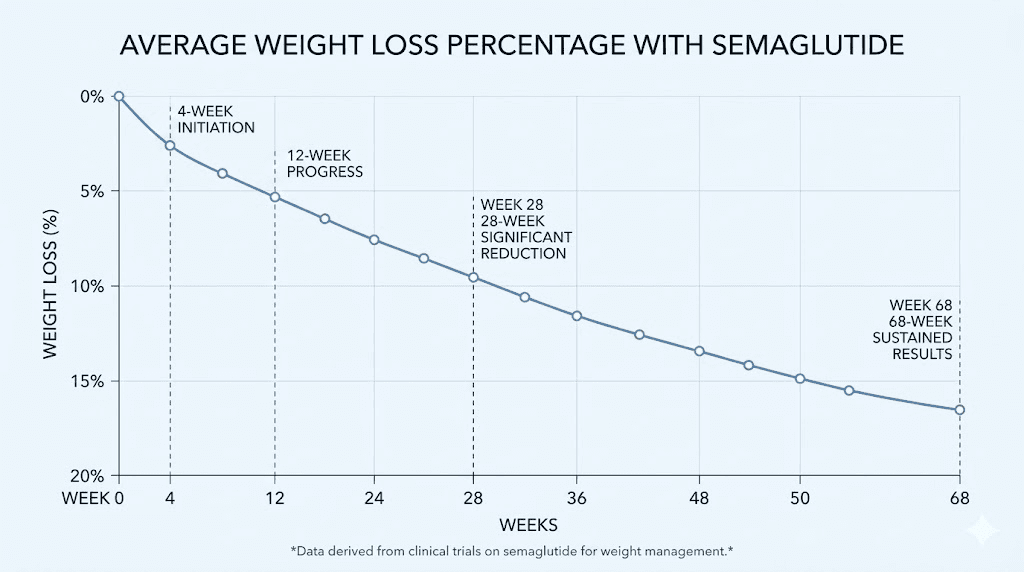
By the end of week 4, clinical data from the STEP 1 trial shows participants had already begun losing weight, with measurable changes appearing at the first post-randomization assessment. The average weight loss at four weeks is typically 1 to 3% of starting body weight. For someone who weighs 220 pounds, that means roughly 2 to 7 pounds.
But here is where it gets interesting. The variation between individuals is enormous. Some people have lost 8 to 10 pounds by week 4. Others have lost zero. Both outcomes are within the normal range. If you are in the latter group and wondering what is happening, our guide on 4 weeks on semaglutide with no weight loss explains exactly why this happens and what to expect moving forward.
The appetite suppression effects typically become more noticeable during weeks 3 and 4. Many people report that their relationship with food is shifting. Portions shrink naturally. Cravings for high-calorie foods diminish. The constant mental chatter about when and what to eat starts quieting down.
Weeks 5 to 8: dose increases and momentum builds
Dose: 0.5 mg weekly (weeks 5-8).
This is when many people start seeing consistent downward movement on the scale. The dose doubles from 0.25 to 0.5 mg, and the appetite-suppressing effects become noticeably stronger.
Clinical data shows patients typically lose 4 to 6% of their starting body weight by week 8. For a 220-pound person, that translates to roughly 9 to 13 pounds. The rate of loss accelerates compared to the first four weeks because the medication is now at a more therapeutically relevant dose.
During this phase, many people experience a clear shift in their eating patterns. Meals become smaller. Snacking decreases or stops entirely. Some people find that foods they previously loved, particularly greasy, heavy, or overly sweet foods, become less appealing. This is the GLP-1 receptor activation changing reward pathways in the brain.
Side effects may increase slightly with the dose bump. Nausea is the most common complaint, though it usually subsides within a few days of each dose increase. If you are experiencing persistent side effects, exploring semaglutide with B12 or semaglutide with glycine combinations may help, as some formulations include these additions specifically to reduce gastrointestinal discomfort.
This is also the phase where people start seeing visible before and after changes in the mirror, even if the scale changes seem modest. Facial slimming, looser clothing, and reduced bloating are common early visual indicators.
Weeks 9 to 16: climbing toward maintenance dose
Dose: 1.0 mg (weeks 9-12), then 1.7 mg (weeks 13-16).
Now the weight loss machine is fully engaged. The dose climbs from 1.0 to 1.7 mg during this period, and most people experience their most dramatic rate of weight loss during these weeks. Clinical trials show approximately 6 to 10% total body weight loss by week 12, with continued acceleration through week 16.
For a 220-pound person, we are talking about 13 to 22 pounds lost by the three-month mark. Some individuals exceed this significantly. In the STEP 1 trial, participants on semaglutide 2.4 mg had lost an average of 9.6% of baseline body weight by week 12.
The appetite suppression at 1.0 mg and above becomes quite powerful for most people. Many describe it as forgetting to eat, something that would have been unthinkable before starting the medication. Portion sizes that once seemed normal now feel enormous. The effort required to maintain a caloric deficit drops dramatically because hunger simply is not driving excessive eating anymore.
This is also when the glycine and B12 blend in some compounded formulations may provide additional support, as higher doses can sometimes increase fatigue or digestive discomfort in certain individuals.
Months 4 to 6: steady, consistent loss
Dose: 2.4 mg weekly (maintenance).
By month 4, you have reached or are approaching the full maintenance dose of 2.4 mg. This is where semaglutide is operating at full therapeutic strength. Weight loss during this period is typically steady and predictable, averaging about 2% of body weight per month.
At the 6-month mark, clinical trial data shows an average weight loss of approximately 13.8% of initial body weight. For our 220-pound example, that is roughly 30 pounds. Some people lose more. Some less. But the trend is consistently downward for the vast majority of participants.
During months 4 to 6, many people find that their weight loss enters a comfortable rhythm. The dramatic appetite changes from earlier months have normalized into a new baseline. Eating smaller meals feels natural rather than forced. Exercise becomes easier as the body carries less weight. Energy levels often improve, and many people report sleeping better as well.
For those wondering how long you stay on semaglutide for weight loss, most protocols recommend at least 12 months of continuous treatment, with many providers suggesting indefinite use for weight maintenance.
Months 6 to 12: long-term results compound
Dose: 2.4 mg weekly (continued).
The second half of the first year is where semaglutide really shows its power. Weight loss continues, though the rate gradually slows as you approach a new equilibrium weight. This is normal and expected, not a sign that the medication has stopped working.
By 12 months, the STEP 1 trial showed average weight loss of 14.9% of baseline body weight, with some participants losing over 20%. Real-world data from a JAMA Network Open study found that patients lost an average of 2% per month for the first six months, then about 1% per month for the next six months, totaling approximately 16% weight loss by the end of year one.
The numbers break down like this for clinical trial participants. At 68 weeks, 86.4% of people on semaglutide achieved at least 5% weight loss. Nearly 70% achieved at least 10% weight loss. And more than half, 50.5%, achieved 15% or greater weight loss. These are population averages. Individual results vary significantly based on factors we will cover below.
Beyond 12 months
The STEP 5 trial examined two-year outcomes and found that weight loss was largely maintained through 104 weeks of continuous treatment. The key finding from long-term data is that semaglutide is not a short-term fix. Stopping the medication typically leads to weight regain, as the STEP 1 extension study demonstrated. Participants who discontinued semaglutide after 68 weeks regained approximately two-thirds of their lost weight within a year of stopping.
This is why most providers now frame semaglutide as a long-term or potentially lifelong medication, similar to how blood pressure medications are used continuously. The medication manages the underlying biological drivers of obesity rather than curing them. Understanding semaglutide withdrawal symptoms is important if you are considering stopping or taking a break.
How much weight can you realistically expect to lose
Clinical trial numbers are averages. Your results will depend on your individual situation. But having realistic expectations prevents frustration and helps you stick with the protocol long enough for it to work.
Clinical trial data at a glance
The STEP program, the largest series of semaglutide weight loss trials, provides the most reliable data:
Month 1: 1 to 3% body weight loss (3 to 7 pounds for a 220-pound person)
Month 3: 6 to 10% body weight loss (13 to 22 pounds)
Month 6: 12 to 14% body weight loss (26 to 31 pounds)
Month 12: 14 to 17% body weight loss (31 to 37 pounds)
These numbers reflect participants who combined semaglutide with lifestyle interventions, meaning diet and exercise modifications. The medication alone, without any behavioral changes, produces less dramatic results.
For context, losing 15% of body weight is clinically significant. It dramatically reduces risk factors for heart disease, type 2 diabetes, sleep apnea, joint problems, and numerous other obesity-related conditions. Even a 5% loss provides meaningful health benefits.
Real-world results versus clinical trials
Real-world results sometimes differ from clinical trials. A study published in JAMA Network Open found slightly different patterns in everyday patients compared to controlled trial settings. Factors like inconsistent dosing, missed injections, less structured diet and exercise programs, and variable access to higher doses all influence outcomes.
In practice, most people can expect results somewhere in the range of clinical trial data, provided they stay consistent with their injections and make reasonable dietary adjustments. Those who combine semaglutide with structured nutrition and regular exercise, particularly resistance training, tend to achieve results at the higher end of the spectrum.
If you are interested in losing weight on semaglutide without exercise, it is absolutely possible. But exercise, especially strength training, helps preserve muscle mass during rapid weight loss, which keeps your metabolism higher and produces better long-term body composition.
Understanding your BMI requirements for GLP-1 medications can help you determine if semaglutide is appropriate for your situation. The medication is approved for adults with a BMI of 30 or greater, or 27 or greater with at least one weight-related health condition.
For those exploring other weight loss peptide options alongside or instead of semaglutide, guides on the best peptide for weight loss, best peptides for weight loss, and best peptide stacks for weight loss provide comprehensive comparisons. Some researchers also explore peptides specifically for fat loss or fat-burning peptides as part of broader protocols. Women may find our guide on peptides for weight loss in women particularly relevant.
Factors that affect how fast you lose weight on semaglutide
Not everyone loses weight at the same rate. Understanding why helps you set realistic expectations and optimize your approach.
Starting weight and BMI
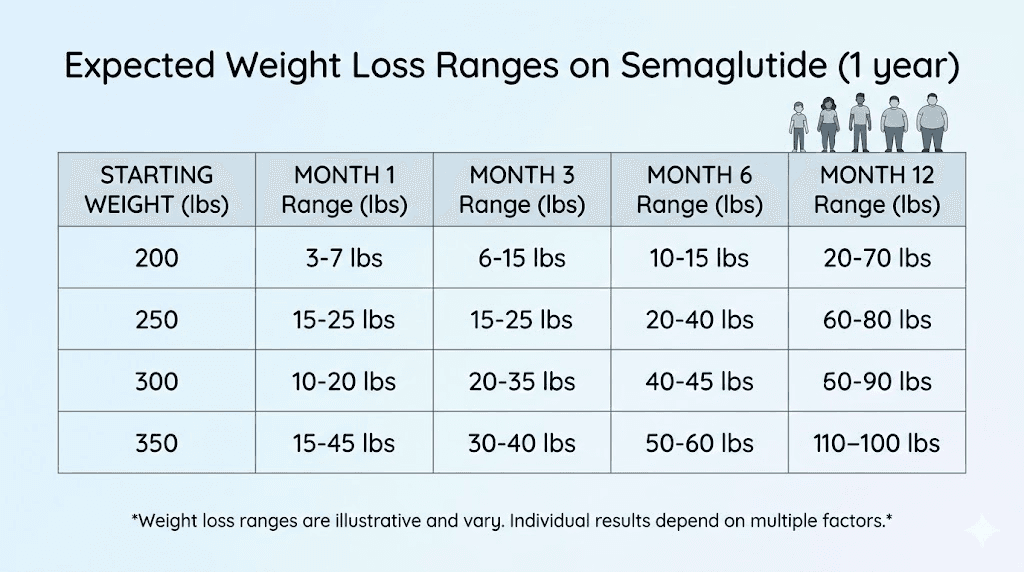
People with higher starting weights tend to lose more total pounds in the early weeks, though the percentage of body weight lost is relatively consistent across weight categories. If you start at 300 pounds, losing 3% in the first month means 9 pounds. At 180 pounds, 3% is only 5.4 pounds. Both are the same relative rate, but the absolute numbers feel very different on the scale.
The peptides for fat loss page on SeekPeptides provides broader context on how different peptides approach fat reduction at various body composition levels.
Diet and nutrition
What you eat while on semaglutide matters enormously. The medication reduces appetite, but it does not eliminate calories from the food you do eat. People who focus on nutrient-dense, protein-rich meals consistently lose more weight than those who eat smaller amounts of calorie-dense junk food.
Protein is especially critical. Semaglutide-related weight loss can include both fat and muscle. Adequate protein intake, generally 1.2 to 1.5 grams per kilogram of body weight daily, helps preserve lean muscle mass. This keeps your metabolism higher and produces better long-term results. Our guide on the best foods to eat on semaglutide outlines specific meal strategies. You should also know which foods to avoid on semaglutide, as certain food choices can worsen side effects or slow progress. A complete list of foods to eat while on semaglutide and a structured semaglutide diet plan can make the difference between average and exceptional results.
Exercise and physical activity
Exercise is not required for semaglutide to produce weight loss, but it significantly accelerates results and improves body composition. The combination of semaglutide with 150 minutes of moderate-intensity cardio per week plus two sessions of resistance training produces substantially better outcomes than the medication alone.
Strength training deserves special emphasis. As you lose weight rapidly, you risk losing muscle along with fat. Resistance training sends a powerful signal to your body to preserve muscle tissue. This means a higher percentage of your weight loss comes from fat stores rather than lean mass, which is exactly what you want for long-term metabolic health. Weight loss peptide research consistently supports the combination of GLP-1 medications with structured exercise programs.
Sleep quality
This one surprises many people. Sleep quality has a direct, measurable impact on weight loss speed. Poor sleep elevates cortisol, increases ghrelin (the hunger hormone), decreases leptin (the satiety hormone), and promotes insulin resistance. All of these work against weight loss, even with semaglutide onboard.
Aim for 7 to 9 hours of quality sleep per night. If semaglutide is affecting your sleep, our guide on whether semaglutide causes insomnia covers strategies for managing this side effect.
Stress levels
Chronic stress creates a hormonal environment that actively opposes weight loss. Elevated cortisol promotes visceral fat storage, increases cravings for high-calorie comfort foods, and can partially counteract the appetite-suppressing effects of semaglutide. Stress management through exercise, meditation, breathing techniques, or other methods is not optional if you want optimal results.
Hormonal factors and age
Women may experience fluctuations in weight loss speed related to their menstrual cycle, perimenopause, or menopause. If you are wondering whether semaglutide affects your period, the answer is that hormonal shifts during weight loss can temporarily alter cycle regularity.
Age also plays a role. Metabolic rate naturally declines with age, meaning older adults may lose weight slightly more slowly on the same dose compared to younger adults. This does not mean semaglutide is less effective, just that the pace may differ.
Type 2 diabetes status
Research consistently shows that people without type 2 diabetes lose more weight on semaglutide than those with diabetes. In one JAMA Network Open study, participants without diabetes had lost 11.8% of their body weight at six months, compared to 7.2% for those with diabetes. The underlying insulin resistance and metabolic dysfunction associated with type 2 diabetes create additional barriers to weight loss that even semaglutide cannot fully overcome.
Genetic factors
Emerging research from clinico-genomic studies suggests that genetic predisposition influences semaglutide response. Individuals with a lower genetic predisposition to obesity tend to experience greater weight loss on the medication. However, genetic testing cannot yet reliably predict individual responses, and most of the variation in weight loss outcomes remains unexplained by currently identified genetic factors.
The bottom line is that multiple factors interact to determine your personal timeline. Optimizing the factors you can control, primarily diet, exercise, sleep, and stress, gives you the best chance of achieving results at the higher end of the expected range.
Why some people do not see results right away
If you are three or four weeks in and the scale has not moved, you are not alone. And you are probably not doing anything wrong.
The low starting dose
This is the number one reason. At 0.25 mg, you are on roughly one-tenth of the full dose. Some people are simply less sensitive to semaglutide at this concentration. Their GLP-1 receptors need a stronger signal before appetite suppression kicks in meaningfully. If you understand how units convert to milligrams and can verify you are getting the correct dose, you can rule out dosing errors as a factor.
For those using compounded vials, double-checking your measurements is important. Guides on how many mg equal 40 units, 50 units, 10 units, and 100 units of semaglutide ensure you are drawing the correct amount.
Water retention and scale fluctuations
Your body weight fluctuates by 2 to 5 pounds daily based on water retention, sodium intake, hormonal cycles, bowel movements, and glycogen stores. Semaglutide can also cause initial fluid shifts as your body adjusts to changed eating patterns and altered gastric motility.
This means the scale can mask real fat loss. You might be losing fat tissue while simultaneously retaining water, resulting in a scale that appears stuck. Many people find that weighing daily and tracking a weekly average gives a much more accurate picture than any single weigh-in.
Metabolic adaptation
If you have been dieting for years, your metabolism may be adapted to lower caloric intake. Your body has learned to run efficiently on fewer calories, which means even the appetite reduction from semaglutide might not create enough of a deficit initially. As the dose increases and appetite suppression strengthens, this usually resolves.
Medication timing and storage
How and when you inject can affect results. Taking semaglutide at the optimal time and using proper injection technique ensures consistent absorption. Storage matters too. If semaglutide gets too warm or is left out overnight, potency can degrade, leading to reduced effectiveness.
If you are using compounded semaglutide, understanding how long semaglutide stays good and proper refrigeration requirements helps maintain full potency throughout your treatment.
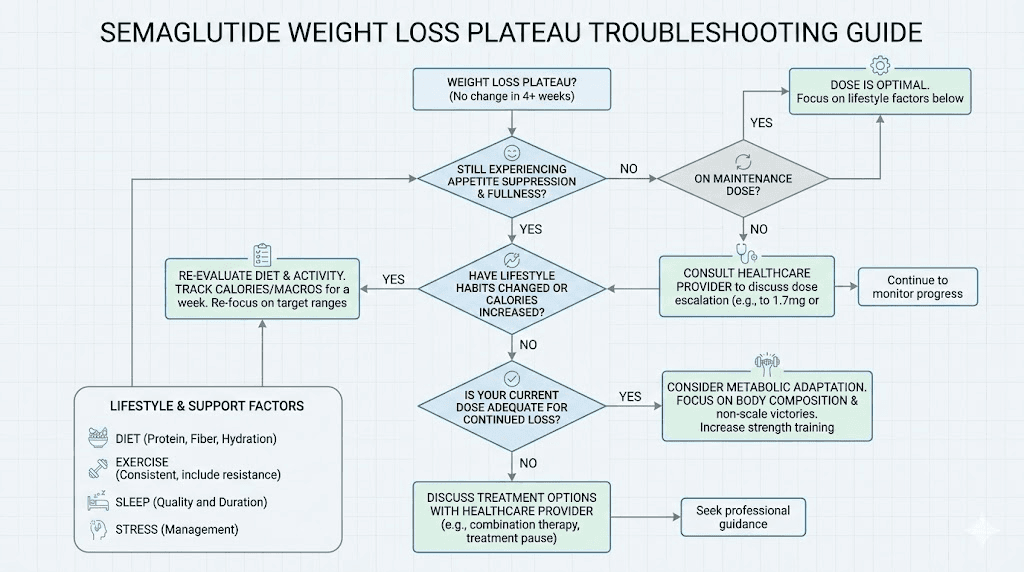
What to do if weight loss stalls or hits a plateau
Plateaus happen. Even on semaglutide. They are a normal physiological response, not a sign of failure.
As you lose weight, your body requires fewer calories to maintain its new, lower mass. A caloric intake that once created a deficit becomes your new maintenance level. Your basal metabolic rate decreases. Your body becomes more efficient. The same dose of semaglutide that was driving consistent loss may no longer create enough appetite reduction to maintain the same deficit.
If you have hit a stall, here is a systematic approach to breaking through it. For a complete deep dive, our semaglutide plateau guide covers every strategy in detail. And if the problem has been persistent, our guide on why you are not losing weight on semaglutide addresses every possible cause.
Reassess your diet
After months of reduced eating, many people unconsciously increase their portion sizes as they adapt to the medication. Food logging for a week or two can reveal whether caloric creep has occurred. Even small increases, a handful of nuts here, an extra serving there, can add up to eliminate your deficit.
Focus on protein first. Then vegetables and fiber. Then everything else. This hierarchy maximizes satiety per calorie and supports muscle preservation. Revisit the semaglutide diet plan to recalibrate your approach.
Add or modify exercise
If your body has adapted to your current exercise routine, it is time to change things up. Add resistance training if you have not already. Increase intensity. Try new modalities. Your body adapts to the same workouts over time, reducing their metabolic impact.
High-intensity interval training and heavy resistance training are particularly effective at breaking through plateaus because they create a metabolic disturbance that increases calorie burn for hours after the workout ends.
Check your protein intake
Inadequate protein intake during weight loss leads to muscle loss, which lowers your metabolic rate, which makes plateaus more likely. If you are not hitting 1.2 to 1.5 grams of protein per kilogram of body weight daily, this is a likely contributing factor.
Talk to your provider about dose adjustment
If you have not yet reached the full 2.4 mg dose, increasing the dose may restart weight loss. For those already at 2.4 mg, some providers explore combinations with other agents. Research on combining phentermine and semaglutide or comparing phentermine versus semaglutide shows different approaches to overcoming resistance. Some formulations combine semaglutide with other compounds like L-carnitine, niacinamide, or berberine to enhance results from different metabolic angles.
Consider the bigger picture
A plateau lasting 2 to 3 weeks is normal. A plateau lasting 6 to 8 weeks warrants investigation. Check sleep quality, stress levels, hormonal factors, and medication adherence before assuming the medication has stopped working. Most plateaus resolve with minor adjustments rather than dramatic changes.
Diet and lifestyle strategies to maximize semaglutide weight loss
Semaglutide creates the conditions for weight loss by reducing appetite. What you do with those conditions determines your actual results.
Protein-first eating
This is the single most impactful dietary strategy while on semaglutide. Because the medication dramatically reduces how much food you eat, every bite needs to count. Protein should be your priority at every meal.
Aim for 20 to 30 grams of protein per meal. Eat your protein source first, before vegetables, carbohydrates, or anything else. This ensures you get adequate protein even when your appetite cuts the meal short. Good sources include chicken, fish, eggs, Greek yogurt, cottage cheese, lean beef, tofu, and protein supplements when whole food options are not practical. Our complete food guide for semaglutide users provides detailed meal planning strategies.
Fiber and vegetables
After protein, prioritize fiber-rich vegetables and whole foods. Fiber supports gut health, promotes regular bowel movements (important since constipation is a common side effect), and adds volume to meals without excessive calories. Broccoli, leafy greens, beans, lentils, and berries are excellent choices.
Some researchers also explore GLP-1 supporting probiotics to complement the gut health effects of semaglutide, though evidence for these products is still emerging.
Hydration
Dehydration is surprisingly common among semaglutide users. When you eat less food, you also take in less water from food sources. Combined with potential nausea that discourages drinking, many people end up mildly dehydrated without realizing it.
Aim for at least 64 ounces of water daily, more if you are exercising. Proper hydration supports metabolism, reduces false hunger signals, and helps manage semaglutide side effects. Dehydration can also cause the scale to stall, masking actual fat loss behind water retention.
Strength training
We have mentioned this multiple times because it is that important. Rapid weight loss without resistance training leads to significant muscle loss, which tanks your metabolism and sets you up for weight regain later. Two to three sessions per week of full-body resistance training is the minimum effective dose for muscle preservation.
You do not need to become a powerlifter. Basic compound movements like squats, deadlifts, presses, rows, and lunges, performed with moderate weights for 8 to 12 repetitions, provide more than enough stimulus. The goal is not building massive muscles. It is telling your body to preserve the muscle you already have while it burns fat for fuel.
Sleep optimization
Seven to nine hours of quality sleep per night is not a luxury while on semaglutide. It is a requirement for optimal results. Poor sleep directly undermines weight loss through hormonal disruption, increased appetite, reduced willpower, and impaired recovery from exercise.
If you are having trouble sleeping, evaluate whether the timing of your injection might be contributing. Some people find that injecting in the morning rather than evening (or vice versa) reduces sleep disruption. Our guides on semaglutide and fatigue and semaglutide and insomnia address both sides of the sleep issue.
Supplement support
Certain supplements may complement semaglutide for weight loss support. Formulations that include methylcobalamin (active B12) help maintain energy levels during caloric restriction. Some compounded versions include glycine for its anti-nausea and metabolic benefits. The semaglutide glycine B12 blend is one of the more popular compounded combinations for this reason.
For those preparing their own compounded semaglutide, the reconstitution guide and the bacteriostatic water mixing guide for 10mg or 5mg vials provide step-by-step instructions. The peptide reconstitution calculator and peptide calculator on SeekPeptides make these calculations simple and accurate.
Common signs semaglutide is working before the scale moves
The scale is a terrible sole metric for semaglutide effectiveness, especially in the first few weeks. Here are signs the medication is working even when your weight has not changed.
Reduced appetite. This is usually the first sign. You simply are not as hungry as before. Meals feel satisfying sooner. The urge to snack between meals fades. Food thoughts that used to occupy your mind throughout the day become quieter.
Smaller portions. You serve yourself less food without consciously deciding to. Or you leave food on your plate, something that may have felt impossible before.
Changed food preferences. Many people notice that greasy, sugary, or heavy foods become less appealing. The drive toward high-calorie comfort foods diminishes. You might find yourself naturally gravitating toward lighter, more nutritious options.
Fewer cravings. The intense, hard-to-resist cravings for specific foods, especially late at night, often decrease dramatically. This is one of the most appreciated effects of semaglutide and a clear sign it is active in your brain.
Improved blood sugar stability. If you have a continuous glucose monitor or test your blood sugar regularly, you may notice smoother, more stable readings. Fewer spikes and crashes mean more consistent energy throughout the day.
Looser clothing. Body composition can change before the scale moves. If your clothes fit differently, you are likely losing fat and possibly gaining or retaining muscle (especially if you are exercising), which the scale cannot distinguish.
Better energy. Some people report improved energy levels within the first few weeks, even before significant weight loss occurs. This may be related to more stable blood sugar, reduced inflammatory burden from overeating, or simply feeling better about taking positive action.
If you are experiencing these signs but the scale is not moving, be patient. The weight loss will follow. Your body is adjusting, and the medication is doing its job. For more on what the first days look like, our first week on semaglutide guide covers early experiences in detail.
Some people also worry about side effects like hair loss on GLP-1 medications or headaches during the adjustment period. These effects, while uncomfortable, are generally temporary and do not indicate that the medication is failing.
Comparing the semaglutide weight loss timeline with other GLP-1 medications
Semaglutide is not the only GLP-1 option for weight loss. Understanding how its timeline compares to alternatives helps put your results in context.
Semaglutide versus tirzepatide
Tirzepatide (marketed as Mounjaro and Zepbound) is a dual GIP/GLP-1 receptor agonist that has shown even greater weight loss in clinical trials compared to semaglutide. The semaglutide versus tirzepatide comparison reveals some key differences in both the timeline and magnitude of weight loss.
In head-to-head studies, tirzepatide produced average weight loss of 20% or more of body weight, compared to semaglutide at 14 to 17%. The tirzepatide weight loss timeline tends to be slightly faster as well, with some studies showing earlier onset of significant weight loss.
However, both medications follow similar patterns of gradual dose escalation, early adjustment periods with modest results, and acceleration of weight loss as doses increase. The side effect profiles are also comparable, with gastrointestinal symptoms being most common for both.
For those considering switching between medications, the semaglutide to tirzepatide conversion chart and dosage comparison chart provide guidance on equivalent doses. Our guide on switching between the two medications covers the transition process in detail.
Real-world tirzepatide before and after results are impressive, though individual variation remains high regardless of which medication you choose.
Semaglutide versus retatrutide
Retatrutide is a newer triple-agonist (GLP-1, GIP, and glucagon receptors) currently in clinical trials that has shown remarkable weight loss results. Early data suggests even greater efficacy than both semaglutide and tirzepatide. Our retatrutide versus semaglutide comparison covers the emerging data on this next-generation compound.
Which GLP-1 medication is best for you
The best medication depends on your individual response, tolerance, access, and cost considerations. Some people who respond poorly to semaglutide do well on tirzepatide, and vice versa. The relationship between GLP-1 and brand names like Ozempic can also be confusing, so understanding the landscape of available options is worthwhile.
SeekPeptides members get access to detailed comparison tools, protocol databases, and expert recommendations for choosing the right approach based on individual goals and health profiles. The platform provides evidence-based guides that help researchers navigate these decisions with confidence.
Frequently asked questions
Can you lose weight on the 0.25 mg starting dose?
Yes, some people do lose weight on the starting dose, though results are typically modest. The 0.25 mg dose is primarily an adjustment phase designed to minimize side effects. Most significant weight loss begins at 0.5 mg and above. If you are four weeks in with no changes, this is completely normal and the dose increase will likely kickstart results. Our guide on how fast semaglutide works explains the full timeline.
Is it normal to gain weight in the first week on semaglutide?
A small weight gain of 1 to 2 pounds in the first week is within normal range and usually attributable to water retention, hormonal fluctuations, or changes in bowel habits as your body adjusts to the medication. This is not a sign the medication is failing. Focus on the trend over weeks, not individual daily readings.
How long should I wait before deciding semaglutide is not working?
Give semaglutide at least 12 to 16 weeks before concluding it is not working. This allows you to reach the full maintenance dose of 2.4 mg. Many people who see minimal results at lower doses experience dramatic improvements once they reach higher doses. A detailed breakdown of what to expect at each dose level is available in our guide on how long semaglutide takes to work.
Does semaglutide expire and can that affect my results?
Yes, semaglutide can expire or lose potency if stored improperly. Expired or degraded medication will produce weaker appetite suppression and slower weight loss. Check whether semaglutide expires after 28 days for your specific formulation, and understand proper storage by reviewing whether compounded semaglutide needs refrigeration. Our semaglutide shelf life guide covers storage best practices in detail.
Can I take semaglutide and tirzepatide together for faster weight loss?
Taking both GLP-1 medications simultaneously is generally not recommended and could increase the risk of serious gastrointestinal side effects. Our guide on semaglutide and tirzepatide together explains why this combination is risky and what alternatives exist for people who want enhanced results.
What if I cannot afford brand-name semaglutide?
Compounded semaglutide is a more affordable alternative that many people use successfully. Our complete guide to compounded semaglutide covers what to look for in a compounding pharmacy, how to verify quality, and what differences exist between compounded and brand-name versions. The peptide cost calculator on SeekPeptides can help estimate costs across different formulations.
Do men and women lose weight at different rates on semaglutide?
Research indicates that women tend to lose slightly more weight on semaglutide compared to men, though both sexes achieve clinically significant results. Hormonal differences, body composition, and metabolic rate all contribute to variation between individuals regardless of sex. Guides on fat-burning peptides for men and peptides for weight loss in women address sex-specific considerations.
Will I need to stay on semaglutide forever?
Current evidence suggests that stopping semaglutide leads to weight regain for most people, with the STEP 1 extension study showing participants regained approximately two-thirds of lost weight within a year of discontinuation. Most medical professionals now view semaglutide as a long-term treatment. However, this is a decision to make with your healthcare provider based on your individual situation, health goals, and ongoing response to the medication.
External resources
For researchers serious about optimizing their weight loss protocols, SeekPeptides offers the most comprehensive resource available, with evidence-based dosing guides, precision calculators, and a community of thousands who have navigated these exact questions.
In case I do not see you, good afternoon, good evening, and good night. May your doses stay accurate, your appetite stay managed, and your results stay consistent.