Feb 12, 2026
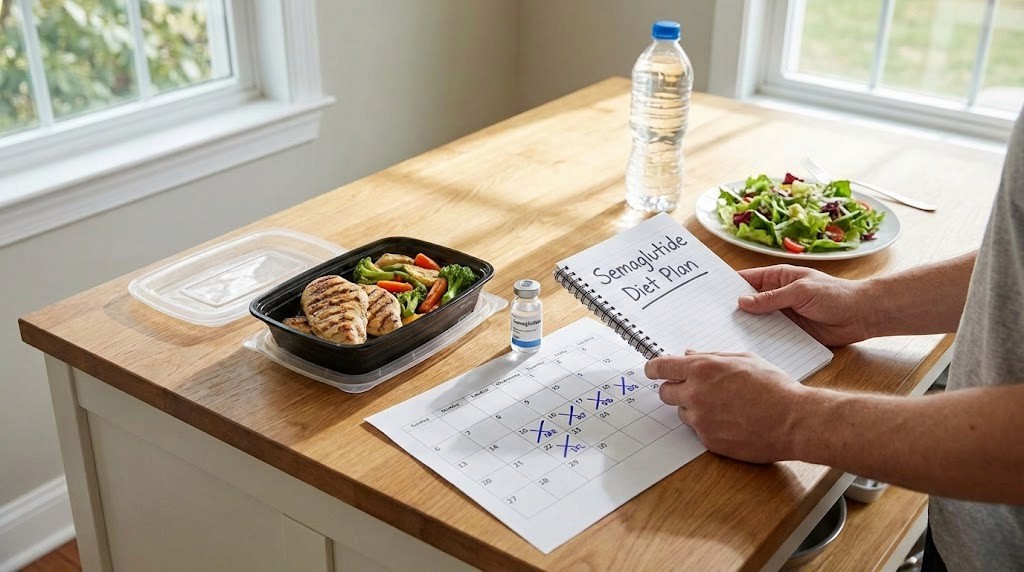
You started semaglutide expecting transformation. Instead you got nausea, confusion about what to eat, and a refrigerator full of foods that suddenly seem impossible to stomach. The medication is working. Your appetite has dropped. But nobody gave you a roadmap for what to actually put on your plate now that everything has changed.
That is the gap most people fall into.
Semaglutide suppresses appetite through GLP-1 receptor activation, slowing gastric emptying and signaling fullness to the brain. Powerful mechanism. But it creates a nutritional paradox. You are eating significantly less, which means every single calorie needs to count. Get the nutrition wrong and you lose muscle instead of fat, develop deficiencies that cause fatigue and hair loss, or trigger gastrointestinal side effects so severe you want to quit the medication entirely. The difference between people who thrive on semaglutide and those who struggle almost always comes down to what they eat, when they eat it, and how they structure their meals around the medication.
This guide covers the complete semaglutide diet plan, from macronutrient targets and dosage considerations to a full 7-day meal template, side effect management through food choices, and the supplements that actually matter. Whether you are on your first week or your sixth month, the strategies here will help you preserve muscle, minimize side effects, and extract the maximum benefit from every dose. SeekPeptides members have used these exact frameworks to optimize their protocols, and the results speak for themselves.
Why your diet matters more on semaglutide than off it
Most diet advice assumes you are eating a normal amount of food. On semaglutide, that assumption falls apart completely. Your caloric intake drops 25 to 40 percent naturally. Some people eat 800 calories a day without trying. That kind of deficit creates real risks if your food choices are poor.
Here is what happens inside your body.
Semaglutide mimics the GLP-1 hormone, which suppresses appetite at the hypothalamic level while simultaneously slowing how quickly food moves through your stomach. The result is profound satiety from small amounts of food. But your body still needs protein to maintain muscle, fiber to keep digestion moving, micronutrients to support every metabolic process, and adequate hydration to offset the reduced fluid intake that comes with eating less. Skip any of these and problems compound quickly.
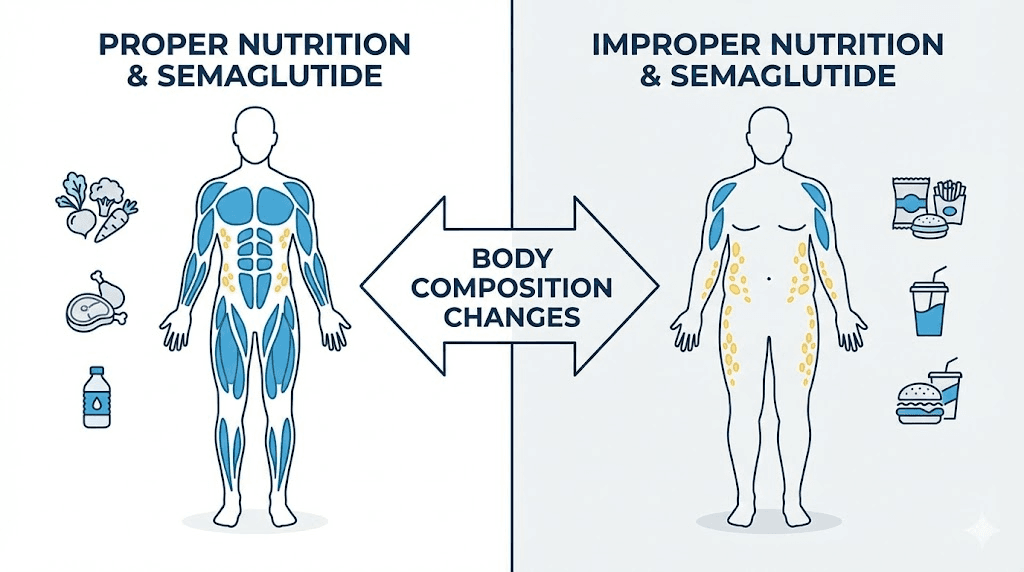
Research shows that approximately 40 percent of weight lost on semaglutide comes from lean body mass, including muscle.
That number is not inevitable. It is a consequence of inadequate protein intake combined with insufficient resistance exercise. People who prioritize protein and strength training lose overwhelmingly fat, not muscle. The diet plan matters that much.
The macronutrient framework for semaglutide users
Forget generic dietary guidelines. On semaglutide, your macronutrient priorities shift dramatically. Protein becomes king. Fiber becomes essential. Fat needs careful management. And carbohydrates need to earn their place on your plate.
Protein: the non-negotiable foundation
Every meal should start with protein. This is not optional. It is the single most important dietary decision you make on semaglutide.
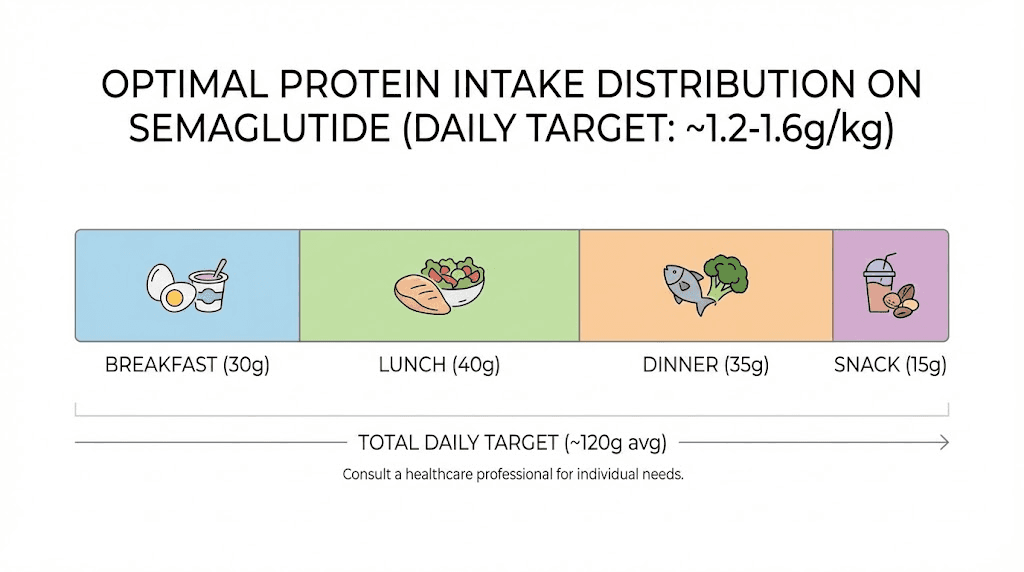
Target 1.2 to 1.5 grams of protein per kilogram of body weight daily. For a 200-pound person, that translates to roughly 110 to 135 grams per day. Some clinicians push this even higher, to 1.6 grams per kilogram, especially for people doing regular strength training. The reasoning is straightforward. When you are in a significant calorie deficit, protein preserves muscle tissue, supports metabolic rate, and provides the building blocks your body needs for repair.
Spread your protein across all meals. Aim for 25 to 35 grams per meal. Your body can only utilize so much protein for muscle protein synthesis at one time, roughly 30 to 40 grams depending on age and activity level. Front-loading 80 grams at dinner while skipping protein at breakfast wastes potential and leaves muscle vulnerable during the hours between meals.
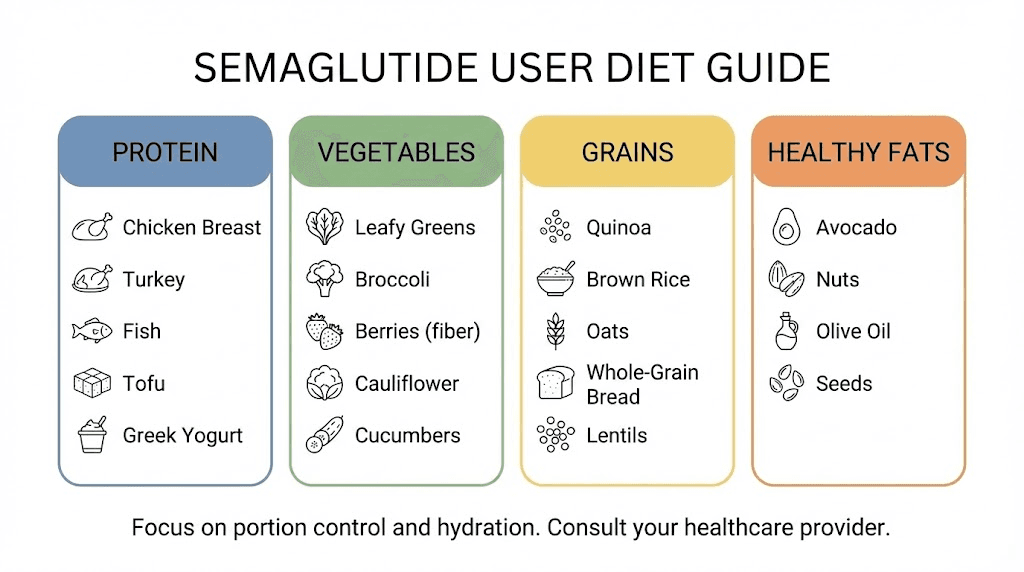
The best sources for semaglutide users are lean proteins that are easy to digest. Heavy, fatty meats often trigger nausea due to slowed gastric emptying. Stick with chicken breast, white fish, shrimp, turkey, eggs, Greek yogurt, cottage cheese, tofu, tempeh, and legumes. These provide high protein density without overwhelming your digestive system.
Fiber: keeping everything moving
Constipation affects roughly one in three semaglutide users. The medication slows gastric motility by design, and without adequate fiber, things can grind to a halt. Target 25 to 35 grams of fiber daily, building up gradually to avoid bloating.
Soluble fiber from oats, chia seeds, flaxseeds, and psyllium husk absorbs water and creates gel-like bulk that moves through the digestive tract smoothly. Insoluble fiber from vegetables, whole grains, and fruit skins adds mechanical bulk. You need both. A mix of sources works better than relying on any single one.
Here is the catch. When appetite is suppressed, fiber-rich foods often feel too filling. The solution is strategic placement. Add chia seeds to morning smoothies. Stir ground flaxseed into yogurt. Choose vegetables that pack fiber without excessive volume, like cooked broccoli, Brussels sprouts, and sweet potatoes. Think density, not quantity.
Healthy fats: essential but careful
Fat is necessary for hormone production, vitamin absorption, and cellular function. But on semaglutide, high-fat meals are the number one trigger for nausea, bloating, and that uncomfortable feeling of food sitting in your stomach for hours.
Aim for 20 to 30 percent of your total calories from fat. Choose sources that are easier to digest. Avocado, olive oil, nuts, seeds, and fatty fish like salmon provide essential fatty acids without the heavy, greasy quality that triggers GI distress. Avoid fried foods, heavy cream sauces, fast food, and anything dripping in butter or oil. These are not just unhealthy choices on semaglutide. They are recipes for misery.
Carbohydrates: quality over quantity
Semaglutide already improves insulin sensitivity and blood sugar regulation through its GLP-1 mechanism. Your body is handling glucose better. But that does not give you a free pass on carbohydrate quality.
Focus on complex carbohydrates with low glycemic impact. Brown rice, quinoa, sweet potatoes, oats, and whole grain bread digest slowly and provide sustained energy. Avoid refined carbohydrates, white bread, sugary cereals, pastries, and anything with added sugars. These spike blood sugar, provide empty calories, and displace the nutrient-dense foods your body desperately needs when eating less.
Most semaglutide users find that carbohydrates naturally comprise 30 to 40 percent of their reduced calorie intake. That is appropriate for most people. If you are more active or doing regular exercise, you can push toward the higher end. If you are more sedentary, stay on the lower side and prioritize protein and vegetables instead.
The complete 7-day semaglutide meal plan
This meal plan targets approximately 1,200 to 1,500 calories per day, which reflects what most semaglutide users naturally consume once the medication reaches therapeutic levels. Every day includes 100 to 130 grams of protein, 25 to 35 grams of fiber, and balanced micronutrients. Adjust portions based on your individual calorie needs and activity level.
Day 1
Breakfast: Two scrambled eggs with spinach and cherry tomatoes, one slice of whole grain toast. 28 grams protein, 320 calories.
Lunch: Grilled chicken breast (4 ounces) over mixed greens with cucumber, bell pepper, cherry tomatoes, and two tablespoons of olive oil vinaigrette. 32 grams protein, 380 calories.
Snack: Three-quarter cup of plain Greek yogurt with a tablespoon of chia seeds and a handful of blueberries. 18 grams protein, 180 calories.
Dinner: Baked cod (5 ounces) with roasted asparagus and half a cup of quinoa. 35 grams protein, 420 calories.
Daily totals: 113 grams protein, 30 grams fiber, 1,300 calories.
Day 2
Breakfast: Overnight oats made with half a cup of rolled oats, one scoop of protein powder, one tablespoon of ground flaxseed, and almond milk. 30 grams protein, 340 calories.
Lunch: Turkey and vegetable lettuce wraps using large romaine leaves, four ounces of sliced turkey breast, shredded carrots, cucumber, and avocado. 28 grams protein, 320 calories.
Snack: One hard-boiled egg with a small handful of almonds. 10 grams protein, 150 calories.
Dinner: Grilled shrimp (6 ounces) with stir-fried broccoli, snap peas, and brown rice (half cup). 36 grams protein, 430 calories.
Daily totals: 104 grams protein, 28 grams fiber, 1,240 calories.
Day 3
Breakfast: Smoothie made with one scoop of protein powder, half a frozen banana, a cup of spinach, one tablespoon of peanut butter, and unsweetened almond milk. 30 grams protein, 310 calories.
Lunch: Lentil soup (one and a half cups) with a side of mixed greens dressed in lemon juice and olive oil. 22 grams protein, 350 calories.
Snack: Cottage cheese (half cup) with sliced cucumber and a pinch of everything bagel seasoning. 14 grams protein, 120 calories.
Dinner: Baked chicken thigh (skinless, 5 ounces) with roasted Brussels sprouts and sweet potato (half, medium). 38 grams protein, 450 calories.
Daily totals: 104 grams protein, 32 grams fiber, 1,230 calories.
Day 4
Breakfast: Two-egg omelet with mushrooms, diced bell pepper, and a quarter cup of low-fat shredded cheese. One small apple on the side. 24 grams protein, 330 calories.
Lunch: Tuna salad (made with Greek yogurt instead of mayonnaise) over a bed of mixed greens with cherry tomatoes and sliced radishes. 30 grams protein, 310 calories.
Snack: Edamame (half cup, shelled). 11 grams protein, 120 calories.
Dinner: Ground turkey (5 ounces) lettuce wraps with diced tomato, onion, cilantro, and a squeeze of lime. Side of black beans (half cup). 40 grams protein, 460 calories.
Daily totals: 105 grams protein, 29 grams fiber, 1,220 calories.
Day 5
Breakfast: Greek yogurt parfait with three-quarter cup plain Greek yogurt, a quarter cup of low-sugar granola, sliced strawberries, and one tablespoon of hemp seeds. 22 grams protein, 280 calories.
Lunch: Grilled salmon (4 ounces) with a large mixed vegetable salad, including roasted beets, goat cheese crumbles, walnuts, and balsamic vinaigrette. 30 grams protein, 420 calories.
Snack: Two tablespoons of hummus with celery and carrot sticks. 4 grams protein, 100 calories.
Dinner: Tofu stir-fry (6 ounces firm tofu) with bok choy, mushrooms, snap peas, garlic, ginger, and low-sodium soy sauce over half a cup of brown rice. 28 grams protein, 400 calories.
Evening snack: One small handful of pumpkin seeds. 5 grams protein, 80 calories.
Daily totals: 89 grams protein, 27 grams fiber, 1,280 calories. Consider adding a protein shake if falling short on protein targets.
Day 6
Breakfast: Cottage cheese bowl with half a cup of cottage cheese, half a cup of mixed berries, one tablespoon of ground flaxseed, and a drizzle of honey. 16 grams protein, 220 calories.
Lunch: Chicken and vegetable soup (homemade, two cups) with a small whole grain roll. 28 grams protein, 380 calories.
Snack: Protein shake made with one scoop of whey protein and water. 25 grams protein, 120 calories.
Dinner: Lean beef sirloin (4 ounces) with sauteed zucchini, mushrooms, and a small baked potato with a tablespoon of plain Greek yogurt. 34 grams protein, 440 calories.
Daily totals: 103 grams protein, 26 grams fiber, 1,160 calories.
Day 7
Breakfast: Two poached eggs on a bed of sauteed kale and tomatoes with one slice of whole grain toast. 20 grams protein, 300 calories.
Lunch: Quinoa bowl with half a cup of cooked quinoa, four ounces of grilled chicken, black beans, corn, diced avocado, salsa, and lime juice. 36 grams protein, 450 calories.
Snack: String cheese with a small pear. 8 grams protein, 140 calories.
Dinner: Baked white fish (5 ounces) with steamed green beans, roasted cauliflower, and a small portion of wild rice. 34 grams protein, 380 calories.
Daily totals: 98 grams protein, 31 grams fiber, 1,270 calories. Add an evening protein snack if needed to reach your target.
Foods to eat on semaglutide: the complete list
Not all foods are created equal when you are eating significantly less. Every bite carries more weight. Choose from these categories to build meals that support your goals and minimize side effects.
Lean proteins (prioritize at every meal)
Chicken breast is the workhorse of the semaglutide diet. Easy to prepare, easy to digest, and packing roughly 31 grams of protein per four-ounce serving. Turkey breast offers similar benefits. White fish like cod, tilapia, and halibut are even easier on the stomach and provide clean protein without the fat content that triggers nausea.
Eggs are versatile and nutrient-dense. Two large eggs deliver 12 grams of protein along with choline, vitamin D, and B vitamins. Greek yogurt provides 15 to 20 grams of protein per cup and doubles as a calcium source. Cottage cheese is another powerhouse, with 14 grams per half cup and a texture that many semaglutide users find more tolerable than solid meats.
For plant-based options, firm tofu, tempeh, lentils, chickpeas, and black beans all provide substantial protein. Lentils are particularly valuable because they deliver both protein and fiber in a single food, hitting two nutritional targets simultaneously. Weight loss protocols that include diverse protein sources tend to produce better adherence and more sustainable results.
Non-starchy vegetables (eat abundantly)
Fill half your plate with these. Leafy greens like spinach, kale, arugula, and romaine provide iron, folate, and fiber with minimal calories. Cruciferous vegetables like broccoli, cauliflower, and Brussels sprouts pack impressive fiber content and contain compounds that support detoxification pathways.
Bell peppers, zucchini, cucumber, tomatoes, asparagus, green beans, and mushrooms round out the list. These foods add volume, nutrients, and visual appeal to meals without adding significant calories. When appetite is low, roasting vegetables brings out natural sweetness that makes them more appealing than raw preparations.
Whole grains and complex carbohydrates
Brown rice, quinoa, oats, sweet potatoes, and whole grain bread provide sustained energy and B vitamins. Keep portions moderate. Half a cup of cooked grains per meal is usually sufficient. Oats are particularly useful at breakfast because they combine fiber with a texture that most semaglutide users tolerate well, especially as overnight oats where the soaking process softens them considerably.
Healthy fats (in moderation)
Avocado provides heart-healthy monounsaturated fats and potassium. Use a quarter of a medium avocado per serving. Olive oil works well for cooking and dressing. Nuts and seeds, including almonds, walnuts, chia seeds, flaxseeds, and pumpkin seeds, provide omega-3 fatty acids and additional protein. Fatty fish like salmon, sardines, and mackerel deliver omega-3s along with high-quality protein. One or two servings per week is ideal.
Hydrating foods
Watermelon, cucumber, oranges, strawberries, soups, and broths all contribute to your daily fluid intake. When semaglutide suppresses appetite and thirst simultaneously, these foods help close the hydration gap. Bone broth is especially valuable because it provides electrolytes, collagen, and fluid in a single warm serving that most people tolerate well.
Foods to avoid on semaglutide: what triggers problems
Some foods that were perfectly fine before semaglutide become problematic on the medication. This is not about being restrictive for the sake of it. These foods genuinely cause issues because of how semaglutide alters your digestive timing.
High-fat and fried foods
Fried chicken, French fries, pizza with heavy cheese, burgers with fatty patties, creamy pasta sauces, and anything deep-fried will sit in your stomach for hours. Semaglutide already slows gastric emptying. Adding a heavy, fatty meal on top of that creates a traffic jam in your digestive system. The result is nausea, bloating, and in some cases vomiting. This is the number one dietary mistake semaglutide users make.
Sugary foods and refined carbohydrates
Candy, cookies, cakes, white bread, sugary cereals, soda, and fruit juice provide calories without nutrients. When you are eating 1,200 to 1,500 calories per day, every bite that goes to sugar is a bite stolen from protein, fiber, or micronutrients. Beyond the nutritional waste, sugary foods can cause blood sugar fluctuations that worsen energy crashes and cravings. Some semaglutide users report that sugar also intensifies nausea.
Carbonated beverages
Soda, sparkling water, and beer introduce gas into an already-slowed digestive system. Bloating and discomfort follow quickly. Still water is always the better choice. If you miss the fizz, try flavoring still water with lemon, lime, cucumber, or fresh mint instead.
Spicy foods
Capsaicin and other spicy compounds can irritate the gastric lining, which is already more sensitive due to semaglutide. Heartburn, acid reflux, and stomach pain are common when semaglutide users eat heavily spiced meals. Mild seasoning with herbs like basil, oregano, thyme, and rosemary provides flavor without the burn.
Alcohol
Alcohol and semaglutide have a complicated relationship. While there is no direct pharmacological interaction, both can lower blood sugar, both can cause nausea, and both irritate the GI tract. Studies suggest that GLP-1 medications may slow alcohol metabolism, leading to higher blood alcohol levels than expected from the same amount of drinking. Many users naturally lose interest in alcohol on semaglutide, and the clinical evidence suggests that is probably a good thing. If you do drink, keep it minimal, choose low-sugar options, and never drink on an empty stomach.
Ultra-processed foods
Fast food, frozen pizza, instant noodles, processed deli meats, hot dogs, and packaged snacks are calorie-dense, nutrient-poor, and difficult to digest. They offer nothing your body needs and everything it does not. On semaglutide, you simply cannot afford to waste your limited calorie budget on foods that provide no nutritional return.
Meal timing and eating strategies for semaglutide
How you eat matters almost as much as what you eat. The timing, pace, and structure of your meals can make the difference between comfortable digestion and hours of discomfort.
Eat smaller, more frequent meals
Three large meals per day rarely works on semaglutide. Your stomach processes food more slowly, so large volumes create pressure, bloating, and nausea. Instead, aim for three smaller meals and one or two protein-rich snacks. This approach distributes your nutrient intake more evenly and keeps your digestive system from becoming overwhelmed.
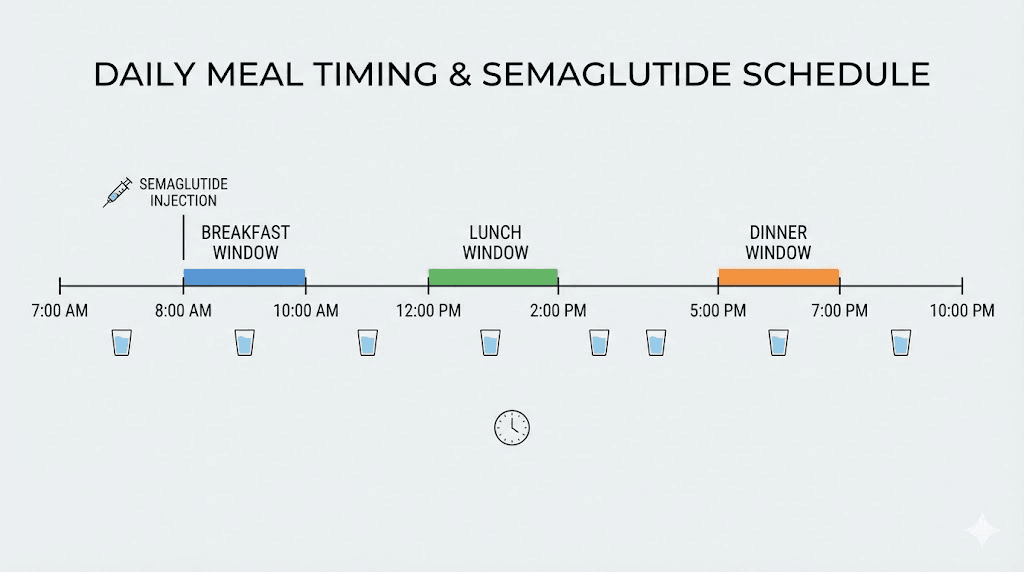
A typical daily structure looks like this. Breakfast around 8 AM. Mid-morning snack around 10:30 AM if needed. Lunch around 12:30 PM. Afternoon snack around 3 PM. Dinner around 6:30 PM. Adjust the timing to fit your schedule, but maintain roughly three to four hours between eating occasions.
Eat protein first
When your appetite is suppressed and you can only manage a small amount of food, start with protein. Always. If you fill up on salad or bread first, you may not have room for the protein your muscles need. Take your first several bites of chicken, fish, eggs, or whatever protein source you chose before moving to vegetables and then carbohydrates. This simple habit ensures you hit your protein targets even on days when eating feels like a chore.
Chew thoroughly and eat slowly
This sounds basic. It is also one of the most effective strategies for preventing nausea and bloating on semaglutide. Chew each bite 20 to 30 times. Put your fork down between bites. A meal should take at least 20 minutes. When you rush through food, you swallow air, overwhelm your stomach, and bypass the satiety signals your body is trying to send. Slow eating reduces nausea incidence by roughly 30 to 40 percent according to clinician reports.
Stop eating before you feel full
On semaglutide, the line between "satisfied" and "uncomfortably full" is razor-thin. By the time you feel truly full, you have already eaten too much. Stop at about 80 percent satiety. You should feel neutral, not stuffed, not bloated, just done. Learning to recognize this point takes practice, but it prevents the worst GI side effects.
Timing around your injection
Most people inject semaglutide once weekly. Some users find that side effects peak in the first 24 to 48 hours after injection. During that window, eat lighter meals, avoid fatty foods entirely, and focus on easily digestible proteins and vegetables. Evening injections allow you to sleep through the initial peak, while morning injections let you manage symptoms during waking hours. Experiment to find what works for your body.
Managing semaglutide side effects through diet
Every common semaglutide side effect has a dietary component. The right food choices can reduce or eliminate most of them. The wrong choices make them significantly worse.
Nausea management
Nausea affects up to 50 percent of semaglutide users, particularly during dose escalation. It typically peaks in the first few weeks at each new dose and gradually subsides as your body adapts. But you do not have to just endure it.
Ginger is your best natural ally. Ginger tea, ginger chews, and even raw ginger added to smoothies contain gingerols and shogaols, compounds with well-documented antiemetic properties. Keep ginger tea accessible throughout the day, especially in the first 48 hours after injection.
Bland foods help during acute nausea episodes. Plain crackers, dry toast, plain rice, bananas, and applesauce are gentle on the stomach and unlikely to trigger vomiting. The BRAT diet framework, bananas, rice, applesauce, and toast, works well during the worst days.
Cold foods are often better tolerated than hot foods because they produce less aroma. Smoothies, chilled yogurt, and cold protein shakes may go down easier than a hot chicken dinner when nausea is active. Peppermint tea also helps. The menthol relaxes the smooth muscle of the GI tract and can reduce that queasy feeling.
Avoid cooking strong-smelling foods when nausea is at its peak. The smell of frying meat or heavy spices can trigger vomiting before you even sit down to eat.
Constipation solutions
Constipation is the second most common side effect, affecting roughly 30 percent of users. Semaglutide slows the entire GI tract, and without intervention, bowel movements can become infrequent and uncomfortable.
Hydration is the first line of defense. Aim for at least 64 ounces of water per day, ideally 80 to 100 ounces. Dehydration hardens stool and makes constipation worse. When combined with proper medication storage and consistent dosing, adequate hydration keeps the entire system functioning more smoothly.
Increase fiber gradually. Sudden jumps in fiber intake cause gas and bloating, which feels even worse when gastric emptying is already delayed. Add 5 grams of fiber per day each week until you reach 25 to 35 grams. Ground flaxseed and chia seeds are particularly effective because they absorb water and create a gel that lubricates the intestinal walls.
Physical activity stimulates peristalsis. A 20 to 30 minute walk after meals can significantly improve bowel regularity. Do not underestimate this simple intervention. Movement is one of the most effective natural remedies for semaglutide-induced constipation.
If dietary changes are not enough, psyllium husk supplements and magnesium citrate are generally safe to use with semaglutide. Magnesium citrate at 200 to 400 milligrams before bed often resolves constipation within 24 to 48 hours. Always discuss supplement use with your healthcare provider.
Bloating and gas reduction
Gas and bloating affect about 10 percent of users. Beyond the fiber guidance above, several strategies help. Avoid carbonated drinks entirely. Eat slowly and chew thoroughly. Reduce intake of gas-producing foods like beans, cabbage, onions, and Brussels sprouts if they cause problems, and reintroduce them gradually. Peppermint tea after meals can relax the GI tract and reduce bloating. Probiotics may also help, though the evidence is mixed.
Fatigue and low energy
If you feel exhausted on semaglutide, your diet is almost certainly the cause. When caloric intake drops dramatically, energy crashes follow unless you are eating nutrient-dense foods. Ensure adequate iron intake from lean red meat, spinach, and legumes. Keep B-vitamin levels up through eggs, fish, and whole grains. And do not skip meals entirely, even if your appetite is low. A small protein-rich snack is always better than nothing.
Dehydration also causes fatigue. Many semaglutide users mistake dehydration for medication-related tiredness. Track your water intake for a week. Most people discover they are drinking far less than they thought.
The protein problem: preventing muscle loss on semaglutide
This section deserves its own detailed treatment because muscle loss is the most serious long-term risk of extended semaglutide use with poor nutrition.
Why muscle loss happens
Your body does not selectively burn fat when in a calorie deficit. It burns whatever is available, and muscle is an expensive tissue to maintain. When protein intake is low, the body breaks down muscle for amino acids it needs elsewhere. Semaglutide creates a significant calorie deficit, often 500 to 1,000 calories below maintenance, and without adequate protein stimulus, the body sacrifices muscle to fill the gap.
Studies from the STEP 1 trial showed that participants lost an average of 15 percent body weight over 68 weeks, but 40 percent of that weight came from lean mass. Other research with higher protein intake and resistance training reduced lean mass losses to 15 to 20 percent of total weight lost. The difference is enormous for long-term metabolic health.
The protein strategy that works
Hit 1.2 to 1.5 grams of protein per kilogram of body weight every single day. No exceptions. On days when eating feels impossible, use liquid protein. A whey or plant-based protein shake delivers 25 to 30 grams of protein in a form that most semaglutide users tolerate well, even when solid food is unappealing.
Eat protein first at every meal. This bears repeating because it is that important. When you can only eat half a plate of food, the half that matters most is the protein.
Distribute protein across all meals. Three to four protein-containing meals and snacks per day is better than one massive protein meal. Muscle protein synthesis peaks at about 30 grams per sitting for most adults, so spreading intake across the day maximizes muscle preservation.
Resistance training is not optional
Diet alone cannot prevent muscle loss. You must also signal to your body that muscle is needed. Resistance training two to three times per week, even at moderate intensity, dramatically reduces lean mass loss during weight loss. Compound movements like squats, deadlifts, rows, presses, and lunges engage large muscle groups and provide the strongest stimulus for muscle preservation.
You do not need to train like a bodybuilder. Two or three sessions per week, 30 to 45 minutes each, using dumbbells, resistance bands, or body weight exercises is sufficient. The key is consistency, not intensity. Show up, challenge your muscles, and give them a reason to stay.
SeekPeptides members get access to detailed protocols that integrate nutrition timing with training schedules, helping users maximize fat loss while preserving the lean mass that supports long-term metabolic health.
Hydration: the overlooked essential on semaglutide
Most semaglutide users are chronically dehydrated and do not realize it. The medication suppresses thirst along with appetite. You eat less food, which means less fluid from food. And if you experience vomiting or diarrhea as side effects, fluid losses accelerate.
How much water you actually need
The standard "eight glasses a day" minimum does not cut it on semaglutide. Aim for 64 to 100 ounces of total fluid daily, or roughly half your body weight in ounces. A 180-pound person should target about 90 ounces. If you exercise, add 16 to 24 ounces for every hour of activity.
Signs of dehydration include dry mouth, headaches, dark urine, constipation, fatigue, dizziness, and dry skin. If you are experiencing any of these, your first intervention should be increasing water intake before attributing the symptoms to the medication.
Practical hydration strategies
Set hourly reminders on your phone. Keep a marked water bottle at your desk. Drink a full glass of water before each meal and snack. Add electrolytes if you are losing fluids through exercise or side effects. Coconut water, bone broth, and electrolyte packets provide sodium, potassium, and magnesium that plain water does not.
Avoid relying on coffee or caffeinated tea for hydration. Caffeine has a mild diuretic effect that can worsen dehydration if you are not compensating with additional water. One or two cups of coffee is fine, but do not count it toward your daily fluid goal.
Herbal teas count toward your fluid intake and offer additional benefits. Ginger tea helps with nausea. Peppermint tea aids digestion. Chamomile tea supports sleep. Rotate through these based on your current needs.
Supplements to consider on semaglutide
When you are eating 30 to 40 percent fewer calories, getting all your micronutrients from food alone becomes difficult. Strategic supplementation fills the gaps.
Essential supplements
Multivitamin: A comprehensive daily multivitamin covers baseline micronutrient needs. Look for one that includes vitamins A, C, D, E, K, B-complex, iron, zinc, and selenium. Take it with food to improve absorption and reduce stomach upset.
Vitamin D: Most adults are deficient regardless of diet, and reduced calorie intake makes it worse. Target 2,000 to 4,000 IU daily, or dose according to blood levels. Vitamin D supports bone health, immune function, and mood, all areas where semaglutide users may notice changes.
Magnesium: Magnesium citrate at 200 to 400 milligrams before bed supports muscle recovery, sleep quality, and bowel regularity. It addresses two common semaglutide complaints, constipation and muscle cramps, with a single supplement.
Omega-3 fatty acids: If you are not eating fatty fish two to three times per week, supplement with 1,000 to 2,000 milligrams of EPA and DHA combined. Omega-3s reduce inflammation, support heart health, and may improve the overall metabolic effects of GLP-1 therapy.
Situation-specific supplements
Vitamin B12: Particularly important if you take metformin alongside semaglutide, as metformin can deplete B12 levels. Sublingual B12 at 1,000 to 2,500 micrograms daily supports energy, nerve function, and red blood cell production. Many compounded semaglutide formulations already include B12, so check your formulation before supplementing separately.
Fiber supplement: Psyllium husk powder (one to two tablespoons daily, mixed in water) provides soluble fiber that specifically helps with constipation. Start with one teaspoon and increase gradually to avoid worsening bloating.
Zinc: Reduced food intake can lead to zinc deficiency, which contributes to hair loss, weakened immunity, and slow wound healing. A zinc picolinate supplement at 15 to 30 milligrams daily addresses this risk.
Collagen peptides: Some users add collagen peptides to their daily routine to support skin elasticity during rapid weight loss. Ten to fifteen grams daily provides additional protein and amino acids that support connective tissue.
Probiotics: A quality probiotic with multiple strains may help with GI side effects, though the evidence is still emerging. Look for formulations containing Lactobacillus and Bifidobacterium strains at a minimum of 10 billion CFU.
What to avoid supplementing
Do not take fat-soluble vitamins in megadoses without blood work confirming deficiency. Excess vitamin A can be toxic, and excess iron causes GI distress. Do not rely on weight loss supplements, fat burners, or appetite suppressants alongside semaglutide. You do not need additional appetite suppression, and many of these products contain stimulants that interact poorly with reduced food intake.
Week-by-week nutrition adjustments as your dose increases
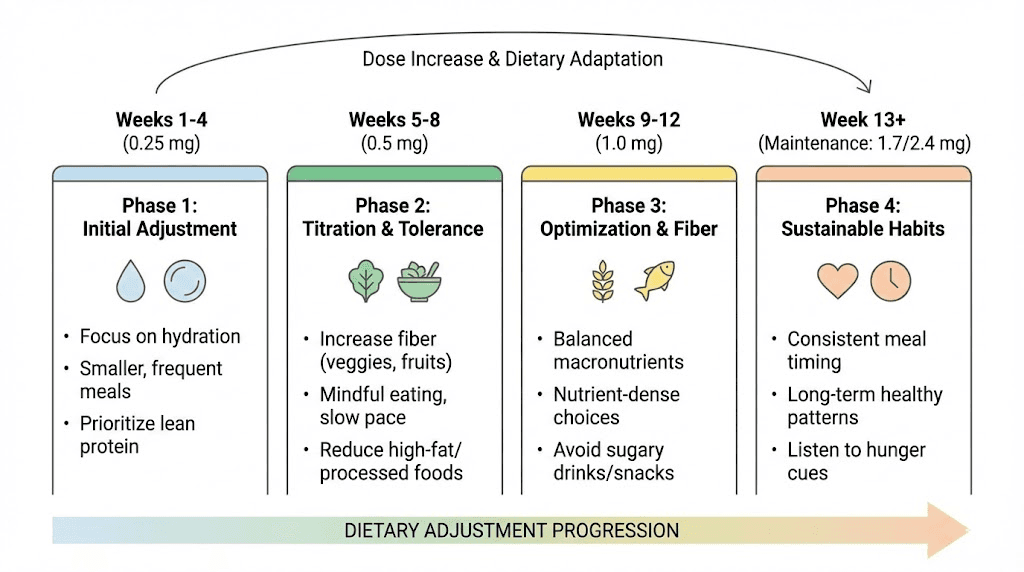
Your dietary approach should evolve as your semaglutide dose increases through the standard titration schedule. What works at 0.25 milligrams may not work at 1.0 milligrams or higher.
Weeks 1 through 4 (0.25 mg)
This is the adjustment period. Appetite suppression is mild for most people. Use this time to establish good eating habits before the stronger effects kick in. Start tracking protein intake. Practice eating slowly. Build your go-to meal repertoire. Increase water intake to target levels. Most people can eat relatively normally at this dose, so focus on habit formation rather than restriction.
Weeks 5 through 8 (0.5 mg)
Appetite suppression becomes noticeable. You may find yourself forgetting to eat or feeling satisfied with half the food you used to consume. This is when protein tracking becomes critical. Set alarms for meals if needed. Prepare protein-rich snacks in advance so they are available when appetite is low. Begin introducing the smaller, more frequent meal pattern if large meals feel uncomfortable.
Weeks 9 through 12 (1.0 mg)
For many users, this is the dose where side effects peak and appetite suppression is strongest. Nausea may return briefly after each dose increase. Fall back to the gentle foods strategy during the first few days at the new dose, then resume normal eating as your body adjusts. Protein shakes become especially valuable here for users who struggle with solid food.
Weeks 13 and beyond (1.0 to 2.4 mg maintenance)
Once you reach your maintenance dose, your body has adapted and eating patterns stabilize. Continue with the protein-first, nutrient-dense approach. Reassess your calorie needs periodically. As you lose weight, your caloric needs decrease further. Adjust portion sizes accordingly, but never let protein drop below the 1.2 grams per kilogram minimum. If weight loss stalls, the answer is almost never to eat less. It is usually to eat smarter, more protein, better quality carbohydrates, and more consistent meal timing.
Special dietary considerations
Vegetarian and vegan semaglutide users
Meeting protein targets on a plant-based diet while on semaglutide requires planning, but it is absolutely possible. Prioritize tofu, tempeh, seitan, lentils, chickpeas, black beans, edamame, hemp seeds, and pea protein powder. A plant-based protein powder that delivers 25 to 30 grams per serving is nearly essential for meeting daily targets.
Combine complementary proteins throughout the day. Rice and beans, hummus and whole grain pita, and nut butter on whole grain bread all provide complete amino acid profiles. Consider supplementing with B12 (essential for all vegans), iron, zinc, and omega-3s from algae-based sources.
Diabetic semaglutide users
If you are using semaglutide for type 2 diabetes management, your dietary approach has additional considerations. Monitor blood sugar closely, especially during dose changes, as the combination of reduced food intake and improved insulin sensitivity can increase hypoglycemia risk. Keep fast-acting glucose available. Work with your diabetes care team to adjust insulin or other medications as your food intake changes. Focus on low-glycemic carbohydrates exclusively. Never skip meals without consulting your provider, as the hypoglycemia risk increases significantly with irregular eating patterns.
Over 50 and on semaglutide
Age-related muscle loss, sarcopenia, compounds the muscle loss risk from semaglutide. If you are over 50, protein targets should be at the higher end, 1.5 grams per kilogram or even higher. Resistance training is even more important for this age group. Calcium and vitamin D supplementation becomes essential to protect bone density during weight loss. Consider adding a bone health supplement that includes vitamins D and K alongside calcium and magnesium.
Active individuals and athletes
If you exercise intensely while on semaglutide, your nutritional needs are higher than the general guidelines suggest. Increase calories to support activity, primarily through additional protein and complex carbohydrates. Time a carbohydrate-rich snack 30 to 60 minutes before workouts. Use a semaglutide dosage calculator to ensure your protocol matches your activity level. Hydrate aggressively before, during, and after exercise. Electrolyte supplementation becomes more important with heavy sweating combined with the dehydration risks of semaglutide.
Grocery shopping guide for semaglutide users
Having the right foods available is half the battle. Here is a practical shopping list organized by section.
Protein section
Chicken breast (boneless, skinless), ground turkey (93% lean or higher), wild-caught salmon fillets, cod or tilapia fillets, large shrimp (pre-cooked for convenience), eggs (large, dozen), plain Greek yogurt (2% or nonfat), cottage cheese (low-fat), firm tofu, canned black beans, and canned lentils.
Produce section
Baby spinach, kale or mixed greens, broccoli crowns, asparagus, zucchini, bell peppers (assorted colors), cherry tomatoes, cucumber, sweet potatoes, avocados, lemons, limes, fresh ginger root, fresh berries, bananas, and apples.
Grains and pantry
Rolled oats, quinoa, brown rice, whole grain bread (look for brands with at least 3 grams fiber per slice), chia seeds, ground flaxseed, almonds, walnuts, peanut butter (natural), canned tuna in water, low-sodium chicken broth, olive oil, balsamic vinegar, and herbs and spices (basil, oregano, garlic powder, cumin, paprika).
Supplements aisle
Whey or plant-based protein powder, psyllium husk powder, magnesium citrate, vitamin D3, comprehensive multivitamin, ginger tea bags, peppermint tea bags, and electrolyte packets.
Meal prep essentials
Glass meal prep containers with dividers, a kitchen scale for portion accuracy, resealable bags for snack portions, and a good quality blender for smoothies and protein shakes. Spending 60 to 90 minutes on Sunday preparing proteins, chopping vegetables, and portioning snacks saves enormous time and prevents poor food choices during the week.
Common mistakes semaglutide dieters make
Even motivated people fall into patterns that sabotage their results. Here are the most common mistakes and how to fix them.
Mistake 1: not eating enough
This sounds counterintuitive on a weight loss medication. But eating too little is just as problematic as eating too much. When caloric intake drops below 800 to 1,000 calories consistently, metabolic rate slows dramatically, muscle loss accelerates, and nutritional deficiencies develop rapidly. If your appetite is severely suppressed, force yourself to eat at minimum three small protein-rich meals per day. Protein shakes count.
Mistake 2: skipping protein to eat "lighter"
Some users fill up on salad, fruit, and crackers because solid protein feels too heavy. This preserves calorie deficit at the expense of muscle. Protein is the one macronutrient you cannot compromise on. Find protein sources that work for you. If chicken breast is too dense, try Greek yogurt. If fish turns your stomach, try a protein smoothie. There is always a form of protein your body will accept.
Mistake 3: not drinking enough water
We covered this in the hydration section, but it bears repeating because it is the most common oversight. Most semaglutide users are drinking 30 to 50 percent less fluid than they need. Track it. Fix it. Many "side effects" resolve with adequate hydration alone.
Mistake 4: eating the same three meals on repeat
Meal fatigue is real, especially when food is already unappealing. Eating the same chicken and rice every day leads to nutritional gaps (you are missing micronutrients from variety) and eventual abandonment of your diet plan entirely. Rotate through at least 10 to 15 different meals to maintain nutritional diversity and prevent boredom.
Mistake 5: ignoring side effects instead of managing them
Nausea, constipation, and fatigue are not things you simply endure. They are signals that your diet needs adjustment. Every side effect has a dietary solution. If you are experiencing persistent symptoms, review the management section above and make targeted changes. Consult with SeekPeptides resources or your healthcare provider for personalized guidance.
Mistake 6: weekend diet abandonment
The appetite suppression from semaglutide is consistent, but social situations and habits often override it. Going out to eat, attending parties, and relaxing on weekends can lead to poor food choices that undo a week of careful eating. Plan ahead. Choose restaurants where you can order protein and vegetables. Eat a protein-rich snack before social events so you are not starving when presented with tempting options.
Tracking your nutrition: tools and methods
You cannot manage what you do not measure, at least not initially. Once your eating patterns are established, you may be able to ease off tracking. But during the first two to three months on semaglutide, tracking provides invaluable data.
What to track
Focus on four numbers. Total calories, protein grams, fiber grams, and water ounces. That is it. Do not obsess over every micronutrient. If you are hitting your protein and fiber targets while eating a variety of whole foods, the rest takes care of itself.
How to track
Use a food tracking app like MyFitnessPal, Cronometer, or Lose It. Weigh your food with a kitchen scale for the first few weeks to calibrate your eye for portions. After that, you can estimate more accurately. Many users find that just logging meals for three to four weeks teaches them enough about portion sizes and protein content that they can maintain their diet intuitively afterward.
When to stop tracking
Once you can consistently hit 100 to 130 grams of protein without logging, you have internalized the framework. Continue tracking water intake if dehydration is a persistent issue. But for most people, two to three months of diligent tracking creates habits that sustain themselves without the app.
Long-term dietary sustainability on semaglutide
Semaglutide is not a short-term intervention for most people. Many users remain on the medication for a year or longer, and some continue indefinitely for weight maintenance. Your diet plan needs to be sustainable, not just effective for the first month.
Building a sustainable approach
The 7-day meal plan above is a template, not a prison. Use it as a starting point, then customize based on your preferences, cooking ability, and cultural food traditions. The principles matter more than specific recipes. Prioritize protein. Eat whole foods. Stay hydrated. Manage side effects through food choices. Get enough fiber. These principles work within any cuisine or dietary tradition.
Find five to seven breakfasts you enjoy. Find seven to ten lunches and dinners you can rotate. Have three to five go-to snacks. This library of meals gives you enough variety to prevent boredom while keeping preparation manageable. Add new options gradually as you discover what your body tolerates best on semaglutide.
What happens when you stop semaglutide
If you eventually discontinue semaglutide, appetite returns. This is normal and expected. The dietary habits you built during treatment become your primary defense against regain. People who maintained high protein intake, regular exercise, and structured eating during semaglutide therapy have the best outcomes after discontinuation. Those who relied purely on the appetite suppression without building habits tend to regain most of the lost weight.
The diet plan described here is not just a semaglutide diet. It is a framework for healthy eating that happens to be optimized for semaglutide users. The protein targets, hydration practices, and whole-food focus serve you well regardless of whether you are on medication.
Frequently asked questions
How many calories should I eat on semaglutide?
Most users naturally consume 1,200 to 1,500 calories per day once the medication reaches therapeutic levels. Do not force yourself below 1,000 calories, as this accelerates muscle loss and nutrient deficiencies. If your appetite allows more, focus additional calories on protein and nutrient-dense foods rather than empty calories.
Can I eat whatever I want on semaglutide?
Technically, yes. The medication does not restrict any specific foods. Practically, no. High-fat, fried, and sugary foods trigger worse side effects on semaglutide than off it, and your reduced calorie budget means poor food choices create nutritional deficits much faster.
Why am I not losing weight on semaglutide even though I am eating less?
Several factors can cause weight loss plateaus on semaglutide. Water retention, constipation, insufficient protein leading to metabolic slowdown, and hormonal fluctuations all play roles. Ensure your protein intake is adequate, hydration is sufficient, and you are incorporating physical activity. Weight loss is rarely linear, and plateaus of two to four weeks are normal.
Should I eat before or after my semaglutide injection?
There is no strict requirement. However, many users find that eating a light, protein-rich meal before their injection and keeping meals lighter for the following 24 to 48 hours reduces nausea and GI discomfort. Avoid large, fatty meals on injection day.
How much protein do I need on semaglutide?
Target 1.2 to 1.5 grams per kilogram of body weight daily. For most adults, this translates to 80 to 130 grams per day. Higher protein intake preserves muscle mass, supports metabolism, and helps you feel satisfied with less food.
Can I drink coffee on semaglutide?
Yes. One to two cups of coffee per day is fine for most users. Avoid adding sugar and heavy cream. Black coffee or coffee with a splash of milk is best. Be aware that caffeine has a mild diuretic effect, so compensate with additional water. Some users find that coffee on an empty stomach worsens nausea on semaglutide.
What should I eat when I feel nauseous on semaglutide?
Bland, cold, and easy-to-digest foods work best. Plain crackers, dry toast, chilled Greek yogurt, protein smoothies, bananas, and broth-based soups are all good options. Ginger tea is one of the most effective natural remedies for semaglutide-related nausea. Avoid anything fatty, fried, spicy, or strong-smelling.
Do I need to take vitamins on semaglutide?
A daily multivitamin is recommended for most users to cover baseline needs. Vitamin D, magnesium, and omega-3s are the most commonly recommended additional supplements. If you are taking metformin alongside semaglutide, B12 supplementation is important. Blood work can identify specific deficiencies.
External resources
For researchers serious about optimizing their semaglutide protocols, SeekPeptides offers the most comprehensive resource available, with evidence-based nutrition guides, personalized protocol builders, and a community of thousands who have navigated these exact dietary challenges.
In case I do not see you, good afternoon, good evening, and good night. May your protein stay adequate, your hydration stay consistent, and your results stay on track.