PEPTIDE CALCULATOR
Calculating peptide dosages manually is a pain. You need to convert body weight from pounds to kilograms, multiply by the recommended mcg/kg ratio, then figure out injection volumes based on your reconstitution.
One math error means wasted peptides or wrong doses.
This peptide calculator does all the math for you.
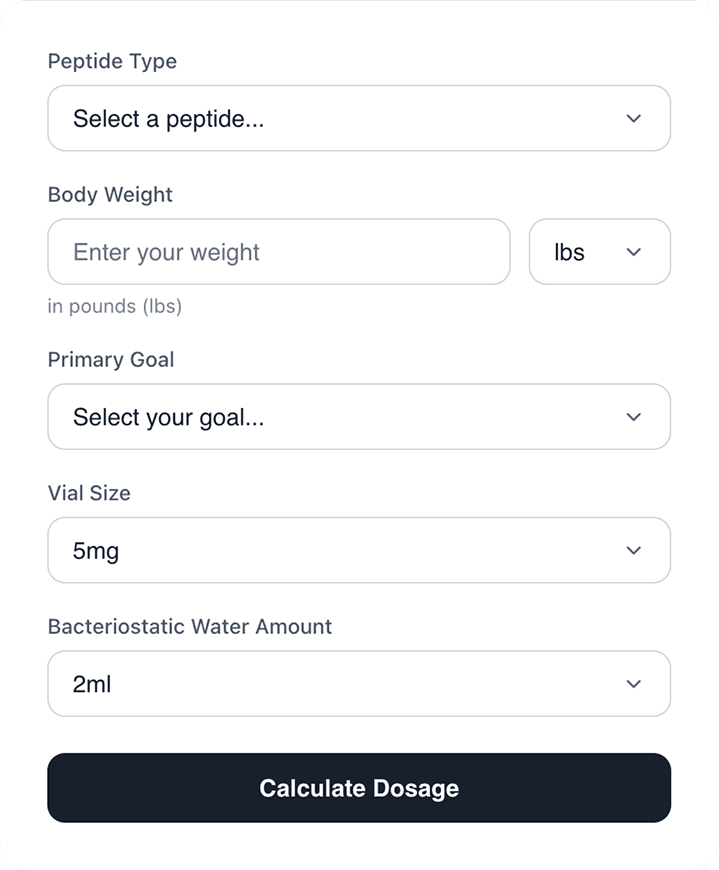
Enter your weight, select your peptide (BPC-157, TB-500, Semaglutide, etc.), choose your vial size, and get instant results.
The calculator shows exactly how many micrograms per dose, milliliters to inject, and total doses per vial.
Peptide dosing follows a weight-based approach. Most research protocols measure dosages in micrograms per kilogram of body weight. This is written as mcg/kg. A 180-pound person needs a different dose than a 150-pound person, even if they're using the same peptide for the same goals.
Here's what makes it tricky. You're converting between measurement systems, pounds to kilograms, milligrams to micrograms, powder concentration to injection volume.
One miscalculation compounds into the next, and suddenly you're taking three times the intended dose or a third of what you need.
This calculator eliminates that risk.
You input your weight, select your peptide, choose your vial size, and specify how much bacteriostatic water you're using for reconstitution. The calculator handles every conversion. It tells you exactly how many micrograms you need per injection, what volume to draw in your insulin syringe, and how many doses you'll get from your vial.
But understanding the calculation is just as important as using the tool. When you know how peptide dosing works, you can adjust protocols intelligently, can have informed conversations with other researchers, and you become confident in your approach instead of blindly following numbers.
The foundation is simple. Research peptides are dosed based on body weight because their effects scale with your mass. A peptide like BPC-157 might be dosed at 250-500 micrograms daily for a 70-kilogram person. That's roughly 3.5 to 7 micrograms per kilogram. Scale that up or down based on your actual weight, and you have your target dosage.
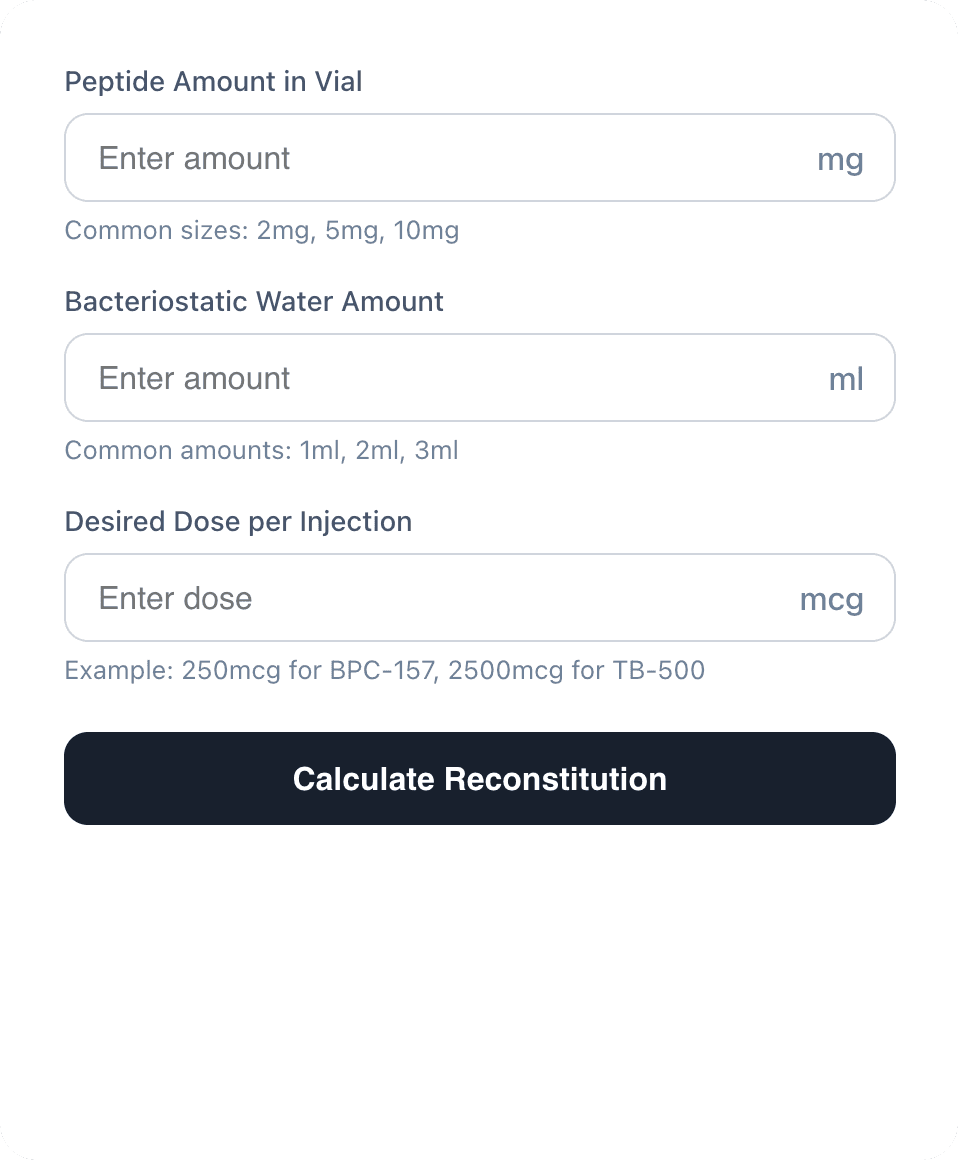
Then comes reconstitution. You add a specific amount of bacteriostatic water to your peptide powder.
This creates a solution with a known concentration.
If you have 5mg of peptide and add 2ml of water, your concentration is 2,500 micrograms per milliliter.
Now when you need to inject 250 micrograms, you know to draw 0.1ml in your syringe.
And when you're managing multiple peptides with different dosing protocols, the cognitive load adds up fast.
That's exactly why this calculator exists.
Some people try to eyeball it, they figure "close enough" works, but it doesn't.
Research peptides operate within specific dosage windows.
Too little and you won't see the intended effects, too much and you risk side effects or wasted product.
Others rely on pre-calculated charts they found online.
The problem?
Those charts assume specific vial sizes and specific reconstitution volumes. If your setup differs even slightly, the numbers don't match. You're back to manual calculations or guessing.
This calculator adapts to your exact situation, your peptide, vial size, chosen water volume, body weight.
Use this tool every time you reconstitute a new vial, when you're adjusting dosages mid-protocol, when you're helping another researcher figure out their numbers, until the process becomes second nature and the math clicks intuitively in your head.
Because at the end of the day, accurate dosing separates successful research from expensive guesswork.
HOW TO USE
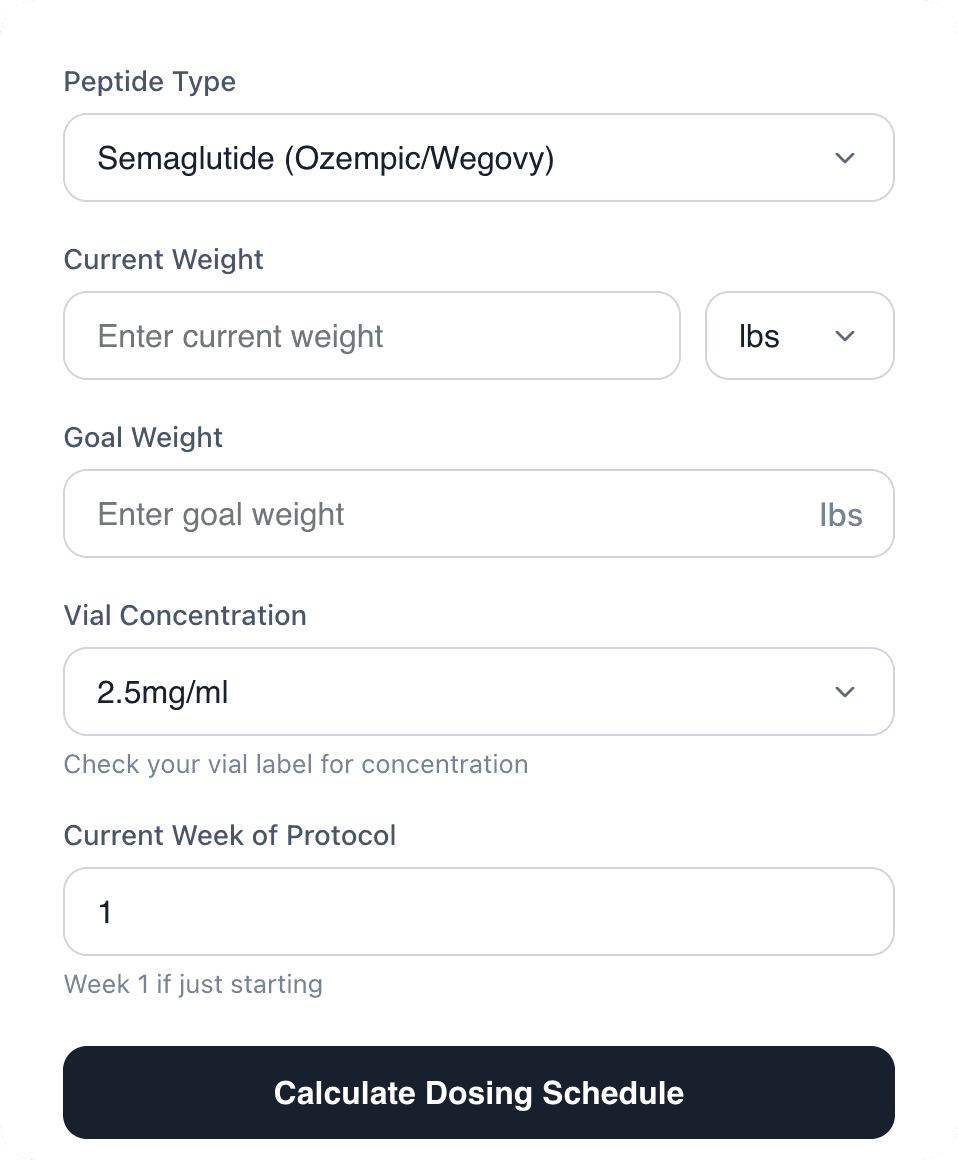
Step 1: Select your peptide type from the dropdown. The calculator includes common peptides like BPC-157, TB-500, Semaglutide, CJC-1295, and Ipamorelin. Each peptide has preset dosing ranges based on standard protocols.
Step 2: Enter your body weight in pounds or kilograms. The calculator converts automatically.
Step 3: Choose your primary goal (injury recovery, fat loss, muscle gain, etc.). This adjusts the recommended dose within the safe range for your peptide.
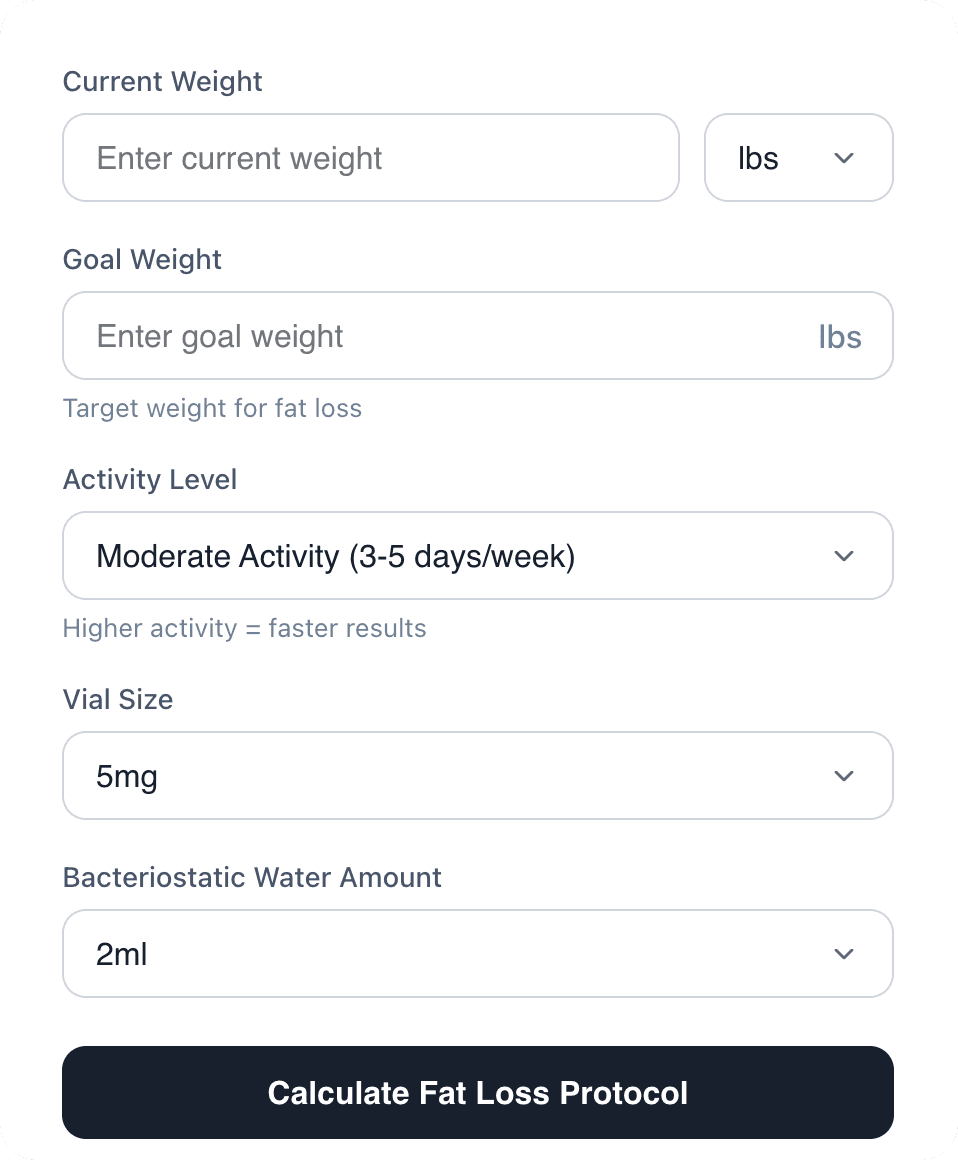
Step 4: Input your vial size in milligrams. Common sizes are 2mg, 5mg, and 10mg. Check your vial label.
Step 5: Enter how much bacteriostatic water you're using for reconstitution. Standard amounts are 1ml, 2ml, or 3ml.
Step 6: Click Calculate. The results show:
Recommended dose in micrograms based on your weight
Injection volume in milliliters
Total doses per vial
Concentration in mcg/ml
Example calculation:
Body weight: 180 lbs (81.6 kg)
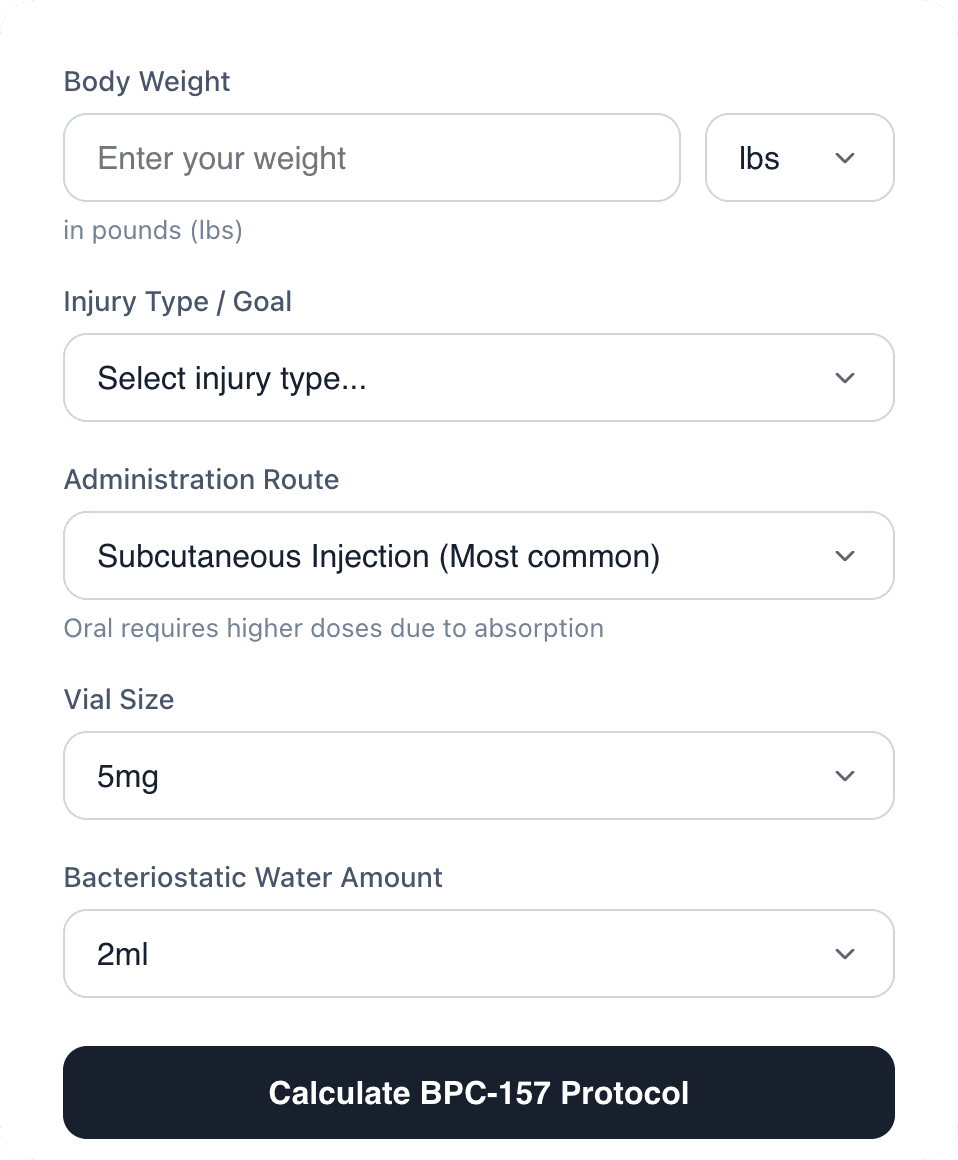
Peptide: BPC-157 for injury recovery (4 mcg/kg)
Vial: 5mg
Water: 2ml
Result: 326mcg per dose, draw 0.13ml on syringe, 15 doses total
Save these results or screenshot them. You'll reference them every time you inject from this vial.
FREE TOOLS
FAQ
How do I calculate the correct peptide dosage for my body weight?
Peptide dosages are typically calculated based on micrograms per kilogram of body weight (mcg/kg). For example, BPC-157 is often dosed at 2.5-4 mcg/kg, meaning a 180lb (82kg) person would take 205-328mcg. Our calculator automatically converts your weight and applies the recommended dosage range for each peptide type.
What's the difference between mcg, mg, and IU in peptide dosing?
Can I use the same dosage as someone else with my same weight?
How often should I inject peptides?
What happens if I inject too much peptide?
Should I adjust my dose if I'm not seeing results?
Do I need to cycle off peptides or can I use them continuously?