Feb 20, 2026
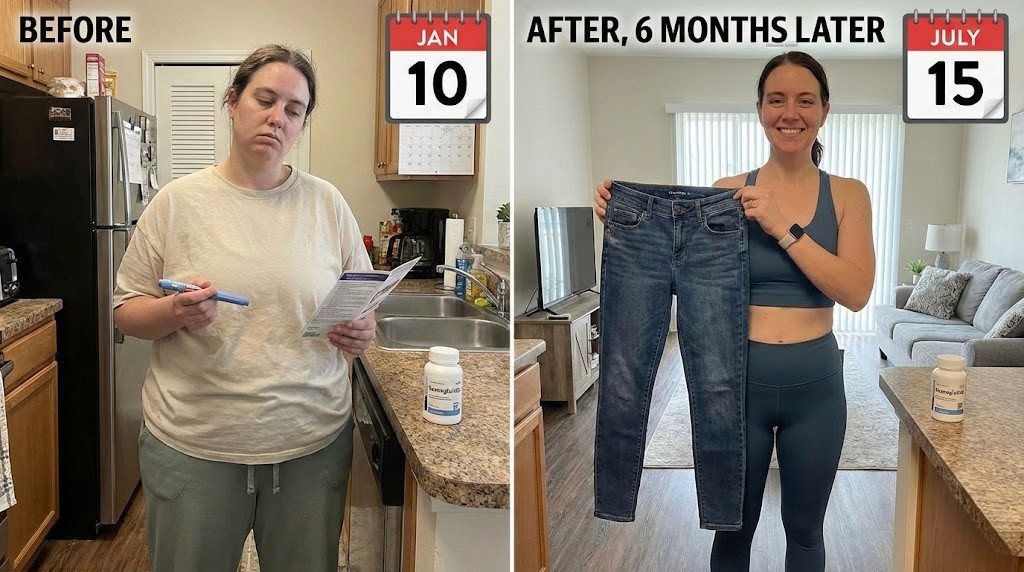
Week one felt like nothing happened. The scale barely moved. The appetite was still there, still pulling, still demanding attention at 10 PM with the pantry door wide open. Then week three arrived. The noise quieted. Food became functional, not emotional. And by month three, the mirror told a different story than it had in years.
That progression is not unusual. It is, in fact, the most common pattern researchers and users report when documenting their semaglutide results over time. But the journey from "before" to "after" involves far more than a number on a scale. Body composition shifts. Energy levels change. The relationship with food undergoes a fundamental rewiring. Some changes are visible within weeks. Others take months to fully reveal themselves.
The problem is that most before and after accounts skip the middle. They show you the starting photo and the transformation photo, but they leave out the messy, confusing, sometimes frustrating weeks between those two snapshots. The weeks where the scale stalls. The weeks where fatigue sets in. The weeks where you wonder if the medication is working at all. Those weeks matter. They matter because understanding them is the difference between someone who pushes through to genuine transformation and someone who quits at week four, convinced the whole thing was overhyped.
This guide covers everything that happens between the first injection and the after photo. The clinical data from major trials. The week-by-week timeline most people experience. The body composition changes that go far beyond simple weight loss. The facial changes nobody warned you about. And the specific, research-backed strategies that separate mediocre results from remarkable ones. Whether you are considering compounded semaglutide, already on treatment, or simply trying to understand what realistic results look like, every question gets answered here.
How semaglutide changes your body from the inside out
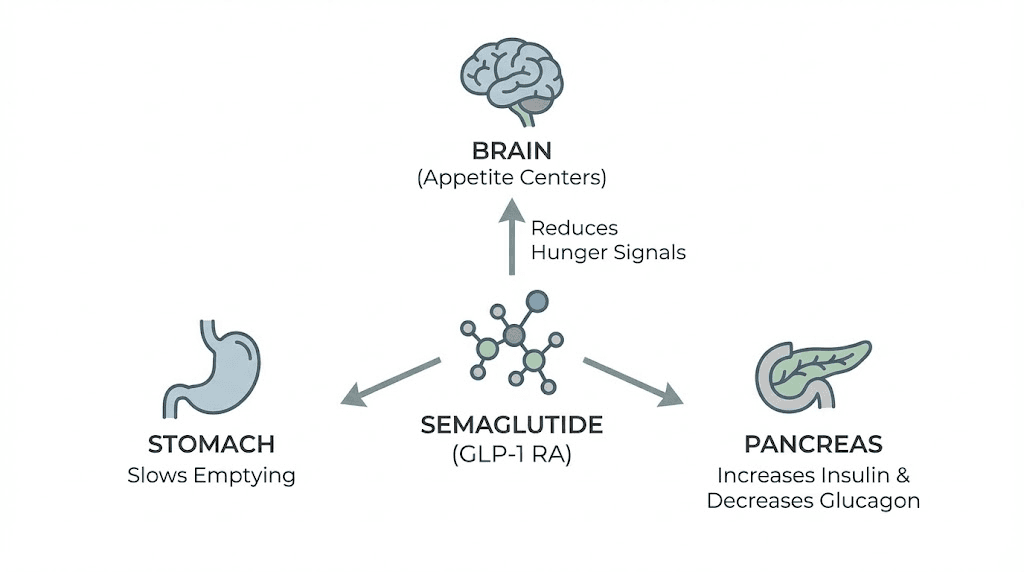
Before examining results, understanding the mechanism matters. Semaglutide is a GLP-1 receptor agonist, meaning it mimics a hormone your body already produces. That hormone, glucagon-like peptide-1, plays a central role in appetite regulation, insulin secretion, and gastric emptying. When you inject semaglutide, you are essentially amplifying a signal your body already sends, just at a level strong enough to create measurable changes.
The appetite suppression is the most obvious effect. But it is not the only one.
Semaglutide slows gastric emptying, which means food stays in your stomach longer. This creates a physical sensation of fullness that lasts for hours after eating. It also acts on the brain directly, targeting areas in the hypothalamus that regulate hunger and satiety. Researchers studying how long semaglutide takes to suppress appetite have found that these central effects begin within the first week, though they intensify as the dosage increases over time.
There is also an effect on food reward pathways. People on semaglutide frequently report that foods they previously craved, particularly high-sugar and high-fat options, simply lose their appeal. This is not willpower. It is neurochemistry. The medication reduces the dopamine response to calorie-dense foods, making them genuinely less interesting rather than requiring you to resist them through sheer determination.
The combination of reduced appetite, slower digestion, and diminished food reward creates a caloric deficit without the constant mental battle most diets require. And that deficit, sustained over weeks and months, is what produces the before and after transformations that have made semaglutide one of the most discussed medications in recent memory.
What the clinical trials actually show
Anecdotes are compelling. Data is convincing. The STEP trial program, which stands for Semaglutide Treatment Effect in People with Obesity, provides the most comprehensive clinical evidence for semaglutide weight loss results. These were not small studies. They involved thousands of participants across multiple countries, with rigorous controls and long follow-up periods.
STEP 1: the landmark study
The STEP 1 trial enrolled 1,961 adults with a BMI of 30 or higher, or a BMI of 27 or higher with at least one weight-related comorbidity. Participants received either semaglutide 2.4 mg weekly or placebo, alongside lifestyle interventions. The results after 68 weeks were striking. The semaglutide group lost an average of 14.9% of their body weight, compared to just 2.4% in the placebo group. That is a treatment difference of 12.4 percentage points.
For a 220-pound person, that translates to roughly 33 pounds of weight loss attributable to the medication itself. And 69% of participants in the semaglutide group achieved at least 10% weight loss, compared to only 12% in the placebo group.
These numbers matter because they set realistic expectations. A 15% reduction in body weight is significant. It is visible. It changes how clothes fit, how you move, how you feel. But it is not the 50% transformation some social media posts might suggest. Understanding this distinction is critical for anyone using semaglutide dosage calculations and planning their protocol.
STEP 3: semaglutide plus intensive behavioral therapy
The STEP 3 trial added intensive behavioral therapy and a low-calorie diet to the semaglutide protocol. The result was a 16.0% mean body weight reduction, compared to 5.7% with placebo. This confirms something important about before and after results: the medication alone produces significant changes, but combining it with structured dietary and behavioral approaches amplifies those results.
People who treat semaglutide as the entire solution typically land on the lower end of results. Those who pair it with a structured semaglutide diet plan, regular exercise, and proper food choices consistently achieve results at the higher end, or beyond, what the clinical trials demonstrated.
STEP 5: two-year results
Short-term results are encouraging. Long-term results answer the question everyone actually cares about: does it last? The STEP 5 trial followed participants for 104 weeks, a full two years, on semaglutide 2.4 mg. The mean weight reduction at that point was 15.2%. Importantly, weight loss was maintained throughout the second year, not regained. This suggests that semaglutide provides sustained results as long as treatment continues, a finding that has significant implications for how long people stay on semaglutide.
Four-year follow-up data
Even more encouraging, four-year follow-up data from peer-reviewed research shows patients maintained an average weight loss of approximately 10% of their body weight. Some weight regain occurred after the initial loss period, which is expected, but the net result remained clinically significant and sustained.
This data paints a clear picture. Semaglutide produces meaningful weight loss in the range of 10-17% of body weight over 1-2 years. Combined with lifestyle changes, results skew higher. And with continued treatment, those results are maintainable. The before and after is not temporary, provided you understand what maintaining the "after" requires.
Your semaglutide timeline week by week
Clinical trial averages tell you what happens across large populations. What most people want to know is what will happen to them, specifically, as the weeks pass. While individual responses vary based on starting weight, metabolism, diet quality, and physical activity, the general pattern follows a predictable trajectory.
Weeks 1-2: the adjustment period
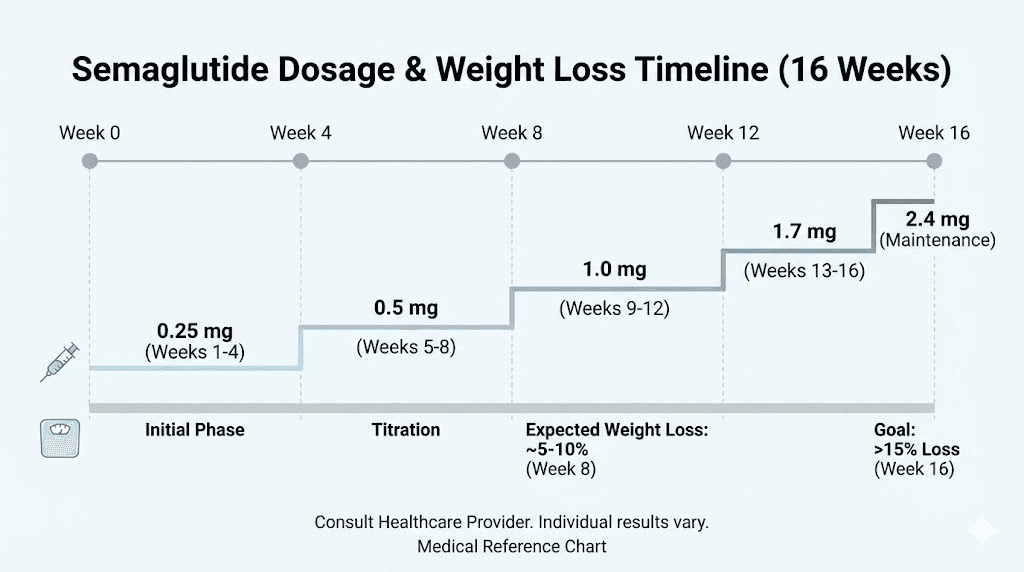
The starting dose is 0.25 mg weekly. This is deliberately sub-therapeutic for weight loss. Its purpose is to let your gastrointestinal system adjust to the medication. During these first two weeks, most people notice subtle changes. A slight reduction in appetite. Feeling full sooner at meals. Maybe a pound or two of weight loss, though some of this may be water weight.
Some people feel almost nothing during this phase and wonder if their medication is working at all. This is normal. The appetite suppression does not kick in immediately for everyone at this dose. Gastrointestinal side effects, primarily nausea and sometimes burping, may appear but are usually mild.
Do not judge semaglutide by these first two weeks. The medication has barely entered the picture.
Weeks 3-4: the first real changes
At week five, the dose typically increases to 0.5 mg. But even before that escalation, weeks three and four often bring the first noticeable shift. The appetite suppression becomes more consistent. You start leaving food on your plate without thinking about it. Snacking between meals decreases or stops entirely.
Weight loss during this period averages 2-5 pounds, though some people report more and others less. The important thing is the trend. If you are eating less without effort, the medication is working. The scale will follow. If you are tracking your semaglutide dosage in units, this is when proper dosing starts to matter.
Weeks 5-8: building momentum
The dose continues escalating, moving from 0.5 mg to 1.0 mg at week nine. During weeks five through eight, weight loss accelerates for most people. The cumulative caloric deficit from reduced appetite starts showing up as visible changes. Clothes fit differently. The face begins to look slightly leaner. Energy levels may fluctuate, with some people experiencing GLP-1 related fatigue as their body adapts to running on fewer calories.
This is also when the relationship with food begins its deeper transformation. Cravings for specific junk foods diminish. The volume of food consumed at meals drops noticeably. Eating becomes something you do because you need fuel, not because food is calling to you from the kitchen. For many people, this psychological shift is more profound than the physical changes. It is the first time in years, sometimes decades, that food is not the dominant force in their daily mental landscape.
Average weight loss by week 8: 5-10 pounds. Some individuals, particularly those with higher starting weights, may see more. Those already closer to a healthy BMI may see less. Both outcomes are on track.
Weeks 9-16: the escalation and acceleration phase
Doses continue climbing through 1.0 mg and 1.7 mg, reaching the target maintenance dose of 2.4 mg at week 17. This 16-week escalation period is where many people experience the most dramatic transformation. The appetite suppression at higher doses is substantially stronger. Portion sizes shrink further. The caloric deficit widens.
By week 12, many people have lost 10-15 pounds. This is the point where the one-month results that social media loves to showcase begin appearing. It is also where side effects may intensify temporarily. Nausea can return with each dose increase. Constipation is common and treatable. Some experience fatigue that requires attention to protein intake and sleep quality.
Two critical mistakes happen during this phase. First, some people panic when side effects increase and stop the medication prematurely, right before reaching the therapeutic dose where the best results occur. Second, others see initial success and assume the medication will do all the work, neglecting the dietary and exercise components that amplify results. Both mistakes lead to disappointing before and after outcomes.
Weeks 17-28: the full therapeutic window
Once you reach the 2.4 mg maintenance dose, the medication is operating at full strength. Weight loss during this phase is steady and consistent, typically averaging about 1-2 pounds per week, though this varies significantly by individual. At the three-month mark on the full dose, which corresponds roughly to week 28 of treatment overall, clinical trials show an average weight loss of approximately 9.6% of baseline body weight.
For someone who started at 250 pounds, that is about 24 pounds. For someone who started at 180 pounds, roughly 17 pounds. These numbers represent real, visible transformation. The kind of change that prompts comments from coworkers, friends, and family.
This phase is also where body composition changes become pronounced. Not just overall weight loss, but shifts in where fat is stored, how clothes fit in specific areas, and how your body looks and moves. Understanding how fast semaglutide works and setting expectations accordingly prevents the frustration that leads many people to quit too early.
Months 7-12: the deep transformation
This is where the real before and after happens. By six months of treatment, average weight loss reaches 13-15% of baseline body weight. By 12 months, it approaches 15-17%. The changes are unmistakable. People who have been on semaglutide for a year often look like a different person compared to their starting point.
But the transformation is not just visual. Blood pressure improves. Blood sugar levels normalize. Inflammatory markers decrease. Joint pain reduces as less weight is being carried. Sleep quality often improves. The metabolic benefits of losing 15% of body weight are extensive and well-documented.
People at this stage frequently report that the psychological transformation was even more significant than the physical one. The freedom from food obsession. The confidence that comes from sustained success. The knowledge that their relationship with eating has fundamentally changed. These internal shifts do not show up in before and after photos, but they may be the most valuable result of all.
Year 2 and beyond: maintenance and stability
Long-term data shows that weight loss stabilizes after 12-18 months of treatment. The STEP 5 trial demonstrated maintained weight loss of 15.2% at 104 weeks. Four-year data shows approximately 10% sustained weight loss. Some weight regain is common and does not indicate failure. It represents a new equilibrium point that is still substantially lower than the starting weight.
The question of how long to stay on semaglutide becomes critical at this stage. Data consistently shows that discontinuing the medication leads to significant weight regain, with most people recovering about two-thirds of the lost weight within a year of stopping. This reality shapes the before and after narrative: the "after" requires ongoing commitment, whether that means continued medication, rigorous lifestyle maintenance, or both.
What semaglutide before and after really looks like
Scale weight captures one dimension of change. The actual before and after transformation involves multiple systems in the body, each shifting on its own timeline and in its own way.
The first thing people notice: appetite and eating behavior
Before semaglutide, many people describe a constant background noise of hunger and food thoughts. Thinking about the next meal during the current one. Craving specific foods at specific times. Eating past the point of fullness because stopping felt impossible.
After semaglutide, that noise goes quiet. Not silent, but quiet. Food becomes functional rather than emotional. Portions shrink naturally, not through restriction but through genuine satisfaction with less. Cravings for sugar and processed foods diminish or disappear entirely. This shift often occurs before significant weight loss is visible, making it one of the earliest and most reliable indicators that the medication is working.
For researchers tracking their progress on how long semaglutide takes to work, this behavioral change is the leading indicator. If your eating patterns are shifting, the physical results will follow.
The visible transformation: where fat disappears first
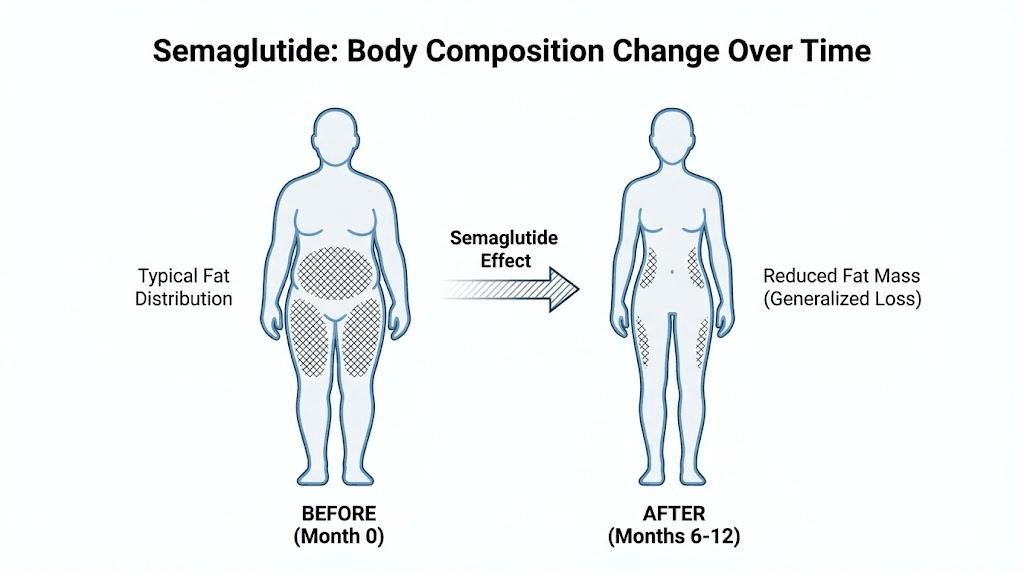
Semaglutide does not spot-reduce fat. However, the pattern of fat loss follows a generally predictable order for most people. Visceral fat, the dangerous fat surrounding internal organs, tends to decrease first. This means the midsection often shows the earliest visible changes, even before the overall number on the scale drops dramatically. Clinical data shows visceral fat reduction of 27.4% with semaglutide, a reduction that carries enormous health benefits.
Subcutaneous fat, the fat just beneath the skin, follows. Arms, legs, and eventually face and neck are the last areas where most people notice changes. This uneven pattern can be frustrating in the early months. You may be losing significant internal fat, improving your metabolic health substantially, while your visual appearance changes more slowly than expected.
Understanding this pattern prevents discouragement. The invisible improvements are happening before the visible ones. Blood panels often confirm this: improved cholesterol, better blood sugar control, and reduced inflammatory markers frequently appear before the mirror reflects dramatic change. The fat loss process is working from the inside out.
Energy and mood shifts
The before and after in energy and mood follows a non-linear path. During the first few weeks, energy may actually decrease. You are consuming fewer calories than your body is accustomed to, and that adjustment takes time. Some people experience shifts in their energy levels that require attention.
By weeks 6-8, energy typically rebounds. The body adapts to its new caloric intake. Weight loss reduces the physical burden of carrying excess mass. Sleep often improves as well, contributing to better daytime energy. Many people report that by month three, their energy levels are higher than they were before starting treatment, despite eating significantly less.
Mood improvements are frequently reported but harder to quantify. Reduced food obsession frees up mental bandwidth. Physical changes boost confidence. And the metabolic improvements associated with weight loss have documented effects on brain function and emotional regulation.
Body composition changes beyond the scale
The scale tells one story. Body composition tells a more complete one. And the body composition story with semaglutide contains both good news and important caveats that every user should understand.
Fat mass reduction: the good news
The STEP 1 exploratory analysis on body composition revealed that semaglutide reduces total fat mass by an average of 19.3%. For someone carrying 80 pounds of fat mass, that represents a reduction of about 15 pounds of pure fat. Visceral fat, the metabolically dangerous kind that wraps around organs and drives inflammation, decreases by an even more impressive 27.4%.
This fat-specific weight loss is one of semaglutide most important features. Not all weight loss is created equal. Losing fat while preserving muscle is the ideal scenario, and semaglutide trends strongly in that direction compared to caloric restriction alone.
Lean mass: the nuanced reality
Here is where the conversation gets more complex. Total lean body mass decreased by an average of 9.7% in STEP trial participants. That sounds concerning, and it should get your attention, but context matters. When you lose a significant amount of weight, some lean mass loss is inevitable. Your body needs less structural support tissue, less muscle to move a lighter frame, and some lean mass reduction is physiologically appropriate.
The critical metric is the ratio. Despite absolute lean mass decreasing, the proportion of lean mass relative to total body mass actually increased by 3.0 percentage points. In other words, after semaglutide treatment, a greater percentage of your body weight is muscle and lean tissue than before. The body becomes leaner in composition even as it becomes lighter overall.
However. And this is a significant however. Studies show that the lean mass loss ranged from nearly 0% to 40% of total weight lost across different analyses. That is an enormous range, and where you land within it depends largely on two factors: protein intake and resistance exercise. People who consumed adequate protein, roughly 1.2-1.5 grams per kilogram of body weight, and engaged in regular strength training preserved significantly more lean mass than those who relied on the medication alone.
This finding has direct implications for your before and after results. The person who takes semaglutide while eating enough protein and lifting weights three times a week will have a dramatically different "after" than the person who takes semaglutide, eats whatever they want in smaller amounts, and does no exercise. Same medication. Same weight loss. Completely different body composition outcome. Tracking your progress with a peptide calculator and paying attention to nutrition is essential.
What this means for your transformation
A 200-pound person who loses 15% of their body weight will weigh 170 pounds. If they preserved lean mass effectively, they might have lost 25 pounds of fat and 5 pounds of lean mass. If they did not prioritize muscle preservation, they might have lost 18 pounds of fat and 12 pounds of lean mass. Both people weigh 170 pounds. One looks fit and toned. The other looks soft and deflated, a phenomenon sometimes called being "skinny fat."
The before and after photos that look the best, the ones with visible muscle definition and healthy-looking skin, almost always come from people who combined semaglutide with proper strength training and high-protein nutrition. The medication handles the appetite and caloric deficit. You handle the body composition optimization. Understanding which supplements support GLP-1 protocols can also make a meaningful difference in preserving lean tissue during weight loss.
Understanding semaglutide face and skin changes
Nobody talks about semaglutide face until it happens to them. Then it becomes the only thing they want to discuss.
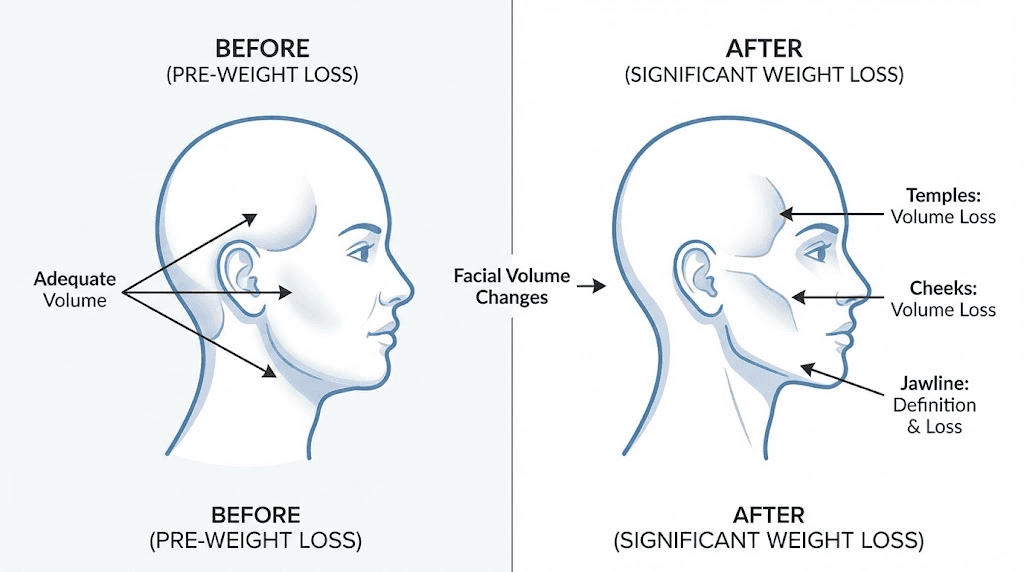
The term refers to a specific set of facial changes that can occur with rapid weight loss from GLP-1 medications. Temporal hollowing. Sunken cheeks. Deepening of nasolabial folds. Visible jawline and neck skin laxity. New wrinkles that were not there before. In essence, the face loses fat faster than the skin can retract, creating an aged, gaunt appearance even as the body looks healthier.
Why it happens
Fat loss is not selective. When semaglutide creates a caloric deficit large enough to lose 15% of body weight, fat disappears from everywhere, including the face. Facial fat provides structural support, keeping skin smooth and features soft. When it depletes rapidly, the scaffolding beneath the skin collapses, and the skin, which loses elasticity with age, cannot contract fast enough to follow.
Semaglutide may also accelerate the decline of elastin and collagen, compounding the effect. And the loss of muscle mass, including facial muscles, further contributes to a prematurely aged appearance. The irony is painful: people pursue semaglutide partly for aesthetic improvement, only to find that one area of their appearance, the face, may look worse even as their body looks better.
Who is most at risk
Not everyone experiences semaglutide face. Risk factors include age (over 40 carries higher risk), rate of weight loss (faster loss means more facial volume depletion), amount of weight lost (more total loss means more facial fat lost), genetics affecting skin elasticity, and sun damage history. People who have maintained a higher weight for many years also tend to experience more dramatic facial changes, because their facial skin has stretched to accommodate the extra volume.
Prevention and management strategies
The most effective prevention strategy is slowing the rate of weight loss. This may seem counterintuitive when you are motivated and seeing results, but losing 1-2 pounds per week instead of 3-4 gives your facial skin more time to adapt. Staying well-hydrated supports skin elasticity. Sunscreen use prevents additional collagen damage. And some dermatologists recommend collagen supplements, though the evidence for oral collagen reaching facial tissue specifically is limited.
Strength training and adequate protein intake support muscle preservation throughout the body, including facial muscles. Semaglutide combined with B12 supplementation may support overall tissue health during the weight loss process. Some practitioners suggest methylcobalamin specifically for its role in cellular function and tissue maintenance.
For those who have already experienced facial volume loss, dermal fillers can restore volume to the temples, cheeks, and under-eye area. Skin tightening treatments using radiofrequency or ultrasound technology can improve laxity. These are cosmetic interventions, not medical necessities, but they are worth knowing about as part of the complete before and after picture.
Semaglutide results by starting point
Your before and after will not look like anyone else's. Starting weight, age, gender, metabolic health, and activity level all influence what your specific transformation looks like. Understanding these variables helps set realistic, personalized expectations.
Results by BMI category
People with higher starting BMIs tend to lose more absolute weight but a similar percentage of body weight compared to those with lower starting BMIs. A person starting at BMI 40 (roughly 280 pounds for someone 5'10") might lose 40-45 pounds, representing about 15% of body weight. A person starting at BMI 30 (roughly 210 pounds at the same height) might lose 30-32 pounds, also about 15% but a smaller absolute number.
Both transformations are significant. But the visual impact differs. A 40-pound loss on a 280-pound frame changes appearance considerably. The same percentage loss on a 210-pound frame may be less dramatic visually but equally important metabolically.
Gender differences in before and after results
Clinical trial data shows that men and women lose similar percentages of body weight on semaglutide, but the visual distribution of that loss differs. Men tend to lose more visceral fat from the midsection, often seeing dramatic reductions in waist circumference. Women tend to lose fat more evenly throughout the body, with changes in hips, thighs, and arms as well as the midsection.
These differences reflect normal gender-based fat distribution patterns. Comparing male before and after results with female results requires understanding that the same medication produces different visual outcomes based on biology, not effectiveness.
Age-related considerations
Younger adults, those under 40, typically experience faster initial weight loss and better skin retraction. Their metabolism is generally higher, and their skin retains more elasticity to accommodate the changing body contour.
Adults over 50 may see slightly slower weight loss and more pronounced skin laxity, including the facial changes discussed earlier. However, the metabolic benefits, improvement in blood pressure, blood sugar, and inflammatory markers, are often more pronounced in older adults because they are more likely to have pre-existing metabolic dysfunction that semaglutide helps correct.
Age should not discourage anyone from pursuing treatment. It should, however, inform expectations and influence supporting strategies like protein intake and resistance training.
The role of metabolic health at baseline
People with insulin resistance or type 2 diabetes may notice different patterns of weight loss compared to metabolically healthy individuals. Insulin resistance can make the first few weeks slower, as the body is less efficient at mobilizing stored fat. However, semaglutide directly improves insulin sensitivity, and as this improves, weight loss often accelerates. By months 3-6, the gap in weight loss between insulin-resistant and insulin-sensitive individuals typically narrows significantly. Anyone tracking their progress should consider the four-week milestone carefully, as early slow progress does not predict long-term outcomes.
How to maximize your semaglutide before and after transformation
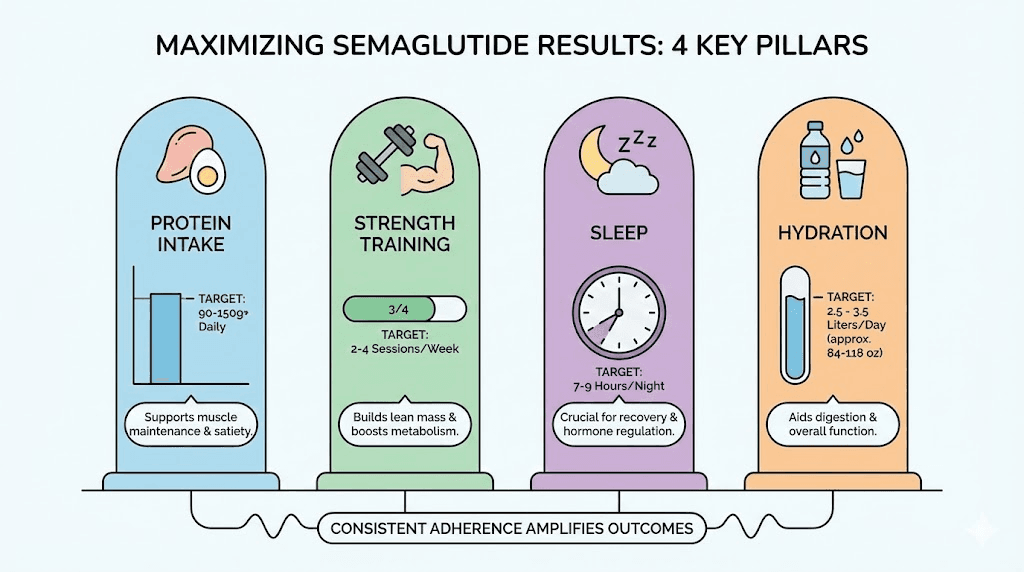
The medication creates the caloric deficit. What you do with that deficit determines the quality of your results. Every impressive before and after transformation shares the same supporting elements: strategic nutrition, consistent exercise, adequate sleep, and proper supplementation.
Nutrition: protein is king
If you take one thing from this entire guide, let it be this: eat enough protein. When semaglutide suppresses your appetite and you are eating 500-1,000 fewer calories per day, every calorie you do consume becomes more important. Protein protects muscle mass, supports skin health, maintains metabolic rate, and provides greater satiety per calorie than carbohydrates or fat.
The research-backed target is 1.2-1.5 grams of protein per kilogram of body weight daily. For a 200-pound person (roughly 91 kg), that means 109-136 grams of protein per day. This sounds manageable until you realize that semaglutide has cut your appetite to the point where eating 1,200-1,500 calories feels like a stretch. Getting 120+ grams of protein within those calories requires deliberate planning.
Practical strategies that work:
Eat protein first at every meal, before vegetables, before carbs, before anything else
Use protein shakes designed for GLP-1 users to supplement when appetite is low
Choose protein-dense foods: Greek yogurt, chicken breast, fish, eggs, lean beef, cottage cheese
Track protein intake specifically, even if you do not track overall calories
Spread protein across 3-4 eating occasions rather than trying to consume it all in one meal
Following a structured semaglutide diet plan that prioritizes protein makes the difference between a before and after that shows a healthy, toned body versus one that shows weight loss but poor body composition. The complete food list for semaglutide users provides detailed guidance on optimal food choices.
Exercise: strength training is non-negotiable
Cardio burns calories. Strength training preserves muscle. During semaglutide-induced weight loss, muscle preservation is your top priority after adequate protein intake. The research is clear: resistance exercise significantly reduces the proportion of weight lost as lean mass, directly improving body composition outcomes.
The minimum effective dose is resistance training two to three times per week, targeting all major muscle groups. You do not need to become a bodybuilder. Compound movements like squats, deadlifts, rows, presses, and lunges, performed with moderate weight for 3-4 sets of 8-12 repetitions, provide sufficient stimulus to signal your body that its muscle tissue is needed and should be preserved.
Add 150 minutes of moderate cardiovascular exercise per week, or 75 minutes of vigorous intensity. Walking counts as moderate exercise and is often the most sustainable option for people new to regular physical activity. The combination of strength training and cardio creates the best possible conditions for a transformation that looks as good as it feels.
Understanding where to inject your GLP-1 properly and how to inject correctly ensures the medication is absorbed optimally, supporting your exercise and nutrition efforts.
Sleep and recovery
Sleep is the silent variable that separates good results from great ones. Research consistently shows that inadequate sleep, fewer than 7 hours per night, increases the proportion of weight lost as lean mass rather than fat mass. Your body performs most of its repair and muscle maintenance during deep sleep. Cut that short, and you compromise the very processes that create a favorable body composition outcome.
Target 7-9 hours of sleep per night. If semaglutide or caloric restriction is disrupting your sleep, address it directly. Magnesium supplementation, consistent sleep timing, and limiting screen exposure before bed are evidence-based strategies. Some users also report that semaglutide with glycine supplementation helps with both sleep quality and overall recovery.
Hydration
Semaglutide can cause mild dehydration, particularly when gastrointestinal side effects like nausea or diarrhea are present. Dehydration impairs fat metabolism, reduces exercise performance, worsens constipation, and makes skin less elastic, all of which work against your transformation goals.
Aim for at least 64 ounces (roughly 2 liters) of water daily. If you are exercising regularly or experiencing GI side effects, increase to 80-100 ounces. Adding electrolytes, particularly sodium, potassium, and magnesium, supports hydration at the cellular level, which is especially important during caloric restriction.
Common mistakes that slow your semaglutide progress
Understanding what accelerates results is half the equation. Knowing what sabotages them is the other half. These mistakes are common, predictable, and entirely avoidable.
Mistake 1: judging results too early
The escalation period takes 16 weeks. The full therapeutic dose does not kick in until week 17 at the earliest. Evaluating your before and after results at week four is like judging a marathon runner at the starting line. The medication has not reached its working dose yet. Patience is not optional here. It is literally built into the dosing protocol.
The people who read about four weeks on semaglutide with no weight loss and panic are often the same people who quit right before the medication reaches its therapeutic potential. Trust the escalation schedule. The results are coming.
Mistake 2: eating too little protein
Semaglutide suppresses appetite. That is its primary mechanism. The danger is that suppressed appetite leads to suppressed nutrition across the board, including protein. When your body is in a caloric deficit and not receiving enough protein, it will break down muscle tissue for amino acids. This accelerates lean mass loss, reduces metabolic rate, and produces the "skinny fat" outcome that nobody wants.
This mistake is so common and so damaging that it deserves repeating: protein intake during semaglutide treatment is not optional. It is the single most important dietary factor in determining the quality of your results.
Mistake 3: avoiding the scale and measurements
Some advice recommends ignoring the scale entirely and focusing on how you feel. This sounds wise but is practically counterproductive. Regular monitoring, whether through daily weigh-ins averaged weekly, body measurements, or progress photos, provides the feedback loop needed to identify problems early. A semaglutide plateau lasting three weeks might indicate the need for a dietary adjustment. Without tracking, you would not notice the plateau until it had lasted six weeks, wasting valuable time.
The GLP-1 plotter tool can help visualize your progress trajectory and identify when results deviate from expected patterns.
Mistake 4: drinking alcohol regularly
Alcohol provides empty calories, reduces inhibitions around food, impairs sleep quality, and may interfere with semaglutide absorption. Every drink represents a triple setback: wasted calories, potential overeating, and compromised medication effectiveness. Understanding the interaction between alcohol and semaglutide is essential for anyone serious about their transformation.
This does not mean total abstinence is required. But frequent drinking is incompatible with optimal semaglutide results. The before and after photos that impress came from people who made the medication their priority, not their backup plan.
Mistake 5: skipping doses or inconsistent timing
Semaglutide works through sustained receptor activation. Skipping doses creates gaps in coverage that allow appetite to return and hormonal patterns to reset. Taking doses at wildly different times each week, while not as damaging as skipping, reduces the consistency of the medication effect. Understanding the best time of day to take semaglutide and sticking to a consistent weekly schedule optimizes results.
Mistake 6: comparing yourself to social media transformations
Social media before and after photos are not representative samples. They are curated highlights from people with the most dramatic results, often taken with favorable lighting, angles, and timing. Comparing your real-world progress to someone else's best-case scenario is a recipe for discouragement. Focus on your own trend line, not someone else's highlight reel.
When your semaglutide results stall
Plateaus happen. They happen to everyone, and they do not mean the medication has stopped working. Understanding why results stall and how to address each cause prevents the frustration that leads many people to abandon treatment prematurely.
The metabolic adaptation plateau
As you lose weight, your body requires fewer calories to maintain its new, lighter mass. The caloric deficit that produced weight loss at 250 pounds is smaller or nonexistent at 220 pounds, even with the same appetite suppression. This is normal metabolic adaptation, and it is the most common cause of plateaus.
The solution involves either reducing caloric intake further (difficult when appetite is already suppressed) or increasing energy expenditure through exercise. For many people, adding an extra 20-30 minutes of walking daily or an additional strength training session per week is enough to break through. Our guide on why you might not be losing weight on semaglutide covers additional strategies in detail.
The hormonal plateau
Extended caloric restriction can reduce thyroid hormone output, lower testosterone levels, and increase cortisol production. These hormonal shifts slow metabolism independently of caloric intake. Indicators include persistent fatigue, feeling cold frequently, decreased exercise performance, and mood changes.
Strategic diet breaks, periods of eating at maintenance calories for 1-2 weeks, can help reset hormonal patterns. This feels counterintuitive when you are trying to lose weight, but the temporary pause in restriction often allows the body to recalibrate, and weight loss resumes when the deficit is reestablished.
The behavioral plateau
Sometimes the plateau is not metabolic at all. It is behavioral. Over months of treatment, portions may have gradually crept back up. Small snacks may have reappeared. Exercise frequency may have declined. These subtle shifts accumulate and can eliminate the caloric deficit entirely while the person believes their behavior has not changed.
One week of precise food tracking, measuring and logging every item consumed, often reveals the source of the stall. Small adjustments, eliminating the handful of nuts before dinner, the two extra bites at each meal, the weekend "treats" that have become daily, can restart progress immediately.
SeekPeptides members have access to detailed troubleshooting resources and community support for navigating plateaus. When results stall, having a structured approach and experienced guidance makes the difference between a temporary pause and a permanent stop.
Keeping your results after semaglutide
The most important before and after question is the one least often asked: what happens after the "after"? Clinical data on semaglutide discontinuation is sobering. The STEP 1 extension study showed that participants who stopped semaglutide regained approximately two-thirds of the weight they had lost within 12 months of discontinuation.
This does not mean semaglutide results are temporary. It means that maintaining results requires a plan, whether that plan involves continued medication, lifestyle modifications, or both.
Option 1: continued treatment
Many clinicians and patients opt for long-term semaglutide use, treating obesity as the chronic condition it is rather than a problem to be solved and then forgotten. The STEP 5 trial demonstrated that continued treatment maintained results for at least two years, and four-year data supports sustained efficacy. For people who achieved significant weight loss and health improvements, the risk-benefit calculation often favors ongoing treatment.
Some practitioners reduce the maintenance dose over time, finding that a lower dose is sufficient to maintain results once the initial weight loss has been achieved. This can reduce side effects and cost while preserving the medication effect on appetite regulation. Exploring options like sublingual semaglutide or oral semaglutide drops may offer alternative maintenance approaches.
Option 2: transition to lifestyle maintenance
For those who choose to discontinue semaglutide, the transition requires deliberate preparation. The appetite suppression disappears within 2-4 weeks of stopping the medication. Without a robust set of behavioral tools, exercise habits, and dietary patterns already established, the returning appetite will drive weight regain.
The people who successfully maintain weight loss after stopping semaglutide share common traits. They established consistent exercise habits during treatment, typically 4-5 days per week. They developed a sustainable eating pattern with adequate protein that they continued after stopping. They continued monitoring their weight and adjusted behavior quickly when they noticed gains. And they had realistic expectations, accepting that maintaining a weight 10-12% below their starting point was a realistic and valuable outcome, even if it meant some regain from their lowest weight on medication.
Option 3: switching to alternative GLP-1 medications
Some people transition from semaglutide to tirzepatide or other GLP-1 receptor agonists. The semaglutide to tirzepatide conversion process requires careful dosage management. Some people find that switching between medications helps overcome plateaus or reduces side effects. Understanding the side effect differences between semaglutide and tirzepatide helps inform this decision.
Understanding semaglutide withdrawal symptoms and planning for them is critical regardless of which maintenance path you choose.
Semaglutide vs tirzepatide before and after comparison
Both medications produce significant weight loss. But the before and after results differ in meaningful ways that are worth understanding, especially for anyone choosing between them or considering a switch.
Weight loss comparison
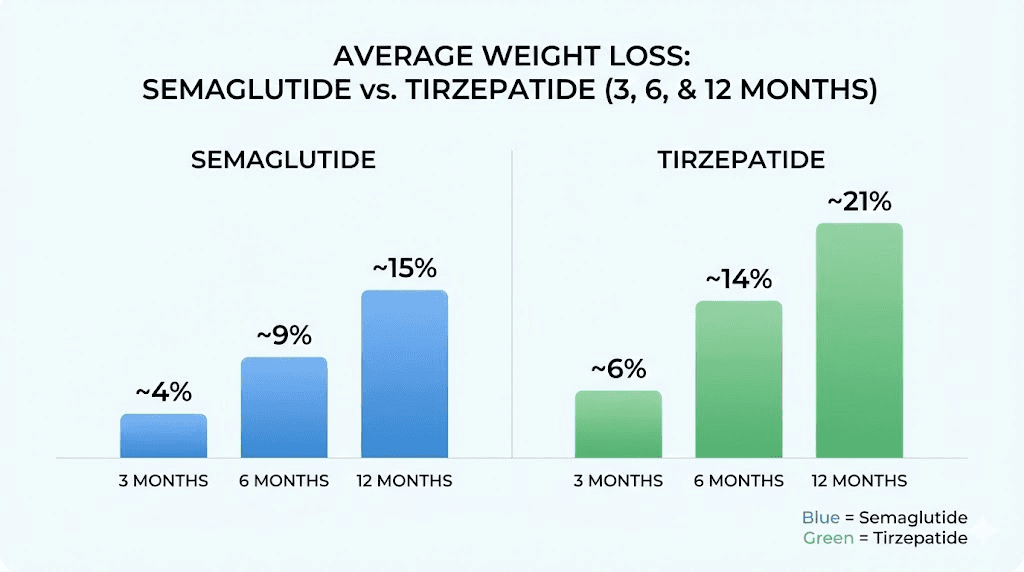
Tirzepatide, which acts on both GLP-1 and GIP receptors, has shown greater average weight loss in head-to-head comparisons. The SURMOUNT trials demonstrated weight loss of 20-26% of body weight with the highest tirzepatide dose, compared to the 15-17% typically seen with semaglutide. For someone starting at 250 pounds, that is the difference between losing roughly 40 pounds (semaglutide) and 55 pounds (tirzepatide).
This does not automatically make tirzepatide the better choice. Individual responses vary enormously. Some people respond better to semaglutide. Side effect profiles differ. Availability and cost are factors. But from a pure weight loss perspective, the data favors tirzepatide for maximal results. Our detailed dosage comparison chart provides specific numbers for both medications across all dose levels.
Body composition differences
Both medications produce similar ratios of fat loss to lean mass loss. The absolute amounts differ because total weight loss differs, but the proportional body composition changes are comparable. This means the same strategies for preserving lean mass, high protein intake and resistance training, apply equally to both medications.
For a visual comparison of what these results look like in practice, the tirzepatide before and after guide and detailed tirzepatide weight loss results provide complementary perspectives. Comparing these results with semaglutide outcomes helps set appropriate expectations for either medication path.
Side effect impact on the before and after experience
The journey to the "after" matters as much as the destination. Semaglutide and tirzepatide share similar gastrointestinal side effects, nausea, constipation, diarrhea, but their intensity and duration differ. Some people tolerate one medication much better than the other. A detailed comparison of semaglutide versus tirzepatide side effects helps potential users anticipate and plan for the side effect profile of each option.
Hair loss is another consideration. Both GLP-1 medications have been associated with hair thinning, likely related to the rapid weight loss rather than the medications themselves. Understanding GLP-1 related hair loss and prevention strategies ensures that the "after" includes a full head of hair.
Practical protocols for the best possible before and after
Theory is useful. Practical application is what produces results. Here are three structured approaches based on different goals and starting points.
Protocol 1: maximum fat loss with muscle preservation
Goal: Lose 15-20% of body weight while preserving as much lean mass as possible
Nutrition approach:
Protein: 1.5g per kg body weight daily (prioritize this above all else)
Calories: let semaglutide appetite suppression guide total intake, but ensure protein target is hit
Meal timing: 3-4 protein-focused meals per day, spaced evenly
Protein sources: chicken, fish, eggs, Greek yogurt, whey protein, lean beef
Exercise approach:
Resistance training: 3-4 sessions per week, full body or upper/lower split
Cardio: 3-4 sessions of 30-45 minutes moderate intensity (walking, cycling)
Total weekly exercise: 5-6 hours
Expected timeline: 5-7% body weight loss at month 3, 12-17% by month 9-12. Body composition favors fat loss with minimal muscle loss. This protocol produces the "after" photos that look athletic and healthy, not just smaller.
Protocol 2: steady, sustainable transformation
Goal: Lose 10-15% of body weight with minimal disruption to daily life
Nutrition approach:
Protein: 1.2g per kg body weight daily
Focus on whole, unprocessed foods
No strict calorie counting, just prioritize protein and vegetables
Allow occasional treats without guilt
Exercise approach:
Resistance training: 2 sessions per week, compound movements
Daily walking: 30 minutes minimum
Total weekly exercise: 3-4 hours
Expected timeline: Slower initial progress (3-5% at month 3), but more sustainable long-term trajectory. 10-15% loss by month 12-15. Less risk of semaglutide face due to slower rate of loss. Easier to maintain after reaching goal weight.
Protocol 3: metabolic health focus
Goal: Optimize metabolic markers (blood sugar, blood pressure, cholesterol) with weight loss as a secondary benefit
Nutrition approach:
Protein: 1.0-1.2g per kg body weight daily
Emphasis on anti-inflammatory foods: fatty fish, vegetables, berries, nuts
Limit processed foods, added sugars, and refined carbohydrates
Consider B12 supplementation for metabolic support
Exercise approach:
Walking: 45-60 minutes daily
Resistance training: 2 sessions per week
Flexibility work: yoga or stretching 2-3 sessions per week
Expected timeline: Metabolic markers often improve within 4-8 weeks, sometimes before significant weight loss is visible. Weight loss of 8-12% over 12 months. This protocol is ideal for people whose primary concern is health rather than aesthetics, and for older adults who benefit from a gentler approach.
Managing side effects during your transformation
Side effects are part of the before and after story. Almost everyone experiences some degree of gastrointestinal discomfort, especially during dose escalation. How you manage these side effects directly impacts your ability to maintain the protocol long enough to see meaningful results.
Nausea management
Nausea is the most common side effect, affecting roughly 40-45% of users at some point during treatment. It is usually worst during dose increases and tends to resolve within 1-2 weeks at each new dose level. Eating smaller, more frequent meals helps. Avoiding fatty, greasy, or very rich foods reduces nausea triggers. Ginger, either as tea or supplements, provides mild but evidence-based relief.
If nausea is severe enough to prevent adequate nutrition, your provider may delay the next dose escalation by an additional 4 weeks. This is built into the prescribing guidelines and is not a sign of failure. It is a sign of appropriate management.
Constipation strategies
Semaglutide slows gastric emptying, which can extend to the entire digestive tract. Constipation treatment starts with adequate fiber intake (25-30 grams daily), sufficient hydration (at least 64 ounces of water), and regular physical activity, which stimulates intestinal motility. If these measures are insufficient, a gentle osmotic laxative like miralax is generally safe and effective.
Fatigue during the transition
The caloric deficit created by semaglutide means your body is receiving less energy than it is accustomed to. Semaglutide-related fatigue is common in the first 4-8 weeks and usually improves as the body adapts to its new energy intake level. Ensuring adequate protein, staying hydrated, and maintaining consistent sleep help minimize the impact. Some practitioners recommend glycine supplementation for energy and recovery support.
Hair thinning
Temporary hair thinning can occur with any significant weight loss, not just semaglutide-mediated weight loss. It typically appears 3-6 months after the start of rapid weight loss and resolves on its own within 6-12 months. Adequate protein intake, iron supplementation if levels are low, and biotin supplementation may help minimize this effect. Detailed guidance is available in our comprehensive GLP-1 hair loss guide.
Documenting your own before and after
Your transformation is worth documenting, not for social media validation, but for your own motivation and accountability. Proper documentation also helps your healthcare provider assess your response to treatment and make informed dosing decisions.
How to take useful progress photos
Consistency is everything in before and after photos. Use the same location, same lighting, same time of day, and same clothing (or lack thereof) for every photo. Front, side, and back views capture changes that a single angle misses. Take photos every two weeks at most, weekly at minimum. Natural lighting is more honest than artificial lighting. And resist the urge to flex, pose, or manipulate angles. The photos are for information, not impression.
What to track beyond photos
Scale weight is one data point. Add waist circumference (measured at the navel), hip circumference, chest circumference, and thigh circumference. These measurements capture body composition changes that scale weight alone misses. Someone whose weight stalls but whose waist measurement drops two inches is clearly making progress that the scale is not reflecting.
Track energy levels, sleep quality, mood, exercise performance, and daily steps. These subjective measures provide important context for the objective numbers. And track your food intake for at least one week per month to ensure your nutrition supports your goals. Using the semaglutide dosage calculator alongside body measurements helps ensure your dosing matches your progress trajectory.
When to adjust your protocol
If weight loss has stalled for more than 3 consecutive weeks despite consistent medication use, adherent nutrition, and regular exercise, it is time to evaluate. Check that your protein intake has not declined. Verify that portion sizes have not crept up. Consider adding an extra training session. If all behavioral factors are optimized and progress remains stalled, discuss with your healthcare provider whether a dosage adjustment is appropriate.
For researchers exploring combination approaches, understanding interactions between semaglutide and other compounds is important. Resources on combining semaglutide with phentermine and comparing phentermine versus semaglutide provide evidence-based guidance.
The emotional before and after
Every transformation has two components. The physical one shows up in photos and measurements. The emotional one shows up in how you move through the world.
Before semaglutide, many people describe a relationship with food that feels like addiction. Constant thoughts about eating. Guilt after overeating. Failed attempts at restriction followed by compensatory binging. A sense that their body is working against them, that hunger is a force they cannot control no matter how hard they try.
After semaglutide, the most common emotional change is relief. Relief that the noise has quieted. Relief that food decisions no longer dominate every hour. Relief that weight management no longer requires unsustainable willpower.
But the emotional transformation is not uniformly positive. Some people struggle with the loss of food as an emotional coping mechanism. If eating was how you managed stress, boredom, or anxiety, removing that outlet without replacing it can surface emotional challenges that food was previously masking. This is worth acknowledging and, if needed, addressing with professional support.
Others experience complicated feelings about the speed and ease of their transformation. Years or decades of failed dieting, followed by significant weight loss from a weekly injection, can trigger guilt, confusion, and questions about whether the weight loss is "earned." These feelings are normal, valid, and do not diminish the reality of the transformation or the effort required to support it with proper nutrition and exercise.
The healthiest before and after stories include both the physical and emotional dimensions. They acknowledge that the medication provided a tool that was previously unavailable, and that using that tool effectively still required effort, commitment, and adaptability.
For those serious about optimizing every aspect of their semaglutide journey, SeekPeptides provides comprehensive protocol guides, community support from thousands of experienced researchers, and evidence-based resources that address both the physical and practical challenges of GLP-1 treatment.
Understanding your semaglutide options
The before and after results you achieve are influenced not only by your behavior but also by the specific form and source of semaglutide you use. Understanding the landscape helps you make informed decisions.
Compounded vs brand-name semaglutide
The compounded semaglutide market has expanded significantly. Compounded versions are typically more affordable, though quality and potency can vary between compounding pharmacies. Suppliers like Empower Pharmacy, Olympia Pharmacy, and Direct Meds are among the more established sources.
Proper storage is critical regardless of source. Understanding refrigeration requirements, shelf life in the fridge, and overall semaglutide stability ensures your medication maintains its potency throughout your treatment. Using expired semaglutide can compromise results and waste time.
Injectable vs oral options
Injectable semaglutide remains the most common form, with well-established dosing protocols and clinical data supporting its efficacy. However, oral semaglutide drops and sublingual formulations are gaining popularity for people who prefer non-injection options.
If using the injectable form, proper reconstitution technique is essential. Whether you are working with a 5mg vial or a 10mg vial, the reconstitution process directly affects dosing accuracy. Use our reconstitution calculator to ensure precise mixing ratios.
Dosing accuracy
Getting the dose right matters for consistent results. Many users struggle with unit-to-milligram conversions, especially with compounded formulations. Resources covering semaglutide dosage in units, unit to milligram conversions, and specific questions like how many mg is 20 units, how many mg is 40 units, and how many mg is 50 units eliminate dosing confusion that can compromise results.
Consistent dosing at the right level is what produces the before and after transformations documented in the clinical trials. Inaccurate dosing, whether too low (reducing effectiveness) or too high (increasing side effects without proportional benefit), undermines the entire process. The 5mg/ml dosage chart provides a quick reference for common concentration calculations, and understanding how many units equal the therapeutic 2.4mg dose ensures you reach the target that clinical trials validated.
Special considerations for your transformation
Traveling while on semaglutide
Your transformation does not pause for vacations. Understanding how to travel with semaglutide safely, including cold chain management and airline regulations, prevents gaps in treatment that can disrupt progress.
Combination approaches
Some researchers explore combining semaglutide with other compounds to enhance results. B12 supplementation is among the most common additions, addressing potential nutrient deficiencies during caloric restriction. Glycine is another popular supplement, valued for its roles in sleep, collagen synthesis, and metabolic support. Methylcobalamin specifically may offer advantages over standard B12 for neurological and metabolic health.
For those considering alternative GLP-1 options, understanding the differences between semaglutide and newer compounds like retatrutide provides context for future treatment decisions. The peptide landscape continues evolving, and what produced the best before and after results last year may be surpassed by next year. Staying informed through platforms like SeekPeptides ensures you have access to the latest research, protocols, and community insights as the field advances.
Frequently asked questions
How long does it take to see semaglutide before and after results?
Most people notice appetite changes within the first 1-2 weeks. Visible weight loss typically becomes apparent at weeks 4-8, with significant transformation visible by months 3-6. The full therapeutic dose is not reached until week 17 of the standard escalation schedule, so evaluating results before that point does not reflect the medication full potential. Clinical trials measured primary outcomes at 68 weeks for good reason.
How much weight can I expect to lose on semaglutide?
Clinical trial data shows average weight loss of 14.9-17.4% of body weight over 68 weeks. For a 200-pound person, that is roughly 30-35 pounds. Individual results vary widely. Some people lose more, some less. Factors including diet quality, exercise habits, starting weight, and metabolic health all influence outcomes. Our guide on how fast semaglutide works provides more detailed timeline expectations.
Will I lose muscle on semaglutide?
Some lean mass loss occurs with any significant weight loss. Clinical data shows lean mass decreases of approximately 9.7%, though the proportion of lean mass relative to total body weight actually improves. The amount of muscle loss you experience depends heavily on protein intake and resistance exercise. Consuming 1.2-1.5g of protein per kilogram of body weight and strength training 2-3 times weekly can dramatically reduce muscle loss.
What is semaglutide face and how do I prevent it?
Semaglutide face refers to facial volume loss, including sunken cheeks, temporal hollowing, and increased wrinkling that can occur with rapid weight loss. Slowing the rate of weight loss, maintaining hydration, using sunscreen, and ensuring adequate protein intake help prevent it. The effect is more common in people over 40 and those who lose weight very quickly.
Will I regain weight after stopping semaglutide?
Clinical data shows that most people regain approximately two-thirds of lost weight within 12 months of discontinuing semaglutide. This is why many clinicians recommend continued treatment or a robust maintenance plan that includes regular exercise, high protein intake, and ongoing weight monitoring. Understanding withdrawal symptoms helps prepare for the transition.
Is semaglutide safe to take long-term?
The STEP 5 trial demonstrated safety over 104 weeks, and ongoing studies continue to monitor long-term outcomes. The most common side effects are gastrointestinal (nausea, constipation, diarrhea) and typically mild to moderate. Serious adverse events are rare. Discuss long-term use with your healthcare provider based on your individual risk profile and treatment goals.
Can I drink alcohol while on semaglutide?
Alcohol is not strictly prohibited, but it can compromise results. It provides empty calories, reduces inhibitions around food, impairs sleep quality, and may worsen gastrointestinal side effects. Limiting or eliminating alcohol during treatment optimizes results. Our guide on drinking on semaglutide covers specific considerations.
What should I eat while taking semaglutide?
Prioritize protein-rich foods (chicken, fish, eggs, Greek yogurt, lean beef), vegetables, and whole grains. Avoid highly processed foods, excessive sugar, and greasy meals that worsen nausea. The complete food list for semaglutide users and our semaglutide diet plan provide comprehensive dietary guidance tailored to maximize results while managing side effects.
External resources
STEP 5 Trial: Two-year effects of semaglutide in adults with overweight or obesity (PMC)
Impact of Semaglutide on Body Composition: STEP 1 Exploratory Analysis (PMC)
Centers for Disease Control and Prevention: Obesity Information
National Institute of Diabetes and Digestive and Kidney Diseases: Weight Management
In case I do not see you, good afternoon, good evening, and good night. May your progress stay steady, your protein stay high, and your transformation stay lasting.