Dec 18, 2025
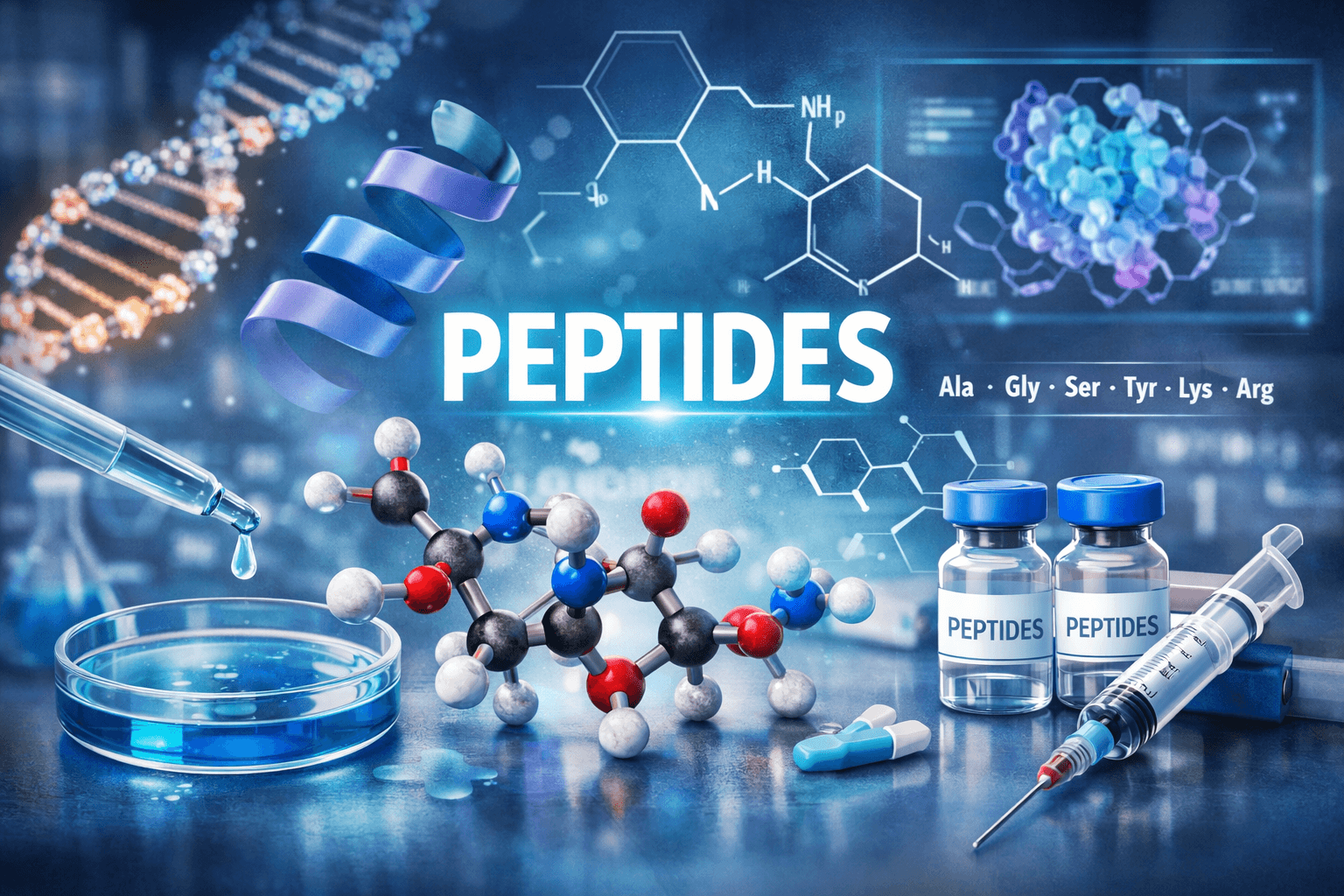
Peptides are biological messengers.
They tell your cells what to do by binding to specific receptors.
Think of them as keys that unlock specific cellular functions.
When you inject a growth hormone peptide like Ipamorelin, it travels through your bloodstream, binds to receptors in your pituitary gland, and triggers GH release.
When you inject a healing peptide like BPC-157, it binds to receptors in damaged tissue and accelerates repair.
This guide explains exactly how peptides work, from injection to cellular effect to biological outcome.
The simple version
1. Administration: You inject the peptide subcutaneously (into fat tissue).
2. Absorption: Peptide enters bloodstream within 30-60 minutes.
3. Travel: Bloodstream carries peptide to target tissues throughout body.
4. Receptor binding: Peptide binds to specific receptors on cell surfaces (like a key in a lock).
5. Signal cascade: Receptor activation triggers intracellular signaling pathways.
6. Biological effect: Cell produces desired response (release hormones, repair tissue, reduce appetite, etc).
7. Metabolism: Peptide breaks down into amino acids, which your body recycles.
That's it. Simple concept, powerful effects.
Receptor binding: the key mechanism
Every peptide works by binding to specific receptors. This is fundamental to understanding how peptides function.
What are receptors?
Receptors: Protein structures on cell surfaces that recognize and bind to specific molecules.
Think of receptors as locks. Peptides are keys. Each key only fits specific locks.
Example: Ipamorelin binds to ghrelin receptors in the pituitary gland. Semaglutide binds to GLP-1 receptors in the pancreas and brain.
How binding works
Step 1: Peptide circulates in bloodstream.
Step 2: Peptide encounters cells with matching receptors.
Step 3: Peptide's structure fits into receptor (lock and key).
Step 4: Receptor changes shape when peptide binds.
Step 5: Shape change triggers intracellular signals.
Step 6: Signals activate specific genes or cellular processes.
Step 7: Cell produces biological response.
This specificity is why peptides have targeted effects. BPC-157 doesn't randomly affect all cells - only cells with BPC-157 receptors respond.
Different peptide mechanisms
Different peptides work through different pathways. Understanding these mechanisms helps you choose the right peptide for your goals.
Growth hormone secretagogues
Examples: Ipamorelin, CJC-1295, GHRP-2, GHRP-6, Hexarelin
Mechanism: Stimulate natural GH release from pituitary gland.
How they work:
Ipamorelin mimics ghrelin (hunger hormone)
Binds to ghrelin receptors in pituitary
Receptor activation signals pituitary cells
Pituitary releases growth hormone into bloodstream
GH travels to liver
Liver produces IGF-1
GH and IGF-1 promote muscle growth, fat loss, recovery
CJC-1295 works differently:
Mimics GHRH (growth hormone-releasing hormone)
Amplifies GH pulses
Extends duration of GH release
Synergizes with Ipamorelin
Together, Ipamorelin + CJC create 200-300% increase in GH.
Calculate protocols with our peptide calculator.
Healing peptides
Examples: BPC-157, TB-500, GHK-Cu
Mechanism: Accelerate tissue repair through multiple pathways.
BPC-157 mechanism:
Promotes angiogenesis (new blood vessel formation)
Blood vessels bring oxygen and nutrients to injury
Enhances fibroblast activity (cells that produce collagen)
More collagen = stronger tissue repair
Stabilizes cellular structures
Reduces inflammation
Protects gut lining specifically
TB-500 mechanism:
Promotes cell migration to injury sites
Injured tissue releases signals
TB-500 helps cells respond to those signals
Cells migrate faster to injury
Enhances collagen deposition
Promotes new blood vessel formation
Reduces scar tissue formation
Compare BPC-157 vs TB-500 mechanisms.
Weight loss peptides (GLP-1 agonists)
Examples: Semaglutide, Tirzepatide, Liraglutide
Mechanism: Mimic GLP-1 hormone to reduce appetite and slow digestion.
How semaglutide works:
Binds to GLP-1 receptors in pancreas
Triggers insulin release when blood sugar rises
Binds to GLP-1 receptors in brain (hypothalamus)
Reduces appetite and food cravings
Binds to GLP-1 receptors in stomach
Slows gastric emptying (food stays in stomach longer)
Result: Feel full faster, eat less, lose weight
Tirzepatide adds second mechanism:
Also activates GIP receptors
Further enhances insulin response
Better blood sugar control
More weight loss (20-25% vs 15-20%)
Read our complete semaglutide vs tirzepatide comparison.
Metabolic peptides
Examples: MOTS-C, AOD-9604
Mechanism: Enhance metabolic function at mitochondrial level.
MOTS-C mechanism:
Encoded in mitochondrial DNA
Improves insulin sensitivity
Enhances glucose uptake by cells
Increases metabolic rate
Promotes fat oxidation
Improves mitochondrial efficiency
AOD-9604 mechanism:
Fragment of growth hormone molecule
Stimulates lipolysis (fat breakdown)
Inhibits lipogenesis (fat storage)
No effect on blood sugar
Targets fat cells specifically
These work well in weight loss stacks.
Pharmacokinetics: absorption, distribution, metabolism
Understanding how peptides move through your body helps optimize protocols.
Absorption
Subcutaneous injection (most common):
Inject into fat tissue (abdomen, thigh)
Peptide slowly enters capillaries
Reaches bloodstream in 30-60 minutes
Absorption rate varies by injection site
Abdomen: faster absorption
Thigh: slightly slower
Oral administration (limited options):
Most peptides destroyed by stomach acid
Very low bioavailability (1-10%)
Only specific modified peptides work orally
Example: MK-677 (modified to survive digestion)
Most therapeutic peptides require injection
Compare injectable vs oral options.
Distribution
Once in bloodstream, peptides distribute throughout body:
Small peptides (like BPC-157, 15 amino acids):
Good tissue penetration
Reach target tissues quickly
Can cross some biological barriers
Larger peptides (like TB-500, 43 amino acids):
Slower tissue penetration
More systemic effects
Take longer to reach peak concentration
Blood-brain barrier: Most peptides don't cross easily. But GLP-1 receptors exist in brain, accessible through bloodstream.
Half-life
Half-life: Time for peptide concentration to reduce by 50%.
Short half-life peptides (minutes to hours):
Ipamorelin: ~2 hours
BPC-157: ~4 hours
GHRP-2: ~30 minutes
Requires: Multiple daily injections
Extended half-life peptides:
CJC-1295 (with DAC): 6-8 days
Semaglutide: 7 days
Requires: Once or twice weekly injection
Short half-life isn't bad - it allows precise control and mimics natural pulsatile release. Calculate dosing with our peptide dosage calculator.
Metabolism
Peptides break down naturally:
Enzymes (peptidases) cleave peptide bonds
Peptide breaks into individual amino acids
Amino acids enter normal metabolic pathways
Body recycles amino acids for protein synthesis
No toxic metabolites. Unlike synthetic drugs, peptides break down into natural building blocks.
This is why peptides have excellent safety profiles compared to many pharmaceutical drugs.
Why injection timing matters
When you inject affects results. Different peptides have optimal timing.
Growth hormone peptides
Best: Before bed, upon waking, post-workout
Why: Mimics natural GH pulses
Natural GH peaks during deep sleep and after exercise
Injecting at these times amplifies natural rhythms
CJC-1295 timing:
Twice weekly (due to long half-life)
Time of day less critical
Pairs well with Ipamorelin's frequent dosing
Healing peptides
Twice daily (morning and evening)
Consistent blood levels important
Can inject near injury site (local effects)
Also works systemically
Twice weekly
Loading phase: Higher dose for 4 weeks
Maintenance: Lower dose ongoing
Systemic effects (not site-specific)
Compare protocols in our BPC-157 vs TB-500 guide.
Weight loss peptides
Once weekly
Same day each week
Time of day doesn't matter (7-day half-life)
Maintains steady blood levels
Tirzepatide timing:
Once weekly
Similar to semaglutide
Consistency more important than specific time
Read our semaglutide vs tirzepatide comparison.
Dose-response relationships
More isn't always better. Each peptide has optimal dosing ranges.
Minimum effective dose
Starting dose that produces results:
BPC-157: 250mcg twice daily
Ipamorelin: 100mcg 2-3x daily
Semaglutide: 0.25mg weekly
Start here. Assess response. Increase if needed.
Optimal therapeutic dose
Range where most people see best results:
BPC-157: 250-500mcg twice daily
Ipamorelin: 200-300mcg 2-3x daily
Semaglutide: 1-2.4mg weekly
This varies by individual. Use calculators to find your dose:
Diminishing returns
Beyond certain doses, benefits plateau:
More side effects
No additional benefits
Wasted money
Example: Semaglutide at 2.4mg weekly produces maximum weight loss. Going to 3mg doesn't improve results but increases nausea.
Individual response variation
Same dose affects people differently:
Body weight (larger people may need more)
Metabolism speed
Receptor sensitivity
Prior peptide use
Individual biology
Start conservative. Adjust based on response.
Synergy: why peptide stacks work
Combining peptides can produce greater effects than sum of parts.
BPC-157 + TB-500 stack
Synergistic mechanisms:
BPC-157: Angiogenesis, fibroblast activity, gut healing
TB-500: Cell migration, collagen deposition, systemic healing
Together: Multiple healing pathways activated
Result: 40-60% faster healing than either alone
Plan with our peptide stack calculator.
Ipamorelin + CJC-1295 stack
Synergistic mechanisms:
Ipamorelin: Triggers GH release (GHRP mechanism)
CJC-1295: Amplifies GH pulses (GHRH mechanism)
Together: 200-300% increase in GH
Result: Much greater than either peptide alone
This is the gold standard GH stack.
GLP-1 + metabolic peptide stack
Synergistic mechanisms:
Semaglutide: Appetite suppression, slowed digestion
MOTS-C: Enhanced metabolism, insulin sensitivity
Together: Appetite control + metabolic enhancement
Result: Better weight loss than GLP-1 alone
Why stacking works
Different peptides activate different pathways:
No receptor competition (different targets)
Complementary mechanisms
Broader biological coverage
Synergistic effects
Use our stack calculator to plan protocols.
Tolerance and desensitization
Some peptides lose effectiveness over time. Understanding this helps maintain results.
Peptides with tolerance issues
Hexarelin:
Very potent initially
Desensitizes receptors after 4-6 weeks
Requires cycling (4 weeks on, 4 weeks off)
Why many prefer Ipamorelin (no tolerance)
GHRP-6:
Strong hunger increase initially
Effect diminishes over weeks
Less effective long-term
Peptides without tolerance
No receptor desensitization
Maintains effectiveness indefinitely
Can use continuously
No tolerance development
Safe for long-term use
No tolerance issues
Use as needed for injuries
Maintains effectiveness
Long-term studies show sustained weight loss
This is why these peptides dominate the market.
How peptides differ from hormones
Important distinction: most peptides signal your body to produce hormones, but they're not direct hormone replacement.
Peptides (signals)
Signal pituitary to release GH
Enhance natural production
Maintain pulsatile release
No suppression of natural GH
Can use indefinitely
Hormones (replacement)
Human growth hormone (HGH):
Direct hormone administration
Shuts down natural production
Constant elevated levels (unnatural)
Suppression occurs
Requires lifelong use once started
Why peptides are better:
Work with natural systems
No suppression
More sustainable
90-95% cheaper
Safer long-term
Same concept applies to testosterone replacement vs natural T-boosting methods.
Quality and purity impact
How peptides work depends heavily on quality. Poor quality = poor results.
Purity matters
Research-grade peptides should be 97-99%+ pure:
Higher purity = better results
Impurities reduce effectiveness
May cause side effects
Verify with COAs (Certificates of Analysis)
Check our best vendors guide for quality sources.
Lyophilized vs liquid
Lyophilized (freeze-dried powder):
Extremely stable
2-3 year shelf life
99%+ peptide retention
Gold standard
Requires reconstitution
Liquid (pre-mixed):
Unstable
Degrades quickly (5-10% loss per month)
3-6 months max shelf life
Red flag from research suppliers
Always choose lyophilized peptides.
Research vs pharmaceutical
Both can be high quality:
Research: 97-99% purity (if from reputable source)
Pharmaceutical: 99%+ purity (FDA-regulated)
Research: 80-95% cheaper
Pharmaceutical: Requires prescription
Most people use research peptides from quality suppliers.
Reconstitution and storage
Proper preparation affects how peptides work.
How to reconstitute
Process:
Peptide arrives as powder
Let dissolve (don't shake)
Calculate concentration
Draw doses with insulin syringe
Use our reconstitution calculator for exact amounts.
Storage affects stability
Before reconstitution (powder):
Refrigerate (2-8°C)
Lasts 2-3 years
Very stable
Can survive room temperature briefly
After reconstitution (liquid):
Refrigerate immediately
Lasts 28 days with bacteriostatic water
Stability decreases over time
Use within 4 weeks
Proper storage maintains peptide effectiveness.
Common mistakes that reduce effectiveness
Avoid these to maximize results:
Using too little
Problem: Dose below minimum effective threshold Solution: Follow recommended doses Example: BPC-157 at 100mcg (too low) vs 250mcg (effective)
Inconsistent dosing
Problem: Missing injections, irregular schedule Solution: Set reminders, maintain consistent schedule Example: Ipamorelin works best with regular 2-3x daily dosing
Poor quality peptides
Problem: Low purity, degraded product Solution: Source from reputable vendors Check: Third-party testing, COAs, reviews
Improper storage
Problem: Leaving peptides at room temperature Solution: Always refrigerate reconstituted peptides Result: Maintains potency for full 28 days
Expecting instant results
Problem: Quitting before peptides take effect Reality: Healing peptides take 1-3 weeks, GH peptides take 3-4 weeks Solution: Commit to full protocol (typically 4-8 weeks minimum)
How to maximize peptide effectiveness
Get better results with these strategies:
Start with quality
Source from trusted vendors
Verify third-party testing
Check purity (97-99%+)
Optimize dosing
Start with minimum effective dose
Increase gradually if needed
Don't exceed optimal range
Time injections properly
GH peptides: Before bed, upon waking, post-workout
Healing peptides: Consistent twice daily
Weight loss: Once weekly, same day
Support with lifestyle
Adequate protein (0.8-1g per pound)
Good sleep (7-9 hours)
Proper training
Stress management
Hydration
Peptides amplify good habits. They don't replace them.
Consider stacking
BPC-157 + TB-500 for healing
Ipamorelin + CJC for growth
Plan with stack calculator
Frequently asked questions
Q: How long until peptides work?
A: Depends on peptide. Healing peptides: 1-3 weeks. GH peptides: 3-4 weeks. Weight loss: 2-4 weeks.
Q: Why do peptides require injection?
A: Most peptides break down in stomach acid. Subcutaneous injection ensures they reach bloodstream intact. Compare injectable vs oral options.
Q: Can I take peptides orally?
A: Very few work orally. MK-677 is modified to survive digestion. Most require injection for effectiveness.
Q: Do peptides suppress natural hormone production?
A: Most don't. GH peptides stimulate natural production without suppression. Unlike direct hormone replacement (HGH, testosterone).
Q: How are peptides different from steroids?
A: Peptides signal cells through receptors. Steroids directly replace hormones. Peptides work with natural systems, steroids override them. Peptides safer, fewer side effects.
Q: Why stack peptides?
A: Different peptides activate different pathways. Stacking provides synergistic effects. Example: BPC-157 + TB-500 for comprehensive healing.
Q: What affects peptide effectiveness?
A: Quality/purity, proper dosing, consistent schedule, storage, reconstitution technique, lifestyle factors.
Q: Can I use peptides long-term?
A: Many peptides safe long-term. Ipamorelin/CJC: yes. BPC-157: as needed. Semaglutide: yes. Some require cycling (Hexarelin).
Q: Do peptides lose effectiveness over time?
A: Most don't develop tolerance. Ipamorelin, CJC-1295, BPC-157, semaglutide maintain effectiveness. Hexarelin develops tolerance.
Q: How do I know if peptides are working?
A: Track measurable outcomes. Muscle growth: weight/measurements. Healing: pain/ROM. Weight loss: scale/photos.
The bottom line
Peptides work by binding to specific cell receptors and triggering biological responses. They're molecular messengers that tell your cells what to do.
Key mechanisms:
Receptor binding (lock and key)
Signal cascade activation
Specific cellular responses
Natural metabolic breakdown
Why they work well:
Targeted effects (specific receptors)
Work with natural systems
Minimal side effects
No toxic metabolites
Proven clinical efficacy
Most effective peptides:
Ipamorelin + CJC-1295: Muscle growth
BPC-157: Versatile healing
TB-500: Muscle/tendon repair
Semaglutide: Weight loss
Maximize effectiveness:
Source quality peptides
Use proper dosing
Maintain consistent schedule
Support with proper lifestyle
Plan your protocol with our calculators:
Related resources you may need
Disclaimer: This information is for educational purposes.
Research peptides are sold for research use only and are not FDA-approved for human consumption. Consult healthcare provider before starting any peptide protocol.
In case I don’t see you, good afternoon, good evening, and good night. Take care of yourself. Cheers.