Dec 21, 2025
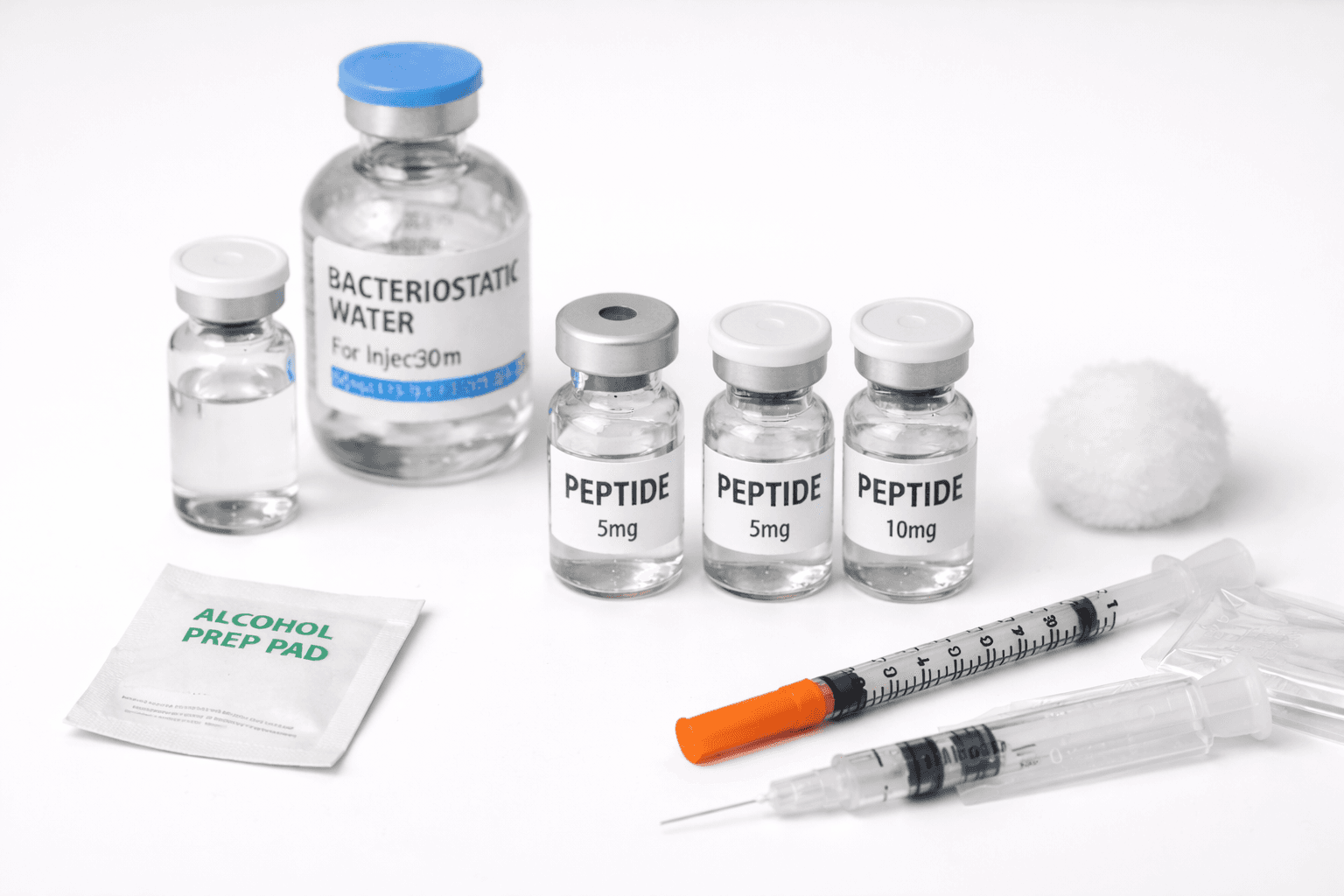
Need to know how much peptide to take?
The world of peptide therapy offers incredible potential for healing, muscle growth, fat loss, and anti-aging, but navigating the correct peptide dosing guide can be complex and confusing.
From reconstitution to injection frequency, getting the dosage right is the single most critical factor for both safety and efficacy.
Too little, and you see no results; too much, and you risk unwanted side effects.
This comprehensive guide is designed to be your definitive, print-friendly peptide dosage reference.
We cut through the noise and provide clear, actionable protocols for over 25 of the most popular peptides, including BPC-157, Semaglutide, CJC-1295, and MOTS-c.
In this article, you will get:
A complete, scannable peptide dosage chart with beginner, standard, and advanced doses.
Detailed guidance on the best timing, frequency, and duration for each compound.
Quick reference sections for dosage based on specific goals like peptides for injury recovery or peptides for fat loss.
A step-by-step guide on how to calculate your specific dose and avoid common peptide mistakes.
We have structured this guide for utility, ensuring you can find your answer in under 30 seconds. Whether you are a beginner looking for a safe starting point or an advanced user optimizing a peptide stack, this is the resource you will want to bookmark.
1. How to Use This Dosage Chart
Our goal is to provide a clear, standardized format that makes it easy to understand how much peptide to take and when to take it. The main dosage chart (Section 2) is organized to give you all the essential information at a glance. Understanding the terminology used in the chart is key to applying the protocols correctly.
Chart Format Explanation
The chart is designed with scannability in mind. Each row represents a single peptide, and the columns break down the critical dosing parameters:
Peptide Name: The common name of the compound. We include variations like BPC-157 (Injectable) and BPC-157 (Oral) where the route of administration significantly changes the protocol.
Beginner Dose: The lowest effective starting dose. This is the safest point to begin to assess tolerance and minimize the risk of side effects.
Standard Dose: The most commonly used and clinically effective dose for the majority of users. This is the protocol that typically yields the best balance of results and side effects.
Advanced Dose: A higher-end dose, typically reserved for experienced users, those with higher body mass, or those with aggressive goals. This range should only be approached after successfully tolerating the standard dose.
Frequency: How often the peptide is administered (e.g., 1x daily, 2x weekly).
Best Timing: The optimal time of day for administration to maximize efficacy (e.g., Fasted, Before Bed, Post-Workout).
Typical Duration: The recommended cycle length in weeks or months.
Notes: Important considerations, such as administration route (SubQ, IM, Nasal), stacking advice, or unique side effects.
Dosage Ranges (Beginner vs. Advanced)
The concept of dosage ranges is crucial in peptide therapy. Unlike a fixed-dose medication, peptides often have a therapeutic window that allows for personalization.
Beginner Doses are for the first 1-2 weeks of a cycle. They allow your body to adapt to the compound. If you are new to peptide cycle planning or using a specific peptide for the first time, always start here.
Standard Doses are where most users will spend the majority of their cycle. Once you have confirmed tolerance at the beginner dose, you can safely titrate up to the standard range.
Advanced Doses are not always necessary. They are typically reserved for experienced users, those with higher body mass, or those pursuing very aggressive goals (e.g., competitive bodybuilding or severe injury recovery). Never jump straight to an advanced dose.
Frequency Codes and Timing Guidelines
Frequency and timing are often as important as the dose itself, as they relate directly to the peptide's half-life and mechanism of action.
Frequency Codes: These are straightforward (e.g., 1x daily, 2x weekly). Peptides with a short half-life (like Ipamorelin or CJC-1295 no DAC) require multiple daily injections to maintain stable blood plasma levels. Peptides with a long half-life (like Semaglutide or CJC-1295 w/ DAC) are administered weekly.
Timing Guidelines:
Fasted: Essential for Growth Hormone Secretagogues (GHSs) like Ipamorelin and Sermorelin. The presence of blood sugar or fatty acids can blunt the GH release, so administering them 30-60 minutes before a meal or 2-3 hours after a meal is critical.
Before Bed: The most common timing for GHSs, as it synchronizes with the body's natural nocturnal GH pulse, maximizing the anabolic and restorative effects during sleep.
Post-Workout: Ideal for localized peptides like MGF or systemic recovery peptides like BPC-157, as the body is in a heightened state of repair.
Anytime: For peptides with a long half-life or those whose action is not acutely dependent on nutrient timing (e.g., TB-500, Thymosin Alpha-1). Consistency is the key here.
Duration Recommendations
The recommended duration, or cycle length, is based on the peptide's function. Healing peptides like BPC-157 and TB-500 are typically run for shorter, focused cycles (4-12 weeks) to address an acute issue.
Growth Hormone peptides often require longer cycles (12-24 weeks) to see significant changes in body composition, as GH effects are cumulative. Weight loss peptides like Semaglutide are run until the desired goal is achieved.
2. Complete Peptide Dosage Chart: Quick Reference (THE CORE CONTENT)
This is the core of our guide—a comprehensive, print-friendly table detailing the standard protocols for over 25 major peptides. Use this chart as your peptide dosage reference for quick, actionable information on dosing, frequency, timing, and cycle duration.
Peptide | Beginner Dose | Standard Dose | Advanced Dose | Frequency | Best Timing | Typical Duration | Notes |
|---|---|---|---|---|---|---|---|
BPC-157 (Injectable) | 250 mcg | 500 mcg | 750 mcg | 1-2x daily | Anytime | 8-12 weeks | SubQ near injury or systemic. |
BPC-157 (Oral) | 500 mcg | 1000 mcg | 1500 mcg | 1-2x daily | With food | 8-12 weeks | Best for GI issues. |
2.5 mg / week | 5 mg / week | 10 mg / week | 2x weekly | Anytime | 4-8 weeks | Often stacked with BPC-157. | |
100 mcg | 200 mcg | 300 mcg | 1-3x daily | Night/Fasted | 12-24 weeks | GH secretagogue, low side effects. | |
CJC-1295 (no DAC) | 100 mcg | 100 mcg | 200 mcg | 1-3x daily | Night/Fasted | 12-24 weeks | Often paired with Ipamorelin. |
CJC-1295 (w/ DAC) | 500 mcg | 1000 mcg | 2000 mcg | 1x weekly | Anytime | 12-24 weeks | Long half-life version. |
0.25 mg | 0.5-1.0 mg | 1.7-2.4 mg | 1x weekly | Same day/time | Until goal | Titrate every 4 weeks. | |
2.5 mg | 5.0-7.5 mg | 10-15 mg | 1x weekly | Same day/time | Until goal | Titrate every 4 weeks. | |
GHK-Cu (Injectable) | 1 mg | 2 mg | 5 mg | 1x daily | Anytime | 4-8 weeks | Can be painful; rotate sites. |
5 mg | 10 mg | 15 mg | 2-3x weekly | Pre-workout | 4-6 weeks | Mitochondrial health/fat loss. | |
NAD+ (Injectable) | 50 mg | 100 mg | 200 mg | 2-3x weekly | Morning | Ongoing | Energy, anti-aging. |
AOD-9604 | 250 mcg | 300 mcg | 500 mcg | 1x daily | Morning Fasted | 12 weeks | Targeted fat loss. |
HGH Frag 176-191 | 250 mcg | 500 mcg | 1000 mcg | 1-2x daily | Fasted/Pre-cardio | 8-12 weeks | Potent fat burner. |
Sermorelin | 200 mcg | 300 mcg | 500 mcg | 1x daily | Night | 12-24 weeks | Classic GH secretagogue. |
GHRP-2 | 100 mcg | 150 mcg | 300 mcg | 1-3x daily | Fasted | 12-24 weeks | Moderate hunger increase. |
GHRP-6 | 100 mcg | 150 mcg | 300 mcg | 1-3x daily | Fasted | 12-24 weeks | Significant hunger increase. |
Hexarelin | 100 mcg | 150 mcg | 200 mcg | 1-2x daily | Fasted | 4-8 weeks | Most potent GHRP; desensitizes. |
PT-141 (Bremelanotide) | 0.5 mg | 1.5 mg | 2.0 mg | As needed | 4-6h before | <3x weekly | For libido/ED. |
Thymosin Alpha-1 | 450 mcg | 900 mcg | 1.6 mg | 2x weekly | Anytime | 4-12 weeks | Immune system modulator. |
Melanotan II | 100 mcg | 250 mcg | 500 mcg | Daily/Weekly | Night | Until tan | Tanning/Libido. |
Tesamorelin | 1 mg | 2 mg | 2 mg | 1x daily | Night | 12-24 weeks | Visceral fat loss. |
Selank | 250 mcg | 500 mcg | 1000 mcg | 1-3x daily | Anytime | As needed | Anxiolytic/Nootropic. |
Semax | 200 mcg | 400 mcg | 600 mcg | 1-2x daily | Morning | As needed | Nootropic/Focus. |
MGF | 100 mcg | 200 mcg | 300 mcg | Post-workout | Localized | 4-8 weeks | Muscle repair. |
PEG-MGF | 200 mcg | 400 mcg | 500 mcg | 2-3x weekly | Anytime | 4-8 weeks | Systemic muscle growth. |
DSIP | 100 mcg | 250 mcg | 500 mcg | As needed | 3h before bed | Short term | Deep sleep induction. |
Epithalon | 1 mg | 5 mg | 10 mg | 1x daily | Morning | 10-20 days | Anti-aging/Telomeres. |
3. Dosage by Goal: Quick Reference Charts
To help you quickly find the right protocol for your specific needs, we've broken down the most common peptide cycles by goal.
3.1. Injury Healing Doses
These peptides are primarily used to accelerate recovery from injury, repair tendons, ligaments, and muscle tissue, and reduce inflammation. This is the protocol for peptides for injury recovery.
Peptide | Standard Dose | Frequency | Duration | Goal Focus |
|---|---|---|---|---|
BPC-157 (Injectable) | 500 mcg | 1-2x daily | 8-12 weeks | Tendon/Ligament Repair |
5 mg / week | 2x weekly | 4-8 weeks | Systemic Healing/Flexibility | |
Thymosin Alpha-1 | 900 mcg | 2x weekly | 4-12 weeks | Immune Support during Healing |
Read our complete injury recovery guide for detailed protocols.
3.2. Muscle Building Doses
These protocols are designed to maximize growth hormone release, leading to increased lean muscle mass, strength, and improved recovery.
This is the protocol for peptides for muscle growth.
Peptide | Standard Dose | Frequency | Duration | Goal Focus |
|---|---|---|---|---|
200 mcg | 1-3x daily | 12-24 weeks | GH Release, Low Side Effects | |
CJC-1295 (w/ DAC) | 1000 mcg | 1x weekly | 12-24 weeks | Sustained GH Release |
GHRP-6 | 150 mcg | 1-3x daily | 12-24 weeks | Max GH Pulse, Appetite Stimulant |
PEG-MGF | 400 mcg | 2-3x weekly | 4-8 weeks | Localized/Systemic Muscle Repair |
Read our complete muscle growth guide for detailed protocols.
3.3. Fat Loss Doses
These peptides target fat metabolism, appetite regulation, and lipolysis, making them highly effective for weight management and body recomposition.
This is the protocol for peptides for fat loss.
Peptide | Standard Dose | Frequency | Duration | Goal Focus |
|---|---|---|---|---|
0.5-1.0 mg | 1x weekly | Until goal | Appetite/Blood Sugar Control | |
5.0-7.5 mg | 1x weekly | Until goal | Appetite/Blood Sugar Control | |
AOD-9604 | 300 mcg | 1x daily | 12 weeks | Targeted Fat Mobilization |
HGH Frag 176-191 | 500 mcg | 1-2x daily | 8-12 weeks | Lipolysis (Fat Burning) |
Read our complete weight loss guide for detailed protocols.
3.4. Anti-Aging & Longevity Doses
Focusing on cellular repair, immune function, and telomere maintenance, these peptides are cornerstones of longevity protocols.
This is the protocol for peptides for anti-aging.
Peptide | Standard Dose | Frequency | Duration | Goal Focus |
|---|---|---|---|---|
Sermorelin | 300 mcg | 1x daily | 12-24 weeks | Anti-Aging GH Release |
NAD+ (Injectable) | 100 mg | 2-3x weekly | Ongoing | Cellular Energy & Repair |
GHK-Cu (Injectable) | 2 mg | 1x daily | 4-8 weeks | Skin, Hair, and Tissue Remodeling |
Epithalon | 5 mg | 1x daily | 10-20 days | Telomere Lengthening |
Read our complete anti-aging guide for detailed protocols.
3.5. Performance & Cognitive Doses
These peptides are used to enhance mental clarity, focus, and physical endurance, often used by athletes and those seeking cognitive optimization.
This is the protocol for peptides for athletic performance.
Peptide | Standard Dose | Frequency | Duration | Goal Focus |
|---|---|---|---|---|
10 mg | 2-3x weekly | 4-6 weeks | Endurance & Metabolic Health | |
Semax | 400 mcg | 1-2x daily | As needed | Focus & Cognitive Enhancement |
Selank | 500 mcg | 1-3x daily | As needed | Anxiety Reduction & Clarity |
Tesamorelin | 2 mg | 1x daily | 12-24 weeks | Visceral Fat Reduction, GH Support |
Read our complete athletic performance guide for detailed protocols.
4. Dosage Adjustment Factors
While the peptide dosage chart provides excellent starting points, the optimal dose is rarely a one-size-fits-all number. Several individual factors necessitate fine-tuning your protocol. Understanding these adjustment factors is a hallmark of responsible and effective peptide cycle planning.
Body Weight (Does It Matter?)
For most peptides, dosage is not based on body weight in the same way as traditional pharmaceuticals. Peptides often work by saturating receptors or triggering a systemic response, which is less dependent on the user's mass.
Peptides Where Weight Matters Less: GHSs (Ipamorelin, CJC-1295), BPC-157, TB-500. The standard dose is effective across a wide range of body weights.
Peptides Where Weight May Matter More: High-dose fat loss peptides (like advanced HGH fragment calculator protocols) or very high-dose anti-aging protocols. For these, a larger individual may require a dose closer to the advanced range to achieve the same systemic concentration. However, even here, the difference is often marginal compared to the beginner/standard/advanced split.
Age Considerations
Age is a significant factor, particularly for peptides that interact with the Growth Hormone axis. As we age, natural GH production declines, and the pituitary gland becomes less responsive to GHSs.
Older Adults (50+): May need to use the standard or advanced doses of GHSs (Sermorelin, Ipamorelin) to achieve the same GH pulse that a younger person gets from a beginner dose. They may also benefit from longer cycle durations.
Younger Adults (Under 30): Often see excellent results from beginner or standard doses due to a highly responsive pituitary gland.
Gender Differences
For the vast majority of peptides, the dosage is the same for men and women. Peptides interact with universal biological pathways (e.g., healing, GH release). However, there are exceptions:
PT-141 (Bremelanotide): This peptide is used for sexual function in both men (ED) and peptides for women (Hypoactive Sexual Desire Disorder). The standard dose of 1.5mg is generally the same for both genders.
Peptides for Women: While the dose is the same, women may be more sensitive to the side effects of certain peptides, such as the water retention associated with higher doses of GH-releasing peptides.
Experience Level and Goals
Your experience level and the aggressiveness of your goals are the primary drivers for moving from a beginner to an advanced dose.
Conservative Goals (Health & Longevity): Stick to the beginner or low-end standard dose. This minimizes side effects and is often sufficient for general wellness, anti-aging, and preventative measures.
Aggressive Goals (Bodybuilding, Acute Injury): May warrant moving to the advanced dose, but only after a successful run at the standard dose. This is a risk/reward calculation that should be approached cautiously.
Side Effect Management and Cost Optimization
Side Effect Management: If you experience an unwanted side effect (e.g., flushing from NAD+ peptides, water retention from GHSs), the first step is to drop back to the previous, lower dose that you tolerated well. This is a form of dosage adjustment.
Cost Optimization: Peptides can be expensive. Many users employ a strategy of using a lower, maintenance dose after an initial loading phase to save money. For example, after an 8-week cycle of TB-500, some users drop to a low-dose, once-monthly injection for maintenance. Use a peptide cost calculator to plan your budget effectively.
5. Common Dosing Mistakes
Even with a clear peptide dosage reference, common peptide mistakes happen. Avoiding these common errors is essential for maximizing your results and ensuring a safe experience.
Starting Too High
The most frequent and dangerous mistake is starting immediately at a standard or advanced dose. This is particularly true for potent compounds like Semaglutide or Tirzepatide, where rapid titration can lead to severe gastrointestinal distress.
The Fix: Always begin with the beginner dose for the first 1-2 weeks. This allows your body's receptors to adjust and helps you identify any personal sensitivities.
Inconsistent Timing
Peptides with short half-lives (e.g., Ipamorelin, GHRP-6) rely on consistent timing to maintain stable blood levels and maximize the pulsatile release of Growth Hormone. Missing a dose or administering it at a different time each day can disrupt the protocol.
The Fix: Set a strict schedule. For GHSs, the pre-bed dose is non-negotiable. For twice-daily protocols, aim for a 10-12 hour separation (e.g., 8 AM and 8 PM).
Wrong Injection Frequency
This mistake often occurs with peptides that have both short and long-acting versions, such as CJC-1295. Using the daily protocol for the weekly version (CJC-1295 w/ DAC) or vice-versa is a serious error.
The Fix: Double-check the exact compound you have. If it is CJC-1295 with DAC, it is a weekly injection. If it is CJC-1295 without DAC, it is a daily (or multiple daily) injection. Refer to the CJC-1295 calculator to confirm your protocol.
Not Tracking Doses
Failing to log your daily or weekly dose is a recipe for confusion, especially when running a peptide stack or titrating a dose upwards.
The Fix: Maintain a simple logbook or spreadsheet. Record the date, time, peptide name, dose (in mcg or mg), and the injection site. This is invaluable for troubleshooting side effects or assessing efficacy.
Mixing Incompatible Peptides
While peptide stacks are common, not all peptides should be mixed in the same syringe. Some peptides can degrade or become inactive when combined.
The Fix: Only mix peptides in the same syringe if you have confirmed compatibility from a reliable source. A general rule is to only mix GHRH (like CJC-1295) and GHRP (like Ipamorelin) together. All other peptides, especially those with different pH requirements, should be injected separately.
Poor Reconstitution Math
This is arguably the most common and dangerous mistake. Incorrectly calculating the amount of bacteriostatic water (BW) to add to the peptide vial (how to reconstitute peptides) or miscalculating the volume to draw into the syringe can lead to massive under- or overdosing.
The Fix: Never guess. Use a dedicated peptide reconstitution calculator to ensure accuracy. The process involves knowing the amount of peptide in the vial (e.g., 5mg) and the amount of BW you add (e.g., 2ml). This calculation determines the concentration (e.g., 2.5mg/ml or 2500mcg/ml).
Not Adjusting Based on Results
The goal of a protocol is results. If you are on a standard dose for 4-6 weeks and see no progress, or if you are experiencing side effects, you must adjust.
The Fix: Be objective. If a peptide is for healing, is the pain reduced? If it's for GH, are you sleeping better? If the answer is no, consider a slight increase in dose (titration) or a change in timing before abandoning the compound.
6. How to Calculate Your Specific Dose
Accurate dosing is paramount. Since peptides are measured in tiny units (micrograms, or mcg), precision is non-negotiable. This section provides a step-by-step guide on the math involved in ensuring you get the exact dose from your insulin syringe. This is a critical part of getting started with peptides.
Step-by-Step: Determining Vial Concentration
The first step in any peptide dosing guide is to determine the concentration of your final solution.
Identify Peptide Mass: Check the label for the total mass of the peptide powder in the vial (e.g., 5 mg or 5,000 mcg).
Determine Diluent Volume: Decide how much Bacteriostatic Water (BW) you will add (e.g., 1 ml or 2 ml).
Calculate Concentration: Divide the total peptide mass by the diluent volume.
Example: A 5 mg vial (5,000 mcg) reconstituted with 2 ml of BW. Concentration = 5,000 mcg / 2 ml = 2,500 mcg per ml.
Using Insulin Syringes
Peptides are typically injected using U-100 insulin syringes, which are marked in units. A standard 1 ml U-100 syringe has 100 units.
100 Units = 1 ml
1 Unit = 0.01 ml
Dose Calculation Examples
Peptide | Desired Dose | Vial Size | BW Added | Concentration (mcg/ml) | Units to Draw (U-100) |
|---|---|---|---|---|---|
300 mcg | 5 mg | 2 ml | 2,500 mcg/ml | 12 Units | |
100 mcg | 2 mg | 1 ml | 2,000 mcg/ml | 5 Units | |
HGH Frag | 500 mcg | 5 mg | 1 ml | 5,000 mcg/ml | 10 Units |
0.5 mg (500 mcg) | 5 mg | 5 ml | 1,000 mcg/ml | 50 Units |
Using a Reconstitution Calculator
While the math is simple, the risk of error is high.
We strongly recommend using a digital peptide reconstitution calculator or a peptide calculator for every new vial.
This eliminates human error and ensures you are always drawing the correct volume.
7. Timing and Frequency Guidelines
The efficacy of a peptide is heavily influenced by its half-life and the body's natural hormonal rhythms. Inconsistent timing is a major reason why some users fail to see results.
GH Peptides (GHRH/GHRP)
This category includes Ipamorelin, CJC-1295 (no DAC), Sermorelin, GHRP-2, GHRP-6, and Hexarelin. This is a key part of how to dose peptides.
Timing: Fasted and Before Bed. The primary goal is to maximize the natural nocturnal GH pulse. Injecting on an empty stomach (at least 2-3 hours after the last meal) prevents elevated blood glucose or free fatty acids from blunting the GH release.
Frequency:
Short-Acting (Ipamorelin, GHRP-6): 1-3 times daily. The most common protocol is twice daily (morning and pre-bed) or three times daily (morning, post-workout, pre-bed).
Long-Acting (CJC-1295 w/ DAC): Once weekly. The long half-life ensures a sustained, stable release of GH.
Healing Peptides
This category includes BPC-157 and TB-500. Their action is systemic and localized, not dependent on nutrient timing.
Timing: Anytime. Consistency is more important than timing. For localized injury, BPC-157 is often injected SubQ near the injury site.
Frequency:
BPC-157: 1-2 times daily. Twice daily is common for systemic or severe injuries.
TB-500: 2 times weekly during the loading phase (4-8 weeks), then potentially once monthly for maintenance.
Weight Loss Peptides
This category includes Semaglutide and Tirzepatide. For a comparison, see semaglutide vs tirzepatide.
Timing: Same Day/Time Weekly. These peptides have a very long half-life (around 7 days), so the timing is not critical, but consistency is. Choose a day (e.g., Sunday morning) and stick to it.
Frequency: Once weekly.
NAD+ Peptides
NAD+ peptides and peptides like MOTS-c are used for cellular energy and metabolic health.
Timing: Morning. NAD+ and MOTS-c are often taken in the morning or pre-workout to align with daily energy demands.
Frequency: 2-3 times weekly.
Pre-Workout vs. Post-Workout Peptides
Pre-Workout: MOTS-c and HGH Frag 176-191 are sometimes taken 30 minutes before a workout to maximize energy utilization and fat mobilization during exercise.
Post-Workout: MGF (localized) is injected immediately post-workout to target muscle repair and hypertrophy in the trained muscle group.
8. Duration Recommendations
The duration of a peptide cycle is determined by the peptide's mechanism and the user's goal. Running a cycle for too short a time will yield minimal results, while running it for too long can lead to receptor desensitization or unnecessary cost.
Healing Peptides: 8-12 Weeks
BPC-157 & TB-500: A standard cycle is 8-12 weeks. This duration is typically sufficient for significant tissue repair and recovery. A break of 4-8 weeks is recommended before starting a new cycle. For more on this stack, see BPC-157 vs TB-500.
GH Peptides: 12-24+ Weeks
Ipamorelin, CJC-1295, Sermorelin: The effects of increased GH are cumulative and take time to manifest as changes in body composition (fat loss, muscle gain). A minimum cycle of 12 weeks is recommended, with 16-24 weeks being common for advanced users. For a comparison, see Ipamorelin vs CJC-1295.
Weight Loss Peptides: Until Goal Achieved
Semaglutide & Tirzepatide: These are typically run as long as necessary to reach a target weight or body fat percentage. The titration schedule (increasing the dose every 4 weeks) is designed to be a long-term protocol.
Maintenance Dosing Strategies
For long-term health and anti-aging, some users transition to a maintenance protocol after a full cycle.
GHSs: After a 16-week cycle, a user might drop the dose to the beginner range and only inject 3-4 times per week, or cycle off completely for 4-8 weeks.
TB-500: A common maintenance protocol is 2.5 mg once per month.
Epithalon: Due to its mechanism, it is typically run as a short, intense cycle (10-20 days) once or twice per year, not as a continuous maintenance dose.
9. Stacking Dose Adjustments
Peptide stacks are protocols where two or more peptides are used concurrently to achieve synergistic effects. The most common stack is a GHRH (like CJC-1295) and a GHRP (like Ipamorelin) to maximize the GH pulse.
The Synergistic Effect
When stacking, the peptides often enhance each other's effects, meaning you may not need the full standard dose of each compound.
Reduce Individual Doses 25-50%? This is a common and wise strategy. For example, if the standard dose of Ipamorelin is 200 mcg, and you stack it with CJC-1295, you might reduce the Ipamorelin dose to 100-150 mcg per injection. This is done to manage potential side effects (like water retention) and to optimize cost.
Keep Some Full, Reduce Others? In a BPC-157 and TB-500 stack, it is common to keep the BPC-157 dose at the standard 250-500 mcg range, as its action is highly localized, but reduce the TB-500 dose to the lower end of the range (e.g., 2.5 mg per week) for systemic support.
Timing Separation Requirements
When stacking, ensure the timing of the injections does not interfere with each other.
GHRH/GHRP Stacks: These are designed to be injected together in the same syringe (if compatible) and at the same time (fasted, pre-bed) to create a massive, synchronized GH pulse.
Metabolic/Healing Stacks: If stacking MOTS-c (morning) with Sermorelin (night), the timing is naturally separated, which is ideal.
Cost vs. Benefit of Stacking
Stacking significantly increases the cost of a cycle. Use a peptide stack calculator to model the total expense. The benefit of stacking is the synergy—the combined effect is greater than the sum of the individual peptides. For example, the BPC-157 vs TB-500 stack is considered the gold standard for injury recovery because of this powerful synergy.
10. Special Populations
Dosing protocols must be adapted for specific populations, including peptides for women, older adults, and those with pre-existing conditions.
Women (Same as Men or Different?)
As noted, the dosage for most peptides is identical for men and peptides for women. The molecular targets (receptors) are the same.
Key Consideration: Peptides for women are often more sensitive to the side effects of GH-releasing peptides, such as temporary water retention, bloating, or mild carpal tunnel symptoms. Starting at the beginner dose and titrating slowly is even more critical for women.
PT-141 (Bremelanotide): This peptide is highly effective for female sexual dysfunction, and the dosing is the same as for men.
Older Adults (50+, 60+, 70+)
Older adults are the primary demographic for many anti-aging and GH-related peptides.
GH-Axis: Due to age-related decline in pituitary function, older adults may require a longer cycle duration (16-24 weeks) and may need to use the standard or advanced doses of GHSs to achieve a therapeutic effect.
Healing: Healing peptides like BPC-157 are highly beneficial, but the recovery time may be longer, necessitating a full 12-week cycle.
Athletes vs. Sedentary Individuals
Athletes: Often use the advanced range for peptides like HGH Frag 176-191 or MOTS-c to maximize peptides for athletic performance and recovery. Their higher metabolic rate and training intensity can often tolerate higher doses.
Sedentary: Should stick to the beginner or standard doses. Their goals are typically general health and anti-aging, which do not require aggressive protocols.
People with Medical Conditions
Peptide therapy should always be supervised by a healthcare professional, especially for individuals with pre-existing medical conditions. For general guidance, consult our peptide safety guide.
Diabetes/Insulin Resistance: Peptides like Semaglutide and Tirzepatide are specifically designed to manage these conditions. However, other GHSs can temporarily affect insulin sensitivity, requiring careful monitoring.
Cancer: Certain peptides are contraindicated in the presence of active cancer due to their growth-promoting properties. Always consult a specialist.
FREQUENTLY ASKED QUESTIONS
Is dosage based on body weight?
No, not typically. For most peptides (like BPC-157, Ipamorelin, and TB-500), the dose is based on receptor saturation, not body weight. A standard dose is effective across a wide range of body sizes. The exception is when using very high, advanced doses of metabolic peptides, where a larger individual may need the upper end of the range.
Can I split doses differently?
Yes, but only for short-acting peptides. Peptides with a short half-life (e.g., Ipamorelin, GHRP-6) are often split into 2-3 daily doses to maintain stable blood levels. However, long-acting peptides (e.g., CJC-1295 w/ DAC, Semaglutide) should not be split, as they are designed for a single weekly injection.
What if I miss a dose?
It depends on the peptide.
Daily Peptides (BPC-157, Ipamorelin): If you miss a dose, simply take the next scheduled dose. Do not double up. Consistency is key, but one missed dose will not ruin your cycle.
Weekly Peptides (Semaglutide, Tirzepatide): If you miss your weekly injection, take it as soon as you remember, provided it is within 5 days of the missed dose. If it is more than 5 days, skip the dose and take the next one on your regularly scheduled day.
Can I take more for faster results?
No, this is a common peptide mistake. Taking more than the advanced dose rarely leads to faster or better results and significantly increases the risk of side effects (e.g., water retention, numbness, nausea). Peptides have a saturation point; once receptors are saturated, adding more is simply wasteful. Encourage starting conservative.
How do I know if my dose is right?
The right dose is the lowest effective dose that achieves your goal with minimal side effects.
Healing: Pain reduction, increased mobility, faster recovery time.
GH Peptides: Improved sleep quality, better recovery, mild water retention (a sign of GH release).
Weight Loss: Reduced appetite, stable blood sugar, consistent weight loss.
If you are seeing positive results with no side effects, your dose is correct.
Should women use different doses?
No. The protocols in this peptide dosage chart are generally the same for men and peptides for women. The primary difference is that women may be more sensitive to side effects and should be more cautious when titrating to the advanced range.
When should I increase dose?
You should only increase your dose (titrate) when:
You have successfully tolerated the current dose for at least 1-2 weeks.
You have plateaued and are no longer seeing progress toward your goal.
You are still within the standard or advanced dose range.
Can I use less to save money?
Yes, but be strategic. Using a dose below the beginner range may be ineffective. However, many users transition to a lower, maintenance dose after achieving their primary goal to save money and sustain results. Use a peptide cost calculator to plan your long-term strategy.
How precise do doses need to be?
Extremely precise. Peptides are potent, and a small error in reconstitution or drawing the solution can lead to a 10-20% dose error. Always use a dedicated peptide reconstitution calculator and a high-quality U-100 insulin syringe.
What if a calculator shows a different dose than the chart?
The chart provides the desired dose (e.g., 300 mcg). The calculator converts that desired dose into the volume (units) you need to draw based on your specific vial concentration. Always trust the calculator's volume output, but ensure you input the correct desired dose from the chart.
CLOSING
This peptide dosage chart is designed to be the ultimate quick reference guide for your journey. We have provided clear, actionable protocols for over 25 major peptides, covering everything from the beginner dose of BPC-157 to the advanced protocol for Tirzepatide.
The key to success in peptide therapy is not just the compound you choose, but the precision and consistency of your dosing.
Remember these three critical principles:
Start Conservative: Always begin with the beginner dose to assess tolerance.
Track and Adjust: Maintain a log of your doses, timing, and results. Be prepared to titrate up slowly or drop back down if side effects occur.
Prioritize Precision: Never guess your reconstitution math. Use a reliable peptide calculator to ensure you are drawing the exact volume required for your desired dose.
Your journey to optimized health and performance starts with a single, correctly measured dose. Bookmark this page, print the core chart, and use it as your constant companion.
For further assistance with your protocol, be sure to check out our peptide calculator, BPC-157 calculator, semaglutide calculator, TB-500 calculator, CJC-1295 calculator, and HGH fragment calculator.
Related resources
In case I don’t see you, good afternoon, good evening, and good night. Take care of yourself.