Dec 17, 2025
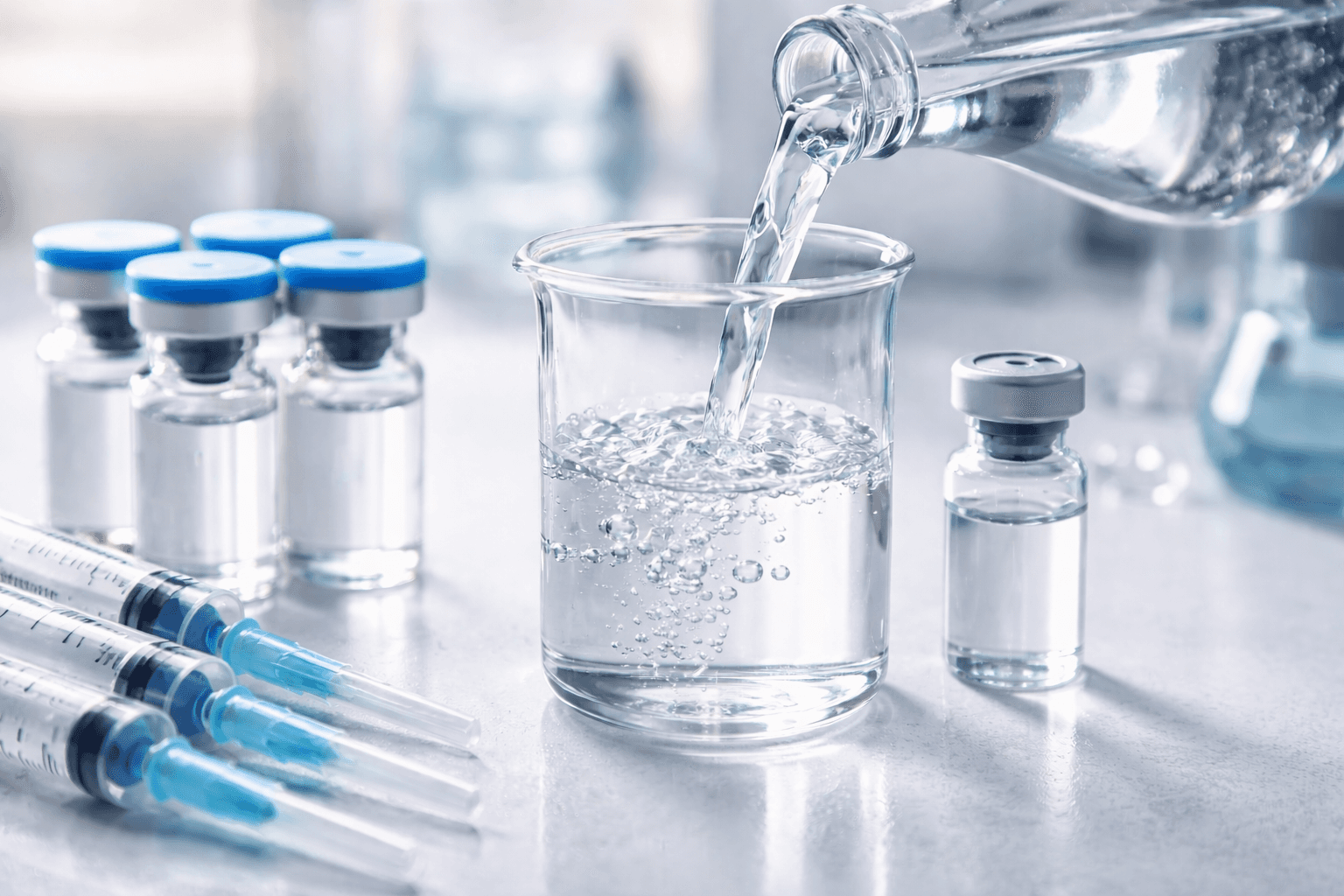
Peptides are delicate molecules, and the wrong water can destroy them in hours.
The right water keeps them stable for weeks.
Peptides are chains of amino acids held together by peptide bonds.
These bonds are stable in proper conditions but vulnerable to contamination.
Bacteria produce enzymes that break peptide bonds.
One contaminated vial means degraded peptide and wasted money.
Water isn't just water when we're talking about injections, because tap water contains minerals, chlorine, bacteria, and other contaminants.
Even filtered water isn't sterile.
Bottled water isn't sterile either.
You need pharmaceutical-grade water specifically prepared for injections.
The water you choose determines three things.
How long your peptide lasts after mixing.
Whether it stays sterile and safe to inject.
How effectively the peptide works in your body.
Bacteriostatic water: the gold standard
Bacteriostatic water is sterile water containing 0.9% benzyl alcohol.
The benzyl alcohol prevents bacterial growth. It's the standard for reconstituting peptides.
The "bacteriostatic" name tells you what it does.
It stops bacteria from growing. Not bactericidal, which kills bacteria. Bacteriostatic, which prevents multiplication. Any bacteria that enter the vial can't reproduce. The water stays safe to use.
Benzyl alcohol at 0.9% concentration provides this protection. Higher concentrations would irritate tissue at injection sites. Lower concentrations wouldn't prevent bacterial growth effectively. The 0.9% is the optimal balance.
Bacteriostatic water extends peptide shelf life significantly. Once mixed, peptides stay stable for twenty-eight days when refrigerated. That's four weeks of safe use from a single vial. Without bacteriostatic water, you'd need to use peptides within days of mixing.
Every pharmacy and peptide supplier sells bacteriostatic water. It comes in sealed sterile vials, typically 10ml or 30ml. Cost is minimal, usually $10 to $20 for 30ml. One bottle reconstitutes multiple peptide vials.
The FDA approves bacteriostatic water specifically for injection. It's pharmaceutical grade, meeting strict purity standards. You're not experimenting with questionable substances. This is the medical standard.
Sterile water: When it works and when it doesn't
Sterile water is water that's been sterilized but contains no preservatives.
Without any benzyl alcohol.
Just pure H2O sterilized through filtration or heat.
Sterile water works perfectly if you're using the entire peptide vial immediately. Single-use protocols benefit from sterile water. Mix the peptide, draw the full dose, inject immediately. No storage needed. No bacterial growth concerns.
The problem appears with multi-dose vials.
Once you puncture the rubber stopper, you've introduced potential contamination.
Without benzyl alcohol, any bacteria can multiply.
Your peptide could be contaminated by the second or third injection.
Sterile water also has a shorter shelf life after opening. Most guidelines recommend discarding after twenty-four to forty-eight hours. This creates waste and inconvenience. You're mixing fresh peptide every other day.
Some peptides specifically require sterile water over bacteriostatic. Growth hormone is the main example. The benzyl alcohol in bacteriostatic water can reduce GH potency. Manufacturer instructions for pharmaceutical GH specify sterile water only.
For most peptides including BPC-157, TB-500, semaglutide, and others, bacteriostatic water is superior. Use sterile water only when specifically instructed or for immediate single-use applications.
Why you can't use other water types
People ask about alternatives constantly. Distilled water, filtered water, saline.
Let me explain why these don't work.
Distilled water is purified through distillation but not sterile.
Distillation removes minerals and contaminants, but it doesn't sterilize.
Bacteria can still be present. Even if you boil it, maintaining sterility during storage is impossible without proper containers and technique.
Tap water is completely inappropriate. Contains chlorine, fluoride, minerals, bacteria, and various contaminants.
Would destroy peptides and potentially cause serious injection site infections. Never use tap water for peptides under any circumstance.
Bottled drinking water isn't sterile.
It's filtered and safe to drink but contains bacteria and minerals.
These would contaminate your peptide and potentially cause infections.
Filtered water from home filtration systems faces the same issues.
Not sterile. Contains bacteria. Would contaminate peptides.
Filtration removes some contaminants but doesn't sterilize.
Saline solution (0.9% sodium chloride) is sometimes used but has disadvantages.
Some peptides are less stable in saline. The sodium chloride can interfere with certain peptide structures. Bacteriostatic water is more universally compatible.
The cost difference between proper bacteriostatic water and improvised alternatives is minimal.
A 30ml bottle of bacteriostatic water costs $15 to $20 and reconstitutes dozens of peptide vials. There's no reason to risk expensive peptides with inappropriate water.
For complete reconstitution instructions using bacteriostatic water, read how to reconstitute peptides.
How to properly reconstitute with bacteriostatic water
The process is straightforward but technique matters.
Proper reconstitution preserves peptide potency and maintains sterility.
Start with clean hands washed thoroughly with soap and water. Clean your work surface with alcohol or disinfectant. Let both the peptide vial and bacteriostatic water vial reach room temperature. Cold vials cause condensation which can affect mixing.
Wipe the rubber stoppers on both vials with alcohol prep pads. Let the alcohol dry completely. Residual alcohol can damage peptides. Give it thirty seconds to fully evaporate.
Draw the appropriate amount of bacteriostatic water into your syringe. Common amounts are 1ml, 2ml, or 3ml depending on your desired concentration. More water creates more dilute solution. Less water creates more concentrated solution.
Insert the needle through the peptide vial's rubber stopper. Aim the needle at the vial wall, not directly at the peptide powder. Slowly inject the water down the wall of the vial. The water should run down the glass and gently dissolve the powder.
Never inject water directly onto the peptide powder. The force can damage peptide structure. Never shake the vial vigorously. Aggressive agitation breaks peptide bonds. Let the water dissolve the powder naturally over two to five minutes.
If powder remains after five minutes, gently swirl the vial. Circular motion helps dissolve without damaging the peptide. The solution should become completely clear. Some peptides take longer to dissolve than others. Be patient.
Once fully dissolved, your peptide is ready to use. Draw your dose and inject according to your protocol. Immediately refrigerate the remaining solution. Label the vial with the peptide name, concentration, and date reconstituted.
Use our peptide reconstitution calculator for exact water amounts and concentrations.
Storage requirements for reconstituted peptides
Proper storage determines how long your peptide remains effective after mixing.
Refrigeration is mandatory after reconstitution. Store at 36 to 46 degrees Fahrenheit, which is 2 to 8 degrees Celsius. This is standard refrigerator temperature. Keep the vial in the main refrigerator compartment, not the door where temperature fluctuates.
Never freeze reconstituted peptides. Freezing destroys peptide structure. Ice crystals form and physically damage the peptide chains. Once frozen, the peptide is ruined. If you accidentally freeze a vial, discard it.
Light exposure degrades peptides. Keep vials in a dark place or wrap them in foil. UV light breaks peptide bonds over time. The refrigerator provides darkness when closed, but extra protection doesn't hurt.
Temperature stability matters during transport. If traveling with peptides, use a small cooler with ice packs. Keep temperature stable. Don't leave peptides in hot cars or direct sunlight.
The twenty-eight day shelf life with bacteriostatic water starts from reconstitution date. Day one is when you add water. Day twenty-eight is the last safe day to use that vial. Mark the date clearly on the vial.
Signs of degradation are usually visible. Solution becomes cloudy instead of clear. Visible particles or flakes appear. Color changes from clear to yellow or brown. Unusual smell when opening the vial. If you see any of these, discard the vial immediately.
With sterile water, shelf life drops to forty-eight hours maximum. Mark the vial and discard after two days regardless of appearance. The lack of preservative means bacterial growth risk increases rapidly.
Calculating how much water to add
The amount of water you add determines your peptide concentration. This affects convenience and dosing accuracy.
Common ratios are designed to make math easy. For a 5mg peptide vial, adding 2ml of water creates 2,500mcg per ml concentration. This is the most popular ratio because the numbers work out cleanly.
Adding 1ml creates higher concentration at 5,000mcg per ml. Your injection volumes are smaller. Good for high-dose peptides where you're injecting large amounts. Less convenient for measuring small doses precisely.
Adding 3ml creates lower concentration at 1,667mcg per ml. Your injection volumes are larger. Better for measuring small doses accurately. Less convenient if you're injecting large doses.
The peptide amount stays the same regardless of water added. A 5mg vial contains 5mg whether you add 1ml, 2ml, or 3ml. You're just changing the concentration, not the total peptide.
Start with 2ml for most peptides. It's the sweet spot between convenience and accuracy. You can always adjust with your next vial if you prefer different concentration.
Use our peptide calculator to calculate concentrations for any water amount.
For complete dosing math, read how to calculate peptide dosages.
Peptide-specific water considerations
Different peptides have different requirements. Most follow standard rules but some have exceptions.
BPC-157 works with standard bacteriostatic water. Add 2ml to a 5mg vial. Creates 2,500mcg per ml concentration. Typical dose of 250 to 500mcg means injecting 0.1 to 0.2ml. The peptide stays stable for full twenty-eight days refrigerated.
Use our BPC-157 dosage calculator for complete protocols.
For BPC-157 basics, read what is BPC-157.
TB-500 uses standard bacteriostatic water. Higher doses mean you might use more water for convenience. Adding 2ml to a 5mg vial works but you'll inject the full vial for loading doses. Some people prefer adding less water to make full-vial injections more convenient.
Use our TB-500 dosage calculator for dosing guidance.
For TB-500 information, see TB-500 benefits.
Semaglutide and tirzepatide use standard bacteriostatic water. These are weekly injections at low volumes. The 2ml standard ratio works perfectly. Vials last multiple weeks, making the twenty-eight day bacteriostatic protection essential.
Use our semaglutide dosage calculator for titration schedules.
For GLP-1 comparison, read semaglutide vs tirzepatide.
Growth hormone requires sterile water, not bacteriostatic. The benzyl alcohol reduces GH potency. Pharmaceutical GH comes with its own sterile water for this reason. Research peptide GH should also use sterile water.
Ipamorelin and CJC-1295 use standard bacteriostatic water. Daily or frequent injections make bacteriostatic protection valuable. Standard 2ml ratio works well.
For growth hormone peptide protocols, see best peptides for muscle growth.
Where to buy bacteriostatic water
Bacteriostatic water is widely available. Quality matters but it's a commodity product.
Online peptide suppliers sell bacteriostatic water alongside peptides. Convenient to order everything together. Prices typically run $15 to $25 for 30ml. Check that the supplier provides pharmaceutical-grade water with proper labeling.
Medical supply companies carry bacteriostatic water. Sometimes cheaper than peptide suppliers. Search for "bacteriostatic water for injection USP" to find pharmaceutical-grade products.
Some compounding pharmacies sell bacteriostatic water directly. Call local compounding pharmacies and ask. They may require a prescription in some states but many don't for bacteriostatic water specifically.
Amazon and other online retailers sell bacteriostatic water.
Verify the seller is reputable.
Check for USP pharmaceutical grade designation.
Read reviews carefully.
Some products marketed as bacteriostatic water don't meet pharmaceutical standards.
What to verify when buying includes USP pharmaceutical grade designation. This ensures purity standards. Check for 0.9% benzyl alcohol concentration. Verify sealed sterile vials with intact seals. Confirm expiration date is clearly printed and at least one year out.
Red flags include suspiciously cheap prices.
Pharmaceutical-grade bacteriostatic water has a floor price. If it's half the market rate, question the quality.
No clear labeling or missing concentration information suggests non-pharmaceutical product. Unsealed bottles or damaged packaging means contamination risk.
Typical pricing is $15 to $25 for 30ml. This is reasonable for pharmaceutical-grade product. Bottles last months when reconstituting normal peptide amounts. The cost per vial reconstituted is negligible.
For vendor evaluation beyond just water, read best peptide vendors.
Common mistakes with bacteriostatic water
People make predictable errors when reconstituting peptides. Avoid these.
Using expired bacteriostatic water reduces its effectiveness. The benzyl alcohol degrades over time. Always check expiration dates. Discard expired water even if the bottle hasn't been opened.
Adding water too quickly damages peptides. Fast injection creates turbulence and foam. Peptide bonds can break from mechanical stress. Always inject slowly down the vial wall.
Shaking vials vigorously after adding water seems logical but destroys peptides. Gentle swirling is the maximum agitation allowed. If the peptide isn't dissolving, be patient. Aggressive shaking does more harm than good.
Not refrigerating immediately after reconstitution allows bacterial growth and peptide degradation. Mix the peptide, use what you need, refrigerate the rest within minutes. Room temperature storage significantly reduces shelf life.
Reusing needles when drawing doses risks contamination. Every time you puncture the rubber stopper, use a fresh sterile needle. Bacteria from previous injections can contaminate the vial if using the same needle repeatedly.
Not cleaning rubber stoppers with alcohol before each use invites contamination. Wipe the stopper with alcohol prep pad every single time. Let dry. Then insert needle. This simple step prevents most contamination.
Storing bacteriostatic water improperly before opening reduces shelf life. Keep unopened bottles at room temperature in a dark place. Once opened, refrigerate if you want to extend shelf life, though unopened bacteriostatic water is stable at room temperature.
Reconstitution troubleshooting
Problems happen. Here's how to solve them.
If peptide powder won't fully dissolve after ten minutes, check temperature first. Cold vials dissolve slower. Warm the vial gently between your hands. Give it another five minutes. If still not dissolving, the peptide may have degraded before reconstitution.
If solution appears cloudy after reconstitution, this usually indicates contamination or degraded peptide. Crystal clear solution is the goal. Slight cloudiness that doesn't clear suggests problems. Discard cloudy solutions. Don't inject them.
If you see particles floating in solution after mixing, the peptide has degraded or precipitated. This shouldn't happen with proper technique and fresh peptides. Discard the vial. Don't try to filter or salvage it.
If you accidentally added too much water, you can't remove it. Your concentration is now lower than intended. Recalculate your doses based on actual water added. Use our reconstitution calculator with the correct water amount.
If you accidentally added too little water, you can add more. Clean the stopper. Add the additional water slowly. Let dissolve. Recalculate concentration based on total water added.
If rubber stopper gets pushed into the vial, immediately transfer the peptide to a new sterile vial. The compromised stopper allows contamination. Use a large gauge needle to draw out all solution. Filter if possible. Transfer to fresh sterile vial. This rarely happens with proper technique.
If vial gets contaminated during reconstitution, discard it immediately. Signs include visible contaminants, unusual smell, or any doubt about sterility. Never inject questionable peptides. The $50 lost peptide is cheaper than treating an infection.
Traveling with reconstituted peptides
Taking peptides on trips requires planning. Reconstituted peptides need refrigeration.
For short trips under eight hours, use a small insulated lunch bag with ice packs. The peptides stay cold enough. Check the ice packs haven't fully melted. If they have, the peptides may have gotten too warm.
For longer travel, use a small electric cooler.
These plug into car cigarette lighters or wall outlets. Maintain consistent refrigerator temperature. Ideal for road trips or situations with reliable power.
Air travel requires special consideration.
Pack reconstituted peptides in checked luggage with ice packs in an insulated container. TSA allows medications including peptides. Carry a letter from your doctor if you're concerned about questions.
Don't pack unreconstituted peptide powder in luggage going through X-ray machines. The radiation may affect potency. Carry powder vials in your carry-on bag instead. They're stable at room temperature before reconstitution.
International travel with peptides varies by country. Some countries prohibit importing peptides without prescriptions.
Research destination country laws before traveling internationally with peptides.
The easiest approach is using peptides that don't require daily dosing. Weekly injections like semaglutide or tirzepatide are manageable while traveling. Daily peptides like Ipamorelin are harder to manage properly on trips.
Consider timing trips around your peptide schedule. If possible, plan travel during off-weeks in cycling protocols. This eliminates the need to transport peptides.
Alternative reconstitution methods for advanced users
Most people should stick with standard bacteriostatic water reconstitution. But alternatives exist for specific situations.
Sodium chloride solution at 0.9% is isotonic saline. Some peptides remain stable in saline. It's sterile but lacks bacteriostatic properties. Use only for immediate consumption. Benefits include potentially less sting at injection sites for some peptides.
Acetic acid solution is used for specific peptides that are more stable in acidic conditions. This is rare. Most peptides don't require this. Only use acetic acid if peptide manufacturer specifically recommends it.
Pre-mixed solutions from compounding pharmacies come already reconstituted. This is convenient but expensive. Shelf life is still limited.
Only practical if your compounding pharmacy is local and the cost difference isn't prohibitive.
Lyophilization at home for long-term storage is possible with specialized equipment. Freeze-drying reconstituted peptides extends shelf life significantly. This requires expensive equipment and technical knowledge. Not practical for most users.
The vast majority of people should use standard bacteriostatic water. Alternative methods add complexity without meaningful benefit for typical peptide use.
The science behind benzyl alcohol preservation
Understanding why bacteriostatic water works helps you use it properly.
Benzyl alcohol disrupts bacterial cell membranes. Bacteria can't maintain membrane integrity in benzyl alcohol's presence. This prevents reproduction. Existing bacteria can't multiply. The peptide solution stays sterile during multi-dose use.
The 0.9% concentration is carefully calibrated. Higher concentrations would be more effective at preventing bacterial growth but would cause tissue irritation at injection sites. Lower concentrations wouldn't provide adequate protection. The 0.9% balances efficacy and safety.
Benzyl alcohol doesn't affect peptide structure. The peptide chains remain intact. This is why bacteriostatic water is safe for peptides. The preservative protects from contamination without degrading the active ingredient.
The twenty-eight day limit exists because benzyl alcohol slowly degrades. Even refrigerated, the preservative effectiveness decreases over time. By day thirty, protection is significantly reduced. The twenty-eight day guideline provides safety margin.
This is pharmaceutical science refined over decades. The formulation isn't arbitrary. It's the result of extensive testing to optimize preservation, safety, and compatibility with injectable medications.
The bottom line on peptide mixing water
Use bacteriostatic water for mixing peptides.
It's the gold standard for good reasons.
Bacteriostatic water contains 0.9% benzyl alcohol that prevents bacterial growth. Reconstituted peptides stay safe to use for twenty-eight days when refrigerated.
This is far superior to alternatives that work for only days.
The proper process involves cleaning rubber stoppers, injecting water slowly down the vial wall, letting peptide dissolve naturally without shaking, and immediately refrigerating after use.
Add 2ml water to 5mg peptide vials for standard concentration. This creates 2,500mcg per ml which makes dosing calculations easy. You can adjust water amount based on preference.
Store reconstituted peptides at 36 to 46 degrees Fahrenheit. Never freeze. Keep in darkness. Label with date reconstituted. Discard after twenty-eight days.
Buy pharmaceutical-grade bacteriostatic water from reputable suppliers. Costs $15 to $25 for 30ml which reconstitutes dozens of vials. Don't improvise with tap water, distilled water, or other non-sterile alternatives.
Calculate your exact reconstitution with our free tools.
Peptide reconstitution calculator for water amounts and concentrations.
Peptide calculator for general dosing.
The water you choose determines whether your peptides work properly. Use bacteriostatic water. Follow proper technique. Your peptides will stay stable and effective for the full protocol.
Related guides
How to reconstitute peptides - Complete step-by-step mixing guide
How to calculate peptide dosages - Dosing math explained
Free peptide reconstitution calculator - Calculator usage guide
In case I don’t see you, good afternoon, good evening, and good night. Cheers.