Feb 28, 2026
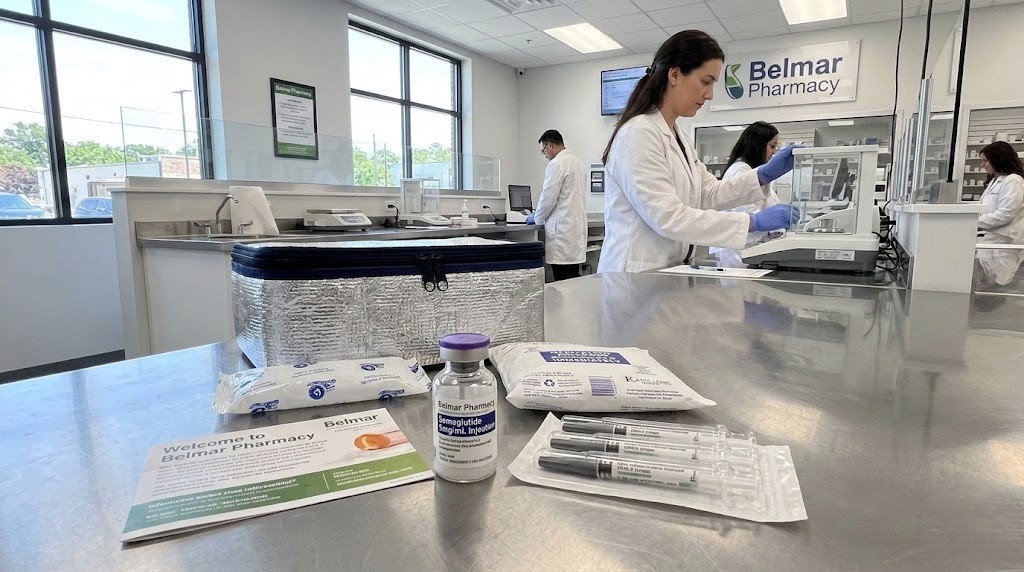
You have heard the name thrown around in forums, mentioned by telehealth providers, printed on vial labels. Belmar Pharmacy. Or, more precisely, Belmar Pharma Solutions. If you are researching compounded semaglutide, there is a good chance this company has already crossed your radar, because they fill prescriptions for some of the largest telehealth weight loss platforms in the country. But hearing a name and understanding what that name actually means for the medication arriving at your door are two very different things.
Here is the problem most people face. They get prescribed compounded semaglutide through an online provider, the package arrives from Belmar, and suddenly they have questions. Is this pharmacy legit? Why is the liquid red? How does the dosing work with this specific vial? What makes Belmar different from the dozens of other compounding pharmacies filling semaglutide prescriptions? And maybe the biggest question of all: is my medication safe?
Those are fair questions. Important ones, actually. The compounded semaglutide space has exploded over the past two years, and not every pharmacy operating in it deserves your trust. Some cut corners. Some lack proper accreditation. Some have been flagged by the FDA for quality issues that should make anyone nervous.
Belmar is not one of those pharmacies. But you should not take that statement on faith. You should understand exactly why, with specifics, credentials, and context that let you evaluate the claim yourself. That is what this guide delivers. We are going to walk through everything: who Belmar Pharma Solutions actually is, what their semaglutide formulation contains, how their quality standards compare to the industry, what the dosing protocols look like, how to store your medication properly, and how the entire process works from prescription to injection.
SeekPeptides has tracked the compounded GLP-1 landscape since its earliest days, and Belmar consistently appears as one of the most credentialed compounders in the space. Let us show you exactly what that means.
Who is Belmar Pharma Solutions?
Belmar Pharma Solutions is not some overnight operation that popped up to cash in on the GLP-1 boom. The company was founded in 1985 as a local compounding pharmacy in Denver, Colorado. That means they have been compounding medications for four decades, long before semaglutide existed, long before GLP-1 receptor agonists became household terms, and long before the weight loss medication market turned into what it is today.
Over those forty years, Belmar grew from a single storefront into a national compounding organization with six pharmacy locations spread across Colorado, Florida, Arizona, Wisconsin, Kansas, and Utah. They ship to all 50 states. They operate both 503A patient-specific compounding facilities and an FDA-registered 503B outsourcing facility dedicated to hormone pellet production.
What does that actually mean for you?
A 503A pharmacy compounds medications based on individual prescriptions. Your doctor writes a prescription specifically for you, and the pharmacy creates that specific medication. This is the model Belmar uses for their semaglutide compounds. A 503B outsourcing facility operates under direct FDA oversight and can produce larger batches without individual prescriptions, though Belmar currently uses their 503B facility primarily for hormone pellets rather than semaglutide products.
The distinction matters because it tells you exactly how your medication gets made and under what regulatory framework. When your Belmar semaglutide arrives, it was compounded specifically for you, based on your prescription, by a licensed pharmacist following USP compounding standards.
Locations and reach
Belmar operates physical compounding pharmacies in six states. Their original Colorado facility in Golden, just outside Denver, has been running since 1985. The Florida location sits in Odessa. Arizona operations run out of Youngtown. Additional facilities operate in Madison (Wisconsin), Wichita (Kansas), and Utah.
But physical location matters less than shipping capability. Belmar is licensed to ship compounded medications to patients in all 50 states, including California, which has some of the strictest compounding pharmacy regulations in the country. When Belmar expanded California shipping for sterile medications, it signaled a level of regulatory compliance that not every compounder can match.
If you are using a telehealth provider for your semaglutide prescription, your medication might ship from any of these facilities depending on your location and the specific partnership your provider has with Belmar. The formulation and quality standards remain identical regardless of which facility compounds your prescription.
The accreditation difference
Here is where Belmar genuinely separates itself from the pack. They hold two credentials that very few compounding pharmacies can claim simultaneously:
NABP Accreditation at every single location. The National Association of Boards of Pharmacy runs a voluntary accreditation program for compounding pharmacies that requires demonstrating alignment with USP standards 795, 797, and 800. These are not easy standards to meet. USP 795 covers non-sterile compounding. USP 797 covers sterile compounding, which includes injectable medications like semaglutide. USP 800 covers hazardous drug handling. Passing NABP accreditation means rigorous inspections at both state and federal levels.
LegitScript Certification at every single location. LegitScript is an independent verification service that confirms a pharmacy operates legally and ethically. They monitor certified pharmacies continuously, not just at the point of initial certification. Getting and maintaining LegitScript certification requires ongoing transparency and compliance.
Belmar is the only national compounding organization with both NABP accreditation and LegitScript certification at all of their locations. That is not marketing language. That is a verifiable fact that you can check directly through NABP and LegitScript databases. When you are trusting a company to compound your injectable medication, these credentials should carry significant weight in your evaluation.
What is Belmar compounded semaglutide?
Belmar compounds their semaglutide as a combination product: cyanocobalamin/semaglutide injection. That means every vial contains two active ingredients, semaglutide (the GLP-1 receptor agonist) and cyanocobalamin (vitamin B12). This is not unique to Belmar. Many compounding pharmacies add B12 to their semaglutide formulations, and there are practical reasons for doing so.
Cyanocobalamin is included at a concentration of 0.5 mg/mL across all available strengths. This delivers a meaningful dose of vitamin B12 with each injection. Since semaglutide can reduce appetite significantly and affect energy levels, the B12 component helps support energy metabolism during weight loss. Some providers specifically prefer B12-containing formulations because their patients on calorie-restricted diets may develop nutritional gaps that B12 supplementation helps address.
Available strengths and vial sizes
Belmar offers their semaglutide/cyanocobalamin injection in multiple concentrations:
1 mg semaglutide / 2.5 mg cyanocobalamin per 1 mL (available in 5 mL fill volume)
1 mg semaglutide / 1 mg cyanocobalamin per 1 mL (available in both 1 mL and 5 mL fill volumes)
The concentration your provider prescribes depends on your dosing protocol and how far along you are in your dose escalation schedule. Multi-dose vials (5 mL) are more common because they provide enough medication for several weeks of injections at various dose levels, which reduces the number of vials you need and can lower overall costs.
Why is my semaglutide red?
This is one of the most common questions from people receiving Belmar semaglutide for the first time, and it makes sense. If you have seen brand-name Ozempic, you know it is a clear, colorless solution. So why does the Belmar vial contain a red liquid?
The answer is straightforward. Cyanocobalamin, the B12 component, is naturally red. That distinctive red or dark pink color is simply the vitamin B12 doing what B12 does. According to Belmar's own documentation, the vial contents should appear as a "clear red solution with no visible particles." If your solution is cloudy, discolored beyond the expected red tint, or contains visible particles, do not use it and contact your pharmacy immediately.
The red color is actually reassuring once you understand it. It visually confirms that the B12 component is present in your formulation. If your compounded semaglutide from Belmar arrived completely clear, that would be the concerning sign, not the redness.
Quality and safety standards at Belmar
Accreditation badges look nice on a website. But what do they actually translate to inside the pharmacy? For Belmar, the answer involves several layers of quality control that directly affect the medication you inject.
Third-party testing
Belmar subjects their compounds to independent laboratory testing at every stage of the process. Ingredients get tested when they arrive. Compounds get tested after they are made. And random retesting happens throughout the distribution chain. This is not a single check at one point. It is continuous verification from sourcing through shipping.
Specifically, Belmar tests for potency (confirming the medication contains exactly the amount of active ingredient listed on the label) and sterility (confirming the medication is free from microbial contamination). For an injectable product like semaglutide, sterility testing is particularly critical. You are putting this directly into your body through a needle. A contaminated product can cause serious infections.
Many compounding pharmacies perform some level of testing. What distinguishes Belmar is the scope: independent third-party labs, not just in-house checks, covering the entire supply chain rather than just finished products. When you are comparing compounders for your semaglutide supply, ask about their testing protocols. The answers will tell you a lot.
Ingredient sourcing
Belmar sources their active pharmaceutical ingredients (APIs) exclusively from FDA-registered facilities. This means the raw semaglutide powder used to compound your medication comes from suppliers that the FDA has inspected and registered, not from unverified overseas sources.
This matters more than most people realize. The compounded semaglutide market has seen issues with some pharmacies using substandard ingredients, including different salt forms of semaglutide (like semaglutide sodium or semaglutide acetate) that are not the same as the active ingredient in FDA-approved Ozempic and Wegovy. The FDA has specifically warned about this issue. Belmar's sourcing from FDA-registered facilities and their third-party testing protocols help ensure the semaglutide in your vial is the correct form at the correct potency.
USP compliance
USP 797 is the standard that governs how sterile medications, including injectable semaglutide, must be compounded. It covers everything from the cleanroom environment where compounding occurs, to the gowning and hand hygiene procedures staff must follow, to the environmental monitoring that verifies contamination controls are working.
Belmar's NABP accreditation requires demonstrated compliance with USP 797 (along with USP 795 and 800). This is verified through inspection, not just self-reporting. The accreditation process involves physical site visits where inspectors evaluate actual compounding conditions against USP standards.
For context, not all compounding pharmacies maintain USP 797 compliance. Some operate in states with less stringent oversight. Some have never pursued NABP accreditation. When your medication must remain sterile throughout its shelf life and yours is an injectable product, the difference between a USP 797-compliant facility and a non-compliant one is not trivial.
How Belmar semaglutide dosing works
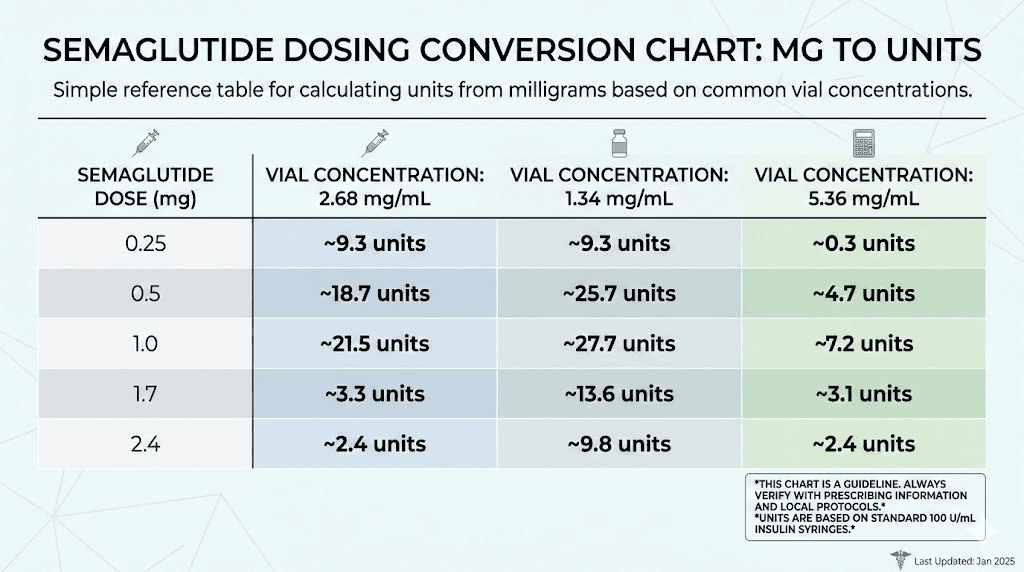
Understanding your dosing when you receive a multi-dose vial from Belmar requires knowing two things: the concentration of your specific vial and the dose your provider prescribed. This is where unit-to-milligram conversions become important, and where some of the safety concerns around compounded semaglutide originate.
The standard escalation protocol
Most providers prescribing Belmar semaglutide follow a gradual dose escalation that mirrors the FDA-approved Wegovy protocol, though individual adjustments are common:
Weeks 1 through 4: 0.25 mg once weekly. This is the initiation dose. The goal is not weight loss yet. The goal is letting your body adjust to the medication, minimizing gastrointestinal side effects, and establishing tolerance.
Weeks 5 through 8: 0.5 mg once weekly. This is the first therapeutic dose where most people begin noticing appetite suppression. Some providers keep patients here for longer than four weeks if results are adequate.
Weeks 9 through 12: 1.0 mg once weekly. A significant step up. Many people find this dose sufficient for meaningful weight loss and stay here rather than escalating further.
Weeks 13 through 16: 1.7 mg once weekly. For those who need additional effect after plateauing at lower doses.
Week 17 onward: 2.4 mg once weekly. The maximum maintenance dose in the standard protocol.
Your provider may adjust this timeline based on your response, tolerance, and goals. Some people never need to go above 1.0 mg. Others require the full 2.4 mg. The key is working with your prescriber to find the dose that delivers results with manageable side effects, and the dosing in units will depend on your vial concentration.
Converting milligrams to units on a syringe
This is where things get tricky with multi-dose vials, and it is the source of dosing confusion that the FDA has specifically warned about.
With a 1 mg/mL concentration vial from Belmar, the math is straightforward:
0.25 mg = 0.25 mL = 25 units on a standard insulin syringe
0.5 mg = 0.5 mL = 50 units
1.0 mg = 1.0 mL = 100 units
But here is where it gets critical. Not all Belmar vials are 1 mg/mL. If your vial concentration is different, every calculation changes. A dose that requires 25 units from a 1 mg/mL vial would require a completely different number of units from a 2.5 mg/mL vial. Getting this wrong means overdosing or underdosing, and the FDA has received hundreds of adverse event reports related to exactly this type of dosing error with compounded semaglutide products.
Always, always verify your specific vial concentration and confirm your dose calculation with your prescribing provider before injecting. If you are unsure about any aspect of the calculation, use a semaglutide dosage calculator to double-check your math. Do not guess. Do not assume your vial is the same concentration as someone else's.
The FDA specifically flagged multi-dose vial dosing as a safety concern in their alerts about compounded semaglutide. Belmar includes dosing information with their products, but the responsibility for accurate dosing ultimately falls on you and your provider. Take it seriously.
How to inject Belmar semaglutide
The injection process for Belmar compounded semaglutide follows standard subcutaneous injection technique. If you have never given yourself a subcutaneous injection before, the first time feels intimidating. By the third or fourth week, it becomes routine.
Injection site options
Belmar's documentation specifies three approved injection sites:
Abdomen: The most popular choice. Inject at least two inches away from the navel. The abdomen generally offers the most consistent absorption and the most surface area for rotation. Many users find this site the least painful because the tissue is typically fattier.
Front of the thigh: A good alternative when your abdomen needs a break. The middle third of the front thigh works best. Avoid the inner thigh and the area directly above the knee.
Outer upper arm: The back or outer portion of the upper arm works, though this site can be harder to reach on your own. Some people find it helpful to have a partner administer injections here.
Rotate your injection site each week. This is not optional advice. Repeated injections in the same spot can cause lipodystrophy, which is essentially a breakdown or buildup of fatty tissue that creates hard lumps or indentations under the skin. Rotating sites prevents this and ensures more consistent medication absorption.
Step-by-step injection process
Before injecting, wash your hands thoroughly. Clean the rubber stopper on the vial with an alcohol swab. Draw air into your syringe equal to your dose volume, insert the needle into the vial, push the air in, then invert the vial and draw out your exact dose. Tap out any air bubbles and push them back into the vial.
Clean your injection site with a fresh alcohol swab. Let it dry completely, as injecting through wet alcohol stings. Pinch a fold of skin at your chosen site. Insert the needle at a 45 to 90-degree angle (90 degrees for most people with adequate subcutaneous tissue). Push the plunger slowly and steadily. Wait five seconds after the plunger is fully depressed before withdrawing the needle. Release the skin fold. Do not rub the injection site.
Dispose of the needle in a proper sharps container. Never recap needles. Never throw loose needles in regular trash.
Most people report minimal pain with subcutaneous injections. A brief pinch at most. If you are experiencing significant pain or injection site reactions, consult your provider about technique adjustments.
Storage requirements for Belmar semaglutide
Proper storage directly affects your medication's potency and safety. Get this wrong and you might as well pour your semaglutide down the drain.
Refrigeration is mandatory
Belmar's documentation is clear: store injectable semaglutide at refrigeration temperature, between 36 and 46 degrees Fahrenheit (2 to 8 degrees Celsius). Protect from light. The amber vial helps with light protection, but keeping the vial in its box inside the refrigerator adds an extra layer of safety.
This aligns with standard compounded semaglutide storage requirements. Unlike some brand-name products that allow brief room temperature storage, compounded formulations from most pharmacies including Belmar should remain refrigerated throughout their use period.
The 28-day rule
Once you puncture the vial's rubber stopper with a needle for the first time, the clock starts. Belmar specifies a 28-day beyond-use date after first puncture. After 28 days, discard the remaining medication regardless of how much is left in the vial.
This timeline exists because every needle puncture introduces a potential pathway for microbial contamination, even with proper sterile technique. After 28 days of weekly access, the risk of contamination rises to a level where continued use is no longer advisable.
If your dosing schedule means you will not use all the medication in a multi-dose vial within 28 days, talk to your provider about whether a different vial size or concentration would reduce waste. Many people on lower doses encounter this issue with larger 5 mL vials, and switching to smaller volumes or higher concentrations can help maximize what you use before the expiration window closes.
What if my semaglutide was left out?
It happens. A package sits on the porch too long. You forget to put the vial back after your injection. Temperature excursions are one of the most common concerns with compounded semaglutide, and the answer depends on how long and how warm.
Brief temperature excursions, a few hours at room temperature, are generally considered less concerning than extended exposure. However, compounded semaglutide lacks the extensive stability data that brand-name products have, so the conservative approach is always best. If your medication was left at room temperature for more than a few hours, or if it was exposed to heat above room temperature, contact your pharmacy before using it.
If the solution appears cloudy, discolored, or contains particles after a temperature excursion, do not use it. Period. A clear red solution is what you want. Anything else means something has potentially degraded. For more on handling temperature excursions, understand that erring on the side of caution protects both your safety and your results.
How to get Belmar semaglutide
You cannot walk into a Belmar pharmacy and buy semaglutide over the counter. Compounded semaglutide requires a prescription from a licensed healthcare provider. The path from wanting the medication to having it in your refrigerator involves several steps.
The telehealth route
The most common way people end up with Belmar semaglutide is through telehealth weight loss providers that partner directly with Belmar for their pharmacy fulfillment. Several well-known platforms use Belmar as their compounding pharmacy, including MEDVi, CareGLP, and others.
The typical process looks like this:
Step 1: Online intake. You fill out a medical questionnaire covering your health history, current medications, BMI, weight loss goals, and any contraindications. This usually takes about five minutes.
Step 2: Provider consultation. A licensed healthcare provider reviews your information and conducts a telehealth visit, either by video or asynchronous messaging depending on the platform. They assess whether you are a candidate for semaglutide therapy and discuss the treatment plan.
Step 3: Prescription. If approved, your provider writes a prescription specifically for you and sends it to Belmar Pharmacy for compounding.
Step 4: Compounding and shipping. Belmar compounds your medication, tests it, and ships it in temperature-controlled packaging. Most patients receive their medication within 8 to 10 business days from prescription approval.
Step 5: Ongoing care. Regular check-ins with your telehealth provider to monitor progress, adjust dosing, and manage any side effects.
Through your own doctor
If you have a physician, nurse practitioner, or other prescriber who is willing to write a compounded semaglutide prescription, they can send it directly to Belmar. Your provider would need to establish a relationship with Belmar as a dispensing pharmacy, which typically involves a straightforward enrollment process.
This route gives you the advantage of working with a provider who knows your complete medical history, which can be valuable for managing interactions with other medications you take and for coordinating care around conditions like sleep disturbances, gastrointestinal issues, or other concerns that may arise during treatment.
What the package includes
When your Belmar semaglutide arrives, the package typically includes your medication vial (the red solution), a package insert with directions for use and storage, and supplies for administration. The medication ships in temperature-controlled packaging to maintain the cold chain during transit.
Review the package insert carefully when your medication arrives. Confirm the concentration matches what your provider prescribed. Check the beyond-use date. Inspect the solution for clarity, proper color, and absence of particles. If anything seems off, contact Belmar customer service before using the medication.
Belmar compared to other compounding pharmacies
The compounded semaglutide market includes dozens of pharmacies ranging from excellent to questionable. Here is how Belmar stacks up against some of the more well-known names.
Feature | Belmar Pharma Solutions | Empower Pharmacy | Strive Pharmacy | Average 503A Compounder |
|---|---|---|---|---|
Years operating | 40+ (since 1985) | 12+ | Newer entrant | Varies widely |
NABP accredited (all locations) | Yes | Yes (select locations) | Varies | Often no |
LegitScript certified (all locations) | Yes | No | No | Rarely |
Third-party testing | Continuous, all stages | Yes | Yes | Sometimes |
Ships to all 50 states | Yes | Yes | Most states | Varies |
Semaglutide formulation | Semaglutide + B12 | Semaglutide + B12 | Semaglutide + B12 | Varies |
503B facility | Yes (hormone pellets) | Yes | No | Rarely |
The combination of four decades of operation, dual accreditation at every location, and continuous third-party testing puts Belmar in a small group of compounders operating at the highest level. That does not mean other pharmacies are bad. Empower Pharmacy is another highly regarded compounder with strong quality standards. But Belmar's track record and breadth of credentials are difficult to match.
For anyone evaluating where their compounded semaglutide comes from, the credentials to look for are: NABP accreditation, LegitScript certification, USP 797 compliance, third-party potency and sterility testing, and sourcing from FDA-registered API suppliers. Belmar checks every one of those boxes.
Side effects and safety considerations
Compounded semaglutide from Belmar contains the same active ingredient as brand-name Ozempic and Wegovy. That means the side effect profile is fundamentally similar, though the addition of B12 and differences in formulation introduce some unique considerations.
Common side effects
The most frequently reported side effects with semaglutide, whether brand-name or compounded, are gastrointestinal:
Nausea tops the list. Most pronounced during the first few weeks and after each dose escalation. The gradual titration schedule exists specifically to minimize this. Eating smaller meals, avoiding fatty foods, and staying hydrated all help. For detailed strategies, see our guide on foods to eat while on semaglutide.
Constipation affects many users, sometimes significantly. Semaglutide slows gastric emptying, which can slow everything downstream. Adequate water intake, fiber supplementation, and occasional use of gentle laxatives manage this for most people. Our semaglutide constipation treatment guide covers this in depth.
Diarrhea and abdominal pain round out the GI effects. These typically improve as your body adjusts to each dose level. If they persist or worsen, your provider may slow your dose escalation or hold at a lower dose longer.
Headache and fatigue occur in some users, particularly during early treatment. Semaglutide fatigue often relates to reduced caloric intake as appetite decreases. Ensuring adequate nutrition despite reduced appetite is crucial.
Dizziness can happen, especially if you are eating significantly less than before starting treatment. Your body needs time to adjust to lower caloric intake.
Serious side effects to watch for
Belmar's documentation highlights several serious side effects that require immediate medical attention:
Thyroid concerns: Semaglutide carries a boxed warning about medullary thyroid carcinoma (MTC) based on animal studies. If you develop a neck mass, difficulty swallowing, hoarseness, or shortness of breath, seek medical care immediately. Semaglutide is contraindicated in people with a personal or family history of MTC or Multiple Endocrine Neoplasia syndrome type 2 (MEN 2).
Pancreatitis: Severe abdominal pain that radiates to the back, especially with nausea and vomiting, could indicate pancreatitis. This is rare but serious. Stop the medication and contact your provider immediately.
Gallbladder problems: Rapid weight loss from any cause can increase gallstone risk. Symptoms include severe upper abdominal pain, especially after eating, fever, and jaundice.
Kidney issues: Severe or persistent vomiting and diarrhea can lead to dehydration and kidney problems. Stay hydrated and report persistent GI symptoms to your provider.
Vision changes: Diabetic patients may experience worsening diabetic retinopathy during rapid blood sugar improvements. If you have diabetes and notice vision changes, contact your ophthalmologist.
The B12 component
The cyanocobalamin in Belmar's formulation is generally well-tolerated. B12 is a water-soluble vitamin, so excess amounts are typically excreted in urine rather than accumulating to toxic levels. However, some people prefer methylcobalamin over cyanocobalamin as their B12 form. If you have concerns about the B12 component, discuss them with your provider. For more on this combination, see our semaglutide with B12 guide.
The FDA, compounded semaglutide, and what it means for Belmar
The regulatory landscape for compounded semaglutide has shifted dramatically, and understanding these changes helps you make informed decisions about your treatment.
The shortage era
From 2022 through early 2025, injectable semaglutide was on the FDA Drug Shortage List. During a shortage, compounding pharmacies have broader authority to compound copies of commercially available drugs. This is what allowed the compounded semaglutide market to grow as rapidly as it did, and it is how many patients first accessed semaglutide at lower costs than brand-name products.
The shortage ends
On February 21, 2025, the FDA declared the semaglutide shortage resolved. This changed the legal framework significantly. The FDA provided enforcement discretion periods: 503A pharmacies (like Belmar's patient-specific facilities) could continue compounding semaglutide until April 22, 2025, while 503B outsourcing facilities had until May 22, 2025.
After those dates, compounding pharmacies can still produce semaglutide under certain circumstances. If a patient has a documented medical need that cannot be met by commercially available products, such as an allergy to an inactive ingredient in brand-name formulations or a need for a non-standard dose, a 503A pharmacy can compound semaglutide based on a valid patient-specific prescription.
What this means for your Belmar prescription
If you are currently receiving compounded semaglutide from Belmar through a telehealth provider, your access depends on your provider maintaining a legitimate medical justification for compounded rather than brand-name product. Many telehealth platforms have adapted their clinical protocols to document these justifications.
The legal landscape remains fluid. The Outsourcing Facilities Association has filed lawsuits challenging the FDA's determination. Novo Nordisk has petitioned the FDA to add semaglutide to the Demonstrable Difficulties for Compounding (DDC) list, which would further restrict compounding. These legal battles will continue shaping access to compounded GLP-1 medications for years to come.
For now, if you have a valid prescription and a documented medical need, Belmar continues to compound semaglutide. Their extensive compliance infrastructure, including NABP accreditation and LegitScript certification, positions them well to navigate ongoing regulatory changes.
Cost considerations
One of the primary reasons people seek compounded semaglutide is cost. Brand-name Wegovy carries a list price exceeding $1,300 per month without insurance. Brand-name Ozempic, while technically approved for diabetes rather than weight loss, is similarly expensive. Compounded versions from pharmacies like Belmar offer significant savings.
What to expect price-wise
Belmar compounded semaglutide pricing varies depending on the telehealth provider or prescriber you work through. Based on available data from Belmar's partner platforms:
Through some provider partnerships: approximately $250 per month for the medication
Through MEDVi: starting at $179 for the first month, $299 for subsequent months (includes provider consultations)
Through other partners: pricing varies, typically in the $200 to $350 per month range including provider fees
These numbers represent a fraction of brand-name costs. However, remember that compounded medications are not covered by insurance, so the full cost comes out of pocket. Also note that monthly costs may increase as your dose escalates, since higher doses require more medication per injection.
For a broader perspective on affordable compounded GLP-1 options, comparing multiple providers and pharmacies can help you find the best value for your situation.
Hidden costs to consider
Beyond the medication itself, budget for:
Supplies: Syringes, alcohol swabs, and sharps containers. Some providers include these. Others do not. Budget $10 to $20 per month if you need to source supplies separately.
Provider consultations: Monthly or quarterly telehealth visits may carry additional fees depending on your platform.
Lab work: Some providers require periodic blood work to monitor metabolic markers. Costs vary by what is ordered and your insurance coverage for lab services.
Waste factor: If you do not use all the medication in a vial before the 28-day beyond-use date, you lose whatever remains. This is more of an issue at lower doses where you draw smaller volumes from each vial.
Maximizing your results on Belmar semaglutide
Having a quality medication from a reputable pharmacy is the foundation. What you build on that foundation determines your results.
Nutrition matters more than ever
Semaglutide suppresses appetite. It does not optimize nutrition. As your food intake decreases, the quality of what you eat becomes dramatically more important. Every meal needs to deliver maximum nutritional value because you are eating fewer of them.
Prioritize protein. Most weight loss experts recommend 0.7 to 1.0 grams of protein per pound of goal body weight daily while on GLP-1 medications. This preserves muscle mass during weight loss, which is critical for maintaining metabolic rate and avoiding the "skinny fat" outcome that can result from losing weight too quickly without adequate protein.
Stay hydrated. Semaglutide slows gastric emptying, and adequate hydration supports digestion, helps prevent constipation, and reduces the risk of kidney issues from dehydration.
Do not skip meals even when you have zero appetite. Extreme caloric restriction while on semaglutide can lead to muscle loss, nutritional deficiencies, and metabolic adaptation that makes long-term weight maintenance harder. For specific meal planning guidance, check our semaglutide diet plan.
Exercise strategy
Resistance training is arguably more important on semaglutide than off it. The medication creates caloric deficit through appetite suppression. Without resistance training, a significant portion of weight lost can come from muscle rather than fat. Aim for at least two to three resistance training sessions per week focusing on major compound movements.
Cardiovascular exercise supports heart health and can accelerate fat loss, but it should not replace resistance training during GLP-1 therapy. If you must choose one, choose lifting weights.
Tracking and patience
Not everyone responds on the same timeline. Some people notice appetite changes within days. Others take weeks. If you are not losing weight on semaglutide in the first month, that does not necessarily mean the medication is not working. It may mean your dose has not reached therapeutic levels yet, or that other factors need adjustment.
Track your weight weekly at the same time, under the same conditions. Daily weigh-ins create noise that obscures the signal. Weekly trends tell the real story. Expect 0.5 to 2 pounds per week on average once you reach a therapeutic dose, though individual results vary widely. For perspective on realistic expectations, see our guide on when weight loss starts on semaglutide.
Common questions about Belmar semaglutide
People switching to Belmar or receiving their first shipment tend to ask the same questions. Let us address the most common ones.
Can I switch to Belmar from another compounding pharmacy?
Yes, though your provider needs to send a new prescription to Belmar. You cannot simply transfer a compounding prescription between pharmacies the way you might with a standard retail prescription. If your current telehealth provider works with Belmar, the switch is usually seamless. If they do not, you may need to find a new provider who does, or ask your prescriber to establish a relationship with Belmar directly.
What if I am currently on brand-name Ozempic or Wegovy?
Switching between brand-name and compounded semaglutide requires careful dose matching. The active ingredient is the same, but concentrations differ, and the brand-name products come in pre-filled pens with fixed dosing while Belmar provides vials requiring manual drawing. Work closely with your provider on the transition. There should be no gap in treatment, and your dose should remain the same in milligrams even though the delivery method changes. For guidance on switching between different GLP-1 medications, careful provider oversight is essential.
Is Belmar semaglutide the same as Ozempic?
It contains the same active pharmaceutical ingredient (semaglutide) but is not identical to Ozempic. Differences include: Belmar adds cyanocobalamin (B12), the inactive ingredients may differ, the delivery method is different (vial and syringe vs. pre-filled pen), and compounded products do not undergo the same FDA approval process as brand-name drugs. The clinical effects should be comparable when properly dosed, but they are legally and technically different products.
What happens if Belmar stops compounding semaglutide?
Regulatory changes could restrict compounding access further. If that happens, your options include switching to brand-name products (potentially through insurance), finding another compounding pharmacy that maintains legal authority to compound, or discussing alternative weight management approaches with your provider. Having a relationship with a prescriber who can help navigate transitions is valuable insurance against regulatory disruptions.
Who should and should not use Belmar semaglutide
Compounded semaglutide from Belmar is not appropriate for everyone. Understanding the indications and contraindications helps you make an informed decision with your healthcare provider.
Good candidates
People who may benefit from Belmar compounded semaglutide include those with a BMI of 30 or above (obesity), those with a BMI of 27 or above with at least one weight-related health condition (hypertension, type 2 diabetes, high cholesterol), people who have tried diet and exercise without achieving adequate weight loss, and patients who cannot access or afford brand-name semaglutide products.
The BMI requirements for GLP-1 medications are important because these are prescription medications intended for people with clinically significant excess weight, not for cosmetic weight loss in people already at a healthy weight.
Contraindications
Do NOT use semaglutide if you have:
A personal or family history of medullary thyroid carcinoma (MTC). This is a non-negotiable contraindication based on the boxed warning.
Multiple Endocrine Neoplasia syndrome type 2 (MEN 2). Same category as MTC, this is an absolute contraindication.
Active or history of pancreatitis. Semaglutide may increase pancreatitis risk.
Severe gastrointestinal disease. If you already have significant gastroparesis or inflammatory bowel disease, the GI effects of semaglutide could worsen your condition.
Pregnancy or planning to become pregnant. Semaglutide should be discontinued at least two months before planned conception. For related considerations, see GLP-1 and breastfeeding.
Depression or history of suicidal ideation. While the direct causal relationship is still being studied, monitoring mood changes during GLP-1 therapy is important.
Upcoming surgery requiring anesthesia. Semaglutide slows gastric emptying, which increases aspiration risk during anesthesia. Most anesthesiologists recommend stopping semaglutide at least one to two weeks before surgery. For specific guidance, our article on resuming semaglutide after surgery covers the details.
Drug interactions to know about
Semaglutide affects how quickly your stomach empties, which can impact the absorption of other medications you take orally. This is not unique to Belmar's formulation. It applies to all semaglutide products.
Medications that may be affected include:
Oral contraceptives: Slowed absorption could theoretically reduce effectiveness. Consider backup contraception methods, especially during dose escalation periods.
Oral diabetes medications: Combining semaglutide with sulfonylureas or insulin increases hypoglycemia risk. Dose adjustments of existing diabetes medications may be necessary.
Thyroid medications (levothyroxine): Absorption timing may change. Monitor thyroid levels more frequently when starting semaglutide.
Blood thinners (warfarin): Changes in absorption could affect INR levels. More frequent monitoring may be warranted.
The general principle is that any medication absorbed primarily through the gastrointestinal tract could potentially be affected by semaglutide's gastric emptying effects. Inform your prescriber about ALL medications and supplements you take, including over-the-counter products. For related reading on combining semaglutide with other substances, see our guides on phentermine and semaglutide together, alcohol and semaglutide, and berberine and semaglutide.
Long-term considerations
Starting semaglutide is a decision with implications beyond the first few months. Understanding the long-term picture helps you plan appropriately.
How long do you stay on semaglutide?
Current evidence suggests semaglutide works best as a long-term or indefinite medication for most people. Clinical trials show that weight regain after discontinuation is common, with most people regaining a significant portion of lost weight within a year of stopping. This is not a medication failure. It reflects the biological reality that obesity involves persistent metabolic changes that semaglutide helps manage.
Your provider will help you determine the right approach for your situation. Some people transition to a lower maintenance dose. Others continue at their effective dose indefinitely. For more on treatment duration, see our guide on how long to stay on semaglutide.
Transitioning off semaglutide
If you and your provider decide to discontinue, tapering is generally preferable to abrupt cessation. A gradual dose reduction over several weeks gives your body time to adjust and may reduce the severity of appetite rebound. Building strong nutrition and exercise habits while on the medication creates the best foundation for maintaining weight loss after stopping.
Switching to different GLP-1 medications
Some people who start with semaglutide eventually explore other GLP-1 options. Tirzepatide (the active ingredient in Mounjaro and Zepbound) acts on both GLP-1 and GIP receptors and shows somewhat greater weight loss in clinical trials. Retatrutide, a triple-agonist still in clinical trials, is another emerging option. Understanding the differences between these medications helps inform conversations with your provider about whether a switch might benefit you.
SeekPeptides tracks all major GLP-1 developments, from retatrutide comparisons to oral semaglutide formulations, so members always have access to the latest evidence and protocol guidance.
Tips for first-time Belmar semaglutide users
If your first Belmar shipment is on its way or just arrived, here is what will help you start strong.
Read the package insert before your first injection. It contains concentration-specific information for your exact vial. Do not rely on generic semaglutide dosing charts you found online unless they match your specific concentration.
Practice drawing with water first. If you have never used a syringe before, practicing with a vial of sterile water or bacteriostatic water helps build confidence without wasting medication. Getting comfortable with the process before your first real dose reduces anxiety and improves accuracy.
Take your first dose when you can manage side effects. Many providers suggest taking your first semaglutide injection on a day when you do not have major obligations the following day. Side effects are usually mildest with the first dose, but some people experience nausea or fatigue that is easier to manage on a day off.
Set a consistent injection day. Semaglutide is dosed once weekly. Pick the same day each week and stick with it. Consistency in timing optimizes steady-state drug levels. If you miss your scheduled day but catch it within five days, take the injection immediately. If more than five days have passed, skip that dose and resume on your next regular day.
Stock up on the right foods. Before your first injection, have your kitchen prepared with bland, easy-to-digest options for the first few days: crackers, broth, ginger tea, plain chicken, rice. These become your best friends if nausea hits. See our semaglutide food guide for a comprehensive list.
Join a community. SeekPeptides members access detailed dosing protocols, calculators, and a community of experienced researchers who have navigated these exact questions. Having support from people who understand what you are going through makes the process significantly easier.
Comparing Belmar semaglutide to tirzepatide options
Some people researching Belmar semaglutide are also considering tirzepatide, and the comparison is worth understanding.
Tirzepatide is a dual GIP/GLP-1 receptor agonist that has shown slightly greater average weight loss than semaglutide in head-to-head clinical trials. It is the active ingredient in brand-name Mounjaro (for diabetes) and Zepbound (for weight loss). Like semaglutide, compounded versions of tirzepatide are available from some pharmacies, though the regulatory situation has its own complexities.
Key differences to consider:
Factor | Semaglutide (Belmar) | Tirzepatide |
|---|---|---|
Mechanism | GLP-1 receptor agonist | Dual GIP and GLP-1 receptor agonist |
Average weight loss | 15-17% of body weight | 20-22% of body weight |
Injection frequency | Once weekly | Once weekly |
Side effect profile | Primarily GI | Primarily GI, potentially fewer at equivalent efficacy |
Time on market | Longer (more real-world data) | Shorter (less long-term data) |
For detailed comparisons, our semaglutide vs tirzepatide side effects guide and dosage chart comparison provide the full picture. The choice between them depends on your individual response, provider preference, and access considerations.
Frequently asked questions
Is Belmar Pharmacy a legitimate compounding pharmacy?
Yes. Belmar Pharma Solutions has operated since 1985 and is the only national compounding organization with both NABP accreditation and LegitScript certification at all of their locations. They source ingredients from FDA-registered facilities and conduct continuous third-party testing for potency and sterility across their entire supply chain.
Why is Belmar semaglutide red?
The red color comes from cyanocobalamin (vitamin B12) that is compounded with the semaglutide. B12 is naturally red. The solution should appear as a clear red liquid with no visible particles. If it appears cloudy or contains particles, do not use it and contact the pharmacy. For more details, see our guide on red semaglutide.
How much does Belmar compounded semaglutide cost?
Pricing varies by telehealth provider but typically ranges from $179 to $350 per month, which is significantly less than brand-name Wegovy or Ozempic. The medication is not covered by insurance since it is a compounded product. Costs may increase as your dose escalates.
How should I store my Belmar semaglutide?
Refrigerate between 36 and 46 degrees Fahrenheit (2 to 8 degrees Celsius). Protect from light. Discard 28 days after first needle puncture regardless of remaining volume. For complete storage guidance, see our compounded semaglutide storage guide.
Can I still get compounded semaglutide from Belmar after the FDA ended the shortage?
Yes, under certain circumstances. While the FDA declared the semaglutide shortage resolved in February 2025, 503A pharmacies like Belmar can still compound semaglutide for patients with documented medical needs that cannot be met by commercially available products. Your prescriber must provide appropriate clinical justification.
What telehealth providers use Belmar Pharmacy?
Several telehealth weight loss platforms partner with Belmar, including MEDVi and providers within the CareGLP network. If you want your medication specifically from Belmar, check with your telehealth provider about their pharmacy partners before enrolling, or ask your personal physician to send your prescription to Belmar directly.
How long does it take for Belmar semaglutide to start working?
Most people notice appetite suppression within the first one to two weeks, though it may be subtle at the initial 0.25 mg dose. Clinically significant weight loss typically begins around weeks four to eight as the dose escalates to therapeutic levels. For detailed timelines, see our semaglutide timeline guide.
What happens if I miss a dose?
If you miss your scheduled injection day and remember within five days, take the injection immediately. If more than five days have passed since your missed dose, skip it entirely and take your next dose on the regular day. Do not double up doses to compensate for a missed one.
External resources
For researchers serious about optimizing their GLP-1 protocols, SeekPeptides offers the most comprehensive resource available, with evidence-based guides, dosing calculators, proven protocols, and a community of thousands who have navigated these exact questions about compounders, dosing, and treatment optimization.
In case I do not see you, good afternoon, good evening, and good night. May your vials stay potent, your doses stay accurate, and your progress stay consistent.