Mar 11, 2026
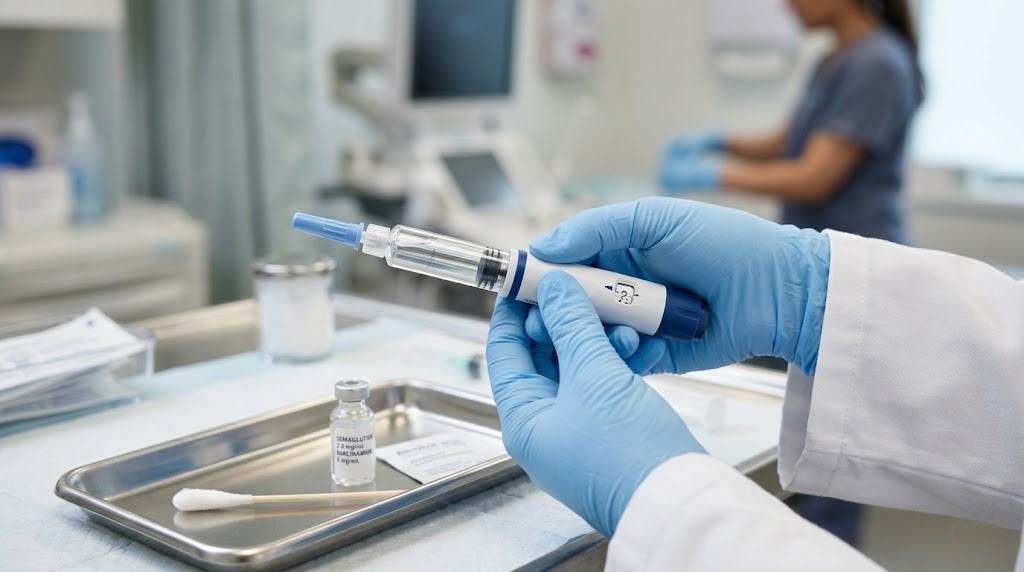
Your compounding pharmacy just offered you semaglutide with niacinamide. You stared at the label. You have questions. And honestly, the answers floating around the internet range from genuinely helpful to wildly misleading.
Here is the thing most sources will not tell you. Niacinamide is not some random addition to your compounded semaglutide injection. It is a form of vitamin B3 that converts directly into NAD+, one of the most critical coenzymes in your body. Every cell you have uses NAD+ for energy production, DNA repair, and metabolic function. When you combine that with a GLP-1 receptor agonist like semaglutide, the theoretical rationale starts to make sense. But theoretical rationale and clinical proof are two very different animals, and that distinction matters when you are injecting something into your body every week.
This guide breaks down everything researchers and patients need to know about the semaglutide-niacinamide compound. We will cover what niacinamide actually does at the cellular level, why compounding pharmacies add it, how the formulation compares to semaglutide with B12 and semaglutide with glycine, what the actual evidence says about its benefits, and how to decide whether this combination makes sense for your goals. SeekPeptides has analyzed the available research and clinical data so you do not have to sift through marketing claims to find the truth.
What niacinamide actually is and why it matters for metabolism
Niacinamide. Nicotinamide. Vitamin B3. Three names for the same molecule, and the confusion starts right there.
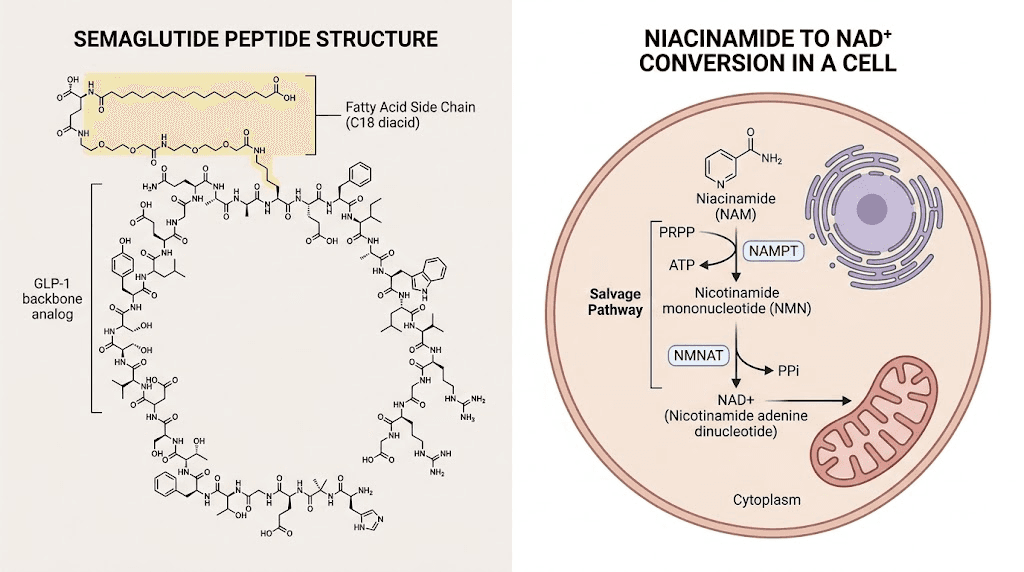
Niacinamide is the amide form of niacin. Unlike niacin itself, it does not cause flushing. That matters because flushing is the uncomfortable skin redness and warmth that makes many people avoid niacin supplements entirely. Niacinamide skips that problem while still delivering the core metabolic benefit: it converts into NAD+ through what scientists call the salvage pathway.
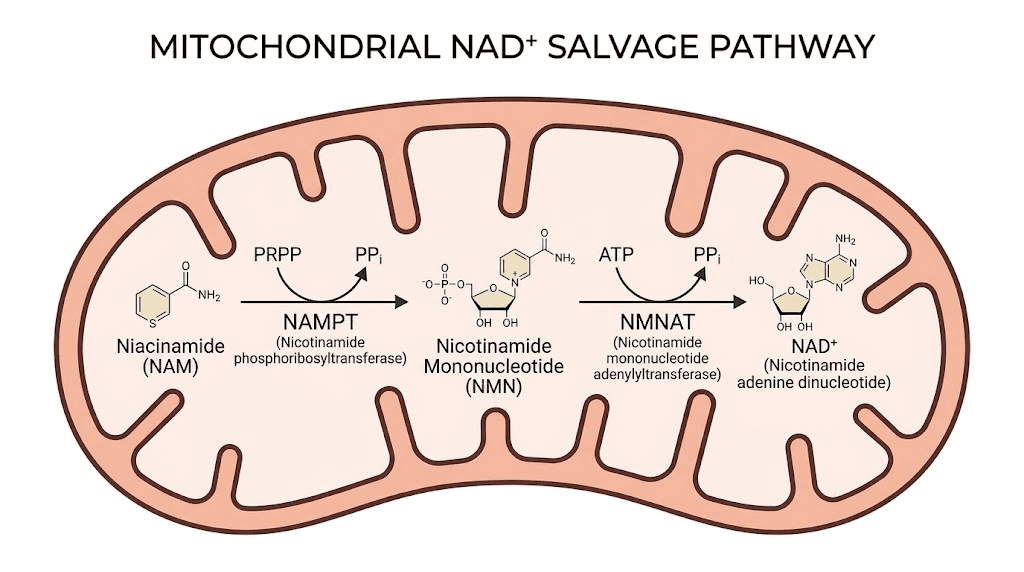
NAD+ is not some niche supplement buzzword. It is a coenzyme that exists in every living cell in your body. Without adequate NAD+ levels, your mitochondria cannot produce ATP efficiently. ATP is cellular energy. Less ATP means less energy for everything your body does, from breaking down fat to repairing damaged tissue to thinking clearly. Research published in Cell Metabolism demonstrated that NAD+ repletion through niacin supplementation improved muscle strength, performance, and mitochondrial biogenesis in human subjects. The enzyme that converts niacinamide into NAD+ is called NAMPT (nicotinamide phosphoribosyl transferase), and it serves as the rate-limiting step in this salvage pathway.
Why does this matter for someone taking semaglutide?
Because fatigue is one of the most commonly reported side effects of GLP-1 receptor agonists. When you dramatically reduce caloric intake through appetite suppression, your body can struggle to maintain normal energy levels. NAD+ depletion during caloric restriction has been documented in multiple studies, and some researchers theorize that supplementing a direct NAD+ precursor alongside the medication could help offset that energy deficit.
The key word there is "theorize." No large-scale clinical trial has specifically studied injectable niacinamide combined with semaglutide in humans. The biological rationale is sound. The cellular mechanisms check out. But the specific clinical evidence for this exact combination remains limited to the theoretical framework and individual clinical observations from prescribing physicians.
Niacinamide versus niacin: understanding the difference
This distinction trips up a lot of people. Niacin and niacinamide are both forms of vitamin B3. Both ultimately support NAD+ production. But their side effect profiles differ dramatically.
Niacin causes prostaglandin-mediated vasodilation. In plain language, it makes your skin flush red and hot. Some people experience intense itching. At high doses, niacin can affect liver enzymes and blood sugar levels. These effects make it a poor candidate for injection formulations where you want minimal additional side effects on top of semaglutide GI symptoms.
Niacinamide avoids the flushing problem entirely. It has an excellent safety profile even at oral doses up to 3 grams per day, according to research published in the International Journal of Dermatology. For injectable formulations, compounding pharmacies typically use much lower concentrations, around 2 mg per mL, which is well within safe parameters.
The bottom line: niacinamide provides the NAD+ precursor benefits without the uncomfortable flushing that niacin causes. That is specifically why compounding pharmacies chose this form for compounded semaglutide formulations.
The NAD+ connection to weight loss and cellular health
NAD+ does more than just power your mitochondria. Much more.
It activates sirtuins, a family of proteins that regulate cellular aging, inflammation, and fat metabolism. SIRT1, the most studied sirtuin, directly influences how your body processes and stores fat. When NAD+ levels are adequate, SIRT1 activity increases, promoting fatty acid oxidation and reducing fat storage. When NAD+ levels drop, which happens naturally with aging and caloric restriction, SIRT1 activity declines.
A study published in the Journal of Nutritional Biochemistry found that niacinamide supplementation reprogrammed adipose cellular metabolism and increased mitochondrial biogenesis in obese subjects. Translation: it helped fat cells burn energy more efficiently and created more mitochondria to handle the workload. That finding is particularly relevant for anyone using peptides for fat loss or GLP-1 medications for weight management.
NAD+ also plays a critical role in DNA repair through PARP enzymes. During weight loss, especially rapid weight loss from GLP-1 medications, cells undergo significant stress. Adequate NAD+ ensures your DNA repair mechanisms function properly during this metabolically demanding period.
Why compounding pharmacies add niacinamide to semaglutide
Let us be direct about something. There are two reasons compounding pharmacies add niacinamide to compounded semaglutide, and understanding both is important.
Reason one: potential clinical benefits
The clinical argument goes like this. Semaglutide causes significant appetite suppression, which leads to reduced caloric intake, which can deplete NAD+ levels, which reduces cellular energy, which contributes to GLP-1 fatigue. Adding niacinamide, a direct NAD+ precursor, could theoretically support energy production during this period of caloric restriction.
Additionally, niacinamide supports:
Energy metabolism through NAD+ dependent enzymatic reactions
Skin health during weight loss when skin elasticity is a concern
Anti-inflammatory pathways by suppressing pro-inflammatory cytokine release
Lipid metabolism through effects on hormone-sensitive lipase activity
Oxidative stress protection by regulating oxidative enzymes and acting as an antioxidant
Some prescribing physicians report that patients on semaglutide-niacinamide compounds experience less fatigue compared to semaglutide alone. These are clinical observations, not controlled trial data. But they are worth noting.
Reason two: regulatory differentiation
Here is the part most guides will not mention.
Compounding pharmacies operate under specific regulations. When brand-name medications are on the FDA drug shortage list, compounders can produce versions of those medications. But when the shortage resolves, as it has for semaglutide, the legal landscape shifts. Adding a clinically relevant ingredient like niacinamide creates a unique formulation that differs from the branded product. This gives compounding pharmacies a legal framework to continue offering the compound even when the branded version is available.
This does not mean the niacinamide is useless or purely a legal trick. The metabolic benefits are real. But transparency matters, and you deserve to know that regulatory considerations play a role in formulation decisions alongside clinical ones.
How the formulation works in practice
The most common semaglutide-niacinamide formulation available from compounding pharmacies like Wells Pharmacy Network uses a concentration of 2.5 mg semaglutide per mL combined with 2 mg niacinamide per mL. This is administered as a weekly subcutaneous injection, the same as standard semaglutide injections.
The niacinamide dose in these formulations is relatively modest. At 2 mg per injection, it falls far below the therapeutic oral doses of 500-3000 mg daily that have been studied for various conditions. Whether this injectable dose is sufficient to meaningfully impact NAD+ levels remains an open question. However, subcutaneous delivery bypasses first-pass metabolism in the liver, meaning the niacinamide reaches systemic circulation more directly than oral supplements would.
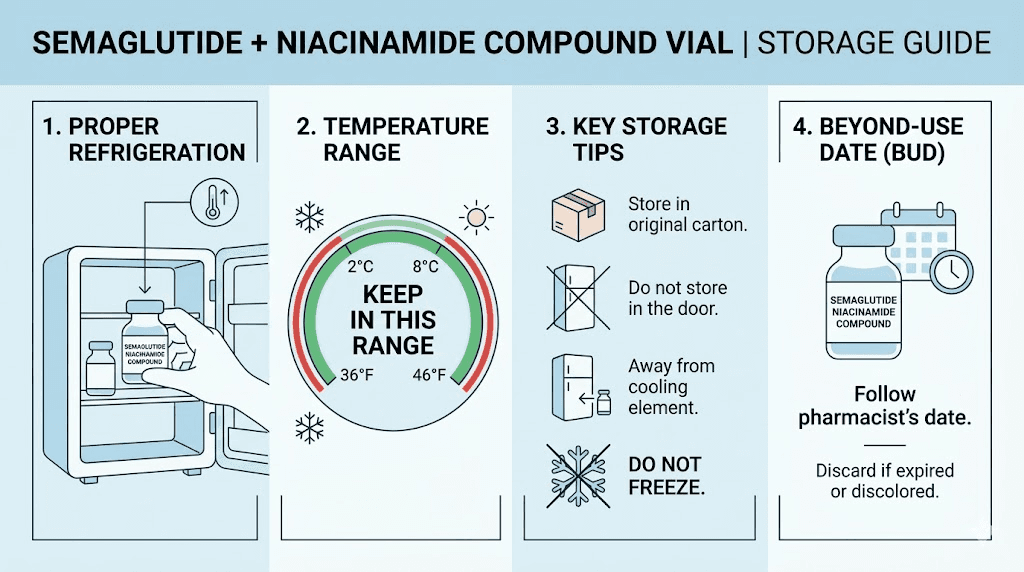
Storage requirements mirror standard compounded semaglutide storage: refrigerated at 2-8 degrees Celsius (36-46 degrees Fahrenheit), protected from light, and never frozen.
Semaglutide with niacinamide versus other compound additives
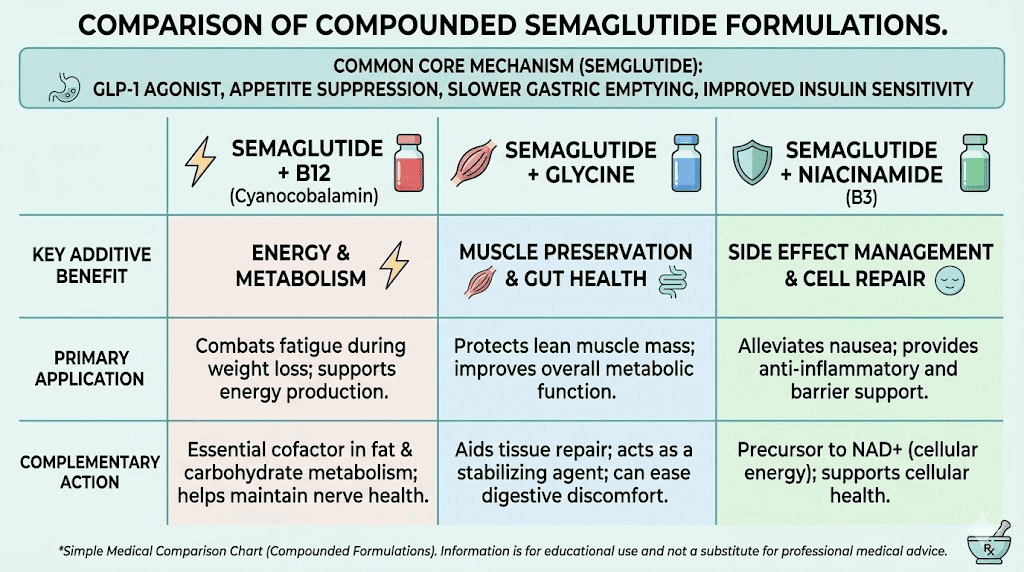
This is the question everyone actually wants answered. Is niacinamide better than B12? Better than glycine? Should you care which additive your compound contains?
Let us compare them honestly.
Semaglutide with niacinamide versus semaglutide with B12
Semaglutide with B12 (cyanocobalamin or methylcobalamin) is the most common compounded formulation. B12 has several advantages. The FDA has studied cyanocobalamin for subcutaneous administration, giving it a more established safety profile via injection. B12 deficiency is a documented concern with long-term GLP-1 use because these medications slow gastric emptying, which can reduce B12 absorption from food. And B12 has been specifically studied for its potential to reduce nausea associated with GLP-1 receptor agonists.
Niacinamide targets a different pathway entirely. While B12 supports nerve function, red blood cell formation, and energy metabolism through methylation pathways, niacinamide fuels NAD+ production, which supports mitochondrial energy production and cellular repair. They are not doing the same thing.
Factor | Semaglutide + niacinamide | Semaglutide + B12 |
|---|---|---|
Primary benefit | NAD+ production, cellular energy | Nerve health, red blood cell formation |
Fatigue support | Through mitochondrial function | Through methylation pathways |
Nausea reduction | Limited evidence | Some evidence of benefit |
Deficiency risk | Lower (B3 deficiency is rare) | Higher (GLP-1s may reduce B12 absorption) |
FDA studied for injection | No (only oral studies) | Yes (cyanocobalamin approved SC) |
Flushing risk | None (niacinamide form) | None |
Best for | Energy, skin, cellular repair | Preventing B12 deficiency, nausea |
For most people starting semaglutide with methylcobalamin, B12 is the safer default choice because it addresses a documented deficiency risk. But if you already supplement B12 orally or your blood work shows adequate B12 levels, niacinamide offers benefits that B12 does not, particularly around cellular energy and NAD+ support.
Semaglutide with niacinamide versus semaglutide with glycine
Semaglutide with glycine takes yet another approach. Glycine is a non-essential amino acid that serves dual purposes in the compound. First, it acts as a stabilizer for the semaglutide molecule itself, helping maintain peptide integrity in solution. Second, glycine supports collagen synthesis, detoxification, and central nervous system regulation.
From a practical standpoint, glycine may help with muscle preservation during rapid weight loss. It is also the simplest amino acid, making it generally well-tolerated with minimal risk of adverse reactions. Some clinicians prefer glycine compounds because the stabilizing effect on the peptide itself may improve the formulation reliability.
Factor | Semaglutide + niacinamide | Semaglutide + glycine |
|---|---|---|
Primary benefit | NAD+ production, cellular energy | Peptide stability, collagen support |
Muscle preservation | Indirect (cellular repair) | Direct (amino acid for synthesis) |
Formulation stability | Standard | Enhanced (buffering agent) |
Sleep support | No direct effect | Possible (glycine studied for sleep) |
Skin support | Yes (NAD+ and DNA repair) | Yes (collagen synthesis) |
Best for | Energy, metabolism, cellular health | Muscle preservation, sleep, stability |
The choice between these two often comes down to your primary concern. If fatigue and low energy are your biggest issues on semaglutide, niacinamide may be the better pick. If you are worried about muscle preservation and want the most stable formulation possible, glycine has an edge.
The triple compound: semaglutide with glycine and B12
Some compounding pharmacies offer semaglutide combined with both glycine and B12. This triple formulation aims to cover multiple bases: peptide stability from glycine, B12 deficiency prevention, and the nausea-reducing potential of B12. If you are considering the niacinamide option, ask your provider whether a formulation combining niacinamide with one of these other additives might be available. Some pharmacies are beginning to offer such combinations, though availability varies.
The science behind niacinamide benefits during weight loss
Let us get specific about what the research actually shows. Not what marketing materials claim. Not what supplement companies promise. What the peer-reviewed science demonstrates.
Energy production and mitochondrial function
A study published in the Journal of Nutritional Biochemistry examined niacinamide supplementation in obese subjects and found that it reprogrammed adipose cellular metabolism and increased mitochondrial biogenesis. More mitochondria means more capacity for ATP production. More ATP means more cellular energy. This is particularly relevant during the early weeks of semaglutide treatment when your body is adjusting to dramatically reduced caloric intake.
The mechanism works through the salvage pathway. Niacinamide enters the cell, NAMPT converts it to NMN (nicotinamide mononucleotide), and NMN is then converted to NAD+. This NAD+ feeds directly into the electron transport chain in your mitochondria, supporting oxidative phosphorylation, the primary way your cells produce energy.
What makes this relevant to semaglutide users specifically? When you eat less, your body shifts metabolic pathways. Glycolysis decreases. Fatty acid oxidation increases. Both of these processes depend heavily on NAD+ availability. If NAD+ is depleted, which caloric restriction can cause, the efficiency of these metabolic transitions suffers. That may partially explain why some people feel exhausted during the first few weeks on semaglutide.
Skin health during rapid weight loss
Rapid weight loss creates real challenges for skin. Elasticity decreases. Collagen turnover may not keep pace with fat loss. Some people experience hair thinning or loss. These are well-documented side effects of significant caloric restriction regardless of how that restriction is achieved.
Niacinamide has been extensively studied for skin benefits. Research in the International Journal of Molecular Sciences found that niacinamide reduces inflammation by suppressing pro-inflammatory cytokines, supports the skin barrier function, increases ceramide production, and improves skin hydration. For someone losing 15-20% of their body weight on semaglutide, these skin-supportive properties are more than cosmetic. They represent genuine cellular protection during a period of significant physical change.
Whether the injectable dose of 2 mg per injection is sufficient to produce meaningful skin benefits remains uncertain. Topical niacinamide studies typically use 2-5% concentrations applied directly to skin. Oral studies use 500-1500 mg daily. The 2 mg injectable dose is orders of magnitude lower than oral therapeutic doses, though subcutaneous bioavailability is higher than oral bioavailability.
Anti-inflammatory effects
Chronic low-grade inflammation is both a cause and consequence of obesity. When you start losing weight on semaglutide, inflammatory markers typically improve. But the weight loss process itself can temporarily increase certain inflammatory responses, particularly in adipose tissue as fat cells shrink and release stored inflammatory mediators.
Niacinamide has demonstrated anti-inflammatory properties across multiple studies. It inhibits the release of TNF-alpha, IL-6, and other pro-inflammatory cytokines. In the context of active weight loss, this anti-inflammatory support could theoretically help smooth the metabolic transition. The key word remains "theoretically" since no study has specifically measured inflammatory markers in patients receiving injectable niacinamide alongside semaglutide.
Lipid metabolism support
Semaglutide itself improves lipid profiles. Clinical trials showed reductions in triglycerides, LDL cholesterol, and increases in HDL cholesterol among patients taking semaglutide for weight management. Niacinamide, through its effects on NAD+ and SIRT1 activation, may provide additional lipid metabolism support by influencing hormone-sensitive lipase activity and fatty acid oxidation rates.
One important caveat: high-dose niacin (not niacinamide) has been used pharmaceutically to treat dyslipidemia. But the doses involved are 1000-3000 mg daily, far exceeding the 2 mg in compounded semaglutide injections. Extrapolating lipid benefits from high-dose niacin therapy to low-dose injectable niacinamide is a stretch that the current evidence does not support.
Dosage and administration of semaglutide with niacinamide
Understanding the dosage is straightforward, but there are details that matter.
Standard formulation strengths
The most common semaglutide-niacinamide compound from pharmacies like Wells Pharmacy Network contains:
Semaglutide: 2.5 mg per mL
Niacinamide: 2 mg per mL
This is administered as a weekly subcutaneous injection. The semaglutide component follows the same dose escalation schedule as standard compounded semaglutide:
Weeks 1-4: 0.25 mg semaglutide (0.1 mL)
Weeks 5-8: 0.5 mg semaglutide (0.2 mL)
Weeks 9-12: 1.0 mg semaglutide (0.4 mL)
Weeks 13-16: 1.7 mg semaglutide (0.68 mL)
Week 17+: 2.4 mg semaglutide (0.96 mL)
The niacinamide dose scales proportionally with the injection volume. At the maintenance dose of 0.96 mL, you receive approximately 1.92 mg of niacinamide per injection. At the starting dose of 0.1 mL, you receive only 0.2 mg. This means the niacinamide content is extremely low during the dose titration phase and only reaches its maximum at the highest semaglutide dose.
If you need help calculating your specific dose, the semaglutide dosage calculator on SeekPeptides can help you determine exact volumes based on your vial concentration.
How to administer the injection
Administration follows the same protocol as any compounded semaglutide injection:
Remove the vial from refrigeration and allow it to reach room temperature for 15-30 minutes
Clean the injection site with an alcohol swab
Draw the prescribed volume using an insulin syringe
Inject subcutaneously into the abdomen, thigh, or upper arm
Rotate injection sites weekly to minimize injection site reactions
The best injection sites for semaglutide remain the same regardless of which additive your compound contains. Most providers recommend the abdomen as the primary site, with thigh and upper arm as alternatives.
When to take your injection
Timing follows standard semaglutide protocols. Pick a consistent day each week. The best time of day to take semaglutide is whenever you can be most consistent, though many providers recommend morning injections to allow any GI side effects to occur during waking hours when you can manage them more easily.
There is no specific timing consideration for the niacinamide component. Because the dose is relatively small and niacinamide does not have stimulatory effects at this concentration, evening administration is equally acceptable if that fits your schedule better.
Side effects: what to expect from the combination
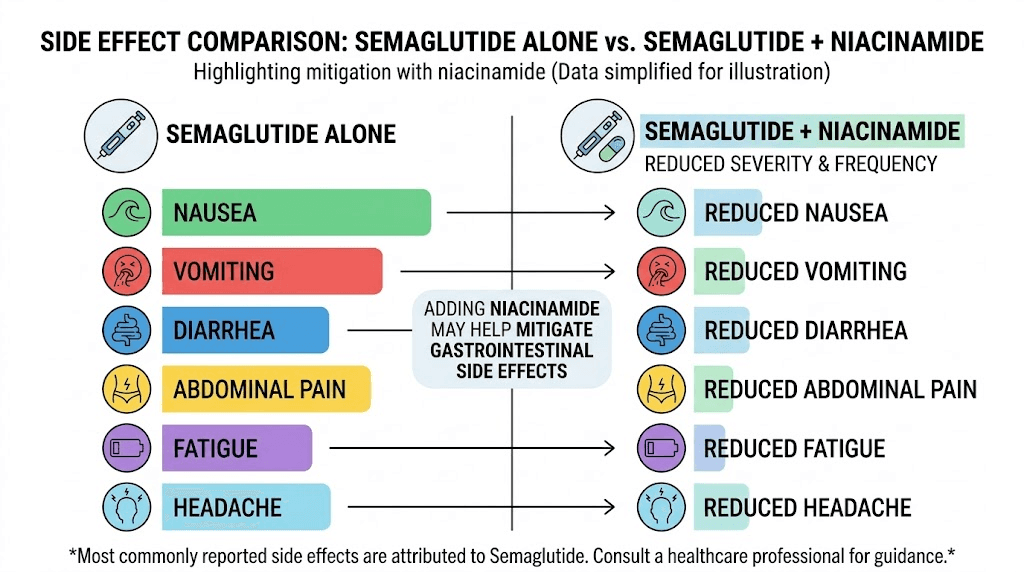
The addition of niacinamide to semaglutide does not dramatically change the side effect profile. But there are some nuances worth understanding.
Semaglutide side effects remain the primary concern
The vast majority of side effects you experience will come from the semaglutide component, not the niacinamide. These include:
Nausea (the most common, especially during the first weeks)
Abdominal pain
Headache
These side effects typically improve as your body adjusts to the medication during the dose escalation phase. If you are experiencing persistent nausea, there are foods to avoid on semaglutide that can help minimize GI discomfort.
Niacinamide-specific side effects
At the low doses used in compounded formulations (2 mg per mL), niacinamide side effects are extremely unlikely. However, at higher doses, niacinamide can cause:
Mild GI upset (which could theoretically compound semaglutide GI effects)
Easy bruising or increased bleeding from wounds
Liver enzyme elevations at very high doses (typically above 3 grams daily, far exceeding injectable doses)
The 2 mg per injection dose is so low relative to studied therapeutic ranges that these side effects are essentially irrelevant for the compounded formulation. You would receive more niacinamide from eating a single chicken breast (about 10 mg) than from your weekly injection.
Potential interactions to discuss with your provider
Niacinamide has a minimal interaction profile, but a few situations warrant attention:
Diabetes medications: Niacinamide may influence blood sugar levels. If you take metformin or other diabetes medications alongside semaglutide, mention the niacinamide component to your provider
Blood thinners: Niacinamide may slightly increase bleeding risk at higher doses
Cholesterol medications: Niacin (not niacinamide) interacts with statins. While niacinamide is different, disclose all forms of B3 supplementation to your prescriber
According to Drugs.com, there are no known significant drug interactions between niacinamide and semaglutide at standard doses. But always disclose your complete supplement and medication list to your prescribing physician.
Who should consider semaglutide with niacinamide
Not everyone needs niacinamide in their compound. Here is a practical framework for deciding.
You might benefit from the niacinamide compound if:
Fatigue is your primary side effect. If you are experiencing significant energy crashes on semaglutide and basic interventions like optimizing your diet, improving sleep, and staying hydrated have not helped, the NAD+ support from niacinamide could provide a modest boost. Some clinicians specifically recommend niacinamide compounds for patients who report persistent fatigue despite adequate caloric intake.
Your B12 levels are already adequate. If blood work shows healthy B12 levels and you already supplement B12 orally, choosing niacinamide over B12 as your compound additive avoids redundancy. There is no need for injectable B12 when your levels are already optimal.
Skin elasticity concerns are significant. If you are losing a large amount of weight and worried about skin health during the process, niacinamide offers skin-specific benefits that B12 and glycine do not. The anti-inflammatory and barrier-supporting properties of niacinamide are well-documented in dermatological research.
You are interested in cellular health and longevity. If your goals extend beyond weight loss into overall metabolic optimization and cellular health, the NAD+ precursor benefits of niacinamide align well with that broader perspective. NAD+ research is one of the most active areas in longevity science.
You probably do not need the niacinamide compound if:
You have low B12 levels. If blood work shows B12 deficiency or borderline levels, the B12 compound is the more clinically justified choice. B12 deficiency can cause neurological symptoms that are far more concerning than the theoretical benefits niacinamide offers.
Cost is a primary concern. If you are choosing between different compounds purely on cost, the additive choice matters less than consistent semaglutide dosing. Any compounded semaglutide formulation will deliver the primary weight loss benefits. The additive provides incremental, not transformative, additional value.
You are not experiencing fatigue. If semaglutide is working well for you with tolerable side effects, there may be no reason to specifically seek out the niacinamide formulation. "If it is not broken, do not fix it" applies here.
Storage, handling, and reconstitution
Proper storage is critical for maintaining both the semaglutide peptide and the niacinamide in the compound.
Storage requirements
Store the vial refrigerated at 2-8 degrees Celsius (36-46 degrees Fahrenheit). This is the standard recommendation for all compounded semaglutide regardless of the additive.
Do not freeze. Freezing can damage the semaglutide peptide structure and compromise the formulation. If your vial accidentally freezes, do not use it. Contact your pharmacy for a replacement.
Protect from light. Both semaglutide and niacinamide can degrade with prolonged light exposure. Keep the vial in its original packaging when not in use.
If you are wondering what happens if semaglutide gets warm, brief exposure to room temperature (up to 30 degrees Celsius) for preparation and injection is acceptable. Extended exposure above refrigeration temperatures degrades the peptide over time.
Shelf life
How long semaglutide is good for depends on your specific pharmacy and their formulation. Most compounding pharmacies assign a beyond-use date of 28-45 days when refrigerated. Check the label on your specific vial. The niacinamide component does not significantly alter the stability timeline of the compound. If you need guidance on whether expired semaglutide is still usable, the answer is generally no, as both potency and sterility cannot be guaranteed past the assigned date.
Reconstitution considerations
Most semaglutide-niacinamide compounds come pre-mixed from the pharmacy in ready-to-inject liquid form. If your vial requires reconstitution, follow your pharmacy instructions exactly. The niacinamide is typically already incorporated into the formulation, so no additional mixing steps are needed.
For standard reconstitution guidance, the peptide reconstitution calculator can help determine proper dilution volumes.
How niacinamide compares to tirzepatide-niacinamide compounds
If you are researching this topic, you may also be considering tirzepatide with niacinamide. The comparison is relevant because many patients switch between these two GLP-1 medications.
Key differences between the two compounds
Semaglutide versus tirzepatide is a broader topic covered in depth elsewhere, but when it comes to the niacinamide additive specifically:
The niacinamide serves the same purpose in both compounds. It provides NAD+ precursor support regardless of which GLP-1 medication carries it. The concentration is similar, typically 2 mg per mL. The storage and handling requirements are identical.
Where the compounds differ is in the primary medication. Tirzepatide is a dual GIP/GLP-1 receptor agonist, while semaglutide targets only the GLP-1 receptor. This means the side effect profiles differ, the dosing schedules differ, and the weight loss outcomes differ. But the niacinamide component functions identically in both.
Empower Pharmacy offers tirzepatide-niacinamide in concentrations of 8 mg/mL or 17 mg/mL tirzepatide combined with 2 mg/mL niacinamide. The higher tirzepatide concentrations reflect the different dosing requirements of that medication compared to semaglutide.
Switching between compounds
If you are considering switching from tirzepatide to semaglutide or vice versa, the niacinamide additive does not complicate the transition. Your provider will adjust the primary medication dose according to standard conversion protocols. The niacinamide simply comes along for the ride at whatever concentration the new compound provides.
For detailed conversion guidance, check the semaglutide to tirzepatide conversion chart.
The FDA perspective and safety considerations
Transparency about regulatory status matters. Here is where things stand.
Compounded medications are not FDA-approved
This is a critical distinction that every patient and researcher should understand. The semaglutide-niacinamide compound has not been reviewed, approved, or evaluated by the FDA for safety or efficacy. This applies to all compounded formulations, not just the niacinamide version.
FDA-approved semaglutide products (Ozempic, Wegovy, Rybelsus) do not contain niacinamide or any other additive. They contain semaglutide as the sole active ingredient in a proprietary formulation that underwent rigorous clinical trials.
This does not mean compounded semaglutide is unsafe. Compounding pharmacies are regulated entities that must follow current Good Manufacturing Practices (cGMP) or USP 797 standards. But the specific combination of semaglutide and niacinamide has not undergone the same level of safety and efficacy testing as the branded products.
The FDA has raised concerns about compounded semaglutide
The FDA has issued warnings about potential dosing errors with compounded semaglutide products generally. Some patients have been hospitalized after accidental overdoses when using vials that require self-measurement. This concern applies to all compounded semaglutide formulations, including those with niacinamide.
To minimize this risk:
Use a reputable 503A or 503B compounding pharmacy
Double-check your dose calculation before each injection
Use the semaglutide dosage calculator to verify volumes
Ask your pharmacist to explain the dosing if anything is unclear
Never share your vial with another person
Injectable niacinamide has limited safety data
While niacinamide has been extensively studied as an oral supplement, the FDA has only evaluated it for oral administration. Subcutaneous injectable niacinamide does not have the same body of safety literature. The doses used in compounded formulations are very low (2 mg per injection), which provides some reassurance. But this gap in the evidence base is worth acknowledging.
Practical protocol for semaglutide with niacinamide
If you and your provider have decided the niacinamide compound is appropriate, here is a practical protocol framework.
Protocol: standard weight management with niacinamide support
Goal: Weight loss with enhanced cellular energy support
Formulation: Semaglutide 2.5 mg/mL + Niacinamide 2 mg/mL
Dose escalation schedule:
Weeks 1-4: 0.25 mg semaglutide (0.1 mL) weekly
Weeks 5-8: 0.5 mg semaglutide (0.2 mL) weekly
Weeks 9-12: 1.0 mg semaglutide (0.4 mL) weekly
Weeks 13-16: 1.7 mg semaglutide (0.68 mL) weekly
Week 17+: 2.4 mg semaglutide (0.96 mL) weekly, or as tolerated
Supporting measures:
Protein intake: 1.2-1.6 grams per kg body weight daily (to preserve muscle)
Hydration: minimum 2-3 liters water daily
Consider additional oral niacinamide (250-500 mg daily) if fatigue persists, with provider approval
Monitor energy levels, documenting changes weekly
Blood work at baseline and every 3 months: metabolic panel, B vitamins, liver enzymes
Expected timeline:
Weeks 1-4: Minimal weight loss, adjustment period, possible nausea
Weeks 5-8: Weight loss begins to accelerate, appetite suppression strengthens
Weeks 9-16: Steady weight loss of 1-2% body weight per month
Months 4-6: Continued progress toward goal weight
Months 6-12+: Maintenance phase at optimal dose
Protocol: enhanced energy focus
Goal: Combat fatigue while maintaining weight loss momentum
Same dose escalation as above, with these additional measures:
Oral niacinamide supplement: 500 mg twice daily (with meals) to boost NAD+ beyond injectable dose
CoQ10 supplementation: 100-200 mg daily (supports mitochondrial electron transport chain)
Magnesium glycinate: 200-400 mg at bedtime (supports energy production and sleep)
B-complex vitamin: daily, to support all energy metabolism pathways
Track energy levels on a 1-10 scale daily for the first 8 weeks
This enhanced protocol recognizes that the 2 mg injectable niacinamide dose alone may not be sufficient to meaningfully impact NAD+ levels. Supplementing with oral niacinamide provides a more therapeutic dose while the injectable component offers what it can.
What to monitor during treatment
Whether you are on the standard or enhanced protocol, monitoring ensures safety and allows dose adjustments:
Weight: Weekly, same time and conditions
Energy levels: Daily subjective rating
GI symptoms: Daily during titration, weekly at maintenance
Blood work (every 3 months): Complete metabolic panel, fasting glucose, HbA1c, liver enzymes, lipid panel, B12, folate
Injection sites: Monitor for redness, lumps, or persistent reactions
If you notice persistent fatigue despite the niacinamide compound, discuss with your provider whether adjusting your overall approach might be warranted. Fatigue can stem from inadequate protein intake, dehydration, poor sleep, or other factors unrelated to NAD+ levels.
Real-world considerations and what providers say
Theory is one thing. Practice is another.
What prescribing physicians report
Clinicians who prescribe semaglutide-niacinamide compounds report mixed but generally positive observations. Some note that patients on niacinamide formulations report slightly better energy levels compared to those on plain semaglutide. Others see no meaningful difference and attribute any improvement to placebo effect or concurrent lifestyle changes.
No physician we found has published controlled comparison data between semaglutide-niacinamide and semaglutide-B12 or semaglutide alone. The clinical observations, while valuable, are anecdotal by nature.
What patients commonly ask
"Will the niacinamide help me lose more weight?"
Probably not directly. The weight loss comes from semaglutide appetite suppression, not from the niacinamide. Niacinamide may support energy levels during weight loss, which could indirectly help you stay more active. But it is not a weight loss ingredient on its own.
"Can I just take niacinamide separately as a supplement?"
Yes. Oral niacinamide supplements are widely available, inexpensive, and well-studied. If you are already on a compounded semaglutide formulation with B12 or glycine and do not want to switch, adding 250-500 mg of oral niacinamide daily would provide a significantly higher dose than the injectable compound delivers. Discuss this with your provider first.
"Is this the same as NAD+ injections?"
No. NAD+ injections deliver the coenzyme directly. Niacinamide is a precursor that your body converts into NAD+. Direct NAD+ injections typically contain much higher doses (100-500 mg per session) and are administered intravenously rather than subcutaneously. The niacinamide in compounded semaglutide is a much more modest approach to supporting NAD+ pathways.
How to get semaglutide with niacinamide
If you have decided this compound is right for you, here is the practical path to obtaining it.
Step one: get a prescription
Semaglutide is a prescription medication regardless of the formulation. You need a valid prescription from a licensed healthcare provider. Many telehealth platforms and weight loss clinics now prescribe compounded semaglutide. When requesting the niacinamide version specifically, be direct with your provider about why you prefer it over B12 or glycine options.
Step two: find a compounding pharmacy
Not all compounding pharmacies offer the niacinamide formulation. Wells Pharmacy Network lists semaglutide-niacinamide on their product catalog. Other 503A and 503B pharmacies may offer similar formulations. Ask your provider which pharmacies they work with and whether the niacinamide version is available.
Step three: verify the pharmacy
Use these verification steps:
Confirm the pharmacy holds current state licensing
Check for FDA 483 inspection reports or warning letters
Verify 503A or 503B registration status
Ask about their quality testing protocols for compounded medications
Confirm cold chain shipping for temperature-sensitive medications
Step four: understand your dosing
Before your first injection, ensure you understand:
The exact volume to draw for each dose during titration
How to read the syringe markings correctly
The complete dose escalation schedule
When and how to increase your dose
What to do if you accidentally inject into muscle instead of subcutaneous tissue
The semaglutide dosage calculator at SeekPeptides provides exact volumes based on your vial concentration and target dose. Bookmark it. Use it every time until you are confident in your measurements.
Optimizing your results on semaglutide with niacinamide
The compound is only one piece of the puzzle. Maximizing results requires attention to several other factors.
Nutrition on semaglutide
Whether your compound contains niacinamide, B12, or glycine, the dietary principles remain the same. Focus on:
Protein first: 1.2-1.6 g/kg body weight daily to preserve muscle mass during weight loss
Fiber-rich foods: 25-35 grams daily for digestive health and satiety
Hydration: Minimum 2-3 liters daily, more if you are active
Micronutrient density: Prioritize nutrient-dense foods since you are eating less overall
For a comprehensive food guide, check the list of foods to eat while on semaglutide and review the semaglutide diet plan for structured meal ideas.
Exercise and activity
Physical activity amplifies semaglutide results regardless of your compound additive. Current recommendations suggest:
150-300 minutes of moderate-intensity aerobic exercise weekly
Resistance training at least 2-3 times per week
Daily movement beyond structured exercise (walking, stairs, active hobbies)
Resistance training is particularly important on GLP-1 medications because up to 25-40% of weight lost can come from lean mass rather than fat. Building and maintaining muscle through strength training shifts that ratio toward fat loss, which improves both body composition and metabolic rate.
Sleep and recovery
Poor sleep undermines both weight loss and NAD+ status. Research shows that sleep deprivation reduces NAD+ levels independently of caloric intake, which would counteract any benefit from the niacinamide in your compound. Aim for 7-9 hours of quality sleep per night. If semaglutide is affecting your sleep, discuss timing adjustments with your provider.
Tracking your progress
Beyond the scale, track metrics that reveal whether the niacinamide is providing any subjective benefit:
Energy levels: Rate 1-10 daily, look for trends over weeks
Skin quality: Photograph monthly under consistent lighting
Sleep quality: Track duration and how rested you feel
Exercise performance: Log weights, reps, cardio duration
GI symptoms: Severity and frequency
After 8-12 weeks, review these metrics with your provider. If you see improvement in energy and skin metrics, the niacinamide may be contributing. If not, switching to a B12 or glycine formulation at your next vial would be reasonable.
For researchers serious about optimizing their peptide protocols, SeekPeptides offers evidence-based guides, comprehensive dosing tools, and a community of experienced researchers who have navigated these exact decisions. The peptide calculator suite covers everything from semaglutide dosing to reconstitution volumes, making it easier to get exact measurements for any compound formulation.
Frequently asked questions
Is semaglutide with niacinamide better than semaglutide alone?
There is no clinical trial comparing the two directly. The niacinamide provides theoretical benefits through NAD+ support, cellular energy, and anti-inflammatory properties. Whether these translate to meaningful clinical improvements at the low injectable doses used is unclear. If fatigue is a concern, the niacinamide compound may offer modest benefit. If you tolerate standard semaglutide well, the additive may not make a noticeable difference.
Can I take niacinamide supplements separately while on compounded semaglutide?
Yes. Oral niacinamide supplements (250-500 mg daily) are safe and well-tolerated for most people. They provide a much higher dose than the injectable compound. Discuss with your provider before adding supplements to ensure there are no interactions with your other medications.
Does the niacinamide in the compound help with semaglutide nausea?
Niacinamide is not primarily used for nausea reduction. B12 has more evidence for potentially reducing GLP-1 associated nausea. The niacinamide targets energy metabolism and cellular health rather than GI side effects. If nausea is your primary concern, the B12 formulation may be more appropriate.
How long does it take to notice benefits from the niacinamide component?
If the niacinamide provides any subjective benefit, most patients would notice energy improvements within 4-8 weeks, which coincides with reaching higher semaglutide doses and the niacinamide dose scaling up proportionally. However, separating niacinamide effects from general adaptation to semaglutide is virtually impossible without a controlled comparison.
Is the niacinamide dose in compounded semaglutide enough to matter?
This is the honest question most guides avoid. At 2 mg per injection once weekly, the total niacinamide dose is approximately 2 mg per week. Oral therapeutic doses range from 500 to 3000 mg daily. The injectable dose is dramatically lower. The counterargument is that subcutaneous delivery is more bioavailable than oral delivery, but even accounting for that difference, the dose is modest by any standard.
Will my insurance cover semaglutide with niacinamide?
Most insurance plans do not cover compounded medications, including semaglutide-niacinamide. Coverage typically applies only to FDA-approved brand products (Ozempic, Wegovy). Out-of-pocket costs for compounded semaglutide vary by pharmacy and formulation, generally ranging from $150-400 per month depending on dose and pharmacy.
Can I switch from semaglutide with B12 to semaglutide with niacinamide?
Yes. Switching between additive types does not require a special transition period. Continue your current semaglutide dose and simply use the niacinamide formulation starting with your next vial. No dose adjustment is needed for the semaglutide component when switching additives.
Does niacinamide affect blood sugar levels differently than B12 or glycine?
Niacinamide may have minor effects on insulin sensitivity and blood sugar regulation. If you have diabetes or prediabetes and use semaglutide for both weight management and blood sugar control, monitor your glucose levels closely during the first few weeks after switching to a niacinamide compound. Report any significant changes to your provider.
External resources
Nicotinamide: A Multifaceted Molecule in Skin Health and Beyond (PubMed Central)
Nicotinamide Reprograms Adipose Cellular Metabolism (ScienceDirect)
In case I do not see you, good afternoon, good evening, and good night. May your compounds stay stable, your energy stay consistent, and your protocols stay evidence-based.