Feb 11, 2026
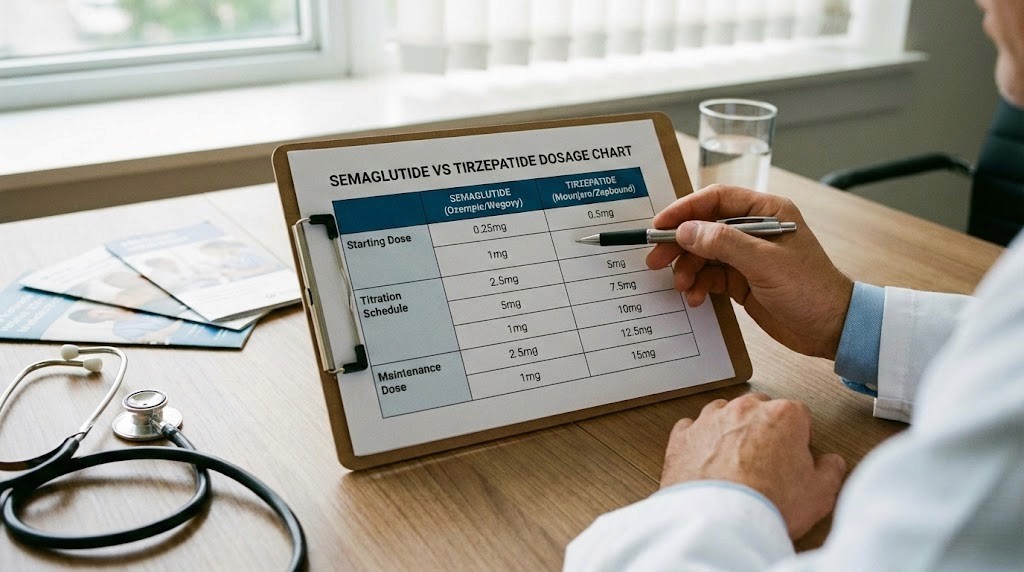
Semaglutide and tirzepatide look almost identical on paper. Both are injectable peptides. Both target weight loss. Both follow weekly dosing schedules that start low and climb higher over months of careful titration. In practice? The outcomes, the side effect profiles, the dose escalation timelines, and the mechanisms driving fat reduction could not be more different. One activates a single receptor pathway. The other hits two. And that distinction, which seems minor in a pharmacology textbook, creates a gap in real-world results that clinical trials have measured at seven or more percentage points of total body weight lost.
That matters.
It matters because choosing between these two peptides is not simply a matter of preference. It is a matter of understanding exactly how much to inject, when to increase, what side effects to expect at each dose tier, and how the two escalation schedules compare when mapped side by side. The standard dosage charts circulating online often present semaglutide and tirzepatide in isolation, as if they exist in separate universes. But most people researching these peptides want the direct comparison. They want to see the numbers next to each other. They want to know what happens when switching from one to the other, what the approximate conversion ratios look like, and how compounded versions change the math entirely. This guide delivers all of that. Every dose. Every timeline. Every conversion figure. Whether you are using brand-name formulations or compounded vials that require reconstitution, the charts ahead will serve as your complete reference for both peptides across every phase of treatment.
SeekPeptides members regularly ask how these two peptides stack up in dosing complexity, and the honest answer is that tirzepatide offers more dose tiers with wider spacing while semaglutide follows a tighter, more incremental escalation pattern. Both approaches have advantages. Both have trade-offs worth understanding before the first injection.
How semaglutide and tirzepatide actually work
Before diving into dosage charts, understanding the mechanism behind each peptide explains why their dose ranges differ so dramatically. Semaglutide is a GLP-1 receptor agonist. It mimics the glucagon-like peptide-1 hormone that your gut produces after eating. This single-receptor activation slows gastric emptying, reduces appetite signaling in the brain, improves insulin sensitivity, and creates a sustained feeling of fullness that makes caloric restriction feel almost effortless for many users.
Tirzepatide does all of that. And more.
As a dual GLP-1 and GIP receptor agonist, tirzepatide activates two incretin pathways simultaneously. The glucose-dependent insulinotropic polypeptide receptor adds a second layer of metabolic regulation that amplifies fat oxidation, improves lipid metabolism, and appears to enhance the weight loss effects beyond what GLP-1 activation alone can achieve. This dual mechanism is why tirzepatide doses start at 2.5 mg while semaglutide starts at 0.25 mg. The drugs are not interchangeable milligram for milligram. They operate on fundamentally different potency scales, and confusing those scales is one of the most dangerous mistakes a new user can make. If you are exploring the broader category of GLP-1 peptides and want to understand where these two fit within the class, that context matters for dosing decisions.
Why the dose numbers look so different
New users often panic when they see tirzepatide dosed at 15 mg and semaglutide maxing out at 2.4 mg. The numbers look wildly different. But this is not a potency comparison in the way most people think. Tirzepatide requires higher absolute milligram doses because its binding affinity and receptor activation profile differ from semaglutide. A 2.5 mg starting dose of tirzepatide is roughly equivalent in clinical effect to a 0.25 mg starting dose of semaglutide, not because one is weaker, but because the molecular pharmacology demands different quantities to achieve similar receptor occupancy.
Think of it like comparing milligrams of caffeine to milligrams of theobromine. Different molecules. Different potencies. Different scales. Comparing raw milligram numbers between semaglutide and tirzepatide without understanding this distinction leads to dangerous miscalculations, especially when users attempt to convert doses between the two peptides.
The half-life factor in weekly dosing
Both peptides share a convenient feature. They have long half-lives that permit once-weekly injection. Semaglutide has a half-life of approximately 7 days, achieved through its albumin-binding fatty acid chain that slows renal clearance. Tirzepatide has a similar half-life of roughly 5 days, though steady-state concentrations build over four to five weeks of consistent dosing. This means dose increases do not produce immediate full effects. The body needs time to reach new steady-state plasma levels at each tier, which is precisely why escalation schedules space increases four weeks apart at minimum. Rushing through dose tiers is a common mistake that the peptide dosage guide covers in detail, and it applies doubly to these two peptides where gastrointestinal side effects punish impatient titration.
Complete semaglutide dosage chart
The standard semaglutide escalation schedule was established through the STEP clinical trial program for obesity (using the 2.4 mg target dose marketed as Wegovy) and through earlier trials for type 2 diabetes management (using the 2.0 mg maximum dose marketed as Ozempic). Both formulations use the same molecule. The difference is the approved maximum dose and the indication on the label. For researchers and individuals using semaglutide for weight management, the full escalation schedule looks like this.
Brand-name semaglutide escalation (Wegovy schedule)
Phase | Weeks | Weekly dose | Purpose | Common side effects at this tier |
|---|---|---|---|---|
Initiation | 1-4 | 0.25 mg | Assess tolerance, minimal therapeutic effect | Mild nausea in ~20% of users |
Escalation 1 | 5-8 | 0.5 mg | Begin appetite suppression | Nausea increases, some constipation |
Escalation 2 | 9-12 | 1.0 mg | Significant appetite reduction | Nausea peaks for many users |
Escalation 3 | 13-16 | 1.7 mg | Enhanced weight loss effect | GI side effects often stabilize |
Maintenance | 17+ | 2.4 mg | Maximum therapeutic dose | Most side effects resolved by this phase |
The diabetes-specific schedule (Ozempic) follows the same initial steps but caps at 2.0 mg weekly. Some providers keep patients at 1.0 mg if glycemic control is achieved, never reaching the higher tiers. For semaglutide weight loss purposes, the 2.4 mg maintenance dose is where the major clinical trial results were measured, showing approximately 15% body weight reduction over 68 weeks in the STEP 1 trial.
Each four-week block matters. Do not rush it.
The reason for spending a full month at each dose level is that semaglutide takes approximately four to five weeks to reach steady-state blood concentrations at any given dose. Increasing before steady state means you never truly experience the full effect of the current dose, and you stack side effects from rapid escalation on top of the natural adjustment period. Many users who report severe nausea or vomiting were increasing doses every two weeks instead of every four, and the semaglutide side effects they experienced were largely preventable with proper pacing.
Semaglutide dosing for compounded vials
Compounded semaglutide adds a layer of complexity because you are working with concentration-based dosing rather than pre-filled pens. The most common compounded concentrations are 2.5 mg/mL and 5 mg/mL, though some pharmacies provide higher concentrations. Understanding your semaglutide 5 mg/mL dosage chart is critical because the volume you inject changes at every dose tier.
Target dose | 2.5 mg/mL vial (injection volume) | 5 mg/mL vial (injection volume) |
|---|---|---|
0.25 mg | 0.10 mL (10 units) | 0.05 mL (5 units) |
0.5 mg | 0.20 mL (20 units) | 0.10 mL (10 units) |
1.0 mg | 0.40 mL (40 units) | 0.20 mL (20 units) |
1.7 mg | 0.68 mL (68 units) | 0.34 mL (34 units) |
2.4 mg | 0.96 mL (96 units) | 0.48 mL (48 units) |
Getting these volumes right requires precision. An insulin syringe marked in units makes this easier, and our semaglutide syringe dosage conversion chart walks through the math step by step. If you are working with a semaglutide mixing chart for reconstitution, the amount of bacteriostatic water you add determines the final concentration, which then determines every injection volume going forward. One mistake at the mixing stage cascades through every dose.
For 10 mg vials specifically, the semaglutide mixing chart for 10 mg vials provides exact water volumes for common target concentrations. And if you need to understand how units translate to milligrams on your syringe, the semaglutide dosage in units conversion chart breaks down every calculation.
Special semaglutide formulations
Some compounding pharmacies add vitamin B12 to semaglutide preparations. The rationale is that GLP-1 agonists can reduce B12 absorption over time, and supplementing directly in the injection addresses this proactively. The semaglutide B12 dosage chart differs slightly because the added B12 changes the total solution volume, and the compounded semaglutide with B12 dosage chart accounts for these adjusted concentrations.
Whether you use a standard compounded formulation or a B12-enhanced version, the semaglutide dose itself follows the same escalation timeline. The B12 is supplementary. It does not change the peptide dose targets.
Complete tirzepatide dosage chart
Tirzepatide follows a different escalation rhythm. The dose tiers are wider apart in absolute milligrams, the optional intermediate steps add flexibility that semaglutide does not offer, and the maximum dose of 15 mg reflects the dual-receptor mechanism that requires higher absolute amounts to achieve full therapeutic effect. Clinical data from the SURMOUNT-1 trial showed up to 22.5% body weight reduction at the 15 mg maintenance dose, a figure that exceeded semaglutide trial results by a meaningful margin. Here is the complete tirzepatide escalation schedule.
Brand-name tirzepatide escalation (Mounjaro/Zepbound schedule)
Phase | Weeks | Weekly dose | Purpose | Common side effects at this tier |
|---|---|---|---|---|
Initiation | 1-4 | 2.5 mg | Assess tolerance, begin GIP/GLP-1 activation | Nausea in ~25% of users, typically mild |
Escalation 1 | 5-8 | 5.0 mg | First therapeutic dose level | Appetite suppression becomes noticeable |
Escalation 2 (optional) | 9-12 | 7.5 mg | Intermediate step, can skip to 10 mg | GI effects may increase temporarily |
Escalation 3 | 13-16 | 10.0 mg | Strong therapeutic response expected | Most users well-adjusted by this tier |
Escalation 4 (optional) | 17-20 | 12.5 mg | Intermediate high dose, can skip to 15 mg | Additional weight loss without proportional side effect increase |
Maintenance | 21+ | 15.0 mg | Maximum therapeutic dose | Side effects generally stabilized |
Notice the optional tiers at 7.5 mg and 12.5 mg. This is one of tirzepatide biggest advantages over semaglutide from a dosing flexibility standpoint. If a user responds well at 5 mg, they can step to 7.5 mg as a gentler increase rather than doubling to 10 mg. This granularity helps manage side effects, and the tirzepatide dosage for weight loss can be personalized more precisely than the fixed semaglutide schedule allows.
Some users find their optimal dose at 10 mg and never need to escalate further. Others require the full 15 mg to see continued progress. The key is patience. Each tier needs a minimum of four weeks before assessment, and the tirzepatide dose chart should be treated as a minimum timeline, not a race to the top.
Tirzepatide dosing for compounded vials
Compounded tirzepatide typically comes in 10 mg/mL or 20 mg/mL concentrations, though some pharmacies offer different formulations. The injection volumes differ significantly based on concentration, and errors here can mean doubling or halving your intended dose. Reference the tirzepatide reconstitution chart if you are preparing vials from lyophilized powder, and use the peptide reconstitution calculator to verify your math before drawing up any injection.
Target dose | 10 mg/mL vial (injection volume) | 20 mg/mL vial (injection volume) |
|---|---|---|
2.5 mg | 0.25 mL (25 units) | 0.125 mL (12.5 units) |
5.0 mg | 0.50 mL (50 units) | 0.25 mL (25 units) |
7.5 mg | 0.75 mL (75 units) | 0.375 mL (37.5 units) |
10.0 mg | 1.00 mL (100 units) | 0.50 mL (50 units) |
12.5 mg | 1.25 mL (125 units) | 0.625 mL (62.5 units) |
15.0 mg | 1.50 mL (150 units) | 0.75 mL (75 units) |
At higher doses with the 10 mg/mL concentration, injection volumes exceed 1 mL. That is a large subcutaneous injection. Many users prefer the tirzepatide 20 mg/mL dosing chart specifically because it halves the injection volume, making higher doses more comfortable. The tirzepatide dosage chart in mL provides these volumes for every common concentration, and the tirzepatide dosage chart in units converts everything to insulin syringe markings.
For specific compound pharmacy formulations, charts like the compound tirzepatide dosage chart and the tirzepatide compound dosing chart account for the variations in concentration that different pharmacies provide. The Empower tirzepatide dosage chart and Empower tirzepatide dosing chart are among the most commonly referenced, while the Olympia tirzepatide dosage chart covers another popular source.
Tirzepatide dose-specific charts
Because tirzepatide covers such a wide dose range, several specialized charts exist for specific dose tiers. The tirzepatide 10 mg dosage chart is popular because 10 mg represents the most common long-term maintenance dose for many users who do not need to escalate to 15 mg. The tirzepatide 30 mg dosage chart addresses reconstitution math for larger vials, where concentration calculations require extra attention.
Sublingual tirzepatide formulations are also emerging, and the tirzepatide sublingual dosage chart covers the adjusted dosing for this alternative administration route. Bioavailability differs between subcutaneous injection and sublingual delivery, so the numbers are not directly interchangeable. If you are comparing injectable versus oral peptides, the absorption differences significantly impact effective dosing.
Side-by-side dosage comparison
Here is what most people actually want. The two dosage schedules placed next to each other so you can see exactly how they compare week by week. This is the core tirzepatide vs semaglutide dosage chart that puts both escalation timelines in direct comparison.
Week | Semaglutide dose | Tirzepatide dose | Notes |
|---|---|---|---|
1-4 | 0.25 mg | 2.5 mg | Both at initiation dose, assessing tolerance |
5-8 | 0.5 mg | 5.0 mg | First therapeutic escalation for both |
9-12 | 1.0 mg | 7.5 mg (optional) or 10 mg | Tirzepatide offers intermediate step |
13-16 | 1.7 mg | 10.0 mg | Both approaching higher therapeutic range |
17-20 | 2.4 mg (maintenance) | 12.5 mg (optional) or 15 mg | Semaglutide reaches max; tirzepatide still has room |
21+ | 2.4 mg (continuing) | 15.0 mg (maintenance) | Both at maintenance. Tirzepatide took longer to reach max |
Several things stand out from this comparison.
First, semaglutide reaches its maximum dose faster. By week 17, you are at 2.4 mg and staying there. Tirzepatide can take up to week 21 to reach full maintenance, especially if you use the optional intermediate tiers. Second, tirzepatide has more granularity. Where semaglutide jumps from 1.0 mg to 1.7 mg with no option in between, tirzepatide offers 7.5 mg as an intermediate between 5 mg and 10 mg, and 12.5 mg as an intermediate between 10 mg and 15 mg. Third, most users do not need to reach maximum dose with either peptide. Many achieve satisfactory results at semaglutide 1.0 or 1.7 mg, or at tirzepatide 10 mg, and stay there indefinitely.
The semaglutide vs tirzepatide comparison page covers these differences in broader context beyond just dosing, including mechanism, cost considerations, and available formulations.
What the clinical trials showed at each dose
Raw dose numbers mean nothing without understanding the outcomes they produce. The SURPASS-2 trial directly compared tirzepatide to semaglutide 1.0 mg in patients with type 2 diabetes, providing the cleanest head-to-head data available.
Treatment arm | Average weight loss (kg) | Average weight loss (%) | HbA1c reduction |
|---|---|---|---|
Semaglutide 1.0 mg | -5.7 kg | -5.7% | -1.86% |
Tirzepatide 5 mg | -7.8 kg | -8.5% | -2.01% |
Tirzepatide 10 mg | -9.6 kg | Not reported separately | -2.24% |
Tirzepatide 15 mg | -12.4 kg | -13.1% | -2.30% |
Even the lowest tirzepatide dose (5 mg) outperformed semaglutide 1.0 mg for weight loss. At the highest tirzepatide dose, the gap widened to more than double. These results drove enormous interest in tirzepatide and reshaped how clinicians think about peptides for weight loss as a category.
For obesity-specific data, the STEP trials showed semaglutide 2.4 mg producing roughly 15% body weight loss over 68 weeks. The SURMOUNT-1 trial showed tirzepatide 15 mg producing up to 22.5% body weight loss over 72 weeks. Real-world data published in JAMA confirmed that tirzepatide was associated with significantly greater weight loss than semaglutide in clinical practice, not just in controlled trial settings. Understanding these outcomes helps contextualize why semaglutide weight loss results and tirzepatide weight loss results differ, and why dose selection within each peptide matters enormously.
Dose conversion between semaglutide and tirzepatide
There is no official FDA-approved conversion chart between semaglutide and tirzepatide. They are different molecules targeting partially overlapping but distinct receptor pathways. Any conversion is approximate, based on clinical effect matching rather than pharmacological equivalency. That said, practitioners and researchers have developed working conversion estimates based on trial outcomes and clinical experience.
Approximate dose conversion chart
Semaglutide dose | Approximate tirzepatide equivalent | Clinical basis |
|---|---|---|
0.25 mg | 2.5 mg | Both are starting/initiation doses |
0.5 mg | 5.0 mg | Both are first escalation therapeutic doses |
1.0 mg | 7.5-10 mg | SURPASS-2 compared semaglutide 1 mg to these tiers |
1.7 mg | 10-12.5 mg | Matched by clinical weight loss outcomes |
2.4 mg | 12.5-15 mg | Maximum doses of both, though tirzepatide produces greater weight loss even at equivalent conversion |
The semaglutide to tirzepatide conversion chart provides a more detailed breakdown of these equivalencies. For those moving in the opposite direction, the tirzepatide to semaglutide conversion chart adjusts the math accordingly.
Important caveat. These conversions are not exact. They never will be. The dual-receptor mechanism of tirzepatide means it is doing things that semaglutide simply cannot do at any dose, so a true one-to-one equivalency does not exist. The conversion chart provides a reasonable starting point for discussions with healthcare providers about switching, but individual response varies significantly.
Switching from semaglutide to tirzepatide
Switching between these peptides is increasingly common, usually driven by plateau on semaglutide or desire for greater weight loss. The switching from semaglutide to tirzepatide dosage chart outlines the recommended approach, which most practitioners structure as follows.
If you are currently on semaglutide 1.0 mg or less, start tirzepatide at 2.5 mg (the standard initiation dose) and follow the normal escalation schedule. There is no need to start higher even if you tolerated semaglutide well. The GIP receptor component is new to your system, and your body needs time to adjust to dual-receptor activation.
If you are on semaglutide 1.7 mg or 2.4 mg, some practitioners start tirzepatide at 5 mg rather than 2.5 mg, reasoning that the GLP-1 tolerance you have built will carry over partially. This is a clinical judgment call. The more conservative approach is always to start at 2.5 mg regardless of your semaglutide dose. Gastrointestinal side effects from the GIP pathway can surprise even experienced GLP-1 users.
The semaglutide to tirzepatide dose conversion chart provides week-by-week guidance for this transition, and the broader tirzepatide conversion chart covers additional scenarios including dose adjustments mid-switch.
Side effect comparison by dose tier
Side effects are not random. They follow predictable patterns that correlate with dose tier, escalation speed, and individual tolerance. Understanding what to expect at each dose level helps you distinguish normal adjustment from signals that something needs to change. The semaglutide side effect profile and tirzepatide side effect profile differ in important ways, even though both are GLP-1 agonists.
Gastrointestinal side effects by the numbers
Side effect | Semaglutide (% of users) | Tirzepatide (% of users) | Which is better tolerated |
|---|---|---|---|
Nausea | ~44% | ~25-33% | Tirzepatide (lower incidence) |
Vomiting | ~21% | ~15% | Tirzepatide (lower incidence) |
Diarrhea | ~30% | ~30% | Similar rates |
Constipation | ~29% | ~27% | Similar rates |
Injection site reactions | ~5% | ~3% | Similar, both low |
The most striking difference is nausea. Semaglutide produces nausea in nearly half of all users at some point during treatment, while tirzepatide ranges from one quarter to one third. This seems counterintuitive since tirzepatide activates an additional receptor, but the GIP component appears to have a moderating effect on GLP-1 induced nausea. Some researchers theorize that the dual-receptor activation produces a more balanced physiological response with less acute gastrointestinal disruption.
Vomiting follows a similar pattern. One in five semaglutide users experiences vomiting versus roughly one in seven tirzepatide users. For people who are sensitive to nausea or have a history of gastrointestinal issues, this difference can be the deciding factor between the two peptides. The peptides for gut health resource covers how GLP-1 agonists interact with the digestive system in broader context.
Managing side effects through dose titration
Most gastrointestinal side effects are dose-dependent and transient. They peak during the first one to two weeks after each dose increase and then gradually subside as the body adjusts. The single most effective strategy for minimizing side effects is simple. Slow down.
Do not skip dose tiers. Do not shorten the four-week intervals. Do not increase a dose because "you feel fine" after two weeks. The absence of side effects in week two does not mean you have reached steady state. It means you have not yet built to full concentration at the current dose. Rushing guarantees worse side effects at the next tier.
Additional management strategies include eating smaller meals more frequently, avoiding high-fat foods during the adjustment period, staying well hydrated, and timing injections to align with your schedule so that peak nausea windows (typically 24-48 hours post-injection) occur when you can rest. The peptide safety guide covers these strategies in more detail for both semaglutide and tirzepatide users.
For comprehensive guidance on the injection process itself, including site selection, angle, and depth for subcutaneous delivery, the how to inject semaglutide and how to inject tirzepatide guides provide step-by-step instructions with visual references. Proper subcutaneous injection technique reduces injection site reactions and ensures consistent absorption.
Reconstitution and preparation for compounded versions
Brand-name pens come pre-filled. You click, inject, done. Compounded vials require significantly more preparation and math. This section covers the reconstitution process for both peptides, because getting this step wrong renders every dosage chart meaningless.
Reconstituting semaglutide
Compounded semaglutide typically arrives as lyophilized (freeze-dried) powder in vials of 2 mg, 3 mg, 5 mg, or 10 mg. The amount of bacteriostatic water you add determines the final concentration, and the final concentration determines every injection volume for the life of that vial.
Common reconstitution examples for a 5 mg vial:
Add 1 mL bacteriostatic water = 5 mg/mL concentration
Add 2 mL bacteriostatic water = 2.5 mg/mL concentration
For a 10 mg vial, the semaglutide reconstitution chart for 10 mg shows:
Add 2 mL bacteriostatic water = 5 mg/mL concentration
Add 4 mL bacteriostatic water = 2.5 mg/mL concentration
The semaglutide 10 mg vial dosage chart then translates these concentrations into injection volumes at each dose tier. The compounded semaglutide dose chart consolidates all common vial sizes and concentrations into a single reference, and the semaglutide 5 mg dosage chart covers the most popular vial size in detail.
If you are working with a 5 mg vial reconstituted to 2 mL total volume, the semaglutide 5 mg/2 mL dosage chart provides exact injection volumes for every standard dose from 0.25 mg through 2.4 mg. The semaglutide dosage chart in mL and semaglutide dosing chart in units offer the same information formatted for different measurement preferences.
Reconstituting tirzepatide
Compounded tirzepatide vials are typically larger, reflecting the higher milligram doses required. Common vial sizes include 10 mg, 20 mg, 30 mg, and sometimes 60 mg. The reconstituting tirzepatide chart covers all standard vial sizes with recommended water volumes.
For a 30 mg vial:
Add 1.5 mL bacteriostatic water = 20 mg/mL concentration
Add 3 mL bacteriostatic water = 10 mg/mL concentration
Higher concentrations mean smaller injection volumes but require more precise measurement. Lower concentrations mean larger injection volumes but offer more room for minor measurement variations. The tirzepatide compound dosage chart helps you choose the right concentration based on your dose range and injection comfort preferences.
The tirzepatide reconstitution chart PDF provides a printable reference that many users keep near their preparation area. This is genuinely useful during the reconstitution process when you need quick reference without scrolling through a phone screen while handling vials and syringes.
Both peptides follow the same general reconstitution principles outlined in the how to reconstitute peptides guide and the peptide reconstitution guide. Swirl gently. Never shake. Let the powder dissolve completely. Store reconstituted vials in the refrigerator. Use within the recommended timeframe.
Storage after reconstitution
Reconstituted semaglutide and tirzepatide should be stored at 2-8 degrees Celsius (standard refrigerator temperature). Most compounded formulations maintain potency for 28-30 days after reconstitution when stored properly, though some pharmacies indicate shorter windows. Unreconstituted lyophilized powder can be stored at room temperature for shipping but should be refrigerated upon receipt.
The peptide storage guide and how to store peptides article cover temperature requirements, light exposure considerations, and signs of degradation for these and other peptides in detail. Proper storage is not optional. A degraded peptide delivers unpredictable doses regardless of how precisely you measure.
Syringe measurement and injection volume guide
The math between milligrams and syringe units trips up more people than any other aspect of compounded peptide dosing. An insulin syringe measures in "units" where 100 units equals 1 mL. This is universal regardless of what substance is in the syringe. The peptide concentration determines what each unit actually delivers in terms of milligrams.
Reading an insulin syringe correctly
A standard 1 mL insulin syringe has markings from 0 to 100 units. Each small line typically represents 1 unit (0.01 mL). Larger marks appear every 10 units (0.10 mL). When your dosage chart says "inject 25 units," you draw the plunger to the 25-unit line. Simple in theory. Problematic in practice when lighting is poor, the markings are tiny, and your hands are not perfectly steady.
The insulin syringe dosage guide includes photographs of correctly measured doses and common measurement errors. The chart for semaglutide syringe dosage specifically maps semaglutide milligram doses to syringe unit markings at the most common concentrations.
Calculating injection volume from concentration
The formula is straightforward:
Injection volume (mL) = Desired dose (mg) / Concentration (mg/mL)
For semaglutide at 5 mg/mL concentration, a 1.0 mg dose requires:
1.0 mg / 5 mg/mL = 0.20 mL = 20 units on an insulin syringe
For tirzepatide at 20 mg/mL concentration, a 10 mg dose requires:
10 mg / 20 mg/mL = 0.50 mL = 50 units on an insulin syringe
The semaglutide dosage calculator automates this math, and the general peptide calculator handles any peptide at any concentration. These tools eliminate arithmetic errors that can have real consequences. One decimal point mistake can mean injecting ten times your intended dose.
The Strive Pharmacy semaglutide dosage chart and similar pharmacy-specific references are popular because they pre-calculate volumes for the exact concentrations those pharmacies provide. If you know your source, look for a chart matched to their specific formulation.
Microdosing and low-dose approaches
Not everyone follows the standard escalation schedule. Microdosing tirzepatide and low-dose semaglutide protocols have gained traction among users who want moderate appetite suppression without the stronger effects and side effects of full therapeutic doses.
Microdosing tirzepatide
The microdosing tirzepatide chart outlines protocols using doses below the standard 2.5 mg starting point. Some users begin at 1 mg or even 0.5 mg and increase in very small increments. The rationale is that even sub-therapeutic doses activate the GLP-1 and GIP receptors enough to produce noticeable appetite modulation without the gastrointestinal side effects that trouble many users during standard initiation.
This approach requires highly precise measurement, which is challenging with compounded vials. At very low doses, small measurement errors represent a larger percentage of the intended dose. A user targeting 1 mg who accidentally draws 1.3 mg has a 30% overdose. At 10 mg, the same 0.3 mg error is only 3% over target.
Microdosing is not FDA-approved or clinically studied for either peptide. It represents an off-label approach based on individual experimentation. The tirzepatide dosing for weight loss conversion chart can help users who are working with non-standard dose amounts calculate their injection volumes accurately.
Low-dose semaglutide maintenance
Some users reach satisfactory weight loss at semaglutide 0.5 mg or 1.0 mg and choose to maintain at those levels rather than escalating further. This is a legitimate approach, especially for users who experience good appetite control at lower doses. The semaglutide dosage for weight loss does not have to mean 2.4 mg for everyone. Clinical response varies widely, and the optimal dose is the lowest dose that produces the desired effect with acceptable tolerability.
For users choosing to stay at lower doses, the peptide cost calculator can help quantify the savings of maintaining at 1.0 mg versus escalating to 2.4 mg, since lower doses mean fewer milligrams consumed per month and longer vial life.
How long each vial lasts at different doses
This practical question affects budgeting, ordering timing, and planning. Vial duration depends on three factors: the total milligrams in the vial, your weekly dose, and whether any peptide is wasted during reconstitution or measurement.
Semaglutide vial duration
Vial size | Weekly dose 0.25 mg | Weekly dose 0.5 mg | Weekly dose 1.0 mg | Weekly dose 2.4 mg |
|---|---|---|---|---|
2 mg vial | 8 weeks | 4 weeks | 2 weeks | Less than 1 week |
5 mg vial | 20 weeks | 10 weeks | 5 weeks | ~2 weeks |
10 mg vial | 40 weeks | 20 weeks | 10 weeks | ~4 weeks |
Note that reconstituted semaglutide typically has a 28-30 day use window. A 10 mg vial at 0.25 mg weekly would theoretically last 40 weeks, but you would need to use it within 4 weeks of reconstitution. This means significant waste unless you reconstitute only a portion. Some users solve this by using multiple smaller vials, and the semaglutide dosage planning guide helps calculate the most cost-effective vial size for each dose tier.
Tirzepatide vial duration
Vial size | Weekly dose 2.5 mg | Weekly dose 5 mg | Weekly dose 10 mg | Weekly dose 15 mg |
|---|---|---|---|---|
10 mg vial | 4 weeks | 2 weeks | 1 week | Less than 1 week |
20 mg vial | 8 weeks | 4 weeks | 2 weeks | ~1.3 weeks |
30 mg vial | 12 weeks | 6 weeks | 3 weeks | 2 weeks |
60 mg vial | 24 weeks | 12 weeks | 6 weeks | 4 weeks |
The 60 mg vial at higher doses fits neatly within the 28-30 day reconstituted shelf life, making it the most practical option for users on 10 mg or 15 mg maintenance doses. Smaller vials work well during the initiation and early escalation phases when weekly doses are lower and the vial will last within the use window.
Choosing between semaglutide and tirzepatide
This is the decision everyone is trying to make. Neither peptide is universally better. The right choice depends on individual factors that vary from person to person. Here is a framework for thinking through the decision, based on the dosage and outcome data above.
Choose semaglutide when
Semaglutide is often the better starting point for users who are new to GLP-1 agonists, have concerns about side effects, prefer a simpler dose escalation schedule, or need a peptide with longer real-world track record data. The five-tier escalation (0.25, 0.5, 1.0, 1.7, 2.4) is straightforward, well-studied, and predictable in terms of both outcomes and side effects. Semaglutide is also available in oral form (Rybelsus), though oral bioavailability is significantly lower and the dosing schedule differs entirely from injectable formulations.
Users with a primary goal of 10-15% body weight loss who are willing to accept a moderate pace of progress often find semaglutide sufficient. The semaglutide for weight loss article covers realistic expectations and timeline benchmarks for this peptide specifically.
Semaglutide is also the peptide with the most established safety data across multiple conditions. Years of post-marketing surveillance for Ozempic (diabetes) and Wegovy (obesity) have generated a robust safety profile that tirzepatide, as a newer molecule, is still building. For risk-averse individuals, this matters.
Choose tirzepatide when
Tirzepatide makes more sense for users who have plateaued on semaglutide, need greater weight loss (beyond 15% body weight), prefer more dosing flexibility with optional intermediate tiers, or are particularly sensitive to nausea and want lower rates of this side effect. The dual-receptor mechanism provides a fundamentally different pharmacological approach, and the clinical data consistently shows greater weight loss at every comparable dose tier.
Users with significant weight loss goals, metabolic syndrome, or type 2 diabetes that has not responded adequately to GLP-1 monotherapy may benefit from the additional GIP pathway activation. The tirzepatide for weight loss guide details the expected outcomes at each dose tier based on the SURMOUNT trial data.
The optional intermediate doses (7.5 mg, 12.5 mg) also make tirzepatide more adaptable. If you respond well to 5 mg but 10 mg causes significant side effects, the 7.5 mg step provides a middle ground that semaglutide simply does not offer.
Decision comparison matrix
Factor | Semaglutide | Tirzepatide | Winner |
|---|---|---|---|
Maximum weight loss potential | ~15% body weight | ~22.5% body weight | Tirzepatide |
Nausea rates | ~44% | ~25-33% | Tirzepatide |
Dose flexibility | 5 fixed tiers | 6 tiers (2 optional) | Tirzepatide |
Time to maintenance | ~17 weeks | ~21 weeks | Semaglutide (faster) |
Safety track record | Longer (approved earlier) | Shorter (newer molecule) | Semaglutide |
Simplicity of dosing | Straightforward escalation | More options to consider | Semaglutide |
HbA1c reduction | Good (-1.86%) | Better (-2.30% at 15 mg) | Tirzepatide |
Oral availability | Yes (Rybelsus) | Not yet available | Semaglutide |
For users who are comparing these peptides to newer options in the class, the retatrutide vs tirzepatide and retatrutide vs semaglutide comparisons provide additional context about where the next generation of incretin therapies is heading. The retatrutide dosage chart shows an even more complex escalation schedule with a triple-receptor mechanism.
Brand name versus compounded formulations
Understanding the difference between brand-name and compounded versions is essential for interpreting dosage charts correctly. The molecule is the same, but the delivery format, concentration, and preparation requirements differ significantly.
Brand-name options
Semaglutide brand names include Ozempic (for type 2 diabetes, max 2.0 mg) and Wegovy (for weight management, max 2.4 mg). The Ozempic vs Wegovy comparison explains the label differences in detail. Both come as pre-filled pens with fixed-dose cartridges. No mixing. No math. Click and inject.
Tirzepatide brand names include Mounjaro (for type 2 diabetes) and Zepbound (for weight management). The Mounjaro vs Zepbound article covers the same type of label distinction. These also come as pre-filled pens with fixed-dose options.
The advantage of brand-name pens is simplicity and consistency. Every injection delivers exactly the labeled dose. There is no reconstitution, no concentration calculation, no syringe measurement variability. The disadvantage is cost and access. Brand-name formulations are significantly more expensive and subject to insurance coverage limitations.
Compounded formulations
Compounded versions come from specialty pharmacies that prepare custom formulations of the active molecule. They arrive as lyophilized powder or pre-mixed liquid in multi-dose vials. You (or your provider) determine the concentration during reconstitution and measure each dose manually using an insulin syringe.
This requires more knowledge. More precision. More attention to detail. But it also provides more flexibility. You can dial in any dose within the concentration range, not just the fixed tiers offered by pen injectors. This is why the peptide calculator and peptide reconstitution calculator exist. They bridge the knowledge gap between "I have a 10 mg vial" and "I need to inject exactly 1.7 mg."
SeekPeptides provides detailed compounded dosage references because this is where most users need help. Brand-name pen users rarely need dosage charts. The pen does the work. Compounded vial users need charts for every dose at every concentration, and that is exactly what the resources throughout this guide deliver.
Dose adjustment strategies when results stall
Plateaus happen. They happen with both semaglutide and tirzepatide, typically after 3-6 months of treatment when the body adapts to the current dose level and weight loss slows or stops. Understanding how to adjust dosing strategically can restart progress without jumping straight to the maximum dose.
When to consider a dose increase
A genuine plateau means weight loss has stopped for at least 3-4 consecutive weeks despite consistent dosing, adherence to a moderate caloric deficit, and no changes in medication or health status that could explain the stall. A one- or two-week pause in weight loss is normal fluctuation, not a plateau. Water retention, hormonal cycles, sleep changes, and stress can all cause temporary stalls that resolve without dose adjustments.
If you have confirmed a true plateau, the next step depends on where you are in the escalation schedule. If you are below the maximum dose, the standard approach is to increase to the next tier and spend four weeks at that level before reassessing. If you are already at the maximum approved dose, dose increases beyond labeled amounts should only happen under medical supervision.
The "dose holiday" approach
Some users and providers use brief dose reductions or pauses to restore receptor sensitivity. The theory is that continuous high-dose GLP-1 agonist exposure can lead to partial receptor desensitization, and a brief period at a lower dose allows the receptors to upregulate. This is not established in clinical guidelines, but anecdotal reports suggest some users experience renewed appetite suppression after a 2-4 week period at a reduced dose followed by return to their previous level.
This approach carries risk. Reducing the dose means reduced appetite suppression, which can lead to weight regain if eating habits slip. It should only be considered after other factors (sleep, stress, dietary drift, exercise changes) have been evaluated and addressed.
Stacking considerations
Neither semaglutide nor tirzepatide should be combined with each other. Using two GLP-1 agonists simultaneously is medically contraindicated and dangerous. However, some peptide researchers explore combining GLP-1 agonists with non-overlapping peptides that target different pathways. The peptide stack calculator can help evaluate potential combinations, though any stacking protocol should involve qualified medical guidance.
For users interested in how other peptides complement weight loss goals, the peptides for fat loss resource covers the broader landscape beyond GLP-1 agonists, and the best peptides for fat loss article ranks options by mechanism, evidence quality, and practical considerations.
Long-term maintenance dosing
What happens after you reach your weight loss goal? This question does not get enough attention in dosage discussions, but it is arguably the most important phase. Clinical data shows that discontinuing either semaglutide or tirzepatide leads to significant weight regain in most users, often recovering two-thirds of the lost weight within one year of stopping.
Maintenance strategies for semaglutide
The STEP 4 trial demonstrated that patients who switched from semaglutide 2.4 mg to placebo regained an average of 11.6% of their body weight over the following 48 weeks, while those who continued semaglutide maintained their weight loss. This makes a strong case for ongoing maintenance dosing, though not necessarily at the maximum dose. Many users find they can step down to 1.0 mg or 1.7 mg for maintenance while retaining most of their weight loss, as the behavioral and metabolic adaptations that occurred during active weight loss provide some buffer against regain.
Maintenance strategies for tirzepatide
The SURMOUNT-4 trial showed similar results. Patients who discontinued tirzepatide after 36 weeks of weight loss regained approximately half of their lost weight over the following year, while those who continued treatment maintained their results. Maintenance dosing for tirzepatide often settles at 5-10 mg for users who reached peak weight loss at higher doses, though the optimal maintenance dose is highly individual.
Both peptides appear to require indefinite use for sustained weight maintenance, similar to how blood pressure medications require ongoing use to maintain effect. This is not a "course of treatment" that ends. It is an ongoing therapy, which makes long-term dosing efficiency and peptide cost calculations particularly relevant.
Common dosing mistakes and how to avoid them
After reviewing thousands of user reports and clinical cases, certain dosing mistakes appear repeatedly. Avoiding these errors improves outcomes and reduces unnecessary side effects.
Mistake 1: Escalating too quickly
This is the single most common error. Users feel fine at their current dose, assume they have "adjusted," and move to the next tier before the recommended four-week minimum. The result is typically severe nausea, vomiting, or both, because they stacked the side effects of rapid escalation onto a body that had not yet reached steady state at the previous dose.
The fix is simple. Wait. A full four weeks minimum at each dose. Five or six weeks is even better if you are sensitive to gastrointestinal effects. There is no prize for reaching the maximum dose quickly.
Mistake 2: Wrong concentration calculation
With compounded vials, errors in reconstitution math directly translate to dosing errors. Adding the wrong amount of bacteriostatic water changes the concentration, and every subsequent injection is then either over- or under-dosed. A user who adds 1 mL of water to a 5 mg vial (creating 5 mg/mL) and then follows a chart designed for 2.5 mg/mL concentration will inject half the intended dose at every measurement.
The fix is to verify your concentration before the first injection. Calculate the dose volume independently using the formula (desired dose / concentration = volume). Cross-reference with the appropriate chart. Use the reconstitution calculator. Then verify once more.
Mistake 3: Inconsistent injection timing
Both peptides are designed for once-weekly injection on the same day each week. Irregular timing disrupts the steady-state plasma levels that provide consistent appetite suppression. Injecting on Monday one week and Thursday the next creates peaks and valleys in blood concentration that increase side effects during peaks and reduce efficacy during valleys.
Pick a day. Stick to it. If you miss your day, inject as soon as you remember if it is within two days. If more than two days have passed, skip that week and resume on your regular schedule. Do not double the dose to "catch up."
Mistake 4: Comparing milligrams across peptides
A user on semaglutide 2.4 mg who switches to tirzepatide should not start at 2.5 mg thinking it is "about the same." While 2.5 mg happens to be the tirzepatide starting dose, the reasoning should be based on escalation protocol, not milligram matching. These are different molecules on different scales. The dose conversion chart exists specifically to prevent this type of error.
Mistake 5: Ignoring the injection technique
Dosage charts assume consistent subcutaneous delivery. If the injection goes too deep (into muscle) or too shallow (intradermal), absorption rates change, and the effective dose differs from the intended dose. Consistent subcutaneous injection technique is part of accurate dosing. Rotating injection sites, using the correct needle length, and pinching the skin fold properly all contribute to consistent absorption. The semaglutide injection guide and tirzepatide injection guide cover technique in detail.
Special populations and dose adjustments
Standard dosage charts apply to the general adult population. Certain groups may require modifications based on physiological differences that affect drug metabolism, tolerance, or risk profile.
Older adults
Adults over 65 may be more sensitive to the gastrointestinal effects of both peptides. Starting at the standard initiation dose is still recommended, but extending each escalation step to 6-8 weeks instead of 4 weeks is a common clinical adjustment. Slower escalation reduces the risk of severe nausea and dehydration, which can be more dangerous in older adults with reduced physiological reserves.
Users with kidney impairment
Semaglutide does not require dose adjustment for mild to moderate kidney impairment based on current prescribing information. However, the gastrointestinal side effects (particularly nausea, vomiting, and diarrhea) can cause dehydration that worsens kidney function. Close monitoring of kidney function during dose escalation is important. Tirzepatide follows similar guidance, with no dose adjustment required but increased monitoring recommended.
Users with hepatic impairment
Neither semaglutide nor tirzepatide requires dose adjustment for mild to moderate hepatic impairment. Limited data exists for severe hepatic impairment, and both should be used with caution in this population. The peptide side effects resource covers organ-specific considerations for various peptides.
Users on other medications
GLP-1 agonists slow gastric emptying, which can affect the absorption of oral medications. Medications that require rapid absorption or have narrow therapeutic windows may need timing adjustments. This does not change the semaglutide or tirzepatide dose itself, but it affects when other medications should be taken relative to the peptide injection. Discuss timing with a healthcare provider if you are on oral medications, particularly those for thyroid conditions, blood pressure, or diabetes.
Users with a history of pancreatitis
Both semaglutide and tirzepatide carry warnings regarding pancreatitis risk. Users with a personal or family history of pancreatitis should discuss this specifically with their provider before starting either peptide. The dosing itself does not change, but the monitoring requirements are more stringent. Unexplained severe abdominal pain during treatment should prompt immediate medical evaluation and temporary discontinuation of the peptide until pancreatitis is ruled out.
Dose considerations during illness
Gastrointestinal illness (vomiting, diarrhea) while on semaglutide or tirzepatide creates a compounding effect. The peptide already slows gastric motility and can cause GI symptoms. Adding an acute illness on top of this increases dehydration risk substantially. Many providers recommend holding the weekly injection during acute gastrointestinal illness and resuming at the current dose once symptoms resolve. Do not restart at a higher dose after an illness-related pause. Resume where you left off.
This guidance applies regardless of which peptide you are using, and the peptide side effects article covers illness management strategies for various peptide protocols in greater detail.
Real-world dosing data versus clinical trial protocols
Clinical trial dosage schedules represent idealized protocols under controlled conditions. Real-world dosing often deviates from these clean escalation charts, and understanding those deviations helps set realistic expectations.
Why real-world escalation often takes longer
In clinical trials, escalation timelines are fixed. Every participant moves to the next dose at the scheduled four-week mark regardless of side effect severity, unless they meet predefined withdrawal criteria. In practice, providers and users frequently extend the time at each dose tier based on individual tolerance. A user who experiences significant nausea at semaglutide 0.5 mg might spend six or eight weeks at that dose before moving to 1.0 mg, rather than the prescribed four weeks. This is not a failure. It is smart dosing.
The JAMA real-world study comparing semaglutide and tirzepatide outcomes in clinical practice found that tirzepatide was associated with significantly greater weight loss than semaglutide, confirming that the clinical trial advantage holds outside of controlled environments. However, the magnitude of weight loss in real-world settings was somewhat lower for both peptides compared to trial results. This gap exists because real-world adherence is imperfect, escalation timing is variable, and lifestyle factors are uncontrolled.
What does this mean for your dosage chart? Use the clinical schedules as a framework, not a rigid rulebook. The minimum time at each tier is four weeks. There is no maximum. If you are losing weight steadily at 1.0 mg semaglutide, there is no urgency to escalate to 1.7 mg. The dose chart shows what is possible, not what is required.
Compounded versus brand-name outcomes
An important consideration that dosage charts alone do not capture is consistency of the active ingredient. Brand-name formulations undergo rigorous quality control that ensures each pen delivers exactly the labeled dose. Compounded formulations, while regulated, can have batch-to-batch variability in potency. A vial labeled as 5 mg might contain slightly more or less active peptide depending on the compounding pharmacy and their quality standards.
This variability means that users of compounded semaglutide or tirzepatide may experience slightly different effects at the "same" dose compared to brand-name users. It also means that switching between compounding pharmacies can feel like a dose change even when the labeled amount stays the same. For this reason, sticking with a single source whenever possible provides the most consistent dosing experience. The peptide safety guide covers quality considerations that affect dosing reliability.
Tracking your progress through dose tiers
Effective dosing requires monitoring. Without tracking, you cannot distinguish a true plateau from normal fluctuation, identify optimal dose levels, or make informed decisions about escalation. SeekPeptides members access progress tracking tools and protocol adjustment guidance that help make these decisions systematically rather than based on guesswork.
What to track at each dose tier
Record these metrics weekly throughout your escalation:
Body weight: Same day, same time, same conditions (morning, fasted, after bathroom)
Waist circumference: Most reliable non-scale metric for fat loss
Appetite level: Rate 1-10 daily, average weekly
Side effects: Type, severity, duration, timing relative to injection
Energy level: Rate 1-10 daily, average weekly
Injection volume and site: Document every injection for reference
This data becomes invaluable at decision points. When wondering whether to escalate from 1.0 mg to 1.7 mg semaglutide, having four weeks of appetite ratings, weight measurements, and side effect notes provides a clear picture that gut feeling alone cannot match.
Expected weight loss timelines
For semaglutide at 2.4 mg maintenance, expect approximately 5% body weight loss by month 3, 10% by month 6, and 15% by month 12-16. These are averages. Individual results vary substantially.
For tirzepatide at 15 mg maintenance, expect approximately 5-7% body weight loss by month 3, 12-15% by month 6, and 20-22% by month 12-18. Again, averages with wide individual variation.
The initial months include the escalation phase where doses are sub-therapeutic, so dramatic early results should not be expected. Weight loss typically accelerates once maintenance dose is reached and continues for 12-18 months before stabilizing.
Comparing to next-generation alternatives
The GLP-1 agonist field is evolving rapidly. While semaglutide and tirzepatide are currently the most established options, newer molecules are emerging that may eventually offer different dosing profiles and outcomes.
Retatrutide, a triple-receptor agonist (GLP-1, GIP, and glucagon), has shown up to 24% body weight loss in phase 2 trials. Its dosage schedule differs from both semaglutide and tirzepatide, and the retatrutide dosage chart reflects a more complex escalation with the addition of the glucagon receptor component. The retatrutide dosage chart for weight loss and retatrutide reconstitution chart cover this next-generation peptide for those interested in where the field is heading.
Understanding how semaglutide and tirzepatide fit within the broader landscape of GLP-1 receptor agonists helps contextualize dosing decisions. Single-receptor, dual-receptor, and triple-receptor agonists represent an escalating spectrum of metabolic intervention, and the dosing complexity increases proportionally with each additional receptor target.
Practical tips for following your dosage schedule
Charts and numbers are useless if execution falls apart. These practical strategies help translate dosage knowledge into consistent, accurate practice.
Set injection day reminders
Weekly injections are easy to forget, especially once they become routine. A recurring phone alarm or calendar event for your injection day prevents missed doses. Set it for a specific time that works consistently across your schedule.
Prepare your supplies in advance
Having everything ready before injection day reduces friction and rushed preparation that leads to errors. Your supplies should include the reconstituted vial (refrigerated), alcohol swabs, a properly sized insulin syringe, and a sharps disposal container. The peptide reconstitution guide covers comprehensive supply lists for both preparation and injection.
Label your vials clearly
After reconstitution, label each vial with the date of reconstitution, the concentration (mg/mL), and the discard date (28-30 days post-reconstitution). This prevents using expired reconstituted peptide and eliminates confusion if you have multiple vials in the refrigerator.
Use the same measurement tools consistently
Switching between different syringe brands or sizes introduces measurement variability. Find a syringe that works well for your dose range and stick with it. For very small doses (0.05 mL or less), a 0.3 mL insulin syringe with finer markings provides better precision than a 1 mL syringe. The insulin syringe guide helps you select the right syringe for your specific dose.
Keep a dose log
Simple but powerful. Record every injection with the date, dose, injection site, and any immediate observations. This log becomes your primary reference for tracking adherence and identifying patterns in side effects or efficacy related to specific injection sites or timing.
For researchers dedicated to optimizing their peptide protocols, SeekPeptides offers the most comprehensive resource available with evidence-based guides, protocol databases, and a community of thousands who have navigated these exact dosing questions. Members access detailed comparison tools, personalized protocol builders, and expert-reviewed guidance that goes beyond what any single dosage chart can provide.
Frequently asked questions
Can I switch from semaglutide to tirzepatide mid-escalation?
Yes, but start tirzepatide at its standard initiation dose of 2.5 mg regardless of where you were in the semaglutide escalation. The GIP receptor component is new to your system, and even full GLP-1 tolerance does not prepare your body for dual-receptor activation. Follow the switching from semaglutide to tirzepatide dosage chart for a safe transition protocol. Some providers may start at 5 mg if you were on high-dose semaglutide, but 2.5 mg is the conservative and generally recommended approach.
Is tirzepatide 5 mg equivalent to semaglutide 1 mg?
Approximately, based on the SURPASS-2 trial where tirzepatide 5 mg was compared to semaglutide 1 mg. However, tirzepatide 5 mg produced greater weight loss (-7.8 kg vs -5.7 kg), so it is not a true equivalency. The conversion chart provides the closest available approximations. Remember that no official equivalency exists because the mechanisms differ fundamentally.
How do I calculate my injection volume for compounded semaglutide?
Divide your desired dose in milligrams by the concentration of your vial in mg/mL. For example, 0.5 mg desired dose divided by 5 mg/mL concentration equals 0.10 mL (10 units on an insulin syringe). Use the semaglutide dosage calculator to verify your math. The syringe dosage conversion chart provides pre-calculated volumes for all standard concentrations.
What should I do if I miss a weekly dose?
If you remember within two days of your scheduled injection, administer the dose immediately and resume your regular schedule the following week. If more than two days have passed, skip the missed dose and inject on your next regularly scheduled day. Do not double the dose. Consistent weekly timing matters more than any single missed injection over the course of treatment.
Why does tirzepatide cause less nausea than semaglutide if it is more potent?
The GIP receptor activation in tirzepatide appears to moderate the gastrointestinal effects of GLP-1 receptor activation. While the exact mechanism is not fully understood, clinical data consistently shows lower nausea rates with tirzepatide (25-33%) compared to semaglutide (44%) despite greater overall weight loss. The dual-receptor approach may create a more balanced physiological response that reduces acute GI disruption. The tirzepatide side effects page covers the full side effect profile in detail.
Can I stay at a lower dose if I am happy with my results?
Absolutely. The dosage charts represent maximum escalation schedules, not mandatory endpoints. Many users achieve satisfactory results at semaglutide 1.0 mg or tirzepatide 7.5-10 mg and maintain at those levels indefinitely. The optimal dose is the lowest dose that produces the desired clinical effect with acceptable tolerability. Not everyone needs to reach 2.4 mg or 15 mg.
How long do I need to stay on these peptides?
Current evidence suggests that both semaglutide and tirzepatide require ongoing use for sustained weight maintenance. Clinical trials showed significant weight regain after discontinuation. Most medical guidelines now frame these as long-term or indefinite therapies rather than time-limited courses. Discuss your long-term plan with a qualified healthcare provider who can monitor your response and adjust dosing over time.
What is the difference between Ozempic and Wegovy dosing?
Both contain semaglutide. Ozempic is approved for type 2 diabetes with a maximum dose of 2.0 mg weekly. Wegovy is approved for weight management with a maximum dose of 2.4 mg weekly. The escalation schedules are similar through the first three tiers but diverge at the higher doses. The Ozempic vs Wegovy article covers all the label and dosing differences between these two brand-name formulations of the same molecule.
External resources
SURPASS-2 trial: tirzepatide vs semaglutide (New England Journal of Medicine)
SURMOUNT-1 trial: tirzepatide for obesity (New England Journal of Medicine)
In case I do not see you, good afternoon, good evening, and good night. May your dosages stay accurate, your titration stay gradual, and your results stay consistent.