Feb 11, 2026
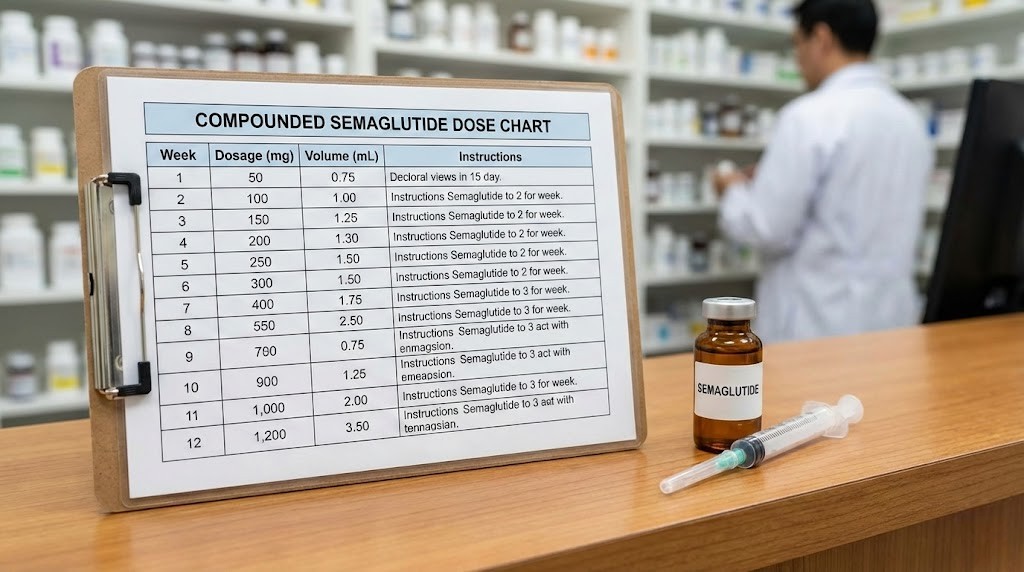
Three vials sit on your counter. The syringes are ready. And you have no idea how many units to draw.
This is where most people freeze. Compounded semaglutide arrives without the pre-filled convenience of brand-name pens like Ozempic or Wegovy. No click-dose mechanism. No auto-injector walking you through each step. Just a vial, a syringe, and a concentration printed on the label that might as well be written in a foreign language if you do not know how to convert milligrams to units.
The margin for error is not theoretical. The FDA has documented cases where dosing miscommunication with compounded semaglutide led to patients receiving five to twenty times the intended dose. That is not a typo. Five to twenty times. The consequences ranged from severe nausea and vomiting to hospitalization for dehydration and acute kidney injury.
So a proper dose chart is not a luxury. It is a safety requirement. This guide breaks down every concentration you will encounter, converts milligrams to units for each one, maps out the complete titration schedule from your first 0.25 mg injection through the maximum 2.4 mg dose, and provides weight-based adjustments that most generic charts ignore entirely. Whether you are working with a 2 mg vial, a 5 mg vial, or a 10 mg vial, every number you need lives in the tables ahead. SeekPeptides built this reference because getting the dose right is not optional, it is the entire point.
How compounded semaglutide differs from brand-name versions
Understanding the difference matters more than most people realize. Brand-name semaglutide, sold as Ozempic for type 2 diabetes and Wegovy for weight loss, comes in pre-filled injection pens. You dial the dose. You click. Done. The manufacturer handles the concentration math for you.
Compounded semaglutide is different.
It arrives as a lyophilized powder in a vial or, increasingly, as a pre-mixed liquid at a specific concentration determined by the compounding pharmacy. Either way, you need to understand what concentration you have, how many units correspond to your prescribed milligram dose, and how to draw that amount accurately with an insulin syringe.
The active ingredient is the same GLP-1 receptor agonist. Semaglutide works by mimicking the incretin hormone GLP-1, which your gut naturally releases after eating. It binds to GLP-1 receptors in the hypothalamus to suppress appetite, slows gastric emptying so food stays in your stomach longer, enhances insulin secretion, and reduces glucagon release. The clinical trial data from the STEP program showed participants losing an average of 14.9% of their body weight over 68 weeks at the 2.4 mg weekly dose. That is substantial. Over 86% of participants achieved at least 5% body weight reduction.
But those results came from precise, consistent dosing. Not guesswork.
Compounded versions typically come from 503A state-licensed pharmacies or 503B outsourcing facilities. The key difference is quality control. Brand-name products undergo rigorous FDA-approved manufacturing processes with batch testing, stability studies, and standardized concentrations. Compounded products vary by pharmacy. Your 5 mg vial from one pharmacy might have a different concentration profile than a 5 mg vial from another, depending on how much bacteriostatic water was added during preparation.
This is exactly why you cannot just copy a dosing chart from one source and assume it applies to your specific vial. The concentration on YOUR label is the only number that matters.
Reading your vial label correctly
Before you touch a syringe, read the label. Every compounded semaglutide vial should list three critical pieces of information.
First, the total amount of semaglutide in the vial. This is measured in milligrams. Common amounts include 2 mg, 2.5 mg, 5 mg, 7.5 mg, and 10 mg.
Second, the total volume. This tells you how much liquid is in the vial, measured in milliliters (mL). A 5 mg vial might contain 1 mL, 2 mL, or even 3 mL of liquid depending on how the pharmacy prepared it.
Third, the concentration. This is the critical number. It tells you how many milligrams of semaglutide exist per milliliter of liquid. A vial labeled "5 mg/2 mL" has a concentration of 2.5 mg/mL. A vial labeled "5 mg/1 mL" has a concentration of 5 mg/mL. Same total semaglutide, completely different amounts to draw for each dose.
Some pharmacies list all three. Others list only the total and volume, expecting you to calculate the concentration. If your label only shows "5 mg in 2 mL," your concentration is 2.5 mg/mL. Simple division. But failing to do this division is one of the most common mistakes, and it leads directly to underdosing or overdosing.
If your vial arrived as a lyophilized powder that you need to reconstitute yourself, the concentration depends entirely on how much bacteriostatic water you add. This is where a peptide reconstitution calculator becomes essential. Add 2 mL of bacteriostatic water to a 5 mg vial and you get 2.5 mg/mL. Add 1 mL and you get 5 mg/mL. The choice affects every measurement you make going forward.
Understanding insulin syringe units
Here is where confusion multiplies. Insulin syringes measure in "units," not milliliters. A standard U-100 insulin syringe, which is the type used for compounded semaglutide injections, has 100 units per 1 mL.
That means:
10 units = 0.10 mL
20 units = 0.20 mL
50 units = 0.50 mL
100 units = 1.00 mL
The unit markings on the syringe are volume markers. They do not tell you how many milligrams of semaglutide you are drawing. The milligrams depend entirely on your vial concentration. Drawing 10 units from a 2.5 mg/mL vial gives you 0.25 mg of semaglutide. Drawing 10 units from a 5 mg/mL vial gives you 0.50 mg. Same number of units, double the dose.
This is the single most dangerous point of confusion with compounded semaglutide dosing. It is also why the FDA received reports of patients overdosing by factors of five to twenty. They confused units with milligrams, or used a chart designed for a different concentration than what was in their vial.
A semaglutide dosage calculator can help verify your math. But you should understand the math yourself, because calculators cannot catch a mislabeled vial or a misread prescription.
Complete compounded semaglutide dose chart by concentration
Below are the dose charts for the most common compounded semaglutide concentrations. Find the concentration that matches YOUR vial label, then use that specific chart. Using the wrong chart is the same as using no chart at all.
Concentration: 1 mg/mL
This lower concentration is common in starter vials and microdosing protocols. Each unit on your syringe equals 0.01 mg of semaglutide.
Dose (mg) | Volume (mL) | Syringe Units | Titration Phase |
|---|---|---|---|
0.25 mg | 0.25 mL | 25 units | Weeks 1-4 |
0.50 mg | 0.50 mL | 50 units | Weeks 5-8 |
1.00 mg | 1.00 mL | 100 units | Weeks 9-12 |
At this concentration, you will use the entire 1 mL syringe for a 1 mg dose. Going above 1 mg requires a larger syringe or a higher-concentration vial, which is why most providers prescribe a stronger concentration for the maintenance phase.
Concentration: 2.5 mg/mL (most common)
This is the most widely prescribed compounded semaglutide concentration. Many pharmacies use it because it provides a clean balance between measurability and vial efficiency. Each unit on a U-100 syringe equals 0.025 mg of semaglutide.
Dose (mg) | Volume (mL) | Syringe Units | Titration Phase |
|---|---|---|---|
0.25 mg | 0.10 mL | 10 units | Weeks 1-4 |
0.50 mg | 0.20 mL | 20 units | Weeks 5-8 |
1.00 mg | 0.40 mL | 40 units | Weeks 9-12 |
1.70 mg | 0.68 mL | 68 units | Weeks 13-16 |
2.40 mg | 0.96 mL | 96 units | Weeks 17+ |
Notice how the 2.4 mg maximum dose requires 96 units, nearly a full 1 mL syringe. This is a large injection volume. Some people split this into two separate injections of 48 units each, given at two different sites on the same day. Your provider can advise whether splitting is appropriate for your protocol.
Concentration: 5 mg/mL
Higher concentration vials like this are increasingly common because they reduce injection volume significantly. Each unit equals 0.05 mg of semaglutide. This concentration is what you will often encounter with a 5 mg/mL dosage chart.
Dose (mg) | Volume (mL) | Syringe Units | Titration Phase |
|---|---|---|---|
0.25 mg | 0.05 mL | 5 units | Weeks 1-4 |
0.50 mg | 0.10 mL | 10 units | Weeks 5-8 |
1.00 mg | 0.20 mL | 20 units | Weeks 9-12 |
1.70 mg | 0.34 mL | 34 units | Weeks 13-16 |
2.40 mg | 0.48 mL | 48 units | Weeks 17+ |
The advantage is obvious. A 2.4 mg dose requires only 48 units instead of 96. Smaller volume means less discomfort at the injection site, less chance of medication leaking back out, and a quicker injection overall.
The disadvantage is precision. At 5 units for the starting dose, you are working with very small markings on the syringe. A one-unit error means a 20% dose variation. Use a peptide calculation method to double-check, and consider a 0.5 mL or 0.3 mL insulin syringe that has finer graduation marks for these small volumes.
Concentration: 3.33 mg/mL
This concentration typically comes from adding 3 mL of bacteriostatic water to a 10 mg vial. The math is straightforward: 10 mg divided by 3 mL equals approximately 3.33 mg/mL. Each unit equals about 0.033 mg.
Dose (mg) | Volume (mL) | Syringe Units | Titration Phase |
|---|---|---|---|
0.25 mg | 0.075 mL | 7.5 units | Weeks 1-4 |
0.50 mg | 0.15 mL | 15 units | Weeks 5-8 |
1.00 mg | 0.30 mL | 30 units | Weeks 9-12 |
1.70 mg | 0.51 mL | 51 units | Weeks 13-16 |
2.40 mg | 0.72 mL | 72 units | Weeks 17+ |
The half-unit issue at the starting dose (7.5 units) means you need to estimate between the 7 and 8 unit marks. This is imprecise, and some practitioners recommend rounding to 8 units (0.267 mg) for simplicity. The slight overage at the starting dose is clinically insignificant, but discuss this with your prescribing provider.
Concentration: 10 mg/mL
This is a high-concentration formulation that some pharmacies offer for patients on maintenance doses who want the smallest possible injection volume. Each unit equals 0.10 mg. This concentration matches what you would find referenced in a 10 mg semaglutide mixing chart.
Dose (mg) | Volume (mL) | Syringe Units | Titration Phase |
|---|---|---|---|
0.25 mg | 0.025 mL | 2.5 units | Weeks 1-4 |
0.50 mg | 0.05 mL | 5 units | Weeks 5-8 |
1.00 mg | 0.10 mL | 10 units | Weeks 9-12 |
1.70 mg | 0.17 mL | 17 units | Weeks 13-16 |
2.40 mg | 0.24 mL | 24 units | Weeks 17+ |
At this concentration, the starting dose of 0.25 mg requires only 2.5 units. That is genuinely difficult to measure accurately on a standard U-100 syringe. A 0.3 mL insulin syringe with half-unit markings is not optional here, it is necessary. Any precision issues multiply tenfold at this concentration.
The standard titration schedule explained
Titration is not a suggestion. It is a medical requirement designed to reduce the gastrointestinal side effects that semaglutide is known for.
Semaglutide slows gastric emptying. Your stomach keeps food longer. This is part of how the drug reduces appetite and creates the caloric deficit that drives fat loss. But if you jump to a high dose on day one, the sudden slowdown in gastric motility can cause severe nausea, vomiting, diarrhea, constipation, and abdominal cramping. These side effects are dose-dependent. Higher doses, faster escalation, worse symptoms.
The standard titration schedule gives your body four weeks at each dose level to adapt before increasing.
Standard 5-phase titration protocol
Phase 1 (weeks 1 through 4): 0.25 mg weekly
This is the introductory dose. It is sub-therapeutic for weight loss, meaning you should not expect significant appetite suppression or weight change yet. The purpose is purely to let your gastrointestinal system adapt to the medication. Even at this low dose, approximately 20% of people experience mild nausea during the first week. It typically resolves within 3 to 5 days.
Phase 2 (weeks 5 through 8): 0.50 mg weekly
Most people begin noticing reduced appetite at this dose. Portion sizes naturally decrease. The urge to snack between meals diminishes. Some providers call this the "awareness phase" because patients first recognize the medication is working. Side effects from the dose increase are usually milder than the initial phase since your body has already begun adapting to the mechanism.
Phase 3 (weeks 9 through 12): 1.0 mg weekly
This is where significant weight loss begins for most people. The STEP clinical trials used 1.0 mg as a transitional dose, and many participants began seeing measurable results here. Appetite suppression is pronounced. Food noise, that constant background thinking about what to eat next, often quiets substantially. Nausea may return briefly with the increase but is typically less intense than the initial startup.
Phase 4 (weeks 13 through 16): 1.7 mg weekly
This dose was part of the original Wegovy titration schedule. Appetite suppression deepens. Weight loss accelerates. The 1.7 mg dose represents a 70% increase from 1.0 mg, so gastrointestinal side effects may resurface temporarily. Eating slowly, choosing bland foods for the first few days after each increase, and staying well hydrated all help manage the transition.
Phase 5 (weeks 17 and beyond): 2.4 mg weekly
The maximum recommended dose. This is where the STEP 1 trial achieved its headline result of 14.9% average body weight reduction over 68 weeks. Not everyone needs to reach this dose. If you are losing weight consistently at 1.0 mg or 1.7 mg with tolerable side effects, there is no requirement to escalate further. The goal is the minimum effective dose, not the maximum available dose.
Some providers extend each phase to 6 or even 8 weeks instead of 4, particularly for patients who are sensitive to gastrointestinal effects. This slower approach is perfectly valid. The titration timeline is a framework, not a rigid prescription. Your provider should adjust it based on your individual response, how quickly semaglutide takes effect for you, and your tolerance at each level.
Weight-based dosing considerations
Generic dose charts treat everyone the same. A 140-pound woman and a 280-pound man both start at 0.25 mg. Both follow the same titration schedule. Both aim for the same maximum of 2.4 mg.
Clinically, this makes sense as a starting framework. The STEP trials used a fixed-dose protocol regardless of body weight, and the results were consistent across weight ranges. But in practice, providers often adjust the approach based on individual factors.
Body weight affects absorption and distribution. Higher body weight means more tissue for the medication to distribute through. This can affect how quickly plasma concentrations reach therapeutic levels and how intensely you experience appetite suppression at each dose. Some heavier individuals find that they need to progress through the titration faster because lower doses produce minimal effect, while lighter individuals may find that even 0.5 mg provides substantial appetite suppression.
Body composition matters too. Semaglutide distributes differently in lean tissue versus adipose tissue. Two people at the same body weight but different body fat percentages may respond differently to the same dose.
Here is a general weight-based reference framework that some providers use. This is not a prescription, it is a conversation starter between you and your healthcare provider.
Body Weight Range | Typical Starting Dose | Common Maintenance Dose | Notes |
|---|---|---|---|
Under 150 lbs | 0.25 mg | 0.5 to 1.0 mg | May respond well to lower doses. Monitor closely. |
150 to 200 lbs | 0.25 mg | 1.0 to 1.7 mg | Standard titration usually appropriate. |
200 to 250 lbs | 0.25 mg | 1.7 to 2.4 mg | May need full titration to max dose. |
Over 250 lbs | 0.25 mg | 2.0 to 2.4 mg | Extended titration sometimes needed. Patience required. |
Notice that everyone starts at 0.25 mg regardless of weight. The starting dose is about GI adaptation, not therapeutic effect. Where weight differences show up is in the maintenance phase, where lighter individuals often stabilize at lower doses while heavier individuals may need the full 2.4 mg for adequate appetite suppression.
SeekPeptides members access detailed protocol guides that account for these individual variables, including body composition analysis tools and dosage calculators that factor in concentration, weight, and target dose simultaneously.
How to reconstitute compounded semaglutide from lyophilized powder
If your compounded semaglutide arrived as a powder that needs reconstitution, this section is for you. If it arrived pre-mixed as a liquid, skip ahead to the injection technique section.
Reconstitution is the process of dissolving the lyophilized (freeze-dried) powder into a liquid suitable for injection. The liquid used is bacteriostatic water, which contains 0.9% benzyl alcohol as a preservative. This preservative allows the reconstituted solution to remain sterile for multiple uses over approximately 28 days when refrigerated properly.
Step-by-step reconstitution process
Step 1: Gather your supplies. You need the semaglutide vial, a vial of bacteriostatic water, an unused syringe with needle for mixing (a larger gauge like 22G works well for drawing water), alcohol swabs, and a clean workspace.
Step 2: Determine your target concentration. Before adding any water, decide what concentration you want based on the dose charts above. For a 5 mg vial, adding 2 mL of bacteriostatic water creates a 2.5 mg/mL concentration. Adding 1 mL creates 5 mg/mL. Use a reconstitution calculator if you want to verify. The semaglutide mixing chart provides additional reference points.
Step 3: Clean the vial tops. Swab the rubber stopper of both the semaglutide vial and the bacteriostatic water vial with an alcohol wipe. Let them air dry for 10 seconds. Do not blow on them.
Step 4: Draw the bacteriostatic water. Using your mixing syringe, draw the exact amount of bacteriostatic water you calculated. For a 5 mg vial targeting 2.5 mg/mL, draw exactly 2.0 mL.
Step 5: Add water to the semaglutide vial. Insert the needle through the rubber stopper of the semaglutide vial. Angle the needle so the water runs down the inside wall of the vial, not directly onto the powder. Push the plunger slowly. Rushing this step can damage the peptide structure and reduce potency.
Step 6: Swirl gently. Do not shake. Shaking creates air bubbles and can denature the peptide. Gently swirl the vial in small circles until the powder dissolves completely. This usually takes 30 to 60 seconds. If any powder remains undissolved, let the vial sit for 2 to 3 minutes and swirl again. The solution should be clear and colorless. If it is cloudy, contains particles, or has any color, do not use it.
Step 7: Label the vial. Write the date of reconstitution, the concentration, and "USE BY" followed by the date 28 days from now. Proper peptide storage after reconstitution is critical. Refrigerate immediately at 36 to 46 degrees Fahrenheit (2 to 8 degrees Celsius).
Common reconstitution concentrations for reference
Vial Size | Bacteriostatic Water Added | Resulting Concentration | Units per 0.25 mg Dose |
|---|---|---|---|
2 mg | 0.8 mL | 2.5 mg/mL | 10 units |
5 mg | 2.0 mL | 2.5 mg/mL | 10 units |
5 mg | 1.0 mL | 5.0 mg/mL | 5 units |
10 mg | 4.0 mL | 2.5 mg/mL | 10 units |
10 mg | 3.0 mL | 3.33 mg/mL | 7.5 units |
10 mg | 2.0 mL | 5.0 mg/mL | 5 units |
The 2.5 mg/mL concentration is the most practical for most users because it produces clean, easily measurable unit values at every dose level. If you are new to compounded semaglutide, this is the concentration to start with. The 5 mg mixing chart and the 10 mg mixing chart both provide additional detail for those specific vial sizes.
Injection technique and site rotation
Drawing the right dose means nothing if you inject it poorly. Compounded semaglutide is administered subcutaneously, meaning into the fat layer just beneath the skin. Not into muscle. Not into a vein.
Approved injection sites
Three areas work best for subcutaneous semaglutide injections.
Abdomen. This is the most popular site. Use the area at least 2 inches away from the navel. Avoid the waistband line where clothing might irritate the site. The abdomen typically has a consistent fat layer, which makes for reliable absorption.
Upper thigh. Use the front or outer aspect of the thigh, roughly the middle third between your knee and hip. Avoid the inner thigh where skin is thinner and more sensitive.
Upper arm. The back of the upper arm works well but is harder to self-inject. If you use this site, you may need assistance.
Rotate sites weekly. Do not inject in the same spot every time. Repeated injections at one site can cause lipohypertrophy (fat buildup under the skin) or lipoatrophy (fat loss under the skin). Both create lumps or indentations that affect absorption consistency. A simple rotation pattern: abdomen one week, left thigh next, right thigh next, then back to abdomen.
Injection steps
Clean the injection site with an alcohol swab. Let it dry completely. Pinch a fold of skin at the injection site. Insert the needle at a 45 to 90 degree angle (90 degrees if you have adequate subcutaneous fat, 45 degrees if you are leaner). Push the plunger slowly and steadily. After the plunger is fully depressed, wait 5 to 10 seconds before withdrawing the needle. This allows the medication to disperse and reduces the chance of it leaking back out through the needle track.
Do not rub the injection site afterward. A light press with a cotton ball or alcohol swab is fine if there is minor bleeding, but rubbing can affect how the medication absorbs.
Semaglutide with B12 and other combination formulations
Many compounding pharmacies now offer semaglutide combined with additional ingredients. The most common combination is semaglutide with vitamin B12 (cyanocobalamin). Understanding these combination formulations matters because they can affect your dosing math.
B12 is added because semaglutide slows gastric emptying and can reduce nutrient absorption, particularly B12, which requires proper gastric acid levels for absorption. Adding B12 directly to the injection bypasses the GI tract entirely. The semaglutide B12 dosage chart follows the same titration schedule as standard semaglutide. The B12 component does not affect semaglutide dosing, it is simply an additional ingredient at a fixed concentration. A typical formulation might contain 2.5 mg/mL semaglutide plus 1000 mcg/mL of B12. When you draw 10 units for your 0.25 mg semaglutide dose, you automatically receive 100 mcg of B12 as well. The compounded semaglutide with B12 chart details these combinations further.
Other combination formulations exist. Some pharmacies add L-carnitine, glycine, or other amino acids. The critical point is always the same: the semaglutide concentration determines your dosing units. Additional ingredients ride along at whatever amount corresponds to the volume you draw, but they do not change how you calculate the semaglutide dose.
Converting between brand-name doses and compounded doses
If you are switching from a different GLP-1 medication or transitioning between brand-name and compounded semaglutide, dose conversion becomes relevant.
Brand-name to compounded semaglutide
The conversion is straightforward because the active ingredient is the same. If you were on 1.0 mg of Ozempic, your compounded dose is also 1.0 mg. The difference is only in how you measure and administer it (vial and syringe versus pre-filled pen).
However, there is a nuance. Brand-name semaglutide uses semaglutide base as the active ingredient. Some compounded formulations use semaglutide sodium or semaglutide acetate, which are salt forms. The FDA has raised concerns about these salt forms, noting they have not been independently shown to be safe and effective. The clinical equivalence between semaglutide base and its salt forms has not been established through rigorous study.
If your compounded product contains a salt form, discuss with your provider whether any dose adjustment is appropriate. Most clinicians prescribe the same milligram dose, but it is a conversation worth having.
Semaglutide to tirzepatide conversion
Switching between semaglutide and tirzepatide is more complex because they are different molecules with different mechanisms. Tirzepatide is a dual GIP/GLP-1 receptor agonist, while semaglutide targets only GLP-1. The semaglutide to tirzepatide conversion chart provides detailed guidance, but the general equivalencies used by many providers are:
Semaglutide Dose | Approximate Tirzepatide Equivalent |
|---|---|
0.25 mg | 2.5 mg |
0.50 mg | 2.5 to 5.0 mg |
1.00 mg | 5.0 to 7.5 mg |
1.70 mg | 7.5 to 10.0 mg |
2.40 mg | 10.0 to 15.0 mg |
These are approximate. The full conversion chart accounts for additional variables, and the switching protocol guide covers the transition timeline in detail. Never switch medications or adjust doses without medical supervision.
Managing side effects during titration
Side effects are not a sign that something is wrong. They are a predictable response to the medication mechanism. Semaglutide slows gastric emptying, modulates appetite hormones, and alters how your brain processes hunger signals. Your body needs time to adjust to all of this.
The most common side effects during titration, ranked by frequency from the STEP clinical trials:
Nausea (reported by up to 44% of participants)
Diarrhea (reported by approximately 30%)
Vomiting (reported by approximately 24%)
Constipation (reported by approximately 24%)
Abdominal pain (reported by approximately 20%)
For most people, these effects are mild to moderate and peak during the first week after each dose increase. They typically diminish within 3 to 7 days as the body adapts. By the second or third week at a given dose, most people report minimal or no GI symptoms.
Practical side effect management strategies
For nausea: Eat smaller meals more frequently. Choose bland foods during the first few days after a dose increase: rice, toast, bananas, applesauce, and crackers are gentle options. Avoid greasy, fried, and heavily spiced foods. Ginger tea or ginger supplements can help. Do not lie down immediately after eating. If nausea is persistent and interfering with daily life, your provider can prescribe ondansetron (Zofran) as a short-term rescue medication.
For constipation: Increase water intake to at least 64 ounces daily. Add fiber through vegetables and psyllium husk rather than relying on processed fiber supplements. Magnesium citrate at 200 to 400 mg daily can help. Gentle physical activity like walking stimulates gut motility. If these measures are not enough, an over-the-counter stool softener like docusate sodium is generally safe.
For diarrhea: Stay hydrated with electrolyte solutions, not just plain water. Avoid dairy and high-fat foods temporarily. The BRAT diet (bananas, rice, applesauce, toast) can help stabilize. If diarrhea persists beyond 3 days or is severe, contact your provider.
One strategy that many experienced semaglutide users recommend: time your weekly injection in the evening before bed. This way, the initial wave of nausea that sometimes follows an injection happens while you sleep. By morning, the worst has usually passed.
When to slow down the titration
Not everyone should follow the standard 4-week-per-phase timeline. Consider extending a phase to 6 or 8 weeks if:
Nausea at the current dose persists beyond the second week
You are vomiting more than twice in 24 hours after an injection
You are unable to maintain adequate food and fluid intake
Your weight loss at the current dose is already meeting your goals (1 to 2 pounds per week)
You experience dizziness, excessive fatigue, or signs of dehydration
Slower titration is not failure. It is intelligent dosing. The goal is sustainable weight loss with tolerable side effects, not a race to the maximum dose.
Microdosing compounded semaglutide
Microdosing is an emerging approach where patients use doses below the standard 0.25 mg starting point. Think 0.05 mg, 0.10 mg, or 0.125 mg weekly. This approach is not part of the FDA-approved protocol and lacks large-scale clinical trial data. But it has gained traction among providers who see patients unable to tolerate even the lowest standard dose.
The rationale is straightforward. If 0.25 mg causes significant nausea in a sensitive patient, starting at 0.10 mg and increasing by 0.05 mg every 2 to 4 weeks provides an even gentler on-ramp. The body has more time to adapt to each incremental increase.
A typical microdosing protocol might look like this:
Week | Dose | At 2.5 mg/mL Concentration |
|---|---|---|
Weeks 1-2 | 0.05 mg | 2 units |
Weeks 3-4 | 0.10 mg | 4 units |
Weeks 5-6 | 0.15 mg | 6 units |
Weeks 7-8 | 0.20 mg | 8 units |
Weeks 9-12 | 0.25 mg | 10 units |
Weeks 13+ | Standard titration continues | Per dose charts above |
Compounded semaglutide is particularly well-suited for microdosing because the vial-and-syringe format allows you to draw any precise dose. Pre-filled pens cannot do this. You are limited to the fixed doses the pen offers. With a vial and a properly graduated syringe, you can dose in increments as small as one unit allows.
That said, microdosing has important limitations. The clinical evidence for efficacy at these sub-standard doses is limited to case reports and provider experience, not randomized controlled trials. Some patients on microdoses see meaningful appetite suppression. Others notice nothing until they reach the standard 0.25 mg threshold. There is no way to predict your response without trying. Discuss microdosing with your provider if standard starting doses are intolerable.
Storage and shelf life of compounded semaglutide
Proper storage directly affects potency. A perfectly measured dose from a degraded vial will not produce the expected clinical effect. This is one area where compounded semaglutide requires more attention than brand-name pens.
Before reconstitution (lyophilized powder)
Unreconstituted semaglutide powder should be stored at room temperature (68 to 77 degrees Fahrenheit, or 20 to 25 degrees Celsius) in a cool, dry place away from direct light. Most lyophilized peptides remain stable for months in this form. Check the expiration date on the vial. Peptides in powder form generally have a shelf life of 12 to 24 months when stored properly.
After reconstitution
Once you add bacteriostatic water, the clock starts. Compounded semaglutide must be refrigerated at 36 to 46 degrees Fahrenheit (2 to 8 degrees Celsius). Use within 28 days of reconstitution. After 28 days, discard any remaining solution even if it looks clear and normal.
Do not freeze reconstituted semaglutide. Freezing can damage the peptide structure and create inconsistent concentrations as the solution thaws unevenly.
Do not leave reconstituted semaglutide at room temperature for extended periods. Brief exposure during dose preparation (5 to 10 minutes) is fine, but do not leave the vial on the counter for hours. Temperature fluctuations accelerate degradation.
Pre-mixed liquid from the pharmacy
If your pharmacy sent the vial already mixed as a liquid, the same refrigeration rules apply. Refrigerate upon receipt. Use within the timeframe specified on the label, typically 28 to 42 days depending on the pharmacy formulation. Shelf life in the fridge varies by pharmacy and formulation, so always defer to your specific label instructions.
Signs of degradation include cloudiness, visible particles, color change (should remain clear and colorless), or an unusual smell. If you observe any of these, do not inject. Discard the vial and contact your pharmacy for a replacement.
How long does compounded semaglutide take to work
Expectations need calibration. Semaglutide is not a rapid-onset medication. It builds in your system over weeks, reaching steady-state plasma concentration after approximately 4 to 5 weeks of consistent weekly dosing.
Here is what the typical timeline looks like based on clinical data and provider observations:
Week 1 to 2: You may notice subtle appetite changes. Some people describe feeling full slightly sooner during meals. Others notice nothing. Both responses are normal at the 0.25 mg dose. Any early effects from semaglutide at this dose are primarily GI adaptation, not therapeutic weight loss.
Week 3 to 4: Appetite suppression may become more noticeable. The concept of "food noise," that persistent background urge to eat, think about food, or plan the next meal, begins to quiet for many users. Weight change at this point is typically minimal, perhaps 1 to 3 pounds, and may reflect water shifts rather than fat loss.
Week 5 to 8: At the 0.5 mg dose, most people experience clear appetite reduction. Meal portions shrink naturally. Cravings diminish. Weight loss of 3 to 5 pounds is common during this period, though individual results vary significantly.
Week 9 to 16: The therapeutic doses of 1.0 mg and above produce the most noticeable effects. Weight loss accelerates. Many users report losing 1 to 2 pounds per week during this phase. Clothing fits differently. Energy levels often improve as excess weight decreases.
Week 17 to 68: The STEP 1 trial ran for 68 weeks. Average weight loss at the 2.4 mg maintenance dose was 14.9% of starting body weight. For a 250-pound individual, that is approximately 37 pounds. Over 86% of participants lost at least 5% of their body weight. More than one-third lost over 20%. These are population averages. Individual results depend on diet, exercise, adherence, starting weight, metabolic factors, and dose tolerance.
The critical variable is patience. How long you stay on semaglutide determines your outcome more than almost any other factor. Quitting at week 8 because the scale has not moved dramatically misses the entire mechanism of the drug. Semaglutide rewards consistency.
Common dosing mistakes and how to avoid them
Mistakes with compounded semaglutide fall into predictable categories. Knowing them in advance is the best prevention.
Mistake 1: Using the wrong concentration chart. You find a dose chart online that says "10 units = 0.25 mg." You draw 10 units. But your vial is 5 mg/mL, not 2.5 mg/mL. You just injected 0.50 mg instead of 0.25 mg, double your intended dose. Always verify that the concentration in the chart matches the concentration on your vial label. Every time.
Mistake 2: Confusing units with milligrams. Units and milligrams are not the same thing. A unit is a volume measurement on an insulin syringe. A milligram is a weight measurement of the medication. The relationship between them depends entirely on concentration. This confusion is the single most dangerous dosing error.
Mistake 3: Shaking the vial during reconstitution. Shaking denatures proteins. Semaglutide is a peptide, a type of protein. Shaking can reduce its potency or create aggregates that affect absorption. Swirl gently. Always.
Mistake 4: Skipping the titration. Jumping straight to 1.0 mg or higher because you want faster results is a reliable way to end up vomiting for days, potentially requiring medical intervention, and potentially abandoning the medication entirely because of a terrible first experience. Start low. Go slow.
Mistake 5: Inconsistent injection timing. Semaglutide is designed for once-weekly dosing. The half-life is approximately 7 days, which means it takes about 7 days for half the drug to leave your system. Injecting every 5 days or every 10 days instead of every 7 creates inconsistent plasma levels. This leads to unpredictable appetite suppression and more side effects. Pick a day. Stick to it.
Mistake 6: Not rotating injection sites. Injecting in the same spot repeatedly causes tissue changes that affect absorption. Your dose might absorb faster or slower depending on the tissue condition at the injection site. Rotating ensures consistent absorption.
Mistake 7: Storing the vial improperly. Leaving reconstituted semaglutide on the counter, in a car, near a window, or anywhere temperatures fluctuate degrades the peptide. Refrigerate. Consistently. The complete peptide storage guide covers best practices for all peptide types.
Compounded semaglutide and the regulatory landscape
The legal status of compounded semaglutide has shifted significantly. Understanding where things stand helps you make informed decisions about your treatment.
In February of a recent year, the FDA determined that the shortage of injectable semaglutide products (Ozempic and Wegovy) had been resolved. Under federal law, specifically Section 503A and 503B of the Federal Food, Drug, and Cosmetic Act, pharmacies face restrictions on compounding drugs that are "essentially copies" of commercially available FDA-approved products once the shortage ends.
For 503A pharmacies (state-licensed compounding pharmacies), the FDA set an enforcement discretion deadline. For 503B outsourcing facilities, a separate deadline applied. Both deadlines included provisions for pending litigation, as the Outsourcing Facilities Association challenged the FDA decision in court.
What does this mean for patients? It means the availability and legality of compounded semaglutide varies by state, by pharmacy type, and by the current status of ongoing litigation. Some compounding pharmacies continue to offer semaglutide under state-level regulatory frameworks. Others have stopped entirely.
Your provider is the best source of current information about what is available and legal in your jurisdiction. What remains constant regardless of the regulatory landscape is the dosing information in this guide. Whether your semaglutide comes from a brand-name manufacturer or a compounding pharmacy, the milligrams-to-units conversion math works the same way. The titration schedule follows the same logic. The side effect management strategies are identical.
When to contact your healthcare provider
Compounded semaglutide is a prescription medication. Self-managing within the parameters your provider set is fine. But certain situations require immediate medical contact.
Contact your provider immediately if you experience:
Persistent vomiting lasting more than 24 hours
Severe abdominal pain that does not resolve with dietary modification
Signs of dehydration: dark urine, dizziness, rapid heartbeat, dry mouth
Signs of pancreatitis: severe upper abdominal pain radiating to the back, accompanied by nausea and vomiting
Changes in vision
Signs of hypoglycemia if you take other diabetes medications: shakiness, confusion, sweating, rapid heartbeat
Any allergic reaction: rash, hives, swelling, difficulty breathing
Mood changes including new or worsening depression or thoughts of self-harm
Contact your provider for guidance (not emergency) if:
Nausea persists beyond 2 weeks at the same dose
You are unable to eat enough to meet basic nutritional needs
You are losing weight faster than 3 pounds per week consistently
You missed a dose and are unsure whether to take a double dose (you should not)
Your vial appears compromised (cloudy, particles, odor)
You want to adjust your titration schedule
The peptide safety and risks guide covers broader safety considerations for all peptide-based treatments. Semaglutide withdrawal symptoms are another topic worth understanding before making any changes to your protocol.
Optimizing results beyond the dose chart
The dose chart gets the medication right. But semaglutide is not a standalone solution. The STEP trials that produced those impressive 14.9% body weight reduction numbers included lifestyle interventions alongside the medication. Participants received counseling on diet and exercise. The medication alone, without behavioral changes, produces less impressive results.
Dietary adjustments that complement semaglutide
Semaglutide reduces appetite. It does not choose your food for you. What you eat during the reduced caloric window matters enormously because you are eating less food overall, so every bite needs to deliver more nutritional value.
Prioritize protein. Aim for 0.7 to 1.0 grams of protein per pound of body weight daily. This is critical because semaglutide-induced weight loss includes some lean mass loss alongside fat loss. Adequate protein intake minimizes muscle loss and supports metabolism. Good sources include chicken, fish, eggs, Greek yogurt, cottage cheese, and lean beef.
Eat fiber-rich foods. Vegetables, fruits, legumes, and whole grains provide fiber that supports digestive health, which is especially important when semaglutide is slowing your gastric emptying. Fiber also adds satiety value to meals.
Hydrate aggressively. Reduced food intake means reduced water from food. Compensate by drinking more, aiming for at least 64 to 80 ounces of water daily. Dehydration worsens nausea, constipation, and fatigue, all of which semaglutide can already contribute to.
Minimize alcohol. Semaglutide changes how your body processes alcohol. Many users report increased sensitivity, faster intoxication, and worse hangovers. Beyond the subjective experience, alcohol provides empty calories that work against your caloric deficit and can irritate an already sensitive GI tract. Drinking on semaglutide is a topic worth understanding in full.
Exercise recommendations
Resistance training is non-negotiable. The primary concern with any significant weight loss is losing muscle along with fat. Resistance training signals your body to preserve lean tissue even in a caloric deficit. Two to four sessions per week targeting all major muscle groups is a good foundation.
Cardiovascular exercise supports overall health and enhances the caloric deficit. Walking 30 to 60 minutes daily is an excellent starting point. More intense cardio can be added as fitness improves and weight decreases.
Do not over-exercise, especially during the early titration phases when your caloric intake may be significantly reduced. Your body needs fuel for recovery. If you are eating substantially less due to semaglutide appetite suppression, intense daily workouts can lead to fatigue, muscle loss, and burnout. Balance is the key word.
Tracking your progress effectively
A dose chart tells you what to inject. Tracking tells you whether it is working. But tracking requires the right metrics, not just the scale.
Weekly weigh-ins. Same day, same time, same conditions (morning, after using the bathroom, before eating). Daily weigh-ins create noise from water fluctuations. Weekly measurements smooth out the data and show the real trend.
Body measurements. Waist circumference, hip circumference, and chest measurement. These often change before the scale does, especially if you are exercising and building muscle while losing fat.
Progress photos. Monthly, same lighting, same angle, same clothing. The mirror lies because you see yourself every day and adaptation blinds you to gradual changes. Photos capture what your daily perception misses.
Symptom journal. Track injection day, dose, injection site, and any side effects with severity and duration. This data is invaluable when discussing titration adjustments with your provider. It transforms vague reports of "I feel nauseous sometimes" into precise documentation of "Nausea rated 4 out of 10, lasting 6 hours post-injection, resolving by morning."
Appetite and energy ratings. Score your appetite on a 1-10 scale daily. Note energy levels. These subjective measures help identify your optimal dose, the point where appetite suppression is meaningful but you still have enough energy for daily activities and exercise.
SeekPeptides members access progress tracking tools, protocol adjustment guides, and a community of experienced researchers who have navigated these exact questions. The platform provides structured tracking frameworks that take the guesswork out of monitoring your response to semaglutide therapy.
Compounded semaglutide dose chart quick reference
For easy reference, here is a consolidated quick-reference chart covering the two most common concentrations.
Quick reference: 2.5 mg/mL concentration
Titration Phase | Weeks | Dose (mg) | Units to Draw |
|---|---|---|---|
Phase 1 | 1-4 | 0.25 | 10 units |
Phase 2 | 5-8 | 0.50 | 20 units |
Phase 3 | 9-12 | 1.00 | 40 units |
Phase 4 | 13-16 | 1.70 | 68 units |
Phase 5 | 17+ | 2.40 | 96 units |
Quick reference: 5 mg/mL concentration
Titration Phase | Weeks | Dose (mg) | Units to Draw |
|---|---|---|---|
Phase 1 | 1-4 | 0.25 | 5 units |
Phase 2 | 5-8 | 0.50 | 10 units |
Phase 3 | 9-12 | 1.00 | 20 units |
Phase 4 | 13-16 | 1.70 | 34 units |
Phase 5 | 17+ | 2.40 | 48 units |
Print these. Tape them to your refrigerator next to your vial. Check them every single time you draw a dose until the numbers become second nature.
Frequently asked questions
How many units is 0.25 mg of compounded semaglutide?
It depends entirely on your vial concentration. At 2.5 mg/mL, 0.25 mg equals 10 units. At 5 mg/mL, 0.25 mg equals 5 units. At 1 mg/mL, 0.25 mg equals 25 units. Always use the chart that matches your specific concentration. Refer to the semaglutide syringe dosage conversion chart for a complete unit breakdown.
Can I use a compounded semaglutide dose chart for brand-name Ozempic or Wegovy?
No. Brand-name products use pre-filled pens with fixed doses. You do not draw from a vial or measure units. The milligram doses in the titration schedule are the same, but the administration method is completely different. This chart is specifically for vial-and-syringe administration of compounded semaglutide.
What if I miss a dose of compounded semaglutide?
If you miss your scheduled injection day, take it within 5 days of the missed dose, then resume your regular weekly schedule. If more than 5 days have passed, skip the missed dose entirely and take your next scheduled dose on the regular day. Do not double up. Do not take two injections in one week to "catch up." The medication has a long half-life (approximately 7 days), so a single missed dose does not reset your progress.
Is compounded semaglutide as effective as Ozempic or Wegovy?
When formulated correctly with semaglutide base at the proper concentration, compounded semaglutide should produce similar effects because the active ingredient is the same. However, compounded products lack the rigorous quality control testing that FDA-approved manufacturers perform. Variability in potency, purity, and sterility between compounding pharmacies is a documented concern. Your results depend heavily on the quality of your pharmacy. The semaglutide vs tirzepatide comparison provides additional context on GLP-1 medication options.
How do I know if my compounded semaglutide has gone bad?
Visual inspection is your first line of defense. The reconstituted solution should be clear and colorless. Cloudiness, visible particles, discoloration, or unusual odor all indicate degradation. Additionally, if your medication has been stored above 46 degrees Fahrenheit for extended periods, left unrefrigerated overnight, or is past its 28-day expiration window, consider it compromised. When in doubt, discard and contact your pharmacy. Understanding proper peptide storage after reconstitution is essential.
Can I travel with compounded semaglutide?
Yes, but you need a plan for temperature control. Use an insulated travel case with ice packs or a pharmaceutical-grade cooling pouch designed for medication transport. Keep the vial upright when possible. Bring your prescription documentation in case of questions at security checkpoints. Do not put the vial in checked luggage where cargo hold temperatures may freeze it. Carry it in your carry-on bag where the cabin is temperature controlled.
How many doses does one vial of compounded semaglutide contain?
This depends on the vial size, concentration, and your current dose. A 5 mg vial reconstituted at 2.5 mg/mL contains 2 mL of solution. At the starting dose of 0.25 mg (10 units or 0.10 mL per dose), that vial contains approximately 20 doses, or 20 weeks of weekly injections. At the 1.0 mg maintenance dose (40 units or 0.40 mL per dose), the same vial contains approximately 5 doses, or 5 weeks. Use the peptide cost calculator to estimate how long each vial will last at your current dosing.
What is the maximum dose of compounded semaglutide?
The FDA-approved maximum for semaglutide for weight management (as Wegovy) is 2.4 mg weekly. For type 2 diabetes (as Ozempic), the maximum is 2.0 mg weekly. Most providers follow these maximums for compounded semaglutide as well. Exceeding these doses has not been studied for safety or efficacy in large clinical trials and is not recommended. The dosing chart in units covers every phase up to the maximum.
External resources
NEJM: STEP 1 trial, once-weekly semaglutide in adults with overweight or obesity
PMC: Semaglutide as a GLP-1 agonist, a breakthrough in obesity treatment
For researchers serious about optimizing their semaglutide protocols, SeekPeptides offers the most comprehensive resource available, with evidence-based guides, proven protocols, weight-based dosage calculators, and a community of thousands who have navigated these exact questions.
In case I do not see you, good afternoon, good evening, and good night. May your concentrations stay accurate, your titrations stay gradual, and your results stay consistent.