Feb 10, 2026
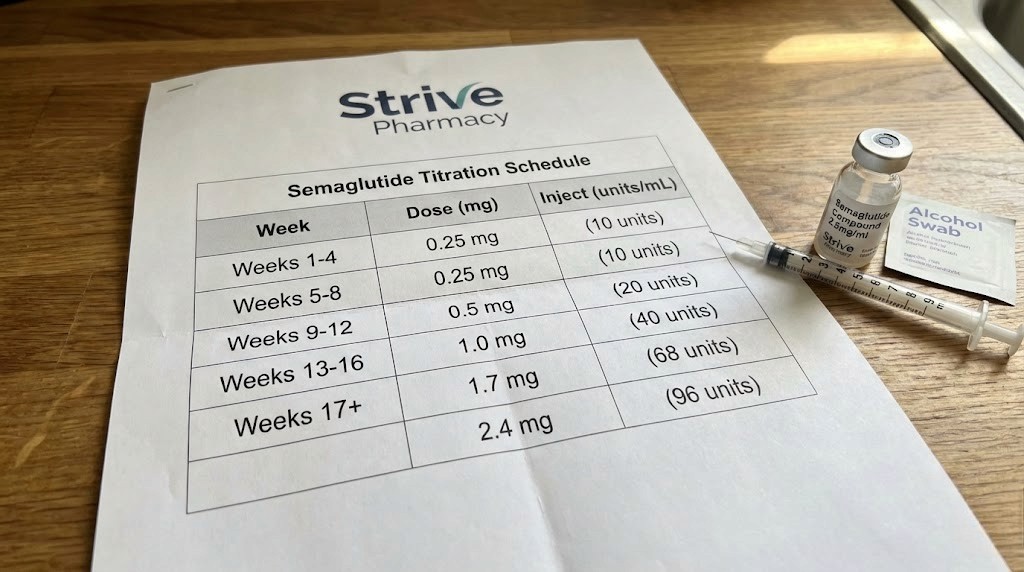
Your vial arrived from Strive Pharmacy. It is sitting in the fridge. And now you are staring at the syringe wondering how many units equal 0.25 mg. You are not alone. Thousands of patients receive compounded semaglutide from Strive every month, and the single biggest source of confusion is translating milligram doses into syringe units. The concentration on your vial label determines everything. Get it wrong, and you are either under-dosing (wasting weeks with no appetite suppression) or over-dosing (spending the next three days fighting nausea that did not need to happen). This guide breaks down every Strive Pharmacy semaglutide formulation, with exact unit conversions for each concentration, complete titration schedules from first injection through maintenance, and practical troubleshooting for the problems that derail most patients during the first twelve weeks. Whether your provider prescribed the standard injectable, the semaglutide with B12 formula, or the glycine-B12 combination, the dosage chart you need is here. No guessing. No rounding errors. Just the specific numbers your semaglutide dosage calculator would give you, laid out in a format you can tape to the fridge next to that vial.
What is Strive Pharmacy and why do their semaglutide formulations matter
Strive Pharmacy operates as both a 503A and 503B compounding facility, which means they hold dual licensing that allows them to produce both patient-specific prescriptions and larger batches of compounded medications. This distinction matters because 503B facilities face stricter FDA oversight, including current Good Manufacturing Practice (cGMP) requirements, than standard 503A pharmacies. The pharmacy holds NABP (National Association of Boards of Pharmacy) accreditation and maintains licensing across all 50 states, giving providers and patients nationwide access to their formulations.
Three injectable semaglutide formulations come from Strive. Each one uses different supporting ingredients alongside the active semaglutide compound. The standard semaglutide contains the GLP-1 receptor agonist as the sole active ingredient. The semaglutide with glycine and B12 adds cyanocobalamin and the amino acid glycine. The semaglutide with B12 and pyridoxine pairs cyanocobalamin with vitamin B6. These differences are not cosmetic. They affect side effect profiles, tolerability during titration, and potentially your overall response to treatment.
Why does the formulation choice matter for dosing? Because each formulation may ship at different concentrations. A 5mg/mL vial requires different syringe calculations than a 2.5mg/mL vial, even though the weekly milligram target stays the same. Your provider selects the formulation and concentration. Your job is reading the vial label correctly and converting milligrams to units without error. The charts below handle that conversion for you.
Compounded semaglutide occupies a specific regulatory space. It is not FDA-approved in the same way that Ozempic or Wegovy are. Instead, compounding pharmacies produce these medications under state pharmacy board regulation when the commercially available product is either unavailable or when a prescriber determines a clinically significant difference exists for the patient. This does not mean compounded semaglutide is unsafe. It means the quality assurance framework differs from brand-name manufacturing. Strive specifically uses semaglutide base powder (not salt forms) with their added ingredients, and their NABP accreditation provides an additional layer of quality verification beyond basic state licensing. For context on how compounding pharmacies compare to traditional pharmaceutical manufacturers, review our guide on compounding pharmacy standards.
Patients reach Strive Pharmacy through telehealth platforms like Lavender Sky Health, direct provider prescriptions, and various telemedicine services that partner with compounding pharmacies. The pharmacy does not sell directly to patients without a prescription. Every vial requires a licensed provider to authorize the specific formulation, concentration, and quantity. This prescription requirement means your dosage chart should match what your provider ordered. If anything on your vial label does not match your provider instructions, call the pharmacy before injecting. Mismatched concentrations are the number one cause of dosing errors with compounded GLP-1 medications.
Understanding semaglutide concentrations and why they change your dosing math
Concentration is everything. The same 0.5 mg weekly dose requires completely different injection volumes depending on whether your vial holds 2.5mg/mL, 5mg/mL, or 10mg/mL solution. Most dosing confusion starts right here, with patients assuming all semaglutide vials work the same way. They do not.
Here is the foundational math. One milliliter (1 mL) equals 100 units on a standard insulin syringe. This is universal. Every U-100 insulin syringe follows this standard. So when your dosage chart says inject 10 units, you are injecting 0.1 mL of solution. The amount of semaglutide in that 0.1 mL depends entirely on the concentration.
At 2.5mg/mL concentration, each unit on the syringe delivers 0.025 mg of semaglutide. At 5mg/mL, each unit delivers 0.05 mg. At 10mg/mL, each unit delivers 0.1 mg. This means a 10-unit injection from a 5mg/mL vial gives you 0.5 mg of semaglutide. That same 10-unit injection from a 2.5mg/mL vial gives you only 0.25 mg. Double the concentration, double the dose per unit. Read that again. This is where mistakes happen.
Strive Pharmacy dispenses semaglutide at concentrations that vary by formulation and vial size. The most common concentrations include 2.5mg/mL (typically in smaller 1 mL vials containing 2.5 mg total), 5mg/mL (in 1 mL vials containing 5 mg total or 2 mL vials containing 10 mg total), and occasionally higher concentrations for patients on maintenance doses. Your vial label states the concentration clearly, usually formatted as "5mg/500mcg/1mL" for the semaglutide/B12 combination, indicating 5 mg semaglutide and 500 mcg B12 per milliliter. Use our reconstitution calculator to verify your specific numbers if your label format differs from these examples.
Why does Strive offer multiple concentrations? Practical reasons. Lower concentrations like 2.5mg/mL work well for starting doses where precision matters most. When you need to inject just 0.25 mg weekly, a 2.5mg/mL vial lets you draw 10 units, which is easy to measure accurately on the syringe. At 5mg/mL, that same 0.25 mg dose requires only 5 units, a smaller and harder-to-read measurement. Higher concentrations become more practical at maintenance doses. If you are injecting 2.5 mg weekly from a 5mg/mL vial, you draw 50 units, a comfortable and precise measurement. At 2.5mg/mL, the same dose would require 100 units, the entire capacity of a standard 1 mL insulin syringe. Understanding these practical implications helps explain why your provider might prescribe different vial sizes as your dose increases. The 5mg/mL specific dosage chart covers this concentration in more detail.
Complete Strive Pharmacy semaglutide dosage chart by concentration
These charts convert your prescribed weekly milligram dose into exact syringe units for each concentration Strive Pharmacy dispenses. Find your vial concentration on the label, then use the corresponding chart. Do not mix charts. A 5mg/mL chart will give you incorrect units if applied to a 2.5mg/mL vial.
Dosage chart for 2.5mg/mL concentration
This concentration typically comes in 1 mL vials containing 2.5 mg total semaglutide. At the starting dose, a single vial lasts approximately 10 weeks. As doses increase, vials last fewer weeks.
Weekly dose (mg) | Volume (mL) | Syringe units | Typical titration phase |
|---|---|---|---|
0.25 mg | 0.10 mL | 10 units | Weeks 1 through 4 |
0.50 mg | 0.20 mL | 20 units | Weeks 5 through 8 |
1.00 mg | 0.40 mL | 40 units | Weeks 9 through 12 |
1.25 mg | 0.50 mL | 50 units | Weeks 13 through 16 |
At this concentration, the maximum comfortable dose per vial is approximately 1.25 mg weekly, since higher doses would require nearly the full vial each week. Most providers transition patients to a higher concentration vial once they pass the 1.0 mg weekly dose. If you are approaching 1.0 mg or above and still using 2.5mg/mL vials, ask your provider about switching to 5mg/mL vials for more practical measurements and better cost efficiency.
Dosage chart for 5mg/mL concentration
The most common Strive Pharmacy concentration. Available in 1 mL vials (5 mg total) and 2 mL vials (10 mg total). The 2 mL vial provides better value for patients on maintenance doses.
Weekly dose (mg) | Volume (mL) | Syringe units | Typical titration phase |
|---|---|---|---|
0.25 mg | 0.05 mL | 5 units | Weeks 1 through 4 |
0.50 mg | 0.10 mL | 10 units | Weeks 5 through 8 |
1.00 mg | 0.20 mL | 20 units | Weeks 9 through 12 |
1.70 mg | 0.34 mL | 34 units | Weeks 13 through 16 |
2.00 mg | 0.40 mL | 40 units | Weeks 17 through 20 |
2.40 mg | 0.48 mL | 48 units | Maintenance (if needed) |
2.50 mg | 0.50 mL | 50 units | Maximum maintenance |
Notice that 0.25 mg requires only 5 units at this concentration. Five units is a tiny measurement on the syringe. If you struggle to read that precisely, your provider might start you on a 2.5mg/mL vial where the same dose equals a more readable 10 units. Precision during the first four weeks matters because under-dosing delays your body adjustment to the medication, while over-dosing triggers unnecessary nausea that can shake your confidence in the treatment. For complete syringe conversion details, see our dedicated chart.
Dosage chart for Strive Pharmacy semaglutide/glycine/B12 formulation
Strive publishes a specific suggested dosing schedule for their glycine/B12 combination. This schedule uses units rather than milligrams, which means the underlying concentration determines the actual milligram dose. Based on their published protocol for the 5mg/mL formulation:
Weeks | Units per injection | Volume (mL) | Estimated mg dose | Frequency |
|---|---|---|---|---|
1 through 4 | 4 units | 0.04 mL | 0.20 mg | Once weekly |
5 through 8 | 8 units | 0.08 mL | 0.40 mg | Once weekly |
9 through 12 | 18 units | 0.18 mL | 0.90 mg | Once weekly |
13 through 16 | 30 units | 0.30 mL | 1.50 mg | Once weekly |
17 and beyond | 44 units | 0.44 mL | 2.20 mg | Once weekly |
This schedule is slightly different from the standard Wegovy protocol. The starting dose of 4 units (approximately 0.20 mg) sits below the typical 0.25 mg starting point, which may help patients who are particularly sensitive to GLP-1 side effects. The jumps between phases are larger than standard protocols, moving from 0.40 mg directly to 0.90 mg rather than the traditional 0.50 mg to 1.00 mg step. Your provider may modify this schedule based on your response and tolerance.
Strive notes specifically that "dosing may deviate from this pattern to accommodate patient-specific needs." This is not just a disclaimer. It is practical guidance. Some patients need slower titration. Others tolerate faster escalation. The chart above represents a starting framework, not an immovable protocol. If you experience significant side effects at any dose level, your provider should adjust the timeline rather than pushing you through discomfort. Compare this approach to the standard semaglutide dosing chart in units to see how Strive schedule aligns with conventional protocols.
Standard semaglutide titration schedule explained week by week
The titration schedule exists for one reason. It keeps you from feeling terrible. Semaglutide works by activating GLP-1 receptors throughout your body, slowing gastric emptying, reducing appetite, and improving insulin sensitivity. These effects are powerful. And they hit your gastrointestinal system hard if you start at a full therapeutic dose without giving your body time to adapt.
Weeks one through four are your introduction phase. At 0.25 mg weekly, most patients notice mild changes. Maybe slightly less hunger between meals. Maybe a vague sense of fullness that was not there before. Some patients feel nothing at this dose. That is normal. The purpose of 0.25 mg is not dramatic weight loss. It is letting your GLP-1 receptors upregulate and your stomach motility adjust without triggering the severe nausea that makes patients abandon treatment entirely.
During this phase, eat normally but pay attention to portion sizes. Many patients instinctively eat less without trying. If you do experience nausea, it typically hits hardest 24 to 48 hours after injection and resolves within a day or two. Injecting in the evening near bedtime, as Strive specifically recommends, allows you to sleep through the peak side effect window. Small, frequent meals also help. Avoid greasy, heavy foods for the first few days after each injection. For detailed guidance on how quickly semaglutide starts working, check our timeline guide.
Weeks five through eight bring the first real dose increase to 0.50 mg. This is where appetite suppression becomes noticeable for most patients. Food thoughts become less intrusive. Portions naturally decrease. The hunger signals that used to drive you to the kitchen at 9 PM start to quiet down. Weight loss typically begins in this phase, averaging 1 to 3 pounds per week for most patients, though individual results vary significantly based on starting weight, diet quality, and activity level.
Side effects often resurface briefly after each dose increase. Expect one to three days of increased nausea, possibly some digestive changes, and maybe some fatigue. These symptoms should resolve within the first week at the new dose. If they persist beyond seven days or worsen rather than improve, contact your provider before the next injection. Persistent symptoms may indicate you need more time at the current dose before escalating.
Weeks nine through twelve mark the transition to 1.0 mg weekly. For many patients, this is the sweet spot where meaningful, consistent weight loss occurs. Clinical trials show the most significant appetite reduction happens between 1.0 mg and 1.7 mg weekly. You should be losing weight consistently at this point. If you are not, the issue is rarely the medication itself. It is usually dietary habits that have not adjusted to match the reduced appetite. Common reasons for stalled weight loss on semaglutide include liquid calories, mindless snacking despite reduced hunger, and insufficient protein intake that leads to muscle loss rather than fat loss.
Weeks thirteen through sixteen continue the escalation to 1.7 mg. Not every patient needs this dose. If you are losing weight consistently at 1.0 mg with manageable side effects, staying at that dose is perfectly reasonable. The goal is finding the minimum effective dose, not chasing the maximum. Higher doses increase side effect intensity and cost without proportionally increasing weight loss for patients already responding well. Discuss with your provider whether continued escalation makes sense based on your specific trajectory.
Week seventeen and beyond represents the maintenance phase. For patients who need it, doses can reach 2.0 mg, 2.4 mg, or the compounded maximum of 2.5 mg weekly. These higher doses are typically reserved for patients who have plateaued at lower doses despite good dietary and exercise habits. The duration of semaglutide treatment varies, but most patients remain on the medication long-term since discontinuation typically leads to weight regain.
How to read your Strive Pharmacy vial label correctly
The vial label contains every piece of information you need for accurate dosing. But compounding pharmacy labels can look different from brand-name medication labels, and the format varies between Strive formulations. Here is what to look for and what each element means.
The concentration appears as a ratio, usually formatted as milligrams per milliliter. For the semaglutide/B12 combination, you might see "5mg/500mcg/1mL" which tells you the vial contains 5 mg of semaglutide and 500 mcg of B12 per each milliliter of solution. The number before the slash on the semaglutide component is your concentration. In this case, 5mg/mL. This is the number you use for all dose calculations.
Total vial volume appears separately. A label reading "2 mL" with a concentration of "5mg/mL" means the vial contains 10 mg of semaglutide total (2 mL multiplied by 5 mg/mL). This tells you how many weeks the vial will last at your current dose. At 1.0 mg weekly, a 10 mg vial lasts 10 weeks. At 2.5 mg weekly, it lasts 4 weeks. Planning your refill timing around these calculations prevents gaps in treatment that can disrupt your progress.
The beyond-use date (BUD) differs from a traditional expiration date. Compounded medications have shorter stability windows than brand-name products. Strive vials typically carry a BUD of 90 to 180 days from compounding, but once you puncture the rubber stopper, the clock accelerates. Most multi-use compounded vials should be used within 28 to 30 days after first use. Write the date you first draw from the vial directly on the label with a permanent marker. This simple habit prevents you from using degraded medication that has lost potency. For broader peptide storage guidance, see our complete reference.
Lot numbers and pharmacy contact information should also appear on the label. Save this information. If you experience unexpected side effects or suspect a quality issue, the lot number allows the pharmacy to trace your specific batch. If your label is missing any of these elements, or if the information does not match what your provider prescribed, contact Strive Pharmacy at their customer service line before using the medication. Prescription errors happen. Catching them before injection is always better than troubleshooting afterward.
Step-by-step injection guide for Strive Pharmacy semaglutide
Drawing and injecting compounded semaglutide from a vial differs from using a pre-filled pen like Ozempic or Wegovy. The process involves more steps but gives you complete control over dose precision. Here is the exact procedure, assuming you are using a standard U-100 insulin syringe.
Gather your supplies first. You need the semaglutide vial, an unused insulin syringe (typically 0.5 mL or 1 mL capacity depending on your dose), an alcohol swab, and a sharps disposal container. Wash your hands thoroughly with soap and water. This is not optional hygiene advice. It is infection prevention. Introducing bacteria through a subcutaneous injection can cause local infections that require medical treatment.
Remove the vial from the refrigerator 15 to 20 minutes before injection. Cold medication stings more during injection. Letting it warm slightly to room temperature reduces discomfort without compromising the medication. Do not microwave, run under hot water, or otherwise heat the vial. Gentle warming at room temperature is sufficient. Check the solution visually before drawing. It should be clear and colorless. Cloudy, discolored, or particle-containing solution may indicate degradation or contamination. Do not use a vial with visible changes.
Clean the rubber stopper on the vial with the alcohol swab. Let it dry completely. Do not blow on it to speed drying. Pull the syringe plunger back to the number of units your provider prescribed. This draws air into the syringe. Insert the needle through the rubber stopper and push the air into the vial. This air injection equalizes pressure inside the vial, making it easier to draw medication cleanly. Turn the vial upside down with the needle still inserted. Pull the plunger down slowly to draw your prescribed number of units.
Check for air bubbles. Small bubbles are common. Tap the syringe gently to move bubbles toward the needle tip, then push the plunger slightly to expel them back into the vial. If you lose some medication in this process, draw more to reach your target units. Air bubbles in a subcutaneous injection are not dangerous, but they displace medication volume, meaning you receive less than your intended dose. Accuracy matters more than speed during this step.
Choose your injection site. Rotate between three areas: the abdomen (at least two inches from the navel), the front of the thigh, and the back of the upper arm. Use a different spot each week within these zones. Consistent rotation prevents lipodystrophy, a condition where repeated injections in one spot alter the fat tissue beneath the skin. Clean the injection site with a fresh alcohol swab and let it dry.
Pinch a fold of skin at the injection site. Insert the needle at a 90-degree angle in one smooth motion. Push the plunger steadily until all medication is delivered. Wait five seconds before withdrawing the needle. This prevents medication from leaking back through the injection path. Release the skin fold after removing the needle. Do not rub the injection site.
A small drop of blood at the insertion point is normal. Apply gentle pressure with a clean cotton ball if needed. See our complete injection technique guide for additional tips on reducing discomfort and improving absorption.
Dispose of the used syringe immediately in your sharps container. Never recap a used needle. Never reuse syringes. One syringe per injection, every time. A sharps container costs less than five dollars and prevents needlestick injuries that could expose household members to biological hazards. When the container is three-quarters full, seal it and dispose of it through your local sharps disposal program. Many pharmacies accept sealed sharps containers for free disposal.
Comparing Strive Pharmacy semaglutide formulations
Choosing between Strive formulations is not just about preference. Each combination serves a different clinical purpose. Understanding these differences helps you have a more productive conversation with your provider about which formulation aligns with your needs and tolerance profile.
Standard semaglutide
The standard formulation contains only semaglutide as the active ingredient, with appropriate excipients for stability and sterility. This is the simplest option and mirrors what you would get from brand-name products (minus the FDA approval pathway). Advantages include a clear side effect profile, since any reactions are attributable to semaglutide alone rather than combination ingredients. Disadvantages include no additional support for common GLP-1 side effects. Pricing starts at approximately $100 per vial, though exact costs vary by provider and vial size. This formulation suits patients who want the most straightforward version of compounded semaglutide, particularly those who already supplement with B vitamins separately.
Semaglutide with glycine and B12
This is Strive most popular combination formulation. Glycine is a non-essential amino acid that plays roles in protein synthesis, collagen production, and neurotransmitter function. Some practitioners believe glycine helps preserve lean muscle mass during rapid weight loss, though clinical evidence specifically supporting this benefit in GLP-1 patients remains limited. Cyanocobalamin (vitamin B12) addresses potential deficiency that develops when caloric intake drops significantly. B12 deficiency causes fatigue, weakness, cognitive fog, and mood changes, symptoms that overlap with and compound the side effects of semaglutide itself. Having B12 built into the formulation eliminates the need for separate supplementation. For a deeper comparison, explore our compounded semaglutide with B12 dosage chart.
Pricing starts at approximately $90 per vial, making it slightly cheaper than the standard formulation despite containing additional ingredients. This pricing reflects competitive positioning rather than production cost differences. The glycine/B12 combination is what Strive recommends most frequently through their provider partners.
Semaglutide with B12 and pyridoxine
This formulation replaces glycine with pyridoxine (vitamin B6). Vitamin B6 supports protein metabolism, neurotransmitter synthesis, and immune function. During significant caloric restriction, B6 requirements may increase as the body processes stored fat and protein for energy. The combination of B12 and B6 creates a more comprehensive B-vitamin support system compared to B12 alone. This formulation is available as mini troches (oral tablets) rather than injectable, starting at approximately $4 per troche. The oral route appeals to patients with needle anxiety or those who prefer the convenience of a daily oral dose over weekly injections. However, oral bioavailability of semaglutide is lower than injectable, meaning the effective dose may differ from what injection patients experience.
Semaglutide sublingual drops
Strive also produces semaglutide as sublingual drops, delivered under the tongue for absorption through the oral mucosa. This formulation starts at approximately $80 per package. Sublingual delivery bypasses first-pass liver metabolism, potentially improving bioavailability compared to swallowed oral forms, though it still does not match injectable absorption rates. Patients choosing sublingual drops should understand that dosing protocols differ from injectable schedules, and their provider should specify the appropriate titration for this delivery method. Read our guide on sublingual peptide delivery for detailed comparisons between administration routes.
Formulation | Route | Starting price | Key additions | Best for |
|---|---|---|---|---|
Standard semaglutide | Injectable | $100/vial | None | Patients wanting simplest option |
Semaglutide/Glycine/B12 | Injectable | $90/vial | Glycine, B12 | Most patients, muscle preservation focus |
Semaglutide/B12/Pyridoxine | Oral troche | $4/troche | B12, B6 | Needle-averse patients |
Semaglutide sublingual | Sublingual drops | $80/package | None listed | Patients preferring sublingual delivery |
How long does a Strive Pharmacy semaglutide vial last
Vial longevity depends on two variables: total semaglutide content and your weekly dose. This calculation is straightforward, but patients consistently underestimate how quickly they will move through vials as doses escalate. Planning refill timing prevents treatment gaps that disrupt appetite suppression and momentum.
For a 1 mL vial at 5mg/mL concentration (5 mg total):
Weekly dose | Weeks per vial | Monthly cost estimate |
|---|---|---|
0.25 mg | 20 weeks | Roughly $18 to $20/month |
0.50 mg | 10 weeks | Roughly $36 to $40/month |
1.00 mg | 5 weeks | Roughly $72 to $80/month |
1.70 mg | ~3 weeks | Roughly $120 to $135/month |
2.50 mg | 2 weeks | Roughly $180 to $200/month |
For a 2 mL vial at 5mg/mL concentration (10 mg total):
Weekly dose | Weeks per vial | Monthly cost estimate |
|---|---|---|
0.25 mg | 40 weeks | Varies by provider pricing |
0.50 mg | 20 weeks | Varies by provider pricing |
1.00 mg | 10 weeks | Varies by provider pricing |
1.70 mg | ~6 weeks | Varies by provider pricing |
2.50 mg | 4 weeks | Varies by provider pricing |
The 2 mL vial provides significantly better value per milligram at higher doses. If your provider offers a choice between vial sizes, the larger vial almost always makes financial sense for patients past the initial titration phase. However, remember the 28-to-30-day use window after first puncture. If a 10 mg vial would last you longer than 28 days at your current dose, the smaller vial prevents waste from discarding unused medication past its stability window. Storage duration directly impacts how much usable medication you actually extract from each vial.
Order refills at least two weeks before your current vial runs out. Compounding pharmacies experience supply fluctuations, and shipping takes three to seven business days. Building a two-week buffer prevents the scramble of running out and missing doses during the gap. Your provider can set up recurring prescriptions with the pharmacy to automate this process. Some telehealth platforms that work with Strive also offer automatic refill scheduling.
Managing side effects during Strive semaglutide titration
Side effects are not a sign that semaglutide is harming you. They are a sign that it is working. The same mechanism that suppresses appetite, delayed gastric emptying and reduced food intake signaling, also causes the nausea, fullness, and digestive changes that patients report most frequently. Understanding what to expect at each dose level turns anxiety into preparedness.
The first four weeks at 0.25 mg produce the mildest side effects. About 30 to 40 percent of patients experience some nausea during this phase, usually peaking 24 to 48 hours after injection and resolving within two to three days. Strive specifically recommends injecting near bedtime so you can sleep through the peak window. This is practical advice based on patient feedback, not just a generic suggestion. Evening injection timing has become standard practice among GLP-1 prescribers precisely because it works.
The dose increases at weeks five and nine bring the most challenging side effect periods. Moving from 0.25 mg to 0.50 mg and from 0.50 mg to 1.0 mg represent the steepest relative dose jumps in the titration schedule (100% increases each time). Your body adapted to the previous dose. Now it needs to adapt again. Expect two to five days of increased nausea, possible changes in alcohol tolerance, constipation or diarrhea, and reduced energy after each increase. These symptoms almost always resolve by day seven at the new dose.
Nausea management strategies that work. Eat five to six small meals instead of three large ones. Avoid high-fat foods for the first three days after each injection. Stay hydrated with water, clear broths, or electrolyte drinks. Ginger tea or ginger supplements reduce GLP-1-related nausea for many patients. If nausea persists beyond five days, your provider can prescribe ondansetron (Zofran) as a rescue medication. Some providers prescribe ondansetron proactively alongside the first few dose increases, particularly for patients with histories of motion sickness or pregnancy nausea, as these populations tend to experience stronger GLP-1 side effects.
Constipation becomes the dominant side effect for many patients after nausea subsides. Delayed gastric emptying slows the entire digestive tract, reducing bowel movement frequency. Increasing fiber intake through vegetables, psyllium husk, or fiber supplements helps. Magnesium citrate (200 to 400 mg daily) acts as a gentle osmotic laxative that most patients tolerate well. Staying physically active, even walking 20 to 30 minutes daily, stimulates gut motility and counteracts semaglutide constipation effect.
Fatigue during the first month often correlates with reduced caloric intake rather than a direct medication effect. When your appetite drops and you eat 500 to 1,000 fewer calories daily, your body adjusts energy levels accordingly. Ensuring adequate protein intake (0.8 to 1.0 grams per pound of goal body weight daily) preserves muscle mass and stabilizes energy. B12 deficiency also causes fatigue, which is one reason Strive glycine/B12 formulation exists. If you use the standard formulation, consider supplementing with B12 separately. For broader context on peptide safety considerations, our comprehensive guide covers what to monitor throughout treatment.
When to contact your provider about side effects
Most side effects are uncomfortable but not dangerous. However, certain symptoms require immediate medical attention. Severe, persistent vomiting that prevents you from keeping down fluids for more than 24 hours risks dehydration and electrolyte imbalance. Sharp, radiating abdominal pain could indicate pancreatitis. Vision changes, severe headaches, or confusion may signal other serious reactions. Allergic reactions including rash, swelling, or difficulty breathing require emergency care.
Less urgent but still worth reporting: side effects that do not improve after seven days at any dose level, persistent diarrhea that interferes with daily activities, significant hair thinning (which can occur during rapid weight loss phases and may relate to nutritional deficiencies rather than medication directly), mood changes including increased anxiety or depression, and hair loss patterns that seem disproportionate to weight loss speed.
Strive semaglutide versus brand-name Ozempic and Wegovy
The active molecule is the same. Semaglutide is semaglutide. But the delivery, regulation, and support infrastructure differ substantially between Strive compounded product and brand-name alternatives. Making an informed choice requires understanding exactly what those differences mean for your treatment experience.
Ozempic and Wegovy use pre-filled, single-use injection pens. You dial your dose, press a button, and the device delivers it. No drawing from vials. No unit calculations. No air bubble management. The convenience factor is significant for patients uncomfortable with manual injection preparation. Strive compounded semaglutide comes in multi-use vials requiring you to draw each dose with an insulin syringe. This adds steps and introduces the possibility of measurement error. The trade-off: vials allow any dose your provider prescribes, while pens lock you into fixed increments (0.25 mg, 0.50 mg, 1.0 mg for Ozempic; 0.25 mg, 0.50 mg, 1.0 mg, 1.7 mg, 2.4 mg for Wegovy).
The cost difference is dramatic. Ozempic without insurance runs $800 to $1,200 per month. Wegovy costs approximately $1,300 to $1,500 per month. Strive compounded semaglutide starts at $90 to $100 per vial, with monthly costs ranging from $18 at starting doses to approximately $200 at maximum doses. For patients without insurance coverage for brand-name GLP-1 medications, compounded semaglutide provides access to the same molecule at a fraction of the cost. Our peptide cost calculator helps you compare total treatment expenses across different sources and timeframes. For a broader comparison between the two major GLP-1 medications, see our semaglutide versus tirzepatide comparison.
FDA approval is the most significant regulatory difference. Ozempic and Wegovy have completed rigorous clinical trials demonstrating safety and efficacy, and their manufacturing occurs under continuous FDA inspection. Strive compounded semaglutide is regulated by state pharmacy boards and does not carry FDA approval. The active ingredient is the same molecule, but manufacturing standards, quality assurance processes, and batch testing protocols differ. This matters more for some patients than others. Those with complex medical histories or on multiple medications may prefer the predictability of FDA-approved products. Otherwise healthy patients using semaglutide primarily for weight management often find the compounded version adequately reliable, especially from NABP-accredited pharmacies like Strive.
Insurance coverage creates another decision point. Some insurance plans cover Ozempic for type 2 diabetes or Wegovy for obesity with appropriate prior authorization. If your plan covers one of these, the out-of-pocket cost may be comparable to or less than compounded semaglutide. Check with your insurer before defaulting to compounded options. If coverage is denied or unavailable, Strive compounded product provides a financially accessible alternative that uses the same active ingredient. Explore Ozempic alternatives for a broader overview of options beyond brand-name and compounded routes.
Common dosing mistakes and how to avoid them
Dosing errors with compounded semaglutide are preventable. Every single one. But they happen frequently because patients make assumptions that do not survive contact with their actual vial. Here are the mistakes that derail treatment most often, along with the specific fixes.
Using the wrong concentration chart
This is the most dangerous mistake. You found a semaglutide dosage chart online showing 10 units equals 0.5 mg. But your vial is 2.5mg/mL, not 5mg/mL. At 2.5mg/mL, 10 units only gives you 0.25 mg, not 0.5 mg. You have been under-dosing for a month and wondering why the medication is not working. The fix: always verify your vial concentration against the specific chart you use. If the chart does not list a concentration, do not use it. The unit-based conversion chart on our site specifies concentrations for every entry.
Not accounting for dead space in the syringe
Standard insulin syringes have a small amount of dead space in the hub where the needle connects to the barrel. This dead space holds approximately 0.5 to 1 unit of solution that never gets injected. For patients on low doses (5 to 10 units), this represents 5 to 20 percent of their intended dose. Low dead space syringes minimize this issue. Ask your pharmacy or provider about low dead space options if you are in the starting dose phase.
Skipping doses and resuming at the previous level
Missing one dose within the five-day window is manageable. Simply inject when you remember and adjust your schedule. Missing two or more consecutive weeks resets your GLP-1 tolerance. Your body has partially readjusted to life without the medication, and restarting at your previous dose produces side effects similar to first starting treatment. If you miss more than two weeks, most providers recommend stepping back one dose level and re-titrating over two to four weeks. See common peptide mistakes for more troubleshooting scenarios.
Storing the vial incorrectly
Leaving semaglutide at room temperature for extended periods degrades the peptide. Freezing it destroys the molecular structure entirely. The medication must stay between 36 and 46 degrees Fahrenheit (2 to 8 Celsius) in the refrigerator. Storing it in the refrigerator door exposes it to temperature swings every time the door opens. Store it on an interior shelf toward the back. For travel guidance and temperature management, check our peptide storage guide.
Escalating too quickly because you are not seeing results
Patience is the hardest part. Four weeks per dose level feels like an eternity when you are eager for change. But escalating before your body adapts does not produce faster results. It produces faster side effects. Some patients jump from 0.25 mg to 1.0 mg after just two weeks because they did not feel anything at the starting dose. Then they spend the next month dealing with severe nausea, vomiting, and the discouraging feeling that semaglutide is not for them. The medication was working. They just did not give it time. If you truly feel nothing at 0.25 mg after a full four weeks, that is normal. The purpose of the starting dose is tolerance building, not dramatic weight loss.
Switching to or from Strive Pharmacy semaglutide
Patients switch semaglutide sources for many reasons. Cost optimization. Supply shortages at their current pharmacy. Provider changes. Desire to try a different formulation. Regardless of the reason, switching requires careful attention to concentration differences that can dramatically alter your effective dose.
When switching from Ozempic or Wegovy to Strive compounded semaglutide, the milligram dose stays the same. If you were injecting 1.0 mg weekly with Ozempic, you still need 1.0 mg weekly from Strive. But the delivery method changes entirely. You move from a pre-filled pen to a vial and syringe. Your first self-drawn injection may feel intimidating. Practice the drawing technique with your provider or watch instructional videos from your pharmacy before your first actual dose. The mechanical skill of drawing from a vial takes two or three practice attempts to master.
When switching between compounding pharmacies (including switching to or from Strive), concentration changes are the critical variable. If your previous pharmacy dispensed 2.5mg/mL and Strive dispenses 5mg/mL at the same milligram dose, your injection volume halves. You go from 20 units to 10 units for the same 0.5 mg dose. Updating your dosage chart to match the new concentration is essential before your first injection. Never assume the unit count stays the same when you change pharmacies. Our medication conversion charts cover transitions between different GLP-1 formulations and concentrations.
When switching from another compounded semaglutide to Strive glycine/B12 formulation, the primary change is the addition of glycine and B12 to the injection. These additions should not alter the semaglutide dose or require titration adjustments. However, some patients report slight differences in how the injection feels, injection site reactions, and post-injection side effect patterns when changing formulations. These differences are usually minor and resolve within one to two injection cycles.
If you are considering switching from semaglutide to tirzepatide, that is a fundamentally different transition since you are changing medications entirely, not just pharmacies. Tirzepatide activates both GLP-1 and GIP receptors (dual agonist mechanism), while semaglutide targets only GLP-1. The dosing schedule, titration timeline, and expected responses differ significantly. Our tirzepatide versus semaglutide dosage comparison breaks down these differences in detail.
Strive Pharmacy semaglutide for special populations
Not every patient fits neatly into the standard titration schedule. Certain populations require modified approaches that account for physiological differences, medication interactions, or heightened side effect sensitivity.
Patients with type 2 diabetes
Semaglutide was originally developed for type 2 diabetes management before its weight loss benefits became the primary use case. Diabetic patients using Strive semaglutide benefit from both glycemic control and weight reduction. However, if you take insulin or sulfonylureas, starting semaglutide requires careful coordination. These medications lower blood sugar through different mechanisms. Adding semaglutide on top creates additive hypoglycemia risk. Most providers reduce insulin or sulfonylurea doses by 20 to 30 percent when initiating semaglutide, then adjust based on glucose monitoring over the first four to eight weeks.
Patients over 65
Older patients metabolize medications differently and often have reduced kidney function that affects drug clearance. While semaglutide is generally safe in older populations, some providers use a more conservative titration schedule, spending six to eight weeks at each dose level rather than four. The goal of preserving lean muscle mass becomes even more critical in this age group, since sarcopenia (age-related muscle loss) combined with rapid weight loss can significantly impact functional capacity. The glycine/B12 formulation may offer marginal benefits for muscle preservation, though clinical evidence remains limited.
Patients with gastrointestinal conditions
Pre-existing conditions like gastroparesis, inflammatory bowel disease, or severe GERD may intensify semaglutide gastrointestinal side effects. Patients with gastroparesis face particular challenges since semaglutide further slows already-delayed gastric emptying. Most gastroenterologists advise against GLP-1 medications for patients with moderate to severe gastroparesis. For mild cases or other GI conditions, starting at even lower doses (0.125 mg weekly via precise syringe measurement from a 2.5mg/mL vial) and titrating over eight to twelve weeks per level can improve tolerability.
Women of reproductive age
Semaglutide is contraindicated in pregnancy and should be discontinued at least two months before planned conception. The delayed gastric emptying caused by semaglutide can reduce absorption of oral contraceptives, potentially reducing their effectiveness. Women using birth control pills should discuss backup contraception methods with their provider while on semaglutide. For women experiencing menopause-related weight gain, semaglutide can be particularly effective since it targets the metabolic slowdown and appetite dysregulation common during hormonal transitions. Explore our guide on peptide options for menopause for broader context.
Maximizing weight loss results on Strive Pharmacy semaglutide
The medication creates the conditions for weight loss. You still have to capitalize on those conditions. Semaglutide suppresses appetite, slows digestion, and improves insulin sensitivity. But it does not force you to make better food choices, exercise, sleep adequately, or manage stress. Patients who achieve the best outcomes combine medication with intentional lifestyle modifications that amplify the biological advantages semaglutide provides.
Protein intake is the single most important dietary factor during GLP-1 treatment. When your appetite drops and total caloric intake decreases, protein often drops disproportionately because it requires more effort to prepare and consume than carbohydrate-rich convenience foods. Inadequate protein during caloric restriction leads to muscle loss rather than fat loss. Target 0.8 to 1.0 grams of protein per pound of goal body weight daily. For a person targeting 160 pounds, that means 128 to 160 grams of protein daily. Spread protein across all meals and snacks rather than loading it into one large serving.
Strength training preserves muscle mass during weight loss and improves body composition outcomes. Even two to three sessions per week of resistance training make a measurable difference in the ratio of fat loss to muscle loss. You do not need a gym membership or heavy weights. Bodyweight exercises, resistance bands, or dumbbells at home provide sufficient stimulus. The combination of adequate protein and consistent resistance training ensures that the weight you lose comes primarily from fat stores rather than lean tissue.
Hydration often suffers when appetite decreases because thirst signals can dampen alongside hunger. Dehydration worsens constipation (already a common semaglutide side effect), increases fatigue, and can mimic hunger when you are actually just thirsty. Aim for half your body weight in ounces of water daily as a baseline. If you exercise or live in a hot climate, increase accordingly. Electrolyte supplementation may be needed if you experience lightheadedness or muscle cramping, particularly during the first few weeks of reduced food intake.
Sleep quality directly impacts weight loss velocity and semaglutide effectiveness. Poor sleep increases cortisol, promotes insulin resistance, and amplifies hunger hormones that work against semaglutide appetite-suppressing effects. Seven to nine hours of quality sleep supports optimal hormonal balance for weight loss. If semaglutide side effects disrupt your sleep (nausea, acid reflux when lying down), adjusting injection timing or taking an antacid before bed can help.
Track your progress with more than just the scale. Body measurements (waist, hips, chest, thighs), progress photos, clothing fit, and how you feel physically provide more complete feedback than weight alone. Semaglutide combined with strength training can result in body recomposition where you lose fat and gain muscle simultaneously, meaning the scale moves slowly while your body shape changes dramatically. Trust the process when measurements improve even if the number on the scale stalls temporarily. SeekPeptides members access detailed tracking tools and progress monitoring frameworks designed specifically for peptide-assisted weight loss protocols.
Understanding Strive Pharmacy accreditation and quality
When you inject medication into your body weekly, the quality and reliability of that medication matters enormously. Compounding pharmacy quality varies significantly across the industry, and not all facilities maintain equivalent standards. Strive Pharmacy credentials and regulatory status provide context for evaluating their product quality.
NABP (National Association of Boards of Pharmacy) accreditation indicates that Strive meets standards set by the national organization that supports state pharmacy boards. This voluntary accreditation involves facility inspections, documentation reviews, and compliance assessments beyond what basic state licensing requires. While NABP accreditation is not equivalent to PCAB (Pharmacy Compounding Accreditation Board) accreditation, which is considered the gold standard for compounding pharmacies, it does represent a commitment to quality that goes beyond minimum requirements.
The 503A and 503B dual licensing means Strive operates under two different regulatory frameworks. Section 503A of the Federal Food, Drug, and Cosmetic Act allows pharmacies to compound medications for individual patients based on specific prescriptions. Section 503B creates a category called outsourcing facilities that can compound without individual prescriptions and distribute to healthcare facilities, but must register with the FDA and comply with cGMP requirements. Having both licenses means Strive can serve individual patients and larger healthcare systems. The 503B designation brings FDA registration and more rigorous manufacturing standards.
Strive Pharmacy was named in a lawsuit by Eli Lilly alleging false advertising related to compounded products. A federal judge subsequently dismissed the case. This lawsuit reflects broader pharmaceutical industry tensions between brand-name manufacturers and compounding pharmacies rather than specific quality concerns about Strive products. Multiple compounding pharmacies have faced similar legal challenges from manufacturers whose brand-name products compete with compounded alternatives. The dismissal suggests the court did not find merit in the specific claims against Strive.
When evaluating any compounding pharmacy, ask about their potency testing (do they verify that each batch contains the labeled amount of active ingredient), sterility testing (do they test for microbial contamination), endotoxin testing (do they screen for bacterial toxins), and stability testing (have they verified how long their formulations remain potent under specified storage conditions). Reputable pharmacies conduct all four types of testing and can provide certificates of analysis upon request. Compare these quality markers across peptide vendor options to make an informed choice.
Frequently asked questions
What concentration does Strive Pharmacy semaglutide come in?
Strive Pharmacy dispenses semaglutide at multiple concentrations depending on the formulation and vial size. The most common is 5mg/mL, available in 0.5 mL vials (2.5 mg total), 1 mL vials (5 mg total), and 2 mL vials (10 mg total). Some formulations also come at 2.5mg/mL for patients on starting doses who need more precise low-volume measurements. Always verify the concentration on your specific vial label before calculating your dose in syringe units.
How many units is 0.25 mg from a Strive 5mg/mL vial?
At 5mg/mL concentration, 0.25 mg equals 5 units (0.05 mL) on a standard U-100 insulin syringe. This is a small measurement. If you find it difficult to read precisely, ask your provider about using a 2.5mg/mL vial where the same 0.25 mg dose equals a more readable 10 units. Our syringe conversion chart covers all common concentrations.
Is Strive Pharmacy semaglutide the same as Ozempic?
The active molecule is identical. Both contain semaglutide, a GLP-1 receptor agonist. The differences lie in manufacturing oversight (Ozempic is FDA-approved, Strive is compounded), delivery method (Ozempic uses pre-filled pens, Strive uses multi-dose vials), formulation additions (Strive may include glycine, B12, or B6), and cost (Ozempic costs $800 to $1,200 per month without insurance versus $90 to $200 per month for Strive). Review our Ozempic alternatives guide for a comprehensive comparison.
Can I use Strive semaglutide with other medications?
Semaglutide delays gastric emptying, which can affect absorption of some oral medications. Discuss all current medications with your provider before starting. Particular attention is needed for insulin and sulfonylureas (hypoglycemia risk), oral contraceptives (reduced absorption), thyroid medications (altered absorption timing), and blood thinners (variable absorption). Your provider may adjust medication timing or doses to account for semaglutide effects on gastric motility.
How should I store my Strive Pharmacy semaglutide vial?
Refrigerate at 36 to 46 degrees Fahrenheit (2 to 8 Celsius) on an interior shelf, not in the door. Never freeze. Protect from direct light. After first use, mark the date on the vial and discard after 28 to 30 days regardless of remaining volume. During brief transport, use an insulated cooler with ice packs. For detailed guidance, see our semaglutide refrigeration guide.
What if I experience severe nausea on Strive semaglutide?
Mild nausea is normal and typically peaks 24 to 48 hours after injection, resolving within a few days. For management: inject near bedtime (Strive recommended approach), eat small frequent meals, avoid greasy foods for 48 hours post-injection, and try ginger tea or supplements. If nausea persists beyond seven days or causes inability to keep fluids down, contact your provider about dose reduction or anti-nausea medication like ondansetron.
How long does it take to see weight loss results with Strive semaglutide?
Appetite suppression typically begins within the first one to two weeks. Measurable weight loss usually starts during weeks two through four. Significant weight loss (5 percent or more of body weight) typically occurs between months two and four as doses escalate into the therapeutic range. Peak weight loss velocity occurs between 1.0 mg and 1.7 mg weekly for most patients.
Does Strive Pharmacy ship to all 50 states?
Strive Pharmacy holds licensing in all 50 states. However, specific formulation availability may vary by state due to individual state pharmacy board regulations on compounding. Verify that your specific formulation ships to your state before initiating a prescription. Your prescribing provider or Strive customer service can confirm state-specific availability.
External resources
For researchers serious about optimizing their weight loss protocols, SeekPeptides provides the most comprehensive resource available for understanding peptide-assisted weight management. Members access detailed dosing protocols, calculators, and a community of thousands who have navigated these exact questions about compounding pharmacies, dose titration, and treatment optimization. Whether you are starting your first vial or switching pharmacies, the knowledge foundation makes the difference between guessing and knowing.
In case I do not see you, good afternoon, good evening, and good night. May your doses stay accurate, your vials stay cold, and your progress stay consistent.