Feb 11, 2026
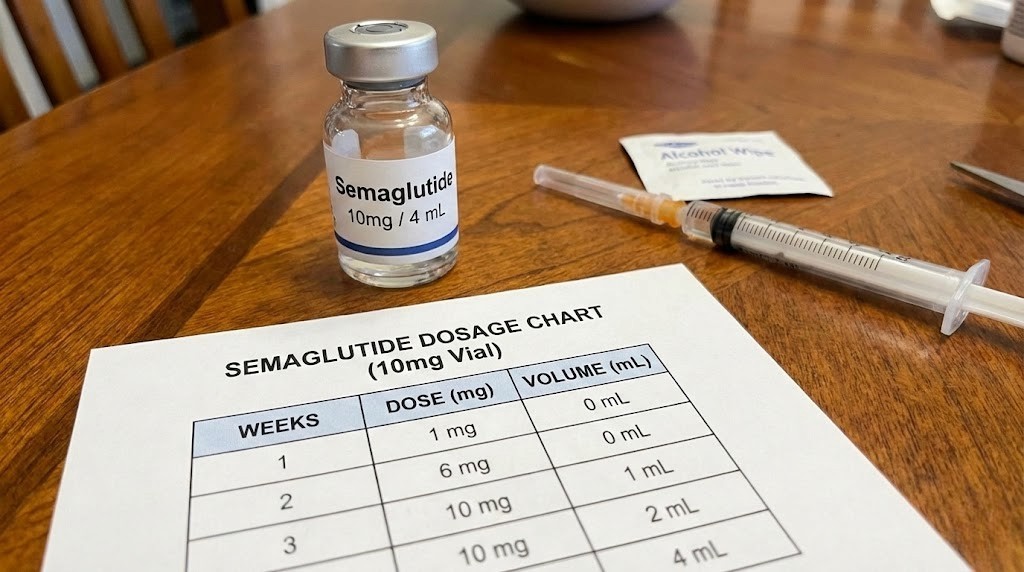
You have got a 10mg vial of semaglutide sitting in front of you. Maybe it just arrived. Maybe it has been in the fridge for a few days while you worked up the nerve. Either way, you are staring at a tiny vial of lyophilized powder and wondering the same thing every researcher wonders at this exact moment.
How much water do I add? How many units do I draw? What does 0.25mg actually look like on an insulin syringe?
These are not stupid questions. They are critical ones. Get the reconstitution wrong and you are injecting the wrong dose every single week for months. Too much water and your concentration drops, meaning you need to draw larger volumes. Too little water and the math gets tricky, the margins for error shrink, and a single unit off on the syringe means a meaningful difference in your weekly dose. The 10mg vial is the most common size researchers work with, yet finding a clear, complete dosage chart that covers every reconstitution scenario remains surprisingly difficult. Most guides assume you already know the basics. Most charts skip the unit conversions. And most protocols gloss over the practical details that actually determine whether your research goes smoothly or turns into a frustrating guessing game.
This guide fixes that. Every reconstitution volume. Every concentration. Every unit conversion mapped to milligram doses across the full escalation schedule. Whether you are using 2mL, 3mL, or 5mL of bacteriostatic water, you will find your exact chart below, along with the practical knowledge that separates clean protocols from costly mistakes. SeekPeptides researchers have used these exact charts for thousands of successful protocols, and every number here has been verified against clinical dosing standards.
Let us get into it.
Understanding the semaglutide 10mg vial
Before touching a syringe, you need to understand what you are working with. The 10mg semaglutide vial contains lyophilized (freeze-dried) powder. It is not liquid. It is not ready to inject. The powder must be reconstituted with bacteriostatic water before it becomes an injectable solution.
Semaglutide is a GLP-1 receptor agonist with approximately 94% sequence homology to native human GLP-1. Its half-life of roughly 7 days enables convenient once-weekly dosing, which is why the standard protocol calls for a single injection per week rather than daily administration like some other peptides require.
The 10mg vial is popular for several reasons. It provides enough semaglutide for the initial dose escalation phase. Depending on your target dose, a single vial can supply anywhere from 4 to 40 weeks of weekly injections. That range is enormous, and it illustrates exactly why understanding concentration and dose calculations matters so much.
At the starting dose of 0.25mg per week, your 10mg vial contains 40 potential doses. At the maximum maintenance dose of 2.4mg per week, that same vial drops to roughly 4 doses. The math is simple division, but the implications are significant for planning, budgeting, and storage timelines.
What comes in the vial
The vial contains 10mg of semaglutide in lyophilized form. That is it. No preservatives, no carrier solution, no water. Just dry powder sealed under vacuum or inert gas to maintain stability. Before reconstitution, store the vial at 2 to 8 degrees Celsius (standard refrigerator temperature) or at -20 degrees Celsius for long-term storage.
Once reconstituted, the rules change. Refrigerate at 2 to 8 degrees Celsius. Never freeze reconstituted semaglutide. Use within 28 days for maximum potency and safety. These storage windows are not suggestions. They are hard limits backed by stability data.
Why the 10mg vial is the standard
Compared to the 5mg vial, the 10mg version offers better value per milligram and requires fewer vials over a full protocol. A standard 16 to 20 week escalation protocol uses approximately 22.15mg total (we will break this down precisely later), meaning you need roughly 2 to 3 vials of 10mg to complete the full escalation through maintenance. With 5mg vials, you would need 4 to 5 vials for the same protocol.
The larger vial also provides more flexibility in reconstitution volumes. You can choose your preferred concentration without worrying about working with impossibly small volumes.
Reconstitution basics: choosing your water volume
This is where most guides fail you. They give you one reconstitution volume and call it a day. But the volume of bacteriostatic water you add directly determines your concentration, which determines how many units you draw for each dose, which determines your margin of error.
There is no single "right" amount of water. There are trade-offs.
More water means a lower concentration. Lower concentration means you draw more units per dose, which gives you finer control and smaller margin of error. The downside is larger injection volumes and faster depletion of vial contents (since you are pulling more liquid per dose).
Less water means a higher concentration. Higher concentration means fewer units per dose, smaller injection volumes, and the vial lasts longer in terms of liquid. But the margin for error tightens. One unit off on the syringe represents a bigger dose difference at higher concentrations.
Here are the three most common reconstitution volumes for a 10mg vial, along with the resulting concentrations.
Reconstitution concentration chart
Bacteriostatic water added | Resulting concentration | Mcg per unit (U-100 syringe) | Best for |
|---|---|---|---|
2.0 mL | 5.0 mg/mL | 50 mcg per unit | Experienced researchers wanting minimal volume |
3.0 mL | 3.33 mg/mL | 33.3 mcg per unit | Standard protocol (most common) |
4.0 mL | 2.5 mg/mL | 25 mcg per unit | Maximum precision and easier math |
The 3.0 mL reconstitution is the most widely referenced in clinical and research settings. It produces a concentration of approximately 3.33 mg/mL, where each unit on a U-100 insulin syringe equals roughly 33.3 micrograms (mcg) of semaglutide. This is the concentration we will use as the primary reference throughout this guide, though we will provide charts for all three volumes.
The 4.0 mL option deserves special attention if you prefer cleaner math. At 2.5 mg/mL, each unit equals exactly 25 mcg. That makes dose calculations straightforward, with no repeating decimals, no rounding concerns.
Step-by-step reconstitution process
Gather your supplies first. You need an alcohol swab (or several), a sterile syringe with needle (separate from your injection syringe), the bacteriostatic water vial, and the semaglutide 10mg vial. Work on a clean surface.
Step 1: Wipe the rubber stopper of both the bacteriostatic water vial and the semaglutide vial with separate alcohol swabs. Let them air dry for 10 to 15 seconds.
Step 2: Draw your chosen volume of bacteriostatic water (2.0, 3.0, or 4.0 mL) using a sterile syringe. A larger gauge needle (18 to 21 gauge) works well for this step.
Step 3: Insert the needle through the rubber stopper of the semaglutide vial. Angle the needle so the tip touches the inner glass wall. Release the water slowly, letting it run down the side of the vial. Do not spray directly onto the powder. This prevents excessive foaming.
Step 4: Remove the syringe. Gently swirl or roll the vial between your palms. Never shake. Shaking can denature the peptide and reduce potency. The powder should dissolve within 1 to 3 minutes. If small particles remain, let the vial sit in the refrigerator for 10 to 15 minutes, then swirl again.
Step 5: Label the vial with the date of reconstitution, the concentration (e.g., "10mg in 3mL = 3.33mg/mL"), and the 28-day expiration date. This takes 10 seconds and prevents weeks of confusion later.
For a more detailed walkthrough with additional tips, check our complete peptide reconstitution calculator which automates the math for any vial size and water volume.
The complete semaglutide 10mg vial dosage chart
Here is what you came for. The complete dosage chart covering the standard clinical escalation protocol, mapped to all three common reconstitution volumes. Bookmark this section.
Standard dose escalation protocol
The clinical escalation protocol for semaglutide follows a 16 to 20 week ramp-up designed to minimize gastrointestinal side effects. Each dose level is maintained for 4 weeks before increasing. This is not arbitrary. The STEP clinical trials established this timeline because escalating faster dramatically increases nausea and digestive issues.
Phase | Weeks | Weekly dose | Purpose |
|---|---|---|---|
Loading 1 | 1 to 4 | 0.25 mg (250 mcg) | Initial tolerance assessment |
Loading 2 | 5 to 8 | 0.50 mg (500 mcg) | GI adaptation |
Escalation 1 | 9 to 12 | 1.0 mg (1000 mcg) | Therapeutic threshold |
Escalation 2 | 13 to 16 | 1.7 mg (1700 mcg) | Enhanced effects |
Maintenance | 17+ | 2.4 mg (2400 mcg) | Maximum clinical dose |
Not everyone reaches 2.4mg. Some researchers find their optimal dose at 1.0mg or 1.7mg and stay there. The protocol is a ceiling, not a mandatory target. Listen to how your body responds. If side effects become significant at a given dose, staying at that level for an additional 4 weeks before attempting another increase is standard practice.
Dosage chart: 3.0 mL reconstitution (3.33 mg/mL)
This is the most common reconstitution volume. At 3.33 mg/mL, each unit on a U-100 insulin syringe delivers approximately 33.3 mcg of semaglutide.
Weeks | Dose (mg) | Dose (mcg) | Units to draw | Volume (mL) |
|---|---|---|---|---|
1 to 4 | 0.25 | 250 | 7.5 units | 0.075 |
5 to 8 | 0.50 | 500 | 15 units | 0.15 |
9 to 12 | 1.0 | 1000 | 30 units | 0.30 |
13 to 16 | 1.7 | 1700 | 51 units | 0.51 |
17+ | 2.4 | 2400 | 72 units | 0.72 |
A few practical notes about this chart. The 7.5 unit mark at the starting dose falls between the 7 and 8 unit lines on most insulin syringes. For best accuracy during weeks 1 to 4, some researchers prefer using a 0.3 mL or 0.5 mL syringe instead of the standard 1.0 mL (100 unit) syringe. The smaller syringe has finer graduation marks that make hitting 7.5 units much easier.
At the maintenance dose of 2.4mg, you are drawing 72 units (0.72 mL) per injection. That is a meaningful volume. If you find subcutaneous injections uncomfortable at this volume, splitting into two injection sites (36 units each) is an option some researchers use, though it is not strictly necessary.
Dosage chart: 2.0 mL reconstitution (5.0 mg/mL)
This higher concentration option is preferred by researchers who want smaller injection volumes. At 5.0 mg/mL, each unit delivers 50 mcg of semaglutide.
Weeks | Dose (mg) | Dose (mcg) | Units to draw | Volume (mL) |
|---|---|---|---|---|
1 to 4 | 0.25 | 250 | 5 units | 0.05 |
5 to 8 | 0.50 | 500 | 10 units | 0.10 |
9 to 12 | 1.0 | 1000 | 20 units | 0.20 |
13 to 16 | 1.7 | 1700 | 34 units | 0.34 |
17+ | 2.4 | 2400 | 48 units | 0.48 |
The advantage here is clear. Smaller volumes mean less liquid under the skin per injection, which generally means less discomfort and less chance of injection site irritation. The maintenance dose drops from 0.72 mL to 0.48 mL.
The disadvantage is equally clear. At 5 units for the starting dose, each unit represents 50 mcg. Being off by a single unit means your dose is off by 50 mcg, or 20% of your target dose during the loading phase. If you are not comfortable with precise syringe technique, the 3.0 mL or 4.0 mL reconstitution gives you more room for error.
Dosage chart: 4.0 mL reconstitution (2.5 mg/mL)
This is the precision option. At 2.5 mg/mL, each unit delivers exactly 25 mcg. The math is clean. No repeating decimals.
Weeks | Dose (mg) | Dose (mcg) | Units to draw | Volume (mL) |
|---|---|---|---|---|
1 to 4 | 0.25 | 250 | 10 units | 0.10 |
5 to 8 | 0.50 | 500 | 20 units | 0.20 |
9 to 12 | 1.0 | 1000 | 40 units | 0.40 |
13 to 16 | 1.7 | 1700 | 68 units | 0.68 |
17+ | 2.4 | 2400 | 96 units | 0.96 |
The 4.0 mL reconstitution is excellent for beginners. Every dose lands on a clean number. Ten units. Twenty units. Forty units. No guesswork, no squinting at half-unit marks. However, at maintenance dose, you are drawing nearly a full syringe (96 units out of 100). That is close to the syringe capacity and leaves almost no room for air bubble removal. Researchers at maintenance dose with this concentration may want to switch to a 3.0 mL reconstitution for their next vial or use a syringe with larger capacity.
How many weeks does one 10mg vial last?
This question comes up constantly, and the answer depends entirely on your dose. Here is the complete breakdown showing how many weekly doses you get from a single 10mg vial at each dose level.
Weekly dose | Doses per 10mg vial | Weeks supply |
|---|---|---|
0.25 mg | 40 doses | 40 weeks |
0.50 mg | 20 doses | 20 weeks |
1.0 mg | 10 doses | 10 weeks |
1.7 mg | 5.9 doses | ~6 weeks |
2.4 mg | 4.2 doses | ~4 weeks |
But remember the 28-day rule. Once reconstituted, semaglutide should be used within 28 days (4 weeks). So even though your 10mg vial contains 40 weeks of 0.25mg doses mathematically, you can not keep using the same reconstituted vial for 40 weeks. You would need to reconstitute only what you can use within 28 days.
Practical vial planning for the full protocol
For the standard 20-week escalation protocol, here is exactly how much semaglutide you use.
Phase | Weeks | Dose/week | Total used |
|---|---|---|---|
Loading 1 | 1 to 4 | 0.25 mg | 1.0 mg |
Loading 2 | 5 to 8 | 0.50 mg | 2.0 mg |
Escalation 1 | 9 to 12 | 1.0 mg | 4.0 mg |
Escalation 2 | 13 to 16 | 1.7 mg | 6.8 mg |
Maintenance | 17 to 20 | 2.4 mg | 9.6 mg |
Total semaglutide needed for 20 weeks: 23.4 mg
That means you need 3 vials of 10mg semaglutide to complete the full 20-week escalation through one month of maintenance dosing. Your first vial covers weeks 1 through roughly week 12 (7.0 mg used). Your second vial picks up from week 13 onward. And your third vial supplements the maintenance phase.
However, the 28-day reconstitution window complicates this slightly. You can not reconstitute an entire 10mg vial and expect to use all of it at the starting dose. The practical approach is to reconstitute your first vial, use it through weeks 1 to 4 (drawing only 1.0 mg total), then continue into weeks 5 to 8 from the same reconstituted vial. Since 28 days is exactly 4 weeks, timing works out cleanly if you reconstitute on day 1 of your protocol.
For detailed cost planning across your full protocol, the peptide cost calculator can help you estimate total expenses based on your dose schedule and vial count.
Understanding unit conversions on insulin syringes
This section alone could save you weeks of confusion. Unit conversion is where most dosing errors happen, and it is where most guides assume knowledge you might not have.
What is a "unit" on an insulin syringe?
A U-100 insulin syringe measures volume, not drug amount. Each "unit" equals 0.01 mL of liquid. So 10 units equals 0.1 mL. Fifty units equals 0.5 mL. One hundred units equals 1.0 mL. The syringe does not know or care what drug is inside it. It is just measuring volume.
When you reconstitute semaglutide, the concentration you create determines how many milligrams of drug exist per unit of volume. That is why different reconstitution volumes produce different dosing charts.
The universal conversion formula
Here is the formula that makes every calculation possible:
Units to draw = (Desired dose in mg / Concentration in mg per mL) x 100
Example: You want 0.5 mg from a 3.33 mg/mL solution.
Units = (0.5 / 3.33) x 100 = 15 units
That formula works for any concentration, any dose, any peptide. Memorize it once and you never need a chart again. But having the chart is still faster for weekly reference.
Quick reference: concentration to units per mg
Concentration | Units per 0.1 mg | Units per 0.25 mg | Units per 0.5 mg | Units per 1.0 mg |
|---|---|---|---|---|
5.0 mg/mL | 2 units | 5 units | 10 units | 20 units |
3.33 mg/mL | 3 units | 7.5 units | 15 units | 30 units |
2.5 mg/mL | 4 units | 10 units | 20 units | 40 units |
Notice the pattern. Lower concentration means more units per dose. That is more liquid drawn, but also more precision. If you are dosing at 0.25 mg with the 5.0 mg/mL concentration, you are drawing only 5 units. At 2.5 mg/mL, you are drawing 10 units. Double the units means double the precision, because each unit represents half the dose.
For the complete semaglutide dosing chart in units, we have a dedicated reference that covers every dose level in unit format across multiple concentrations.
Semaglutide 10mg dose escalation: week by week breakdown
Let us walk through the entire protocol week by week. Not just what to inject, but what to expect, what to watch for, and when to make adjustments. This is where generic dosage charts fail. They give you numbers but no context. Context is what keeps your protocol on track.
Weeks 1 to 4: the loading phase (0.25 mg per week)
The starting dose is intentionally low. You are not trying to achieve maximum effect here. You are introducing your body to a GLP-1 receptor agonist and assessing tolerance. Think of it as a handshake, not a punch.
What to inject:
3.0 mL reconstitution: 7.5 units once weekly
2.0 mL reconstitution: 5 units once weekly
4.0 mL reconstitution: 10 units once weekly
What to expect: Mild appetite suppression is common by week 2. Some researchers notice reduced food noise (the constant background thinking about food) within the first week. Nausea is possible but typically mild at this dose. If nausea occurs, it usually peaks 24 to 48 hours after injection and resolves within a day.
What to watch for: Take note of how your body responds. If you experience significant nausea, consider whether your injection technique needs adjustment (injecting too quickly can increase side effects). If nausea persists throughout the 4-week period, discuss with your healthcare provider before escalating. Some researchers stay at 0.25 mg for 6 to 8 weeks instead of 4.
Total semaglutide used during this phase: 1.0 mg (4 injections of 0.25 mg)
At the 3.0 mL concentration, you will draw a total of 30 units from your vial over these 4 weeks. That is 0.30 mL of your 3.0 mL reconstituted solution, leaving 2.70 mL remaining.
Weeks 5 to 8: building tolerance (0.50 mg per week)
The first dose increase. Double the starting dose. This is where many researchers first notice meaningful appetite changes and early weight loss effects.
What to inject:
3.0 mL reconstitution: 15 units once weekly
2.0 mL reconstitution: 10 units once weekly
4.0 mL reconstitution: 20 units once weekly
What to expect: Appetite suppression becomes more noticeable. Early weight loss typically begins, often 2 to 4 pounds over this 4-week period. The appetite-suppressing effects tend to be more pronounced in the first 48 hours after injection, then gradually ease before the next dose. This is normal and expected with weekly dosing.
What to watch for: GI side effects often increase with this first dose bump. Nausea, mild diarrhea, or constipation are the most common complaints. These typically improve within the first 2 weeks at the new dose as your body adapts. Eating smaller meals, avoiding high-fat foods, and staying hydrated all help manage these symptoms.
Total semaglutide used during this phase: 2.0 mg (4 injections of 0.50 mg)
Cumulative total through week 8: 3.0 mg
Weeks 9 to 12: the therapeutic threshold (1.0 mg per week)
This is where the protocol gets serious. One milligram per week is considered the therapeutic threshold for meaningful weight loss in clinical studies. The STEP trials showed significant metabolic effects beginning at this dose level.
What to inject:
3.0 mL reconstitution: 30 units once weekly
2.0 mL reconstitution: 20 units once weekly
4.0 mL reconstitution: 40 units once weekly
What to expect: Weight loss accelerates. Appetite suppression is typically strong and consistent throughout the week, not just in the first few days post-injection. Many researchers report significant changes in food preferences, naturally gravitating toward smaller portions and less calorie-dense foods. This is the GLP-1 mechanism at work, slowing gastric emptying and acting on satiety centers in the brain.
What to watch for: The dose increase from 0.5 to 1.0 mg is the largest percentage jump in the protocol (100% increase). GI side effects can spike. If nausea becomes problematic, consider staying at this dose for 6 to 8 weeks instead of 4 before escalating further. There is no rush. The weight loss benefits at 1.0 mg are already clinically significant.
Total semaglutide used during this phase: 4.0 mg (4 injections of 1.0 mg)
Cumulative total through week 12: 7.0 mg
At this point, your first 10mg vial is approximately 70% used (7.0 mg of 10 mg). With the 3.0 mL reconstitution, you have drawn 2.10 mL of your 3.0 mL solution, leaving 0.90 mL. That is enough for approximately 3 more weeks at 1.0 mg, or about 1 week at 1.7 mg.
Weeks 13 to 16: enhanced effects (1.7 mg per week)
The second-to-last escalation step. At 1.7 mg, the metabolic effects are substantial. Most researchers who reach this dose are well past the initial side effect period and have adapted to the GLP-1 mechanism.
What to inject:
3.0 mL reconstitution: 51 units once weekly
2.0 mL reconstitution: 34 units once weekly
4.0 mL reconstitution: 68 units once weekly
What to expect: Continued weight loss, often at a steady pace of 1 to 2 pounds per week for many researchers. Appetite is significantly reduced. Some researchers report that they need to set reminders to eat because hunger signals are so diminished. This is a double-edged sword. Maintaining adequate protein intake and nutrition is important even when appetite is low.
What to watch for: At this dose, watch for signs that you are not eating enough. Fatigue, muscle weakness, hair changes, and mood shifts can all indicate inadequate caloric intake. Semaglutide should reduce appetite, not eliminate eating. Aim for at least 1,200 calories daily minimum, with emphasis on protein (0.7 to 1.0 grams per pound of lean body mass).
Total semaglutide used during this phase: 6.8 mg (4 injections of 1.7 mg)
Cumulative total through week 16: 13.8 mg
You are now into your second 10mg vial. You used 10 mg from your first vial and need 3.8 mg from your second vial during this phase.
Weeks 17+: maintenance dose (2.4 mg per week)
The maximum clinical dose. Not everyone needs to reach this level. The STEP 1 trial showed an average weight loss of 14.9% of body weight at this dose over 68 weeks. For a 200-pound individual, that translates to roughly 30 pounds lost.
What to inject:
3.0 mL reconstitution: 72 units once weekly
2.0 mL reconstitution: 48 units once weekly
4.0 mL reconstitution: 96 units once weekly
What to expect: Maximum appetite suppression and metabolic effects. Weight loss continues but may slow compared to earlier phases as your body approaches a new equilibrium. The duration of semaglutide use varies, but many protocols continue for 40 to 68 weeks total.
What to watch for: At maintenance dose, the focus shifts from dose escalation to lifestyle optimization. Exercise, protein intake, sleep quality, and stress management all become critical factors in continued progress. Some researchers find that they can reduce their dose to 1.7 mg after reaching their target and maintain results, though this should be discussed with a healthcare provider.
Total semaglutide used per 4-week maintenance cycle: 9.6 mg
At this dose, a single 10mg vial lasts approximately 4 weeks. Perfect timing given the 28-day reconstitution window.
Injection technique for semaglutide
Good technique is not optional. It directly affects absorption, comfort, and consistency of results. Here is the complete injection protocol.
Choosing your injection site
Three areas work for subcutaneous injection:
Abdomen: The most common choice. Inject at least 2 inches from the belly button. The fatty tissue in this area provides consistent absorption. Avoid the area directly around the navel and any visible veins.
Thigh: The front and outer portions of the upper thigh. Avoid the inner thigh. This area works well but can be slightly more uncomfortable than the abdomen for some researchers due to less subcutaneous fat.
Upper arm: The back of the upper arm, between the shoulder and elbow. This area can be difficult to reach yourself and is often used only when someone else administers the injection.
Site rotation protocol
Rotate injection sites every week. This is not a suggestion. Repeated injections in the same location cause lipodystrophy, which is abnormal fat tissue changes at the injection site. Lipodystrophy impairs medication absorption and creates cosmetic issues.
A simple rotation system works. Week 1: left abdomen. Week 2: right abdomen. Week 3: left thigh. Week 4: right thigh. Then repeat. Keep at least 1 to 2 inches between injection points within the same general area. Some researchers keep a simple log tracking which site they used each week.
Step-by-step injection process
Step 1: Wash hands thoroughly with soap and warm water. This is the most important infection prevention step.
Step 2: Clean the vial rubber stopper with an alcohol swab. Let it dry.
Step 3: Draw air into your syringe equal to the volume you plan to withdraw. Insert the needle into the vial and inject the air (this equalizes pressure and makes drawing easier). Turn the vial upside down.
Step 4: Pull the plunger back past your target dose by 5 to 10 units. Tap the syringe barrel to move any air bubbles to the top. Slowly push the plunger to your exact target dose, expelling air in the process. Remove the syringe from the vial.
Step 5: Clean the injection site with an alcohol swab using a circular motion from center outward. Let it dry completely. Do not blow on it.
Step 6: Pinch a fold of skin at the injection site. Insert the needle at a 90-degree angle in one smooth motion. Do not hesitate or push slowly. Quick insertion hurts less than slow insertion.
Step 7: Push the plunger slowly and steadily to inject the full dose. Hold for 5 to 10 seconds after the plunger reaches the bottom. This ensures the complete dose is delivered and reduces leakback.
Step 8: Release the skin fold. Withdraw the needle smoothly. Apply gentle pressure with a clean cotton ball or gauze if there is any bleeding. Do not rub the injection site.
For beginners, our complete peptide injection guide covers technique in even greater detail with troubleshooting tips.
Side effects management at each dose level
Every dose level carries different side effect profiles. Understanding what to expect and how to manage it is the difference between a completed protocol and one abandoned at week 6.
The GI side effect reality
Nausea is the most common side effect. Period. The STEP trials reported nausea in approximately 44% of participants on semaglutide 2.4 mg versus 17.4% on placebo. But here is the critical context most guides omit: the vast majority of nausea cases were mild to moderate and transient. They resolved within the first few weeks at each new dose level.
The pattern is predictable. You increase your dose. Nausea appears within the first 24 to 72 hours. It peaks around day 2 to 3. It gradually fades over the next 1 to 2 weeks. By week 3 at the new dose, most researchers report minimal or no nausea. Then you increase again and the cycle repeats, usually with less intensity each time.
Side effects by dose level
Dose | Common side effects | Typical duration | Management |
|---|---|---|---|
0.25 mg | Mild nausea, slight appetite change | 3 to 5 days | Small meals, hydration |
0.50 mg | Moderate nausea, mild diarrhea or constipation | 5 to 10 days | Bland foods, ginger tea, fiber |
1.0 mg | Nausea, constipation, fatigue, headache | 7 to 14 days | Small frequent meals, stool softener if needed |
1.7 mg | Nausea, reflux, decreased energy initially | 7 to 14 days | Avoid lying down after meals, reduce fatty foods |
2.4 mg | Variable GI effects, potential muscle loss concern | 7 to 21 days | High protein diet, resistance training, monitor intake |
Nausea management protocol
These strategies come from clinical practice and community experience. They work.
Dietary adjustments: Eat smaller meals, 4 to 6 per day instead of 2 to 3 large ones. Avoid high-fat, greasy, and heavily spiced foods during the first 2 weeks at a new dose. Bland foods like crackers, rice, bananas, and clear broths are your friends during adaptation periods. Stay upright for at least 30 minutes after eating.
Hydration: Dehydration makes nausea worse. Aim for at least 64 ounces of water daily. Ginger tea and peppermint tea both have mild anti-nausea properties. Sip throughout the day rather than chugging large amounts.
Injection timing: Some researchers find that injecting in the evening reduces daytime nausea because the initial peak occurs during sleep. Others prefer morning injection so the worst nausea hits during the day when they can actively manage it with food and movement. Experiment to find your pattern.
When to contact a healthcare provider: Persistent vomiting, severe abdominal pain, signs of dehydration (dark urine, dizziness, dry mouth), or any symptoms that prevent normal daily activities. These are not "push through it" situations. They require medical evaluation.
For a broader look at what side effects mean and when they signal a need for dose adjustment versus normal adaptation, our semaglutide troubleshooting guide covers the most common scenarios.
Storage and stability: protecting your investment
A 10mg vial of semaglutide is not cheap. Improper storage degrades the peptide and wastes your money. Here are the exact storage requirements backed by stability data.
Before reconstitution
Lyophilized semaglutide is remarkably stable. Store at 2 to 8 degrees Celsius (35.6 to 46.4 degrees Fahrenheit) for standard storage. For long-term storage, -20 degrees Celsius (-4 degrees Fahrenheit) is ideal. Avoid repeated freeze-thaw cycles if storing frozen. The powder is stable for months under proper conditions.
Keep the vial in its original packaging or an opaque container. While semaglutide is not as light-sensitive as some other peptides, minimizing light exposure is good practice for any peptide storage. For general peptide storage best practices, our peptide storage guide covers temperature, light, and container considerations in detail.
After reconstitution
Once you add bacteriostatic water, the clock starts. The rules change significantly.
Temperature: Refrigerate at 2 to 8 degrees Celsius. Always. No exceptions.
Never freeze: Freezing reconstituted semaglutide damages the protein structure and destroys potency. If you accidentally freeze it, discard it. Do not thaw and use.
28-day window: Use within 28 days of reconstitution. After 28 days, potency degradation accelerates beyond acceptable limits. Some compounding pharmacies assign beyond-use dates of 30 to 90 days, but the conservative recommendation is 28 days for maximum effectiveness.
Room temperature exposure: Brief exposure to room temperature (for injection preparation) is fine. Extended periods at room temperature degrade the peptide. Does compounded semaglutide need to be refrigerated? Yes. Always return the vial to the refrigerator immediately after drawing your dose.
Contamination prevention: Always use a new sterile needle when accessing the vial. Wipe the rubber stopper with alcohol every single time. Never touch the stopper with bare fingers. Bacteriostatic water contains 0.9% benzyl alcohol as a preservative, which helps inhibit microbial growth, but good technique is your primary defense against contamination.
Signs your semaglutide has degraded
If the solution becomes cloudy, discolored, or develops visible particles, do not use it. Properly reconstituted semaglutide should be clear and colorless. Any deviation means degradation has occurred. Discard and reconstitute a fresh vial.
Common mistakes with the 10mg vial
After seeing thousands of protocol questions, these are the mistakes that come up again and again. Every single one is preventable.
Mistake 1: shaking the vial during reconstitution
Shaking creates foam and can denature the peptide. Semaglutide is a protein. Aggressive agitation damages its structure. Always swirl gently. If you see foam, let the vial sit undisturbed in the refrigerator for 15 to 30 minutes before drawing.
Mistake 2: using the wrong syringe type
U-100 insulin syringes are the standard for peptide dosing. U-40 syringes exist for veterinary insulin and have different unit markings. Using a U-40 syringe with U-100 calculations results in a 2.5x overdose. Always verify you are using U-100 syringes. The packaging should clearly state "U-100."
Mistake 3: escalating too fast
The 4-week intervals between dose increases exist for a reason. Skipping ahead because you feel fine at the current dose is one of the most common protocol errors. The GI side effects from rapid escalation can be severe enough to force a protocol restart. Patience here pays off enormously.
Mistake 4: not accounting for dead space
Every syringe has a small amount of dead space in the hub where the needle attaches. This space traps a tiny amount of liquid that is not injected. For standard insulin syringes, dead space is roughly 0.05 to 0.07 mL. At low doses, this can represent a meaningful percentage of your dose. Low dead space needles are available and worth using, especially during the 0.25 mg loading phase.
Mistake 5: inconsistent injection timing
Semaglutide should be injected on the same day each week, roughly 24 hours in either direction. Injecting Monday one week and Friday the next disrupts the steady-state concentration your body builds over time. Pick a day. Stick to it. Set a weekly alarm.
If you miss your scheduled day, inject as soon as you remember unless your next scheduled dose is less than 2 days away. In that case, skip the missed dose and resume your normal schedule.
Mistake 6: forgetting to label the vial
Three weeks from now, you will not remember when you reconstituted the vial, what concentration you used, or how many doses you have drawn. Label every vial on the day of reconstitution. Include the date, the concentration, and the 28-day expiration date. A piece of tape and a pen takes 10 seconds and prevents guesswork.
Mistake 7: not tracking doses drawn
This connects directly to vial planning. If you do not track how much you have drawn from the vial, you have no way to know how much remains. Running out mid-protocol with no backup vial reconstituted means a forced gap in your schedule. Keep a simple log. A phone note works fine: "Vial 1, Week 3, drew 15 units, ~2.55 mL remaining."
Microdosing protocols with the 10mg vial
Not every researcher follows the standard escalation to 2.4 mg. Microdosing semaglutide, typically at doses of 0.1 to 0.5 mg per week, has gained attention for researchers who want milder appetite effects, metabolic benefits without dramatic weight loss, or a more conservative approach.
Why some researchers microdose
Several scenarios favor lower doses. Researchers with less weight to lose may not need the full 2.4 mg dose. The side effects at lower doses are minimal to nonexistent for most people. And some research suggests that metabolic benefits, including improved insulin sensitivity and cardiovascular markers, occur at doses below the standard weight loss protocol.
The 10mg vial is actually ideal for microdosing because it stretches significantly at low doses. At 0.25 mg per week, that is 40 weeks of supply from a single vial. Even accounting for the 28-day reconstitution window, the cost per week drops substantially.
Microdosing chart (3.0 mL reconstitution)
Weekly dose | Units to draw | Volume (mL) | Weeks per 10mg vial |
|---|---|---|---|
0.10 mg (100 mcg) | 3 units | 0.03 | 100 weeks |
0.125 mg (125 mcg) | 3.75 units | 0.0375 | 80 weeks |
0.15 mg (150 mcg) | 4.5 units | 0.045 | ~67 weeks |
0.20 mg (200 mcg) | 6 units | 0.06 | 50 weeks |
0.25 mg (250 mcg) | 7.5 units | 0.075 | 40 weeks |
At microdoses, the 28-day rule becomes the limiting factor, not vial content. You would use only a fraction of the reconstituted solution before the 28-day window expires. Practical solution: reconstitute with less bacteriostatic water to create a smaller total volume, or accept that you will discard unused solution after 28 days and reconstitute a new vial.
For a more detailed look at microdosing protocols across different GLP-1 peptides, our microdosing chart guide covers the principles in depth.
Comparing the 10mg vial to other semaglutide formats
The 10mg lyophilized vial is not the only way to access semaglutide. Understanding how it compares to other formats helps you make informed decisions about your research approach.
10mg vial vs. 5mg vial
The 5mg vial follows identical reconstitution principles, just with half the powder. Add 1.5 mL of water for the same 3.33 mg/mL concentration as a 10mg vial with 3.0 mL. The dosage charts are identical because concentration determines units to draw, not total vial content.
The 5mg vial makes more sense for low-dose protocols where the 28-day window is the bottleneck. If you are dosing 0.25 mg weekly, a 5mg vial provides 20 doses, which is still far more than the 4 doses you can use within 28 days. But it costs less per vial, so you waste less money discarding unused reconstituted solution.
For higher doses (1.0 mg and above), the 10mg vial is more cost-effective because you use more of the vial contents within the 28-day window.
10mg vial vs. pre-filled pen (Ozempic/Wegovy)
Pre-filled pens like Ozempic (for diabetes, doses up to 1.0 mg) and Wegovy (for weight management, doses up to 2.4 mg) are the pharmaceutical versions of semaglutide. They come pre-mixed, pre-measured, with fixed dose dials. No reconstitution required.
The trade-off is flexibility. Pens deliver fixed doses (0.25, 0.5, 1.0, 1.7, or 2.4 mg). You can not dose at 0.75 mg or 1.5 mg or any amount between the fixed stops. Lyophilized vials allow infinitely adjustable dosing based on how many units you draw. For researchers who want non-standard doses or finer titration control, the vial format is superior.
Cost is the other major factor. Compounded semaglutide from vials is typically a fraction of the price of brand-name pens. The Ozempic alternatives comparison covers this in more detail for those evaluating options.
10mg vial vs. compounded liquid (pre-mixed)
Some compounding pharmacies provide semaglutide as a pre-mixed liquid in multi-dose vials, typically at concentrations like 2.5 mg/mL or 5 mg/mL. These skip the reconstitution step entirely.
The advantage is convenience. No mixing, no math, just draw and inject. The disadvantage is shorter shelf life (the clock starts from the pharmacy compounding date, not your reconstitution date), higher cost per milligram, and no ability to customize concentration. Compounded semaglutide dosing charts work differently because the concentration is pre-set by the pharmacy.
Semaglutide combined protocols
Researchers often ask about combining semaglutide with other compounds. The 10mg vial format is particularly convenient for combined protocols because it allows precise dose adjustments alongside other peptides.
Semaglutide and B12
The semaglutide with B12 combination is one of the most popular combined protocols. Many compounding pharmacies offer semaglutide pre-blended with vitamin B12 (cyanocobalamin) to support energy levels during caloric restriction. The semaglutide B12 dosage chart follows the same escalation pattern but includes B12 dosing considerations.
If you are using a standalone 10mg semaglutide vial, B12 can be administered separately via a standard intramuscular injection or sublingual supplement. There is no need to mix B12 into the semaglutide vial. Keep them separate for maximum flexibility and accurate dosing of each component.
Switching between GLP-1 agonists
Some researchers transition between semaglutide and tirzepatide or vice versa. If you are considering switching, the semaglutide to tirzepatide switching chart provides dose equivalency guidance. The dose conversion chart maps each semaglutide dose to its approximate tirzepatide equivalent.
Key principle: never run both simultaneously. Complete one GLP-1 agonist before starting another. The overlap in receptor activity means stacking them provides no additional benefit and significantly increases side effect risk.
Clinical evidence: what the STEP trials show
Numbers matter. The semaglutide 2.4 mg dose has been studied in the most extensive clinical trial program of any weight management medication. Understanding these results provides realistic expectations for your own protocol.
STEP 1 results
The landmark trial. 1,961 participants with BMI of 30+ (or 27+ with at least one weight-related condition) received either semaglutide 2.4 mg or placebo weekly for 68 weeks, alongside lifestyle intervention.
Average weight loss: 14.9% of body weight with semaglutide versus 2.4% with placebo. That is a treatment difference of 12.4 percentage points.
Response rates:
69.1% lost at least 10% of body weight (vs. 12% placebo)
50.5% lost at least 15% (vs. 4.9% placebo)
32.0% lost at least 20% (vs. 1.7% placebo)
These are population averages. Individual results vary significantly. Some researchers lose more. Some less. The consistency of the data across thousands of participants is what makes semaglutide uniquely well-supported among peptides for weight loss.
STEP 5: long-term data
The 2-year STEP 5 trial provides the most important real-world context. Participants maintained an average weight loss of approximately 15% at 104 weeks on continued semaglutide treatment. This challenges the concern that weight loss plateaus after 6 months. The data shows sustained effects over 2 years of continuous use.
However, weight regain after discontinuation is significant. The STEP 1 extension study showed that participants regained approximately two-thirds of their lost weight within one year of stopping semaglutide. This underscores the importance of developing sustainable lifestyle habits during the treatment period, not relying solely on the medication for long-term results.
Dose-response relationship
Higher doses generally produce more weight loss, but the relationship is not linear. The jump from 1.0 mg to 2.4 mg roughly doubles the average weight loss, but it also increases side effect frequency. For some researchers, the additional weight loss from higher doses is not worth the increased side effect burden, and a dose between 1.0 and 1.7 mg represents their personal optimal balance.
Understanding this dose-response curve helps explain why the standard protocol includes dose titration. It is not just about side effect management. It is about finding the dose that provides meaningful results for your specific situation.
Calculator tools and resources
Manual math works, but tools eliminate errors. Here are the resources that simplify 10mg vial dosing.
The semaglutide dosage calculator on SeekPeptides is purpose-built for this exact scenario. Enter your vial size, water volume, and target dose. It outputs exact units to draw, volume in mL, and number of doses per vial. No manual calculations needed.
The peptide reconstitution calculator works for any peptide, not just semaglutide. Enter the peptide amount (10 mg), the water volume, and it shows your resulting concentration with unit equivalents. Useful when working with multiple peptides simultaneously.
For researchers running combined protocols or managing multiple compounds, the peptide cost calculator helps estimate total expenses across your full protocol timeline. Plug in your dose schedule, vial cost, and supply costs for a complete financial picture.
And for general dosing reference across all peptide types, the peptide calculator provides a universal starting point for any reconstitution and dosing calculation.
Semaglutide 10mg vial supplies checklist
Before starting your protocol, assemble everything you need. Running out of syringes mid-protocol means either missing a dose or scrambling for supplies. Neither is ideal.
Essential supplies
Item | Quantity (20-week protocol) | Notes |
|---|---|---|
Semaglutide 10mg vials | 3 vials | Covers full escalation plus 4 weeks maintenance |
Bacteriostatic water (10 mL) | 1 to 2 vials | 3 mL per reconstitution, so 9 mL total for 3 vials |
U-100 insulin syringes (1 mL) | 20+ | One per injection plus extras |
Drawing needles (18-21 gauge) | 3 to 6 | For reconstitution only |
Alcohol swabs | 40+ | 2 per injection (vial and skin) |
Sharps container | 1 | Proper needle disposal |
Optional but recommended
0.3 mL or 0.5 mL insulin syringes: For the loading phase (0.25 mg dose), these smaller syringes provide finer graduation marks. Drawing 7.5 units on a 30-unit syringe is more precise than on a 100-unit syringe.
Low dead space needles: Reduce medication waste at the needle hub. Worth it at low doses where every microgram matters.
Small adhesive bandages: Rarely needed, but useful if injection sites bleed slightly.
Dose tracking journal or app: Track injection date, site, dose, and any side effects. Invaluable for identifying patterns over a multi-month protocol.
Advanced dosing strategies
Once you understand the basics, several advanced approaches can optimize your protocol further.
Split dosing
Some researchers divide their weekly dose into two injections. Instead of 2.4 mg once weekly, they inject 1.2 mg twice weekly (e.g., Monday and Thursday). The total weekly dose remains identical, but the peaks and troughs of drug concentration are smaller.
Potential benefits of split dosing include reduced GI side effects (lower peak concentration), more consistent appetite suppression throughout the week, and better tolerance at higher doses. The trade-off is twice as many injections and slightly more complex scheduling.
There is no clinical trial data comparing split versus single weekly dosing for semaglutide specifically, so this falls into the category of community-derived optimization. If you are tolerating your current dose well with single weekly injections, there is no compelling reason to switch to split dosing.
Extended escalation for sensitive individuals
If standard 4-week intervals produce intolerable side effects, extending each phase to 6 or 8 weeks is a reasonable modification. The total time to reach maintenance dose increases, but tolerability improves significantly.
An extended protocol might look like this:
Phase | Weeks | Dose |
|---|---|---|
Extended Loading 1 | 1 to 8 | 0.25 mg |
Extended Loading 2 | 9 to 16 | 0.50 mg |
Extended Escalation 1 | 17 to 24 | 1.0 mg |
Extended Escalation 2 | 25 to 32 | 1.7 mg |
Maintenance | 33+ | 2.4 mg |
This 32-week escalation requires more total semaglutide (approximately 29.4 mg to reach maintenance) but significantly reduces the chance of side-effect-driven protocol abandonment. Some researchers consider the extra cost and time worthwhile for a smoother experience. Discuss extended escalation options with your healthcare provider.
Dose-finding for non-standard goals
Not every researcher targets maximum weight loss. Some use semaglutide for cardiovascular benefits, metabolic optimization, or appetite management without significant weight reduction. These goals may be achievable at doses of 0.5 to 1.0 mg per week, which stretches the 10mg vial considerably and reduces side effect burden.
There is emerging research on semaglutide benefits across metabolic, cardiovascular, and even neurological parameters at various dose levels. The optimal dose for non-weight-loss goals has not been definitively established, making careful observation and documentation especially important.
Troubleshooting your semaglutide protocol
When things do not go as planned, systematic troubleshooting gets you back on track faster than guessing.
Problem: no appetite suppression after 4+ weeks
If you have completed the loading phase with zero noticeable appetite change, several factors could be at play. First, verify your reconstitution math. An incorrect concentration means you are dosing lower than you think. Second, confirm you are drawing the correct number of units. Third, consider that some individuals simply require higher doses before noticing effects. The 0.25 mg dose is sub-therapeutic for weight loss in many people. Continue the protocol and assess again at 0.50 mg and 1.0 mg.
Problem: severe nausea that does not improve
Nausea that persists beyond 2 to 3 weeks at any dose level, or nausea severe enough to prevent eating for more than 24 hours, warrants medical attention. Options include stepping back to a previous tolerated dose for an additional 4 weeks, reducing the current dose by half and escalating more slowly, or adding prescription anti-nausea medication (ondansetron is commonly used).
Problem: weight loss stalls
Plateaus are normal and expected. The body adapts. Typically lasting 2 to 4 weeks, plateaus resolve on their own as the metabolic adjustment stabilizes. If a plateau extends beyond 6 weeks and you are not yet at maximum dose, escalating to the next dose level is the standard approach. If you are already at maximum dose, evaluating caloric intake, exercise habits, sleep quality, and stress levels is more productive than increasing semaglutide further. Our troubleshooting guide for semaglutide weight loss covers plateau-breaking strategies in detail.
Problem: injection site reactions
Redness, swelling, or itching at the injection site occurs in a small percentage of users. Ensure proper site rotation (not injecting the same spot repeatedly), use alcohol swabs consistently, and inject at room temperature (taking the vial out 15 to 20 minutes before injection can help). If reactions persist, switching to a different body area often resolves the issue.
Frequently asked questions
How much bacteriostatic water do I add to a 10mg semaglutide vial?
The most common volume is 3.0 mL, producing a concentration of 3.33 mg/mL. Other options include 2.0 mL (5.0 mg/mL) for smaller injection volumes or 4.0 mL (2.5 mg/mL) for easier math and greater precision. All three are valid. Choose based on your preference for injection volume versus measurement precision. Use our reconstitution calculator to verify exact concentrations.
How many units of semaglutide is 0.25 mg from a 10mg vial?
It depends on your reconstitution volume. At 3.0 mL (3.33 mg/mL), draw 7.5 units. At 2.0 mL (5.0 mg/mL), draw 5 units. At 4.0 mL (2.5 mg/mL), draw 10 units. The semaglutide unit conversion chart provides a complete reference for all dose levels across common concentrations.
How long does a reconstituted 10mg semaglutide vial last?
The standard recommendation is 28 days after reconstitution when stored at 2 to 8 degrees Celsius. Some compounding pharmacies assign beyond-use dates up to 90 days, but 28 days is the conservative guideline for maximum potency. Our semaglutide storage guide covers this question in complete detail.
Can I use regular sterile water instead of bacteriostatic water?
For single-use vials, yes. But for multi-dose vials (which the 10mg vial effectively becomes once reconstituted), bacteriostatic water is strongly preferred. The benzyl alcohol preservative in bacteriostatic water inhibits microbial growth each time you pierce the rubber stopper with a needle. Sterile water lacks this preservative, meaning contamination risk increases with each needle insertion.
How many weeks does a 10mg vial last on the standard protocol?
Following the standard escalation, your first 10mg vial provides approximately 12 to 14 weeks of supply (through the 0.25 mg, 0.50 mg, and 1.0 mg phases). At higher doses, consumption accelerates. The full 20-week protocol through maintenance requires approximately 23.4 mg total, or about 2.5 vials.
What is the difference between compounded semaglutide and Ozempic?
Both contain the same active molecule. Ozempic is a brand-name, FDA-approved pre-filled pen manufactured by Novo Nordisk at fixed doses (0.25, 0.5, 1.0, and 2.0 mg). Compounded semaglutide comes as lyophilized powder in vials (like the 10mg format) from compounding pharmacies, allowing customizable dosing. The ozempic alternatives guide covers the differences in detail.
Can I travel with my reconstituted semaglutide vial?
Yes, with precautions. Keep the vial in an insulated cooler bag with ice packs during transit. Avoid checking it in luggage where temperature can not be controlled. Brief room temperature exposure (a few hours) will not destroy the peptide, but extended exposure above 8 degrees Celsius accelerates degradation. For air travel, semaglutide with a prescription can be carried through security with medical declaration.
Do I need to do a sub-q injection or can I take semaglutide orally?
The 10mg lyophilized vial is formulated for subcutaneous injection. Oral semaglutide exists (brand name Rybelsus), but it requires a specific formulation with SNAC (sodium N-[8-(2-hydroxybenzoyl) amino] caprylate) to survive stomach acid. You can not simply drink reconstituted injectable semaglutide and expect it to work. The two formulations are not interchangeable.
External resources
For researchers serious about optimizing their semaglutide protocols, SeekPeptides offers the most comprehensive resource available, with evidence-based guides, personalized protocol builders, weight-based calculators, and a community of thousands who have navigated these exact dosing questions. Members access detailed protocols that go beyond generic charts, including troubleshooting databases, interaction guides, and expert-reviewed dosing recommendations tailored to individual goals.
In case I do not see you, good afternoon, good evening, and good night. May your reconstitutions stay sterile, your calculations stay accurate, and your results stay consistent.