Feb 23, 2026
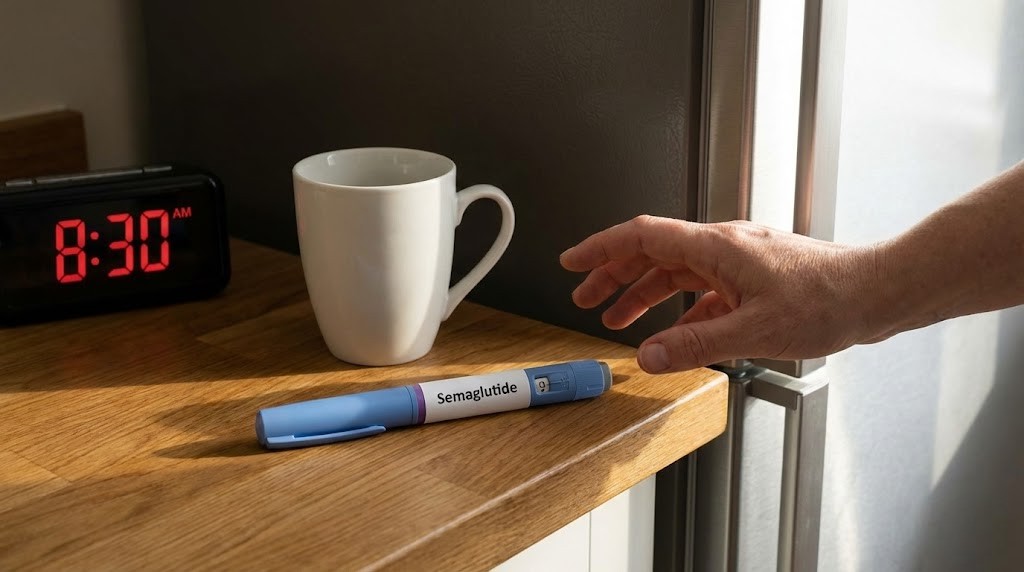
What if the real problem is not that your semaglutide sat on the counter all night, but that you do not know whether it actually matters?
Take a breath. You woke up this morning, walked into the kitchen, and saw it sitting there. The pen. The vial. Whatever form your semaglutide takes, it spent the entire night outside the refrigerator. Your stomach dropped. You grabbed your phone and started searching. And now you are here, reading this, hoping someone will tell you whether your medication is ruined or whether you are overreacting.
Here is the good news. In most cases, a single overnight exposure to room temperature does not destroy semaglutide. The molecule is more resilient than many people assume, and pharmaceutical companies have built stability margins into their storage guidelines for exactly this kind of situation. But the answer is not always a simple yes or no. It depends on the formulation you use, whether the pen or vial was already opened, how warm your home gets overnight, and how long the medication has been out of refrigeration in total. Those details matter. They matter a lot. And understanding why they matter will help you make a confident decision about whether to use your next dose or call your pharmacy for a replacement. This guide from SeekPeptides covers every scenario, every formulation, and every factor you need to evaluate before you either inject or discard that semaglutide sitting on your counter right now.
Quick answer: is your semaglutide still safe after being left out overnight?
Probably yes. But you need to check a few things first.
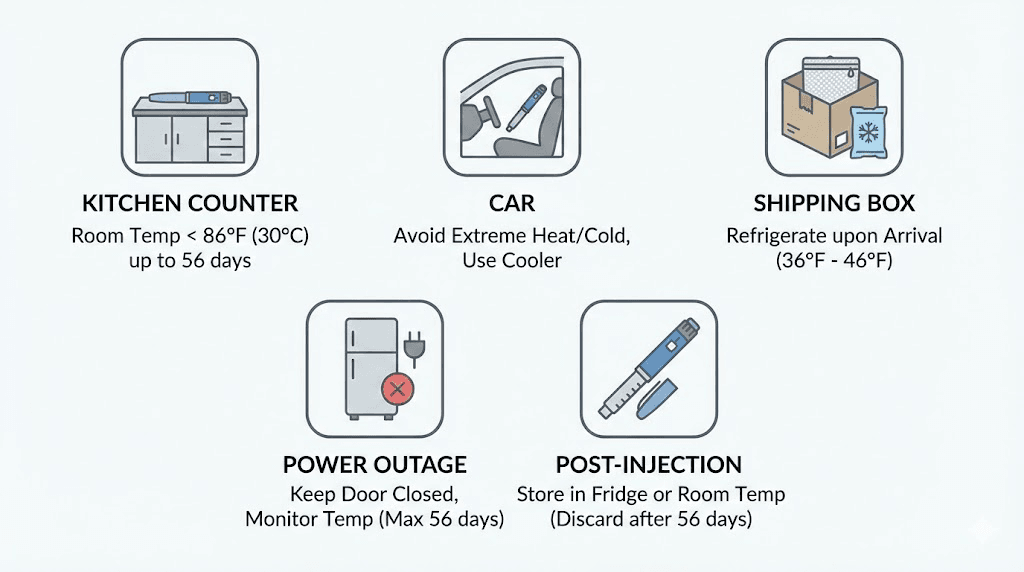
If you are using an Ozempic pen that is already in use (meaning you have already taken at least one dose from it), the manufacturer allows storage at room temperature between 59 and 86 degrees Fahrenheit for up to 56 days. One night on the counter falls well within that window. If you are using Wegovy, the allowance is shorter but still generous, up to 28 days between 46 and 86 degrees Fahrenheit. A single overnight excursion at normal room temperature is not going to compromise either product. If your home stayed within those ranges, you can continue using your pen as scheduled.
Compounded semaglutide is a different story. We will cover that in detail below.
The critical factors to evaluate right now are the temperature your home reached overnight, whether your medication was already in use or still sealed, what formulation you have, and whether the solution still looks clear and colorless. If you want to understand what happens when semaglutide gets warm, the science is straightforward, and the manufacturer guidelines give you clear boundaries to work with. For a broader look at how long semaglutide remains good under various conditions, the timelines depend on which product you have and how you store it.
Now let us dig into the specifics.
How semaglutide storage actually works
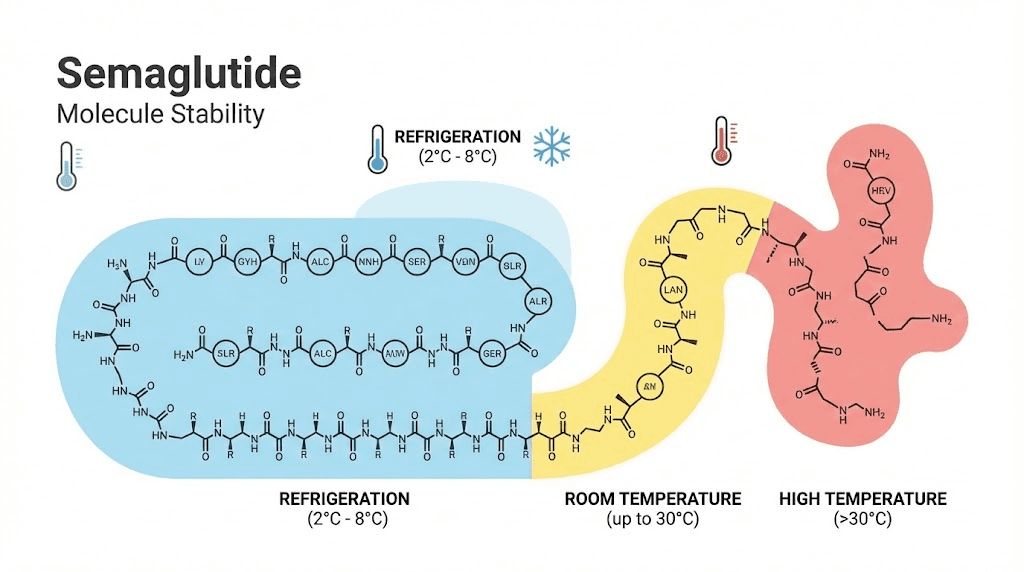
Understanding why temperature matters requires a quick look at what semaglutide actually is at the molecular level. This is not just a liquid in a pen. It is a carefully engineered peptide that maintains its three-dimensional shape only under specific conditions. When those conditions change, the molecule can unfold, aggregate, or degrade into fragments that no longer activate your GLP-1 receptors.
The science behind peptide stability
Semaglutide is a 31-amino-acid peptide analog of human GLP-1. Its backbone includes a C-18 fatty acid chain that allows it to bind to albumin in the blood, which is how it achieves its long half-life of approximately seven days. That same molecular complexity makes it sensitive to environmental conditions.
Peptides are proteins. And proteins maintain their function through their shape. Heat, light, and pH changes can cause what scientists call denaturation, where the molecule loses its carefully folded structure and stops working the way it should. Research published in the Journal of Peptide Science identified that semaglutide is particularly vulnerable to degradation near its isoelectric point of pH 5.4, and that temperature accelerates this process significantly. At 25 degrees Celsius (77 degrees Fahrenheit), semaglutide remains relatively stable for extended periods. At 40 degrees Celsius (104 degrees Fahrenheit), degradation accelerates dramatically.
This matters for your overnight situation. Room temperature in a climate-controlled home, typically between 68 and 76 degrees Fahrenheit, sits comfortably within the stability range. Your kitchen counter at 2 AM is not the same threat as your car dashboard in July. Understanding how peptides work at the molecular level helps you appreciate why storage guidelines exist and why they include built-in safety margins. For a comprehensive overview of peptide storage principles, the same fundamentals apply across nearly all injectable peptide medications.
Why temperature matters for GLP-1 receptor agonists
GLP-1 receptor agonists like semaglutide work by mimicking a natural hormone your gut produces after eating. The medication binds to specific receptors in your pancreas, brain, and digestive tract. But it can only bind to those receptors if its molecular shape remains intact. Temperature-induced degradation does not just reduce potency. It can create entirely new molecular fragments, sometimes called degradation impurities, that serve no therapeutic purpose.
Studies have identified at least 13 known degradation impurities that can form when semaglutide breaks down. These fragments do not typically cause harm, but they also do not help you. Every molecule that degrades is one fewer molecule doing its job of suppressing appetite, regulating blood sugar, and supporting weight loss. If you are curious about how long GLP-1 medications take to start working, that timeline assumes you are receiving the full intended dose of active, properly stored medication.
The good news is that pharmaceutical manufacturers account for this. They build stability buffers into their products, meaning the expiration date and storage guidelines already include conservative margins. A few hours outside the fridge, or even overnight at moderate room temperature, falls within the range these products are designed to handle.
There is also a practical distinction between degradation that happens gradually at moderate temperatures and degradation that happens rapidly at extreme temperatures. At 77 degrees Fahrenheit, the process is slow. Measurable, but slow. Studies suggest semaglutide can maintain over 90 percent of its potency at 25 degrees Celsius (77 degrees Fahrenheit) for 28 days. Your kitchen counter overnight, roughly 8 to 10 hours at maybe 72 degrees, barely registers on that timeline. At 86 degrees Fahrenheit for four consecutive weeks, the potency loss might reach 10 percent. But at 104 degrees Fahrenheit, that same level of degradation can happen in a fraction of the time. Context matters enormously.
The degradation process itself involves several chemical pathways. Oxidation, deamidation, and aggregation are the primary concerns. Oxidation occurs when the methionine residues in the peptide chain react with oxygen, particularly at higher temperatures. Deamidation changes asparagine and glutamine residues, altering the molecule charge and function. Aggregation happens when multiple semaglutide molecules clump together, forming larger structures that cannot bind to GLP-1 receptors. Each of these processes accelerates at higher temperatures, but all of them proceed quite slowly at typical room temperature. For those who want to understand the broader landscape of what peptides are and how they behave, the stability principles that apply to semaglutide are representative of injectable peptide medications in general.
Ozempic left out overnight
Ozempic is the most commonly prescribed brand of injectable semaglutide for type 2 diabetes, though many people also use it off-label for weight management. If your Ozempic pen spent the night on the counter, the answer depends on whether you have already started using it.
Unopened Ozempic pens
An unopened Ozempic pen should be stored in the refrigerator at 36 to 46 degrees Fahrenheit (2 to 8 degrees Celsius) until you are ready to use it for the first time. The manufacturer, Novo Nordisk, states that if an unopened pen is stored at room temperature (59 to 86 degrees Fahrenheit), it must be used within 56 days. After that 56-day window, the pen should be discarded even if medication remains inside.
So if your unopened pen sat out overnight, it is not ruined. But the clock has started. You now have 56 days to begin using and finish that pen, whether you put it back in the fridge or leave it at room temperature. Write the date on the pen so you do not forget. Understanding whether semaglutide expires after 28 days requires knowing which formulation you have, because Ozempic and Wegovy have different timelines.
One important caveat. If your home was unusually warm overnight, above 86 degrees Fahrenheit, or if the pen was left near a heat source like an oven, sunny window, or heating vent, the situation changes. Temperatures above 86 degrees Fahrenheit exceed the manufacturer recommended range, and the pen may need to be discarded. When in doubt, call Novo Nordisk directly at 1-800-727-6500.
Another consideration that many people miss is light exposure. Ozempic pens come in a carton for a reason. The carton shields the medication from light, which can also contribute to degradation over extended periods. If your pen sat out overnight in its carton, light exposure is not a concern. If it sat out without the carton under bright kitchen lighting or near a window, the light exposure from a single night is minimal, but it is another reason to keep the original packaging. For a complete overview of factors that affect how long semaglutide stays good, light protection is often overlooked but matters for long-term stability.
In-use Ozempic pens
Already taken your first dose? This is actually the easier scenario.
Once you begin using an Ozempic pen, it can be stored at room temperature (59 to 86 degrees Fahrenheit) or in the refrigerator for up to 56 days. Most people keep their in-use pen in the fridge out of habit, but the manufacturer explicitly says room temperature is fine. Your pen sitting on the kitchen counter overnight is completely within the approved storage parameters.
The 56-day limit is cumulative. It counts from the first time you used the pen, regardless of where you stored it afterward. If you have been using the pen for 40 days and it spent one night out, you still have 16 days of approved use remaining. The room temperature exposure does not restart or shorten this clock. For a deeper understanding of how long semaglutide lasts in the fridge, the 56-day limit applies whether refrigerated or not after first use.
Keep the pen cap on. Store it away from direct light. And do not freeze it. Those are the only real concerns with an in-use Ozempic pen. If you want to review whether expired semaglutide is still usable, the answer gets more nuanced once you pass that 56-day mark.
Wegovy left out overnight
Wegovy is the semaglutide formulation approved specifically for chronic weight management. It comes in single-dose prefilled pens, which changes the storage math slightly compared to Ozempic multi-dose pens.
Unopened Wegovy pens
Before first use, Wegovy should be stored in the refrigerator at 36 to 46 degrees Fahrenheit. However, Novo Nordisk allows unopened Wegovy pens to be stored at 46 to 86 degrees Fahrenheit for up to 28 days. After 28 days outside the fridge, the pen must be discarded.
Notice that Wegovy has a shorter room temperature window than Ozempic. Twenty-eight days versus 56 days. This matters if you frequently forget to refrigerate your pens or if you travel often. But for a single overnight on the counter at normal room temperature, you are fine. The pen is still good. Just put it back in the fridge in the morning and note the date it was left out.
If you are tracking storage times carefully, understanding how long peptides last at room temperature provides a useful framework. The 28-day window already accounts for minor temperature fluctuations within the approved range.
In-use Wegovy pens
Because Wegovy pens are single-dose, the concept of "in-use" is slightly different. You use each pen once and discard it. So the storage question really applies to pens you have not yet used from your current prescription supply.
The same 28-day room temperature rule applies. If you took your Wegovy pens out of the fridge and forgot to put them back overnight, they are still safe to use as long as the total time outside refrigeration does not exceed 28 days and the temperature stayed between 46 and 86 degrees Fahrenheit. For a deeper look at how long peptides last when properly refrigerated, the cold chain makes a significant difference in overall shelf life.
One thing to know. Once Wegovy has been stored at room temperature, putting it back in the fridge does not reset the 28-day clock. Time is cumulative. If the pen spent three days at room temperature last week and one night this week, that counts as roughly four days of your 28-day allowance.
Wegovy pens also require protection from light, just like Ozempic. Keep them in the original carton whenever possible. And never expose them to temperatures below 36 degrees Fahrenheit. Freezing is just as destructive as overheating, perhaps more so, because frozen semaglutide cannot be salvaged at all. If a Wegovy pen accidentally froze in the back of an overly cold fridge, discard it immediately. The crystallization that occurs during freezing permanently damages the peptide structure in ways that gentle thawing cannot reverse.
For people who stock several weeks of Wegovy at a time, this overnight exposure scenario might affect multiple pens simultaneously. If all your pens sat on the counter, the same 28-day cumulative clock applies to all of them. Track each pen individually if they have different exposure histories. And if you have questions about the overall longevity of your supply, the guide on whether semaglutide expires after 28 days provides the detailed breakdown you need.
Compounded semaglutide left out overnight
This is where things get more complicated. And where more caution is warranted.
Compounded semaglutide is fundamentally different from brand-name products like Ozempic and Wegovy. If you use a compounded formulation and left it out overnight, the rules that apply to FDA-approved pens do not automatically apply to your vial. Those who want a thorough explanation of whether compounded semaglutide needs refrigeration should understand these critical differences.
Why compounded formulations are different
Brand-name semaglutide products from Novo Nordisk contain proprietary stabilizers, buffers, and preservatives that help the molecule maintain its structure outside the fridge. These formulations undergo years of stability testing before receiving FDA approval. Novo Nordisk knows exactly how long their product remains stable at 77 degrees Fahrenheit because they have tested it at that temperature for extended periods.
Compounded semaglutide lacks these proprietary stabilizers. Compounding pharmacies formulate their own solutions, and the stability profile varies from pharmacy to pharmacy. Some pharmacies conduct rigorous stability testing and can assign a beyond-use date (BUD) of 90 to 120 days when refrigerated. Others assign more conservative BUDs of 14 to 28 days.
Without the branded stabilizer package, compounded semaglutide degrades faster at room temperature. Where Ozempic can sit at room temperature for 56 days, compounded semaglutide may tolerate only hours to a few days outside the fridge depending on the formulation. If you are looking at how long compounded semaglutide lasts in the fridge, even refrigerated shelf life is shorter than the branded products.
Vials versus pens
Most compounded semaglutide comes in multi-dose vials rather than prefilled pens. This introduces an additional concern. Every time you insert a needle into a vial, there is a small risk of introducing contaminants, even with proper technique. Bacteriostatic water, which is commonly used in compounded formulations, contains a preservative (typically 0.9% benzyl alcohol) that inhibits bacterial growth. But this preservative works best under refrigeration.
At room temperature, bacterial growth accelerates. A vial that might safely sit in the fridge for 90 days could become compromised much sooner at room temperature, not because the semaglutide degrades, but because the bacteriostatic preservative cannot keep up with bacterial proliferation in warmer conditions. For guidance on storing peptides after reconstitution, temperature control is the single most important factor. If you reconstituted your own semaglutide, understanding the role of bacteriostatic water in peptide preparation helps explain why refrigeration matters even more for compounded formulations.
Some compounded semaglutide also comes in prefilled syringes or pens from the pharmacy. These generally have the same vulnerability as vials, shorter stability at room temperature compared to brand-name alternatives.
The concentration of your compounded semaglutide also matters. Higher concentration formulations (such as 5mg/mL or 10mg/mL) may behave differently than lower concentrations when exposed to room temperature. At higher concentrations, the peptide molecules are packed more closely together, which can increase the rate of aggregation under thermal stress. If you are using a concentrated formulation and referencing a 5mg reconstitution chart or 10mg reconstitution chart, pay extra attention to storage conditions because these formulations may be slightly less forgiving of temperature excursions than more dilute preparations.
What your compounding pharmacy label says
Check the label on your vial or pen. It should include a beyond-use date, storage instructions, and possibly a temperature range. If the label says "refrigerate" without specifying a room temperature allowance, that means the pharmacy has not tested or approved room temperature storage. In that case, an overnight excursion outside the fridge is more concerning.
Here is what to do. Call your compounding pharmacy. Explain that the vial sat out overnight and tell them the approximate temperature in your home. They can advise whether to discard or continue using it based on their specific formulation. Most pharmacies will err on the side of caution and recommend discarding the remaining medication.
For those who want to understand compounded semaglutide in depth, the formulation differences have real implications for storage, efficacy, and safety. Knowing which pharmacy compounded your semaglutide and how they formulated it gives you better information for making this decision. Resources like the Empower Pharmacy semaglutide guide, the Olympia semaglutide guide, or the Direct Meds semaglutide guide can help you understand what each major pharmacy includes in their formulations.
Temperature zones and what they mean
Not all temperatures are created equal when it comes to semaglutide storage. Understanding the specific zones helps you assess your situation more accurately than a simple "was it in the fridge or not" approach.
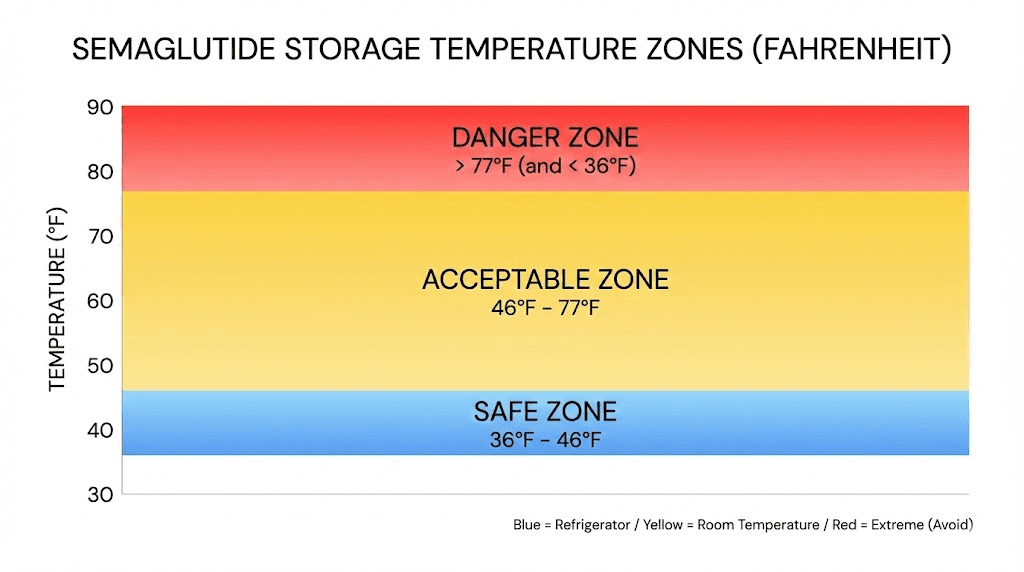
The safe zone (36 to 46 degrees F)
This is standard refrigerator temperature, 36 to 46 degrees Fahrenheit (2 to 8 degrees Celsius). At this range, semaglutide is at peak stability. All formulations, whether brand-name or compounded, achieve their maximum shelf life when stored in this zone. This is where your semaglutide should live when not in use.
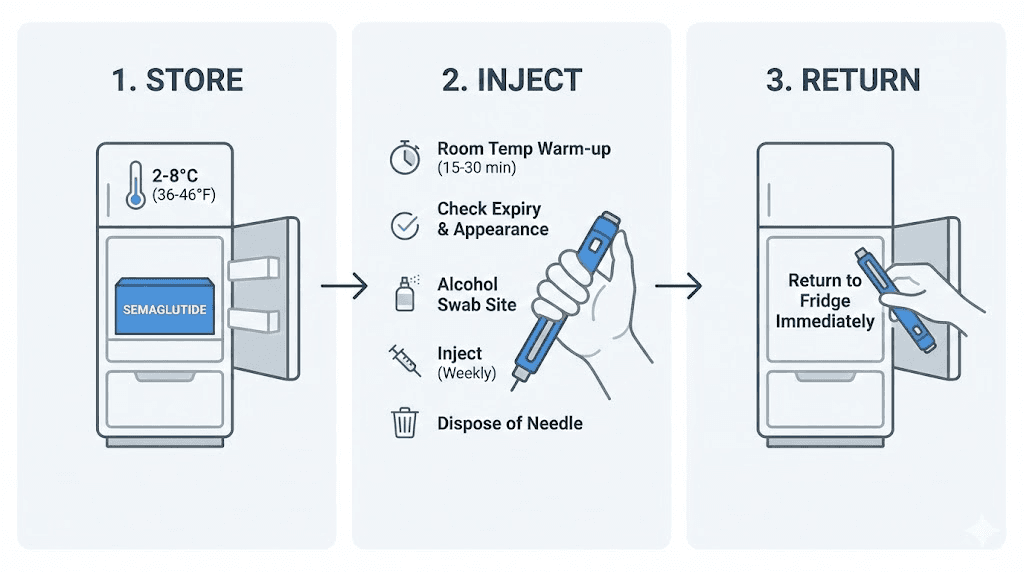
The key word is "not in use." You do not need to keep your Ozempic pen in the fridge while you are injecting. Pull it out, let it warm slightly (cold injections can sting more), administer your dose, and put it back. That brief exposure to room temperature during injection is completely fine and expected. If you are refining your injection technique, our guide on how to give a semaglutide injection with a syringe covers the complete process including temperature considerations.
The acceptable zone (46 to 86 degrees F)
This is the room temperature range that most semaglutide products can tolerate for defined periods. It is where your kitchen counter, bathroom cabinet, and bedroom nightstand typically fall. Within this zone:
Ozempic: Up to 56 days (in-use or if previously unrefrigerated)
Wegovy: Up to 28 days
Compounded semaglutide: Varies by pharmacy, typically hours to a few days without specific approval
Rybelsus (oral tablets): Standard storage at 68 to 77 degrees F, excursions permitted to 59 to 86 degrees F
For most overnight situations in a normal home, your medication stayed in this zone. Air-conditioned or heated homes rarely exceed 80 degrees Fahrenheit overnight. If your home does get warmer, especially in summer months without air conditioning, the calculation changes. Knowing how long a semaglutide vial stays good in the fridge helps you contrast refrigerated versus room temperature shelf life for your specific product.
The danger zone (above 86 degrees F)
Above 86 degrees Fahrenheit (30 degrees Celsius), all bets are off. Degradation accelerates significantly. Studies show that at 104 degrees Fahrenheit (40 degrees Celsius), semaglutide loses potency rapidly. Extended exposure at these temperatures can result in measurable degradation within hours, not days.
Situations that create danger zone temperatures include a car interior in summer (which can exceed 140 degrees Fahrenheit), a windowsill in direct sunlight, near a radiator or space heater, or in an attic or non-climate-controlled garage. If your semaglutide was left in any of these environments overnight, the risk of degradation is real and significant. At these temperatures, even the stability buffers in brand-name products cannot fully protect the molecule. For a thorough breakdown of what happens when semaglutide gets warm, temperature is the single biggest threat to peptide integrity.
The bottom line for temperature assessment: if your home has climate control and the semaglutide sat on a counter or shelf away from heat sources, you are almost certainly fine. If it was in a hot environment, proceed with extreme caution.
One practical tip. If you are uncertain about the temperature your home reached overnight, check any smart home devices you might have. Many thermostats, weather stations, and even some smart speakers log ambient temperature throughout the day. Your phone weather app may also show what the outdoor low temperature was overnight, which gives you a rough floor for what your indoor temperature could have been (indoor temperatures are almost always higher than outdoor lows in a closed home). This data can help you assess the risk more precisely than guessing.
For people living in warmer climates without air conditioning, summer overnight temperatures can regularly approach or exceed 80 degrees Fahrenheit indoors. In those situations, the margin between "acceptable zone" and "danger zone" shrinks considerably. An overnight at 82 degrees is still technically within range for brand-name products, but if this happens repeatedly, the cumulative exposure adds up. Each exposure chips away at potency, even within the approved range. The guidelines assume some exposure, not constant exposure. If you live somewhere warm and frequently struggle with temperature control, consider investing in a dedicated mini-fridge for medications. They cost between 30 and 80 dollars and eliminate the risk entirely.
Humidity is another factor that receives little attention. While the liquid inside a sealed pen or vial is protected from ambient humidity, the external packaging, labels, and pen mechanisms can be affected by high-humidity environments. More importantly, if you store your pen in a bathroom (a common habit), the temperature and humidity swings from hot showers can create conditions that stress the medication beyond what a kitchen counter would. Bathrooms are generally poor locations for any medication storage, not just semaglutide.
How to check if your semaglutide is still good
You know the temperature ranges. You know which formulation you have. Now you need to physically inspect the medication to look for obvious signs of degradation. This is not a perfect system, but it catches the most visible problems.
Visual inspection checklist
Grab your pen or vial and hold it up to a light source. Here is what to look for:
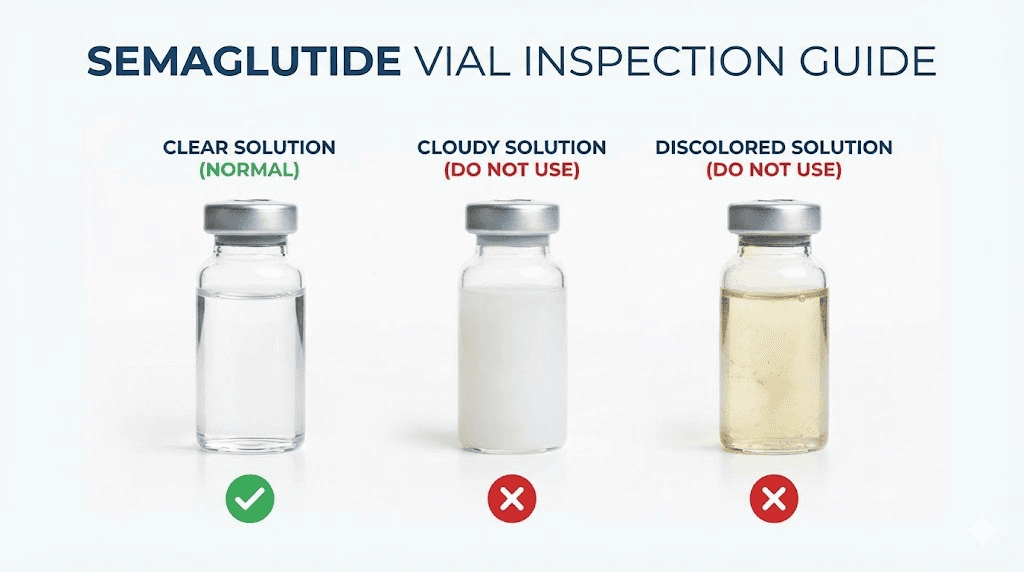
Color. Semaglutide should be completely clear and colorless. Any yellow, brown, or amber tinting suggests degradation. For those wondering what color semaglutide should be, the answer is simple. It should look like water. If it has any color at all, do not use it.
Clarity. The solution should be perfectly transparent. Hold it against a white background and look through it. Any cloudiness, haziness, or milky appearance indicates protein aggregation, which means the semaglutide molecules are clumping together. Aggregated semaglutide does not work properly and should be discarded.
Particles. Gently swirl the vial or pen (do not shake it vigorously, as this can cause foaming that mimics particles). Look for any floating specks, fibers, or sediment. Even tiny particles can indicate contamination or degradation. Semaglutide solutions should be completely free of visible particulate matter.
Foam or bubbles. A few small bubbles from normal handling are expected, especially in vials. But persistent foam that does not settle within a minute or two could indicate protein denaturation. The surface tension changes when peptides unfold.
The limitations of visual checks
Here is the uncomfortable truth. Visual inspection catches only the most advanced stages of degradation.
Semaglutide can lose 10, 20, even 30 percent of its potency without showing any visible change. The solution will still look clear. It will still look colorless. There will be no particles and no cloudiness. But fewer active molecules remain in each dose, which means less appetite suppression, less blood sugar control, and slower weight loss results. If you have noticed a plateau on semaglutide and cannot identify a cause, degraded medication from improper storage is worth investigating.
This is why temperature logs and time tracking matter more than visual inspection alone. You cannot see early-stage degradation. But you can prevent it by following storage guidelines and tracking how long your medication has been outside the recommended temperature range. Those who are tracking their overall progress should also understand how fast semaglutide typically works and what one month results look like so they can spot deviations that might indicate a potency issue.
When in doubt, contact your provider
If you are unsure about your medication after a storage incident, contact your prescribing provider or pharmacist. They can help you assess the risk based on your specific situation and either confirm the medication is safe to use or arrange a replacement.
For Ozempic and Wegovy, you can also call Novo Nordisk directly at 1-800-727-6500. Their medical information team can answer specific storage questions and help you determine next steps. For compounded semaglutide, call the pharmacy that filled your prescription. They know their formulation best and can give targeted advice.
Do not skip doses while you figure this out. If you need to discard your current supply and wait for a replacement, talk to your provider about managing the gap. Understanding semaglutide withdrawal symptoms and what to expect during a break can help you prepare. Missing doses can affect your overall treatment timeline, so work with your healthcare team to minimize interruptions.
Common scenarios and whether your semaglutide is still safe
Theory is useful. But you want to know about your specific situation. Here are the most common scenarios people encounter, with clear guidance for each one.
Left on the kitchen counter overnight
This is the classic scenario. You did your injection before bed, set the pen on the counter, and forgot to put it back in the fridge. You discovered it 8 to 10 hours later in the morning.
Verdict for Ozempic (in use): Safe. Room temperature storage is explicitly approved for up to 56 days. One night changes nothing.
Verdict for Wegovy: Safe. Up to 28 days at room temperature is approved. Note the date if this is the first time it has been outside the fridge.
Verdict for compounded semaglutide: Probably safe, but check your label and call the pharmacy if the label does not mention room temperature storage. A single overnight at 68 to 74 degrees Fahrenheit is unlikely to cause significant degradation, but the lack of standardized stability data means you should verify with your specific pharmacy.
In any case, put the medication back in the fridge when you find it. For ongoing storage guidance, proper refrigerated storage timelines vary by product type.
Left in a hot car
This is a far more serious situation. Car interiors can reach extreme temperatures. On an 80-degree day, the inside of a parked car can exceed 130 degrees Fahrenheit within 30 minutes. Even on a mild 70-degree day, a car in direct sunlight can reach over 100 degrees inside.
Verdict for all formulations: If the car was hot (above 86 degrees Fahrenheit), consider the medication compromised. Temperatures above 86 degrees Fahrenheit exceed the approved storage range for every semaglutide product on the market. If it was a cool night and the car stayed below 86 degrees, apply the same logic as the kitchen counter scenario above.
Summer exposure in a hot car is one of the most common ways semaglutide gets ruined. The best practice is to never leave it in a vehicle. If you are picking up a prescription, bring a small insulated bag. For travel planning, our complete guide to traveling with semaglutide covers cooler bags, TSA regulations, and international travel tips in detail.
Ice packs melted during shipping
Many people receive their semaglutide through mail-order pharmacies. These shipments typically include insulated packaging and cold packs. But sometimes deliveries sit on a hot porch for hours, the ice packs melt, and the medication arrives warm.
Verdict: Contact the pharmacy immediately. Most reputable pharmacies include temperature monitors in their shipments and will replace the medication if the cold chain was broken during transit. Do not just hope for the best. The medication may have been exposed to temperatures well above 86 degrees Fahrenheit during shipping, especially in summer months.
Document everything. Take photos of the warm package, the melted ice packs, and any temperature indicator included in the box. This makes the replacement process faster. If your compounded semaglutide arrived warm, understanding the reconstitution process and 5mg semaglutide preparation helps you evaluate whether the product was compromised before you even received it. Major compounding pharmacies like BPI Labs typically have clear policies for handling shipping issues.
Power outage while refrigerated
A power outage is different from leaving medication on the counter. Your refrigerator is insulated and will maintain its temperature for a surprising amount of time, especially if you keep the door closed.
A modern, full refrigerator can maintain safe temperatures for about 4 hours during a power outage if the door stays closed. A half-full refrigerator holds temperature for roughly 2 hours. If the power was out overnight (8+ hours), the interior temperature likely rose into the room temperature range, but it would have done so gradually, not all at once.
Verdict: For a power outage under 4 hours, do not worry at all. The fridge stayed cold enough. For longer outages, treat the situation the same as leaving the medication at room temperature. Check the temperature of other items in the fridge (does the milk still feel cold?) to estimate how warm things got. If everything in the fridge is still cool to the touch, the semaglutide is fine. Learn more about how long reconstituted peptides last in the fridge under various conditions, including power interruptions.
Forgot to refrigerate after injection
You pulled the pen out, gave yourself an injection, and set it down somewhere. Twelve hours later, you realized it never went back in the fridge. This is essentially the same as the kitchen counter scenario.
Verdict: For brand-name products, not a concern. Put it back in the fridge. For compounded formulations, the same caution applies: check your label and contact the pharmacy if uncertain. If this happens frequently, the section below on building habits will help you prevent it going forward. Understanding the best time of day to take semaglutide and building your injection into an existing routine makes forgetting far less likely. Some people also find that choosing the best injection site in front of the fridge serves as a visual reminder to put the pen back.
Left in a purse or bag overnight
Some people carry their semaglutide pen in a purse, messenger bag, or backpack for their injection and then forget about it. The medication spends the night in a bag by the front door or on the bedroom floor. This scenario is essentially the kitchen counter scenario with one added variable: insulation.
A bag sitting indoors at normal room temperature keeps the pen within acceptable range. But a bag left in a car, in a garage, or on a hot porch changes things. The enclosed space of a bag can trap heat, creating a warmer microenvironment than the ambient room temperature. If the bag was indoors and the room temperature was normal, the pen is fine. If the bag was in a car or near a heat source, use the danger zone assessment criteria above.
Accidentally left at the pharmacy pickup window
This is more common than people realize. You pick up your prescription, run another errand, and the pharmacy bag with your semaglutide sits in a warm car or on a hot car seat for an hour or more. By the time you get home and realize the medication should be refrigerated, the clock has already started ticking.
Verdict: If the total exposure was under two hours and the temperature stayed below 86 degrees Fahrenheit, the medication is fine. Put it in the fridge immediately. If it was a hot day and the medication sat in a warm car for an extended period, contact the pharmacy. Many pharmacies will replace medication that was not promptly refrigerated, especially if you contact them the same day.
What degraded semaglutide can (and cannot) do to you
This section addresses a legitimate fear. Is degraded semaglutide dangerous?
The short answer is that degraded semaglutide is unlikely to cause direct harm. But it is also unlikely to work the way it should.
When semaglutide degrades, the peptide chain fragments or aggregates. These fragments do not suddenly become toxic. They simply lose their ability to bind to GLP-1 receptors effectively. The result is reduced potency, not increased danger. You might inject what you think is your full dose, but only receive 70 or 80 percent of the active molecule. Over time, that deficit adds up. Less appetite suppression. Less glycemic control. Slower or stalled weight loss.
That said, there are two scenarios where degraded medication could cause issues. First, if the solution has become contaminated with bacteria due to improper storage of a multi-dose vial, injection carries a risk of infection. This is more a contamination concern than a degradation concern, and it primarily affects compounded vials that have been at room temperature for extended periods. The peptide safety and risks guide covers contamination prevention in detail.
Second, if you do not realize your medication is degraded and attribute your lack of results to other factors, you might make unnecessary changes to your diet, exercise, or dose. People who are not losing weight on semaglutide sometimes overlook storage issues as a potential cause. Similarly, if you have experienced four weeks on semaglutide with no weight loss, ruling out medication degradation is an important troubleshooting step before adjusting your protocol.
Here is what you should watch for in the days after using potentially compromised semaglutide. If your appetite returns sooner than expected, if you notice your blood sugar running higher than usual, or if the typical side effects (mild nausea, reduced hunger) seem diminished, these could indicate reduced potency. Track these observations and discuss them with your provider. Common side effects like fatigue, dizziness, or burping should follow the expected pattern if the medication is fully potent. A sudden absence of typical side effects after a storage incident might signal reduced efficacy.
One more important point. Refrigerating semaglutide after it has been at room temperature does not reverse any degradation that has already occurred. You can put it back in the fridge, and that will slow further degradation, but molecules that have already broken down will not reassemble. Think of it like melted ice cream. You can refreeze it, but it will never be the same as before.
There is also the question of immunogenicity, which refers to the ability of a substance to provoke an immune response. In theory, degraded peptide fragments could potentially trigger antibody formation at a higher rate than intact semaglutide. The clinical significance of this is unclear for occasional use of slightly degraded medication, but it reinforces the principle of not knowingly using compromised product over extended periods. If you suspect degradation, replacing the medication is the safest path forward.
For people who use semaglutide for blood sugar management (type 2 diabetes), the stakes of using degraded medication are arguably higher than for weight management alone. A loss of glycemic control can have immediate health consequences, including hyperglycemia symptoms like increased thirst, frequent urination, and fatigue. If you are using semaglutide primarily for diabetes management and your medication was compromised, prioritize contacting your provider and monitoring your blood glucose more frequently until you receive a replacement.
Preventing this from happening again
Now that you know your medication is probably fine (or know to discard it if the circumstances warrant), let us make sure this does not happen again. Prevention is simpler than you think.
Smart storage habits at home
The best storage spot in your fridge is not the door. The door experiences the widest temperature swings every time you open the fridge. Instead, store your semaglutide on a middle shelf, toward the back, where temperatures remain most consistent. Use a small container or dedicated shelf section so it does not get lost behind the leftovers.
Keep the pen or vial in its original packaging. For Ozempic and Wegovy, the carton protects from light, which is another degradation factor. For compounded vials, the pharmacy label on the box contains critical storage information you might need later.
Write dates on everything. When you take a pen out of the box, write the date on the pen itself. When you first open a vial, write the date on the label with a permanent marker. This makes tracking the 56-day (Ozempic) or 28-day (Wegovy) window effortless. For compounded semaglutide, the beyond-use date should already be on the label. These simple tracking habits also help you manage your dosage schedule more effectively.
If you use a semaglutide dosage in units protocol, keeping your supplies organized makes the entire process smoother. The same goes for anyone working from a compounded semaglutide dose chart, where accurate tracking prevents both storage errors and dosing mistakes.
Traveling with semaglutide
Travel is where most storage accidents happen. You are out of your routine. You are dealing with airports, hotels, and unfamiliar schedules. And your medication ends up in a hot suitcase or forgotten on a hotel nightstand.
Invest in a small medical-grade cooler bag or insulated travel case designed for injectable medications. These typically cost between 15 and 40 dollars and maintain refrigerator temperatures for 12 to 24 hours using gel ice packs. They are small enough to carry on a plane (TSA allows injectable medications and associated supplies through security).
Never check semaglutide in luggage. The cargo hold of an airplane can drop below freezing, and frozen semaglutide must be discarded. Freezing causes the peptide to denature irreversibly. Always carry it in your personal bag or carry-on. If you travel frequently, our complete travel guide for semaglutide covers everything from TSA rules to international regulations, cooler bag recommendations, and how to handle time zone changes that affect your dosing schedule.
For hotel stays, request a room with a mini-fridge. Most hotels provide one upon request, and some have them standard. Place your semaglutide in the fridge as soon as you arrive, before you unpack anything else. Make it the first thing you do.
If you are traveling internationally, research the electrical situation at your destination. Different countries use different voltages and plug types, which affects whether you can use a travel cooler that plugs in. In tropical destinations where power outages are common, a passive insulated bag with gel packs may be more reliable than an electric cooler. Some travelers bring two sets of ice packs and rotate them, keeping one set in a hotel freezer while the other keeps the medication cold.
Road trips present their own challenges. Never leave semaglutide in a parked car, even for short stops. Take it with you in your cooler bag when you leave the vehicle. If you are driving for several hours, keep the cooler bag in the passenger cabin where air conditioning reaches it, not in the trunk where temperatures can climb. For longer road trips spanning multiple days, plan ahead for ice pack refreshment by freezing them at hotels overnight.
Building a routine around your injections
The simplest way to prevent storage mistakes is to build your injection into a routine that naturally includes returning the medication to the fridge. Here is what works for many people.
Choose one specific day and time for your weekly injection. Many people choose the same day each week, often aligning it with a natural routine anchor like Sunday evening after dinner. Take the pen from the fridge, administer your dose, and immediately return the pen to the fridge. Do not set it down anywhere else. Do not "put it back later." Fridge to injection site to fridge. That is the entire workflow.
Some people set a phone alarm that goes off 15 minutes after their injection time. The alarm is not a reminder to inject. It is a reminder to confirm the pen went back in the fridge. If you are the kind of person who gets distracted between the injection and the fridge (and many people are), this simple failsafe prevents the overnight counter scenario.
Finding the best time of day to take semaglutide is partially about efficacy and partially about building a routine you can stick to. People who inject at a consistent time in a consistent location are far less likely to make storage mistakes. For a thorough review of how to inject GLP-1 medications properly, the technique guides also include practical tips for managing the before-and-after logistics.
If you use compounded semaglutide from a vial, the routine includes a few extra steps. You need to draw up your dose using the proper reconstitution chart, measure accurately using your syringe dosage chart, and return both the vial and any unused supplies to the fridge. Having everything organized in one spot, such as a small tray or basket in the fridge, makes this efficient. For those managing 5mg/mL dosing or 10mg dosing protocols, keeping a dose tracker alongside your supplies prevents confusion.
A quick note on related medications
If you are reading this and you also use or are considering other GLP-1 medications, the storage principles are similar but the specific timelines differ.
Tirzepatide (Mounjaro/Zepbound) has its own storage profile. If you are wondering whether tirzepatide needs refrigeration, the answer is yes, with room temperature allowances similar to but not identical to semaglutide. Understanding tirzepatide fridge storage duration and how long compounded tirzepatide can be out of the fridge follows the same logic covered in this guide. And just like semaglutide, tirzepatide does expire and storage conditions directly affect that timeline.
For people comparing the two medications, our semaglutide versus tirzepatide comparison covers efficacy, side effects, and practical considerations including storage. Those interested in other comparisons might also find value in our analyses of side effect differences between the two or how retatrutide compares to semaglutide.
Peptide storage fundamentals are consistent across nearly all injectable medications. If you use multiple peptides, our comprehensive peptide storage guide covers everything from lyophilized powder storage to reconstituted peptide shelf life. The general rule, all peptides expire, and proper storage extends their useful life significantly.
Understanding your semaglutide formulation better
Part of making smart storage decisions is understanding what you are actually storing. The formulation of your semaglutide affects everything from shelf life to room temperature tolerance to reconstitution requirements.
If you use compounded semaglutide and are involved in the reconstitution process, knowing the correct bacteriostatic water ratio for 5mg semaglutide or the ratio for 10mg semaglutide matters for both efficacy and stability. Improper dilution can affect how well the medication maintains its structure in storage. The 5mg mixing chart and 10mg mixing chart provide precise measurements.
For those who are newer to compounded semaglutide, understanding the general peptide reconstitution process and the role of mixing water in peptide preparation gives you a stronger foundation for making storage decisions. The reconstitution process itself introduces variables that affect stability, which is why mixing peptides with bacteriostatic water requires careful technique.
Different formulations also come with different dosing structures. Whether you are following a 5mg vial dosage chart or a 10mg vial dosage chart, the storage implications are the same within each formulation type. SeekPeptides provides free reconstitution calculators that help you determine exact measurements based on your specific vial concentration.
Some newer semaglutide formulations include additional compounds. Semaglutide with B12 and semaglutide with methylcobalamin have their own stability considerations because the added vitamins can affect the overall formulation stability. Similarly, semaglutide with glycine uses the amino acid as a stabilizer, which may actually improve room temperature tolerance in some formulations.
For those who prefer non-injectable options, sublingual semaglutide and oral semaglutide drops have different storage profiles that may offer more flexibility. Understanding all the available semaglutide formulation options helps you choose the one that best fits your storage situation and lifestyle.
Dosing considerations after a storage incident
If you have decided your semaglutide is still safe to use after being left out overnight, your dosing schedule should not change. Take your next dose as planned. Do not double up to "make up" for any perceived potency loss, and do not skip a dose out of caution if the medication passes visual inspection and falls within the approved storage parameters.
Understanding the relationship between semaglutide units and milligrams helps you maintain accurate dosing. If you use a syringe with unit markings, knowing conversions like what 20 units equals in milligrams, what 40 units translates to, or the milligram equivalent of 50 units ensures you are dosing correctly regardless of any storage concerns.
For those on specific dose schedules, knowing what 10 units represents at the starting phase or what 100 units represents at higher doses keeps your protocol consistent. The semaglutide dosage calculator on SeekPeptides helps with these conversions. And for dose-specific questions like how many units equal 0.25mg or how many units equal 2.4mg, precision matters for both efficacy and safety.
If you are concerned about whether 20 units is too much or need to reference a dosage chart in milliliters, having a clear protocol prevents the anxiety that often accompanies storage incidents. For a broad overview of dosing approaches, the units to milliliters conversion guide covers the math in detail.
People sometimes wonder whether they should adjust their dose after a suspected potency loss. The answer is no. Never increase your dose without guidance from your prescribing provider. Even if you suspect the medication lost some potency, taking more than prescribed carries its own risks, particularly gastrointestinal side effects like constipation or increased burping. If you genuinely believe your medication was compromised, the correct response is to replace it, not to take more of a questionable supply.
What to expect on your semaglutide journey
Storage questions often come from people who are relatively new to injectable medications. If that describes you, knowing what to expect in the coming weeks can provide useful context for evaluating whether your medication is working as it should.
Most people notice initial appetite changes within the first one to two weeks. Understanding whether semaglutide suppresses appetite immediately helps set realistic expectations. The full effects typically take several weeks to manifest, as described in our guide on appetite suppression timelines.
For weight loss specifically, before and after semaglutide results vary widely based on dose, diet, activity level, and individual biology. Some people see significant changes in the first month. Others experience a gradual, steady trend over several months. Pairing semaglutide with the right dietary approach, such as the semaglutide diet plan and knowing which foods to avoid and which foods to eat, optimizes your results regardless of occasional storage hiccups.
Some people wonder about losing weight on semaglutide without exercise. While the medication can produce weight loss even without structured physical activity, combining it with movement produces better outcomes and helps preserve lean mass. Understanding how long to stay on semaglutide for your goals helps you plan not just your treatment duration but also your medication supply and storage needs over time.
Side effects are another useful signal for medication potency. If you typically experience mild nausea or reduced appetite and suddenly those effects disappear after a storage incident, that could indicate degradation. Common side effects to monitor include fatigue, dizziness, insomnia, and menstrual changes. Their presence (or sudden absence) provides indirect evidence about whether the medication is working at full strength.
For those considering alternatives or wanting to compare their options, resources on phentermine versus semaglutide, Ozempic versus retatrutide, and the broader relationship between GLP-1 and Ozempic can help you understand your options within the GLP-1 medication class. Each alternative has its own storage requirements and stability profile.
Working with healthcare providers after a storage incident
If you decide to contact your provider about the overnight exposure, here is what to have ready. Know which product you use (Ozempic, Wegovy, or compounded). Know how long it was out of the fridge. Estimate the temperature in your home overnight. Know whether the pen or vial was already in use or still sealed. And have the lot number and expiration date available.
This information helps your provider or pharmacist make a quick, accurate assessment. For compounded semaglutide specifically, the pharmacy that filled your prescription is your best resource because they know the exact formulation, including what stabilizers (if any) were used and what stability testing was performed.
If your provider recommends discarding the medication, ask about a replacement. Insurance coverage for early replacements varies, and compounded semaglutide is often paid out of pocket, which makes replacement costs more significant. Some pharmacies will provide a courtesy replacement for a first-time storage incident. Others will require a new prescription.
When dealing with insurance, here is a practical tip. If you need an early refill because your medication was compromised, your pharmacist can sometimes process it as a "lost or damaged medication" override. Not all insurance plans cover this, but it is worth asking. For compounded semaglutide, the replacement process is typically faster because it does not involve insurance approvals, but the out-of-pocket cost can range from 100 to 500 dollars depending on the pharmacy and formulation. Having a conversation with your pharmacy about their replacement policy before a storage incident happens gives you one less thing to worry about if it ever does.
Documentation also helps. If you have a smart thermostat that logs temperatures, screenshot the overnight temperature data and save it. If you took a photo of the medication where you found it, keep that too. Some pharmacies and insurance companies require evidence of the storage incident before processing replacements. The more information you can provide, the smoother the process will be.
Knowing when to resume semaglutide after a break applies not just to surgical situations but also to any gap in treatment caused by medication replacement. Your provider may recommend restarting at a lower dose if the gap extends beyond two weeks, especially if you are taking a higher maintenance dose. Understanding the full peptide injection process and what common mistakes beginners make helps you avoid issues beyond just storage. For newcomers, the getting started with peptides guide provides a comprehensive foundation. And for quick reference, the what are peptides overview explains the basics of how these molecules work and why they require careful handling.
People managing GLP-1 side effects alongside storage concerns can find targeted information in our guides covering GLP-1 fatigue, GLP-1 headaches, GLP-1 hair loss, and timing your GLP-1 injection for the best results. Knowing where to inject GLP-1 also affects absorption and, indirectly, how well you can assess whether your medication is working at full potency.
Whether you drink alcohol while using semaglutide is another common concern. The guide on drinking on semaglutide addresses this, though it is unrelated to storage. The point is that semaglutide management involves multiple overlapping considerations, and storage is just one piece of the puzzle. Tools like the peptide calculator, reconstitution calculator, and cost calculator on SeekPeptides help you manage the practical aspects so you can focus on your health outcomes.
Additional storage considerations for other peptide products
If you store multiple peptide products alongside your semaglutide, the same overnight exposure likely affected all of them. Different peptides have different stability profiles.
Copper peptides, for example, have their own storage requirements. Whether copper peptides need refrigeration depends on the formulation. Tirzepatide reconstitution follows similar principles to semaglutide, and our tirzepatide reconstitution guide and tirzepatide dosing guide provide formulation-specific details.
The broader question of peptide room temperature tolerance applies to your entire peptide storage setup. If one product got left out, chances are others in the same location did too. Evaluate each one independently based on its specific storage requirements and the guidance in our peptide storage guide.
The emotional side of medication storage mistakes
Let us acknowledge something that most clinical guides ignore. Finding your medication on the counter in the morning feels terrible. It is not just about chemistry and temperature ranges. It is about the anxiety of potentially wasting expensive medication, the frustration of a mistake you cannot undo, and the worry about whether your treatment will be interrupted.
This is normal. You are not the only person who has searched this question at 6 AM in a mild panic.
Semaglutide is expensive. Whether you are paying through insurance copays for Ozempic or Wegovy, or covering the full cost of compounded semaglutide out of pocket, the financial sting of potentially discarding a pen or vial is real. And beyond the cost, there is the inconvenience of waiting for a replacement, the possibility of missing doses, and the disruption to a treatment plan that was finally working.
Here is some perspective. Storage accidents happen to nearly everyone who uses injectable medications over a long enough timeline. Pharmacists and nurses who handle these medications daily will tell you that room temperature exposure is one of the most common questions they receive. You are not careless. You are human. And the fact that you immediately searched for information instead of shrugging it off shows that you are taking your treatment seriously. Healthcare providers would much rather answer a "silly question" about overnight storage than treat a complication from truly compromised medication used without checking.
If this incident is causing you to question whether injectable semaglutide is the right choice for you, know that the storage requirements are actually quite manageable once you build good habits. Millions of people successfully store and administer injectable semaglutide at home every week without issues. The learning curve is steep in the first few weeks, but it flattens quickly. Within a month or two, the refrigerator-to-injection-to-refrigerator routine becomes second nature, and incidents like the one you experienced today become genuinely rare.
The practical response is straightforward. Assess the situation using the criteria in this guide. Make a decision based on facts, not anxiety. If the medication is fine, use it. If it is not, replace it. And build the prevention habits described above so this happens less often. That is it. No guilt required.
For those who find the entire semaglutide management process overwhelming, especially if you are new to injectable medications, SeekPeptides offers structured guidance that simplifies every aspect of the protocol. From storage to dosing to injection technique, having a reliable resource reduces the anxiety that comes with managing your own treatment.
Frequently asked questions
Can I use my Ozempic pen if it was left out overnight at room temperature?
Yes, in most cases. If the pen is already in use and the room temperature stayed between 59 and 86 degrees Fahrenheit, Ozempic is approved for room temperature storage for up to 56 days. One night on the counter is well within that range. Put it back in the fridge and continue your normal dosing schedule.
Is compounded semaglutide safe after being left out of the fridge for 8 hours?
It depends on the specific formulation and the temperature. Compounded semaglutide lacks the proprietary stabilizers found in brand-name products and is generally less tolerant of room temperature exposure. Contact your compounding pharmacy for guidance specific to your formulation. Learn more about compounded semaglutide storage and handling.
Does putting semaglutide back in the fridge after it got warm reverse the damage?
No. Refrigeration slows further degradation, but it cannot restore potency that has already been lost. Think of it as damage control, not a fix. The molecule does not reassemble once it has begun to break down. This is why understanding proper peptide storage after reconstitution is so important from the start.
What temperature is too hot for semaglutide?
Anything above 86 degrees Fahrenheit (30 degrees Celsius) exceeds the approved storage range for all semaglutide products. At 104 degrees Fahrenheit (40 degrees Celsius), degradation accelerates significantly. If your medication was exposed to these temperatures for any meaningful duration, it should be discarded. Our guide on what happens when semaglutide gets warm covers the science in detail.
How can I tell if my semaglutide has gone bad?
Inspect the solution for cloudiness, particles, discoloration, or unusual odor. It should appear clear and colorless. However, early-stage degradation is invisible, so visual inspection has limitations. If the medication was exposed to temperatures above 86 degrees Fahrenheit or has been at room temperature longer than the approved window, consider it compromised even if it looks normal. Check what color semaglutide should be for a visual reference.
Can I freeze semaglutide to extend its shelf life?
Absolutely not. Freezing destroys the peptide structure permanently. Once frozen, semaglutide must be discarded immediately. This applies to all formulations, including Ozempic, Wegovy, and compounded products. Never store semaglutide in a freezer or in the back of a fridge where temperatures might drop below 36 degrees Fahrenheit. The guide on semaglutide shelf life covers all the boundaries you need to know.
Should I skip my next dose if I am not sure about the medication?
Do not skip doses without talking to your provider first. If you are uncertain about the medication, contact your pharmacist or prescriber. They can help you decide whether to use the current supply or get a replacement. Skipping doses can disrupt your treatment, and understanding what happens when you stop semaglutide helps you weigh the risks of a treatment gap.
How should I transport semaglutide between my home and a trip?
Use an insulated medical cooler bag with gel ice packs. Never check it in luggage (cargo holds can freeze). Keep it in your carry-on bag. Avoid leaving it in a hot car. Our travel with semaglutide guide has a complete checklist for domestic and international travel.
External resources
For researchers and patients serious about optimizing their peptide protocols, SeekPeptides provides the most comprehensive resource available, with evidence-based storage guides, detailed stability information, dosing calculators, and a community of thousands who have navigated these exact questions. Members access personalized protocols, expert-reviewed handling guides, and real-time support for situations exactly like this one.
In case I do not see you, good afternoon, good evening, and good night. May your semaglutide stay potent, your refrigerator stay reliable, and your protocols stay on track.