Feb 10, 2026
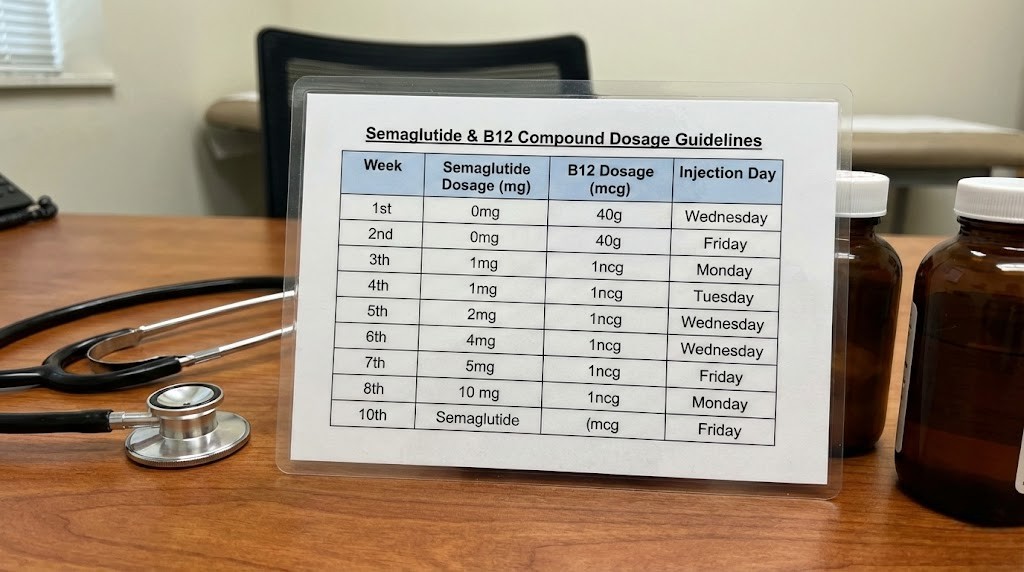
Your compounded semaglutide with B12 arrived. The vial is in the fridge. And now you are staring at a syringe, a concentration label, and zero confidence about how much to actually inject.
You are not alone in this. Thousands of people start compounded semaglutide every week, and the single biggest source of confusion is the dosage chart itself. Not because the numbers are complicated. Because every pharmacy uses different concentrations, different vial sizes, and different B12 formulations. The chart your friend follows looks nothing like the one your clinic handed you. The Reddit thread you saved last night contradicts both.
Here is what most dosage guides get wrong. They give you a single chart and pretend it works for everyone. It does not. Your concentration matters. Your semaglutide dosage depends on the specific mg/mL ratio in your vial, and getting that conversion wrong means you are either underdosing (wasting time and money) or overdosing (hello, nausea that lasts three days). The B12 component adds another layer that most guides skip entirely.
This guide covers every concentration you will encounter, the exact syringe unit conversions for each one, a week-by-week titration schedule that accounts for real-world tolerance, and the specific role B12 plays in your compounded formulation. Whether your vial reads 2.5 mg/mL, 5 mg/mL, or something else entirely, you will know exactly how many units to draw by the time you finish reading. SeekPeptides built this resource because accurate dosing is the foundation of every successful weight loss protocol, and guessing should never be part of the equation.
What is compounded semaglutide with B12
Compounded semaglutide with B12 combines the GLP-1 receptor agonist semaglutide with vitamin B12 (typically cyanocobalamin) in a single injectable formulation. Compounding pharmacies create these formulations as an alternative to brand-name products like Ozempic and Wegovy. The result is one injection that delivers both your weight loss medication and a vitamin that your body increasingly needs while taking it.
Why B12 specifically?
Semaglutide works by mimicking the GLP-1 hormone your gut naturally produces after eating. It slows gastric emptying, reduces appetite, and improves insulin sensitivity. But that slowed gastric emptying creates a downstream problem. Vitamin B12 requires stomach acid and a protein called intrinsic factor to be absorbed properly. When your stomach empties more slowly and produces less acid, B12 absorption drops. A study published in the journal Diabetes, Obesity and Metabolism found that patients on once-weekly semaglutide experienced significant decreases in serum B12 levels alongside reductions in zinc and albumin.
The symptoms of B12 deficiency are easy to dismiss. Fatigue. Brain fog. Tingling in your hands. Weakness that you blame on the calorie deficit. Many people on semaglutide chalk these symptoms up to the medication itself when the real culprit is a nutrient gap that compounds over weeks and months of treatment.
By combining B12 directly into the semaglutide injection, compounding pharmacies eliminate this gap at the source. You do not need to remember a separate supplement. You do not need to worry about oral B12 absorption being compromised by the same medication you are taking. The B12 arrives via injection, bypassing the digestive system entirely.
Cyanocobalamin vs methylcobalamin in compounded formulations
Most compounding pharmacies use cyanocobalamin, the synthetic form of B12. Your body converts it into methylcobalamin, which is the active form. Some pharmacies offer methylcobalamin directly. The practical difference for most people is minimal, though methylcobalamin skips the conversion step and may be preferable for individuals with certain genetic variations affecting B12 metabolism. Empower Pharmacy, one of the largest compounding pharmacies in the US, offers both semaglutide/cyanocobalamin injections and semaglutide/methylcobalamin orally disintegrating tablets.
The B12 concentration in most compounded formulations sits at 0.5 mg/mL across all semaglutide strengths. Some pharmacies use lower concentrations. The important thing is that you are getting a consistent B12 dose with every injection without needing to calculate it separately. Your dosage chart only needs to focus on the semaglutide component, which is where the real complexity lives.
Standard semaglutide B12 dosage chart: the complete titration schedule
The titration schedule for compounded semaglutide with B12 follows the same proven escalation pattern used in the STEP clinical trials. You start low. You increase gradually. You give your GLP-1 receptors time to adapt so nausea stays manageable and weight loss results build steadily.
Here is the standard protocol that most clinics and telehealth providers follow.
Phase 1: initiation (weeks 1 through 4)
Semaglutide dose: 0.25 mg per week
This is not a therapeutic dose for weight loss. It is a tolerance-building phase. Your body needs to adjust to having GLP-1 receptor activation at levels far above what your gut naturally produces. Skipping this phase or rushing through it is the single most common reason people quit semaglutide in the first month.
During these four weeks, expect mild appetite suppression. Some people notice reduced cravings within the first few days. Others feel almost nothing until week 3. Both responses are normal. The appetite suppression timeline varies significantly between individuals, and this phase is about building a foundation, not seeing dramatic results.
Side effects at this dose are typically mild. Slight nausea after eating too quickly. Occasional bloating. Maybe some digestive changes that settle within the first two weeks. The B12 component helps offset the fatigue that some people experience as their caloric intake naturally decreases.
Phase 2: early titration (weeks 5 through 8)
Semaglutide dose: 0.5 mg per week
This is where most people start feeling real appetite changes. The jump from 0.25 mg to 0.5 mg doubles your dose, and your body will notice. Food becomes less interesting. Portions naturally shrink. The voice in your head that used to demand a snack at 3 PM goes quiet.
Weight loss typically begins in earnest during this phase. The STEP 1 clinical trial showed that participants began seeing measurable weight reduction within the first 4 to 8 weeks of treatment. You should be tracking your weight weekly at the same time of day, wearing similar clothing, after using the bathroom.
Nausea may increase during the first week at this new dose. That is expected. It almost always settles by week 2 at the current dose. If nausea persists beyond 10 to 14 days, talk to your prescriber about holding at 0.5 mg for an extra 2 to 4 weeks before increasing further. There is no rush. The total treatment duration for semaglutide is measured in months and years, not weeks.
Phase 3: mid titration (weeks 9 through 12)
Semaglutide dose: 1.0 mg per week
This dose represents a significant efficacy threshold. Research from the STEP trial program shows that 1.0 mg is where the dose-response curve starts to steepen meaningfully. Appetite suppression becomes more pronounced. Weight loss accelerates. Many people lose 1 to 2 pounds per week consistently at this dose.
The jump from 0.5 mg to 1.0 mg is the largest proportional increase in the entire titration schedule, doubling your dose again. Side effects during the first week at 1.0 mg can be more noticeable than previous increases. Plan your dose increase for a day when you can rest if needed. Avoid large, heavy meals for the first few days. Small, protein-rich meals spread throughout the day work best for managing GI side effects.
Some people find that 1.0 mg is their sweet spot. They lose weight steadily, side effects are manageable, and there is no need to go higher. Your prescriber should evaluate your progress at the end of this phase to determine whether further escalation is warranted.
Phase 4: upper titration (weeks 13 through 16)
Semaglutide dose: 1.7 mg per week
Not everyone reaches this dose. And not everyone needs to. If you are losing weight steadily at 1.0 mg with tolerable side effects, staying there is a perfectly valid strategy. The goal of titration is finding your minimum effective dose, not reaching the maximum.
For those who plateau at 1.0 mg or need greater appetite suppression, 1.7 mg provides a meaningful step up. The STEP trials showed continued weight loss improvement at higher doses, with the dose-response relationship remaining positive through 2.4 mg. At 1.7 mg, most people experience strong appetite suppression throughout the entire week between injections, with minimal return of hunger before the next dose.
Monitor your protein intake carefully at this dose. Stronger appetite suppression makes it easy to undereat protein, which leads to muscle loss alongside fat loss. Aim for a minimum of 0.7 to 1.0 grams of protein per pound of lean body mass daily. Use our peptide calculator to help determine your optimal intake based on your individual metrics.
Phase 5: maintenance dose (weeks 17 and beyond)
Semaglutide dose: 2.0 to 2.4 mg per week
This is the maximum dose range used in clinical trials for weight management. The STEP 1 trial used 2.4 mg as the target maintenance dose and achieved average weight loss of 14.9% of body weight over 68 weeks. Nearly 70% of participants lost more than 10% of their body weight, and over 50% lost more than 15%.
At 2.4 mg, the GLP-1 receptor activation is at its peak. Appetite suppression is maximal. Gastric emptying is significantly slowed. The B12 component of your compounded formulation becomes even more important at this dose because the gastrointestinal effects that impair nutrient absorption are at their strongest.
Some prescribers cap compounded semaglutide at 2.0 mg rather than 2.4 mg. The difference in efficacy between these two doses is modest, but the difference in side effects can be meaningful for some individuals. Discuss the risk-benefit ratio with your provider.
Syringe unit conversion chart by concentration
This is where most people get confused. And it is where mistakes happen.
Compounded semaglutide comes in different concentrations depending on your pharmacy. The two most common concentrations are 2.5 mg/mL and 5 mg/mL. Some pharmacies also offer 1 mg/mL, 2 mg/mL, or 10 mg/mL formulations. The concentration determines how many units you draw on your insulin syringe for each dose.
A standard insulin syringe has 100 units per 1 mL. That is your conversion anchor. Everything flows from there.
Conversion chart for 2.5 mg/mL concentration
At 2.5 mg/mL, every 1 unit on your insulin syringe equals 0.025 mg of semaglutide.
Semaglutide Dose | Syringe Units | Volume (mL) |
|---|---|---|
0.25 mg | 10 units | 0.10 mL |
0.50 mg | 20 units | 0.20 mL |
1.00 mg | 40 units | 0.40 mL |
1.70 mg | 68 units | 0.68 mL |
2.00 mg | 80 units | 0.80 mL |
2.40 mg | 96 units | 0.96 mL |
Note that at the higher doses with a 2.5 mg/mL concentration, you are injecting nearly a full mL of fluid. Some people find this volume uncomfortable for subcutaneous injection. If your target dose requires more than 80 units, consider asking your pharmacy about a higher concentration formulation to reduce injection volume.
Conversion chart for 5 mg/mL concentration
At 5 mg/mL, every 1 unit on your insulin syringe equals 0.05 mg of semaglutide. This concentration halves the injection volume compared to 2.5 mg/mL.
Semaglutide Dose | Syringe Units | Volume (mL) |
|---|---|---|
0.25 mg | 5 units | 0.05 mL |
0.50 mg | 10 units | 0.10 mL |
1.00 mg | 20 units | 0.20 mL |
1.70 mg | 34 units | 0.34 mL |
2.00 mg | 40 units | 0.40 mL |
2.40 mg | 48 units | 0.48 mL |
The 5 mg/mL concentration is increasingly popular because it keeps injection volumes small even at higher doses. At 2.4 mg, you are only injecting 0.48 mL, roughly half what you would inject with the 2.5 mg/mL concentration. Smaller volumes mean less discomfort, less chance of medication leaking from the injection site, and more doses per vial.
Conversion chart for 10 mg/mL concentration
Some pharmacies offer higher concentration formulations for patients on maintenance doses who want minimal injection volume.
Semaglutide Dose | Syringe Units | Volume (mL) |
|---|---|---|
0.25 mg | 2.5 units | 0.025 mL |
0.50 mg | 5 units | 0.05 mL |
1.00 mg | 10 units | 0.10 mL |
1.70 mg | 17 units | 0.17 mL |
2.00 mg | 20 units | 0.20 mL |
2.40 mg | 24 units | 0.24 mL |
At 10 mg/mL, accuracy becomes critical. The difference between 5 units and 7 units represents 0.2 mg of semaglutide, which is nearly a full dose level difference. Use a 0.3 mL insulin syringe (30 units) with fine gradations for the most precise measurements at this concentration. Every unit matters.
The universal conversion formula
If your concentration does not match any of the charts above, use this formula.
Syringe units = (desired dose in mg / concentration in mg per mL) x 100
Example: You want 1.0 mg from a 3 mg/mL vial.
1.0 / 3.0 = 0.333 mL x 100 = 33.3 units
Round to 33 units. Use our peptide reconstitution calculator if you prefer to skip the math entirely. It handles any concentration and gives you the exact syringe units for your specific vial.
The role of B12 in your compounded semaglutide formulation
B12 is not just a marketing addition. It serves a specific physiological purpose in this combination, and understanding that purpose helps you make better decisions about your protocol.
Why GLP-1 medications create B12 deficiency risk
Vitamin B12 absorption is a complex process that depends on several factors working in sequence. First, stomach acid separates B12 from the proteins it binds to in food. Then, a protein called intrinsic factor, produced by cells in the stomach lining, attaches to the freed B12. This B12-intrinsic factor complex travels to the ileum (the last section of the small intestine), where it is absorbed into the bloodstream.
Semaglutide disrupts multiple steps in this chain. By slowing gastric emptying, it reduces the time stomach acid has to work on B12-protein bonds. By potentially affecting gastric acid production, it makes that separation less efficient even when contact time is adequate. Research published in the journal Diabetes, Obesity and Metabolism documented significant decreases in serum B12 levels in patients taking once-weekly semaglutide, alongside drops in zinc and albumin.
The reduced food intake that comes with appetite suppression adds another layer. Many B12-rich foods, like red meat, eggs, and dairy, are often the first foods people eat less of when their appetite shrinks. So you are absorbing less B12 AND eating less of it simultaneously. Over months of treatment, this dual deficit compounds.
B12 deficiency symptoms to watch for
Even with the B12 in your compounded formulation, it is worth knowing what deficiency looks like. Not all formulations contain enough B12 to fully offset absorption losses, especially at higher semaglutide doses.
Early warning signs include persistent fatigue that does not improve with rest, difficulty concentrating or brain fog, tingling or numbness in hands and feet, weakness in the legs, dizziness when standing up, pale or yellowish skin, and a sore or swollen tongue. Advanced deficiency can cause balance problems, mood changes including depression and irritability, and in severe cases, permanent nerve damage.
If you experience any of these symptoms while on compounded semaglutide with B12, ask your provider to check your serum B12 level and methylmalonic acid level. Methylmalonic acid is a more sensitive marker of functional B12 deficiency than serum B12 alone. Your safety protocols should include periodic bloodwork, and B12 should be on that panel.
How much B12 is in your formulation
Most compounding pharmacies include B12 at a concentration of approximately 0.5 mg/mL (500 mcg/mL) across all semaglutide strengths. This means the amount of B12 you receive depends on the volume of your injection, which changes with your semaglutide dose and concentration.
For a 5 mg/mL semaglutide concentration with 0.5 mg/mL B12, here is what you actually get at each dose level.
Semaglutide Dose | Injection Volume | B12 Delivered |
|---|---|---|
0.25 mg | 0.05 mL | 25 mcg |
0.50 mg | 0.10 mL | 50 mcg |
1.00 mg | 0.20 mL | 100 mcg |
1.70 mg | 0.34 mL | 170 mcg |
2.40 mg | 0.48 mL | 240 mcg |
The recommended daily intake of B12 for adults is 2.4 mcg. Even the smallest injection delivers 25 mcg, which is over 1,000% of the daily value. However, injectable B12 has different pharmacokinetics than dietary B12. Much of it is excreted through urine. The body takes what it needs and eliminates the rest, so there is no toxicity risk from these amounts.
Some pharmacies use different B12 concentrations. Always check your specific formulation label to know exactly what you are receiving. If your pharmacy includes B12 at a lower concentration, you may want to supplement with additional oral or sublingual B12 between injections, especially at lower semaglutide doses where injection volume (and therefore B12 delivery) is minimal.
Managing side effects at each dosage level
Side effects are the primary reason people abandon semaglutide before reaching their weight loss goals. Understanding what to expect at each dose, and knowing exactly how to manage it, makes the difference between quitting at month two and losing 15% of your body weight by month twelve.
Nausea management protocol
Nausea affects up to 50% of people taking GLP-1 receptor agonists. It is the most common side effect by a wide margin, and it typically follows a predictable pattern. It peaks during the first 1 to 2 weeks after each dose increase, then gradually diminishes as your body adapts.
Here is a practical protocol that works at every dosage level.
Eat smaller meals more frequently. Instead of three standard meals, eat five to six smaller meals spaced 2 to 3 hours apart. Semaglutide slows gastric emptying, which means large meals sit in your stomach longer and trigger more nausea. Smaller meals empty faster and cause less discomfort.
Prioritize protein and reduce fat. High-fat meals are the worst offenders for nausea because fat already slows gastric emptying on its own. When combined with semaglutide, the double slowdown creates a recipe for persistent queasiness. Lean proteins and vegetables digest more easily during the adaptation period.
Time your injection strategically. Many people find that injecting before bed helps them sleep through the worst nausea window. Others prefer morning injections so the nausea peaks during the day when they can manage it actively. Experiment to find what works for your schedule.
Ginger is not just folk medicine. Ginger tea, ginger candies, and ginger supplements have clinical evidence supporting their anti-nausea effects. The active compounds (gingerols and shogaols) work on the same serotonin receptors that prescription anti-nausea medications target. Keep ginger tea or hard ginger candies on hand during dose increases.
Stay hydrated. Dehydration worsens nausea and is easy to overlook when your appetite is suppressed. Sip water throughout the day rather than drinking large amounts at once. Add electrolytes if you are eating significantly less than usual.
Constipation at higher doses
Constipation becomes more common as your dose increases, particularly above 1.0 mg. Slowed gastric emptying means slowed intestinal motility overall. Your colon has more time to absorb water from stool, making it harder and more difficult to pass.
Prevention is easier than treatment. Increase fiber gradually (too fast and you will get bloating on top of constipation). Drink a minimum of 64 ounces of water daily. Magnesium citrate at 200 to 400 mg before bed acts as a gentle osmotic laxative. If these measures do not work, an over-the-counter osmotic laxative like polyethylene glycol (MiraLAX) can be used daily as needed. Your prescriber can recommend gut health support strategies specific to GLP-1 therapy.
Fatigue and energy management
The B12 in your compounded formulation specifically targets this side effect, but there are additional strategies. Fatigue on semaglutide usually comes from one or more of three sources: reduced caloric intake, B12 or other nutrient deficiencies, or dehydration.
Ensure you are eating enough total calories. Aggressive calorie restriction on top of semaglutide-induced appetite suppression can crash your energy. Aim for no more than a 500 to 750 calorie daily deficit. Eat protein at every meal. Get bloodwork including B12, iron, vitamin D, and a comprehensive metabolic panel every 8 to 12 weeks while on treatment.
Injection site reactions
Redness, swelling, or itching at the injection site affects a small percentage of users. Rotate between your abdomen, upper thigh, and upper arm. Allow the medication to reach room temperature before injecting (15 to 30 minutes out of the fridge). Inject slowly. Apply light pressure with a clean cotton ball afterward, but do not rub. If reactions persist at one site, try a different area. Some people find that proper injection technique eliminates site reactions entirely.
Dosing adjustments for real-world situations
The standard titration chart is a starting framework. Real life does not always follow the framework. Here is how to handle the most common situations that force you off the standard schedule.
What to do when you miss a dose
If you miss your injection by less than 5 days, take it as soon as you remember and resume your regular schedule the following week. If you miss it by more than 5 days, skip the missed dose and take your next scheduled dose at the regular time. Do not double up. Do not try to "catch up" by injecting more. Your GLP-1 receptor sensitivity will temporarily increase after a missed dose, which means your regular dose may feel stronger than usual when you resume.
When to stay at a dose longer
The standard schedule says to increase every 4 weeks. But if you are losing weight consistently at your current dose with manageable side effects, there is no reason to increase. The best dose is the lowest dose that produces the results you want. Going higher does not always mean losing faster, but it almost always means more side effects.
Stay at your current dose if you are losing 1 to 2 pounds per week, nausea is absent or mild, appetite suppression lasts the full week between injections, and your energy levels are stable. Only increase if weight loss stalls for 3 or more consecutive weeks, appetite suppression fades before your next injection, or your prescriber recommends escalation based on your individual progress.
When to reduce your dose
This is where many guides fail you. They only talk about going up, never about going down. But dose reduction is a legitimate strategy in several situations.
Persistent nausea lasting more than 2 weeks after a dose increase warrants stepping back to the previous dose for 2 to 4 additional weeks before trying again. Significant fatigue, vomiting more than once per week, or inability to maintain adequate nutrition are all valid reasons to reduce. Your prescriber can help you distinguish between normal adjustment and genuine intolerance.
Some people find success with an approach called split dosing, where they divide their weekly dose into two injections given 3 to 4 days apart. For example, instead of 1.0 mg once weekly, they inject 0.5 mg on Monday and 0.5 mg on Thursday. This maintains the same total weekly dose while reducing the peak concentration that drives side effects. Not all prescribers endorse this approach, so discuss it with yours first.
Transitioning between concentrations
If your pharmacy changes your vial concentration (common when moving from initiation vials to maintenance vials), recalculate your syringe units immediately. A common and dangerous mistake is continuing to draw the same number of units from a new concentration vial.
Example: You have been drawing 20 units from a 2.5 mg/mL vial (0.5 mg dose). Your new vial is 5 mg/mL. If you draw 20 units from the new vial, you are now injecting 1.0 mg, double your intended dose. This is not a hypothetical scenario. It happens regularly, and the resulting nausea and vomiting can be severe.
Always verify your concentration every time you open a new vial. Label your syringes. Use a semaglutide syringe conversion chart as a reference. Complacency with concentration math leads to dosing errors that can set your progress back by weeks.
Comparing semaglutide B12 to standard semaglutide dosing
The semaglutide dose itself is identical whether or not B12 is included in the formulation. The titration schedule, the target doses, the injection frequency, all of these remain the same. What changes is the added B12 support and, in some cases, the overall experience.
Clinical weight loss outcomes
The landmark STEP clinical trials established the efficacy of semaglutide 2.4 mg for weight management. Across multiple studies involving thousands of participants, the results were remarkably consistent.
In STEP 1, participants without diabetes who received semaglutide 2.4 mg weekly lost an average of 14.9% of their body weight over 68 weeks compared to 2.4% with placebo. STEP 5, the longest trial at 104 weeks, showed that weight loss was sustained over two years of continuous treatment. The more recent STEP UP trial tested a higher dose of 7.2 mg and showed average weight loss of 20.7% at 72 weeks.
These results come from brand-name semaglutide (Wegovy) without B12. No head-to-head clinical trials have compared compounded semaglutide with B12 against standard formulations for weight loss efficacy. The semaglutide component is the same molecule at the same doses, so the weight loss outcomes are expected to be comparable. The B12 addition is about supporting overall health during treatment, not enhancing the weight loss effect itself.
Compounded vs brand-name: what matters for your dosage chart
The primary practical differences between compounded semaglutide with B12 and brand-name Wegovy come down to concentration variability, injection volume, and cost.
Brand-name Wegovy comes in pre-filled pens at fixed doses (0.25 mg, 0.5 mg, 1.0 mg, 1.7 mg, 2.4 mg). No math required. No syringe drawing. You dial and inject.
Compounded semaglutide comes in multi-dose vials at varying concentrations. You draw your dose using an insulin syringe. This requires understanding the concentration-to-units conversion for your specific vial. It is more work, but it also gives you more flexibility. You can make finer dose adjustments (like stepping from 0.5 mg to 0.75 mg instead of jumping straight to 1.0 mg) and you can use split dosing strategies that pre-filled pens do not allow.
Cost differences are significant. Brand-name Wegovy carries a retail price that makes it inaccessible for many people without insurance coverage. Compounded semaglutide with B12 is typically a fraction of the brand-name price. However, compounded medications are not FDA-approved, and the quality and consistency can vary between pharmacies. Choose a pharmacy that follows USP 797 and USP 800 standards for sterile compounding. Check for state board of pharmacy accreditation and PCAB (Pharmacy Compounding Accreditation Board) certification when possible.
How semaglutide B12 dosing compares to tirzepatide
If you are weighing your options between semaglutide with B12 and tirzepatide, the dosing structures are different enough to warrant a direct comparison. Many people start with one and consider switching between the two, so understanding both dosage frameworks helps you make informed decisions with your prescriber.
Side-by-side dosing comparison
Phase | Semaglutide + B12 | Tirzepatide |
|---|---|---|
Weeks 1 to 4 | 0.25 mg weekly | 2.5 mg weekly |
Weeks 5 to 8 | 0.50 mg weekly | 5.0 mg weekly |
Weeks 9 to 12 | 1.00 mg weekly | 7.5 mg weekly |
Weeks 13 to 16 | 1.70 mg weekly | 10.0 mg weekly |
Weeks 17+ | 2.40 mg weekly | 12.5 to 15.0 mg weekly |
The numbers are not directly comparable because the medications have different mechanisms. Tirzepatide is a dual GIP/GLP-1 receptor agonist while semaglutide acts only on GLP-1 receptors. Our tirzepatide vs semaglutide dosage comparison breaks this down in full detail.
Weight loss outcomes differ as well. Head-to-head data from the SURMOUNT trials showed tirzepatide producing slightly greater weight loss at equivalent treatment durations. However, individual responses vary significantly. Some people respond better to one medication than the other, and the only way to know is to try under medical supervision.
If you are currently on a compounded tirzepatide protocol and considering a switch to semaglutide with B12, work with your prescriber on a proper dose conversion. The conversion is not a simple mg-to-mg translation because of the different receptor profiles and potencies.
Storage, handling, and shelf life for compounded semaglutide B12
Improper storage is the silent killer of compounded semaglutide effectiveness. The medication is a protein-based peptide that degrades when exposed to heat, light, or contamination. Your dosage chart is meaningless if the medication in your vial has lost potency due to poor handling.
Refrigeration requirements
Store your compounded semaglutide B12 vials in the refrigerator at 36 to 46 degrees Fahrenheit (2 to 8 degrees Celsius). Keep them in the back of the fridge where temperatures are most stable, not in the door where temperature fluctuates every time you open it. Our guide on semaglutide refrigeration covers the full details.
How long does it last? Most compounding pharmacies assign a beyond-use date (BUD) of 28 to 90 days from compounding for refrigerated vials. This varies by pharmacy and formulation. Always check the label on your specific vial. The BUD is not a suggestion. It is a deadline. After that date, sterility and potency cannot be guaranteed. Our article on compounded semaglutide shelf life has more details.
Never freeze compounded semaglutide. Freezing can damage the peptide structure and create crystallization that makes the medication unreliable. If your vial accidentally freezes, discard it.
Handling before injection
Remove the vial from the refrigerator 15 to 30 minutes before your injection. Injecting cold medication is more likely to cause injection site discomfort and reactions. Let it reach room temperature naturally, but do not heat it, microwave it, or place it in hot water. Gentle warming in your hands for a few minutes is acceptable.
Before drawing your dose, inspect the solution visually. It should be clear and colorless to slightly yellow. If you see particles, cloudiness, discoloration, or any signs of contamination, do not use it. Discard the vial and contact your pharmacy. The B12 component may give the solution a slight pink or reddish tint depending on the concentration, and that is normal.
Always use a new, sterile syringe for each injection. Wipe the vial stopper with an alcohol swab before inserting the needle. Draw your dose with the vial inverted, tapping out air bubbles. These are basic sterile practices, but skipping them invites contamination into a multi-dose vial that you will be using for weeks. Read our peptide storage guide for a comprehensive overview of best practices.
Optimizing your semaglutide B12 protocol for maximum results
Taking the right dose at the right time is the foundation. But the difference between average results and exceptional results comes from everything you do between injections. Here is what separates the people who lose 10% of their body weight from the ones who lose 20% or more.
Protein intake is non-negotiable
Semaglutide does not distinguish between fat and muscle when it suppresses your appetite. Without deliberate protein prioritization, you will lose both. Studies show that up to 40% of weight lost on GLP-1 medications can be lean mass if protein intake is inadequate. That number should alarm you.
Target 0.7 to 1.0 grams of protein per pound of target body weight daily. If your goal weight is 170 pounds, that means 119 to 170 grams of protein per day. This feels like a lot when semaglutide has crushed your appetite. Practical solutions include protein shakes (30 to 50 grams per shake), Greek yogurt, cottage cheese, protein-first eating (always eat the protein on your plate before anything else), and strategic meal timing.
Track your protein for the first 4 to 6 weeks until it becomes habitual. Most people overestimate their protein intake by 20 to 30% when they do not track it. A simple food tracking app makes this easy. Weight loss strategies that preserve muscle mass require this level of attention to protein.
Exercise enhances everything
Resistance training at least 2 to 3 times per week is the single most powerful thing you can do alongside semaglutide to preserve muscle mass and improve body composition. The combination of GLP-1 therapy and resistance training produces results that neither achieves alone.
Cardiovascular exercise helps too, but prioritize resistance training if time is limited. Even 20 to 30 minutes of compound movements (squats, deadlifts, presses, rows) stimulates enough muscle protein synthesis to significantly offset the lean mass loss that semaglutide promotes. This is especially important for women and anyone over 40, populations where muscle preservation during weight loss is critical for long-term metabolic health.
Hydration strategy
Reduced food intake means reduced water intake from food sources (food provides roughly 20% of your daily water). Add semaglutide-induced constipation risk, and dehydration becomes a real concern at every dose level.
A simple target is half your body weight in ounces daily. If you weigh 200 pounds, aim for 100 ounces of water. Add 16 to 24 ounces for every hour of exercise. Include electrolytes (sodium, potassium, magnesium) if you are eating significantly less than usual, as reduced food intake also means reduced electrolyte intake.
Sleep and stress management
Cortisol, the primary stress hormone, directly opposes the metabolic benefits of semaglutide. Chronic sleep deprivation and elevated stress increase cortisol, promote insulin resistance, stimulate appetite (partially overriding semaglutide), and preferentially promote fat storage in the abdominal area.
Aim for 7 to 9 hours of sleep per night. Manage stress actively through exercise, meditation, social connection, or whatever works for you. This is not lifestyle advice for the sake of it. It directly impacts how well semaglutide works in your body.
Advanced dosing strategies for experienced users
Once you have gone through the standard titration and found a dose that works, there are several strategies that experienced users and prescribers employ to optimize outcomes further.
Microdosing semaglutide
Some prescribers use doses below the standard starting point (less than 0.25 mg) for patients who are particularly sensitive to GLP-1 medications or who have a history of severe nausea with other medications. Microdosing starts at 0.125 mg (sometimes even lower) and increases in smaller increments.
This approach extends the titration timeline significantly but can make the difference between tolerating the medication and quitting. If standard dosing has proven intolerable, ask your prescriber about a microdosing approach. The principle is the same whether you are using semaglutide or tirzepatide.
Dose cycling
Some long-term users cycle between doses. For example, they might use 2.4 mg for 12 weeks, then reduce to 1.0 mg for 4 weeks, then return to 2.4 mg. The theory is that cycling prevents receptor desensitization and reduces cumulative side effect burden. There is no clinical trial data specifically studying this approach, but some prescribers report anecdotally that patients maintain better long-term responses with periodic dose reductions.
If you consider dose cycling, do it under medical supervision. Random dose changes without guidance can lead to weight regain, unpredictable side effects, and wasted medication.
Stacking with other compounds
Semaglutide with B12 is sometimes used alongside other peptide protocols for complementary effects. BPC-157 for gut health support during GLP-1 therapy. AOD-9604 for targeted fat loss. Ipamorelin for growth hormone support to offset potential lean mass loss.
Any stacking approach requires understanding the interactions, timing, and dosing adjustments for each compound. Our peptide stacking calculator helps you evaluate potential combinations, but always verify with a knowledgeable prescriber before combining compounds.
Cost considerations and getting the most from each vial
Compounded semaglutide with B12 represents a significant financial commitment. Understanding how to maximize the value of each vial reduces waste and keeps your protocol sustainable long-term.
How many doses per vial
This depends entirely on your concentration and dose level. Here is a breakdown for the two most common vial sizes.
2.5 mL vial at 5 mg/mL (12.5 mg total semaglutide):
Dose Level | Doses Per Vial | Weeks Covered |
|---|---|---|
0.25 mg | 50 doses | 50 weeks |
0.50 mg | 25 doses | 25 weeks |
1.00 mg | 12 doses | 12 weeks |
1.70 mg | 7 doses | 7 weeks |
2.40 mg | 5 doses | 5 weeks |
5 mL vial at 5 mg/mL (25 mg total semaglutide):
Dose Level | Doses Per Vial | Weeks Covered |
|---|---|---|
0.25 mg | 100 doses | 100 weeks |
0.50 mg | 50 doses | 50 weeks |
1.00 mg | 25 doses | 25 weeks |
1.70 mg | 14 doses | 14 weeks |
2.40 mg | 10 doses | 10 weeks |
At maintenance doses (1.7 to 2.4 mg), you go through vials faster. Budget accordingly and order refills before running out. A gap in treatment due to running out of medication means losing the metabolic momentum you have built. Our peptide cost calculator can help you project your monthly and annual costs based on your target dose.
Minimizing waste
Dead space in the syringe needle can waste 2 to 5 units per injection depending on your syringe type. Over a year of weekly injections, that adds up. Low dead space syringes are designed to minimize this loss and are worth the marginal extra cost. Ask your pharmacy about them.
Never try to combine leftover medication from two different vials. The sterility of each vial is independent, and mixing introduces contamination risk. If a vial has a small amount left that is less than your full dose, either use it as a partial dose (with prescriber approval) or discard it.
When to talk to your prescriber about adjustments
Your dosage chart is a guide, not a prescription carved in stone. Several situations warrant a conversation with your prescriber about adjusting your protocol.
Weight loss plateau lasting more than 4 weeks
A plateau of 2 to 3 weeks is normal and does not require dose changes. Your body is adjusting to its new weight, hormones are recalibrating, and water weight fluctuations can mask ongoing fat loss. But if the scale has not moved for 4 or more consecutive weeks and you are adhering to your nutrition and exercise plan, it may be time to discuss a dose increase.
Before assuming the medication has stopped working, audit the basics. Are you tracking food accurately? Has your protein intake dropped? Have you been less active? Has stress or sleep quality changed? Sometimes the plateau is behavioral, not pharmacological.
Persistent side effects beyond 2 weeks after a dose increase
Transient nausea, mild constipation, and decreased appetite are expected and normal during the 1 to 2 weeks after each dose increase. Persistent vomiting, severe nausea that prevents eating, diarrhea lasting more than a week, or any symptom that significantly impacts your daily functioning requires medical attention and likely a dose adjustment.
Do not suffer through severe side effects hoping they will resolve. They rarely do without intervention. Stepping back to a tolerable dose and trying again more slowly is not a failure. It is smart medicine.
Changes in other medications
If you start or stop other medications while on semaglutide, inform your prescriber. Semaglutide slows gastric emptying, which can affect the absorption rate of oral medications. Medications with narrow therapeutic windows (like warfarin, levothyroxine, or certain diabetes medications) may need dose adjustments when combined with semaglutide.
This is especially relevant for people with hormone optimization protocols who may be taking thyroid medications, hormone replacement therapy, or other compounds that depend on consistent absorption patterns.
Pregnancy or planned pregnancy
Semaglutide is contraindicated in pregnancy. If you become pregnant or plan to become pregnant, discontinue semaglutide at least 2 months before conception. The long half-life of semaglutide means it remains active in your body for weeks after your last injection. This is not optional. Animal studies have shown adverse fetal outcomes with GLP-1 agonists.
Understanding your lab work while on semaglutide B12
Regular bloodwork is not optional when you are on a semaglutide protocol. It is the only way to catch nutrient deficiencies early, monitor metabolic markers, and ensure the medication is working safely.
Recommended testing schedule
Baseline (before starting): Complete metabolic panel, CBC, lipid panel, HbA1c (even if not diabetic), B12, folate, vitamin D, thyroid panel, and fasting insulin.
Every 8 to 12 weeks during treatment: Repeat the panels above. Add methylmalonic acid if B12 levels are borderline. Monitor liver enzymes (ALT, AST) as semaglutide has rare reports of liver injury.
Additional testing if symptomatic: Iron studies if fatigued, magnesium if experiencing cramps, and amylase/lipase if experiencing persistent abdominal pain (to rule out pancreatitis, a rare but serious side effect).
The B12 in your compounded formulation should keep serum B12 levels adequate in most cases, but "most cases" is not "all cases." Verify with bloodwork rather than assuming.
What to watch for in results
Declining albumin levels may indicate inadequate protein intake. Declining B12 despite supplementation may indicate an absorption issue requiring higher-dose supplementation. Rising liver enzymes warrant further investigation. Improving HbA1c and fasting insulin are positive indicators of metabolic improvement. Lipid panel improvements (lower triglycerides, improved HDL/LDL ratio) typically appear within the first 3 to 6 months of treatment.
Track your results over time. A single lab value is a snapshot. Trends tell the real story.
Common dosing mistakes and how to avoid them
After working with thousands of semaglutide users, certain mistakes appear repeatedly. Avoiding these will save you time, money, and frustration.
Mistake 1: using the wrong syringe units for your concentration
This is the most common and most dangerous mistake. We covered the conversion charts above, but it bears repeating. Every time you open a new vial, verify the concentration on the label and recalculate your syringe units. Write the correct units on a sticky note and put it on your fridge next to the vial. Use a dosage calculator to double-check your math. One calculation error can mean injecting double or half your intended dose.
Mistake 2: escalating too quickly
Impatience kills more semaglutide protocols than any side effect. The standard titration exists because decades of clinical research determined that this pace minimizes adverse events while maximizing long-term adherence. Jumping from 0.25 mg to 1.0 mg because you are "not feeling anything" is a reliable way to spend the next week unable to keep food down.
Slow titration is especially important with compounded formulations because concentration accuracy can vary slightly between batches. What feels like 0.25 mg from one vial might feel slightly different from another. Gradual increases give you a buffer against these small variations.
Mistake 3: ignoring the B12 component
Some people treat the B12 in their compounded formulation as irrelevant window dressing. It is not. As discussed, GLP-1 therapy creates a real risk of B12 depletion over time. The B12 in your injection is there for a reason. If you switch from a compounded semaglutide with B12 to a formulation without it (or to brand-name Wegovy, which does not contain B12), you need to add B12 supplementation separately. Do not stop B12 intake cold turkey when you change formulations.
Mistake 4: not rotating injection sites
Injecting in the same spot repeatedly can cause lipodystrophy, localized areas of fat tissue changes that affect medication absorption. This means the same dose injected in a damaged site may absorb differently than the same dose in healthy tissue, making your dosage chart unreliable.
Rotate between at least 3 sites: left abdomen, right abdomen, and either thigh. Within each site area, vary the exact spot by at least 1 inch from the previous injection. Keep a simple log or alternate systematically (abdomen left, abdomen right, thigh left, thigh right, repeat).
Mistake 5: storing medication improperly
Leaving your vial on the counter, in a car, in direct sunlight, or in a fridge that cycles above 46 degrees Fahrenheit degrades the medication. Degraded semaglutide looks exactly the same as fresh semaglutide. You will not know it has lost potency until your results stop. Keep it refrigerated, check the temperature of your fridge periodically, and respect the beyond-use date. Read our full guide on expired semaglutide to understand what happens when peptides degrade.
Building your complete semaglutide B12 protocol
Let us put everything together into a step-by-step protocol that you can follow from day one.
Before your first injection
Get baseline bloodwork done. Read the concentration on your vial label. Calculate your syringe units for 0.25 mg using the conversion chart above (or use the semaglutide dosage calculator). Choose your injection day. Many people prefer weekends so they can rest if nausea occurs. Purchase a sharps container for needle disposal. Stock your kitchen with easy-to-digest, protein-rich foods.
Week 1: your first injection
Remove the vial from the fridge 15 to 30 minutes before injecting. Clean the vial stopper with an alcohol swab. Draw the correct number of units. Choose your injection site (abdomen recommended for first injection due to consistent absorption). Pinch the skin, insert the needle at a 45 to 90 degree angle (depending on body composition), inject slowly, hold for 5 to 10 seconds, withdraw. Apply light pressure. Record the date, dose, and injection site in a log.
For the first 24 to 48 hours, eat small meals. Drink extra water. Do not plan heavy meals or alcohol consumption for the first few days. Monitor how you feel and note any side effects.
Weeks 2 through 4: settling in
Continue at 0.25 mg weekly. By week 2 to 3, side effects from the initiation dose should be minimal. If you are still experiencing significant nausea at week 4, discuss with your prescriber before increasing. Most people at this point notice subtle appetite changes and perhaps a pound or two of weight loss.
Dose increase protocol (every 4 weeks)
One week before your planned dose increase, ensure you have adequate medication for the new dose level. Recalculate syringe units for the new dose. Plan the increase for a day when you can rest. Continue all side effect management strategies from the beginning. Assess your response for 1 to 2 weeks before deciding if the new dose is tolerable.
Ongoing monitoring
Weigh yourself weekly under consistent conditions. Get bloodwork every 8 to 12 weeks. Communicate with your prescriber about any concerns. Review your progress monthly. Adjust nutrition and exercise as your weight changes. Track your results over time to see the full picture of your transformation.
For researchers who want personalized protocol support, SeekPeptides offers comprehensive dosing guides, calculators, and a community of experienced users who have navigated exactly these questions. Having access to real-world protocol data alongside the clinical guidelines makes the difference between following a generic chart and optimizing a protocol that works for your specific body and goals.
Long-term considerations for semaglutide B12 therapy
Semaglutide is not a short-term medication. The STEP 5 trial demonstrated that continued treatment for 104 weeks maintained weight loss, while the STEP 1 extension study showed that discontinuing semaglutide at 68 weeks led to two-thirds of the weight lost being regained within a year. This has major implications for your dosing plan.
The maintenance phase
Once you reach your weight loss goal (or a satisfactory plateau), your prescriber may recommend reducing to a maintenance dose rather than continuing at the maximum. Common maintenance approaches include staying at the dose where you stabilized (often 1.0 to 1.7 mg), reducing by one dose level from your peak (e.g., from 2.4 mg to 1.7 mg), or finding the minimum dose that prevents weight regain while minimizing side effects.
The maintenance phase is indefinite for most people. Stopping semaglutide entirely leads to weight regain in the majority of cases. The medication treats obesity the way blood pressure medication treats hypertension, continuously. This makes dosage accuracy and sustainability critically important in the long term.
Tolerance and dose creep
Some long-term users report that a previously effective dose becomes less potent over time. Appetite suppression diminishes. Weight loss stalls despite good adherence. This phenomenon, sometimes called tolerance or tachyphylaxis, is not well-studied specifically for semaglutide, but it is reported frequently in practice.
Options for managing tolerance include a brief dose reduction for 4 to 8 weeks ("drug holiday" at a lower dose, not complete cessation), lifestyle optimization to maximize the medication effect, evaluation for other contributing factors (thyroid function, cortisol, sleep quality, medication interactions), and consideration of adding a complementary compound to address specific aspects of the plateau.
Bone health monitoring
Rapid weight loss from any cause, including GLP-1 therapy, can accelerate bone density loss, particularly in postmenopausal women. If you are losing weight rapidly (more than 2 pounds per week consistently), ask your prescriber about a DEXA scan to monitor bone density. Ensure adequate calcium and vitamin D intake. Weight-bearing exercise becomes doubly important in this context, benefiting both muscle and bone preservation.
Frequently asked questions
Can I take additional B12 supplements alongside compounded semaglutide with B12?
Yes. B12 is a water-soluble vitamin with no established upper toxicity limit. If your bloodwork shows declining B12 levels despite the compounded formulation, your prescriber may recommend additional oral or sublingual B12 supplementation. The injected B12 in your formulation bypasses digestive absorption issues, but some individuals need more than the standard compounded amount provides.
Is the dosage chart different for people with type 2 diabetes?
The titration schedule follows the same pattern, but the clinical context differs. For type 2 diabetes management (as opposed to weight loss alone), semaglutide is also marketed as Ozempic at a maximum dose of 2.0 mg weekly. The weight loss formulation (Wegovy) goes to 2.4 mg. Your prescriber will determine whether your primary treatment goal is glycemic control, weight loss, or both, and adjust accordingly. The B12 component remains the same regardless of indication.
How do I know if my compounding pharmacy is reliable?
Look for pharmacies that follow USP 797 and USP 800 sterile compounding standards, hold state board of pharmacy licensure, have PCAB accreditation (gold standard but not required), provide certificates of analysis for their products, and are transparent about their compounding processes. Ask whether they perform potency testing on each batch. Not all pharmacies do, and this testing is the only way to verify that the labeled concentration matches what is actually in your vial. Our vendor evaluation guide covers what to look for in detail.
What happens if I accidentally inject more than my prescribed dose?
A single accidental overdose is unlikely to be dangerous but will likely cause more severe nausea, vomiting, and possibly diarrhea. Do not take another dose for the week. Do not try to compensate by skipping the next dose unless your prescriber advises it. If you experience severe or prolonged vomiting, seek medical attention as dehydration from persistent vomiting requires treatment. Call your prescriber to report the dosing error and get guidance for resuming your schedule.
Can I travel with compounded semaglutide B12?
Yes, but temperature management is critical. Use an insulated travel case with cold packs (not frozen solid, just chilled) to keep the vial between 36 and 46 degrees Fahrenheit. Bring a letter from your prescriber confirming the medication is prescribed for you. TSA allows injectable medications in carry-on luggage. Never put compounded peptides in checked luggage where temperature extremes in the cargo hold can degrade the medication.
Is compounded semaglutide with B12 as effective as Wegovy?
The semaglutide molecule in compounded formulations should be chemically identical to what is in Wegovy. However, compounded medications are not required to undergo the same rigorous testing for bioequivalence that generic drugs require. Quality can vary between pharmacies. When sourced from a reputable, accredited compounding pharmacy that performs batch potency testing, the effectiveness should be comparable. The B12 addition is a bonus that Wegovy does not include.
How long before I see weight loss results?
Most people notice appetite changes within the first 2 to 4 weeks, even at the 0.25 mg initiation dose. Measurable weight loss typically begins during weeks 5 to 8 as you escalate to 0.5 mg. The clinical trials showed steady weight loss progression through 68 weeks, with the most rapid loss occurring between weeks 8 and 32. Patience during the first month is essential, as the initiation phase is about tolerance building, not weight loss. Read our detailed breakdown of how fast semaglutide works for a week-by-week timeline.
Do I need to follow a specific diet while on semaglutide B12?
No specific diet is required, but certain dietary strategies dramatically improve outcomes. Prioritize protein (0.7 to 1.0 grams per pound of target body weight), eat frequent small meals rather than large infrequent ones, limit high-fat foods during dose increases to reduce nausea, stay hydrated, and avoid alcohol (which worsens both GI side effects and calorie intake). The most successful users treat semaglutide as a tool that makes good dietary habits easier to follow, not as a replacement for them.
External resources
STEP 1 Trial: Once-Weekly Semaglutide in Adults with Overweight or Obesity (NEJM)
STEP 5 Trial: Two-Year Effects of Semaglutide (Nature Medicine)
Semaglutide Effects on Nutritional Metrics Including B12 (PMC)
Semaglutide for Overweight and Obesity: A Comprehensive Review (PMC)
For researchers serious about optimizing their semaglutide B12 protocol, SeekPeptides offers the most comprehensive resource available, with evidence-based guides, proven protocols, dosing calculators, and a community of thousands who have navigated these exact questions. Making informed decisions about your peptide research requires more than a generic dosage chart. It requires a complete system.
In case I do not see you, good afternoon, good evening, and good night. May your doses stay accurate, your B12 levels stay optimal, and your progress stay consistent.