Jan 23, 2026
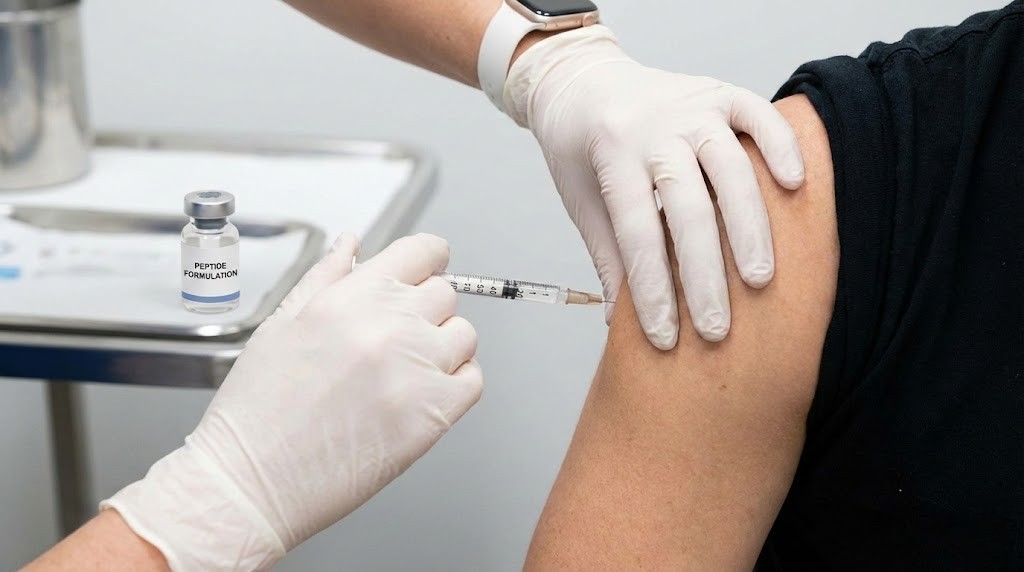
Your body already makes peptides. Thousands of them. They regulate everything from how you sleep to how fast you heal. But here is the problem most people do not realize. As you age, your body produces fewer of these critical signaling molecules. Growth hormone levels drop by roughly 14% per decade after age 30. Recovery slows. Sleep quality suffers. The healing that used to happen automatically now takes weeks instead of days.
This is where peptide injections enter the picture.
A peptide injection delivers specific amino acid chains directly into your body, bypassing the digestive system that would otherwise break them down. Think of it as giving your cells a precise set of instructions. Some peptides tell your pituitary gland to release more growth hormone. Others signal tissue to repair faster. Some reduce inflammation at the cellular level. The science is not theoretical. Over 80 peptide drugs have received FDA approval for various conditions, and researchers continue discovering new applications every year.
But the information available online ranges from genuinely useful to dangerously misleading. Some sources promise miracle results. Others spread unnecessary fear. Neither extreme helps anyone make informed decisions.
This guide cuts through the noise. You will learn exactly what peptide injections are, how they work at the molecular level, which peptides serve which purposes, and what the research actually shows. We will cover proper administration techniques, realistic timelines for results, safety considerations that matter, and how to avoid the mistakes that waste money and potentially harm your health. By the time you finish reading, you will understand peptide injections well enough to have an informed conversation with any healthcare provider and make decisions based on evidence rather than marketing hype.
SeekPeptides has compiled this resource from peer-reviewed research, clinical guidelines, and the real-world experiences of thousands of researchers to give you the most comprehensive peptide injection guide available anywhere.
Understanding peptides at the molecular level
Before diving into injections specifically, you need to understand what peptides actually are. The confusion starts here for most people.
Peptides are short chains of amino acids. Think of amino acids as individual letters. String a few together and you get words. String many together and you get sentences. In biological terms, peptides are the words while proteins are the sentences. Both consist of amino acids linked by peptide bonds, but peptides contain fewer than 50 amino acids while proteins contain more.
This size difference matters enormously.
Smaller size means peptides can cross cell membranes more easily. They can bind to receptors with high specificity. They get absorbed quickly after injection. And they tend to produce targeted effects rather than the broad systemic changes associated with larger proteins like human growth hormone.
Your body naturally produces peptides for virtually every biological function. Insulin, a 51-amino-acid peptide, regulates blood sugar. Oxytocin, a 9-amino-acid peptide, influences bonding and mood. B-type natriuretic peptide helps regulate blood pressure. Growth hormone-releasing hormone tells your pituitary gland when to release growth hormone. These are not foreign substances. They are the same molecules your body has used since birth.
The peptides used in injections are either identical to these natural molecules or slightly modified versions designed to last longer or produce stronger effects. Sermorelin, for example, consists of the first 29 amino acids of growth hormone-releasing hormone. It produces the same signal as the natural hormone. BPC-157 is a synthetic peptide based on a sequence found in human gastric juice. The body recognizes these molecules because they speak the same chemical language as natural peptides.
How peptides differ from steroids and hormones
The distinction between peptides, steroids, and hormones confuses many people. Understanding the differences helps you appreciate why peptide injections work the way they do.
Steroids are not amino acid chains at all. They are lipid-based molecules derived from cholesterol. Anabolic steroids like testosterone directly bind to androgen receptors and can suppress your body's natural hormone production. Use them long enough and your body may struggle to produce its own testosterone even after you stop. This shutdown effect makes peptides versus steroids a fundamentally different discussion.
Peptides work differently. Most stimulate your body's own production of hormones rather than replacing them. Growth hormone secretagogues like ipamorelin and CJC-1295 tell your pituitary gland to release more growth hormone. Your body still controls the process. The feedback loops remain intact. When you stop using these peptides, your body does not suddenly forget how to make growth hormone. It simply returns to its baseline production.
This does not mean peptides have no effect on hormone levels. They absolutely do. But the mechanism differs fundamentally from direct hormone replacement. The distinction matters for both effectiveness and safety.
Hormones, meanwhile, can be peptides themselves. Insulin is a peptide hormone. So is glucagon. The term hormone refers to function, specifically molecules that travel through the bloodstream to affect distant tissues, while peptide refers to structure. Many peptides are hormones. Many hormones are peptides. The categories overlap.
Why injectable peptides require injections
A reasonable question: why inject peptides instead of taking them orally?
Your digestive system exists to break down proteins and peptides into individual amino acids for absorption. This works perfectly for food. You eat a steak, your stomach acid and enzymes break down the proteins, and you absorb the amino acids to build your own proteins. But this same process destroys therapeutic peptides before they can do anything useful.
Oral peptides face three major obstacles. First, stomach acid denatures them, meaning it unfolds their three-dimensional structure that determines their function. A denatured peptide cannot bind to its target receptor. Second, digestive enzymes called proteases literally cut peptides into pieces. A 15-amino-acid peptide like BPC-157 might get chopped into fragments of 2-3 amino acids each. These fragments do not produce the same effects as the intact peptide. Third, even if some peptide survives, the intestinal lining poorly absorbs larger molecules.
The numbers tell the story. Oral bioavailability of most peptides ranges from 1-2%. This means if you swallow 100mcg of a peptide, maybe 1-2mcg actually reaches your bloodstream in active form. Injectable bioavailability approaches 100%. The choice becomes obvious.
Researchers have developed some workarounds. Nasal spray peptides bypass the digestive system by absorbing through the nasal mucosa. Some peptides have been modified with protective coatings or enzyme inhibitors to survive oral administration. Peptide capsules exist for certain applications. But for most therapeutic peptides, injection remains the gold standard for reliable delivery.
The different types of peptide injections
Not all peptide injections work the same way. Different peptides target different biological pathways and require different administration approaches. Understanding the major categories helps you recognize which peptides serve which purposes.
Growth hormone secretagogues
These peptides stimulate your pituitary gland to release more growth hormone. Unlike direct growth hormone injections, they work through your body's natural regulatory mechanisms.
Sermorelin acts as a growth hormone-releasing hormone analog. It consists of the first 29 amino acids of natural GHRH and produces similar effects. Sermorelin before and after results typically show improvements in sleep quality, body composition, and recovery over 3-6 months of use. The peptide was FDA-approved for diagnosing growth hormone deficiency and treating children with growth disorders before being discontinued for commercial reasons, not safety concerns.
Ipamorelin works through a different mechanism, acting as a ghrelin mimetic that stimulates growth hormone release without significantly affecting cortisol or prolactin. This selectivity makes it popular among researchers concerned about the stress hormone spikes associated with other secretagogues. The ipamorelin side effects profile tends to be mild compared to direct growth hormone use.
CJC-1295 extends growth hormone release over a longer period. The peptide exists in two forms: CJC-1295 with DAC, which includes a drug affinity complex that extends its half-life to about a week, and CJC-1295 without DAC, also called Mod GRF 1-29, which requires more frequent dosing. Many researchers combine CJC-1295 with ipamorelin, a combination addressed in detail in our ipamorelin versus CJC-1295 comparison.
The sermorelin ipamorelin blend represents another popular combination, offering both GHRH and ghrelin pathway stimulation simultaneously.
Healing and recovery peptides
This category has gained enormous attention for musculoskeletal applications, gut health, and general tissue repair.
BPC-157 stands as perhaps the most researched healing peptide. Derived from a sequence in human gastric juice, this 15-amino-acid peptide has demonstrated tissue-healing properties in numerous animal studies. Research shows it promotes angiogenesis, the formation of new blood vessels, which accelerates nutrient delivery to damaged tissue. It also appears to modulate nitric oxide pathways and growth factor expression. Our guide to taking BPC-157 covers administration specifics.
TB-500, the synthetic version of thymosin beta-4, complements BPC-157 well. While BPC-157 works more locally around injection sites, TB-500 distributes systemically and affects tissue throughout the body. It upregulates actin, a protein essential for cell migration and wound healing. Many researchers use the BPC-157 and TB-500 stack for comprehensive healing support, and this combination has earned the nickname wolverine stack for its regenerative properties.
GHK-Cu offers both healing and aesthetic benefits. This copper-binding peptide stimulates collagen production, attracts immune cells to injury sites, and has demonstrated wound-healing properties in clinical research. Our complete GHK-Cu guide explores the science in depth.
Weight management peptides
Peptides targeting weight loss work through various mechanisms including appetite regulation, fat metabolism, and metabolic rate enhancement.
AOD-9604 represents a modified fragment of human growth hormone specifically designed for fat metabolism. It stimulates lipolysis, the breakdown of stored fat, without the blood sugar effects of full growth hormone. Australia approved AOD-9604 as a food additive, though regulatory status varies by country.
GLP-1 receptor agonists like semaglutide and tirzepatide have revolutionized weight management medicine. These peptides reduce appetite by mimicking the satiety hormone GLP-1. Our semaglutide dosage calculator helps researchers determine appropriate protocols, while the semaglutide versus tirzepatide comparison explains the differences between these compounds.
Cagrilintide works through amylin receptor activation, complementing GLP-1 agonists for enhanced effects. The combination of cagrilintide with semaglutide, discussed in our cagrilintide and semaglutide guide, shows promise for significant weight reduction.
For those exploring peptides for weight loss, understanding the different mechanisms helps in selecting appropriate options. Our best peptides for weight loss article provides comprehensive comparisons.
Anti-inflammatory and immune peptides
KPV peptide has emerged as a promising anti-inflammatory agent. This alpha-melanocyte-stimulating hormone fragment demonstrates potent inflammation-reducing effects without the melanocyte activation that causes skin darkening. Our KPV peptide dosage guide and KPV for inflammation article cover applications in detail.
Thymalin and other thymic peptides support immune function by mimicking the signaling molecules produced by the thymus gland. These peptides for immune system support have attracted research attention for their potential in immune modulation.
Bioregulator peptides represent a category developed from Russian research. These short peptides, typically 2-4 amino acids, target specific tissues. Epitalon targets the pineal gland, cardiogen targets cardiac tissue, and vesugen targets vascular tissue. Our bioregulator peptides guide explains this category comprehensively.
Cognitive and sleep peptides
Semax and Selank represent Russian-developed peptides targeting cognitive function and anxiety respectively. Semax derives from ACTH and has neuroprotective properties, while Selank comes from tuftsin and produces anxiolytic effects. Both are approved medications in Russia and have substantial research backing their effects.
DSIP, delta sleep-inducing peptide, naturally occurs in the brain and promotes deep, restorative sleep. Our DSIP dosage guide covers proper administration for sleep optimization.
The best nootropic peptides for cognitive enhancement include dihexa, Adamax, and PE-22-28. Each works through different mechanisms to support memory, focus, and neural plasticity. Our peptides for brain function article compares these options.
How peptide injections actually work in your body
Understanding the mechanism of action helps you appreciate why peptide injections produce the effects they do and why timing, frequency, and administration method matter.
The receptor binding process
Peptides work by binding to specific receptors on cell surfaces or inside cells. Think of receptors as locks and peptides as keys. When the right peptide encounters the right receptor, it triggers a cascade of cellular events.
Growth hormone secretagogues illustrate this clearly. Ipamorelin binds to ghrelin receptors on pituitary cells. This binding activates signaling pathways inside the cell that ultimately cause growth hormone to be packaged and released into the bloodstream. The growth hormone then travels throughout the body, binding to its own receptors on various tissues and producing effects like muscle protein synthesis, fat mobilization, and tissue repair.
The specificity of this binding explains why peptides can produce targeted effects. BPC-157 interacts with growth factor receptors and nitric oxide systems primarily in the gastrointestinal tract and at injury sites. It does not randomly affect every cell in your body. The receptors it binds exist in higher concentrations in certain tissues, directing its effects to where they matter most.
This receptor specificity also explains why dosing matters. Too little peptide and not enough receptors get activated to produce meaningful effects. Too much and you may overstimulate pathways or cause receptor desensitization, where cells reduce their responsiveness to the signal. Finding the optimal range requires understanding how your body responds.
Absorption and distribution after injection
When you inject a peptide subcutaneously, meaning into the fatty tissue beneath the skin, it does not immediately enter your bloodstream. The peptide first disperses through the local tissue, then gradually absorbs into nearby capillaries. This creates a slower, more sustained release compared to intravenous injection.
Subcutaneous absorption typically takes 15-30 minutes to reach peak blood levels for most peptides. The fat tissue acts as a depot, slowly releasing the peptide over time. This pharmacokinetic profile suits most peptide applications well, providing sustained signaling rather than a brief spike.
Intramuscular injection provides faster absorption because muscle tissue has richer blood supply than fat. Peak levels arrive more quickly, typically within 10-20 minutes. Some peptides work better with this faster absorption, while others benefit from the slower subcutaneous route.
Once in the bloodstream, peptides distribute throughout the body based on blood flow and tissue permeability. The brain presents a special case. The blood-brain barrier restricts what molecules can enter neural tissue. Some peptides like BPC-157 appear to cross this barrier, while others do not. Nasal administration can bypass the blood-brain barrier for certain peptides, explaining why some cognitive peptides are delivered this way.
Metabolism and elimination
Peptides do not last forever in your body. Various enzymes called peptidases break them down into smaller fragments and eventually into individual amino acids. This is the same process that would destroy orally administered peptides in your gut, but it happens more slowly in the bloodstream.
Half-life describes how long it takes for half of a peptide dose to be eliminated. Natural growth hormone-releasing hormone has a half-life of only a few minutes, which is why synthetic analogs like CJC-1295 were developed with modifications that resist enzymatic breakdown. CJC-1295 with DAC has a half-life of about a week, allowing once-weekly dosing.
Understanding half-life helps determine dosing frequency. A peptide with a 3-hour half-life might need twice-daily dosing to maintain effective levels, while one with a 7-day half-life can be dosed weekly. Our peptide dosing guide covers this in detail for specific peptides.
The liver and kidneys handle most peptide elimination. People with compromised liver or kidney function may metabolize peptides differently, potentially requiring dose adjustments. This represents one reason why medical supervision matters for peptide therapy.
Proper administration techniques for peptide injections
The difference between effective peptide use and wasted money often comes down to proper administration. Incorrect technique can reduce efficacy, cause unnecessary discomfort, or create safety issues. This section covers everything you need to know about administering peptide injections correctly.
Reconstitution: preparing your peptides
Most peptides arrive as lyophilized powder, meaning they have been freeze-dried for stability during shipping and storage. Before injection, you must reconstitute them with an appropriate solvent. This process requires precision and sterile technique.
Bacteriostatic water serves as the standard solvent for peptide reconstitution. It contains 0.9% benzyl alcohol, which prevents bacterial growth and extends the shelf life of reconstituted peptides to 2-3 weeks when refrigerated. Sterile water without preservatives works for single-use situations but must be used within 24 hours to avoid contamination risk.
The peptide reconstitution calculator helps determine exactly how much solvent to add based on your desired concentration. For example, adding 2ml of bacteriostatic water to 10mg of peptide creates a concentration of 5mg/ml or 5000mcg/ml. Each 0.1ml would then contain 500mcg.
Proper reconstitution technique matters. Clean the rubber stopper of both vials with alcohol swabs. Draw the appropriate amount of bacteriostatic water into a sterile syringe. Insert the needle into the peptide vial at a 45-degree angle, aiming the stream against the glass wall rather than directly onto the powder. This prevents the fragile peptide from being damaged by the force of the liquid.
Let the solvent run slowly down the side of the vial. Do not shake. Gentle swirling is acceptable, but aggressive mixing can denature the peptide. The powder should dissolve within a few minutes for most peptides. If it remains cloudy or particles are visible, something may have gone wrong. Our complete reconstitution guide covers troubleshooting.
Subcutaneous injection technique
Subcutaneous injection represents the most common administration route for peptides. It is relatively simple, minimally painful when done correctly, and provides appropriate absorption for most peptides.
You will need insulin syringes, typically 29-31 gauge with 0.5 inch needles. These fine needles minimize discomfort and are perfectly adequate for subcutaneous delivery. Have alcohol swabs ready for cleaning injection sites and vial stoppers.
Preferred injection sites include the abdomen, at least 1-2 inches from the navel, and the outer thigh. The abdomen typically provides the most consistent absorption. The skin is easily pinched, the tissue is fatty enough for proper placement, and the area is convenient to reach.
Here is the step-by-step process:
First, wash your hands thoroughly with soap and water. This is not optional. Contamination from dirty hands causes more problems than any other factor.
Second, clean the injection site with an alcohol swab and allow it to dry completely. Injecting through wet alcohol can cause stinging.
Third, draw your dose into the syringe. Pull back on the plunger slightly past your intended dose, tap out any air bubbles, then push the plunger until you reach the exact amount needed.
Fourth, pinch a fold of skin between your thumb and forefinger. This lifts the subcutaneous fat away from the underlying muscle.
Fifth, insert the needle at a 45-degree angle. Some practitioners use 90 degrees for very thin needles, but 45 degrees ensures subcutaneous rather than intramuscular placement for most people.
Sixth, inject slowly and steadily. There is no need to rush. Slower injection reduces discomfort.
Seventh, withdraw the needle and apply gentle pressure with a clean cotton ball or swab if needed. Do not rub the site.
Rotate injection sites with each dose to prevent lipohypertrophy, a condition where repeated injections cause fat tissue to thicken irregularly. Keep at least an inch between consecutive injection spots.
Our complete peptide injections guide includes visual references and additional troubleshooting information.
Intramuscular injection technique
Some peptides benefit from faster absorption achieved through intramuscular injection. The technique differs from subcutaneous in several important ways.
Intramuscular needles are longer, typically 1-1.5 inches, and slightly larger gauge, usually 22-25. The goal is to deposit the peptide deep within muscle tissue rather than the fat layer.
Common intramuscular sites include the deltoid (shoulder), vastus lateralis (outer thigh), and gluteus (upper outer quadrant of the buttock). The deltoid suits smaller volumes under 1ml, while the gluteus and thigh accommodate larger volumes.
The injection angle changes to 90 degrees, straight in perpendicular to the skin surface. There is no need to pinch the skin. Some practitioners recommend aspirating, pulling back on the plunger briefly after insertion to check for blood, which would indicate hitting a blood vessel. If blood appears, withdraw and try a different spot.
Intramuscular injections may cause more post-injection soreness than subcutaneous. This is normal and typically resolves within a day or two.
Storage after reconstitution
Reconstituted peptides require refrigeration between 36-46 degrees Fahrenheit, about 2-8 degrees Celsius. The refrigerator door is not ideal because temperature fluctuates more with opening and closing. A main shelf provides more consistent cold.
Most reconstituted peptides remain stable for 2-4 weeks when stored properly in bacteriostatic water. Our guide to peptide storage covers stability for specific peptides. Peptides reconstituted in sterile water without preservative should be used within 24 hours or divided into single-use portions and frozen.
Never freeze peptides that have already been reconstituted unless specifically directed. The freeze-thaw cycle can damage their structure. Lyophilized peptides before reconstitution can be stored at room temperature for short periods but last longer refrigerated.
Light exposure degrades many peptides. Keep vials in their original packaging or wrap them in foil if stored long-term. The complete peptide storage guide addresses these considerations comprehensively.
What to expect: realistic timelines for peptide injection results
One of the biggest sources of frustration with peptide injections comes from unrealistic expectations about how quickly results appear. Marketing often implies rapid transformations. Reality requires patience and consistency.
The loading phase
Most peptides require a loading phase of 3-6 months before full effects become apparent. During this period, your body's receptors adapt to the increased signaling, cellular processes upregulate, and cumulative changes build toward noticeable results.
Think of it like exercise. You do not get stronger from one workout. Strength builds through consistent training over months. Peptides work similarly. Each dose contributes to a cumulative effect that becomes significant over time.
This does not mean you notice nothing for months. Many people report initial changes within the first few weeks. These early effects often include improved sleep quality, subtle increases in energy, faster recovery from exercise, and slight improvements in mood. But the major results people seek, significant body composition changes, substantial healing, or marked cognitive improvement, typically require longer timelines.
Timeline by peptide category
Growth hormone secretagogues often produce early sleep improvements within 1-2 weeks. Deeper sleep occurs because growth hormone release naturally peaks during sleep, and secretagogues enhance this process. Body composition changes, more muscle and less fat, typically become noticeable around the 3-month mark with full effects at 6 months. Our article on peptide timelines provides more specific information.
Healing peptides like BPC-157 and TB-500 may show faster results for acute injuries. Reduced pain and inflammation often appear within the first week or two. Structural healing of tendons, ligaments, and other tissues takes longer, typically 4-8 weeks for noticeable improvement and 3-6 months for complete healing of significant injuries. The peptides for tendon repair article discusses realistic healing expectations.
Weight management peptides vary significantly. GLP-1 agonists like semaglutide typically produce noticeable appetite reduction within the first week. Weight loss becomes measurable within 2-4 weeks and continues progressively over months. Most studies assess results at 12-week intervals or longer. Our peptides for weight loss and muscle gain guide sets appropriate expectations.
Cognitive peptides present mixed timelines. Some people notice acute effects from peptides like semax within days. Others require weeks of consistent use before subtle improvements in memory, focus, or mood become apparent. Neuroplasticity changes that underlie lasting cognitive improvement take months to develop.
Factors affecting your results
Individual response to peptides varies significantly. Several factors influence how quickly and dramatically you will see results.
Age matters. Younger people typically have more responsive endocrine systems and faster healing capacity. Older individuals may need longer before noticing equivalent changes, though they often have more room for improvement and can see dramatic relative gains.
Baseline health status influences outcomes. Someone with significant growth hormone deficiency may notice rapid improvements from secretagogues. Someone with already-optimal levels will see more modest effects. Similarly, the more damaged a tissue, the more potential for healing peptides to produce noticeable results.
Lifestyle factors amplify or diminish peptide effects. Adequate sleep allows growth hormone secretagogues to work optimally. Proper nutrition provides the raw materials for tissue repair and muscle building. Exercise creates the stimulus that peptides can enhance. Chronic stress elevates cortisol, which counteracts many peptide benefits. You cannot out-supplement a poor lifestyle.
Consistency matters more than perfection. Missing occasional doses is not catastrophic, but erratic use undermines the cumulative effects peptides require. Most protocols work best with consistent daily or scheduled administration over extended periods.
Quality affects results dramatically. Underdosed, contaminated, or degraded peptides will not produce the expected effects regardless of how perfectly you administer them. Choosing reliable vendors and third-party testing helps ensure you actually receive what you pay for.
Safety considerations and potential side effects
Peptide injections carry risks like any medical intervention. Understanding these risks allows you to make informed decisions and recognize problems early if they occur.
Common side effects
Injection site reactions represent the most common side effect. Redness, mild swelling, itching, or soreness at the injection site occur in a significant percentage of users. These reactions typically resolve within hours to days and become less frequent as your body adapts. Proper injection technique and site rotation minimize these issues.
Water retention affects many people using growth hormone secretagogues, particularly in the first few weeks. This can manifest as puffy hands, tight rings, or slightly swollen ankles. The effect usually diminishes as your body adjusts. Reducing sodium intake can help manage this side effect.
Headaches occur with some peptides, particularly those affecting growth hormone or blood flow. These typically respond to adequate hydration and often resolve as the body adapts. Persistent or severe headaches warrant discontinuation and medical consultation.
Nausea affects some users of certain peptides, especially GLP-1 agonists used for weight management. Starting with lower doses and gradually increasing, called titration, significantly reduces this risk. Our semaglutide dosage calculator includes titration schedules for this reason.
Flushing or warmth can occur with peptides that affect blood flow or certain receptor types. This sensation typically passes within minutes to hours and is not dangerous in most cases.
More serious concerns
While rare with properly sourced and administered peptides, more serious issues can occur.
Infection represents a real risk with any injection. Contaminated supplies, improper reconstitution, or unsterile technique can introduce bacteria. Signs of infection include increasing redness, warmth, swelling, or discharge at the injection site, especially if accompanied by fever. Any suspected infection requires prompt medical attention.
Allergic reactions can occur with any foreign substance. Symptoms range from localized hives to systemic reactions involving difficulty breathing. While severe allergic reactions to peptides are rare, anyone starting new peptides should be alert to unusual symptoms in the hours following injection.
Hormonal effects warrant consideration. Growth hormone secretagogues increase growth hormone and IGF-1, which could theoretically stimulate growth of existing cancers. Anyone with a history of cancer should discuss peptide use with their oncologist. This does not mean peptides cause cancer, but they could potentially accelerate growth of pre-existing tumors.
Blood sugar effects vary by peptide. Growth hormone can reduce insulin sensitivity, potentially worsening diabetes control. GLP-1 agonists lower blood sugar, which can cause hypoglycemia in people taking diabetes medications. People with diabetes require medical supervision for peptide use.
Our peptide safety guide provides comprehensive coverage of safety considerations.
Drug interactions
Peptides can interact with medications in ways that alter effectiveness or safety.
GLP-1 agonists slow gastric emptying, which can affect absorption of oral medications. Timing oral medications separately from GLP-1 injections may be necessary.
Growth hormone secretagogues can affect blood sugar and may require adjustment of diabetes medications.
Peptides affecting blood flow or clotting should be used cautiously with blood thinners.
Anyone taking prescription medications should discuss peptide use with their healthcare provider. The interaction profile of many peptides remains incompletely characterized, making professional guidance valuable.
Quality and purity concerns
Perhaps the biggest safety concern with peptides comes not from the peptides themselves but from quality issues with the products available.
Peptides sold for research purposes are not required to meet pharmaceutical purity standards. Testing has found products that contain less peptide than claimed, different peptides than labeled, or contamination with bacteria, heavy metals, or other substances.
The FDA banned certain peptide products in 2023 due to purity concerns. This regulatory action highlighted the quality issues present in the market.
Third-party testing provides some assurance of quality. Reputable vendors make certificates of analysis available showing purity and identity testing. Our vendor guide discusses what to look for when evaluating peptide sources.
Common mistakes with peptide injections
Even well-intentioned users make mistakes that reduce effectiveness or create unnecessary problems. Learning from others' errors saves you time, money, and frustration.
Improper storage destroying peptides
Peptides are fragile molecules. Heat degrades them. Light degrades them. Bacterial contamination destroys them. Yet people routinely leave peptides at room temperature, expose them to sunlight, or use contaminated techniques that introduce bacteria.
The result: you inject what you think is an active peptide but actually administer degraded material with little to no activity. You conclude peptides do not work when the problem was storage, not the peptide itself.
Solutions: Keep lyophilized peptides refrigerated. Store reconstituted peptides in the back of the refrigerator, not the door. Use bacteriostatic water for multi-dose vials. Protect from light. Check for cloudiness or particles before each use, which indicate contamination or degradation. Our peptide temperature guide explains stability under various conditions.
Incorrect reconstitution
Adding too much or too little bacteriostatic water creates dosing errors. Adding solvent too quickly or forcefully can damage the peptide structure. Using the wrong solvent can cause precipitation or instability.
Solutions: Use the reconstitution calculator to determine exactly how much solvent to add. Add slowly, letting liquid run down the vial wall. Use appropriate solvents as recommended for each peptide. Never shake, only gentle swirling if needed.
Inconsistent dosing schedules
Peptides work through cumulative effects that require consistent administration. Skipping doses, varying timing randomly, or stopping and starting undermine this process.
Solutions: Establish a routine and stick to it. Set reminders if needed. If you must miss a dose, resume your normal schedule rather than doubling up. Consistency over months matters more than perfection on any single day.
Unrealistic expectations
People expect dramatic results within days and give up when transformation does not occur immediately. Or they expect peptides to overcome terrible diet, no exercise, and insufficient sleep.
Solutions: Set appropriate expectations based on the research, not marketing claims. Plan for months of consistent use. Address lifestyle factors that will amplify or diminish results. Peptides enhance good practices. They do not replace them.
Using too high or too low doses
More is not always better with peptides. Excessive doses can cause more side effects without additional benefits, waste money, and potentially cause receptor desensitization that reduces long-term effectiveness. Doses that are too low may not reach the threshold for meaningful effects.
Solutions: Start with established protocols rather than arbitrary amounts. Use our peptide calculator for accurate dosing. Consider starting at the lower end of recommended ranges and adjusting based on response. Our peptide dosage chart provides reference ranges for common peptides.
Ignoring side effects
Some users push through concerning symptoms because they want results. Others dismiss genuine problems as normal adjustment.
Solutions: Know what side effects are normal and expected versus concerning. Mild injection site reactions are normal. Persistent severe pain, spreading redness, or fever are not. When in doubt, stop and consult a healthcare provider. No peptide result is worth a serious health complication.
Poor vendor selection
Purchasing from unknown sources offering suspiciously low prices often means receiving underdosed, mislabeled, or contaminated products. The money saved becomes money wasted when the product does not work or causes problems.
Solutions: Research vendors thoroughly. Look for third-party testing and available certificates of analysis. Check reviews and community feedback. Be suspicious of prices dramatically lower than established vendors. The vendor selection guide helps navigate these decisions.
Our complete guide to peptide mistakes covers additional errors and how to avoid them.
Comparing peptide injections to other delivery methods
While injections remain the gold standard for most peptide applications, alternative delivery methods exist for certain situations.
Nasal sprays
Nasal spray peptides offer a needle-free alternative for peptides that absorb well through the nasal mucosa. The nasal cavity provides direct access to both the bloodstream and, for some peptides, the brain via the olfactory pathway.
Advantages include ease of use, no needles required, and potentially better brain delivery for certain peptides. Semax and selank are commonly administered nasally in their approved forms. PT-141 nasal spray represents another popular application.
Disadvantages include less consistent absorption compared to injection, variable bioavailability depending on nasal congestion or technique, and limited suitability for larger peptide doses. Not all peptides work well nasally.
Oral peptides
Oral peptide delivery has improved with technologies designed to protect peptides from digestive destruction. Semaglutide exists in an oral form using absorption enhancers that allow meaningful uptake. BPC-157 has been studied orally for gastrointestinal applications where it acts locally before being broken down.
However, oral bioavailability remains far lower than injectable for most peptides. People requiring systemic effects typically need injection for reliable results.
Topical peptides
Peptides in skincare products target skin directly. Copper peptides, matrixyl, argireline, and other peptides appear in serums and creams designed for anti-aging applications.
Topical peptides can be effective for surface skin improvements but do not produce systemic effects. Someone using a GHK-Cu serum will not see the same results as someone injecting GHK-Cu for wound healing or hair growth. The applications differ fundamentally.
Transdermal patches
Microneedle peptide patches represent an emerging technology that creates tiny channels in the skin for peptide delivery. These offer potential advantages over traditional injections including easier self-administration and sustained release.
Current availability remains limited, and not all peptides suit this delivery method. As technology advances, patches may become more common for certain applications.
Why injections remain standard
Despite alternatives, injections dominate peptide administration for good reasons. Bioavailability approaches 100% compared to single-digit percentages for many oral peptides. Dosing is precise and predictable. Onset is reliable. The technique, while requiring learning, becomes routine quickly.
The injectable versus oral peptides comparison explores this topic in depth for those weighing options.
Popular peptide injection protocols
While specific protocols should be tailored to individual circumstances, understanding common approaches provides useful context.
Growth hormone secretagogue protocols
Typical growth hormone secretagogue protocols involve twice-daily dosing, usually before bed and in the morning on an empty stomach. Growth hormone release is blunted by elevated blood sugar and insulin, so fasting windows of 2-3 hours before injection optimize response.
Pre-bed dosing takes advantage of natural nocturnal growth hormone release, amplifying the pulse that occurs during deep sleep. Morning dosing supports daytime energy and recovery.
Ipamorelin doses typically range from 100-300mcg per injection. CJC-1295 without DAC uses similar ranges. The combination of both, often called the ipamorelin/CJC stack, represents a popular approach. Our CJC-1295 dosage calculator helps determine appropriate amounts.
Cycling, taking breaks from peptide use, remains debated for secretagogues. Some argue continuous use leads to receptor desensitization. Others maintain that the body's feedback mechanisms prevent this. Common approaches include 5 days on/2 days off or 8 weeks on/4 weeks off. The cycle planning guide discusses various approaches.
Healing peptide protocols
BPC-157 protocols typically involve 200-500mcg twice daily, often injected near the injury site for localized effects. Systemic administration works for gut healing and general recovery. Protocols usually run 4-8 weeks for acute injuries, longer for chronic conditions.
TB-500 loading protocols often use higher doses initially, around 2-2.5mg twice weekly for 4-6 weeks, followed by maintenance dosing of 2mg weekly or less. The loading phase saturates tissues, while maintenance sustains the effect.
The combination of BPC-157 and TB-500, the wolverine stack, uses both simultaneously. This approach targets different but complementary healing mechanisms. Our stacking guide covers protocols in detail.
Weight management protocols
GLP-1 agonist protocols require careful titration to manage gastrointestinal side effects. Semaglutide typically starts at 0.25mg weekly, increasing every 4 weeks to 0.5mg, then 1mg, and potentially higher based on response and tolerance. Our semaglutide calculator includes titration schedules.
Tirzepatide follows similar titration principles with its own dosing schedule. The comparison between semaglutide and tirzepatide helps users understand which might suit their needs.
AOD-9604 protocols typically involve 300-500mcg daily, often split between morning and afternoon doses. Fasting enhances its fat-mobilizing effects.
Stacking multiple peptides
Many researchers use multiple peptides simultaneously for complementary effects. Common stacks include:
Growth hormone secretagogue stacks like ipamorelin plus CJC-1295 or sermorelin plus ipamorelin target the growth hormone axis through multiple pathways.
Recovery stacks combining BPC-157 and TB-500 address healing through different mechanisms.
Comprehensive stacks might include a secretagogue for growth hormone, a healing peptide for recovery, and possibly others depending on goals.
The peptide stacking guide covers how to combine peptides safely and effectively. The peptide stack calculator helps plan multi-peptide protocols.
The legal and regulatory landscape
Understanding the legal status of peptides helps you navigate this space appropriately and avoid potential issues.
FDA-approved peptides
Over 80 peptide drugs have received FDA approval for specific medical indications. These include insulin and its analogs for diabetes, GLP-1 agonists like semaglutide and liraglutide for diabetes and weight management, growth hormone-releasing peptides for specific deficiencies, and many others.
Approved peptides go through rigorous clinical trials demonstrating safety and efficacy for their intended uses. They are manufactured to pharmaceutical standards with strict quality control.
Research peptides
Many peptides discussed in this guide are sold as research chemicals, not for human use. This category includes BPC-157, TB-500, most growth hormone secretagogues, and many others. These peptides lack FDA approval and are legally sold only for research purposes.
The legal gray area exists because peptides themselves are not scheduled controlled substances in most cases. Buying, possessing, and using them for personal research generally does not violate federal law in the United States, though regulations vary by jurisdiction and can change.
Our article on peptide legality covers the current regulatory status in detail.
Prescription requirements
Obtaining peptides through medical channels requires a prescription. Compounding pharmacies can prepare many peptide formulations with a valid prescription from a licensed provider. This route offers advantages including pharmaceutical-grade quality, medical supervision, and legal clarity.
The question of whether doctors can prescribe research peptides involves nuances about compounding regulations and off-label use that our dedicated article explores.
International considerations
Peptide regulations vary significantly by country. Some peptides approved in one country may be prohibited in another. Importing peptides across borders can create legal complications.
The peptide regulation updates track important changes in this dynamic landscape.
Choosing the right approach for you
With so many options available, selecting appropriate peptides requires matching your goals with the right compounds and understanding what realistic outcomes look like.
For recovery and healing
If faster recovery from injuries, better healing of chronic issues, or reduced inflammation represents your primary goal, the healing peptide category deserves focus.
BPC-157 provides the most research support for tissue healing across multiple injury types. TB-500 complements it well for systemic healing effects. KPV offers potent anti-inflammatory benefits, particularly for gut-related inflammation.
Our best peptides for injury recovery article provides detailed comparisons. For specific applications, see peptides for joint pain, peptides for back pain, or peptides for tendon repair.
For body composition
Goals related to building muscle, losing fat, or improving overall body composition point toward growth hormone secretagogues and potentially weight management peptides.
Secretagogues like ipamorelin, CJC-1295, and sermorelin support muscle protein synthesis and fat mobilization through enhanced growth hormone release. For more aggressive fat loss, GLP-1 agonists provide powerful appetite suppression and metabolic effects.
See best peptides for muscle growth and best peptides for weight loss for detailed guidance. The safest peptides for muscle growth article helps those prioritizing safety alongside results.
For anti-aging and longevity
Multiple peptides address various aspects of aging, from skin health to cellular regeneration to hormone optimization.
GHK-Cu supports collagen production and skin health. Epitalon targets the pineal gland and telomere length. Growth hormone secretagogues address age-related GH decline. Our peptides for anti-aging page provides an overview.
For skin-specific goals, explore peptides for wrinkles, peptides for skin tightening, or peptides for dark circles.
The longevity peptides guide covers this category comprehensively.
For cognitive enhancement
Cognitive goals involve peptides targeting neural function, neuroprotection, and neurotransmitter systems.
Semax and selank offer anxiolytic and cognitive benefits backed by decades of clinical use in Russia. Dihexa has shown remarkable results in animal research on memory and learning. Various other nootropic peptides target different aspects of brain function.
For sleep optimization
Poor sleep undermines virtually every health goal. Peptides targeting sleep include DSIP for promoting deep sleep and growth hormone secretagogues, which enhance the natural growth hormone pulse during sleep.
Our DSIP peptide guide covers sleep peptide options in detail.
For sexual health
PT-141, also known as bremelanotide, represents the primary peptide for sexual function. Unlike PDE5 inhibitors that work mechanically, PT-141 works through the central nervous system to increase arousal and desire.
See how to use PT-141 and best peptides for libido for detailed information.
Working with healthcare providers
While many people explore peptides independently, working with knowledgeable healthcare providers offers significant advantages.
Finding peptide-knowledgeable providers
Not all healthcare providers understand peptides. Many received no training on these compounds in medical school. Finding someone knowledgeable requires research.
Functional medicine practitioners, anti-aging specialists, and sports medicine doctors tend to have more peptide familiarity than general practitioners. Some clinics specialize in peptide therapy specifically.
Our peptide therapy near me guide and city-specific guides like peptide therapy Houston, peptide therapy Austin, and peptide therapy Phoenix can help locate providers.
Online telehealth peptide therapy has expanded access for those without local specialists.
What to expect from a consultation
A thorough peptide consultation should include comprehensive health history review, baseline lab work including hormones, metabolic markers, and potentially specific tests related to your goals, discussion of expectations and timeline, explanation of risks and benefits, and follow-up plan with monitoring.
Be wary of providers who prescribe without proper evaluation or promise unrealistic results. Quality care involves individualized assessment and ongoing monitoring.
Monitoring and follow-up
Periodic lab work helps track response and catch potential issues early. Growth hormone secretagogue users might monitor IGF-1 levels. Weight management peptide users track metabolic markers. Specific monitoring depends on which peptides you use and your individual health status.
Adjustments based on response optimize outcomes. Starting protocols are starting points, not fixed prescriptions. Working with a provider allows evidence-based modifications.
Frequently asked questions
How long do peptide injection results last after stopping?
Results vary by peptide type. Structural changes like healed tissue generally persist. Growth hormone benefits gradually return to baseline over weeks to months after stopping secretagogues. Weight management peptide effects diminish as the drug clears your system. Our peptide results timeline covers duration in detail.
Can you take peptide injections with other medications?
Interactions depend on the specific peptide and medication. GLP-1 agonists affect oral medication absorption. Growth hormone secretagogues can alter blood sugar. Always discuss your complete medication list with a healthcare provider. The peptides with ozempic guide addresses one common question.
Do peptide injections hurt?
Subcutaneous injections with insulin syringes cause minimal discomfort when done correctly. Most describe a brief pinch. Technique matters, meaning proper angle, appropriate speed, and site rotation all reduce discomfort. Our injection guide covers technique optimization.
How much do peptide injections cost?
Costs range from under $100 to over $1000 monthly depending on peptide type, quality, and source. GLP-1 agonists tend toward the higher end. Research peptides like BPC-157 often cost $150-400 monthly. Our peptide therapy cost guide provides detailed breakdowns.
Can you inject multiple peptides at the same time?
Many peptides can be injected in the same session, though typically not mixed in the same syringe unless compatibility is established. Separate injection sites or sequential injections at the same site work for most combinations. See our guide to combining peptides.
Do peptides show up on drug tests?
Standard workplace drug tests do not screen for peptides. However, anti-doping tests used in sports can detect many peptides. WADA prohibits numerous peptides in competition. Athletes should understand that many popular peptides violate anti-doping rules. The BPC-157 ban status article discusses this for one common peptide.
What happens if I miss a peptide injection dose?
Missing occasional doses is not catastrophic. Resume your normal schedule rather than doubling up. Consistent use matters more than any single dose. Chronic inconsistency undermines cumulative effects, but an occasional missed day will not ruin your progress.
Can women use peptide injections?
Yes. Many peptides work similarly in women and men. Some considerations differ, particularly around growth hormone secretagogues and their effects on menstrual cycles. Our best peptides for women and peptides for women over 40 guides address female-specific considerations. Peptides for menopause covers that specific application.
External resources
PubMed - Searchable database of peer-reviewed research
FDA Drug Safety Information - Official regulatory updates
WADA Prohibited List - Anti-doping regulations for athletes
Therapeutic Peptides Review (PMC) - Comprehensive scientific overview
WebMD Peptides Overview - General consumer health information
For researchers serious about understanding and optimizing their peptide protocols, SeekPeptides provides the most comprehensive resource available. Members access detailed protocol guides, interactive calculators, and a community of thousands who have navigated these exact questions. Whether you are just starting to explore getting started with peptides or looking to optimize advanced protocols, the tools and guidance available help you make evidence-based decisions.
In case I do not see you, good afternoon, good evening, and good night. May your injections stay sterile, your peptides stay potent, and your results stay consistent.