Feb 10, 2026
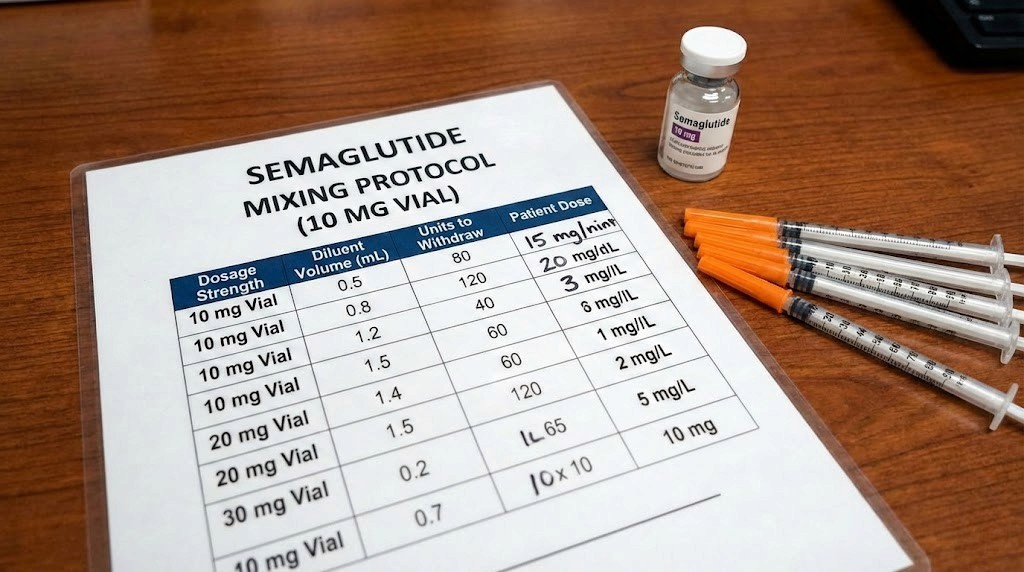
One wrong measurement and your entire vial is compromised. That is not an exaggeration. With a 10 mg semaglutide vial, the margin between an accurate dose and a wasted peptide comes down to fractions of a milliliter. And yet most mixing guides online skip the math, gloss over the critical details, or assume you already know how to convert milligrams to syringe units. You do not need assumptions. You need a chart.
The reality is straightforward but unforgiving. Add too much bacteriostatic water and your concentration drops, forcing you to inject larger volumes. Add too little and you are working with a solution so concentrated that measuring 0.25 mg accurately becomes nearly impossible on a standard insulin syringe. Either mistake cascades through your entire semaglutide protocol, affecting every dose you draw for the next four weeks.
This guide eliminates the guesswork entirely. You will find complete mixing charts for every common bacteriostatic water volume, exact syringe unit conversions for each dose in the standard titration schedule, step-by-step reconstitution instructions, and troubleshooting protocols for when things go wrong. Whether you are working with your first vial or your fifth, the math here is precise, the instructions are clear, and every number has been double-checked against established peptide dosing protocols. SeekPeptides built this resource because getting the reconstitution right is not optional. It is the foundation everything else depends on.
Understanding the 10 mg semaglutide vial
Before you touch a syringe, you need to understand what you are working with. A 10 mg semaglutide vial contains lyophilized (freeze-dried) powder, a white to off-white cake or powder sitting at the bottom of the vial. This is not a liquid. It is not ready to inject. The reconstitution process transforms this powder into an injectable solution by adding a precise amount of bacteriostatic water.
Why 10 mg? This vial size offers significant advantages over the more common 5 mg vial. A single 10 mg vial, reconstituted properly, can supply enough semaglutide for the initial titration phases of a standard protocol. That means fewer vials opened, less waste, and more consistency across doses. For researchers following a structured peptide cycle, this is the most practical starting point.
The peptide itself is a GLP-1 receptor agonist. It mimics a natural hormone called glucagon-like peptide-1, which your body produces in the gut after eating. This hormone signals satiety, slows gastric emptying, and influences insulin secretion. The synthetic version, semaglutide, has been modified with a fatty acid side chain that allows it to bind to albumin in the blood. This binding extends its half-life dramatically, which is why a single weekly injection maintains therapeutic levels for seven full days. Understanding this mechanism matters because it explains why dosing accuracy is so critical. Too much and the side effects intensify. Too little and the therapeutic window narrows.
The lyophilized form is remarkably stable when stored correctly. Before reconstitution, keep vials at -20 degrees Celsius (-4 degrees Fahrenheit) for long-term storage, or 2 to 8 degrees Celsius (35.6 to 46.4 degrees Fahrenheit) for shorter periods. Once you add bacteriostatic water, the clock starts. You have 28 days of usable solution when stored properly in the refrigerator.
Essential supplies for reconstitution
Gather everything before you begin. Stopping midway through reconstitution to find a missing item introduces contamination risk and disrupts the process. Here is what you need.
Bacteriostatic water. This is sterile water preserved with 0.9% benzyl alcohol, which prevents bacterial growth after the vial is punctured. Do not substitute with sterile water for injection unless you plan to use the entire vial in one session. Do not use tap water, distilled water, or saline. The benzyl alcohol in bacteriostatic water is what keeps the solution safe for repeated withdrawals over 28 days.
Insulin syringes. Use U-100 insulin syringes with clear unit markings. The 1 mL (100 unit) syringes work for mixing and for drawing doses. For smaller doses, 0.5 mL (50 unit) or 0.3 mL (30 unit) syringes provide better precision. The finer the graduation marks, the more accurately you can measure. When working with a concentrated solution, every unit matters. Our semaglutide dosage calculator can help you verify unit counts before injecting.
Alcohol swabs. You will need these to sterilize vial tops before every puncture. Both the semaglutide vial and the bacteriostatic water vial need cleaning before you insert a needle.
A clean, flat surface. Work on a sanitized counter or table. Do not reconstitute in a bathroom. Do not reconstitute in a car. Do not reconstitute anywhere that introduces unnecessary contamination risk. The safety protocols for peptide handling exist for a reason.
A sharps container for needle disposal. Never reuse needles. Never recap and throw needles in regular trash.
The complete semaglutide 10 mg mixing chart
This is the core reference. The amount of bacteriostatic water you add determines your concentration, which determines how many syringe units equal each dose. The chart below covers the four most practical mixing ratios for a 10 mg vial.
Mixing ratio option 1: 2 mL bacteriostatic water (5 mg/mL)
This creates the most concentrated solution. It is ideal when you want to inject the smallest possible volume per dose. However, the high concentration makes it harder to measure very small doses accurately. This ratio works best for researchers in later titration phases who need 1 mg or higher per injection.
Concentration: 5 mg per mL
1 unit on a U-100 syringe = 0.05 mg (50 mcg)
Dose | Volume (mL) | Syringe units |
|---|---|---|
0.25 mg | 0.05 mL | 5 units |
0.5 mg | 0.10 mL | 10 units |
1.0 mg | 0.20 mL | 20 units |
1.7 mg | 0.34 mL | 34 units |
2.4 mg | 0.48 mL | 48 units |
At 5 mg/mL, the 0.25 mg starting dose requires only 5 units. On many syringes, the space between unit marks is very small at this level. If you cannot clearly see 5 units on your syringe, use a lower concentration. Precision at the starting dose is non-negotiable when following a proper semaglutide protocol.
Mixing ratio option 2: 3 mL bacteriostatic water (3.33 mg/mL)
This is the most commonly recommended ratio for 10 mg vials. It balances concentration with measurability, giving you enough precision for starting doses while keeping injection volumes reasonable at higher doses. Most peptide dosage guides recommend this ratio as the standard.
Concentration: 3.33 mg per mL
1 unit on a U-100 syringe = 0.0333 mg (33.3 mcg)
Dose | Volume (mL) | Syringe units |
|---|---|---|
0.25 mg | 0.075 mL | 7.5 units |
0.5 mg | 0.15 mL | 15 units |
1.0 mg | 0.30 mL | 30 units |
1.7 mg | 0.51 mL | 51 units |
2.4 mg | 0.72 mL | 72 units |
Notice the 0.25 mg dose lands at 7.5 units. Since most syringes mark in whole units or half-unit increments, you will need to estimate between the 7 and 8 unit lines. This is acceptable. The difference between 7 and 8 units at this concentration is only about 0.033 mg, a negligible variance. For those who want absolute precision, consider the peptide reconstitution calculator to verify your specific setup.
Mixing ratio option 3: 4 mL bacteriostatic water (2.5 mg/mL)
A solid middle-ground option. The lower concentration makes small doses easier to measure, and injection volumes remain manageable even at higher doses. This works well for researchers who want a bit more precision during the initial titration weeks without sacrificing too much convenience later.
Concentration: 2.5 mg per mL
1 unit on a U-100 syringe = 0.025 mg (25 mcg)
Dose | Volume (mL) | Syringe units |
|---|---|---|
0.25 mg | 0.10 mL | 10 units |
0.5 mg | 0.20 mL | 20 units |
1.0 mg | 0.40 mL | 40 units |
1.7 mg | 0.68 mL | 68 units |
2.4 mg | 0.96 mL | 96 units |
The 0.25 mg dose at 10 units is clean and easy to read. The 2.4 mg maintenance dose at 96 units approaches the syringe capacity, but still fits within a 1 mL syringe. This ratio offers the best balance of readability and practicality for most users.
Mixing ratio option 4: 5 mL bacteriostatic water (2 mg/mL)
The most dilute practical option. This creates maximum precision for small doses, making it ideal for microdosing protocols or researchers who prioritize measurement accuracy above all else. The tradeoff is larger injection volumes at higher doses. Researchers exploring semaglutide for weight management research sometimes prefer this dilution for the earliest titration phases.
Concentration: 2 mg per mL
1 unit on a U-100 syringe = 0.02 mg (20 mcg)
Dose | Volume (mL) | Syringe units |
|---|---|---|
0.25 mg | 0.125 mL | 12.5 units |
0.5 mg | 0.25 mL | 25 units |
1.0 mg | 0.50 mL | 50 units |
1.7 mg | 0.85 mL | 85 units |
2.4 mg | 1.20 mL | Exceeds 1 mL syringe |
Important limitation here. At 2 mg/mL, the 2.4 mg maintenance dose requires 1.2 mL, which exceeds a standard 1 mL insulin syringe. You would need a larger syringe or split the injection into two draws. For this reason, the 2 mg/mL concentration is best suited for researchers who plan to stay at lower doses or who use this dilution only during the initial weeks before switching to a fresh vial with a different concentration.
How to choose the right mixing ratio
The best ratio depends on three factors. Your current dose in the titration schedule. The precision of your syringes. And how long you need the vial to last.
If you are starting at 0.25 mg, precision matters most. Choose 4 mL (2.5 mg/mL) or 5 mL (2 mg/mL) so the starting dose lands on a clean, readable syringe mark. Trying to measure 5 units on a syringe where each line represents 2 units creates unnecessary guesswork.
If you are at 1.0 mg or higher, convenience matters more. Choose 2 mL (5 mg/mL) or 3 mL (3.33 mg/mL) to keep injection volumes small. At this stage, the doses are large enough that syringe readability is not an issue.
If you want one ratio for the entire protocol, 3 mL (3.33 mg/mL) is the most versatile. It provides reasonable precision at 0.25 mg (7.5 units) and manageable volumes at 2.4 mg (72 units). This is why it is the most widely recommended. Our peptide calculator can help you model different ratios before committing.
Here is a quick decision table:
Your situation | Best ratio | Why |
|---|---|---|
Starting at 0.25 mg, want precision | 4 mL or 5 mL | Clean unit marks for small doses |
At 1.0 mg or higher | 2 mL or 3 mL | Smaller injection volumes |
Want one ratio for entire protocol | 3 mL | Best balance of precision and volume |
Microdosing protocol | 5 mL | Maximum measurement precision |
Limited syringe options | 3 mL | All doses fit within 1 mL syringe |
Step-by-step reconstitution instructions
Follow these steps exactly. Do not improvise. Do not skip steps. The process takes less than five minutes, but each step exists to protect both the peptide and you.
Step 1: prepare your workspace
Clean a flat surface with isopropyl alcohol. Lay out your supplies: semaglutide vial, bacteriostatic water vial, insulin syringe (1 mL), alcohol swabs. Wash your hands thoroughly with soap and water. If you have them, wear nitrile gloves. This step matters more than most people realize. Contamination during peptide reconstitution does not just reduce potency. It can introduce bacteria that multiply in the solution over the 28-day use window.
Step 2: sterilize vial tops
Swab the rubber stopper on both the semaglutide vial and the bacteriostatic water vial with an alcohol pad. Let each dry for 10 to 15 seconds. Do not blow on them. Do not wipe them dry. Alcohol needs contact time to sterilize effectively.
Step 3: draw bacteriostatic water
Take your 1 mL insulin syringe and draw up the exact amount of bacteriostatic water for your chosen mixing ratio. For the recommended 3 mL ratio, you will need to draw and inject three separate syringefuls (or use a larger mixing syringe). Some researchers prefer a 3 mL or 5 mL mixing syringe for this step, then switch to insulin syringes for dose withdrawals.
Pull back the plunger to draw in the correct volume. Remove any air bubbles by tapping the syringe barrel and pushing the plunger slightly until a tiny drop appears at the needle tip.
Step 4: add water to the semaglutide vial
This step is where most mistakes happen.
Insert the needle through the rubber stopper of the semaglutide vial. Angle the needle so it touches the inside glass wall of the vial. Depress the plunger slowly, allowing the water to trickle down the glass wall and pool at the bottom. Do not squirt water directly onto the powder. Direct contact with a high-pressure stream can damage the peptide structure through shearing forces.
Slow. Gentle. Down the wall.
If you are adding multiple syringefuls to reach your target volume, repeat the process for each one. The same rules apply every time: down the wall, slow, gentle.
Step 5: mix gently
Once all the water is in the vial, do not shake it. Shaking creates foam, denatures protein at the air-liquid interface, and reduces potency. Instead, gently roll the vial between your palms. Slow, steady rotations. You can also swirl the vial in small circles on the counter.
Continue until the powder dissolves completely. This usually takes 30 to 90 seconds. The resulting solution should be perfectly clear and colorless. No particles. No cloudiness. No undissolved clumps. If you see any of these, continue gentle swirling. If cloudiness persists after five minutes of gentle mixing, the peptide may be compromised. The most common reconstitution mistakes involve rushing this step.
Step 6: label and store
Write the following on the vial or a label:
Reconstitution date
Concentration (e.g., 3.33 mg/mL)
Expiration date (28 days from reconstitution)
Place the vial in the refrigerator immediately. Store between 2 and 8 degrees Celsius (35.6 to 46.4 degrees Fahrenheit). Do not freeze the reconstituted solution. Do not leave it at room temperature. Do not expose it to direct light. Proper peptide storage is what keeps your solution viable for the full 28 days.
The standard titration schedule for 10 mg vials
Semaglutide protocols follow a gradual dose escalation. This is not optional. Starting at a high dose triggers severe gastrointestinal side effects in most people. The titration exists to let your body adapt to the GLP-1 receptor activation progressively.
Here is the standard schedule mapped to a 10 mg vial reconstituted with 3 mL bacteriostatic water (3.33 mg/mL). This is the most common setup and the one we recommend for first-time users.
Phase | Weeks | Weekly dose | Syringe units | Volume per injection |
|---|---|---|---|---|
Phase 1 | 1 to 4 | 0.25 mg | 7.5 units | 0.075 mL |
Phase 2 | 5 to 8 | 0.5 mg | 15 units | 0.15 mL |
Phase 3 | 9 to 12 | 1.0 mg | 30 units | 0.30 mL |
Phase 4 | 13 to 16 | 1.7 mg | 51 units | 0.51 mL |
Phase 5 | 17+ | 2.4 mg | 72 units | 0.72 mL |
A single 10 mg vial reconstituted at 3.33 mg/mL provides 3 mL of solution. That is 300 units total on insulin syringes. Here is how the math breaks down for vial usage:
Phase 1 (0.25 mg/week for 4 weeks): 7.5 units per week times 4 weeks = 30 units used. That is 1 mg consumed from the vial.
Phase 2 (0.5 mg/week for 4 weeks): 15 units per week times 4 weeks = 60 units used. That is 2 mg consumed.
Combined Phase 1 and 2: 90 units used, 3 mg consumed, 7 mg remaining. Your first vial lasts through both of these phases with plenty to spare.
At Phase 3 (1.0 mg/week), you use 30 units per injection. With 210 units remaining after Phases 1 and 2, one vial covers another 7 weeks at this dose. In total, a single 10 mg vial can last approximately 15 weeks at this titration schedule before running out. That is nearly four months from one vial, which makes the 10 mg size remarkably cost-effective.
Not everyone reaches 2.4 mg. Some researchers find their optimal response at 1.0 mg or 1.7 mg. If appetite suppression and other desired effects plateau at a lower dose, there is no requirement to keep escalating. The titration schedule is a framework, not a mandate.
Understanding syringe units and conversions
This section causes the most confusion. So let us break it down clearly.
A U-100 insulin syringe is calibrated so that 100 units equals 1 mL. That is the only thing you need to remember. From there, every conversion follows simple division.
The universal formula:
Units = (desired dose in mg divided by concentration in mg/mL) times 100
That is it. One formula. Works for any concentration, any dose.
Example 1: You want 0.5 mg from a 3.33 mg/mL solution.
0.5 divided by 3.33 = 0.15 mL
0.15 times 100 = 15 units
Example 2: You want 1.7 mg from a 2.5 mg/mL solution.
1.7 divided by 2.5 = 0.68 mL
0.68 times 100 = 68 units
Example 3: You want 0.25 mg from a 5 mg/mL solution.
0.25 divided by 5 = 0.05 mL
0.05 times 100 = 5 units
The math never changes. Only the numbers do. If you want to skip the manual calculations entirely, the semaglutide dosage calculator at SeekPeptides handles this automatically. Enter your vial size, water volume, and desired dose, and it returns the exact syringe units.
Common conversion mistakes
The most dangerous error is confusing units with milligrams. They are not the same thing. Units are a volume measurement on the syringe. Milligrams are a weight measurement of the active peptide. The relationship between them depends entirely on your concentration.
At 3.33 mg/mL: 10 units = 0.333 mg
At 5 mg/mL: 10 units = 0.5 mg
At 2.5 mg/mL: 10 units = 0.25 mg
At 2 mg/mL: 10 units = 0.2 mg
Same number of units. Completely different doses. This is why labeling your vial with the concentration is critical. If you pick up a vial weeks later and cannot remember how much water you added, you have no way to calculate accurate doses. Mark it. Always.
Another common mistake involves air bubbles in the syringe. An air bubble displaces solution, meaning you inject less than you think. Before every injection, hold the syringe needle-up, tap the barrel to move bubbles to the top, and push the plunger gently until a tiny droplet appears at the needle tip. This ensures your measured volume is actual solution, not air. Read our guide on peptide injection technique for more detail.
Comparing the 10 mg vial to other semaglutide sizes
The 10 mg vial is not the only option. Understanding how it compares helps you make a better purchasing decision for your research needs.
Vial size | Best for | Typical water volume | Concentration | Approximate duration |
|---|---|---|---|---|
3 mg | Short trials, testing tolerance | 1 mL | 3 mg/mL | 4 to 6 weeks at low doses |
5 mg | Standard protocols up to Phase 2 | 2 mL | 2.5 mg/mL | 6 to 10 weeks |
10 mg | Full titration protocols | 3 mL | 3.33 mg/mL | 10 to 15+ weeks |
15 mg | Extended or maintenance protocols | 3 to 5 mL | 3 to 5 mg/mL | 12 to 20+ weeks |
The 10 mg vial hits the sweet spot for most researchers. It provides enough semaglutide to last through the initial titration phases, reduces the per-milligram cost compared to smaller vials, and does not require the commitment of a 15 mg vial that might expire before you use it all. For anyone running a structured weight loss protocol, this is usually the most practical starting point.
The 5 mg vial makes sense if you are testing semaglutide for the first time and want to minimize your investment. But once you know you are continuing, the 10 mg offers better value and fewer interruptions in your supply.
How much does a 10 mg vial yield per dose?
Researchers frequently ask: how many doses can I get from one vial? The answer depends on your concentration and your dose level. Here is the complete breakdown for the recommended 3 mL reconstitution (3.33 mg/mL).
Dose per injection | Units per injection | Total injections from 10 mg vial | Duration at weekly dosing |
|---|---|---|---|
0.25 mg | 7.5 units | 40 injections | 40 weeks |
0.5 mg | 15 units | 20 injections | 20 weeks |
1.0 mg | 30 units | 10 injections | 10 weeks |
1.7 mg | 51 units | 5.9 injections | ~6 weeks |
2.4 mg | 72 units | 4.2 injections | ~4 weeks |
These numbers assume zero waste, which is unrealistic. You will lose small amounts to dead space in syringes, air bubbles, and the solution that clings to the vial walls. A practical estimate is 5 to 10 percent loss, so reduce these numbers accordingly. For a protocol that spans multiple months, plan your vial purchases with this margin built in.
If you follow the standard titration, one 10 mg vial provides:
Phase 1 (weeks 1 to 4 at 0.25 mg): uses 1 mg
Phase 2 (weeks 5 to 8 at 0.5 mg): uses 2 mg
Phase 3 (weeks 9 to 12 at 1.0 mg): uses 4 mg
Total through 12 weeks: 7 mg used, 3 mg remaining
Remaining 3 mg covers about 1.5 to 2 more weeks at 1.7 mg
One vial. Twelve to fourteen weeks of use. That kind of efficiency is hard to beat, especially when you factor in the cost savings over buying multiple smaller vials.
Injection technique and site rotation
Reconstituting the peptide correctly only matters if you also inject it properly. Semaglutide is administered subcutaneously, meaning into the fat layer beneath the skin. Not into muscle. Not into a vein. Subcutaneous.
Approved injection sites
Three areas are standard for subcutaneous injection.
Abdomen. The preferred site for most researchers. Inject at least 2 inches from the navel, avoiding the beltline and any scars. The abdomen provides consistent fat depth and reliable absorption rates. For first-time injectors, this is the easiest site to access and visualize.
Thigh. Use the front or outer area of the upper thigh, roughly midway between the knee and hip. Avoid the inner thigh where major blood vessels run close to the surface.
Upper arm. The back of the upper arm works, but is difficult to self-inject. This site is better when someone else is administering the injection.
Why site rotation matters
Injecting in the same spot repeatedly causes lipohypertrophy, which is a buildup of fatty tissue under the skin at the injection site. This does not just look and feel abnormal. It changes how the peptide absorbs. Injection into lipohypertrophic tissue produces erratic absorption, meaning your blood levels of semaglutide become unpredictable. One week you might absorb nearly all of it. The next week, very little.
Rotate between at least four different sites. Left abdomen, right abdomen, left thigh, right thigh. Move at least 1 inch from the previous injection point within each region. Some researchers keep a simple log. Others mark their calendar with the site used each week. Whatever system works for you, use it consistently.
Injection procedure
Remove the reconstituted vial from the refrigerator. Let it warm for 1 to 2 minutes (not required but reduces injection discomfort).
Swab the vial top with an alcohol pad.
Draw the correct number of units into a fresh insulin syringe. Remove air bubbles.
Clean the injection site with an alcohol swab. Let it dry.
Pinch a fold of skin between your thumb and index finger.
Insert the needle at a 45 to 90 degree angle (90 degrees if you have adequate subcutaneous fat, 45 degrees if you are leaner).
Depress the plunger slowly over 5 to 10 seconds.
Hold the needle in place for 5 seconds after the plunger is fully depressed.
Withdraw the needle and release the skin fold.
Do not rub the injection site. Light pressure with a cotton ball is fine if there is bleeding.
Inject on the same day each week. The day does not matter, but consistency does. If you inject on Monday, inject every Monday. If you miss a day and it has been less than 5 days since the missed dose, take it as soon as you remember. If more than 5 days have passed, skip that dose and resume the following week on your regular day. Missing doses disrupts the steady-state blood levels that weekly dosing creates.
Managing side effects during titration
Side effects are most common during the first few weeks and at each dose increase. The titration schedule exists specifically to minimize these. But knowing what to expect and how to respond makes the process significantly smoother.
Nausea
The most reported side effect. It typically appears within 24 to 72 hours of an injection and diminishes over the following days. At each new dose level, nausea may return briefly before your body adjusts again.
Management strategies:
Eat smaller, more frequent meals
Avoid greasy, spicy, and high-fat foods for 48 hours after injection
Stay hydrated with water and electrolytes
Take your injection before bedtime so the peak nausea window occurs while you sleep
Ginger tea or ginger supplements can help
If severe, speak with a healthcare provider about ondansetron (Zofran)
If nausea is debilitating at a given dose, the standard recommendation is to stay at that dose for an additional 4 weeks before attempting to increase. There is no rush. The effectiveness of semaglutide does not require reaching the maximum dose quickly.
Constipation
Slowed gastric motility affects bowel function in some people. Increase fiber intake gradually, drink adequate water (at least 8 glasses per day), and consider a magnesium citrate supplement if needed. Regular physical activity also helps maintain bowel regularity.
Injection site reactions
Redness, swelling, or itching at the injection site. Usually mild and self-resolving within hours. If reactions persist or worsen, it could indicate an issue with the reconstituted solution, the injection technique, or an allergy to a component like benzyl alcohol. Report persistent reactions to a healthcare provider.
Fatigue
Some researchers report fatigue during the first few weeks, particularly at the 0.25 mg and 0.5 mg stages. This usually resolves as the body adapts. Ensure adequate sleep, maintain calorie intake above 1200 for women and 1500 for men, and monitor hydration.
When to stop
Discontinue and seek medical attention if you experience: severe abdominal pain that does not resolve, persistent vomiting, signs of pancreatitis, changes in vision, or any allergic reaction (difficulty breathing, swelling of face or throat). These are rare but require immediate attention. Understanding the full risk profile is part of responsible research.
Storage and stability after reconstitution
Your reconstituted semaglutide solution is a biological product. It degrades. How quickly depends entirely on how you store it.
Temperature requirements
Refrigerated storage (2 to 8 degrees Celsius / 35.6 to 46.4 degrees Fahrenheit): The solution remains stable and potent for 28 days. This is your standard storage method.
Room temperature (15 to 25 degrees Celsius / 59 to 77 degrees Fahrenheit): Short excursions are acceptable during transport or injection preparation. Do not leave the vial out for more than 30 minutes. Repeated or prolonged room temperature exposure reduces shelf life significantly.
Frozen (below 0 degrees Celsius / 32 degrees Fahrenheit): Never freeze reconstituted semaglutide. Freezing causes ice crystal formation that mechanically disrupts the peptide structure. The result is reduced potency and potentially altered pharmacokinetics. If you accidentally freeze the vial, discard it. No amount of gentle thawing will restore a peptide damaged by ice crystals.
Light exposure
Semaglutide is photosensitive. Store the vial in its original box or wrap it in aluminum foil. A refrigerator with no internal light is ideal. If your refrigerator has a light that activates when the door opens, place the vial toward the back where light exposure is minimal. The stability data for compounded semaglutide confirms that light protection extends usable life.
Contamination prevention
Every time you puncture the rubber stopper, you introduce a potential contamination pathway. Always swab the stopper with alcohol before inserting a needle. Use a fresh needle for every withdrawal. Never reuse needles, as this introduces bacteria, dulls the needle (causing more pain), and risks cross-contamination.
If the solution turns cloudy, develops visible particles, or changes color at any point during the 28-day window, discard it immediately. These are signs of bacterial contamination or peptide degradation. Clear and colorless is the standard. Anything else means the solution is compromised. Understanding proper reconstituted peptide storage protects both your investment and your results.
Troubleshooting common mixing problems
Even careful researchers encounter issues. Here is how to handle the most common ones.
Problem: powder will not dissolve
If the lyophilized powder does not dissolve after 2 to 3 minutes of gentle swirling, the bacteriostatic water may not have reached all of the powder. Tilt the vial gently to ensure the water contacts all surfaces. Continue swirling. Do not shake.
If it still does not dissolve after 5 minutes, the powder may have been exposed to extreme temperatures during shipping or storage, denaturing the peptide. A properly stored semaglutide vial should dissolve within 60 to 90 seconds. Significantly longer dissolution times suggest compromised product. Check with your supplier.
Problem: bubbles or foam in the vial
Some bubbling is normal, especially if you added the water too quickly. Let the vial sit undisturbed for 5 to 10 minutes. The bubbles will rise and dissipate on their own. Do not try to remove them by shaking, which makes the problem worse.
Excessive foam indicates the water hit the powder directly instead of running down the vial wall. The peptide is likely still usable, but the foaming process can reduce potency slightly. Next time, inject the water more slowly along the glass wall.
Problem: cloudy solution after mixing
A properly reconstituted semaglutide solution is clear and colorless. Cloudiness immediately after mixing might resolve with continued gentle swirling. Cloudiness that persists after 5 minutes suggests protein aggregation or contamination.
If the solution was clear immediately after mixing but becomes cloudy during storage, this indicates bacterial growth or peptide degradation. In either case, discard the vial. Do not inject a cloudy solution. Our guide on peptide expiration covers how to evaluate compromised solutions.
Problem: you added too much water
If you accidentally added 4 mL instead of 3 mL, your concentration is now 2.5 mg/mL instead of 3.33 mg/mL. The peptide is not ruined. You simply need to recalculate your doses using the new concentration. Refer to the 2.5 mg/mL chart in the mixing section above.
This is exactly why labeling the vial with the actual water volume added is so important. Mistakes happen. The ability to recalculate saves the vial.
Problem: you added too little water
If you added 2 mL instead of 3 mL, your concentration is 5 mg/mL instead of 3.33 mg/mL. Again, not ruined. You can either recalculate using the 5 mg/mL chart, or carefully add the remaining 1 mL of bacteriostatic water to bring the total to 3 mL. If you add more water, mix gently again afterward.
Problem: needle bent or broke in the stopper
This happens occasionally with cheaper needles. If a needle tip breaks off inside the rubber stopper, do not attempt to retrieve it. The vial is contaminated and should be discarded. Use higher quality insulin syringes and avoid excessive force when puncturing the stopper.
Advanced considerations for experienced researchers
Once you have the fundamentals down, there are additional factors that can optimize your protocol.
Dead space compensation
Every syringe has dead space, the volume of solution that remains in the hub and needle after the plunger is fully depressed. For standard insulin syringes, this is typically 0.005 to 0.01 mL (0.5 to 1 unit). Over dozens of draws from one vial, this adds up.
Low dead space syringes minimize this loss. They cost slightly more but can save 5 to 8 percent of your total vial volume. For researchers running long protocols, the savings justify the upgrade. The peptide calculator can help you model these losses over your full protocol duration.
Splitting vials across titration phases
Some researchers reconstitute their 10 mg vial at a higher concentration (5 mg/mL with 2 mL water) for the later phases when precision is less critical and injection volume matters more. They use the first few weeks from a vial reconstituted at lower concentration (5 mL water for 2 mg/mL) for the early phases when precision matters most.
This approach requires two separate vials and more planning, but it optimizes both precision and convenience across the protocol. If you have access to a peptide stacking calculator, you can model the total cost and waste for different approaches.
Combining with B12
Some compounded semaglutide formulations include vitamin B12 (cyanocobalamin). If you are purchasing semaglutide and B12 separately, do not mix them in the same vial unless specifically directed by a compounding pharmacy. B12 can affect solution pH and peptide stability. Our detailed guide on semaglutide with B12 covers this topic thoroughly, including the B12 dosage chart for combined protocols.
Transitioning between vials
When your current vial runs low and you open a new one, maintain the same concentration. Switching concentrations between vials means recalculating every dose, which introduces error risk. If you are satisfied with 3.33 mg/mL, stick with 3.33 mg/mL for every vial.
Do not mix solution from two different vials. Even if both are the same concentration, combining them introduces unnecessary contamination risk and makes tracking the 28-day expiration window impossible. Finish one vial before starting the next.
The math behind every concentration
For researchers who want to understand the formulas rather than just follow charts, here is the complete mathematical framework.
Concentration formula
Concentration (mg/mL) = Total peptide (mg) / Total water volume (mL)
For a 10 mg vial:
10 mg / 2 mL = 5 mg/mL
10 mg / 3 mL = 3.33 mg/mL
10 mg / 4 mL = 2.5 mg/mL
10 mg / 5 mL = 2 mg/mL
Dose volume formula
Volume needed (mL) = Desired dose (mg) / Concentration (mg/mL)
For 0.5 mg at 3.33 mg/mL:
0.5 / 3.33 = 0.15 mL
Syringe units formula
Units = Volume (mL) x 100
For 0.15 mL:
0.15 x 100 = 15 units
Combined formula (all-in-one)
Units = (Desired dose in mg / Concentration in mg/mL) x 100
This is the only formula you actually need. Everything else derives from it. Whether you are calculating for semaglutide dosages or any other reconstituted peptide, this formula applies universally.
For those who prefer not to do math at all, SeekPeptides provides a free reconstitution calculator that handles every calculation automatically. Enter your vial size, water volume, and target dose. The calculator returns your exact syringe units instantly.
Semaglutide 10 mg vs compounded formulations
The mixing charts above assume you are working with a lyophilized 10 mg semaglutide vial that requires reconstitution. Compounded semaglutide formulations are different. They typically arrive pre-mixed in specific concentrations, commonly 2.5 mg/mL or 5 mg/mL.
If you receive a compounded liquid semaglutide at a stated concentration, you do not reconstitute. You just calculate your dose based on the provided concentration. The same unit conversion formula applies: Units = (Dose in mg / Concentration in mg/mL) x 100.
However, be aware that compounded formulations vary between pharmacies. Always verify the concentration printed on the label and cross-reference with the mixing charts in this guide. Our semaglutide syringe conversion chart covers the most common compounded concentrations in detail.
The key differences between lyophilized and pre-mixed:
Factor | Lyophilized 10 mg vial | Compounded liquid |
|---|---|---|
Shelf life (before use) | Months to years when stored cold | Typically 3 to 6 months refrigerated |
Shelf life (after first use) | 28 days after reconstitution | 28 days after first puncture |
Concentration control | You choose by water volume | Fixed by pharmacy |
Reconstitution required | Yes | No |
Cost per mg | Generally lower | Varies widely |
Flexibility | High (choose your concentration) | Low (use what is provided) |
For researchers who want maximum control over their protocol, the lyophilized form is superior. For those who prioritize convenience and want to avoid any reconstitution errors, pre-mixed is the simpler option. Both formats are covered by standard peptide dosage charts.
How semaglutide works: the science behind the protocol
Understanding the mechanism helps explain why accurate dosing matters so much. Semaglutide is a synthetic analog of glucagon-like peptide-1 (GLP-1), a hormone your body naturally produces in the intestinal L-cells after eating.
GLP-1 does several things simultaneously. It stimulates insulin secretion from pancreatic beta cells in a glucose-dependent manner, meaning it only triggers insulin when blood sugar is elevated. It suppresses glucagon secretion, which reduces the liver glucose output between meals. It slows gastric emptying, keeping food in the stomach longer and extending the feeling of fullness.
But the effects on the brain are what drive the weight loss outcomes.
GLP-1 receptors exist throughout the hypothalamus and brainstem, specifically in areas that control appetite and food reward. Semaglutide crosses the blood-brain barrier and activates these receptors directly. It stimulates POMC neurons (which suppress appetite) and inhibits NPY/AgRP neurons (which stimulate hunger). The net result is reduced appetite, decreased food cravings, and altered food preferences, often away from high-calorie, high-fat options.
Recent research published in the journal Cell Metabolism demonstrated that semaglutide also affects dopamine signaling in the brain reward centers. Participants showed reduced activation in the insula and putamen when viewing food images, suggesting the peptide fundamentally changes how the brain processes food-related rewards. This is not willpower. It is neurochemistry.
The modified fatty acid chain on semaglutide allows it to bind to serum albumin, extending its half-life to approximately 7 days.
This is what makes once-weekly dosing effective. Compare this to natural GLP-1, which is degraded by the enzyme DPP-4 within minutes of secretion. The albumin binding acts as a time-release mechanism, maintaining consistent blood levels between injections.
This extended half-life is also why results take time to appear. It takes 4 to 5 weeks of consistent weekly dosing to reach steady-state blood levels at any given dose. Each dose increase resets this timeline. Patience during the titration is not just about side effect management. It is about pharmacokinetics.
For researchers interested in how semaglutide compares to other GLP-1 receptor agonists, our semaglutide vs tirzepatide comparison breaks down the differences in receptor activity, efficacy data, and dosing protocols. The tirzepatide vs semaglutide dosage chart provides side-by-side titration schedules for both peptides.
Frequently asked questions
How much bacteriostatic water do I add to a 10 mg semaglutide vial?
The most common recommendation is 3 mL, which creates a concentration of 3.33 mg/mL. This provides a good balance between dose precision and injection volume. However, you can use 2 mL (5 mg/mL), 4 mL (2.5 mg/mL), or 5 mL (2 mg/mL) depending on your needs. Each option has tradeoffs covered in the complete bacteriostatic water mixing guide for 10 mg vials.
How many units of semaglutide is 0.25 mg?
It depends on your concentration. At 3.33 mg/mL (3 mL water in 10 mg vial): 7.5 units. At 2.5 mg/mL (4 mL water): 10 units. At 5 mg/mL (2 mL water): 5 units. At 2 mg/mL (5 mL water): 12.5 units. Always use the semaglutide dosage calculator to verify your specific concentration before injecting.
How long does reconstituted semaglutide last?
When stored properly in the refrigerator at 2 to 8 degrees Celsius, reconstituted semaglutide in bacteriostatic water remains stable for 28 days. After 28 days, discard any remaining solution regardless of appearance. Read our guide on how long semaglutide lasts in the fridge for additional storage details.
Can I use sterile water instead of bacteriostatic water?
You can, but with important limitations. Sterile water for injection does not contain the benzyl alcohol preservative, meaning bacteria can grow in the solution after the first puncture. If you use sterile water, you should use the entire vial in a single session or discard after one use. For a 10 mg vial that you plan to draw from weekly for months, bacteriostatic water is the only practical choice.
What happens if I shake the vial instead of swirling?
Shaking creates air bubbles and generates foam at the liquid-air interface. Peptide molecules at this interface experience mechanical stress that can cause denaturation, essentially unfolding the protein structure and reducing biological activity. A single vigorous shake will not destroy all the peptide, but repeated shaking with each use cumulatively degrades it. Always swirl gently. For best practices, review our peptide reconstitution guide.
Can I travel with reconstituted semaglutide?
Yes, but maintain cold chain. Use an insulated bag with ice packs designed for medication transport. Do not let the vial freeze. Do not leave it in a hot car or direct sunlight. The vial can be at room temperature for short periods (30 minutes or less) without significant degradation. For longer trips, invest in a medical-grade travel cooler. Our peptide storage guide covers travel protocols in detail.
Is 10 mg per week a semaglutide dose?
No. 10 mg refers to the total amount of semaglutide powder in the vial, not a weekly dose. The standard weekly dose ranges from 0.25 mg (starting) to 2.4 mg (maximum maintenance). A 10 mg vial provides enough peptide for many weeks of dosing when reconstituted and dosed correctly.
What if my dose falls between syringe unit markings?
If your calculated dose lands at a half-unit mark (like 7.5 units for 0.25 mg at 3.33 mg/mL), aim for the midpoint between the two nearest markings. The variance of half a unit at these concentrations is clinically insignificant, amounting to roughly 0.017 mg difference. For maximum precision, switch to a syringe with finer gradations (0.3 mL syringes often have half-unit markings).
Quick reference: the all-in-one semaglutide 10 mg mixing chart
Keep this chart accessible every time you reconstitute or draw a dose. It covers all four common concentrations in one place.
Dose (mg) | 5 mg/mL (2 mL water) | 3.33 mg/mL (3 mL water) | 2.5 mg/mL (4 mL water) | 2 mg/mL (5 mL water) |
|---|---|---|---|---|
0.25 | 5 units | 7.5 units | 10 units | 12.5 units |
0.5 | 10 units | 15 units | 20 units | 25 units |
1.0 | 20 units | 30 units | 40 units | 50 units |
1.7 | 34 units | 51 units | 68 units | 85 units |
2.4 | 48 units | 72 units | 96 units | Exceeds 1 mL |
Print this. Save it. Photograph it. Keep it with your supplies. When you are drawing a dose at 6 AM and your coffee has not kicked in yet, this chart prevents the kind of math errors that waste peptide and compromise your protocol.
For researchers serious about optimizing their semaglutide protocols, SeekPeptides offers the most comprehensive resource available, with evidence-based guides, precision calculators, protocol databases, and a community of thousands who have navigated these exact questions. From getting started with peptides to advanced cycle planning, the platform covers every step of the research process.
External resources
Semaglutide as a GLP-1 Agonist: A Breakthrough in Obesity Treatment (PubMed Central)
Spotlight on the Mechanism of Action of Semaglutide (PubMed Central)
How Does Ozempic Work? Understanding GLP-1s (Harvard Health)
In case I do not see you, good afternoon, good evening, and good night. May your concentrations stay accurate, your reconstitutions stay sterile, and your protocols stay consistent.