Feb 13, 2026
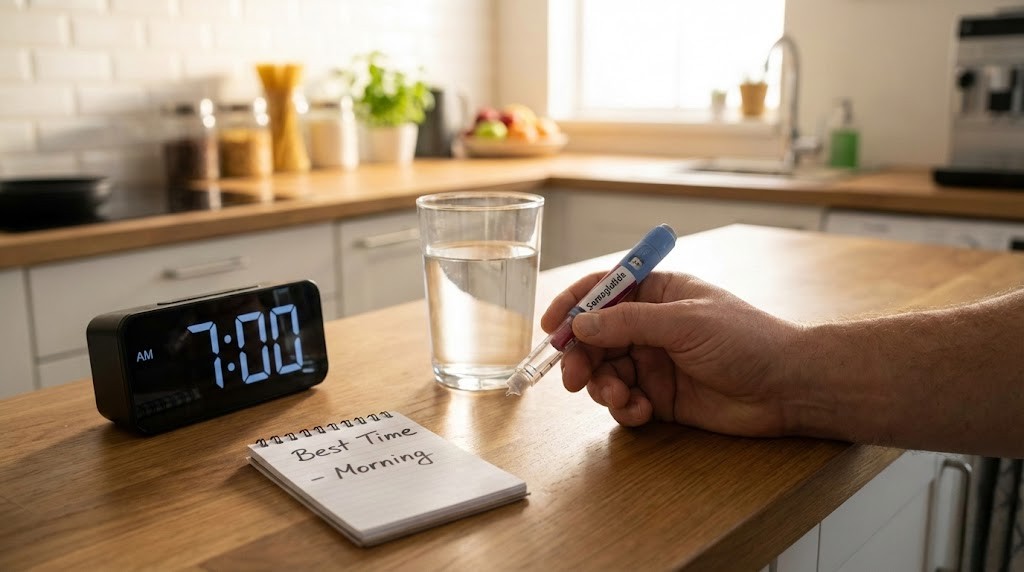
What if the reason your semaglutide results are not matching the clinical trial numbers has nothing to do with your dose, your diet, or your discipline? What if it comes down to something far simpler: when you take it?
Timing matters more than most people realize. Not because semaglutide suddenly becomes a different molecule at 8 AM versus 8 PM. It does not. The pharmacokinetics remain the same regardless of when the injection happens. But how your body responds to those first 24 to 48 hours after each dose, how you manage the side effects, how well you sleep, how consistently you stick with the protocol, all of that depends heavily on when you choose to administer your weekly injection.
The confusion is understandable. Some providers say morning. Others say evening. The official prescribing information from Novo Nordisk says any time of day. Forums are split right down the middle. And if you are using oral semaglutide instead of the injectable form, the timing rules change dramatically, because absorption depends entirely on an empty stomach and a strict 30-minute fasting window after each dose.
This guide covers everything. The pharmacokinetics behind why timing flexibility exists for injections but not for oral formulations. The real-world advantages and disadvantages of morning versus evening dosing. How to choose your injection day. What to do if you miss a dose. How compounded semaglutide timing differs from brand-name formulations. And specific protocols for managing nausea, fatigue, and appetite changes based on your chosen schedule. SeekPeptides has compiled the research, the clinical data, and the practical experience of thousands of users into one definitive reference.
Why semaglutide timing is more flexible than you think
Here is the fundamental truth about injectable semaglutide timing: the FDA does not specify a preferred time of day. Neither does the European Medicines Agency. Neither does the manufacturer. The prescribing information for both Ozempic and Wegovy states clearly that the injection can be administered at any time of day, with or without meals.
Why?
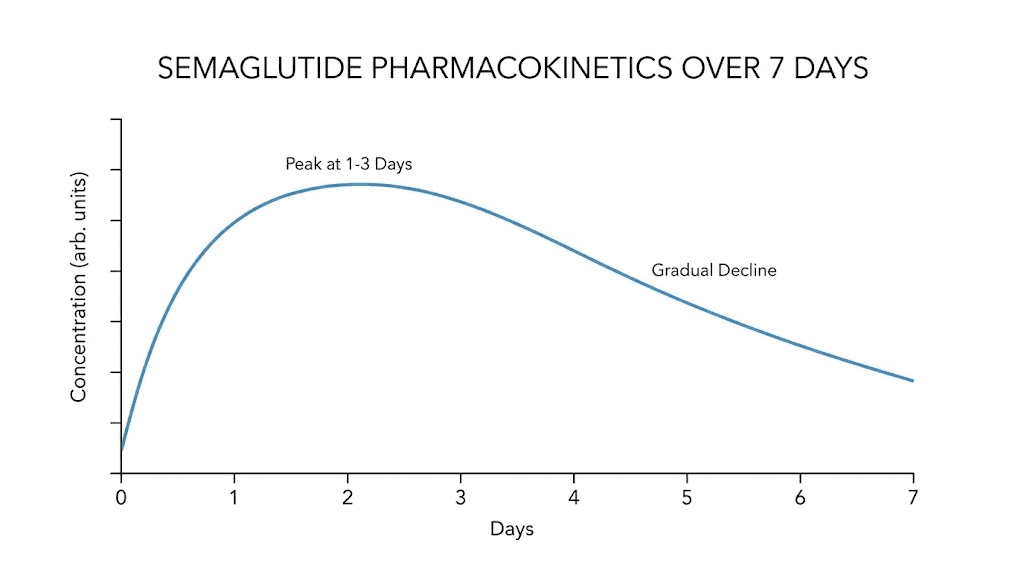
Because semaglutide has a half-life of approximately 7 days. That means once you inject it, the drug reaches peak plasma concentration within 1 to 3 days and then slowly declines over the following week. By the time your next dose arrives, you still have roughly half of the previous dose circulating. After 4 to 5 weeks of consistent dosing, you reach what pharmacologists call steady state, where the amount entering your system each week roughly equals the amount being eliminated.
Think about what that means practically. Whether you inject at 7 AM on a Tuesday or 9 PM on a Tuesday, the drug concentration curve over the following seven days looks virtually identical. The peak comes around Wednesday or Thursday regardless. The trough arrives the following Monday or Tuesday regardless. Your body cannot tell the difference between a morning injection and an evening injection when the pharmacological effects persist for an entire week.
This is fundamentally different from medications with short half-lives, where timing relative to meals or sleep cycles genuinely affects efficacy. Semaglutide does not work that way. Its extended duration of action means you have genuine flexibility.
But flexibility does not mean that timing is irrelevant.
The case for morning injections
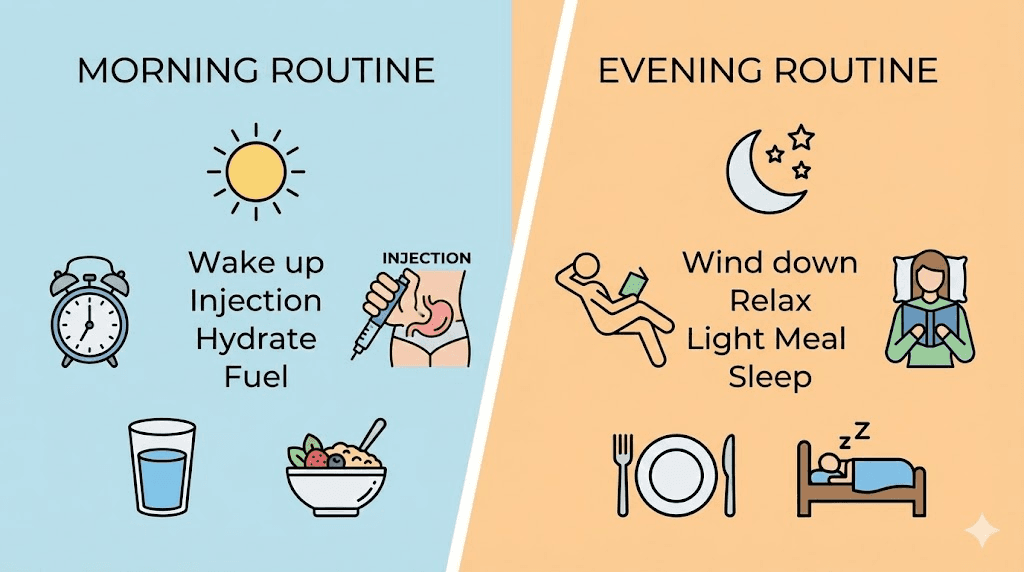
Most healthcare providers who express a preference lean toward morning dosing. There are practical reasons for this, and they have nothing to do with how the drug is metabolized.
Side effect management during waking hours
The most commonly reported side effects of semaglutide, particularly fatigue and nausea, tend to peak within the first 24 to 48 hours after injection. If you inject in the morning, you experience these effects while you are awake, active, and able to manage them with food, water, movement, and if necessary, medication.
Nausea affects between 20% and 44% of semaglutide users, depending on the dose and formulation. That is not a small number. For many, the nausea is mild. A slight queasiness after meals. A reduced interest in food. Nothing dramatic. But for others, particularly during the dose escalation phase in the first 8 to 12 weeks, the nausea can be significant enough to disrupt daily activities.
When you inject in the morning, you can eat a light breakfast shortly before or after your injection. You can hydrate throughout the day. You can take a walk. You can use dietary strategies like eating smaller, bland meals to manage any gastrointestinal discomfort. You have options. At night, your options are limited to lying in bed hoping the nausea passes.
Appetite suppression aligns with eating patterns
Semaglutide works partly by slowing gastric emptying and partly by acting on GLP-1 receptors in the brain that regulate appetite and satiety. The appetite suppression effect is present throughout the week, not just in the hours after injection. But many users report that the effect feels strongest in the first 2 to 3 days after their dose.
A morning injection means the period of strongest appetite suppression coincides with the daytime hours when you are making most of your food decisions. Breakfast, lunch, afternoon snacking, dinner preparation. If the suppression peaks during the day, you may find it easier to stick with your nutritional plan and avoid overeating during the times when willpower is typically lowest.
Establishing routine consistency
Morning routines tend to be more consistent than evening routines. You wake up around the same time most days. You have a predictable sequence of actions: brush teeth, get dressed, eat breakfast. Adding an injection to this sequence makes it less likely you will forget.
Evening schedules vary. Social events, late work nights, travel, exhaustion. All of these can disrupt your intended injection time. And while the exact hour does not matter pharmacologically, consistency matters enormously for long-term adherence. If you associate your injection with a fixed morning routine, you build a habit. Habits require less willpower than intentions.
Better hydration opportunities
Hydration is one of the most underrated factors in managing semaglutide side effects. Nausea, constipation, and fatigue are all more common when users are dehydrated. A morning injection gives you the entire day to drink water, consume hydrating foods, and monitor how you feel. If you inject at night and wake up feeling nauseous, you have already missed 8 hours of potential hydration.
The connection between hydration and semaglutide tolerability is well established in clinical practice, even though it receives less attention than dosing protocols in the formal literature.
The case for evening injections
Morning is not universally better. Some users genuinely do better with evening dosing, and there are legitimate reasons for this preference.
Sleeping through initial side effects
If your primary side effects are mild to moderate nausea and fatigue, injecting in the evening allows you to sleep through the initial hours when these effects are most noticeable. You go to bed. Your body processes the injection. You wake up feeling perhaps slightly off, but the worst of the initial reaction has passed.
This strategy works well for people who experience brief, manageable nausea rather than prolonged gastrointestinal distress. If your nausea typically lasts 2 to 4 hours after injection, evening dosing means you are unconscious for that window. If it lasts 24 to 48 hours, the timing advantage disappears.
Work schedule considerations
Not everyone has a predictable morning routine. Shift workers, parents of young children, people with demanding early-morning commitments. For these individuals, an evening injection may be more practical. The key question is not morning versus evening in the abstract. It is which time slot you can commit to consistently, week after week.
A nurse who works 12-hour night shifts starting at 7 PM would find a morning injection far more practical than an evening one. But a restaurant manager who starts work at 5 AM might prefer to inject after their shift ends at 2 PM. Appetite suppression works regardless of clock time.
Reduced injection anxiety
Some people experience genuine anxiety around self-injection. This is not uncommon, particularly for those new to injectable medications. If injection anxiety is something you deal with, doing it in the evening when you are already winding down can reduce the stress response. You do not have to carry that anticipatory anxiety through an entire workday.
What the research actually says about injection timing
Let us be specific about the evidence. The major clinical trials for semaglutide, the STEP 1 through STEP 5 trials for Wegovy and the SUSTAIN trials for Ozempic, did not compare morning versus evening dosing. This was not studied as a variable. Participants were instructed to inject once weekly on the same day each week, at any time of day, regardless of meals.
The STEP 1 trial, published in the New England Journal of Medicine, demonstrated a mean weight loss of 14.9% with semaglutide 2.4mg versus 2.4% with placebo over 68 weeks. The STEP 2 trial showed 9.6% weight loss in participants with type 2 diabetes. The STEP 4 trial demonstrated that continued treatment maintained weight loss while discontinuation led to regain.
None of these outcomes were stratified by time of day. The weight loss results were consistent regardless of when participants chose to inject.
Pharmacokinetic data supports timing flexibility
A systematic review of semaglutide pharmacokinetics published in 2024 analyzed 17 studies across subcutaneous and oral formulations. The subcutaneous data showed consistent absorption characteristics regardless of administration time. Peak serum concentration occurred at a median of 24 hours post-injection in some studies and 42 to 56 hours in others, depending on dose. But these variations were dose-dependent, not time-dependent.
The bioavailability of subcutaneous semaglutide is approximately 89%. This is remarkably high for a peptide medication and means that nearly all of the injected dose reaches systemic circulation. Compare this to oral semaglutide, which has a bioavailability of just 0.8% under optimal conditions. That enormous difference is why oral and injectable semaglutide have completely different timing requirements.
Steady state eliminates timing concerns
After 4 to 5 weeks of consistent weekly dosing, semaglutide reaches steady state. At this point, fluctuations in drug concentration become relatively small compared to the overall circulating level. The difference between peak and trough concentrations narrows. Your body maintains a relatively consistent level of appetite suppression and glycemic control throughout the week.
This means that even if you feel a difference in the first few weeks based on injection timing, that difference tends to diminish over time as the drug accumulates to therapeutic levels.
Oral semaglutide: timing changes everything
Everything discussed so far applies to injectable semaglutide. Oral semaglutide, marketed as Rybelsus, operates under entirely different rules. If you are taking the oral form, timing is not optional. It is critical to effectiveness.
The empty stomach requirement
Oral semaglutide must be taken on an empty stomach. The tablet contains an absorption enhancer called SNAC (sodium N-[8-(2-hydroxybenzoyl)amino] caprylate) that facilitates uptake across the gastric mucosa. This process is extremely sensitive to gastric contents. Even small amounts of food, beverages other than plain water, or other medications can reduce absorption by 60% or more.
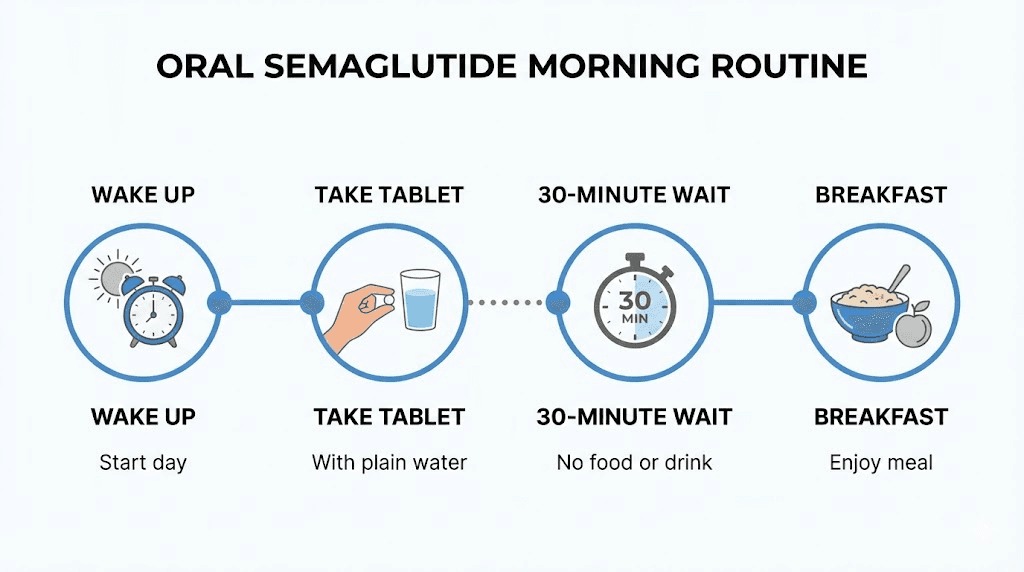
The protocol is strict. Take the tablet first thing in the morning with no more than 4 ounces (120 milliliters) of plain water. Then wait at least 30 minutes before eating, drinking anything else, or taking other oral medications. Studies show that longer fasting periods of up to 2 hours improve absorption further.
Why morning is essentially mandatory for oral forms
Because the tablet requires an empty stomach and a 30-minute minimum post-dose fast, morning dosing is the most practical option for most people. You wake up with an empty stomach. You take the tablet. You go about your morning routine for 30 to 120 minutes. Then you eat breakfast.
Taking oral semaglutide at other times of day would require fasting for hours beforehand, which is impractical for most people during waking hours. The dosing requirements essentially mandate a morning schedule.
Can you take oral semaglutide at night?
Technically, yes. If you have not eaten for several hours before bed, you could take the tablet at night. But this creates complications. You need to have not eaten for at least 2 hours (ideally longer) before the dose, and you should not eat for at least 30 minutes after. Most people eat dinner within 2 to 4 hours of bedtime, making this window tight.
Additionally, lying down shortly after taking any medication can affect gastric transit and absorption. The research supporting oral semaglutide efficacy was conducted with morning dosing protocols, so nighttime dosing introduces an untested variable.
Choosing your injection day
The day of the week matters as much as the time of day. Maybe more.
Your injection day becomes your anchor for the entire week. It determines when you experience the strongest effects, when side effects are most likely, and how your eating patterns flow across the following seven days. Choose wisely.
Weekday versus weekend injections
Injecting on a weekday, particularly Monday or Tuesday, means your strongest appetite suppression and potential side effects fall during the structured workweek. You are busy. You have routines. You eat on a schedule. This can make it easier to manage any nausea or appetite changes because you have built-in structure.
The downside is that if side effects hit hard, they hit during work hours. Not ideal if your job requires physical labor, public speaking, or anything where nausea could be problematic.
Injecting on a weekend, typically Saturday or Sunday morning, means side effects peak when you are at home and can rest if needed. You have more control over your environment, your meals, and your activity level. But weekends are also when social eating happens. Restaurants, family dinners, parties. If your strongest appetite suppression coincides with these events, you might find it easier to resist overeating. Or you might find it frustrating that you cannot enjoy food when everyone around you is.
Aligning with your weekly schedule
Think about your typical week. When are you most likely to be in a controlled environment where you can manage side effects? When do you have the most flexibility in your eating schedule? When is your stress level lowest? The answers to these questions should guide your day choice.
Many users who track their weekly weight loss patterns find that injecting on the same day every week creates the most consistent results over time. The specific day matters less than the consistency of maintaining it.
Can you change your injection day?
Yes. The FDA guidelines state that you may change the day of the week you use semaglutide as long as it has been at least 2 days (48 hours) since your last dose. So if you normally inject on Mondays but want to switch to Thursdays, you would simply wait until Thursday of the following week to administer your next dose.
Do not take two doses within 48 hours. The dosing calculations assume weekly intervals. Compressing the schedule increases side effect risk without improving efficacy.
Managing side effects based on timing
Your chosen injection time creates a predictable pattern of side effects that you can plan around. Understanding this pattern is the key to making timing work for you rather than against you.
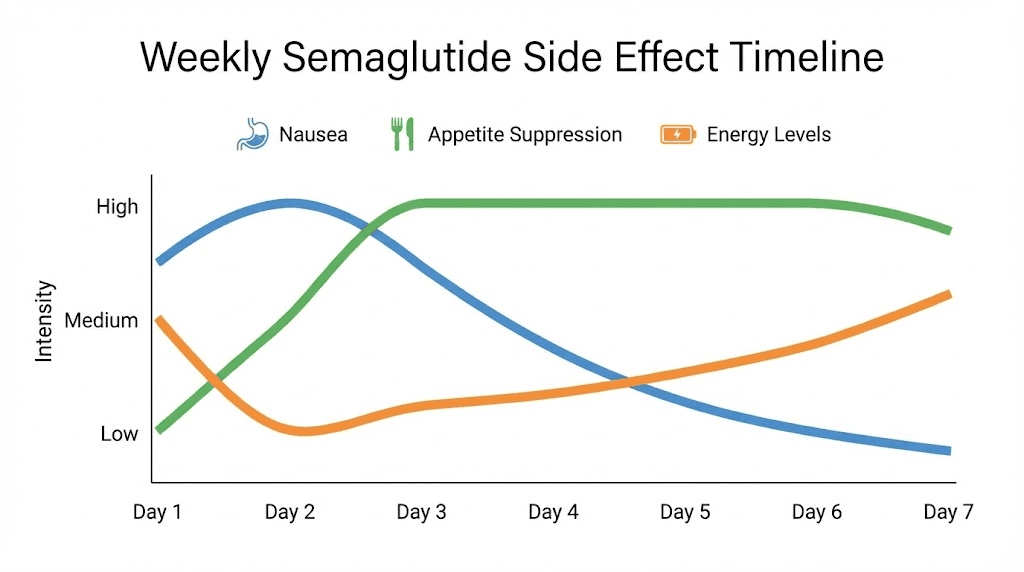
The first 24 hours: the peak effect window
Most users report that side effects are most noticeable in the first 24 hours after injection. This is the window where nausea, decreased appetite, mild fatigue, and sometimes headache are most likely. For morning injectors, this means the rest of your injection day and the following morning. For evening injectors, this means overnight and the following day.
During this window, focus on hydration. Small sips of water throughout the day. Avoid large, heavy meals. Stick with bland, easily digestible foods like toast, rice, bananas, and clear broth. If you experience nausea with compounded formulations, the same management strategies apply.
Days 2 through 4: the therapeutic sweet spot
This is when semaglutide is at or near peak plasma concentration. Appetite suppression is typically strongest. Energy levels normalize. Side effects begin to fade. Many users describe these days as when they feel the medication is "working best."
Use this window strategically. If you are trying to implement new eating habits, these are the days when willpower gets the most biochemical support. Meal prep for the week. Practice portion control. Build the habits that will sustain your weight loss progress long term.
Days 5 through 7: the trough period
As drug concentration declines toward the end of the week, some users notice appetite returning or side effects completely resolving. This is normal. The half-life ensures that therapeutic levels are maintained, but the subjective experience of appetite suppression may diminish slightly.
If you find that hunger returns strongly on days 6 and 7, this does not mean the medication is failing. It means you are approaching the trough of your weekly cycle. The solution is usually not to change your timing but to ensure you are on the appropriate dose. If weight loss has stalled and trough-day hunger is significant, discuss dose escalation with your provider.
Nausea management protocol by time of day
Morning injection nausea protocol:
Eat a small, bland breakfast 30 to 60 minutes before your injection
Inject subcutaneously in the abdomen, thigh, or upper arm
Sip water or ginger tea throughout the morning
Eat small meals every 2 to 3 hours rather than large meals
Avoid greasy, spicy, or heavily seasoned foods for 24 hours
Take a 15 to 20 minute walk after lunch to aid digestion
Evening injection nausea protocol:
Eat a light dinner at least 2 hours before your injection
Inject before bed
Keep crackers and water on your nightstand in case you wake up nauseous
Plan a bland, easy breakfast for the following morning
Avoid heavy meals the day after your injection
Both protocols work. The question is which fits your lifestyle more naturally. The right dietary approach during these periods can dramatically reduce discomfort.
Compounded semaglutide timing considerations
Compounded semaglutide follows the same general timing principles as brand-name formulations. The active ingredient is identical: semaglutide. The half-life is the same. The mechanism of action is the same. Inject it whenever works for your schedule, stay consistent, and manage side effects with the strategies outlined above.
However, there are a few unique considerations for compounded formulations.
Concentration and volume differences
Compounded semaglutide often comes in different concentrations than brand-name products. You might receive a 5mg/mL vial or a 3mg/mL vial. The volume you inject will differ from what you would inject with an Ozempic pen. This does not affect timing, but it does affect your dosing calculations. Use a semaglutide dosage calculator to ensure accuracy.
Storage and preparation time
If your compounded semaglutide requires reconstitution, factor this into your timing routine. Reconstituting a lyophilized powder, drawing up the correct dose with a syringe, and administering the injection takes more time than clicking an auto-injector pen. Build this into your schedule so that it does not become a barrier to consistency.
Reconstituted semaglutide should be stored in the refrigerator and used within the stability window specified by the compounding pharmacy. Do not leave reconstituted vials at room temperature for extended periods before your injection.
Semaglutide with B12 or other additives
Many compounded semaglutide formulations include additional ingredients like vitamin B12 or glycine. These additions do not change the fundamental timing guidelines. B12 is water-soluble and absorbed regardless of time of day. Glycine is an amino acid with no timing-specific requirements. The semaglutide component drives the timing decision, and it remains flexible for injectable forms.
Injection site and timing: what the evidence shows
Where you inject does not change when you should inject. But it is worth addressing because people frequently conflate the two questions.
Semaglutide can be injected subcutaneously in three locations: the abdomen, the front of the thigh, or the back of the upper arm. Clinical data show small differences in absorption rates between sites, but these differences are not considered clinically meaningful. The injection site you choose should be based on comfort, accessibility, and rotation schedule, not timing.
Site rotation protocol
Rotate injection sites with each weekly dose. If you inject in your abdomen this week, use your thigh next week, and your upper arm the week after. Within each body area, vary the exact spot by at least 1 to 2 inches from the previous injection. This prevents lipodystrophy, the development of lumps or depressions in subcutaneous tissue from repeated injections in the same location.
Some users report slightly different absorption speeds depending on the site, with the abdomen generally showing the fastest absorption due to higher subcutaneous blood flow. But again, with a 7-day half-life and once-weekly dosing, these small differences in absorption speed have no practical impact on timing or efficacy.
For detailed injection guidance, the complete injection guide covers technique, site selection, and safety considerations comprehensively. You can also use the peptide reconstitution calculator to verify your mixing ratios if you are working with compounded formulations.
The dose escalation schedule and timing adjustments
Semaglutide for weight loss follows a standard escalation schedule. You start low. You increase gradually. Each step up brings stronger effects and potentially stronger side effects. Understanding how timing interacts with dose escalation helps you plan ahead.
Standard dose escalation
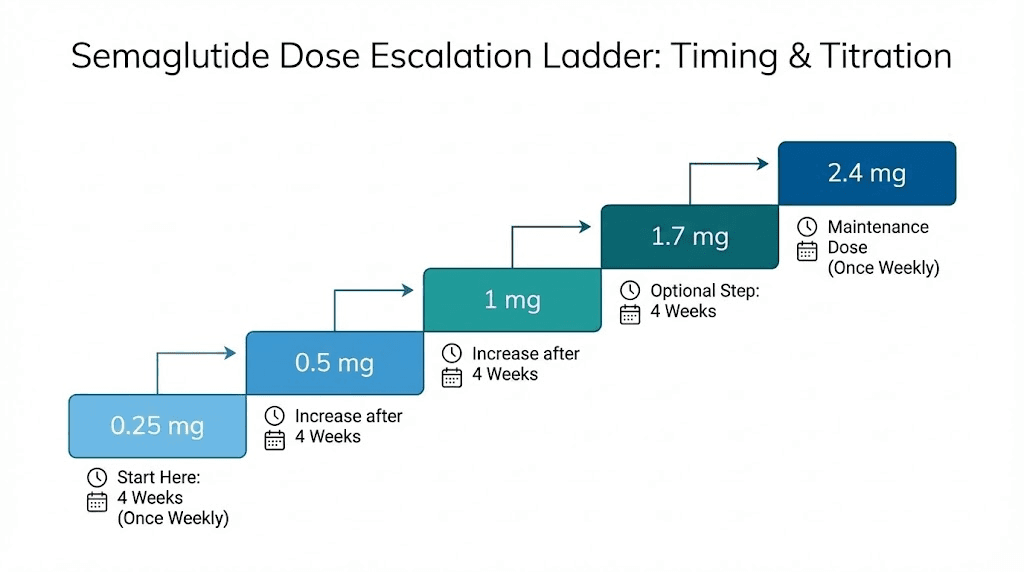
The typical Wegovy escalation follows this pattern:
Weeks 1 through 4: 0.25mg once weekly
Weeks 5 through 8: 0.5mg once weekly
Weeks 9 through 12: 1.0mg once weekly
Weeks 13 through 16: 1.7mg once weekly
Week 17 onward: 2.4mg once weekly (maintenance dose)
During the first 4 weeks at 0.25mg, side effects are typically minimal. This is the ideal time to experiment with timing. Try morning injections for two weeks. Try evening for two weeks. See which feels better. By the time you escalate to 0.5mg and beyond, you want your timing locked in.
Timing adjustments at each dose increase
Each dose increase is essentially a mini restart in terms of side effects. Nausea often returns or intensifies at each step up, then resolves over 2 to 4 weeks. Plan accordingly.
If your dose increase falls on a workday and you have a demanding schedule, consider temporarily shifting your injection to the evening on escalation weeks. Sleep through the worst of it. Then return to your regular morning schedule the following week. Remember the 48-hour minimum between doses when making schedule adjustments.
Alternatively, time your dose increases to fall on a Friday or Saturday. This gives you the weekend to adjust before returning to your normal routine. Many experienced users swear by "Friday injection, Saturday adjustment" as their preferred escalation strategy.
When the dose escalation timeline matters most
The escalation from 1.0mg to 1.7mg and from 1.7mg to 2.4mg tend to produce the most significant side effect increases. These are the dose steps where timing strategy matters most. If you have been comfortable with morning injections at lower doses but find the transition to 2.4mg difficult, consider a temporary evening shift. Many users who experienced significant nausea at higher doses found that lifestyle adjustments combined with strategic timing made the transition manageable.
What to do if you miss a dose
You will miss a dose eventually. Life happens. Travel, illness, a forgotten injection, a pharmacy delay. Knowing the protocol for missed doses prevents panic and preserves your progress.
The 5-day rule
If fewer than 5 days have passed since your missed dose, take it as soon as you remember. Then resume your regular schedule on your normal injection day.
If more than 5 days have passed, skip the missed dose entirely and wait for your next regularly scheduled injection day. Do not double up. Do not inject two doses close together. The long half-life means your body still has semaglutide circulating even after a missed dose, just at lower levels.
What happens to your levels after a missed dose
A single missed dose will not reset your progress. Remember that semaglutide remains in circulation for approximately 5 weeks after the last dose. Missing one week means your concentration dips below the steady-state trough, but it does not drop to zero. You may notice a slight return of appetite or a mild increase in blood sugar if you have type 2 diabetes, but these effects are temporary.
If you miss multiple consecutive doses, the situation changes. After 2 to 3 missed weeks, your provider may recommend restarting at a lower dose to avoid the intense side effects that come with reintroducing the full maintenance dose to a system that has partially cleared the drug. This is similar to the withdrawal and reintroduction considerations that apply when stopping and restarting treatment.
Adjusting timing after a missed dose
If your missed dose throws off your weekly schedule, use the opportunity to switch to a new injection day if you have been wanting to. Take your late dose when you remember (within the 5-day window), then pick your new preferred day for the following week. Ensure at least 48 hours between the late dose and the new schedule dose.
Timing considerations for semaglutide with other medications
Many semaglutide users take other medications. The timing interactions between semaglutide and these medications deserve attention, particularly for oral semaglutide where absorption is so sensitive to gastric contents.
Injectable semaglutide and other medications
Because injectable semaglutide enters the bloodstream through subcutaneous absorption rather than the gastrointestinal tract, it has minimal direct interaction with other oral medications in terms of timing. You do not need to space your injection around your other pills.
However, semaglutide slows gastric emptying. This means that oral medications taken around the same time as your injection day may be absorbed more slowly than usual. For most medications, this is not clinically significant. But for medications with narrow therapeutic windows, like certain antibiotics, blood thinners, or thyroid medications, discuss timing with your healthcare provider.
Oral semaglutide and other medications
This is where timing becomes critical. Oral semaglutide must be taken on an empty stomach, at least 30 minutes before any other oral medications. If you take morning medications like thyroid hormone (levothyroxine), blood pressure medications, or supplements, you need to establish a strict sequence.
The recommended approach: take oral semaglutide first thing upon waking with a small sip of water. Wait 30 minutes. Then take your other medications with your breakfast. Some people need to wake 30 to 60 minutes earlier than usual to accommodate this sequence, which is another reason why oral semaglutide requires more careful planning than the injectable form.
Supplements and semaglutide timing
Common supplements like vitamin B12, magnesium, and omega-3 fatty acids do not interact with injectable semaglutide in timing-dependent ways. Take them whenever convenient. For oral semaglutide, treat supplements the same as other oral medications and take them after the 30-minute fasting window.
If you are considering adding other peptides alongside your semaglutide protocol, timing those additional injections separately from your semaglutide can help you isolate any side effects that arise. Different injection sites on the same day is generally acceptable, but spacing them by a few hours gives you clearer information about which substance causes any symptoms you experience.
Timing for specific goals: weight loss versus blood sugar control
Semaglutide is approved for both weight management (Wegovy) and type 2 diabetes (Ozempic). The timing considerations differ slightly based on your primary goal.
For weight loss
If your primary goal is weight loss, the timing that matters most is the timing that supports adherence. Consistency with weekly dosing, consistency with your dietary approach, and consistency with your activity level. The specific hour of injection is secondary.
That said, many weight loss focused users prefer morning injections because the strongest appetite suppression aligns with daytime eating patterns. If you struggle most with afternoon and evening snacking, a morning injection ensures your peak suppression covers those vulnerable hours.
For blood sugar management
If you are using Ozempic for type 2 diabetes, timing relative to meals becomes slightly more relevant, not for the injection itself, but for monitoring your blood sugar response. Some providers recommend injecting on a day when you can carefully monitor your glucose levels for the first 24 to 48 hours, particularly during dose escalation.
Semaglutide lowers blood sugar through multiple mechanisms: stimulating insulin secretion, suppressing glucagon, and slowing gastric emptying. The blood sugar lowering effect is most pronounced in the first 2 to 3 days post-injection. If you are prone to hypoglycemia, be cautious about timing your injection before periods of high physical activity or extended fasting.
For combined goals
Most people using semaglutide want both weight loss and metabolic improvement, even if the medication is prescribed primarily for one indication. The good news is that the timing recommendations converge: pick a consistent day and time, manage side effects proactively, and focus on long-term adherence. The weight loss outcomes and metabolic improvements track together regardless of administration time.
Travel and timezone adjustments
Traveling across timezones raises legitimate questions about injection timing. If you normally inject at 8 AM Eastern time and you fly to California, do you inject at 8 AM Pacific or 5 AM Pacific (which is 8 AM Eastern)?
The practical answer: inject at whatever time is convenient in your current timezone. An 8-hour shift in injection time has no meaningful impact on a drug with a 7-day half-life. If you normally inject at 8 AM and your travel schedule means you inject at 4 PM instead, the difference is pharmacologically insignificant.
Tips for travel with semaglutide
What matters more than timezone adjustments is maintaining your weekly schedule. If travel disrupts your routine enough that you might forget your dose entirely, set phone reminders. Pack your semaglutide in your carry-on luggage (never checked bags, where temperature control is unreliable). Keep it properly refrigerated during transit with a small insulated travel case.
If your travel spans multiple weeks and crosses significant timezones, pick a new local time that works for your travel schedule and maintain it consistently. When you return home, gradually shift back to your normal time if needed, always maintaining the 48-hour minimum between doses.
Common timing mistakes and how to avoid them
After analyzing thousands of user reports and provider recommendations, certain timing mistakes appear repeatedly. Avoiding these common errors will improve your experience and outcomes.
Mistake 1: changing your injection time every week
Some people inject whenever they remember, varying by hours or even days each week. While the pharmacokinetics tolerate some variation, inconsistent timing makes it harder to establish the routine that drives long-term adherence. Pick a time. Stick with it. Set an alarm.
Mistake 2: injecting right before a big meal
This applies to injectable semaglutide as well. While there is no absorption issue with taking the injection near meals (unlike the oral form), injecting right before eating a large meal can amplify nausea. Semaglutide slows gastric emptying. Adding a large meal on top of a fresh injection means your stomach is trying to process food while the drug is actively slowing that process. Give yourself at least 30 to 60 minutes between injection and your next meal.
Mistake 3: injecting before heavy exercise
Some users inject before their workout, reasoning that increased blood flow will improve absorption. In reality, vigorous exercise after injection can increase injection site discomfort, accelerate drug redistribution in unpredictable ways, and compound exercise-induced nausea with medication-induced nausea. Inject at a time when you can rest for at least an hour afterward.
Mistake 4: doubling up after a missed dose
Never take two doses to make up for a missed one. The 5-day rule exists for a reason. Doubling the dose does not double the benefit. It doubles the side effects. The gastrointestinal side effects of semaglutide are dose-dependent, and double-dosing can cause severe nausea, vomiting, and even pancreatitis in extreme cases.
Mistake 5: switching between morning and evening without reason
Switching your injection time should be a deliberate decision based on observed patterns, not a week-to-week impulse. Every switch introduces a variable that makes it harder to evaluate whether the medication is working optimally. If you want to experiment with timing, do it systematically: commit to a new time for at least 4 weeks before evaluating.
Mistake 6: ignoring the oral semaglutide fasting window
For oral users, this is the biggest and most consequential mistake. Taking Rybelsus with coffee instead of plain water. Eating 15 minutes after instead of 30. Taking it with other medications. Each of these reduces absorption significantly. A 60% reduction in bioavailability means you are essentially underdosing yourself, which explains why some oral semaglutide users report poor results despite good adherence to the daily schedule.
Building your personalized timing protocol
There is no single best time for everyone. But there is a best time for you. Here is how to find it.
Step 1: assess your schedule
When do you have the most consistent daily routine? If your mornings are predictable, choose morning. If your evenings are more stable, choose evening. Consistency trumps everything else.
Step 2: assess your side effect pattern
After your first 2 to 4 weeks on semaglutide, you will know your side effect pattern. Mild nausea that resolves in a few hours? Evening injection might work perfectly. Significant fatigue that lasts a full day? Morning injection gives you more tools to manage it. The fatigue management strategies vary depending on when you experience the worst of it.
Step 3: consider your eating goals
When during the week do you struggle most with food choices? If weekday lunches are your weakness, inject on a day and time that places your strongest appetite suppression during workday meals. If weekend dinners are your challenge, adjust accordingly. Use the natural rhythm of your semaglutide cycle to support your dietary plan.
Step 4: test and adjust during the low-dose phase
The initial 0.25mg phase is your experimentation period. Try different times. Track how you feel. Note your appetite patterns, energy levels, and sleep quality. By the time you escalate to 0.5mg, you should have a clear preference.
Step 5: lock it in and do not overthink it
Once you find your time, commit. Stop researching whether morning or evening is "better." The difference between a perfect timing strategy and a good one is negligible. The difference between consistent dosing and inconsistent dosing is enormous. Your results depend far more on staying on your protocol long enough for the drug to reach full therapeutic effect than on whether you inject at 7 AM or 7 PM.
Timing semaglutide compared to other GLP-1 medications
If you are considering switching between GLP-1 receptor agonists, or if you are curious how semaglutide timing compares to alternatives, here is a brief comparison.
Semaglutide versus tirzepatide timing
Tirzepatide (Mounjaro/Zepbound) follows the same general timing principles as injectable semaglutide. Once weekly, any time of day, with or without meals. The half-life of tirzepatide is approximately 5 days, slightly shorter than semaglutide, but still long enough to provide full-week coverage with once-weekly dosing.
If you are switching from tirzepatide to semaglutide (or vice versa), the timing principles transfer directly. You can maintain your existing injection day and time when transitioning between these medications. The dose conversion is more important than the timing conversion.
Semaglutide versus liraglutide timing
Liraglutide (Saxenda/Victoza) is a once-daily GLP-1 agonist with a half-life of approximately 13 hours. Unlike semaglutide, liraglutide timing matters more because the shorter half-life means daily fluctuations in drug concentration are more significant. Liraglutide users typically benefit from injecting at the same time each day, ideally at a time that aligns with their primary eating window.
The longer half-life of semaglutide is one of its key advantages, and it is precisely what gives you the timing flexibility that liraglutide lacks.
Understanding the GLP-1 family
All GLP-1 receptor agonists work through similar mechanisms, but their pharmacokinetic profiles vary significantly. The weekly formulations (semaglutide, tirzepatide, retatrutide) all offer timing flexibility. The daily formulations (liraglutide, oral semaglutide) require more careful scheduling. Understanding which category your medication falls into is the first step to getting timing right.
Special populations and timing adjustments
Certain groups of people may need to think about timing differently than the general population.
Shift workers
If you work rotating shifts, your "morning" and "evening" change constantly. The solution is to pick a fixed day and time that does not rotate. Some shift workers choose their most consistent day off as their injection day. Others pick a time that falls during a consistent break period across all their shift patterns. The key is finding an anchor point in an otherwise variable schedule.
People with diabetes using insulin
If you use both semaglutide and insulin, timing coordination matters. Semaglutide enhances insulin secretion and reduces glucagon, which can amplify the blood sugar lowering effect of exogenous insulin. Injecting semaglutide at a time when you can closely monitor your glucose for 24 hours afterward reduces the risk of hypoglycemia. Morning injections on a day when you are at home and can check your levels regularly are often recommended.
People with gastroparesis
Semaglutide slows gastric emptying, which can worsen symptoms in people with existing gastroparesis. Timing the injection to coincide with a period when you can eat slowly, choose easily digestible foods, and monitor your symptoms is important. Avoid injecting right before social meals or situations where you will be eating foods that are difficult to digest.
Pregnant or breastfeeding (timing is not relevant)
Semaglutide is contraindicated during pregnancy and should be discontinued at least 2 months before a planned pregnancy. Breastfeeding considerations also apply. Timing is irrelevant in these situations because the medication should not be used at all during these periods.
Tracking your timing and results
The best way to optimize your timing is to track it. Not obsessively. Not with complex spreadsheets. Just enough data to see patterns.
What to track
For the first 8 to 12 weeks, note four things each injection day and the day after:
Time of injection
Side effects experienced (type and severity on a 1 to 10 scale)
Appetite level throughout the day (high, moderate, low)
Sleep quality the night after injection
After 12 weeks, you will have enough data to see clear patterns. Maybe your nausea is consistently worse when you inject in the evening. Maybe your sleep is disrupted when you inject after 6 PM. Maybe your appetite suppression feels strongest when you inject on Mondays. These patterns are your personal timing blueprint.
When to revisit your timing
Revisit your injection timing under three circumstances. First, when you escalate to a new dose. Second, when your lifestyle changes significantly (new job, new schedule, travel). Third, when side effects become unmanageable. Outside of these triggers, leave your timing alone. The best protocol is the one you follow consistently.
For comprehensive tracking tools and personalized protocol guidance, SeekPeptides members access detailed logging frameworks, dosing dashboards, and community insights from thousands of researchers who have optimized their own timing protocols through systematic tracking.
The relationship between timing, exercise, and results
Exercise amplifies semaglutide results. The clinical trials all included lifestyle modification as part of the protocol. But when you exercise relative to your injection can affect how you feel during workouts.
Exercise on injection day
Many users report lower exercise tolerance on injection day, particularly at higher doses. Nausea during cardio, reduced grip strength during weight training, and general fatigue are commonly reported. This does not mean you should skip exercise entirely, but high-intensity sessions may be better scheduled for days 3 through 6 of your weekly cycle when side effects have subsided and the performance-affecting side effects have resolved.
Exercise timing strategy
A practical approach: schedule your most demanding workouts for mid-week if you inject on Sunday or Monday. Save injection day and the day after for lighter activity, walking, stretching, mobility work. This creates a natural rhythm where your training intensity peaks when semaglutide side effects are lowest and your energy is highest.
For muscle building goals, timing your protein intake around workouts matters more than the injection timing itself. Semaglutide can reduce appetite to the point where getting adequate protein becomes challenging. Plan your highest-protein meals for days when your appetite is strongest (typically days 4 through 7 of the cycle).
Semaglutide timing and sleep quality
Sleep quality affects weight loss outcomes significantly. And semaglutide timing can affect sleep quality, creating a feedback loop worth understanding.
How semaglutide affects sleep
Some users report improved sleep due to reduced nighttime snacking and improved blood sugar stability. Others report disrupted sleep, particularly nausea that wakes them up or vivid dreams in the first 24 to 48 hours after injection. The effect varies widely between individuals.
Timing for sleep optimization
If semaglutide disrupts your sleep, morning injections give you the maximum time between injection and bedtime for side effects to subside. If semaglutide improves your sleep, the timing is less critical, but morning injections still offer the advantage of keeping your routine consistent.
Some users who experience injection-day insomnia have found relief by shifting their dose 12 hours earlier. An evening injector who cannot sleep switches to morning and finds the problem resolves. This is anecdotal evidence, not clinical trial data, but it appears frequently enough in user reports to be worth noting.
For those dealing with broader fatigue-related concerns from GLP-1 medications, understanding the relationship between timing and energy levels is critical for maintaining quality of life during treatment.
Advanced timing optimization
For users who have been on semaglutide for several months and want to fine-tune their approach, these advanced considerations may help.
Chrononutrition and semaglutide
Chrononutrition is the study of how meal timing interacts with circadian rhythms to affect metabolism. Research shows that eating most of your calories earlier in the day tends to produce better weight loss outcomes regardless of total caloric intake. Semaglutide users can leverage this by injecting in the morning, aligning their strongest appetite suppression with the early-day eating window that chrononutrition research favors.
This does not mean evening injectors cannot lose weight effectively. They absolutely can. But for those looking to optimize every possible variable, the combination of morning injection plus early time-restricted eating represents the theoretical best-case scenario for fat loss based on current evidence.
Cortisol and injection timing
Cortisol, the body's primary stress hormone, follows a predictable daily pattern. It peaks in the early morning (6 to 8 AM) and declines throughout the day, reaching its lowest point around midnight. Some researchers have speculated that injecting semaglutide during the morning cortisol peak could theoretically enhance the metabolic effects, since cortisol influences insulin sensitivity and fat mobilization.
In practice, there is no clinical evidence that aligning semaglutide timing with cortisol rhythms produces measurably different outcomes. The speculation is biologically plausible but unproven. Focus on consistency rather than cortisol optimization.
Seasonal timing adjustments
This rarely comes up in clinical discussions, but users in northern latitudes occasionally report needing to adjust their approach seasonally. Shorter winter days mean morning injections happen in darkness, and some find this affects their routine adherence. Longer summer days mean more outdoor activity, which can affect how they experience side effects. These are minor considerations, but they illustrate the principle that your optimal timing may need periodic review as your life circumstances change.
Frequently asked questions
Does it matter if I take semaglutide in the morning or at night?
For injectable semaglutide, no. The 7-day half-life means the drug achieves the same therapeutic levels regardless of when you inject. Choose the time that supports your routine and helps you manage side effects. For oral semaglutide, morning is strongly preferred because it must be taken on an empty stomach with a 30-minute fasting window afterward.
Can I take semaglutide before bed?
Yes, for injectable forms. Some users prefer this to sleep through initial side effects like nausea. The main risk is waking up nauseous, which can disrupt sleep quality and leave you feeling unwell the next morning. If you try bedtime dosing and find it disrupts your sleep, switch to morning.
Should I eat before or after my semaglutide injection?
For injectable semaglutide, you can eat before, after, or at any time relative to your injection. Meals do not affect absorption. However, eating a small, bland meal 30 to 60 minutes before injection can reduce nausea. Avoid heavy meals immediately after injection, as semaglutide slows gastric emptying and a full stomach combined with delayed gastric emptying can increase discomfort.
What happens if I take semaglutide at different times each week?
Pharmacologically, small variations in timing (a few hours early or late) have no meaningful impact. The long half-life ensures stable drug levels. However, inconsistent timing often leads to missed doses, which does affect outcomes. Set a consistent schedule and use reminders to maintain it.
Is there a best day of the week to inject semaglutide?
There is no pharmacological advantage to any particular day. Choose based on your schedule: a day when you can manage potential side effects comfortably. Many users prefer Sunday or Monday to start their week with fresh appetite suppression, while others choose Friday to manage side effects over the weekend.
Can I switch my injection time from morning to evening mid-treatment?
Yes. There is no restart period or adjustment needed. Simply inject at your new preferred time the following week. Ensure at least 48 hours between your last dose and the new time. You may notice a slight change in side effect timing for one or two cycles as your body adjusts to the new pattern.
Does injection timing affect how much weight I lose?
No clinical evidence supports that injection timing affects weight loss magnitude. The STEP trials allowed participants to choose their own timing and still achieved consistent results. What affects weight loss is dose, adherence, diet, exercise, and duration of treatment, not the hour you inject.
How do I handle semaglutide timing when traveling across time zones?
Inject at whatever time is convenient in your current timezone. The long half-life means a shift of several hours has no meaningful pharmacological impact. Focus on maintaining your weekly schedule rather than trying to match your home timezone. Keep your semaglutide properly stored during travel.
External resources
Clinical Pharmacokinetics of Semaglutide: A Systematic Review (PMC)
Once-Weekly Semaglutide in Adults with Overweight or Obesity (NEJM)
Effect of Various Dosing Schedules on Oral Semaglutide Pharmacokinetics (PMC)
For researchers serious about optimizing every variable in their semaglutide protocol, from timing and dosing to diet and exercise integration, SeekPeptides provides the most comprehensive resource available. Members access personalized protocol builders, expert-reviewed dosing calculators, and a community of thousands who have navigated these exact questions.
In case I do not see you, good afternoon, good evening, and good night. May your timing stay consistent, your side effects stay manageable, and your results stay on track.