Feb 12, 2026
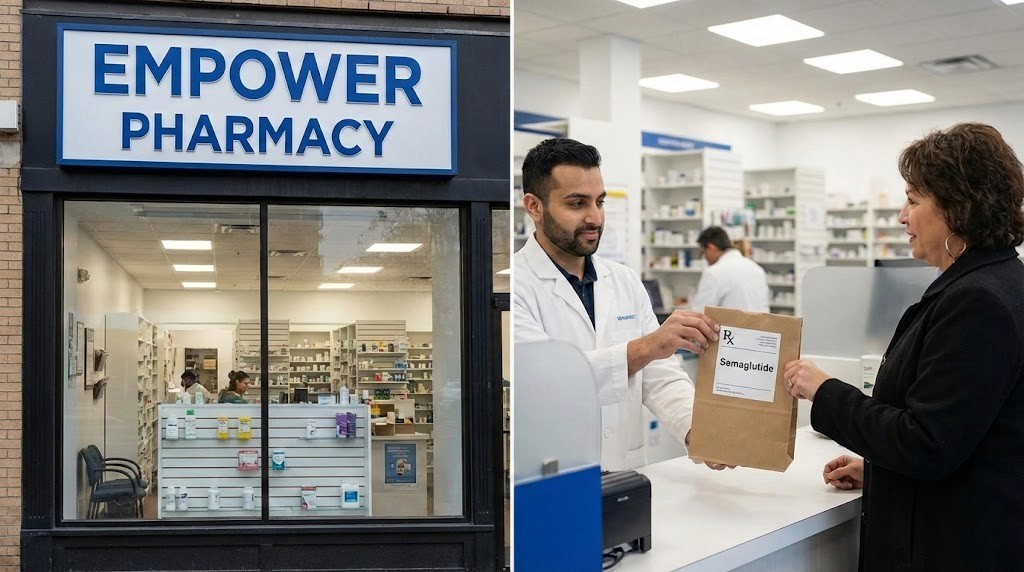
You found a cheaper semaglutide option. The price looks right. The website looks professional. And then you start reading the reviews.
One star. Two stars. Shipping delays. Medications that never arrived. Customers who switched from their old pharmacy and suddenly stopped losing weight. A lawsuit from one of the biggest pharmaceutical companies in the world. And FDA warning letters going back years.
That is the reality facing anyone researching Empower Pharmacy for compounded semaglutide. Not because compounded medications are inherently bad. Not because every experience with Empower is negative. But because the landscape around compounded GLP-1 medications has shifted dramatically since the FDA resolved the semaglutide shortage in February 2025, and what was once a straightforward decision now involves regulatory gray areas, legal battles, and quality control questions that most people never expected to navigate. This guide breaks down everything about Empower Pharmacy semaglutide, from the specific formulations they offer and what they actually cost, to the FDA warnings you should know about and the alternatives worth considering. Whether you are already using Empower or just starting your research, the goal here is simple. Give you the facts. All of them. So you can make a decision that protects both your health and your wallet.
What is Empower Pharmacy?
Empower Pharmacy is a Houston, Texas-based compounding pharmacy that operates as both a 503A and 503B facility. Those designations matter. A 503A pharmacy compounds medications based on individual patient prescriptions. A 503B outsourcing facility can produce larger batches without patient-specific prescriptions, though under stricter FDA oversight.
The company has positioned itself as one of the largest compounding pharmacies in the United States. They compound a wide range of medications beyond just semaglutide, including hormone replacement therapies, veterinary medications, and various injectable compounds. Their facility holds PCAB accreditation, which is a voluntary quality standard for compounding pharmacies administered by the Accreditation Commission for Health Care.
But accreditation and reality do not always align.
Empower has received multiple FDA warning letters over the past several years. Four warning letters and one untitled letter dating back to 2017. Their California pharmacy license was placed on probation in 2023 by the California State Board of Pharmacy for distributing what the board called adulterated vitamin injections. A 2024 FDA inspection of their outsourcing facility found that they released a batch of pyridoxine HCL (vitamin B6) despite microbial contamination being detected in the room where it was manufactured. And in April 2025, the FDA cited failures to monitor areas where sterile drugs are prepared and inadequate equipment sterilization.
These are not trivial findings for a pharmacy that produces injectable medications.
Empower Pharmacy semaglutide formulations
Empower offers semaglutide in two primary delivery methods, each with distinct formulation details that affect how the medication works, how you store it, and how you administer it.
Semaglutide and cyanocobalamin injection
This is their flagship semaglutide product. It combines semaglutide with cyanocobalamin, which is a form of vitamin B12. The addition of B12 serves a dual purpose. It provides nutritional support that many people on calorie-restricted diets need, and it creates a clinically differentiated formulation that allows Empower to continue compounding even after the FDA resolved the semaglutide shortage.
Available strengths include 1 mg/mL semaglutide with 0.5 mg/mL cyanocobalamin, and 5 mg/mL semaglutide with 0.5 mg/mL cyanocobalamin. Both concentrations come in either 1 mL or 2.5 mL vial sizes. The higher concentration vials are designed for patients on maintenance doses who need more medication per injection.
You administer the injection subcutaneously, typically once per week. Standard injection sites include the abdomen, thigh, or upper arm. Rotating injection sites with each dose helps prevent lipodystrophy, which is the breakdown or buildup of fat tissue at the injection site.
The standard dosing schedule starts with 0.25 mg weekly for the first four weeks, increases to 0.5 mg weekly from weeks five through eight, and then may escalate to 1 mg or 2 mg weekly depending on tolerance and response. This gradual titration is critical. Jumping to higher doses too quickly is one of the primary causes of severe gastrointestinal side effects that drive people to abandon treatment entirely.
Storage requires refrigeration between 36 and 46 degrees Fahrenheit. The medication must never be frozen. Multi-dose vials should be discarded 28 days after the first puncture, regardless of how much medication remains. The typical beyond-use date is 90 days from the compounding date, which is significantly shorter than the shelf life of FDA-approved semaglutide products.
Semaglutide and methylcobalamin ODT
The orally disintegrating tablet is Empower's needle-free alternative. It combines semaglutide with methylcobalamin, a different form of B12 that some research suggests is more bioavailable than cyanocobalamin. The tablet dissolves on the tongue within seconds to minutes, and the active ingredients absorb through the oral mucosa and gastrointestinal tract.
Three strengths are available. The 2 mg/0.1 mg formulation for starting doses. The 5 mg/0.1 mg for intermediate doses. And the 12 mg/0.1 mg for maintenance or higher-dose protocols. These oral doses are significantly higher than injection doses because oral bioavailability of semaglutide is much lower than injectable bioavailability. Only a fraction of the oral dose actually reaches systemic circulation.
Administration seems simple but has specific requirements. You place the tablet on your tongue and let it dissolve completely. No chewing. No crushing. No swallowing whole. You should avoid eating or drinking for at least 30 minutes after taking it, and consistency matters. Take it at the same time daily, preferably on an empty stomach.
Storage is different from the injectable. ODTs stay at room temperature between 68 and 77 degrees Fahrenheit. Keep them in the original container with the lid tightly sealed. Humidity is the enemy of these tablets, so bathroom storage is not recommended. The beyond-use date ranges from 30 to 90 days, and tablets should never be split or cut.
For people who fear needles or simply prefer oral semaglutide options, the ODT represents a meaningful alternative. But convenience comes with tradeoffs. The absorption profile of sublingual and oral semaglutide differs from injectable delivery, and some users report less consistent appetite suppression compared to injectable formulations.
How much does Empower Pharmacy semaglutide cost?
Empower does not publish pricing on their website, which is a frustration for many potential customers. You have to request quotes directly, and prices can vary based on your prescribed dose, the formulation you choose, and your prescribing provider's relationship with the pharmacy.
Based on available reports and third-party sources, estimated monthly costs fall in these ranges:
1 mg compounded semaglutide injection: approximately $150 to $250 per month
Semaglutide with B12 injection (1 mg): approximately $175 to $275 per month
Higher doses (2 to 2.5 mg weekly): approximately $300 to $400+ per month
These prices are significantly lower than brand-name alternatives. Wegovy, the FDA-approved semaglutide for weight management, carries a list price exceeding $1,300 per month without insurance. Ozempic, approved for type 2 diabetes, runs approximately $900 to $1,000 monthly without coverage. Even with manufacturer savings cards, most people pay hundreds per month for the brand-name versions.
The cost advantage is real. But it comes with caveats.
Empower does not accept insurance for compounded semaglutide. Everything is out of pocket. There are no patient assistance programs or savings cards like those offered by Novo Nordisk for Wegovy. And the lack of transparent pricing means costs can fluctuate without notice. Some clinics that prescribe through Empower add their own markups for consultations, follow-up visits, and ongoing monitoring, which can push total monthly costs closer to $400 to $600 when you factor in the full program.
If cost is your primary driver, it helps to understand how Empower's pricing compares to other compounded medication sources and telehealth platforms that have entered the weight loss market. Hims offers compounded semaglutide starting around $199 per month on six-month plans. Ro starts around $349 per month including program fees. Noom launched compounded GLP-1 options starting at $149 for the first month, though subsequent months cost $279 plus a $99 membership fee.
The question is not just what you pay. It is what you get for that price.
The FDA shortage, compounding legality, and what changed
To understand where Empower Pharmacy stands today, you need to understand how the compounded semaglutide market evolved and why the regulatory ground shifted beneath it.
The shortage era
From roughly 2022 through early 2025, semaglutide was on the FDA drug shortage list. Demand for Wegovy and Ozempic exploded far beyond Novo Nordisk's manufacturing capacity. Patients with valid prescriptions could not fill them at regular pharmacies. Wait lists stretched for months.
Under federal law, specifically Section 503A of the Federal Food, Drug, and Cosmetic Act, compounding pharmacies are generally prohibited from producing copies of commercially available, FDA-approved drugs. But during a shortage? That restriction lifts. Compounders can step in to fill the gap.
That is exactly what happened. Hundreds of compounding pharmacies, Empower among the largest, began producing compounded semaglutide. The market exploded. Telehealth companies partnered with compounders. Clinics opened specifically to prescribe compounded GLP-1 medications. Prices dropped. Access expanded. Millions of people who could not get brand-name semaglutide found alternatives through compounding.
The shortage ends
On February 21, 2025, the FDA officially removed semaglutide from the drug shortage list. Novo Nordisk could now meet national demand for both Ozempic and Wegovy.
That decision triggered a regulatory countdown. The FDA issued guidance stating that 503A compounding pharmacies had until April 22, 2025 to stop producing semaglutide injection products that were essentially copies of the commercially available drug. 503B outsourcing facilities had until May 22, 2025.
The key phrase is essentially a copy.
The loophole that keeps Empower operating
Compounding pharmacies cannot produce exact copies of commercially available drugs when no shortage exists. But they can produce clinically differentiated formulations that address specific patient needs.
This is why Empower adds cyanocobalamin (B12) to their injectable semaglutide and methylcobalamin to their ODTs. These additions create formulations that differ from Wegovy and Ozempic. The argument is that combining semaglutide with B12 provides additional metabolic benefits that the brand-name products do not offer, and that ODT tablets serve patients who struggle with injections.
Whether this differentiation satisfies the FDA's requirements is an open question. The regulatory landscape remains fluid. Some legal experts argue that simply adding a vitamin to an existing drug does not constitute meaningful clinical differentiation. Others contend that any documented patient need, including needle phobia or B12 deficiency, justifies the compounded formulation.
What is clear is that Empower has restructured their product line specifically to operate within this gray area. Their semaglutide with B12 formulation exists as much for regulatory compliance as it does for clinical benefit.
FDA warning letters and quality concerns
This section is not meant to condemn Empower Pharmacy. Many compounding pharmacies receive FDA scrutiny. But the pattern of findings at Empower deserves attention because you are trusting this facility to produce medications that go directly into your body.
The warning letter history
Empower has received four FDA warning letters and one untitled letter since 2017. The most recent warnings came in April 2025, when the FDA issued two separate letters citing multiple violations at their facilities.
Specific findings from FDA inspections include failure to monitor cleanroom environments where sterile drugs are prepared, inadequate sterilization of equipment used in drug production, release of a batch of vitamin B6 despite microbial contamination detected in the production room, incomplete cleaning validation for equipment used in compounding implantable pellets, and repeat violations that were identified in previous inspections but not corrected.
The repeat violations are particularly concerning. When the FDA finds the same problems across multiple inspections separated by months or years, it suggests systemic issues with quality management rather than isolated incidents.
The California probation
In 2023, the California State Board of Pharmacy placed Empower's pharmacy license on probation. The board accused Empower of distributing adulterated vitamin injections. Probation means the pharmacy can continue operating but under heightened scrutiny and with restrictions.
The Eli Lilly lawsuit
On July 25, 2025, Eli Lilly filed a lawsuit against Empower in the Southern District of Texas. Lilly accused Empower of unlawfully manufacturing and selling untested, unapproved weight loss drugs on a large scale. The lawsuit alleges violations of state consumer protection laws, deceptive trade practice laws, and the Lanham Act.
While the lawsuit primarily concerns compounded tirzepatide products, it raises broader questions about Empower's quality standards and marketing practices for all their compounded GLP-1 medications, including semaglutide.
What this means for you
FDA warning letters do not mean a pharmacy's products are automatically unsafe. They mean the FDA found problems during inspections. Some of those problems may have been corrected. Others may persist. The point is not to panic but to make informed decisions with full knowledge of the regulatory track record.
If you are using or considering Empower Pharmacy semaglutide, these findings should factor into your decision. Ask your prescribing provider about the specific lot testing for your medication. Request certificates of analysis. And understand that compounded medications, by definition, do not carry the same quality assurance guarantees as FDA-approved products.
Real customer reviews and experiences
Numbers tell a story that marketing cannot override.
Empower Pharmacy holds a 1.9-star average on Trustpilot and a 2.1-star average on Yelp, based on hundreds of customer reviews. These ratings are notably low for a pharmacy, particularly one that positions itself as a premium compounding facility.
Common complaints
Shipping and delivery problems. Multiple reviewers report orders that took weeks to arrive, packages with no tracking information, and medications that arrived warm or improperly packaged. For temperature-sensitive injectable medications like semaglutide, shipping conditions directly affect potency. If your semaglutide arrives unrefrigerated after sitting in a hot delivery truck, its effectiveness is compromised.
Customer service failures. A recurring theme across review platforms is the difficulty of reaching anyone at Empower. Customers describe calling repeatedly without getting through, emails that go unanswered for weeks, and a general lack of communication about order status, shipping delays, or medication questions.
Efficacy concerns. Some customers report that their appetite suppression stopped working after switching to Empower from other semaglutide sources. One reviewer stated they became hungry all the time, stopped losing weight, and experienced joint inflammation after switching to Empower's compounded semaglutide. Whether these reports reflect actual potency differences or other variables (like batch variation, individual physiology, or improper storage during shipping) is impossible to determine from reviews alone.
Billing issues. Several reviews mention being charged quickly but then waiting extended periods for medication to arrive. Others report difficulty obtaining refunds for orders that were never delivered or arrived damaged.
Positive feedback
Not every review is negative. Some customers praise the quality of packaging, report successful weight loss outcomes (one reviewer noted losing 35 pounds), and express satisfaction with the medication itself. The positive reviews tend to focus on the product rather than the service, suggesting that when everything goes smoothly, the medication can work as intended.
The challenge is that everything does not always go smoothly.
What reviews tell us and what they do not
Online reviews skew negative. People who have bad experiences are more likely to leave reviews than people who are satisfied. A 1.9-star average does not mean 81% of customers have terrible experiences. But it does indicate a pattern of service failures that extends beyond isolated incidents.
If you are evaluating Empower, weigh the reviews against your own risk tolerance. Consider whether you have a backup plan if shipping is delayed. Think about whether your prescribing provider can advocate for you if there are problems. And recognize that the lowest-cost option is not always the lowest-total-cost option when you factor in the time and stress of dealing with service issues.
Compounded semaglutide vs brand-name: the real differences
The price gap between compounded semaglutide and brand-name versions is massive. But price is just one variable. Understanding the full picture requires examining what actually differs between these products.
FDA approval and testing
Wegovy (for weight management) and Ozempic (for type 2 diabetes) went through years of clinical trials involving thousands of participants. These trials established specific efficacy rates, documented side effect profiles, and validated manufacturing processes down to the molecular level. The FDA reviewed all of this data before granting approval.
Compounded semaglutide has not undergone any of this testing. The FDA does not review compounded medications for safety or efficacy. Each batch is produced according to the compounding pharmacy's own protocols, tested by their own quality control processes (or third-party labs they select), and released based on their own standards.
This does not mean compounded semaglutide does not work. The active ingredient is the same molecule. But the consistency, purity, and potency guarantees are fundamentally different.
Salt form considerations
Brand-name semaglutide uses a specific salt form that was optimized during development for stability and absorption. Some compounding pharmacies use different salt forms of semaglutide. The FDA has raised concerns about whether these alternative salt forms provide equivalent bioavailability and therapeutic effect.
Empower's formulations add B12 vitamins to the base semaglutide, which creates an additional variable. While B12 supplementation is generally beneficial, the interaction between semaglutide and the added ingredients in terms of stability and absorption has not been studied in controlled clinical trials.
Consistency between batches
When you fill a Wegovy prescription at a retail pharmacy, every pen contains exactly the dose stated on the label. Manufacturing occurs in facilities that undergo continuous FDA inspection with validated processes that ensure batch-to-batch consistency.
Compounded medications can vary between batches. Reputable compounding pharmacies test each batch for potency and sterility, but the acceptable variation ranges may differ from FDA-approved manufacturing standards. This is one reason some patients report inconsistent results after switching pharmacies or even between refills from the same pharmacy.
Insurance and cost structure
Brand-name semaglutide products are increasingly covered by insurance, though coverage varies dramatically by plan. Novo Nordisk offers savings cards that can reduce out-of-pocket costs for eligible patients. Some patients pay less than $25 per month with insurance and savings programs.
Compounded semaglutide is never covered by insurance. Everything is cash pay. But the base price is lower. The total cost calculation depends entirely on your insurance situation, which is why blanket statements about compounded being cheaper are not always accurate.
Medical oversight
When you receive Wegovy or Ozempic through a traditional healthcare pathway, your prescriber typically provides ongoing monitoring. Blood work. Weight tracking. Dose adjustments. Side effect management. This oversight is built into the medical relationship.
Empower Pharmacy compounds and ships medications. They do not provide medical oversight. If your prescriber ordered through Empower and then you have no follow-up appointments, you are essentially self-managing a medication that affects your metabolic system, appetite regulation, hair health, and potentially your energy levels.
How to order from Empower Pharmacy
If you decide to proceed with Empower, here is what the process looks like.
Step 1: Get a prescription
Empower cannot dispense semaglutide without a valid prescription from a licensed healthcare provider. You need to see a doctor, nurse practitioner, or physician assistant who evaluates you for semaglutide therapy and determines that a compounded formulation is appropriate for your situation.
Many people obtain prescriptions through telehealth platforms that partner with compounding pharmacies. Some in-person weight management clinics also prescribe compounded semaglutide. Your prescriber submits the prescription directly to Empower.
Step 2: Account setup and pricing
Once a prescription is submitted, Empower contacts you (or your provider) to set up an account, confirm pricing, and process payment. This is where many customers report friction. Response times vary, and the lack of published pricing means you may not know the exact cost until this stage.
Step 3: Compounding and shipping
Empower compounds your medication at their Houston facility and ships it to your address. They are licensed to ship nationwide, including Puerto Rico. Overnight and two-day shipping options are available, though customer reviews suggest shipping timelines are not always met.
For injectable semaglutide, proper cold chain shipping is essential. The medication must arrive refrigerated. If your package arrives warm or without cold packs, contact Empower immediately. Do not use medication that may have been temperature-compromised.
Step 4: Administration
For injections, you will need to understand proper preparation technique if your vial requires reconstitution. Empower's semaglutide/cyanocobalamin injection comes ready to use, but you still need to know the correct injection technique. Clean the injection site with alcohol. Let it dry completely. Pinch the skin. Insert the needle at a 90-degree angle. Inject slowly. Rotate sites with each dose.
For ODTs, place the tablet on your tongue and wait. Do not eat or drink for 30 minutes. Take it at the same time every day.
Semaglutide side effects to expect
Whether you use Empower's compounded version or brand-name semaglutide, the side effect profile is similar because the active ingredient is the same. But it is worth understanding what to expect and when to seek help.
Common side effects (affecting 20-40% of users)
Nausea is the most frequently reported side effect, affecting roughly 30 to 40 percent of patients at some point during treatment. It is typically worst during the first few weeks and during dose escalations. Most people find it improves significantly by weeks four through eight as their body adjusts.
Other common gastrointestinal effects include vomiting, diarrhea, constipation, and abdominal discomfort. These tend to follow the same pattern as nausea, peaking during titration and decreasing over time.
Fatigue is more common than many guides acknowledge. When your caloric intake drops significantly (which is the whole point of semaglutide), your body adjusts its energy allocation. Some people feel tired, foggy, or low-energy during the first several weeks. Adequate protein intake, hydration, and proper nutrition planning can help.
Decreased appetite is technically the therapeutic effect, not a side effect. But some people experience appetite suppression so aggressively that they struggle to eat enough to meet basic nutritional needs. This is where having a structured eating plan becomes essential rather than optional.
Serious side effects (rare but important)
Pancreatitis is the most significant risk. Symptoms include severe abdominal pain that radiates to the back, nausea, and vomiting. If you experience these symptoms, stop the medication and seek emergency medical attention immediately.
Gallbladder complications including gallstones and cholecystitis occur at higher rates in semaglutide users, particularly during rapid weight loss. Symptoms include right upper abdominal pain, especially after eating fatty foods.
Thyroid concerns are the reason every semaglutide product carries a boxed warning. In rodent studies, semaglutide caused thyroid C-cell tumors. Whether this translates to human risk is not established, but the medication is contraindicated in anyone with a personal or family history of medullary thyroid carcinoma or Multiple Endocrine Neoplasia syndrome type 2.
Acute kidney injury can occur in cases of severe dehydration from persistent vomiting or diarrhea. Staying hydrated is not just general wellness advice with semaglutide. It is a medical necessity.
Drug interactions to watch
Semaglutide slows gastric emptying, which means it can affect the absorption of other oral medications. If you take oral contraceptives, the efficacy may be reduced. Warfarin users need more frequent INR monitoring. Anyone on insulin or sulfonylureas faces increased hypoglycemia risk. And alcohol can exacerbate both gastrointestinal side effects and glucose control issues.
Tell your prescriber about every medication and supplement you take before starting semaglutide. This is non-negotiable.
Dosing protocols and titration schedules
Proper semaglutide dosing follows a gradual escalation pattern designed to minimize side effects while building toward a therapeutically effective dose. Rushing this process is the single most common mistake people make with GLP-1 medications.
Standard injectable titration
Weeks 1 through 4: 0.25 mg once weekly. This is the adjustment phase. You may notice mild appetite changes, but this dose is primarily about letting your body adapt to the medication. Weight loss at this dose is minimal for most people.
Weeks 5 through 8: 0.5 mg once weekly. Appetite suppression typically becomes noticeable at this dose. Some people start seeing meaningful weight loss here. Others need higher doses.
Weeks 9 through 12: 1 mg once weekly (if tolerated and weight loss is insufficient at 0.5 mg). This is where many people find their effective dose. The balance between appetite suppression and tolerable side effects often stabilizes here.
Week 13 and beyond: Up to 2 mg or 2.4 mg weekly for those who need it. Not everyone requires the maximum dose. If you are losing weight and tolerating the medication well at 1 mg, there is no clinical reason to increase further.
For compounded semaglutide specifically, your prescriber may adjust this schedule based on the vial concentration. If you are using a 5 mg/mL vial, you draw up smaller volumes for lower doses. Understanding the relationship between units, milligrams, and milliliters is essential when using compounded vials rather than pre-filled pens.
Use a semaglutide dosage calculator to verify your dose calculations, especially if your vial concentration does not match the standard dosing charts you find online. Drawing up the wrong amount from a multi-dose vial is a genuine risk with compounded medications that do not come in pre-measured delivery devices.
ODT dosing considerations
The ODT formulation uses significantly higher milligram doses because oral bioavailability is much lower than injectable. Your prescriber will determine the appropriate starting dose and titration schedule based on the available tablet strengths (2 mg, 5 mg, or 12 mg with methylcobalamin).
Daily administration of the ODT differs from the weekly injectable schedule. Consistency in timing becomes more important because you are maintaining steady-state drug levels rather than getting a weekly bolus dose.
Alternatives to Empower Pharmacy semaglutide
If the regulatory concerns, customer service issues, or quality questions give you pause, several alternatives exist. Each comes with its own tradeoffs.
Brand-name semaglutide (Wegovy and Ozempic)
The gold standard. FDA-approved, clinically tested, manufactured under the strictest quality controls in the pharmaceutical industry. Wegovy is specifically approved for chronic weight management in adults with obesity (BMI 30+) or overweight (BMI 27+) with at least one weight-related condition. Ozempic is approved for type 2 diabetes but is widely prescribed off-label for weight loss.
The barrier is cost and access. Without good insurance coverage, monthly costs exceed $900 to $1,300. Even with insurance, prior authorization requirements and formulary restrictions can make access difficult.
Other compounding pharmacies
Empower is far from the only compounding pharmacy producing semaglutide. Direct Meds, Strive, and dozens of other pharmacies offer similar compounded formulations. When evaluating alternatives, look for PCAB accreditation, ask about third-party potency testing, check for FDA warning letter history, and read customer reviews across multiple platforms.
Telehealth platforms
Hims, Ro, Noom, and similar platforms offer end-to-end weight loss programs that include prescribing, medication sourcing, and ongoing support. These platforms typically partner with compounding pharmacies (sometimes Empower itself), but they add medical oversight and customer service infrastructure that a standalone pharmacy does not provide.
Monthly costs range from roughly $150 to $400+ depending on the platform and dose. The added value is the medical support. You get provider check-ins, dose adjustments, and someone to call when you have questions.
Tirzepatide as an alternative
If semaglutide is not working for you or the regulatory landscape concerns you, tirzepatide is a dual GIP/GLP-1 receptor agonist that has shown even greater weight loss in clinical trials. Brand-name tirzepatide (Mounjaro, Zepbound) faces similar cost and access barriers, but compounded versions are available through pharmacies including Empower.
The switching process between semaglutide and tirzepatide is something to discuss with your prescriber, as the medications have different dosing protocols and side effect profiles.
Non-GLP-1 options
For people who cannot tolerate GLP-1 medications or prefer a different approach, other evidence-based options exist. Weight loss peptides span a broader category than just GLP-1 agonists. Cagrilintide combined with semaglutide (CagriSema) represents the next generation of combination therapies. And retatrutide, a triple agonist targeting GLP-1, GIP, and glucagon receptors, showed remarkable weight loss results in clinical trials.
Storage and handling best practices
Compounded semaglutide demands more attention to storage than brand-name pre-filled pens. Get this wrong, and you are injecting degraded medication.
Injectable storage rules
Refrigerate between 36 and 46 degrees Fahrenheit (2 to 8 degrees Celsius) at all times when not actively using. Never freeze. Freezing destroys the protein structure of semaglutide and renders it ineffective. If your medication freezes, discard it. No exceptions.
Keep vials in their original packaging to protect from light. Sunlight and fluorescent light can degrade peptide medications over time. Store vials upright to minimize the air-liquid interface, which can accelerate degradation.
After first puncture, multi-dose vials have a 28-day use window. Mark the date you first puncture each vial. Even if medication remains after 28 days, discard it. Bacterial contamination risk increases with each needle insertion, and the preservatives in compounded formulations may not provide the same long-term antimicrobial protection as brand-name products.
The beyond-use date (typically 90 days from compounding) is an absolute cutoff. Do not use medication past this date even if it looks and smells fine. Potency degrades over time, and you cannot assess peptide integrity by appearance.
For a deeper understanding of how long compounded semaglutide lasts under various conditions, including what happens when the cold chain is interrupted, check our complete storage guide.
ODT storage rules
Room temperature storage between 68 and 77 degrees Fahrenheit. Keep the lid tightly sealed because moisture degrades the tablet. Do not transfer tablets to pill organizers or other containers. The original container is designed to control humidity exposure.
Never store in the bathroom. The humidity from showers can degrade tablets even with the lid closed. A bedroom nightstand or kitchen cabinet away from the stove are better locations.
Travel considerations
Traveling with compounded semaglutide requires planning. For injectables, you need a cooler bag with ice packs that maintains proper temperature for the duration of travel. TSA allows injectable medications with proper documentation. Carry your prescription label or a letter from your prescriber.
For ODTs, travel is simpler. Keep tablets in their original container at room temperature. Avoid leaving them in hot cars or direct sunlight.
Who should and should not use Empower semaglutide
Not every patient is a good candidate for compounded semaglutide from Empower or any compounding pharmacy. Understanding where you fit helps you make a smarter decision.
Potentially good candidates
People without insurance coverage for brand-name semaglutide. If your insurance does not cover Wegovy or Ozempic and you cannot afford the retail price, compounded semaglutide through Empower or similar pharmacies provides access to the same active ingredient at a fraction of the cost.
Patients who need non-standard doses. Brand-name semaglutide comes in fixed-dose pens. If your prescriber wants you on a dose between the available pen strengths, or if you need a very gradual titration due to sensitivity, compounded vials offer more dosing flexibility.
People who prefer oral delivery. Rybelsus (oral semaglutide) is FDA-approved but has different bioavailability and side effect considerations. Empower's ODT formulation offers another needle-free option, though without the clinical trial backing of Rybelsus.
Think twice if you are
Someone who values guaranteed quality control. If consistency and verified potency matter most to you, brand-name products provide guarantees that no compounding pharmacy can match. The FDA approval process exists specifically to ensure these standards.
A patient with complex medical conditions. If you have thyroid concerns, a history of pancreatitis, kidney disease, or take multiple medications that interact with semaglutide, the added oversight of traditional prescribing pathways provides meaningful safety benefits.
Someone with low tolerance for service disruptions. If a delayed shipment would derail your treatment, the documented customer service issues at Empower represent a genuine risk. Treatment interruptions with semaglutide can reset your tolerance, requiring you to restart the titration process.
Maximizing results on semaglutide regardless of source
Whether your semaglutide comes from Empower, another compounder, or a brand-name prescription, the medication is only one piece of the weight management puzzle. These strategies help you get the most from your treatment.
Nutrition strategy
Semaglutide reduces appetite, but it does not choose what you eat. When your appetite is suppressed and you are eating less overall, every meal needs to deliver maximum nutritional value. Prioritize protein at every meal. Aim for 0.7 to 1 gram of protein per pound of body weight daily. This preserves muscle mass during weight loss, which is critical for maintaining your metabolic rate.
A structured semaglutide diet plan prevents the common pitfall of eating too little or making poor food choices simply because your appetite allows it. Some people on semaglutide eat so little that they develop nutritional deficiencies, lose muscle along with fat, and end up in worse metabolic shape despite weighing less.
Exercise integration
Resistance training is non-negotiable during GLP-1 assisted weight loss. The reason is simple. Semaglutide does not differentiate between fat loss and muscle loss. Your body will catabolize both. Resistance training signals your body to preserve muscle tissue, directing more of the weight loss toward fat.
Cardiovascular exercise supports overall health and can accelerate fat loss, but it does not protect muscle the way resistance training does. A minimum of two to three strength training sessions per week is the baseline recommendation for anyone on semaglutide.
Hydration
This is not generic wellness advice. Semaglutide slows gastric emptying and commonly causes constipation and nausea. Adequate hydration, generally 80 to 100 ounces daily, helps manage both. Dehydration on semaglutide also increases the risk of acute kidney injury, particularly if you experience vomiting or diarrhea.
Monitoring and adjustments
Track your weight weekly, not daily. Daily fluctuations cause unnecessary stress. Weekly trends reveal actual progress. If you are not losing weight on semaglutide after four to six weeks at a therapeutic dose, work with your prescriber to evaluate why. Common causes include insufficient dosing, poor dietary choices, medications that promote weight gain, thyroid dysfunction, or simply needing a different approach.
Blood work every three to six months helps catch issues early. Monitor kidney function, blood glucose (especially if diabetic or pre-diabetic), thyroid markers, liver enzymes, and nutritional status including B12, iron, and vitamin D.
Understanding the legal landscape
The regulatory environment around compounded semaglutide is actively evolving. Staying informed protects your access and helps you plan ahead.
Current status
As of early 2026, compounding pharmacies like Empower can continue producing semaglutide formulations that are clinically differentiated from commercially available products. The addition of B12 or other ingredients, alternative delivery methods like ODTs, and patient-specific dosing adjustments all serve as bases for continued compounding under Section 503A.
However, the FDA has signaled increasing scrutiny of whether these modifications truly constitute clinical differentiation or are simply cosmetic changes designed to circumvent the ban on copying commercially available drugs.
Ongoing litigation
Novo Nordisk and Eli Lilly are both actively pursuing legal action against compounding pharmacies. The outcome of these lawsuits, particularly the Lilly v. Empower case, could reshape the entire compounded GLP-1 market. If courts rule that adding B12 does not create meaningful clinical differentiation, many compounding pharmacies would need to stop producing semaglutide products entirely.
What to watch for
FDA enforcement actions against specific compounding pharmacies. Court rulings in the Lilly lawsuits. Congressional activity around compounding regulations. And Novo Nordisk's supply capacity, because if another shortage occurs, the compounding pathway reopens regardless of legal battles.
The practical advice is straightforward. Do not assume your current access to compounded semaglutide will last indefinitely. Have a backup plan. Know what your insurance covers for brand-name options. Understand the long-term treatment considerations and how you would manage a transition if compounded semaglutide becomes unavailable.
Frequently asked questions
Is Empower Pharmacy semaglutide the same as Ozempic or Wegovy?
No. Empower's semaglutide uses the same active ingredient but is a compounded formulation that includes added vitamins (cyanocobalamin or methylcobalamin) and has not been evaluated by the FDA for safety or efficacy. Manufacturing standards and quality controls differ from those applied to FDA-approved products like Ozempic and Wegovy.
Do I need a prescription for Empower semaglutide?
Yes. A valid prescription from a licensed healthcare provider is required. Empower cannot dispense semaglutide without one. Many patients obtain prescriptions through telehealth platforms or weight management clinics that work with compounding pharmacies.
How long does it take to see weight loss results?
Most people notice reduced appetite within the first two to four weeks. Meaningful weight loss typically begins around weeks four through eight as the dose increases to therapeutic levels. The full titration to an effective dose takes 12 to 16 weeks for most patients. Timeline details vary based on individual physiology, starting dose, and lifestyle factors.
Can I switch from Empower to brand-name semaglutide or vice versa?
Yes, but the transition should be managed by your prescriber. Compounded semaglutide and brand-name versions may have different potency profiles, so dose adjustments during the switch are common. Do not assume equivalent dosing between sources without consulting your provider.
What happens if the FDA shuts down compounded semaglutide?
If regulatory changes eliminate access to compounded semaglutide, patients would need to transition to brand-name products (Wegovy, Ozempic, or Rybelsus) or explore alternative weight loss approaches. Having insurance coverage or a savings plan for brand-name options serves as an important safety net.
Is Empower's semaglutide with B12 better than plain semaglutide?
The B12 addition provides nutritional support that many people on calorie-restricted diets benefit from. Semaglutide combined with B12 may help prevent the vitamin deficiencies common during rapid weight loss. However, the combination has not been studied in clinical trials specifically for enhanced weight loss efficacy, so the B12 should be viewed as a nutritional supplement rather than a performance enhancement.
How should I store my Empower semaglutide injection?
Refrigerate between 36 and 46 degrees Fahrenheit. Never freeze. Keep in original packaging away from light. Discard multi-dose vials 28 days after first use. Check the beyond-use date on your vial. For complete storage protocols including what to do during power outages and travel, see our compounded semaglutide storage guide.
Can I drink alcohol while on Empower semaglutide?
Alcohol can worsen gastrointestinal side effects and interfere with blood glucose regulation. Most prescribers recommend limiting or avoiding alcohol during semaglutide treatment. If you choose to drink on semaglutide, do so in moderation and be aware that your tolerance may be lower than usual.
External resources
For researchers serious about optimizing their weight management protocols, SeekPeptides offers the most comprehensive resource available, with evidence-based guides, proven protocols, detailed dosage calculators, and a community of thousands who have navigated these exact questions. Whether you need help calculating your semaglutide dose in units, understanding what happens when you stop semaglutide, or building a complete nutrition plan alongside your treatment, SeekPeptides members access everything they need in one place.
In case I do not see you, good afternoon, good evening, and good night. May your prescriptions stay filled, your doses stay accurate, and your progress stay consistent.