Mar 10, 2026

You paid for the vial. You reconstituted it carefully. You injected the first dose exactly as directed. And now you are sitting there, waiting, wondering if something should be happening. Should you feel different? Should your appetite be gone? Should the scale be moving already? Most people ask this exact question within hours of their first semaglutide injection, and the answer is more nuanced than a simple yes or no.
Here is the reality. Semaglutide begins working at the molecular level almost immediately after injection. The peptide enters your bloodstream, binds to GLP-1 receptors, and starts influencing metabolic pathways within hours. But "working" at the cellular level and "working" in ways you can actually feel are two very different things. This distinction trips up thousands of new users who expect dramatic overnight changes and panic when nothing obvious happens by morning.
The confusion costs real money. People abandon their protocols too early. They double their doses out of frustration. They switch to tirzepatide or retatrutide thinking semaglutide failed them, when the truth is they simply did not understand the timeline. This guide breaks down exactly what happens after your first dose, hour by hour, day by day, and week by week, so you know precisely what to expect and when to expect it. No vague promises. No generic reassurances. Just the actual pharmacology and real-world experience data that will keep you on track.
The short answer: yes, semaglutide starts working immediately, but not the way you think
Semaglutide begins its biochemical activity within 1 to 2 hours after subcutaneous injection. The peptide absorbs into surrounding tissue, enters the bloodstream, and starts binding to GLP-1 receptors throughout your body. This is not speculation. This is measurable pharmacokinetics confirmed across multiple clinical trials and peer-reviewed semaglutide research.
But here is what most guides leave out.
"Working" has at least four distinct stages with semaglutide, and most people only care about one of them. The molecule can be active in your blood without you feeling a single thing. Understanding these stages prevents the most common mistake new users make, which is assuming the medication is not effective simply because they do not feel different yet.
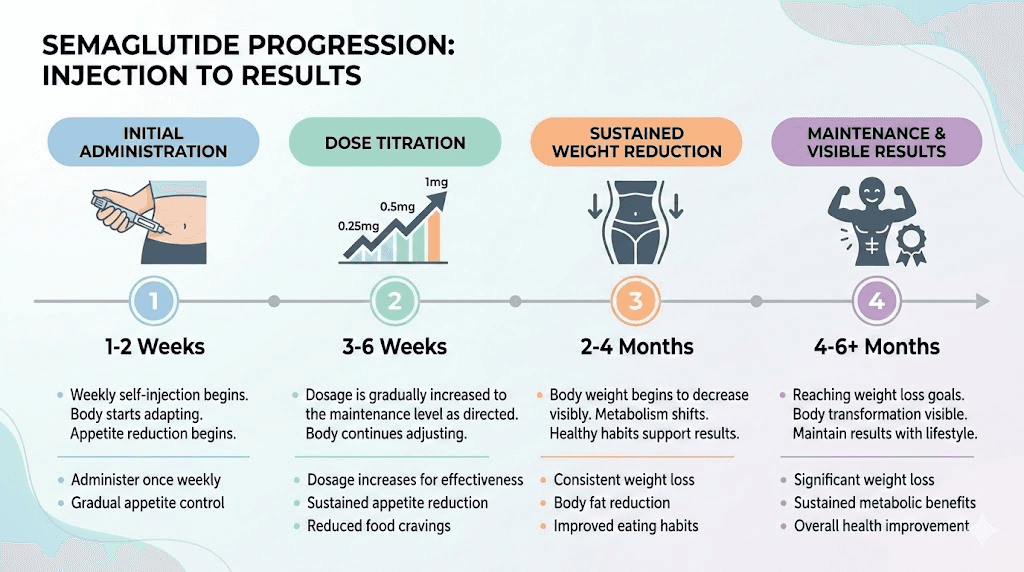
The four stages look like this. Stage one is absorption and receptor binding, which happens within hours. Stage two is initial physiological effects like appetite suppression and gastric slowing, which many people notice within 24 to 72 hours. Stage three is reaching therapeutic blood concentration, which takes about 4 to 5 weeks of consistent weekly dosing. Stage four is visible results like weight loss, improved blood sugar, and body composition changes, which typically appear between weeks 4 and 12. Knowing which stage you are in changes everything about how you evaluate your progress.
The starting dose of 0.25 mg is intentionally subtherapeutic. It is designed to let your body adjust, not to produce dramatic weight loss. So if you are on your first injection and wondering why the scale has not moved, that is expected. It is working. You just cannot see it yet. Your semaglutide dosing protocol accounts for this gradual buildup by design.
What "working" actually means at the molecular level
To understand why semaglutide does not produce instant dramatic results, you need to understand what the molecule actually does once it enters your body. This is not just academic detail. It explains every aspect of your experience over the coming weeks.
Semaglutide is a GLP-1 receptor agonist. It mimics a natural hormone called glucagon-like peptide-1 that your gut produces after eating. The synthetic version is modified with a fatty acid side chain that binds to albumin in your blood, which extends the half-life to approximately 7 days. That albumin binding is why you only need one injection per week instead of multiple daily doses.
Once in your system, semaglutide acts on multiple pathways simultaneously. In the pancreas, it enhances glucose-dependent insulin secretion. In the stomach, it slows gastric emptying so food stays in your stomach longer. And in the brain, it crosses the blood-brain barrier and activates anorexigenic neurons in the hypothalamus, specifically the POMC/CART pathways that signal fullness while suppressing the NPY/AgRP pathways that drive hunger.
That brain activity is particularly important. Research published in the journal Diabetes, Obesity and Metabolism showed that semaglutide reduced total daily caloric intake by approximately 24% compared to placebo, and the effect was not driven by nausea. It was driven by genuine changes in hunger signaling, food preference, and the reward value of eating. Participants on semaglutide showed lower preference for fatty, energy-dense foods even when they were not feeling nauseated.
All of this starts within hours of your first injection. But the effects compound over time as blood levels build. Think of it like filling a swimming pool with a garden hose. Water flows immediately. But the pool is not full for weeks.
Why the 0.25 mg starting dose feels like nothing
The standard semaglutide dosing protocol starts at 0.25 mg per week for the first four weeks. This is approximately one-tenth of the full therapeutic dose of 2.4 mg used in the STEP clinical trials for weight management. At this concentration, the molecule is absolutely present in your system and active at GLP-1 receptors. But the signal is quiet.
Some people feel subtle appetite changes at 0.25 mg. Most do not. And that is fine. The low starting dose exists for one reason: to minimize gastrointestinal side effects while your body adapts to having a long-acting GLP-1 agonist in circulation. If you started at the full dose on day one, the nausea and digestive side effects would likely be severe enough to make you quit entirely.
This is a feature, not a failure. Patience at 0.25 mg pays dividends later.
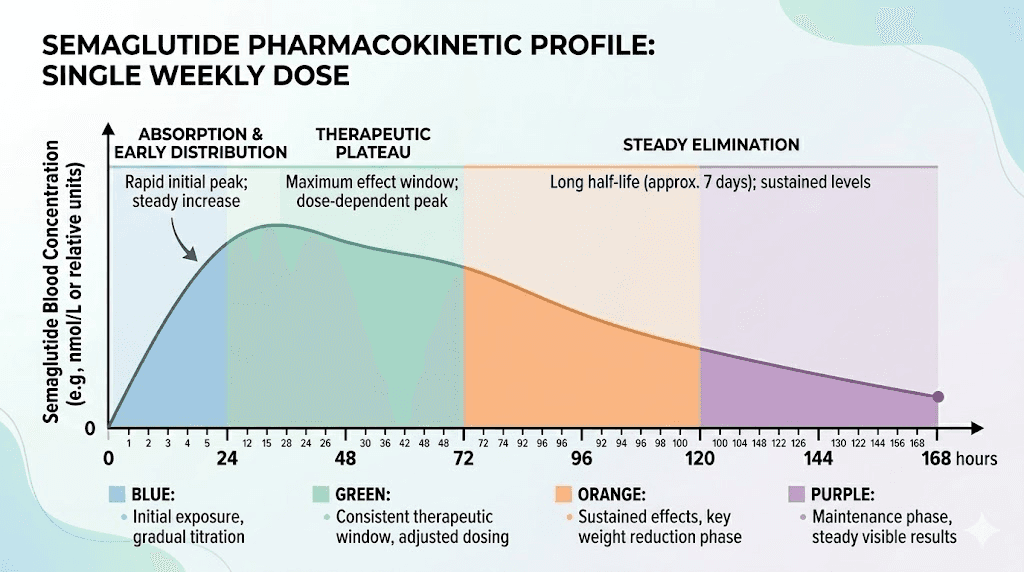
Hour by hour: what happens after your first semaglutide injection
Understanding the hour-by-hour timeline helps set accurate expectations and prevents unnecessary anxiety. Here is what the pharmacokinetic data actually shows.
0 to 2 hours post-injection
The semaglutide begins absorbing from the subcutaneous injection site into surrounding capillaries. You will likely feel nothing. Some people report mild stinging or warmth at the injection site, which is normal and fades within minutes. The peptide has not yet reached meaningful blood concentrations. Your appetite, energy level, and everything else will feel completely normal.
2 to 12 hours post-injection
Blood levels of semaglutide are rising but still relatively low. If you are particularly sensitive to GLP-1 receptor activation, you might notice very subtle fullness after meals. Most people notice nothing at all during this window, especially at the 0.25 mg starting dose. Do not worry. This is expected. The molecule is building up, not peaking.
12 to 24 hours post-injection
Semaglutide is continuing to absorb and distribute. Some early responders report their first hints of reduced appetite during this window, particularly a sense that portions feel more satisfying than usual. You might also notice mild nausea, which is actually a sign that GLP-1 receptors in your gut are being activated. If you experience this, eating smaller meals and staying hydrated helps significantly. Check our guide on what to expect your first week on semaglutide for practical tips.
24 to 72 hours post-injection
This is where things get interesting. Semaglutide reaches peak plasma concentration between 24 and 72 hours after injection. For many users, this is when the first real effects become noticeable. You might find yourself eating lunch and pushing the plate away with food still on it. You might walk past the kitchen at night and realize you have no interest in snacking. These changes can be subtle or obvious depending on your individual sensitivity.
Do not expect dramatic changes. At the 0.25 mg starting dose, even peak concentration is relatively modest. But if you pay attention, you will likely notice something different about your relationship with food during this 24 to 72 hour window.
72 hours to 7 days
Blood levels begin declining as your body metabolizes and clears the semaglutide. With a half-life of approximately 7 days, you still have meaningful amounts in your system throughout the entire week. Some people notice appetite returning slightly toward the end of the week before their next dose. This is normal and becomes less pronounced as you build up to steady-state concentrations over the following weeks.
For reference on managing your dosing schedule, consistency matters more than perfection. Take your weekly dose on the same day each week, though shifting by a day in either direction is generally fine.
The first week on semaglutide: realistic expectations
Your first week on semaglutide is primarily about adjustment, not results. Here is what most people actually experience versus what they expect.
Weight loss in week one is typically minimal. Some people see a 1 to 2 pound drop, which is usually water weight from eating less rather than actual fat loss. Others see no scale change at all. Both outcomes are normal at the 0.25 mg dose. The clinical trials that produced the impressive 15 to 17% body weight reduction numbers were measured over 68 weeks, not 7 days.
Appetite changes vary enormously. About 30 to 40% of people report noticeable appetite reduction in the first week. The remaining 60 to 70% feel minimal or no change. If you are in the second group, that does not mean the medication is not working. It means you are at a subtherapeutic dose that has not yet accumulated to levels that override your hunger signaling.
Side effects, when they occur, tend to be mild at the starting dose. The most common include slight nausea (usually around meals), mild bloating, occasional headaches, and fatigue. These typically resolve within a few days as your body adjusts. If nausea is bothersome, eating smaller, more frequent meals and avoiding high-fat foods can help. Our guide on foods to avoid on semaglutide covers this in detail.
Energy levels can go either way. Some people feel a temporary dip in energy because they are eating less. Others report feeling surprisingly energetic, possibly because their blood sugar is more stable. Check our article on whether semaglutide gives you energy for more on this.
Weeks 2 through 4: when most people start noticing real changes
The second through fourth weeks on semaglutide represent a transition period. You are still at the 0.25 mg dose (or possibly stepping up to 0.5 mg in week five), and your body is accumulating the peptide toward steady-state concentration. This accumulation phase is where most people cross the threshold from "I think something might be happening" to "Something is definitely different."
By week two, many users report more consistent appetite suppression. Meals feel more satisfying. The urge to snack between meals diminishes. Some describe it as the "food noise" quieting down, that constant background mental chatter about what to eat next simply fading away. This is the hypothalamic POMC/CART activation doing its job, reducing the reward value of food without making you feel sick or deprived.
Portion sizes naturally decrease. Not because you are forcing yourself to eat less, but because fullness arrives sooner and lasts longer. The slowed gastric emptying keeps food in your stomach for an extended period, sending sustained satiety signals to your brain. If you are wondering how long semaglutide takes to suppress appetite, weeks 2 through 4 is the typical inflection point for most users at standard dosing.
The scale starts moving
Weight loss during weeks 2 through 4 averages 2 to 5 pounds total, though individual variation is significant. Factors that influence early weight loss include starting body weight, baseline diet quality, physical activity level, hydration status, and individual metabolic rate. If you have not lost weight by week four, do not panic. You may want to review our guide on 4 weeks on semaglutide with no weight loss for troubleshooting strategies.
Food preferences often shift during this period. Research shows semaglutide reduces the relative preference for fatty, energy-dense foods. Users frequently report losing interest in greasy or overly rich meals without consciously deciding to avoid them. This preference shift, combined with reduced portion sizes, creates a natural caloric deficit without the white-knuckle willpower that traditional dieting demands.
Planning your meals strategically during this phase accelerates results. Our semaglutide diet plan and best foods to eat on semaglutide guides provide evidence-based nutrition frameworks designed to work with the medication rather than against it.
The steady-state factor: why weeks 4 through 5 are the real turning point
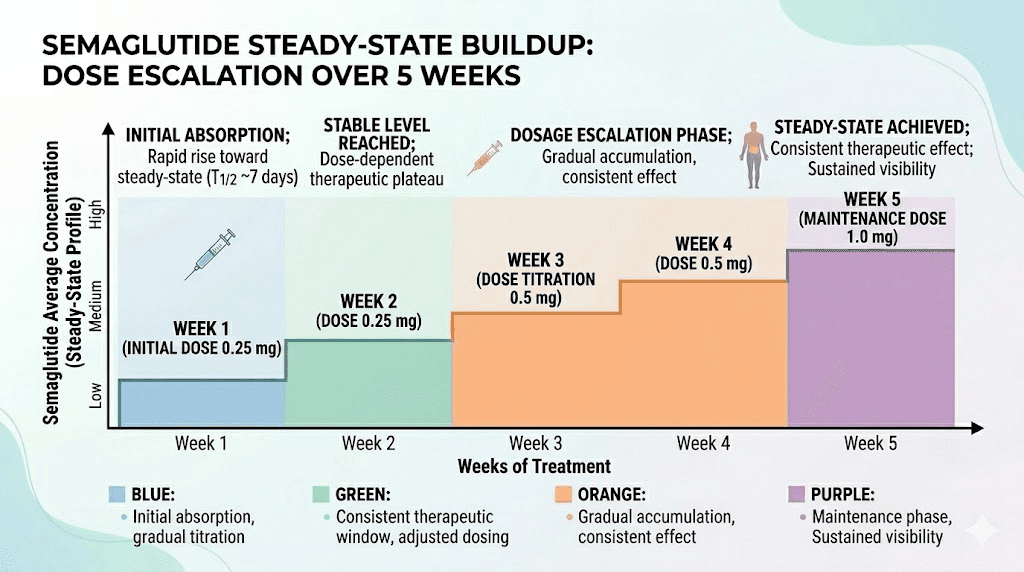
This is where the pharmacology gets important. With a half-life of approximately 7 days, semaglutide reaches what pharmacologists call "steady-state concentration" after 4 to 5 weeks of consistent weekly dosing. Steady state means the amount of drug entering your system each week equals the amount being cleared. Your blood levels stabilize at a consistent therapeutic range rather than spiking and dipping dramatically.
Before steady state, each weekly injection adds to the accumulating pool but you have not yet reached the plateau where effects are maximized. After steady state, every injection maintains a reliable therapeutic window. This is why weeks 4 through 5 often represent a noticeable jump in effectiveness even without a dose increase. The medication has finally built up to its full potential at your current dose.
At 0.25 mg, steady-state concentration is still modest. But as you titrate up through the dose escalation schedule, each new dose level reaches its own steady state after another 4 to 5 weeks. This staircase pattern of increasing effectiveness is intentional and explains why the clinical trial results, averaging 15 to 17% total body weight loss, were measured at week 68 rather than week 4.
Understanding steady state also explains a common frustration. Some people feel great effects in the days right after their injection but notice them fading toward the end of the week. This peak-trough pattern is more pronounced before reaching steady state and tends to smooth out as the background accumulation fills in the valleys. If the end-of-week dip bothers you, understanding the full semaglutide timeline helps calibrate expectations.
The dose escalation timeline and why it matters for results
The standard semaglutide dose escalation for weight management follows a specific schedule. Each step lasts four weeks before increasing to the next level. This gradual approach is not arbitrary. It is designed around the pharmacokinetics of reaching steady state at each dose before adding more.
The typical escalation looks like this:
Weeks 1 through 4: 0.25 mg per week (adjustment phase, minimal visible effects)
Weeks 5 through 8: 0.5 mg per week (appetite suppression becomes more consistent)
Weeks 9 through 12: 1.0 mg per week (significant appetite reduction, weight loss accelerates)
Weeks 13 through 16: 1.7 mg per week (strong effects for most users)
Week 17 onward: 2.4 mg per week (full therapeutic dose)
Each dose increase brings a noticeable step up in effect intensity. The 0.5 mg to 1.0 mg transition is where many users describe the most dramatic change in appetite. By 1.0 mg, the vast majority of people experience clear, consistent appetite suppression and measurable weight loss. If you are currently at the lower doses and feeling frustrated, know that the medication has significantly more room to work.
Some practitioners use compounded semaglutide, which may follow slightly different concentration schedules. Understanding how units convert to milligrams becomes important when working with compounded formulations. Our semaglutide dosage calculator can help you verify your exact dose in either measurement system.
What happens if you skip the escalation
Jumping straight to a high dose is tempting but counterproductive. Studies show that starting at 2.4 mg without titration dramatically increases the rate and severity of gastrointestinal side effects. Nausea, vomiting, and diarrhea become significantly more common and more intense. Many people who skip the escalation end up abandoning treatment entirely because the side effects are intolerable.
The gradual approach also gives your GLP-1 receptors time to adapt. Just like your eyes adjust to bright light gradually, your GLP-1 system adjusts to exogenous stimulation over time. Rushing this process does not accelerate results. It sabotages them.
Why some people feel effects faster than others
Individual variation in semaglutide response is enormous. Two people can start the same dose on the same day and have completely different experiences in the first week. Several factors explain this variation, and understanding them helps you assess whether your response is normal.
Body composition and distribution volume
People with higher body weight have a larger volume of distribution, which means the same dose of semaglutide is diluted across more tissue. A 0.25 mg dose in someone weighing 300 pounds produces lower peak blood concentrations than the same dose in someone weighing 180 pounds. This does not mean the medication is less effective for larger individuals. It simply means the noticeable effects may take slightly longer to emerge at the same absolute dose.
GLP-1 receptor sensitivity
Genetic variation in GLP-1 receptor expression and sensitivity influences how strongly any individual responds to semaglutide. Some people have naturally high receptor density or heightened receptor sensitivity, producing stronger effects at lower doses. Others require higher doses to achieve the same degree of receptor activation. Neither pattern is better or worse. Both reach therapeutic benefit eventually.
Baseline diet and metabolic status
People who eat large portions of highly processed, calorie-dense food before starting semaglutide often notice appetite changes more dramatically because the contrast is stark. If your baseline diet is already moderate and well-controlled, the shift may be more subtle. Similarly, people with insulin resistance or type 2 diabetes may notice blood sugar improvements before appetite changes, while metabolically healthy individuals may notice appetite effects first.
Psychological factors
Expectation shapes perception. People who expect immediate dramatic results are more likely to feel disappointed and conclude the medication is not working, even when early physiological changes are occurring. People who understand the gradual timeline tend to notice subtle shifts they might otherwise miss. Keeping a food and symptom journal during the first few weeks helps separate actual physiological changes from expectation-driven perception.
If you fall into the slower-responder category, reviewing our detailed guide on why you might not be losing weight on semaglutide can help identify whether something actionable is holding you back or whether you simply need more time at a higher dose.
Common side effects in the first few days
Side effects are actually evidence that semaglutide is active in your system. They are not pleasant, but they confirm the medication is doing something. Here is what the clinical data shows about early side effects and how to manage them.
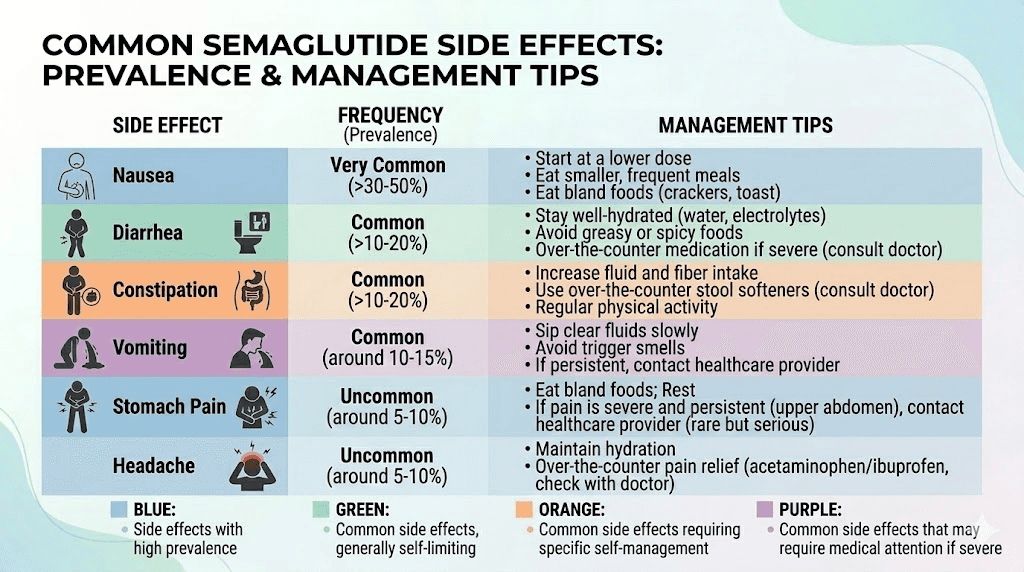
Nausea
The most commonly reported side effect. At the 0.25 mg starting dose, nausea affects roughly 16 to 20% of users, and it is typically mild. The nausea results from GLP-1 receptor activation in both the gut (slowing gastric emptying) and the brainstem (activating the area postrema). It tends to peak within 24 to 72 hours after injection and fade over the next few days. Eating smaller meals, avoiding lying down immediately after eating, and staying well-hydrated all help. The good news: nausea almost always diminishes with continued use as your body adapts.
Reduced appetite versus nausea-driven food avoidance
This distinction matters. True appetite suppression from semaglutide feels like genuine disinterest in food, like the mental volume on hunger has been turned down. Nausea-driven food avoidance feels unpleasant and forced. If your reduced eating is driven primarily by nausea rather than genuine appetite reduction, talk to your prescriber about the pace of dose escalation. The goal is comfortable appetite reduction, not feeling sick.
Fatigue and low energy
Semaglutide-related fatigue affects some users in the first week or two. This can result from reduced caloric intake (eating significantly less without adjusting activity levels), mild dehydration (reduced food intake often means reduced water intake from food), or blood sugar adjustments as the medication modifies glucose metabolism. Ensuring adequate protein intake, staying hydrated, and avoiding extreme caloric restriction all help manage early fatigue. Also consider our broader GLP-1 fatigue guide for additional strategies.
Digestive changes
Slowed gastric emptying can cause bloating, constipation, or occasionally diarrhea. These effects are dose-dependent and typically mild at the starting dose. Adequate fiber intake, hydration, and physical activity help keep digestion moving smoothly. If constipation becomes bothersome, our semaglutide constipation treatment guide provides specific evidence-based solutions.
Headaches
Some users experience headaches in the first few days, often related to dehydration or changes in blood sugar regulation. Drinking adequate water and maintaining consistent blood sugar through small, balanced meals typically resolves this. For persistent headaches, see our GLP-1 headache guide.
Dizziness
Mild dizziness can occur, particularly when standing up quickly or after extended periods without eating. This relates to blood pressure adjustments and reduced caloric intake. Staying hydrated and eating regular small meals prevents most dizziness episodes.
Injection site reactions
Minor redness, swelling, or itching at the injection site affects a small percentage of users. Rotating injection sites between the abdomen, thigh, and upper arm prevents recurring reactions at any single location. These reactions are typically cosmetic and resolve within a day or two.
What to do if you do not feel anything after your first dose
Nothing. Seriously. Do nothing different.
If you inject your first 0.25 mg dose and feel absolutely nothing for the entire week, that is a completely normal and expected outcome. The starting dose is designed for tolerance assessment, not therapeutic effect. More than half of all users report no noticeable changes at 0.25 mg, and these same people go on to achieve excellent results at higher doses.
Here is what you should NOT do:
Do not increase your dose ahead of schedule
Do not take a second injection before your scheduled weekly dose
Do not assume the medication does not work for you
Do not switch medications after one week
Do not stop treatment
Here is what you SHOULD do:
Continue your next weekly dose as scheduled
Follow the prescribed escalation timeline
Keep a simple daily journal noting appetite, energy, and any symptoms
Focus on eating quality foods and staying active
Give the medication at least 8 to 12 weeks before evaluating effectiveness
The journal is particularly valuable because it captures subtle changes you might otherwise miss. People often look back at their week-one notes after a month and realize changes were happening all along, they just were not dramatic enough to register in real time.
If you reach week 4 with genuinely zero changes at the prescribed dose, discuss this with your prescriber. It does not mean the medication has failed. It likely means you need a higher dose to cross your individual response threshold, which is exactly what the escalation schedule is designed to achieve.
Semaglutide versus tirzepatide: which works faster?
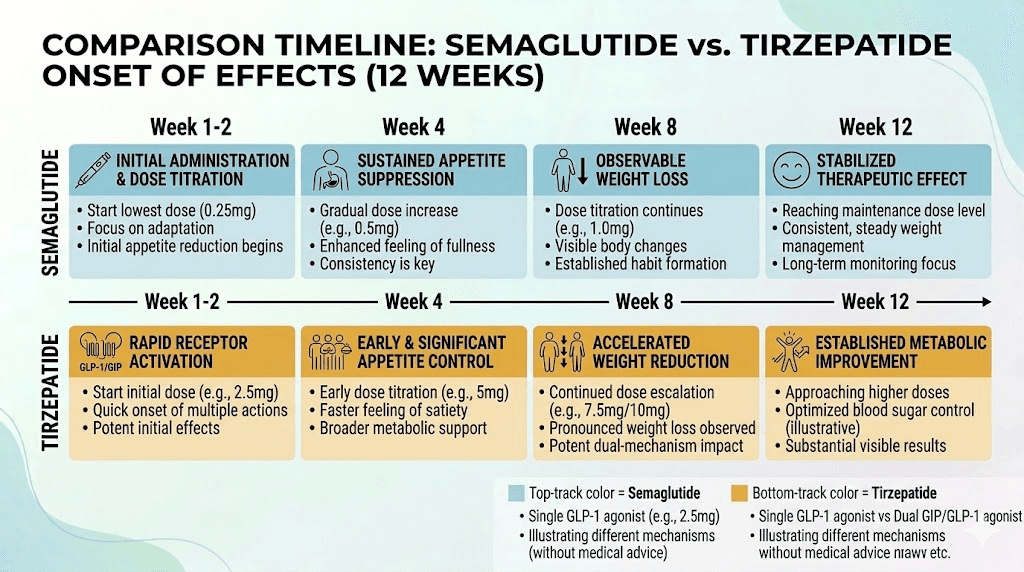
This comparison comes up constantly, and the data tells an interesting story. Semaglutide and tirzepatide both activate GLP-1 receptors, but tirzepatide also activates GIP receptors, making it a dual agonist. This dual mechanism appears to produce slightly faster onset of noticeable effects for some users, though head-to-head onset studies are limited.
The practical differences in early experience look like this:
Semaglutide onset: Most users notice initial appetite changes within 1 to 3 weeks. Significant weight loss typically begins by weeks 4 to 8. The effect builds gradually with dose escalation. Steady state at each dose is reached in approximately 4 to 5 weeks.
Tirzepatide onset: Some users report faster appetite suppression, with noticeable changes as early as the first week at starting dose. The dual receptor mechanism may produce earlier satiety signals. Tirzepatide onset timing varies by individual but tends to run slightly ahead of semaglutide at equivalent dose escalation stages.
However, the long-term results tell a more nuanced story. While tirzepatide may produce faster initial effects, both medications reach therapeutic effectiveness with consistent use and proper dose escalation. The SURPASS and SURMOUNT trials showed tirzepatide producing greater average weight loss than semaglutide over the full treatment period, but both medications produced clinically significant results.
If you are considering switching between the two, our guides on switching from tirzepatide to semaglutide and the side effect comparison between semaglutide and tirzepatide provide detailed frameworks. For a broader comparison including newer options, see our semaglutide versus tirzepatide versus retatrutide analysis.
How to maximize your early results on semaglutide
While the medication does the heavy lifting for appetite control, several evidence-based strategies can amplify your early results and help you notice benefits sooner.
Optimize your injection timing
Choosing the best time of day to take semaglutide can influence your experience. Many users prefer injecting in the evening or before bed so that the initial peak (and any associated nausea) occurs while they are sleeping. Others prefer morning injections so the appetite-suppressing peak aligns with their most challenging eating hours. Experiment during the first few weeks to find what works best for your schedule and symptom profile.
Prioritize protein intake
When you are eating less overall, ensuring adequate protein becomes critical. Protein preserves lean muscle mass during weight loss, enhances satiety (working synergistically with semaglutide appetite suppression), and supports metabolic rate. Aim for 0.7 to 1.0 grams of protein per pound of body weight daily. Our semaglutide diet plan includes protein-focused meal frameworks specifically designed for users on GLP-1 medications.
Stay hydrated
Dehydration worsens virtually every semaglutide side effect, including nausea, headaches, fatigue, constipation, and dizziness. When you eat less food, you also consume less water from food sources, which means you need to deliberately increase your fluid intake. Aim for at least 64 ounces of water daily, more if you are physically active or in warm climates.
Move your body
Physical activity is not required for semaglutide to work, and you can lose weight on semaglutide without exercise. But regular movement amplifies results through increased caloric expenditure, improved insulin sensitivity, better mood and energy, and preserved muscle mass. Even walking 20 to 30 minutes daily makes a measurable difference. You do not need intense gym sessions to benefit.
Track and be patient
Use a simple tracking method. Daily weight (looking at weekly averages, not daily fluctuations), weekly photos, and body measurements provide objective data that cuts through the subjective experience of "I do not feel like it is working." Many people are visibly losing fat and improving body composition even when the scale is temporarily stalled. Our GLP-1 plotter can help visualize your progress over time.
Consider supportive compounds
Some users combine semaglutide with supportive supplements or compounds to enhance results. Popular combinations include semaglutide with B12 for energy support, semaglutide with glycine for improved tolerability, semaglutide with L-carnitine for fat metabolism, and semaglutide with methylcobalamin for neurological support. Some compounded formulations like semaglutide glycine B12 blends combine these in a single injection.
Always discuss any combination approach with a qualified healthcare provider before starting.
The real results timeline: what clinical studies show
Anecdotes are useful but clinical data is definitive. Here is what the large-scale clinical trials actually demonstrated about semaglutide results over time.
The STEP trial program
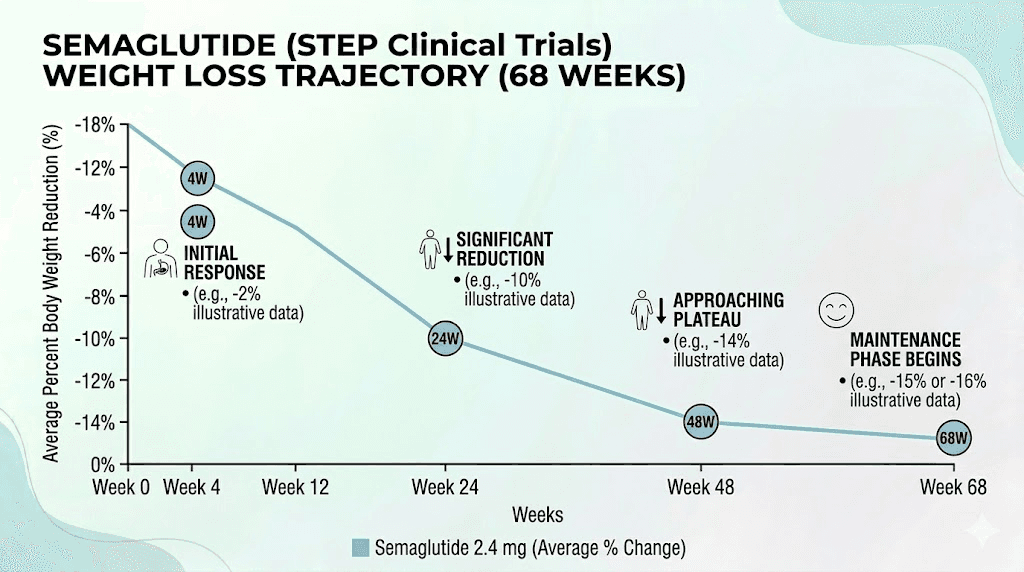
The STEP (Semaglutide Treatment Effect in People with Obesity) trials enrolled thousands of participants and tracked results over 68 weeks. The key findings provide the most reliable timeline for expected results:
Week 4: Average weight loss of approximately 1 to 2% of body weight
Week 12: Average weight loss of approximately 5 to 6% of body weight
Week 20: Average weight loss of approximately 10% of body weight
Week 40: Average weight loss of approximately 13 to 14% of body weight
Week 68: Average weight loss of approximately 15 to 17% of body weight
These are averages, meaning some participants lost more and some lost less. But the trajectory is clear. Semaglutide works gradually and cumulatively, not instantly. The people who achieved the best results were the ones who stayed consistent through the early weeks when effects were subtle.
Appetite effects versus weight effects
An important distinction from the research: appetite reduction precedes weight loss. In a study published by Blundell et al. (2017), semaglutide reduced total daily energy intake by 24% compared to placebo after 12 weeks. Fasting appetite scores were significantly lower with semaglutide (P = 0.0023). Participants reported less hunger, fewer cravings, better control of eating, and lower preference for fatty foods.
These appetite changes start before dramatic weight appears on the scale. This is why tracking appetite and eating behaviors, rather than just weight, gives you a more accurate picture of whether semaglutide is working during the early weeks. The before and after semaglutide results our community shares often show this same pattern, with appetite changes leading weight changes by 2 to 4 weeks.
Energy intake reduction data
A separate clinical study (Friedrichsen et al., 2021) measured semaglutide effects on energy intake more precisely. After 12 weeks of treatment, oral semaglutide reduced total daily ad libitum energy intake by 38.9% compared to placebo. The lunch meal alone showed approximately 35% lower energy intake. Evening snacking from high-fat foods decreased by 35%.
These are substantial reductions that translate directly to weight loss over time. But they emerged at 12 weeks, not day one. The medication builds to this level of effect through the combination of dose escalation and steady-state accumulation.
Oral versus injectable semaglutide: does onset differ?
Semaglutide is available in both injectable (subcutaneous) and oral formulations. The onset of action differs between the two delivery methods due to differences in absorption and bioavailability.
Injectable semaglutide has approximately 89% bioavailability, meaning almost all of the injected dose reaches your bloodstream. Peak concentration occurs within 1 to 3 days. The pharmacokinetics are predictable and consistent from dose to dose.
Oral semaglutide has significantly lower bioavailability, typically around 0.4 to 1%. This is why oral doses are measured in milligrams (3 mg, 7 mg, 14 mg) rather than the microgram-range doses used for injection. The oral form requires co-formulation with an absorption enhancer (SNAC) and must be taken on an empty stomach with no more than 4 ounces of water. Food consumed within 30 minutes of the oral dose can drastically reduce absorption.
In terms of onset, the oral form may take slightly longer to produce noticeable effects because of its lower and more variable bioavailability. However, once steady state is reached, both forms produce equivalent therapeutic outcomes at their respective labeled doses. The choice between injectable and oral peptide delivery often comes down to personal preference regarding convenience, consistency, and tolerability rather than onset speed.
For those exploring the sublingual route, our guide on sublingual semaglutide covers the research and practical considerations for this alternative delivery method.
What happens if you stop and restart semaglutide
Life happens. People run out of medication, take breaks for surgery or travel, or pause treatment for other reasons. Understanding what happens to the timeline when you stop and restart matters for managing expectations.
When you stop semaglutide, the medication clears from your system over approximately 5 weeks (five half-lives). During this period, appetite gradually returns to baseline as blood concentrations drop. Most people notice hunger returning within 2 to 3 weeks of their last dose. Semaglutide withdrawal is not dangerous, but the return of appetite and potential weight regain can be psychologically challenging.
When you restart after a gap, you essentially start the accumulation process over again. If you stopped for more than 2 to 3 weeks, most prescribers recommend restarting at a lower dose (typically 0.25 mg or 0.5 mg) rather than jumping back to your previous dose. This prevents the severe nausea that can occur when GLP-1 receptors that have desensitized during the break are suddenly hit with a high dose again.
The good news is that the titration usually goes faster the second time. Your body has already adapted once, so many people can escalate through the lower doses more quickly. For detailed guidance, our article on restarting semaglutide after a break covers optimal restart protocols.
The plateau problem: when semaglutide seems to stop working
After the initial honeymoon phase of consistent weight loss, many users hit a semaglutide plateau where progress stalls. This typically happens somewhere between months 3 and 6 and can feel like the medication has stopped working entirely.
It has not stopped working. What has happened is that your body has adapted. As you lose weight, your basal metabolic rate decreases because you are carrying less mass. Your body also becomes more metabolically efficient, burning fewer calories for the same activities. The caloric deficit that semaglutide helped create at your starting weight becomes insufficient at your new, lower weight.
Breaking through a plateau typically requires one or more adjustments. These include dose optimization (if you are not yet at the maximum therapeutic dose), dietary modifications (recalculating caloric needs for your current weight), increasing physical activity (particularly resistance training to preserve metabolic rate), and addressing sleep and stress factors that influence cortisol and insulin. The medication is still working, your metabolism has simply caught up, and the strategy needs refinement.
Special considerations: storage, handling, and preparation
How you store and handle semaglutide directly affects its potency and, therefore, how quickly and effectively it works. Degraded semaglutide has reduced receptor binding activity, which means less effect per dose.
Proper refrigeration is essential. Semaglutide should be stored at 36 to 46 degrees Fahrenheit (2 to 8 degrees Celsius) before first use. Once in use, it can be kept at room temperature for a limited period depending on the formulation, but heat exposure degrades the peptide. If you are wondering about how long compounded semaglutide lasts in the fridge or what to do if you accidentally left your semaglutide out overnight, we have dedicated guides covering exactly these situations.
For those using compounded formulations that require reconstitution, following proper reconstitution procedures is critical. Using the correct amount of bacteriostatic water for your vial size determines the concentration and therefore the accuracy of your dosing. Our peptide reconstitution calculator eliminates the guesswork from this process.
Expired or improperly stored semaglutide may appear to "not work" when the real issue is degraded potency. Check semaglutide shelf life guidelines and inspect your vial for color changes or cloudiness that could indicate degradation. If you accidentally took expired semaglutide, it is unlikely to be harmful but may be less effective.
Combining semaglutide with other medications
Many users take semaglutide alongside other medications or supplements. Some combinations are well-studied, others are anecdotal. Here is what we know about common combinations and whether they affect onset or effectiveness.
Semaglutide and phentermine is one of the more common combinations. Phentermine is a stimulant-based appetite suppressant that works through different mechanisms than semaglutide. Some prescribers use both together for enhanced appetite suppression, particularly during the early weeks when semaglutide has not yet reached full effect. The combination may produce faster noticeable appetite changes, but it also comes with additional side effect potential. See our full phentermine versus semaglutide comparison for the detailed analysis.
Semaglutide and berberine is another popular combination. Berberine has its own glucose-lowering and metabolic benefits through AMPK activation. Some practitioners suggest the two may have complementary mechanisms, though large-scale studies of the combination are lacking.
Alcohol is a common concern. Drinking on semaglutide is not explicitly prohibited but comes with heightened risks. Semaglutide slows gastric emptying, which can intensify and prolong the effects of alcohol. Many users report feeling the effects of alcohol faster and more strongly while on semaglutide. This is worth being aware of, particularly during the early weeks when you are still learning how your body responds.
Long-term expectations and maintaining results
Understanding the long-term trajectory helps frame the "does it work right away" question in proper context. Semaglutide is not a quick fix. It is a sustained intervention that produces cumulative results over months and years.
The first 4 to 6 months represent the most active weight loss phase for most users. This is when dose escalation and building lifestyle changes create the largest caloric deficits. Weight loss typically ranges from 10 to 17% of starting body weight during this period.
Months 6 through 12 usually see continued but slower weight loss as the body approaches a new equilibrium. Some users continue losing steadily, while others reach a maintenance phase. The medication continues to support appetite regulation and metabolic improvements even after weight loss plateaus.
Beyond 12 months, the question becomes maintenance. Research shows that discontinuing semaglutide typically leads to gradual weight regain as appetite returns to baseline. This has led many practitioners to recommend ongoing treatment for sustained results. The long-term safety data continues to accumulate and remains generally favorable.
For how long to stay on semaglutide, the answer depends on individual goals, health status, and response to treatment. This is a conversation to have with your healthcare provider based on your specific situation.
SeekPeptides members access detailed protocol guides, progress tracking tools, and community support that helps navigate every phase of the semaglutide journey, from that first uncertain injection through long-term optimization and maintenance.
Administration and practical tips for new users
Getting the practical details right from day one sets you up for success. Small mistakes in administration can affect how well and how quickly semaglutide works.
Injection technique matters
Proper subcutaneous injection technique ensures consistent absorption. Inject into the abdomen (at least 2 inches from the navel), thigh, or upper arm. Rotate injection sites to prevent lipodystrophy, which is localized fat tissue changes that can affect absorption from that site. Our step-by-step semaglutide injection guide and GLP-1 injection tutorial cover the complete process with detailed instructions.
Dosing accuracy
With compounded semaglutide, measuring the correct dose requires understanding the relationship between semaglutide units and milligrams. This conversion depends on the concentration of your specific formulation. Common reference points include 10 units, 20 units, 40 units, 50 units, and 100 units of semaglutide and how each converts to milligrams at various concentrations. Incorrect dosing means you might be taking less than you think, which delays results, or more than intended, which accelerates side effects.
Use our semaglutide dosage calculator to verify your exact dose before every injection. It takes 30 seconds and eliminates dosing errors entirely.
Timing consistency
Injecting on the same day each week optimizes the steady-state buildup. If you choose Mondays, stick with Mondays. If you need to shift your injection day, you can adjust by up to 48 hours in either direction without significantly impacting blood levels. But try to maintain consistency, especially during the first 8 weeks when the accumulation to steady state matters most.
What to eat on injection day
Some users prefer lighter meals on injection day to minimize nausea. Focusing on bland, easy-to-digest foods, lean proteins, and low-fat options can help if GI side effects are a concern. Avoid large, heavy, or greasy meals for the first 12 to 24 hours after injection when GI sensitivity is highest. Our comprehensive foods to eat while on semaglutide guide includes specific injection-day meal suggestions.
Compounded versus brand-name semaglutide: does onset differ?
Compounded semaglutide and brand-name formulations (Ozempic, Wegovy, Rybelsus) contain the same active molecule. The pharmacokinetics should be equivalent when properly formulated and dosed. However, several practical differences can affect perceived onset.
Compounded formulations vary in concentration. A 5 mg/mL vial requires different injection volumes than a 2 mg/mL vial for the same dose. Our 5mg semaglutide reconstitution guide and 5mg/mL dosage chart help navigate these concentration-specific details.
Quality varies between compounding pharmacies. Reputable pharmacies like those reviewed in our Empower Pharmacy semaglutide guide and Olympia semaglutide guide follow strict quality standards. Less reputable sources may produce formulations with variable potency, which directly affects how quickly you notice results.
Some compounded formulations include additional ingredients like niacinamide or B12. These additions do not accelerate semaglutide onset but may provide additional benefits like energy support or improved tolerability.
The relationship between GLP-1 agonists and brand names like Ozempic confuses many new users. Understanding that they are different products containing the same molecule helps clarify why onset and effects should be comparable regardless of the source.
Tracking your progress: beyond the scale
If you are evaluating whether semaglutide is "working" based solely on the bathroom scale, you are missing most of the picture. The medication produces changes across multiple dimensions, many of which precede visible weight loss by weeks.
Track these markers alongside weight to get a complete picture of whether semaglutide is working for you:
Appetite intensity: Rate your hunger on a 1 to 10 scale before meals. Most users see this number drop by 2 to 4 points within the first few weeks.
Portion sizes: Note how much food you actually eat at each meal versus what you served yourself. Leaving food on your plate more often is a clear sign of effect.
Food noise: That constant mental preoccupation with food, what to eat next, cravings, anticipation. When this quiets down, semaglutide is working on your hypothalamic hunger circuits.
Snacking frequency: Count between-meal eating episodes. A reduction here means the medication is helping regulate your eating patterns.
Food preferences: Notice if you are naturally gravitating toward lighter, less calorie-dense foods without consciously trying. This preference shift is a documented effect of GLP-1 activation.
Energy levels: After the initial adjustment period, many users report more stable energy throughout the day due to improved blood sugar regulation.
Sleep quality: Some users report improved sleep, particularly if excess weight was contributing to sleep apnea or discomfort.
Body measurements: Waist circumference, hip circumference, and clothing fit often change before the scale does, especially if you are maintaining physical activity.
SeekPeptides provides comprehensive progress tracking tools that go beyond simple weight logging, helping members identify early signals of effectiveness that traditional tracking misses.
When to talk to your prescriber about concerns
While patience is important, there are situations where reaching out to your prescriber sooner rather than later makes sense.
Contact your prescriber if: you experience severe or persistent nausea that prevents eating for more than 48 hours, you notice signs of pancreatitis (severe abdominal pain radiating to the back), you develop symptoms of gallbladder problems (sharp upper right abdominal pain after eating), you experience persistent vomiting that does not respond to dietary modifications, you have a known history of medullary thyroid carcinoma or MEN 2 syndrome (semaglutide is contraindicated), or you develop an allergic reaction (rash, swelling, difficulty breathing) at any point.
Discuss at your next appointment if: you have reached week 8 with zero noticeable appetite or weight changes at your current dose, side effects are manageable but annoying and not improving, you are considering adjusting your dose escalation timeline, you want to explore combination approaches, or you are experiencing insomnia, menstrual changes, feeling unusually cold, or hormonal changes that you suspect are related to the medication.
Remember that the early weeks are an investment. The data overwhelmingly supports semaglutide as an effective tool for weight management when given adequate time and proper dosing. Most people who feel disappointed at week 2 feel dramatically different by week 12.
Frequently asked questions
Does semaglutide suppress appetite on the first day?
Some people notice subtle appetite changes within 24 to 72 hours of their first injection, but most do not experience significant immediate appetite suppression at the 0.25 mg starting dose. The appetite-suppressing effects become more pronounced as you build to steady-state concentration over 4 to 5 weeks and titrate up to higher doses.
How long does it take to lose weight on semaglutide?
Most people see measurable weight loss within 4 to 12 weeks. The clinical trials showed average weight loss of 1 to 2% body weight by week 4 and 5 to 6% by week 12. For a complete timeline based on the STEP trial data, see our guide on how long semaglutide takes to work.
Can I take my semaglutide dose early if I do not feel anything?
No. Maintain your weekly schedule regardless of perceived effects. Taking doses early disrupts the steady-state accumulation and increases the risk of side effects. If you need to adjust your dosing day, shift by no more than 48 hours. For timing considerations, check our guide on the best time to take semaglutide.
Is it normal to feel nothing at 0.25 mg?
Completely normal. The 0.25 mg dose is approximately one-tenth of the full therapeutic dose. It is designed for tolerance assessment, not dramatic effects. Most of the clinical benefit comes at doses of 1.0 mg and above. Be patient through the escalation process.
Does semaglutide work faster than tirzepatide?
Generally no. Tirzepatide tends to produce noticeable effects slightly earlier due to its dual GIP/GLP-1 receptor mechanism. However, both medications require dose escalation and time to reach full therapeutic benefit. The dosage comparison chart shows how the two escalation schedules compare.
What should I eat after my first semaglutide injection?
Focus on light, easily digestible meals for the first 24 to 48 hours. Lean proteins, cooked vegetables, and simple carbohydrates are well tolerated. Avoid large, fatty, or greasy meals that may worsen nausea. Our best foods on semaglutide guide provides specific meal recommendations for injection day and beyond.
Will semaglutide make me nauseous right away?
Nausea affects approximately 16 to 20% of users at the starting dose and tends to peak within 24 to 72 hours after injection. It is usually mild at 0.25 mg and diminishes with continued use as your body adapts. Eating smaller meals and staying hydrated helps manage nausea during the adjustment period.
How do I know if my semaglutide is working?
Look beyond the scale. Early signs include reduced appetite, smaller portion sizes, decreased food cravings, less interest in high-calorie snacks, and what many describe as quieter "food noise." These appetite and behavioral changes typically precede visible weight loss by several weeks.
External resources
For researchers serious about optimizing their semaglutide protocols and navigating every phase of their weight management journey, SeekPeptides offers the most comprehensive resource available, with evidence-based guides, proven protocols, dosing calculators, and a community of thousands who have navigated these exact questions.
In case I do not see you, good afternoon, good evening, and good night. May your doses stay accurate, your appetite stay managed, and your patience stay rewarded.