LYOPHILIZED VS LIQUID PEPTIDES

LYOPHILIZED VS LIQUID PEPTIDES

Complete comparison of freeze-dried (lyophilized) and liquid peptides. Stability, storage, effectiveness, and why one form dramatically outperforms the other.

ESSENTIALS

Key differences between lyophilized and liquid peptides

Key differences between lyophilized and liquid peptides

Features

Lyophilized (powder)

Liquid (pre-mixed)

Stability

Extremely stable

Degrades quickly

Shelf life (unmixed)

2-3 years refrigerated

3-6 months refrigerated

Effectiveness

Full potency preserved

Degrades over time

Shipping

Survives temperature changes

Requires cold chain

Storage

Refrigerate, simple

Constant refrigeration required

Market Standard

95%+ of market

5% (red flag)

Features

Lyophilized (powder)

Liquid (pre-mixed)

Stability

Extremely stable

Degrades quickly

Shelf life (unmixed)

2-3 years refrigerated

3-6 months refrigerated

Effectiveness

Full potency preserved

Degrades over time

Shipping

Survives temperature changes

Requires cold chain

Storage

Refrigerate, simple

Constant refrigeration required

Market Standard

95%+ of market

5% (red flag)

THE BASICS

Understanding lyophilized vs liquid peptide forms

Understanding lyophilized vs liquid peptide forms

Lyophilized peptides

Lyophilized peptides are freeze-dried powder peptides. The manufacturing process removes all water through freeze-drying (lyophilization), creating a stable powder that preserves the peptide's structure perfectly. Stored in sealed vials until reconstitution with bacteriostatic water. This is the gold standard for peptide storage and the form 95%+ of research peptides use.

Liquid peptides

Liquid peptides come pre-mixed in solution (usually bacteriostatic water or saline). Ready to use immediately without reconstitution. Convenient but peptides degrade much faster in liquid form. Temperature fluctuations, light exposure, and time all reduce potency. Less common due to stability issues.

THE SCIENCE

Why lyophilization wins

Why lyophilization wins

The science behind peptide stability and degradation

The science behind peptide stability and degradation

How peptides degrade (in liquid)

Hydrolysis: Water breaks peptide bonds

Mimicking growth hormone-releasing

Oxidation: Oxygen damages amino acids

Promoting new blood vessel formation

Aggregation: Molecules clump together

Temperature stress: Heat accelerates all

Microbial growth: Even with preservatives

Result: 5-10% potency loss per month

How lyophilization preserves

No water: No hydrolysis possible

Mimicking growth hormone-releasing

Minimal oxygen: Sealed in inert atmosphere

Promoting new blood vessel formation

Stable structure: No aggregation

Temperature stable: Survives fluctuations

No microbes: Completely dry environment

Result: 99%+ potency retention over years

COMPARISON

Complete comparison

Complete comparison

Every aspect compared - stability, storage, shipping, and more

Every aspect compared - stability, storage, shipping, and more

Category

Lyophilized

Liquid

Stability at room temp

Days to weeks

Hours to days

Refrigerated shelf life

2-3 years

3-6 months

Shipping durability

Excellent

Poor

Temperature Tolerance

High

Low

Potency retention

99%+ over 2 years

Degrades 5-10%/month

Reconstitution

Required (5 minutes)

Not required

Convenience

Moderate

High

Market share

95%+ of market

5% of market

Quality indicator

Standard practice

Red flag usually

Category

Lyophilized

Liquid

Stability at room temp

Days to weeks

Hours to days

Refrigerated shelf life

2-3 years

3-6 months

Shipping durability

Excellent

Poor

Temperature Tolerance

High

Low

Potency retention

99%+ over 2 years

Degrades 5-10%/month

Reconstitution

Required (5 minutes)

Not required

Convenience

Moderate

High

Market share

95%+ of market

5% of market

Quality indicator

Standard practice

Red flag usually

Category

Lyophilized

Liquid

Stability at room temp

Days to weeks

Hours to days

Refrigerated shelf life

2-3 years

3-6 months

Shipping durability

Excellent

Poor

Temperature Tolerance

High

Low

Potency retention

99%+ over 2 years

Degrades 5-10%/month

Reconstitution

Required (5 minutes)

Not required

Convenience

Moderate

High

Market share

95%+ of market

5% of market

Quality indicator

Standard practice

Red flag usually

THE REALITY

The clear winner

The clear winner

This isn't even a real choice - lyophilized is the professional standard

Choose lyophilized (always)

Choose lyophilized

2-3 year shelf life vs 3-6 months

2-3 year shelf life vs 3-6 months

Temperature stable during shipping

Full potency preservation (99%+)

Full potency preservation (99%+)

Can stock up safely

Industry standard (95%+ of market)quality variability

Industry standard (95%+ of market)

Trusted by professionals

Trusted by professionals

All major suppliers use it

All major suppliers use it

Only 5 minutes to reconstitute

Only 5 minutes to reconstitute

Avoid liquid (red flags)

Degrades 5-10% per month

Degrades 5-10% per month

Requires constant refrigeration

Risky shipping (temperature)

Risky shipping (temperature)

Can't stock up long-term

Can't stock up long-term

Suspicious from research suppliers

Suspicious from research suppliers

Only 5% of market uses it

Only 5% of market uses it

Sign of amateur operation

Sign of amateur operation

Suggests quality corners being cut

Suggests quality corners being cut

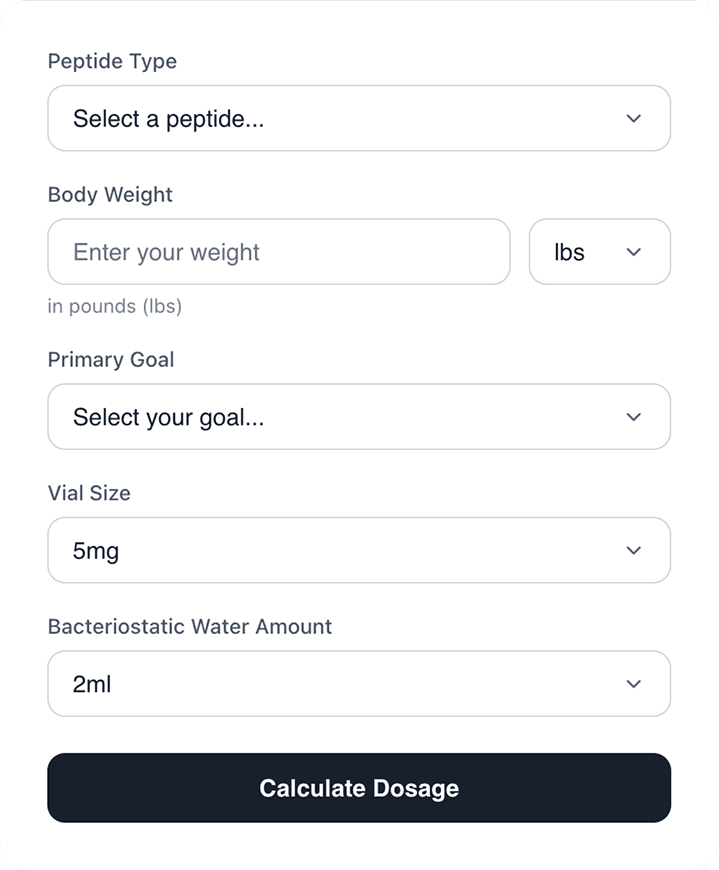
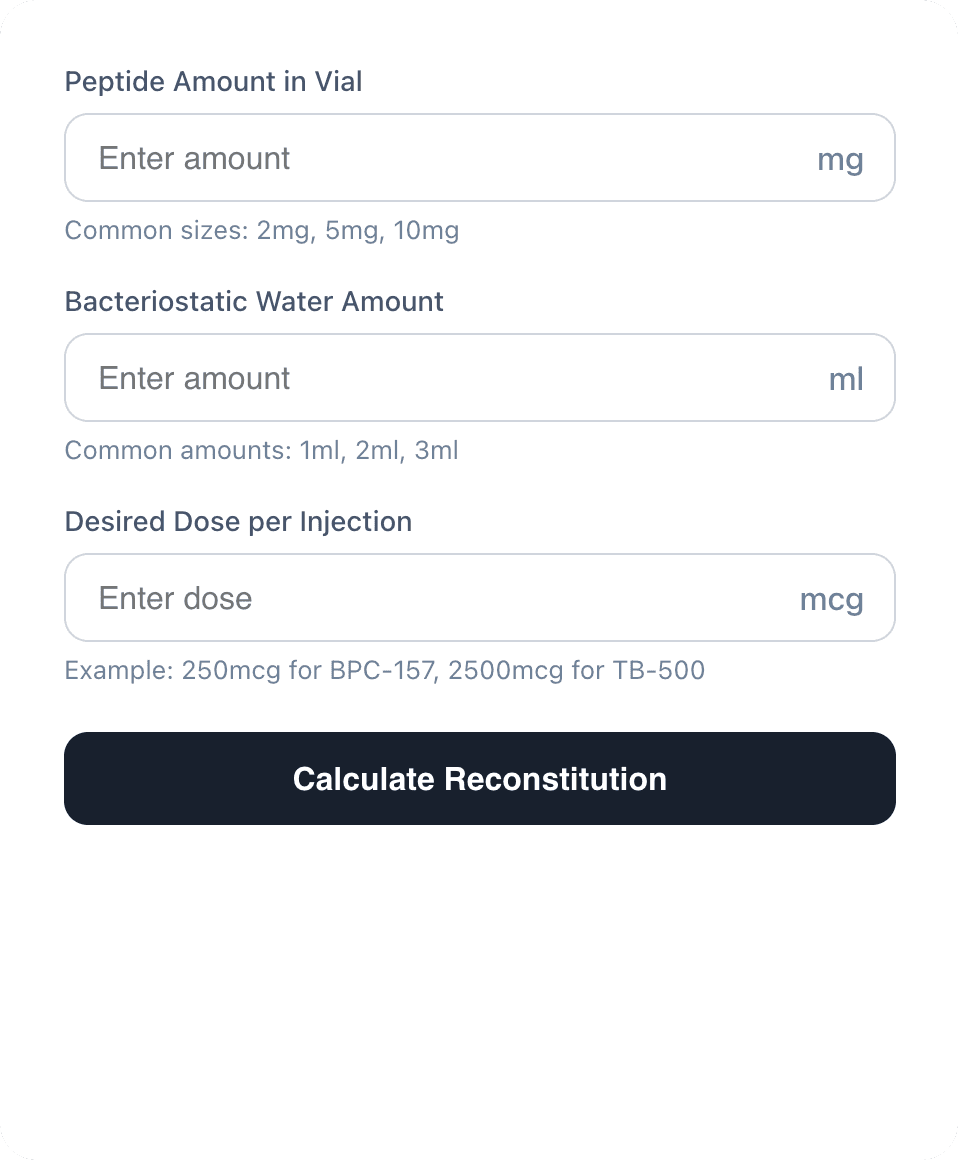
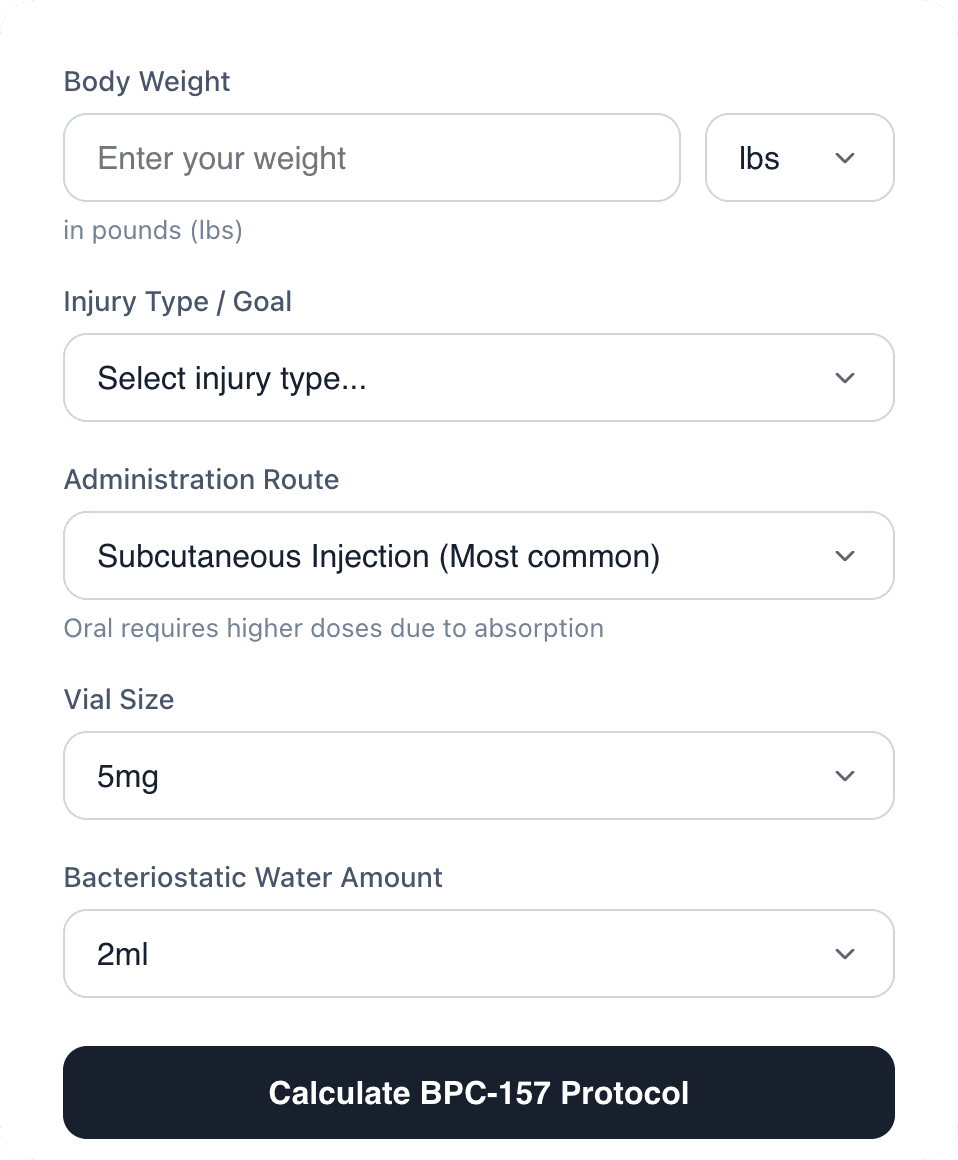
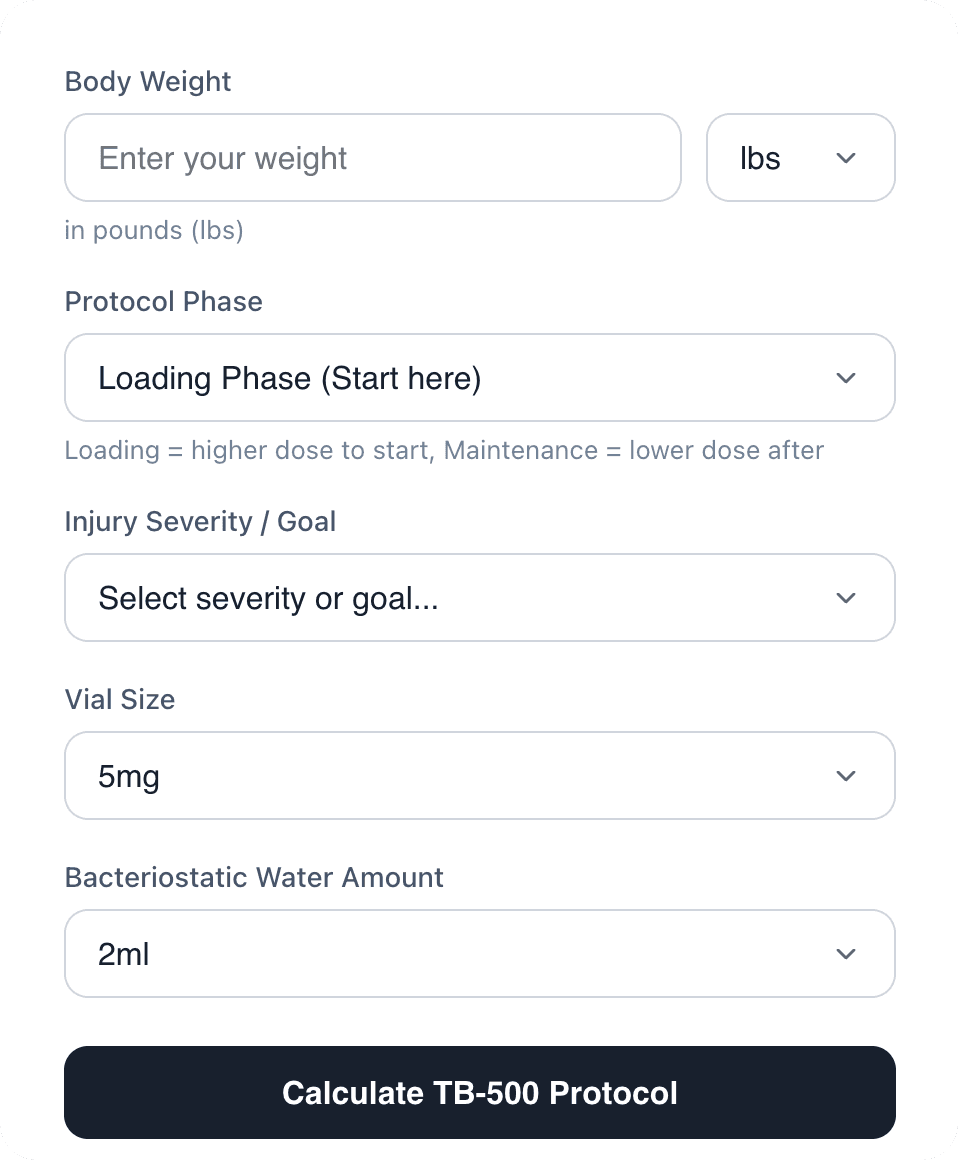
FREE TOOLS

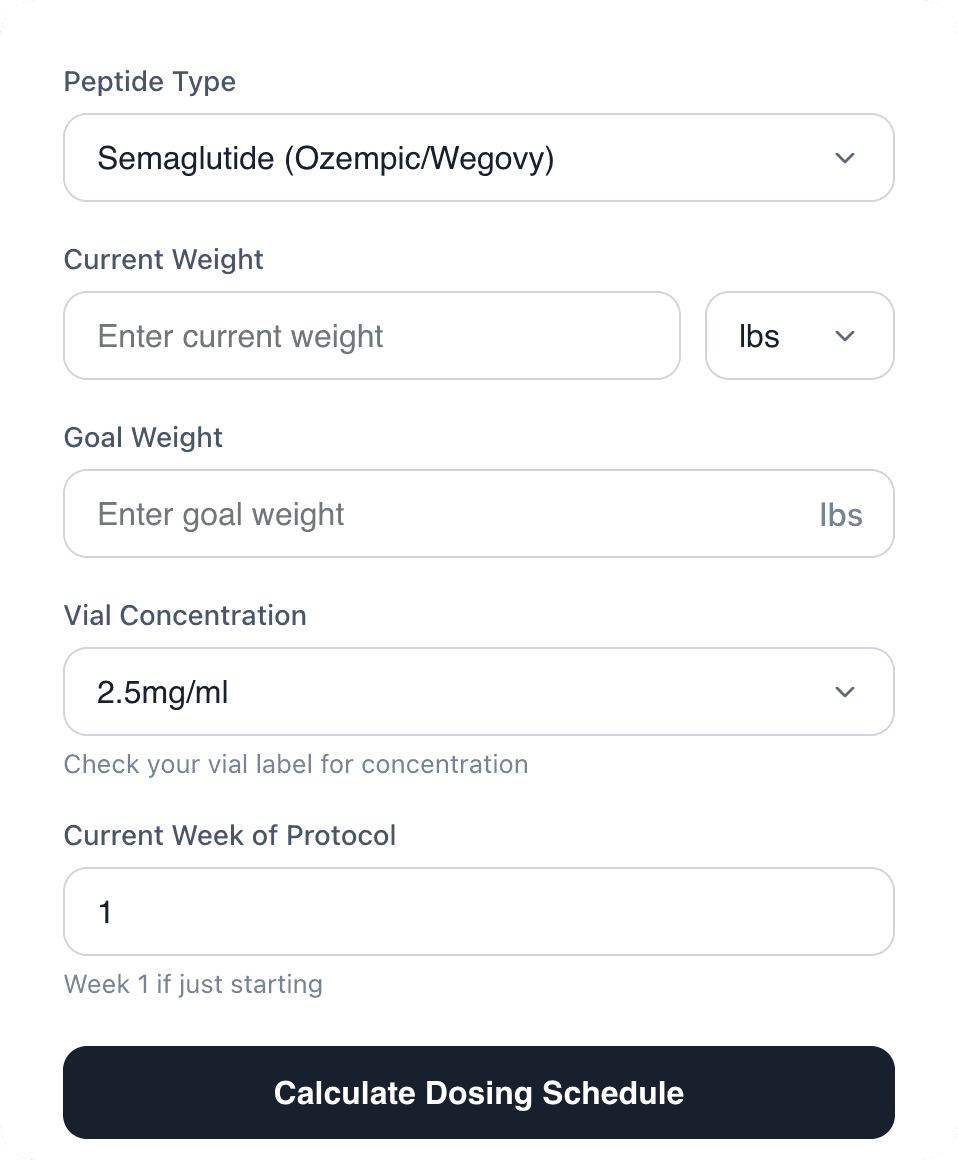
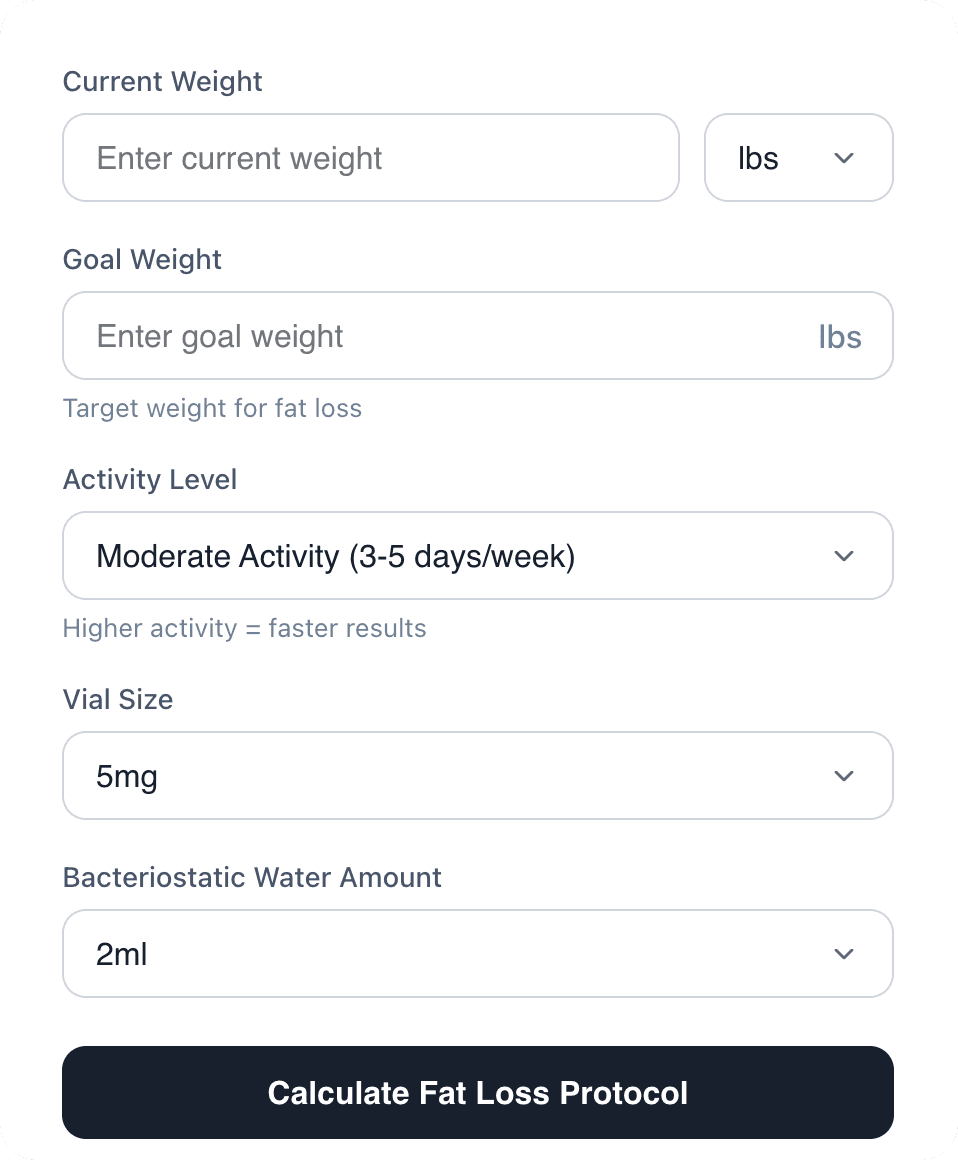
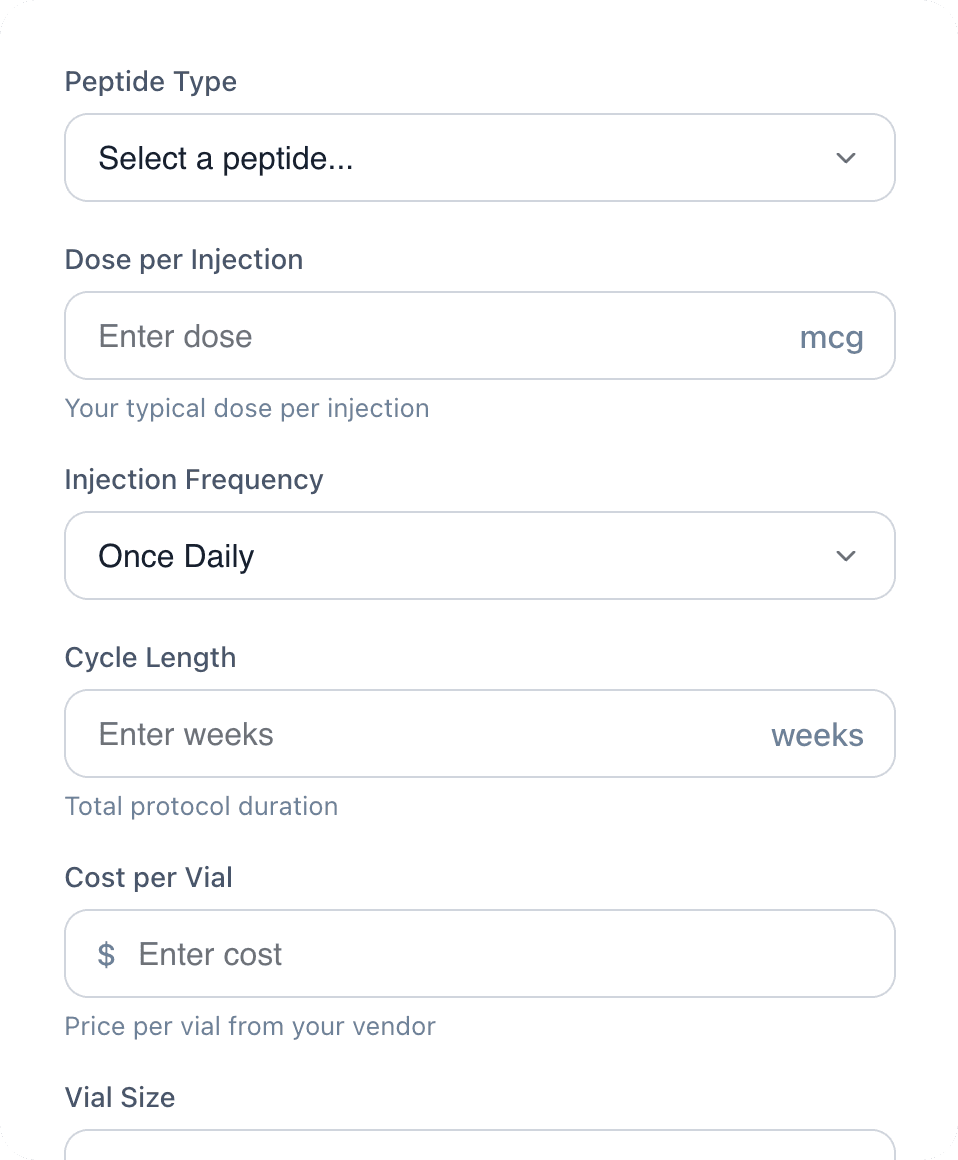
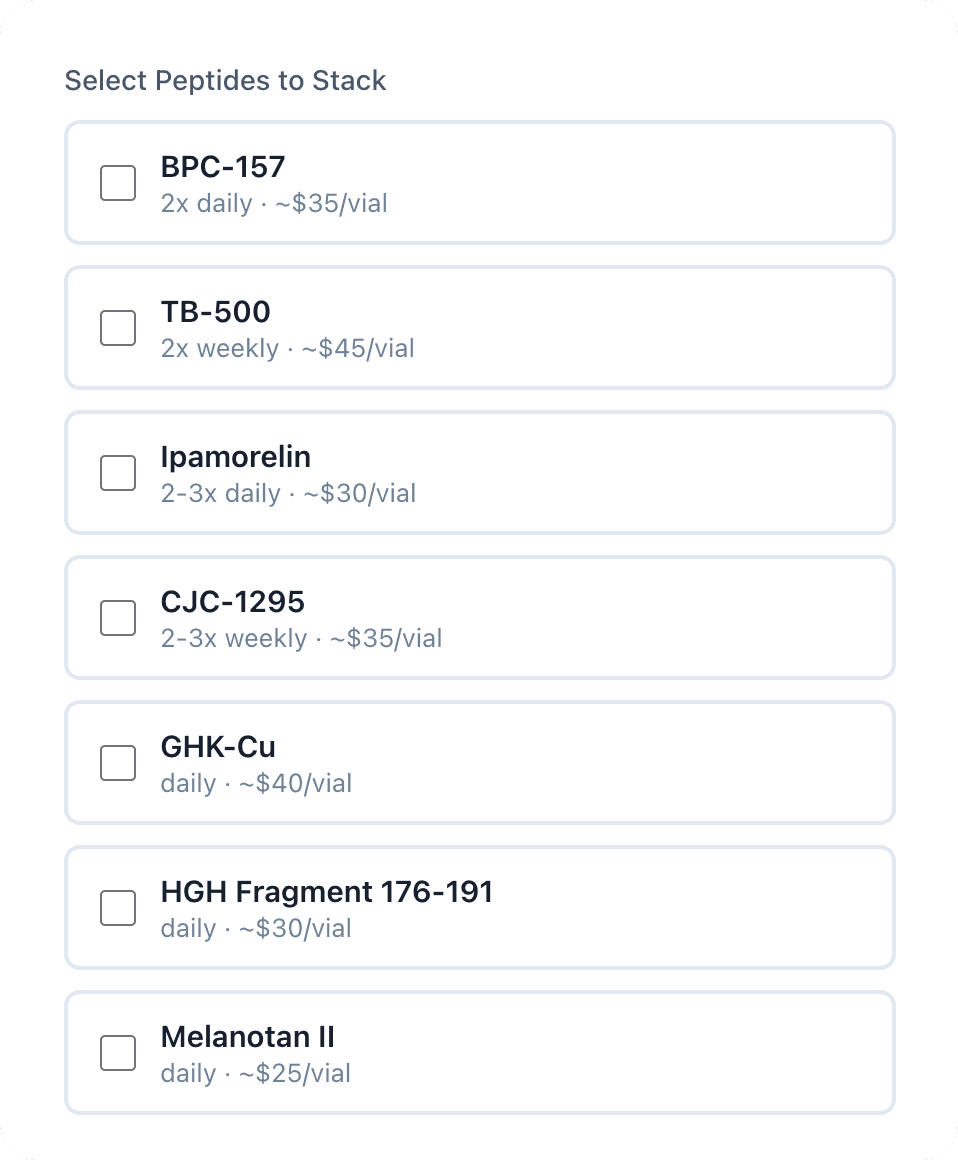
Explore all peptide calculators

Explore all peptide calculators

Tools to optimize every aspect of your peptide protocol

Tools to optimize every aspect of your peptide protocol

FAQ

Frequently asked questions

Frequently asked questions

Everything you need to know about lyophilized vs liquid peptides

Everything you need to know about lyophilized vs liquid peptides

Why don't all suppliers sell liquid peptides if they're more convenient?

Because they degrade too quickly. Reputable suppliers prioritize product quality and stability over convenience. Liquid peptides lose potency during shipping and storage. Lyophilization is the professional standard.

Why don't all suppliers sell liquid peptides if they're more convenient?

Because they degrade too quickly. Reputable suppliers prioritize product quality and stability over convenience. Liquid peptides lose potency during shipping and storage. Lyophilization is the professional standard.

Why don't all suppliers sell liquid peptides if they're more convenient?

Because they degrade too quickly. Reputable suppliers prioritize product quality and stability over convenience. Liquid peptides lose potency during shipping and storage. Lyophilization is the professional standard.

How hard is it to reconstitute lyophilized peptides?

How hard is it to reconstitute lyophilized peptides?

How hard is it to reconstitute lyophilized peptides?

Can I travel with lyophilized peptides?

Can I travel with lyophilized peptides?

Can I travel with lyophilized peptides?

What if my supplier only offers liquid?

What if my supplier only offers liquid?

What if my supplier only offers liquid?

Are pharmaceutical liquid peptides (Ozempic, Wegovy) different?

Are pharmaceutical liquid peptides (Ozempic, Wegovy) different?

Are pharmaceutical liquid peptides (Ozempic, Wegovy) different?

How long do lyophilized peptides last?

How long do lyophilized peptides last?

How long do lyophilized peptides last?

What if lyophilized peptides sit at room temperature during shipping?

What if lyophilized peptides sit at room temperature during shipping?

What if lyophilized peptides sit at room temperature during shipping?

Ready to optimize your peptide use?

Ready to optimize your peptide use?

Know you're doing it safely, save hundreds on wrong peptides, and finally see the results you've been working for

Know you're doing it safely, save hundreds on wrong peptides, and finally see the results you've been working for