Mar 3, 2026
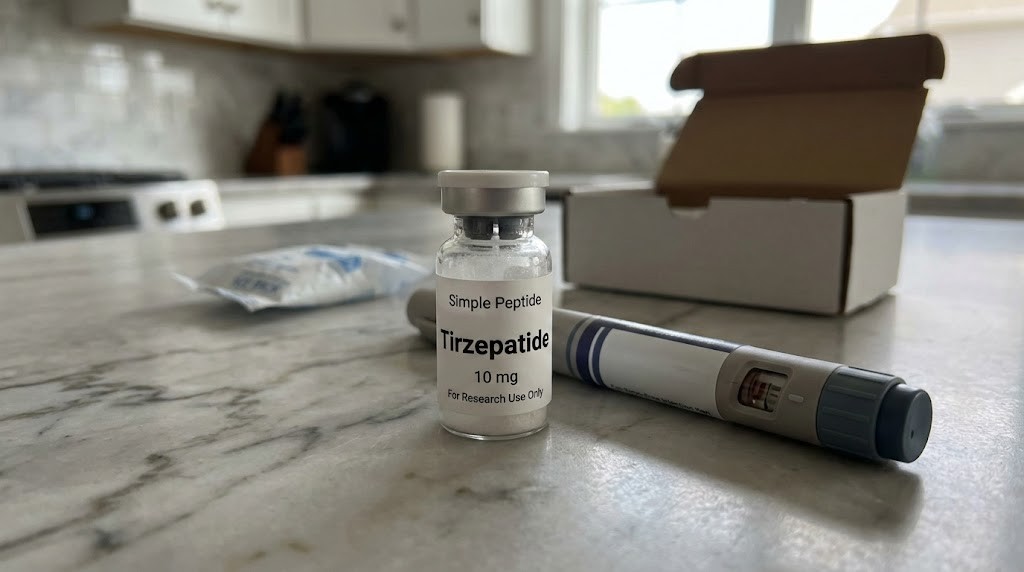
Some research peptide vendors ship within 24 hours, include verified certificates of analysis, and respond to customer questions the same day. Others take weeks. Their purity claims crumble under independent testing. And the customer support? An automated email that goes nowhere. The gap between reliable vendors and unreliable ones is not small. It is enormous. For researchers working with tirzepatide dosing protocols, that gap can mean the difference between consistent, reproducible results and wasted time chasing variables that should not exist in the first place.
Simple Peptide has positioned itself as a vendor that bridges that gap, offering research-grade tirzepatide under the label GLP-2TZ alongside a catalog of other peptides manufactured in US-based facilities. Founded in 2019 and operated by Melex Technologies out of Delray Beach, Florida, Simple Peptide has built a reputation that shows up consistently in third-party audits, customer reviews, and independent testing platforms. But reputation alone does not tell researchers what they need to know.
This guide breaks down everything about Simple Peptide and their tirzepatide products. From purity testing data and product specifications to shipping logistics and real customer experiences, this is the complete picture. Whether you are comparing vendors for your next research cycle or evaluating Simple Peptide for the first time, the data here will give you a foundation for making a genuinely informed decision. SeekPeptides has compiled this review using independent testing results, verified customer feedback, and direct analysis of Simple Peptide operations to provide the most comprehensive assessment available.
What is Simple Peptide?
Simple Peptide is a US-based research peptide supplier that launched in 2019. The company operates under the legal entity name Melex Technologies. Their headquarters sit at 6586 West Atlantic Avenue in Delray Beach, Florida. That is a verifiable, physical address, which already sets them apart from the significant number of peptide vendors operating from undisclosed locations or virtual mailboxes.
The company philosophy centers on what they describe as "the simple principle of ensuring access to life-changing chemicals to everyone." In practical terms, this translates to a catalog of lyophilized peptides marketed strictly for research use, manufactured in US laboratories following current Good Manufacturing Practice (cGMP) protocols.
Simple Peptide sells all products under a "Research Use Only" designation. This is standard for vendors in this space, meaning the peptides are legally sold as research chemicals and not for human consumption. The labeling distinction matters because it determines how the company can operate without falling under FDA drug regulations, while still providing high-purity compounds that researchers need for laboratory work.
Contact is straightforward. Phone support is available at 561-501-1570, and email inquiries go to admin@simplepeptide.com. Multiple customer reviews single out an agent named Victoria as particularly responsive and helpful, which suggests actual human support rather than the chatbot-driven systems that plague many competing vendors.
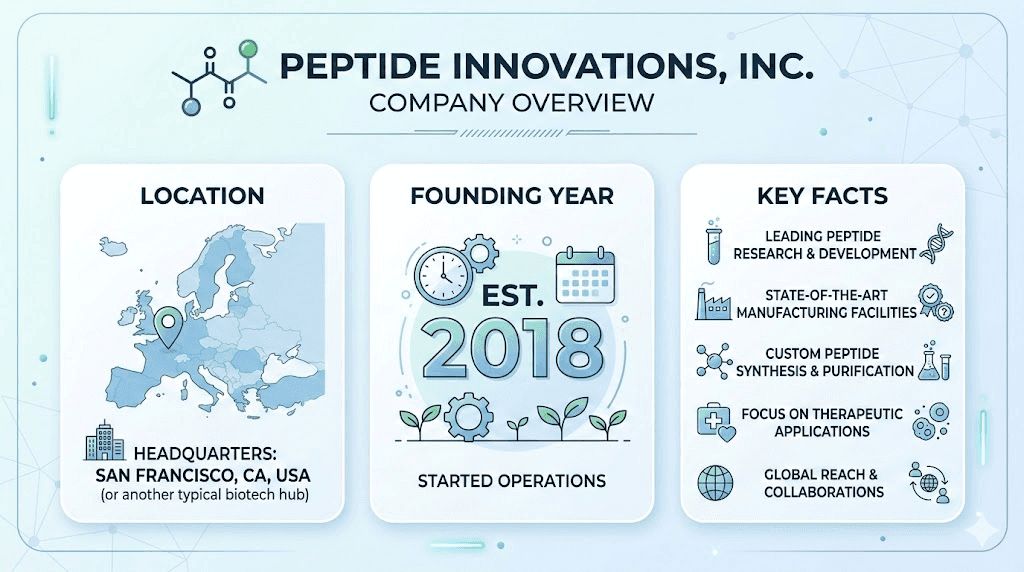
Simple Peptide tirzepatide products: the GLP-2TZ line
Here is something that catches first-time buyers off guard. Simple Peptide does not list tirzepatide under its pharmaceutical name. Instead, the product appears as GLP-2TZ. This naming convention exists for regulatory reasons. By using an alternative designation, Simple Peptide avoids directly marketing what could be interpreted as a pharmaceutical product, keeping their operations within the legal framework for research chemical sales.
The "GLP-2TZ" label refers to the same 39-amino-acid peptide sequence that activates both GLP-1 and GIP receptors. Simple Peptide describes GLP-2TZ as "a dual-agonist peptide that activates the GLP-1 and GIP receptors to show how these signals influence insulin, fat use, and energy levels." If you are familiar with tirzepatide dose charts and standard research protocols, the underlying compound is identical.
Available product sizes
Simple Peptide offers GLP-2TZ in multiple configurations. The 10mg vial serves as the entry point for researchers running smaller-scale studies or those testing a new vendor before committing to larger orders. For researchers conducting extended protocols or requiring higher quantities, the 100mg option provides significantly better value per milligram.
Each vial arrives as a lyophilized (freeze-dried) powder. This is the industry standard for peptide stability during shipping and storage. The lyophilization process removes moisture from the compound while preserving its molecular structure, which means the peptide remains stable at room temperature during transit before requiring proper refrigeration after arrival.
Product naming across the catalog
The alternative naming convention extends beyond tirzepatide. Simple Peptide lists semaglutide as GLP-1SG. They also offer a CagriSema blend combining cagrilintide with semaglutide. Understanding these naming conventions matters when navigating their website. If you search for "tirzepatide" directly, you might miss the product entirely unless you know to look for GLP-2TZ.
Beyond GLP-1 peptides like semaglutide, Simple Peptide carries multi-compound blends including GHK-CU, BPC-157, and TB-500 combinations for researchers investigating injury healing pathways and anti-aging research. The product range is not as extensive as some larger competitors, but what they do carry tends to come with consistent quality documentation.
How GLP-2TZ pricing compares
Simple Peptide positions itself in the mid-to-high price range within the research peptide market. Exact pricing requires creating an account on their website, which is a common practice among research chemical vendors. This approach keeps pricing away from casual browsers and bots that scrape competitor data.
Researchers looking for the absolute lowest price per milligram will find cheaper options elsewhere. But cost alone tells an incomplete story. The relevant question is cost relative to verified purity, and that calculation often favors mid-range vendors who invest in proper testing and quality control. Compare this to what you might find at budget tirzepatide options where cost savings sometimes come at the expense of purity or reliability.
For bulk researchers, the bulk tirzepatide powder market offers additional considerations around vendor selection and quality assurance that apply regardless of which supplier you choose.
Third-party testing and purity data
This is where Simple Peptide either stands or falls. And the data tells a nuanced story.
Finnrick, one of the most respected independent peptide testing directories, has tested Simple Peptide tirzepatide across six separate samples over a 10-month period. The overall grade? B, which Finnrick classifies as "Good." That places Simple Peptide in solid territory, though not at the top of the class.
Purity numbers that matter
Across all six samples, Simple Peptide tirzepatide averaged 99.8% purity. Individual results ranged from 99.73% to 99.90%. These numbers are genuinely impressive and fall within the range that serious researchers expect for high-quality peptide work. For context, anything above 98% is generally considered research-grade, and numbers consistently above 99.5% indicate tight manufacturing quality control.
Here is the detailed breakdown from Finnrick testing:
Test date | Score | Quantity found | Purity | Variance from label |
|---|---|---|---|---|
Test 1 (most recent) | 9.5/10 | 11.6mg | 99.90% | -5.0% |
Test 2 | 5.7/10 | 58.5mg | 99.76% | +95.0% |
Test 3 | 9.8/10 | 9.54mg | 99.81% | -4.6% |
Test 4 (Sample A) | 10.0/10 | 9.95mg | 99.88% | -0.5% |
Test 4 (Sample B) | 9.0/10 | 9.33mg | 99.73% | -6.7% |
Test 4 (Sample C) | 6.7/10 | 13.1mg | 99.85% | +31.0% |
Reading between the numbers
The purity column looks outstanding across the board. But the variance column reveals more complexity. Most samples show minor underfill of 0.5% to 6.7% below the labeled amount. That is within acceptable tolerance for research peptides and not unusual across the industry.
However, two results demand attention. One sample showed a +95% overfill, meaning a product labeled as a certain amount contained nearly double. And another sample came in at +31% over label. Both received significantly lower scores from Finnrick. Overfill might sound like a bonus, but it actually indicates inconsistent manufacturing processes. A researcher expecting 10mg who receives 19.5mg has a fundamentally different starting point for compound dosage calculations, potentially throwing off an entire study protocol.
The inconsistency is what dropped Simple Peptide from an A grade to a B grade on Finnrick. Purity is excellent. Quantity consistency needs improvement.
In-house testing practices
Simple Peptide conducts third-party lab testing through Freedom Diagnostics. Certificates of Analysis (COAs) ship with every order, which is a practice that some vendors charge extra for or skip entirely. The fact that COAs are standard rather than optional signals a commitment to transparency that researchers should factor into their vendor evaluation.
For researchers who want to understand how peptide testing works and what to look for in a COA, SeekPeptides provides comprehensive guides on evaluating research versus pharmaceutical grade peptides and understanding the difference between marketing claims and verified data.
Ordering process and account setup
Simple Peptide requires account creation before you can view pricing or place orders. This is not a barrier designed to frustrate. It is a standard industry practice that helps research chemical vendors maintain compliance with legal requirements around who accesses their product information.
The registration process is straightforward. Basic information, email verification, and you are in. Once logged in, the full product catalog becomes visible with pricing, specifications, and stock availability. The website interface is clean and functional without being overly complex, though navigating to specific products requires knowing their alternative names (GLP-2TZ for tirzepatide, GLP-1SG for semaglutide).
Payment options
Simple Peptide accepts standard payment methods. For researchers evaluating flexible payment, some vendors in this space have begun offering installment options. If that matters to your purchasing decisions, compare what is available at vendors like those offering tirzepatide through Afterpay and similar services.
One thing worth noting. The $200 threshold for free shipping means smaller orders carry proportionally higher per-unit costs. Researchers placing orders below that threshold will pay FedEx 2Day Air rates, which are not cheap. Planning your purchases to consolidate above $200 makes financial sense.
Order confirmation and tracking
Orders placed before 3 PM EST qualify for same-day shipping. This is a significant advantage for researchers on tight timelines. The FedEx 2Day Air standard means most domestic orders arrive within 48 hours of placement. Multiple customer reports confirm that tracking numbers arrive promptly after order confirmation, and the shipping timeline is consistent rather than aspirational.
Shipping speed and packaging quality
Speed matters with peptides. Not because the compounds degrade in transit (lyophilized peptides are quite stable), but because researchers planning protocols need reliable delivery windows. Simple Peptide delivers on this front.
FedEx 2Day Air is the standard shipping method. No economy options. No "7-10 business days" uncertainty. Two days. That is fast for this market. Many competing vendors ship via USPS First Class or Ground services, which can take a week or more. For researchers who need to coordinate their tirzepatide starting doses with specific research timelines, reliable two-day delivery removes a planning variable.
The trade-off is cost. FedEx 2Day Air is more expensive than slower shipping methods. For orders under $200, the shipping cost can represent a meaningful percentage of the total order. This is the main criticism that shows up in customer feedback. The products are great, the shipping is fast, but small orders feel expensive when the shipping fee gets added.
Packaging and handling
Customer reports consistently describe proper packaging. Vials arrive cushioned and protected. For lyophilized tirzepatide, proper packaging is critical because the freeze-dried powder can settle or shift during transit. Damage to a sealed vial can compromise sterility, turning an expensive research compound into waste.
Each order includes the Certificate of Analysis for the specific batch. This is not a generic document. It corresponds to the actual lot number of the product you receive, allowing researchers to verify the testing data against what is in their hands. Some vendors provide generic COAs that reference testing from months or years prior. Simple Peptide links the documentation to current inventory.
Once your order arrives, proper storage becomes the priority. Understanding tirzepatide refrigeration requirements and what happens when tirzepatide gets warm ensures you maintain the purity you paid for. Lyophilized powder is stable at room temperature for shipping, but long-term storage demands refrigeration at 2-8 degrees Celsius.
Customer reviews and reputation analysis
Numbers tell one story. What actual customers say tells another. Simple Peptide holds strong ratings across multiple independent review platforms, which matters more than any single review source.
Trustpilot ratings
On Trustpilot, Simple Peptide maintains a 4.4 out of 5 star rating based on over 385 reviews. The classification is "Excellent." That is a substantial review volume for a research peptide vendor, where many competitors have fewer than 50 reviews total. The sheer number of ratings makes the score harder to manipulate and more likely to reflect genuine customer experiences.
Common themes in positive reviews include:
Consistent shipping times matching the stated 2-day window
Reliable product purity confirmed through independent testing
Responsive customer support with a specific agent (Victoria) mentioned repeatedly
COA documentation included with every shipment
Negative reviews, where they exist, tend to focus on shipping costs for smaller orders and occasional website navigation confusion around the alternative product naming system.
Additional trust indicators
ScamAdviser gives Simple Peptide a perfect 100 out of 100 trust score. RatingFacts awards a 5.00 out of 5 based on 40 reviews. These secondary platforms reinforce the primary Trustpilot data. When multiple independent sources converge on the same conclusion, the signal is strong.
Reddit communities have also verified Simple Peptide orders. Multiple users report receiving products that match advertised specifications, with COA documentation confirming purity levels. The Reddit verification is particularly valuable because those communities are notoriously critical of vendors and quick to call out inconsistencies.
For researchers accustomed to evaluating vendors in the grey market tirzepatide space, these trust metrics provide a useful baseline. Not every vendor with good reviews is perfect, but a vendor with consistently strong reviews across multiple platforms and independent testing has cleared multiple verification hurdles.
Customer service experience
The customer support experience at Simple Peptide stands out from competitors for one specific reason. Real humans answer questions. The agent named Victoria appears across dozens of reviews as responsive, knowledgeable, and genuinely helpful. In an industry where customer service often means a contact form that leads to an automated response three days later, having a named individual who consistently delivers good support is rare.
Phone support at 561-501-1570 provides direct access. Email at admin@simplepeptide.com handles written inquiries. Social media accounts on Facebook, X (Twitter), and Instagram under @SimplePeptide offer additional channels. The multi-channel approach means researchers have options when they need answers quickly.
How Simple Peptide compares to other tirzepatide vendors
Context matters. Knowing Simple Peptide is good means little without understanding how they stack up against alternatives. The research peptide market includes dozens of vendors, each with different strengths, weaknesses, and specializations. Here is how Simple Peptide fits into the broader landscape.
Vendor comparison table
Factor | Simple Peptide | Industry average | Top-tier vendors |
|---|---|---|---|
Purity (tirzepatide) | 99.73-99.90% | 95-99% | 99.5%+ |
Independent testing grade | B (Finnrick) | Varies widely | A or A+ |
Shipping speed | 2-day (FedEx) | 3-7 days | 1-3 days |
COA included | Yes, standard | Sometimes | Always |
Trustpilot rating | 4.4/5 (385+) | 3.5-4.0 | 4.5+ |
US manufacturing | Yes (cGMP) | Mixed | Yes (cGMP) |
Free shipping threshold | $200 | $100-300 | $100-150 |
Price range | Mid-to-high | Varies | Premium |
Where Simple Peptide excels
Purity is the standout metric. With an average of 99.8% across six independent tests, Simple Peptide tirzepatide consistently matches or exceeds what many established vendors deliver. The FedEx 2Day Air standard eliminates the shipping uncertainty that plagues orders from vendors using slower methods. And the inclusion of COAs with every order removes the guesswork that researchers face when vendors make purity claims without documentation.
Compared to vendors like Peptide Sciences tirzepatide or Empower tirzepatide, Simple Peptide occupies a specific niche. They are not the cheapest. They are not necessarily the most prestigious. But they deliver consistent quality with fast shipping and actual human customer support, which is a combination that many vendors struggle to achieve simultaneously.
Where Simple Peptide falls short
The Finnrick B grade, rather than an A, reflects the quantity variance issue discussed in the testing section. While purity is exceptional, the inconsistency in how much peptide actually ends up in each vial is a legitimate concern for researchers who need precise starting quantities.
Pricing sits above budget vendors, which means researchers on tight funding may find better value elsewhere. The $200 free shipping threshold is higher than some competitors, making small test orders more expensive. And the alternative naming convention (GLP-2TZ instead of tirzepatide) creates an initial friction that may confuse researchers browsing for the first time.
For researchers comparing multiple vendors, detailed reviews of BPI Labs tirzepatide, ProRx tirzepatide, Strive tirzepatide, and VitaStir tirzepatide provide additional reference points for evaluating where Simple Peptide fits in your specific context.
Regulatory considerations and legal status
The regulatory landscape around tirzepatide has shifted dramatically. Understanding where things stand helps researchers evaluate not just Simple Peptide, but any vendor offering this compound.
Tirzepatide is an FDA-approved pharmaceutical under the brand names Mounjaro (for type 2 diabetes) and Zepbound (for weight management), both manufactured by Eli Lilly. The approved formulations are available through standard prescription and pharmacy channels.
Compounding and shortage status
The FDA removed tirzepatide from the drug shortage list. This decision has significant implications for 503B compounding pharmacies that had been producing tirzepatide during the declared shortage period. With the shortage officially resolved, the legal pathway for compounded tirzepatide narrowed considerably.
A subsequent US District Court ruling upheld the FDA decision, further limiting compounded tirzepatide to cases where patients have verifiable clinical needs that commercially available formulations cannot meet. This means that compounded versions of GLP-1 medications face an uncertain regulatory future.
Research chemical classification
Simple Peptide operates under the research chemical framework, which is legally distinct from pharmaceutical compounding. All products are labeled "Not for human consumption" and sold exclusively for research purposes. This classification means the products do not fall under FDA drug regulations, but it also means they carry none of the consumer protections that pharmaceutical products provide.
For researchers, this distinction is important. The quality of research chemicals varies enormously across vendors because there is no FDA oversight of the production process. This makes independent testing data, like the Finnrick results discussed above, particularly valuable. Without regulatory oversight, third-party verification becomes the primary quality assurance mechanism.
Understanding the difference between research-grade and pharmaceutical-grade peptides helps researchers set appropriate expectations for what they are purchasing and how it should be handled in laboratory settings.
Reconstitution and handling protocols for GLP-2TZ
Receiving a vial of lyophilized GLP-2TZ from Simple Peptide is only the beginning. Proper reconstitution and handling determine whether that high-purity compound delivers consistent results or degrades before it can be used effectively.
Reconstitution basics
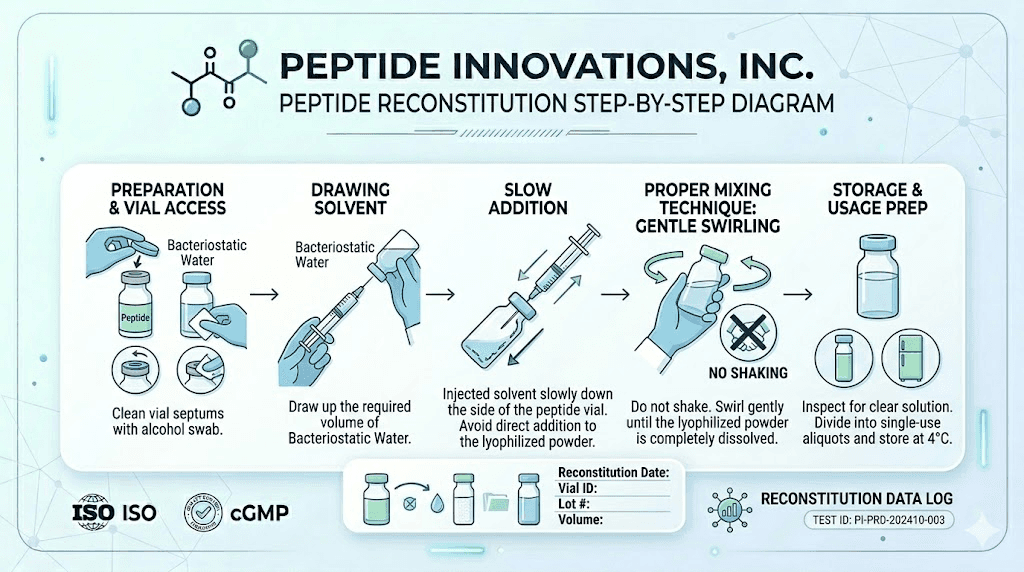
Lyophilized tirzepatide arrives as a dry powder that requires reconstitution with bacteriostatic water before use in research applications. The process is not complicated, but it demands attention to sterile technique and accurate measurement.
For a 10mg vial, the amount of bacteriostatic water you add determines the final concentration. Researchers typically work with concentrations that allow convenient volume-based dosing for their specific protocols. Our guide on how much bacteriostatic water to mix with 10mg tirzepatide covers the exact calculations, but the general principle is straightforward. More water means lower concentration per unit volume. Less water means higher concentration.
The reconstitution process requires:
Bacteriostatic water (not sterile water, not saline)
Alcohol swabs for vial preparation
An appropriately sized syringe for accurate measurement
Clean workspace with minimal airborne contaminants
Direct the bacteriostatic water down the inside wall of the vial rather than spraying it directly onto the powder cake. This gentle approach prevents damage to the peptide structure. Swirl gently. Never shake. Shaking can denature the peptide and destroy the compound you just paid for.
For complete step-by-step instructions, see the full tirzepatide reconstitution guide. If you are working with 5mg vials of semaglutide from their GLP-1SG line, the semaglutide reconstitution process follows similar principles.
Storage after reconstitution
Once reconstituted, the clock starts ticking. The lyophilized powder was stable. The liquid solution is not. Reconstituted tirzepatide must be stored at 2-8 degrees Celsius (standard refrigerator temperature) and used within the timeframe established for the specific formulation.
Understanding tirzepatide shelf life in both lyophilized and reconstituted forms helps researchers plan their protocols effectively. The bacteriostatic water contains a preservative (benzyl alcohol) that inhibits bacterial growth, extending usability compared to sterile water reconstitution. But even with the preservative, reconstituted peptides degrade over time.
Temperature excursions are a real concern. If your reconstituted solution accidentally gets left out overnight, the consequences of tirzepatide warming depend on duration, temperature, and whether the cold chain was already compromised. Short excursions at room temperature typically do not destroy the compound, but extended exposure above 25 degrees Celsius accelerates degradation.
For researchers needing to transport reconstituted solutions, the tirzepatide travel guide covers cold chain maintenance during transit.
Understanding tirzepatide dosing for research protocols
Researchers working with Simple Peptide GLP-2TZ need to understand standard tirzepatide dosing frameworks, even though the specific application depends on the research context. The dosing landscape is well-documented in clinical literature and research protocols.
Standard research dosing tiers
Clinical research on tirzepatide has established several dosing tiers that form the basis for most research protocols. The approved pharmaceutical doses range from 2.5mg weekly as a starting dose up to 15mg weekly as the maximum dose, with intermediate steps at 5mg, 7.5mg, 10mg, and 12.5mg.
For researchers using Simple Peptide GLP-2TZ, the tirzepatide dosing in units depends on the reconstitution concentration. A 10mg vial reconstituted with 1mL of bacteriostatic water yields a 10mg/mL solution. Drawing 0.25mL from that solution provides 2.5mg, the standard starting research dose.
Converting between milligrams and units requires understanding your specific tirzepatide syringe dosage setup. An insulin syringe marked in units (where 100 units equals 1mL) makes these calculations straightforward once you know your reconstitution concentration. For detailed conversion help, the 5mg to units conversion guide and 20 units to mg conversion walk through the math.
Dose escalation protocols
Research protocols typically follow a gradual dose escalation pattern. Starting at the lowest effective dose and increasing incrementally allows researchers to observe dose-dependent responses while minimizing adverse effects in their research models.
The standard escalation in clinical research follows a 4-week minimum at each dose level before increasing. This means:
Weeks 1-4: 2.5mg weekly
Weeks 5-8: 5mg weekly
Weeks 9-12: 7.5mg weekly (if escalation continues)
Weeks 13-16: 10mg weekly
Weeks 17-20: 12.5mg weekly
Week 21+: 15mg weekly (maximum research dose)
Not every protocol reaches the maximum dose. Many research applications achieve optimal outcomes at intermediate levels. Understanding microdosing tirzepatide protocols offers an alternative approach for researchers investigating sub-therapeutic dose effects, which has gained attention for autoimmune research applications and inflammation studies.
Using the right tools for accurate dosing
Precision matters more with tirzepatide than with many other research peptides because the dose-response curve is steep. Small changes in dose produce measurable changes in outcomes. The SeekPeptides peptide calculator helps researchers determine exact reconstitution volumes and drawing amounts based on their specific vial sizes and target doses.
For researchers working with both tirzepatide and semaglutide from Simple Peptide, understanding the tirzepatide versus semaglutide dosage chart helps contextualize the different potency profiles of these two GLP-1 receptor agonists. Additionally, the peptide reconstitution calculator eliminates math errors that could compromise research accuracy.
Expected research outcomes and timelines
Tirzepatide research has generated extensive data on expected outcomes across multiple domains. For researchers using Simple Peptide GLP-2TZ in their protocols, understanding typical timelines helps set appropriate expectations and design better studies.
Early-phase observations
Most research protocols document measurable effects within the first one to two weeks of tirzepatide administration. The dual GLP-1 and GIP receptor activation produces metabolic changes that show up relatively quickly in laboratory measurements and research endpoints.
For researchers tracking appetite-related endpoints, how long tirzepatide takes to work varies by what you are measuring. Appetite-related changes often appear within the first week. Metabolic markers may take two to four weeks to show consistent changes. Weight-related endpoints in research models typically require four to eight weeks before statistically significant trends emerge.
The first dose experience in research settings often includes observable changes in food intake behavior and gastrointestinal function. These early responses help researchers confirm that the compound is active and the protocol is producing expected pharmacological effects.
Mid-protocol milestones
By weeks four through eight, research protocols typically show established dose-response patterns. This is the phase where researchers evaluate whether dose escalation is warranted or whether the current dose achieves the desired research endpoints.
The tirzepatide weight loss timeline from clinical research shows progressive weight reduction through week 72, with the steepest losses occurring between weeks 12 and 36. This extended timeline is important for researchers designing study durations. Short studies may miss the most significant effect windows.
Managing research complications
Not every research protocol proceeds smoothly. Researchers encounter plateaus, unexpected responses, and complications that require protocol adjustments.
When results plateau or diminish, understanding why tirzepatide stops working helps researchers troubleshoot. Common causes include improper storage leading to degradation, dosing calculation errors, or biological factors in the research model that require dose adjustment.
Side effect management in research settings involves recognizing and addressing common tirzepatide-associated effects. The research literature documents gastrointestinal effects as the most frequent, including nausea, constipation, diarrhea, and bloating. Other documented effects include fatigue, headaches, body aches, insomnia, dry mouth, and anxiety.
Simple Peptide product range beyond tirzepatide
While this guide focuses on GLP-2TZ (tirzepatide), researchers considering Simple Peptide as a primary vendor benefit from understanding the full product catalog. A vendor who delivers quality across multiple products is more likely to maintain that quality consistently than one who excels in a single compound.
GLP-1 receptor agonists
Beyond GLP-2TZ, Simple Peptide offers GLP-1SG, their designation for semaglutide. This gives researchers working on semaglutide versus tirzepatide comparisons the ability to source both compounds from a single vendor, which simplifies quality variable control in comparative studies.
The CagriSema blend (cagrilintide plus semaglutide) represents a newer product category targeting dual-agonist metabolic research. For researchers interested in how CagriSema compares to tirzepatide, the CagriSema versus tirzepatide comparison provides a detailed head-to-head analysis of mechanisms, dosing, and expected outcomes.
Regenerative and healing peptides
Simple Peptide carries multi-compound blends including GHK-CU, BPC-157, and TB-500 combinations. These blends target researchers investigating tissue repair, wound healing, and regenerative pathways. For researchers who split their work between metabolic and regenerative peptide research, having a single vendor for both categories reduces supplier management complexity.
Understanding the broader peptide landscape helps researchers make informed decisions about their supplier relationships. The BPC-157 versus TB-500 comparison and peptide stacking calculator provide additional context for researchers working with these compounds.
Product quality consistency across the catalog
Finnrick has tested Simple Peptide across 25 total samples (not just tirzepatide), awarding an overall Grade A in their most recent audit. This is actually a higher overall grade than the B received specifically for tirzepatide, which suggests that the quantity variance issues seen in tirzepatide testing may not be as pronounced across their other products.
This overall Grade A across a broader sample set is a meaningful data point. It indicates that Simple Peptide maintains strong manufacturing quality control generally, even if specific products show occasional inconsistencies in fill amounts. For researchers evaluating the vendor holistically, the broader testing picture is encouraging.
How to evaluate any peptide vendor: a framework
Whether you choose Simple Peptide or another vendor, having a systematic evaluation framework prevents expensive mistakes. Too many researchers choose vendors based on price alone and discover the real cost of cheap peptides when their results become irreproducible.
The five-factor vendor evaluation
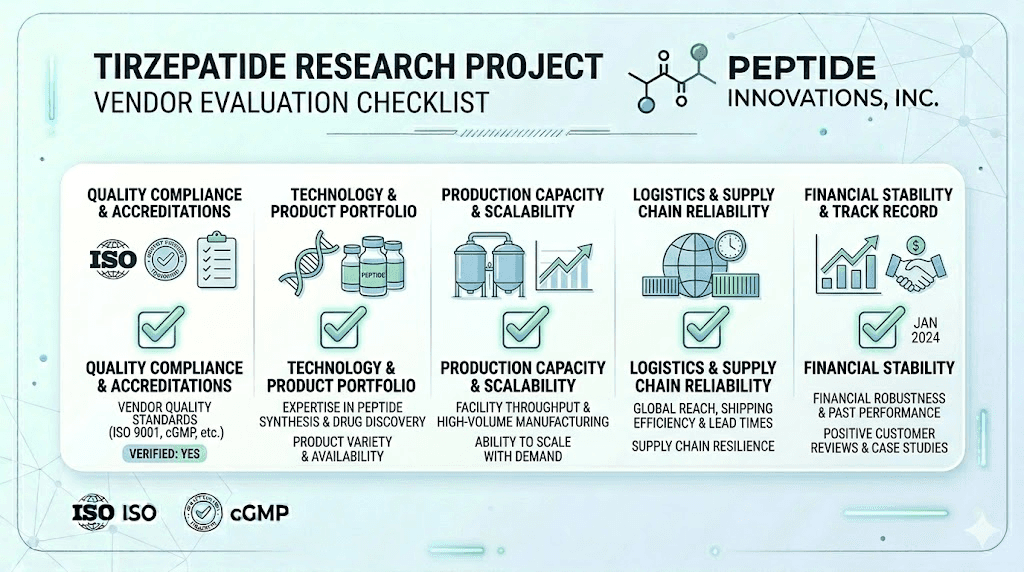
Factor 1: Independent testing data. Does the vendor have third-party testing from recognized platforms like Finnrick? Are results current? How many samples have been tested? A vendor with 25 tested samples and a Grade A is fundamentally different from one with zero independent verification, regardless of what their website claims.
Factor 2: Purity AND quantity accuracy. High purity means the compound is what it claims to be. Accurate quantity means you get what you paid for. Both matter. Simple Peptide excels on purity but shows variability on quantity. Other vendors may show the opposite pattern. The ideal vendor delivers both consistently.
Factor 3: Transparency and documentation. Does the vendor provide batch-specific COAs? Can you verify the testing lab? Is the company address real and verifiable? Transparency correlates strongly with quality because vendors who hide information typically have something worth hiding.
Factor 4: Customer service accessibility. Can you reach a human? How quickly? Research does not always happen during business hours, and questions about proper handling or unexpected results need timely answers. Simple Peptide scores well here with phone, email, and social media channels staffed by responsive agents.
Factor 5: Consistent reputation over time. Check review dates. A vendor with great reviews from years ago that turn negative recently has a different story than one maintaining consistent quality over years. Simple Peptide has maintained strong ratings since their founding in 2019, which signals sustained operational quality rather than a short-term marketing push.
The peptide cost calculator at SeekPeptides helps researchers factor in the true cost of their peptide supply by accounting for purity, concentration, and yield factors that affect the actual usable amount in each purchase.
Red flags to watch for
Not every vendor operates with the transparency that Simple Peptide demonstrates. Watch for these warning signs:
No verifiable physical address
No independent testing data (only in-house COAs)
Pricing dramatically below market averages
No contact phone number (email only)
Generic COAs that do not match specific batch numbers
Website that appeared recently with no review history
Payment only through cryptocurrency or wire transfer
Legitimate vendors in the grey market peptide space invest in the infrastructure and testing that demonstrates quality. Vendors that skip these investments are often doing so because the investment would reveal problems they prefer to keep hidden.
Tirzepatide compound variations and blends
Researchers ordering from Simple Peptide may also encounter tirzepatide in various blended formulations from other vendors. Understanding these variations helps contextualize what Simple Peptide offers compared to the broader market.
Tirzepatide with niacinamide
Several vendors offer tirzepatide combined with niacinamide (vitamin B3). The tirzepatide niacinamide combination has gained attention because niacinamide may help mitigate certain gastrointestinal side effects associated with GLP-1 receptor agonists. Simple Peptide offers the standalone compound, allowing researchers to control their own additive ratios rather than relying on pre-mixed formulations.
Tirzepatide with B vitamins
Blends containing tirzepatide with vitamin B12, vitamin B6 (pyridoxine), or methylcobalamin are common at compounding pharmacies. The rationale involves addressing potential B vitamin depletion that some researchers observe during GLP-1 agonist protocols. The tirzepatide glycine B12 blend represents another popular combination targeting both metabolic support and amino acid availability.
Tirzepatide with glycine
The addition of glycine to tirzepatide formulations targets multiple research angles. Glycine serves as a conditionally essential amino acid with roles in collagen synthesis, neurotransmitter function, and metabolic regulation. The tirzepatide with glycine guide explores the theoretical basis for this combination and what research protocols typically look like.
Tirzepatide with L-carnitine
Some formulations pair tirzepatide with L-carnitine or levocarnitine to support fat metabolism pathways. The tirzepatide levocarnitine blend targets researchers investigating enhanced fat oxidation alongside GLP-1 mediated appetite and metabolic effects.
Simple Peptide offers the pure tirzepatide compound rather than pre-mixed blends. This gives researchers complete control over their formulations and eliminates the variable of unknown additive quantities or interactions. For researchers who want blends, sourcing individual components separately and combining them under controlled conditions provides better experimental rigor than relying on pre-mixed vendor formulations.
Administration routes and injection guidance
Research with tirzepatide from Simple Peptide typically involves subcutaneous administration. While this section does not constitute medical guidance, understanding proper injection technique for research applications is fundamental to achieving consistent results.
Subcutaneous injection sites
The most common research injection sites include the abdomen, thigh, and upper arm. Each site offers different absorption characteristics. The abdominal injection guide for tirzepatide covers proper technique for the most popular site, while the thigh injection site guide provides an alternative for researchers who rotate sites.
Injection site rotation prevents lipohypertrophy (tissue buildup at injection sites) and ensures consistent absorption. Researchers should rotate between at least three sites, documenting which site was used for each administration to maintain protocol accuracy.
For researchers experiencing injection site reactions, which can occur with any subcutaneous peptide, the injection site reaction treatment guide and guidance on red and itchy injection sites provide troubleshooting information.
Syringe selection and technique
Insulin syringes (U-100, 0.5mL or 1mL) work best for tirzepatide research applications due to their fine gauge needles and precise measurement markings. The complete syringe injection guide for tirzepatide walks through needle selection, skin preparation, and proper injection angle for subcutaneous delivery.
The gauge of the needle matters. Finer gauges (30-31G) reduce discomfort but may require slower drawing and injection. Larger gauges (27-29G) allow faster drawing but produce more sensation at the injection site. Most researchers settle on 29-30G as the optimal balance for tirzepatide applications.
Alternative administration routes
While subcutaneous injection is the standard research route, interest in alternative delivery methods has grown. Oral tirzepatide, sublingual formulations, and orally disintegrating tablets (ODTs) represent emerging areas of research. The oral versus injectable tirzepatide comparison, tirzepatide drops guide, and tirzepatide ODT overview explore these alternatives in detail.
Simple Peptide currently offers tirzepatide in lyophilized injectable form only. Researchers interested in oral delivery methods would need to source alternative formulations from vendors specializing in those delivery systems.
Comparing tirzepatide to other GLP-1 research peptides
Researchers ordering GLP-2TZ from Simple Peptide are often also evaluating other GLP-1 receptor agonists for comparative studies or alternative protocols. Understanding how tirzepatide differs from its competitors helps researchers select the right compound for their specific research questions.
Tirzepatide versus semaglutide
The most common comparison in GLP-1 research. Tirzepatide activates both GLP-1 and GIP receptors (dual agonist), while semaglutide activates only GLP-1. This dual mechanism contributes to tirzepatide showing greater efficacy in weight reduction studies. The semaglutide versus tirzepatide comparison page provides a detailed head-to-head analysis.
Side effect profiles differ between the two compounds. The side effect comparison helps researchers anticipate which adverse effects are more likely with each compound. Understanding these differences matters for study design, especially when selecting endpoints and planning monitoring protocols.
For researchers considering switching between compounds mid-protocol, the tirzepatide to semaglutide switching guide provides dosing equivalence information, while the combined tirzepatide and semaglutide analysis explores whether concurrent use has any research basis.
Tirzepatide versus retatrutide
Retatrutide represents the next evolution in incretin mimetic research. Where tirzepatide is a dual agonist (GLP-1 + GIP), retatrutide is a triple agonist (GLP-1 + GIP + glucagon receptor). The retatrutide versus tirzepatide analysis and the three-way comparison of semaglutide, tirzepatide, and retatrutide provide the most comprehensive data available on how these compounds relate to each other in research settings.
Simple Peptide does not currently list retatrutide in their catalog. Researchers needing this compound would need to source it from alternative retatrutide suppliers while potentially maintaining Simple Peptide as their tirzepatide and semaglutide source.
Emerging alternatives
The GLP-1 agonist landscape continues to evolve rapidly. Compounds like survodutide, mazdutide, and orforglipron represent new entrants that researchers are beginning to compare against tirzepatide. For a broader perspective on these emerging compounds, the survodutide versus tirzepatide and mazdutide versus tirzepatide comparisons offer detailed analyses.
Optimizing research outcomes with Simple Peptide GLP-2TZ
High-quality peptides are necessary but not sufficient for good research outcomes. How you handle, store, and administer the compound determines whether that 99.8% purity translates into reproducible results.
Storage optimization
Lyophilized GLP-2TZ from Simple Peptide should be stored at -20 degrees Celsius for long-term preservation. Standard refrigeration (2-8 degrees Celsius) works for short-term storage measured in weeks. The peptide storage after reconstitution guide covers the nuances of maintaining peptide integrity once the vial is opened.
Never freeze reconstituted solutions. The freeze-thaw cycle can denature the peptide and create aggregates that alter potency. Keep reconstituted vials in the refrigerator and use them within the established timeframe.
Light exposure degrades peptides. Store vials in their original packaging or in amber containers that block UV light. This simple step preserves potency across the entire usage period.
Timing and administration consistency
Research protocols achieve the most consistent results when tirzepatide is administered at the same time each week. The best time to take tirzepatide analysis examines how administration timing affects observed outcomes in research settings.
For researchers wondering about dosing flexibility, the early dosing guide and split dosing protocols explore alternative scheduling approaches that some researchers use to manage research complications or optimize outcomes.
Supporting research nutrition
Tirzepatide research that involves metabolic endpoints often pairs the compound with specific nutritional protocols. The tirzepatide diet plan, what to eat on tirzepatide, and foods to avoid on tirzepatide resources help researchers design nutritional frameworks that complement their research protocols.
Supplement integration is another consideration. The supplements to take with tirzepatide guide examines which supplements may support research outcomes and which should be avoided due to potential interactions.
Long-term research considerations
Tirzepatide research often spans months rather than weeks. For researchers using Simple Peptide as a long-term supplier, several factors become increasingly important over extended protocols.
Maintaining research consistency
Batch-to-batch consistency matters more in long-term research than in short experiments. Simple Peptide includes batch-specific COAs, which allows researchers to track whether variation in results correlates with changes in supplier batches. Maintaining a log of batch numbers, test dates, and observed results creates a quality control dataset that strengthens research reliability over time.
The tirzepatide expiration considerations become relevant for researchers purchasing in bulk. Lyophilized peptides stored at appropriate temperatures maintain stability for extended periods, but the specific shelf life depends on manufacturing quality, packaging integrity, and storage conditions.
Protocol completion and discontinuation
Research protocols eventually conclude. How tirzepatide is discontinued matters for certain research endpoints. Abrupt cessation can produce rebound effects that confound final data points. The tirzepatide weaning guide and maintaining results after tirzepatide protocols provide structured approaches to ending research use while preserving data integrity.
For researchers transitioning to other compounds after completing tirzepatide protocols, the tirzepatide to retatrutide switching guide covers the transition considerations for moving to next-generation compounds.
Cost management for extended protocols
Long-term research means long-term spending. Simple Peptide pricing at the mid-to-high range means researchers need to plan their budgets carefully. The peptide cost calculator helps project total research costs based on dose, duration, and vendor pricing. Buying larger vial sizes (100mg versus 10mg) typically reduces per-milligram costs significantly.
Researchers who find Simple Peptide pricing challenging for their budget should also evaluate vendors like affordable tirzepatide options, Citizen Meds tirzepatide, and Shed tirzepatide. The key is finding the lowest cost per milligram that still meets quality thresholds for your research requirements.
SeekPeptides members get access to comprehensive vendor comparison tools, protocol databases, and community insights from experienced researchers who have navigated these exact sourcing decisions across multiple vendors and extended research timelines.
Safety profile and risk considerations
No comprehensive vendor review would be complete without addressing the safety considerations that apply to tirzepatide research, regardless of the source.
Known research-associated effects
Tirzepatide research has documented a well-characterized side effect profile. The most common effects involve the gastrointestinal system. Nausea ranks as the most frequently observed effect, particularly during dose initiation and escalation phases. Other documented GI effects include constipation, diarrhea, bloating, and appetite changes.
Beyond GI effects, research has documented fatigue, headaches, muscle pain, body aches, sleep disturbances, dry mouth, anxiety, and joint pain. Some research has also explored effects on menstrual cycles and metabolic rate.
Specific population considerations
Certain research populations require additional caution. Research involving subjects who are breastfeeding or potentially pregnant carries specific risks that research protocols must account for. The documented cases of pregnancy during tirzepatide use highlight the importance of comprehensive screening in research protocols.
For researchers investigating non-weight-loss applications of tirzepatide, the safety data from metabolic research provides a foundation, but different research contexts may reveal different risk profiles.
Interactions and contraindications
Researchers combining tirzepatide with other compounds need to understand potential interactions. The phentermine and tirzepatide interaction data and berberine and GLP-1 interaction research provide specific examples of combination considerations. Alcohol interaction data is covered in the alcohol and tirzepatide guide, including the least problematic alcohol options for research subjects who consume alcohol.
Understanding tirzepatide mechanism of action for research context
Researchers sourcing GLP-2TZ from Simple Peptide benefit from understanding exactly how this compound works at the molecular level. That understanding shapes everything from study design to endpoint selection to troubleshooting unexpected results.
Dual receptor activation explained
Tirzepatide is unique among GLP-1 receptor agonists because it simultaneously activates two incretin receptors rather than one. The glucose-dependent insulinotropic polypeptide (GIP) receptor and the glucagon-like peptide-1 (GLP-1) receptor both respond to tirzepatide, though with different binding affinities. The GIP receptor activation is approximately five times stronger than the GLP-1 activation, which creates a pharmacological profile distinct from pure GLP-1 agonists like semaglutide.
This dual activation produces several downstream effects that researchers observe in their protocols. Insulin secretion increases in a glucose-dependent manner, meaning the insulinotropic effect scales with blood glucose levels rather than operating as a blanket stimulation. Glucagon secretion decreases during hyperglycemic conditions. Gastric emptying slows, which contributes to appetite reduction and altered nutrient absorption kinetics. And energy expenditure patterns shift through mechanisms that research is still characterizing.
The practical implication for researchers is that tirzepatide protocols often produce more pronounced metabolic effects than equivalent semaglutide protocols, which the semaglutide versus tirzepatide comparison documents in detail. This potency difference affects study design decisions around dose selection, endpoint timing, and safety monitoring frequency.
Why purity matters for mechanism research
When researching a dual-agonist compound like tirzepatide, purity takes on additional importance. Impurities can include degradation products, synthesis byproducts, or residual solvents that may interact with the same receptor systems the researcher is trying to study. A 99.8% purity level, like Simple Peptide achieves, means that only 0.2% of the vial contents are something other than the target compound.
That 0.2% matters less in gross-level research looking at large-scale metabolic changes. But for researchers investigating receptor binding kinetics, signaling pathway activation, or dose-response relationships at fine resolution, even small contaminant fractions can introduce noise that obscures real signals. This is why independent purity verification from platforms like Finnrick provides value beyond simple quality assurance. It gives researchers a quantitative basis for assessing how much potential interference their starting material carries.
For researchers comparing different vendor purity levels, the difference between 95% and 99.8% purity might seem like "just" 4.8 percentage points. In practice, that 4.8% represents a 24-fold increase in contaminant content (5% versus 0.2%), which can dramatically affect sensitive research endpoints. This context helps explain why serious researchers prioritize verified high-purity sources even when cheaper alternatives exist.
Half-life and pharmacokinetic considerations
Tirzepatide has a half-life of approximately five days, which supports once-weekly dosing in research protocols. This extended half-life results from the compound design, which incorporates a C20 fatty diacid moiety that promotes albumin binding and slows clearance.
The pharmacokinetic profile means that steady-state concentrations are reached after approximately four to five weeks of weekly dosing. Researchers designing studies with specific concentration targets need to account for this accumulation phase. A single dose does not represent steady-state exposure, and early-protocol measurements may underestimate the compound effects that will manifest once tissue concentrations stabilize.
Understanding these kinetics also affects reconstitution planning. A 10mg vial from Simple Peptide provides multiple weekly doses at lower dose tiers. At 2.5mg weekly, a single 10mg vial supports four weeks of research. At 5mg weekly, the same vial covers two weeks. The tirzepatide dosage calculator helps researchers plan their supply needs based on their specific protocol duration and dose escalation schedule.
Building a reliable peptide supply chain
No single vendor should represent a researcher's entire supply chain strategy. Even excellent vendors experience stock disruptions, shipping delays, or batch quality variations. Smart researchers build redundancy into their sourcing approach while maintaining quality standards.
Primary and backup vendor strategy
The recommended approach uses a primary vendor (potentially Simple Peptide, based on quality metrics) supplemented by one or two verified backup vendors. This strategy protects against supply interruption while maintaining research continuity.
When selecting backup vendors, apply the same five-factor evaluation framework discussed earlier in this guide. Independent testing, purity verification, transparency, customer service, and consistent reputation all matter as much for your backup supplier as for your primary one. Researchers who have evaluated multiple tirzepatide vendors can find detailed reviews across the SeekPeptides platform, including analyses of Red Rock Pharmacy tirzepatide, South Lake Pharmacy tirzepatide, IVIM tirzepatide, Trava tirzepatide, and Orderly Meds tirzepatide.
Batch consistency documentation
Researchers maintaining long-term protocols should document every batch they receive. Record the vendor, batch or lot number, COA data, receipt date, storage conditions, and any observed differences in reconstitution behavior or research outcomes. This documentation creates a quality control dataset that becomes invaluable when troubleshooting inconsistent results.
Simple Peptide batch-specific COAs make this documentation straightforward. The COA provides the purity data, testing date, and lot identification needed for proper record-keeping. Researchers who switch between vendors mid-protocol should note the transition point explicitly, as any change in research outcomes around that transition may reflect vendor-related variables rather than protocol changes.
Supply chain risk factors
The research peptide market faces ongoing regulatory pressure that can affect product availability. The FDA ongoing evaluation of compounded GLP-1 agonists, evolving state regulations, and international shipping restrictions all represent variables that can disrupt supply chains without warning.
Researchers should maintain a reserve supply sufficient to cover at least four to six weeks of protocol requirements. This buffer provides time to source alternatives if a primary vendor experiences disruption. For a protocol using 5mg weekly, that means keeping 20-30mg in reserve, ideally in sealed, lyophilized form stored at the recommended temperature.
The tirzepatide expiration guidance and compounded tirzepatide expiration data help researchers understand how long their reserve supply remains viable under proper storage conditions.
Weight management research applications
The majority of tirzepatide research relates to weight management, making this the primary application context for researchers ordering from Simple Peptide. Understanding what the clinical research demonstrates helps set realistic expectations for laboratory investigations.
Clinical trial weight loss data
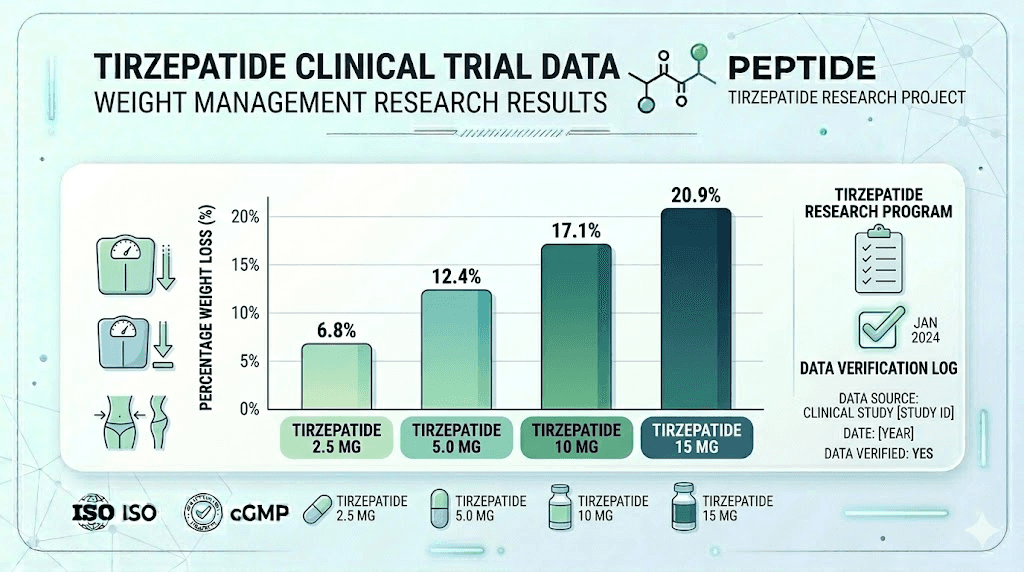
The SURMOUNT clinical trial program provided the most comprehensive tirzepatide weight management data available. SURMOUNT-1 demonstrated average body weight reductions of 15% at the 5mg dose, 19.5% at 10mg, and 20.9% at 15mg over 72 weeks, compared to 3.1% with placebo. These results represented the most significant weight reduction ever documented for a non-surgical intervention at the time of publication.
The SURMOUNT-2 trial focused specifically on participants with type 2 diabetes, showing average reductions of 12.8% at 10mg and 14.7% at 15mg. The slightly lower percentages reflect the well-documented phenomenon of attenuated weight loss in diabetic populations compared to non-diabetic subjects.
For researchers tracking weight-related endpoints, the tirzepatide weight loss timeline provides week-by-week expectations, while before and after tirzepatide results and men-specific tirzepatide results offer visual documentation of typical outcomes.
Research on non-responders
Not every research subject responds equally to tirzepatide. Understanding non-response helps researchers design better protocols and avoid premature conclusion that the compound has failed when the issue lies elsewhere.
Common causes of suboptimal tirzepatide research outcomes include inadequate dose escalation (staying at starting doses too long), compound degradation from improper storage, reconstitution errors affecting concentration accuracy, and biological factors in the research model that reduce receptor sensitivity. The tirzepatide non-response troubleshooting guide and persistent hunger on tirzepatide analysis provide detailed diagnostic frameworks for identifying the root cause.
Researchers who see initial responses that diminish over time face a different challenge. The tirzepatide efficacy loss analysis examines potential mechanisms including receptor desensitization, metabolic adaptation, and behavioral compensation that may explain declining effectiveness during extended protocols.
Combining tirzepatide research with lifestyle interventions
Research increasingly demonstrates that tirzepatide outcomes improve when paired with structured lifestyle modifications. Nutritional composition appears particularly relevant, with certain dietary patterns enhancing metabolic outcomes while others potentially counteracting the compound effects.
The tirzepatide diet plan outlines nutritional frameworks commonly used in tirzepatide research protocols. The best foods during GLP-1 research and foods to avoid with tirzepatide provide specific guidance on nutritional optimization.
Exercise research alongside tirzepatide raises interesting questions about whether physical activity enhances compound effects or merely adds independently to outcomes. For researchers wondering if exercise is strictly necessary, the GLP-1 results without exercise data provides relevant context, though it focuses on semaglutide rather than tirzepatide specifically.
Frequently asked questions
What is GLP-2TZ at Simple Peptide?
GLP-2TZ is Simple Peptide designation for tirzepatide, a dual GLP-1 and GIP receptor agonist. The alternative name exists for regulatory compliance, allowing the company to sell the compound as a research chemical rather than a pharmaceutical product. The underlying peptide sequence is the same 39-amino-acid compound used in standard tirzepatide research protocols.
Is Simple Peptide a legitimate vendor?
Simple Peptide has multiple independent verification points supporting legitimacy. Finnrick awards an overall Grade A across 25 tested samples. Trustpilot shows a 4.4 out of 5 rating from over 385 reviews. ScamAdviser gives a 100 out of 100 trust score. The company operates from a verifiable physical address in Delray Beach, Florida, under the legal entity Melex Technologies.
How pure is Simple Peptide tirzepatide?
Independent testing by Finnrick across six tirzepatide-specific samples shows an average purity of 99.8%, with individual results ranging from 99.73% to 99.90%. These purity levels exceed the 98% threshold that defines research-grade quality. The main consistency issue involves quantity variance (some vials contain more or less than the labeled amount), not purity.
Does Simple Peptide include COAs?
Yes. Every Simple Peptide order includes a Certificate of Analysis corresponding to the specific batch of product shipped. These COAs are generated through third-party testing at Freedom Diagnostics. This is not a generic document but a batch-specific verification that researchers can use to validate their purchased compounds.
How fast does Simple Peptide ship?
Simple Peptide ships via FedEx 2Day Air as their standard method. Orders placed before 3 PM EST qualify for same-day shipping. Most domestic orders arrive within 48 hours. Free shipping applies to orders over $200. Orders below that threshold incur FedEx 2Day Air charges.
Does Simple Peptide sell semaglutide?
Yes. Simple Peptide sells semaglutide under the designation GLP-1SG. They also offer a CagriSema blend combining cagrilintide with semaglutide. Like their tirzepatide products, the alternative naming convention exists for regulatory compliance. For detailed semaglutide information, see the compounded semaglutide guide.
How do I reconstitute Simple Peptide GLP-2TZ?
Reconstitute by adding bacteriostatic water to the lyophilized powder, directing the water stream down the inner wall of the vial. Swirl gently until dissolved. Never shake. The amount of bacteriostatic water determines final concentration. See the complete tirzepatide reconstitution guide for step-by-step instructions and the reconstitution calculator for precise measurements.
How does Simple Peptide compare to Peptide Sciences for tirzepatide?
Peptide Sciences has removed tirzepatide from their catalog as of their strategic pivot away from commercially available GLP-1 compounds. Simple Peptide continues to offer the compound as GLP-2TZ. For researchers who previously sourced from Peptide Sciences, Simple Peptide represents a viable alternative with independently verified purity data. See the Peptide Sciences tirzepatide review for full details on that transition.
What is the best injection site for Simple Peptide GLP-2TZ?
The abdomen is the most commonly used injection site for subcutaneous tirzepatide administration, offering consistent absorption and easy access. The thigh and upper arm are alternative sites for rotation. Rotating between at least three sites prevents tissue buildup and ensures consistent absorption. See the tirzepatide injection site guide and best GLP-1 injection sites for detailed site selection guidance.
Can I use Simple Peptide tirzepatide with other peptides?
Combining tirzepatide with other research peptides depends on the specific compounds and research objectives. Some researchers investigate combinations with metabolic enhancers like L-carnitine or amino acids like glycine. Others explore stacking with different peptide classes entirely. The peptide stacking calculator helps researchers evaluate potential combinations, though each combination should be evaluated for interaction safety before implementation.
How should I store Simple Peptide GLP-2TZ long-term?
Unreconstituted lyophilized GLP-2TZ should be stored at -20 degrees Celsius for maximum shelf life. Standard refrigeration at 2-8 degrees Celsius works for storage up to several weeks. Once reconstituted with bacteriostatic water, store at 2-8 degrees Celsius and use within the established timeframe. Never freeze reconstituted solutions. Keep vials protected from light in original packaging or amber containers.
External resources
For researchers serious about optimizing their peptide sourcing and research protocols, SeekPeptides offers the most comprehensive resource available, with evidence-based vendor comparisons, detailed reconstitution guides, dosing calculators, and a community of thousands of researchers who have navigated these exact sourcing decisions.
In case I do not see you, good afternoon, good evening, and good night. May your purity tests stay consistent, your vendors stay reliable, and your research stay reproducible.