Feb 28, 2026
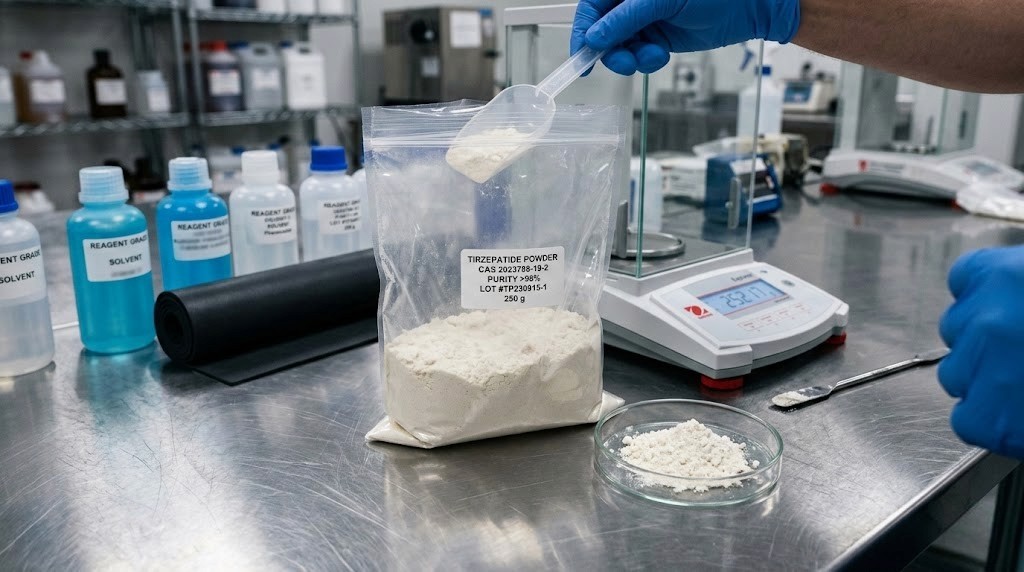
Experienced researchers know something that beginners do not about buying bulk tirzepatide powder. The purity number on the label means almost nothing by itself. A certificate showing 99% purity can sit in the same shipment as endotoxin levels that would make a microbiologist flinch, contamination invisible to standard HPLC analysis that transforms an otherwise clean peptide into a genuine safety hazard. That single number, the one everyone fixates on, tells roughly half the story.
Here is the other half. Bulk tirzepatide powder sourcing involves a chain of decisions that separates reliable research outcomes from wasted money and questionable data. The molecular weight of tirzepatide sits at approximately 4,813 daltons, making it one of the more complex peptides for weight loss on the market. Its 39-amino-acid backbone includes a lipid modification at position 20 that complicates manufacturing, purification, and quality testing in ways most buyers never consider. This complexity means the gap between premium and mediocre bulk powder is wider for tirzepatide than for simpler peptides.
This guide covers everything researchers need to evaluate before purchasing bulk tirzepatide powder. From reading certificates of analysis properly and understanding endotoxin risks, to evaluating suppliers, calculating real cost per milligram, and storing lyophilized powder for maximum shelf life. Whether you are sourcing 100 milligrams for a single study or grams for extended research, the principles here apply. And they could save you from the most expensive mistake in peptide research: buying cheap powder that produces unreliable results.
SeekPeptides has analyzed hundreds of tirzepatide sourcing questions from researchers. The patterns are clear. The mistakes are predictable. And nearly all of them are avoidable with the right knowledge.
What bulk tirzepatide powder actually is
Bulk tirzepatide powder refers to the lyophilized, freeze-dried form of the tirzepatide peptide sold in quantities larger than standard research vials. Where a typical research vial contains 5 to 30 milligrams, bulk purchases start at 50 milligrams and can extend into multi-gram quantities for institutional research programs.
The powder itself is white to off-white. Lyophilization removes all moisture from the peptide solution, leaving a dry cake or powder that maintains structural integrity during shipping and storage. This process is critical for tirzepatide specifically because the molecule contains that C20 fatty diacid moiety at position 20, a lipid tail that makes the peptide more susceptible to degradation in liquid form than simpler peptide sequences.
Understanding the distinction between lyophilized tirzepatide and other forms matters enormously for bulk buyers. Pre-reconstituted solutions, liquid drops, and sublingual formulations all start as this same powder. But once reconstituted, the clock starts ticking. Lyophilized powder can maintain potency for years under proper conditions. Reconstituted solutions last weeks to months at best.
Three main categories of bulk tirzepatide powder exist in the market:
Research-grade powder targets laboratory and academic use. Purity typically exceeds 95%, with premium suppliers offering 98% or higher. This grade comes with analytical documentation but is explicitly labeled for research use only, not for human or animal administration.
Pharmaceutical-grade powder meets stricter manufacturing standards under Good Manufacturing Practice protocols. Purity exceeds 98%, and the production facility undergoes regulatory inspection. This grade carries higher pricing but offers tighter quality controls.
Chemical reference standards are the highest purity available, typically exceeding 99.5%. These are used as comparison benchmarks in analytical testing rather than for research protocols. Small quantities at premium pricing.
The form factor for bulk tirzepatide powder varies by supplier. Some ship in sealed glass vials with rubber stoppers and aluminum crimps. Others use sealed foil pouches with desiccant packets. Institutional quantities may arrive in larger containers with inert gas headspace to prevent oxidation. The packaging matters more than most researchers realize, since moisture exposure during transit can begin degradation before the powder ever reaches the laboratory.
For context on how this powder relates to the commercial product, compounded peptide formulations start with bulk powder that gets reconstituted and formulated by pharmacies. The compounded tirzepatide dosage you see discussed in forums originates from this same raw material, processed under pharmacy conditions with additional excipients and quality controls.
The molecular profile researchers need to understand
Tirzepatide is not a simple peptide. Understanding its molecular structure explains why bulk powder quality varies so dramatically between suppliers and why standard quality metrics can be misleading.
The basics first. Tirzepatide carries the CAS number 2023788-19-2 and a molecular formula of C225H348N48O68. That molecular weight of approximately 4,813.45 daltons places it in the mid-range for therapeutic peptides, larger than semaglutide and significantly more complex in its manufacturing requirements.
The 39-amino-acid backbone is only part of the story. Two positions in the sequence use aminoisobutyric acid (Aib) at positions 2 and 13. These are non-coded amino acids, meaning they do not appear naturally in human proteins. Their inclusion improves resistance to enzymatic degradation, extending the half-life of the molecule. But they also complicate synthesis. Each non-standard amino acid introduces additional coupling challenges during solid-phase peptide synthesis.
The real complexity comes from the lipid modification. A C20 fatty diacid chain connects to the lysine residue at position 20 through a hydrophilic linker. This modification enables tirzepatide to bind albumin in circulation, dramatically extending its duration of action. It is also what makes tirzepatide a dual GIP and GLP-1 receptor agonist, differentiating it from pure GLP-1 agonists.
Why does this matter for bulk powder buyers? Three reasons.
First, the lipidation creates chromatographic challenges. Standard reversed-phase HPLC methods designed for simpler peptides may not properly resolve tirzepatide from its degradation products or synthesis impurities. A supplier using generic peptide HPLC methods might report artificially high purity because their analytical method cannot distinguish the target molecule from closely related impurities. Specialized C4 or C18 columns with 300-angstrom pore sizes and optimized gradient conditions are required for accurate analysis.
Second, the lipid tail affects solubility during reconstitution. Tirzepatide powder dissolves differently than simpler peptides. Aggressive mixing or direct injection of reconstitution solvent onto the powder can disrupt the lipid modification, producing a product that tests pure on HPLC but has reduced biological activity. The reconstitution process for tirzepatide requires more care than standard peptides.
Third, the salt form matters enormously in bulk purchases. Tirzepatide acetate is cheaper and easier to manufacture than the free base or trifluoroacetate salt. But acetate salts contain less active peptide by weight. A vial labeled as 10 milligrams of tirzepatide acetate contains fewer active milligrams than 10 milligrams of the free peptide. This distinction rarely appears on product labels but significantly affects dosage calculations and research outcomes.
Researchers who understand these structural nuances evaluate bulk powder differently than those who simply look at purity percentages. The molecule itself dictates the quality standards that matter.
Quality grades and purity standards for bulk powder
Purity is the first number every buyer checks. It should be the first of many. But understanding what purity actually means, and what it does not capture, separates informed researchers from those who get burned by misleading numbers.
The industry standard for peptide purity measurement is reversed-phase high-performance liquid chromatography. HPLC separates components in a sample based on their interaction with a stationary phase, producing a chromatogram where each peak represents a different molecular species. The main peak area, divided by the total peak area, gives the percentage purity.
For tirzepatide, acceptable purity thresholds break down as follows:
Below 95%: Unacceptable for any research application. High impurity content introduces variables that compromise experimental reproducibility. Avoid suppliers offering bulk powder in this range regardless of price.
95% to 97%: Minimally acceptable for preliminary research. Suitable for method development or pilot studies where absolute purity is less critical. Not recommended for dose-response studies or any protocol where precision matters.
98% to 99%: Standard research grade. Most reputable suppliers deliver bulk tirzepatide powder in this range. Adequate for the vast majority of research applications.
Above 99%: High-purity grade. Typically reserved for reference standards, validation studies, or research requiring the tightest controls. Carries a significant price premium.
But here is where the nuance lives. HPLC purity tells you about chemical purity only. It measures the ratio of the target molecule to other peptide-related impurities. It says nothing about:
Endotoxin contamination. Bacterial lipopolysaccharides that do not appear on HPLC analysis but can cause severe inflammatory responses. We cover this in detail in the next section.
Residual solvents. Organic solvents used during synthesis and purification that should be removed during lyophilization but sometimes persist. Acetonitrile, dimethylformamide, and trifluoroacetic acid are common residual solvents in peptide manufacturing.
Heavy metals. Lead, arsenic, mercury, and other metals that may contaminate peptides from synthesis equipment, raw materials, or contaminated water systems. These accumulate with repeated exposure and cause organ damage over time.
Counterion content. The salt form affects the actual peptide content by weight. Trifluoroacetate counterions from HPLC purification add significant weight without contributing active peptide.
Water content. Residual moisture in lyophilized powder that affects calculations and accelerates degradation. Karl Fischer titration measures this, but few suppliers include it in standard documentation.
Mass spectrometry provides the second critical quality metric. Where HPLC measures purity, mass spectrometry confirms identity. For tirzepatide, mass spec analysis should show the expected molecular ion at approximately 4,813.45 daltons. Deviations suggest truncated sequences, missing the lipid modification, or amino acid substitutions. Identity confirmation is especially important for bulk purchases where the financial investment is substantial.
The relationship between these quality parameters and peptide testing standards is something every bulk buyer should understand. A peptide can pass HPLC purity requirements while failing endotoxin limits, mass spec identity confirmation, or residual solvent analysis. Comprehensive quality evaluation requires all of these tests, not just the headline purity number.
For researchers moving from standard vials to bulk quantities, the quality stakes increase proportionally. A 5-milligram vial with quality issues wastes a small amount of money. A 500-milligram bulk order with the same issues wastes an entire research budget.
How to read a certificate of analysis properly
Every reputable supplier provides a certificate of analysis with their bulk tirzepatide powder. Most researchers glance at the purity number and move on. That is a mistake. A COA tells a detailed story about the product quality, and knowing how to read it reveals whether you are getting what you paid for.
A complete COA for bulk tirzepatide powder should contain these elements:
Product identification. The peptide name, CAS number (2023788-19-2 for tirzepatide), molecular formula, molecular weight, and batch or lot number. The lot number is critical. It should match the number on your actual product container. Generic COAs that do not reference a specific lot are a red flag, since they may not represent your actual batch.
Appearance. Typically listed as white to off-white lyophilized powder. Deviations such as yellow coloration or clumpy texture indicate potential degradation or moisture contamination. The expected color of tirzepatide in powder form should always be white to off-white.
HPLC purity. The headline number. Look beyond the percentage for the following details: which HPLC method was used (column type, gradient conditions, detection wavelength), the retention time of the main peak, and whether any individual impurity exceeds 0.5%. Some COAs include the actual chromatogram image, which is ideal for verification.
Mass spectrometry data. The observed molecular weight compared to the theoretical value. For tirzepatide, the theoretical mass is approximately 4,813.45 daltons. The observed value should fall within a narrow range (typically plus or minus 1 dalton for electrospray ionization mass spectrometry). Larger deviations suggest the wrong molecule entirely.
Amino acid analysis. This confirms the amino acid composition matches the expected sequence. Not all suppliers include this test, but it provides an additional layer of identity confirmation beyond mass spectrometry.
Peptide content. Different from purity. Peptide content measures the percentage of the total weight that is actual peptide versus counterions, moisture, and other non-peptide components. For trifluoroacetate salt forms, peptide content can be as low as 60-80% even with 99% HPLC purity. This means 10 milligrams of product might contain only 6-8 milligrams of active peptide.
Endotoxin testing. The most commonly missing element on COAs from bulk suppliers. Measured in endotoxin units per milligram (EU/mg). USP guidelines set limits at 5 EU per kilogram of body weight for injectable products. Not all research applications require injectable-grade endotoxin levels, but the data should be available.
Residual solvent analysis. Reports levels of organic solvents remaining after lyophilization. Common solvents tested include acetonitrile, trifluoroacetic acid, and dimethylformamide. USP sets limits for each.
Now, how to verify a COA is legitimate rather than fabricated. Three approaches:
First, contact the testing laboratory listed on the COA directly. Legitimate labs will confirm they tested a specific lot number. If the COA lists an in-house laboratory rather than a third-party lab, the results carry less credibility. Independent third-party testing from accredited laboratories (ISO/IEC 17025) provides the strongest verification.
Second, check whether the lot number on the COA matches the lot number on the product packaging. Mismatches are common with suppliers who provide generic COAs recycled across multiple batches.
Third, look for internal consistency. Does the mass spec data align with the stated purity? Does the appearance description match what you received? Are the testing dates recent and reasonable relative to the manufacturing date?
Researchers sourcing from grey market tirzepatide suppliers should apply extra scrutiny to COAs. The grey market peptide landscape includes both legitimate research suppliers and operations that fabricate documentation. A thorough COA review is your first line of defense.
Endotoxin contamination: the danger hiding inside pure peptides
This section might be the most important in this entire guide. Endotoxin contamination is the quality issue that no purity test catches, that no HPLC chromatogram reveals, and that can turn otherwise excellent bulk tirzepatide powder into a safety hazard.
Endotoxins are lipopolysaccharides, components of the outer membrane of gram-negative bacteria. They are extraordinarily stable molecules that survive autoclaving, lyophilization, and standard cleaning procedures. They bind to surfaces with remarkable tenacity. And they trigger immune responses at concentrations measured in picograms.
A study published in Drug Testing and Analysis found that 65% of internet-purchased research peptides exceeded pharmaceutical safety thresholds for endotoxin contamination. Sixty-five percent. That means more than half of the peptide products available through online research suppliers carry endotoxin levels that could cause significant inflammatory responses.
The mechanism works like this. When endotoxin-contaminated peptide enters a biological system (even in research settings involving cell cultures or animal models), it triggers the innate immune system through toll-like receptor 4. This produces a cascade of inflammatory cytokines including tumor necrosis factor alpha, interleukin-1, and interleukin-6. In research contexts, this inflammatory response confounds results by introducing an uncontrolled variable. In more extreme scenarios, high endotoxin loads can cause fever, hypotension, and systemic inflammation.
Why does this happen specifically with bulk peptide powder? Three contamination pathways:
Water systems. Peptide purification uses aqueous solutions. If the water system harbors bacterial growth anywhere in the distribution chain, endotoxins enter the product during purification. Even microbiologically acceptable water (low bacterial counts) can contain significant endotoxin levels if bacteria grew and died in the system previously. Dead bacteria release endotoxins just as readily as living ones.
Equipment contamination. HPLC columns, tubing, glassware, and lyophilization equipment can harbor endotoxins from previous production runs. The hydrophobic nature of endotoxins causes them to bind strongly to surfaces, persisting through multiple cleaning cycles. Manufacturing facilities that process multiple peptide products without adequate depyrogenation between batches risk cross-contamination.
Raw material contamination. Amino acid building blocks, coupling reagents, and other synthesis materials can introduce endotoxins if their own manufacturing process lacked appropriate controls.
The critical insight for bulk tirzepatide powder buyers: a peptide can show 99% HPLC purity while carrying endotoxin levels that far exceed safety limits. Purity and sterility are independent quality attributes. You need both.
Testing for endotoxins uses the Limulus Amebocyte Lysate assay or newer recombinant alternatives (rFC, rCR). The LAL assay detects endotoxins at concentrations as low as 0.01 EU per milliliter. USP Chapter 85 sets the pharmaceutical standard at 5 EU per kilogram of body weight for non-intrathecal injectable products and 0.2 EU per kilogram for intrathecal products.
When evaluating bulk tirzepatide suppliers, ask these specific questions about endotoxin testing:
Does the COA include endotoxin test results? If not, why not?
What testing method is used? LAL gel-clot, LAL kinetic turbidimetric, or recombinant factor C?
What is the actual endotoxin level, not just pass or fail?
Is the testing performed by an independent laboratory or in-house?
Suppliers who cannot answer these questions or who do not routinely test for endotoxins should be eliminated from consideration regardless of their purity claims or pricing. The risks are simply not worth the savings.
This concern applies equally to other bulk peptide purchases. Researchers looking at bulk retatrutide or bulk retatrutide from China face identical endotoxin risks. The Chinese peptide sourcing market includes both excellent manufacturers and those with inadequate quality controls. Endotoxin testing is the differentiator.
Storage and stability of lyophilized tirzepatide powder
One of the primary advantages of purchasing bulk tirzepatide in lyophilized powder form is shelf stability. Properly stored powder maintains potency far longer than reconstituted solutions. But "properly stored" involves more than just refrigeration.
The stability hierarchy for tirzepatide based on storage temperature:
Freezer storage (-20 degrees Celsius or colder): Maximum stability. Lyophilized tirzepatide powder can retain full potency for two or more years at these temperatures. This is the recommended storage condition for bulk purchases that will not be used immediately.
Refrigerator storage (2-8 degrees Celsius): Good stability. Powder maintains potency for approximately 12-24 months under consistent refrigeration. Acceptable for quantities that will be used within a year.
Room temperature storage (20-25 degrees Celsius): Reduced stability. While some suppliers claim 12-month shelf life at room temperature, the lipid modification on tirzepatide makes it more susceptible to oxidative degradation at elevated temperatures than simpler peptides. Not recommended for long-term storage of bulk quantities.
Beyond temperature, three additional factors affect lyophilized powder stability:
Moisture exposure. Lyophilization removes water specifically to prevent hydrolysis, the chemical breakdown of peptide bonds by water molecules. Exposure to atmospheric moisture begins reversing this protection immediately. Bulk powder containers should remain sealed until use, and opened containers should be resealed under dry conditions with desiccant packets.
Light exposure. Ultraviolet and visible light accelerate photodegradation of certain amino acid residues, particularly tryptophan and tyrosine. Tirzepatide contains tyrosine at position 1. Store powder in opaque or amber containers, or keep clear containers in dark storage.
Oxygen exposure. The lipid tail on tirzepatide is particularly vulnerable to oxidation. Premium suppliers ship bulk powder under nitrogen or argon headspace to displace oxygen. After opening, minimize air exposure during aliquoting and reseal containers under inert gas when possible.
For researchers who want to understand more about peptide storage principles, our guide on storing peptides after reconstitution covers post-reconstitution stability in detail. And the question of how long peptides last in powder form applies broadly across the peptide research landscape.
Practical storage protocol for bulk tirzepatide powder:
1. Upon receipt, transfer bulk powder to freezer storage (-20C) unless immediate use is planned.
2. Aliquot working quantities into smaller containers to avoid repeated freeze-thaw cycling of the main stock. Each time the container opens, moisture and oxygen enter.
3. Use desiccant packets in all storage containers.
4. Label each aliquot with the date divided, lot number, and calculated weight.
5. Monitor storage temperature continuously. Temperature excursions during power outages or equipment failures can compromise an entire bulk inventory.
The stability data above assumes the powder was manufactured and shipped properly. Powder that experienced temperature excursions during transit, moisture exposure from damaged packaging, or extended time at room temperature before reaching the laboratory may already have reduced potency upon arrival. This is another reason to source from suppliers who use temperature-controlled shipping for bulk orders.
Related questions about tirzepatide refrigeration requirements and how long tirzepatide lasts in the fridge come up frequently. The answers differ significantly between powder and reconstituted forms. Powder is forgiving. Reconstituted solution is not.
Understanding tirzepatide shelf life and tirzepatide expiration factors helps researchers plan bulk purchases appropriately. Buy quantities you can reasonably use within the stability window of your storage conditions.
Reconstitution from bulk powder to research-ready solution
Reconstituting bulk tirzepatide powder follows the same principles as reconstituting standard research vials, but with additional considerations for larger quantities and the need for precise aliquoting.
The standard reconstitution solvent is bacteriostatic water (sterile water containing 0.9% benzyl alcohol as a preservative). Bacteriostatic water extends the usable life of reconstituted tirzepatide to approximately 28-45 days under refrigeration. Sterile water without preservative limits the usable window to approximately 48-72 hours.
Step-by-step reconstitution protocol for bulk tirzepatide powder:
Calculate the target concentration. Decide what concentration you need based on your research protocol. Common concentrations range from 1 mg/mL to 10 mg/mL. The tirzepatide dosage calculator can help determine the right concentration for your specific application. Use our peptide reconstitution calculator for precise volume calculations.
Determine the volume of solvent. Divide the amount of powder by your target concentration. For example, 30 milligrams of powder at a target concentration of 5 mg/mL requires 6 milliliters of bacteriostatic water. Detailed mixing ratios for standard vial sizes are covered in our bacteriostatic water mixing guide for 10mg tirzepatide and our 30mg tirzepatide reconstitution guide.
Draw the solvent into a sterile syringe. Use an appropriately sized syringe with a sterile needle. The tirzepatide syringe selection guide covers appropriate syringe types and sizes.
Add solvent gently. This is where bulk reconstitution requires extra care. Direct the stream of bacteriostatic water against the glass wall of the vial, allowing it to trickle down onto the powder. Never spray directly onto the lyophilized cake. The force can disrupt the peptide structure, particularly the lipid modification that gives tirzepatide its unique pharmacological profile.
Allow dissolution. Gently swirl the vial. Do not shake vigorously. Tirzepatide powder typically dissolves within 5-10 minutes with gentle swirling. If undissolved particles persist after 15 minutes, continue gentle swirling. The tirzepatide reconstitution chart provides visual reference for expected dissolution behavior.
Inspect the solution. Properly reconstituted tirzepatide should be clear and colorless. Cloudiness, particulates, or unusual color indicate potential problems. Our guide on tirzepatide color explains what normal and abnormal appearance looks like.
Aliquot and store. For bulk preparations, divide the reconstituted solution into working aliquots immediately. Store aliquots at 2-8 degrees Celsius. Use each aliquot within the stability window (28-45 days for bacteriostatic water preparations).
When reconstituting from bulk, the general approach covered in mixing peptides with bacteriostatic water and how much bacteriostatic water to add to peptides provides helpful background for researchers new to peptide preparation.
Critical warning for bulk reconstitution: do not reconstitute your entire bulk powder supply at once unless you can use it within the stability window. Reconstitute only what you need for the near term and keep the remainder as lyophilized powder under freezer conditions. This preserves the maximum shelf life for your investment.
Cost analysis: what bulk tirzepatide powder actually costs
Pricing for bulk tirzepatide powder varies enormously depending on supplier, quantity, purity grade, and included testing. Understanding the real cost per milligram requires looking beyond the sticker price.
Current market pricing for research-grade bulk tirzepatide powder falls into these approximate ranges:
Small bulk (50-100mg): $0.80 to $1.50 per milligram. Limited cost savings over standard vials. Primarily useful for researchers who need slightly more material than standard vial quantities provide.
Medium bulk (100-500mg): $0.50 to $1.00 per milligram. Meaningful discount over retail vial pricing, typically 20-30% savings. The sweet spot for most independent research labs.
Large bulk (500mg-5g): $0.30 to $0.70 per milligram. Significant per-unit savings but requires substantial upfront investment. Primarily institutional or multi-site research programs.
Industrial quantities (5g+): Custom pricing, typically negotiated directly with manufacturers. Per-milligram costs can drop below $0.20 for very large orders.
But the sticker price does not tell the full cost story. You need to account for several factors:
Peptide content versus total weight. If the product is tirzepatide acetate salt with 70% peptide content, a 100-milligram purchase contains only 70 milligrams of active peptide. Your real cost per active milligram is 43% higher than the advertised price. Ask suppliers for the peptide content percentage and calculate accordingly.
Testing costs. Some suppliers include comprehensive testing (HPLC, mass spec, endotoxin, residual solvents) in the purchase price. Others charge separately or skip tests entirely. Budget for independent third-party testing if the supplier documentation seems insufficient. A single comprehensive peptide analysis from an accredited lab typically costs $200-500.
Shipping and handling. Bulk tirzepatide powder requires temperature-controlled shipping. Overnight delivery with cold packs or dry ice adds $50-200 per shipment. Some suppliers include this. Others do not.
Waste factor. Not all powder in a bulk container is recoverable. Static cling, powder adhering to container walls, and transfer losses during aliquoting typically waste 3-8% of the material. Factor this into your cost calculations.
Storage costs. If you do not already have appropriate freezer storage, add the cost of a reliable -20C freezer and temperature monitoring equipment.
For researchers comparing bulk powder pricing to alternatives, consider that affordable tirzepatide options exist across multiple sourcing channels. The cheapest compounded tirzepatide options use the same fundamental powder material, processed through pharmacy infrastructure.
A general framework for evaluating whether a bulk price is reasonable:
If the per-milligram cost falls below $0.30 for research-grade tirzepatide, approach with extreme caution. Manufacturing, purification, quality testing, and packaging have real costs. Extremely low prices suggest cutting corners somewhere, usually in quality testing, purity standards, or manufacturing conditions.
The peptide cost calculator on SeekPeptides can help researchers model the total cost of a bulk purchase including reconstitution supplies, storage, and testing expenses.
How to evaluate bulk tirzepatide powder suppliers
Not all suppliers are equal. The bulk peptide market includes world-class manufacturers with pharmaceutical-grade facilities alongside operations running out of converted garages. Your evaluation process determines which one you end up buying from.
Start with these qualification criteria:
Manufacturing facility type. Where is the peptide actually synthesized? Contract manufacturing organizations with dedicated peptide synthesis suites offer the highest quality consistency. Look for facilities that operate under GMP or GMP-like conditions even for research-grade products. The manufacturing location matters less than the facility quality, whether it is in the United States, China, India, or Europe.
Third-party testing. Does the supplier use independent analytical laboratories for quality control, or do they rely exclusively on in-house testing? Third-party testing from ISO 17025 accredited laboratories provides unbiased quality data. Suppliers who refuse to share testing laboratory information should be viewed with skepticism.
Documentation completeness. A comprehensive COA should include HPLC purity, mass spectrometry identity confirmation, endotoxin testing, residual solvent analysis, and peptide content determination. Missing tests suggest the supplier is either cutting costs or hiding quality issues. The guide on pure peptide lab quality standards provides additional context for evaluating documentation.
Regulatory compliance. For research-grade peptides, regulatory requirements vary by jurisdiction. At minimum, suppliers should comply with registration requirements for chemical distributors in their country and maintain appropriate material safety data sheets. Suppliers who cannot provide basic regulatory documentation operate in a grey area.
Track record and reputation. The peptide research forums contain extensive supplier discussions. Search for the supplier name across multiple forums and review platforms. Look for patterns in feedback rather than individual reviews, which can be fabricated. Long operating history with consistent quality reports is a strong indicator.
Customer support responsiveness. Before placing a bulk order, contact the supplier with technical questions about their product. How quickly do they respond? Can they answer specific questions about their manufacturing process, testing methods, and quality standards? Suppliers who cannot engage substantively with technical inquiries may not have the expertise to produce reliable product.
Packaging quality. Professional packaging indicates professional operations. Bulk tirzepatide should arrive in sealed containers with appropriate labeling including lot numbers, weight, storage instructions, and hazard information. Improvised packaging such as unlabeled bags or unsealed containers suggests an operation that cuts corners in other areas too.
For researchers specifically evaluating Peptide Sciences tirzepatide or similar established vendors, our vendor-specific reviews provide detailed quality analysis. Other vendor reviews like the Empower tirzepatide guide, Red Rock Pharmacy tirzepatide review, and BPI Labs tirzepatide guide offer specific insights into individual supplier quality and service.
A multi-supplier strategy often makes sense for bulk purchases. Order small trial quantities from several suppliers, send samples for independent testing, and scale up orders only from suppliers whose products pass your quality standards. The upfront cost of testing multiple suppliers is minimal compared to the cost of a failed bulk order.
Red flags that signal low quality or counterfeit powder
Knowing what to avoid is as important as knowing what to look for. These warning signs should trigger immediate caution when evaluating bulk tirzepatide powder or suppliers.
Price too good to be true. Tirzepatide is a complex 39-amino-acid lipopeptide. It is genuinely expensive to manufacture. If someone offers it at a fraction of the market rate, something is wrong. Common shortcuts include diluting product with filler materials (mannitol, trehalose, sodium chloride), substituting cheaper peptides, or selling degraded inventory at discount.
No batch-specific COA available. Generic COAs that never change between orders indicate the supplier either does not test each batch or recycles documentation from a single tested batch across their entire inventory. Every bulk order should come with a COA specific to that lot number.
COA from an unverifiable laboratory. If the testing laboratory listed on the COA does not have a verifiable website, physical address, and accreditation credentials, the COA may be fabricated. Some suppliers create fictitious laboratory names and generate professional-looking but entirely fraudulent documentation.
Powder appearance issues. Bulk tirzepatide should be white to off-white. Yellow, brown, or grey coloration suggests degradation, contamination, or substitution. Crystalline appearance (rather than the expected lyophilized cake or fluffy powder) may indicate a different compound entirely. Understanding expected tirzepatide appearance helps identify obvious problems.
Unusual solubility behavior. Genuine lyophilized tirzepatide dissolves readily in bacteriostatic water with gentle swirling. Powder that requires vigorous shaking, refuses to dissolve completely, or produces a cloudy or colored solution upon reconstitution may not be what it claims.
Missing or vague product labeling. Legitimate bulk peptide products include clear labeling with the peptide name, CAS number, batch number, net weight, purity grade, storage conditions, and hazard information. Products arriving with minimal labeling or hand-written labels suggest informal manufacturing operations.
No endotoxin testing data. As discussed earlier, endotoxin contamination is a widespread problem in the research peptide market. Suppliers who do not test for endotoxins or cannot provide endotoxin data on request are gambling with product safety.
Inconsistent weight. Weigh the received product independently. A study of research peptide vendors found quantity deviations of up to plus or minus 640% from advertised weight across some suppliers. A 100-milligram purchase that weighs 60 milligrams on arrival tells you everything about that supplier.
Pressure tactics. Legitimate suppliers do not pressure buyers with artificial urgency, disappearing discount offers, or threats that product will sell out. These tactics are common in markets where product quality cannot support repeat business on its merits.
Researchers who encounter these red flags should look elsewhere regardless of the price point. The real cost of peptides reflects genuine manufacturing, quality testing, and infrastructure expenses. Prices dramatically below market averages almost always indicate compromised quality.
The regulatory landscape for bulk tirzepatide purchases
The regulatory environment surrounding tirzepatide has shifted dramatically. Understanding these changes is essential for any researcher or institution considering bulk powder purchases.
Tirzepatide is the active ingredient in Eli Lilly branded products Mounjaro (for type 2 diabetes) and Zepbound (for chronic weight management). As a patented pharmaceutical compound, its regulatory status affects how and whether it can be sourced in bulk form.
The compounding exception previously allowed pharmacies to compound tirzepatide when the FDA drug shortage list included the product. Tirzepatide was added to the shortage list on December 15, 2022, which enabled 503A state-licensed pharmacies and 503B outsourcing facilities to legally compound tirzepatide formulations.
That exception has ended. The FDA declared the tirzepatide shortage resolved and ended enforcement discretion for compounding. The deadline for 503A pharmacies was February 18, 2025, and for 503B outsourcing facilities was March 19, 2025. After these dates, compounding tirzepatide without a specific legal exemption violates FDA regulations.
What this means for bulk powder purchases:
Research use remains distinct from compounding. Purchasing tirzepatide powder for legitimate in vitro research, laboratory experimentation, and scientific investigation is a separate regulatory category from compounding for human administration. Research chemical suppliers operate under different regulatory frameworks than pharmacies.
Labeling requirements tightened. Research-grade tirzepatide powder must be clearly labeled as intended for research use only, not for human or animal administration. Suppliers who market bulk powder with implications of human use face increased regulatory scrutiny.
International sourcing adds complexity. Bulk tirzepatide powder sourced from overseas manufacturers (particularly China and India) must comply with import regulations including customs documentation and potentially DEA registration depending on classification changes. The regulatory framework for importing peptides from Chinese manufacturers involves additional compliance considerations.
Institutional policies vary. Academic institutions, pharmaceutical companies, and contract research organizations each have their own procurement policies for research chemicals. Bulk tirzepatide purchases may require additional approvals, documentation, or vendor qualification processes depending on the institutional framework.
Researchers should also be aware that the legal distinction between research grade and pharmaceutical grade peptides carries specific implications for how the material can be used, stored, and documented. Understanding this distinction protects both the researcher and the institution.
The broader regulatory discussion around GLP-1 peptides, including questions about whether doctors can prescribe research-grade peptides and the role of research suppliers versus compounding pharmacies, provides additional context for understanding where bulk powder purchases fit within the regulatory landscape.
Bottom line: ensure your bulk tirzepatide purchase is for a clearly defined research purpose, properly documented, and sourced from a supplier who operates within the appropriate regulatory framework for research chemicals. When in doubt, consult with your institution legal or compliance office before placing orders.
Bulk powder versus pre-reconstituted vials: which makes sense
The decision between purchasing bulk tirzepatide as lyophilized powder versus buying pre-reconstituted vials depends on your research needs, infrastructure, and consumption rate.
Advantages of bulk lyophilized powder:
Cost efficiency. Per-milligram pricing drops significantly with bulk powder purchases compared to pre-reconstituted vials.
Shelf life. Lyophilized powder stored at -20C maintains potency for years. Pre-reconstituted vials expire within weeks to months. For long-term research programs, powder inventory provides much better value retention.
Flexibility. Reconstituting from powder allows researchers to prepare solutions at any desired concentration. Pre-reconstituted vials lock you into the manufacturer chosen concentration.
Shipping stability. Dry powder survives shipping temperature excursions better than liquid formulations. This reduces the risk of receiving degraded product, especially for international orders.
Advantages of pre-reconstituted vials:
Convenience. No reconstitution step means no reconstitution errors. For researchers without experience in peptide preparation, pre-reconstituted vials eliminate a potential failure point. Guides like our tirzepatide reconstitution guide help bridge this gap, but convenience has value.
Sterility assurance. Properly manufactured pre-reconstituted vials undergo sterility testing during production. Reconstituting from bulk powder in a standard laboratory introduces contamination risks unless performed in a laminar flow hood with proper aseptic technique.
Dosing precision. Pre-reconstituted vials at known concentrations simplify dosing calculations. The unit-based dosing system used in many protocols translates more directly with pre-mixed solutions.
Smaller commitment. Pre-reconstituted vials allow researchers to test suppliers with minimal financial risk before scaling up.
The comparison between forms extends to other peptide formats as well. The broader discussion of injectable versus oral peptides and lyophilized versus liquid peptides provides context for understanding the trade-offs between different formulations. Similarly, the emergence of oral tirzepatide options, tirzepatide drops, and tirzepatide tablets has expanded the landscape beyond traditional powder-and-vial formats.
For most serious research operations, the optimal strategy combines both approaches. Purchase bulk powder for the primary supply, reconstitute working quantities as needed, and keep a small inventory of pre-reconstituted vials from a trusted supplier as a reference standard for comparison.
Troubleshooting common issues with bulk tirzepatide powder
Even with proper sourcing and storage, researchers occasionally encounter problems with bulk tirzepatide powder. Here are the most common issues and their solutions.
Powder does not dissolve completely. Tirzepatide powder should dissolve fully in bacteriostatic water within 10-15 minutes of gentle swirling. If particles persist, try these steps in order: ensure the solvent is at room temperature (cold water dissolves peptides more slowly), increase swirling time to 30 minutes, gently roll the vial between your palms to warm slightly, and as a last resort, place the vial in a room-temperature water bath for 5 minutes. Never vortex, sonicate, or heat aggressively. If the powder still does not dissolve after these steps, the product may have been compromised by moisture exposure or degradation.
Solution appears cloudy or discolored. Clear and colorless is the standard for properly reconstituted tirzepatide. Cloudiness can indicate bacterial contamination (especially if the bacteriostatic water was compromised), aggregation from degraded peptide, or incompatibility between the peptide and solvent. Discoloration (yellow or brown tint) suggests oxidative degradation. In either case, do not use the solution. Understanding what happens when tirzepatide gets warm and using expired tirzepatide helps contextualize degradation risks.
Received weight does not match the advertised amount. Weigh every bulk order upon receipt using a calibrated analytical balance. Discrepancies of more than 5% indicate either manufacturing quality issues or deliberate short-filling. Document the discrepancy with photographs and contact the supplier immediately. For future orders, consider suppliers with better track records for weight accuracy.
COA does not match the product label. Lot number mismatches between the COA and product label are a serious concern. This may indicate the supplier is providing generic documentation rather than batch-specific testing. Contact the supplier for a batch-specific COA. If they cannot provide one, treat the product as untested regardless of the documentation received.
Powder looks different from previous batches. Minor variations in lyophilized cake appearance between batches are normal. The powder may form a compact cake, a loose fluffy powder, or something in between depending on the exact lyophilization parameters. However, dramatic changes in color, crystal structure, or texture compared to previous batches of the same product warrant investigation.
Research results are inconsistent despite consistent protocol. If your research outcomes vary despite using the same protocol, consider whether the peptide supply is the variable. Different batches, different salt forms, or degraded product can produce varying results. Maintain a reference standard and periodically verify your working supply against it. The broader issue of protocols not producing expected results is addressed in our guide on tirzepatide not working, which covers multiple potential causes.
Powder arrived warm or with compromised packaging. If temperature indicators show excursion or packaging is damaged, document the condition upon receipt and contact the supplier before opening. Many suppliers offer replacements for shipments that experienced transit problems, but only if the issue is documented before the product is opened.
Building a complete bulk tirzepatide research protocol
With quality powder sourced and properly stored, researchers need to integrate it into their protocols effectively. This section covers the practical aspects of working with bulk tirzepatide powder in a research setting.
Inventory management. Track your powder inventory meticulously. Record the lot number, receipt date, total weight, storage location, and each aliquot removed with its date and amount. This documentation serves both quality control purposes (identifying batch-specific issues) and practical inventory planning (knowing when to reorder).
Concentration standardization. Prepare all working solutions at a standardized concentration to simplify protocol execution. Common research concentrations include 1 mg/mL (convenient for gravimetric calculations), 2 mg/mL, 5 mg/mL, and 10 mg/mL. Consistency across experiments improves reproducibility. The peptide calculator can assist with concentration planning.
Working with dosing units. Many tirzepatide research protocols reference doses in units rather than milligrams. Understanding the relationship between weight-based measurements and unit-based measurements is essential for bulk powder users who must convert between systems. Our guides on 2.5mg tirzepatide in units, 5mg tirzepatide in units, 7.5mg tirzepatide in units, and 10mg tirzepatide in units cover these conversions in detail.
For conversions in the opposite direction, our resources on 20 units of tirzepatide in milligrams, 40 units in milligrams, 50 units in milligrams, and 75 units in milligrams provide the corresponding data.
Dosing charts and reference materials. Bulk powder users should create institution-specific dosing charts based on their standardized reconstitution concentration. Published tirzepatide dosage charts in units, compound dosage charts, and dosing charts provide useful templates that can be adapted to specific research concentrations.
Administration route considerations. Bulk tirzepatide powder reconstituted with bacteriostatic water is typically prepared for subcutaneous research administration. Understanding proper injection technique with syringe, injection site selection, and abdominal injection protocol ensures consistent delivery across research subjects. The thigh injection site is an alternative location covered in our dedicated guide.
Side effect monitoring framework. Researchers using tirzepatide in protocols should track known effects systematically. Resources on muscle pain, constipation, fatigue, headaches, body aches, and insomnia provide baseline expectations for research monitoring.
Combination research. Tirzepatide research often intersects with other compounds. Popular research combinations include tirzepatide with B12, tirzepatide with glycine, tirzepatide with niacinamide, tirzepatide glycine B12 blends, and tirzepatide levocarnitine blends. Understanding compound stability and compatibility is essential when planning combination protocols from bulk powder.
Microdosing protocols. Some research protocols call for sub-therapeutic doses. The microdosing tirzepatide chart, how to microdose tirzepatide, and microdose scheduling guides cover the unique considerations for low-dose research. Bulk powder is particularly well-suited for microdosing research because it allows preparation of very dilute solutions with precise concentration control.
Comparative research. Researchers frequently compare tirzepatide against other GLP-1 and related peptides. Our comparison resources covering semaglutide versus tirzepatide, their side effect profiles, dosage chart comparisons, survodutide versus tirzepatide, cagrisema versus tirzepatide, orforglipron versus tirzepatide, and mazdutide versus tirzepatide provide the pharmacological context needed for designing comparative studies.
Understanding tirzepatide in the broader GLP-1 research landscape
Bulk tirzepatide powder does not exist in isolation. Researchers choosing tirzepatide typically evaluate it within the context of the broader incretin and metabolic peptide landscape. Understanding this context informs sourcing decisions, pricing expectations, and protocol design.
Tirzepatide unique dual mechanism, acting on both GIP and GLP-1 receptors, differentiates it from single-mechanism peptides. This dual agonism produces metabolic effects that pure GLP-1 agonists do not replicate. The question of whether GLP-1 is the same as Ozempic comes up frequently and highlights how the public conflates specific products with entire drug classes.
For researchers designing weight management studies, the tirzepatide weight loss timeline and before and after documentation provide useful baseline expectations. Understanding how fast tirzepatide works and the typical onset timeline helps calibrate study duration when planning bulk powder purchases.
Dietary protocols intersect with tirzepatide research in important ways. The relationship between tirzepatide and nutrition, covered in our guides on foods to avoid on tirzepatide, optimal foods on tirzepatide, tirzepatide diet plans, and supplements to take with tirzepatide, shapes how research protocols are designed and what confounders need to be controlled.
Travel and logistics considerations matter for multi-site research using bulk powder. Our guide on traveling with tirzepatide covers the practical challenges of transporting both powder and reconstituted preparations between research sites.
For researchers considering transitioning between compounds, resources on switching from tirzepatide to semaglutide, switching to retatrutide, and the conversion charts between compounds provide the pharmacological rationale and practical protocols for cross-compound studies.
SeekPeptides members access detailed cross-compound comparison tools, sourcing databases, and protocol templates that simplify the process of designing research programs involving multiple GLP-1 peptides. For researchers serious about optimizing their peptide research, the depth of resources available through the platform goes well beyond what any single guide can provide.
Long-term planning for bulk tirzepatide research programs
Researchers establishing ongoing programs that use tirzepatide should think beyond individual purchases and develop procurement strategies that optimize quality, cost, and supply continuity.
Supplier diversification. Relying on a single supplier creates a single point of failure. If that supplier experiences manufacturing issues, regulatory problems, or goes out of business, your research program halts. Qualify at least two suppliers and maintain testing data on both. This also provides leverage in price negotiations.
Purchase timing strategy. Peptide pricing can fluctuate based on raw material costs, regulatory changes, and demand cycles. The FDA compounding decision for tirzepatide shifted demand patterns across the market. Monitor pricing trends and consider placing larger orders when favorable pricing aligns with your storage capacity and projected consumption timeline.
Quality trending. Track quality metrics across batches and over time. If a supplier purity, endotoxin levels, or peptide content gradually deteriorates, that trend signals potential problems before they become critical. A simple spreadsheet tracking COA data by lot number and purchase date provides early warning.
Documentation requirements. Institutional research programs typically require documentation trails for all materials used in published studies. Maintain organized records of COAs, purchase orders, supplier correspondence, and any independent testing results. These records support both quality assurance and the material methods sections of published research.
Waste reduction. Careful aliquoting, proper storage, and reconstituting only what is needed for near-term use minimizes waste from expired or degraded material. For a 500-milligram bulk purchase at $0.50 per milligram, every 10 milligrams wasted costs $5. Over multiple research cycles, waste reduction compounds into significant savings.
The question of how long tirzepatide lasts overall and compounded tirzepatide shelf life directly impacts procurement planning. Researchers should align purchase quantities with realistic usage timelines rather than chasing maximum volume discounts on quantities that exceed their storage stability window.
Frequently asked questions
What purity level should I require for bulk tirzepatide powder?
For most research applications, 98% or higher HPLC purity is the minimum standard. Below 98%, impurity levels introduce uncontrolled variables that can compromise research reproducibility. For dose-response studies or any protocol requiring tight controls, target 99% or above. Remember that HPLC purity alone does not capture endotoxin contamination, residual solvents, or heavy metals. A comprehensive peptide testing panel covers all these parameters.
How long does bulk lyophilized tirzepatide powder last in storage?
Under optimal conditions (-20 degrees Celsius, sealed container with desiccant, protected from light), lyophilized tirzepatide powder maintains potency for two or more years. At refrigerator temperature (2-8C), expect 12-24 months of stability. Room temperature storage is not recommended for bulk quantities. The key difference from reconstituted solutions, which last only weeks in the fridge, makes powder the clear choice for long-term inventory.
Is it legal to buy bulk tirzepatide powder for research?
Purchasing tirzepatide powder for legitimate research purposes, including in vitro testing and laboratory experimentation, is a separate regulatory category from compounding for human administration. However, the regulatory landscape continues to evolve. Ensure your purchase is clearly documented as research use only, and consult your institution compliance office for jurisdiction-specific guidance. Our discussion of research versus pharmaceutical grade peptides provides additional context.
What is the difference between tirzepatide acetate salt and free base?
Tirzepatide acetate contains acetate counterions that add weight without contributing active peptide. A 10mg vial of tirzepatide acetate may contain only 6-8mg of actual tirzepatide peptide. Free base forms contain a higher percentage of active peptide by weight. Always check the product specification for peptide content percentage and adjust dosage calculations accordingly.
Can I reconstitute all my bulk powder at once?
No. Reconstituted tirzepatide solutions expire within 28-45 days under refrigeration with bacteriostatic water. Reconstituting your entire bulk supply would waste most of it. Instead, reconstitute only working quantities for near-term use and keep the remainder as lyophilized powder. Our reconstitution guide covers the complete process including proper aliquoting technique.
How do I verify that the powder I received is actually tirzepatide?
Independent mass spectrometry analysis is the gold standard for identity confirmation. Send a sample to a third-party analytical laboratory and request mass spec identity testing. The expected molecular weight should be approximately 4,813.45 daltons. This costs $100-300 and provides definitive confirmation. HPLC analysis alone cannot distinguish tirzepatide from similarly-sized peptides without a known reference standard for comparison.
What should I do if the powder arrives warm or damaged?
Document the packaging condition immediately with photographs and temperature indicator readings. Contact the supplier before opening the container. Most reputable suppliers offer replacements for shipments with documented transit issues. If you open the container before documenting the problem, you lose your basis for a replacement claim. Degradation from temperature exposure may not be visually apparent but can significantly reduce potency and produce shelf life concerns.
Is bulk powder cheaper than buying individual vials?
Almost always, yes. Bulk purchases typically save 20-50% on a per-milligram basis compared to individual research vials. However, factor in additional costs including third-party testing ($200-500), temperature-controlled shipping, reconstitution supplies, and potential waste from unused powder that exceeds your stability window. The peptide cost calculator helps model total ownership costs.
External resources
United States Pharmacopeia (USP) - Pharmaceutical quality standards
FDA Drug Compounding - Regulatory guidance and enforcement updates
Finnrick Analytics - Independent tirzepatide vendor testing database
ISO/IEC 17025 - Laboratory accreditation standards for testing competence
For researchers serious about optimizing their tirzepatide research protocols, SeekPeptides provides the most comprehensive resource available. Members access vendor quality databases, detailed sourcing guides, reconstitution protocol libraries, and a community of experienced researchers who have navigated these exact sourcing decisions. The depth of collective knowledge across the platform, built from thousands of documented sourcing experiences, turns what would otherwise be trial and error into informed decision making.
In case I do not see you, good afternoon, good evening, and good night. May your powder stay pure, your storage stay cold, and your research stay reproducible.