Feb 6, 2026
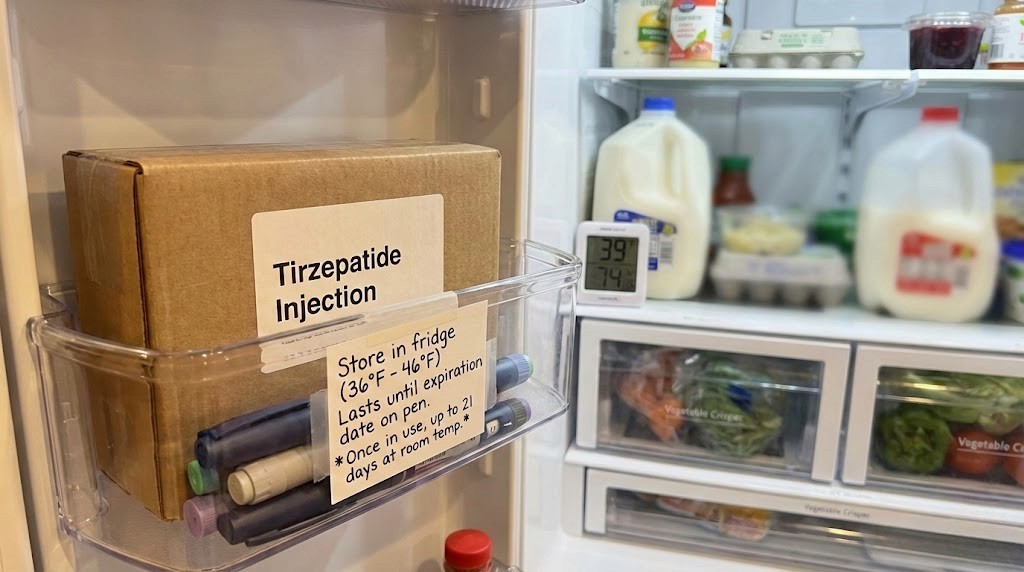
You have mixed your tirzepatide. Stored it properly. Followed the protocol. And now you are staring at that vial in your fridge wondering if it is still good. The pharmacy label says one thing, online forums say another, and that research paper mentions something completely different. This confusion costs researchers money, wastes valuable peptides, and creates unnecessary safety risks.
The truth about tirzepatide shelf life is not as simple as checking an expiration date. Temperature fluctuations matter. Reconstitution method matters. Whether you have pharmaceutical-grade pens or compounded vials matters significantly.
Here is what the research actually shows about refrigerated tirzepatide storage. No guessing. No generic advice. Just the specific timelines, temperature requirements, and storage practices that keep your peptide potent from first dose to last.
You will learn the exact shelf life for both unopened and reconstituted tirzepatide, understand what causes degradation, recognize signs of spoilage, and discover how to maximize every dollar you spend on peptide research.
Understanding tirzepatide stability and why proper storage matters
Tirzepatide is a complex 39-amino-acid peptide molecule engineered for GLP-1 receptor activation and GIP receptor modulation. This dual-agonist structure makes it incredibly effective for weight loss and metabolic health, but it also makes the molecule inherently unstable under certain conditions.
The molecular structure of tirzepatide contains specific amino acid sequences that are vulnerable to degradation through several mechanisms. Temperature exposure causes protein unfolding. Light triggers oxidative damage. Repeated freeze-thaw cycles break peptide bonds. Each of these factors reduces potency, and once degradation occurs, it cannot be reversed.
Research on peptide stability demonstrates that tirzepatide maintains optimal structure and function within a narrow temperature range of 36-46°F (2-8°C). This is not a suggestion, this is the proven temperature window where the peptide remains stable. Studies show that even temporary exposure to temperatures above 86°F (30°C) can cause measurable degradation within hours.
The molecular vulnerability of dual-agonist peptides
Unlike simpler peptide structures like BPC-157 or TB-500, tirzepatide contains fatty acid modifications that enhance its half-life but also create additional stability challenges. The C20 fatty diacid chain attached to the peptide backbone improves binding and extends duration of action, but this modification is particularly sensitive to temperature variations.
When tirzepatide degrades, you do not see obvious visual changes immediately. The solution stays clear. No discoloration appears. This makes visual inspection unreliable for determining potency. Research shows that peptides can lose 30-40% of their activity while still appearing completely normal, which is why proper storage from day one matters so much.
The pharmaceutical industry invests heavily in peptide formulation research specifically to address these stability challenges. Commercial tirzepatide products like Mounjaro and Zepbound contain carefully balanced excipients and buffers that help maintain stability, but these additives only work within specified storage conditions.
Why temperature consistency matters more than you think
Most researchers focus on keeping tirzepatide cold, but temperature fluctuations cause more damage than steady room temperature exposure. Here is what happens at the molecular level.
When tirzepatide warms up, the peptide molecules gain kinetic energy and begin moving more rapidly. This increased movement can cause the protein structure to partially unfold. When it cools back down, the peptide attempts to refold, but not always correctly. Repeated warming and cooling cycles create cumulative misfolding damage that progressively reduces biological activity.
A study on GLP-1 peptide stability found that samples exposed to temperature cycling between refrigeration and room temperature lost potency twice as fast as samples maintained at a constant room temperature.
This explains why storing tirzepatide in a refrigerator door, the warmest and most variable location, significantly shortens shelf life compared to middle-shelf storage.
Understanding these degradation mechanisms helps explain why following proper tirzepatide storage protocols is not optional for researchers who want consistent results. Every temperature excursion, every exposure to light, and every contamination event chips away at potency until the peptide no longer delivers the expected effects.
Exact shelf life for unopened tirzepatide in refrigeration
Unopened pharmaceutical tirzepatide has a straightforward shelf life. Mounjaro and Zepbound pens stored continuously at 36-46°F (2-8°C) remain stable until the expiration date printed on the packaging, typically 24 months from manufacture date.
This is not a conservative estimate. This is the manufacturer-validated timeframe based on stability testing that measures actual peptide content over time. Pharmaceutical companies must prove their products maintain at least 90% of labeled potency through the expiration date when stored properly.
Compounded tirzepatide follows different rules. The Beyond-Use Date (BUD) assigned by compounding pharmacies ranges from 28 to 90 days depending on the specific formulation, preservatives used, and pharmacy protocols. This shorter timeline reflects the absence of extensive stability testing and the potential for greater variability in compounding processes.
Understanding Beyond-Use Dates for compounded formulations
When a compounding pharmacy reconstitutes or formulates compounded tirzepatide, they assign a BUD based on USP 797 guidelines for sterile compounding. This date does not necessarily mean the peptide becomes inactive or dangerous after that point, but it represents the timeframe during which the pharmacy can guarantee the product meets quality standards.
Most compounding pharmacies assign 28-day BUDs for aqueous tirzepatide solutions stored refrigerated. Some pharmacies with more robust stability data extend this to 60 or 90 days. The specific BUD depends on several factors including the water source used for reconstitution, the presence of bacteriostatic agents, and the sterility of the compounding environment.
Research shows that properly formulated compounded tirzepatide can maintain stability beyond standard BUD assignments. One analysis of compounded GLP-1 receptor agonists found that refrigerated samples retained over 95% potency for 120 days when stored at consistent 2-8°C temperatures. However, using peptides beyond assigned BUDs carries risk since you cannot verify actual potency without laboratory testing.
What happens at the expiration date
Expiration dates do not represent a cliff where peptides instantly become useless. Degradation is gradual.
At the assigned expiration date, pharmaceutical tirzepatide still contains approximately 90% of labeled potency when stored properly. Over subsequent weeks and months, potency continues declining. How fast depends entirely on storage conditions.
One study tracking peptide degradation kinetics found that tirzepatide stored at proper refrigeration temperatures lost roughly 1-2% potency per month after the expiration date. At room temperature, degradation accelerated to 5-8% per month. This explains why some researchers report continued effects from expired peptides while others see complete loss of activity, the difference is almost always storage conditions.
For researchers using tirzepatide for weight loss protocols, using expired peptides creates unpredictable dosing. You might think you are injecting 5mg but actually receiving 4mg or 3.5mg depending on degradation extent. This variability makes it impossible to assess true dose-response relationships or troubleshoot why results are not matching expectations.
Reconstituted tirzepatide shelf life and storage requirements
Once you reconstitute lyophilized tirzepatide powder with bacteriostatic water, stability changes dramatically. The clock starts ticking faster.
Reconstituted tirzepatide stored at 2-8°C maintains optimal potency for 28 days. This is the conservative timeline supported by research on similar peptide structures and stability testing data. Some sources claim longer stability, but 28 days represents the period where you can reasonably expect the peptide to retain over 90% of its original activity.
This 28-day window assumes perfect storage conditions. No temperature fluctuations. No light exposure. No contamination. In real-world use, most reconstituted peptides experience multiple non-ideal conditions that accelerate degradation, which is why many researchers notice diminishing effects after 3-4 weeks even when the peptide looks fine.
The role of bacteriostatic water in extending shelf life
Reconstituting with bacteriostatic water versus sterile water makes a significant difference in shelf life. Bacteriostatic water contains 0.9% benzyl alcohol, which inhibits bacterial growth in the solution. This antimicrobial effect allows multi-dose vials to be used safely over several weeks.
When you reconstitute tirzepatide with sterile water lacking preservatives, bacterial contamination becomes a real risk after the first puncture of the vial stopper. Each needle insertion potentially introduces microorganisms. Without benzyl alcohol to inhibit growth, bacterial populations can proliferate, especially if the vial sits at room temperature even briefly.
Research comparing peptide reconstitution methods found that samples prepared with bacteriostatic water maintained sterility for 28 days when stored refrigerated and handled aseptically. Samples prepared with sterile water showed bacterial contamination in 15-20% of vials by day 14. This contamination does not always cause visible cloudiness, which means you might be injecting contaminated peptide without realizing it.
For researchers conducting extended tirzepatide protocols, using bacteriostatic water for reconstitution is not optional, it is a basic safety and potency requirement. The slight cost difference versus sterile water is negligible compared to the risk of reduced efficacy or injection site infections.
Signs your reconstituted tirzepatide has degraded
Visual inspection catches some but not all degradation. Here is what to look for.
Clear solutions should remain clear. Any cloudiness, particulates, or discoloration signals degradation or contamination. If your tirzepatide solution develops any visible changes, discard it immediately. Do not inject cloudy or discolored peptides under any circumstances.
Changes in injection site reactions can indicate degradation even when the solution looks normal. If you suddenly experience increased pain, burning, or inflammation at injection sites when using the same tirzepatide injection technique you have used successfully before, degradation products or bacterial contamination may be responsible. Fresh peptide typically causes minimal injection discomfort.
Reduced effectiveness is the most common but least obvious sign of degradation. If your appetite suppression suddenly decreases, if weight loss stalls despite consistent dosing, or if you notice diminishing effects compared to earlier in your protocol, degraded peptide is a likely cause. This is why tracking objective metrics and noting when you opened each vial helps identify degradation patterns.
Practical storage timeline for multi-dose vials
Most researchers using compounded tirzepatide work with 5mg or 10mg multi-dose vials. Understanding realistic timelines helps you plan your reconstitution strategy.
A 5mg vial reconstituted with 2ml bacteriostatic water at a starting dose of 2.5mg weekly provides four weeks of doses, perfectly matching the 28-day optimal stability window. This is the ideal scenario where you finish the vial before significant degradation occurs.
A 10mg vial at the same dose provides eight weeks of supply, extending well beyond the conservative stability timeline. Researchers using this approach often notice reduced effectiveness in weeks 6-8. You can mitigate this by increasing doses slightly to compensate for degradation, but this makes it impossible to know your true effective dose.
For researchers following tirzepatide microdosing protocols with smaller, more frequent doses, vial longevity becomes an even bigger concern. Using 1-1.5mg doses means a 5mg vial lasts 3-4 weeks while a 10mg vial extends to 6-8 weeks. Planning your reconstitution volume and vial size to match your protocol duration is a key strategy for maintaining consistent potency.
Room temperature storage and emergency scenarios
Sometimes refrigeration fails. Power outages happen. You travel. Understanding how long tirzepatide survives at room temperature determines whether you can salvage your peptide or need to replace it.
Pharmaceutical tirzepatide pens like Mounjaro and Zepbound can remain at room temperature up to 86°F (30°C) for 21 days maximum. This is not a guideline, this is the manufacturer-tested limit. After 21 days at room temperature, the manufacturer can no longer guarantee potency.
This 21-day window gives researchers significant flexibility for travel with tirzepatide. A week-long trip where you keep your pen in a hotel room at 70-75°F causes minimal degradation. A month-long backpacking expedition in summer heat will destroy your peptide long before you return.
Temperature thresholds and degradation rates
The relationship between temperature and degradation follows predictable patterns based on chemical kinetics. For every 10°C (18°F) increase in temperature, chemical reaction rates approximately double. This means tirzepatide degrades roughly twice as fast at 77°F compared to refrigerated temperatures, and four times as fast at 95°F.
Research on peptide thermal stability quantifies these effects. Tirzepatide stored at 25°C (77°F) loses approximately 5-8% potency per month. At 30°C (86°F), degradation accelerates to 10-15% per month. Above 40°C (104°F), peptides can lose 20-30% potency within weeks.
These degradation rates explain why leaving tirzepatide in a hot car, even for a few hours, causes measurable potency loss. A car interior on a 90°F day easily reaches 130-140°F. Even 2-3 hours at these temperatures can cause 10-20% potency reduction, and the damage is permanent.
What to do when refrigeration is interrupted
If your refrigerator fails or power goes out, your response depends on duration and temperature. Here is the decision framework.
Under 2 hours at room temperature: Your peptide is fine. Return it to refrigeration immediately. No potency loss occurs from brief temperature excursions of this duration.
2-8 hours at room temperature: Still acceptable, but try to minimize these events. If it happens once, not a problem. If it happens repeatedly, cumulative degradation becomes significant.
8-24 hours at room temperature: You are approaching the edge of acceptable exposure. If the tirzepatide is pharmaceutical-grade and this is a single event, the peptide likely retains 95%+ potency. For compounded peptides with less robust formulations, consider this a significant but not fatal exposure.
Over 24 hours at room temperature: The manufacturer guidance says you can continue using pharmaceutical pens for up to 21 days total room temperature exposure. In practice, most researchers notice diminishing effects after 7-10 days at room temperature. For compounded peptides, exposure over 24 hours should prompt consideration of replacement.
If you are unsure whether your tirzepatide experienced temperature abuse, the conservative approach is replacement. SeekPeptides members can access temperature exposure calculators and decision tools that help determine whether peptides remain viable after storage incidents.
Freezing and why it destroys tirzepatide
One of the most common and costly mistakes in peptide research is freezing tirzepatide thinking it will extend shelf life. It does the opposite.
Freezing destroys the three-dimensional structure of peptide molecules through ice crystal formation. As water freezes, it forms crystals that physically disrupt the delicate folding patterns that give peptides their biological activity. This damage is permanent and irreversible. Thawing frozen tirzepatide does not restore its function.
Research on peptide cold stability demonstrates that freeze-thaw cycles cause aggregation, where damaged peptide molecules clump together forming inactive complexes. Even a single freeze-thaw event can reduce potency by 30-50%. Multiple freeze-thaw cycles essentially guarantee complete loss of activity.
How to tell if tirzepatide was accidentally frozen
Sometimes freezing happens without your knowledge. Your refrigerator thermostat malfunctions. The vial sits too close to the cooling element. You store peptides in a garage or basement refrigerator that cycles below freezing in winter.
Visual inspection after thawing provides clues but not certainty. Frozen and thawed peptides often show increased cloudiness or visible particulates as aggregated protein precipitates out of solution. However, not all freeze-damaged peptides show obvious visual changes.
If you suspect your tirzepatide froze, look for these signs. The vial or pen feels unusually cold when you retrieve it. Ice crystals are visible inside the packaging. The solution appears cloudier than you remember. These observations strongly suggest freezing occurred.
The most reliable indicator is reduced effectiveness. If you notice sudden loss of appetite suppression, no weight loss despite consistent dosing, or complete absence of expected effects, freeze damage is a likely explanation. Unfortunately, by the time you notice reduced effectiveness, you have already wasted several doses of damaged peptide.
Preventing accidental freezing
Most home refrigerators maintain temperatures between 35-40°F in the main compartment, well above the 32°F freezing point. However, certain locations within refrigerators create cold spots where temperatures can drop below freezing.
The back wall of refrigerators, especially near cooling elements, runs coldest. Items placed directly against the back wall sometimes freeze even when the overall refrigerator temperature is properly set. This is why proper peptide storage location emphasizes middle shelves away from walls.
Temperature fluctuations during defrost cycles in older refrigerators can temporarily drop temperatures below freezing in certain areas. Modern frost-free refrigerators manage these cycles better, but they are not perfect. Using a refrigerator thermometer helps you identify problematic cold spots before they destroy expensive peptides.
Some researchers use dedicated mini-refrigerators for peptide storage to avoid the temperature fluctuations of frequently-opened food refrigerators. This approach works well if you have a reliable mini-fridge with accurate temperature control. Cheap mini-fridges often have poor thermostats that allow wide temperature swings, making them worse than standard refrigerators for peptide storage.
Optimizing storage conditions for maximum shelf life
Proper storage extends tirzepatide shelf life and maintains consistent potency from first to last dose. These practices apply whether you use pharmaceutical pens or compounded vials.
Store peptides on middle shelves, away from doors and back walls. The middle of your refrigerator maintains the most stable temperature. Door shelves experience the largest temperature fluctuations from repeated opening. The back wall runs coldest and risks freezing. Middle shelf placement gives you the most consistent environment.
Keep tirzepatide in original packaging or opaque containers to block light exposure. Peptides are photosensitive, meaning light causes oxidative degradation over time. Clear vials stored in brightly-lit refrigerators degrade faster than protected peptides. Many pharmaceutical pens come in opaque injector devices specifically to provide light protection.
Managing multi-dose vials for optimal preservation
Every time you puncture a vial stopper with a needle, you risk introducing contamination. The more punctures, the higher the cumulative contamination risk. This is why proper sterile technique for peptide injection is not optional.
Wiping vial stoppers with alcohol before each puncture reduces but does not eliminate contamination risk. Bacteria on skin or in air can still enter during injection. The bacteriostatic agent in reconstitution water provides a safety margin, but it is not foolproof.
For researchers using very small doses from large vials, consider dividing reconstituted peptide into multiple smaller vials. A 10mg vial reconstituted and split into two 5mg volumes reduces the number of punctures per vial by half, decreasing contamination risk and potentially extending effective shelf life. This approach requires sterile technique during the splitting process, but it is worth considering for extended protocols.
Temperature monitoring and verification
Most researchers assume their refrigerator maintains proper temperatures. Many are wrong. Studies of home refrigerator performance show that 20-30% run outside the recommended 36-46°F range for pharmaceutical storage.
A simple refrigerator thermometer placed near your peptide storage area costs five dollars and provides invaluable information. Check it weekly. If your refrigerator runs above 46°F, adjust the thermostat. If it runs below 35°F, you risk freezing your peptides.
For researchers conducting extended research protocols with significant investment in peptides, continuous temperature monitoring provides additional security. Small digital thermometers with min/max memory show you the temperature range your refrigerator experienced over days or weeks. This data helps you identify problematic temperature excursions before they destroy your entire peptide supply.
Documentation and tracking
Write the reconstitution date on every vial. Memory is unreliable. When you have three vials in your refrigerator and cannot remember which one you mixed first, you risk using degraded peptide unnecessarily.
Track which vial you are currently using and when you started it. This simple practice helps you identify degradation patterns. If you notice diminishing effects at week four of using a vial, you know that future vials should be replaced or doses adjusted at that timeframe.
Many researchers using complex stacking protocols with multiple peptides benefit from maintaining a storage log. Note reconstitution dates, vial IDs, storage locations, and any temperature incidents. When troubleshooting inconsistent results, this documentation often reveals storage issues that would otherwise remain invisible.
Comparing pharmaceutical versus compounded tirzepatide storage
Brand-name tirzepatide pens and compounded vials follow the same basic storage principles but differ significantly in formulation stability and shelf life guarantees. Understanding these differences helps you make informed decisions about which format best suits your research needs.
Pharmaceutical tirzepatide products like Mounjaro and Zepbound undergo extensive stability testing during development. Manufacturers must demonstrate that their formulations maintain potency under various storage conditions for the claimed shelf life. This testing costs millions of dollars and provides high confidence that properly stored pharmaceutical products retain labeled potency.
Compounding pharmacies creating custom tirzepatide formulations do not conduct the same extensive testing. They follow established guidelines for sterile compounding, but they cannot guarantee stability beyond conservative Beyond-Use Dates. This does not mean compounded peptides are inherently less stable, it means less data exists to support longer shelf life claims.
Formulation differences that affect stability
Brand-name tirzepatide contains carefully optimized excipients that enhance stability. These include buffering agents that maintain pH, tonicity modifiers that protect peptide structure, and preservatives that prevent microbial growth. The exact formulation is proprietary, but it is specifically engineered for maximum stability under specified storage conditions.
Compounded tirzepatide formulations vary between pharmacies. Some use sophisticated formulation strategies with multiple stabilizing excipients. Others use simpler formulations with basic bacteriostatic water reconstitution. This variability means shelf life can differ significantly between compounding sources.
Research comparing peptide formulation strategies shows that pH control is particularly important for tirzepatide stability. The peptide is most stable at pH 7.4-8.5. Formulations outside this range degrade faster. Quality compounding pharmacies buffer their formulations to maintain optimal pH. Lower-quality sources may not, leading to accelerated degradation even under proper refrigeration.
Cost considerations and replacement strategies
Pharmaceutical tirzepatide costs significantly more than compounded versions but comes with greater stability assurance. For researchers prioritizing consistency and minimal replacement, brand-name products offer value despite higher upfront costs.
Compounded tirzepatide provides cost advantages but requires more careful storage management and more frequent replacement. If you follow a 12-week tirzepatide protocol, you might go through 2-3 compounded vials versus a single pharmaceutical pen package, depending on dosing.
The optimal choice depends on your priorities. Researchers who travel frequently, have variable refrigeration access, or want maximum peace of mind about potency often prefer pharmaceutical products despite higher cost. Researchers with reliable storage, consistent protocols, and cost sensitivity often achieve excellent results with properly managed compounded tirzepatide.
Recognizing and preventing contamination in stored peptides
Bacterial contamination represents a distinct risk from chemical degradation. Contaminated peptides can cause injection site infections, systemic illness, or simply reduced effectiveness as bacterial metabolism breaks down the peptide structure.
Contamination enters through several routes.
Dirty hands touching vial stoppers. Non-sterile needles or syringes. Airborne bacteria entering the vial during injection. Inadequate alcohol sterilization before puncture. Each breach of sterile technique creates an opportunity for microbial introduction.
Once bacteria enter a vial, whether they proliferate depends largely on the presence of bacteriostatic agents. Peptides reconstituted with sterile water lacking preservatives support bacterial growth rapidly. Peptides reconstituted with bacteriostatic water resist growth but are not completely protected, especially if contamination is heavy or the vial is stored at room temperature.
Visual signs of contamination
Bacterial contamination often produces visible changes that chemical degradation does not. Cloudiness is the most common sign. Clear peptide solutions should remain crystal clear throughout their shelf life. Any cloudiness, haziness, or turbidity suggests contamination or aggregation.
Visible particles floating in solution indicate either aggregated protein from degradation or bacterial colonies. Fresh peptides are particle-free. If you see anything floating or suspended in your tirzepatide, discard it.
Changes in viscosity sometimes accompany heavy contamination. If your peptide solution becomes noticeably thicker or develops a slimy texture, bacterial biofilm formation may be responsible. This level of contamination is dangerous and should never be injected.
Invisible contamination and safety margins
Not all contamination produces visible changes. Low-level bacterial presence may not cause cloudiness but can still pose injection risks and accelerate peptide degradation through bacterial enzyme activity.
This is why conservative Beyond-Use Dates exist for compounded peptides. Even when solutions look perfect, hidden contamination may be present after weeks of multi-dose use. The 28-day standard for bacteriostatic water reconstitution provides a safety margin against both chemical degradation and potential contamination.
For researchers using multiple peptide protocols with several open vials simultaneously, contamination risk multiplies. Each vial represents a potential contamination source. Managing this requires rigorous adherence to sterile technique practices and conservative replacement timelines.
Preventing contamination through proper technique
Every peptide researcher should master basic sterile technique regardless of experience level. These practices dramatically reduce contamination risk.
Wash hands thoroughly before handling peptides or injection supplies. Use alcohol hand sanitizer as an additional measure. Clean skin harbors millions of bacteria. Keeping them off your supplies prevents their introduction into vials.
Wipe vial stoppers with 70% isopropyl alcohol before every puncture, allowing the alcohol to fully evaporate before inserting the needle. Alcohol kills surface bacteria, but it needs contact time to work. Wiping and immediately puncturing provides minimal benefit. Wipe, wait 10-15 seconds, then puncture.
Use each needle and syringe only once. Never reuse needles even on the same vial. Each puncture dulls the needle and increases contamination risk. Needles are inexpensive. Infections and degraded peptides are not.
Store opened peptide vials upright to minimize stopper contact with solution. This reduces the risk of bacteria from the stopper leaching into the peptide. Inverted storage increases contamination risk over time.
Traveling with tirzepatide and maintaining cold chain
Research protocols do not pause for travel. Business trips, vacations, and life events require transporting peptides while maintaining proper storage conditions. This challenge is solvable with planning.
For trips under 24 hours, pharmaceutical tirzepatide pens can travel without cooling. The 21-day room temperature stability window provides flexibility for day trips, overnight stays, or situations where refrigeration is temporarily unavailable. Just minimize heat exposure and return pens to refrigeration as soon as possible.
Longer trips require cold storage solutions. Small insulated cooler bags with ice packs work for journeys up to 48 hours if managed properly. The key is maintaining consistent cool temperatures without allowing freezing.
Choosing and using travel coolers effectively
Medical-grade insulin coolers designed for temperature-sensitive medications work perfectly for transporting peptides. These small insulated pouches use ice packs or cooling gels to maintain 36-46°F for 8-36 hours depending on external temperatures and model quality.
When packing tirzepatide in travel coolers, prevent direct contact between ice packs and peptide vials or pens. Direct contact can cause freezing. Place a barrier like a washcloth or paper towel between the ice pack and peptide. This allows cooling without freezing risk.
Pre-cool your cooler before placing peptides inside. If you put room temperature peptides into a cooler with ice packs, it takes hours to reach proper temperature. Pre-cooling the empty cooler, then adding cold peptides, maintains optimal temperature immediately.
Air travel considerations
Transporting peptides on airplanes introduces additional considerations. TSA regulations allow peptides in carry-on luggage with proper documentation. Checked luggage cargo holds can experience freezing temperatures during flight, making checked baggage unsuitable for peptide transport.
Carry your tirzepatide in an insulated cooler in your personal item or carry-on. Inform security officers that you are transporting refrigerated medication. Most screening proceeds smoothly, but having a doctor's prescription or pharmacy label helps if questions arise.
Long-haul international flights lasting 12+ hours require more robust cooling solutions. High-quality insulin coolers with multiple ice pack sets allow you to swap packs mid-flight if cooling capacity diminishes. For very long journeys, consider whether the stress and risk of temperature excursions justify bringing your peptide versus adjusting your protocol timing to avoid travel during active research.
Destination storage planning
Before departing, confirm refrigeration availability at your destination. Hotels almost always have mini-fridges, but they may not maintain proper temperatures. Request a mini-fridge when booking if one is not standard. Test the temperature with a thermometer after arrival before storing peptides.
Vacation rentals and Airbnb properties usually have full kitchens with refrigerators. Verify refrigerator functionality when you arrive. Some vacation properties turn off refrigerators between guests to save energy.
If staying with family or friends, explain that your medication requires refrigeration and should not be disturbed. This prevents well-meaning hosts from moving or removing your peptides during routine refrigerator cleaning.
For researchers conducting extended protocols while traveling internationally, research destination regulations regarding peptide importation. Some countries restrict or prohibit peptide import even for personal research use. Understanding these rules before traveling prevents legal complications and confiscation of expensive materials.
Cost optimization through proper storage management
Tirzepatide costs significant money whether you use pharmaceutical or compounded versions. Proper storage protects this investment and reduces waste from degraded or contaminated peptides.
Calculate the actual cost per dose based on your protocol to understand waste impact. A researcher using 5mg weekly from a 10mg compounded vial at $150 per vial pays $75 per dose if they use the full vial over eight weeks. If poor storage requires replacing the vial at four weeks after using only half, cost doubles to $150 per dose.
This math becomes more dramatic with pharmaceutical products. A Mounjaro pen package containing four 2.5mg doses at $1000 per package costs $250 per dose if used properly. If you must discard doses due to storage failures, you are literally throwing away $250 bills.
Vial size selection strategy
Choosing appropriate vial sizes for your dosing protocol minimizes waste and maximizes potency consistency. This requires planning your tirzepatide dosing strategy before reconstitution.
For researchers starting at 2.5mg weekly and escalating to 5mg, a 10mg vial provides exactly four weeks at starting dose then another four weeks at increased dose when you account for the step-up timeline. This matches the 28-day optimal stability window if you plan your escalation timing appropriately.
For researchers following maintenance protocols at steady doses, multiple smaller vials beat single large vials. Two 5mg vials used sequentially provide better potency consistency than one 10mg vial used over eight weeks, even though the latter seems more cost-effective.
Some compounding pharmacies offer custom vial sizes. If you follow a consistent 7.5mg weekly protocol, requesting 15mg vials for two-week supplies ensures you complete each vial well within optimal stability timelines. This customization costs no extra since you are buying the same total peptide quantity, just distributed differently.
Reconstitution volume optimization
Concentrated reconstitution reduces the volume of each injection but increases the peptide concentration, potentially affecting stability. Dilute reconstitution provides easier dose measurement but requires larger injection volumes.
Research on peptide concentration effects shows that tirzepatide remains stable across a wide concentration range from 0.5mg/ml to 5mg/ml. Within this range, stability differences are minimal when other factors like temperature and pH are controlled.
The practical consideration is injection volume comfort and dose measurement accuracy. Very concentrated solutions requiring tiny injection volumes increase dosing errors. Very dilute solutions requiring large injection volumes increase injection discomfort. Most researchers find the optimal balance between 1-2.5mg/ml concentration.
For cost optimization, matching your reconstitution volume to ensure you finish vials within 28 days maximizes both potency and economics. Calculate backwards from your protocol. If you inject 0.5ml weekly, 2ml total reconstitution volume provides exactly four weeks of supply. If you inject 0.3ml weekly, 1.2ml reconstitution provides four weeks. Use peptide reconstitution calculators to determine exact volumes for your protocol.
Special considerations for stacking protocols
Many researchers combine tirzepatide with other peptides in comprehensive protocols targeting multiple pathways. This stacking approach requires additional storage management as you juggle multiple vials with different stability profiles and reconstitution dates.
Common tirzepatide stacking combinations include pairing with peptides like BPC-157 for gut health, CJC-1295 for growth hormone support, or NAD+ peptides for metabolic enhancement. Each peptide has its own storage requirements and shelf life characteristics.
Managing multiple peptide schedules
Organizing multiple open vials requires system. Label everything clearly. Use a simple coding system with dates and peptide names. When you have four vials that look identical sitting in your refrigerator, mistaking one for another becomes easy and costly.
Track reconstitution dates for each peptide independently. Tirzepatide may last 28 days while BPC-157 remains stable for 60+ days and growth hormone peptides degrade within 7-14 days. Applying the same timeline to all peptides leads to using degraded growth hormone while discarding perfectly good BPC-157.
Consider a simple spreadsheet or note in your phone tracking each peptide, its reconstitution date, and its replacement date. This five minutes of organization prevents expensive mistakes and ensures consistent protocol execution.
Refrigerator space optimization
Multiple peptides mean multiple vials competing for optimal storage space. Not all spots in your refrigerator are equal for peptide storage.
Designate a specific area as your peptide storage zone, ideally middle shelf, away from doors and walls, in a location that is not disturbed by food rearrangement. Using a small plastic container or box to hold all peptide vials keeps them organized and protected.
For researchers with extensive peptide stacks or backup supplies, a small dedicated peptide refrigerator eliminates competition for space and reduces temperature fluctuations from frequently opening the door for food access. Mini-fridges designed for beverages or cosmetics often work well for this purpose if they have reliable thermostats.
Troubleshooting storage-related protocol problems
When research results suddenly change despite consistent dosing, storage issues are often responsible. Understanding how to identify and correct storage-related problems saves time and money.
Sudden loss of effectiveness
If your appetite suppression suddenly diminishes, if weight loss plateaus despite protocol adherence, or if previously effective doses no longer produce expected results, degraded tirzepatide is the first thing to investigate.
Check your vial reconstitution date. If you are more than four weeks past reconstitution, degradation is likely even if the solution looks perfect. Replace the vial with fresh peptide and reassess after two doses. If effectiveness returns, degradation was the problem.
Review recent temperature exposure. Did your refrigerator fail? Did you travel and experience temperature excursions? Did someone unplug your refrigerator while cleaning? Any temperature event could explain sudden potency loss.
Consider whether your storage location changed. Moving peptides from middle shelf to door storage creates temperature fluctuations that accelerate degradation. Return to optimal storage location and monitor for improvement.
Increased injection site reactions
New or worsening pain, redness, swelling, or inflammation at injection sites can signal contamination or degradation. Fresh, properly stored tirzepatide causes minimal injection discomfort when using proper technique.
Contaminated peptides introduce bacteria that trigger immune responses and local inflammation. Degraded peptides form aggregates that cause tissue irritation. Both problems produce increased injection site reactions.
If injection problems develop with peptide you have been using successfully, immediately switch to a fresh vial from a different batch if available. If reactions persist with fresh peptide, the problem may be injection technique or site selection rather than peptide quality. If reactions resolve with fresh peptide, the previous vial was contaminated or degraded.
Inconsistent results between vials
If one vial produces excellent results while the next vial from the same source produces poor results, storage or handling differences are likely explanations. Quality compounding pharmacies maintain consistent production processes, so major batch-to-batch variation is unusual.
Review how you stored and handled each vial. Did you store them in different locations? Did one vial sit longer before use? Did you use different reconstitution water? Small differences in handling can produce large differences in outcomes.
This is where documentation becomes valuable. If you can compare exactly how you managed each vial, you can identify the variable causing inconsistent results. Without documentation, you are left guessing.
For researchers experiencing persistent inconsistencies despite careful storage practices, the problem may be source quality rather than your storage. Consider comparing different compounding pharmacies or switching to pharmaceutical products for more reliable consistency.
Frequently asked questions
Can I use tirzepatide after the expiration date if it was stored properly?
Pharmaceutical tirzepatide retains approximately 90% potency at the expiration date and continues degrading slowly afterward when refrigerated. You can use expired tirzepatide, but expect gradually reduced effectiveness. For precise research requiring known doses, replace expired peptides. For less critical applications, expired but refrigerated tirzepatide may work acceptably for several months past expiration.
How do I know if tirzepatide froze in my refrigerator?
Check for cloudiness, visible particles, or changes in solution consistency after thawing. Frozen tirzepatide often shows these signs, though not always. The most reliable indicator is sudden loss of effectiveness after potential freezing exposure. Place a thermometer in your refrigerator near peptide storage to monitor for temperatures below 32°F that indicate freezing risk.
What happens if I accidentally leave tirzepatide out overnight?
One overnight exposure at typical room temperature (65-75°F) causes minimal degradation in pharmaceutical tirzepatide. Return it to refrigeration immediately. This single event will not significantly reduce potency. However, avoid making this a habit as repeated temperature excursions cause cumulative damage that eventually renders the peptide ineffective.
Should I store tirzepatide in the original box or just the vial?
Original packaging provides light protection that helps maintain stability. If your original packaging is opaque, keep peptides in it. If you are using plain vials, store them in an opaque container or wrap them in foil to block light. Light exposure accelerates oxidative degradation over weeks and months of storage.
Can I pre-load syringes with tirzepatide to save time?
Pre-loading is not recommended for tirzepatide. Once drawn into a syringe, the peptide has greater surface area exposure to air and plastic, potentially accelerating degradation. The small time savings does not justify the potency risks. Draw each dose immediately before injection for maximum potency and safety.
How long does bacteriostatic water extend tirzepatide shelf life compared to sterile water?
Bacteriostatic water extends safe multi-dose use to 28 days by preventing bacterial growth. Sterile water without preservatives carries contamination risk after the first puncture, with significant bacterial growth possible by day 14. For any multi-dose vial used over more than a few days, bacteriostatic water is essential for both safety and maintaining peptide stability.
What should I do if my tirzepatide turns cloudy?
Discard cloudy tirzepatide immediately. Do not attempt to use it. Cloudiness indicates either contamination or protein aggregation from degradation. Both scenarios make the peptide unsafe or ineffective. Replace with fresh peptide and review your storage and handling practices to prevent recurrence.
Is it better to buy larger vials to save money or smaller vials for freshness?
Smaller vials matching your protocol duration provide better potency consistency. While larger vials appear more cost-effective, degradation in weeks 5-8 reduces actual effectiveness. The apparent savings disappear when you account for reduced potency. Size your vials to finish within 28 days for optimal cost-effectiveness and results.
External resources
For researchers serious about optimizing peptide protocols and maximizing investment, SeekPeptides offers comprehensive storage guides, temperature tracking tools, protocol planners, and access to an experienced community that has navigated these exact challenges.
In case I do not see you, good afternoon, good evening, and good night. May your peptides stay potent, your storage stay consistent, and your protocols stay effective.