Feb 28, 2026

You did not sign up for tirzepatide to give up your social life. Nobody did. Yet here you are, scrolling through conflicting advice at 11pm, trying to figure out whether that glass of wine at dinner tomorrow will undo weeks of progress or land you in the emergency room. The internet is not helping. Half the articles say alcohol is fine. The other half make it sound like a single sip will destroy your pancreas.
The truth sits somewhere quieter, somewhere more practical than either extreme.
Tirzepatide changes how your body processes almost everything, and alcohol is no exception. The medication suppresses appetite through GLP-1 and GIP receptor activation, slows gastric emptying, and fundamentally alters the way your brain responds to reward signals. That means the drink you used to handle easily might now hit harder, sit heavier, and cause gastrointestinal symptoms you never experienced before. Understanding which drinks play nicely with your medication, and which ones sabotage your weight loss timeline, is not about restriction. It is about making informed choices that protect what you have already built.
This guide covers every angle. Specific drinks ranked by safety and calorie content. The science behind why tirzepatide changes your alcohol tolerance. Practical strategies for social situations. Blood sugar management protocols. And real answers to the questions nobody else addresses, like what to do when your coworker hands you a champagne glass at a company event and you are three weeks into your starting dose.
SeekPeptides has compiled everything researchers and users need to navigate this topic safely, drawing from clinical research, FDA prescribing information, and the practical experience of thousands of tirzepatide users.
Why alcohol hits differently on tirzepatide
Before choosing what to drink, you need to understand why the rules have changed. Tirzepatide is not just another weight loss medication sitting quietly in the background. It is actively reshaping your digestive system, your brain chemistry, and your metabolic response to everything you consume, including alcohol.
Delayed gastric emptying changes everything
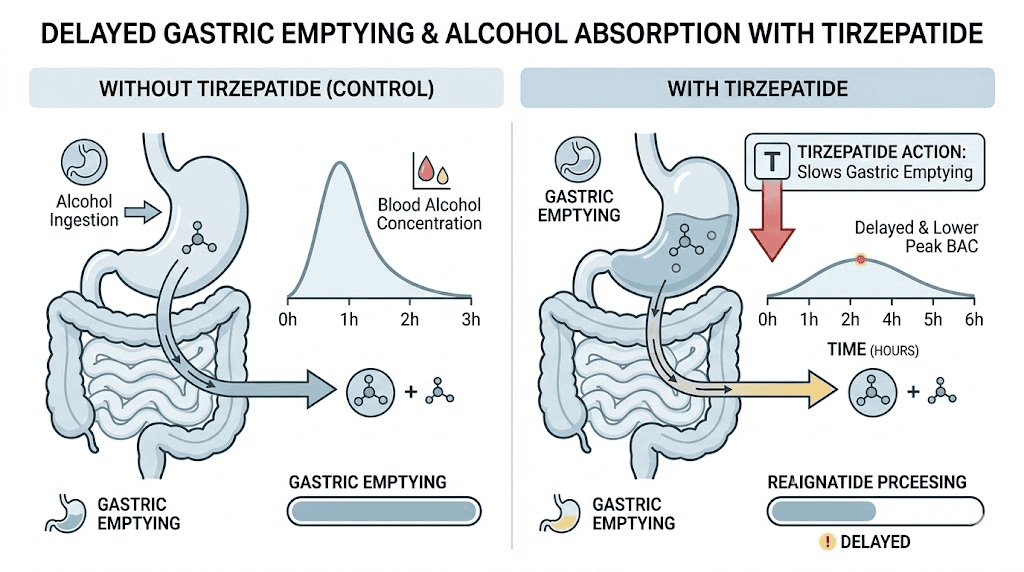
Tirzepatide slows stomach emptying significantly, especially during the first few weeks of treatment. Your stomach holds onto food longer. It processes contents more slowly. This is partly why you feel full faster and eat less.
But alcohol gets caught in this slowdown too.
A study from Virginia Tech found that people on GLP-1 medications experienced delayed and milder intoxication because alcohol lingered in their stomachs longer before reaching the small intestine, where most absorption happens. Sounds like a good thing, right? Less of a buzz, less damage?
Not exactly. The delayed absorption creates a dangerous unpredictability. You might feel fine after two drinks, assume you can handle a third, and then have all three hit your bloodstream simultaneously two hours later. The normal feedback loop, the one that tells you when you have had enough, gets disrupted. Your body is still adjusting to the medication, and adding alcohol to that adjustment period introduces variables that even experienced drinkers cannot predict.
This delayed processing also means nausea can arrive hours after drinking, not immediately. If you already experience dry mouth or bloating from your medication, alcohol amplifies these symptoms because your stomach is already working overtime.
Your brain reward system is being remodeled
Here is something most guides completely miss. Tirzepatide does not just work in your gut. It works in your brain.
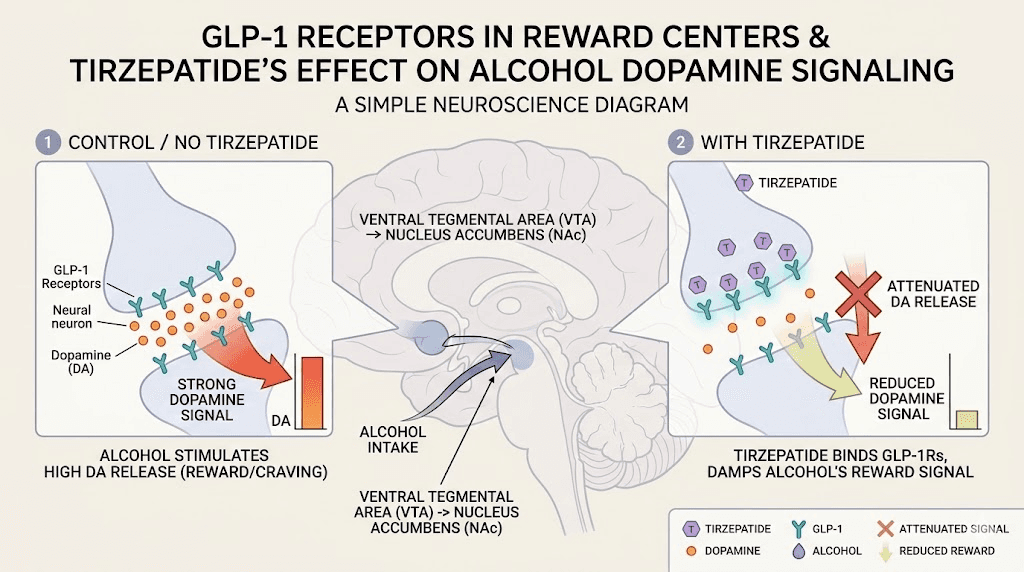
A landmark study published in Scientific Reports found that both semaglutide and tirzepatide significantly reduced alcohol consumption in individuals with obesity. The mechanism involves GLP-1 receptors in the ventral tegmental area and nucleus accumbens, the brain regions responsible for reward and pleasure. Tirzepatide essentially dials down the dopamine response that makes alcohol feel good.
Research published in The Lancet went even further, showing that tirzepatide reduced alcohol rewarding properties, locomotor stimulation, conditioned place preference, and accumbal dopamine release in rodent models. In plain language, the medication makes alcohol less enjoyable at a neurochemical level.
Many tirzepatide users report this firsthand. The drink they used to crave feels underwhelming. The buzz feels muted. The desire for a second round fades faster than it used to. If you have noticed that tirzepatide makes you tired or changes your energy levels, that same neurological shift is affecting how your brain processes alcohol reward signals.
This is actually useful information for choosing what to drink. If the pleasurable effects are already diminished, you might find that a carefully chosen single drink satisfies you in a way that three drinks used to. Quality over quantity becomes the strategy.
Blood sugar complications
Tirzepatide was originally developed for type 2 diabetes management. Even if you are taking it purely for weight loss, the medication still influences your blood sugar regulation.
Alcohol suppresses hepatic glucose production. Your liver, which normally releases stored glucose to keep blood sugar stable, gets temporarily shut down by alcohol. When you combine this with tirzepatide, which already modulates insulin and glucagon responses, the result can be unpredictable blood sugar drops.
The timing makes this especially dangerous. Hypoglycemia from alcohol can hit 6 to 12 hours after drinking. You could feel perfectly fine at the restaurant, go to bed, and wake up at 3am with symptoms that mimic, but are not, a hangover. Shaking. Confusion. Cold sweats. These are dizziness symptoms that overlap with low blood sugar, making them easy to misidentify.
This risk multiplies if you are also taking insulin or sulfonylureas alongside tirzepatide. But even on tirzepatide alone, drinking on an empty stomach, which many people do because the medication suppresses appetite, creates the perfect setup for a blood sugar crash.
The best alcoholic drinks while on tirzepatide
Now for what you actually came here for. Not every drink carries the same risk profile. Some options work reasonably well with tirzepatide. Others are practically designed to maximize every side effect the medication already causes.
The ranking below considers calories, sugar content, gastrointestinal impact, blood sugar effects, and dehydration potential. These are the factors that matter most when your body is running on a dual GIP/GLP-1 agonist.
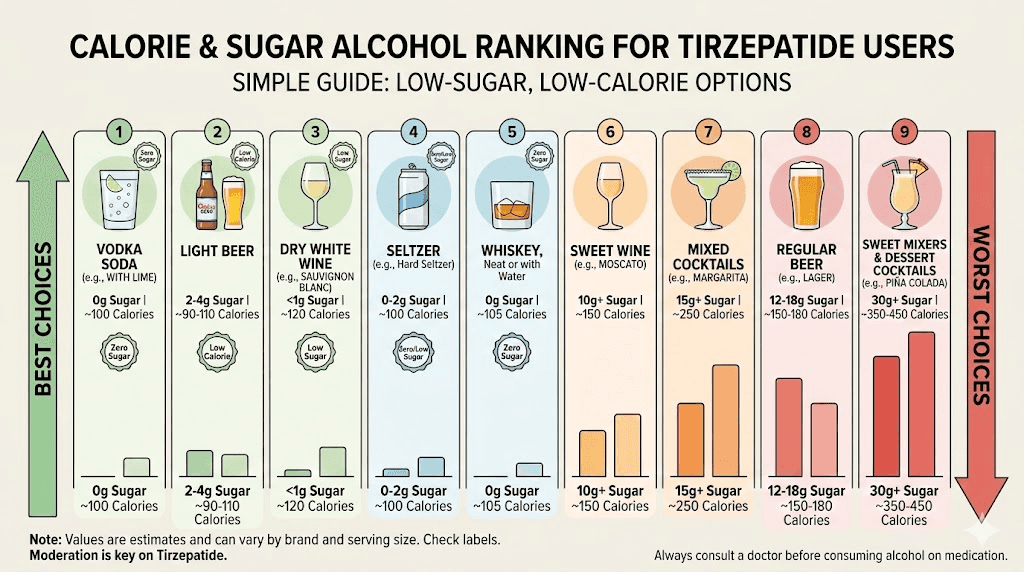
Tier 1: Best choices (lowest risk)
Vodka soda with lime. This is the gold standard for tirzepatide users who want a drink. Zero sugar. Zero carbs. Around 97 calories for a standard 1.5 oz pour with soda water. The carbonation from soda water can cause some burping if you are sensitive, but it is far gentler than sugary mixers. The lime adds flavor without adding calories. Most bartenders know how to make this without being asked twice.
Tequila with soda water and lime. Same concept, different spirit. Tequila (blanco or reposado) contains zero carbs and zero sugar. A standard shot with soda water runs about 97 calories. Some users report that tequila causes less bloating than other spirits, though individual responses vary. The agave-based spirit also has a slightly lower congener content than darker liquors, which may reduce next-day symptoms.
Gin and soda with cucumber or lemon. Gin delivers zero carbs, zero sugar, and approximately 97 calories per 1.5 oz pour. Mixed with plain soda water and a cucumber slice, it creates a refreshing drink with minimal metabolic impact. Avoid tonic water, even diet tonic water, as it often contains quinine and sweeteners that can interact with foods and substances to avoid while on the medication.
Tier 2: Good choices (moderate risk)
Dry white wine (Sauvignon Blanc, Pinot Grigio, Albarino). A 5 oz pour of dry white wine contains roughly 110 to 120 calories and about 2 grams of carbs. The sugar content is low in truly dry varieties. Sauvignon Blanc tends to be the driest, most predictable option. These wines pair well with the lighter meals recommended on tirzepatide and are less likely to trigger acid reflux than reds.
One glass. That is the practical limit here. Wine has a way of encouraging a second pour, and the calorie math adds up quickly when you are trying to maintain a consistent diet plan.
Dry red wine (Pinot Noir, Cabernet Sauvignon). Pinot Noir comes in at about 123 calories per 5 oz serving with roughly 3.4 grams of carbs, making it the lowest-calorie red wine option. Cabernet Sauvignon runs slightly higher at 3.8 grams of carbs. Both contain resveratrol, which some research associates with modest metabolic benefits, though the amounts in a single glass are negligible.
Red wine is more likely to trigger gastrointestinal issues than white wine because of its higher tannin content. If you already experience acid reflux on tirzepatide, and up to 8% of users do according to FDA clinical trial data, red wine will likely make it worse.
Champagne or dry sparkling wine (Brut, Extra Brut). A 5 oz flute of Brut champagne contains approximately 90 to 100 calories and only about 1 to 2 grams of residual sugar. That makes it one of the lowest-calorie wine options available. The carbonation, however, can aggravate bloating and gas in people already dealing with GI side effects. If your stomach handles carbonation well, this is actually a solid option for special occasions.
Tier 3: Proceed with caution (higher risk)
Light beer. A standard light beer runs 90 to 110 calories with 3 to 6 grams of carbs. Not terrible on paper. The problem is volume. Beer is typically consumed in 12 oz servings, meaning you are putting significantly more liquid volume into a stomach that is already emptying slowly. This creates more bloating, more gas, and more GI discomfort than the same number of calories consumed through spirits.
If beer is your thing, stick to one. A single light beer with dinner, consumed slowly alongside foods that support your medication, is manageable for most people. Two or more light beers on a stomach that is processing food at half its normal speed is a recipe for feeling miserable.
Whiskey, bourbon, or scotch (neat or on the rocks). Zero carbs. Zero sugar. About 97 calories per 1.5 oz shot. On paper, these should rank higher. In practice, dark spirits contain higher levels of congeners, byproducts of fermentation that contribute to hangovers and GI irritation. When your stomach is already sensitive from tirzepatide, congeners become a bigger problem than they would be otherwise. If you genuinely prefer brown spirits, drink them neat or on ice. Never mix with cola or ginger ale.
Tier 4: Avoid if possible (highest risk)
Cocktails with sugary mixers (margaritas, pina coladas, daiquiris, cosmos). A frozen margarita can pack 300 to 500 calories and 30 to 60 grams of sugar in a single glass. That is the caloric equivalent of a meal, and the sugar content creates exactly the kind of blood sugar spike and crash that tirzepatide users need to avoid. The combination of high sugar, high calories, and high alcohol content makes these the worst possible choice on tirzepatide.
Sweet wines (Moscato, Riesling, Port, dessert wines). These can contain 8 to 20 grams of residual sugar per glass, significantly more than their dry counterparts. Port wine clocks in at around 185 calories per 3.5 oz pour with substantial sugar content. If you are tracking your meal plan carefully, a single glass of sweet wine can consume your entire sugar budget for the day.
Regular beer, IPAs, craft stouts. A standard IPA contains 200 to 300 calories and 15 to 25 grams of carbs. Imperial stouts can exceed 300 calories per serving. The combination of high calories, high carbs, high volume, and carbonation makes these the worst beer options on tirzepatide. The sheer volume of liquid compounds every GI side effect the medication already causes.
Premixed drinks, hard lemonade, spiked seltzers with added sugar. Many of these market themselves as low-calorie options, but check the label. Some contain 15 to 25 grams of sugar per can. The sugar-free hard seltzers (like White Claw or Truly) are actually not terrible at 100 calories and 1 to 2 grams of sugar, but the flavored and sweetened versions are traps.
The calorie math: why it matters more on tirzepatide
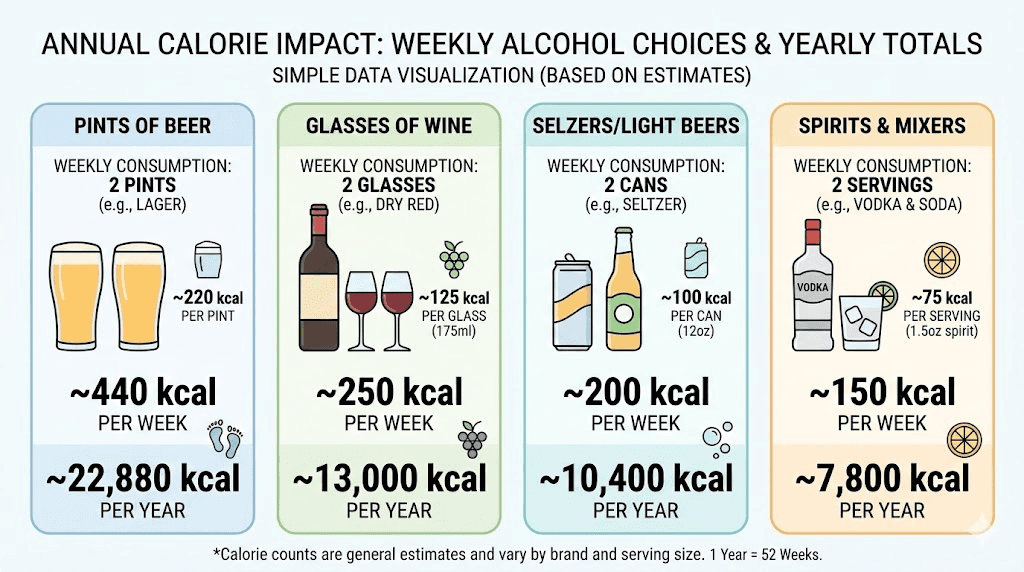
Tirzepatide works partly because it reduces your total calorie intake. Most users eat 500 to 1000 fewer calories per day than they did before starting the medication. That is where much of the dramatic weight loss results come from.
Alcohol threatens this equation directly.
Two craft IPAs add 500 calories. A couple of margaritas add 800 to 1000 calories. A bottle of wine adds 625 calories. In each case, you are effectively erasing an entire day of the calorie deficit that tirzepatide is working to create. And these are empty calories, providing zero nutritional value, zero protein, zero fiber, nothing that supports the nutritional needs of someone on a GLP-1 medication.
Here is the calorie comparison that actually matters for tirzepatide users:
Drink | Serving size | Calories | Sugar/Carbs | Tirzepatide safety rating |
|---|---|---|---|---|
Vodka soda | 1.5 oz + soda | 97 | 0g / 0g | Best |
Tequila soda | 1.5 oz + soda | 97 | 0g / 0g | Best |
Gin soda | 1.5 oz + soda | 97 | 0g / 0g | Best |
Brut champagne | 5 oz | 95 | 1g / 1.5g | Good |
Sauvignon Blanc | 5 oz | 115 | 1g / 2g | Good |
Pinot Noir | 5 oz | 123 | 0.5g / 3.4g | Good |
Light beer | 12 oz | 103 | 1g / 5g | Moderate |
Whiskey neat | 1.5 oz | 97 | 0g / 0g | Moderate |
Regular beer | 12 oz | 153 | 1g / 13g | Poor |
IPA | 12 oz | 250 | 2g / 20g | Poor |
Margarita | 8 oz | 300+ | 25g+ / 30g+ | Avoid |
Pina colada | 8 oz | 450+ | 35g+ / 40g+ | Avoid |
The pattern is clear. Spirits with zero-calorie mixers win by a wide margin. Dry wines hold the middle ground. Everything with added sugar, high carbs, or excessive volume sits at the bottom.
Think about it in terms of your long-term weight maintenance goals. One vodka soda per week adds roughly 5,000 calories per year. One bottle of wine per week adds 32,500 calories per year. That is the difference between staying on track and wondering why the scale is not moving.
How to drink safely on tirzepatide: the complete protocol
Choosing the right drink is only half the equation. How you drink matters just as much as what you drink. These protocols come from clinical recommendations, pharmacological research, and the practical wisdom of experienced tirzepatide users.
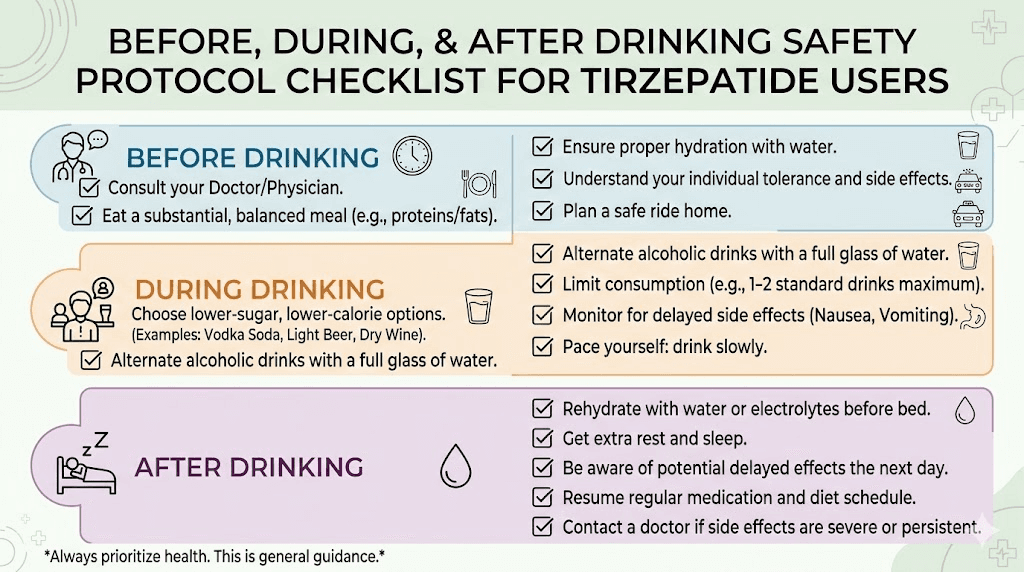
Before drinking
Eat a balanced meal first. This is non-negotiable. Never drink on an empty stomach while on tirzepatide. The medication already alters your metabolic processing, and alcohol on an empty stomach dramatically increases hypoglycemia risk. Choose a meal with protein, healthy fats, and complex carbohydrates. Something from your recommended foods list works perfectly.
Hydrate beforehand. Drink at least 16 oz of water in the hour before your first alcoholic drink. Tirzepatide already puts you at elevated dehydration risk because of its gastrointestinal effects. Starting dehydrated and then adding a diuretic (alcohol) is asking for trouble. This simple step prevents more problems than any other single recommendation.
Check your dose timing. If you just took your weekly tirzepatide dose, consider waiting 48 to 72 hours before drinking. Side effects are strongest in the days immediately following injection, and adding alcohol during that window amplifies nausea, bloating, and GI distress. Many users find that the second half of their dosing week, days 4 through 7, is a better window for social drinking. If you are still figuring out your optimal injection timing, this is one more factor to consider.
Set a limit before you start. Decide on one drink. Maybe two if it is a special occasion and you have built up tolerance awareness over several weeks. Make this decision before you are holding a glass, not after. The delayed absorption effect of tirzepatide means your body may not give you accurate signals about how intoxicated you are becoming.
While drinking
One water for every alcoholic drink. Not optional. Not something you will get around to later. One full glass of water between every alcoholic beverage. This combats dehydration, slows your overall alcohol consumption pace, and gives your already-slow-processing stomach more time to handle each drink. Dehydration is a real risk because it can contribute to constipation and headaches that compound with medication side effects.
Sip, do not chug. The delayed gastric emptying from tirzepatide means your body needs more time to process each sip. Nursing a drink over 45 to 60 minutes gives your system the best chance to handle the alcohol without overwhelming your GI tract. If you are used to finishing drinks quickly, this is a habit worth retraining.
Monitor for symptoms. Pay attention to how you feel, not just intoxication levels. Watch for unusual nausea, abdominal pain, excessive belching, or feeling "off" in a way that does not match your alcohol intake level. These can be early signs of GI distress that will escalate if you keep drinking. Trust those signals, especially in the first few months of treatment when you are still learning how your body responds to the combination.
Skip the second drink if you feel any GI symptoms. Any nausea, any bloating, any acid reflux, stop. These symptoms will not improve with more alcohol. They will get worse. Dramatically worse. Switch to water or sparkling water with lime for the rest of the evening. Your stomach will thank you in the morning.
After drinking
Hydrate aggressively before bed. Drink at least 16 to 24 oz of water before sleeping. Add electrolytes if you have them. Tirzepatide-related dehydration combined with alcohol-related dehydration can cause significant next-day symptoms that go beyond a typical hangover. Headache, muscle cramps, extreme fatigue, and dizziness can all result from this double dehydration effect.
Have a light snack available. If you experience blood sugar symptoms during the night or first thing in the morning, such as shakiness, confusion, sweating, or unusual hunger, have a small snack ready. A few crackers, a banana, or a handful of nuts can stabilize blood sugar quickly. This is especially important if you are on a higher dose of tirzepatide.
Do not take your next dose on a hangover. If you wake up feeling nauseous, dehydrated, or generally unwell from drinking, it is wise to delay your scheduled tirzepatide dose by a day rather than stacking medication side effects on top of hangover symptoms. One day of delay will not affect your overall treatment timeline significantly, but injecting while hungover can make you feel terrible for days.
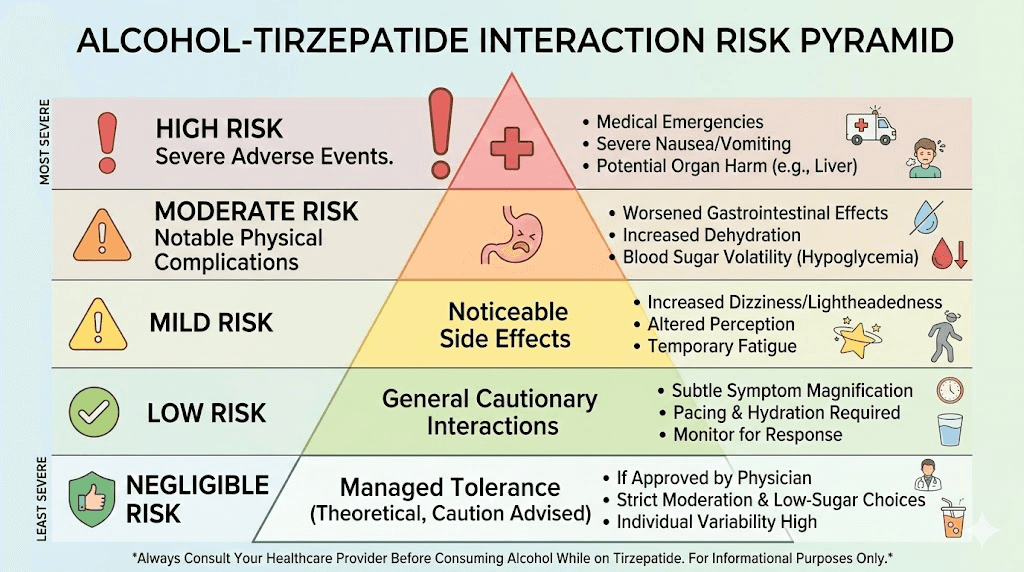
The five biggest risks of mixing alcohol and tirzepatide
Understanding the risks does not mean avoiding alcohol entirely. It means knowing exactly what you are managing so you can make informed decisions. Here are the five most significant concerns, ranked by clinical severity.
Risk 1: Pancreatitis
This is the one that gets the scary headlines. Both alcohol and tirzepatide independently carry associations with pancreatitis, though the actual risk with tirzepatide is extremely low. A meta-analysis examining pancreatic safety of tirzepatide found no significant increase in pancreatitis risk compared to placebo across clinical trials lasting 12 to 72 weeks.
However. Tirzepatide does elevate pancreatic enzyme levels (amylase and lipase) in some users. Heavy alcohol use independently stresses the pancreas. Combining the two, especially in people with a history of pancreatitis or heavy drinking, creates a cumulative risk that exceeds either factor alone.
A recent case report documented fatal, fulminant necrotizing pancreatitis associated with tirzepatide initiation, though the exact role of contributing factors remains under investigation. This is extremely rare, but it highlights why moderation is not optional.
Practical takeaway: limit alcohol to one drink per occasion. If you experience persistent upper abdominal pain that radiates to your back, especially after drinking, seek immediate medical attention. This is not the kind of pain you sleep off.
Risk 2: Severe dehydration
Tirzepatide causes nausea, vomiting, and diarrhea in a meaningful percentage of users. These side effects cause fluid loss. Alcohol is a diuretic. It causes additional fluid loss. The combination can push you into clinically significant dehydration faster than you expect.
The FDA prescribing information for tirzepatide includes a specific warning about acute kidney injury due to dehydration associated with gastrointestinal adverse reactions. Adding alcohol to this equation is adding fuel to a fire that may already be smoldering. Users who already manage diarrhea or dry mouth side effects need to take this seriously.
Signs of dangerous dehydration include dark yellow urine, dizziness when standing up, heart racing at rest, and extreme thirst that water does not seem to quench. If you notice these after a night of drinking on tirzepatide, you may need more than just water. Electrolyte drinks, broth, or oral rehydration solutions can help restore what you have lost.
Risk 3: Unpredictable blood sugar drops
We covered this briefly above, but it deserves deeper attention because it is the most commonly underestimated risk.
Alcohol inhibits gluconeogenesis, the process by which your liver makes new glucose from non-carbohydrate sources. Tirzepatide enhances insulin sensitivity and modifies glucagon secretion. Together, these effects can create blood sugar drops that are delayed by hours, appear without warning, and mimic symptoms of intoxication, making them dangerous to identify and treat.
This matters even if you do not have diabetes. Even if you are using tirzepatide exclusively for weight loss. The risk increases significantly for users who skip meals because of appetite suppression, exercise earlier in the day, or are on higher doses.
Keep glucose tablets or a sugary drink (juice, regular soda) accessible on nights you plan to drink. Not because you will definitely need them. Because the one time you do, you will need them immediately.
Risk 4: Amplified GI side effects
The most common side effects of tirzepatide are gastrointestinal. Nausea affects up to 29% of users at the 15mg dose. Diarrhea, vomiting, decreased appetite, constipation, and abdominal pain are all documented. Alcohol irritates the same gastrointestinal system that tirzepatide is already stressing.
The practical result is predictable but still catches people off guard. A drink that used to cause no GI symptoms now causes significant nausea. A second drink triggers acid reflux that lasts until the next morning. Three drinks can cause severe bloating and abdominal discomfort that disrupts your entire next day.
This is especially pronounced during the first three months of treatment, during dose escalation periods, and in the 48 hours following each weekly injection. Users who have stabilized on their maintenance dose generally tolerate moderate alcohol better than those still titrating up.
Risk 5: Undermining your weight loss results
This is not a medical emergency, but for many users, it is the most personally frustrating risk. Alcohol does not just add empty calories. It actively interferes with the metabolic processes that make tirzepatide effective.
Alcohol temporarily halts fat oxidation. Your body prioritizes metabolizing alcohol over everything else, including the fat burning that tirzepatide promotes. While your liver processes alcohol, fat metabolism essentially stops. For someone relying on tirzepatide to drive consistent weight loss, regular alcohol consumption can create a pattern of two steps forward, one step back.
Alcohol also disrupts sleep quality. Even if you fall asleep quickly after drinking, alcohol fragments your sleep architecture, reducing restorative deep sleep and REM sleep. Poor sleep increases cortisol, increases hunger hormones, and directly counteracts the appetite-suppressing effects of tirzepatide. If you are already dealing with tirzepatide-related sleep issues, adding alcohol makes the problem significantly worse.
And then there is the food decision cascade. Alcohol lowers inhibitions, including your carefully maintained dietary discipline. The resolve that kept you eating the right foods all week can evaporate after two drinks when someone suggests ordering nachos. One evening of alcohol-fueled eating can undo three to four days of calorie deficit.
Special situations: navigating real social scenarios
Theory is useful. Practice is where things get complicated. These scenarios address the situations tirzepatide users actually face, not the sanitized versions in clinical guidelines.
Work events and professional networking
Someone hands you a glass of champagne at a company event. You do not want to explain your medication to a room of colleagues. You also do not want to be the only person without a drink in a culture where that draws attention.
Order a club soda with lime in a rocks glass. It looks identical to a vodka soda. Nobody will know the difference, and nobody will ask. If you do want an actual drink, one glass of Brut champagne (90 to 100 calories) is the most socially appropriate option that also happens to be one of the lower-risk choices.
If pressed about why you are not drinking more, a simple "I am driving" or "I am on medication" shuts down the conversation without requiring details. Most people are far less interested in your drinking habits than you fear.
Dinner parties and celebrations
These are harder because the drinking window is longer and the social pressure is more persistent. Choose dry wine and limit yourself to one glass consumed slowly throughout the meal. Having food in your stomach, following your recommended eating approach, significantly buffers the alcohol absorption.
If the host pours generously, it is perfectly acceptable to leave wine in your glass. You do not need to finish every pour. Alternatively, ask for a smaller portion by saying something like, "Just a taste, please." Hosts typically respect this.
Vacations and holidays
The longest and most challenging drinking scenarios. A week-long vacation with daily happy hours can seriously derail your progress if you approach it without a plan.
Set a daily limit of one drink and stick to it. Choose the same low-risk option every day so the decision does not require willpower each time. A daily vodka soda at happy hour adds about 680 calories over a week, which is manageable. A daily couple of margaritas adds 4,200 or more calories, which is enough to stall your weight loss progress for weeks.
Make sure you are maintaining your injection schedule during travel. Read our travel guide for tirzepatide for specific storage and transportation recommendations.
Dates
First dates and tirzepatide create a uniquely awkward situation. You want to be relaxed. A drink helps. But you also do not want to spend the evening running to the bathroom because your medication and that cocktail are having a disagreement.
Stick to the Tier 1 options. A vodka soda or a gin and soda looks like a "normal" drink and carries the lowest GI risk. Eat dinner first, or at least have an appetizer before your drink arrives. If you feel any nausea or discomfort, switch to sparkling water. A bad reaction on a date is far more memorable than an explanation that you are taking it easy tonight.
Alcohol and tirzepatide by dose level
Your tolerance and risk profile change as your dose changes. This is something most guides completely ignore, but it matters enormously in practice.
Starting doses (2.5mg to 5mg)
At the starting dose, your body is still adjusting to the medication. GI side effects are typically at their peak during this phase, not because the dose is high, but because everything is new. Adding alcohol during the first four weeks is strongly discouraged. Your body is already dealing with enough changes without introducing another variable.
If you absolutely must drink during this phase, one Tier 1 drink (vodka soda, tequila soda) consumed with food is the safest approach. Pay extremely close attention to how you feel. Many users find that even small amounts of alcohol during the initial adjustment period cause disproportionate nausea and discomfort.
Mid-range doses (7.5mg to 10mg)
Most users have adapted to the medication by this point. GI side effects are typically more predictable, and you have a better understanding of your personal tolerance. This is where cautious social drinking becomes more practical.
One to two Tier 1 or Tier 2 drinks per week is reasonable for most people at this dose level. Space drinking occasions at least three days apart, and try to time them for the later half of your dosing week when medication effects are milder. Use the dosage chart to track where you are in your titration schedule.
Higher doses (12.5mg to 15mg)
At higher doses, tirzepatide effects on gastric emptying and appetite suppression are more pronounced. Paradoxically, some long-term users report that alcohol tolerance stabilizes somewhat at this level because the body has fully adapted to the medication. Others find that higher doses make alcohol even less appealing due to the neurological reward dampening effect.
The blood sugar risk remains constant or increases at higher doses. Continue following all safety protocols regardless of how "adjusted" you feel. And watch out for the plateau effect, where some users increase alcohol consumption out of frustration when weight loss stalls, creating a vicious cycle.
What about "tirzepatide-friendly" cocktail recipes?
Social media is full of "GLP-1 friendly cocktail" recipes. Some are genuinely helpful. Most are marketing disguised as health advice. Here is how to evaluate them and a few recipes that actually work.
The rules for tirzepatide-compatible cocktails
A cocktail is compatible with tirzepatide if it meets ALL of these criteria:
Total sugar under 3 grams per serving
Total calories under 150
No high-acid citrus as a primary ingredient (lemon and lime juice in small amounts are fine, but a drink built around orange juice or grapefruit juice is going to aggravate reflux)
No dairy or cream-based ingredients (these compound the delayed gastric emptying problem)
Standard serving size (no oversized glasses or double pours)
Three recipes that actually work
The clean vodka spritz. 1.5 oz vodka, 4 oz plain soda water, squeeze of fresh lime, a few fresh mint leaves if available. Under 100 calories. Zero sugar. Refreshing enough that you do not feel like you are drinking punishment.
The skinny paloma. 1.5 oz tequila blanco, 2 oz fresh grapefruit juice (small amount is fine), 2 oz soda water, pinch of salt on the rim. About 120 calories. The grapefruit juice provides flavor without excessive sugar. Use fresh juice, not the bottled kind loaded with added sweetener.
The cucumber gin cooler. 1.5 oz gin, 4 oz soda water, 3 to 4 thin cucumber slices, squeeze of lemon. Under 100 calories. The cucumber adds a refreshing quality that makes the drink feel more substantial than it is. This one pairs especially well with the lighter meals typical of tirzepatide users.
Avoid any recipe that calls for simple syrup, agave nectar, honey, fruit purees, cream of coconut, or flavored liqueurs. These ingredients turn a manageable drink into a sugar bomb.
The research on GLP-1 medications and reduced alcohol desire
Something unexpected is happening in the GLP-1 world, and it has major implications for how you think about alcohol on tirzepatide.
A growing body of research suggests that GLP-1 receptor agonists, including tirzepatide, may actually reduce the desire to drink alcohol. Not through willpower. Through neurochemistry.
What the studies show
A retrospective study published in Scientific Reports analyzed data from individuals with obesity taking either semaglutide or tirzepatide. Both medications were associated with significant reductions in alcohol consumption and binge drinking episodes.
Preclinical research published in The Lancet demonstrated that tirzepatide attenuated dopamine reward signaling and suppressed alcohol drinking and relapse-like behaviors in rodent models. The drug literally makes the reward pathway in the brain respond less strongly to alcohol.
A Phase 2 clinical trial evaluating semaglutide, a related GLP-1 medication, showed robust reductions in alcohol consumption during laboratory-based self-administration tasks. Participants reported fewer drinks per drinking day and lower weekly craving scores, with large effect sizes.
An ongoing clinical trial (NCT06939088) is currently studying the effects of tirzepatide specifically on alcohol intake, with results expected in the coming years.
What this means for you
If you have noticed that you simply do not want to drink as much since starting tirzepatide, you are not imagining it. The medication may be reducing your alcohol cravings through the same dopamine modulation pathway that reduces food cravings. Many users on the SeekPeptides platform report this experience, describing it as a quiet shift rather than a dramatic change. The drink just does not call to them the way it used to.
This is potentially one of the most significant secondary benefits of tirzepatide that nobody talks about enough. For users who previously relied on alcohol for stress relief, social lubrication, or habit, the reduced desire can be genuinely liberating.
However, if you are someone with alcohol use disorder or a history of heavy drinking, this neurochemical shift is worth discussing with your healthcare provider. The reduced desire does not mean alcohol is suddenly safe in larger quantities. It means your relationship with alcohol may be changing in ways that deserve professional guidance.
Alcohol and specific tirzepatide side effects: what gets worse
Not all tirzepatide side effects interact with alcohol equally. Here is a specific breakdown of which side effects get amplified and which are relatively unaffected.
Nausea (significantly worse)
If tirzepatide already makes you nauseous, alcohol will almost certainly make it worse. Alcohol irritates the gastric lining, stimulates acid production, and the delayed gastric emptying from tirzepatide means both the alcohol and the stomach acid sit in your stomach longer than normal. Users in the early weeks of treatment are especially vulnerable.
Management: eat before drinking, sip slowly, and stop immediately if nausea begins. Ginger tea or ginger supplements before a planned drinking occasion can help buffer the stomach.
Acid reflux and heartburn (significantly worse)
Up to 8% of tirzepatide users experience gastroesophageal reflux. Alcohol relaxes the lower esophageal sphincter, the muscle that keeps stomach acid from flowing back into your throat. Red wine, cocktails, and beer are the worst offenders. Even clear spirits can trigger reflux in sensitive individuals.
Management: choose Tier 1 drinks, remain upright for at least 2 to 3 hours after drinking, and consider taking an antacid before your planned drinking occasion if you are prone to reflux.
Fatigue (moderately worse)
Fatigue on tirzepatide is common. Alcohol disrupts sleep quality even in small amounts. The combination creates a next-day fatigue that goes beyond what either would cause alone. Users who already struggle with energy levels should limit drinking to weekends when a slower next day is more tolerable.
Constipation (moderately worse)
Alcohol is dehydrating. Dehydration worsens constipation. If constipation is already a problem on your medication, drinking without aggressive hydration will make it worse. Increase water intake by at least 50% on days you drink.
Headaches (moderately worse)
GLP-1 related headaches combined with alcohol-induced dehydration headaches create a compounding effect. Stay ahead of this with aggressive hydration before, during, and after drinking.
Injection site reactions (not significantly affected)
Injection site reactions do not appear to be affected by alcohol consumption. This is one area where the two do not interact meaningfully.
Muscle pain and body aches (mildly worse)
Muscle pain on tirzepatide may be slightly worsened by alcohol through increased inflammation and dehydration. The effect is modest compared to GI interactions but worth noting for users who already experience body aches.
Tirzepatide, alcohol, and your liver
Your liver processes both tirzepatide and alcohol, which raises an important question about hepatic workload.
Tirzepatide itself does not appear to cause significant liver damage based on clinical trial data. In fact, emerging research from Yale School of Medicine suggests that GLP-1 receptor agonists may actually protect the liver during alcohol consumption. The study found that GLP-1 receptor activation reduces inflammation and oxidative stress in liver tissue exposed to alcohol.
However, this protective effect does not give you license to drink heavily. Heavy alcohol use causes fatty liver disease, inflammation, and eventual cirrhosis regardless of what medications you are taking. If you have pre-existing liver concerns, even moderate alcohol consumption on tirzepatide warrants a conversation with your doctor.
For users with healthy livers and moderate alcohol consumption habits, the combination does not appear to create additive liver risk. The liver can process both without difficulty as long as you are staying within one to two drinks per occasion.
Frequently asked questions
Can I have one glass of wine on tirzepatide?
Yes, for most users. A single 5 oz glass of dry wine (Sauvignon Blanc, Pinot Grigio, or Pinot Noir) consumed with food is generally well tolerated. The key factors are eating beforehand, drinking water alongside the wine, and timing the occasion for mid-week in your dosing cycle rather than immediately after your weekly injection. If you experience significant GI symptoms from the medication itself, wine may amplify those effects.
How long after my tirzepatide injection can I drink?
Most healthcare providers and experienced users recommend waiting at least 48 to 72 hours after injection. Side effects peak in the first 24 to 48 hours after dosing, and adding alcohol during this window significantly increases the risk of nausea, vomiting, and dehydration. The second half of your dosing week (days 4 through 7) generally provides a better window for moderate alcohol consumption.
Will alcohol stop tirzepatide from working?
Occasional moderate drinking will not negate the medication effects. Regular drinking can slow your weight loss progress through added calories, disrupted sleep, impaired fat oxidation, and alcohol-related food choices. The medication will still be active in your system, but its effectiveness for weight loss is reduced when working against a consistent alcohol intake.
Is beer or wine safer on tirzepatide?
Wine is generally safer, specifically dry varieties. Beer introduces more volume, more carbs, and more carbonation into a stomach that is already emptying slowly. A 5 oz glass of dry wine at 115 calories is easier on your system than a 12 oz beer at 150 calories. However, both are acceptable in moderation if you follow the safety protocols outlined above.
Can I drink hard seltzer on tirzepatide?
Sugar-free hard seltzers (like White Claw or Truly) are a reasonable choice at approximately 100 calories and 1 to 2 grams of sugar per can. They rank between Tier 1 and Tier 2 options. The carbonation may cause some bloating, but the low sugar and calorie content make them preferable to beer, cocktails, or sweet wines. Check labels carefully, as some flavored varieties contain significantly more sugar.
Does tirzepatide make hangovers worse?
Many users report worse hangovers on tirzepatide, even from amounts of alcohol that previously caused no issues. The mechanism is likely multifactorial: enhanced dehydration from the medication, delayed alcohol absorption leading to extended blood alcohol exposure, and altered sleep quality. GLP-1 related fatigue compounds the next-day exhaustion. Prevention through hydration and moderation is far more effective than treating a tirzepatide-amplified hangover after the fact.
Should I skip my dose if I plan to drink?
Do not skip your scheduled dose to accommodate drinking. Maintaining consistent dosing is critical for medication effectiveness. Instead, plan your drinking occasions around your dosing schedule, aiming for the latter half of your dosing week. If you are concerned about timing, discuss adjusting your injection day with your healthcare provider rather than skipping doses.
What if I used to be a heavy drinker before starting tirzepatide?
If you have a history of heavy drinking or alcohol use disorder, discuss alcohol consumption with your healthcare provider before starting tirzepatide. The medication may reduce alcohol cravings through neurochemical mechanisms, which can be beneficial, but the transition requires professional monitoring. Some users with previous heavy drinking patterns find that tirzepatide naturally reduces their desire to drink, but this should be managed alongside, not instead of, professional support.
External resources
ClinicalTrials.gov: Effects of tirzepatide on alcohol intake
Scientific Reports: Semaglutide and tirzepatide reduce alcohol consumption study
For researchers and users who want to optimize every aspect of their tirzepatide protocol, SeekPeptides offers the most comprehensive resource available. From diet planning and supplement guidance to dosing protocols and timeline tracking, members access evidence-based guides and a community of thousands navigating the same questions you are.
In case I do not see you, good afternoon, good evening, and good night. May your drinks stay light, your hydration stay strong, and your progress stay uninterrupted.