Feb 23, 2026
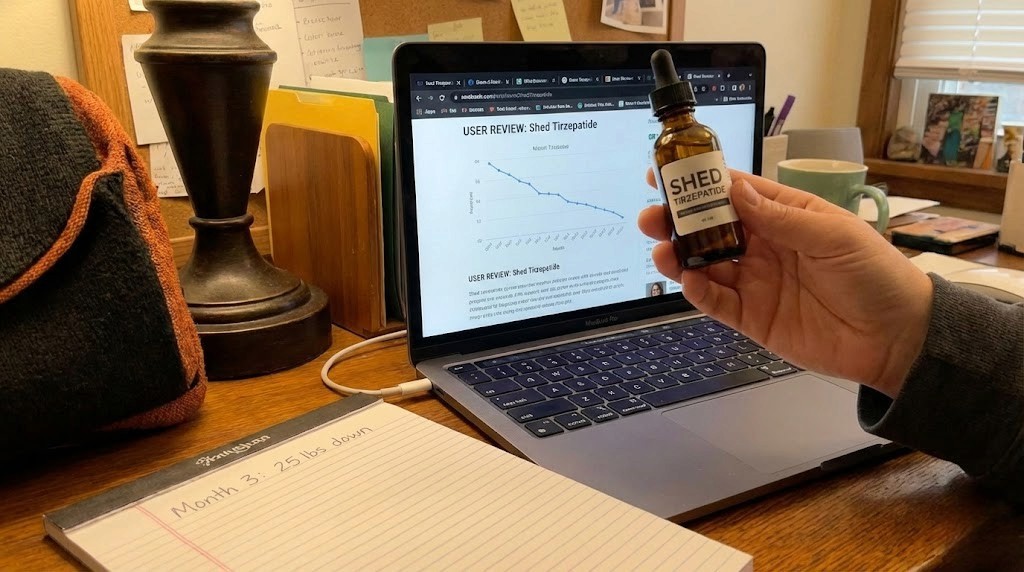
After analyzing dozens of telehealth weight loss platforms and reading hundreds of customer reviews, one name keeps surfacing in GLP-1 weight loss conversations. Shed. Also known as ShedRx, this Phoenix-based telehealth company has built a following of over 150,000 members who use its tirzepatide and semaglutide programs to lose weight without in-person doctor visits. The company claims more than 800,000 pounds lost across its member base, with an average weight reduction of 9.8 percent. Those are bold numbers. But bold numbers mean nothing without context, transparency, and honest evaluation.
Tirzepatide itself has become the most talked-about weight loss medication since semaglutide changed the conversation around obesity treatment. Clinical trials show tirzepatide weight loss results of 15 to 22 percent of total body weight, depending on dosage and duration. That kind of efficacy draws attention. It also draws companies eager to capitalize on demand. So the question becomes not whether tirzepatide works, because the science is clear, but whether Shed is the right platform to access it.
This guide breaks down everything about the Shed tirzepatide program. The pricing structure across all medication formats. The dosing protocols and how they compare to clinical guidelines. Real customer experiences from Trustpilot, ConsumerAffairs, and the Better Business Bureau. The side effect profile and what Shed does (or does not do) to manage it. How Shed stacks up against other telehealth providers offering compounded tirzepatide. And the cancellation policies that have generated both praise and frustration. Whether you are considering Shed specifically or evaluating affordable tirzepatide options more broadly, this is the reference you need before spending a single dollar.
What is Shed (ShedRx)?
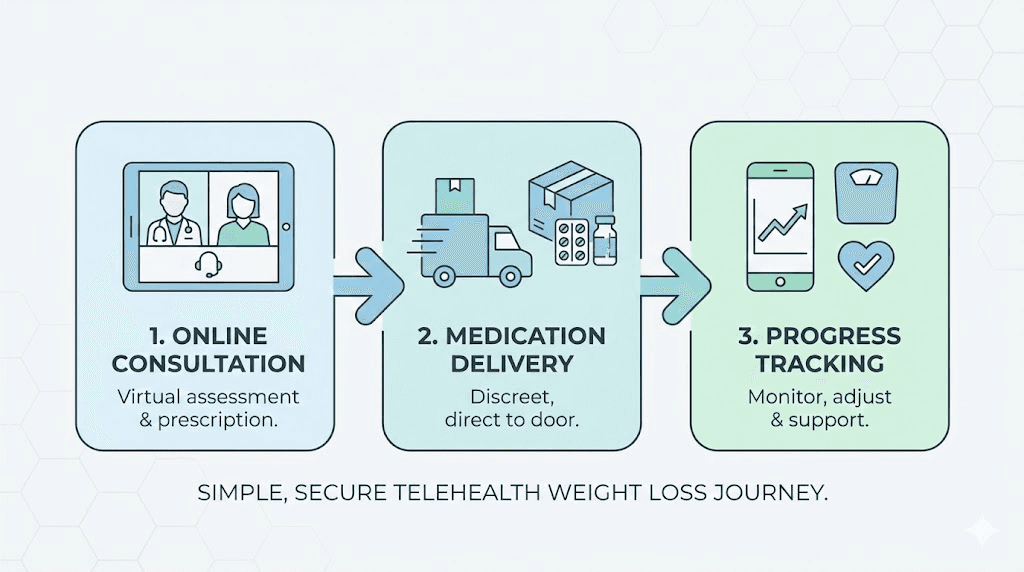
Shed, operating under the brand name ShedRx at tryshed.com, is a telehealth weight loss company founded in the United States. The company headquarters sits in Phoenix, Arizona, and the platform operates nationwide. Unlike traditional weight loss clinics that require office visits, Shed delivers everything digitally. Consultations happen online. Prescriptions go through partner pharmacies. Medications ship directly to your door.
The core promise is simple.
Shed connects patients with licensed medical providers who can prescribe GLP-1 receptor agonist medications for weight loss. The company started with compounded semaglutide and expanded into compounded tirzepatide, oral GLP-1 formats, and eventually FDA-approved brand-name options like Wegovy and Zepbound. That expansion matters because it gives members flexibility in how they receive their tirzepatide, whether through injection or oral formats.
What sets Shed apart from some competitors is the support structure built around the medication. Each member gets access to a care team that includes a licensed provider, a registered nurse, a registered dietitian, a certified health coach, and a member success manager. That is five distinct roles dedicated to guiding your weight loss journey. The dietitian helps with nutrition planning, which aligns with what we know about tirzepatide diet planning and its importance for sustained results. The health coach focuses on behavior change and sustainable habit formation. The member success manager handles logistics, billing questions, and program navigation.
Shed also offers a 10 percent weight loss guarantee. If you are a new GLP-1 user and do not lose at least 10 percent of your starting body weight within nine months, the company offers a full refund. That guarantee signals confidence in the medication, though the fine print about eligibility requirements deserves careful reading before you assume the guarantee applies to your situation.
The platform accepts FSA payments but does not work with insurance. This is a cash-pay model, which means the full cost comes out of pocket every month. For people with insurance coverage for weight loss medications, that distinction matters significantly when calculating long-term affordability.
How the Shed tirzepatide program works
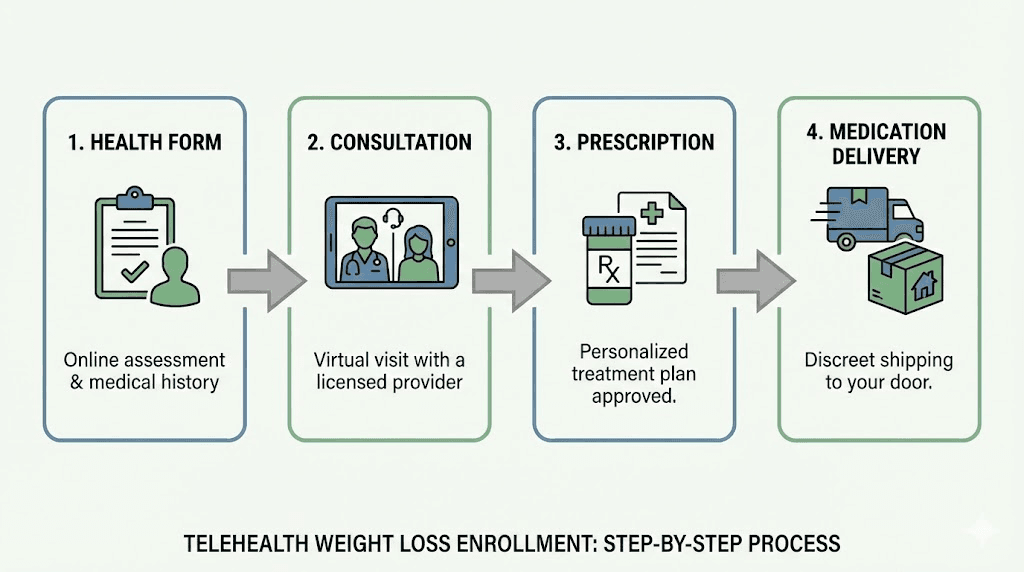
Getting started with Shed takes less time than most people expect. The company has streamlined the process into four steps, and the entire onboarding can happen in a single day if the medical review goes quickly.
Step one: complete the health assessment
The process begins with a five-minute online health form at tryshed.com. This questionnaire collects your medical history, current medications, weight loss goals, and relevant health conditions. Shed asks about conditions like type 2 diabetes, cardiovascular issues, and thyroid disorders because these affect whether tirzepatide is appropriate and which starting dose makes sense. You do not need to schedule an appointment. You do not need to visit a clinic. You fill out the form on your own time.
Step two: provider review
A licensed medical provider reviews your health assessment. This is not an AI screening tool. An actual physician or nurse practitioner evaluates your information, determines whether you qualify for GLP-1 treatment, and selects the appropriate medication and dosage. The review process typically happens within 24 to 48 hours, though some members report faster turnaround. If the provider needs additional information or has concerns, they reach out through the Shed portal.
Step three: medication ships to your door
Once approved, your medication goes to a partner pharmacy for fulfillment. Shed works with licensed compounding pharmacies for its compounded medications and standard pharmacies for brand-name options. The medication ships directly to your home with all necessary supplies. For injectable tirzepatide, that includes syringes and alcohol swabs. For oral formats, it is the medication itself with dosing instructions.
Shipping timelines vary. Some members receive their medication within three to five business days. Others report longer waits, particularly during periods of high demand or pharmacy backlog. This is one area where customer complaints cluster, and we will address it in detail in the reviews section.
Step four: ongoing support and dose adjustments
The program does not end when medication arrives. Shed provides ongoing access to the care team for questions, side effect management, and dose titration. As your body adapts to tirzepatide, your provider may increase the dose according to the standard tirzepatide dosing protocol. Members communicate with their care team through the Shed portal, and the company offers unlimited provider visits as part of the subscription.
The entire model is built around convenience. No waiting rooms. No commute. No taking time off work for appointments. For people who value efficiency and prefer managing their health digitally, this format works well. For people who want face-to-face interaction with their healthcare provider, the telehealth model may feel impersonal.
Tirzepatide formats available through Shed
One of the biggest advantages Shed holds over many competitors is the variety of tirzepatide formats available. Not everyone wants to inject themselves weekly. Not everyone tolerates injections well. Having multiple delivery methods means more patients can find a format that fits their lifestyle and comfort level.
Compounded tirzepatide injections
This is the most popular format and the closest to what clinical trials used when studying tirzepatide weight loss timelines. Compounded tirzepatide injections are prepared by licensed compounding pharmacies using tirzepatide as the active ingredient. They are administered once weekly via subcutaneous injection, typically in the abdomen, thigh, or upper arm.
The injection format offers the most predictable absorption and the most clinical data supporting its efficacy. If you are choosing between formats and want the option most closely aligned with published research, injectable tirzepatide is that option. Our guide on how to inject tirzepatide in the stomach covers the technique in detail for anyone new to self-injection.
Starting price through Shed: $299 per month.
GLP-1 liquid drops
For members who prefer not to inject, Shed offers tirzepatide in oral liquid drop form. These are taken daily rather than weekly, which changes the dosing rhythm significantly. The tirzepatide drops format uses sublingual delivery, meaning the liquid is held under the tongue for absorption through the oral mucosa.
Oral bioavailability for peptides is generally lower than injectable delivery, which is why the daily dosing schedule exists. More frequent, smaller doses compensate for reduced absorption. Some members prefer this format because it eliminates needles entirely. Others find the daily routine harder to maintain than a single weekly injection.
Starting price through Shed: $229 per month.
GLP-1 lozenges
Lozenges represent another needle-free option. These dissolve in the mouth, delivering tirzepatide through the oral mucosa similar to drops but in a solid format. The convenience factor is high. No measuring. No syringes. No refrigeration concerns like those discussed in our tirzepatide refrigeration guide.
Starting price through Shed: $199 per month.
Oral tirzepatide tablets
Shed also offers oral semaglutide liposomal tablets and, depending on availability, oral tirzepatide options. Liposomal technology encases the peptide in lipid layers to improve absorption through the digestive tract. This is a newer delivery method, and while promising, it has less long-term data than injectable formats. The tablets versus injections comparison is worth reviewing if you are weighing these options.
Starting price through Shed: $299 per month.
FDA-approved Zepbound
For members who want the brand-name, FDA-approved version of tirzepatide, Shed offers Zepbound. This is the same tirzepatide manufactured by Eli Lilly that went through full clinical trials and received FDA approval for chronic weight management. Zepbound comes in pre-filled pens with precise dosing, eliminating concerns about compounding accuracy.
The tradeoff is cost. Zepbound through Shed starts at $349 per month, and the price increases with higher doses. But for members who prioritize FDA approval and brand-name consistency, this option exists within the Shed ecosystem.
Comparing the formats
Format | Frequency | Starting price | Needles required | Clinical data | Best for |
|---|---|---|---|---|---|
Compounded injections | Weekly | $299/mo | Yes | Most extensive | Proven results seekers |
Liquid drops | Daily | $229/mo | No | Limited | Needle-averse members |
Lozenges | Daily | $199/mo | No | Limited | Convenience seekers |
Oral tablets | Daily | $299/mo | No | Emerging | Technology-forward members |
Zepbound (brand) | Weekly | $349/mo | Yes | FDA-approved trials | Brand-name preference |
The choice between formats depends on your priorities. If efficacy and clinical backing matter most, injectable tirzepatide is the strongest option. If avoiding needles is non-negotiable, drops or lozenges provide alternatives. If FDA approval and brand-name quality control matter, Zepbound is the premium choice. Understanding the differences between injectable and oral peptide delivery helps frame this decision properly.
Shed tirzepatide pricing breakdown
Cost is often the deciding factor for people choosing a telehealth weight loss platform. Shed positions itself in the mid-range of the market, not the cheapest option available but significantly less expensive than brand-name medications without insurance. Understanding the full cost picture requires looking beyond the monthly medication price.
Medication costs by type
Here is what Shed charges for each medication category:
Medication | Starting monthly price | Format |
|---|---|---|
Compounded tirzepatide injections | $299 | Weekly injection |
Compounded semaglutide injections | $199 | Weekly injection |
GLP-1 liquid drops | $229 | Daily sublingual |
GLP-1 lozenges | $199 | Daily oral |
Oral semaglutide liposomal tablets | $299 | Daily oral |
Wegovy (brand-name semaglutide) | $349 | Weekly injection |
Zepbound (brand-name tirzepatide) | $349 | Weekly injection |
Metformin + naltrexone + topiramate | $169 | Oral combination |
MIC + B12 | $115 | Injection |
Naltrexone + bupropion | $115 | Oral combination |
These are starting prices. Costs typically increase as your dose escalates. Tirzepatide dosing begins at 2.5 mg and can climb to 15 mg. Higher doses require more medication per vial, which means higher monthly costs. Several customer reviews mention surprise at price increases during dose titration, so budget for escalation from the beginning.
Additional costs to consider
Beyond the monthly medication fee, Shed charges a $49 initial consultation fee. Health coaching, if you want it as an add-on, runs $64.99 per month separately. Supplies like syringes and alcohol swabs are included with injectable medications, which saves some money compared to purchasing them separately.
There are no separate shipping fees mentioned in most Shed materials, though expedited shipping options may carry additional costs. The program is FSA eligible, meaning you can use pre-tax health savings dollars to cover some or all of the cost. However, Shed does not accept insurance, which is a significant consideration for anyone whose plan covers GLP-1 medications.
How Shed pricing compares to alternatives
For context, brand-name Zepbound has a list price of approximately $1,059 per month without insurance. Compounded tirzepatide through other telehealth platforms ranges from roughly $199 to $450 per month depending on the provider and dose. Shed falls in the middle of that range for compounded options and offers Zepbound at a notable discount compared to retail pharmacy pricing.
If cost is your primary concern, comparing affordable compounded tirzepatide options across multiple providers is worthwhile. The cheapest monthly price does not always represent the best value when you factor in support quality, shipping reliability, and medication consistency. Our peptide cost calculator can help you estimate treatment costs across different dosing schedules.
The Shed tirzepatide dosing protocol
Dosing is where the science of tirzepatide meets the practical reality of individual treatment. Shed follows the standard tirzepatide titration schedule that mirrors FDA-approved protocols, though adjustments happen based on individual response and tolerability.
Standard titration schedule
The typical Shed tirzepatide dosing protocol follows this pattern:
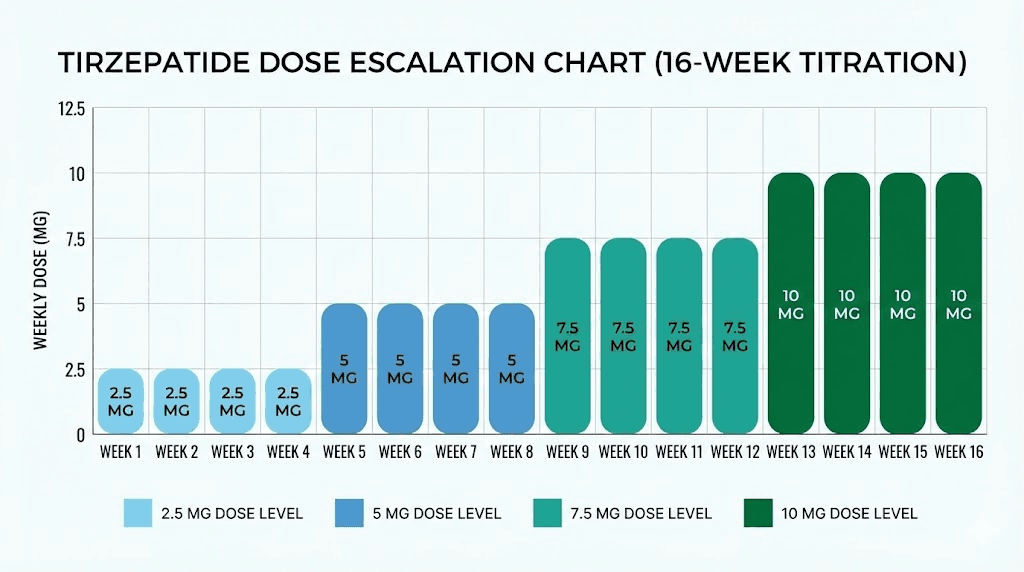
Weeks 1 through 4: 2.5 mg once weekly (initiation dose)
Weeks 5 through 8: 5 mg once weekly
Weeks 9 through 12: 7.5 mg once weekly
Weeks 13 through 16: 10 mg once weekly
Weeks 17 and beyond: 12.5 mg to 15 mg once weekly (maximum dose)
Each increase happens only if the current dose is tolerated well. The 2.5 mg starting dose is intentionally low. It gives your body time to adjust to the dual GIP and GLP-1 receptor activation that makes tirzepatide unique. Rushing through titration increases side effects without improving outcomes. Our detailed guide on tirzepatide dosage in units explains how to convert milligrams to injection units for compounded formulations.
How tirzepatide works in your body
Understanding the mechanism helps explain why the dosing schedule matters. Tirzepatide is a dual GIP and GLP-1 receptor agonist. That means it activates two different incretin hormone receptors simultaneously. GLP-1 receptor activation slows gastric emptying, reduces appetite, and improves insulin sensitivity. GIP receptor activation adds complementary metabolic benefits, including enhanced fat metabolism and additional appetite regulation.
This dual mechanism is why tirzepatide consistently outperforms semaglutide in head-to-head trials. The SURMOUNT-5 trial demonstrated superior weight loss with tirzepatide compared to semaglutide at 72 weeks. For a deeper comparison, our semaglutide versus tirzepatide analysis covers the clinical data in detail, and the blog article on semaglutide versus tirzepatide explores real-world differences.
Most people notice appetite changes within the first one to two weeks. That is fast. The timeline for appetite suppression with tirzepatide varies by individual, but the majority of Shed members report reduced hunger before the first dose increase. Glucose metabolism improvements can begin within three to five days, even before significant weight loss occurs.
What the clinical trials show
The SURMOUNT clinical trial program is the largest body of evidence supporting tirzepatide for weight loss. Here are the key findings across the trial series:
SURMOUNT-1 enrolled 2,539 adults with obesity. At 72 weeks, participants on the 5 mg dose lost an average of 16 percent of their body weight. The 10 mg group lost 21.4 percent. And the 15 mg group lost 22.5 percent. Those numbers are unprecedented for a pharmaceutical weight loss intervention.
SURMOUNT-4 looked at what happens when you continue treatment versus stopping. Participants who maintained tirzepatide for 88 weeks achieved a 25.3 percent total weight reduction. Those who switched to placebo at week 36 regained weight, ending at just 9.9 percent total reduction. The message is clear. Continuation matters for maintaining results.
SURMOUNT-5 compared tirzepatide directly against semaglutide. Tirzepatide won on both primary endpoints: total body weight reduction and waist circumference reduction at 72 weeks. This trial is particularly relevant when evaluating providers like Shed that offer both medications, because it gives data-driven reasons to prefer tirzepatide for maximum weight loss. The comparison between semaglutide and tirzepatide side effects also shows important differences.
Dose adjustments and microdosing
Not everyone follows the standard titration schedule perfectly. Some members experience significant side effects at certain dose levels, requiring a pause or slower increase. Shed providers can adjust the schedule based on tolerability, which is one advantage of having a dedicated medical team rather than a one-size-fits-all algorithm.
Some members explore microdosing tirzepatide as a strategy to minimize side effects while maintaining weight loss momentum. Microdosing involves taking smaller, more frequent doses rather than the standard weekly injection. Our microdose tirzepatide schedule guide covers this approach in detail, though any dosing changes should always go through your prescribing provider.
What real customers say about Shed tirzepatide
Customer reviews tell a story that marketing materials cannot. Shed has accumulated reviews across Trustpilot, ConsumerAffairs, and the Better Business Bureau, and the picture they paint is nuanced. There are genuine success stories. There are also real frustrations. Both deserve honest examination.
The positive experiences
Shed holds a 4.5 out of 5 rating on Trustpilot based on over 500 reviews, with 79 percent of reviewers giving five stars. That is a strong showing for a telehealth company in a space where complaints are common.
The most frequent praise focuses on three areas. First, the care team. Members consistently highlight the quality of their nurses, health coaches, and member success managers. People feel supported, not just medicated. Second, the ease of the process. From enrollment to medication delivery, the streamlined experience earns positive mentions repeatedly. Third, the results. Members report weight loss ranging from 15 to over 50 pounds, with many crediting tirzepatide specifically for breaking through plateaus that diet and exercise alone could not overcome.
One recurring theme in positive reviews is the responsiveness of the nursing staff. Members describe getting answers to questions within hours, not days. For people new to injectable medications and navigating how fast tirzepatide works, that accessibility matters enormously.
The negative experiences
Nine percent of Trustpilot reviews give Shed one star, and the complaints are specific enough to warrant attention.
Medication delays top the list. Multiple reviewers describe being charged for a month of medication that did not ship for weeks. Some report going 15 or more days without receiving their approved medication while their account showed active billing. When your body has adapted to weekly tirzepatide injections, an unexpected gap creates both physical discomfort and frustration. Missing doses can affect your tirzepatide effectiveness and disrupt the metabolic benefits you have built.
Billing concerns appear frequently. Some members report being charged earlier than their billing date. Others describe difficulty getting refunds for medications that were charged but never shipped. The pattern is not universal, as most members report smooth billing, but it appears often enough to flag as a risk.
Communication breakdowns during problem resolution are another sore point. When things go right, Shed communication is praised. When things go wrong, some members describe difficulty reaching someone who can actually fix the issue. Email-only contact during disputes frustrates members who want to speak with a human being.
Better Business Bureau complaints
The BBB profile for Shed shows filed complaints, with common themes including medication not being shipped despite payment, difficulty canceling accounts, and charges occurring without corresponding service delivery. Shed management does respond to BBB complaints, typically directing members to patient portals and private communication channels for resolution. The existence of these complaints does not make Shed fraudulent, but it does suggest operational growing pains that prospective members should know about.
How to interpret the reviews
Every telehealth weight loss company has negative reviews. The question is whether the ratio and nature of complaints indicate systemic problems or isolated incidents. Shed having 79 percent five-star reviews and 9 percent one-star reviews places it in a similar range to most established telehealth providers. The specific complaints about shipping delays and billing suggest operational issues rather than fraudulent behavior, which is consistent with a rapidly growing company scaling its pharmacy partnerships.
If you decide to use Shed, document everything. Screenshot your enrollment terms. Save all billing confirmations. Track shipping notifications. This protects you in the event of a dispute and gives you clear documentation if you need to escalate a complaint.
Shed tirzepatide side effects and safety
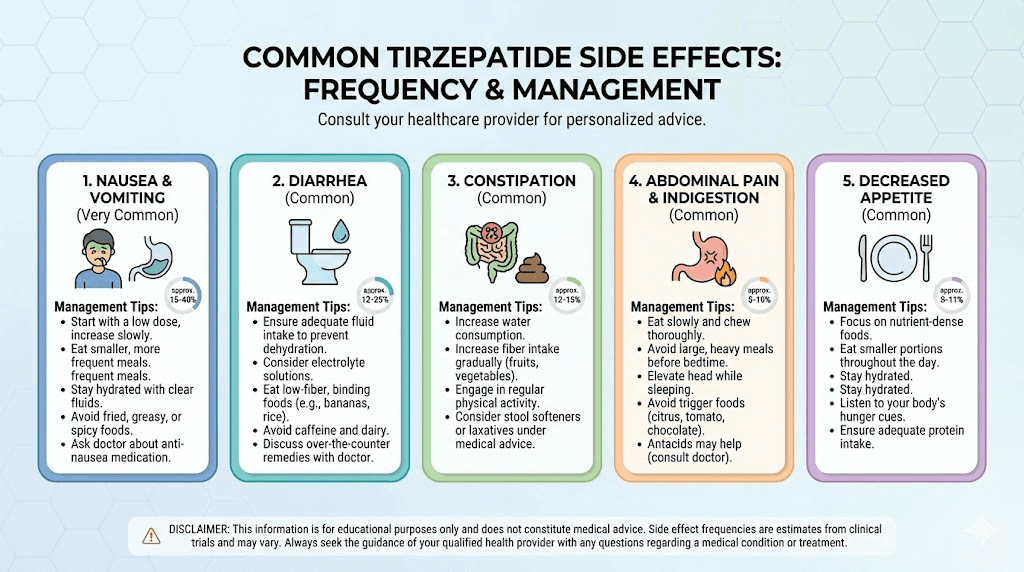
Tirzepatide side effects are real. They are also predictable, manageable, and for most people, temporary. Understanding what to expect and how to respond makes the difference between a rough first few weeks and an unnecessarily miserable experience.
Common side effects
The most frequently reported side effects of tirzepatide, whether through Shed or any other provider, are gastrointestinal. Clinical trial data from the SURMOUNT series shows these incidence rates:
Nausea: approximately 20 percent of patients
Diarrhea: approximately 16 percent of patients
Vomiting: approximately 9 percent of patients
Constipation: varies by dose level
Decreased appetite: expected therapeutic effect
Abdominal pain: less common but reported
Most gastrointestinal side effects are mild to moderate and occur during the first few weeks of treatment or after dose increases. They tend to diminish as your body adapts. The duration of tirzepatide diarrhea and the management of tirzepatide constipation are covered in dedicated guides for anyone dealing with these specific symptoms.
Less common side effects
Beyond the gastrointestinal basics, tirzepatide can cause other effects that catch some members off guard:
Fatigue is reported by a meaningful subset of users, particularly in the early weeks. Our guide on tirzepatide and fatigue explores why this happens and what to do about it. The reduced caloric intake combined with metabolic changes can drain energy until your body adjusts.
Headaches occur in some members, often related to dehydration or blood sugar fluctuations. The tirzepatide headache guide covers prevention and treatment strategies.
Muscle pain and body aches are less common but notable. Some users report generalized body aches on tirzepatide or specific muscle pain. Adequate protein intake and hydration help mitigate these symptoms.
Joint pain appears in some reports, though the causal relationship with tirzepatide is not firmly established. If you experience joint pain on tirzepatide, discussing it with your Shed provider is important.
Insomnia and anxiety are reported less frequently but deserve mention. Sleep disruption on tirzepatide and anxiety symptoms may relate to blood sugar changes or general metabolic shifts during rapid weight loss.
Menstrual changes affect some female members. The relationship between tirzepatide and hormonal cycles is covered in our guide on whether tirzepatide affects your period.
Managing side effects through Shed
One advantage of Shed over purchasing medication without provider support is the care team available for side effect management. The registered nurse can advise on symptom management strategies. The dietitian can adjust your meal plan to reduce gastrointestinal distress. The provider can modify your titration schedule if side effects are severe.
General management strategies include eating smaller, more frequent meals. Avoiding greasy or heavily processed foods. Staying well hydrated. Walking after meals to stimulate digestion. And using ginger or peppermint for nausea relief. Our comprehensive guide on foods to avoid on tirzepatide provides detailed dietary guidance, and the what to eat on tirzepatide guide covers optimal nutrition choices.
Serious safety considerations
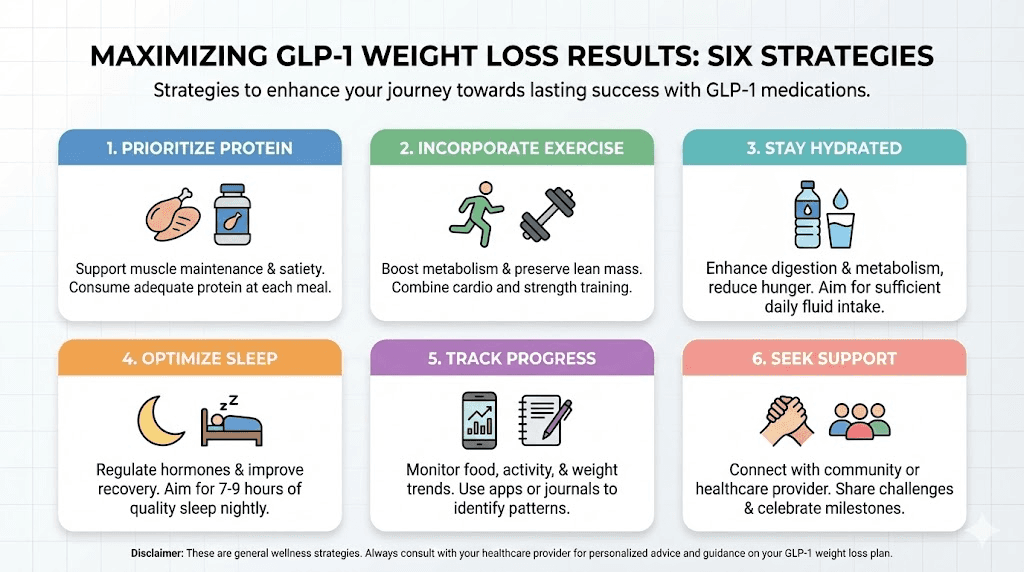
Tirzepatide carries a boxed warning for thyroid C-cell tumors based on animal studies. This means anyone with a personal or family history of medullary thyroid carcinoma or Multiple Endocrine Neoplasia syndrome type 2 should not use tirzepatide. It is also not recommended during pregnancy, and tirzepatide use while breastfeeding requires careful medical evaluation. The guide on pregnancy and tirzepatide covers this topic extensively for women of reproductive age.
Pancreatitis is a rare but serious potential side effect. Any severe, persistent abdominal pain should prompt immediate medical attention, not just a message to your Shed care team.
The safety profile of tirzepatide is well-documented through clinical trials involving thousands of participants. For the vast majority of users, side effects are manageable and temporary. But knowing the full picture, including rare risks, is essential for informed decision-making. Our peptide safety and risks guide provides broader context.
How Shed compares to other tirzepatide providers
Shed is not the only telehealth platform offering tirzepatide. The market has grown rapidly, with new providers entering regularly. Understanding how Shed stacks up against alternatives helps you make an informed choice rather than defaulting to the first option you encounter.
Shed versus other compounded tirzepatide providers
Several telehealth companies offer compounded tirzepatide, including Henry Meds, Remedy Meds, and others reviewed in our guides on Empower tirzepatide, BPI Labs tirzepatide, Lavender Sky tirzepatide, Priority Meds tirzepatide, Orderly Meds tirzepatide, ProRx tirzepatide, MedVi tirzepatide, and Southend Pharmacy tirzepatide.
Provider | Tirzepatide starting price | Formats offered | Insurance accepted | Support team | Weight loss guarantee |
|---|---|---|---|---|---|
Shed (ShedRx) | $299/mo (compounded), $349/mo (Zepbound) | Injections, drops, lozenges, tablets, Zepbound | No (FSA eligible) | Provider, nurse, dietitian, coach, manager | 10% or money back |
Henry Meds | ~$249/mo | Injections, oral tablets | No | Provider, health coach | No |
Ro | $145/mo membership + medication cost | Brand-name only (Zepbound, Wegovy) | Yes | Provider, health coach | No |
Hims/Hers | Varies by plan | Compounded injections, oral options | No | Provider access | No |
Shed differentiates itself through format variety and the five-member support team. Most competitors offer one or two delivery formats. Shed offers five. Most competitors pair you with a provider and maybe a health coach. Shed adds a nurse, dietitian, and member success manager. Whether those additional support roles translate into meaningfully better outcomes depends on how much you engage with them.
The compounded versus brand-name question
A critical distinction exists between compounded tirzepatide and FDA-approved Zepbound. Compounded medications are prepared by licensed pharmacies using tirzepatide as the active ingredient, but they have not undergone the same FDA approval process as brand-name drugs. The FDA approves the active ingredient itself but does not individually approve each compounded formulation.
In early phases of the GLP-1 boom, compounding was permitted under drug shortage rules. However, FDA regulations have tightened, and compounding pharmacies face new restrictions on producing tirzepatide. This regulatory environment is evolving, and what is available today through Shed or any other compounding provider may change. Understanding the difference between research-grade and pharmaceutical-grade peptides provides useful context for evaluating compounded options.
Risks of compounded medications include potential dosing variability, contamination concerns, and less rigorous quality control compared to FDA-approved products. That does not mean compounded tirzepatide is dangerous. Many compounding pharmacies maintain excellent quality standards. But the risk profile is different, and you should be aware of that difference when choosing between Shed compounded options and Shed Zepbound.
Where Shed wins
Format variety. Support team depth. The 10 percent weight loss guarantee. FSA eligibility. And over 150,000 members providing a large operational base. These are genuine advantages that matter for many prospective patients.
Where Shed falls short
Cash-pay only eliminates affordability for people with GLP-1 insurance coverage. Shipping delays, while not universal, create real problems when they occur. The two-month minimum commitment limits flexibility. And the price escalation with higher doses can surprise members who budgeted only for the starting price.
Shed tirzepatide cancellation and policies
Understanding cancellation terms before you sign up prevents frustration later. Shed has specific policies that differ from some competitors, and customer complaints reveal these policies as a frequent source of tension.
The two-month minimum commitment
Shed requires a minimum two-month commitment before you can cancel your subscription. This means you are obligated to pay for at least two months of treatment regardless of your experience. The logic behind this policy relates to the tirzepatide titration schedule. The first month at 2.5 mg is an initiation dose, and meaningful weight loss typically begins during the second month at 5 mg. Shed argues that judging the medication before completing at least two months of titration is premature.
There is medical logic to that argument. Clinical data shows that tirzepatide takes time to reach full effectiveness, and the early weeks are about adjustment, not maximum results. However, a mandatory financial commitment creates friction for members who experience severe side effects or financial changes during those first two months.
Cancellation process
To cancel, you must submit a request at least 72 hours before your next billing cycle. This is standard practice for subscription services, but the timing matters. If your billing date is the 15th and you decide to cancel on the 14th, you will be charged for another month. Multiple customer reviews mention being caught by this timeline, so mark your billing date and set a reminder if you are considering cancellation.
Cancellation requests go through the Shed portal. Some members report smooth, quick cancellations. Others describe delays in processing or difficulty confirming that their cancellation was received. Document your cancellation request with timestamps and follow up if you do not receive confirmation within 48 hours.
Refund policy
The 10 percent weight loss guarantee provides a refund pathway for new GLP-1 users who do not achieve at least 10 percent body weight loss within nine months. This guarantee comes with eligibility requirements, including consistent medication use and engagement with the program. Read the specific terms carefully, as the guarantee may not apply if you skip doses, do not attend follow-ups, or deviate from the prescribed protocol.
For general refund requests outside the guarantee, Shed handles them on a case-by-case basis. Members who were charged for medication that was never shipped have the strongest refund claims. Members who simply change their minds about the program may find refunds more difficult to obtain.
Key policy details to know before signing up
Two-month minimum before cancellation is allowed
72-hour advance notice required for cancellation
Cash-pay only, no insurance billing
FSA eligible for tax-advantaged payments
$49 initial consultation fee
Price increases with dose escalation
10 percent weight loss guarantee with eligibility conditions
Who should (and should not) use Shed for tirzepatide
Not every weight loss platform suits every person. Shed works well for specific profiles and poorly for others. Being honest about where you fall helps avoid wasting money on a program that does not fit.
Shed is a good fit if you:
Want a fully digital experience. If you prefer managing your healthcare through an app and portal rather than visiting a clinic, Shed is designed for you. Everything from enrollment to dose adjustments to nutrition guidance happens online. You never need to leave your home.
Value support team depth. The five-role care team is genuinely more comprehensive than most competitors. If having a dedicated nurse, dietitian, and health coach matters to you, Shed delivers on that promise. This support structure helps with everything from meal planning on tirzepatide to managing supplement choices while on treatment.
Want format flexibility. If you are not sure whether you want injections, drops, lozenges, or tablets, Shed lets you explore options within the same platform. Starting with lozenges and switching to injections later, or vice versa, is possible without changing providers.
Can commit to at least two months financially. The minimum commitment requires budget certainty. If $299 or more per month for two months is manageable, the financial barrier is clear. If that amount creates hardship, the mandatory commitment adds risk.
Do not have insurance coverage for GLP-1 medications. For cash-pay patients, Shed pricing is competitive. The value proposition is strongest when the alternative is paying full retail price for brand-name medications without insurance support.
Shed is not a good fit if you:
Have insurance that covers GLP-1 medications. If your insurance covers Zepbound or Wegovy, platforms like Ro that work with insurance will likely save you significant money compared to Shed cash-pay pricing.
Want immediate, same-week medication delivery. While many Shed members receive medication quickly, shipping delays are a documented issue. If uninterrupted medication supply is critical and you cannot tolerate delivery variability, this is a risk factor.
Prefer in-person medical relationships. Telehealth is efficient but impersonal. If you want to sit across from your doctor, ask questions in real time, and build a face-to-face relationship with your provider, Shed is not designed for that experience. A local endocrinologist or obesity medicine specialist would better serve those needs.
Are looking for the absolute lowest price. While competitive, Shed is not the cheapest compounded tirzepatide option available. Some providers offer lower starting prices, though often with less support. Our comparison of affordable tirzepatide providers covers the full pricing landscape.
Have complex medical conditions requiring close monitoring. Telehealth has limitations for patients with conditions like severe gastroparesis, pancreatitis history, or complex endocrine disorders. These situations benefit from in-person medical oversight with lab work and physical examinations that telehealth cannot replicate.
Tips for maximizing results with Shed tirzepatide
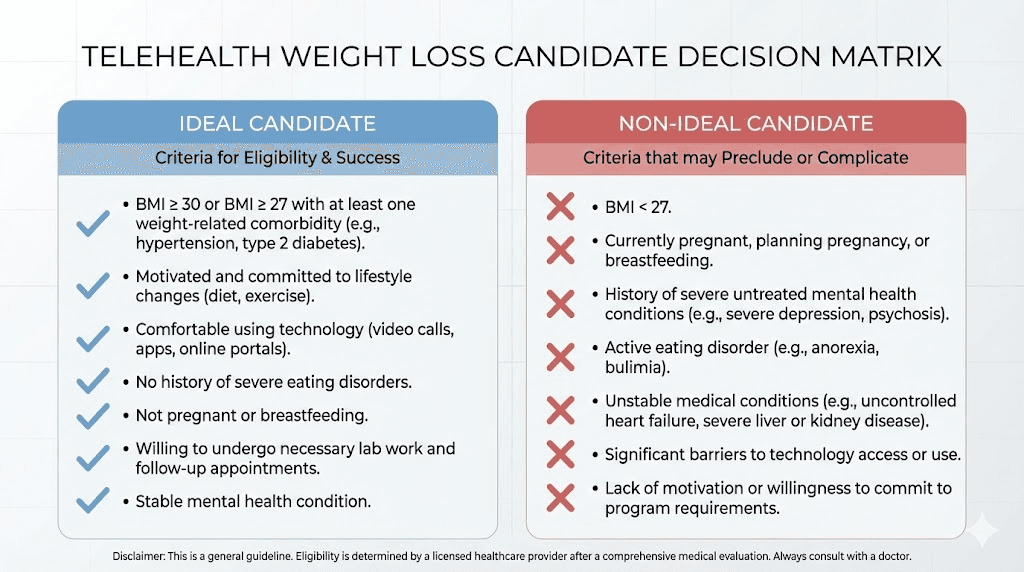
Getting the most from your Shed tirzepatide program requires more than just taking the medication. Tirzepatide creates a window of reduced appetite and improved metabolic function. What you do inside that window determines whether you achieve average results or exceptional ones.
Prioritize protein intake
Rapid weight loss on tirzepatide can include muscle mass if you do not actively protect it. Aim for 0.7 to 1 gram of protein per pound of body weight daily. This is challenging when your appetite is suppressed, which is why many members turn to protein shakes designed for GLP-1 users. Prioritize protein at every meal. It preserves muscle, supports satiety, and improves body composition outcomes.
The tirzepatide diet plan and meal plan resources provide structured approaches to hitting protein targets while managing reduced appetite.
Use the support team
Shed charges for a care team. Use it. Schedule check-ins with your health coach. Ask your dietitian for meal plans tailored to your caloric needs on tirzepatide. Reach out to your nurse when side effects arise instead of guessing at solutions. The members who report the best outcomes are the ones who engage with their full support team rather than treating Shed as a medication delivery service.
Time your doses strategically
Inject on the same day each week. Many members prefer injecting in the evening so that peak side effects (nausea, reduced appetite) align with sleeping hours rather than work hours. The best time to take your GLP-1 shot depends on your schedule and side effect pattern, but consistency matters more than the specific day.
If you are using injectable tirzepatide, proper technique matters. Our guides on how to inject GLP-1 medications and where to inject GLP-1 cover site rotation, angle, and depth for optimal absorption.
Stay ahead of side effects
Do not wait for nausea to become unbearable before adjusting your approach. Eat smaller portions from day one. Stay hydrated. Avoid trigger foods. If you know which foods to avoid on tirzepatide, you can prevent many GI symptoms rather than reactively treating them. Proactive side effect management is the difference between "tirzepatide made me miserable" and "the first few weeks were manageable."
Incorporate movement
Tirzepatide handles the appetite side of the equation. Exercise handles the body composition side. Resistance training is particularly important for preserving muscle during weight loss. Walking 30 minutes daily after meals also helps with digestion and reduces gastrointestinal side effects. The combination of tirzepatide, adequate protein, and regular exercise produces results that medication alone cannot match.
Research suggests that tirzepatide can increase metabolism beyond just appetite suppression. Some users report improved energy levels on tirzepatide, making exercise easier to maintain. Channel that energy into activity that builds or preserves lean tissue.
Track everything
Weigh yourself at the same time each day. Track your food intake. Log your side effects. Note your energy levels. This data helps your Shed provider make better dose adjustment decisions and helps you identify what is working. If you hit a plateau where weight loss stalls on tirzepatide, your tracking data becomes diagnostic gold.
Plan for the long term
Tirzepatide is not a temporary fix. The SURMOUNT-4 trial showed that people who stopped tirzepatide regained weight. Plan for sustained use and build habits during treatment that will support weight maintenance regardless of whether you eventually discontinue. The tirzepatide weight loss timeline helps set realistic expectations for both the loss phase and the maintenance phase.
Consider complementary supplements
Some members enhance their tirzepatide results with complementary compounds. Tirzepatide with B12 is a popular combination that supports energy and neurological function during caloric restriction. Tirzepatide with glycine supports sleep quality and collagen synthesis. And tirzepatide with niacinamide addresses skin health concerns that can arise during rapid weight loss.
Shed offers some combination formulations, including compounded tirzepatide with B12 and tirzepatide glycine B12 compounds. Ask your provider about these options if standalone tirzepatide feels incomplete.
Know when to adjust course
If you are not seeing results after eight to twelve weeks at adequate doses, something needs to change. That might mean a dose increase. It might mean dietary adjustments. It might mean switching formats. And in some cases, it might mean switching from tirzepatide to semaglutide or vice versa. The worst approach is continuing the same protocol while hoping for different results. Your Shed provider can help troubleshoot, but only if you communicate that things are not working.
SeekPeptides provides comprehensive resources for understanding GLP-1 medications, including detailed guides on the best peptides for weight loss, peptide dosing protocols, and how peptides work at a fundamental level. These resources help you become an informed patient rather than a passive consumer, which leads to better conversations with your provider and better outcomes overall.
Understanding compounded tirzepatide and FDA regulations
The regulatory landscape around compounded tirzepatide has shifted dramatically, and anyone considering Shed or any compounded tirzepatide provider needs to understand what is happening. This is not a minor technical detail. It affects what you can access, for how long, and at what risk level.
What compounding means
Compounding is the process of creating a customized medication from pharmaceutical ingredients, prepared by a licensed compounding pharmacy. Compounded tirzepatide uses the same active ingredient as Zepbound but is mixed and formulated by the pharmacy rather than manufactured in Eli Lilly factory lines. Compounding pharmacies operate under different regulatory frameworks than traditional manufacturers.
There are two types of compounding pharmacies relevant to this discussion. 503A pharmacies serve individual patients with prescriptions. 503B outsourcing facilities can produce larger quantities without individual prescriptions. Both are regulated, but to different standards than traditional pharmaceutical manufacturing.
The FDA regulatory shift
Compounded tirzepatide became widely available during the Zepbound shortage, when the FDA allowed compounding under drug shortage provisions. However, once the shortage resolved, the FDA mandated that compounding pharmacies stop producing tirzepatide. 503A pharmacies faced a February deadline, and 503B facilities had until March to cease production.
This regulatory shift is significant. It means the compounded tirzepatide available through Shed and other providers operates in a changing legal environment. Some providers have found narrow exceptions allowing continued compounding for patients with specific medical needs that brand-name products cannot address. Others are navigating legal challenges to the FDA mandate.
What this means for Shed members
If you are currently using or considering Shed compounded tirzepatide, understand that availability may change. Shed also offers brand-name Zepbound, which provides a transition path if compounded options become unavailable. The price difference between compounded and brand-name is significant (approximately $299 versus $349 per month through Shed, though retail Zepbound exceeds $1,000), making any forced transition financially meaningful.
The distinction between compounded and pharmaceutical-grade medications matters beyond just regulatory compliance. Compounded medications may carry risks of dosing variability, contamination, and inconsistent potency that FDA-approved products minimize through rigorous manufacturing standards. This does not mean compounded tirzepatide from a reputable pharmacy is unsafe. It means the risk profile differs.
Concerns about grey market tirzepatide highlight why choosing a legitimate provider like Shed, with licensed pharmacy partnerships, matters compared to unregulated sources. Understanding the broader landscape of peptide safety and risks helps contextualize these regulatory developments.
Tirzepatide drug interactions and important precautions
Before starting tirzepatide through Shed or any provider, understanding drug interactions and contraindications protects your health. Tirzepatide affects gastric motility and metabolic pathways, creating potential interactions with other medications.
Medications that interact with tirzepatide
Tirzepatide slows gastric emptying, which can affect the absorption rate of oral medications. This is particularly relevant for medications that require precise timing or rely on specific absorption windows. Birth control pills, thyroid medications, and certain antibiotics may have altered effectiveness when taken alongside tirzepatide.
The question of combining phentermine and tirzepatide comes up frequently, as some providers prescribe both. The combination requires careful medical supervision. Our comparison of phentermine versus GLP-1 medications provides context on when stimulant weight loss medications overlap or complement incretin-based therapies.
Alcohol considerations
Whether you can drink alcohol on tirzepatide is a common question. Alcohol affects blood sugar regulation and can worsen gastrointestinal side effects. Most providers recommend limiting alcohol consumption during tirzepatide treatment, particularly in the early weeks when GI sensitivity is highest.
Timing flexibility
Life happens. Sometimes you cannot inject on your usual day. The guide on taking tirzepatide a day early covers the flexibility built into weekly dosing schedules. Minor schedule variations are generally acceptable, but large gaps between doses should be discussed with your Shed provider.
Complementary compounds
Some Shed members combine tirzepatide with other peptides or supplements. The combination of AOD-9604 with tirzepatide targets fat metabolism through complementary pathways. Tirzepatide with methylcobalamin supports neurological function and energy. And tirzepatide with glycine addresses sleep and recovery.
Always inform your Shed provider about any supplements or additional medications you take. The care team can only manage your safety profile if they have complete information. This transparency is especially important when combining GLP-1 medications with supplements, as some combinations require monitoring.
How to store your Shed tirzepatide properly
Proper storage protects your investment and ensures medication efficacy. Compounded tirzepatide requires more storage attention than some members realize, and improper handling can reduce potency before you even inject.
Refrigeration requirements
Compounded tirzepatide should be refrigerated at 36 to 46 degrees Fahrenheit (2 to 8 degrees Celsius). This maintains peptide stability and extends shelf life. The guide on tirzepatide refrigeration requirements explains why temperature control matters at the molecular level. Our detailed resource on how long tirzepatide lasts in the fridge covers shelf life expectations for different formulations.
What happens if it is left out
Room temperature exposure degrades tirzepatide over time. Brief periods outside refrigeration (under 30 minutes for injection preparation) are fine. Extended exposure compromises potency. If your Shed shipment sits on a hot porch for hours during summer, contact Shed about a replacement. The guide on how long compounded tirzepatide can be outside the fridge provides specific timeframe guidance.
Expiration and shelf life
Compounded medications have shorter shelf lives than brand-name products. Check the expiration date on every shipment from Shed. Our guide on tirzepatide expiration explains what happens when medication passes its use-by date and why using expired tirzepatide is not worth the risk. The broader peptide storage guide covers best practices applicable to all injectable peptides.
Reconstitution for compounded formulations
Some compounded tirzepatide arrives in lyophilized (freeze-dried) form requiring reconstitution with bacteriostatic water before use. If your Shed medication requires reconstitution, our guide on how to reconstitute tirzepatide walks through the process step by step. The specific question of how much bacteriostatic water to mix with 10mg tirzepatide is one of the most common reconstitution questions we receive. Using a peptide reconstitution calculator eliminates dosing errors that can result from incorrect dilution.
Comparing Shed tirzepatide to other weight loss approaches
Tirzepatide through Shed is one weight loss approach among many. Understanding how it compares to alternatives helps ensure you are choosing the right tool for your specific situation rather than following a trend.
Shed tirzepatide versus semaglutide programs
Shed offers both tirzepatide and semaglutide, and the choice between them matters. Tirzepatide dual GIP/GLP-1 mechanism consistently produces greater weight loss than semaglutide single GLP-1 activation in clinical trials. However, semaglutide starts at $199 per month through Shed, making it $100 cheaper than tirzepatide. For some members, the cost savings outweigh the efficacy advantage.
The detailed comparison between semaglutide, tirzepatide, and emerging options like retatrutide shows where each medication fits in the evolving GLP-1 landscape. Additionally, newer compounds like survodutide, mazdutide, orforglipron, and CagriSema are entering the conversation as potential alternatives.
Shed tirzepatide versus non-GLP-1 medications
Shed also offers metformin plus naltrexone plus topiramate ($169/month) and naltrexone plus bupropion ($115/month) as non-GLP-1 weight loss options. These work through different mechanisms and are significantly cheaper than tirzepatide. They produce less dramatic weight loss on average but may suit members who cannot tolerate GLP-1 medications or who prefer oral-only regimens.
The comparison of phentermine versus GLP-1 medications explores the broader question of stimulant-based versus incretin-based weight loss approaches.
Shed tirzepatide versus diet and exercise alone
Lifestyle modification alone produces average weight loss of 3 to 5 percent in clinical settings. Tirzepatide produces 15 to 22 percent. The difference is not subtle. However, tirzepatide works best when combined with lifestyle changes, not as a replacement for them. Shed recognizes this through its dietitian and health coaching offerings, which aim to build sustainable habits alongside medication use.
For members who want to understand the science behind why GLP-1 medications produce such dramatically different results than willpower alone, our resources on how peptides work and what peptides are provide foundational knowledge. The peptides for fat loss page covers the broader category of peptide-based weight management approaches.
Red flags and what to watch for
Even with a legitimate provider like Shed, staying alert to warning signs protects your health and your wallet. Here is what to monitor during your Shed tirzepatide journey.
Medication quality concerns
If your compounded tirzepatide arrives cloudy, discolored, or with visible particles, do not use it. Contact Shed immediately for a replacement. Properly compounded tirzepatide should be clear and colorless. Any deviation suggests contamination or degradation.
Unexpected side effects
While GI side effects are normal, severe symptoms warrant immediate medical attention. Signs of pancreatitis (severe abdominal pain radiating to the back), allergic reactions (difficulty breathing, severe rash), or vision changes require emergency care, not a message to your Shed nurse. The injection site reaction guide helps distinguish normal injection responses from concerning reactions.
Billing irregularities
Monitor your credit card or bank statements monthly. If charges do not match your agreed-upon pricing or appear before your billing date, contact Shed immediately. Document discrepancies and follow up in writing through the portal.
Stalled results
Plateaus are normal during weight loss. Extended stalls lasting more than four to six weeks at adequate doses may indicate the need for protocol changes. Our guide on what to do when tirzepatide stops working covers troubleshooting strategies including dose adjustment, dietary modification, and switching medications.
Pressure to buy add-ons
Shed offers supplements and additional services beyond the core medication subscription. Some of these, like health coaching, provide genuine value. Others may be unnecessary for your specific situation. Make add-on purchasing decisions based on your individual needs, not sales pressure.
International access and alternatives
Shed operates within the United States and ships domestically. For readers outside the U.S. or those exploring alternative sourcing, the landscape differs significantly.
Tirzepatide in Mexico is available through different channels and at different price points than U.S. telehealth platforms. However, international sourcing carries additional regulatory, quality, and legal considerations that domestic providers like Shed do not present.
For readers evaluating third-party tirzepatide sources, our guides on Peptide Sciences tirzepatide and the tirzepatide ODT guide cover alternative options and their respective considerations.
Getting started with peptides beyond weight loss
Many Shed members discover the broader world of peptides through their tirzepatide experience. Weight loss is one application, but peptides serve many purposes across health and wellness.
SeekPeptides serves as the most comprehensive resource for anyone looking to understand peptides beyond GLP-1 weight loss medications. From getting started with peptides to understanding the full list of injectable peptides, the platform provides evidence-based education for informed decision-making. Whether your interest stays focused on weight loss or expands into recovery, anti-aging, or performance, understanding peptide therapy costs and dosing fundamentals serves you well.
The peptide calculator and peptide stack calculator are free tools available to anyone researching peptide protocols. And for those specifically focused on weight loss peptides, the comprehensive peptide weight loss guide covers options beyond tirzepatide and semaglutide.
Frequently asked questions
Is Shed (ShedRx) a legitimate company?
Yes. Shed is a licensed telehealth company headquartered in Phoenix, Arizona, with over 150,000 members. The platform employs licensed medical providers, works with regulated compounding pharmacies, and maintains profiles on Trustpilot, ConsumerAffairs, and the Better Business Bureau. Legitimacy does not mean perfection, as shipping delays and billing issues do occur, but the company operates within established telehealth regulations.
How much does Shed tirzepatide cost per month?
Compounded tirzepatide injections start at $299 per month, with prices increasing at higher doses. Other formats include drops at $229 per month, lozenges at $199 per month, and brand-name Zepbound at $349 per month. There is also a $49 initial consultation fee. Use the peptide cost calculator to estimate total treatment costs across different durations and dose levels.
Does Shed accept insurance?
No. Shed is a cash-pay platform only. It does not bill insurance companies and does not accept insurance payments. However, the program is FSA (Flexible Spending Account) eligible, allowing you to use pre-tax health savings dollars. If your insurance covers GLP-1 medications, a provider that works with insurance may be more cost-effective.
How long before I see results with Shed tirzepatide?
Most members notice appetite reduction within one to two weeks of starting tirzepatide. Visible weight loss typically begins within the first month, with significant results accumulating over three to six months. The tirzepatide efficacy timeline varies by individual, starting dose, and adherence to dietary recommendations.
Can I cancel Shed at any time?
Not immediately. Shed requires a two-month minimum commitment. After that period, you can cancel with 72 hours advance notice before your next billing date. Cancellation requests go through the Shed portal. Some members report smooth cancellations while others describe processing delays, so document your request and follow up if confirmation does not arrive.
What happens if my Shed medication is delayed?
Medication delays are a documented issue for some Shed members. If your shipment does not arrive within the expected timeframe, contact Shed through the portal immediately. Missing doses can affect your weight loss trajectory and may cause temporary return of appetite. Escalate if initial contact does not resolve the delay quickly.
Is compounded tirzepatide as effective as brand-name Zepbound?
Compounded tirzepatide uses the same active ingredient as Zepbound. When properly compounded by a licensed pharmacy, the efficacy should be comparable. However, compounded medications lack the same level of FDA manufacturing oversight, which introduces potential variability in potency and purity. Our comparison of research versus pharmaceutical peptides explains these quality distinctions.
Does Shed offer semaglutide too?
Yes. Shed offers compounded semaglutide injections starting at $199 per month and brand-name Wegovy starting at $349 per month. The choice between semaglutide and tirzepatide depends on your weight loss goals, budget, and tolerance. The semaglutide versus tirzepatide comparison covers the clinical and practical differences between the two medications. For semaglutide-specific information, our compounded semaglutide guide and semaglutide dosage calculator provide detailed resources.
What is the 10 percent weight loss guarantee?
Shed guarantees that new GLP-1 users will lose at least 10 percent of their starting body weight within nine months or receive a full refund. This guarantee has eligibility conditions, including consistent medication use and program engagement. Read the specific terms before assuming the guarantee applies to your situation, as deviation from prescribed protocols may void eligibility.
Can I use Shed tirzepatide while breastfeeding or pregnant?
Tirzepatide is not recommended during pregnancy or breastfeeding. If you become pregnant while using Shed tirzepatide, discontinue the medication and inform your healthcare provider immediately. Our guides on tirzepatide while breastfeeding and pregnancy on tirzepatide cover these scenarios in detail.
How does Shed compare to buying tirzepatide from a local provider?
Local providers offer in-person medical relationships, physical examinations, and lab work that telehealth cannot replicate. Shed offers convenience, potentially lower costs than retail pharmacy pricing, and no appointment scheduling. The right choice depends on your medical complexity, insurance status, and preference for digital versus in-person healthcare. For complex cases, local providers with direct monitoring capabilities may be safer. For straightforward obesity treatment in otherwise healthy adults, telehealth platforms like Shed offer comparable medication access with greater convenience.
External resources
For researchers serious about understanding the full landscape of GLP-1 medications and weight loss peptides, SeekPeptides offers the most comprehensive educational resource available. From detailed dosing protocols to safety guides and free calculators, the platform helps you become a genuinely informed participant in your own health journey rather than a passive consumer of prescribed medications.
In case I do not see you, good afternoon, good evening, and good night. May your weight loss stay steady, your side effects stay mild, and your provider stay responsive.