Feb 26, 2026
Some compounding pharmacies deliver exactly what they promise. Clean vials, consistent potency, reliable shipping. Others leave patients refreshing tracking pages for days, wondering if the medication inside actually matches the label. Red Rock Pharmacy has built a reputation that falls somewhere in between, and understanding where it excels and where it stumbles matters more than any marketing claim on its website.
If you have been researching affordable tirzepatide options, you have probably encountered Red Rock in pharmacy directories, telehealth provider lists, and patient forums. The Springville, Utah-based compounder has operated since 2017, filling prescriptions for patients across most of the United States. But the compounded tirzepatide landscape has changed dramatically. FDA enforcement actions, shortage list removals, and evolving state licensing rules mean that what was true about Red Rock six months ago may not apply today.
This guide examines everything about Red Rock Pharmacy tirzepatide. Formulations. Pricing structures. Vial specifications. State availability. Real patient experiences, good and bad. The regulatory environment that governs every vial they ship. Whether you are comparing Red Rock against Empower Pharmacy, Strive Pharmacy, or any other compounder, you will find the specifics you need to make an informed decision about your tirzepatide protocol.
What is Red Rock Pharmacy
Red Rock Pharmacy is a 503A compounding pharmacy headquartered in Springville, Utah, at 863 W 450 S, Suite 101. Founded in 2017, the pharmacy has carved out a niche in the compounded GLP-1 market, offering both tirzepatide with glycine formulations and semaglutide products to patients across the country.
The distinction matters. A 503A pharmacy prepares customized medications for individual patients based on valid prescriptions from licensed healthcare providers. This differs from 503B outsourcing facilities, which can produce larger batches without patient-specific prescriptions. Red Rock operates under the 503A framework, meaning every vial of tirzepatide they compound is tied to a specific patient and a specific prescription.
Red Rock holds LegitScript certification, which signals a baseline of regulatory compliance for online pharmacies. They follow USP 795, 797, and 800 standards for compounding practices. Multiple regulatory bodies oversee their operations, including the Utah State Board of Pharmacy, the FDA, the DEA, and state departments of health.
The pharmacy is not BBB accredited. That fact alone does not indicate quality problems, as many legitimate compounding pharmacies do not pursue BBB accreditation. But it does mean there is one less third-party oversight layer compared to accredited competitors.
Red Rock has expanded beyond simple compounding into what they call "integrated pharmacy solutions." They partner with telehealth providers, weight loss clinics, and individual prescribers to streamline the process from consultation to medication delivery. This integration means patients can sometimes get their prescription written and filled through a single workflow, reducing the friction that plagues many compounded medication experiences.
Their phone number is 801-477-9444 for anyone needing to reach them directly. They also operate through the redrockhomepharmacy.com website for patient-facing interactions and redrockrx.com for provider-facing services.
Red Rock tirzepatide formulations explained
Red Rock does not offer a single tirzepatide product. They compound multiple formulations designed for different stages of the tirzepatide dosing protocol, and understanding the differences between them is critical for getting accurate doses from every injection.
The 8.5mg/5mg/mL glycine formula
The lower concentration formula contains 8.5mg of tirzepatide per milliliter alongside 5mg of glycine per milliliter. This formulation works best for patients in the early stages of their protocol, typically those working through the 2.5mg and 5mg weekly doses. The lower concentration means larger injection volumes for a given dose, which can actually help with accuracy when using standard insulin syringes. Patients drawing up small doses from highly concentrated vials often struggle with precision. This formula reduces that risk.
For someone on a starting dose of compounded tirzepatide, the 8.5mg/mL concentration allows for manageable injection volumes. At 2.5mg per week, you would draw approximately 0.29mL, which is roughly 29 units on an insulin syringe. That is enough volume to measure accurately without squinting at tiny hash marks. If you need help calculating your specific draw volume, the compounded tirzepatide dosage calculator can simplify the math.
The 17mg/5mg/mL glycine formula
The higher concentration formula doubles the tirzepatide content to 17mg per milliliter while maintaining the same 5mg/mL glycine ratio. This is designed for patients who have titrated up to higher doses, typically 7.5mg through 15mg weekly. The benefit is straightforward. Higher concentration means smaller injection volumes at higher doses, which reduces discomfort and the amount of fluid deposited under the skin.
At 10mg weekly using the 17mg/mL concentration, you would draw approximately 0.59mL. Compare that to using the 8.5mg/mL concentration for the same dose, which would require roughly 1.18mL, a significantly larger and more uncomfortable injection. For detailed conversion math at every dose level, see our tirzepatide dosage chart in units.
Eight vial types for precise dosing
Red Rock offers eight different vial types, one for each standard dosage level in the tirzepatide escalation schedule. Three different strengths are available across these vials. This approach means patients may use the same number of syringe units, or even fewer, when moving to higher doses depending on which vial their prescriber orders.
This is more sophisticated than what some compounders offer. Many pharmacies provide a single concentration and expect patients to adjust their draw volume as they titrate up. Red Rock instead adjusts the vial concentration, keeping injection volumes consistent and reducing dosing errors. For patients who find the math confusing, particularly when calculating tirzepatide syringe dosage, this approach is a meaningful advantage.
Each vial is designed for up to four punctures. After four draws, you discard the vial regardless of remaining medication. This limits the risk of contamination from repeated needle insertions through the rubber stopper.
Why glycine matters in compounded tirzepatide
Every vial Red Rock ships contains glycine alongside tirzepatide. This is not accidental. Glycine serves multiple purposes in the compound, and understanding them helps explain why most modern compounding pharmacies have moved toward tirzepatide glycine formulations rather than tirzepatide alone.
Muscle preservation during weight loss
The biggest concern with rapid weight loss from GLP-1 receptor agonists is muscle loss. Tirzepatide can produce dramatic results, with clinical trials showing average weight loss of 15 to 22 percent of body weight, but some of that loss comes from lean tissue rather than fat. Glycine directly addresses this problem.
Glycine is a naturally occurring amino acid involved in collagen synthesis, antioxidant production, and muscle metabolism. When compounded alongside tirzepatide, glycine supports lean tissue preservation during the caloric deficit that tirzepatide creates. Research suggests glycine improves insulin sensitivity and reduces oxidative stress, both of which become relevant during significant weight loss. Patients worried about the "GLP-1 face" phenomenon or general muscle wasting find that tirzepatide with glycine offers a partial buffer against these effects.
For deeper coverage of how glycine interacts with tirzepatide at the molecular level, our tirzepatide glycine B12 compound guide breaks down the science in detail.
Anti-inflammatory and metabolic benefits
Glycine does more than protect muscle. It plays a role in anti-inflammatory signaling, tissue repair, and metabolic balance. Patients on tirzepatide frequently experience gastrointestinal side effects, including nausea, constipation, and diarrhea. Glycine may help improve overall treatment tolerability by reducing inflammation in the GI tract.
Glycine also promotes restful sleep. This matters because tirzepatide insomnia affects a meaningful percentage of patients, particularly during the first few weeks of treatment or after dose escalations. The glycine component may partially offset this side effect, though clinical data specifically on compounded tirzepatide-glycine combinations for sleep improvement remains limited.
Collagen synthesis is another benefit. Glycine is essential for building collagen, which supports healthy skin, joints, and connective tissues. During rapid weight loss, skin elasticity becomes a concern. The glycine in Red Rock formulations may help maintain skin integrity, though this benefit develops gradually over months rather than weeks.
How glycine compares to other additives
Not every compounding pharmacy uses glycine alone. Some add B12 (tirzepatide with B12), others include niacinamide, and some combine glycine with methylcobalamin for a multi-compound approach. Red Rock keeps their formulation focused on glycine, which simplifies the compound and reduces potential interaction variables.
The compounded tirzepatide with B12 approach adds energy support and helps address B12 deficiency that some patients experience during caloric restriction. Red Rock does not include B12 in their standard tirzepatide vials, so patients wanting both compounds would need to supplement separately or request a custom formulation through their prescriber.
For a comprehensive comparison of every additive option, our guide on supplements to take with tirzepatide covers what works, what does not, and what the evidence actually supports.
Red Rock tirzepatide dosing protocols
Dosing tirzepatide correctly is the difference between steady, sustainable weight loss and a miserable cycle of side effects and stalled progress. Red Rock formulations follow standard tirzepatide escalation schedules, but their multiple vial concentrations add a layer of flexibility that most compounders do not offer.
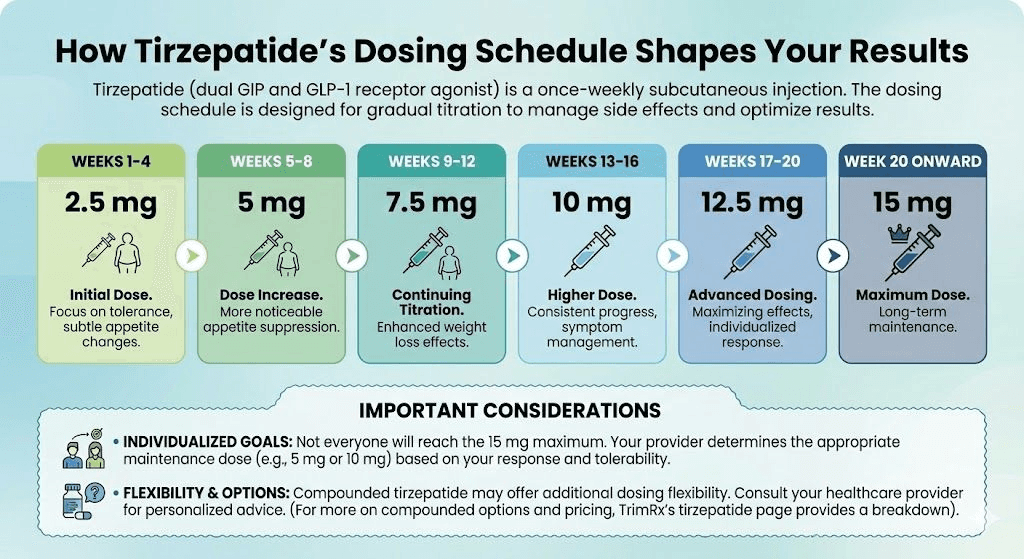
Standard escalation schedule
The typical Red Rock tirzepatide protocol follows the same escalation that clinical trials established:
Weeks 1 through 4: 2.5mg once weekly (startup phase)
Weeks 5 through 8: 5.0mg once weekly
Weeks 9 through 12: 7.5mg once weekly
Weeks 13 through 16: 10.0mg once weekly
Weeks 17 through 20: 12.5mg once weekly
Week 21 and beyond: 15.0mg once weekly (maximum dose)
Each escalation step corresponds to a specific Red Rock vial type. Your prescriber orders the appropriate vial for your current dose level, and you draw the same or similar volume each week. This eliminates one of the most common sources of dosing errors in compounded tirzepatide, which is patients miscalculating draw volumes when concentrations change. For a visual breakdown of this schedule, our tirzepatide dose chart covers every step.
Not everyone follows this exact schedule. Some patients hold at lower doses for longer periods if they are experiencing adequate appetite suppression and weight loss. Others may need to slow their escalation if side effects like nausea or headaches become problematic. Your prescriber should adjust the timeline based on your individual response.
The 1.125mg microdose option
Red Rock offers something most compounders do not. A 1.125mg microdose option for patients who cannot tolerate the standard 2.5mg starting dose. This is significant.
Many patients, particularly those with sensitive GI systems, experience severe nausea, vomiting, or body aches even at the lowest standard dose. The 1.125mg microdose allows these patients to introduce tirzepatide gradually, building tolerance before stepping up to 2.5mg. Our microdosing tirzepatide chart outlines exactly how this sub-therapeutic introduction phase works.
The microdosing approach has gained significant traction in the compounded tirzepatide community. Patients who previously abandoned treatment due to side effects at 2.5mg have found that starting at 1.125mg for two to four weeks allows their body to adjust without the misery. If you are interested in this approach, our how to microdose tirzepatide guide provides detailed protocols and schedules.
Converting between units and milligrams
One of the most confusing aspects of compounded tirzepatide is converting between milligrams and syringe units. Red Rock multiple concentration vials make this both easier and more complicated. Easier because injection volumes stay manageable. More complicated because you must know exactly which vial concentration you have before drawing up your dose.
For the 8.5mg/mL concentration, every 10 units on an insulin syringe equals 0.85mg of tirzepatide. For the 17mg/mL concentration, every 10 units equals 1.7mg. Getting this wrong means getting the wrong dose. Period.
Our conversion guides cover every scenario. Check how many units is 2.5mg of tirzepatide for the starting dose, how many units is 5mg for the second step, and how many units is 10mg for mid-range doses. For a complete reference covering every dose level, the tirzepatide compound dosage chart has you covered.
How to order tirzepatide from Red Rock Pharmacy
Ordering compounded tirzepatide from Red Rock is not as simple as adding a product to a cart. The process involves a prescription, a prescriber relationship, and in many cases a telehealth consultation. Here is how it works.
Prescription requirements
Red Rock is a 503A pharmacy, which means they require a valid prescription from a licensed healthcare provider for every patient. You cannot order tirzepatide directly from Red Rock without a prescriber sending the order. This is not a Red Rock policy. It is federal law governing compounding pharmacies.
Your prescriber can be a physician, nurse practitioner, or physician assistant with prescribing authority in your state. They send the prescription to Red Rock through the provider portal at redrockrx.com, which includes an order form system designed for telehealth and weight loss clinic workflows.
Telehealth provider partnerships
Red Rock partners with multiple telehealth platforms and weight loss clinics that can provide both the consultation and the prescription in a single workflow. Providers like Lavender Sky Health and various direct-to-patient telehealth services use Red Rock as one of their fulfillment pharmacies.
This means you can often get evaluated, prescribed, and have your medication ordered from Red Rock without visiting a physical clinic. The telehealth provider handles the medical evaluation, determines if tirzepatide is appropriate for you, and sends the prescription directly to Red Rock for compounding and shipping.
If you already have a prescriber who is not set up with Red Rock, they can register as a new provider through the pharmacy website. The onboarding process typically takes one to two business days before they can begin sending prescriptions.
The ordering process
Once a prescription reaches Red Rock, the typical workflow looks like this. The pharmacy verifies the prescription within one business day. They compound the medication, usually within one to three days depending on volume. Then they ship via cold chain packaging to maintain temperature stability during transit.
Patients report varying turnaround times. Some receive their medication within five to seven days of the prescription being sent. Others have waited longer, particularly during high-demand periods. Communication during the waiting period has been a mixed bag in patient reports, which we cover in the reviews section below.
State licensing and shipping availability
Red Rock cannot ship tirzepatide everywhere. State licensing for compounding pharmacies is complex, and each state has its own requirements for out-of-state pharmacies to fill prescriptions for its residents.
For tirzepatide specifically, Red Rock Springville is licensed in all states except Alabama, Arkansas, California, Louisiana, Maine, Michigan, Mississippi, Nevada, New Jersey, and Washington DC. If you live in one of these excluded states, Red Rock cannot legally ship tirzepatide to you.
This is a wider exclusion list than some competitors. Empower Pharmacy, for example, has different state availability, and Priority Meds covers a different footprint as well. If Red Rock does not ship to your state, our guides on affordable compounded tirzepatide options cover alternatives available in every state.
California and Nevada are notable exclusions because of their large populations and high demand for compounded GLP-1 medications. Patients in these states frequently ask about workarounds, but there are none. The pharmacy must be licensed in your state to legally ship medication there. Using a friend or relative address in another state is not a valid solution and creates both legal and safety risks.
For patients in excluded states exploring alternatives, some turn to tirzepatide from Mexico or grey market sources, though these options carry significantly higher risk. Our recommendation is always to work with a licensed, regulated pharmacy in your state, even if it means choosing a different compounder than Red Rock.
Vial storage, handling, and beyond use dates
Proper storage is not optional with compounded tirzepatide. Get it wrong and you risk injecting degraded medication that has lost potency, or worse, medication that has become contaminated. Red Rock vials have specific handling requirements that every patient should understand before their first shipment arrives.
Refrigeration requirements
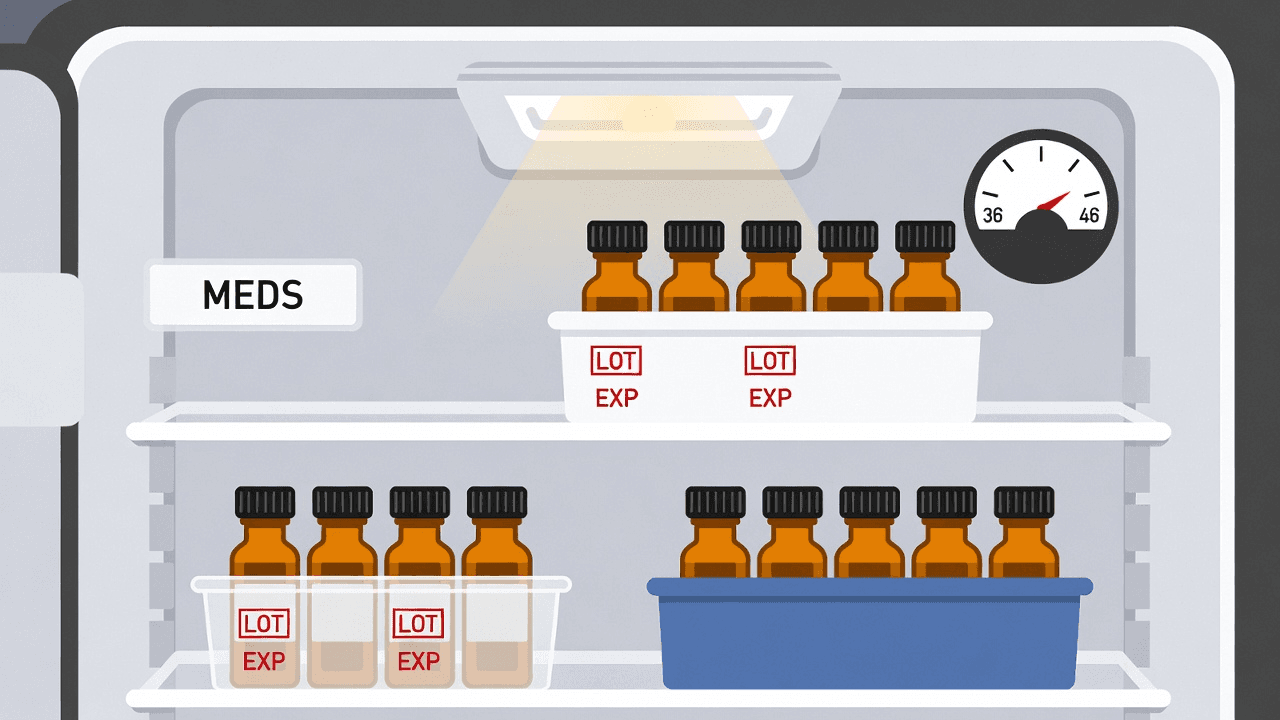
Red Rock tirzepatide vials must be refrigerated at 36 to 46 degrees Fahrenheit (2 to 8 degrees Celsius) upon receipt. This is consistent with virtually all compounded tirzepatide refrigeration requirements. The medication ships in insulated packaging with cold packs to maintain temperature during transit.
When your package arrives, get it into the refrigerator promptly. Do not leave it sitting on the porch or kitchen counter. Even a few hours at room temperature will not immediately destroy the medication, but it starts the degradation clock. For a detailed analysis of temperature exposure risks, check our guide on what happens if tirzepatide gets warm.
The 28-day and 90-day rules
Red Rock vials carry a Beyond Use Date (BUD) of 90 days from compounding. By the time the vial reaches you, typically five to ten days after compounding, you have roughly 75 to 80 days of shelf life remaining. This is the absolute maximum. Store it in the refrigerator, keep it away from light, and it should maintain potency through this window.
But there is a second rule. Each vial must be discarded after 28 days of use, even if medication remains. And each vial supports a maximum of four punctures. Whichever limit you hit first determines when the vial gets discarded.
For weekly injections, four punctures means four weeks, which aligns with the 28-day use window. This is by design. One month of weekly doses per vial, then a fresh vial. For more granular detail on compounded tirzepatide shelf life, our guide on how long tirzepatide lasts in the fridge and compounded tirzepatide expiration dates cover every scenario.
What happens if your vial gets warm
Shipping delays happen. Power outages happen. Maybe you left the vial out after your injection and forgot to put it back. The question is whether the medication is still safe and effective after temperature excursions.
Brief exposure to room temperature, meaning a few hours at 68 to 77 degrees, likely does not destroy the medication. Extended exposure, especially above 77 degrees, accelerates degradation. You will not see visible changes in a degraded vial. The liquid looks the same. It just does not work as well.
Red Rock does not provide specific guidance on temperature excursion tolerance for their vials. The general consensus among compounding pharmacists is that brief room temperature exposure during injection prep is fine, but overnight or multi-day exposure is grounds for discarding the vial. Our article on how long compounded tirzepatide can be out of the fridge gives practical timelines.
If you travel frequently, storage during transit becomes a real challenge. Insulated cases with gel packs can maintain temperature for eight to twelve hours. For longer trips, you need access to refrigeration. Our travel with tirzepatide guide covers everything from TSA rules to hotel mini-fridge temperatures.
Red Rock Pharmacy compared to other compounding pharmacies
Red Rock operates in a crowded field. Dozens of compounding pharmacies now offer tirzepatide formulations, and the differences between them matter more than most patients realize. Here is how Red Rock stacks up against the major alternatives.
Pharmacy | Formulation | Microdose option | State coverage | Accreditation | Best for |
|---|---|---|---|---|---|
Red Rock | TZ/Glycine (8.5mg, 17mg/mL) | Yes (1.125mg) | 40 states | LegitScript | Flexible dosing, microdose needs |
Multiple TZ formulations | Varies | Varies | PCAB | Established reputation | |
TZ/Glycine/B12 | Varies | Varies | Varies | Multi-compound formulas | |
TZ various | Varies | Varies | Varies | Regional coverage | |
TZ various | Varies | Varies | Varies | Provider partnerships | |
TZ various | Varies | Varies | Varies | Online ordering |
The comparison reveals several things. Red Rock stands out for its microdose option and multi-concentration vial system. Few compounders offer a 1.125mg starting dose or eight different vial types optimized for each dose level. For patients who need granular dosing control, this flexibility is a genuine differentiator.
Where Red Rock falls short is accreditation depth. PCAB (Pharmacy Compounding Accreditation Board) accreditation represents the gold standard for compounding pharmacies, and Red Rock does not appear to hold this certification. Competitors like Empower Pharmacy have invested in this level of third-party verification, which gives patients an additional layer of confidence.
State coverage is another consideration. With 40 states covered, Red Rock serves most of the country but misses several high-population markets including California, Nevada, and Michigan. If you live in an excluded state, you will need to look at alternatives. Our guides on BPI Labs tirzepatide, Citizen Meds, Shed, and IVIM cover additional options with different state footprints.
For patients comparing costs across pharmacies, the peptide cost calculator can help estimate monthly expenses based on your dose level and supplier. Cost structures vary significantly between compounders, and the cheapest option is not always the best value when you factor in formulation quality, shipping reliability, and customer service.
Patient reviews and real experiences
The honest truth about Red Rock patient reviews is that the sample size remains small. On Trustpilot, the pharmacy holds a 3.5 out of 5 rating based on just two reviews. That is not enough data to draw definitive conclusions, but the reviews themselves reveal patterns worth examining.
The five-star review praises Red Rock for helpful customer service, good pricing, and willingness to go above expectations. The reviewer specifically mentioned that Red Rock covered a replacement for an order that spoiled during shipping due to notification issues. They described the tirzepatide as "just as ordered" and highlighted the personable customer service agents. This suggests that when Red Rock gets it right, the experience is genuinely positive.
The one-star review tells a different story. This reviewer questioned whether the medication was effective, specifically calling out concerns about whether Red Rock was "sending proper medication." They compared their experience unfavorably to brand-name products. This type of complaint appears in reviews of nearly every compounding pharmacy and often reflects unrealistic expectations about compounded medications versus FDA-approved brand-name drugs. But it also raises legitimate questions about potency and quality control that patients should not dismiss.
On TikTok, where much of the compounded GLP-1 discussion now happens, Red Rock reviews are mixed. Some patients report positive experiences with quick turnaround and effective medication. Others have reported stalling on Red Rock products before switching pharmacies and seeing better results at different doses. Whether these experiences reflect Red Rock product quality or individual variation in response to tirzepatide is impossible to determine from anecdotal reports alone.
One concerning note from the public record: Red Rock issued a notice to prescribers about a former employee who was allegedly reaching out to Red Rock customers to promote compounded tirzepatide and semaglutide at lower prices through a different source. While this speaks to an HR issue rather than product quality, it suggests some operational turbulence that patients should be aware of.
For patients weighing their options, the limited review data means you should not rely solely on public feedback when evaluating Red Rock. Ask your prescriber about their experience with the pharmacy. Ask how long they have been sending prescriptions there. Ask about fill rates, shipping times, and any quality issues they have encountered. Prescriber feedback often provides a more reliable signal than patient reviews, which tend to skew toward extremes.
FDA regulatory landscape for compounded tirzepatide
Understanding the regulatory environment is not optional for anyone using compounded tirzepatide from Red Rock or any other pharmacy. The rules have changed dramatically, and those changes directly affect availability, legality, and the future of compounded formulations.
The shortage list removal
Tirzepatide was removed from the FDA drug shortage list on October 2, 2024. This was a pivotal moment. While tirzepatide remained on the shortage list, compounding pharmacies had broader legal authority to produce copies of the drug. With the shortage resolved, that authority narrowed significantly.
The enforcement discretion period for 503A pharmacies (like Red Rock) to compound tirzepatide ended on February 18, 2025. For 503B outsourcing facilities, it ended on March 19, 2025. After these dates, compounding pharmacies could no longer rely on the drug shortage exception to justify compounding what the FDA considers "essentially a copy" of a commercially available product.
503A pharmacy requirements
As a 503A pharmacy, Red Rock must meet specific criteria to legally compound tirzepatide after the shortage list removal. The key requirement is that the compound must not be essentially a copy of a commercially available drug. In practice, this means compounding pharmacies have pivoted to formulations that include additional ingredients, like glycine, to differentiate their products from brand-name Mounjaro and Zepbound.
Red Rock tirzepatide with glycine formulations fall into this differentiated category. The addition of glycine creates a compound that is not identical to the FDA-approved product, which provides a legal basis for continued compounding under 503A rules. However, this legal framework remains contested, and the regulatory landscape continues to evolve.
On May 7, 2025, the US District Court for the Northern District of Texas upheld the FDA decision to remove tirzepatide from the shortage list. This ruling limits most compounding pharmacies from using the shortage exception to compound tirzepatide. The ruling does not necessarily prohibit all tirzepatide compounding, but it does constrain the circumstances under which it is permitted.
What this means for patients
For patients currently using Red Rock tirzepatide, the regulatory situation creates uncertainty. The pharmacy continues to operate and fill prescriptions, suggesting they believe their differentiated glycine formulations comply with current FDA requirements. But regulatory enforcement can change, and patients should be prepared for the possibility that compounded tirzepatide availability could shift.
This is not unique to Red Rock. Every compounding pharmacy producing tirzepatide faces the same regulatory questions. Patients who want to stay informed about changes should follow updates from the FDA, the National Community Pharmacists Association, and their state pharmacy boards.
The situation with compounded semaglutide is different. The FDA has maintained enforcement discretion for semaglutide compounding while tirzepatide discretion has ended. For patients considering switching to compounded semaglutide as a backup option, our switching from tirzepatide to semaglutide guide covers the transition process, including dose equivalencies and what to expect during the changeover.
Cost considerations and value assessment
Red Rock does not prominently display tirzepatide pricing on its website, which is common among compounding pharmacies that work primarily through prescriber partnerships rather than direct-to-consumer sales. This makes direct cost comparisons challenging, but we can piece together the picture from available data.
Patient reports describe Red Rock pricing as "good" relative to other compounders, though specific dollar amounts vary based on the formulation ordered, the dose level, and whether the patient is accessing medication through a telehealth provider that marks up the pharmacy cost. Compounded tirzepatide across the industry generally ranges from $99 to $499 per month depending on the provider, dose, and additional services included.
The cost of compounded tirzepatide from any source is dramatically lower than brand-name Mounjaro or Zepbound, which can exceed $1,000 per month without insurance. For patients exploring the most cost-effective options, our affordable tirzepatide guide and cheapest compounded tirzepatide options provide comprehensive pricing data across multiple providers.
Value assessment goes beyond the per-vial price. Consider shipping costs, which some pharmacies include and others charge separately. Consider the number of vials you need per month, which depends on your dose level and the vial concentration. Consider whether the telehealth provider charges additional consultation fees on top of the medication cost. And consider the replacement policy if a vial arrives damaged or degraded. Red Rock, based on one reviewer experience, has covered spoiled orders, but this may not be a universal policy.
Insurance rarely covers compounded medications. Most insurance plans exclude compounded drugs entirely and prefer FDA-approved brand-name medications. If your insurance covers brand-name tirzepatide (Mounjaro or Zepbound), the brand-name product is almost certainly a better financial choice. Compounded tirzepatide makes the most sense financially for patients without insurance coverage for the brand-name drug or those facing high copays that exceed the cost of compounded alternatives.
For a broader cost analysis that accounts for all these variables, the peptide cost calculator can help you model different scenarios based on your specific situation. And if you are comparing Red Rock against specific alternatives, our pharmacy-specific guides on MedVi tirzepatide pricing and Willow tirzepatide cost provide detailed breakdowns.
Side effects to monitor on Red Rock tirzepatide
The side effect profile of Red Rock compounded tirzepatide mirrors what patients experience with any tirzepatide formulation, whether brand-name or compounded. The active ingredient is the same. The delivery method is the same. The body response follows the same patterns.
Gastrointestinal effects dominate the early weeks. Nausea is the most common complaint, affecting a significant percentage of patients during the first month and after each dose escalation. It typically peaks 24 to 72 hours after injection and gradually improves as the body adjusts. Our guide on foods to avoid on tirzepatide covers dietary strategies that reduce nausea, and the tirzepatide diet plan provides meal structures optimized for patients on GLP-1 therapy.
Constipation and diarrhea both appear in patient reports, sometimes alternating in the same patient across different weeks. These effects result from tirzepatide slowing gastric emptying, which fundamentally changes how food moves through the digestive system. Adequate hydration, fiber intake, and attention to what you eat on tirzepatide all help manage these symptoms.
Beyond GI effects, patients should watch for:
Headaches, particularly during the first two weeks and after dose escalations
Insomnia or sleep disruption, which affects some patients more than others
Muscle pain and body aches, often reported in the first week of a new dose
Anxiety, which some patients experience as appetite suppression creates unfamiliar hunger signals
Joint pain, reported less frequently but worth monitoring
Injection site reactions, including redness, itching, and localized swelling
Menstrual changes, as rapid weight loss and hormonal shifts can affect cycle regularity
Fatigue, especially during the caloric restriction phase
Hair loss, a known but usually temporary effect of significant weight loss
If side effects become unmanageable at any dose, the microdose tirzepatide schedule offers an alternative approach. Rather than pushing through at a dose that makes daily life miserable, stepping back to a lower dose or splitting doses across the week can maintain progress while reducing side effect burden. Some patients have found success with splitting tirzepatide dose twice a week instead of taking the full amount in a single injection.
For injection-specific side effects, proper technique matters enormously. How to inject tirzepatide in the stomach covers the most common injection site, while our broader GLP-1 injection site guide explains rotation strategies that minimize injection site redness and itching.
Who is Red Rock Pharmacy best for
Red Rock is not the right pharmacy for everyone. But for certain patient profiles, it offers genuine advantages over competitors.
Red Rock works well for:
Patients who need microdose starting options (1.125mg) due to GI sensitivity
Patients who want multiple vial concentrations to simplify dosing at different escalation levels
Patients working with telehealth providers already partnered with Red Rock
Patients in the 40 states where Red Rock is licensed to ship tirzepatide
Patients who prefer glycine-only formulations without B12 or other additives
Red Rock may not be ideal for:
Patients in California, Nevada, Michigan, or other excluded states
Patients who prioritize PCAB accreditation as a quality signal
Patients wanting tirzepatide with B12 included in the same vial
Patients who need extensive customer service based on the limited review data
For anyone still weighing their options, SeekPeptides provides comprehensive comparison guides across every major compounding pharmacy. Members access detailed protocol databases, dosing calculators, and community insights from thousands of patients navigating the same decisions. The semaglutide vs tirzepatide comparison can also help determine if tirzepatide is even the right GLP-1 for your goals, or if semaglutide side effects might be more manageable for your situation.
Making the most of your Red Rock tirzepatide protocol
Getting a vial from Red Rock is only the beginning. How you use it determines whether you see the results that clinical trials promise or join the frustrated patients wondering why the medication is not working.
Injection technique matters more than most patients realize. Use the correct syringe size for your draw volume. Inject subcutaneously, not intramuscularly. Rotate injection sites between the abdomen, upper thighs, and upper arms to prevent lipodystrophy at any single location. Our guide on how to inject tirzepatide with a syringe walks through every step, from breaking the vial seal to proper needle disposal.
Diet and nutrition create the foundation that tirzepatide builds upon. The medication suppresses appetite and slows gastric emptying, but it does not automatically select the right foods for you. Patients who follow structured tirzepatide meal plans consistently see better outcomes than those who simply eat less of the same foods they ate before starting treatment. Protein intake becomes especially critical, as adequate protein helps preserve muscle mass alongside the glycine in your Red Rock formulation.
If your progress stalls, do not immediately blame the pharmacy or the medication. Plateaus happen. Our guide on tirzepatide not working anymore covers the most common reasons for stalls and specific strategies to break through them. Sometimes the answer is a dose escalation. Sometimes it is a dietary adjustment. Sometimes it is patience. And sometimes, yes, it means evaluating whether the compounded formulation is performing as expected and considering a pharmacy switch.
SeekPeptides members access detailed tirzepatide protocols covering every phase of treatment, from initial dosing through maintenance and eventually weaning off tirzepatide. The community includes patients at every stage who share real experiences, troubleshooting tips, and results from specific pharmacies including Red Rock.
Understanding tirzepatide results and timelines
Setting realistic expectations for your Red Rock tirzepatide protocol prevents the disappointment that drives many patients to abandon treatment prematurely. The medication works. But it works on its own timeline, not yours.
Most patients notice appetite suppression within the first one to two weeks, even at the 2.5mg starting dose. Weight loss typically becomes measurable by week three or four, though the initial losses often include water weight from reduced carbohydrate intake and lower insulin levels. Real fat loss accumulates gradually. If you want a week-by-week breakdown, our tirzepatide weight loss timeline sets evidence-based expectations.
Results vary enormously between individuals. Some patients lose 15 to 20 percent of body weight within six months. Others see more modest results of 5 to 10 percent. Factors that influence outcomes include starting weight, metabolic health, adherence to dietary recommendations, physical activity level, and individual medication response. The before and after tirzepatide results gallery shows the range of outcomes patients have documented.
Male patients sometimes report different result patterns than female patients. Our men before and after tirzepatide guide addresses the specific considerations and typical timelines for male patients using compounded tirzepatide.
For patients who experience strong initial results that then plateau, this is normal. The body adapts. Dose escalation often restarts weight loss momentum. But if you are not losing weight on tirzepatide despite proper dosing and dietary adherence, it is worth investigating other factors before blaming the medication or the pharmacy.
Alternative delivery methods to consider
Red Rock focuses on injectable tirzepatide vials. That is the standard delivery method and the one with the most clinical data supporting it. But the tirzepatide landscape is expanding, and patients who struggle with injections have growing alternatives.
Oral tirzepatide is emerging as a viable option, with several formulations now available through compounding pharmacies and development pipelines. The tirzepatide oral vs injection comparison breaks down the bioavailability differences, convenience factors, and cost implications of each route.
Tirzepatide drops and orally disintegrating tablets represent additional alternatives for needle-averse patients. Tirzepatide tablets versus injections is a decision that depends heavily on individual priorities, absorption consistency, and willingness to accept potentially lower bioavailability in exchange for avoiding needles.
Red Rock currently does not offer these alternative delivery methods. If you require a non-injectable option, you will need to explore other compounding pharmacies or discuss brand-name oral formulations with your prescriber.
Combining Red Rock tirzepatide with other compounds
Some patients combine their tirzepatide protocol with additional peptides or supplements to enhance results. This is a conversation to have with your prescriber, not something to self-direct, but understanding the options helps you ask informed questions.
The glycine already in Red Rock formulations provides a baseline of amino acid support. Patients interested in additional compounds often explore tirzepatide with B6 for metabolic support, or add standalone glycine supplementation to increase the daily dose beyond what the vial provides. Some prescribers recommend combining with AOD 9604 for enhanced fat loss, though evidence for this combination remains limited.
What you should never do is combine compounded tirzepatide from Red Rock with tirzepatide from another source. Using semaglutide and tirzepatide together is another combination that most prescribers advise against due to overlapping mechanisms and compounding side effect risk.
For evidence-based supplement recommendations that complement tirzepatide therapy, our supplements to take with tirzepatide guide covers everything from protein powder to electrolytes to the specific micronutrients that caloric restriction tends to deplete.
For researchers serious about optimizing their peptide protocols, SeekPeptides offers the most comprehensive resource available, with evidence-based guides, proven protocols, and a community of thousands who have navigated these exact questions.
Frequently asked questions
Is Red Rock Pharmacy a legitimate compounding pharmacy?
Yes. Red Rock Pharmacy is a licensed 503A compounding pharmacy based in Springville, Utah. They hold LegitScript certification and follow USP compounding standards. They are regulated by the Utah State Board of Pharmacy, the FDA, and the DEA. While they are not PCAB accredited or BBB accredited, they meet the legal requirements to operate as a compounding pharmacy in the states where they are licensed.
Does Red Rock ship tirzepatide to California?
No. Red Rock is not licensed to ship tirzepatide to California, Nevada, Alabama, Arkansas, Louisiana, Maine, Michigan, Mississippi, New Jersey, or Washington DC. Patients in these states need to use alternative compounding pharmacies. Our guides on affordable tirzepatide options cover pharmacies that serve these excluded states.
What is the difference between the 8.5mg/mL and 17mg/mL formulations?
The 8.5mg/mL formulation is designed for lower doses (2.5mg to 5mg weekly) and results in larger injection volumes that are easier to measure accurately. The 17mg/mL formulation is for higher doses (7.5mg to 15mg weekly) and keeps injection volumes smaller and more comfortable. Both contain glycine at 5mg/mL. Your prescriber selects the appropriate concentration based on your current dose level.
Can I get Red Rock tirzepatide without a prescription?
No. As a 503A pharmacy, Red Rock legally requires a valid prescription from a licensed healthcare provider for every order. You cannot purchase tirzepatide directly from them without a prescriber relationship. Many patients access Red Rock through telehealth providers who handle both the medical evaluation and prescription process.
How long does Red Rock tirzepatide last in the fridge?
Red Rock vials carry a Beyond Use Date of 90 days from compounding. Once you receive the vial, you typically have 75 to 80 days of refrigerated shelf life remaining. However, each vial must also be discarded after 28 days of use or four punctures, whichever comes first. For detailed storage guidance, see our guide on how long tirzepatide lasts in the fridge.
Is Red Rock tirzepatide the same as Mounjaro or Zepbound?
No. Red Rock produces compounded tirzepatide with glycine, which is a different formulation than the FDA-approved brand-name products Mounjaro and Zepbound. The active ingredient (tirzepatide) is the same, but compounded versions are not FDA-approved, may vary in potency and purity between pharmacies, and include additional ingredients like glycine. For a broader comparison, see our semaglutide vs tirzepatide page.
What should I do if my Red Rock vial arrives warm?
If your vial arrives without cold packs or feels warm to the touch, contact Red Rock immediately to report the issue. Do not use a vial that has experienced significant temperature exposure during shipping. Based on patient reports, Red Rock has replaced spoiled shipments, though this may be handled case by case. See our guide on what happens if tirzepatide gets warm for general guidance on temperature excursions.
Does Red Rock offer semaglutide as well?
Yes. Red Rock compounds both tirzepatide and semaglutide products. The state licensing for each medication may differ, so availability depends on where you live. If you are considering semaglutide instead of or in addition to tirzepatide, our semaglutide vs tirzepatide side effects comparison can help inform your decision.
External resources
In case I do not see you, good afternoon, good evening, and good night. May your vials stay cold, your doses stay accurate, and your progress stay consistent.