Feb 26, 2026
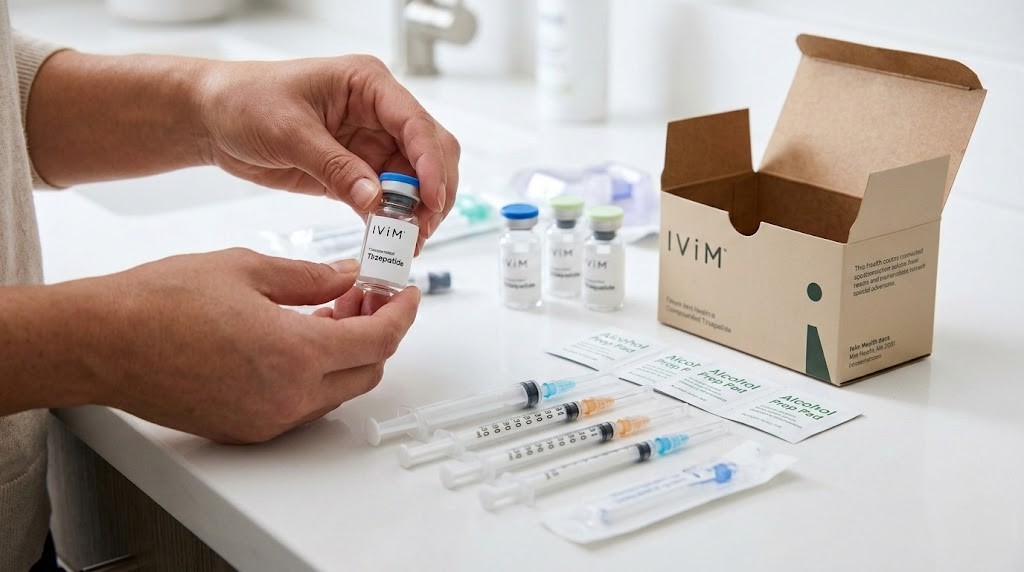
Tired of sifting through conflicting information about tirzepatide providers? You are not alone. The telehealth weight loss space has exploded over the past two years, and separating legitimate programs from overpriced middlemen has become genuinely difficult. IVIM Health, short for Individualized Virtual Integrative Medicine, has positioned itself as something different. Not just another telehealth company shipping out a standard dose and hoping for the best, but a platform built around personalized dosing protocols, weekly provider check-ins, and a clinical model that actually has published research behind it.
That distinction matters more than most people realize.
The difference between a standard tirzepatide starting dose protocol and a truly individualized approach can mean the difference between manageable side effects and weeks of nausea that make you want to quit entirely. It can mean the difference between steady, sustainable weight loss and a frustrating plateau that leaves you wondering if the medication even works. Tirzepatide dosing is not one-size-fits-all, and IVIM Health has built their entire business model around that reality. This guide breaks down everything you need to know about IVIM Health and their tirzepatide program, from pricing and protocols to clinical outcomes and real customer experiences, so you can make an informed decision about whether this platform is the right fit for your weight loss journey.
What is IVIM Health?
IVIM Health is a telehealth platform specializing in GLP-1 receptor agonist therapy for weight management. Founded in 2021 by Dr. Taylor Kantor alongside his brother Anthony and Anthony's wife Kelly, the company was built to reimagine care for cardiometabolic conditions. The name itself tells the story. IVIM stands for Individualized Virtual Integrative Medicine, a clinical framework that combines personalized medication management with lifestyle coaching and ongoing provider engagement.
The company operates out of Columbus, Ohio. It has grown rapidly since launch, now serving patients in 49 states (Mississippi is the only exception). Unlike platforms that simply match patients with a one-time prescriber, IVIM Health employs a team of licensed providers who actively manage treatment protocols on a weekly basis.
What makes them different from the dozens of other telehealth tirzepatide providers flooding the market? Three things stand out.
First, their GLP-1 ID protocol. This is not marketing language. IVIM has published peer-reviewed research in scientific journals documenting their individualized dosing approach and its outcomes. Second, the frequency of provider contact. Most telehealth programs offer monthly or quarterly check-ins. IVIM requires weekly monitoring, which allows for faster dose adjustments when side effects emerge or weight loss stalls. Third, they pair medication management with functional health coaching that addresses nutrition, sleep, stress, and movement, all factors that significantly influence how well tirzepatide works.
IVIM currently offers both compounded semaglutide and compounded tirzepatide, as well as brand-name options like Zepbound, Mounjaro, Ozempic, Wegovy, and Saxenda when insurance coverage or patient preference warrants them. Their bread and butter, however, is their compounded tirzepatide program, which makes up the bulk of their patient base.
Why tirzepatide and not just semaglutide?
This question comes up constantly. Both medications belong to the GLP-1 receptor agonist class, but they work differently at the molecular level. Semaglutide targets only the GLP-1 receptor. Tirzepatide targets both the GLP-1 and GIP receptors simultaneously, creating what researchers call a "twincretin" effect. The dual receptor activation leads to more pronounced appetite suppression, better metabolic improvements, and, in clinical trials, greater average weight loss compared to semaglutide alone.
IVIM offers both medications, which allows patients to start with the less expensive semaglutide option and switch to tirzepatide if they need more aggressive weight loss support. This flexibility matters because not everyone needs tirzepatide. Some patients achieve their goals beautifully with semaglutide at a fraction of the cost. Others need the additional hormonal leverage that only tirzepatide provides.
The choice also involves practical considerations. Side effect profiles differ between the two medications. Some patients tolerate one better than the other. Some experience faster appetite suppression with tirzepatide. Others find semaglutide gentler on the digestive system. The IVIM GLP-1 ID protocol accommodates either medication, and the weekly monitoring helps identify which one is producing the best response for each individual patient.
How the IVIM Health tirzepatide program works
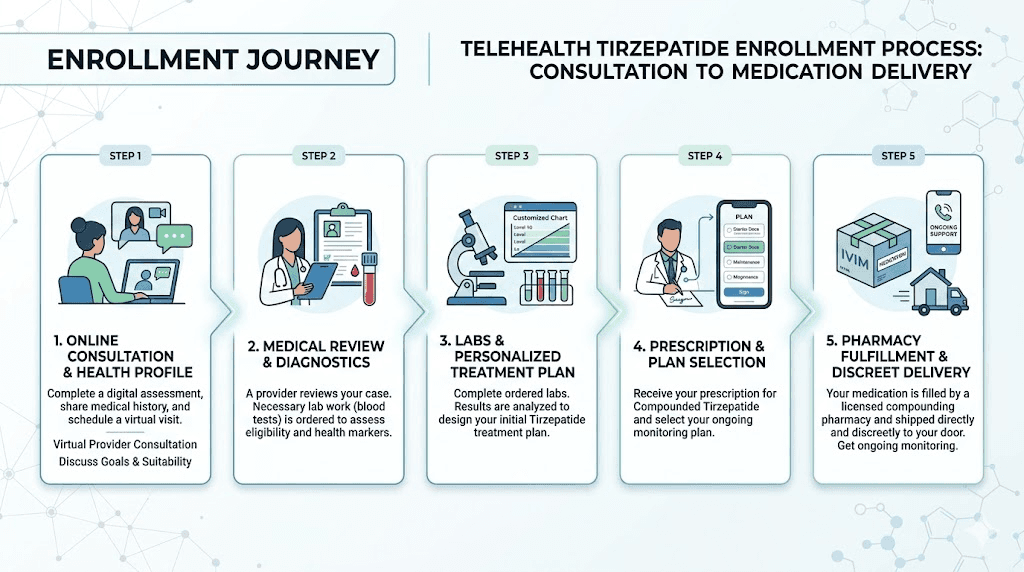
Understanding exactly how the program operates helps set realistic expectations before you enroll. The process has several distinct phases, each designed to build a personalized treatment plan rather than simply hand over a prescription.
Initial assessment and consultation
Everything begins with a dynamic health questionnaire. This is not the standard "check yes or no" form you might see on other telehealth platforms. IVIM collects detailed information about your medical history, current medications, previous weight loss attempts, metabolic health markers, lifestyle factors, and treatment goals. The questionnaire feeds into their clinical decision-making process and helps providers build a treatment plan tailored to your specific situation.
After completing the questionnaire, you schedule a consultation with an IVIM provider. This can happen via video or chat, depending on your preference and state regulations. During the consultation, the provider reviews your health information, discusses treatment options, explains the risks and benefits of compounded tirzepatide versus other GLP-1 options, and determines whether you are a good candidate for treatment.
Not everyone gets approved. Providers assess contraindications, current health status, and whether tirzepatide is the right medication for your specific goals. If you have a personal or family history of certain conditions, the provider may recommend alternative approaches or additional screening before prescribing.
Prescription and pharmacy fulfillment
Once approved, your prescription goes to one of IVIM Health partnered compounding pharmacies. The company states they only work with FDA-inspected, state-regulated compounding pharmacies that meet regulatory board standards for quality and safety. This is an important distinction, as the quality of compounded tirzepatide can vary significantly depending on the pharmacy producing it.
Your initial prescription typically starts at 2.5 mg per week, following the standard tirzepatide titration protocol. The medication ships directly to your door with the supplies needed for injection, including syringes and injection instructions.
Shipping timelines vary. Some patients report receiving medication within a week. Others describe longer waits, particularly during periods of high demand or pharmacy transitions. This variability is worth noting because interruptions in tirzepatide treatment can affect results.
Ongoing monitoring and dose adjustments
This is where IVIM differs most dramatically from competitors. The platform requires weekly check-ins through their mobile app. During each check-in, you report your current weight, any side effects, appetite changes, energy levels, sleep quality, and overall experience. A provider reviews this data and makes dose adjustment recommendations.
The weekly cadence is critical. Standard tirzepatide dosing protocols call for dose escalation every four weeks. IVIM takes a more granular approach, increasing the dose only when the patient is tolerating the current dose well and weight loss has plateaued. This means some patients stay at lower doses longer than they would on a standard protocol, while others advance more quickly.
The result? According to IVIM published data, 67.32% of their patients only required titration to a maximum dose of 10 mg. Only 21.44% reached 15 mg, the highest dose. This is significant because lower doses generally mean fewer side effects and lower medication costs.
IVIM Health tirzepatide pricing and cost breakdown
Let us talk money. This is often the deciding factor when choosing a tirzepatide provider, and IVIM pricing structure requires careful examination because the total cost involves multiple components.
Medication costs
Compounded tirzepatide through IVIM Health starts at approximately $133 per month. Some sources indicate pricing closer to $149 per month depending on the dose level and plan selected. As you titrate to higher doses, the medication cost increases because you are using more active ingredient per injection.
These prices are for compounded tirzepatide specifically, not brand-name Mounjaro or Zepbound. Compounded medications are custom formulations prepared by licensed compounding pharmacies. They are not FDA-approved, which means they have not undergone FDA review for safety, efficacy, or manufacturing quality. However, they are legal under federal law and can be significantly less expensive than brand-name alternatives.
For context, brand-name Zepbound costs $1,059.87 per month at list price without insurance. Even with manufacturer coupons or savings programs, the brand-name versions remain substantially more expensive than compounded alternatives.
The medication pricing from IVIM scales with dose. At the starting 2.5 mg dose, you pay the base rate. As your provider titrates upward to 5 mg, 7.5 mg, or 10 mg, the per-month cost increases because you are consuming more active pharmaceutical ingredient with each injection. This is standard across all compounded tirzepatide providers. What differs is how quickly you reach those higher doses and whether you need them at all. Because IVIM individualized protocol keeps many patients at lower doses longer, some patients end up paying less over time than they would on a standard titration schedule that pushes everyone to higher doses on a fixed timeline.
This is worth calculating carefully. A patient who stays at 5 mg for 6 months through IVIM individualized protocol might pay less total than a patient on a standard protocol who escalates to 10 mg by month 3, even after factoring in the $75 membership fee. Of course, the opposite can also be true if your body requires higher doses for adequate appetite suppression. Your IVIM provider can give you a better estimate during your consultation based on your specific clinical picture.
Membership fees
Here is where some patients get surprised. On top of the medication cost, IVIM charges a separate membership fee of $75 per month. The first month is free, which means you do not pay the membership fee during your initial consultation period. After that, $75 per month applies on an ongoing basis.
The membership covers unlimited provider visits, one-on-one health coaching sessions, 24/7 clinical support access, and the weekly check-in and dose adjustment protocol. Whether this represents good value depends entirely on how much you use these services and how much the individualized dosing approach benefits your specific situation.
Total monthly cost
Adding everything together, the total cost of IVIM tirzepatide program ranges from approximately $208 to $325 or more per month, depending on your dosage level and the specific plan you select. At the entry level, you are looking at roughly $133 for medication plus $75 for membership, totaling $208. As doses increase, the medication component rises while the membership fee stays constant.
Compared to other tirzepatide providers and telehealth platforms:
Hims: Offers brand-name Zepbound at $1,899 per month, with compounded options starting lower on prepaid multi-month plans
Ro: Brand-name Zepbound vials from $299 to $449 per month for medication plus a $145 per month membership fee
Empower Pharmacy (direct): Compounded tirzepatide at varying prices depending on the prescriber
Strive Pharmacy: Another compounding option with different pricing structures
IVIM falls in the mid-range for compounded tirzepatide telehealth programs. You are paying more than the cheapest options available, but the premium theoretically buys you a more hands-on clinical experience with individualized dosing.
Payment options
IVIM Health offers Klarna payment plans for their weight loss memberships, which allows patients to split costs into smaller installments. Compounded tirzepatide is not covered by insurance, which is standard across all compounding pharmacy options. If your insurance covers brand-name Mounjaro or Zepbound, IVIM can prescribe those instead, though coverage varies significantly by plan. For those exploring flexible payment, some tirzepatide providers offer Afterpay and similar services as well.
Hidden costs to consider
Beyond the medication and membership fees, there are a few additional costs patients sometimes overlook. Injection supplies (syringes, alcohol swabs) are typically included with your medication shipment, but replacement supplies may cost extra if you need additional quantities. If you require blood work or lab testing as part of your treatment plan, those costs are usually handled through your own insurance or paid out of pocket, not covered by the IVIM membership.
Shipping costs can also factor in. While standard shipping is typically included, expedited shipping for time-sensitive refills may carry additional charges. And if a shipment is lost, damaged, or delivered to the wrong address (a complaint that has appeared in customer reviews), navigating the replacement process can involve delays that affect your treatment continuity.
Finally, consider the cost of stopping. If you cancel your IVIM membership mid-cycle, understanding the refund policy and whether unused medication can still be accessed through another prescriber is important. Read the terms of service carefully before committing to a multi-month plan.
Understanding IVIM GLP-1 ID individualized dosing
The GLP-1 ID protocol is IVIM Health flagship clinical differentiator, and it deserves a thorough explanation because it fundamentally changes how patients experience tirzepatide therapy.
What makes GLP-1 ID different
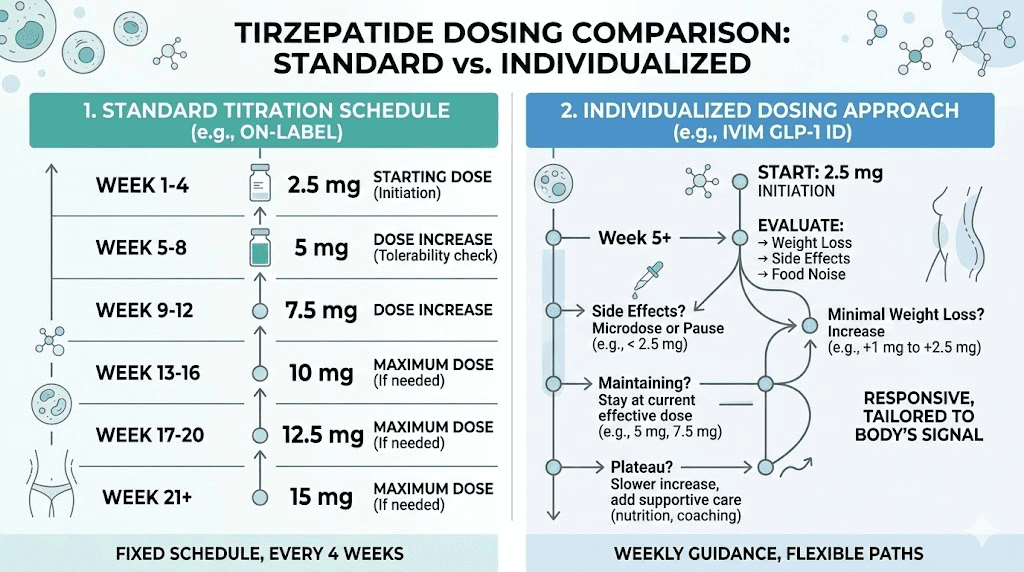
Most telehealth GLP-1 programs follow the manufacturer recommended titration schedule. Start at 2.5 mg. Move to 5 mg after four weeks. Then 7.5 mg. Then 10 mg. Then 12.5 mg. Then 15 mg. Each dose increase happens on a fixed timeline regardless of how the patient is responding. This approach works, but it creates problems for many patients.
Some people tolerate 2.5 mg beautifully but get crushed by gastrointestinal side effects when they jump to 5 mg on schedule. Others lose significant weight at lower doses and do not need to escalate as aggressively. Still others metabolize the medication quickly and need faster titration to maintain effectiveness. The standard protocol ignores all of this individual variation.
GLP-1 ID addresses this by removing the fixed schedule entirely. Instead, dose changes happen based on real-time patient data collected through weekly check-ins. The provider reviews symptom reports, weight trends, appetite patterns, and tolerance indicators before making any adjustment. If a patient is losing weight steadily at 5 mg with minimal side effects, there is no rush to push to 7.5 mg. If someone is struggling with persistent nausea or diarrhea at their current dose, the provider can hold or even temporarily reduce the dose rather than pushing forward.
The titration approach in practice
In practical terms, IVIM titration looks different for every patient. The initial dose is always 2.5 mg weekly, consistent with established tirzepatide dosing guidelines. From there, the path diverges.
A patient with strong tolerance might progress to 5 mg after two weeks rather than four. Another patient experiencing significant appetite suppression at 2.5 mg might stay there for six weeks or longer. The key metric is not time elapsed but clinical response. Weight is tracked, but so are hunger levels, energy, sleep quality, body aches, mood, and gastrointestinal symptoms.
This granular approach explains why so many IVIM patients never reach the maximum dose. When you titrate based on response rather than schedule, you often find that the effective dose is lower than you expected. Lower effective doses mean less medication consumed per month, which partially offsets the membership fee in total cost calculations.
Clinical evidence behind the protocol
IVIM has published peer-reviewed research documenting the outcomes of their individualized dosing approach. A study published in the journal Obesity Science and Practice examined weight reduction and treatment adherence in patients using tirzepatide under the IVIM protocol. The findings were notable.
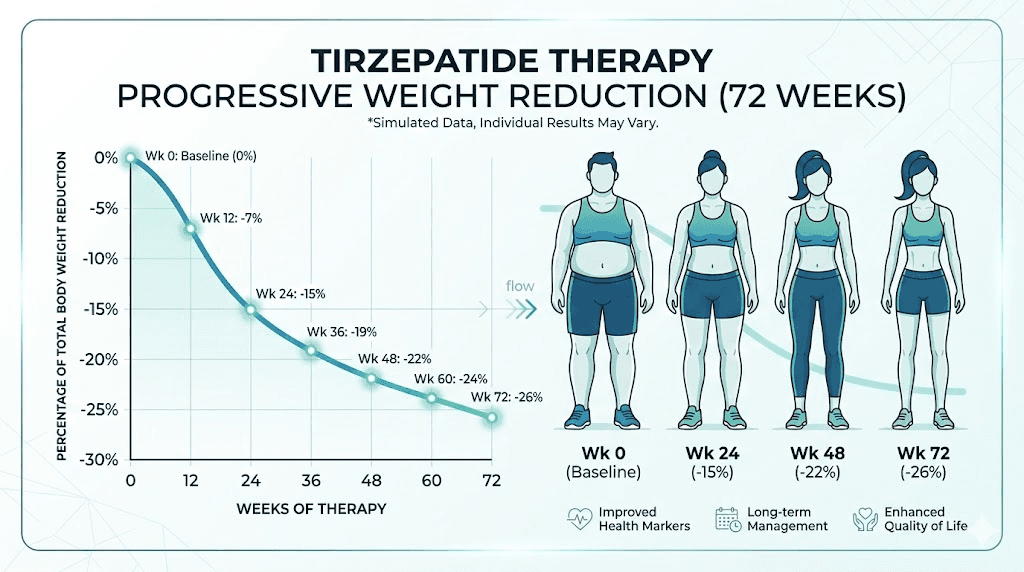
Patients experienced a mean weight loss of 20.12 pounds at 12 weeks, 35.67 pounds at 24 weeks, 47.33 pounds at 36 weeks, 52.28 pounds at 52 weeks, and 62.79 pounds (26.54% of body weight) at 72 weeks. These results align with or exceed the outcomes seen in the SURMOUNT clinical trials that led to tirzepatide FDA approval.
Treatment adherence was also high, which matters because one of the biggest problems with GLP-1 therapy is patients discontinuing due to intolerable side effects. By personalizing the titration schedule, IVIM appears to keep patients on therapy longer, which directly improves outcomes.
Clinical results and weight loss outcomes
Numbers tell the story better than marketing copy ever could. Let us look at what the published data actually shows about IVIM tirzepatide outcomes, and how those results compare to the broader tirzepatide before and after landscape.
Weight loss by timeframe
The IVIM protocol study tracked patients using both compounded and brand-name tirzepatide under individualized dosing. Here is the timeline of average weight loss:
12 weeks: -20.12 pounds
24 weeks: -35.67 pounds
36 weeks: -47.33 pounds
52 weeks (1 year): -52.28 pounds
72 weeks (18 months): -62.79 pounds (-26.54% body weight)
These are averages, which means individual results varied. Some patients lost more. Some lost less. But the trajectory shows consistent, progressive weight loss over time, which is exactly what you want to see with tirzepatide therapy.
For comparison, the SURMOUNT-1 clinical trial showed average weight loss of 22.5% at 72 weeks with the 15 mg dose. IVIM results of 26.54% slightly exceed this, though direct comparisons between clinical trials and real-world observational studies require caution due to differences in patient selection, adherence monitoring, and measurement methods.
Why individualized dosing may improve outcomes
The IVIM approach potentially improves outcomes through several mechanisms. Better side effect management keeps patients on the medication longer. Slower titration when needed reduces the dropout rate from intolerable symptoms. And the weekly provider engagement creates accountability that helps patients maintain the lifestyle changes, including dietary modifications and activity levels, that amplify the medication effectiveness.
The coaching component should not be underestimated. Tirzepatide is powerful, but it works best when combined with proper nutrition, adequate protein intake, regular movement, and quality sleep. IVIM functional health coaching addresses all of these factors, which likely contributes to the strong outcomes they report.
Understanding the weight loss curve
Weight loss on tirzepatide does not follow a straight line. The pattern looks more like a steep initial drop followed by a gradual flattening curve. Most patients lose the largest percentage of weight in the first 6 months, with the rate slowing as the body adapts and approaches a new set point.
Through IVIM protocol, the weight loss pattern shows distinct phases. The first 12 weeks typically produce the most dramatic changes. Appetite suppression hits hard. Caloric intake drops significantly. Water weight shifts. The body begins mobilizing stored fat at an accelerated rate. By weeks 12 to 24, the pace moderates but remains clinically significant. And by weeks 24 to 52, the curve continues but flattens, with patients losing smaller increments each month.
This is normal. This is expected. And this is where many patients on standard protocols panic and push for higher doses unnecessarily. The IVIM approach addresses this directly. Providers contextualize the weight loss rate for each patient, explaining that a slowing rate of loss at 7 months is not the same as a plateau that requires intervention. Sometimes steady, moderate weight loss at a comfortable dose is far better than aggressive titration that produces side effects and dropout.
The psychological aspect matters too. When you have a provider actively monitoring your trajectory and confirming that your rate of loss is appropriate for your stage of treatment, you are far less likely to make impulsive changes, skip doses out of frustration, or abandon the protocol entirely. This ongoing reassurance and course correction is part of what the $75 monthly membership actually buys.
What about long-term weight maintenance?
This is the critical question that no tirzepatide program has fully answered yet. What happens when you stop? Research consistently shows that maintaining weight loss after tirzepatide requires ongoing effort, and many patients regain a significant portion of lost weight after discontinuation.
IVIM addresses this through their maintenance dosing protocol, which involves gradually reducing the tirzepatide dose to the lowest effective level rather than stopping abruptly. This approach aligns with emerging clinical consensus that long-term, low-dose GLP-1 therapy may be necessary for sustained weight management. Understanding how to wean off tirzepatide properly is essential for anyone considering eventual discontinuation.
The maintenance phase is where IVIM individualized approach may prove most valuable in the long run. Rather than simply continuing the dose that produced maximum weight loss, providers work with patients to find the minimum effective dose for weight maintenance. This reduces long-term medication costs, minimizes ongoing side effects, and preserves the option to escalate again if needed. Some patients find they can maintain their results on a microdose that costs significantly less than their peak treatment dose.
Others discover that transitioning to semaglutide for maintenance after achieving their goal weight on tirzepatide provides a more affordable long-term solution. These individualized decisions are difficult to make without close provider engagement, which reinforces the value proposition of IVIM ongoing monitoring model even after the active weight loss phase has concluded.
Tirzepatide side effects through IVIM Health
Every tirzepatide program carries the same fundamental side effect profile. The medication does not change based on who prescribes it. What changes is how side effects are managed, and this is where IVIM weekly monitoring model has a real advantage.
Common side effects patients report
The most frequently reported side effects of compounded tirzepatide through IVIM Health mirror those seen in clinical trials:
Nausea: The most common complaint, particularly during dose escalation. Most patients find it manageable at lower doses but more pronounced with increases.
Diarrhea: Affects a significant percentage of patients, especially during the first few weeks at a new dose. Understanding how long tirzepatide diarrhea lasts helps set realistic expectations.
Constipation: Sometimes alternating with diarrhea, GI motility changes are common across the GLP-1 class.
Stomach pain: Cramping and abdominal discomfort, typically during the titration phase.
Vomiting: Less common than nausea but reported by some patients, particularly those who escalate doses too quickly.
Fatigue: Caloric restriction combined with medication effects can cause tiredness, especially early in treatment.
Insomnia: Some patients report difficulty sleeping, though this is less common.
Injection site reactions: Redness, itching, or swelling at the injection site occurs in a minority of patients.
IVIM safety information also notes an increased chance of acute gallbladder disease associated with personalized compounded tirzepatide, consistent with the known GLP-1 class effect of slowed gallbladder emptying during rapid weight loss.
How IVIM manages side effects differently
The weekly check-in model gives IVIM a genuine advantage here. When a patient reports emerging nausea at their current dose, the provider can immediately adjust the plan. Options include holding the dose for an additional week, temporarily reducing the dose, adding supportive measures like specific supplements, or modifying meal timing and composition.
On most other platforms, you might wait two to four weeks before your next provider interaction. During that time, you are either suffering through worsening symptoms or making dose changes on your own without clinical guidance. With IVIM, the feedback loop is compressed to seven days, which means problems get caught and addressed faster.
This rapid response cycle is particularly valuable during the critical early weeks of treatment when appetite suppression is establishing and the body is adjusting to a new hormonal signal. It is also valuable when patients experience joint pain, body aches, or other less common but disruptive side effects that might otherwise cause them to quit treatment entirely.
When to contact your provider immediately
Regardless of the weekly check-in schedule, certain symptoms require immediate attention. Severe abdominal pain that does not improve could indicate gallbladder complications. Signs of hormonal changes that seem extreme should be reported promptly. Allergic reactions including swelling, difficulty breathing, or severe injection site reactions warrant emergency care.
IVIM provides 24/7 clinical support access for these situations, which is a meaningful safety net that not all telehealth programs offer.
IVIM Health customer reviews and real experiences
Published research is valuable, but real patient experiences paint a more complete picture. IVIM Health has accumulated tens of thousands of reviews across multiple platforms, and the feedback reveals both genuine strengths and legitimate concerns.
Positive experiences
IVIM Health holds 5 stars on Trustpilot with over 34,000 reviews, which is an impressive rating at that volume. Common themes in positive reviews include:
Provider responsiveness stands out repeatedly. Patients describe quick turnaround on questions, thorough explanations during consultations, and genuine engagement with their progress rather than cookie-cutter responses. The personalized dosing approach gets frequent praise from patients who previously had negative experiences with standard GLP-1 titration on other platforms.
The enrollment process is described as simple and private. Patients appreciate that the health questionnaire is thorough without being invasive, and the consultation process feels more like working with a personal physician than going through a telehealth assembly line.
Weight loss results are consistently highlighted. Many reviewers share specific numbers, often reporting 30 to 60 or more pounds lost over several months, consistent with the clinical data IVIM has published.
Common complaints and concerns
No program is perfect, and IVIM has its share of legitimate complaints documented on the Better Business Bureau, ConsumerAffairs, and other platforms. Understanding these issues helps you make an informed decision.
Formula changes without adequate notice: Some patients reported that IVIM changed the compounded tirzepatide formulation without clear disclosure. After approximately one month on the new formula, certain patients experienced changes in effectiveness or developed physical reactions they had not experienced previously. This is a real concern because compounding pharmacies can adjust formulations, and patients deserve transparency about those changes.
Shipping and refill delays: Several complaints describe interrupted medication supply. Some patients reported being told they would receive a three-month supply initially with the remainder sent after a check-in, only to encounter problems getting the remaining medication. Shipping errors, including deliveries to wrong addresses where medication sat unrefrigerated, have been documented. Understanding what happens if tirzepatide gets warm makes clear why shipping reliability matters.
Billing transparency: Multiple complaints cite confusion about the dual cost structure. The membership fee and medication cost are separate charges, and some patients did not fully understand the total commitment before enrolling. Billing disputes, including claims of unauthorized charges, appear in BBB complaints.
Medication quantity issues: A smaller number of patients reported being shorted medication or having prescriptions not refilled despite having prepaid plans, leaving them without medication during active treatment.
How to weigh the reviews
With over 34,000 Trustpilot reviews at 5 stars and a relatively small number of BBB complaints, the overall sentiment skews heavily positive. However, the complaints that do exist reveal operational gaps, primarily around shipping logistics, billing communication, and transparency about formulation changes, that are worth considering before enrolling.
Every telehealth platform has some dissatisfied customers, and the volume of positive reviews suggests most patients have a good experience. But if medication supply reliability and billing simplicity are high priorities for you, these are areas where IVIM has documented room for improvement.
IVIM Health compared to other tirzepatide providers
Context matters. IVIM does not operate in a vacuum, and understanding how it stacks up against alternatives helps you determine whether the premium is worth paying. Here is how IVIM compares to several popular tirzepatide platforms.
IVIM vs Hims tirzepatide
Hims offers brand-name Zepbound (tirzepatide) at $1,899 per month, which is dramatically more expensive than IVIM compounded option. Hims also offers oral weight loss kits and semaglutide options at lower price points, but their tirzepatide offering specifically targets patients who want the FDA-approved brand-name product.
The provider interaction model differs significantly. Hims operates more like a streamlined prescription service, connecting patients with providers who prescribe based on established protocols. There is less emphasis on individualized dosing and ongoing provider engagement compared to IVIM weekly check-in model.
Choose Hims if you want brand-name tirzepatide and are willing to pay the premium. Choose IVIM if you want individualized dosing with compounded tirzepatide at a lower total cost.
IVIM vs Ro tirzepatide
Ro offers Zepbound vials through a partnership with LillyDirect, starting at $299 per month for the 2.5 mg dose and scaling up to $449 per month for higher doses. The mandatory Ro Body membership adds another $145 per month. Total costs range from $444 to $594 per month, which is higher than IVIM compounded option but provides brand-name, FDA-approved medication.
Ro program includes registered nurse support, an education curriculum covering nutrition, exercise, sleep, and lifestyle change, and an insurance concierge service. The structure is more rigid than IVIM individualized approach but offers a more established brand with wider name recognition.
Choose Ro if insurance coverage and brand-name medication matter to you. Choose IVIM if you prioritize individualized dosing at a lower price point.
IVIM vs other telehealth GLP-1 providers
Beyond Hims and Ro, the telehealth GLP-1 space includes platforms like Medvi, Orderly Meds, Citizen Meds, and Shed, each with their own pricing structures, provider models, and medication sourcing partnerships. Most of these platforms follow the standard titration schedule with monthly or bimonthly provider interactions. The weekly monitoring and individualized dosing that IVIM offers is genuinely uncommon in the space.
Where IVIM most clearly separates itself is in clinical credibility. The published research in peer-reviewed journals gives their protocol a level of validation that other telehealth providers simply do not have. That does not mean other platforms produce bad outcomes. It means IVIM is one of the few willing to subject their approach to scientific scrutiny and publish the results for anyone to evaluate.
For patients who want the most clinically rigorous approach available through telehealth, IVIM stands out. For patients who want simplicity and the lowest possible cost, other platforms may serve better. The right choice depends on your priorities, your budget, and how much clinical support you want during your weight loss timeline.
IVIM vs compounding pharmacies direct
Some patients bypass telehealth platforms entirely and work directly with compounding pharmacies like Empower Pharmacy, Strive Pharmacy, Southend Pharmacy, or ProRx through their own prescriber. This approach can be cheaper because you avoid the membership fee, but you lose the weekly monitoring, individualized dosing protocol, and health coaching that IVIM provides.
If you already have a knowledgeable prescriber who is willing to manage your tirzepatide treatment actively, going direct to a compounding pharmacy might save money. If you need the full-service clinical management, IVIM bundled approach offers genuine value.
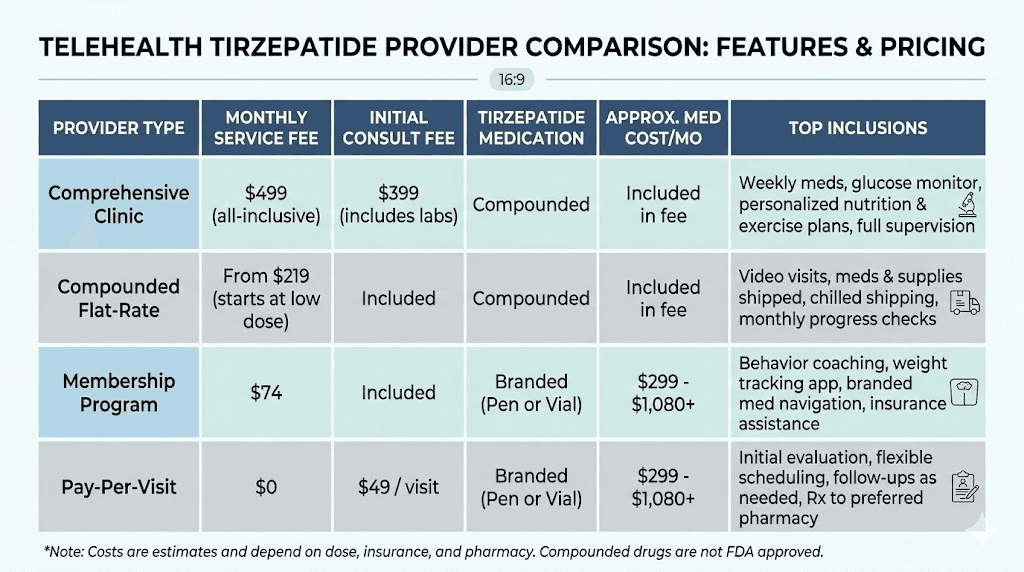
Provider comparison table
Feature | IVIM Health | Hims | Ro | Direct Pharmacy |
|---|---|---|---|---|
Medication type | Compounded | Brand-name | Brand-name | Compounded |
Monthly med cost | $133-250+ | $1,899 (Zepbound) | $299-449 | Varies |
Monthly membership | $75 | Included | $145 | None |
Provider check-ins | Weekly | As needed | Ongoing RN support | Per your prescriber |
Individualized dosing | Yes (GLP-1 ID) | Standard | Standard | Per your prescriber |
Health coaching | Yes | Limited | Yes | No |
Availability | 49 states | Nationwide | Nationwide | Varies |
The best provider depends entirely on your priorities, budget, and how much clinical support you want during treatment. IVIM strength lies in its individualized approach and relatively affordable compounded medication. Its weakness is the additional membership fee and the operational issues some patients have experienced with shipping and billing.
Compounded vs brand-name tirzepatide at IVIM
IVIM prescribes both compounded and brand-name tirzepatide, but the vast majority of their patients use compounded formulations. Understanding the differences between these options is essential for making an informed choice.
What compounded tirzepatide actually means
Compounded tirzepatide is a custom formulation prepared by licensed compounding pharmacies. These pharmacies take the active pharmaceutical ingredient (tirzepatide) and create injectable preparations according to the prescribing provider specifications. This is legal under federal law, but compounded medications are explicitly not FDA-approved. They have not undergone FDA review for safety, efficacy, or manufacturing quality.
This does not mean compounded tirzepatide is dangerous or ineffective. Many patients achieve excellent results with compounded formulations. But it does mean the quality control standards differ from those applied to brand-name Mounjaro or Zepbound. The pharmacy matters enormously, which is why IVIM claims to only partner with FDA-inspected, state-regulated compounding pharmacies.
How IVIM compounded tirzepatide differs from brand-name
The active ingredient is the same. Tirzepatide is tirzepatide regardless of whether it comes from Eli Lilly or a compounding pharmacy. The differences lie in the manufacturing process, quality testing, inactive ingredients, and regulatory oversight.
Brand-name products undergo rigorous FDA manufacturing standards, batch testing, and ongoing quality monitoring. Compounded products are regulated at the state level and by individual pharmacy accreditation bodies. IVIM compounding partners are described as meeting regulatory board standards, but the specific pharmacies and their accreditation details are not always transparent to patients, which is one area where some customer complaints have focused.
Some IVIM compounded tirzepatide formulations may include additional ingredients like B12, glycine, or niacinamide. These additions are marketed as enhancing the medication or supporting overall health during weight loss. Whether they provide meaningful clinical benefit beyond the tirzepatide itself is debatable, but they are common across the compounded tirzepatide formulation landscape.
Storage and handling considerations
Compounded tirzepatide requires proper refrigeration to maintain potency and stability. Understanding how long tirzepatide lasts in the fridge and shelf life expectations is important for any patient receiving medication by mail. If your IVIM shipment arrives warm due to shipping delays or delivery errors, the medication may be compromised. This connects directly to some customer complaints about shipping reliability.
Standard tirzepatide storage guidelines recommend refrigeration at 36 to 46 degrees Fahrenheit. Brief excursions to room temperature are generally acceptable, but prolonged exposure to heat degrades the peptide. IVIM uses cold-chain shipping for most deliveries, but gaps can occur, and patients should inspect their shipment on arrival.
How to get started with IVIM Health
If you have decided IVIM might be the right fit, here is exactly what the enrollment process looks like from start to first injection.
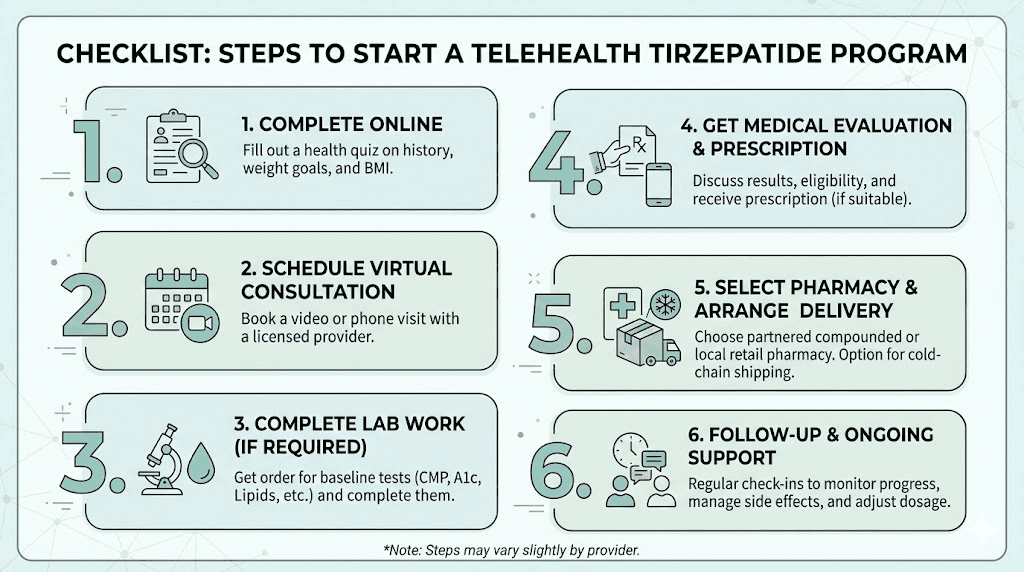
Step 1: Complete the online assessment
Visit the IVIM Health website and complete their health questionnaire. This takes approximately 15 to 20 minutes and covers your medical history, current medications, weight loss history, lifestyle factors, and treatment goals. Be thorough and honest, as this information directly shapes your treatment plan.
Step 2: Provider consultation
After submitting your assessment, you will be scheduled for a consultation with an IVIM provider. This typically happens within a few days. The provider reviews your information, discusses treatment options, answers your questions, and determines whether tirzepatide is appropriate for you.
Come prepared with questions. Good ones to ask include: Which compounding pharmacy fills your prescriptions? What happens if I experience severe side effects between weekly check-ins? What is the process for getting refills? How do billing and payment work after the first month?
Step 3: Prescription and delivery
Once approved, your prescription goes to the compounding pharmacy. Medication typically ships within one to two weeks, though timelines can vary. You will receive your tirzepatide vial along with injection supplies and instructions for self-injection.
If you are new to self-injection, take time to review proper injection technique before your medication arrives. Many first-time patients feel anxious about self-injection, which is completely normal. The needles used for subcutaneous tirzepatide injections are small gauge and relatively painless when proper technique is followed. The injection site options include the abdomen, thigh, and upper arm. Rotating injection sites helps prevent irritation, reduces the risk of injection site reactions, and allows for better absorption. SeekPeptides offers comprehensive injection guides and dosage calculators that can help you understand exact measurements for your specific concentration and syringe dosage requirements.
Step 4: Begin weekly monitoring
Download the IVIM Health app and start your weekly check-ins immediately. Report honestly, even when the news is not great. The value of the GLP-1 ID protocol depends entirely on accurate patient reporting. If you underreport side effects to avoid a dose hold, you defeat the purpose of the individualized approach. Track your weight at the same time each day, ideally first thing in the morning after using the bathroom, to give your provider the most consistent data possible for making dose adjustment decisions.
Step 5: Optimize your lifestyle alongside medication
Tirzepatide works best when combined with lifestyle modifications. Work with your IVIM health coach to develop a nutrition plan that supports your goals. Focus on adequate protein intake, which becomes critical during rapid weight loss to preserve lean muscle mass. The foods to avoid while on tirzepatide are generally the same ones that were undermining your health before, highly processed foods, excessive sugar, and calorie-dense items with minimal nutritional value.
Who should consider IVIM Health tirzepatide
IVIM is not the right choice for everyone. Understanding the ideal patient profile helps you decide whether to enroll or explore other options.
IVIM is a good fit if you
You value personalized care over convenience. The weekly check-ins and individualized dosing require active participation. If you want a provider who adjusts your protocol based on your specific response rather than following a standard schedule, IVIM delivers on that promise. SeekPeptides members often use platforms like IVIM alongside detailed educational resources to build a comprehensive understanding of their treatment protocol, combining clinical management with self-directed learning about how peptides work in the body.
You have experienced significant side effects on other GLP-1 programs. Patients who tried semaglutide or tirzepatide through other providers and struggled with fatigue, nausea, or other side effects may benefit from IVIM more careful titration approach. The weekly monitoring can catch problems early before they become reasons to discontinue treatment.
You are comfortable with compounded medications. IVIM primary offering is compounded tirzepatide, which is not FDA-approved. If this concerns you, IVIM can prescribe brand-name alternatives when appropriate, but their core value proposition centers on the compounded program.
You want integrated lifestyle support. The health coaching component is not an afterthought at IVIM. If you want guidance on supplementation, nutrition timing, exercise integration, and stress management alongside your medication, the membership fee includes these services.
IVIM may not be right if you
You want the cheapest possible option. IVIM is mid-range in pricing, but the membership fee adds to the total cost. If budget is your primary concern, working directly with a compounding pharmacy through your own prescriber may cost less overall. Exploring cheap compounded tirzepatide options might be a better starting point.
You strongly prefer brand-name medication. While IVIM can prescribe brand-name options, their program is optimized around compounded formulations. If you want FDA-approved Zepbound or Mounjaro, platforms like Ro that partner directly with manufacturers might be a better fit.
You dislike frequent check-ins. Weekly monitoring is a core feature, not an optional extra. If you prefer a hands-off approach where you simply receive your medication and manage your own protocol, IVIM structured program may feel excessive.
You live in Mississippi. IVIM does not currently serve patients in Mississippi due to regulatory requirements.
You need immediate treatment. IVIM enrollment process, from initial questionnaire to medication delivery, can take one to three weeks. If you need to start tirzepatide immediately, platforms with faster fulfillment pipelines may serve you better. That said, most compounded tirzepatide providers have similar lead times, so this limitation is not unique to IVIM.
You want complete pharmacy transparency upfront. If knowing exactly which pharmacy compounds your medication before you enroll is a dealbreaker, IVIM lack of upfront disclosure on pharmacy partners may be frustrating. Some patients view this as a reasonable operational detail. Others see it as an important transparency gap. Where you fall on that spectrum should inform your decision.
Tips for maximizing results on IVIM tirzepatide
Enrolling in a program is just the beginning. The patients who achieve the best outcomes on IVIM tirzepatide, or any tirzepatide program, share certain habits and approaches.
Take weekly check-ins seriously
This cannot be overstated. The entire value of the GLP-1 ID protocol depends on accurate, honest reporting. Do not rush through the weekly questionnaire. Note specific side effects, rate their severity honestly, and share relevant lifestyle factors like sleep disruptions or unusually stressful weeks. The more data your provider has, the better they can optimize your dose.
Prioritize protein intake
Rapid weight loss on tirzepatide can include significant muscle loss if protein intake is inadequate. Aim for 0.7 to 1 gram of protein per pound of goal body weight daily. This is challenging when appetite is suppressed, which is exactly why protein shakes designed for GLP-1 patients have become popular. Your IVIM health coach can help you build a meal plan that hits protein targets without requiring you to eat more than your suppressed appetite allows.
Stay hydrated
Tirzepatide can cause dehydration through reduced food intake and gastrointestinal side effects. Aim for at least half your body weight in ounces of water daily, more if you experience constipation or diarrhea. Electrolyte supplementation can help, particularly during the first few weeks of treatment when GI side effects are most common.
Plan for injection day
Many patients find that side effects peak in the 24 to 48 hours following their weekly injection. If this pattern holds for you, plan your injection day accordingly. Some patients prefer injecting on Friday evening so the worst of any nausea or fatigue hits during the weekend rather than during the workweek. Others find that timing their injection in the morning works better for their schedule.
Prepare for travel
If you travel frequently, maintaining your tirzepatide protocol requires planning. Understanding how to travel with tirzepatide safely, including cold storage solutions and TSA guidelines for injectable medications, prevents disruptions in your treatment. Coordinate with IVIM to ensure refill timing aligns with travel schedules.
Consider supportive supplements
Discuss supplementation with your IVIM provider. Common supportive supplements during tirzepatide therapy include B12 for energy support, B6 for nausea management, probiotics for gut health, magnesium for constipation and muscle function, and fiber supplements for digestive regularity. The right supplement stack varies by individual, which is another area where the IVIM health coaching component adds value.
Track your progress beyond the scale
Weight is one metric, but it is not the only one that matters. Take body measurements monthly, note energy level changes, track sleep quality improvements, monitor blood pressure and blood sugar if relevant, and photograph your progress. The before and after transformation is more than a number on a scale, and non-scale victories often provide the motivation to stay consistent when weight loss plateaus inevitably occur.
Manage expectations during dose transitions
Every dose change is a transition period. Your body needs time to adjust to a new level of GLP-1 receptor activation. Side effects often peak in the 48 to 72 hours following a dose increase, then gradually subside over the next week. This is not a sign that something is wrong. It is a sign that the medication is engaging new receptors and your system is recalibrating.
Communicate clearly with your IVIM provider during these transitions. Some patients mistake normal adjustment symptoms for intolerance and request a dose reduction prematurely. Others push through genuine distress unnecessarily because they assume side effects are "supposed" to be bad. Neither extreme serves you well. The sweet spot is honest reporting and collaborative decision-making with your provider, which is the entire point of the weekly check-in model.
Build a support system
Weight loss on GLP-1 medications is not just a physical process. It involves changes in your relationship with food, shifts in social dynamics around meals, and often significant psychological adjustments as your body transforms. Having people who understand your journey, whether family, friends, or an online community, makes a meaningful difference in long-term success.
IVIM provides some of this through their health coaching, but external support matters too. Many patients find value in connecting with others who are on similar protocols, sharing before and after experiences, discussing strategies for managing side effects, and troubleshooting common challenges. The accountability that comes from community involvement often complements the clinical accountability that IVIM weekly monitoring provides.
Plan for the long term from day one
Starting tirzepatide is not a temporary intervention. The research is clear that most patients need ongoing treatment to maintain weight loss results. From your first injection, you should be thinking about what sustainable weight management looks like for you. Will you stay on a maintenance dose of tirzepatide indefinitely? Will you transition to a lower-cost medication like semaglutide once you reach your goal weight? Will you eventually wean off completely and rely on lifestyle changes alone?
There is no single right answer, but having the conversation early with your IVIM provider ensures that your treatment plan accounts for where you are going, not just where you are today. Too many patients focus exclusively on the initial weight loss phase and get blindsided when they realize that the medication is meant to be a long-term commitment for sustained results.
Understanding compounded tirzepatide quality and safety
The compounded medication market is not without risk, and patients considering IVIM or any compounded tirzepatide program should understand what quality looks like and what questions to ask. This is not about fear-mongering. It is about making informed decisions with your health.
What defines a quality compounding pharmacy
Not all compounding pharmacies are created equal. The gold standard is a 503B outsourcing facility, which operates under more rigorous FDA oversight than standard 503A pharmacies. 503B facilities must register with the FDA, comply with current good manufacturing practices (cGMP), and submit to regular inspections. IVIM states they work with FDA-inspected, state-regulated pharmacies, but knowing whether your specific pharmacy is a 503A or 503B operation is worth asking about.
Quality indicators to look for include third-party potency testing, sterility verification for each batch, endotoxin testing, and transparent certificates of analysis. If IVIM or any provider cannot tell you which pharmacy fills your prescription and what quality testing protocols that pharmacy follows, consider that a yellow flag worth discussing with your provider.
The FDA regulatory landscape
The regulatory environment around compounded GLP-1 medications has been evolving. Eli Lilly, the manufacturer of brand-name tirzepatide (Mounjaro and Zepbound), has pushed back against compounded versions of their drug, arguing that compounding pharmacies should not be producing copies of medications that are commercially available. The FDA has addressed tirzepatide shortage status multiple times, and the legal landscape continues to shift.
This matters for IVIM patients because changes in FDA policy could affect the availability or legality of compounded tirzepatide in the future. While compounded medications are currently legal under specific circumstances, the regulatory environment is dynamic. IVIM has shown awareness of this by also offering brand-name prescriptions, which provides a fallback option if compounded availability changes. Patients exploring the broader compounded market should also understand the grey market landscape and the risks associated with unregulated sources.
How to verify your medication
When you receive compounded tirzepatide from IVIM, there are several things you can check. The vial should be properly labeled with the pharmacy name, medication name, concentration, expiration date, and storage instructions. The solution should be clear and free of particles. The color may vary depending on whether additional ingredients like B12 are included, but it should be consistent from vial to vial.
If you notice changes in the medication appearance, consistency, or effectiveness between refills, report this to your IVIM provider immediately. This was a specific complaint from some customers, where formulation changes led to different responses. A quality provider addresses these concerns proactively rather than dismissing them.
IVIM semaglutide vs IVIM tirzepatide
IVIM Health offers both compounded semaglutide and compounded tirzepatide, and many patients wonder which option is better suited to their goals. The choice between these two medications involves several important considerations.
Tirzepatide is a dual GIP/GLP-1 receptor agonist, meaning it activates two hormonal pathways involved in appetite regulation and glucose metabolism. Semaglutide activates only the GLP-1 receptor. In head-to-head clinical trials, tirzepatide has demonstrated greater average weight loss compared to semaglutide, though individual responses vary.
Through IVIM, compounded semaglutide starts at approximately $75 per month, making it the more affordable option. Compounded tirzepatide starts at $133 per month. Both require the $75 per month membership fee. For patients who respond well to semaglutide, the lower cost makes it an attractive choice. For those who have plateaued on semaglutide or want maximal weight loss potential, switching between the two medications is possible under provider guidance, and IVIM dose conversion protocols make the transition smoother.
If you are starting fresh and budget is a major factor, beginning with semaglutide and assessing your response before considering tirzepatide is a reasonable strategy that your IVIM provider can help you navigate.
The future of IVIM Health and GLP-1 therapy
The GLP-1 landscape is evolving rapidly. New medications like retatrutide, survodutide, and cagrisema are progressing through clinical trials, and the FDA regulatory environment around compounded GLP-1 medications continues to shift.
IVIM Health has demonstrated adaptability by building their platform around a clinical model (GLP-1 ID) rather than a specific medication. This means they can incorporate new medications as they become available while maintaining their individualized dosing framework. Whether the company continues to grow and improve its operational reliability, particularly around shipping and billing transparency, will determine its long-term position in the market.
For patients considering IVIM today, the question is whether the current program offers enough value to justify the cost. The clinical outcomes data is promising. The provider engagement model is genuinely differentiated. And the published research adds credibility that most competitors lack. The operational concerns around shipping, billing, and formulation transparency are real but appear to affect a minority of patients.
For researchers serious about understanding their tirzepatide options and optimizing their dosing protocols, SeekPeptides offers the most comprehensive resource available, with evidence-based guides, proven protocols, detailed dosage charts, and a community of thousands who have navigated these exact questions. Whether you choose IVIM, another provider, or a direct compounding pharmacy arrangement, having access to reliable, unbiased peptide education makes the entire process more effective and safer.
Frequently asked questions
Is IVIM Health legitimate?
Yes. IVIM Health is a licensed telehealth platform founded in 2021 by Dr. Taylor Kantor. The company has published peer-reviewed clinical research, holds strong ratings on Trustpilot with over 34,000 reviews, and operates in 49 states. They employ licensed providers and partner with FDA-inspected compounding pharmacies. Like any telehealth platform, individual experiences vary, and the BBB has documented some customer complaints regarding billing and shipping, but the company itself is a legitimate healthcare operation.
How much does IVIM tirzepatide cost per month?
Total monthly cost ranges from approximately $208 to $325 or more depending on your dose level. This includes the medication cost (starting around $133 per month for compounded tirzepatide) plus the required $75 per month membership fee. The first month membership fee is waived. As you titrate to higher doses, the medication component increases while the membership stays the same. For current pricing, check directly with IVIM as rates may change.
Does IVIM Health accept insurance?
Compounded tirzepatide is not covered by insurance through IVIM or any other provider. However, if you have insurance coverage for brand-name Mounjaro or Zepbound, IVIM providers can prescribe those medications instead. The IVIM membership fee itself is not covered by insurance. For patients exploring payment plans, IVIM offers Klarna installment options.
How is IVIM different from other telehealth tirzepatide providers?
The primary differentiator is the GLP-1 ID individualized dosing protocol. While most telehealth platforms follow the standard manufacturer-recommended titration schedule, IVIM adjusts dosing weekly based on patient-reported outcomes. This approach has published clinical evidence showing strong weight loss results and high treatment adherence. The weekly provider check-ins and integrated health coaching also distinguish IVIM from more transactional telehealth services.
Can I switch from semaglutide to tirzepatide at IVIM?
Yes. IVIM providers can manage the transition from semaglutide to tirzepatide using established conversion protocols. This is actually a common progression for patients who start on the less expensive semaglutide and later switch to tirzepatide for greater effectiveness. The individualized dosing approach is particularly valuable during medication transitions because it allows providers to calibrate the new medication based on your specific response.
What compounding pharmacies does IVIM use?
IVIM states they only partner with FDA-inspected, state-regulated compounding pharmacies that meet regulatory board standards. However, the specific pharmacy names are not always disclosed to patients upfront, which has been a source of some customer complaints. If pharmacy transparency is important to you, ask specifically which pharmacy will fill your prescription during your consultation. You can compare their answer against known compounding pharmacies like Empower or Strive that have established reputations.
How long does it take to see results with IVIM tirzepatide?
Based on published clinical data, patients averaged 20.12 pounds of weight loss at 12 weeks. Individual results vary based on starting weight, metabolic health, adherence to the protocol, and lifestyle factors. Most patients notice appetite suppression within the first week or two of starting tirzepatide, with visible weight loss typically becoming apparent by weeks 4 to 8. The full weight loss trajectory continues to improve through 72 weeks and beyond with consistent use.
Can I use the IVIM tirzepatide program while breastfeeding?
Tirzepatide is not recommended during breastfeeding. The medication has not been studied in nursing mothers, and the potential effects on breast milk and infant health are unknown. If you are breastfeeding or planning to breastfeed, discuss alternative weight management approaches with your provider. IVIM providers should screen for this during your initial consultation.
External resources
In case I do not see you, good afternoon, good evening, and good night. May your doses stay personalized, your providers stay attentive, and your progress stay consistent.