Feb 28, 2026

You picked a day. You picked a time. You stuck the needle in. And now you are wondering if you did it all wrong. Maybe you should have waited until morning. Maybe evening would have been better. Maybe Saturday is a terrible injection day and nobody told you.
This is the quiet anxiety that follows almost every person who starts tirzepatide for the first time. The medication itself is straightforward, a once-weekly subcutaneous injection that targets both GIP and GLP-1 receptors to reduce appetite and improve metabolic function. But the timing? That part feels like it should matter more than anyone is willing to explain. And the conflicting advice online does not help. One source says morning. Another says bedtime. A third says it makes no difference at all, which somehow feels the least reassuring of the three.
Here is the truth. The best time to take your tirzepatide shot depends on your body, your schedule, your tolerance for side effects, and how you want those side effects to fit into your week. There is no single correct answer, but there are strategies that make certain times dramatically better than others for specific situations. This guide covers every angle, from the pharmacokinetics that explain why timing flexibility exists in the first place, to the practical scenarios that make one injection window smarter than another for your particular routine.
SeekPeptides has analyzed thousands of protocols and timing strategies to identify the patterns that consistently produce the best outcomes. What follows is a complete breakdown of everything the clinical data, the prescribing information, and real-world experience reveal about when to inject tirzepatide for the most comfortable, most effective results.
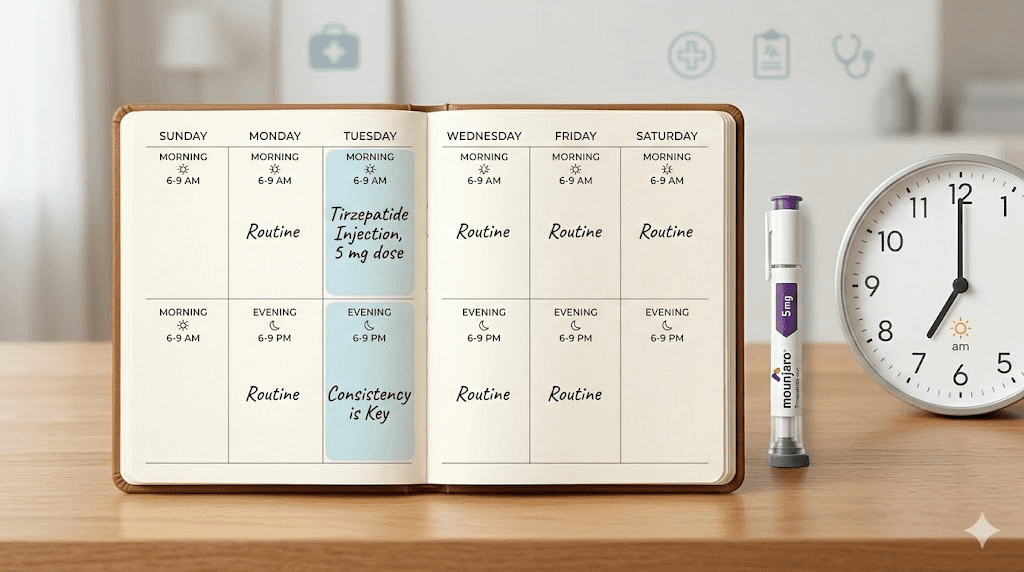
Does the time of day actually matter?
Short answer: no. Not pharmacologically.
The FDA-approved prescribing information for both Mounjaro and Zepbound states that tirzepatide can be administered at any time of day, with or without meals. There is no official recommendation favoring morning over evening, and clinical trials did not control for injection timing because the data showed it did not significantly affect outcomes. The medication works the same way whether you inject at 6 AM or 11 PM.
But that does not mean timing is irrelevant. It means that the tirzepatide dosing itself is not affected by when you inject. What IS affected by timing is your experience of the medication. Side effects, energy levels, sleep quality, appetite patterns, workout performance, and general comfort throughout the week are all influenced by when you choose to take your shot. And those things matter.
Think of it this way. The drug does not care what time it enters your body. But you certainly do.
What the pharmacokinetics tell us
Tirzepatide has a half-life of approximately 5 days. That is long. Really long compared to most medications. After a subcutaneous injection, the peptide reaches peak plasma concentration somewhere between 24 and 72 hours, with most people hitting peak levels around the 24 to 48 hour mark. Steady-state concentrations are achieved after roughly 4 weeks of consistent weekly dosing, at which point there is about 1.6-fold accumulation compared to a single dose.
What this means practically is that tirzepatide is not a medication where injection timing creates sharp peaks and valleys in your system. The long half-life creates a relatively smooth concentration curve throughout the week. Whether you inject Monday morning or Monday night, your drug levels by Wednesday look essentially identical.
This is fundamentally different from something like semaglutide, which has a similar half-life but different peak timing characteristics, or short-acting peptides where injection timing is critical. With tirzepatide, the pharmacokinetic profile actually gives you genuine flexibility. You are not gaming absorption windows or chasing peak levels. You are managing your personal experience of a medication that maintains therapeutic concentrations regardless of when you inject.
The bioavailability sits around 80%, and the medication is 99% bound to plasma albumin. These numbers do not change based on time of day. Your body absorbs and distributes tirzepatide the same way at dawn as it does at midnight.
Morning injections: who they work best for
Many providers default to recommending morning injections. The logic is simple and generally sound. You take your shot early, you have the entire day ahead of you to monitor how you feel, and you can adjust your activities if side effects appear. Morning injections also tend to be easier to remember because they integrate into existing routines like brushing teeth, making coffee, or checking medications.
But morning injections are not universally superior. They work best for specific types of people.
The monitoring advantage
If you are in your first four weeks of starting tirzepatide or have recently increased your dose, morning injections offer a significant practical advantage. The most common side effects, particularly nausea, diarrhea, and general gastrointestinal discomfort, typically begin within 1 to 3 hours after injection and peak during the first 24 to 48 hours. If you inject at 7 AM, the initial wave of side effects hits during normal waking hours when you are upright, hydrated, and able to respond.
This matters because lying flat with active nausea is miserable. It also matters because dehydration from vomiting or diarrhea is easier to manage when you are awake and can sip fluids consistently. For people who tend toward stronger tirzepatide side effects, morning injection gives the best conditions for riding out the initial discomfort.
The appetite alignment
Morning injection also lines up well with the appetite suppression cycle for some people. Tirzepatide begins working on appetite suppression within hours, and many users report that the strongest appetite reduction occurs in the first 2 to 4 days after injection. If you inject Monday morning, the peak appetite suppression aligns with Monday through Thursday, the days when most people are busiest with work and most likely to make poor food decisions from convenience or stress.
By Friday and the weekend, when social eating and less structured meals are more common, the appetite suppression has moderated slightly. This gives you more flexibility to enjoy meals without the sometimes uncomfortable feeling of absolute food indifference that the first 48 hours can bring.
Who should consider morning injections
People in their first month on tirzepatide
People who recently increased their dose
Anyone who experiences significant nausea or GI side effects
People who want appetite suppression strongest during weekdays
Anyone who follows a structured morning routine and wants to anchor injection timing to existing habits
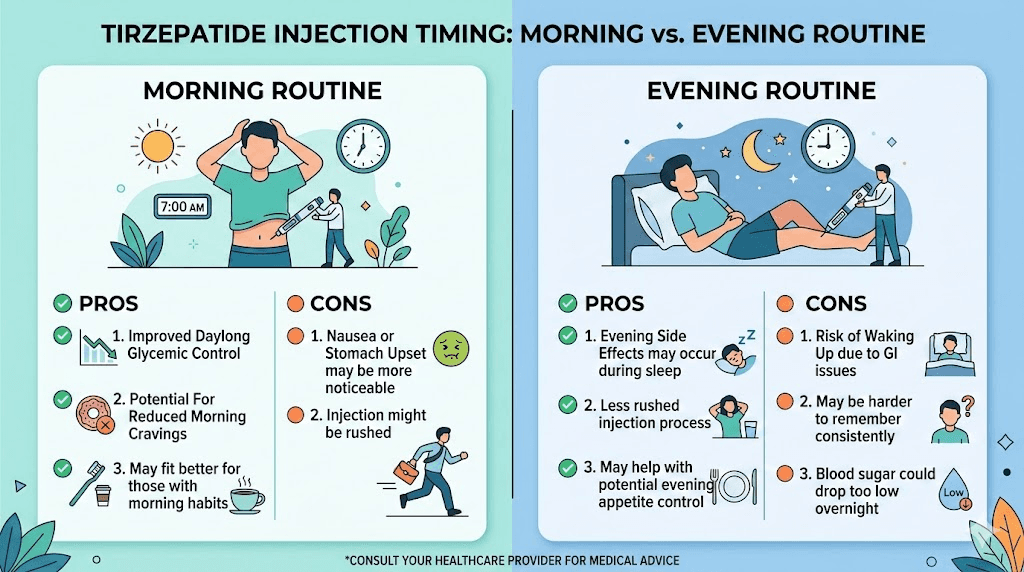
Evening and bedtime injections: the side effect hack
Here is something most guides skip. Evening administration reduces nausea and vomiting in up to 20% of patients. That is a substantial improvement with zero additional cost and zero medication changes. You just move the injection to bedtime.
The mechanism is intuitive. Nausea and gastrointestinal side effects typically peak 1 to 3 hours after injection. If you inject at 9 PM, those peak hours fall between 10 PM and midnight, precisely when you are sleeping. You literally sleep through the worst of it. By morning, the acute phase has passed, and what remains is the more manageable, lower-grade bloating or mild queasiness that most people can tolerate through a normal day.
This is not a minor hack. For people who have considered stopping tirzepatide because of side effects, simply shifting to evening administration can be the difference between tolerating the medication and abandoning it entirely.
Why evening works for nausea management
The body processes injected tirzepatide through subcutaneous absorption into the bloodstream, with initial GI effects appearing as the peptide begins activating receptors in the gut and brain. During sleep, several things happen that mitigate these effects.
First, you are horizontal and unconscious. This sounds obvious, but it matters. Conscious awareness of nausea amplifies the sensation. When you are asleep, mild nausea does not register the same way. Second, the vagus nerve activity that mediates nausea is modulated during sleep. The gastrointestinal tract slows down naturally during nighttime hours. Third, the psychological component of anticipating nausea, which can worsen actual nausea, is eliminated entirely when you are sleeping.
Multiple providers now recommend evening injection as the first intervention for patients struggling with tirzepatide GI side effects, before considering dose reduction or anti-nausea medication.
The sleep consideration
One concern about evening injection is tirzepatide insomnia. Some users report difficulty sleeping on injection night, though this is less common than the nausea benefit is helpful. The mechanism is unclear, it may relate to subtle changes in blood glucose regulation or direct central nervous system effects during the initial absorption phase.
If you try evening injection and find that it disrupts your sleep more than it helps with nausea, the solution is simple. Move the injection to early evening instead of bedtime. Injecting at 6 PM gives you a few hours for the initial effects to begin while you are still awake, but shifts the peak nausea window to 9 PM through midnight, catching the beginning of your sleep period without injecting right as you are trying to fall asleep.
Who should consider evening injections
People who experience moderate to severe nausea
Anyone who has been on tirzepatide for at least 4 weeks (familiar with their side effect pattern)
People who work physical jobs and cannot afford daytime nausea
Night owls who naturally stay up later
Anyone who has tried morning injection and found the daytime side effects disruptive
Choosing the best day of the week
The day matters more than most people realize. Not pharmacologically, the drug does not care if it is Tuesday or Saturday. But practically, the day you choose determines which days of your week carry the heaviest side effects and which days get the strongest appetite suppression.
The weekend strategy
For people who work Monday through Friday, injecting on Friday evening or Saturday morning has become the most popular strategy, and for good reason. The first 48 hours after injection are typically when side effects are strongest. If you inject Friday evening, the peak discomfort falls on Saturday and Sunday, when you have more flexibility to rest, hydrate, stay close to a bathroom, and manage symptoms without work obligations.
By Monday, you are past the worst of it. The appetite suppression is still strong, carrying you through the workweek with reduced cravings. And by the time the next Friday arrives, the cycle resets.
This pattern works exceptionally well during the first weeks of treatment or after dose increases, when side effects are most pronounced. It essentially quarantines the uncomfortable period to days when you have the most control over your environment.
The midweek strategy
Some people prefer a Wednesday injection. The logic here is different but equally valid. Wednesday injection places peak appetite suppression on Thursday and Friday, reducing the tendency to overeat as the workweek winds down. It also means the side effects hit Thursday and Friday, but by this point, people with an established tolerance usually experience minimal discomfort.
The midweek approach also distributes appetite suppression more evenly across the weekend. Rather than having very strong suppression on Saturday (day 1 post-injection) and diminishing effects by next Friday (day 7), a Wednesday injection means the weekend falls on days 4 and 5, when appetite suppression is moderate but still present.
For people tracking their weight loss timeline, the midweek strategy often produces more consistent weekly weigh-in results because the drug levels are relatively stable around the typical Monday morning weigh-in point.
The Monday strategy
Monday injection is the routine approach. You start your week, you take your shot, and the injection becomes part of your weekly reset. This works well for people who thrive on structure and want their medication schedule to align with their overall planning cycle.
The downside is that peak side effects hit Tuesday and Wednesday, the heart of the workweek. For people with demanding jobs, client-facing roles, or physically active occupations, this can be disruptive. However, for people who have been on tirzepatide long enough to have minimal side effects, Monday injection creates the cleanest weekly routine.
Day selection by lifestyle
Lifestyle | Best day | Why |
|---|---|---|
Office worker (Mon-Fri) | Friday evening | Side effects on weekend, appetite control during workweek |
Healthcare/shift worker | First day off | Side effects during rest days |
Weekend athlete | Sunday evening | Peak effects clear before next weekend activities |
Parent with young kids | Friday evening | Partner can help cover weekend if needed |
Frequent traveler | Most stable day each week | Consistency matters more than specific day |
Student | Friday afternoon | Side effects over weekend, focus during class days |
The table above is a starting point. Your optimal day depends on your specific side effect profile, which you will only learn after 2 to 4 weeks of consistent injection.
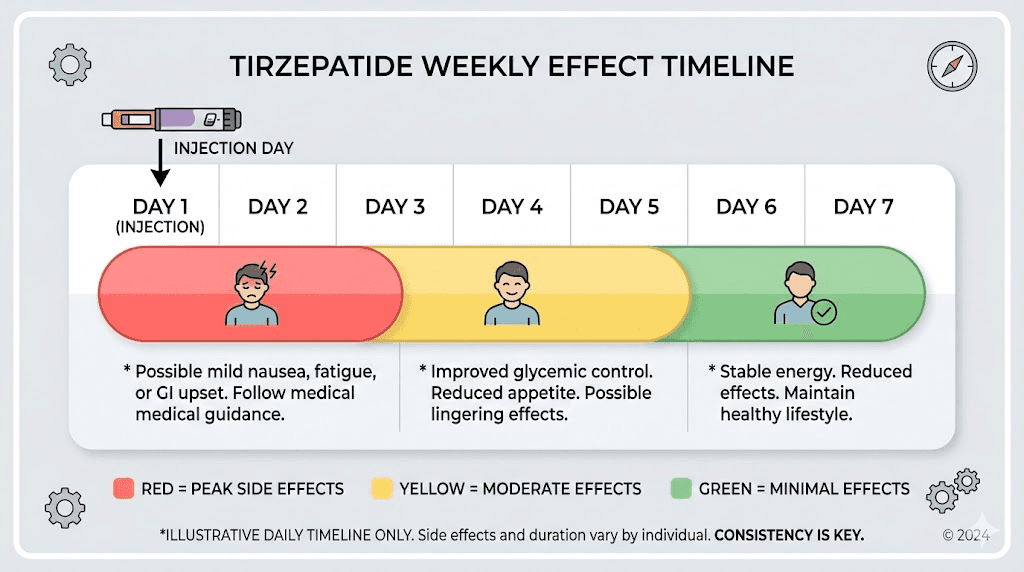
The 72-hour rule and changing your injection day
Life does not always cooperate with weekly schedules. Travel, social events, medical procedures, and simple forgetfulness all create situations where you might need to shift your injection day. Tirzepatide allows this, but with one critical rule.
You must wait at least 72 hours (3 days) between doses. This is non-negotiable.
The 72-hour minimum exists because tirzepatide remains active in your system for days after injection. Taking a second dose too soon creates drug accumulation that significantly increases both the likelihood and severity of side effects, particularly the gastrointestinal ones. Nausea that would normally be mild becomes severe. Diarrhea that would have lasted a day lasts three. The risk of vomiting increases substantially.
How to safely change your injection day
Suppose you normally inject on Wednesdays and want to switch to Fridays. Here is how to do it safely.
Take your Wednesday dose as normal. Then, instead of injecting the following Wednesday, wait until Friday. You have now gone 9 days instead of 7 between doses. You may notice slightly increased appetite on Thursday and Friday as drug levels drop a bit lower than usual, but this is temporary and harmless. From that point forward, Friday is your new injection day.
Going the other direction, shifting earlier in the week, requires more attention. If you normally inject Friday and want to switch to Wednesday, you need to ensure at least 72 hours have passed. Friday to Wednesday is 5 days, so that is safe. But if you injected Friday and tried to switch to Sunday, that is only 2 days. Not safe. You would need to wait until at least Monday (3 days).
The 4-day rule for missed doses
If you miss your scheduled injection day entirely, the FDA prescribing information provides clear guidance. If you remember within 4 days (96 hours) of your scheduled dose, take the injection as soon as you remember and then resume your normal weekly schedule. If more than 4 days have passed since your scheduled dose, skip that dose entirely and take the next one on your regular day.
Do not double up. Do not take two doses within 3 days of each other. And if you have missed more than 2 consecutive weeks, contact your provider. You may need to restart at a lower dose to avoid the flood of GI side effects that comes with reintroducing the medication after a gap.
For more on scheduling flexibility, see our guide on taking tirzepatide a day early.
Timing around meals and food
Tirzepatide is a subcutaneous injection. It bypasses the gastrointestinal tract for absorption entirely. This means that, unlike oral medications where food can interfere with absorption, the presence or absence of food in your stomach has zero effect on how tirzepatide enters your bloodstream.
You can inject on a full stomach. An empty stomach. After breakfast. Before dinner. During lunch. It genuinely does not matter for absorption.
However.
Food timing around injection can affect your comfort level, specifically regarding nausea. Many users report that injecting on a completely empty stomach intensifies the initial wave of nausea. The theory is that the medication-induced slowing of gastric emptying combined with an empty stomach creates a particularly uncomfortable sensation. A light meal about an hour before injection, something like toast with a small amount of protein or a handful of crackers, can buffer this effect.
Conversely, injecting immediately after a large meal is also not ideal. Tirzepatide slows gastric motility. If your stomach is already full of food, the delayed emptying can create intense feelings of fullness, bloating, and discomfort that would not have occurred with a smaller pre-injection meal.
The sweet spot for meal timing
The most comfortable pattern, based on consistent user reporting, is this.
Eat a light meal 1 to 2 hours before your injection. Something easily digestible. Not greasy, not heavy, not spicy. Think plain rice, toast, a small portion of lean protein, or a banana. Then inject. Then avoid eating anything heavy for 2 to 3 hours after injection. If hunger returns that evening or the next day, stick to the foods that work best with tirzepatide, small portions of protein-dense, nutrient-rich meals that do not challenge a digestive system that is operating slower than usual.
For a complete dietary approach, the tirzepatide diet plan covers meal timing, portion sizing, and food selection in detail. Understanding which foods to avoid is equally important, particularly during the first 48 hours post-injection when GI sensitivity is highest.
Timing around exercise and workouts
If you exercise regularly, injection timing deserves extra thought. The medication does not impair athletic performance directly, but the side effects during the first 24 to 48 hours can absolutely interfere with intense training.
The first 48 hours: go easy
Days 1 and 2 after injection are when most people experience the strongest body aches, nausea, and fatigue. High-intensity exercise during this window is generally unwise, not because it is dangerous, but because the combination of medication-induced GI symptoms and vigorous physical exertion creates unnecessary misery. Intense cardio can worsen nausea. Heavy lifting when your energy is already depleted leads to poor performance and increased injury risk.
During the first 48 hours post-injection, stick to low-intensity activities. Walking, light yoga, stretching, mobility work, or easy cycling are all fine. These keep you moving without pushing into the zone where side effects become amplified.
Days 3 through 5: peak training window
By day 3 post-injection, most side effects have faded substantially. This is when your body has adjusted to the current dose, energy levels have normalized, and the appetite suppression is working in the background without causing active GI distress. For people who train seriously, days 3 through 5 post-injection represent the optimal training window.
This is where day selection becomes strategic for athletes. If you want to train hard on Tuesday and Thursday, injecting Friday evening or Saturday morning puts those training days at days 4 and 6 post-injection, well past the acute side effect phase. If your big training days are Monday and Wednesday, injecting Thursday evening positions those sessions at days 4 and 5 post-injection.
The principle is simple: put your hardest workouts as far from injection day as possible, and protect injection day plus the following 48 hours for rest and recovery-focused movement.
Exercise and muscle preservation
One reason exercise timing matters during tirzepatide treatment is muscle preservation. The medication produces significant weight loss, and without adequate resistance training and protein intake, a meaningful portion of that weight loss comes from muscle mass rather than fat. Research consistently shows that combining tirzepatide weight loss protocols with structured resistance training shifts the ratio heavily toward fat loss while preserving lean tissue.
This makes it even more important to optimize workout timing so that your training sessions are high quality. A mediocre workout squeezed into the nausea window does less for muscle preservation than a strong session on day 4 when you feel good and can actually push yourself. The right supplements can also support training performance and recovery throughout your tirzepatide cycle.
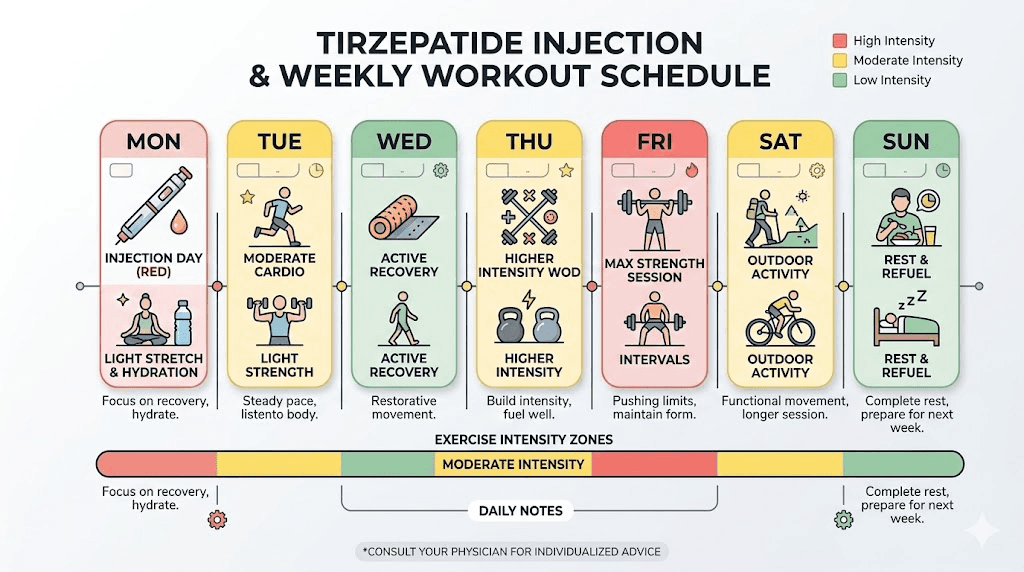
Morning versus evening: the definitive comparison
Because this question comes up so frequently, here is a complete side-by-side breakdown of morning versus evening injection with tirzepatide.
Factor | Morning injection | Evening injection |
|---|---|---|
Nausea management | Side effects during waking hours, conscious awareness can worsen perception | Peak nausea during sleep, up to 20% report reduced nausea |
Monitoring | Full day to observe reactions, easier to seek help if needed | Limited observation window before sleep |
Sleep quality | No injection-related sleep disruption | Some users report insomnia on injection night |
Appetite timing | Strongest suppression during daytime meals | Strongest suppression begins overnight, carries into next day |
Work impact | Side effects may affect work performance | Side effects mostly overnight, reduced workday impact |
Exercise | Injection day workout should be light | Next morning workout should be light |
Social eating | Evening meals same day may be challenging | Next day meals usually manageable |
Best for beginners | Yes, better monitoring | Once side effect pattern is known |
Neither option is objectively better. The right choice depends entirely on your priorities and how your body responds to the medication.
The hybrid approach
Some experienced users adopt a hybrid approach. During dose escalation phases, when side effects are unpredictable, they inject in the morning for better monitoring. Once they know their body tolerates the current dose well, they switch to evening injection for the nausea-reduction benefit. Then, if they increase the dose again, they temporarily switch back to morning until the new dose stabilizes.
This flexible approach requires nothing more than respecting the 72-hour minimum between doses when shifting timing. It takes the best of both strategies and applies them to the appropriate phase of treatment.
Compounded tirzepatide timing considerations
If you are using compounded tirzepatide rather than brand-name Mounjaro or Zepbound, the timing principles are identical. The active molecule is the same. The pharmacokinetics are the same. The 72-hour rule applies. Morning versus evening considerations are the same.
However, compounded tirzepatide does introduce a few practical timing considerations that brand-name pens do not.
Reconstitution timing
If your compounded tirzepatide arrives as a lyophilized powder that requires reconstitution, you need to factor in preparation time. Reconstituting a vial with bacteriostatic water takes a few minutes of careful work, rolling the vial gently (never shaking), allowing the solution to clarify, and then drawing up the correct dose using an insulin syringe. This is not something you want to rush at 6 AM when you are half asleep.
Many compounded tirzepatide users find that an early evening window, around 5 to 7 PM, gives them adequate time to prepare the injection calmly and carefully without feeling rushed. The injection technique with a syringe requires more attention than a prefilled pen, and doing it when you are alert and unhurried produces more consistent dosing.
Temperature and timing
Compounded tirzepatide stored in the refrigerator should be brought to room temperature before injection. Cold medication stings more, causes more injection site discomfort, and may absorb slightly differently. Allow the vial or syringe to sit at room temperature for 15 to 30 minutes before injecting.
This means your injection timing actually starts 15 to 30 minutes before the injection itself. If you want to inject at 7 PM, remove the vial from the fridge at 6:30 PM. Build this into your routine. For storage guidelines, see our complete guide on tirzepatide refrigeration requirements and how long tirzepatide lasts in the fridge.
Dose accuracy and timing
With prefilled pens, dose accuracy is essentially guaranteed by the device. With compounded tirzepatide and an insulin syringe, accuracy depends on your ability to draw up the correct number of units. The tirzepatide syringe dosage requires reading the dosage chart carefully. Rushing this step leads to dosing errors. Pick a time of day when you can be precise and focused.
Injection site and timing interactions
The injection site you choose can interact with your timing preferences in subtle ways.
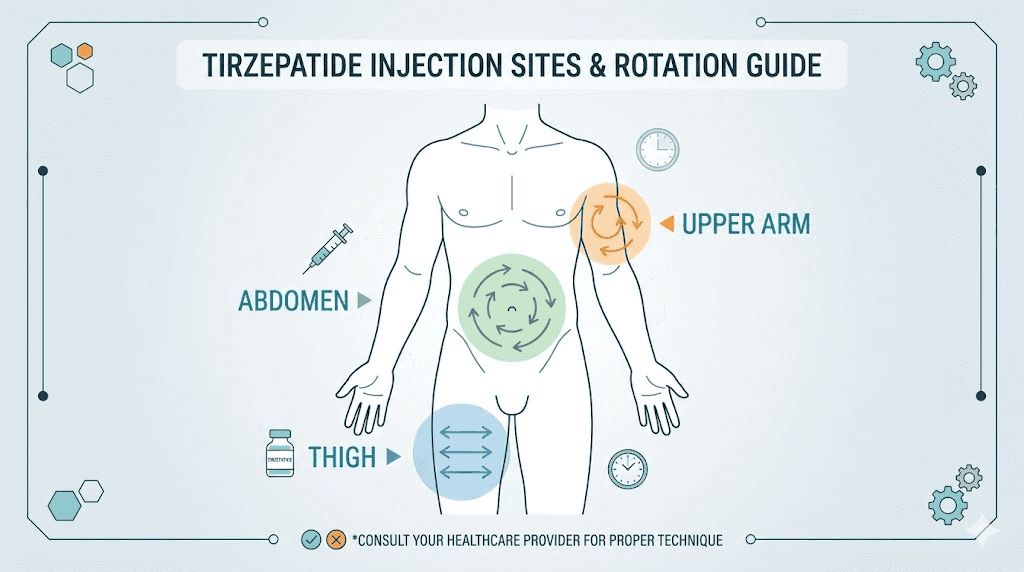
Abdomen injections
The abdomen, specifically the area at least 2 inches from the navel, is the most common injection site. Absorption from the abdominal subcutaneous tissue tends to be slightly faster than from the thigh, though the difference is not clinically meaningful for a long-acting medication like tirzepatide. If you inject tirzepatide in the stomach, the initial onset of side effects may begin slightly sooner, within 1 to 2 hours rather than 2 to 3 hours.
For evening injectors, this faster onset from abdominal injection can actually be beneficial. Side effects begin sooner and peak sooner, meaning more of the acute phase falls within your sleep window.
Thigh injections
The thigh injection site typically shows slightly slower absorption compared to the abdomen. Some users report that thigh injections produce a slightly more gradual onset of side effects, spreading the initial discomfort over a longer period at lower intensity rather than a sharper, shorter peak.
For people who prefer morning injection and want to minimize the intensity of the initial side effect wave, thigh injection may offer a marginal advantage. The effect is subtle, but enough users report this pattern that it is worth considering as a variable in your timing optimization.
Site rotation and timing consistency
Regardless of which site you prefer, maintaining a consistent rotation pattern is important. Injecting the same exact spot repeatedly can cause injection site reactions including redness, itching, and lipohypertrophy, which is the formation of fatty lumps under the skin that impair absorption. Rotate between left and right sides of your chosen area, and consider alternating between abdomen and thigh weekly.
For managing any injection site reactions that do occur, our treatment guide covers every practical solution.
Timing tirzepatide around travel
Travel throws a wrench into any medication schedule, and tirzepatide is no exception. Time zone changes, disrupted routines, and limited access to refrigeration all create timing challenges.
Crossing time zones
If you normally inject at 7 PM Eastern and fly to California (Pacific time), 7 PM Pacific is 10 PM Eastern, which is a 3-hour shift. This is well within the tolerance for tirzepatide. Simply inject at your usual local time in the new time zone. The 3-hour difference will not produce any meaningful change in drug levels or effectiveness.
For larger time zone shifts (traveling to Europe or Asia), the same principle applies with more flexibility. Since the 72-hour minimum between doses is your hard boundary, and you are dosing weekly, even a 12-hour shift in timing represents less than 10% of the dosing interval. Your body will not notice.
The key is to maintain a consistent day of the week in your destination time zone and then shift back when you return. For comprehensive travel guidance, including storage solutions and TSA considerations, see our traveling with tirzepatide guide.
Storage during travel
Timing around travel also means considering when you will have access to your medication. If your tirzepatide needs to stay cold, you need a cooler bag for transit. Compounded tirzepatide can be out of the fridge for limited periods, and understanding what happens if tirzepatide gets warm helps you make informed decisions about travel-day timing. Some travelers prefer to inject just before leaving (eliminating the need to carry cold medication) while others prefer to inject at their destination (ensuring they have access to a refrigerator immediately after injection).
Tirzepatide timing and other medications
Tirzepatide slows gastric emptying. This is part of how it reduces appetite and promotes weight loss. But it also means that oral medications taken around the same time as tirzepatide may be absorbed differently.
This is primarily a concern for medications with narrow therapeutic windows. If you take oral contraceptives, thyroid medication, blood pressure pills, or anti-seizure medications, the delayed gastric emptying from tirzepatide could slightly reduce or delay their absorption. The clinical significance varies by medication, but the general guidance is to take time-sensitive oral medications at least 1 hour before or 2 hours after your tirzepatide injection.
This timing consideration is another reason why many providers recommend a specific, consistent injection time. If you always inject at 7 PM, you can schedule your morning medications 12 or more hours away from the injection, essentially eliminating any interaction concern. If you inject at random times, managing the spacing around other medications becomes more complicated.
People combining phentermine and tirzepatide or stacking tirzepatide with B12 supplements, glycine, or niacinamide should also consider spacing these alongside injection timing for optimal absorption.
The dose escalation timing strategy
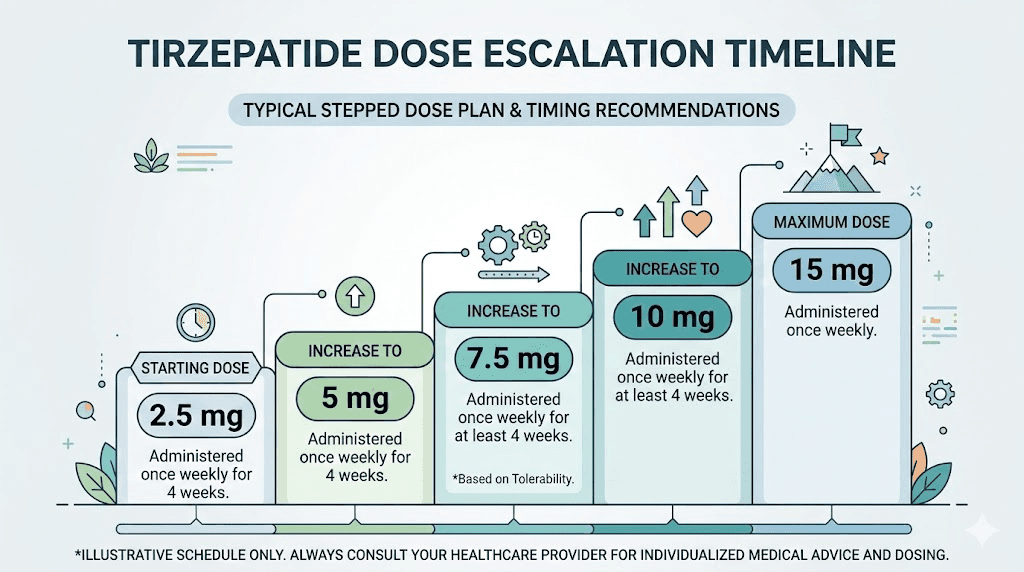
Tirzepatide follows a stepped dosing protocol. Most people start at 2.5 mg for 4 weeks, then increase to 5 mg, then 7.5 mg, then 10 mg, with potential further increases to 12.5 mg and 15 mg. Each dose increase typically brings a temporary return of side effects as the body adjusts to higher drug levels.
Smart timing during dose escalation can significantly reduce the impact of these transitional periods.
The weekend dose-increase strategy
If you normally inject on a weekday but have a dose increase coming, consider shifting your injection to Friday evening for that specific week. This places the first 48 hours on the new dose during the weekend, giving you maximum flexibility to manage any increased side effects. Once you have confirmed that the new dose is tolerable, you can shift back to your regular weekday if you prefer.
Remember: shifting days requires maintaining the 72-hour minimum. If your normal day is Tuesday and you want to inject Friday instead, that is a 3-day shift forward, which means you went 10 days since your last dose. That is safe. Then, to shift back to Tuesday, you would inject 4 days after the Friday dose, which also clears the 72-hour minimum.
Week 1 on a new dose: morning injection
Regardless of your established preference, the first injection at a new dose should ideally be in the morning. The reasoning is identical to the beginner advice. A new dose introduces unpredictability. You do not know if you will tolerate 7.5 mg the same way you tolerated 5 mg. Morning injection gives you the full day to monitor your response.
After confirming that the new dose is tolerable (usually by the second week), you can return to your preferred evening or bedtime timing.
Understanding your dose response over time
As you progress through the tirzepatide dosing protocol, you will notice patterns in how your body responds to timing at different dose levels. What worked perfectly at 2.5 mg may need adjustment at 10 mg. The higher the dose, the more potent the appetite suppression and the more likely you are to experience side effects. This is normal and expected.
Tracking your injection time alongside your side effect experience for each dose level creates valuable data. Use a simple note on your phone: date, dose, injection time, injection site, and any symptoms over the next 48 hours. After 2 to 3 weeks at each dose, you will have enough information to optimize your timing specifically for that dose level. The injection dosage chart provides a helpful reference for tracking where you are in the protocol.
Special populations and timing adjustments
People with diabetes
For people using tirzepatide for type 2 diabetes management (Mounjaro), injection timing interacts with blood glucose patterns. Morning injection means the drug begins affecting glucose metabolism during the day, when meals and activity also influence blood sugar. Evening injection means initial glucose effects occur overnight, when blood sugar typically drops naturally.
Neither timing is inherently better for glucose control, the long half-life ensures steady-state coverage regardless. But if you experience hypoglycemia concerns, particularly if you are also taking other glucose-lowering medications, working with your provider to coordinate injection timing with your overall diabetes management plan is important.
People with anxiety about injections
Injection anxiety is real, and it affects timing choices more than most people admit. Some people find that morning injection, when they are fresh and alert, produces less anxiety than evening injection when they are tired and the prospect of a needle feels more daunting. Others prefer evening because they want to get it over with and not think about it all day.
If anxiety around injection is a significant factor for you, the best time is whichever time produces the least anticipatory dread. Injection anxiety that builds throughout the day can be more harmful than any pharmacological timing consideration. Some people find it helpful to anchor the injection to a specific routine, like immediately after a shower or right before a favorite TV show, creating a behavioral cue that reduces the decision-making friction.
Women and menstrual cycle timing
Some women report that tirzepatide side effects are more pronounced during certain phases of their menstrual cycle. Hormonal fluctuations, particularly during the luteal phase (the two weeks before menstruation), can amplify nausea, bloating, and fatigue. These are already common tirzepatide side effects, and stacking them on top of premenstrual symptoms creates a particularly uncomfortable experience.
Women who notice this pattern may benefit from timing their injection to avoid the overlap. If your worst PMS symptoms fall during the last 3 to 5 days before your period, try to schedule your injection so that the peak side effect window (days 1 to 2 post-injection) does not coincide with that PMS window. For more on how tirzepatide interacts with hormonal cycles, see our guide on tirzepatide and menstrual periods.
Timing mistakes to avoid
Over thousands of documented protocols, certain timing mistakes appear repeatedly. Avoiding these will save you significant discomfort.
Mistake 1: injecting right before a big meal or social event
Tirzepatide begins suppressing appetite and slowing gastric emptying within hours. If you inject at 5 PM before a 7 PM dinner party, you are walking into a social eating situation with a stomach that is rapidly losing interest in food and progressively slowing its processing speed. The result is often intense fullness after a few bites, followed by hours of uncomfortable bloating.
If you have a social event or important meal coming up, either inject the day before (so the acute phase has passed) or the day after (so the meal is not affected). Planning around social eating is one of the most underrated timing strategies, especially during holidays and celebrations.
Mistake 2: changing injection time weekly
Inconsistency is the enemy of comfortable tirzepatide use. Your body adapts to a predictable schedule. When you inject at the same time each week, your system develops a rhythm. It learns when the side effects are coming and adjusts accordingly. When you inject at 7 AM one week and 10 PM the next, the body never fully calibrates, and side effects tend to be more variable and harder to predict.
Pick a time. Stick with it. The only exception is the strategic shifts discussed earlier (dose escalation, travel, special events), which should be temporary, deliberate changes followed by a return to your baseline schedule.
Mistake 3: skipping the dose entirely because you forgot your preferred time
If you normally inject at 7 AM on Saturdays and realize at 3 PM Saturday that you forgot, take the injection at 3 PM. Do not wait until next Saturday. A dose taken 8 hours late is infinitely better than a dose skipped entirely. The 7-day interval is a target, not a rigid boundary. Anywhere between 6 and 8 days between doses is functionally equivalent for therapeutic purposes.
The only hard rule is the 72-hour minimum on the short side. On the long side, you have flexibility up to 4 days late (as discussed in the missed dose section).
Mistake 4: injecting before intense exercise
As covered in the exercise section, injecting within a few hours of planned intense exercise is asking for trouble. The combination of medication-induced nausea and vigorous physical exertion can trigger vomiting, severe fatigue, and a generally miserable experience. If your workout is at 6 AM, do not inject at 5:30 AM. Either inject the night before or wait until after your workout.
Building your personalized injection schedule
The research is clear. The clinical data is consistent. And the real-world experience of thousands of users points to the same conclusion: the best time to take your tirzepatide shot is the time that you will consistently take it with the least disruption to your life.
But that is a starting point, not an endpoint. Within that framework, optimization is possible.
Step 1: start simple
For your first 4 weeks on tirzepatide, pick a morning time on a day when you have flexibility (ideally a day off or a lighter workday). This gives you maximum monitoring ability during the unpredictable early phase.
Step 2: observe your pattern
After 4 weeks, you will know your body. You will know whether nausea is a significant issue for you. You will know whether fatigue hits you hard. You will know which day of the week feels right. Document these observations.
Step 3: optimize
If nausea is your primary concern, try shifting to evening injection. If sleep disruption is more problematic than nausea, stick with morning. If weekend activities are being ruined by side effects, shift your injection day so the peak discomfort falls on workdays (or vice versa). Make one change at a time and observe the results for at least 2 to 3 weeks before making another adjustment.
Step 4: lock it in
Once you find your optimal combination of day and time, commit to it. Set a recurring alarm. Build it into your weekly routine. The more automatic it becomes, the less mental energy you spend on the decision, and the more consistent your experience will be.
SeekPeptides members access detailed dosing protocols, timing optimization guides, and personalized support for building the most effective tirzepatide schedule for their specific goals and lifestyle.
How timing compares across GLP-1 medications
If you are considering or have experience with other GLP-1 medications, understanding how tirzepatide timing compares can be helpful.
Factor | Tirzepatide | Semaglutide |
|---|---|---|
Dosing frequency | Once weekly | Once weekly (injectable) |
Half-life | ~5 days | ~7 days |
Time to peak | 24-72 hours | 24-72 hours |
Timing flexibility | Any time of day | Any time of day |
Food interaction | None (injectable) | None (injectable) |
Minimum between doses | 72 hours (3 days) | 48 hours (2 days) |
Missed dose window | Within 4 days | Within 5 days |
For people switching between tirzepatide and semaglutide, the timing principles transfer directly. The main difference is that semaglutide has a slightly longer half-life, which means even more timing flexibility, and a shorter minimum interval between doses (48 hours versus 72 hours).
For a comprehensive comparison of side effects and efficacy between the two medications, see our semaglutide versus tirzepatide side effects comparison and the detailed semaglutide versus tirzepatide overview.
Frequently asked questions
Can I take tirzepatide in the morning one week and at night the next?
You can, but it is not recommended. Consistency produces better tolerance and fewer unpredictable side effects. If you need to shift timing, do it once and establish a new consistent schedule rather than alternating week to week. Always maintain the 72-hour minimum between any two doses.
Does taking tirzepatide at night cause more weight loss than morning?
No. Weight loss outcomes are determined by dose, diet, and activity level over weeks and months, not by the hour of injection. Evening injection may reduce nausea in some people, which can improve adherence, which indirectly supports better outcomes. But the medication itself produces identical effects regardless of injection time.
Should I take tirzepatide on an empty stomach?
Since tirzepatide is a subcutaneous injection, stomach contents do not affect absorption. However, many users find that having a light meal 1 to 2 hours before injection reduces the initial nausea compared to injecting on a completely empty stomach. See our guide on foods to avoid with tirzepatide for specific dietary guidance.
What if I accidentally took my tirzepatide shot 2 days early?
If less than 72 hours have passed since your last dose, contact your healthcare provider. Do not take another dose until at least 72 hours have elapsed. You may experience increased side effects from the drug accumulation. Monitor for severe nausea, vomiting, or diarrhea, and seek medical attention if symptoms are severe.
Is Friday the best day to inject tirzepatide?
Friday is the most popular injection day for people who work Monday through Friday because it places peak side effects on the weekend. But it is not universally the best day. The best day depends on your work schedule, exercise routine, social commitments, and individual side effect pattern. Review the day selection table earlier in this guide to find the best match for your lifestyle.
How long after injecting tirzepatide can I eat?
You can eat immediately after injection if you wish. The timing of meals relative to injection does not affect medication absorption. However, waiting 1 to 2 hours before eating a full meal may reduce nausea for some people. Light snacks are fine at any time.
Can I take tirzepatide before bed to avoid nausea?
Yes. This is one of the most effective strategies for managing tirzepatide nausea. Studies show that evening administration reduces nausea in up to 20% of patients by allowing peak GI effects to occur during sleep. Try injecting 30 to 60 minutes before your typical bedtime and evaluate the results over 2 to 3 weeks.
Does the injection site affect how quickly tirzepatide works?
The injection site can slightly affect absorption speed. Abdominal injections may produce marginally faster absorption than thigh injections, but the difference is not clinically meaningful for overall effectiveness. Choose your site based on comfort and rotation needs rather than speed of onset.
External resources
For researchers serious about optimizing their tirzepatide protocols, SeekPeptides provides the most comprehensive resource available, with evidence-based timing guides, proven dosing protocols, and a community of thousands who have navigated these exact questions.
In case I do not see you, good afternoon, good evening, and good night. May your injection timing stay consistent, your side effects stay minimal, and your results stay on track.