Feb 8, 2026
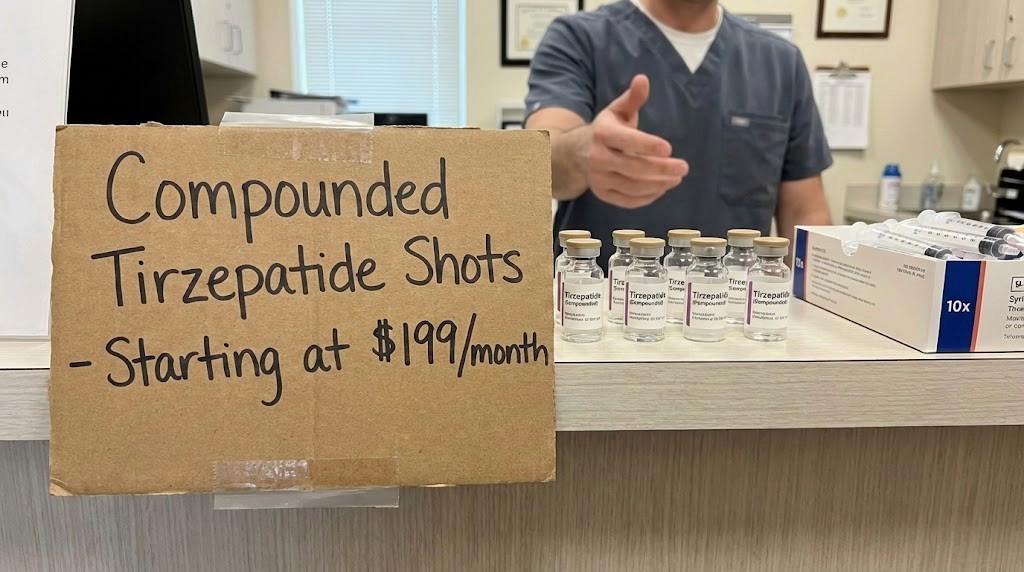
Forty percent of your monthly paycheck. That is what some people spend on brand-name tirzepatide injections without insurance. And it is not sustainable. Not for three months. Not for six. Certainly not for the years of treatment that tirzepatide weight loss protocols often require. So you start searching. You type "cheap compounded tirzepatide shots" into Google at midnight, scrolling through telehealth ads and pharmacy comparison sites, trying to separate the genuine deals from the dangerous ones. The pricing ranges are staggering. One site quotes $99 per month. Another says $449. A third claims $166. How can the same medication vary by 400% depending on where you look? And more importantly, which of these options will actually work without putting your health at risk?
This guide breaks down every legitimate pathway to affordable tirzepatide in detail. We cover the real costs of compounded tirzepatide from verified providers, the brand-name alternatives like Zepbound and Mounjaro, savings cards that can drop your price to $25 per fill, and the critical safety factors most pricing guides completely ignore. Whether you are considering compounded tirzepatide for the first time or looking to switch from an expensive provider, the numbers and protocols here come from current research, FDA guidelines, and direct provider pricing as of early this year. SeekPeptides has analyzed dozens of providers, pricing structures, and patient outcomes to build the most comprehensive cost comparison available anywhere online.
What compounded tirzepatide actually is (and why it costs less)
Before comparing prices, you need to understand what you are actually buying. Compounded tirzepatide is not a knockoff. It is not a generic. It is a version of the same active ingredient, tirzepatide, prepared by a compounding pharmacy rather than manufactured by Eli Lilly. The pharmacies that produce it operate under either Section 503A or Section 503B of the Federal Food, Drug, and Cosmetic Act. These are real pharmacies with real licenses.
But there is a critical distinction.
The FDA does not review compounded medications for safety, effectiveness, or quality the way it reviews brand-name drugs. Eli Lilly manufactures Mounjaro and Zepbound under strict Good Manufacturing Practices with precisely calibrated dosages verified through rigorous testing. Compounded versions come from pharmacies that mix the drug based on individual prescriptions, and the quality control standards are inherently different.
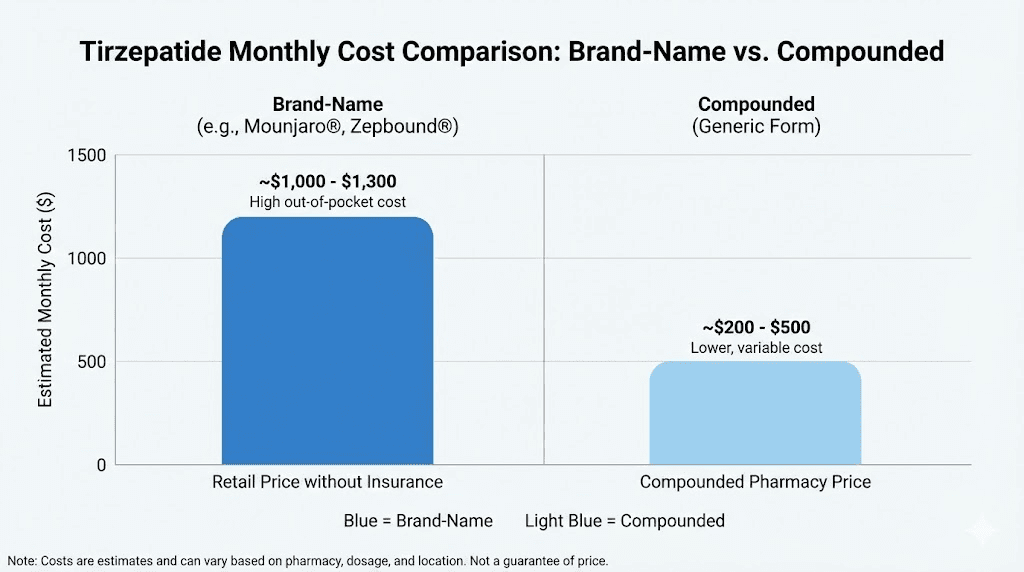
So why does compounded tirzepatide cost 60-80% less?
Three reasons. First, compounding pharmacies do not pay for the billions in clinical trial costs that Eli Lilly invested across the SURMOUNT trial program. Second, they operate with far lower overhead than a major pharmaceutical corporation. Third, there is no patent-protected pricing structure, meaning market competition drives prices down. The SURMOUNT-1 trial alone, which demonstrated that participants lost up to 22.5% of their body weight on the highest tirzepatide dose, cost hundreds of millions to conduct. Brand-name pricing reflects those research investments.
The result is a medication that contains the same active compound but arrives in a different format. Instead of pre-filled autoinjector pens, compounded tirzepatide typically comes in multi-dose vials that require reconstitution or careful measurement with insulin syringes. Some providers ship ready-to-inject solutions. Others send lyophilized powder that you mix yourself. The format affects both the price and the user experience.
Key differences between compounded and brand-name tirzepatide
Factor | Brand-name (Mounjaro/Zepbound) | Compounded tirzepatide |
|---|---|---|
FDA approved | Yes, fully reviewed and approved | No, pharmacy-regulated only |
Delivery format | Pre-filled autoinjector pen | Multi-dose vial (requires syringe) |
Dosage precision | Exact calibrated doses | User-measured from vial |
Monthly cost (no insurance) | $1,000-$1,069 | $166-$449 |
Clinical trial data | Extensive (SURMOUNT 1-4) | No specific trial data |
Added ingredients | Standard inactive ingredients | May include B12, niacinamide |
Storage | Refrigerate before first use | Refrigerate, use within 28 days |
Understanding these differences matters because the cheapest option is not always the safest option. And the most expensive option is not always necessary. The right choice depends on your budget, your comfort with self-injection techniques, your insurance situation, and your risk tolerance.
The real cost of compounded tirzepatide shots in detail
Let us kill the fantasy pricing first. If you see compounded tirzepatide advertised for $99 per month, run. That price point does not cover the cost of pharmaceutical-grade tirzepatide, proper compounding, cold-chain shipping, medical oversight, and injection supplies. Providers advertising prices below $150 per month are either cutting corners on quality, using bait-and-switch pricing, or operating outside legitimate pharmaceutical frameworks.
Here is what real pricing looks like from verified providers.
Provider pricing comparison (verified, current)
Provider | Starting dose price | Maintenance dose price | What is included |
|---|---|---|---|
OrderlyMeds | $166/month | $250-$350/month | Medication, provider visit, shipping |
Hers | $199/month (6-month plan) | $299-$399/month | Compounded GLP-1, provider access |
Recovery Delivered | $219/month | $300-$400/month | Medication, provider, free shipping |
Peak Wellness | $229/month | $299-$399/month | Full medical oversight, supplies |
Shed | $297/month | $350-$450/month | Injectable or oral options |
Willow | $399/month | $399-$499/month | All-inclusive, premium support |
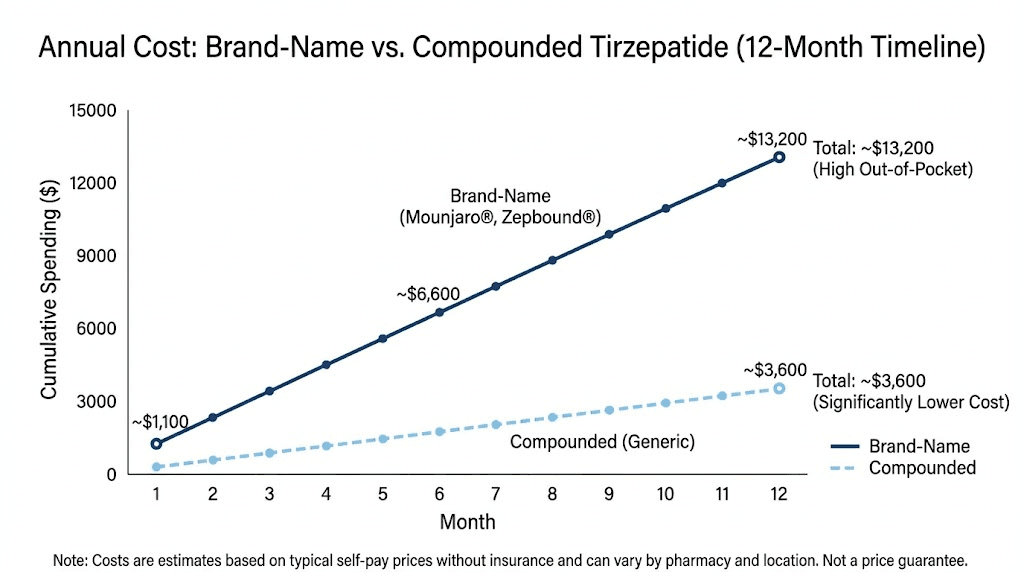
Notice the pattern. Starting dose prices cluster around $166-$297 per month. That is your 2.5mg weekly dose, the introductory phase where your body adjusts to the medication. Maintenance doses, which range from 5mg to 15mg weekly, typically cost $299-$450 per month. The total cost over a typical tirzepatide dosing protocol runs somewhere between $3,000 and $5,400 for the first year.
Compare that to brand-name pricing.
Without insurance, Mounjaro and Zepbound both cost approximately $1,069 per month at retail pharmacy prices. Over 12 months, that totals $12,828. The savings from compounded tirzepatide range from $7,000 to $10,000 per year. Those numbers explain the demand.
What should be included in your monthly price
A legitimate compounded tirzepatide provider includes these services in their monthly fee. If any are missing or charged separately, consider it a red flag.
Licensed provider consultation. Your initial medical evaluation and ongoing check-ins should be included. This means a real healthcare provider reviews your medical history, current medications, and appropriate dosing before writing a prescription. Some providers charge $50-$100 separately for this. Better providers include it.
Prescription and medication supply. Your four to five week supply of compounded tirzepatide, prepared by a licensed compounding pharmacy. The medication should come with a clearly labeled concentration, lot number, and beyond-use date.
Injection supplies. Syringes, needles, alcohol prep pads, and a sharps container. These cost roughly $10-$15 per month if purchased separately, but they should be included in any reputable provider package.
Cold-chain shipping. Tirzepatide must be shipped with proper temperature control. This means insulated packaging with ice packs during warm months. Proper tirzepatide storage starts from the moment it leaves the pharmacy.
Medical support access. The ability to reach a healthcare provider with questions about side effects, dose adjustments, or concerns. This should not require a separate appointment fee every time.
The FDA situation: what happened to compounded tirzepatide and where it stands now
This section matters more than any price comparison. The legal landscape for compounded tirzepatide shifted dramatically, and understanding where things stand determines whether you can actually access it.
Here is the timeline.
During a nationwide shortage of brand-name tirzepatide (Mounjaro and Zepbound), the FDA exercised enforcement discretion that allowed compounding pharmacies to produce tirzepatide. This was not a blanket approval. It was a temporary allowance under specific conditions while Eli Lilly could not meet market demand.
In October of the prior year, the FDA determined that the tirzepatide shortage was resolved. Eli Lilly demonstrated adequate supply. In December of that same year, the FDA upheld its decision after reviewing challenges from compounding pharmacies and patient advocacy groups.
The enforcement timeline that followed was strict. Section 503A pharmacies, those that compound based on individual prescriptions, had until February 19 of the following year to cease tirzepatide compounding. Section 503B outsourcing facilities, which produce larger batches, had until March 19. Several compounding pharmacies filed lawsuits challenging the FDA decision. Courts have largely sided with the FDA.
What this means for you right now
In the current legal framework, compounded tirzepatide may only be prescribed when a patient has a documented medical need that cannot be met by an FDA-approved formulation. The most common qualifying scenario is a verified allergy to an inactive ingredient in Mounjaro or Zepbound. General reasons like cost savings, convenience, or personal preference do not meet the legal threshold under Section 503A.
Some providers continue to operate in this space. They navigate the regulatory environment through various legal interpretations and state-level regulations. But the landscape is genuinely uncertain, and any provider who tells you compounded tirzepatide is "completely legal, no questions asked" is either uninformed or misleading you.
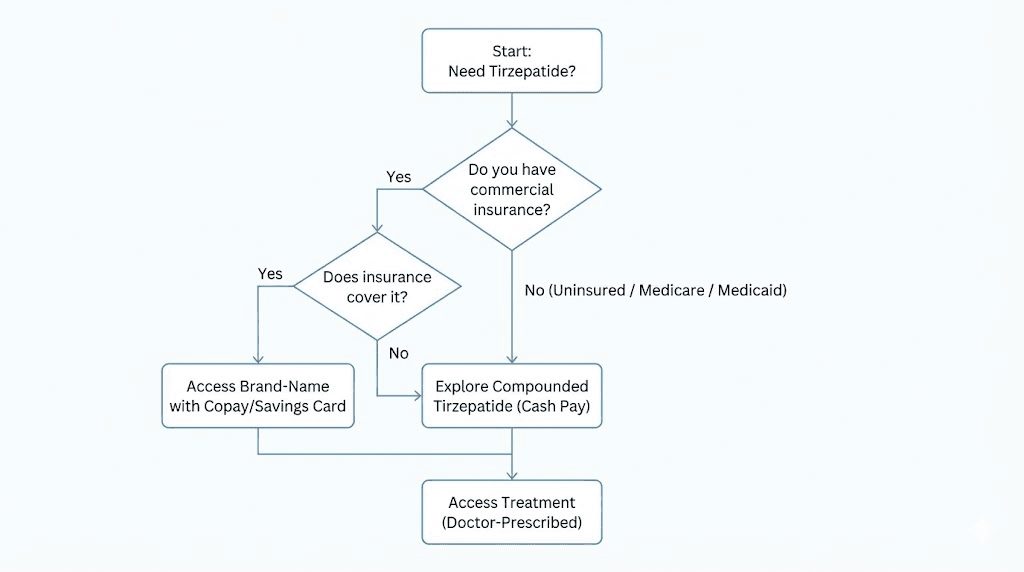
This uncertainty is precisely why understanding ALL your options matters, not just the compounded route.
Brand-name alternatives that rival compounded pricing
Here is what most "cheap tirzepatide" articles miss entirely. Brand-name tirzepatide has gotten dramatically more affordable through manufacturer programs. In some cases, it costs less than compounded versions. And it comes with the full backing of FDA approval, clinical trial data, and pharmaceutical-grade manufacturing.
Zepbound Self-Pay Journey Program (LillyDirect)
This is the single most significant development in tirzepatide affordability. Eli Lilly launched this program specifically to compete with compounded alternatives, and the pricing is aggressive.
Starting dose (2.5mg): $299 per month through LillyDirect. This dropped from the original $349 launch price.
Maintenance doses (5mg-15mg): $449 per month for all higher doses.
The program includes genuine FDA-approved Zepbound in convenient autoinjector pens. No reconstitution. No measuring. No multi-dose vials. You get the exact medication used in the SURMOUNT clinical trials that demonstrated significant weight loss results.
To enroll, you need a prescription from a licensed prescriber. Your provider can send the prescription to LillyDirect through their electronic health record system. The medication ships directly to your door. And as of late last year, Walmart pickup became available as an additional option.
Compare this to compounded pricing. The $299 starting dose from LillyDirect is more expensive than OrderlyMeds ($166) or Hers ($199), but less expensive than Willow ($399) and competitive with Peak Wellness ($229) when you factor in the convenience of pre-filled pens and FDA approval.
At maintenance doses, $449 per month is more expensive than most compounded options. But you are getting a different product entirely. Pre-measured, FDA-approved, clinically tested.
Zepbound savings card for insured patients
If you have commercial drug insurance that covers Zepbound, the savings card can bring your cost down to as little as $25 per fill. That is $25 for up to a three-month supply. The card provides maximum monthly savings of up to $620 and a separate annual cap of $8,060.
Even if your commercial insurance does not cover Zepbound specifically, the savings card still helps. In that scenario, you may pay as low as $499 for a one-month prescription fill. Not as dramatic a discount, but still meaningful.
The savings card expires at the end of this year and is available for up to 13 prescription fills per calendar year. Medicare and Medicaid recipients are not eligible due to federal anti-kickback laws.
Mounjaro savings card for diabetes patients
If you have been prescribed Mounjaro for type 2 diabetes and have commercial insurance coverage, the same $25 per fill deal applies. The Mounjaro coupon follows identical terms to the Zepbound savings card. Same active ingredient, same manufacturer, same savings structure.
This means if you have both a weight management need and type 2 diabetes, your prescriber may have flexibility in which brand to prescribe, potentially unlocking better insurance coverage. This is a conversation worth having with your healthcare provider.
Medicare coverage (coming soon)
A landmark development. Medicare beneficiaries will gain access to Zepbound coverage with a maximum copay of $50 per month, potentially starting as early as April of this year. Medicaid expansion for tirzepatide access is also being negotiated. This changes the affordability equation entirely for the 65+ population and those with disabilities who qualify for Medicare.
How tirzepatide works: the science behind the price tag
Understanding the mechanism helps you appreciate both why tirzepatide commands premium pricing and why results justify the investment regardless of which version you choose.
Tirzepatide is the first dual GIP/GLP-1 receptor agonist. That technical label means it activates two separate hormone pathways simultaneously, something no other weight loss medication does. Think of it as a two-key system where both keys need to turn at the same time.
The GLP-1 pathway. When tirzepatide binds to GLP-1 receptors in your brain, it activates appetite regulation centers. You feel fuller after meals. Your brain receives stronger satiety signals. This same pathway also stimulates insulin secretion from the pancreas and suppresses glucagon production from the liver, both of which improve blood sugar control and contribute to metabolic health improvements.
The GIP pathway. This is where tirzepatide diverges from pure GLP-1 medications like semaglutide. Gastric inhibitory polypeptide activation enhances insulin sensitivity through mechanisms that are still being studied. Importantly, GIP receptor activation does not cause the same level of gastrointestinal side effects as GLP-1 activation. This is why tirzepatide can be more effective than semaglutide while potentially being better tolerated at higher doses.
Research published in the Journal of Clinical Investigation describes tirzepatide as an "imbalanced and biased dual agonist," meaning it favors GIP receptor engagement slightly more than GLP-1. This pharmacological quirk may be essential to its superior effectiveness. Because GLP-1 dose escalation is limited by nausea and vomiting, having the GIP pathway carry additional metabolic benefits without adding gastrointestinal burden allows for greater overall effect.
Clinical results worth understanding
The SURMOUNT trial program established tirzepatide as the most effective weight loss medication ever studied in randomized clinical trials. These numbers are not marketing claims. They are peer-reviewed, published in the New England Journal of Medicine and JAMA.
SURMOUNT-1 results. Over 72 weeks, participants without diabetes achieved mean body weight reductions of 16.0% on 5mg, 21.4% on 10mg, and 22.5% on 15mg tirzepatide. At the highest dose, 63% of participants lost at least 20% of their body weight. For a 250-pound person, that translates to roughly 56 pounds lost.
SURMOUNT-3 results. Participants who started with intensive lifestyle intervention and then added tirzepatide lost an additional 18.4% of body weight compared to 2.5% gain in the placebo group. Combined with the initial lifestyle intervention weight loss, total reductions exceeded 25%.
SURMOUNT-4 results. The continuation study showed that maintaining tirzepatide treatment preserved weight loss. Participants who completed a 36-week lead-in lost 20.9%, and those who continued through 88 weeks achieved 25.3% total weight reduction. Those switched to placebo regained weight, with only 9.9% net loss.
These results matter for the cost conversation. Whether you pay $166 per month or $449 per month, the compound you are receiving aims to replicate these outcomes. The question is whether the specific formulation, quality control, and dosing precision of your chosen option gives you the best shot at achieving them.
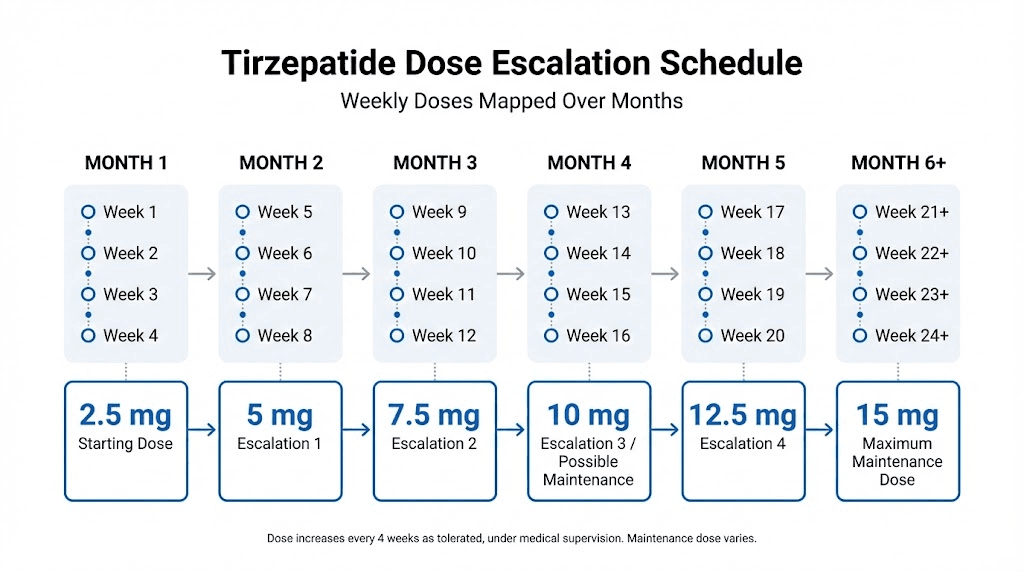
The standard tirzepatide dosing protocol (same for compounded and brand)
Regardless of whether you go compounded or brand-name, the tirzepatide dosing schedule follows the same general framework. This protocol was established through the clinical trials and remains the standard of care.
Standard escalation schedule
Phase | Dose | Duration | Purpose |
|---|---|---|---|
Starting | 2.5mg once weekly | 4 weeks | Acclimation, assess tolerance |
First escalation | 5mg once weekly | 4 weeks minimum | Therapeutic dose begins |
Second escalation | 7.5mg once weekly | 4 weeks minimum | Increased effect |
Third escalation | 10mg once weekly | 4 weeks minimum | Full therapeutic range |
Fourth escalation | 12.5mg once weekly | 4 weeks minimum | Higher therapeutic range |
Maximum | 15mg once weekly | Maintenance | Maximum approved dose |
The "start low, go slow" approach exists for good reason. GLP-1 receptor activation causes gastrointestinal side effects in a dose-dependent manner. Jumping straight to higher doses dramatically increases the likelihood of severe nausea, vomiting, and diarrhea. Each four-week plateau gives your body time to adjust.
With compounded tirzepatide, dosing precision becomes your responsibility. Brand-name pens deliver an exact pre-measured dose every time. Multi-dose vials require you to calculate and draw the correct amount using an insulin syringe. If your compounded tirzepatide comes at a concentration of 17mg/mL, drawing 0.15mL gives you 2.5mg. A small measuring error changes your dose meaningfully. Our peptide calculator can help verify exact dosing volumes based on your vial concentration.
Some providers now offer compounded tirzepatide with added ingredients. The most common additions are niacinamide (vitamin B3) and vitamin B12. Niacinamide may help reduce injection site reactions and improve tirzepatide stability in solution. B12 is added because GLP-1 medications can reduce B12 absorption over time.
These additions are not part of the FDA-approved formulation, but they reflect compounding pharmacies attempting to address known concerns.
Side effects and safety: what cheap compounded tirzepatide risks you should know
Cost savings mean nothing if the medication makes you sick or does not work. Here is a direct, honest breakdown of what to expect and what to watch for.
Common side effects (brand-name and compounded)
These occur because of how tirzepatide works, not because of the source. Expect some degree of gastrointestinal effects regardless of whether you use Mounjaro or a compounded version.
Nausea. The most frequently reported side effect, affecting roughly 20-30% of users during dose escalation. It typically peaks in the first few days after each dose increase and improves within 2-3 weeks at a stable dose. Eating smaller meals, avoiding fatty foods, and staying hydrated helps significantly.
Diarrhea and constipation. Often alternating. Tirzepatide slows gastric emptying, which can disrupt normal bowel patterns. Constipation is more common at higher doses. Adequate fiber intake and hydration are not optional, they are essential parts of any tirzepatide protocol.
Decreased appetite. This is technically the desired effect, but it can be surprising in its intensity. Some users report complete loss of interest in food, which carries its own risks if it leads to inadequate protein intake and muscle loss. Deliberate protein targeting of 0.7-1g per pound of body weight helps preserve lean mass during rapid weight loss.
Fatigue. Reported by many users, especially during caloric deficit. Your body is adapting to dramatically reduced food intake while maintaining normal activities. Ensuring adequate nutrition and sleep helps mitigate this.
Injection site reactions. Redness, swelling, or itching at the injection site. More common with compounded formulations than with brand-name pens, possibly due to differences in solution pH, concentration, or inactive ingredients. Tirzepatide with niacinamide formulations may reduce these reactions.
Serious side effects (rare but important)
These require immediate medical attention regardless of your tirzepatide source.
Pancreatitis. Inflammation of the pancreas is a known risk with all incretin-based medications. Symptoms include severe abdominal pain that radiates to the back, nausea, and vomiting that does not improve. The FDA has received over 300 adverse event reports related to compounded tirzepatide specifically, though causation versus correlation is difficult to establish.
Gallbladder disease. Rapid weight loss increases gallstone risk regardless of the method. Tirzepatide accelerates this timeline. Symptoms include upper right abdominal pain, especially after meals.
Hypoglycemia. More relevant for patients also taking insulin or sulfonylureas for diabetes. On its own, tirzepatide rarely causes dangerous blood sugar drops. But in combination with other glucose-lowering medications, monitoring becomes critical.
Acute kidney injury. Usually secondary to severe dehydration from vomiting or diarrhea. The risk is real, not theoretical. Staying hydrated is a medical necessity, not just a wellness suggestion.
Risks specific to compounded tirzepatide
Beyond the standard side effects, compounded formulations carry additional risks that do not apply to brand-name medications.
Dosing inconsistency. Without the precision manufacturing of Eli Lilly facilities, compounded tirzepatide may have slight variations between batches or between different pharmacies. A vial labeled at 17mg/mL might test at 15mg/mL or 19mg/mL. This variability means your actual dose could differ from what you intend to inject.
Contamination risk. Compounding introduces additional opportunities for contamination during the preparation process. While reputable 503B facilities maintain high standards, the oversight level differs from FDA-regulated manufacturing plants. This is not theoretical concern. The FDA has documented contamination issues at some compounding pharmacies.
Unknown ingredient interactions. Compounded formulations with added B12, niacinamide, or other ingredients have not been studied in clinical trials. While these additions are generally considered safe individually, their interaction with tirzepatide in a combined solution is not formally characterized.
Storage and stability uncertainty. The beyond-use date (typically 28 days) for compounded tirzepatide stored in the fridge is based on general compounding guidelines, not tirzepatide-specific stability studies. Brand-name products have undergone extensive stability testing to determine exact shelf life under various conditions.
How to identify a legitimate compounded tirzepatide provider
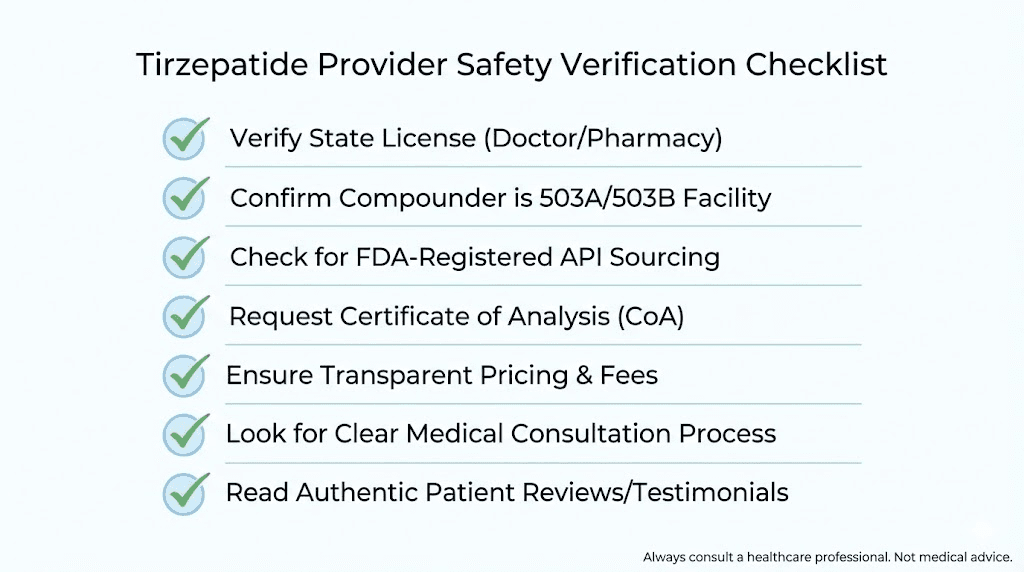
Not all providers are created equal. The difference between a trustworthy compounded tirzepatide provider and a risky one comes down to verifiable factors. Here is your evaluation framework.
Non-negotiable requirements
Licensed medical provider consultation. A real healthcare provider, physician, nurse practitioner, or physician assistant, must evaluate you before prescribing. This means reviewing your medical history, current medications, contraindications, and weight loss goals. If a service offers to ship tirzepatide without any medical evaluation, walk away immediately.
Licensed compounding pharmacy. The pharmacy preparing your medication should be either a state-licensed 503A pharmacy or an FDA-registered 503B outsourcing facility. 503B facilities undergo more rigorous FDA inspections and are generally considered safer for compounded injectable medications. You should be able to verify the pharmacy license through your state board of pharmacy.
Third-party testing documentation. Reputable pharmacies can provide certificates of analysis showing that the tirzepatide in your vial was tested for potency, purity, and sterility. If a provider cannot or will not share this documentation, that is a significant red flag. Peptide testing verification protects you from substandard products.
Clear labeling. Your vial should include the medication name, concentration (mg/mL), lot number, beyond-use date, storage instructions, and pharmacy contact information. Vials without proper labeling suggest a provider cutting corners on basic pharmaceutical standards.
Transparent pricing. The monthly cost should be clearly stated upfront, including what is and is not included. Watch for providers that advertise low prices but add fees for consultations, shipping, injection supplies, or dose adjustments. The advertised price should be the total price.
Red flags that indicate unsafe providers
Some warning signs should end your consideration of a provider immediately.
Pricing below $150 per month for full-service compounded tirzepatide. The raw ingredient cost, pharmacy overhead, medical oversight, cold-chain shipping, and injection supplies make prices below this threshold mathematically questionable.
No requirement for a medical consultation or prescription. Any tirzepatide, compounded or brand-name, requires a prescription in the United States. Providers willing to skip this step are operating outside legal bounds.
Shipping without temperature control. Tirzepatide degrades at elevated temperatures. A provider that ships medication in a standard padded envelope during summer months does not understand or does not care about the product they are selling.
Vague sourcing information. If a provider cannot tell you which pharmacy compounds their tirzepatide, that is a problem. You should know exactly where your medication comes from.
Guaranteed results claims. No legitimate medical provider guarantees specific weight loss outcomes. Tirzepatide is remarkably effective, but individual results depend on adherence, diet, activity level, genetics, and other factors that no provider can control.
Compounded tirzepatide versus other affordable weight loss options
Tirzepatide is not the only game in town. If compounded tirzepatide pricing or legal uncertainty gives you pause, understanding the alternatives helps you make a fully informed decision.
Compounded semaglutide
Unlike tirzepatide, compounded semaglutide remains more accessible because semaglutide is still on the FDA drug shortage list as of this writing. This means compounding pharmacies can continue producing it under the FDA enforcement discretion framework. Monthly costs range from $150-$350 depending on the provider and dose.
The tradeoff? Semaglutide versus tirzepatide clinical data shows tirzepatide produces greater weight loss at comparable doses. The SURMOUNT trials for tirzepatide showed up to 22.5% body weight reduction, while semaglutide STEP trials showed approximately 15-17%. The dual GIP/GLP-1 mechanism of tirzepatide provides advantages that single GLP-1 agonists cannot match.
But if legal access and cost are your primary concerns, compounded semaglutide offers a clear pathway with proven (though somewhat less dramatic) results.
Brand-name semaglutide options
Semaglutide is available as Wegovy (for weight management) and Ozempic (for type 2 diabetes). Similar savings card programs exist, though pricing structures differ from tirzepatide. Ozempic alternatives and generic pathways are also emerging as the weight loss medication landscape evolves.
Retatrutide (research phase)
The next generation of incretin-based weight loss medications is already in development. Retatrutide is a triple agonist that activates GLP-1, GIP, and glucagon receptors simultaneously. Phase 2 trials showed up to 24.2% body weight reduction. It is not yet FDA-approved, but it represents where the field is heading. Understanding the retatrutide versus semaglutide landscape gives you context for how these medications will evolve.
Other GLP-1 approaches
The GLP-1 medication category continues expanding. GLP-1 patches are in development. Oral tirzepatide is being studied as an alternative to injections. Cagrilintide combined with semaglutide (CagriSema) represents another dual-agonist approach with promising trial results.
The point is not to overwhelm you with options. It is to demonstrate that the GLP-1 weight loss space is competitive and growing. Prices will continue dropping. Access will continue expanding. Making an informed decision today means understanding the full landscape, not just the cheapest option available right now.
Practical guide: how to use compounded tirzepatide shots
If you decide that compounded tirzepatide is right for you, proper technique matters. The difference between brand-name pens and compounded vials is significant from a user experience standpoint, and mistakes during preparation or injection can affect both safety and effectiveness.
Reconstitution (if your vial contains lyophilized powder)
Some compounded tirzepatide arrives as a ready-to-inject solution. Others come as freeze-dried powder that you reconstitute with bacteriostatic water. If yours requires reconstitution, follow these steps precisely.
Clean your workspace with isopropyl alcohol. Wash your hands thoroughly. Remove the flip-off caps from both the tirzepatide vial and the bacteriostatic water vial. Wipe both rubber stoppers with alcohol swabs and let them air dry for 30 seconds.
Draw the prescribed amount of bacteriostatic water using a new sterile syringe. The amount depends on your desired concentration and is specified by your pharmacy. Insert the needle through the rubber stopper of the tirzepatide vial and inject the water slowly down the inside wall of the vial. Do not spray it directly onto the powder. This reduces foaming and prevents potential degradation of the peptide structure.
Gently swirl or roll the vial between your palms for 30-60 seconds. Never shake vigorously. The solution should become clear and free of visible particles. If cloudiness persists or you see undissolved clumps, continue gentle swirling. If the solution remains cloudy after 5 minutes, do not use it. Our peptide reconstitution calculator can help you determine the exact water volume for your specific vial concentration.
Drawing your dose
Use a new sterile insulin syringe for each injection. Never reuse syringes, even with an alcohol wipe. Draw back the plunger to the volume corresponding to your prescribed dose. Insert the needle into the vial stopper, inject the air, invert the vial, and draw the medication slowly. Tap the syringe gently to move air bubbles to the top, then push the plunger slightly to expel them.
The unit conversion for tirzepatide depends on your vial concentration. At 17mg/mL (a common compounded concentration), 2.5mg equals approximately 0.147mL or about 14.7 units on a standard 100-unit insulin syringe. At 10mg/mL, 2.5mg equals 0.25mL or 25 units. Getting this calculation right is non-negotiable.
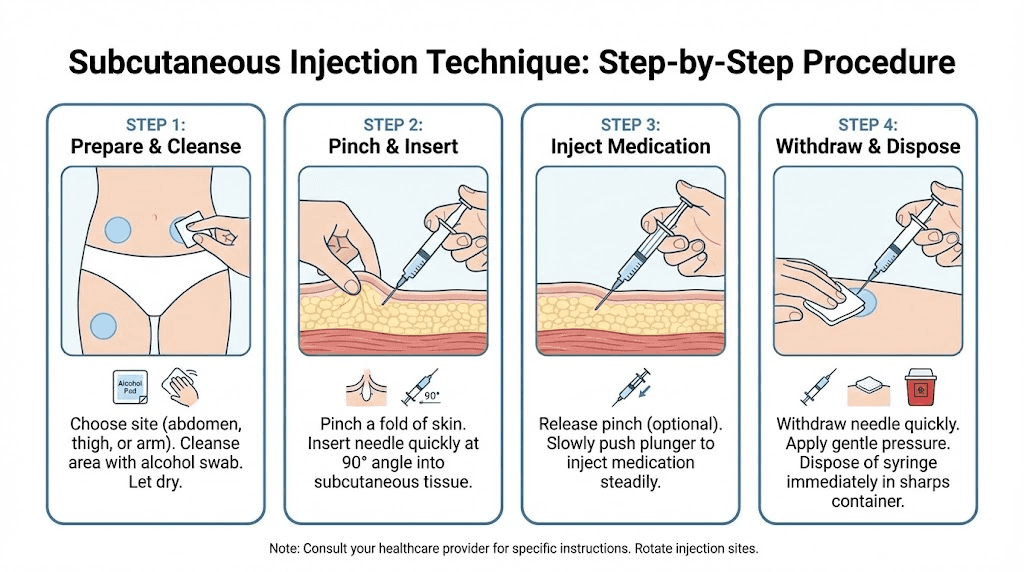
Injection technique
Choose your injection site. The three approved locations are the abdomen (at least 2 inches from your navel), the front of your thigh, or the back of your upper arm. Rotate injection sites with each weekly dose to minimize tissue irritation and improve absorption consistency.
Clean the injection site with an alcohol swab. Let it dry completely, as injecting through wet alcohol stings and can push bacteria into the puncture. Pinch a fold of skin. Insert the needle at a 45-90 degree angle depending on your body composition and needle length. Push the plunger slowly and steadily. Hold for 5-10 seconds after the plunger is fully depressed. Remove the needle and apply gentle pressure with a clean gauze pad if needed.
Do not rub the injection site. This can affect absorption patterns and increase the likelihood of bruising. Dispose of the used syringe immediately in your sharps container.
Storage after reconstitution
Reconstituted compounded tirzepatide must be stored in the refrigerator at 36-46 degrees Fahrenheit (2-8 degrees Celsius). Never freeze it. Never leave it at room temperature for extended periods. Use the vial within 28 days of reconstitution or the beyond-use date printed by the pharmacy, whichever comes first.
If you accidentally leave your vial out of the refrigerator, the general guidance is that brief excursions (under 2 hours) at room temperature are unlikely to cause significant degradation. Longer periods, especially in warm environments, compromise the medication.
When in doubt, refer to your pharmacy guidelines on how long compounded tirzepatide can be out of the fridge or consult your provider.
Maximizing results on a budget: nutrition and lifestyle protocols
The cheapest tirzepatide shot is the one that works effectively the first time. Maximizing results means you reach your goal faster, requiring fewer months of medication and lower total cost. Here is what the research shows about optimizing outcomes.
Protein-first eating strategy
Tirzepatide dramatically reduces appetite. That is the point. But reduced appetite often leads to reduced protein intake, which leads to muscle loss alongside fat loss. Losing muscle drops your metabolic rate, making weight regain more likely after you stop the medication. This is the single most important dietary consideration.
Target 0.7-1.0 grams of protein per pound of your goal body weight daily. If you currently weigh 220 pounds and your goal is 170 pounds, aim for 120-170 grams of protein per day. This sounds like a lot when your appetite is suppressed. It is. You will need to prioritize protein at every meal and consider supplementing with protein shakes on days when solid food intake is particularly low.
Good protein sources that work well with tirzepatide-reduced appetites include Greek yogurt, cottage cheese, chicken breast, whey protein shakes, egg whites, and lean fish. These are all protein-dense relative to their volume, meaning you get more protein per bite when your total food intake is limited.
Hydration protocol
Dehydration is not just uncomfortable on tirzepatide. It is medically dangerous. GLP-1 medications slow gastric emptying and can cause nausea, vomiting, and diarrhea, all of which deplete fluids. Acute kidney injury secondary to dehydration is a documented serious adverse event.
Aim for a minimum of 80-100 ounces of water daily. More if you exercise, live in a hot climate, or experience gastrointestinal side effects. Electrolyte supplementation (sodium, potassium, magnesium) helps maintain proper hydration status. Many users find that B12 supplementation also supports energy levels during the caloric deficit phase.
Exercise considerations
Resistance training is not optional. It is the primary defense against muscle loss during rapid weight loss. Aim for 3-4 strength training sessions per week focusing on compound movements: squats, deadlifts, bench press, rows, and overhead press. You do not need an elaborate program. You need consistency and progressive overload.
Cardiovascular exercise supports overall health and may enhance weight loss, but should not replace strength training. Walking 7,000-10,000 steps daily provides a solid baseline without excessive fatigue. More intensive cardio can be added as tolerated, but monitor your energy levels and recovery closely.
Sleep and stress management
Poor sleep and chronic stress both impair weight loss outcomes through cortisol elevation and disrupted hunger hormone signaling. The research is clear. Getting 7-9 hours of quality sleep per night and managing stress through whatever methods work for you (meditation, exercise, therapy, time in nature) measurably improves weight loss results on tirzepatide.
Cost optimization strategies: getting the most value from every dollar
Beyond choosing the cheapest provider, several strategies can reduce your total cost of tirzepatide treatment.
Dose optimization
Not everyone needs the maximum 15mg dose. The SURMOUNT trials showed significant weight loss even at the 5mg dose (16% body weight reduction). If you achieve satisfactory results at a lower dose, there is no medical reason to escalate further. Lower doses mean smaller vial requirements, potentially lower monthly costs, and fewer side effects.
Discuss dose optimization with your provider. Some patients find their "sweet spot" at 7.5mg or 10mg, never needing to go higher. Since compounded tirzepatide is often priced by vial rather than by dose, using less medication per vial means each vial lasts longer, effectively reducing your monthly cost.
Longer commitment plans
Several compounded tirzepatide providers offer reduced per-month pricing for longer subscription commitments. Three-month plans typically save 10-15% compared to month-to-month pricing. Six-month plans can save 15-25%. Hers, for example, drops to $199 per month with a six-month commitment versus higher month-to-month rates.
The risk with long commitments is obvious. If the medication does not work for you, if you experience intolerable side effects, or if the legal landscape shifts, you may be locked into payments for a product you cannot or do not want to use. Read cancellation policies carefully before committing.
Insurance advocacy
Even if your initial insurance claim for tirzepatide is denied, appeals succeed more often than most people realize. If you have a BMI over 30 (or over 27 with a weight-related comorbidity), you have a medically justified case for coverage.
Gather documentation from your provider including your BMI history, weight-related health conditions (hypertension, sleep apnea, type 2 diabetes, joint pain), previous weight loss attempts, and a letter of medical necessity specifically requesting tirzepatide. Many insurance companies that initially deny coverage reverse their decision after a properly documented appeal.
If your appeal succeeds and you get commercial insurance coverage, remember the Zepbound or Mounjaro savings card drops your out-of-pocket cost to as little as $25 per fill. That is a massive reduction from any compounded option.
Timing your purchase
The tirzepatide market is getting more competitive every month. Eli Lilly has already dropped LillyDirect pricing once (from $349 to $299 for the starting dose). Medicare coverage expansion is imminent. New GLP-1 medications entering the market will increase competitive pressure. If your weight loss timeline is flexible, waiting even a few months may yield better pricing options.
However, the health costs of delayed treatment should factor into this calculation too. Every month of carrying excess weight is a month of elevated cardiovascular risk, joint stress, and metabolic dysfunction. The "cheapest" option might be starting sooner rather than waiting for a better deal.
What to do if you are currently on compounded tirzepatide
If you are already using compounded tirzepatide and concerned about the evolving legal landscape, here is a practical action plan.
Do not panic-stop your medication. Abruptly discontinuing tirzepatide can cause rapid weight regain and metabolic disruption. Any transition should be planned and gradual under medical supervision. Understand the withdrawal effects that can occur with GLP-1 medications to plan accordingly.
Verify your provider regulatory status. Ask your current provider directly about their legal basis for continuing to compound tirzepatide. Legitimate providers will explain their approach transparently, whether through Section 503A individual-need compounding, 503B outsourcing, or other legal frameworks.
Explore brand-name transition options. Calculate whether the Zepbound Self-Pay Journey Program, insurance coverage with savings card, or other brand-name pathways might work for your budget. The price gap between compounded and brand-name has narrowed significantly.
Consider dose maintenance or reduction. If you have achieved significant weight loss, discuss with your provider whether a lower maintenance dose (potentially less expensive) could sustain your results. Some emerging protocols explore microdosing tirzepatide for long-term maintenance at reduced cost.
Have a backup plan. If your compounded tirzepatide supply is interrupted, knowing your alternatives in advance prevents a gap in treatment. This might mean having a LillyDirect account ready, insurance pre-authorization in process, or a plan to switch to semaglutide if needed.
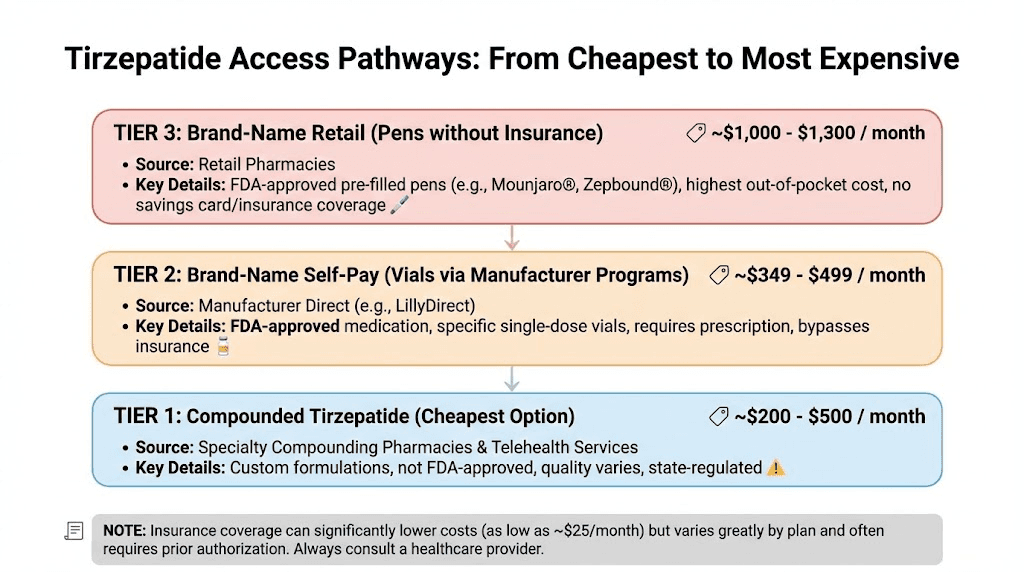
The complete cost comparison: every pathway side by side
Here is the comprehensive breakdown of every legitimate way to access tirzepatide, ranked from least to most expensive on a monthly basis.
Pathway | Monthly cost | Annual cost | FDA approved | Best for |
|---|---|---|---|---|
Insurance + savings card | $25 | $300 | Yes | Those with commercial coverage |
Medicare (coming soon) | $50 | $600 | Yes | Medicare beneficiaries |
Compounded (budget) | $166-$229 | $1,992-$2,748 | No | Cost-conscious, comfortable with vials |
LillyDirect (starting) | $299 | $3,588 | Yes | Self-pay, want FDA-approved product |
Compounded (mid-range) | $297-$399 | $3,564-$4,788 | No | Those wanting full-service compounded |
LillyDirect (maintenance) | $449 | $5,388 | Yes | Self-pay at higher doses |
Insurance (no savings card) | $499 | $5,988 | Yes | Covered but no savings card eligibility |
Retail (no insurance) | $1,069 | $12,828 | Yes | Nobody should pay this |
The most striking takeaway from this table is the range. The same medication, producing the same physiological effects, costs anywhere from $25 to $1,069 per month depending on your access pathway. Spending even 30 minutes exploring your options could save you thousands of dollars over the course of treatment.
SeekPeptides members get access to detailed protocol guides, cost analysis calculators, and community insights from thousands of researchers navigating these exact decisions. The difference between overpaying and optimizing often comes down to knowing which questions to ask and which pathways to explore.
Common mistakes that cost you money
Beyond choosing the wrong provider or pathway, several common errors increase total treatment cost unnecessarily.
Not checking insurance first. Even if you believe your insurance does not cover tirzepatide, verify. Coverage landscapes change regularly. Your employer may have added GLP-1 coverage in the latest benefits cycle. A quick call to your insurance provider or a check on your pharmacy benefit portal takes 15 minutes and could save you $10,000+ annually.
Ignoring the savings card. The Zepbound and Mounjaro savings cards are free to use. They require minimal effort to activate. Yet an astonishing number of patients pay full price at the pharmacy because they did not know these programs existed or assumed they would not qualify. If you have commercial insurance, check the savings card first. It takes two minutes.
Escalating dose unnecessarily. Your provider should be adjusting your dose based on your response, not following a rigid escalation schedule. If you are losing weight steadily on 7.5mg, there is no clinical reason to jump to 10mg or 15mg. Higher doses cost more (in both brand-name and compounded forms), cause more side effects, and may not produce proportionally better results for your specific situation.
Not tracking food intake. Tirzepatide suppresses appetite but does not guarantee optimal nutrition. Without tracking, many users inadvertently eat too little protein, leading to muscle loss, metabolic slowdown, and eventual weight regain that requires starting the medication cycle over, doubling your total cost.
Stopping too early. The SURMOUNT-4 trial demonstrated clearly that stopping tirzepatide leads to significant weight regain. Patients who discontinued after 36 weeks regained roughly half of what they lost. This means the "cheapest" approach of using tirzepatide briefly and hoping the results stick does not work for most people. Budget for a minimum of 12-18 months of treatment, and potentially longer-term maintenance dosing.
Choosing a provider solely on price. The cheapest compounded tirzepatide provider might save you $50 per month compared to the next option. But if their product is underdosed, improperly stored, or prepared by a pharmacy with questionable practices, you get reduced results. Reduced results mean longer treatment duration. Longer treatment means higher total cost. Sometimes spending an extra $50-$100 per month on a verified, high-quality provider actually reduces your total treatment cost by producing faster, more reliable results.
Frequently asked questions
Is compounded tirzepatide the same as Mounjaro or Zepbound?
Compounded tirzepatide contains the same active ingredient but is prepared by a compounding pharmacy rather than Eli Lilly. It has not undergone the same FDA review process and may differ in concentration, inactive ingredients, and delivery format. The core mechanism is identical, but the quality control framework is different. For detailed differences, see our guide on semaglutide versus tirzepatide which covers how these medications compare broadly.
Can I still get compounded tirzepatide legally?
The legal landscape has narrowed significantly. After the FDA resolved the tirzepatide shortage and ended enforcement discretion, compounded tirzepatide can only be prescribed when a patient has a documented medical need that an FDA-approved formulation cannot meet, such as a verified allergy to an inactive ingredient. Some providers continue operating through various legal interpretations, but the pathway is no longer as straightforward as it was during the shortage.
What is the cheapest legitimate way to get tirzepatide right now?
If you have commercial insurance that covers Zepbound or Mounjaro, the savings card brings your cost to $25 per fill. For self-pay patients, the LillyDirect Zepbound Self-Pay Journey Program starts at $299 per month for the 2.5mg dose. For compounded options, providers like OrderlyMeds advertise starting prices around $166 per month, though legal availability may be limited depending on your location and medical circumstances.
How much weight can I expect to lose on tirzepatide?
Clinical trials showed average weight loss of 16-22.5% of body weight over 72 weeks, depending on dose. Individual results vary based on starting weight, diet, exercise, adherence, and dose level. Some participants lost more than 25% of their body weight with continued treatment through 88 weeks. Our tirzepatide before and after results guide provides more detailed outcome data.
Is $99 per month compounded tirzepatide safe?
Extremely unlikely. The raw ingredient cost, compounding labor, medical oversight, injection supplies, and cold-chain shipping make $99 per month unsustainable for legitimate providers. Prices this low suggest the provider may be using substandard ingredients, skipping medical oversight, operating without proper licensing, or using bait-and-switch pricing where the advertised cost does not reflect the actual total. A realistic minimum for legitimate compounded tirzepatide is approximately $166-$200 per month for starting doses.
Should I choose compounded tirzepatide or the LillyDirect program?
It depends on your priorities. If FDA approval, dosing precision, and convenience matter most, LillyDirect at $299-$449 per month provides a verified product in easy-to-use pens. If cost is the primary concern and you are comfortable with multi-dose vials, self-measuring doses, and the regulatory uncertainty around compounding, a reputable compounded provider at $166-$299 per month saves meaningful money. Neither choice is objectively "wrong," but understanding the tradeoffs helps you make the right decision for your situation.
What happens if my compounded tirzepatide supply gets cut off?
Have a transition plan ready. The most common backup is switching to the LillyDirect self-pay program or pursuing insurance coverage. If cost is prohibitive, switching to compounded semaglutide (which remains more readily available) is an option, though the weight loss efficacy may be somewhat lower. Do not abruptly stop GLP-1 medication without medical guidance, as rapid weight regain and metabolic disruption can occur.
Does compounded tirzepatide work as well as the brand name?
In theory, if the compounded product contains the correct amount of properly formulated tirzepatide, the physiological effects should be similar. In practice, variations in potency, formulation quality, and dosing accuracy mean that outcomes with compounded versions are less predictable. There are no published clinical trials specifically studying compounded tirzepatide, so all effectiveness claims are extrapolated from brand-name trial data.
External resources
For researchers serious about optimizing their weight management protocols, SeekPeptides provides the most comprehensive resource available, with evidence-based guides, dosing calculators, detailed protocol libraries, and a community of thousands who have navigated these exact pricing and access decisions.
In case I do not see you, good afternoon, good evening, and good night. May your tirzepatide stay potent, your budget stay intact, and your results stay permanent. Join here.