Dec 17, 2025
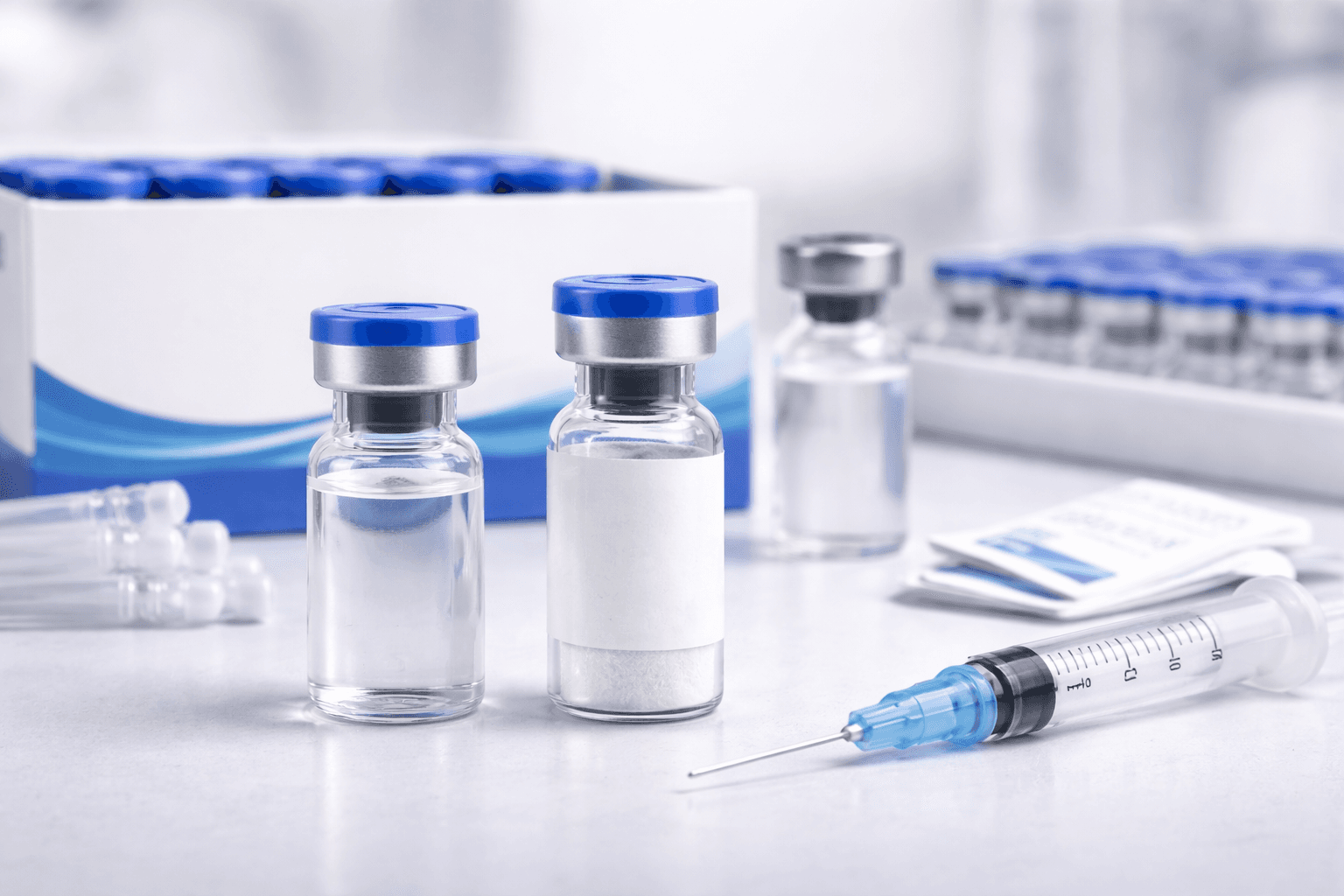
Reconstitution means adding liquid to powder to create an injectable solution.
The basic process has five steps but each one matters.
First, check your vial. Look at the label carefully. Is it 2mg, 5mg, or 10mg? This number is the total peptide in the vial. Write it down if you need to.
Second, add bacteriostatic water.
Common amounts are 1ml, 2ml, or 3ml. More water creates a more dilute solution. Less water creates a more concentrated solution.
Neither is better, just different.
Third, calculate concentration.
The formula is total peptide divided by water added. For example, 5mg divided by 2ml equals 2.5mg per ml. This tells you how much peptide is in each milliliter of solution.
Fourth, calculate dose volume.
The formula is dose needed divided by concentration. For example, 250mcg divided by 2,500mcg per ml equals 0.1ml. This tells you how much liquid to draw from the vial.
Fifth, convert to syringe units.
The formula is milliliters times one hundred. For example, 0.1ml times one hundred equals ten units on an insulin syringe.
For complete step-by-step instructions with photos, read how to reconstitute peptides.
Using our free reconstitution calculator
Our calculator does all the math instantly. No formulas to remember. No mistakes.
You need to know three things. Your vial size in milligrams, like 2mg, 5mg, or 10mg. How much water you're adding in milliliters, usually 1ml, 2ml, or 3ml. Your desired dose in micrograms or milligrams, like 250mcg or 2.5mg.
The calculator gives you everything. Exact concentration in micrograms per milliliter. Injection volume in milliliters. Syringe units in IU for insulin syringes. Doses per vial so you know how long it lasts. How long the vial lasts at your dosing frequency.
Access the calculator at Free Peptide Reconstitution Calculator. No signup required. No email capture. No ads. Just enter your numbers and go.
Common reconstitution scenarios
Let me walk through real examples with actual peptides you're likely using.
Example 1: BPC-157 for injury recovery
Your protocol calls for 250mcg twice daily. You have a 5mg vial of BPC-157. You're adding 2ml of bacteriostatic water.
Enter vial size as 5mg. Enter water amount as 2ml. Enter desired dose as 250mcg.
The calculator outputs concentration of 2,500mcg per ml. Injection volume of 0.1ml per dose. Syringe units of 10 units. Doses per vial of twenty injections. Vial duration of ten days at twice daily dosing.
The result is simple. Draw to the 10-unit mark on your insulin syringe twice daily. Done.
Use our BPC-157 dosage calculator for injury-specific protocols that account for your body weight and injury type.
Example 2: Semaglutide for weight loss
Your protocol starts at 0.25mg weekly, which is 250mcg. You have a 5mg vial of semaglutide. You're adding 2ml of bacteriostatic water.
Enter vial size as 5mg. Enter water amount as 2ml. Enter desired dose as 250mcg.
The calculator outputs concentration of 2,500mcg per ml. Injection volume of 0.1ml. Syringe units of 10 units. Doses per vial of twenty weekly doses. Vial duration of twenty weeks at that starting dose.
As you titrate up the dose over time, the math changes. At 0.5mg you'll inject 0.2ml or 20 units. At 1mg you'll inject 0.4ml or 40 units. At 1.7mg you'll inject 0.68ml or 68 units. Recalculate each time you increase the dose.
Use our semaglutide dosage calculator for complete titration schedules week by week.
For comparison with tirzepatide dosing, read semaglutide vs tirzepatide.
Example 3: TB-500 loading phase
Your loading protocol calls for 5mg twice weekly. You have a 5mg vial of TB-500. You're adding 2ml of bacteriostatic water.
Enter vial size as 5mg. Enter water amount as 2ml. Enter desired dose as 5,000mcg, which is 5mg.
The calculator outputs concentration of 2,500mcg per ml. Injection volume of 2ml, which is the entire vial. Syringe units of 200 units, which requires two separate 1ml syringes. Doses per vial of one injection. Vial duration of one injection.
The result means you use the entire vial per injection during loading phase. This is normal for TB-500. You'll go through vials quickly but that's how the protocol works.
Use our TB-500 dosage calculator for complete loading and maintenance protocols.
Example 4: Ipamorelin for muscle growth
Your protocol calls for 200mcg three times daily. You have a 5mg vial of Ipamorelin. You're adding 2ml of bacteriostatic water.
Enter vial size as 5mg. Enter water amount as 2ml. Enter desired dose as 200mcg.
The calculator outputs concentration of 2,500mcg per ml. Injection volume of 0.08ml. Syringe units of 8 units. Doses per vial of twenty-five injections. Vial duration of 8.3 days at three times daily.
The result is draw to the 8-unit mark three times daily. You'll go through a vial about every eight days.
For complete muscle-building protocols with multiple peptides, read best peptides for muscle growth.
Example 5: HGH Fragment for fat loss
Your protocol calls for 250mcg daily before fasted cardio. You have a 5mg vial of HGH Fragment 176-191. You're adding 2ml of bacteriostatic water.
Enter vial size as 5mg. Enter water amount as 2ml. Enter desired dose as 250mcg.
The calculator outputs concentration of 2,500mcg per ml. Injection volume of 0.1ml. Syringe units of 10 units. Doses per vial of twenty injections. Vial duration of twenty days.
The result is draw to the 10-unit mark each morning before your fasted cardio session. One vial lasts you twenty days.
Use our HGH Fragment calculator for body weight-adjusted protocols.
Choosing how much water to add
You can add different amounts of water. This changes convenience but not effectiveness.
Adding 2ml is most common. It creates easier math with clean numbers. Medium injection volumes that work for most doses. Good balance for most peptides and most people.
Adding 1ml creates more concentrated solutions. Smaller injection volumes, which some people prefer. But harder to measure tiny doses accurately. Good for high-dose peptides where you're injecting larger amounts anyway.
Adding 3ml creates more dilute solutions. Easier to measure small doses accurately because you're drawing more liquid. Larger injection volumes, which some people dislike. Good for low-dose peptides where precision matters.
My recommendation is start with 2ml. It's the sweet spot for most people and most peptides. You can always adjust next vial if you prefer different concentration.
Understanding concentration
Concentration tells you how much peptide is in each milliliter of solution. The formula is total peptide in micrograms divided by water in milliliters.
For a 5mg vial with different water amounts, the concentrations change significantly. 5mg plus 1ml water creates 5,000mcg per ml. 5mg plus 2ml water creates 2,500mcg per ml. 5mg plus 3ml water creates 1,667mcg per ml.
Higher concentration means smaller injection volumes but harder to measure precisely. If you need to draw 0.05ml, that's only 5 units on the syringe. Easy to be slightly off.
Lower concentration means larger injection volumes but easier to measure accurately. If you need to draw 0.15ml, that's 15 units on the syringe. Much easier to hit exactly.
Converting ml to insulin syringe units
Insulin syringes measure in units, not milliliters. The conversion is simple. One milliliter equals one hundred units.
Some quick references help. 0.05ml equals 5 units. 0.1ml equals 10 units. 0.2ml equals 20 units. 0.3ml equals 30 units. 0.5ml equals 50 units. 1ml equals 100 units.
The formula is units equal milliliters times one hundred. If you need 0.15ml, multiply 0.15 times 100 to get 15 units. Draw to the 15-unit mark on your syringe.
For complete dosing math and more examples, read how to calculate peptide dosages.
Common calculator mistakes
Even with a calculator, people make errors. Let me show you how to avoid them.
Wrong vial size is the most common mistake. You have a 2mg vial but enter 5mg in the calculator. All calculations are off by more than double. Check your vial label carefully before calculating. Confirm the milligram amount matches what you're entering.
Mixing up micrograms and milligrams causes confusion. Entering dose as 500 when you mean 500mcg, which is actually 0.5mg. Our calculator handles both units but know which one you're using.
Not adjusting for different doses means calculating for 250mcg then taking 500mcg without recalculating. Each dose needs its own calculation if the amount changes.
Assuming all syringes are the same creates problems. A 0.5ml syringe marked to 50 units is different from a 1ml syringe marked to 100 units. Check your syringe max volume and adjust accordingly.
Forgetting to reconvert for new vials means using old calculations for a new batch that might have different vial size. Calculate fresh for each new vial. Don't assume they're all the same.
Advanced calculator features
Our calculator offers more than basic reconstitution math.
Multi-vial calculations let you plan an eight-week protocol and figure out exactly how many vials you need. No more running out halfway through a cycle.
Cost projections show total peptide cost for complete protocols. Know exactly what you're spending before you commit to a twelve-week cycle.
Use our peptide cost calculator for detailed budget planning.
Stacking protocols get complicated when using multiple peptides. Calculate each one correctly so nothing gets mixed up.
Use our peptide stack calculator for combination protocols that include multiple peptides.
Peptide-specific calculators
We have dedicated calculators for popular peptides that include reconstitution plus protocol-specific features.
BPC-157 Dosage Calculator handles injury-specific dosing. Body weight calculations. Protocol duration based on injury severity. Includes complete reconstitution math.
TB-500 Dosage Calculator calculates loading phase. Maintenance phase. Body weight adjustments. Includes complete reconstitution math.
Semaglutide Dosage Calculator provides complete titration schedule. Week-by-week dosing increases. Side effect minimization strategies. Includes complete reconstitution math.
General Peptide Calculator works for any peptide. Flexible inputs for any scenario. Comprehensive outputs. Universal reconstitution math that adapts to your needs.
Safety tips for reconstitution
Use proper technique to keep peptides sterile and effective.
Before mixing, wash your hands thoroughly with soap and water. Clean your work surface with alcohol or disinfectant. Let both vials reach room temperature by waiting ten to fifteen minutes. Don't shake the peptide powder around.
During mixing, clean both rubber stoppers with alcohol prep pads. Inject water slowly down the vial wall, not directly onto the powder. Let the mixture dissolve naturally for two to five minutes. Gently swirl if needed but never shake the vial.
After mixing, refrigerate immediately at 36 to 46 degrees Fahrenheit. Label the vial with peptide name, concentration, and date. Use within twenty-eight days when mixed with bacteriostatic water. Check for cloudiness before each use.
For every injection, clean the rubber stopper with alcohol before inserting the needle. Use a new sterile syringe every single time. Rotate injection sites around your body. Dispose of needles in a sharps container immediately after use.
Storage after reconstitution
Proper storage determines how long peptides remain effective after mixing.
Refrigeration requirements are strict. Temperature must stay between 36 and 46 degrees Fahrenheit, which is 2 to 8 degrees Celsius. Store in the main fridge compartment, not the door where temperature fluctuates. Maximum duration is twenty-eight days with bacteriostatic water.
Several things degrade peptides quickly. Heat from room temperature storage breaks down the peptide structure. Freezing destroys the peptide structure completely. Light exposure degrades potency. Contamination from dirty needles introduces bacteria.
Signs of degraded peptides are obvious once you know what to look for. Cloudy solution instead of crystal clear. Visible particles or flakes floating in the liquid. Yellow or brown color instead of clear. Unusual smell when you open the vial.
If you see any of these signs, discard the vial immediately. Don't try to use it. The peptide is degraded and won't work properly.
Troubleshooting reconstitution issues
Problems happen even when following instructions. Here's how to fix them.
If powder won't dissolve and some remains after ten minutes, try letting it sit longer up to fifteen minutes. Gently swirl the vial without shaking it. Warm the vial between your hands briefly to bring it closer to body temperature. If still not dissolving after all this, the peptide may be degraded from poor storage before you received it.
If the solution is cloudy instead of crystal clear, this usually indicates contamination or degraded peptide. Do not use cloudy solutions under any circumstances. Contact the vendor for a replacement.
If you can't draw the exact amount needed because you need 0.13ml but it's hard to measure precisely, round to the nearest unit which would be 13 units. Be consistent with your rounding approach. Small variations of one to two units won't affect results significantly.
If you're not sure whether your calculation is right and your numbers seem off, use our calculator to verify everything. Check each input carefully to make sure you didn't transpose numbers. Recalculate with a different water amount if needed. Better to slightly underdose than overdose if you're uncertain.
Why free calculators matter
Most peptide companies charge for calculators or hide them behind email signups. We don't do that.
We made it free because everyone deserves accurate dosing. Mistakes waste money and reduce results. No one should have to guess at peptide calculations. Free tools help the entire community get better results.
What you get free is unlimited calculator use for any peptide type. All peptide types are supported with flexible inputs. No account required to access anything. No email capture to unlock features. No ads cluttering the interface.
Just pure, useful tools for the peptide community. That's how it should be.
Mobile-friendly design
Use our calculator on any device without installing apps.
On your phone, easy input works with your mobile keyboard.
Clear, large text is readable without zooming. Instant results appear immediately. S
ave to home screen for quick access anytime.
In the gym, quick reference when you need to double-check something.
Calculate on the fly if you're adjusting doses. No computer required to get accurate numbers.
At home, desktop or mobile works equally well. Same accurate calculations regardless of device. Responsive design adapts to your screen size automatically.
The bottom line
Peptide reconstitution seems complicated when you first start. It's not once you have the right tools.
Use our free calculator. Enter three numbers. Get exact dosing instantly. No formulas to memorize. No mistakes to make.
The steps are simple. Check your vial size. Decide how much water to add. Enter your desired dose. Get exact milliliters and syringe units. Mix and inject correctly every time.
Access it now at Free Peptide Reconstitution Calculator.
No guessing. No math errors. No wasted peptides. Get your dosing right every single time.
Related resources
How to reconstitute peptides - Complete step-by-step mixing guide with photos
How to calculate peptide dosages - Understanding all the math behind dosing
BPC-157 dosage calculator - Injury-specific BPC-157 protocols
TB-500 dosage calculator - Loading and maintenance TB-500 protocols
In case I don’t see you, good afternoon, good evening, and good night. Take care of yourself.