Apr 1, 2026
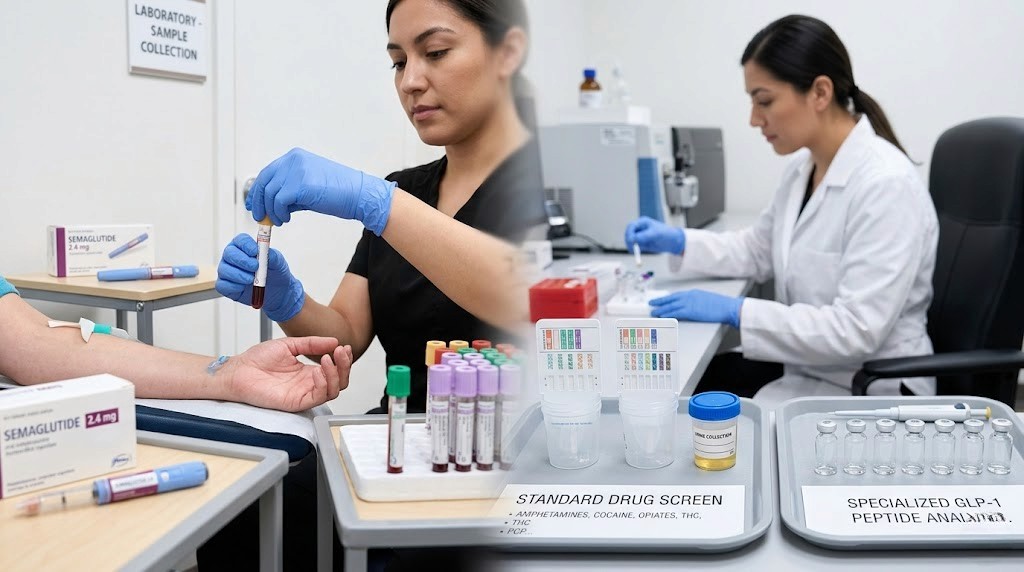
What if the question is not whether semaglutide will ruin your drug test, but whether you have been worrying about the wrong thing entirely? Most people who ask this question are not trying to hide anything. They have a pre-employment screen coming up, a random workplace test scheduled, or a sports competition on the horizon, and they need a clear answer before they walk into that clinic. The anxiety is understandable. The answer, though, is almost certainly simpler than you think.
Semaglutide does not show up on standard drug tests. Not on five-panel screens. Not on ten-panel screens. Not on twelve-panel screens. The immunoassay panels used by employers, federal agencies, and most clinical settings are designed to detect a specific set of controlled substances and drugs of abuse, none of which share any structural or chemical relationship with semaglutide. Whether you are on a 5mg protocol or a 10mg dosing schedule, the compound is invisible to these panels. The concern, while completely reasonable, is based on a misunderstanding of how drug testing actually works.
That said, the full picture is more nuanced than a simple yes or no. Semaglutide does appear in your body in ways that matter, particularly in standard blood work. People tracking their semaglutide results week by week will notice changes in metabolic markers. The World Anti-Doping Agency has added it to a monitoring program. Certain specialized testing situations carry different rules. And if you are on semaglutide and managing blood glucose, kidney function, or liver health, your blood panels will almost certainly look different than they did before you started. Understanding all of these distinctions matters, especially if you are navigating employment drug testing, athletic competition, military service, or a medical procedure that requires bloodwork review.
This guide covers every scenario in detail: how standard drug panels work and why semaglutide is not on them, what happens with each test type, the WADA monitoring situation, false positive risk, how semaglutide indirectly changes your blood work, and exactly what to tell a testing facility if the question ever comes up. Whether you are on SeekPeptides researching GLP-1 medications or already several weeks into a protocol, this is the complete answer. If you are curious about early experiences on the medication, the first week on semaglutide guide covers what to expect right from the start.
How standard drug tests work (and why semaglutide is not on them)
Understanding why semaglutide does not appear on standard drug tests requires a basic grasp of what those tests are actually doing. Most people picture drug testing as a catch-all scan that detects any foreign substance in the body. That is not how it works. Standard drug panels are highly targeted immunoassay screens designed to detect specific categories of controlled substances and drugs of abuse. They are not general chemical surveys.
The science behind this matters. Immunoassay tests work by using antibodies engineered to bind to specific molecular structures. When you urinate into a cup, the test strip contains antibodies calibrated to react with target compounds. If a target compound is present above a threshold concentration, the antibody binds to it and triggers a detectable signal. If the compound is not present, nothing happens. Semaglutide does not trigger any of these antibodies because its molecular structure is entirely unlike anything on the panel.
This is not a technicality or a loophole. It is simply how the science works. Semaglutide is a GLP-1 receptor agonist, a peptide-based medication. The substances tested in standard panels are small-molecule drugs with very different chemical architectures. The antibodies in a urine drug screen have zero affinity for a GLP-1 analog. Understanding this basic mechanism will save you a lot of unnecessary anxiety and help you answer questions from employers or testing facilities with confidence. For anyone curious about whether peptides are legal and how they are regulated, the regulatory picture for semaglutide is also worth understanding separately. You might also find the guide on peptides and semaglutide useful for understanding the broader classification context.
What a standard drug panel actually screens for
The most common drug test used in employment settings is the five-panel screen. It targets five specific substance categories: cannabinoids (THC metabolites), cocaine metabolites, opioids and opiates, amphetamines and methamphetamines, and phencyclidine (PCP). None of these are remotely related to semaglutide.
Ten-panel and twelve-panel tests expand this list to include barbiturates, benzodiazepines, methadone, propoxyphene, methaqualone, and sometimes expanded opioid classes or additional stimulants. Again, nothing in this expanded list has any relationship to GLP-1 medications. Whether you are exploring the best peptides for weight loss or specifically researching semaglutide, the entire panel is oriented around drugs with abuse potential, substances regulated under the Controlled Substances Act, and compounds associated with impairment or addiction.
Semaglutide is not a controlled substance. The Drug Enforcement Administration does not classify it as a drug of abuse. It has no psychoactive properties, no euphoric effects, and no known addiction potential. People concerned about stopping semaglutide cold turkey sometimes conflate withdrawal concerns with controlled substance classification, but these are entirely different issues. It is a prescription metabolic medication with a mechanism of action that has nothing in common with the substances that standard panels target. This is why the answer to "does semaglutide show up on a drug test" is a clear no in virtually all standard employment and clinical contexts. Understanding how semaglutide makes you feel underscores this point: the effects are metabolic and appetite-related, not psychoactive.
If you are curious about how semaglutide compares to other compounds sometimes discussed in similar regulatory contexts, the breakdown of semaglutide vs tirzepatide is worth reading. The side effect comparison between the two also helps clarify their risk profiles. Both are GLP-1 class medications with no controlled substance classification. And for context on whether GLP-1 is the same as Ozempic, the short answer is that Ozempic is a brand name for semaglutide, and both refer to the same compound class that standard drug tests do not detect. If you are considering comparable alternatives, the three-way comparison of semaglutide, tirzepatide, and retatrutide offers a useful overview of how these related compounds differ.
Why semaglutide molecular structure does not match
Semaglutide is a 31-amino-acid peptide analog of human GLP-1. Its molecular weight is approximately 4,113 daltons. Compare this to the substances on a standard drug panel, most of which are small organic molecules with molecular weights in the range of 200 to 400 daltons, and you begin to see why immunoassay cross-reactivity is essentially impossible under normal conditions.
Amphetamines are phenethylamine derivatives. Opioids are alkaloid-based compounds derived from or structurally similar to morphine. Benzodiazepines are 1,4-diazepine ring structures. THC is a lipophilic tricyclic compound. None of these look anything like a large GLP-1 analog peptide under the antibody-based assays used in standard testing.
Cross-reactivity, the phenomenon where a test antibody binds to an unintended molecule, requires structural similarity between the intended target and the unintended compound. This is the same reason that other peptide compounds, from those covered in the best peptides for fat loss guide to AOD 9604 compared to semaglutide, also do not trigger immunoassay panels. Because semaglutide is a large peptide with no structural resemblance to any screened substance, the antibodies in standard immunoassay panels will not interact with it. This is not an assumption or a theoretical claim. It reflects fundamental biochemistry. The same logic applies to other peptide-based medications. For a deeper look at the broader best peptides for weight loss and how the classification of these compounds works, that resource provides useful context.
People sometimes worry about the semaglutide with B12 combination they may be taking, or formulations that include methylcobalamin or niacinamide. None of these compounds appear on standard drug panels either. The additives commonly blended with compounded semaglutide are vitamins and amino acid derivatives, not controlled substances. This also holds true for formulations that include L-carnitine or pyridoxine.
Every type of drug test and semaglutide
Drug testing is not a single standardized process. There are four main biological sample types used in screening: urine, blood, hair follicle, and saliva. Each has different detection windows, different targeted compounds, and different use cases. None of the standard panels for any of these sample types are designed to detect semaglutide. But understanding the specifics of each helps you feel confident regardless of which test you are facing.
Urine drug testing (most common)
Urine drug testing is by far the most common form of workplace and pre-employment screening. It is cost-effective, non-invasive, and has well-established detection windows for the standard panel substances. Immunoassay strips provide rapid initial results, with confirmatory gas chromatography-mass spectrometry (GC-MS) testing used when a preliminary result is positive or ambiguous.
Semaglutide is not detected in urine drug screens. Urine panels specifically target metabolites and parent compounds of controlled substances excreted through the kidneys. Semaglutide is primarily metabolized through proteolytic degradation, the breakdown of peptide bonds by enzymes. Its metabolites are not the same chemical structures that urine panels look for, and the antibodies in standard urine immunoassays have no affinity for semaglutide or its breakdown products.
The weekly injection schedule for semaglutide, combined with its approximately one-week half-life, means the compound is present in your system continuously if you are on an active protocol. But "present in the system" and "detectable on a drug panel" are completely different things. You could have peak serum concentrations of semaglutide and still produce a clean urine drug screen. For people wondering about the timing aspects of their protocol, the best time of day to take semaglutide has no bearing whatsoever on drug test outcomes, since detection is simply not a function of timing or concentration.
Urine testing is also the most commonly used format for probation monitoring, pre-surgical workups that include a substance screen, and return-to-duty testing in regulated industries. In all of these scenarios, the test is looking for the same controlled substance categories. A person injecting semaglutide weekly could be tested by urinalysis on the same day as their injection and would still return a clean result for all standard panel analytes.
The practical concern some people raise is whether large volumes of a foreign compound in the urine might somehow flag the sample as unusual. This is not how drug testing works. Samples are evaluated for the presence of specific compounds, not for the general presence of foreign substances. The only urine validity tests that might flag a sample are those looking for dilution (low creatinine and specific gravity) or adulteration (unusual pH or oxidizing agents). Semaglutide metabolites do not affect these validity markers.
One additional consideration for people on intensive protocols: nausea and reduced fluid intake can sometimes concentrate urine, potentially creating a dilute-adjacent profile that testing sites may flag as a low-validity specimen. Staying well hydrated before a urine collection is always good practice. Understanding semaglutide bloating and constipation as separate side effects also matters: gastrointestinal slowing does not affect urine testing outcomes, but general hydration status does.
If you are on a compounded semaglutide protocol, the same logic applies. Whether you are using sublingual semaglutide or semaglutide troches, the compound is still a GLP-1 analog peptide that will not trigger a urine immunoassay screen. The delivery method changes pharmacokinetics but does not change the fundamental chemistry that makes semaglutide invisible to standard drug panels. For those managing their reconstitution and storage protocols, the guides on how to reconstitute semaglutide and semaglutide shelf life are entirely separate from any testing considerations.
Blood drug testing
Blood tests used in drug screening are also targeted panels, not general chemical surveys. Standard blood drug panels screen for the same categories as urine tests: cannabinoids, opioids, stimulants, benzodiazepines, and related controlled substances. Blood testing has shorter detection windows than urine testing but is sometimes preferred when impairment at a specific moment needs to be assessed rather than prior exposure.
Semaglutide will be present in blood at measurable concentrations. It is, after all, a medication you inject subcutaneously and that enters systemic circulation. But standard blood drug panels will not detect it. The immunoassay antibodies used in blood panels are calibrated for the same controlled substance categories as urine panels. No commercial standard drug panel tests for GLP-1 analogs.
It is important to understand the distinction between two types of blood testing that often get conflated. A drug screen, also called a toxicology panel, looks for evidence of controlled substance use. A comprehensive metabolic panel (CMP) or basic metabolic panel (BMP) looks at your organ function and metabolic health markers. These are entirely different tests ordered for different purposes. Semaglutide will not show up on a drug screen, but it will change several markers on a metabolic panel. Understanding this distinction prevents unnecessary confusion if a medical provider asks about your recent medication changes when reviewing lab results.
Standard blood drug panels use the same immunoassay technology as urine tests but adapted for serum samples. The detection windows are shorter because blood concentrations drop faster than urinary metabolite concentrations for most small-molecule drugs. For semaglutide, neither of these parameters matters because the compound is simply not in the scope of what these panels detect.
A separate and important concept is that semaglutide does affect certain markers that appear on routine blood work, which is different from drug testing. For a thorough breakdown of exactly how semaglutide interacts with routine blood tests, the detailed analysis of how tirzepatide shows up in blood work offers a useful parallel comparison for the other major GLP-1 class medication. The mechanisms are similar enough that understanding one helps contextualize the other.
One nuance with blood testing: highly specialized research-grade assays like LC-HRMS (liquid chromatography high-resolution mass spectrometry) can detect peptide-based compounds in blood at very low concentrations. This technology is used by organizations like WADA for elite sports doping control, not by employers, clinics, or standard medical panels. The distinction between specialized athletic testing and routine drug screening is significant and covered in detail in the WADA section below. For people interested in what semaglutide does to blood clotting factors or heart palpitation concerns, those questions relate to the physiological effects of the medication on the cardiovascular system, not to drug testing detection.
Hair follicle testing
Hair follicle testing has the longest detection window of all standard drug tests. Drugs and their metabolites are incorporated into the hair shaft as it grows, typically at a rate of about half an inch per month. A standard 1.5-inch hair sample captures approximately 90 days of exposure history. This makes hair testing valuable for detecting patterns of use rather than recent impairment.
Hair drug tests also use immunoassay technology targeted at the same panel of controlled substances. Semaglutide does not incorporate into hair follicles in a way that is detectable by these panels. Interestingly, some people on GLP-1 medications have questions about GLP-1 and hair loss, but that concern relates to nutritional deficiency side effects during rapid weight loss, not to how hair follicle drug tests work. The mechanisms by which small lipophilic molecules like THC metabolites or opioid metabolites incorporate into hair are different from how large peptides distribute in the body. More importantly, even if trace semaglutide-related compounds were present in hair, the antibodies used in hair follicle immunoassays would not react to them.
Hair testing is more commonly used in certain high-security employment contexts, legal proceedings, and substance abuse monitoring programs. If you are facing hair follicle testing for any of these purposes while on semaglutide, you do not need to be concerned about detection. The same fundamental principle applies: this test is looking for controlled substances and drugs of abuse, and semaglutide is neither. The same non-detection result would apply whether you are using compounded semaglutide from a pharmacy or a brand-name formulation.
Saliva and oral fluid testing
Saliva testing, also called oral fluid testing, is increasingly used because it can be administered on-site without a bathroom, is difficult to adulterate, and detects recent use more accurately than urine testing for some substances. The detection windows for most substances in oral fluid are shorter than in urine, typically 24 to 48 hours for most compounds, though THC can persist longer in heavy users.
Standard oral fluid drug tests use the same panel structure as urine and blood tests. They are looking for the same five to twelve categories of controlled substances. Semaglutide will not be detected in oral fluid testing. It does not have the same pharmacokinetic profile as small-molecule drugs in saliva, and the antibody-based detection panels are not calibrated to detect GLP-1 analogs.
If you are using sublingual semaglutide specifically, you might wonder whether holding medication under the tongue creates higher oral fluid concentrations that could somehow interfere with testing. The answer is no. The sublingual route is a delivery mechanism that gets semaglutide into systemic circulation through mucous membranes, but this does not create the kind of oral fluid residue that saliva drug tests detect, and even if it did, the target antibodies in those tests would not respond to it. The same reassurance applies to semaglutide troches used buccally.
The WADA exception and competitive sports testing
Here is where the picture becomes meaningfully more complex. If you are a competitive athlete subject to anti-doping regulations, semaglutide occupies a different space than in standard employment or clinical drug testing. The World Anti-Doping Agency has added semaglutide and other GLP-1 receptor agonists to its monitoring program. This is not the same as a ban, but it is not nothing either.
The context matters here. Sports anti-doping programs are designed not only to catch current prohibited substances but to surveil emerging compounds that might be used for performance enhancement before deciding whether to formally prohibit them. Semaglutide was added to WADA monitoring because of emerging evidence suggesting athletes may use it for body composition changes, specifically fat loss, that could confer competitive advantages in weight-sensitive sports. The before and after results seen with GLP-1 medications illustrate why sports authorities are paying attention to this compound class.
What the monitoring program means
WADA monitoring program status means that semaglutide use is being tracked in competition samples to gather prevalence and usage data. Athletes are not sanctioned for testing positive for monitoring-only substances. The program is specifically described as a research and data-gathering initiative, not an enforcement one. At the time this article was written, semaglutide was not on the WADA Prohibited List.
This could change. WADA has publicly indicated that if usage patterns emerge that suggest performance-enhancing abuse, GLP-1 class medications could move from monitoring to prohibited status before major events like the LA Olympics. The timeline and criteria for such a decision have not been formally specified, but the conversation in elite sports circles is active. If you are a competitive athlete at any level, you should monitor updates to the WADA Prohibited List directly through WADA official communications. Questions about building muscle while on GLP-1 medications are directly relevant here, since athletic body composition concerns are exactly the basis for WADA monitoring interest.
For recreational athletes or amateur competitors, the WADA monitoring status is less likely to be relevant. Most recreational sporting organizations do not run WADA-compliant testing programs. High school athletics, recreational leagues, and non-sanctioned competitions rarely if ever have the infrastructure or legal authority to implement WADA-level testing. The monitoring program primarily matters for elite athletes competing under national anti-doping programs or in international competition.
If you are on semaglutide and competing at an elite level, the responsible approach is to consult your national anti-doping organization directly and stay current on the Prohibited List status. The question "does semaglutide show up on a drug test" has a different answer depending on whether you are walking into a workplace urine screen or competing at a WADA-sanctioned event. For context on the broader microdosing GLP-1 protocols that some athletes may use for non-performance reasons, those discussions also interact with WADA monitoring considerations.
Detection methods in sports testing
WADA-level testing uses significantly more sophisticated methodology than standard employment drug screening. The primary technology is liquid chromatography high-resolution mass spectrometry, commonly abbreviated as LC-HRMS. This technology can identify compounds by their exact molecular mass and fragmentation pattern with extraordinary specificity and sensitivity.
For semaglutide monitoring, WADA accredited laboratories test blood samples and dried blood spots (DBS). The DBS method involves collecting a small blood sample on filter paper, which simplifies transport and storage while preserving the sample for laboratory analysis. LC-HRMS can detect semaglutide in these samples even at low concentrations, which is why sports testing can identify GLP-1 analog use when standard drug panels cannot.
This is the critical distinction. WADA-level testing is purpose-built to find these specific compounds through a completely different technological approach. Standard drug panels use antibody-based immunoassays looking for controlled substance metabolites. Sports doping control uses high-resolution mass spectrometry to identify specific peptide and small-molecule signatures. These are fundamentally different scientific processes targeting entirely different compound categories.
Understanding this distinction also helps clarify why monitoring programs for peptide-based compounds is technologically feasible at the elite sports level but not practical for routine workplace drug testing. LC-HRMS equipment costs hundreds of thousands of dollars, requires specialized operators, and takes significantly longer to process samples than a standard immunoassay strip. The cost-benefit profile makes it appropriate for elite sports anti-doping but not for pre-employment screening at a local clinic. The same detection feasibility gap exists for compounds discussed in guides like phentermine versus GLP-1, where the two compounds have entirely different testing profiles precisely because phentermine is a controlled substance and GLP-1 analogs are not.
Which sports organizations test for GLP-1 medications
Currently, no sporting organization formally prohibits semaglutide. This is true whether you are using brand-name products or looking into where to buy semaglutide through compounding channels. Testing for it occurs only under WADA monitoring protocols, and results generate data rather than sanctions. The organizations that implement WADA-level testing include WADA member national anti-doping organizations (USADA in the United States, UKAD in the United Kingdom, etc.), international sports federations for Olympic sports, and competition-specific programs for major events.
Professional sports leagues in the United States, including the NFL, NBA, MLB, and NHL, have their own substance policies that are negotiated through collective bargaining agreements. These policies may or may not align precisely with WADA guidelines. If you are a professional athlete in a major league, the relevant question is what your specific league collective bargaining agreement says about GLP-1 medications, not what WADA monitoring status implies.
Powerlifting, bodybuilding, and physique sports have their own federation-specific anti-doping rules that vary considerably. Some natural bodybuilding organizations maintain strict anti-doping protocols; others do not test at all. If competition integrity is relevant to your situation, check directly with your specific sport governing body about their current stance on GLP-1 medications. The landscape is evolving quickly. The discussion around creatine combined with GLP-1 protocols is relevant here because many athletes in physique sports use both, and understanding which compounds carry testing risk versus which do not is practically important.
Can semaglutide cause a false positive
False positives are a legitimate concern in drug testing. They happen. Certain medications, foods, and supplements can trigger false positive results on immunoassay screens due to structural similarities between harmless compounds and the target substances. The question is whether semaglutide belongs in this category.
The short answer is no. Semaglutide is extremely unlikely to cause a false positive on any standard drug test panel. The reasons are structural and biochemical, not just theoretical.
Why cross-reactivity is extremely unlikely
Cross-reactivity in immunoassay testing occurs when an antibody designed to detect a specific compound also binds to a structurally similar compound. The probability of cross-reactivity is directly related to molecular similarity. Semaglutide, as a large 31-amino-acid peptide analog, has essentially no structural similarity to the small-molecule controlled substances targeted by standard drug panels.
Consider amphetamine cross-reactivity, which is one of the more commonly discussed false positive issues in drug testing. Certain antihistamines, decongestants, and even some trace dietary compounds can cause false amphetamine positives because they share the phenethylamine backbone structure with amphetamine itself. Semaglutide has no phenethylamine component. It has no ring structures similar to stimulants, no alkaloid backbone resembling opioids, no diazepine structure resembling benzodiazepines, and no cannabinoid chemistry resembling THC metabolites.
Some anecdotal forum reports have circulated suggesting that semaglutide might cause amphetamine cross-reactivity. There is no published scientific evidence supporting this claim as of the latest available research. Cross-reactivity studies for GLP-1 analogs and standard immunoassay panels are limited, but the structural chemistry makes a genuine cross-reactivity mechanism implausible. If you encounter these claims online, treat them with appropriate skepticism unless supported by peer-reviewed data. For related questions about unexpected symptoms on semaglutide, the guide on whether semaglutide lowers your immune system addresses a different concern that sometimes gets conflated with drug test questions in online discussions.
The compounded semaglutide formulations available through pharmacy channels sometimes include additional compounds like B12, glycine, or L-carnitine. None of these additives are controlled substances or known to produce false positives on standard drug panels. B12 in any form, including cyanocobalamin or methylcobalamin, does not cause immunoassay false positives. Glycine is an amino acid with no psychoactive properties. L-carnitine is a metabolic compound with no controlled substance classification. Formulations that include niacinamide or pyridoxine are similarly clean from a drug testing standpoint.
Medications that actually do cause false positives
Understanding what does cause false positives helps put semaglutide non-risk in context. The most well-documented false positive culprits include ibuprofen and certain NSAIDs producing false cannabinoid positives on some older assays, quinolone antibiotics like levofloxacin producing false opioid positives, pseudoephedrine (found in many cold medications) producing false amphetamine positives, ranitidine producing false methamphetamine positives on some immunoassays, sertraline and certain other antidepressants producing false benzodiazepine or amphetamine positives on some platforms, and dextromethorphan producing false PCP positives.
None of these compounds are peptide-based medications. They all share chemical structural features with the target drug categories. Semaglutide does not. The mechanism that causes false positives for ibuprofen (cyclooxygenase inhibitor with ketone-containing ring structure) or pseudoephedrine (phenethylamine derivative) simply has no analog in semaglutide biochemistry. This also applies to people taking berberine with semaglutide or combining it with metformin, as neither of those compounds trigger false positives on standard panels either.
If you are taking semaglutide alongside other medications, it is worth knowing whether those other medications carry false positive risk. The comparison between phentermine and semaglutide is instructive here: phentermine is an amphetamine-class stimulant that absolutely will appear on drug tests, and taking it alongside semaglutide carries entirely different testing implications than semaglutide alone. Similarly, the comparison between tesofensine and semaglutide is relevant because tesofensine is a monoamine reuptake inhibitor that operates through stimulant-adjacent mechanisms that semaglutide does not share.
What to do if you get an unexpected result
If you receive a preliminary positive result on a drug screen while taking semaglutide, the first thing to understand is that preliminary immunoassay results require confirmation. A positive screen is not a positive result. Confirmatory testing using GC-MS or LC-MS/MS methodology is standard practice for employment drug testing and is explicitly required in DOT and federal workplace programs before any adverse action can be taken.
Confirmatory GC-MS testing will not produce a positive result for semaglutide because it is not a controlled substance the panel is designed to find. If a preliminary immunoassay produces an unexpected flag (which would be extremely unlikely given semaglutide biochemistry), confirmatory testing will resolve it.
In this scenario, you would also have the opportunity to work with a Medical Review Officer (MRO), a licensed physician trained in substance abuse disorders and drug testing methodology. An MRO reviews positive results and contacts the donor to inquire about prescription medications or other medical explanations before reporting the final result to the employer. Providing documentation of your semaglutide prescription to an MRO would be straightforward and should resolve any ambiguity. More detail on the MRO process appears in the disclosure section below. For people who want to understand the full regulatory pathway around semaglutide access, the guide on how to qualify for semaglutide covers the prescription and documentation side of the equation in detail.
How semaglutide does show up indirectly in blood work
Here is an important distinction that often gets lost in the discussion: semaglutide does not show up on drug tests, but it does change your routine blood work. These are completely different contexts. A drug test is looking for evidence of controlled substance use. Routine blood work is monitoring your metabolic and organ health. Semaglutide has significant effects on several blood work markers, and anyone on an active protocol needs to understand what changes to expect and why.
This matters both for your health management and for conversations with healthcare providers who review your labs. Some changes are expected and beneficial. Others require monitoring to catch potential complications early. The research suggests that approximately 22.4% of people on GLP-1 class medications develop nutritional deficiencies within 12 months, which is one reason regular blood monitoring is recommended throughout treatment. Understanding the fatigue that can accompany GLP-1 treatment also requires blood work context, since deficiency-driven fatigue looks different from adjustment-phase fatigue.
Changes to A1C and blood glucose
Hemoglobin A1C is a measure of average blood glucose over approximately three months. It is one of the primary markers changed by semaglutide treatment. In people with type 2 diabetes, semaglutide typically reduces A1C by 1.5 to 2 percentage points, with some studies showing reductions of over 2 points at higher doses. In non-diabetic individuals using semaglutide for weight loss, A1C may decrease modestly from baseline, especially if it was borderline elevated before treatment.
Fasting blood glucose will also likely decrease. Semaglutide stimulates glucose-dependent insulin secretion and suppresses glucagon release, both of which lower blood glucose. People who want to understand how fast semaglutide works often notice glucose changes before weight changes become visible. Understanding how long GLP-1 medications take to start working helps set realistic expectations for when these blood markers will shift. If your provider sees your A1C and fasting glucose have dropped substantially since your last labs, this is expected and represents the therapeutic mechanism working as intended.
The practical implication is that if you are having bloodwork done for any purpose, including a physical, insurance medical exam, or pre-surgical workup, semaglutide will have changed your glucose parameters. You should inform your provider you are on semaglutide so they can interpret the numbers in context. A lower A1C is generally positive, but your provider needs to know why it changed to properly assess your overall metabolic picture. For more on what to expect over time, the guide on semaglutide results week by week tracks the full progression of changes. The one-month results guide gives a more condensed timeline view, while the before and after semaglutide resource shows what full-protocol changes look like.
Liver enzyme changes
Liver function tests, specifically AST (aspartate aminotransferase) and ALT (alanine aminotransferase), may show changes on semaglutide. The effects can go in either direction depending on your baseline liver health. For people with non-alcoholic fatty liver disease (NAFLD) or non-alcoholic steatohepatitis (NASH), semaglutide often reduces liver fat content and improves liver enzyme levels over several months. This is considered a beneficial effect.
In some individuals, particularly early in treatment, there are reports of transient mild elevations in liver enzymes. The mechanism is not fully established but may relate to metabolic shifts from rapid fat mobilization, which can transiently stress hepatic processing. These elevations are usually mild and self-resolving, but they should be monitored. People also wondering about whether semaglutide causes blood clots or heart palpitations should discuss these concerns with their prescriber during blood work review.
Baseline liver function testing before starting semaglutide and periodic monitoring during treatment is standard clinical practice. If your ALT or AST levels change significantly, your prescribing provider should evaluate the context, considering whether you have baseline liver disease, how rapidly you are losing weight (rapid fat loss can temporarily increase liver enzyme release), and whether any concomitant medications could be contributing. The alcohol and semaglutide interaction is also relevant here, since alcohol use affects liver enzymes independently and adds a layer of complexity to interpreting ALT and AST changes.
Kidney function markers
Creatinine and blood urea nitrogen (BUN) are the primary kidney function markers on a standard comprehensive metabolic panel (CMP). Semaglutide can affect these indirectly through two mechanisms: hydration status and weight loss effects on muscle mass.
Nausea and vomiting, which are common side effects particularly early in semaglutide treatment, can cause mild dehydration. Dehydration concentrates creatinine and BUN in the blood, potentially making them appear elevated even if kidney function is fundamentally normal. This is why electrolyte management for GLP-1 users is important, and why staying adequately hydrated is consistently emphasized in protocols. The guide on semaglutide and UTI is also relevant for anyone managing urinary tract health alongside kidney function monitoring.
Separately, significant weight loss and the muscle mass changes that sometimes accompany it can affect creatinine production (since creatinine is a byproduct of muscle metabolism). People who lose substantial lean mass may show lower creatinine levels, which can sometimes complicate the interpretation of GFR (glomerular filtration rate) estimates that are calculated from creatinine. Hydration, electrolyte status, and muscle preservation strategies, including reviewing the best fiber supplements for GLP-1 users to support gut health that indirectly affects absorption, all feed into the metabolic panel picture.
Lipid panel shifts
A standard lipid panel measuring total cholesterol, LDL, HDL, and triglycerides will typically show favorable changes on semaglutide. Triglycerides often decrease substantially, sometimes by 15 to 20 percent or more over a full treatment course. LDL cholesterol may modestly decrease. HDL (the good cholesterol) often increases modestly. These are considered beneficial cardiovascular effects. People tracking their before and after semaglutide results often see these lipid improvements alongside body composition changes. The one-month results typically show the beginning of these trends.
The SUSTAIN and STEP trial data consistently showed cardiometabolic improvements in lipid profiles alongside weight loss, which is part of why semaglutide received approval for cardiovascular risk reduction in certain populations. If your provider sees substantial triglyceride reduction and modest LDL improvement, this is expected and generally positive on a semaglutide protocol.
For people who were on statins before starting semaglutide, the combined effect of the statin and semaglutide-mediated fat loss can sometimes move lipid markers significantly. Whether you are losing weight on semaglutide without exercise or combining it with a structured training program, the lipid improvements tend to track with total weight lost. This is worth discussing with your prescriber to determine whether statin dosing requires adjustment as your lipid profile improves. A semaglutide diet plan focused on healthy fats and reduced refined carbohydrates can amplify these lipid improvements. Understanding the best foods to eat on semaglutide and what foods to avoid can also directly influence your lipid trajectory over a full protocol course.
Thyroid function and nutritional markers
TSH (thyroid stimulating hormone) monitoring is recommended for people on semaglutide, primarily because GLP-1 receptor agonists as a drug class have been associated with C-cell hyperplasia in animal studies, which raised theoretical concerns about thyroid cancer risk. This risk has not been confirmed in human clinical studies, but TSH monitoring is a standard precautionary practice. If your TSH shifts on semaglutide, it should be evaluated in context by your provider. The guide on whether semaglutide increases estrogen levels covers a related hormonal consideration that some people on semaglutide ask about in the context of endocrine monitoring.
The more practically significant nutritional markers to monitor are vitamin B12, vitamin D, iron studies (ferritin, serum iron, TIBC), and zinc. A well-structured list of foods to eat while on semaglutide can help mitigate these deficiency risks, and the best fiber supplements for GLP-1 users address the digestive side of nutritional optimization. The 22.4% nutritional deficiency rate within 12 months reflects the combined impact of appetite suppression and reduced food volume. When people eat substantially less, they often eat fewer nutrient-dense foods alongside the caloric reduction, leading to micronutrient shortfalls that standard blood panels will reveal.
Vitamin B12 is particularly worth monitoring. People using semaglutide with B12 supplementation address this risk proactively, which is one reason compounded formulations often include cyanocobalamin or methylcobalamin. Iron deficiency can manifest as fatigue that gets attributed to the medication itself, which is worth distinguishing from other causes. The guide on GLP-1 and hair loss is directly connected to nutritional marker monitoring, since hair loss on GLP-1 medications is often nutritional in origin rather than a direct pharmacological effect. Regular nutritional blood panel monitoring allows these deficiencies to be caught and corrected before they become clinically significant. The best probiotic for semaglutide users also plays a role in nutrient absorption, since gut health directly affects how efficiently B12, zinc, and iron are absorbed.
Employment drug testing while on semaglutide
The overwhelming majority of employment drug tests are standard immunoassay panels that do not detect semaglutide. This applies to pre-employment screens, random workplace tests, post-accident tests, and return-to-duty tests. For the vast majority of working adults on semaglutide, employment drug testing represents zero concern from a detection standpoint.
That said, the context varies across different employment categories. Someone working in a highly regulated safety-sensitive industry has a different testing framework than someone in a standard office environment. Understanding the specific context of your testing situation helps you navigate with confidence. Whether you are managing a 5mg dosage protocol or a 10mg protocol, the dose level has no bearing on drug test outcomes.
Pre-employment screening
Pre-employment drug screens are typically five-panel or ten-panel immunoassay urinalysis tests. These are administered by occupational health clinics, third-party testing services, or employer-contracted collection sites. The standard panels do not include semaglutide. You will not be flagged, asked about, or required to disclose semaglutide during a standard pre-employment urine drug screen unless you choose to disclose it voluntarily.
The practical question is whether you should mention semaglutide to the testing facility. In most pre-employment contexts, there is no requirement to disclose prescription medications at the time of a drug screen. If the test is a standard panel and you are not in a safety-sensitive position, voluntary disclosure is generally unnecessary. See the disclosure section below for a more nuanced discussion of when to disclose and when it is not required.
One consideration: if your employer does a comprehensive pre-employment medical examination (not just a drug screen) that includes blood work, the metabolic changes from semaglutide discussed above could appear in those results. A lower A1C, improved triglycerides, and modest weight loss are not disqualifying findings for any employment context, but it is worth knowing that a full metabolic panel would reflect your semaglutide use indirectly. For candidates wondering about the financial side of their protocol in the context of new employment benefits, the guides on FSA coverage for semaglutide and HSA coverage for GLP-1 medications are relevant to understanding how new employer benefit plans might cover ongoing treatment.
Industries with higher rates of pre-employment drug screening include transportation, healthcare, construction, manufacturing, and federal contracting. In all of these industries, the standard panel structure is the same. Semaglutide does not appear on any of these screens. A CDL driver candidate, a hospital employee candidate, and a defense contractor candidate can all complete their pre-employment screens without concern about their semaglutide protocol. For people navigating dose timing in the context of job changes, the every-other-week dosing discussion and the restarting after a break guide address protocol continuity questions that job transitions sometimes raise.
Random workplace testing
Random workplace drug testing programs operate under the same standard panel limitations as pre-employment screens. Random tests are typically conducted under DOT regulations for safety-sensitive positions (covered separately below) or under employer-specific policies for non-DOT workplaces. Standard panels are the norm in both contexts.
If your workplace uses a third-party administrator for random testing, the specimens are collected and sent to SAMHSA-certified laboratories for analysis. SAMHSA certified laboratories test for the same standard panel substances. Semaglutide is not a reportable compound in this system, regardless of how frequently you test positive random selection.
People sometimes worry about semaglutide affecting performance at work and whether that could draw scrutiny. Side effects like burping, acid reflux, or leg cramps can occasionally interfere with day-to-day comfort at work, but none of these are drug-test-relevant issues. They are side effects that typically improve as the body adjusts to the medication. The guide on how long after taking semaglutide you feel side effects is useful for understanding what to expect and when discomfort is likely to diminish. For people whose workplace performance involves physical demands, the energy effects of semaglutide and the potential for sleep disturbances are worth understanding separately from any testing concerns.
DOT and federal testing
Department of Transportation (DOT) drug testing is a federally mandated program that applies to safety-sensitive transportation workers including commercial truck drivers (regulated by the Federal Motor Carrier Safety Administration), pilots (Federal Aviation Administration), train operators (Federal Railroad Administration), transit workers (Federal Transit Administration), maritime workers (Coast Guard), and pipeline workers (Pipeline and Hazardous Materials Safety Administration).
DOT drug testing uses the same five-panel immunoassay structure mandated under 49 CFR Part 40, with specimens analyzed at SAMHSA-certified laboratories using the same controlled substance categories as standard employment panels. Semaglutide is not a controlled substance and is not tested for under DOT regulations. A CDL driver, airline pilot, or transit operator on semaglutide faces no different drug testing risk than any other employee. Understanding the best time of day to take semaglutide can help minimize side effects that might affect job performance in safety-sensitive roles, but this is a comfort consideration, not a testing one.
The broader federal workplace drug testing program (applicable to federal employees and federal contractors under Executive Order 12564 and the Drug-Free Workplace Act) follows the same SAMHSA five-panel testing structure. Again, semaglutide is not a targeted compound. Federal employees on semaglutide do not face drug testing complications related to their medication. For people managing the dosing precision that DOT-regulated jobs often require due to alertness standards, the dosing chart in units and the semaglutide dosage calculator at SeekPeptides help maintain precise protocol management that reduces side effect variability.
Should you disclose semaglutide to your employer
This is a nuanced question with a legal dimension. In most employment contexts in the United States, you are not required to disclose prescription medications to your employer unless those medications directly affect your ability to perform essential job functions. Under the Americans with Disabilities Act (ADA), medical information is generally protected, and employers cannot require disclosure of prescription drug use as a condition of employment in most circumstances.
There are exceptions. Safety-sensitive positions may require disclosure of medications that could affect cognitive function, coordination, or reaction time. If a medication genuinely impairs your ability to safely perform job duties, disclosure may be both legally required and ethically important. Semaglutide, particularly at therapeutic doses for metabolic management, does not typically impair cognitive or motor function in ways that affect job safety. Early side effects like nausea or lightheadedness during the titration phase could be relevant in safety-sensitive roles, but these are temporary. The questions around how quickly appetite suppression kicks in and whether semaglutide works right away are relevant to understanding the adjustment period during which any temporary work-related effects might occur.
Practically speaking, most people on semaglutide have no reason to disclose it to their employer in the context of drug testing. It will not appear on their test, it is not a controlled substance, and it does not create workplace safety concerns under typical conditions. If you have specific concerns about your employment category, consulting with an employment attorney is appropriate rather than relying on general guidance.
Military and government drug testing
Military drug testing presents a distinct context compared to civilian employment. The Department of Defense (DoD) Instruction 1010.16 governs military drug testing, and service branches conduct urinalysis testing at regular intervals as well as for cause. The DoD testing program historically has followed the same SAMHSA five-panel base structure with expanded testing options including additional designer drugs and emerging synthetic compounds when abuse trends are identified.
Semaglutide is not a controlled substance and is not currently part of any military testing expansion. The same applies to other GLP-1 compounds. People comparing semaglutide versus tirzepatide versus retatrutide for military-compatible options will find that none of these GLP-1 medications appear on standard military drug panels. Active duty service members on semaglutide, which may be prescribed for metabolic conditions, do not face military testing complications related to the medication itself. The DoD testing program is focused on controlled substances, drugs of abuse, and performance-enhancing compounds that fall under controlled substance scheduling.
There is a separate consideration for military readiness. Semaglutide and its potential to affect body composition and weight management intersects with military fitness standards and weight management programs. Understanding how fast you can lose weight on semaglutide is particularly relevant for service members working to meet body composition standards on a timeline. The BMI requirements for GLP-1 prescriptions also play into military medical authorization decisions. Some branches have specific policies on the use of prescription weight loss medications in relation to fitness standards assessments. This is a policy and fitness standards question, not a drug testing question, but it is worth being aware of if you are active duty and managing weight on semaglutide. For those interested in how semaglutide intersects with fitness-related body composition goals, the guide on losing weight on semaglutide without exercise and the broader discussion of how fast weight loss progresses are useful for setting expectations.
Government security clearance investigations represent another specific context. Background investigations and polygraph examinations for security clearances may ask about prescription medication use, particularly medications that could affect cognitive function or create foreign targeting risks. Semaglutide is an FDA-approved prescription medication with no psychoactive properties, and its use in the context of diabetes management or weight loss would not typically raise security concerns. However, complete and accurate disclosure of prescription medications in security clearance applications is important for separate legal and integrity reasons.
For people in law enforcement, semaglutide testing profile is the same as in other federal employment contexts. Those researching whether semaglutide affects fertility or estrogen levels will find these are health management questions that have no bearing on drug testing outcomes. The DEA, FBI, TSA, and other federal law enforcement agencies use drug testing programs consistent with federal SAMHSA guidelines. Semaglutide is not detectable on these programs. Law enforcement officers managing metabolic health on semaglutide should consult their agency medical review procedures for any prescription medication disclosure requirements that their specific department may have. Officers who need to travel with semaglutide for work assignments should also understand TSA and transportation guidelines for carrying injectable medications.
Understanding the full regulatory landscape for semaglutide, including the nuances of compounded versus brand-name formulations and resources like the Empower Pharmacy semaglutide guide, the Direct Meds guide, and the Olympia Pharmacy guide, helps paint a complete picture of what this medication involves at every level, including regulatory and testing contexts.
Managing your semaglutide protocol around testing dates
Because semaglutide does not show up on standard drug tests, you do not need to pause, skip, or time your doses around a scheduled test. This is an important reassurance for people on weekly injection protocols who might otherwise worry about whether their injection timing affects their test outcome. It does not. The testing panel cannot detect the compound at all, so whether you injected yesterday or four days ago is entirely irrelevant from a detection standpoint.
That said, there are practical protocol considerations worth thinking through when a test date is on the horizon, not because of detection risk, but because of how semaglutide side effects can affect your physical comfort and test-day experience.
Timing your dose around a scheduled test
If you know a drug test is coming up and you are on a weekly injection schedule, you have full flexibility about when to inject relative to the test. There is no detection window to worry about, no minimum wait time, and no need to stop or delay your dose. The best time of day to take semaglutide is based purely on personal tolerability, side effect patterns, and lifestyle convenience, not on any testing consideration.
Some people find that injecting a day or two before a test date rather than the morning of works better simply from a comfort standpoint. The first 24 to 48 hours after a dose can bring peak nausea or gastrointestinal discomfort for some users, particularly at higher doses or during early titration phases. If you are sensitive to these effects, choosing an injection timing that puts the peak side effect window before your test day rather than during it is a practical comfort choice, not a medical necessity.
For people managing dose adjustments or considering protocol changes, the resources on splitting semaglutide doses across two days per week or understanding what constitutes too high a dose are relevant for managing side effect intensity independent of any testing context. Lower side effect burden on the day of a test is simply more comfortable. The practical tips for semaglutide protocols guide covers a range of strategies for reducing day-to-day discomfort that apply here.
If your test requires an early morning collection, be aware that fasting before blood draws can sometimes intensify nausea on semaglutide, particularly early in a protocol. Planning your injection timing to avoid peak nausea on a fasting collection morning is a minor but real quality-of-life consideration. The guide on when weight loss begins on semaglutide gives context on where you are likely to be in the metabolic adjustment curve relative to a test, which helps you understand what side effects you might reasonably expect.
Side effects that might affect your test day experience
Several semaglutide side effects can make a test day mildly uncomfortable without having any bearing on the test outcome itself. Being prepared for these and planning around them makes the experience smoother.
Nausea is the most commonly reported early side effect. It peaks in the first 24 to 48 hours after each injection and typically diminishes significantly after the first several weeks of treatment. Understanding how long after taking semaglutide you feel side effects helps you anticipate the curve. If you are in the early titration phase and experience significant nausea, scheduling your test appointment for a morning toward the end of your weekly dosing window, when semaglutide blood levels are at their weekly nadir, may reduce nausea intensity on test day.
Acid reflux and burping are also common during active semaglutide use. The acid reflux guide and the burping guide both address management strategies. If you are collecting a urine sample and feeling gastric pressure or reflux, simply having a glass of water available, eating a small, bland meal beforehand (if not fasting for blood work), and allowing adequate time before the appointment can make the experience much more manageable.
For people on higher dose protocols, the 10mg protocol and the considerations around higher unit doses are relevant, since higher doses tend to produce stronger side effect profiles, particularly in the first 24 to 48 hours post-injection. Planning your test date around your weekly dosing schedule is entirely within your control.
Fatigue, sleep disruptions, and temperature sensitivity are also reported by some users, particularly during dose adjustments. None of these affect drug test outcomes, but they can affect how you feel on a test day. Planning ahead, getting adequate sleep before the appointment, and managing your nutrition with appropriate foods the evening before can meaningfully improve your comfort.
Staying hydrated and managing nausea before a test
Hydration is practically important for urine drug tests, since adequately hydrated samples are less likely to be flagged for validity concerns like low creatinine. Semaglutide effects on gastric emptying and appetite can sometimes reduce fluid intake, particularly if nausea is present, which makes intentional hydration especially important in the 12 to 24 hours before a urine collection.
Drinking sufficient water the day before your test, avoiding excessive caffeine (which has diuretic effects), and ensuring you are not in a dehydrated state from missed electrolytes are all simple preparatory steps. The best electrolytes for GLP-1 users guide covers the specific electrolyte considerations relevant to anyone on a GLP-1 protocol, and these same strategies support good hydration ahead of a collection.
For managing nausea specifically, the day before and morning of a test collection, sticking to the foods that work well on semaglutide and avoiding the foods that tend to worsen side effects makes a practical difference. Bland, low-fat, low-sugar foods eaten in small portions put minimal demand on the slowed gastric emptying that semaglutide causes, reducing the likelihood of significant nausea during the collection appointment. If blood work is also being drawn, following any fasting instructions from your healthcare provider takes priority over these recommendations.
For people navigating urine collections specifically, constipation management on semaglutide is a related gut health consideration that does not affect the test but can affect general comfort during what may already be a slightly stressful appointment. Fiber supplementation, the use of a gentle laxative if needed, and maintaining the probiotic routine that supports gut motility on a GLP-1 protocol all contribute to being physically comfortable on and around test days.
What to tell the testing facility
Most of the time, you will not need to tell a testing facility anything about semaglutide. You will complete the collection, the test will return clean, and that will be the end of it. But there are scenarios where disclosure becomes relevant, and knowing how to handle those conversations is valuable preparation.
When disclosure is required
Disclosure of semaglutide is generally not required in standard drug testing contexts. Standard drug test collection protocols ask you to list any prescription medications you are currently taking primarily because this information helps a Medical Review Officer explain any results that require interpretation. This list is treated as confidential medical information and is not routinely shared with your employer if your drug test comes back negative for controlled substances.
The practical approach most medical professionals recommend: list your current prescriptions honestly on any required medication disclosure forms at the collection site. Whether you are on semaglutide with glycine, a semaglutide B12 formulation, or brand-name product, listing it is straightforward. This creates a clear record that protects you in the event of any unexpected question, while remaining entirely routine and non-disqualifying. Semaglutide on a medication disclosure form at a drug testing collection site is a non-event. It is a common FDA-approved prescription medication with no controlled substance classification.
Where disclosure genuinely matters is in situations involving a positive result or a result that requires MRO review. In that scenario, your prescription documentation becomes important. Being prepared with your prescription information, including the prescriber name, medication name, and dosage, is good practice regardless of whether you expect to need it. For documentation purposes, the B12 dosage chart and compounded dose chart resources from SeekPeptides can help you accurately represent your protocol if documentation is ever requested. The reconstitution chart and mixing chart are also useful references for maintaining accurate protocol records.
For people managing their protocol details, resources like the semaglutide dosing chart in units and the semaglutide dosage calculator can help you document exactly what you are taking and at what dose, which would be useful information to have on hand if documentation is ever needed. The conversion chart for dosage in units makes it easy to present your dose in the standardized format that medical professionals and MROs typically use.
Working with a Medical Review Officer
A Medical Review Officer (MRO) is a licensed physician who has received specialized training in substance abuse disorders and the science of drug testing. MROs are required components of DOT-mandated drug testing programs and are widely used in non-DOT programs as well. Their role is to receive laboratory results, interpret them in a medical context, and contact employees when a positive result requires explanation before it is reported to the employer.
The MRO process works as follows: if a laboratory reports a positive or inconclusive result, the MRO contacts the employee directly, before reporting to the employer. The MRO asks whether there is a legitimate medical explanation, such as a prescription, for the positive result. If you provide documentation of a valid prescription that explains the positive finding, the MRO typically reports the result as a negative (or verified) to the employer.
For semaglutide users, this process is unlikely to ever be triggered because semaglutide will not produce a positive result on standard panels. But if you were somehow flagged in an unusual situation, this MRO process is your protection. A prescription for semaglutide, documented and legitimate, is a complete and straightforward explanation that an MRO would accept without hesitation. The MRO system exists precisely to prevent people from losing jobs or facing adverse action due to legitimate prescription medication use.
For people managing the full complexity of semaglutide protocols, understanding both sides of what this medication does and does not do in various testing scenarios is part of being an informed user. Whether you are reviewing practical semaglutide tips, navigating traveling with semaglutide, managing the question of when to resume semaglutide after surgery, or thinking about whether you can stop cold turkey, the full context of your medication matters. The same applies to understanding its testing profile: complete information is always better than partial reassurance. The discussion of how long to stay on semaglutide is also relevant for people planning their protocol duration in the context of employment or health monitoring timelines.
Frequently asked questions
Will semaglutide cause me to fail a pre-employment drug test?
No. Semaglutide is not detected on standard pre-employment drug panels, which use immunoassay technology targeting controlled substances like opioids, amphetamines, cannabis metabolites, cocaine, and benzodiazepines. Semaglutide has no structural relationship to any of these compounds. You will not fail a pre-employment drug test due to semaglutide use. If you are also taking phentermine alongside semaglutide, that combination presents different testing considerations because phentermine is an amphetamine-class compound that does appear on standard panels. The situations where semaglutide does not work have nothing to do with drug testing outcomes either.
Can semaglutide show up on a urine drug test?
No. Standard urine drug tests use immunoassay antibodies calibrated to detect specific controlled substances. Semaglutide is a large GLP-1 analog peptide with no structural similarity to screened compounds, and the antibodies in urine drug panels do not react to it. This applies to five-panel, ten-panel, and twelve-panel urinalysis screens. The delivery method, whether injection, sublingual, or troche, does not change this outcome. Questions about hormonal effects of semaglutide or fertility effects are separate physiological questions unrelated to drug test detection.
Is semaglutide banned in sports?
Not currently. Semaglutide is on the WADA Monitoring Program, which means it is being tracked in competition samples for research purposes, not sanctioned. As of the available information, semaglutide is not on the WADA Prohibited List and athletes testing positive for it under monitoring do not face sanctions. However, this status could change if WADA determines that abuse patterns warrant formal prohibition. Elite athletes should monitor WADA updates directly. For context on the broader legal status of peptides in sports and research contexts, that guide provides a useful framework.
What blood tests should I get while on semaglutide?
Recommended blood work monitoring while on semaglutide includes hemoglobin A1C and fasting glucose, a comprehensive metabolic panel (CMP) covering liver function (AST, ALT) and kidney function (creatinine, BUN), a fasting lipid panel, TSH for thyroid monitoring, and nutritional markers including B12, vitamin D, iron studies, and zinc. The GLP-1 headache guide is also relevant for anyone experiencing headaches while on semaglutide, as some headache patterns reflect electrolyte or hydration issues that blood work can identify. Regular monitoring is especially important given the 22.4% nutritional deficiency rate observed within 12 months of GLP-1 medication use.
Can semaglutide cause a false positive for amphetamines?
There is no published scientific evidence that semaglutide causes false positive results for amphetamines or any other standard panel substance. Cross-reactivity in immunoassay testing requires structural molecular similarity between the tested compound and the target substance. Semaglutide is a large peptide analog with no phenethylamine structure or other chemical feature that would interact with amphetamine-detecting antibodies. Anecdotal reports of this concern circulate online without verified mechanistic explanation or documented cases. Confirmatory GC-MS testing would resolve any ambiguous preliminary result. For separate questions about how semaglutide affects your body systems, the guides on swollen lymph nodes and yeast infections on semaglutide address immune-related questions that sometimes get conflated with testing concerns.
Does the type of semaglutide formulation (brand name vs compounded) affect drug test results?
No. Whether you are using a brand-name semaglutide product or a compounded semaglutide formulation, the active compound is the same GLP-1 analog peptide. The additives commonly included in compounded formulations, such as B12, glycine, or L-carnitine, are vitamins and amino acid derivatives that are not controlled substances and will not produce positive drug test results. Compounded versus branded formulation status is entirely irrelevant to drug testing outcomes. This also applies to formulations with glycine alone or glycine plus B12 blends.
Do I need to tell my doctor about semaglutide before surgery-related blood work?
Yes, always inform your surgical team and anesthesiologist about semaglutide before any procedure. The clinical concern is not about drug testing but about gastroparesis risk: semaglutide slows gastric emptying, which can increase aspiration risk under general anesthesia if fasting protocols are not appropriately extended. This is a genuine safety issue. Guidelines on when to resume semaglutide after surgery and standard pre-surgical fasting recommendations for GLP-1 users should be discussed with your surgical team well in advance of any scheduled procedure.
Will being on semaglutide affect the results of an insurance medical exam?
Insurance medical exams typically include blood work and sometimes urinalysis. Semaglutide will not cause a positive drug test result in an insurance context. However, your blood work results will likely reflect semaglutide use indirectly: lower A1C, improved triglycerides, and potentially changed kidney or liver markers. These metabolic changes are generally favorable from an insurance underwriting perspective but should be disclosed honestly to the examining physician so results are interpreted in proper context. Improved metabolic health on semaglutide is typically a positive factor in insurance underwriting, not a negative one.
Does semaglutide affect skin sensitivity in ways relevant to patch-based testing?
Patch-based drug tests, which are used in some probationary and child welfare monitoring contexts, detect drugs that are excreted through sweat. Like other standard drug testing formats, they are targeted toward controlled substances and have no mechanism for detecting GLP-1 analogs. The question about skin sensitivity on semaglutide is a separate physiological question: some users experience mild skin sensitivity changes, particularly around injection sites, but this does not affect patch test outcomes. Patch tests detecting sweat excretion of controlled substances are entirely unaffected by semaglutide use.
If I am switching from tirzepatide to semaglutide, does either affect drug tests differently?
No. Both semaglutide and tirzepatide are peptide-based GLP-1 class medications that do not appear on standard drug test panels. Switching from tirzepatide to semaglutide or considering alternating between the two does not change the fundamental drug testing outcome for either compound. The side effect comparison between semaglutide and tirzepatide is a relevant clinical question during a transition, but testing outcomes are identical: neither compound is detectable on standard employment or clinical drug panels.
External resources
WADA Prohibited List and Monitoring Program (World Anti-Doping Agency)
DOT 49 CFR Part 40 Drug Testing Procedures (U.S. Department of Transportation)
Semaglutide Compound Data (PubChem, National Library of Medicine)
For anyone serious about understanding the complete picture of semaglutide use, from how fast weight loss progresses to what happens when you reach a plateau, from understanding why semaglutide stops working for some people to knowing what to do when compounded semaglutide is not working, SeekPeptides is the most comprehensive resource available. Members access detailed protocols, evidence-based monitoring guides, and a community of researchers navigating every aspect of GLP-1 therapy with precision and care. The testing question addressed in this article is one piece of a much larger picture, and understanding that picture fully is what separates confident, informed users from those guessing at every turn. Whether you are exploring the intersection of semaglutide and fertility, navigating libido effects, or simply working through a frustrating first month with no results, the full context of your medication is available, organized, and evidence-based at SeekPeptides.
In case I do not see you, good afternoon, good evening, and good night. May your panels stay clean, your blood work stay favorable, and your protocols stay dialed in exactly right.