Feb 26, 2026

Two people start semaglutide on the same day. Same dose. Same injection schedule. Same diet adjustments. One pushes through weeks of relentless nausea, brain fog, and energy crashes that make every morning feel like a battle. The other? Manageable side effects from the start, steady energy throughout the day, and skin that actually looks better three months in. The difference is not genetics. It is not willpower. It is a single ingredient added to the formulation: niacinamide.
Compounding pharmacies have been quietly pairing semaglutide with various additives for years, and most of the conversation has centered around B12 and glycine. But niacinamide, the amide form of vitamin B3, brings something fundamentally different to the table. It does not just address one symptom. It plugs directly into the cellular machinery that produces energy, fights oxidative stress, and keeps skin from deteriorating during rapid weight loss. Understanding how semaglutide works alongside niacinamide requires looking at both molecules individually, then examining what happens when they converge in the same injection.
This guide breaks down the science behind the semaglutide niacinamide combination, including how niacinamide converts to NAD+ in the body, why compounding pharmacies specifically chose this form of vitamin B3, and how the formulation compares to semaglutide with B12, semaglutide with glycine, and semaglutide with L-carnitine. Whether you are evaluating compounded options with your provider or trying to understand what goes into the vial sitting in your refrigerator, every question gets answered here.
What is semaglutide niacinamide?
Semaglutide niacinamide is a compounded injectable formulation that combines semaglutide, a GLP-1 receptor agonist, with niacinamide (also known as nicotinamide), the amide form of vitamin B3. Compounding pharmacies create this combination to deliver both the appetite-suppressing, metabolic benefits of semaglutide and the cellular energy support of niacinamide in a single weekly injection.
The formulation is not an FDA-approved product. It falls under the category of compounded medications, which are prepared by licensed 503A or 503B compounding pharmacies to meet individual patient needs. Pharmacies like Wells Pharmacy Network offer semaglutide niacinamide injections at concentrations such as 2.5 mg semaglutide with 2 mg niacinamide per milliliter.
Why niacinamide specifically? The answer sits at the intersection of chemistry and clinical practicality.
Niacinamide is the precursor to nicotinamide adenine dinucleotide, or NAD+. This coenzyme participates in over 500 enzymatic reactions in the body. It drives energy production. It repairs DNA. It regulates cellular stress responses. And it does all of this without causing the flushing reaction that its cousin niacin (nicotinic acid) is notorious for.
When a provider prescribes compounded semaglutide with niacinamide rather than a standalone formulation, the goal is typically threefold. First, support energy metabolism during the caloric restriction that semaglutide naturally induces. Second, provide cellular protection against the oxidative stress that accompanies rapid weight loss. Third, address some of the common semaglutide side effects through metabolic support rather than symptom masking.
This is not a magic combination. But it is a thoughtful one. And understanding exactly how each component works, both alone and together, is the first step toward making an informed decision about which compounded formulation makes sense for your situation.
How semaglutide works in the body
Before understanding what niacinamide adds to the equation, you need to understand what semaglutide does on its own. The mechanism is elegant. And it operates on multiple systems simultaneously.
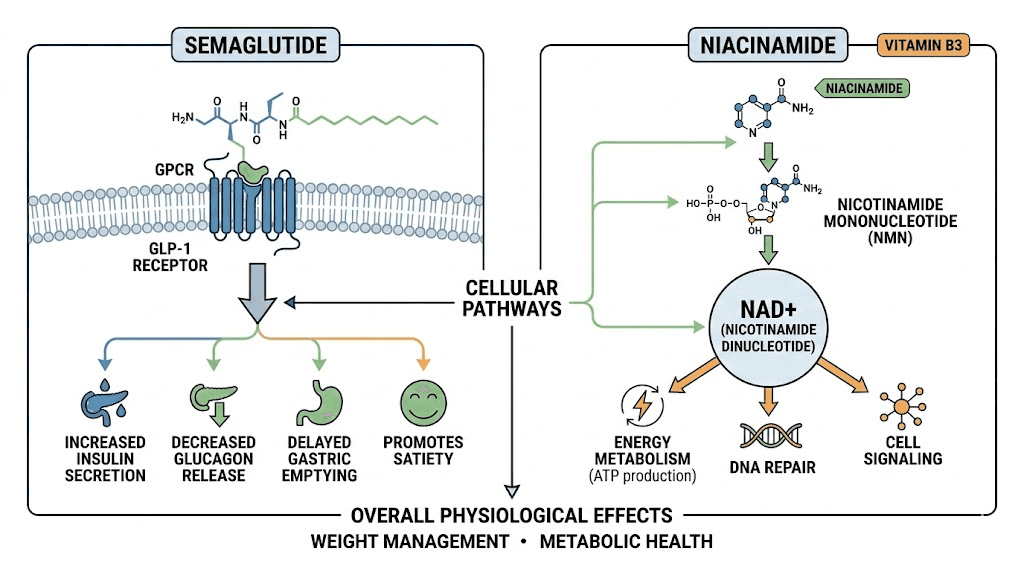
Semaglutide is a synthetic analog of human glucagon-like peptide-1, commonly called GLP-1. The natural hormone is produced in the gut after eating, and it signals the brain that food has arrived. Semaglutide mimics this signal, but with dramatically longer staying power. While natural GLP-1 breaks down in minutes, semaglutide persists for roughly a week thanks to structural modifications that resist enzymatic degradation.
GLP-1 receptor activation
When semaglutide binds to GLP-1 receptors in the pancreas, it triggers glucose-dependent insulin secretion. This means insulin gets released only when blood sugar is elevated, reducing the risk of hypoglycemia compared to older diabetes medications. Simultaneously, semaglutide suppresses glucagon, the hormone that tells the liver to dump glucose into the bloodstream.
But the metabolic effects extend far beyond blood sugar. Semaglutide slows gastric emptying, meaning food moves through the stomach more gradually. This creates a prolonged sensation of fullness after meals. Combined with direct appetite suppression through brainstem and hypothalamic GLP-1 receptors, the result is a significant and sustained reduction in caloric intake.
Research shows that semaglutide typically begins suppressing appetite within the first few doses, though maximum effects may take several weeks to fully manifest. Most people using semaglutide for weight loss notice reduced hunger and fewer food cravings as the dose gradually increases.
The side effect profile
The same mechanisms that make semaglutide effective also produce its most common side effects. Slowed gastric emptying and altered gut signaling frequently cause nausea, especially during the first weeks of treatment and after dose increases. Semaglutide constipation is another frequent complaint, along with fatigue, dizziness, and occasional burping.
These side effects are where niacinamide enters the picture.
The caloric restriction induced by semaglutide places metabolic stress on cells. Energy production pathways must work harder with less fuel. NAD+ levels, already declining with age, face additional pressure during periods of significant weight loss. And the gastrointestinal disruption from slowed gastric emptying can impair nutrient absorption, potentially worsening vitamin and mineral deficiencies.
Niacinamide does not directly block nausea the way an antiemetic would. Instead, it addresses the metabolic conditions that can worsen side effects, the energy deficit, the oxidative stress, and the cellular strain that rapid metabolic change creates.
How niacinamide works: the NAD+ connection
Niacinamide, also called nicotinamide, is one of the two primary forms of vitamin B3. The other is niacin (nicotinic acid). They share the same vitamin classification but behave differently in the body. Understanding these differences is critical for anyone evaluating a semaglutide niacinamide formulation.
Niacinamide versus niacin: a crucial distinction
Niacin is the form most people associate with vitamin B3. It is famous for causing intense flushing, a red, warm, tingling sensation across the skin caused by prostaglandin-mediated vasodilation. Niacin also has well-documented effects on lipid profiles, significantly raising HDL cholesterol and lowering triglycerides.
Niacinamide does not cause flushing. It does not meaningfully affect lipid profiles. And it takes a completely different metabolic pathway to its primary functional output: NAD+.
This distinction matters enormously in a compounded injection. Flushing from niacin would be an unacceptable side effect in a formulation already battling GI complaints from semaglutide. Niacinamide delivers the NAD+ precursor benefits without the vasodilation, making it the pharmacologically appropriate choice for combination with a GLP-1 agonist.
The NAD+ pathway
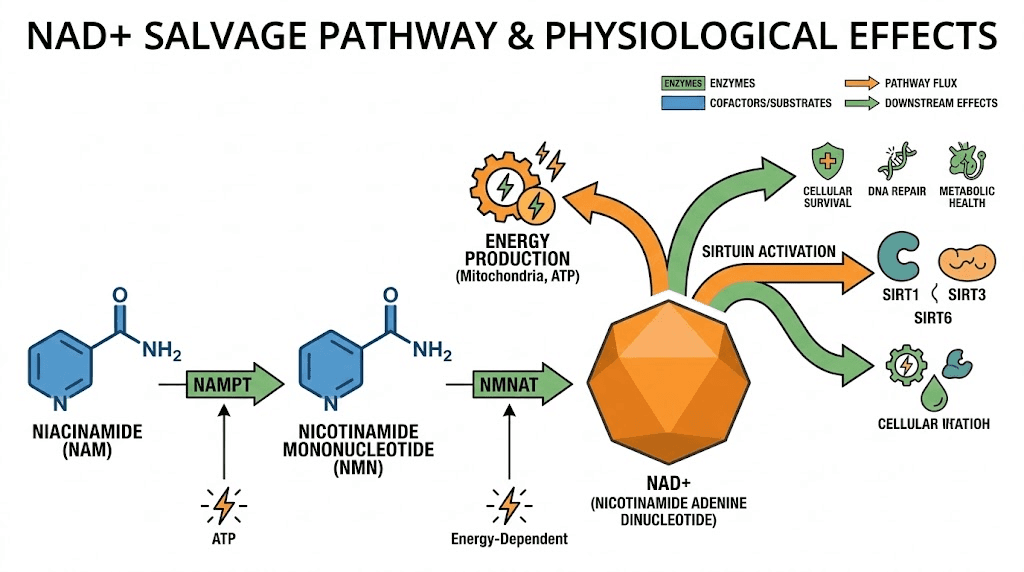
Once administered, niacinamide enters cells and gets converted to NAD+ through a salvage pathway. The enzyme nicotinamide phosphoribosyltransferase (NAMPT) catalyzes the rate-limiting step, converting niacinamide to nicotinamide mononucleotide (NMN), which then gets converted to NAD+.
NAD+ is not just another molecule floating around in cells. It is the central hub of cellular energy metabolism. Every time your mitochondria produce ATP, the energy currency that powers every process in your body, NAD+ is there cycling between its oxidized (NAD+) and reduced (NADH) forms.
The numbers tell the story. NAD+ participates in over 500 enzymatic reactions. It is required for glycolysis, the citric acid cycle, and oxidative phosphorylation, the three major pathways that extract energy from food. Without adequate NAD+ levels, these pathways slow down. Energy production drops. Cells struggle.
NAD+ and metabolic health
Beyond energy production, NAD+ activates a family of proteins called sirtuins. These seven proteins (SIRT1 through SIRT7) act as metabolic sensors and regulators. They influence everything from mitochondrial biogenesis to inflammatory responses to DNA repair.
SIRT1 activation is particularly relevant for semaglutide users. Research published in the Journal of Molecular Cell Biology demonstrates that SIRT1 promotes the "beiging" of white adipose tissue, effectively converting energy-storing fat cells into energy-burning ones. A landmark study published in Molecular Metabolism found that nicotinamide supplementation in mice "protects against diet-induced body weight gain, increases energy expenditure, and induces white adipose tissue beiging." The study observed increased UCP1 protein abundance and mitochondrial activity in fat tissue treated with nicotinamide.
For someone already using semaglutide to reduce caloric intake, having a parallel pathway that enhances how efficiently the body burns existing fat represents a complementary mechanism of action. The semaglutide reduces what goes in. The niacinamide-derived NAD+ helps optimize what happens to the fat already stored.
NAD+ depletion during weight loss
Here is the part most articles miss entirely.
Rapid weight loss is metabolically expensive. As the body shifts from its established metabolic equilibrium to a new, lower-calorie reality, cellular demand for NAD+ increases. Cells are breaking down stored fat for energy (beta-oxidation), managing the metabolic waste products of accelerated tissue turnover, and trying to maintain essential functions with reduced nutrient intake.
NAD+ levels naturally decline with age, dropping by as much as 50% between the ages of 40 and 60 in some tissues. Layer significant caloric restriction on top of age-related NAD+ decline, and cells can hit an energy production bottleneck. The result? Fatigue. Brain fog. Sluggish recovery. Exactly the symptoms that many semaglutide users report, especially during the first weeks of treatment.
Supplementing with an NAD+ precursor like niacinamide directly addresses this bottleneck. It does not mask symptoms. It provides the raw material that cells need to maintain energy production during a period of intense metabolic change.
Why compounding pharmacies add niacinamide to semaglutide
The decision to pair niacinamide with semaglutide is not random. Compounding pharmacists and prescribing providers choose this combination for specific clinical reasons. Understanding those reasons helps you evaluate whether this formulation aligns with your goals.
Reason 1: metabolic energy support
The primary rationale is straightforward. Semaglutide reduces caloric intake. Reduced caloric intake means cells have less substrate to work with. Niacinamide provides the NAD+ precursor that keeps cellular energy production efficient despite reduced fuel availability.
Think of it this way. Semaglutide turns down the volume of food coming in. Niacinamide helps the body extract maximum energy from whatever food still arrives. The two work on opposite sides of the same metabolic equation, and together, they may help prevent the energy crashes and fatigue that many GLP-1 users experience.
Reason 2: gastrointestinal tolerance
Multiple compounding pharmacies report that adding niacinamide to semaglutide formulations helps patients tolerate the medication better, particularly during the critical first weeks and during dose escalation. The proposed mechanism is indirect: by supporting mitochondrial function in gut epithelial cells, niacinamide may help these cells maintain their barrier integrity and normal function despite the slowed motility that semaglutide causes.
It is important to be honest about the evidence here. No large-scale randomized controlled trial has specifically studied semaglutide plus niacinamide versus semaglutide alone for GI tolerance. The clinical observations come from individual providers and pharmacy networks. That does not make them worthless, but it means the evidence falls into the "clinical experience" category rather than "proven efficacy."
Reason 3: skin health during weight loss
This is the reason that gets overlooked most often.
Rapid weight loss creates a well-documented skin problem. As subcutaneous fat volume decreases quickly, the skin that stretched to accommodate it does not always retract at the same pace. The result is loose skin, reduced elasticity, and in some cases, significant cosmetic concern. Some people starting semaglutide worry about the phenomenon sometimes called "Ozempic face," where facial volume loss creates a gaunt or aged appearance.
Niacinamide has extensive research supporting its role in skin health. A comprehensive review published in the International Journal of Molecular Sciences documents that niacinamide "contributes to the extracellular matrix integrity by preserving collagen, inhibiting matrix-degrading enzymes, or promoting collagen and elastin production." It also increases ceramide synthesis, strengthening the skin barrier.
By including niacinamide in the semaglutide formulation, there is at least a theoretical basis for supporting skin integrity during the weight loss process. Combined with adequate protein intake and hydration, niacinamide may help mitigate some of the skin-related concerns that accompany significant body composition changes.
Reason 4: anti-inflammatory properties
Niacinamide demonstrates anti-inflammatory activity through multiple pathways. It inhibits the NLRP3 inflammasome, a key driver of chronic low-grade inflammation. It reduces the production of pro-inflammatory cytokines including IL-1beta, IL-6, and TNF-alpha. And it modulates the NF-kappaB signaling pathway, one of the master regulators of inflammatory gene expression.
Chronic inflammation is both a cause and a consequence of obesity. As semaglutide helps reduce body fat, the inflammatory burden typically decreases. Niacinamide may accelerate this process by providing direct anti-inflammatory support alongside the metabolic improvements driven by weight loss.
Reason 5: DNA repair and cellular protection
During any period of significant metabolic change, cells face increased oxidative stress. Free radicals accumulate. DNA damage occurs at higher rates. Repair mechanisms require adequate NAD+ to function properly.
NAD+ is a required substrate for poly(ADP-ribose) polymerases (PARPs), the enzymes primarily responsible for DNA damage detection and repair. When NAD+ levels fall too low, PARP activity decreases, and DNA damage can accumulate unchecked. This creates a long-term health concern that extends well beyond the weight loss period itself.
By maintaining NAD+ levels through niacinamide supplementation, the formulation supports the cellular repair mechanisms that protect against accumulated damage during the metabolic stress of weight loss.
Semaglutide niacinamide dosage and formulation details
Understanding the specific formulation details helps you have more productive conversations with your provider and pharmacist. Here is what you need to know about concentrations, dosing, and administration.
Available concentrations
The most commonly available semaglutide niacinamide formulation provides:
Semaglutide: 2.5 mg per mL
Niacinamide: 2 mg per mL
These concentrations allow for precise dose titration of the semaglutide component while delivering a consistent amount of niacinamide with each injection. Your provider determines the actual semaglutide dose by calculating the appropriate injection volume.
Standard semaglutide dosing schedule
The semaglutide component follows the same gradual dose escalation used with all semaglutide formulations. A typical protocol looks like this:
Weeks 1 through 4: 0.25 mg semaglutide once weekly
Weeks 5 through 8: 0.5 mg semaglutide once weekly
Weeks 9 through 12: 1.0 mg semaglutide once weekly
Weeks 13 through 16: 1.7 mg semaglutide once weekly
Week 17 onward: Up to 2.4 mg semaglutide once weekly (maximum dose)
With a 2.5 mg/mL concentration, these doses translate to injection volumes of 0.1 mL, 0.2 mL, 0.4 mL, 0.68 mL, and 0.96 mL respectively. You can use the SeekPeptides semaglutide dosage calculator to determine exact volumes based on your prescribed dose and vial concentration.
For detailed unit conversions, these resources break down the math:
Niacinamide dosing within the formulation
At the 2 mg/mL concentration, the niacinamide dose scales proportionally with the semaglutide dose:
Semaglutide Dose | Injection Volume | Niacinamide Delivered |
|---|---|---|
0.25 mg | 0.1 mL | 0.2 mg |
0.5 mg | 0.2 mL | 0.4 mg |
1.0 mg | 0.4 mL | 0.8 mg |
1.7 mg | 0.68 mL | 1.36 mg |
2.4 mg | 0.96 mL | 1.92 mg |
These niacinamide doses are modest compared to oral supplementation, where typical doses range from 500 mg to 3,000 mg per day. However, injectable delivery bypasses first-pass metabolism in the liver, meaning a higher percentage of the administered niacinamide reaches systemic circulation and target tissues. The bioavailability advantage of injection over oral delivery means that even relatively small injectable doses can produce meaningful cellular effects.
Administration
The injection technique for semaglutide niacinamide is identical to standalone semaglutide. Subcutaneous injection into the abdomen, thigh, or upper arm using an insulin syringe. For detailed injection guidance, see our complete guides on how to give semaglutide injection with syringe and best injection site for semaglutide.
The best time of day to take semaglutide remains the same regardless of the additive. Most providers recommend choosing a consistent day and time each week. Some find that morning injections on a non-workout day minimize any GI discomfort.
Semaglutide niacinamide versus other compounded formulations
One of the most common questions from people evaluating compounded semaglutide is which additive to choose. Niacinamide is one option among several, and each brings different benefits. Here is how they compare.
Semaglutide with B12 (cyanocobalamin or methylcobalamin)
Semaglutide with B12 is arguably the most popular compounded formulation. B12 addresses a specific and measurable concern: GLP-1 receptor agonists can reduce vitamin B12 absorption over time due to slowed gastric motility and reduced intrinsic factor production. The semaglutide methylcobalamin combination pairs semaglutide with the bioactive form of B12.
Best for: People with documented or at-risk B12 deficiency, those over 50 (who naturally absorb less B12), patients on proton pump inhibitors, and anyone on long-term GLP-1 therapy.
Primary benefit: Directly prevents B12 deficiency and its symptoms (fatigue, neuropathy, cognitive changes).
Limitation: Does not address NAD+ depletion, oxidative stress, or skin health during weight loss.
Semaglutide with glycine
Semaglutide with glycine targets the gastrointestinal side effects more directly. Glycine is the simplest amino acid, and it supports digestive function, promotes better sleep, stabilizes blood sugar, and plays a role in collagen synthesis. Providers often choose glycine for patients who report significant nausea, bloating, or digestive discomfort.
Best for: People with significant GI side effects, those who need sleep support, patients concerned about muscle preservation during weight loss.
Primary benefit: Direct GI comfort and digestive support.
Limitation: Does not provide the NAD+ pathway benefits or the anti-inflammatory effects of niacinamide.
Semaglutide with L-carnitine
Semaglutide with L-carnitine focuses on fat metabolism. L-carnitine transports long-chain fatty acids into mitochondria for beta-oxidation, essentially shuttling fat into the cellular furnaces where it gets burned for energy. This formulation targets people who want to maximize fat burning and maintain energy during weight loss.
Best for: Active individuals who exercise regularly, people focused on body composition rather than just scale weight, those who want maximum fat oxidation support.
Primary benefit: Enhanced fat metabolism and energy from fat burning.
Limitation: Does not provide the broad cellular protection, skin benefits, or anti-inflammatory effects of niacinamide.
Semaglutide with niacinamide: where it fits
Niacinamide occupies a unique middle ground. It does not target one specific deficiency like B12 does. It does not focus on one symptom like glycine does for GI distress. And it does not specialize in one metabolic pathway like L-carnitine does for fat oxidation.
Instead, niacinamide operates as a broad-spectrum metabolic support molecule. It feeds the central NAD+ pathway that influences energy production, DNA repair, inflammatory response, skin health, and cellular stress resistance simultaneously. The trade-off is that its effects in any single area may be more subtle than a specialized additive.
Head-to-head comparison
Factor | Niacinamide | B12 | Glycine | L-Carnitine |
|---|---|---|---|---|
Primary mechanism | NAD+ precursor | B12 replenishment | Amino acid support | Fat transport to mitochondria |
Energy support | Strong (cellular level) | Moderate (if deficient) | Mild | Strong (from fat burning) |
GI tolerance | Indirect | Mild | Strong (direct) | Minimal |
Skin health | Strong | Minimal | Moderate (collagen) | Minimal |
Anti-inflammatory | Strong | Minimal | Mild | Mild |
Muscle preservation | Indirect (via NAD+) | Minimal | Moderate | Moderate |
DNA repair | Strong | Minimal | Minimal | Minimal |
Deficiency prevention | B3 status | B12 status | Not applicable | Not applicable |
Best for | Broad metabolic support | Long-term GLP-1 users | GI-sensitive patients | Active/exercise-focused |
Choosing between these options is not about which is "best" in absolute terms. It is about which best matches your specific situation, symptoms, and goals. Many providers base the decision on blood work, symptom profile, age, activity level, and individual response. Some patients start with one additive and switch to another based on how they respond.
For those wanting to compare other formulations, tirzepatide niacinamide uses the same additive paired with a different GLP-1 medication, while tirzepatide with B12 and tirzepatide glycine B12 represent other common combinations in the semaglutide vs tirzepatide landscape.
Benefits of semaglutide niacinamide
Let us go deeper into each documented benefit of this combination, moving beyond the theoretical and into the practical.
Enhanced cellular energy production
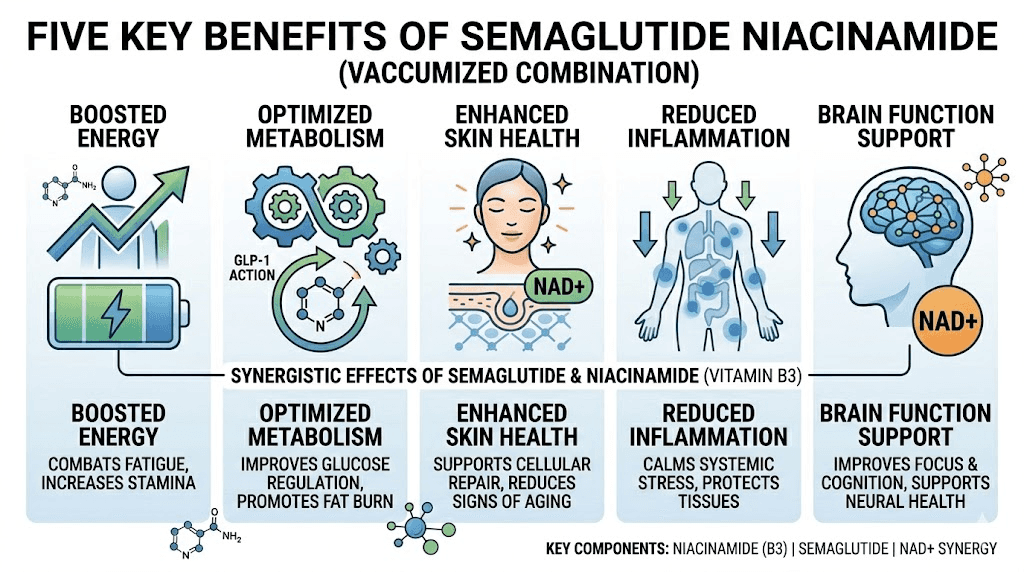
The most immediate benefit most users notice is sustained energy. Where standalone semaglutide can leave people feeling drained, especially during the first months of treatment, the niacinamide component helps maintain ATP production at the cellular level.
Here is the mechanism in practical terms. Every cell in your body contains mitochondria. These organelles convert the food you eat into ATP through a process that absolutely requires NAD+. When caloric intake drops significantly (as it does on semaglutide), cells need to extract energy more efficiently from less food. NAD+ is the rate-limiting factor in this process. More available NAD+ means more efficient energy extraction from each calorie consumed.
The practical result? Less of the profound fatigue that GLP-1 users report. More consistent energy throughout the day. Better cognitive function, since the brain is the single largest consumer of cellular energy in the body. Some users describe the difference as the gap between "losing weight but feeling terrible" and "losing weight while still feeling like a functional human being."
Improved metabolic flexibility
Metabolic flexibility is the ability to switch efficiently between burning carbohydrates and burning fat for fuel. Healthy, lean individuals switch between fuel sources seamlessly. Metabolic inflexibility, the inability to efficiently burn fat, is a hallmark of obesity and insulin resistance.
Semaglutide begins restoring metabolic flexibility by improving insulin sensitivity and reducing overall caloric load. NAD+ from niacinamide supports this process at the cellular level through SIRT1 and AMPK activation, both of which promote fat oxidation and mitochondrial biogenesis.
The mouse study published in Molecular Metabolism demonstrated this directly: nicotinamide supplementation increased energy expenditure and induced white adipose tissue beiging (the conversion of metabolically inactive white fat into metabolically active beige fat) through SIRT1-mediated pathways. While animal studies do not directly translate to human outcomes, the biochemical pathways involved are well-conserved across species.
Skin quality maintenance
Dramatic weight loss results can come with an unwelcome cosmetic cost. As subcutaneous fat disappears, skin elasticity becomes paramount. Niacinamide supports skin in multiple ways:
Collagen synthesis: Niacinamide stimulates the production of collagen types I and III, the primary structural proteins of skin.
Ceramide production: Niacinamide increases ceramide synthesis in the skin, strengthening the lipid barrier that retains moisture and maintains suppleness.
Matrix metalloproteinase inhibition: These enzymes break down collagen and other structural proteins. Niacinamide reduces their activity, helping preserve existing skin infrastructure.
Antioxidant protection: Oxidative stress accelerates skin aging. The NAD+ derived from niacinamide fuels antioxidant defense systems that protect skin cells from free radical damage.
Will niacinamide prevent loose skin entirely? No. Genetics, age, the amount of weight lost, and the rate of loss all play larger roles. But supporting the biochemical processes that maintain skin structure is a reasonable strategy that may improve outcomes at the margin.
Reduced inflammation
Obesity is a pro-inflammatory state. Visceral fat tissue actively produces inflammatory cytokines that contribute to insulin resistance, cardiovascular risk, and metabolic dysfunction. As semaglutide helps reduce body fat, this inflammatory burden decreases naturally.
Niacinamide accelerates the anti-inflammatory response through its own mechanisms. Studies demonstrate that niacinamide:
Inhibits the NLRP3 inflammasome
Reduces NF-kappaB activation
Decreases production of IL-6, TNF-alpha, and IL-1beta
Modulates T-cell differentiation toward anti-inflammatory phenotypes
The combination of weight loss-mediated inflammation reduction (from semaglutide) and direct anti-inflammatory action (from niacinamide) may produce faster improvements in inflammatory markers than either approach alone. This is particularly relevant for users with conditions driven by chronic inflammation, including autoimmune concerns and metabolic syndrome.
Neuroprotection
NAD+ plays a critical role in neuronal health. Neurons are among the most metabolically demanding cells in the body, and they are particularly sensitive to NAD+ depletion. Research demonstrates that maintaining adequate NAD+ levels supports:
Axonal integrity and nerve function
Synaptic plasticity (the basis of learning and memory)
Protection against age-related neuronal decline
Mitochondrial function in brain cells
For semaglutide users who report brain fog, difficulty concentrating, or cognitive sluggishness during weight loss, niacinamide supplementation through the combination formulation may provide meaningful support by maintaining NAD+ levels in neural tissue.
Side effects and safety considerations
No medication is without risk, and compounded formulations require additional scrutiny since they lack the extensive clinical trial data that FDA-approved products undergo. Here is what you need to know about safety.
Semaglutide side effects
The semaglutide component carries its well-documented side effect profile regardless of which additive accompanies it:
Common (occurring in more than 10% of users):
Nausea (especially during dose escalation)
Diarrhea
Constipation
Decreased appetite (intentional but can be excessive)
Abdominal pain
Less common:
Serious (rare but important):
Pancreatitis
Gallbladder disease
Thyroid C-cell tumors (observed in animal studies; human risk uncertain)
Severe hypoglycemia (especially when combined with insulin or sulfonylureas)
Niacinamide-specific considerations
Niacinamide is generally well-tolerated, even at doses much higher than those used in compounded semaglutide formulations. However, several considerations deserve attention:
Blood glucose interaction: This is the most clinically significant concern. According to drug interaction databases, niacinamide may interfere with blood glucose control and could theoretically reduce the effectiveness of semaglutide in managing blood sugar. The mechanism involves niacinamide-mediated changes in insulin sensitivity that can go in either direction depending on dose and individual metabolism.
For weight loss patients without diabetes, this interaction is unlikely to be clinically significant at the low doses present in compounded formulations. For diabetic patients using semaglutide for glucose management, close monitoring of blood sugar is warranted, especially when starting the combination.
Liver considerations: High-dose oral niacinamide (typically above 3,000 mg daily) can stress the liver. The doses present in compounded semaglutide formulations (typically under 2 mg per injection) are orders of magnitude below this threshold and are unlikely to cause hepatic concerns.
GI effects at high doses: Oral niacinamide can cause nausea, vomiting, and diarrhea at high doses. Again, the injectable doses in compounded formulations are far below the threshold where these effects typically occur.
Compounding safety considerations
Because semaglutide niacinamide is a compounded product, quality can vary between pharmacies. Important considerations include:
503A versus 503B pharmacies: 503B outsourcing facilities operate under stricter FDA oversight and must follow current good manufacturing practices (cGMP). 503A pharmacies compound based on individual prescriptions and face different regulatory requirements. Understanding which type of pharmacy produces your medication matters.
Sterility and potency testing: Reputable compounding pharmacies test each batch for sterility, potency, and endotoxins. Ask your pharmacy about their testing protocols.
The FDA has issued alerts about dosing errors with compounded semaglutide products, particularly related to concentration confusion between different formulations. Always confirm the concentration of your specific vial and calculate injection volumes carefully. The SeekPeptides semaglutide dosage calculator and semaglutide units to mg conversion guide can help prevent dosing errors.
Contraindications
Semaglutide niacinamide should not be used by individuals with:
Personal or family history of medullary thyroid carcinoma
Multiple endocrine neoplasia syndrome type 2 (MEN 2)
Known hypersensitivity to semaglutide, niacinamide, or any formulation component
Pregnancy or plans to become pregnant
Current pancreatitis
If you have a history of gallbladder disease, severe GI conditions, diabetic retinopathy, or kidney impairment, discuss these with your provider before starting any semaglutide formulation.
Storage and handling
Proper storage is essential for maintaining the potency of both the semaglutide and niacinamide components in your compounded vial.
Temperature requirements
Refrigerate at 2 to 8 degrees Celsius (36 to 46 degrees Fahrenheit) before and during use.
This is not optional. Both semaglutide and niacinamide are sensitive to temperature extremes. Heat accelerates peptide degradation, and semaglutide is a peptide. If your vial has been sitting on the counter, in a warm car, or near a window with direct sunlight, its potency may be compromised.
For detailed guidance on what happens when temperature requirements are not met, see what happens if semaglutide gets warm and does compounded semaglutide need to be refrigerated.
Do not freeze
Freezing can damage the semaglutide peptide structure through ice crystal formation, creating aggregates that reduce potency and may increase immunogenicity. If your vial has frozen, do not use it. Contact your pharmacy for a replacement.
Protect from light
Both components degrade with prolonged light exposure. Keep the vial in its box or stored in a dark area of the refrigerator. Do not leave it on the counter exposed to ambient light between injections.
Shelf life
Compounded semaglutide products typically have shorter shelf lives than manufactured branded medications. Most pharmacies assign a beyond-use date (BUD) of 30 to 90 days depending on their stability testing data. Follow the specific BUD on your vial label.
For related storage information, how long does compounded semaglutide last in the fridge and how long is semaglutide good for provide comprehensive guidance. If your semaglutide has expired, can you use expired semaglutide explains the risks.
Travel considerations
Traveling with semaglutide requires planning. A medical-grade cooling pouch or insulated travel case with ice packs will maintain proper temperature during transit. Never check semaglutide in airline luggage, as cargo holds can reach freezing temperatures. Carry it in your personal bag with your prescription documentation.
Who should consider semaglutide niacinamide
Not every semaglutide user needs niacinamide in their formulation. Understanding which clinical profiles benefit most helps both patients and providers make better decisions.
Ideal candidates
People over 40: NAD+ levels naturally decline with age. The older you are when starting semaglutide, the more likely you are to benefit from an NAD+ precursor that helps compensate for age-related depletion. The metabolic challenges of weight loss compound the effects of already-declining NAD+ levels.
Those experiencing significant fatigue on semaglutide: If you have been on semaglutide for several weeks and fatigue remains a dominant complaint despite adequate hydration, nutrition, and sleep, the energy production support from niacinamide may address the underlying metabolic deficit.
Patients concerned about skin quality during weight loss: People planning to lose a significant amount of weight (50 pounds or more) or those who have already noticed skin laxity may benefit from the collagen-supporting properties of niacinamide. This is particularly relevant for people tracking their results and wanting to maintain a healthy appearance throughout the process.
Those with inflammatory conditions: If you are using semaglutide alongside management of inflammatory or autoimmune conditions, the anti-inflammatory properties of niacinamide provide an additional therapeutic dimension that other additives do not offer.
People who want broad metabolic support: If you do not have a specific deficiency (like B12) or a specific dominant symptom (like severe nausea requiring glycine), niacinamide offers the most comprehensive metabolic support across multiple pathways simultaneously.
Who might benefit more from other additives
Documented B12 deficiency or high risk for it: Choose semaglutide with B12 or semaglutide methylcobalamin instead.
Severe GI symptoms that limit compliance: Choose semaglutide with glycine for the direct digestive support.
Active athletes and exercise enthusiasts: Consider semaglutide with L-carnitine for enhanced fat oxidation during workouts.
People who need multiple supports: Some providers prescribe compounded formulations with multiple additives, such as tirzepatide glycine B12. Ask your provider if a multi-additive formulation might address your specific needs.
How to reconstitute and prepare semaglutide niacinamide
If your compounded semaglutide niacinamide arrives as a lyophilized (freeze-dried) powder rather than a ready-to-inject solution, proper reconstitution is critical for maintaining potency and accuracy.
Reconstitution basics
Most semaglutide niacinamide from compounding pharmacies arrives as a pre-mixed solution ready for injection. However, some formulations may require reconstitution with bacteriostatic water.
If reconstitution is needed, the process follows the same principles outlined in our how to reconstitute semaglutide guide:
Gather supplies: vial of lyophilized powder, bacteriostatic water, alcohol swabs, insulin syringe
Clean both vial tops with alcohol swabs
Draw the appropriate amount of bacteriostatic water (check your pharmacy instructions for exact volume)
Inject the water into the powder vial, aiming the stream at the glass wall rather than directly at the powder
Gently swirl, do not shake. Shaking creates foam and can damage the semaglutide peptide
Allow the powder to dissolve completely. This may take 5 to 10 minutes
Once dissolved, the solution should be clear. Discard if cloudy or particulate matter is visible
For specific mixing volumes, how much bacteriostatic water to mix with 5mg of semaglutide and how much bacteriostatic water to mix with 10mg of semaglutide provide detailed calculations. The peptide reconstitution calculator can handle custom concentrations and volumes.
Injection technique
Draw the prescribed volume using an insulin syringe. Common syringe sizes include 0.3 mL, 0.5 mL, and 1.0 mL insulin syringes with 29 or 31 gauge needles.
Injection sites: Rotate between the abdomen (at least 2 inches from the navel), front of the thighs, and upper arms. The same site should not be used for consecutive injections. For complete injection technique, see how to inject GLP-1 and where to inject GLP-1.
Timing: Inject once weekly on the same day each week. The best time to take GLP-1 shot varies by individual preference, but consistency matters more than the specific time chosen.
Maximizing results with semaglutide niacinamide
The combination formulation provides a foundation. Your habits determine how effectively that foundation translates into results.
Nutrition on semaglutide niacinamide
Even though semaglutide reduces appetite, the quality of what you eat matters enormously. With reduced caloric intake, every calorie needs to count.
Protein priority: Aim for 1.2 to 1.6 grams of protein per kilogram of body weight daily. Protein preserves lean muscle mass during weight loss, supports the metabolic rate that NAD+ helps maintain, and provides satiety that complements the appetite suppression from semaglutide.
Nutrient density: Focus on foods that deliver maximum micronutrients per calorie, including leafy greens, lean proteins, fatty fish, berries, nuts, and legumes. Our list of foods to eat while on semaglutide provides a comprehensive breakdown, while foods to avoid on semaglutide identifies foods that can worsen side effects.
Hydration: Water is essential for every metabolic process that NAD+ participates in. Dehydration impairs cellular energy production regardless of how much niacinamide is available. Aim for at least 64 ounces daily, more if you exercise or live in a warm climate.
Meal planning: Structured meal plans help ensure nutritional adequacy when appetite is reduced. The semaglutide diet plan provides a framework that works alongside the pharmacological effects of the medication.
Exercise and activity
Physical activity amplifies every benefit of the semaglutide niacinamide combination. Exercise increases NAD+ production independently, activates many of the same sirtuins that niacinamide supports, and preserves the lean muscle mass that gives you metabolic health beyond just a number on the scale.
Resistance training: Two to three sessions per week targeting all major muscle groups. This is the single most important intervention for preserving muscle during GLP-1-mediated weight loss. It works synergistically with the NAD+-mediated metabolic support from niacinamide. For more on how semaglutide interacts with exercise, see can you lose weight on semaglutide without exercise.
Cardiovascular activity: 150 minutes of moderate-intensity activity per week supports cardiovascular health and accelerates the metabolic improvements driven by weight loss.
Complementary supplements
Some supplements work well alongside GLP-1 therapy. While the niacinamide in your formulation covers the NAD+ precursor need, other supplements may complement the combination:
Magnesium: Supports hundreds of enzymatic reactions and may help with GI motility
Omega-3 fatty acids: Additional anti-inflammatory support
Vitamin D: Often deficient in overweight and obese individuals
Collagen peptides: Additional skin support during weight loss
Probiotics: The GLP-1 probiotic approach may support gut health during treatment
Always discuss supplementation with your provider, especially if you are taking additional medications.
Monitoring your progress
Tracking results helps you and your provider make informed decisions about continuing, adjusting, or switching formulations.
Weight and body composition: Weekly weigh-ins at the same time and conditions. Body measurements or body composition scans provide more nuanced data than weight alone. If you hit a semaglutide plateau or feel like semaglutide is not working, review these comprehensive troubleshooting guides.
Energy levels: Rate your daily energy on a 1 to 10 scale. This helps quantify whether the niacinamide component is providing the metabolic support intended.
Side effects: Track GI symptoms, sleep quality, mood, and any other changes. This data helps your provider determine if the formulation is right for you.
Blood work: Regular labs including complete metabolic panel, lipid panel, HbA1c (if diabetic), B12, folate, vitamin D, and inflammatory markers like CRP. These objective measures confirm that the combination is producing the expected metabolic improvements.
The science behind NAD+ and weight management
For readers who want to understand the research foundation more deeply, this section examines the key studies connecting NAD+ metabolism to weight management.
Nicotinamide and adipose tissue beiging
The study that generated the most interest in the niacinamide-weight loss connection was published in Molecular Metabolism. Researchers found that nicotinamide supplementation in mice fed a high-fat diet produced several significant outcomes:
Protection against diet-induced body weight gain
Increased whole-body energy expenditure
Induction of white adipose tissue beiging in inguinal fat deposits
Increased UCP1 protein abundance (the protein responsible for thermogenesis in beige and brown fat)
Enhanced mitochondrial activity in fat tissue
Increased adipose NAD+ levels
Elevated phosphorylated AMPK levels
The beiging effect is particularly noteworthy. White adipose tissue stores energy. Beige and brown adipose tissue burn energy to generate heat (thermogenesis). Converting white fat to beige fat effectively turns energy storage depots into energy-burning depots. When combined with the appetite suppression of semaglutide, this creates a dual mechanism: less energy in, more energy burned from existing stores.
SIRT1 and metabolic regulation
SIRT1 is an NAD+-dependent deacetylase that sits at the crossroads of metabolic regulation. When NAD+ levels are adequate, SIRT1 activity increases, and a cascade of beneficial metabolic effects follows:
Enhanced mitochondrial biogenesis (cells produce more mitochondria)
Increased fatty acid oxidation (more fat burning)
Improved insulin sensitivity (better blood sugar control)
Reduced inflammatory gene expression (less chronic inflammation)
Enhanced autophagy (cellular housekeeping that removes damaged components)
Each of these effects complements the mechanisms of semaglutide. The GLP-1 agonist improves insulin sensitivity through its receptor-mediated pathways. SIRT1 improves insulin sensitivity through a different mechanism entirely. The result is potentially additive or even synergistic improvements in metabolic health.
NAD+ and the nicotinamide phosphoribosyltransferase pathway
NAMPT, the enzyme that converts niacinamide to NMN (the immediate precursor to NAD+), deserves special attention. Research published in Nature has identified NAMPT as essential for beige adipogenesis, confirming that the entire niacinamide-to-NAD+ pathway is directly involved in the metabolic processes that support healthy body composition.
In adipose tissue specifically, NAMPT deficiency drives metabolic problems including insulin resistance, hyperinsulinemia, and reduced adiponectin levels. Maintaining this pathway through niacinamide supplementation supports the metabolic improvements that semaglutide initiates.
Systematic review: NAD+ precursors and weight loss
A systematic review and meta-regression analysis published in Frontiers in Nutrition examined randomized controlled trials of NAD+ precursor supplementation (including nicotinic acid and nicotinamide) and their effects on weight and related hormones. While the results were mixed across different forms and doses of vitamin B3, the review noted consistent effects on metabolic parameters that support weight management, including improvements in leptin levels and insulin sensitivity.
Switching to or from semaglutide niacinamide
If you are currently using a different semaglutide formulation and considering a switch to the niacinamide version, or vice versa, here is what to expect.
Switching from standalone semaglutide
The transition is straightforward. The semaglutide dose remains the same. The only change is the addition of niacinamide in the formulation. Most providers recommend making the switch at the beginning of a new vial rather than mid-vial, simply for consistency and tracking purposes.
No dose adjustment of semaglutide is needed. No washout period is necessary. The niacinamide component begins contributing to NAD+ levels immediately upon injection, though the full metabolic benefits may take two to four weeks to become apparent as NAD+ pools stabilize at higher levels.
Switching from semaglutide B12 or semaglutide glycine
Same principle. The semaglutide dose stays constant. You lose the specific benefits of the previous additive (B12 supplementation or glycine GI support) and gain the NAD+ precursor benefits of niacinamide. If B12 was addressing a documented deficiency, your provider may recommend adding an oral B12 supplement to compensate.
Switching from semaglutide to tirzepatide
If you are considering switching not just the additive but the entire medication, from semaglutide to tirzepatide, that is a more significant change involving dose conversion. The semaglutide to tirzepatide conversion chart provides equivalent dosing guidance. Both tirzepatide and semaglutide are available with niacinamide from compounding pharmacies, so you can maintain the same additive benefit regardless of which GLP-1 agonist you use.
When to consider switching away from niacinamide
If after six to eight weeks on semaglutide niacinamide you are not noticing the energy improvements, skin benefits, or reduced side effects that prompted the switch, it may be worth trying a different additive. The "best" formulation is always the one that produces the best results for your individual physiology.
Compounding pharmacies that offer semaglutide niacinamide
Several compounding pharmacy networks produce semaglutide niacinamide formulations. Understanding your options helps you work with your provider to identify the best source.
What to look for in a compounding pharmacy
503B registration: 503B outsourcing facilities must register with the FDA and follow current good manufacturing practices. This provides an additional layer of quality assurance compared to 503A pharmacies.
Third-party testing: Reputable pharmacies test each batch for potency, sterility, endotoxin levels, and particulate matter. Ask for certificates of analysis (CoAs) for your specific batch.
Transparent labeling: Your vial should clearly state the concentration of both semaglutide and niacinamide, the beyond-use date, storage requirements, and lot number.
Provider network: Established compounding pharmacies work with networks of licensed providers who can prescribe the formulation and monitor your progress. If a pharmacy offers to sell you compounded semaglutide without requiring a valid prescription, that is a significant red flag.
For reviews of specific pharmacies, see our guides on Empower pharmacy semaglutide, Olympia semaglutide, BPI Labs semaglutide, and Direct Meds semaglutide.
The regulatory landscape
The availability of compounded semaglutide products, including those with niacinamide, exists in a complex regulatory environment. The FDA has expressed concerns about compounded GLP-1 formulations, particularly regarding dosing accuracy and safety standards. Stay informed about regulatory developments, as they may affect the availability of compounded formulations.
Your provider should be able to explain the regulatory status of any compounded medication they prescribe and help you understand the benefits and limitations compared to FDA-approved branded alternatives.
Common mistakes to avoid
Experience across thousands of semaglutide users reveals patterns of mistakes that reduce effectiveness or increase side effects. Here are the most important ones to avoid.
Mistake 1: skipping the dose escalation
The gradual dose increase exists for a reason. Starting at 0.25 mg and slowly escalating to higher doses gives your GI system time to adapt to GLP-1 receptor activation. Jumping to higher doses because you want faster results almost always backfires with severe nausea, vomiting, and increased risk of discontinuation.
The niacinamide component does not change this requirement. Dose escalation follows the same schedule regardless of the additive.
Mistake 2: neglecting protein intake
Semaglutide reduces appetite, but it does not discriminate between reducing desire for junk food and reducing desire for necessary protein. Without deliberate effort to maintain protein intake, muscle mass loss can become significant. Niacinamide supports cellular energy but does not replace the raw amino acid building blocks that muscles need.
Track your protein intake daily, especially during the first months of treatment when appetite suppression is most dramatic.
Mistake 3: assuming niacinamide replaces oral NAD+ support
The doses of niacinamide in compounded formulations are relatively modest. If your provider has recommended higher-dose NAD+ precursor supplementation for age-related concerns, the amount in your semaglutide injection may not fully replace that. Discuss whether additional oral niacinamide, NMN, or NR supplementation is appropriate for your situation.
Mistake 4: storing the vial improperly
Temperature excursions destroy peptide potency. One afternoon left in a warm car can render a vial ineffective. Follow the storage requirements precisely. If you are ever uncertain whether your vial has been compromised, reference what happens if semaglutide gets warm and err on the side of replacement.
Mistake 5: not tracking results
Without data, neither you nor your provider can determine whether the niacinamide formulation is providing value over a simpler, potentially less expensive standalone formulation. Track energy levels, side effects, weight changes, body composition, and how you feel subjectively. This data drives informed decisions about continuing, switching, or adjusting your treatment protocol.
The relationship between NAD+, aging, and weight management
This section connects the broader NAD+ science to the specific context of semaglutide therapy.
NAD+ decline with age
Research consistently demonstrates that NAD+ levels decline with age across virtually all tissues studied. A landmark review notes that NAD+ levels can drop by 50% or more between young adulthood and middle age in some tissues. This decline is both a consequence and a driver of aging, creating a vicious cycle where falling NAD+ levels impair the very processes needed to maintain NAD+ production.
For semaglutide users over 40, this age-related decline adds another dimension to the case for niacinamide supplementation. The metabolic stress of weight loss occurs against a backdrop of already-compromised NAD+ levels. Providing an exogenous NAD+ precursor helps close the gap between demand and supply.
The sirtuin connection to longevity
Sirtuins, the NAD+-dependent protein family, have been extensively studied in the context of aging and longevity. SIRT1 through SIRT7 regulate processes including DNA repair, mitochondrial function, inflammation, and stress resistance. All seven sirtuins require NAD+ as a cofactor.
Caloric restriction, the most robustly demonstrated intervention for extending lifespan in animal models, activates sirtuins. Semaglutide produces a state of reduced caloric intake. Niacinamide provides the NAD+ that sirtuins need to function. The theoretical alignment between these three elements (caloric restriction, sirtuin activation, and NAD+ provision) suggests a convergence of mechanisms that may support not just weight loss, but broader metabolic health improvements.
Metabolic resilience
Metabolic resilience, the ability to maintain stable energy production, blood sugar regulation, and cellular function despite stressors, is a concept gaining recognition in longevity research. NAD+ is a central mediator of metabolic resilience because it enables cells to flexibly respond to changing energy demands.
Semaglutide forces a significant shift in energy balance. Niacinamide helps cells navigate that shift without crashing into an energy deficit. The combination builds metabolic resilience during a period of significant metabolic change, which may produce lasting benefits that persist even after the semaglutide course ends.
Understanding the evidence hierarchy
Transparency about what we know and what we do not know matters. Here is an honest assessment of the evidence supporting semaglutide niacinamide.
What has strong evidence
Semaglutide for weight loss: Extensive phase 3 clinical trials (STEP trials) demonstrating average weight loss of 15 to 17% of body weight
Semaglutide for glycemic control: Robust clinical trial data (SUSTAIN trials) supporting its use in type 2 diabetes
Niacinamide as an NAD+ precursor: Well-established biochemistry confirmed across decades of research
NAD+ role in energy metabolism: Foundational biochemistry confirmed in thousands of studies
Niacinamide benefits for skin: Supported by multiple randomized controlled trials in dermatology
What has moderate evidence
Nicotinamide and adipose tissue beiging: Demonstrated in animal studies with plausible mechanisms in humans
NAD+ precursors and metabolic improvement: Shown in animal models and early human studies
Niacinamide anti-inflammatory effects: Supported by in vitro and animal studies with some human data
What has limited evidence
Semaglutide + niacinamide combination specifically: No published randomized controlled trials comparing this combination to semaglutide alone
Niacinamide reducing semaglutide side effects: Based on clinical observation rather than controlled studies
Optimal niacinamide dose in combination formulations: Not established by clinical research
Injectable niacinamide bioavailability advantage: Theoretically sound but not specifically studied in this context
This evidence hierarchy does not mean the combination is ineffective. It means that the strongest evidence supports each component individually, while the evidence for the specific combination relies more on biochemical rationale and clinical experience than large-scale clinical trials. This is the reality for all compounded formulations, not just semaglutide niacinamide.
SeekPeptides exists precisely to help researchers navigate these nuances, providing evidence-based guides, dosing tools, and a community of experienced users who share real-world outcomes that clinical trials have not yet studied.
Frequently asked questions
Is semaglutide niacinamide FDA approved?
No. Semaglutide niacinamide is a compounded formulation, not an FDA-approved product. Branded semaglutide (Ozempic, Wegovy, Rybelsus) undergoes extensive FDA review. Compounded versions are prepared by licensed pharmacies under different regulatory frameworks. This does not mean they are unsafe, but it does mean they lack the same level of clinical trial evidence and manufacturing standardization. Always source compounded medications from reputable, licensed pharmacies.
Can I take oral niacinamide supplements instead of using the compounded formulation?
Yes, oral niacinamide supplements are widely available and provide NAD+ precursor benefits. However, injectable niacinamide bypasses first-pass hepatic metabolism, potentially delivering more of the active compound to tissues. The compounded formulation also offers the convenience of receiving both semaglutide and niacinamide in a single weekly injection. The choice between oral supplementation and compounded formulation depends on preference, cost, and provider recommendation.
How long does it take to notice benefits from the niacinamide component?
Most users report energy improvements within two to four weeks as NAD+ pools stabilize at higher levels. Skin benefits typically take longer, around eight to twelve weeks, to become noticeable. Anti-inflammatory effects may be reflected in blood work within four to six weeks. Individual responses vary significantly based on baseline NAD+ levels, age, metabolic health, and other factors.
Does niacinamide interfere with semaglutide effectiveness for weight loss?
Drug interaction databases note that niacinamide may affect blood glucose control, which could theoretically influence the glucose-regulating effects of semaglutide. However, at the low doses present in compounded formulations (typically under 2 mg per injection), clinically significant interference is unlikely for most patients. Diabetic patients should monitor blood glucose more closely when starting any new combination and discuss concerns with their provider.
Can I switch from semaglutide B12 to semaglutide niacinamide?
Yes. The semaglutide dose remains the same when switching between additive formulations. No washout period is required. If B12 was addressing a documented deficiency, your provider may recommend adding an oral B12 supplement to maintain adequate levels after switching. The semaglutide with B12 guide explains B12-specific considerations in detail.
What is the difference between niacinamide and NAD+ infusions?
Niacinamide is a precursor that the body converts to NAD+ through enzymatic pathways. NAD+ infusions deliver the finished molecule directly. NAD+ infusions are typically much more expensive, require IV administration in a clinical setting, and produce more immediate but shorter-lasting effects. Niacinamide in compounded semaglutide provides a steady, lower-level supply of NAD+ precursor that supports sustained production over the course of the week between injections.
Is semaglutide niacinamide safe during breastfeeding?
No. Semaglutide is not recommended during breastfeeding, regardless of which additive accompanies it. The effects of semaglutide on breast milk and nursing infants have not been adequately studied. If you are breastfeeding, discuss alternative weight management strategies with your provider.
How does semaglutide niacinamide compare to tirzepatide niacinamide?
Both use niacinamide as the additive, but the primary medication differs. Semaglutide activates GLP-1 receptors only. Tirzepatide activates both GLP-1 and GIP receptors, providing dual incretin action. Clinical trials suggest tirzepatide may produce slightly greater weight loss on average. The choice between semaglutide and tirzepatide depends on provider assessment, insurance coverage, individual response, and specific health goals. For a detailed comparison, see our semaglutide vs tirzepatide guide.
External resources
National Institutes of Health: Niacin (Vitamin B3) Fact Sheet
PMC: Mechanistic Insights into the Multiple Functions of Niacinamide
Drugs.com: Niacinamide and Semaglutide Interaction Information
For researchers serious about optimizing their weight loss protocols with the right compounded formulation, SeekPeptides provides the most comprehensive resource available, with evidence-based guides, precision dosing calculators, and a community of thousands who have navigated these exact decisions.
In case I do not see you, good afternoon, good evening, and good night. May your NAD+ levels stay robust, your energy stay consistent, and your results stay rewarding.