Mar 25, 2026
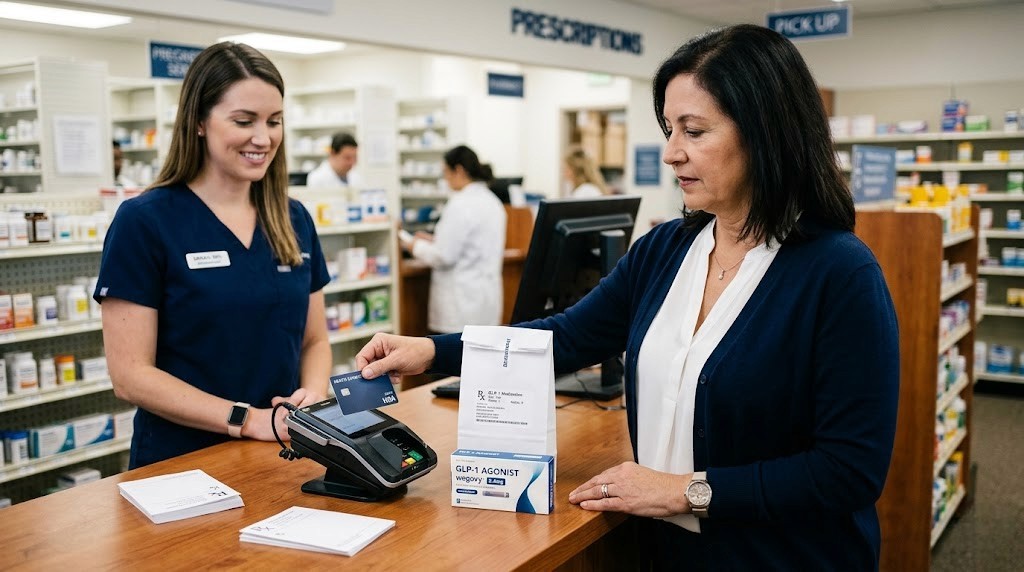
You are paying full price for your GLP-1 medication. Every month. Out of pocket. And sitting in your HSA right now, untouched, are pre-tax dollars that could legally cover every single refill. Thousands of people make this mistake. They assume weight loss medications do not qualify. They assume the IRS would never allow it. They assume their HSA administrator would flag the purchase and deny reimbursement. Those assumptions are wrong.
The truth is simpler than most people realize. Compounded semaglutide, brand-name Wegovy, tirzepatide in all its forms, and virtually every other prescribed GLP-1 medication can be paid for with Health Savings Account funds, provided you meet certain IRS requirements.
The key word there is "prescribed." A valid prescription from a licensed healthcare provider transforms a GLP-1 medication from a general wellness expense into a qualified medical expense under Section 213(d) of the Internal Revenue Code.
But here is where it gets complicated.
Not every HSA administrator handles GLP-1 claims the same way. Documentation requirements vary. Some plans approve the charge automatically at the pharmacy counter. Others require a Letter of Medical Necessity before releasing a single dollar. And if you are using compounded semaglutide from a telehealth provider, the verification process can look entirely different from what you would experience with a brand-name prescription filled at a traditional pharmacy.
This guide covers every angle. The IRS rules that govern HSA eligibility for weight loss medications, the specific documentation you need to keep on file, the differences between HSA and FSA coverage for GLP-1 medications, the qualifying medical conditions that make your prescription eligible, and exactly what to do if your claim gets denied. Whether you are taking semaglutide, tirzepatide, or exploring newer GLP-1 options, the financial side of treatment matters just as much as the clinical side. SeekPeptides put this resource together because nobody should leave money sitting in a tax-advantaged account while paying retail prices for medication they are already prescribed.
What an HSA actually is and why it matters for GLP-1 patients
A Health Savings Account is a tax-advantaged savings account specifically designed for medical expenses. You contribute pre-tax dollars, the money grows tax-free, and withdrawals for qualified medical expenses are never taxed. That triple tax advantage makes HSAs one of the most powerful financial tools available to anyone with healthcare costs, and GLP-1 patients tend to have significant healthcare costs.
To open and contribute to an HSA, you must be enrolled in a High Deductible Health Plan. For the current plan year, the IRS defines a qualifying HDHP as one with a minimum deductible of $1,650 for individual coverage or $3,300 for family coverage. The contribution limits for the current year are $4,400 for individuals and $8,750 for families. If you are 55 or older, you can contribute an additional $1,000 as a catch-up contribution.
Here is the critical difference between an HSA and other health accounts. HSA funds roll over indefinitely. They never expire. Unlike a Flexible Spending Account, which operates on a use-it-or-lose-it basis, your HSA balance carries forward year after year. This makes HSAs particularly valuable for ongoing GLP-1 treatment that may continue for months or even years.
The IRS determines which expenses qualify as legitimate medical expenses under Publication 502. Prescription medications are explicitly listed as qualified expenses. This includes any drug that requires a prescription from a licensed healthcare provider, regardless of whether the medication treats diabetes, obesity, or any other diagnosed medical condition. The mechanism is straightforward. If a doctor prescribed it to treat a specific disease or condition, the cost generally qualifies for HSA reimbursement.
How HSA payments work at the pharmacy
Most HSA accounts come with a debit card linked directly to the account. When you fill a semaglutide prescription at a pharmacy, you can swipe the HSA debit card just like a regular debit card. The pharmacy point-of-sale system is coded to recognize prescription medications as eligible expenses, so the transaction typically processes without any additional verification needed.
For compounded medications from telehealth providers, the process works slightly differently. You may need to pay out of pocket first and then submit a reimbursement claim to your HSA administrator. This requires uploading your receipt, your prescription documentation, and sometimes a Letter of Medical Necessity. The reimbursement typically takes 3 to 14 business days depending on the administrator.
Some HSA administrators have integrated systems that automatically verify prescriptions. Others require manual review. Knowing which type of administrator manages your account will save you time and frustration.
The triple tax advantage explained
When you pay for tirzepatide out of pocket, you are using after-tax dollars. Every dollar you earn gets reduced by federal income tax, state income tax, and FICA taxes before it reaches your bank account. Depending on your tax bracket, you might keep only 65 to 75 cents of every dollar earned.
HSA contributions reverse this entirely.
The money goes in pre-tax, reducing your taxable income. It grows tax-free through interest or investments. And it comes out tax-free when spent on qualified medical expenses like GLP-1 medications. For someone in the 24% federal tax bracket with a 5% state tax rate, paying for a $200 monthly GLP-1 prescription through an HSA effectively costs $142 in real purchasing power. That is a 29% discount on every single refill, delivered entirely through tax savings.
Over the course of a year of semaglutide treatment, those savings add up to hundreds of dollars. Over multiple years of treatment, the difference between paying with taxed income versus HSA funds can exceed a thousand dollars.
Which GLP-1 medications qualify for HSA reimbursement
The short answer is all of them. Every FDA-approved GLP-1 receptor agonist and GIP/GLP-1 dual agonist qualifies for HSA coverage when prescribed by a licensed healthcare provider to treat a diagnosed medical condition. The IRS does not distinguish between different GLP-1 medications. It does not care whether you take semaglutide or tirzepatide. It does not differentiate between brand-name and compounded formulations. The qualifying factor is the prescription, not the specific drug.
Brand-name GLP-1 medications
The most commonly prescribed brand-name GLP-1 medications include Wegovy (semaglutide for weight management), Ozempic (semaglutide for type 2 diabetes), Zepbound (tirzepatide for weight management), and Mounjaro (tirzepatide for type 2 diabetes). All four carry FDA approval for specific indications, and all four qualify as HSA-eligible expenses when prescribed.
Brand-name medications tend to have the smoothest HSA reimbursement process. Pharmacy benefit systems recognize these drugs immediately. The National Drug Code on the label matches established databases. The HSA debit card processes the charge without manual review in most cases.
The challenge with brand-name GLP-1 medications is cost. Without insurance coverage, semaglutide and tirzepatide can exceed $1,000 per month at retail pricing. Even with manufacturer savings programs, the out-of-pocket expense remains significant. Your HSA balance may not cover the full annual cost unless you have been contributing consistently and building a reserve.
Compounded GLP-1 medications
Compounded semaglutide and compounded tirzepatide are also eligible for HSA reimbursement, provided they meet two critical requirements. First, the medication must be prescribed by a licensed healthcare provider. Second, the compounding pharmacy must be a legitimate, licensed facility operating under state and federal regulations.
Compounded medications typically cost between $129 and $299 per month, making them significantly more affordable than brand-name alternatives. This lower price point means your HSA funds stretch further. A full year of compounded tirzepatide treatment might cost $2,000 to $3,600, well within the annual HSA contribution limits for both individual and family coverage.
There is an important caveat. Not all compounded medication sources are created equal. The IRS requires that the medication be a legitimate prescription filled by a licensed pharmacy. Medications purchased without a valid prescription, from unlicensed sources, or from overseas suppliers that do not comply with FDA regulations are not eligible HSA expenses. If your telehealth provider sends medications from a 503B outsourcing facility or a state-licensed 503A compounding pharmacy, you are on solid ground for HSA eligibility.
Oral and sublingual GLP-1 formulations
Oral semaglutide drops and sublingual tirzepatide formulations follow the same eligibility rules as injectable versions. The delivery method does not affect HSA qualification. Whether your medication arrives as a vial for injection, a sublingual liquid, or a troche for under-the-tongue dissolution, the IRS treats it identically as long as a valid prescription exists.
This is worth knowing because oral and sublingual GLP-1 formulations are growing in popularity. They eliminate the need for injections, which some patients prefer. And they are equally eligible for HSA payment.
IRS rules for using HSA funds on weight loss medication
The IRS has specific rules about when weight loss expenses qualify as medical expenses. This is where many people get confused, and where assumptions about HSA ineligibility often originate.
IRS Publication 502 states clearly that you can include the cost of a weight-loss program in medical expenses if it is prescribed by a physician to treat a specific disease diagnosed by that physician. The diseases listed include obesity, hypertension, and heart disease. The publication also states that you cannot include the cost of a weight-loss program if the purpose is "the improvement of appearance, general health, or sense of well-being."
This distinction is everything.
A GLP-1 medication prescribed by a doctor to treat diagnosed obesity (BMI of 30 or higher) is a qualified medical expense. The same medication taken purely for cosmetic weight loss without a medical diagnosis would not qualify. In practice, this distinction rarely matters for GLP-1 patients, because virtually every provider who prescribes semaglutide or tirzepatide for weight loss documents a medical diagnosis as part of the prescribing process.
Qualifying medical conditions
Several medical conditions make GLP-1 prescriptions eligible for HSA reimbursement. The most common include:
Obesity is the primary qualifying condition for most GLP-1 prescriptions. The IRS recognizes obesity as a disease, not a cosmetic concern. A BMI of 30 or higher meets the diagnostic threshold. The newer ICD-10 codes classify obesity into three severity classes: Class 1 (BMI 30 to 34.9), Class 2 (BMI 35 to 39.9), and Class 3 (BMI 40 and above). Any of these diagnoses supports HSA eligibility for GLP-1 medication.
Type 2 diabetes is the original FDA-approved indication for both semaglutide (Ozempic) and tirzepatide (Mounjaro). A type 2 diabetes diagnosis makes GLP-1 medication eligibility virtually automatic for HSA purposes. No Letter of Medical Necessity is typically required. The prescription itself serves as sufficient documentation.
Overweight with comorbidities covers patients with a BMI between 27 and 29.9 who also have at least one weight-related condition such as hypertension, dyslipidemia, sleep apnea, or cardiovascular disease. This matches the FDA approval criteria for both Wegovy and Zepbound, making HSA eligibility straightforward when the prescribing provider documents the comorbid condition.
Prediabetes is increasingly recognized as a valid indication for GLP-1 therapy. Hemoglobin A1C levels between 5.7% and 6.4%, or fasting glucose between 100 and 125 mg/dL, establish the diagnosis. GLP-1 medications prescribed to prevent progression to type 2 diabetes qualify as treatment for a diagnosed medical condition.
The medical necessity requirement
The IRS requires that the expense be "primarily to alleviate or prevent a physical or mental disability or illness." For GLP-1 medications, this means the prescription must be tied to a diagnosed condition, not prescribed purely for aesthetic purposes. In reality, this requirement is met automatically when a licensed provider issues a prescription, because providers are required to document a medical indication for every prescription they write.
However, some HSA administrators apply additional scrutiny to weight loss medications. They may request documentation beyond the prescription itself. This is where the Letter of Medical Necessity becomes important, even when it is not technically required by the IRS.
The Letter of Medical Necessity: your most important document
A Letter of Medical Necessity is a written statement from your healthcare provider confirming that a specific treatment is medically necessary to treat a diagnosed condition. For GLP-1 medications, this letter serves as your primary defense against HSA claim denials and audit challenges.
Not every HSA administrator requires an LMN for prescription medications. Some process GLP-1 charges automatically. But having one on file protects you in three scenarios: if your HSA administrator flags the expense for review, if the IRS audits your HSA withdrawals, or if you need to submit a manual reimbursement claim for compounded medications purchased through telehealth.
What the letter must include
An effective Letter of Medical Necessity for GLP-1 medication should contain seven specific elements. Missing even one can result in a denied claim or delayed reimbursement.
Patient identification. Your full legal name, date of birth, and any relevant account or medical record numbers. This connects the letter to your specific HSA account and medical file.
Specific diagnosis. The letter must name the exact medical condition being treated. "Obesity" alone may not be sufficient for some administrators. Better documentation includes the ICD-10 code (E66.01 for morbid obesity due to excess calories, E66.09 for other obesity due to excess calories), your current BMI, and any comorbid conditions like hypertension or insulin resistance.
Medication name and dosage. The letter should specify whether you are taking semaglutide or tirzepatide, at what dose, and through which delivery method (injectable, sublingual, or oral).
Medical necessity statement. This is the core of the letter. The provider must state that the medication is medically necessary to treat the diagnosed condition and is not prescribed for cosmetic purposes, general wellness, or improvement of appearance. This language directly mirrors the IRS exclusion criteria, making it clear that the expense qualifies.
Treatment duration. An estimated timeline for treatment. Most GLP-1 treatment plans span 6 to 12 months or longer. The letter should indicate whether the treatment is expected to be ongoing or time-limited.
Previous treatments attempted. Some administrators want evidence that other approaches were tried before the GLP-1 prescription. This might include documented history of diet modifications, exercise programs, or other weight management interventions that proved insufficient.
Provider signature and credentials. The letter must be signed and dated by the prescribing provider, with their full credentials (MD, DO, NP, or PA), practice name, and contact information.
How to get an LMN from your provider
Most providers who prescribe GLP-1 medications are familiar with Letters of Medical Necessity. Simply ask during your appointment or send a message through the patient portal requesting one. Explain that you plan to use your HSA to cover the medication cost and need documentation for your HSA administrator.
If you are using a telehealth provider for compounded tirzepatide or semaglutide, the process is similar. Most telehealth platforms can generate an LMN through their messaging system. Some providers charge a small administrative fee for the letter, typically $15 to $50. This fee itself is often an HSA-eligible expense.
Keep the original letter on file. Make digital copies. Store them somewhere accessible. You may need to resubmit the letter each plan year, especially if your HSA administrator reviews claims annually.
Annual renewal considerations
Letters of Medical Necessity typically need to be renewed annually. If your GLP-1 treatment spans multiple calendar years, request an updated letter from your provider each year. The updated letter should reflect your current diagnosis, any changes in dosage or medication, and confirmation that continued treatment remains medically necessary.
Some providers will proactively issue renewal letters. Others require a request. Set a reminder for yourself 30 days before the start of each new plan year to request an updated LMN. This prevents gaps in coverage and avoids delays in reimbursement processing.
Step-by-step guide to paying for GLP-1 medication with your HSA
The process varies depending on whether you are filling a brand-name prescription at a retail pharmacy or purchasing compounded medication through a telehealth provider. Here is exactly what to do in each scenario.
Scenario 1: brand-name GLP-1 at a retail pharmacy
Step 1: Confirm your HSA is active and funded. Log into your HSA administrator portal and verify your current balance. Ensure the balance is sufficient to cover the medication cost. If you have a linked HSA debit card, confirm it has not expired and is activated.
Step 2: Fill your prescription. Take your prescription to the pharmacy. If your provider called it in or sent it electronically, confirm the pharmacy has it on file. For semaglutide prescriptions, some pharmacies may need to order the specific dose if it is not stocked.
Step 3: Pay with your HSA debit card. At the pharmacy counter, swipe your HSA debit card. The transaction should process as a qualified medical expense automatically. The Inventory Information Approval System at most pharmacies is pre-coded to recognize prescription medications.
Step 4: Keep your receipt. Even when the charge processes automatically, save your pharmacy receipt. It should show the medication name, prescription number, date, and amount paid. Store this receipt with your tax records for at least three years in case of an IRS audit.
Scenario 2: compounded GLP-1 from a telehealth provider
Step 1: Verify the pharmacy is licensed. Confirm that the compounding pharmacy filling your prescription is a licensed 503A or 503B facility. This information is usually available on the telehealth provider website or can be obtained by contacting their support team. Licensed pharmacies issue receipts that include the pharmacy name, license number, and prescription details, all of which you need for reimbursement.
Step 2: Pay for your medication. Most telehealth providers accept credit cards, debit cards, and sometimes HSA debit cards directly. If you can pay with your HSA card at checkout, do so. The charge may still be flagged for review by your administrator, but paying directly saves you the reimbursement step.
Step 3: If you paid out of pocket, submit a reimbursement claim. Log into your HSA administrator portal and navigate to the reimbursement or claims section. Upload your receipt showing the medication name, dosage, pharmacy information, and amount paid. Include your prescription documentation and Letter of Medical Necessity if requested.
Step 4: Wait for processing. Reimbursement claims typically take 3 to 14 business days. Some administrators process claims faster if you have previously submitted documentation for the same type of expense. The reimbursement will be deposited directly into your linked bank account or mailed as a check.
Step 5: Document everything. Create a folder, digital or physical, for your GLP-1 HSA documentation. Include copies of your prescription, your LMN, all pharmacy receipts, and all reimbursement confirmations. This documentation protects you in case of an audit and simplifies future claims.
HSA versus FSA for GLP-1 medication: which account is better
Both Health Savings Accounts and Flexible Spending Accounts can be used to pay for GLP-1 medications. But they are not interchangeable, and the differences matter significantly for patients on ongoing GLP-1 therapy.
Key differences that affect GLP-1 patients
Rollover rules. HSA funds roll over indefinitely. You never lose unspent money. FSA funds operate on a use-it-or-lose-it basis, though some employers offer a grace period of up to 2.5 months or allow a limited carryover of up to $640. For GLP-1 patients on long-term treatment, the HSA rollover advantage is substantial. You can build up funds in advance of expensive treatment periods and carry unused balances forward without penalty.
Contribution limits. HSA limits for the current year are $4,400 for individuals and $8,750 for families. FSA limits are capped at $3,300 per year. If your annual GLP-1 medication cost exceeds the FSA maximum, an HSA provides more room for pre-tax contributions.
Eligibility requirements. HSAs require enrollment in a High Deductible Health Plan. FSAs are available through most employer-sponsored health plans regardless of deductible level. If your employer does not offer an HDHP, an FSA may be your only option for pre-tax payment.
Portability. Your HSA belongs to you. If you change jobs, the account and its balance go with you. FSA funds are tied to your employer. If you leave your job mid-year, you may forfeit unused FSA contributions. For patients who might change employers during a multi-month GLP-1 treatment plan, the portability of an HSA provides important security.
Verification processes. FSA administrators tend to scrutinize claims more aggressively than HSA administrators. Weight-management prescriptions, whether brand-name or compounded, are more likely to trigger a documentation request from an FSA administrator. HSA administrators generally allow you to self-certify expenses, with verification only occurring if the IRS audits your return.
Comparison table: HSA versus FSA for GLP-1
Feature | HSA | FSA | Better for GLP-1 |
|---|---|---|---|
Fund rollover | Unlimited, funds never expire | Use-it-or-lose-it with limited exceptions | HSA |
Contribution limit (individual) | $4,400 | $3,300 | HSA |
HDHP required | Yes | No | FSA (more accessible) |
Portability | Fully portable | Tied to employer | HSA |
Claim scrutiny | Generally less | Generally more | HSA |
Investment growth | Yes, tax-free | No | HSA |
Employer contributions | Allowed | Allowed | Tie |
For most GLP-1 patients, an HSA is the superior choice if they have access to one. The unlimited rollover, higher contribution limits, and lighter verification process make ongoing treatment more manageable financially. However, if you do not have an HDHP or your employer offers generous FSA matching, an FSA can still provide meaningful savings on GLP-1 costs.
How much you can actually save using an HSA for GLP-1
The savings from using HSA funds for GLP-1 medication come entirely from tax advantages. You are not getting a discount on the medication itself. You are reducing the effective cost by paying with pre-tax dollars instead of post-tax dollars.
Savings calculations by tax bracket
Your actual savings depend on your combined federal and state tax rate. Here is what the math looks like across different scenarios.
For someone in the 22% federal bracket with 5% state tax: A $200 monthly GLP-1 cost becomes an effective $146 per month through HSA payment. That is $648 in annual tax savings on the medication alone.
For someone in the 24% federal bracket with 6% state tax: The same $200 monthly cost drops to an effective $140 per month. Annual savings reach $720.
For someone in the 32% federal bracket with 7% state tax: The effective monthly cost falls to $122. Annual savings exceed $936.
These calculations include only the federal income tax, state income tax, and FICA tax savings. They do not account for potential reductions in your Adjusted Gross Income, which could provide additional tax benefits by moving you into a lower bracket or increasing eligibility for other deductions and credits.
Savings comparison: brand-name versus compounded
The gap between brand-name and compounded GLP-1 costs significantly affects how much your HSA saves you in absolute dollars.
Brand-name Wegovy at $500 per month results in effective costs of $365 (22% bracket) to $305 (32% bracket) when paid through an HSA. Annual tax savings range from $1,620 to $2,340.
Compounded semaglutide at $179 per month results in effective costs of $131 (22% bracket) to $109 (32% bracket). Annual tax savings range from $576 to $840.
The tax savings on brand-name medications are larger in absolute terms, but the total out-of-pocket cost is still dramatically lower with compounded versions. A patient taking compounded semaglutide and paying through an HSA achieves both the lowest base cost and the tax advantage, creating the most affordable pathway to GLP-1 treatment.
Additional HSA-eligible expenses related to GLP-1 treatment
Your GLP-1 medication cost is not the only expense that qualifies. Several related costs are also HSA-eligible, increasing your total potential savings.
Doctor visits and telehealth consultations. The medical appointments required to obtain and maintain your GLP-1 prescription are qualified medical expenses. This includes initial consultations, follow-up visits, and annual check-ups related to your treatment.
Lab work. Blood tests ordered by your provider to monitor your health while on GLP-1 therapy, such as metabolic panels, A1C tests, and liver function tests, are HSA-eligible.
Injection supplies. Syringes, alcohol swabs, sharps containers, and bacteriostatic water for reconstitution all qualify as medical expenses when used with prescribed medications.
Scales and monitoring devices. A scale used to track weight during GLP-1 treatment qualifies as a medical device expense. Blood pressure monitors and glucose meters prescribed alongside your GLP-1 medication are also eligible.
Travel cases. Medication travel cases designed to keep your GLP-1 medication at proper temperature during transport qualify as medical supply expenses. This is particularly relevant for patients who travel with semaglutide or travel with tirzepatide and need insulated carrying cases.
Common reasons HSA claims for GLP-1 get denied and how to prevent them
While GLP-1 medications are generally HSA-eligible, claims do get denied. Understanding the most common denial reasons helps you avoid them entirely or resolve them quickly when they occur.
Reason 1: missing prescription documentation
The most frequent denial reason is simple. The HSA administrator cannot verify that the medication was prescribed. This happens most often with compounded medications purchased through telehealth, where the pharmacy receipt may not include the same level of detail as a traditional pharmacy receipt.
Prevention: Keep a copy of your actual prescription (not just the receipt) on file. When submitting reimbursement claims, include both the pharmacy receipt and the prescription documentation. If your telehealth provider has a patient portal, download and save a copy of your prescription record.
Reason 2: classification as cosmetic or general wellness
Some HSA administrators flag weight loss medications as potentially cosmetic expenses. This triggers a manual review where you must prove the medication is treating a medical condition rather than being used for general wellness or appearance improvement.
Prevention: A Letter of Medical Necessity prevents this denial entirely. The letter explicitly states that the medication treats a diagnosed condition and is not cosmetic. If you do not have an LMN when the claim is filed, request one from your provider and resubmit with the letter attached.
Reason 3: non-compliant compounding pharmacy
If your compounded medication comes from an unlicensed or non-compliant pharmacy, the HSA administrator may deny the claim. This is rare with established telehealth providers, but it can happen with less reputable sources.
Prevention: Before purchasing, verify that your compounding pharmacy is properly licensed. 503B outsourcing facilities are registered with the FDA and subject to regular inspections. Well-known compounding pharmacies like Empower Pharmacy, Belmar Pharmacy, and others maintain visible licensing information on their websites.
Reason 4: insufficient diagnosis documentation
Some administrators require documentation of the specific diagnosis, not just the prescription. A claim for "semaglutide" without any indication of what condition it treats may be flagged for review.
Prevention: When submitting manual claims, include a note indicating the diagnosis code or condition being treated. Your LMN should contain this information. If the administrator requests additional documentation, your provider can furnish a summary of your medical record showing the relevant diagnosis.
Reason 5: administrative errors
Sometimes claims are denied for mundane reasons: a misspelled name, an incorrect date of service, a missing receipt, or a submission format that does not match the administrator requirements. These denials have nothing to do with eligibility and everything to do with paperwork.
Prevention: Double-check every field on your reimbursement form before submitting. Verify that your name, date of service, and medication details match exactly across all documents. Upload clear, legible copies of receipts and letters.
What to do if your HSA claim is denied
A denied claim is not a final answer. HSA administrators have appeal processes, and most denials for GLP-1 medications can be overturned with proper documentation.
Step 1: understand the denial reason
Contact your HSA administrator and ask for the specific reason the claim was denied. Get the denial in writing if possible. Common denial codes and language will tell you exactly what documentation or correction is needed to overturn the decision.
Step 2: gather your documentation
Based on the denial reason, compile the relevant documentation. For most GLP-1 denials, you will need your prescription, your Letter of Medical Necessity, the pharmacy receipt with full details, and possibly a copy of your medical record showing the qualifying diagnosis.
Step 3: submit a formal appeal
Write a brief appeal letter referencing the denial, the documentation you are providing, and the IRS rules that support your claim. Cite IRS Publication 502, which explicitly allows prescription medications as qualified medical expenses, and reference the fact that obesity is recognized as a disease by both the IRS and the American Medical Association.
Step 4: follow up
Most appeal decisions are rendered within 30 days. If you do not receive a response within that timeframe, contact the administrator. Keep records of all communications, including dates, representative names, and reference numbers.
If the internal appeal is denied, you may have the option for an external review. This involves a third-party reviewer examining your claim and the administrator decision. External reviews are rarely necessary for GLP-1 HSA claims, but the option exists.
Insurance coverage versus HSA payment: understanding the relationship
HSA payment and insurance coverage are not mutually exclusive. Understanding how they interact helps you maximize your savings on GLP-1 treatment.
When insurance covers your GLP-1
If your health insurance plan covers GLP-1 medication, your out-of-pocket costs are typically limited to copays and deductible amounts. These copays and deductible payments are HSA-eligible expenses. So even when insurance covers the bulk of the medication cost, you can use HSA funds to pay your share.
For patients with Blue Cross Blue Shield GLP-1 coverage, Anthem coverage, or UnitedHealthcare coverage for tirzepatide, the combination of insurance plus HSA payment creates the lowest possible effective cost. Insurance reduces the base price, and the HSA reduces the tax burden on whatever remains.
When insurance does not cover your GLP-1
Many insurance plans still do not cover GLP-1 medications for weight loss, even when they cover the same drugs for diabetes. If your plan falls into this category, your HSA becomes your primary financial tool for managing medication costs.
Without insurance coverage, the full cost of the medication comes from your HSA or out-of-pocket funds. This is where compounded GLP-1 options become particularly valuable. The lower cost of compounded medications means your HSA funds cover more months of treatment.
Using HSA to cover the deductible
If your HDHP has a high deductible (which it must, by definition), you may need to pay several thousand dollars before insurance kicks in. GLP-1 medication costs that apply toward your deductible are HSA-eligible. Once you meet the deductible, your insurance begins covering its share, and you continue using HSA funds for your remaining copay or coinsurance.
This is an important planning consideration. If you know you will be starting GLP-1 treatment, consider front-loading your HSA contributions early in the year to ensure sufficient funds are available when pharmacy charges begin hitting your deductible.
HSA strategies for maximizing GLP-1 affordability
Beyond basic eligibility, several strategies can help you get the most value from your HSA when paying for GLP-1 medications.
Strategy 1: max out your contributions
If you know you will be on GLP-1 medication for the full year, contribute the maximum allowed to your HSA. The current limits of $4,400 (individual) or $8,750 (family) provide substantial tax-advantaged funds. Even if your medication cost does not consume the entire contribution, the excess grows tax-free and can cover future medical expenses, including future GLP-1 costs.
Strategy 2: use employer HSA matching
Many employers contribute to their employees HSA accounts. These employer contributions count toward the annual limit but represent free money that can offset your medication costs. Check with your benefits department to determine if your employer offers HSA contributions and how to maximize them.
Strategy 3: time your purchases strategically
If you are near the end of a plan year with FSA funds remaining, consider using those funds for GLP-1 supplies or related expenses before the deadline. Then switch to HSA payment for the new year. This prevents FSA forfeiture while preserving your HSA balance for longer-term use.
Strategy 4: pair with other payment options
For patients whose GLP-1 costs exceed their HSA balance, combining payment methods can help. Use your HSA for the medication itself and explore Afterpay options for semaglutide or Afterpay for tirzepatide for related costs like consultations or supplies. Some patients also use manufacturer savings cards in combination with HSA payment, though the specific rules for combining these vary by plan.
Strategy 5: document and reimburse later
One of the most powerful HSA strategies is paying out of pocket now and reimbursing yourself later. There is no deadline for HSA reimbursement. You can pay for your GLP-1 medication today with after-tax dollars, let your HSA balance grow through investments, and reimburse yourself years later, tax-free. The medication receipt from today is valid for reimbursement in five, ten, or even twenty years, as long as you maintain proper documentation.
This strategy is particularly attractive for younger patients with lower current medication costs. They can build HSA balances through investments while maintaining the right to reimburse themselves for every qualified expense incurred during the life of the account.
Special situations and edge cases
Not every GLP-1 patient fits neatly into standard categories. These special situations require additional consideration.
HSA eligibility while on Medicare
Once you enroll in Medicare, you can no longer contribute to an HSA. However, you can continue using existing HSA funds to pay for GLP-1 medications and other qualified medical expenses. If you are approaching Medicare eligibility and plan to continue GLP-1 treatment, maximize your HSA contributions beforehand to build a reserve that will cover future medication costs.
Self-employed individuals
Self-employed individuals can open and contribute to an HSA if they are covered by a qualifying HDHP purchased individually. The contribution limits are the same as for employer-sponsored plans. Self-employed patients benefit particularly from HSA contributions because the deduction reduces both income tax and self-employment tax, creating an even larger effective discount on GLP-1 medication.
Dependent coverage
If you carry family HDHP coverage and a covered dependent needs GLP-1 medication, your HSA can pay for their prescription. The family contribution limit of $8,750 provides additional room for covering multiple family members medication costs. Each dependent prescription requires its own documentation, including a prescription and potentially an LMN.
Changing providers mid-treatment
If you switch from a traditional pharmacy to a telehealth compounding provider, or vice versa, your HSA eligibility does not change. The new prescription from the new provider simply replaces the old one for documentation purposes. Update your LMN if the medication or dosage changes, and continue saving receipts from the new source.
Using HSA for GLP-1 related nutrition and fitness
This is an important limitation. While GLP-1 medication is HSA-eligible, general nutrition plans, gym memberships, dietary supplements, and fitness programs are not, even when they support your weight loss treatment. The IRS draws a clear line between prescription medications and general wellness activities.
However, a medically supervised weight loss program that includes GLP-1 medication as a component may qualify in its entirety. If your provider bills the medication and program as a single medical treatment plan, the entire cost may be HSA-eligible. Ask your provider about billing structure before assuming any program costs are excluded.
Specific supplements prescribed by your doctor alongside your GLP-1 medication may qualify if they are prescribed to treat a diagnosed deficiency or condition. General supplements purchased over the counter without a prescription do not qualify.
How GLP-1 medication compares to other HSA-eligible weight loss treatments
GLP-1 medications are not the only weight loss treatment option that qualifies for HSA payment. Understanding the landscape helps you make informed decisions about where to allocate your HSA funds.
Bariatric surgery is fully HSA-eligible when medically necessary. The cost is significantly higher than GLP-1 treatment (typically $20,000 to $35,000), but it is a one-time expense rather than an ongoing cost. Some patients use a combination of GLP-1 medication and eventual surgical intervention, with HSA covering both.
Phentermine and other prescription weight loss medications are HSA-eligible under the same rules as GLP-1 drugs. The cost is typically lower than GLP-1 therapy, but these medications have different efficacy profiles and more significant limitations compared to GLP-1 agonists.
Medically supervised weight loss programs qualify for HSA when prescribed by a physician to treat a specific disease. These programs must go beyond general wellness or cosmetic goals. Documentation requirements are similar to those for GLP-1 medications.
The unique advantage of GLP-1 medications for HSA planning is their predictable, monthly cost structure. Unlike surgery with its large upfront expense, GLP-1 treatment can be budgeted into your regular HSA contributions throughout the year.
Tax implications and record-keeping best practices
Using your HSA for GLP-1 medication affects your taxes. Proper record-keeping protects you from potential issues and maximizes your tax benefits.
What the IRS can audit
The IRS can audit HSA withdrawals to verify they were used for qualified medical expenses. While audits of individual HSA accounts are relatively rare, they do occur. If audited, you must be able to demonstrate that every HSA withdrawal went toward a legitimate medical expense.
For GLP-1 medications, this means proving three things: you had a valid prescription, you paid the amount claimed, and the medication was used to treat a medical condition (not for cosmetic or general wellness purposes).
Record retention recommendations
The IRS does not specify a retention period for HSA documentation. However, financial advisors generally recommend keeping HSA records for at least three years after the tax return is filed, or seven years if you want to be extra cautious. For HSA accounts where you plan to reimburse yourself in the future, keep records indefinitely.
Organize your records by year. For each year, maintain copies of every prescription, every pharmacy receipt, every LMN, and every reimbursement confirmation. Digital storage in a cloud service or dedicated folder makes retrieval easy if the IRS ever requests documentation.
Reporting HSA activity on your tax return
HSA contributions and distributions are reported on Form 8889, which accompanies your annual tax return. Your HSA administrator issues Form 1099-SA showing the total distributions for the year, and Form 5498-SA showing contributions. Ensure the distributions reported on your return match the qualified medical expenses you can document.
If you made contributions through payroll deduction, those amounts are already excluded from your W-2 wages and do not need additional deduction. If you made direct contributions outside of payroll, you claim the deduction on Form 8889 Line 2 and it flows to Form 1040 Schedule 1 as an adjustment to income.
Talking to your provider about HSA documentation
Many patients feel awkward asking their healthcare provider for financial paperwork. But providers who prescribe GLP-1 medications deal with these requests regularly. Here is how to make the conversation productive.
Be direct about what you need. Say: "I am using my HSA to cover the cost of my GLP-1 medication. I need a Letter of Medical Necessity that includes my diagnosis, the medication name and dose, and a statement that the treatment is medically necessary for my condition."
Ask about the process. Some practices have a standard LMN template they use for all patients. Others may need to draft one specifically. Knowing the process helps you set expectations for timing and any associated fees.
Request ICD-10 codes. Ask your provider to include the specific ICD-10 diagnosis code in the letter. This level of specificity makes claim processing faster and reduces the chance of denial.
Discuss renewal timing. If your treatment will extend beyond one plan year, ask about the renewal process for the LMN. Some providers will set automatic reminders. Others expect you to request a renewal.
Knowing how to communicate with your provider about GLP-1 options extends beyond just the prescription itself. The financial documentation is part of comprehensive care, and good providers understand that.
Frequently asked questions
Can I use my HSA for compounded semaglutide from an online telehealth provider?
Yes. Compounded semaglutide is HSA-eligible when prescribed by a licensed provider and dispensed by a licensed compounding pharmacy. You may need to submit a manual reimbursement claim with your prescription and pharmacy receipt. Keep a Letter of Medical Necessity on file to prevent claim denials.
Does my HSA cover tirzepatide the same as semaglutide?
The IRS treats all prescribed GLP-1 medications equally for HSA purposes. Whether you take semaglutide, tirzepatide, or any other GLP-1 agonist, the eligibility rules are identical. The prescription and diagnosis documentation requirements are the same.
What if my BMI is under 30 but my doctor prescribed a GLP-1?
A BMI under 30 does not automatically disqualify you. If your provider prescribed the medication to treat a medical condition such as prediabetes, insulin resistance, or overweight with comorbidities (BMI 27 to 29.9 with conditions like hypertension or high cholesterol), the prescription is still HSA-eligible. The qualifying factor is the medical diagnosis, not the specific BMI number.
Can I use my HSA to pay for GLP-1 medication prescribed for a family member?
If you have family HDHP coverage, your HSA can pay for qualified medical expenses for your spouse and tax dependents. This includes GLP-1 prescriptions for covered family members. Each family member needs their own prescription and, ideally, their own Letter of Medical Necessity.
Do injection supplies for GLP-1 medication qualify as HSA expenses?
Syringes, needles, alcohol swabs, sharps containers, and bacteriostatic water used for reconstituting compounded GLP-1 medications are all HSA-eligible. These qualify as medical supplies when used in conjunction with a prescribed treatment.
Is the consultation fee for a telehealth GLP-1 provider HSA-eligible?
Medical consultations, including telehealth appointments, are qualified medical expenses. The initial consultation to obtain your GLP-1 prescription and all follow-up appointments are HSA-eligible, regardless of whether the appointment occurs in person or virtually.
What happens if I use HSA funds for GLP-1 and the IRS determines it was not a qualified expense?
If the IRS determines that an HSA withdrawal was not for a qualified medical expense, the amount is included in your taxable income for that year and subject to a 20% penalty if you are under age 65. This is why proper documentation is critical. With a valid prescription and Letter of Medical Necessity, the risk of this outcome is extremely low.
Can I use HSA funds for GLP-1 if I am only using it for appetite suppression without a weight-related diagnosis?
Technically, no. The IRS requires that the expense treat a diagnosed medical condition. However, in practice, any provider prescribing GLP-1 medication for appetite suppression will document a medical indication such as obesity or metabolic syndrome. The prescription itself creates the documentation trail that satisfies IRS requirements.
External resources
For researchers serious about optimizing their GLP-1 protocols and managing treatment costs effectively, SeekPeptides offers the most comprehensive resource available, with evidence-based guides, proven protocols, dosing calculators like the semaglutide dosage calculator and peptide cost calculator, and a community of thousands who have navigated these exact financial and clinical questions.
In case I do not see you, good afternoon, good evening, and good night.