Feb 11, 2026
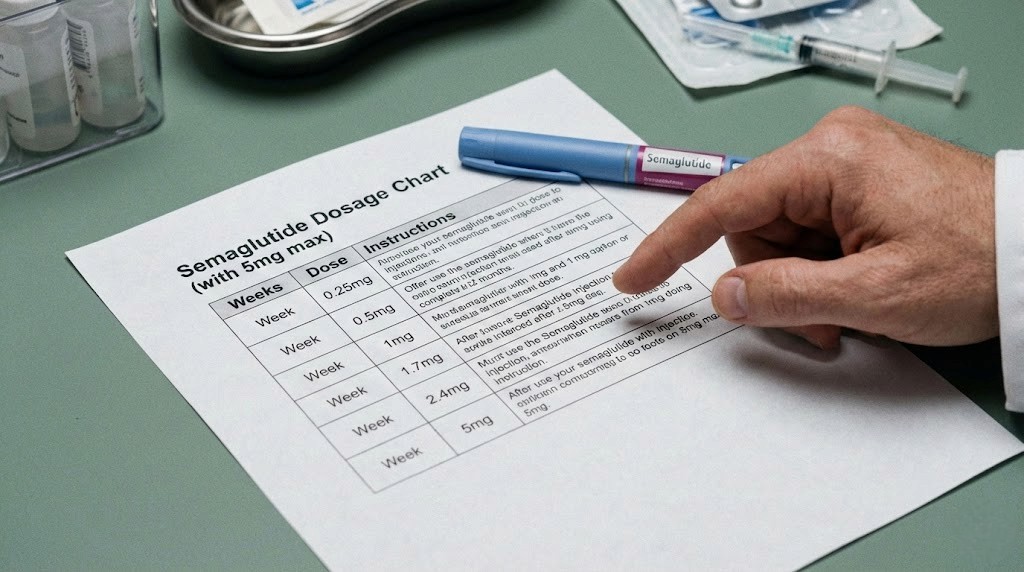
You have got a 5mg vial of semaglutide sitting in your refrigerator. You have got a syringe. You have got instructions that might as well be written in another language. And somewhere between the math, the units, and the milliliters, you are wondering if you are about to inject the right amount or make a costly mistake.
You are not alone. Thousands of researchers face this exact moment every week, staring at tiny markings on an insulin syringe, trying to convert milligrams to units to milliliters while a voice in the back of their head whispers, "Is this right?" The margin between an effective dose and a wasted one is smaller than most people realize. A 5mg vial contains a precise amount of peptide, and every fraction of a unit matters when you are working through a titration schedule that spans months.
That is exactly why a clear, reliable semaglutide 5mg dosage chart is not just helpful. It is essential. Without one, you are guessing. With one, you are following a structured protocol that clinical research has validated across multiple large-scale trials. The STEP 1 trial alone showed participants achieving 14.9% mean body weight reduction over 68 weeks when following proper dosing escalation. But those results required precision. They required getting the dose right, every single week, without exception.
This guide breaks down everything you need to know about dosing from a 5mg semaglutide vial. From reconstitution math to week-by-week titration charts, from unit conversions on an insulin syringe to managing side effects at each dose increase, you will find the specific numbers, protocols, and troubleshooting strategies that most guides leave out. SeekPeptides built this resource because accurate dosing should not require a pharmacy degree.
Understanding semaglutide 5mg vials
Before you draw a single unit into a syringe, you need to understand what you are working with. A 5mg semaglutide vial contains exactly 5 milligrams of lyophilized (freeze-dried) semaglutide peptide. This is the raw material. It is not ready to inject until you reconstitute it with bacteriostatic water.
The concentration you end up with depends entirely on how much water you add. This single decision shapes every dose you will draw for the life of that vial.
Here is the fundamental math. Add 2mL of bacteriostatic water to a 5mg vial and you get a concentration of 2.5mg/mL. Add 1mL and you get 5mg/mL. The amount of water changes the concentration, which changes how many units you draw for each dose. Get this step wrong and every dose that follows will be wrong too.
Why concentration matters
Think of it this way. If you add 2mL of water to your 5mg vial, each 0.1mL (10 units on an insulin syringe) contains 0.25mg of semaglutide. But if you add only 1mL, that same 10 units now contains 0.5mg, double the dose. Same syringe marking. Completely different amount of peptide.
This is where most dosing errors happen. Not from carelessness, but from confusion about concentration. Researchers who switch between different semaglutide mixing protocols or use vials from different sources with different instructions often end up with inconsistent dosing without realizing it.
The standard reconstitution for a 5mg vial uses 2mL of bacteriostatic water. This creates a 2.5mg/mL concentration that makes the math straightforward and the dose markings easy to read on a standard 1mL insulin syringe. Every dosage chart in this guide uses this 2.5mg/mL concentration unless stated otherwise.
5mg vial versus other vial sizes
Semaglutide vials come in several sizes. The 5mg vial is the most common for researchers starting their first titration cycle. Here is how it compares.
Vial size | Water added | Concentration | Total doses at 0.25mg | Weeks covered (0.25mg) |
|---|---|---|---|---|
3mg | 1.2mL | 2.5mg/mL | 12 doses | 12 weeks |
5mg | 2mL | 2.5mg/mL | 20 doses | 20 weeks |
10mg | 4mL | 2.5mg/mL | 40 doses | 40 weeks |
A 5mg vial reconstituted at 2.5mg/mL gives you 2mL of solution total. At the starting dose of 0.25mg per week, that is 20 weekly doses. But you will not stay at 0.25mg. As you titrate up through the standard escalation schedule, the vial depletes faster. At a maintenance dose of 2.4mg per week, that same vial lasts just over 2 weeks. Understanding this helps you plan how many vials you need for a complete dosing protocol.
Also worth noting: reconstituted semaglutide should be used within 28 days when stored at 2 to 8 degrees Celsius. If your dosing schedule means the vial will not be finished within four weeks, you may need to plan accordingly or consider a smaller vial size to avoid waste. Check our complete peptide storage guide for detailed stability information.
Complete semaglutide 5mg dosage chart: week-by-week titration
This is the chart you came here for. The standard semaglutide titration protocol starts low and increases gradually over 16 to 20 weeks. The slow escalation is not optional. It is the single most important factor in managing side effects and maintaining long-term adherence.
Every dose below assumes a 5mg vial reconstituted with 2mL bacteriostatic water, giving a 2.5mg/mL concentration, measured with a standard 100-unit insulin syringe.
Standard titration schedule
Phase | Weeks | Weekly dose | Units on syringe | mL to draw | Purpose |
|---|---|---|---|---|---|
Phase 1 | 1 to 4 | 0.25mg | 10 units | 0.10mL | GI tolerance assessment |
Phase 2 | 5 to 8 | 0.50mg | 20 units | 0.20mL | Initial therapeutic range |
Phase 3 | 9 to 12 | 1.0mg | 40 units | 0.40mL | Moderate therapeutic dose |
Phase 4 | 13 to 16 | 1.7mg | 68 units | 0.68mL | Enhanced efficacy range |
Phase 5 | 17+ | 2.4mg | 96 units | 0.96mL | Maximum therapeutic dose |
Look at the numbers carefully. At Phase 1, you are drawing just 10 units. At Phase 5, you are drawing 96 units, nearly the full capacity of a 1mL insulin syringe. The precision required at lower doses is critical because even a 2-unit error at 10 units represents a 20% dosing mistake. At 96 units, that same 2-unit error is barely 2%.
This is why experienced researchers often recommend using a high-precision syringe for the early phases, particularly 0.3mL or 0.5mL syringes with finer graduation marks that allow more accurate measurement of small volumes.
How much semaglutide is in each dose
Let us slow down and make the unit conversion crystal clear. When your vial concentration is 2.5mg/mL, here is the exact relationship between milligrams, milliliters, and insulin syringe units.
Desired dose (mg) | Volume to draw (mL) | Units on 100-unit syringe | Units on 50-unit syringe |
|---|---|---|---|
0.125mg | 0.05mL | 5 units | 5 units |
0.25mg | 0.10mL | 10 units | 10 units |
0.375mg | 0.15mL | 15 units | 15 units |
0.50mg | 0.20mL | 20 units | 20 units |
0.75mg | 0.30mL | 30 units | 30 units |
1.0mg | 0.40mL | 40 units | 40 units |
1.25mg | 0.50mL | 50 units | 50 units |
1.5mg | 0.60mL | 60 units | N/A |
1.7mg | 0.68mL | 68 units | N/A |
2.0mg | 0.80mL | 80 units | N/A |
2.4mg | 0.96mL | 96 units | N/A |
Notice how doses above 1.25mg exceed the capacity of a 50-unit syringe. That is why a full 1mL (100-unit) insulin syringe becomes necessary once you reach Phase 3 of the titration. Some researchers keep both syringe sizes on hand: the smaller one for precision at low doses, the larger one for higher maintenance doses.
The formula behind these numbers is simple. Divide your desired dose by the concentration, then multiply by 100 to get units. So for a 0.5mg dose at 2.5mg/mL concentration: 0.5 divided by 2.5 equals 0.20mL, times 100 equals 20 units. Use our semaglutide dosage calculator to run these conversions automatically for any concentration.
How long does a 5mg vial last at each dose
This is the practical question everyone asks. One 5mg vial, reconstituted with 2mL of water, contains exactly 5mg of semaglutide total. Here is how long that lasts at each phase of the titration.
Weekly dose | mg per injection | Injections per vial | Weeks per vial |
|---|---|---|---|
0.25mg | 0.25 | 20 | 20 weeks |
0.50mg | 0.50 | 10 | 10 weeks |
1.0mg | 1.0 | 5 | 5 weeks |
1.7mg | 1.7 | ~2.9 | ~2.9 weeks |
2.4mg | 2.4 | ~2.1 | ~2.1 weeks |
Here is the critical detail most charts skip. You cannot use the same vial for 20 weeks straight. Reconstituted semaglutide expires after 28 days in the refrigerator. So even at 0.25mg per week, you would need a new vial after week 4 regardless. This means at the starting dose, you will use about 1mg from the vial before it expires, leaving 4mg unused.
Smart planning matters. Some researchers reconstitute only part of the vial. Others plan their titration to use the vial efficiently within the 28-day window. For example, starting at 0.25mg for 4 weeks (using 1mg total) and then switching to 0.5mg for the remaining time would use 1mg plus roughly 1.5mg in the next 3 weeks, totaling 2.5mg from one vial within the 28-day stability window. Check our semaglutide mixing chart for 10mg vials if you want a larger supply that reduces waste at higher doses.
Reconstituting your semaglutide 5mg vial step by step
Reconstitution is the foundation. Every dose you draw depends on getting this step right. Mess up the reconstitution and no dosage chart in the world can save you from inaccurate dosing.
What you need
Gather everything before you start. You will need your 5mg semaglutide vial (lyophilized powder), a vial of bacteriostatic water (BAC water), a sterile 3mL syringe with needle for reconstitution, alcohol swabs, and a clean workspace. Some researchers also use a peptide reconstitution calculator to double-check their math before adding water.
The reconstitution process
Remove the semaglutide vial from refrigerator storage and let it reach room temperature. This takes about 10 to 15 minutes. Cold vials dissolve unevenly.
Swab both vial tops with alcohol. Let them air dry for 30 seconds. Do not blow on them.
Draw exactly 2.0mL of bacteriostatic water into the reconstitution syringe. Precision here is non-negotiable. If you draw 2.1mL instead of 2.0mL, your concentration drops from 2.5mg/mL to approximately 2.38mg/mL. That 5% error compounds with every single dose.
Insert the needle through the rubber stopper of the semaglutide vial. Angle it so the water runs down the inside wall of the vial. Do not spray it directly onto the lyophilized powder. Direct force can damage the peptide structure and cause foaming that makes accurate measurement difficult.
Release the water slowly. Patience matters here.
Once all the water is in, gently swirl the vial. Do not shake it. Shaking creates air bubbles and can denature the peptide. A slow, circular motion for 60 to 90 seconds should dissolve the powder completely. The solution should be clear and colorless. If you see particles floating or cloudiness that does not resolve, the peptide may be damaged.
Label the vial with the date, concentration (2.5mg/mL), and the discard date (28 days from reconstitution). Return it to the refrigerator immediately.
For a visual walkthrough of the entire process, see our detailed peptide reconstitution guide which covers technique, common mistakes, and troubleshooting.
Alternative reconstitution volumes
The 2mL standard is not the only option. Different water volumes create different concentrations, and different concentrations suit different situations.
Water volume | Concentration | Units for 0.25mg | Units for 1.0mg | Units for 2.4mg | Best for |
|---|---|---|---|---|---|
1.0mL | 5.0mg/mL | 5 units | 20 units | 48 units | Higher doses, experienced users |
1.5mL | 3.33mg/mL | 7.5 units | 30 units | 72 units | Mid-range flexibility |
2.0mL | 2.5mg/mL | 10 units | 40 units | 96 units | Standard, best for beginners |
2.5mL | 2.0mg/mL | 12.5 units | 50 units | N/A (exceeds 1mL) | Low-dose precision |
Higher concentrations (less water) mean smaller injection volumes but less precision at low doses. Lower concentrations (more water) give better precision at low doses but require larger injection volumes at high doses. The 2.5mg/mL concentration hits the sweet spot for a full titration cycle from 0.25mg through 2.4mg without exceeding syringe capacity.
If you are using a different concentration than 2.5mg/mL, every number on the dosage chart above changes. This is the most common source of dosing errors in community forums. Researchers borrow a chart made for one concentration and apply it to a vial reconstituted at a different concentration. Always verify your concentration matches the chart you are following, or use a peptide calculator to generate numbers for your specific setup.
The conversion math explained simply
Let us demystify the formula once and for all. You will see variations of this explained across dozens of sites, but most overcomplicate it. Here is the simple version.
Step 1: Know your concentration. If you added 2mL water to a 5mg vial, your concentration is 5 divided by 2, which equals 2.5mg/mL.
Step 2: Know your desired dose in milligrams. For Phase 1, that is 0.25mg.
Step 3: Divide dose by concentration. 0.25mg divided by 2.5mg/mL equals 0.10mL.
Step 4: Convert mL to units. On a standard insulin syringe, 1mL equals 100 units. So 0.10mL equals 10 units.
That is it. Four steps. The formula works for any dose at any concentration.
The universal formula: Units = (Desired dose in mg / Concentration in mg/mL) x 100
Let us run through a few more examples to build confidence.
Want 1.7mg at 2.5mg/mL? That is 1.7 divided by 2.5, which equals 0.68mL, which equals 68 units.
Want 0.5mg at 5.0mg/mL? That is 0.5 divided by 5.0, which equals 0.10mL, which equals 10 units.
Want 2.4mg at 2.5mg/mL? That is 2.4 divided by 2.5, which equals 0.96mL, which equals 96 units.
See the pattern. The math never changes. Only the inputs do. But if you would rather skip the math entirely, the SeekPeptides semaglutide calculator handles all of this instantly. Just enter your vial size, water volume, and desired dose.
Understanding unit conversion is especially important if you have experience with other peptides. The relationship between milligrams, milliliters, and syringe units works identically for tirzepatide dosing, BPC-157 protocols, and virtually every other reconstituted peptide. Master this formula once and you can dose anything.
Phase-by-phase dosing breakdown
Numbers on a chart are useful. But understanding what each phase feels like, what to expect, and when to adjust is what separates researchers who get results from those who quit early. Let us walk through each phase in detail.
Phase 1: 0.25mg weekly (weeks 1 to 4)
This is not a therapeutic dose. Let that sink in. You are not taking 0.25mg because it produces significant weight loss. You are taking it because your body needs time to adjust to a GLP-1 receptor agonist.
At this dose, semaglutide begins binding to GLP-1 receptors in the gut, pancreas, and brain. The effects are subtle. You might notice slightly reduced appetite, particularly in the evenings. Some researchers report feeling full faster during meals. Others feel nothing at all.
Both responses are normal.
The primary goal of Phase 1 is gastrointestinal tolerance. Semaglutide slows gastric emptying, which is how it reduces appetite, but this same mechanism causes the nausea that up to 44% of users experience. Starting at 0.25mg gives your digestive system time to adapt before you increase the dose.
What to track during Phase 1:
Nausea frequency and severity (scale of 1 to 10)
Appetite changes (especially 24 to 48 hours post-injection)
Any GI symptoms (constipation, diarrhea, bloating)
Injection site reactions
Baseline weight and measurements
Do not expect dramatic results here. If you are losing significant weight at 0.25mg, that is likely water weight or dietary changes, not the semaglutide doing heavy lifting. The real work begins in Phase 2.
For detailed guidance on managing early-phase side effects, our semaglutide timeline guide covers what to expect week by week.
Phase 2: 0.50mg weekly (weeks 5 to 8)
This is where most researchers start feeling the medication work. The dose doubles from 0.25mg to 0.50mg, and for many people, appetite suppression becomes noticeable and consistent.
The transition from 0.25mg to 0.50mg is the most common point for nausea to appear or worsen. Your body was just getting comfortable at the lower dose, and now you are asking it to handle twice as much. Research from the STEP trials shows that gastrointestinal side effects peak during dose escalation periods and then gradually subside over 1 to 2 weeks at the new dose.
At 0.50mg, you are drawing 20 units from your 2.5mg/mL vial. This is still a relatively small volume, easy to measure accurately even with a standard 100-unit syringe. But if you have been using a 0.3mL syringe for better precision, you can continue to do so at this dose.
What changes at 0.50mg:
Appetite suppression typically becomes more pronounced
Food thoughts diminish (less "food noise")
Portion sizes naturally decrease
Early weight loss may begin (1 to 2 pounds per week is common)
GI side effects may temporarily increase before settling
Some compounded semaglutide protocols allow for a half-step at 0.375mg if the jump from 0.25mg to 0.50mg causes intolerable side effects. This is one advantage of working with a vial rather than a pre-filled pen: you have granular control over your dose. Instead of being locked into manufacturer-defined increments, you can adjust by single units on the syringe. Our compounded semaglutide dosing guide covers these intermediate dose options in detail.
Phase 3: 1.0mg weekly (weeks 9 to 12)
Now you are in the therapeutic range. One milligram is the standard maintenance dose for semaglutide for metabolic research, and many researchers find this dose provides a strong balance between efficacy and tolerability.
At 1.0mg, you are drawing 40 units (0.40mL) from your vial. The injection volume is larger now, and some people notice a slight sting or burning sensation at the injection site that was absent at lower doses. This is normal and typically resolves within minutes. Rotating injection sites between the abdomen, thigh, and upper arm helps minimize discomfort.
Weight loss often accelerates during this phase. The STEP 1 trial data shows that participants on semaglutide experienced a roughly linear weight loss trajectory through the first 60 weeks, with the steepest decline occurring once therapeutic doses were reached. At 1.0mg, many researchers see weekly losses of 1 to 3 pounds, depending on dietary habits, activity level, and individual metabolism.
This is also where you need to pay attention to appetite suppression patterns. Some people find that the effect peaks around 48 to 72 hours post-injection and then gradually wanes before the next dose. Others feel consistent suppression throughout the week. If you notice a significant end-of-week dip in appetite control, it does not necessarily mean you need a higher dose. It might mean your injection timing needs adjustment.
A significant number of researchers choose to stay at 1.0mg long-term. Not everyone needs to reach 2.4mg to get meaningful results. The best dose is the one that produces acceptable results with manageable side effects. More is not always better with GLP-1 agonists.
Phase 4: 1.7mg weekly (weeks 13 to 16)
If 1.0mg provides good but not optimal results, the next step is 1.7mg. This is a 70% increase over the previous dose, and it is the point where many researchers experience the most dramatic shift in appetite regulation and body composition changes.
At 1.7mg, you are drawing 68 units. This starts to approach the upper range of a 100-unit syringe, so accuracy matters. Make sure you are reading the syringe at eye level, with the plunger line aligned precisely with the 68-unit marking. Even a 5-unit error at this dose represents roughly 0.125mg, which is half of what your starting dose was.
The 1.7mg dose was specifically studied in the STEP clinical trials as an intermediate maintenance option for people who experienced intolerable side effects at 2.4mg but wanted more effect than 1.0mg provided. It exists precisely because the jump from 1.0mg to 2.4mg is large, and not every researcher tolerates it well.
Common adjustments at this phase include modifying injection day to optimize appetite suppression timing, splitting dietary intake into smaller, more frequent meals, and adding electrolyte supplementation if GI side effects cause fluid imbalances. These practical strategies make a significant difference in tolerability.
Phase 5: 2.4mg weekly (weeks 17 and beyond)
This is the maximum FDA-approved dose for weight management, and the dose that produced the headline results in the STEP trials. At 2.4mg weekly, participants achieved a mean body weight reduction of 14.9%, with one in three achieving 20% or greater weight loss over 68 weeks.
At 2.4mg, you draw 96 units from your 2.5mg/mL vial. That is nearly the entire syringe. Your 5mg vial lasts just over 2 weeks at this dose, meaning you will go through vials significantly faster than during the early phases.
Not every researcher needs 2.4mg. This is worth repeating. The trials showed meaningful weight loss at every dose level. If 1.0mg or 1.7mg gives you acceptable results with minimal side effects, staying at that dose is a perfectly valid strategy. Pushing to 2.4mg purely because it is the "maximum" dose is not always the right move, especially if side effects significantly impact quality of life.
However, if you have titrated slowly, tolerate each increase well, and want maximum efficacy, 2.4mg delivers the strongest appetite suppression and greatest mean weight loss of any approved semaglutide dose. For researchers at this level, understanding plateau management strategies becomes important because even at the highest dose, weight loss naturally slows over time as your body reaches a new set point.
Semaglutide 5mg dosage chart for different reconstitution volumes
Not everyone uses 2mL of water. Some clinics, compounding pharmacies, and research protocols call for different reconstitution volumes. Since changing the water volume changes the concentration, every dosage number changes too. Here are complete charts for the three most common reconstitution volumes.
Chart A: 5mg vial + 1mL water = 5.0mg/mL
Desired dose | Volume (mL) | Units on syringe |
|---|---|---|
0.25mg | 0.05mL | 5 units |
0.50mg | 0.10mL | 10 units |
1.0mg | 0.20mL | 20 units |
1.7mg | 0.34mL | 34 units |
2.4mg | 0.48mL | 48 units |
Pro: Smaller injection volumes at higher doses. At 2.4mg you only inject 0.48mL, less than half a syringe. Con: At 0.25mg, you are drawing just 5 units. On most 100-unit syringes, that is extremely difficult to measure accurately. A 1-unit error represents a 20% dosing mistake. This concentration is better for researchers already past the titration phase who are maintaining at higher doses.
Chart B: 5mg vial + 2mL water = 2.5mg/mL (standard)
This is the chart from the main titration section above. The 2.5mg/mL concentration works for the entire dosing range without accuracy problems at low doses or volume problems at high doses. It is the standard recommendation for most researchers and the default used by most semaglutide dosing references.
Chart C: 5mg vial + 2.5mL water = 2.0mg/mL
Desired dose | Volume (mL) | Units on syringe |
|---|---|---|
0.25mg | 0.125mL | 12.5 units |
0.50mg | 0.25mL | 25 units |
1.0mg | 0.50mL | 50 units |
1.7mg | 0.85mL | 85 units |
2.4mg | 1.20mL | N/A (exceeds 1mL syringe) |
Pro: Better measurement precision at lower doses. Con: Cannot reach 2.4mg in a single draw with a standard 1mL insulin syringe. You would need a 3mL syringe, which has much coarser graduation marks. This concentration works well for researchers who plan to stay at or below 1.7mg maintenance.
The takeaway is straightforward. Match your reconstitution volume to your planned dose range. If you plan to titrate all the way to 2.4mg, use 2mL of water. If you plan to stay at 1.0mg or below, consider 2.5mL for better precision. And always use the reconstitution calculator to verify your math before adding water.
How semaglutide 5mg dosing compares to brand-name pens
If you have researched semaglutide, you have seen the brand names. Ozempic for type 2 diabetes. Wegovy for weight management. Both contain the same active ingredient, semaglutide, but in pre-filled injection pens with fixed dose increments. Understanding the differences helps you contextualize your 5mg vial protocol within the broader semaglutide landscape.
Ozempic pen doses
Ozempic comes in pre-filled pens and follows a simpler titration. You start at 0.25mg for 4 weeks, increase to 0.5mg, and can go up to 1.0mg (with a 2.0mg option recently added). The pen clicks to predetermined doses. No math required. No reconstitution. No syringe measurements.
The trade-off is flexibility. With an Ozempic pen, you get exactly the doses the manufacturer programmed into the pen. You cannot do 0.375mg. You cannot do 0.75mg. You are locked into fixed increments. A 5mg vial gives you the ability to adjust by single units on the syringe, allowing for micro-adjustments that pens simply cannot match.
Wegovy pen doses
Wegovy follows the standard weight management titration: 0.25mg, 0.5mg, 1.0mg, 1.7mg, and 2.4mg, each for 4-week periods. These are the exact same phases outlined in the dosage chart above. The difference is delivery method, cost, and availability.
Brand-name pens go through insurance, often require prior authorization, and can cost significantly more without coverage. Compounded vials are typically more accessible and less expensive, but require the user to handle reconstitution and accurate measurement. Each approach has trade-offs, and neither is inherently superior. The important thing is accurate, consistent dosing regardless of the delivery method.
For a detailed breakdown of how semaglutide compares to the other major GLP-1 option, see our semaglutide vs tirzepatide comparison and the dosage chart comparison that puts both titration schedules side by side.
Managing side effects at each dose level
Side effects are not a sign that something is wrong. In most cases, they are a sign that the medication is working. Semaglutide slows gastric emptying, modulates appetite signaling in the brain, and affects insulin secretion. These are powerful physiological changes, and your body needs time to adapt.
The STEP clinical trial program reported that approximately 74% of participants on semaglutide 2.4mg experienced at least one gastrointestinal adverse event. Most were mild to moderate and resolved without discontinuation. But knowing what to expect at each dose level helps you manage symptoms proactively rather than reactively.
Common side effects by phase
Side effect | Phase 1 (0.25mg) | Phase 2 (0.5mg) | Phase 3 (1.0mg) | Phase 4 (1.7mg) | Phase 5 (2.4mg) |
|---|---|---|---|---|---|
Nausea | Mild/rare | Common | Moderate | Moderate | Moderate |
Vomiting | Rare | Occasional | Occasional | Occasional | Occasional |
Diarrhea | Rare | Mild | Mild | Mild to moderate | Moderate |
Constipation | Rare | Mild | Moderate | Moderate | Moderate |
Fatigue | Rare | Occasional | Occasional | Occasional | Occasional |
Headache | Occasional | Occasional | Mild | Mild | Mild |
Nausea is the headliner. It affects 20% to 44% of semaglutide users, depending on the study and dose level. The good news: it almost always improves. For most people, nausea peaks during the first 1 to 2 weeks at a new dose and then gradually fades as the body adjusts. The bad news: some people experience persistent nausea that requires active management strategies.
Nausea management strategies
Eat smaller meals. This is the single most effective strategy. Semaglutide slows gastric emptying, so food sits in your stomach longer than usual. Large meals overwhelm a system that is already processing food more slowly. Aim for 4 to 5 smaller meals rather than 2 to 3 large ones.
Stop eating when you feel satisfied, not full. This sounds obvious, but semaglutide changes your satiety signals. Your brain might be slow to register "full" at first, leading to overeating that your slowed stomach cannot handle. Put the fork down earlier than you think you need to.
Avoid high-fat and fried foods. Fat slows gastric emptying further. Adding fat-heavy meals on top of semaglutide-induced delayed emptying is a recipe for severe nausea. Lean proteins, vegetables, and complex carbohydrates are much better tolerated.
Stay hydrated between meals, not during them. Drinking large volumes of water with food compounds the volume issue. Sip throughout the day and limit fluids during meals to small amounts.
Ginger helps. Ginger tea, ginger chews, even ginger capsules have shown modest anti-nausea effects in clinical settings. Keep some on hand for the first few days after each dose increase.
If nausea persists beyond 2 weeks at a given dose, consider stepping back. This is where vial dosing shines compared to pens. Instead of jumping from 0.5mg to 1.0mg, you could try 0.75mg for 2 to 4 weeks. The intermediate step gives your body more time to adapt without abandoning the titration entirely.
For a comprehensive overview of what to expect, our semaglutide lifestyle guide covers dietary adjustments, alcohol interactions, and daily habits that affect tolerability.
When to slow down your titration
The 4-week-per-phase schedule is a guideline, not a mandate. Some people need 6 or even 8 weeks at a given dose before they are ready to move up. Here are clear signals that you should extend your current phase.
Nausea scoring above 5 out of 10 consistently for more than 10 days at a given dose. Vomiting more than twice in a week. Inability to maintain adequate caloric intake (eating less than 800 calories per day due to appetite suppression and nausea combined). Significant fatigue that interferes with daily activities.
Any of these warrant staying at the current dose for 2 to 4 additional weeks before attempting the next increase. There is no penalty for a slower titration. The STEP trials showed that final weight loss outcomes were similar regardless of how quickly participants reached their maintenance dose. The destination matters more than the speed.
Conversely, if you sail through Phase 1 with zero side effects, you still should not skip ahead. The 4-week minimum at each phase exists because some side effects have delayed onset. Jumping from 0.25mg to 1.0mg because the first two weeks felt fine can result in a rough surprise in week 5.
Injection technique and best practices
The best dosage chart in the world cannot compensate for poor injection technique. Here are the details that experienced researchers pay attention to.
Injection site selection
Semaglutide is administered subcutaneously, meaning into the fatty tissue just under the skin. The three standard sites are the abdomen (at least 2 inches from the navel), the front of the thigh (upper third), and the back of the upper arm. Rotate between sites with each injection to prevent lipodystrophy, a condition where the fat tissue at the injection site becomes hardened or thinned from repeated use.
Absorption can vary slightly between sites. Abdominal injections tend to have the most consistent absorption rate. Thigh injections are slightly slower. Arm injections can be faster but are harder to self-administer accurately. For consistency, many researchers stick primarily to abdominal injections and rotate between left side, right side, and different spots within each area.
Injection day and timing
Pick one day per week and stick with it. Semaglutide has a half-life of approximately 7 days, which is why it is dosed weekly. Injecting on the same day each week maintains consistent blood levels. If you miss your usual day, inject as soon as you remember as long as the next scheduled dose is at least 2 days away. If it is less than 2 days, skip the missed dose and return to your regular schedule.
Time of day does not significantly affect absorption or efficacy. Some researchers prefer morning injections because any nausea from the dose increase can be managed during waking hours. Others prefer evening injections so they can sleep through the initial GI adjustment. Neither approach is superior. Pick what works for your schedule and stay consistent.
Drawing the dose accurately
Pull the plunger back past your target unit marking, then slowly push it forward to the exact number. This "pull past and push back" technique helps eliminate small air bubbles that can affect volume accuracy. If you see a bubble in the syringe barrel, flick the syringe gently until the bubble rises to the top, then push the plunger slightly to expel it before measuring your dose.
Always read the syringe at eye level. Looking at the syringe from above or below creates parallax error, where the meniscus line appears to be at a different marking than it actually is. Flat, eye-level reading is the only accurate way to measure.
For researchers who want to track their injection technique and results over time, SeekPeptides provides protocol tracking tools and progress monitoring resources as part of the membership platform.
Microdosing and sub-standard dose protocols
Standard titration is not the only approach. A growing number of researchers use sub-therapeutic doses of semaglutide, sometimes called microdosing, for specific goals that do not require the full 2.4mg maintenance dose.
What is semaglutide microdosing
Microdosing typically refers to doses below the standard starting dose of 0.25mg, usually in the range of 0.0625mg to 0.125mg weekly. These ultra-low doses provide mild appetite modulation with minimal to no side effects, and are used by researchers interested in gentle appetite management without the intense GI adjustment that accompanies standard doses.
With a 5mg vial at 2.5mg/mL concentration, a 0.125mg microdose equals just 5 units on the syringe. At 0.0625mg, you would need 2.5 units, which is extremely difficult to measure accurately with standard syringes. This is one reason why researchers interested in microdosing often reconstitute with more water (3mL or even 4mL) to get a lower concentration that makes small doses easier to measure.
Conservative titration alternative
Some protocols use a more gradual titration than the standard 4-week phases. Here is an example of a conservative schedule from a 5mg vial at 2.5mg/mL.
Weeks | Dose | Units | Notes |
|---|---|---|---|
1 to 4 | 0.125mg | 5 units | Ultra-low introduction |
5 to 8 | 0.25mg | 10 units | Standard Phase 1 dose |
9 to 12 | 0.375mg | 15 units | Half-step increase |
13 to 16 | 0.50mg | 20 units | Standard Phase 2 dose |
17 to 20 | 0.75mg | 30 units | Half-step increase |
21 to 24 | 1.0mg | 40 units | Standard Phase 3 dose |
This 24-week ramp to 1.0mg takes 50% longer than the standard 12-week path but dramatically reduces the incidence of GI side effects. Researchers with a history of sensitive stomachs, IBS, or prior GI issues often benefit from this slower approach.
The flexibility of vial dosing makes these custom protocols possible. You simply cannot get 0.125mg or 0.375mg from a pre-filled pen. This precision is one of the strongest arguments for vial-based dosing, especially during the critical early phases when finding your personal tolerance threshold matters most.
Vial planning: how many 5mg vials do you need
Planning your vial supply prevents interruptions in your protocol. Running out mid-titration is not just inconvenient. It can reset some of the GI tolerance you have built up, making your next dose increase harder than it needs to be.
Vial consumption by protocol length
Here is a practical planning chart. Remember that each reconstituted vial expires after 28 days, so you cannot just divide 5mg by your weekly dose and call it done. You need to account for the 28-day expiration window.
Protocol phase | Weekly dose | mg used per 28 days | Vials needed per phase (4 weeks) | Waste per vial |
|---|---|---|---|---|
Phase 1 | 0.25mg | 1.0mg | 1 vial (4.0mg wasted) | 80% |
Phase 2 | 0.50mg | 2.0mg | 1 vial (3.0mg wasted) | 60% |
Phase 3 | 1.0mg | 4.0mg | 1 vial (1.0mg wasted) | 20% |
Phase 4 | 1.7mg | 6.8mg | 2 vials (3.2mg wasted) | 32% |
Phase 5 | 2.4mg | 9.6mg | 2 vials (0.4mg wasted) | 4% |
The waste column is eye-opening. At Phase 1, you use only 1mg of a 5mg vial before it expires. That is 80% waste. This is why some researchers start with a 3mg vial for the early phases and switch to 5mg or 10mg vials once they reach higher doses where the consumption rate matches the expiration timeline better.
For a complete 20-week standard titration (Phases 1 through 5), you would need approximately 7 to 8 five-milligram vials when accounting for the 28-day expiration of each reconstituted vial. For ongoing maintenance at 2.4mg, you need roughly 2 vials per month.
Smart researchers plan their vial purchases around their titration schedule. If you know you will be at 0.25mg for 4 weeks and 0.50mg for the next 4 weeks, some choose to reconstitute one vial and use it for Phase 1 (1.0mg used), then immediately transition to Phase 2 dosing from the remaining solution (2.0mg used in 4 more weeks for a total of 3.0mg from one vial). This works only if both phases fall within the 28-day window. Check our peptide cost calculator to estimate your total supply cost based on your planned protocol length.
Semaglutide 5mg dosage chart compared to 10mg vials
The 10mg vial is the other common option, and it changes the math significantly. Here is a side-by-side comparison to help you decide which vial size suits your needs.
Factor | 5mg vial | 10mg vial |
|---|---|---|
Standard water volume | 2mL | 4mL |
Standard concentration | 2.5mg/mL | 2.5mg/mL |
Total volume after reconstitution | 2.0mL | 4.0mL |
Weeks at 0.25mg (within 28 days) | 4 (1mg used) | 4 (1mg used) |
Weeks at 2.4mg (within 28 days) | ~2 | ~4 |
Waste at Phase 1 | 4.0mg (80%) | 9.0mg (90%) |
Waste at Phase 5 | 0.2mg (4%) | 0.4mg (4%) |
Best for | Starting out, lower doses | Maintenance at higher doses |
The 10mg vial has the same waste problem at low doses, only worse. At 0.25mg per week, you use just 1mg before the 28-day expiration, wasting 9mg. But at maintenance doses of 1.7mg or 2.4mg, the 10mg vial is more economical because you use more of it before expiration.
Many experienced researchers use a strategy of 5mg vials during the titration phases and then switching to 10mg vials for maintenance. This minimizes waste across the entire protocol. For complete mixing instructions for the larger vial, see our semaglutide 10mg mixing chart.
What happens if you miss a dose
Life happens. Missed doses are inevitable over a multi-month protocol. The question is not whether you will miss one, but how to handle it when you do.
The 2-day rule
If your next scheduled dose is more than 2 days away, take the missed dose as soon as you remember. Then resume your regular schedule the following week. For example, if you normally inject on Monday and realize on Wednesday that you forgot, inject on Wednesday and then go back to Monday the following week.
If your next scheduled dose is less than 2 days away, skip the missed dose entirely. Do not double up. Taking a double dose does not improve results. It significantly increases the risk of severe nausea and vomiting. Your body cannot process double the GLP-1 receptor activation safely, and the side effects will be disproportionately worse than any benefit from the extra semaglutide.
Impact of missed doses on your protocol
A single missed dose during maintenance is usually not a significant issue. Semaglutide has a long half-life of approximately 168 hours (7 days), so blood levels drop gradually. One missed week results in roughly a 50% reduction in circulating semaglutide, not a complete washout. You may notice slightly increased appetite during that week, but the medication does not leave your system entirely.
Multiple consecutive missed doses are more problematic. After 2 to 3 missed weeks, blood levels drop enough that restarting at your previous dose can cause the same GI side effects you experienced during initial titration. If you miss more than 2 consecutive doses, consider stepping back to the previous dose level for 1 to 2 weeks before returning to your maintenance dose.
Consistency matters more than perfection. Hitting 48 out of 52 weekly doses in a year (92% adherence) will produce significantly better results than an erratic schedule with frequent interruptions, even if total milligrams consumed over the year is identical. The steady-state blood level that comes from consistent weekly dosing is what drives sustained appetite suppression and metabolic benefits.
Semaglutide 5mg dosage chart with B12
Many compounding pharmacies offer semaglutide formulations that include vitamin B12 (cyanocobalamin). These combination products have become increasingly popular for research protocols focused on weight management with B12 supplementation.
Why B12 is added
GLP-1 receptor agonists can reduce absorption of certain micronutrients by slowing gastric transit and reducing food intake overall. B12 deficiency is a known concern with long-term GLP-1 therapy, particularly because many researchers are simultaneously reducing their caloric intake. Adding B12 directly to the semaglutide formulation ensures adequate levels without requiring a separate supplement.
Typical B12-enhanced formulations contain 1mg to 2mg of cyanocobalamin per mL alongside the semaglutide. The B12 does not change the semaglutide dosing math. Your 5mg dosage chart stays exactly the same. The B12 is just along for the ride at whatever volume you draw.
For specific dosing information on the B12 combination, our compounded semaglutide with B12 dosage chart covers the most common formulations and their exact concentrations.
Tracking your progress through the titration
A dosage chart tells you what to inject. But without tracking your response, you are flying blind. Here is what experienced researchers monitor and why it matters.
Weekly tracking checklist
Weight is the obvious metric, but it is not the most useful one on a week-to-week basis. Body weight fluctuates by 2 to 5 pounds daily based on hydration, food timing, and hormonal cycles. Weekly weigh-ins (same day, same time, same conditions) smooth out some of this noise, but even then, a single week without weight loss does not indicate a problem.
Better metrics to track weekly include waist circumference (more consistent than scale weight for body composition changes), appetite scores (rate your hunger and food cravings on a 1 to 10 scale each day), energy levels, sleep quality, side effect severity, and dietary intake patterns. These data points together paint a much clearer picture of how the medication is working than the scale alone.
When to adjust your dose
The standard titration assumes a 4-week-per-phase increase. But individual response varies enormously. Here is a decision framework.
Move up if: Current dose is well-tolerated for at least 3 weeks. Weight loss has slowed or stalled at current dose. Appetite suppression is minimal or absent in the second half of each week. No persistent GI symptoms above mild.
Stay at current dose if: GI symptoms are still present but manageable. Weight loss is continuing at a steady rate (even if slower than hoped). Appetite suppression is working consistently throughout each week. You are within the first 3 weeks of the current phase.
Step back if: Nausea or vomiting is severe and persistent (more than 10 days). Caloric intake has dropped below 800 calories due to side effects. Fatigue or other side effects are significantly impacting daily life. You are experiencing signs of dehydration from persistent GI symptoms.
SeekPeptides members access comprehensive progress tracking tools, detailed protocol adjustment guides, and a community of researchers who share real-world titration experiences. This collective knowledge base is invaluable for making informed dosing decisions throughout your protocol.
Common dosing mistakes to avoid
After reviewing thousands of community discussions and research logs, certain mistakes appear over and over. Here are the ones that matter most.
Mistake 1: using the wrong concentration chart
This is the biggest one. A researcher reconstitutes with 1mL of water (5mg/mL concentration) but follows a dosage chart designed for 2mL reconstitution (2.5mg/mL). Every dose is double what they intended. Or vice versa, they add 2mL but follow a chart for 1mL reconstitution and underdose by 50%. Always verify that your chart matches your actual concentration.
Mistake 2: skipping the titration
Impatience kills more protocols than anything else. Researchers who jump straight to 1.0mg or higher because they want faster results almost always experience severe nausea, often severe enough to abandon the protocol entirely. The 4-week titration phases exist because decades of clinical research determined they were necessary. Respect the ramp.
Mistake 3: not accounting for the 28-day expiration
Reconstituted semaglutide degrades over time. Using solution from a vial that was reconstituted 6 weeks ago means you are injecting partially degraded peptide at an unknown potency. The 28-day rule is not conservative. It is the stability limit. Mark the expiration date on every vial the moment you add water.
Mistake 4: measuring at the wrong angle
Reading a syringe from above makes the plunger appear lower than it actually is. Reading from below makes it appear higher. Both lead to dosing errors. Always hold the syringe at eye level with the barrel horizontal for accurate measurement.
Mistake 5: shaking the vial
Semaglutide is a peptide. Peptides are proteins. Vigorous shaking can denature the protein structure, reducing potency and creating aggregates that may cause injection site reactions. Gentle swirling only. If the powder does not dissolve within 2 to 3 minutes of gentle swirling, let it sit for 10 minutes and try again. Never shake.
Mistake 6: inconsistent injection timing
Injecting on Monday one week, Thursday the next, and Sunday after that creates unpredictable blood levels. The 7-day half-life means semaglutide works best with consistent weekly timing. Pick a day. Set a reminder. Stick to it.
For even more troubleshooting guidance, our common peptide mistakes guide covers additional errors specific to peptide handling, storage, and administration that apply to semaglutide and beyond.
Advanced considerations for experienced researchers
Once you have been through a full titration and settled on a maintenance dose, several advanced strategies can optimize your protocol further.
Split dosing
Some researchers divide their weekly dose into two injections. Instead of 2.4mg once weekly, they inject 1.2mg twice weekly. The rationale is smoother blood levels, fewer GI side effects from peak concentrations, and more consistent appetite suppression throughout the week.
There is limited clinical data on split dosing. The STEP trials all used once-weekly protocols. But anecdotal reports from research communities suggest that some individuals tolerate split dosing better, particularly those who experience end-of-week appetite return or post-injection nausea spikes.
If you try split dosing from a 5mg vial at 2.5mg/mL, a 1.2mg dose equals 48 units. You would draw 48 units on day 1 and another 48 units 3 to 4 days later. The weekly total remains the same. Only the distribution changes.
Dose optimization after plateau
Weight loss on semaglutide typically plateaus after 40 to 60 weeks, even at the maximum 2.4mg dose. This is not a failure. It is biology. Your body reaches a new metabolic equilibrium where energy intake (suppressed by semaglutide) matches energy expenditure (reduced by lower body weight and metabolic adaptation).
Options at plateau include maintaining the current dose to prevent regain (the STEP 4 trial showed rapid weight regain after discontinuation), adding structured exercise to increase energy expenditure, reviewing dietary quality rather than just quantity, and in some cases, considering a temporary dose increase if prescribed by a provider.
The STEP 5 trial, which extended treatment to 104 weeks, showed that weight loss was maintained through the second year with continued semaglutide use. Stopping the medication led to significant regain in extension studies. This supports the view of semaglutide as a long-term tool rather than a temporary intervention, and proper dosing from a 5mg vial needs to be sustainable for the duration.
Transitioning between vial sizes or formulations
If you switch from a 5mg vial to a 10mg vial, or from one compounding source to another, always recalculate your doses from scratch. Different manufacturers may use different concentrations, different fillers, or different salt forms (such as semaglutide acetate versus semaglutide sodium). The molecular weight of the salt form can affect the amount of active peptide per milligram.
Treat any source change as if you are starting with a new product. Verify the concentration. Recalculate your unit markings. Do not assume that "5mg is 5mg" across different manufacturers or formulations. The pharmacy-specific dosing guides on our site can help you navigate differences between common sources.
For researchers considering a switch to tirzepatide, our switching from semaglutide to tirzepatide chart and the dose conversion chart provide equivalent dosing references to make the transition smooth.
Semaglutide and diet: maximizing results at every dose
The dosage chart gets you the right amount of semaglutide into your body. But what you eat alongside it determines how much of the medication potential you actually realize. Clinical trials paired semaglutide with reduced-calorie diets (approximately 500 calories below maintenance) and 150 minutes of weekly physical activity. The 14.9% mean weight loss result was achieved with both the medication and lifestyle modifications combined.
Protein intake is critical
Semaglutide suppresses appetite, which means total food intake decreases. If that decrease comes primarily from protein, you risk losing muscle mass alongside fat. Research suggests that 25% to 30% of weight lost on GLP-1 agonists can be lean mass rather than fat, particularly when protein intake is inadequate.
Target a minimum of 0.7 to 1.0 grams of protein per pound of goal body weight daily. This helps preserve muscle mass during weight loss, supports metabolic rate, and improves body composition outcomes. If appetite suppression makes eating enough protein difficult, collagen peptide supplements can help bridge the gap without requiring large meals.
Meal timing around injection day
Many researchers find that appetite suppression is strongest in the 24 to 72 hours following their weekly injection. Planning higher-calorie or social meals for later in the week (days 5 to 7 post-injection) when appetite naturally returns slightly can make the protocol more sustainable.
On injection day and the day after, focus on easily digestible, lower-volume meals. This is when GI effects are most pronounced, and heavy meals are most likely to trigger nausea. Light proteins, cooked vegetables, and small portions work best during this window.
Frequently asked questions
How many units is 0.25mg of semaglutide from a 5mg vial?
With a 5mg vial reconstituted with 2mL of bacteriostatic water (2.5mg/mL concentration), 0.25mg equals 10 units on a standard insulin syringe. If you used a different amount of water, the unit count will be different. Always calculate based on your specific concentration using the formula: units = (dose in mg / concentration in mg/mL) x 100. You can verify your calculation with our semaglutide dosage calculator.
How long does a 5mg semaglutide vial last?
That depends on your weekly dose and the 28-day expiration rule. At 0.25mg per week, a 5mg vial theoretically contains 20 doses, but you can only use it for 4 weeks (28 days) after reconstitution. At 2.4mg per week, the 5mg vial contains about 2 doses and lasts just over 2 weeks. For practical planning, see the vial consumption chart earlier in this guide.
Can I use 1mL of water instead of 2mL to reconstitute a 5mg vial?
Yes, adding 1mL creates a 5.0mg/mL concentration. This reduces injection volumes at higher doses but makes low doses (0.25mg = 5 units) very difficult to measure accurately. The 2mL standard is recommended for researchers going through the full titration because it balances precision at low doses with manageable volumes at high doses. Our bacteriostatic water mixing guide covers the pros and cons of each volume in detail.
What if I accidentally inject more than my intended dose?
A single overdose is typically not dangerous but may cause increased nausea, vomiting, or other GI side effects. Do not take a reduced dose the following week to "compensate." Simply return to your scheduled dose on your next injection day. If symptoms are severe (persistent vomiting, signs of dehydration), consult a healthcare provider. For perspective, the peptide safety guide covers general principles for handling dosing errors.
Is the semaglutide 5mg dosage chart different for diabetes versus weight loss?
Yes. For type 2 diabetes (Ozempic), the maximum dose is 2.0mg weekly. For weight management (Wegovy), the maximum is 2.4mg weekly. The titration phases are similar in structure but differ in the final target dose. The chart in this guide follows the weight management protocol (up to 2.4mg) because the 5mg vial is most commonly used in compounded formulations for that purpose. See our unit conversion reference for both protocol types.
Can I store a reconstituted 5mg vial in the freezer to extend shelf life?
No. Freezing reconstituted semaglutide can damage the peptide structure through ice crystal formation. Store at 2 to 8 degrees Celsius (standard refrigerator temperature) and discard after 28 days. Unreconstituted lyophilized powder can be stored frozen for extended periods, but once water has been added, refrigeration is the only appropriate storage method. Our peptide refrigeration guide covers stability timelines for all common peptides.
Do I need to use the entire 5mg vial before starting a new one?
No. If your reconstituted vial reaches the 28-day mark, discard any remaining solution regardless of how much is left. Starting a fresh vial ensures you are injecting fully potent peptide at the correct concentration. Attempting to "finish" an expired vial to avoid waste means injecting degraded semaglutide at uncertain potency, which defeats the purpose of following a precise dosage chart.
What syringe size should I use for a 5mg vial at 2.5mg/mL?
For Phase 1 and 2 (0.25mg to 0.50mg), a 0.3mL or 0.5mL insulin syringe with half-unit markings provides the best accuracy. For Phase 3 and above (1.0mg to 2.4mg), a standard 1.0mL (100-unit) insulin syringe works well. Having both sizes on hand gives you optimal precision across the entire titration range. Check our injection guide for syringe selection recommendations.
External resources
For researchers committed to getting their semaglutide protocol right, SeekPeptides offers the most comprehensive dosing resources available. Members access detailed protocol builders, weight-based calculators, expert-reviewed dosing guides, and a community of thousands who have navigated these exact titration decisions with real-world experience.
In case I do not see you, good afternoon, good evening, and good night. May your reconstitutions stay precise, your titrations stay gradual, and your results stay consistent.