Mar 5, 2026
Of the dozens of compounding pharmacies filling tirzepatide prescriptions right now, Boothwyn Pharmacy generates more questions than almost any other. Some patients swear by it. Others share horror stories about shipping delays, subpotent vials, and FDA investigations that would make any researcher nervous. The truth, as usual, sits somewhere in the messy middle.
And that middle matters. Because choosing the wrong compounding pharmacy does not just waste money. It wastes weeks of protocol progress. It introduces variables into your research that have nothing to do with the compound itself, variables like inconsistent potency, questionable storage instructions, and customer service that disappears when problems arise.
Boothwyn Pharmacy has been compounding medications since 1933. That is nearly a century of pharmaceutical experience, which sounds reassuring until you start reading the FDA inspection reports from recent years. The pharmacy holds PCAB and ACHC accreditations, operates as a 503A compounding pharmacy under the Federal Food, Drug, and Cosmetic Act, and compounds everything from dermatological creams to sterile injectables. But accreditation badges do not tell the whole story.
This guide breaks down every angle of Boothwyn Pharmacy tirzepatide, from real patient reviews and FDA findings to quality testing protocols, shipping experiences, and how this pharmacy compares to alternatives. Whether you are considering Boothwyn for your tirzepatide protocol or trying to evaluate a pharmacy you have already used, this is the most comprehensive resource available.
SeekPeptides tracks compounding pharmacy quality across the GLP-1 space, helping researchers make informed decisions about where their prescriptions get filled.
Who is Boothwyn Pharmacy
Boothwyn Pharmacy operates out of Kennett Square, Pennsylvania, at 221 Gale Lane. Despite the name suggesting a small-town apothecary, this is a full-scale compounding operation that ships nationwide. The pharmacy has been in business since 1933, making it one of the older compounding pharmacies in the United States.
That longevity matters. It suggests institutional knowledge, established supplier relationships, and the kind of operational infrastructure that newer pharmacies are still building. But longevity alone does not guarantee quality, especially when the pharmacy has expanded into high-demand areas like compounded GLP-1 medications.
The pharmacy holds several accreditations. PCAB accreditation through the Pharmacy Compounding Accreditation Board. ACHC accreditation from the Accreditation Commission for Health Care. URAC accreditation. These are not rubber stamps. Each requires meeting specific quality benchmarks, submitting to inspections, and maintaining operational standards. Most compounding pharmacies, particularly smaller ones, do not hold all three.
Boothwyn operates as a 503A pharmacy, which means it compounds medications based on individual patient prescriptions from licensed providers. This distinction matters because 503A pharmacies face different regulatory requirements than 503B outsourcing facilities. A 503B facility can compound larger batches without patient-specific prescriptions, while 503A pharmacies like Boothwyn work on a prescription-by-prescription basis.
The pharmacy compounds across multiple specialties. Dermatology. Diabetes and wound care. Fertility. Gastroenterology. Gynecology. Hospice care. Hormone replacement therapy. Even veterinary medications. This breadth suggests a large operation with diverse compounding capabilities, which can be both a strength and a potential concern. Strength because the infrastructure supports complex formulations. Concern because spreading resources across many specialties can sometimes dilute focus on any single product category.
For tirzepatide specifically, Boothwyn prepares sterile compounded formulations in USP-certified clean rooms. They offer combination prescriptions when clinically necessary and prescribed by a licensed provider. The pharmacy performs potency testing, sterility testing, and endotoxin testing on every batch of their sterile GLP-1 compounds, and patients can access testing results through a secure online portal.
Contact is available at 1-800-476-7496. The pharmacy claims to process most prescriptions within 1-3 business days, though as we will explore in the reviews section, actual shipping timelines vary dramatically from this promise.
What Boothwyn Pharmacy compounds for tirzepatide
Understanding exactly what Boothwyn puts in their tirzepatide vials requires looking beyond the marketing language on their website. The pharmacy compounds tirzepatide as a sterile injectable, but the specific formulations reveal important details that affect your protocol.
Boothwyn offers tirzepatide in multiple concentrations. The FDA inspection documents reference Tirzepatide 10mg/mL Injection as one formulation and Tirzepatide 17mg/mL with Glycine 5mg/mL and Methylcobalamin 5mg/mL Injection as another. This tells us the pharmacy compounds both standalone tirzepatide and combination formulations that include glycine and methylcobalamin (vitamin B12).
The glycine addition is worth understanding. Glycine serves as a stabilizer in compounded tirzepatide formulations, helping maintain the peptide structure during storage. Many compounding pharmacies include glycine for this reason. The B12 addition serves a different purpose entirely, providing supplemental methylcobalamin that some providers believe supports energy and metabolism during weight loss protocols.
One issue that has generated significant patient concern is the color of these formulations. Multiple reviews mention receiving tirzepatide that appeared "blood red." This coloring comes from the methylcobalamin, which is inherently red. Boothwyn addresses this in their FAQ, stating the red coloration does not affect quality. However, the surprise factor for patients who are not expecting a red injectable is understandable, and the pharmacy should be doing a better job of communicating this before shipment.
The combination of ingredients also raises an important question. Not every patient wants or needs B12 in their tirzepatide. Some patients already supplement B12 separately and do not want an additional source. Others may have been prescribed standalone tirzepatide but received a combination product without clear communication. One Trustpilot reviewer specifically complained about receiving tirzepatide with an "unauthorized B12 additive."
For dosing purposes, understanding the concentration of your specific Boothwyn formulation is critical. A 10mg/mL vial requires different syringe measurements than a 17mg/mL vial. Getting this wrong means incorrect dosing, which affects everything from side effects to weight loss results. Always verify the concentration listed on your specific vial and use a peptide calculator to confirm your unit measurements.
Real patient reviews of Boothwyn Pharmacy tirzepatide
The reviews tell a story that the marketing materials never would. Across Trustpilot, Yelp, and various telehealth forums, Boothwyn Pharmacy carries a 2.4 out of 5 stars on Trustpilot based on available reviews, with 70% of ratings at one star. That number demands attention.
But raw numbers can mislead. Angry customers are far more likely to leave reviews than satisfied ones. That is true for every business, and compounding pharmacies are no exception. Still, the specific complaints paint a consistent picture that goes beyond typical dissatisfaction.
Shipping delays that derail protocols
The most common complaint is shipping delays. Not minor delays. Significant ones. One patient reported waiting 59 days from prescription submission to shipment through Zealthy, a telehealth platform that uses Boothwyn as its pharmacy partner. Nearly two months of waiting for a medication that requires consistent weekly dosing to maintain therapeutic levels.
Another patient described their experience across three shipments. The first two arrived with delays they understood, given supply constraints. But the third shipment was short a full dose, triggering a three-week dispute with the pharmacy. That is five weeks of disrupted dosing from a single pharmacy interaction.
These delays matter more for tirzepatide than many other medications. When you are on a structured dosing schedule, gaps between doses can reset your tolerance and reduce effectiveness. A two-month gap essentially means starting over. The timeline for tirzepatide to work depends heavily on consistent, uninterrupted dosing.
Boothwyn claims 90% of orders ship within 48 hours. Some patients confirm this. One reviewer received their semaglutide within three days of approval. But the discrepancy between the promise and the worst-case experiences is enormous, and the pharmacy does not seem to communicate proactively when delays occur.
Potency and quality concerns
Beyond shipping, some patients report that their Boothwyn tirzepatide simply did not work as expected. One reviewer described receiving tirzepatide that produced "too many side effects" while providing minimal appetite suppression. Another noted that results were inconsistent between shipments, suggesting possible batch-to-batch variation.
These anecdotal reports align with what the FDA inspection found, which we will cover in detail below. When potency falls below label strength, patients may experience either reduced effectiveness (if the vial is underdosed) or unexpected side effects (if dosing up to compensate for perceived low potency). Understanding why tirzepatide stops working sometimes starts with examining the source pharmacy.
Customer service gaps
Multiple reviews describe difficulty reaching Boothwyn customer service when problems arise. Missing tracking numbers. Unanswered calls. Responses that deflect responsibility. One reviewer described the pharmacy as an "incompetent partner" for a telehealth company, suggesting systemic issues rather than isolated incidents.
The pharmacy does offer 24/7 phone support at 1-800-476-7496, and some positive reviews mention helpful staff members who resolved issues quickly. The inconsistency in service experiences suggests either staffing variability or an overwhelmed support system that cannot keep pace with demand.
Positive reviews and what they highlight
Not every experience is negative. Veterinary clinics and medical practices that have used Boothwyn for years describe reliable compounding, consistent quality, and dependable communication. These longer-term relationships suggest the pharmacy may perform better with established accounts than with individual patients ordering through telehealth intermediaries.
One semaglutide patient received their prescription within three days and had no complaints about quality or customer service. This aligns with the "when it works, it works" pattern that appears across reviews.
The takeaway from patient reviews is that Boothwyn Pharmacy delivers inconsistent experiences. Some patients receive quality products quickly. Others face weeks of delays, short-shipped doses, and products that do not match expectations. The variability itself is the concern, more than any single complaint.
For researchers evaluating compounding pharmacies, inconsistency is worse than consistently mediocre performance. With a consistently mediocre pharmacy, you know what to expect and can plan around it. With an inconsistent one, each refill cycle becomes a question mark. Will this order arrive in three days or thirty? Will this batch be potent or subpotent? Will customer service respond or disappear? That uncertainty undermines the predictability that good research protocols require.
The FDA inspection findings you need to know
This is where the conversation gets serious. In June 2025, the FDA completed an inspection of Boothwyn Pharmacy that ran from May 12 through June 9, 2025. The findings resulted in a Form FDA 483, which documents observed conditions that may violate FDA regulations. This was followed by a formal FDA warning letter issued January 16, 2026.
The findings covered three critical areas that directly affect anyone using Boothwyn tirzepatide.
Subpotent medications
The FDA found that Boothwyn compounded drugs, including tirzepatide, fell below their labeled strength. Specifically, Tirzepatide 10mg/mL Injection showed potencies of 86.779% and 89.13%. This means a vial labeled as containing 10mg/mL actually contained approximately 8.7mg/mL to 8.9mg/mL.
To put this in practical terms: if your protocol calls for a starting dose of 2.5mg, a subpotent vial at 87% potency would deliver roughly 2.17mg instead. That is a meaningful difference, especially at lower doses where the gap between effective and subtherapeutic is narrow.
The Semaglutide 2.5mg/mL Injection fared worse, with potency at 79.876%, meaning patients received approximately 80% of the labeled dose. For researchers also considering semaglutide vs tirzepatide, this finding applies to both compounds at Boothwyn.
Fluorescein ophthalmic solution, an entirely different product, also tested subpotent at 76% and 86%, suggesting this was not an isolated issue with GLP-1 compounds but potentially a systemic quality control problem.
Failed sterility testing
Perhaps more alarming than potency issues, the FDA found that Boothwyn released and distributed drug products that failed sterility testing. Specifically, Tirzepatide 17mg/mL with Glycine 5mg/mL and Methylcobalamin 5mg/mL Injection failed sterility tests.
Sterility is not negotiable for injectable medications. A sterile compound that fails testing could potentially contain bacterial contamination. While not every failed sterility test means patients received contaminated products, the fact that these products were released and distributed after failing testing represents a fundamental quality control breakdown.
Between July 2024 and May 2025, numerous GLP-1 products from Boothwyn failed specifications. This is not a one-time anomaly. It is a pattern spanning nearly a year.
Storage labeling problems
The FDA also found that Boothwyn labeled their semaglutide and tirzepatide formulations with "store frozen" instructions, despite having conducted no studies to support this storage condition. This is significant because the approved versions of these medications explicitly state "Do not freeze and do not use if it has been frozen."
Freezing can damage peptide structures, potentially reducing potency or altering the compound in ways that affect both efficacy and safety. Proper tirzepatide storage typically involves refrigeration at 2-8 degrees Celsius (36-46 degrees Fahrenheit), not freezing. Understanding what happens when tirzepatide gets warm or whether you can freeze tirzepatide requires clear, evidence-based guidance, not unverified storage instructions.
The pharmacy ultimately initiated a voluntary recall on July 9, 2025, covering all drug products within expiry that had out-of-specification results. They also ceased production of all GLP-1 drug products intended to be sterile. In August 2025, Boothwyn notified the FDA of their intention to resume GLP-1 production, but the FDA warning letter from January 2026 identified significant deficiencies in their corrective actions.
What the warning letter means for patients
The January 2026 FDA warning letter is particularly telling because it reveals that Boothwyn corrective actions were incomplete. Out of 23 variance and out-of-specification investigations reviewed by the FDA, 19 remained open with no documented patient notification. This means patients who received potentially affected products may not have been informed.
The letter also noted contradictory standard operating procedures regarding the pre-release of sterile products, missing updated cleanroom certifications, and insufficient smoke study documentation. These are not minor administrative issues. They represent gaps in the systems designed to prevent exactly the kind of problems the inspection uncovered.
For context, Boothwyn also received an FDA warning letter in 2018 for different violations and was fined in a state action in October 2025. The pattern of regulatory issues spanning years raises questions about the pharmacy ability to maintain consistent quality control.
Quality testing and accreditation breakdown
Despite the FDA findings, Boothwyn does maintain quality testing protocols that exceed what many smaller compounding pharmacies offer. Understanding both the strengths and limitations of these protocols helps you evaluate the pharmacy more objectively.
Testing protocols
Boothwyn performs three types of testing on every batch of sterile GLP-1 compounds. Potency testing verifies the active ingredient concentration matches the label. Sterility testing checks for microbial contamination. Endotoxin testing screens for bacterial endotoxins that can cause fever, inflammation, and potentially dangerous immune responses.
The pharmacy states that "each batch is dispensed only after results are completed and verified by the Boothwyn Quality Assurance team." However, the FDA findings suggest this protocol was not consistently followed, given that products with failed sterility tests were released and distributed.
Patients can review their specific batch testing results through the Boothwyn secure online portal. This transparency is a positive feature. Most compounding pharmacies do not offer patient-facing access to test results. If you are using Boothwyn, checking these results for your specific batch is strongly recommended.
Accreditation details
PCAB accreditation from the Pharmacy Compounding Accreditation Board involves a comprehensive evaluation of compounding practices, quality systems, and facilities. It is one of the most recognized accreditations in the compounding industry and requires ongoing compliance.
ACHC accreditation from the Accreditation Commission for Health Care covers operational standards including patient safety protocols, environmental controls, and quality management systems.
URAC accreditation focuses on healthcare quality standards and is less common among compounding pharmacies.
Holding all three accreditations is genuinely impressive and puts Boothwyn ahead of many competitors on paper. But accreditation represents a snapshot in time. The FDA inspection covered the period between annual accreditation reviews, and the findings suggest that day-to-day operations did not consistently match accreditation standards.
USP compliance
Boothwyn claims compliance with USP chapter 795 (non-sterile compounding) and USP chapter 797 (sterile compounding). USP 797 is particularly important for injectable tirzepatide because it sets standards for environmental controls, personnel training, beyond-use dating, and quality assurance in sterile compounding.
The FDA findings regarding inadequate unidirectional airflow in ISO 5 areas and equipment surfaces that were difficult to clean or visibly dirty suggest USP 797 compliance gaps during the inspection period. Whether these gaps have been fully addressed remains uncertain based on the FDA assessment that corrective actions were incomplete.
How Boothwyn compares to other tirzepatide pharmacies
Context matters when evaluating any compounding pharmacy. Boothwyn is not the only option, and understanding how it compares to alternatives helps you make a more informed decision.
Pharmacy comparison overview
Factor | Boothwyn Pharmacy | Typical 503A Pharmacy | 503B Outsourcing Facility |
|---|---|---|---|
Accreditations | PCAB, ACHC, URAC | Usually 0-1 | FDA registered |
Batch testing | Potency, sterility, endotoxin | Varies widely | Required by FDA |
Test result access | Online portal | Rare | Available on request |
Shipping time (claimed) | 1-3 business days | 2-5 business days | 1-3 business days |
Shipping time (reported) | 3-59 days | Varies | Generally consistent |
FDA findings | 483 + warning letter | Rarely inspected | Regular inspections |
Trustpilot rating | 2.4/5 | Varies | Varies |
Several alternative pharmacies have been reviewed by the peptide research community. Empower Pharmacy is one of the most well-known 503A pharmacies for tirzepatide compounding, with generally more consistent shipping and quality reports. Red Rock Pharmacy has built a reputation specifically in the GLP-1 space. Southend Pharmacy offers detailed dosage charts for their formulations. Strive Pharmacy and ProRx Pharmacy are other options worth comparing.
The key differentiator is not any single factor but the consistency of the overall experience. A pharmacy with strong testing protocols but unreliable shipping still creates problems. A pharmacy with fast shipping but questionable potency creates different problems. The best compounding pharmacy is the one that delivers consistent quality across every dimension.
Telehealth partnership concerns
Many patients interact with Boothwyn indirectly through telehealth platforms like Zealthy, Good Life Meds, and others. These partnerships create an additional layer between the patient and the pharmacy, which can amplify communication problems and make it harder to resolve issues.
When a telehealth platform contracts with Boothwyn for fulfillment, the patient often has limited visibility into which pharmacy is filling their prescription until it arrives. This creates situations where patients cannot choose their pharmacy and have limited recourse when problems occur.
If you are considering a telehealth platform for qualifying for GLP-1 medications, ask which pharmacy fills prescriptions before committing. Understanding the supply chain for your medication is as important as the medication itself. Platforms like Zealthy and others may use Boothwyn or other pharmacies, and knowing upfront lets you research accordingly.
Storage and handling of Boothwyn tirzepatide
The storage controversy around Boothwyn tirzepatide deserves its own section because incorrect storage directly affects the medication you inject.
As noted in the FDA findings, Boothwyn labeled their tirzepatide and semaglutide with "store frozen" instructions. This contradicts the labeling on approved brand-name products (Mounjaro for tirzepatide, Ozempic/Wegovy for semaglutide), which explicitly state not to freeze these medications.
Why freezing matters
Tirzepatide is a peptide. Freezing peptides can cause aggregation, where the protein molecules clump together and lose their therapeutic structure. It can also cause denaturation, where the three-dimensional shape of the molecule changes in ways that affect how it interacts with GIP and GLP-1 receptors.
Some compounding pharmacies argue that their specific formulations, with stabilizers like glycine, may tolerate freezing better than brand-name products. But the burden of proof should be on the pharmacy to demonstrate stability through proper studies. The FDA flagged Boothwyn precisely because no such studies had been conducted.
If you have received Boothwyn tirzepatide with "store frozen" instructions, the safest approach is to follow standard tirzepatide refrigeration guidelines instead: store at 2-8 degrees Celsius (36-46 degrees Fahrenheit). The shelf life of compounded tirzepatide depends on proper cold-chain management, not freezing.
Shipping and temperature control
One reviewer reported receiving Boothwyn tirzepatide that arrived degraded after four days in 105-degree heat. This highlights a critical shipping concern. Injectable peptides require temperature-controlled shipping, typically with cold packs or insulated packaging that maintains refrigeration temperatures throughout transit.
If your Boothwyn shipment arrives warm or shows signs of temperature exposure, do not use it. Contact the pharmacy immediately for a replacement. The cost of a wasted vial is far less than the cost of injecting a degraded compound. Understanding what happens when tirzepatide gets warm helps you assess whether a shipment is still viable.
For anyone concerned about shipment quality, checking the color of your tirzepatide upon arrival is one quick assessment. Clear to slightly opalescent solutions are normal for standalone tirzepatide. Red coloring indicates methylcobalamin was added. Cloudy, particulate, or unusually discolored solutions should never be injected.
How long does Boothwyn tirzepatide last
Compounded tirzepatide typically has a shorter shelf life than commercially manufactured products. The beyond-use date for compounded tirzepatide varies based on the formulation and the pharmacy stability data. Boothwyn should include an expiration date on every vial label.
Once opened and stored properly, most compounded tirzepatide vials should be used within 28-30 days. The duration a vial lasts depends on your dosing schedule and concentration. Higher-concentration vials (like the 17mg/mL formulation) contain more doses per vial than lower-concentration options.
If you have concerns about the potency of your Boothwyn tirzepatide over time, keeping it consistently refrigerated and using it within the labeled beyond-use date is your best protection. Expired tirzepatide should never be used, regardless of the pharmacy source.
Dosing Boothwyn tirzepatide correctly
Getting dosing right with compounded tirzepatide requires attention to the specific concentration of your vial. This is where Boothwyn patients sometimes run into confusion.
Understanding your vial concentration
Boothwyn compounds tirzepatide at multiple concentrations. The 10mg/mL concentration means every milliliter contains 10mg of tirzepatide. The 17mg/mL concentration means every milliliter contains 17mg. These are different from brand-name Mounjaro pens, which come in pre-measured doses.
With compounded tirzepatide, you need to calculate your own injection volume. For a 2.5mg dose from a 10mg/mL vial, you would draw 0.25mL (25 units on a standard insulin syringe). For the same 2.5mg dose from a 17mg/mL vial, you would draw approximately 0.147mL (about 15 units). Getting these calculations wrong means incorrect dosing.
The SeekPeptides peptide calculator can help verify your syringe volumes. Cross-reference your calculations with tirzepatide dosage charts in units or dosage charts in milliliters for additional confirmation.
Standard tirzepatide dosing protocols
Whether from Boothwyn or any other pharmacy, the standard tirzepatide dosing schedule follows this progression:
Weeks 1-4: 2.5mg once weekly
Weeks 5-8: 5mg once weekly
Weeks 9-12: 7.5mg once weekly (optional intermediate step)
Weeks 13-16: 10mg once weekly
Weeks 17-20: 12.5mg once weekly
Week 21+: 15mg once weekly (maximum dose)
Each dose escalation should be discussed with your prescribing provider. Not everyone needs to reach the maximum dose. Many patients achieve their goals at 2.5mg, 5mg, or 7.5mg. Some researchers find that microdosing tirzepatide provides benefits with fewer side effects.
Injection technique with compounded vials
Boothwyn tirzepatide arrives in vials, not pens. This means you will need insulin syringes and proper injection technique. The process of injecting tirzepatide with a syringe involves:
Clean the vial top with an alcohol swab. Draw air into the syringe equal to your injection volume. Insert the needle into the vial and inject the air. Invert the vial and draw out your measured dose. Tap the syringe to remove air bubbles. Choose your injection site.
Common injection sites include the abdomen (preferred by most patients), the thigh, and the upper arm. The stomach injection site is most popular because it provides consistent absorption and easy access. The thigh is an alternative that some prefer for comfort. Rotate injection sites weekly to prevent injection site reactions like redness, swelling, or lumps.
For the best time to inject tirzepatide, most patients find a consistent weekly schedule works best. Pick a day and approximate time, then stick with it. Morning injections are popular because side effects like bloating and nausea tend to peak 24-48 hours after injection, potentially clearing before the weekend.
Managing side effects from Boothwyn tirzepatide
Side effects from compounded tirzepatide should be similar to brand-name tirzepatide, assuming the compounding is done correctly. However, the potency inconsistencies found at Boothwyn mean that side effect experiences may vary more than expected between batches.
Common side effects and how to handle them
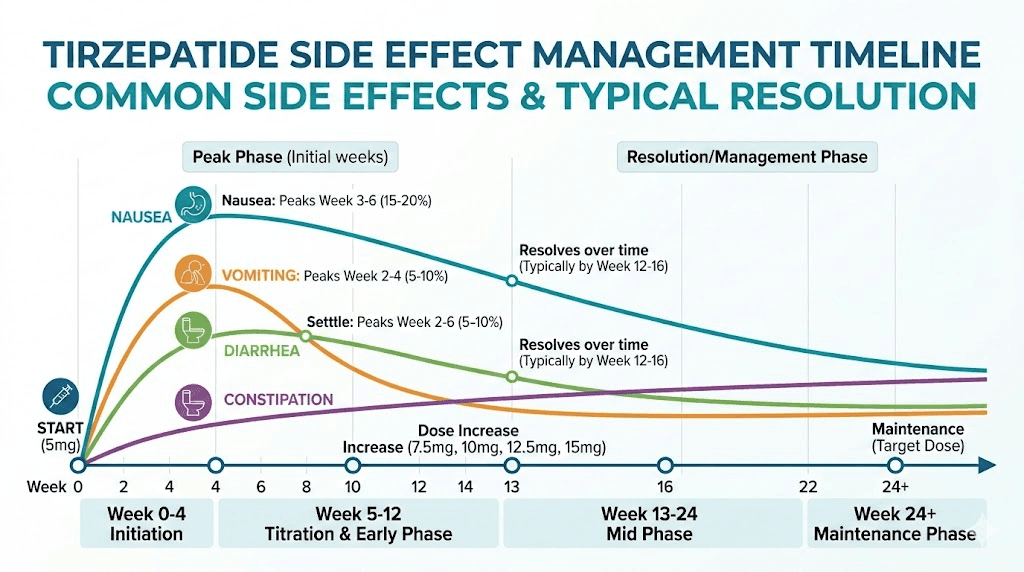
Nausea is the most frequently reported side effect, especially during the first few weeks or after dose increases. It typically subsides as your body adjusts. Eating smaller meals, avoiding greasy foods, and staying hydrated helps. For dietary strategies, a tirzepatide diet plan focused on high-protein, low-fat meals can minimize gastrointestinal discomfort.
Constipation affects a significant percentage of tirzepatide users. Adequate fiber intake, hydration, and potentially magnesium supplementation can help. This side effect does not typically indicate a problem with the compound itself.
Diarrhea is less common but can occur, especially at higher doses. It usually resolves within the first week after a dose increase.
Fatigue and tiredness affect some users. Tirzepatide-related fatigue is often linked to caloric restriction rather than the medication itself. Ensuring adequate protein intake (0.7-1g per pound of body weight daily) helps maintain energy levels.
Headaches can occur during the adjustment period. Staying hydrated and maintaining blood sugar stability through regular small meals typically resolves this. Persistent headaches should be discussed with your provider.
Body aches, joint pain, insomnia, and anxiety are less common but reported by some users. These effects vary significantly between individuals and may or may not be related to the medication.
When side effects suggest a compounding problem
Normal side effects follow predictable patterns. Nausea after dose increases. Gastrointestinal changes during the first weeks. Gradual improvement over time.
Abnormal patterns that might suggest a compounding issue include sudden severe side effects without a dose change, side effects that dramatically differ between refills of the same dose, unusual injection site reactions like extensive redness or warmth, and complete lack of appetite suppression at doses that previously worked.
If you experience any of these patterns with Boothwyn tirzepatide, document everything, contact your prescribing provider, and request batch testing results from the pharmacy online portal. Comparing your batch numbers against any recalled lots is also advisable.
Supplements that may help
Several supplements pair well with tirzepatide regardless of the source pharmacy. B vitamins (especially B12 and B6), magnesium, electrolytes, and high-quality protein are the most commonly recommended. If your Boothwyn formulation already contains methylcobalamin, you may not need additional B12 supplementation. Check the label.
Some researchers combine their tirzepatide protocol with other compounds. Understanding potential interactions matters. Can you take metformin and tirzepatide together? What about phentermine and tirzepatide? These questions require individual medical guidance from your prescribing provider.
What to do if your Boothwyn order goes wrong
Based on the review patterns, having a contingency plan for Boothwyn orders is not paranoia. It is practical preparation.
Before ordering
Verify your telehealth provider uses Boothwyn. If possible, ask about alternative pharmacy options. Confirm the specific formulation you will receive (standalone tirzepatide vs. combination with glycine and B12). Ask about expected shipping timelines and get a written estimate. Request the pharmacy current FDA compliance status.
When your order is delayed
Do not wait passively. Contact both the telehealth platform and Boothwyn directly (1-800-476-7496) after five business days without shipping confirmation. Document all communications with dates and names. Ask for specific timelines, not vague promises. If you are on an active tirzepatide protocol, discuss with your provider whether a modified dosing schedule can accommodate the delay.
When you receive a questionable product
Check the vial immediately upon receipt. Verify the concentration matches your prescription. Check the beyond-use date. Inspect the solution for clarity, color, and particles. Check that shipping temperature was maintained (cold pack should still be cool).
If anything seems wrong, do not inject it. Take photos. Contact your provider. File a complaint with the pharmacy. You can also report concerns directly to the FDA through its MedWatch program. Boothwyn itself maintains a "Tell FDA" page on their website, which ironically was created to encourage patients to support compounding pharmacy access to GLP-1 medications.
When you need an alternative quickly
Having a backup pharmacy identified in advance prevents protocol gaps. Several pharmacies offer affordable tirzepatide with faster turnaround times. Cost-effective options exist that maintain quality standards. Your prescribing provider can usually transfer a prescription to another pharmacy quickly if needed.
Some patients explore oral tirzepatide drops or orally disintegrating tablet forms as alternatives to injectable compounded products. These formulations come from different pharmacy channels and may offer more consistent supply, though oral vs injection efficacy differs.
The regulatory landscape for compounded tirzepatide
Boothwyn operates in a rapidly shifting regulatory environment that every tirzepatide user should understand. The FDA relationship with compounding pharmacies, particularly those filling GLP-1 prescriptions, has become increasingly contentious.
The 503A vs 503B distinction
As a 503A pharmacy, Boothwyn operates under different FDA oversight than 503B outsourcing facilities. 503A pharmacies are primarily regulated by state pharmacy boards rather than directly by the FDA, though the FDA retains authority to inspect and take enforcement action when concerns arise.
This regulatory gap means that many 503A pharmacies compounding tirzepatide receive less frequent federal inspection than 503B facilities. When the FDA does inspect, as they did with Boothwyn, the findings sometimes reveal practices that have gone unchecked for extended periods.
For researchers evaluating pharmacy options, understanding whether a pharmacy operates as 503A or 503B provides context for the level of federal oversight their operations receive.
The Novo Nordisk and Eli Lilly factor
The brand-name manufacturers of semaglutide (Novo Nordisk) and tirzepatide (Eli Lilly) have actively worked to limit compounding pharmacy access to these medications. They argue that compounded versions pose safety risks. Compounding pharmacies counter that they fill a critical access gap for patients who cannot afford or obtain brand-name products.
This tension creates an uncertain future for all compounding pharmacies in the GLP-1 space, including Boothwyn. GLP-1 lawsuit developments could reshape which pharmacies can compound these medications and under what conditions.
What this means for you
The regulatory uncertainty means that any compounding pharmacy, not just Boothwyn, could face supply disruptions, formula changes, or operational restrictions. Having a relationship with your prescribing provider (not just a telehealth subscription) gives you more flexibility to navigate these changes.
Understanding the broader landscape of grey market tirzepatide helps distinguish between legitimate compounding pharmacies and unregulated sources. Boothwyn, despite its issues, operates within the legal compounding framework. That puts it in a fundamentally different category than unregulated peptide vendors.
Boothwyn Pharmacy for semaglutide
While this guide focuses on tirzepatide, many patients considering Boothwyn are also evaluating their compounded semaglutide options. The FDA findings apply equally to both compounds, since the inspection documented subpotent semaglutide alongside subpotent tirzepatide.
The semaglutide potency finding was actually worse than tirzepatide. Semaglutide 2.5mg/mL Injection tested at 79.876% potency, compared to tirzepatide at 86-89%. This means semaglutide patients potentially received an even greater deviation from their intended dose.
For patients weighing semaglutide vs tirzepatide, the pharmacy choice is just as important as the medication choice. A perfectly formulated tirzepatide from a reliable pharmacy may outperform a subpotent semaglutide from a pharmacy with quality control issues, and vice versa.
Other pharmacy reviews that may help with comparison include Empower Pharmacy semaglutide, Belmar Pharmacy semaglutide, Olympia semaglutide, and Lavender Sky semaglutide.
Cost considerations
Boothwyn does not publish standard pricing for compounded tirzepatide. The pharmacy states that costs depend on the medication type, ingredients used, and compounding complexity. They provide cost estimates before compounding begins.
This lack of transparent pricing makes comparison shopping difficult. Other pharmacies publish their prices openly, which helps patients budget and compare options. When evaluating cost, consider the total cost of the experience, not just the per-vial price. Shipping delays that waste medication, subpotent vials that require dose adjustments, and short-shipped orders that need replacement all add hidden costs to the overall experience.
For patients concerned about tirzepatide costs, several resources can help. Affordable tirzepatide options exist across multiple pharmacies. Some patients use payment plans like Afterpay to spread costs. Understanding the cost through various telehealth platforms helps identify the most cost-effective path.
Insurance coverage for compounded medications is generally limited, but some patients have success submitting receipts for partial reimbursement. Insurance coverage developments for GLP-1 medications are worth monitoring as they could affect out-of-pocket costs.
Maximizing results regardless of pharmacy
Whether you choose Boothwyn or another pharmacy for your tirzepatide, the fundamentals of a successful protocol remain the same. Pharmacy quality matters, but it is one variable among many.
Diet and nutrition on tirzepatide
Tirzepatide reduces appetite significantly, which means the calories you do consume need to be strategically chosen. Prioritize protein at every meal. Aim for lean proteins, vegetables, and complex carbohydrates. Avoid foods that exacerbate GI side effects.
A comprehensive food guide for tirzepatide users covers specific food choices that support weight loss while minimizing side effects. Understanding which foods to avoid is equally important. High-fat, greasy foods tend to worsen nausea. High-sugar foods can cause reactive hypoglycemia when combined with GLP-1 medications.
Breakfast strategies for GLP-1 users focus on high-protein, moderate-carb options that sustain energy throughout the morning. Protein shakes designed for GLP-1 protocols can help hit protein targets when appetite is severely suppressed.
Exercise and activity
Exercise is not required for weight loss on tirzepatide, but it dramatically improves body composition outcomes. Weight loss without exercise is possible, but muscle preservation requires resistance training.
The combination of significant caloric restriction (from appetite suppression) and no resistance training leads to muscle loss alongside fat loss. This matters for long-term metabolic health and for maintaining weight loss after the protocol ends.
Monitoring progress
Track more than just weight. Body measurements, energy levels, sleep quality, and mood provide a more complete picture of how your protocol is progressing. The typical weight loss timeline on tirzepatide shows 2-5% body weight loss in the first month, accelerating as doses increase.
If progress stalls, consider whether the issue is pharmacological (dose needs adjustment), behavioral (dietary compliance), or pharmacy-related (potency concerns). Persistent hunger on tirzepatide may indicate that a dose increase is needed, while tirzepatide stopping working entirely could signal a more fundamental issue.
Long-term planning
Every tirzepatide protocol should include an exit strategy. Weaning off tirzepatide requires gradual dose reduction, not abrupt cessation. Maintaining weight loss after tirzepatide depends on the metabolic and behavioral habits established during the protocol.
Some researchers transition from tirzepatide to other compounds. Switching from tirzepatide to semaglutide or switching to retatrutide are options worth discussing with your provider based on your specific goals and response patterns.
Reconstitution and preparation
Boothwyn tirzepatide typically arrives ready to use, not as lyophilized powder. But understanding reconstitution principles helps you evaluate product quality and troubleshoot issues.
Some compounding pharmacies ship lyophilized (freeze-dried) tirzepatide that requires reconstitution before use. This format offers longer shelf life but requires additional preparation. If you ever receive powder form from any pharmacy, the reconstitution process requires bacteriostatic water and careful measurement.
For a 10mg vial, the amount of bacteriostatic water determines the final concentration. Using the correct volume for 10mg tirzepatide or 30mg tirzepatide ensures accurate dosing. The peptide reconstitution calculator on SeekPeptides handles these calculations automatically.
Alternative GLP-1 options to consider
If the Boothwyn findings concern you, exploring alternative GLP-1 compounds and delivery methods is worthwhile.
Comparing semaglutide, tirzepatide, and retatrutide reveals important differences in mechanism, efficacy, and side effect profiles. Tirzepatide acts on both GIP and GLP-1 receptors, while semaglutide targets only GLP-1. Retatrutide adds a third receptor target (glucagon), making it potentially more potent but also less studied.
Oral tirzepatide is an emerging option that bypasses injection entirely. Tablet vs injection comparisons show different absorption profiles and potentially different side effect patterns. Oral semaglutide drops offer another non-injectable alternative.
For researchers interested in broader peptide protocols, the benefits of tirzepatide beyond weight loss include potential improvements in cardiovascular markers, blood sugar control, and inflammatory reduction. These additional benefits may influence your decision about whether to continue with a specific pharmacy or switch approaches entirely.
SeekPeptides members access detailed pharmacy comparisons, protocol builders, and community insights from thousands of researchers who have navigated these exact decisions. For those serious about optimizing their GLP-1 protocol, having access to aggregated experiences across multiple pharmacies provides perspective that individual reviews cannot offer.
Detailed patient experience timeline
Understanding the typical Boothwyn experience from prescription to injection helps set realistic expectations. Based on aggregated patient reports, here is what the journey often looks like.
Week 1: The prescription submission
Your healthcare provider submits a prescription to Boothwyn via phone, fax, or electronic submission. The pharmacy claims to validate and begin processing most prescriptions within 1-3 business days. During periods of high demand for GLP-1 medications, this initial processing step can extend to 5-7 business days.
At this stage, you should receive a cost estimate from the pharmacy. If you do not hear back within 3 business days, calling 1-800-476-7496 proactively is recommended. Patients who wait passively for communication report the longest delays overall.
Week 2-3: Compounding and quality testing
Once your prescription is validated and payment is processed, the actual compounding begins. Boothwyn prepares your specific formulation in their USP-certified clean rooms. Potency testing, sterility testing, and endotoxin testing follow. The pharmacy states that no batch ships before quality assurance verification.
This is where timelines become unpredictable. If all tests pass on the first attempt, processing moves quickly. If a batch fails testing (which the FDA findings suggest has happened more often than it should), the pharmacy must compound a new batch and restart testing. This can add weeks to your wait time without any communication to you about the delay.
Week 3-4: Shipping and delivery
When your order finally ships, Boothwyn uses temperature-controlled packaging for injectable GLP-1 medications. The package should include cold packs to maintain proper temperature during transit. Standard shipping typically takes 2-4 days depending on your location relative to Kennett Square, Pennsylvania.
Upon delivery, immediate inspection is critical. Check the package temperature. Examine the vial for clarity, color, and concentration label. Verify the beyond-use date. Document everything with photos before your first injection.
The refill cycle
Refills should theoretically be smoother than initial orders since the pharmacy already has your prescription on file. Some patients report that refills process faster. Others describe the same delays repeating with each refill cycle, suggesting the bottleneck is not prescription validation but rather compounding capacity or testing throughput.
Planning refills at least two weeks before your current supply runs out provides buffer for potential delays. Running out of tirzepatide between refills creates dosing gaps that can affect your protocol momentum. The duration of a single vial depends on your dose and concentration, so calculate when you will need the next refill as soon as your current shipment arrives.
Understanding the telehealth connection
A significant percentage of Boothwyn tirzepatide patients never chose the pharmacy directly. They signed up with a telehealth platform, got prescribed tirzepatide, and only discovered Boothwyn was their compounding pharmacy when the shipment arrived.
How the telehealth-pharmacy pipeline works
Telehealth platforms that prescribe weight loss medications contract with compounding pharmacies to fill prescriptions. The patient pays the telehealth company, which handles the provider consultation, prescription, and customer relationship. The compounding pharmacy handles the actual medication preparation and shipping.
This creates a disconnection. When problems arise, the telehealth platform points to the pharmacy. The pharmacy points to the telehealth platform. The patient gets bounced between two organizations, neither of which takes full responsibility.
Multiple Boothwyn reviews specifically mention telehealth platforms like Zealthy as the intermediary. The patient experience with Boothwyn often reflects the telehealth platform communication quality as much as the pharmacy compounding quality. Understanding the Zealthy-Boothwyn relationship helps set expectations if your prescription is routed through this pathway.
Questions to ask your telehealth provider
Before committing to a telehealth platform for tirzepatide, ask these specific questions:
Which compounding pharmacy fills your prescriptions? Can I choose a different pharmacy if I prefer? What is the typical timeline from prescription to delivery? What happens if my shipment is delayed? Who do I contact if there is a problem with the medication itself? Do you guarantee the potency and sterility of the compounded medications? Can I see batch testing results?
If the telehealth platform cannot or will not answer these questions, consider that a red flag. Transparency about the supply chain is not an unreasonable expectation when you are injecting compounded medication.
Direct vs indirect ordering
Some patients have their independent healthcare provider send prescriptions directly to Boothwyn, bypassing telehealth intermediaries entirely. These patients often report better communication with the pharmacy and faster resolution when issues arise. The direct relationship eliminates the middle layer that can amplify delays and miscommunication.
If your provider is willing to prescribe tirzepatide independently and send the prescription to a compounding pharmacy of your choice, this approach gives you more control over the process. You can research pharmacies, compare tirzepatide pricing across providers, and switch pharmacies without changing your healthcare provider.
The broader compounding pharmacy landscape
Boothwyn exists within a compounding pharmacy industry that is going through dramatic upheaval. Understanding this context helps explain some of the challenges patients face and why quality inconsistencies exist.
Demand far exceeds supply
The explosion of GLP-1 medication demand has overwhelmed compounding pharmacy capacity nationwide. Pharmacies that previously compounded a handful of tirzepatide prescriptions per week suddenly face hundreds or thousands. Scaling sterile compounding is not like scaling a warehouse operation. It requires trained personnel, certified clean rooms, quality testing infrastructure, and regulatory compliance at every step.
Some pharmacies have scaled successfully. Others have prioritized throughput over quality. The FDA findings at Boothwyn may reflect the consequences of rapid scaling without adequate quality infrastructure to match. When you understand how tirzepatide works at the molecular level, the importance of precise compounding becomes clear. Subpotent medications do not just work slower. They may not cross therapeutic thresholds at all.
The regulatory tug-of-war
Brand-name pharmaceutical manufacturers want compounding pharmacies out of the GLP-1 market entirely. They argue that only FDA-approved manufacturing processes can guarantee safety and efficacy. Compounding pharmacies argue that millions of patients cannot access or afford brand-name products and that compounding serves a critical public health need.
This conflict plays out in courtrooms, congressional hearings, and FDA enforcement actions. Every compounding pharmacy in the GLP-1 space operates under the threat of potential market exclusion. This uncertainty affects long-term business planning, investment in quality infrastructure, and willingness to take corrective action when problems are identified.
For patients, this means the compounding pharmacy you use today may not be available next year. Building a relationship with a prescribing provider who can adapt to changing pharmacy options provides more stability than loyalty to any single compounding source.
What "quality" actually means in compounding
Not all compounding pharmacies are created equal, and the quality spectrum is wider than most patients realize. At one end, you have pharmacies with dedicated GLP-1 compounding teams, state-of-the-art clean rooms, comprehensive testing programs, and established track records. At the other end, you have pharmacies that are functionally corner drugstores that have added compounding to chase the GLP-1 revenue opportunity.
Boothwyn falls somewhere in the middle. The accreditations and testing protocols place it above many competitors. The FDA findings and patient reviews reveal execution gaps that undermine those credentials. A pharmacy with excellent policies but inconsistent execution creates a different kind of risk than a pharmacy with no policies at all.
When evaluating any compounding pharmacy, look beyond certifications and marketing. Ask for batch testing results. Check FDA inspection databases. Read patient reviews across multiple platforms. Compare reported experiences over time, not just single snapshots. The cheapest compounded tirzepatide is not necessarily the worst, and the most expensive is not necessarily the best.
Specific formulation analysis
Boothwyn compounds tirzepatide in formulations that deserve individual examination, because what is in your vial affects more than just the active ingredient.
Tirzepatide 10mg/mL standalone
This is the simpler formulation. Tirzepatide as the active ingredient with standard pharmaceutical-grade excipients. The lower concentration makes it easier to measure precise doses at the lower end of the dosing scale. For patients on starting doses of 2.5mg, a 10mg/mL concentration means drawing 25 units on an insulin syringe, which provides good precision.
The FDA potency findings for this formulation showed 86.779% and 89.13%. In practical terms, if you drew 25 units expecting 2.5mg, you would actually inject approximately 2.17mg to 2.23mg. At starting doses, this shortfall might delay the onset of noticeable appetite suppression. At higher doses like 10mg or 15mg, the proportional shortfall becomes larger in absolute terms.
Tirzepatide 17mg/mL with glycine and methylcobalamin
This combination formulation includes 5mg/mL glycine and 5mg/mL methylcobalamin alongside the active tirzepatide. The higher tirzepatide concentration (17mg/mL) means each vial contains more doses, potentially reducing per-dose cost. But the higher concentration also means smaller injection volumes, which can make precise dosing more challenging with standard insulin syringes.
The glycine component serves primarily as a stabilizer. Glycine in tirzepatide compounds helps maintain peptide stability during storage and may contribute to the formulation tolerating temperature fluctuations better than standalone tirzepatide. However, this theoretical benefit is undermined if the pharmacy is simultaneously recommending unsupported storage conditions like freezing.
The methylcobalamin component at 5mg/mL is a substantial B12 dose. Weekly injections would deliver 5mg of methylcobalamin per dose (assuming 1mL injection volume), which far exceeds the daily recommended intake of B12. This is generally safe since B12 is water-soluble and excess is excreted, but patients should be aware of the additional supplementation they are receiving. If you are already taking B6 supplements or other B vitamins, discuss the cumulative intake with your provider.
This is the formulation that failed sterility testing according to the FDA findings. While a failed sterility test does not automatically mean every vial in that batch was contaminated, it indicates that the sterility assurance process did not function as intended during that particular batch production.
How to verify your specific formulation
Every Boothwyn vial should include a label with the formulation details, concentration, lot number, and beyond-use date. Cross-reference this information with the batch testing results available through the pharmacy online portal. If any information is missing or unclear, contact the pharmacy before using the product.
Pay particular attention to the lot number. This is the identifier that links your specific vial to quality testing results. If Boothwyn cannot provide testing results for your specific lot number, that is a concern worth escalating to your prescribing provider.
Making your decision about Boothwyn Pharmacy
The evidence points in several directions simultaneously. Here is how to weigh it.
Reasons someone might choose Boothwyn
Triple accreditation (PCAB, ACHC, URAC) exceeds most competitors. Patient-accessible batch testing results provide transparency. Nearly a century of compounding experience suggests deep operational knowledge. The pharmacy compounds multiple tirzepatide formulations including combination products. For patients whose telehealth provider uses Boothwyn, switching may not be simple.
Reasons someone might avoid Boothwyn
FDA inspection findings documented subpotent tirzepatide and semaglutide. Products that failed sterility testing were released and distributed. A warning letter from January 2026 found corrective actions were incomplete. Trustpilot ratings sit at 2.4/5 with 70% one-star reviews. Shipping delays of up to 59 days have been documented. Storage labeling contradicted approved product guidelines. The pharmacy has a pattern of regulatory issues spanning multiple years.
The balanced perspective
Every compounding pharmacy has imperfections. Many pharmacies that have never been inspected by the FDA may have issues that simply have not been documented. The fact that Boothwyn was inspected and problems were found does not necessarily mean it is worse than uninspected competitors. It means we know more about its specific problems.
However, the severity and breadth of the findings, combined with the pattern of regulatory actions and the consistency of negative patient reviews, justifies caution. If you choose Boothwyn, do so with eyes open. Check your batch testing results. Verify potency numbers fall within acceptable ranges (typically 90-110% of label claim). Report any concerns through appropriate channels.
If you have alternatives, comparing the documented quality records of multiple pharmacies is the responsible approach. SeekPeptides provides resources for evaluating compounding pharmacies, including detailed guides on pharmacy-specific protocols and community feedback from researchers who have used these services firsthand.
Protecting yourself as a compounded tirzepatide patient
Regardless of which pharmacy you choose, proactive self-advocacy dramatically improves outcomes. The patients who report the best experiences with compounded tirzepatide, from any pharmacy, share common habits.
Document everything
Keep a log of every interaction with your pharmacy and telehealth provider. Dates, names, promises made, and outcomes delivered. When problems arise, documentation transforms a he-said-she-said situation into a factual record that supports your case. Photograph every vial upon arrival, including the label, lot number, beyond-use date, and overall appearance of the solution.
Test your own response patterns
Track your appetite suppression, energy levels, and weight loss trajectory weekly. Consistent tracking lets you identify if a new batch performs differently than previous ones. A sudden drop in appetite suppression at the same dose could indicate a potency issue with the new batch, not a change in your body response.
Some researchers go further, maintaining detailed logs that correlate specific lot numbers with their subjective response. This level of tracking is not paranoia when the FDA has documented potency variations at your pharmacy.
Build relationships, not transactions
The patients who receive the best service from compounding pharmacies are those who establish direct relationships. Call the pharmacy directly rather than relying exclusively on telehealth intermediaries. Learn the names of pharmacists and technicians. Ask informed questions that demonstrate you understand the product. Pharmacies, like any service business, tend to prioritize engaged, knowledgeable customers.
For SeekPeptides members, the community forum provides real-time feedback on pharmacy experiences, batch quality reports, and strategic advice for navigating the compounded GLP-1 landscape. Collective intelligence from thousands of researchers is more powerful than individual experience alone.
Know your rights
As a patient receiving compounded medications, you have the right to request batch testing results, to refuse a product that does not match your prescription, to file complaints with your state pharmacy board and the FDA, and to transfer your prescription to another pharmacy at any time. These rights exist regardless of your telehealth platform policies or the pharmacy preferences.
If you believe you received a subpotent or contaminated product from Boothwyn or any pharmacy, report it through the FDA MedWatch program. These reports drive the inspections that hold pharmacies accountable. The FDA inspection of Boothwyn likely resulted in part from accumulated patient and provider reports that triggered regulatory attention.
Frequently asked questions
Is Boothwyn Pharmacy FDA approved?
Boothwyn Pharmacy is not FDA approved in the traditional sense. As a 503A compounding pharmacy, it operates under state pharmacy board regulation with FDA oversight authority. The pharmacy is FDA-registered and subject to FDA inspection, but compounding pharmacies do not receive the same "approval" as pharmaceutical manufacturers. The distinction between 503A and 503B pharmacies matters for understanding the regulatory framework.
Did Boothwyn Pharmacy recall their tirzepatide?
Yes. On July 9, 2025, Boothwyn initiated a voluntary recall of all drug products within expiry that had out-of-specification results. The pharmacy also ceased production of all GLP-1 drug products intended to be sterile. They notified the FDA of their intent to resume GLP-1 production in August 2025.
Is Boothwyn Pharmacy tirzepatide safe to use?
This is a question only your healthcare provider can answer for your specific situation. The FDA findings document concerns about potency and sterility that warrant careful evaluation. If you are currently using Boothwyn tirzepatide, check your batch testing results through the pharmacy portal and discuss any concerns with your prescribing provider.
Why is my Boothwyn tirzepatide red?
Red coloration in Boothwyn tirzepatide indicates the formulation contains methylcobalamin (vitamin B12), which is naturally red in color. This is characteristic of their tirzepatide-glycine-B12 compound formulation. Standalone tirzepatide without B12 should be clear to slightly opalescent. If your prescription was for standalone tirzepatide and you received a red solution, contact the pharmacy. Understanding tirzepatide color variations helps identify your specific formulation.
How long does Boothwyn Pharmacy take to ship?
Boothwyn claims most prescriptions ship within 1-3 business days. Patient reports range from 3 days (best case) to 59 days (worst case). The wide variability suggests shipping times depend on demand, inventory levels, and whether the order comes through a telehealth intermediary. Planning for potential delays by ordering before your current supply runs out is advisable.
Can I switch from Boothwyn to another pharmacy?
Yes. Your prescribing provider can transfer your tirzepatide prescription to another compounding pharmacy. If you use a telehealth platform, check whether they allow pharmacy selection or if Boothwyn is their exclusive partner. Some patients switch by requesting a new prescription from a provider who works with their preferred pharmacy.
Should I freeze my Boothwyn tirzepatide?
Despite the Boothwyn previous labeling that said "store frozen," the FDA flagged this instruction because no stability studies supported it. Standard tirzepatide storage is refrigeration at 2-8 degrees Celsius (36-46 degrees Fahrenheit). Approved brand-name tirzepatide products explicitly state "Do not freeze." Follow your current label instructions but be aware of this discrepancy.
How does Boothwyn compare to Empower Pharmacy for tirzepatide?
Empower Pharmacy is one of the most widely used compounding pharmacies for tirzepatide and generally receives more consistent patient reviews. Both are 503A pharmacies, but Empower has not received similar FDA warning letters regarding GLP-1 compound quality. The Empower dosage chart provides clear dosing guidance that many patients find helpful.
External resources
In case I do not see you, good afternoon, good evening, and good night. May your compounding stay potent, your shipments stay cold, and your protocols stay consistent.