Feb 28, 2026
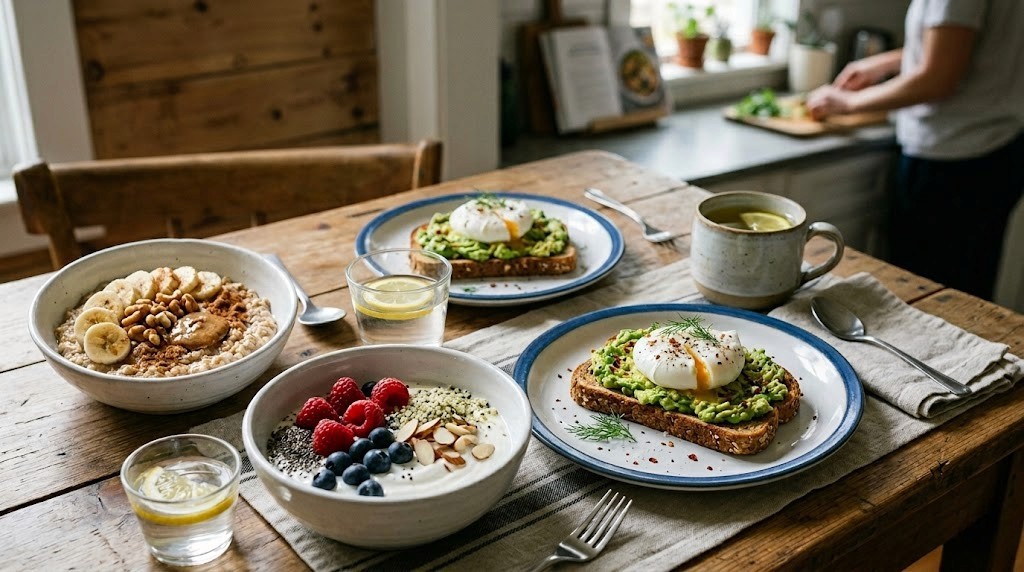
You are losing muscle. Not just fat. Muscle.
Up to 40% of the weight people lose on semaglutide and tirzepatide comes from lean mass, and that number climbs higher when breakfast becomes an afterthought. Skipping the morning meal or reaching for toast and juice might feel harmless when your appetite has vanished. But those choices carry consequences that compound over weeks and months of GLP-1 therapy.
Here is the uncomfortable truth. Most people on GLP-1 medications are undereating protein at the exact moment their bodies need it most. The medications work. They suppress appetite brilliantly. But that suppression creates a dangerous blind spot where muscle tissue quietly disappears alongside the fat, metabolism slows, and the transformation that looked so promising in the first few weeks starts to stall.
Breakfast is where you fix this.
Not with complicated recipes or expensive supplements. With simple, protein-forward meals that take 5 to 15 minutes and deliver 25 to 30 grams of protein before the day even starts. This guide provides 25+ breakfast ideas specifically designed for GLP-1 users, built around the research on muscle preservation, nausea management, and sustained energy that actually matters when your appetite is running on empty. Whether you take semaglutide or tirzepatide, these meals work because they are designed around how GLP-1 medications change digestion, hunger signals, and nutrient absorption.
Why breakfast matters more on GLP-1 medications
Breakfast on a GLP-1 medication is not the same as breakfast without one. The rules change. The priorities shift. And getting this meal wrong sets a nutritional trajectory for the entire day that becomes very difficult to correct.
The biggest reason comes down to muscle.
Research presented at ENDO 2025 found that women and older adults taking semaglutide face higher risks of muscle loss, but that adequate protein intake may protect against this outcome. A separate 6-month study of 200 adults on GLP-1 receptor agonists showed that those who combined their medication with adequate protein intake and resistance training lost approximately 13% of body weight but only about 3% of muscle mass. Compare that to the 40% lean mass loss seen in less structured approaches, and the gap becomes staggering.
Protein timing matters here. Studies on muscle protein synthesis consistently show that distributing protein across meals, with 25 to 30 grams per sitting, maximally stimulates the muscle-building response. Front-loading protein at breakfast gives your body eight or more hours of anabolic activity before lunch. Skip breakfast, and you are already in a deficit that dinner alone cannot fix.
Then there is the blood sugar question. GLP-1 medications regulate glucose by enhancing insulin secretion and slowing gastric emptying. Eating a high-sugar breakfast, cereal, juice, pastries, works against the medication by creating glucose spikes that the drug then has to manage. A protein-and-fiber breakfast, on the other hand, keeps blood sugar flat and lets the medication do what it does best: control appetite and promote fat loss without the rollercoaster.
There is also the energy problem. Many GLP-1 users report fatigue and low energy, especially in the first weeks. A protein-forward breakfast provides steady fuel without the crash that comes from carbohydrate-heavy options. It stabilizes energy levels through the morning and often reduces the dizziness and brain fog that people commonly attribute to the medication itself.
Finally, timing your injection around breakfast matters. Many providers recommend taking your weekly injection at a consistent time, and eating a light breakfast beforehand can reduce the nausea that commonly follows. Planning breakfast around your injection schedule is not just convenient. It is strategic.
The protein-first rule for every GLP-1 breakfast
Before looking at any recipe, internalize this one rule: protein comes first. Always. Every morning. No exceptions.
The target is 25 to 30 grams of protein at breakfast. This number is not arbitrary. It represents the threshold at which muscle protein synthesis reaches its maximum stimulation in most adults. Older adults may need 30 to 40 grams per meal due to a phenomenon called anabolic resistance, where the body becomes less efficient at converting dietary protein into muscle tissue.
On a GLP-1 medication, hitting this target becomes both more important and more difficult. More important because the rapid weight loss these medications produce puts muscle tissue at risk. More difficult because your appetite is genuinely suppressed, and eating 30 grams of protein when you are not hungry requires planning and the right food choices.
Here are the highest-protein breakfast foods ranked by protein density per calorie:
Egg whites (1 cup): 26g protein, 126 calories
Greek yogurt, plain nonfat (1 cup): 20g protein, 100 calories
Cottage cheese, low-fat (1 cup): 28g protein, 163 calories
Whey protein powder (1 scoop): 24-30g protein, 120-150 calories
Whole eggs (3 large): 18g protein, 210 calories
Turkey sausage (3 links): 15g protein, 120 calories
Smoked salmon (3 oz): 16g protein, 100 calories
Notice the pattern. The best options are all low-volume, high-density protein sources. This matters enormously when GLP-1 medications have suppressed your appetite and made large meals feel impossible. You do not need to eat a big breakfast. You need to eat a dense one.
SeekPeptides members frequently report that switching from carb-heavy breakfasts to protein-first mornings dramatically reduced their midmorning headaches and energy crashes. The pattern is consistent across both semaglutide and tirzepatide users.
One more thing about timing. Eat protein within 60 to 90 minutes of waking if possible. The body is primed for protein absorption in the morning after an overnight fast, and delaying breakfast past this window on a GLP-1 medication can worsen the fatigue many users experience.
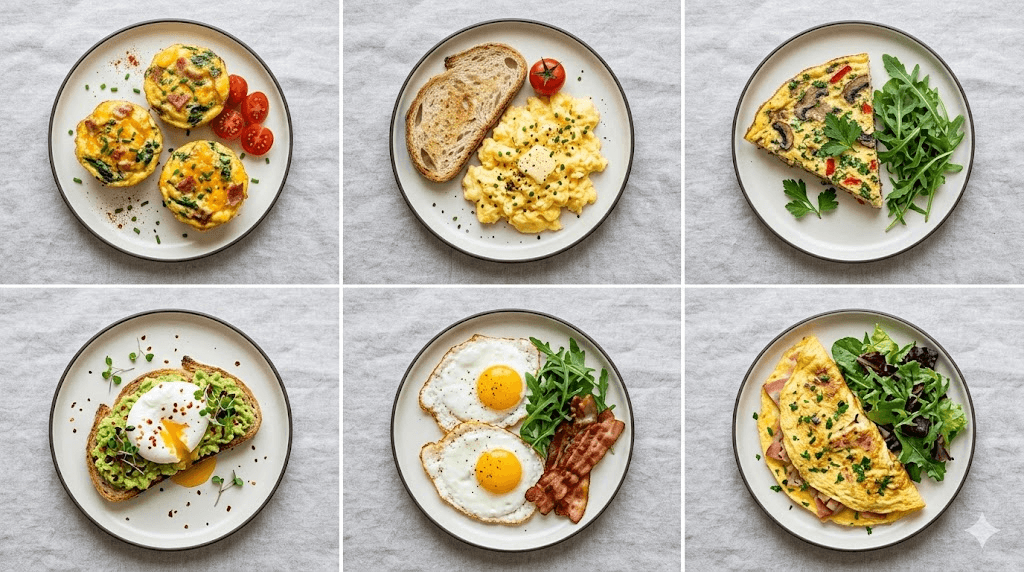
Egg-based GLP-1 breakfast ideas
Eggs are the single best breakfast food for GLP-1 users. Period. They are cheap, versatile, packed with complete protein, and gentle on stomachs that are still adjusting to medication. Six grams of protein per egg means three eggs already gets you to 18 grams, and adding a few whites or some cheese pushes you past the 25-gram threshold easily.
1. Veggie egg muffins (make 12 at once)
Whisk 10 eggs with a quarter cup of milk. Add diced bell peppers, spinach, mushrooms, and a handful of shredded cheese. Pour into a greased muffin tin and bake at 350 degrees for 20 to 25 minutes. Each two-muffin serving delivers approximately 14 to 16 grams of protein. Add a side of cottage cheese to hit your full target. These store in the refrigerator for five days and reheat in 30 seconds. For people dealing with constipation from their GLP-1 medication, the vegetables in these muffins add fiber that helps keep things moving.
2. Two-egg scramble with turkey sausage
Scramble two whole eggs with one egg white. Cook two turkey sausage links on the side. Serve with a quarter avocado and a handful of cherry tomatoes. Total protein: approximately 28 grams. Total prep time: 7 minutes. This is the kind of balanced meal that works whether you are on week one or month six of your GLP-1 protocol. The fats from the avocado slow digestion further, which pairs well with the appetite suppression your medication already provides.
3. Spinach and feta egg wrap
Scramble two eggs with a handful of fresh spinach. Spoon into a whole wheat tortilla and top with crumbled feta cheese. Roll and eat. Protein: approximately 22 grams. Add a tablespoon of hummus for extra protein and flavor. This works well as a meal plan staple because the ingredients stay fresh all week and the assembly takes under 5 minutes.
4. Egg and cottage cheese bowl
Soft scramble two eggs. Place them over half a cup of cottage cheese. Top with everything bagel seasoning, sliced tomato, and a drizzle of hot sauce. Protein: approximately 30 grams. This combination is a protein powerhouse that tastes far better than it sounds. The cottage cheese adds creaminess without the heaviness that triggers bloating in many GLP-1 users. People following a semaglutide diet plan often find this becomes their go-to meal within the first month.
5. Baked egg cups with Canadian bacon
Line muffin tins with Canadian bacon slices to create cups. Crack one egg into each cup. Season with salt and pepper. Bake at 375 degrees for 12 to 15 minutes. Two cups deliver about 20 grams of protein with minimal fat and almost no carbohydrates. These are excellent on mornings where nausea is present because the portion is small but nutrient-dense. Pair them with a few bites of whole grain toast if your stomach allows it.
6. Protein-packed frittata slices
Make a large frittata on Sunday using 8 eggs, diced vegetables, cooked chicken breast or turkey, and cheese. Slice into portions and refrigerate. Each slice provides 20 to 25 grams of protein depending on what you add. Reheat a slice each morning in 60 seconds. This single prep session creates four to five breakfasts, which is particularly valuable for people on tirzepatide who find their appetite varies significantly from day to day.
Greek yogurt and cottage cheese breakfasts
Dairy-based breakfasts offer something eggs do not: they require zero cooking. When your first dose of tirzepatide has left you queasy at 6 AM and the thought of standing over a stove feels unbearable, yogurt and cottage cheese become your best friends. They are cold, gentle on the stomach, and deliver substantial protein without the smells that can trigger GI side effects.
7. Greek yogurt protein bowl
Start with one cup of plain nonfat Greek yogurt (20 grams protein). Top with half a cup of mixed berries, one tablespoon of chia seeds, and a tablespoon of crushed walnuts. If you need more protein, stir in half a scoop of vanilla protein powder. Total protein: 25 to 35 grams depending on the protein powder. The berries add antioxidants and natural sweetness without the blood sugar spike of honey or maple syrup. This is one of the most popular breakfast choices for semaglutide users because it goes down easily even on nauseous mornings.
8. Cottage cheese and fruit plate
One cup of low-fat cottage cheese (28 grams protein) served with sliced peaches, a handful of blueberries, and a sprinkle of granola. Total protein: approximately 30 grams. Cottage cheese has experienced a renaissance for good reason. It is one of the most protein-dense foods available and pairs naturally with both sweet and savory toppings. For GLP-1 users managing digestive issues, cottage cheese is generally well-tolerated because it is already partially broken down during production.
9. High-protein yogurt parfait
Layer plain Greek yogurt with a scoop of protein powder, sliced almonds, and a drizzle of sugar-free peanut butter. Top with a few dark chocolate chips for flavor. Protein: 30 to 35 grams. This parfait works as a dessert-style breakfast that satisfies without triggering the blood sugar issues that sugary breakfasts cause. The healthy fats from almonds and peanut butter also support the absorption of fat-soluble vitamins and supplements many GLP-1 users take alongside their medication.
10. Savory cottage cheese toast
Spread half a cup of cottage cheese on a slice of whole grain toast. Top with sliced avocado, cherry tomatoes, and a sprinkle of red pepper flakes. Season with salt and pepper. Protein: approximately 20 grams. Add a hard-boiled egg on the side to push past 26 grams. This savory option works well for people who cannot tolerate sweet foods in the morning, a common experience during the early weeks of tirzepatide dosing.
11. Ricotta and berry toast
Spread a quarter cup of ricotta cheese on whole grain bread. Top with fresh raspberries, a drizzle of honey, and a pinch of cinnamon. Protein from ricotta alone: about 7 grams. Pair with a side of scrambled egg whites (13 grams) to hit your target. This lighter option is ideal for mornings when appetite is minimal but you still need to get protein in. Many people tracking their weight loss progress find that even small, protein-rich breakfasts like this prevent the mid-afternoon energy crashes that lead to poor food choices later.
Smoothies and protein shakes for GLP-1 mornings
When solid food feels impossible, liquid breakfast becomes essential. Smoothies bypass the chewing and volume issues that GLP-1 medications create, delivering 25 to 35 grams of protein in a format your body can absorb without the discomfort. They are also the fastest option on this list. Blend for 30 seconds and walk out the door.
The key to a good GLP-1 smoothie is keeping sugar low and protein high. Skip the banana-mango-juice combinations that most smoothie recipes call for. Those are sugar bombs disguised as health food. Instead, build around protein powder, Greek yogurt, and a small amount of berries for flavor.
12. The basic GLP-1 protein shake
One scoop vanilla whey protein powder, one cup unsweetened almond milk, half a cup frozen mixed berries, one tablespoon natural peanut butter, and a handful of ice. Blend for 30 seconds. Protein: 28 to 32 grams. This is the foundation shake. Learn it, customize it, drink it every day if you need to. For complete guidance on GLP-1 protein shakes, that resource covers protein powder selection, timing, and ingredient combinations in detail.
13. Green protein smoothie
One scoop unflavored or vanilla protein powder, one cup unsweetened almond milk, a large handful of baby spinach, half a frozen banana, one tablespoon chia seeds, and ice. Protein: 26 to 30 grams. The spinach is virtually undetectable in taste but adds iron, folate, and fiber. This is especially helpful for GLP-1 users dealing with low energy since the iron and B-vitamins from spinach support red blood cell production.
14. Peanut butter chocolate protein shake
One scoop chocolate whey protein, one cup milk of choice, two tablespoons powdered peanut butter, half a frozen banana, and ice. Protein: 30 to 34 grams. This tastes like a milkshake but delivers serious nutrition. The powdered peanut butter (PB2 or similar) provides the flavor of peanut butter with far less fat, making it gentler on stomachs that are sensitive during the early stages of tirzepatide titration.
15. Overnight protein shake (no blender needed)
The night before, combine one scoop protein powder, one cup milk, and one tablespoon chia seeds in a shaker bottle. Refrigerate overnight. In the morning, shake and drink. The chia seeds thicken the shake into a pudding-like consistency. Protein: 26 to 30 grams. Total morning prep time: zero. This is the ultimate energy-preserving breakfast for mornings when even blending feels like too much effort.
16. Berry Greek yogurt smoothie
Half a cup plain Greek yogurt, half a cup frozen strawberries, one cup unsweetened almond milk, one scoop vanilla protein powder, and a tablespoon of flaxseed. Blend until smooth. Protein: 32 to 36 grams. The Greek yogurt base makes this smoothie thicker and more satisfying than milk-only versions. The flaxseed adds omega-3 fatty acids that support the anti-inflammatory processes some GLP-1 users report alongside their B12-enhanced semaglutide protocols.
Overnight oats and warm oatmeal options
Oatmeal gets a bad reputation in GLP-1 circles because plain oatmeal is essentially a bowl of carbohydrates. But when you rebuild it as a protein delivery system, oatmeal becomes one of the most flexible and satisfying breakfast options available. The trick is treating the oats as a base, not the main event, and loading the bowl with protein additions that transform it.
17. High-protein overnight oats
Combine half a cup rolled oats, one scoop vanilla protein powder, three-quarters cup unsweetened almond milk, one tablespoon chia seeds, and one tablespoon natural peanut butter in a jar. Stir, seal, and refrigerate overnight. In the morning, top with a few berries. Protein: 30 to 34 grams. The overnight method softens the oats without cooking and creates a thick, pudding-like texture that is easier on stomachs sensitive from GLP-1 side effects.
18. Egg white oatmeal
This sounds strange. It works beautifully. Cook half a cup of oats with water as normal. When they are almost done, stir in half a cup of liquid egg whites and keep stirring until the egg whites are fully incorporated and cooked. The oatmeal becomes incredibly creamy. Top with cinnamon and a drizzle of honey. Protein: 24 grams. This trick has been used by bodybuilders for decades and is finally gaining popularity among people on semaglutide who want the comfort of oatmeal with the protein density their bodies demand.
19. Cottage cheese oatmeal bowl
Cook half a cup of oats. Stir in half a cup of cottage cheese while hot, which melts into a creamy sauce. Top with sliced almonds, cinnamon, and blueberries. Protein: 26 grams. The cottage cheese adds both protein and a tangy richness that makes the oatmeal taste almost indulgent. For people following a structured tirzepatide diet plan, this works as both a carb source for workout mornings and a protein-forward meal for rest days.
20. Pumpkin spice protein oats
Combine half a cup oats, a quarter cup canned pumpkin puree, one scoop vanilla protein powder, three-quarters cup milk, and pumpkin pie spice. Stir and refrigerate overnight, or cook on the stove. Top with a tablespoon of pecans. Protein: 28 to 32 grams. The pumpkin adds fiber, vitamin A, and volume without significant calories. This is a seasonal favorite but honestly works year-round for GLP-1 users who want breakfast to feel like a treat rather than a clinical obligation.
Savory toast and wrap breakfasts
Not everyone wants sweet breakfast foods. And on a GLP-1 medication, savory options often sit better in the stomach, especially during the first few weeks when the body is still adjusting. Research suggests that strong smells and sweet flavors can trigger more nausea than bland or savory options, making these breakfast ideas particularly useful for people in the early phases of GLP-1 therapy.
21. Smoked salmon toast
One slice of whole grain toast topped with two tablespoons of cream cheese, three ounces of smoked salmon, capers, thinly sliced red onion, and a squeeze of lemon. Protein: approximately 20 grams. Pair with a hard-boiled egg (6 grams) to hit 26 grams total. The omega-3 fatty acids in smoked salmon provide anti-inflammatory benefits that complement the metabolic effects of GLP-1 medications. People tracking their before-and-after results often note that omega-3-rich diets produce better body composition outcomes alongside their medication.
22. Turkey and cheese breakfast wrap
Lay two slices of deli turkey and a slice of Swiss cheese on a whole wheat tortilla. Add a handful of spinach and a tablespoon of mustard. Roll tightly. Protein: approximately 22 grams. This requires zero cooking and can be assembled in under two minutes, which makes it ideal for people who need to eat something before their morning commute but are dealing with the appetite suppression that makes food preparation feel overwhelming.
23. Avocado and egg open-face sandwich
Toast one slice of sourdough bread. Mash a quarter of an avocado on top. Add a poached or fried egg. Season with salt, pepper, and red pepper flakes. Protein: approximately 12 grams from the egg and bread alone. Add two slices of turkey bacon on the side for an additional 8 grams. The healthy fats from avocado help with the absorption of fat-soluble nutrients and add satiety without the heavy feeling that fried foods create.
24. Breakfast quesadilla
Fill a whole wheat tortilla with scrambled eggs (two eggs), shredded cheese, and black beans. Cook in a dry skillet until the tortilla is crispy and the cheese melts. Slice into triangles. Protein: approximately 26 grams. The black beans add both protein and fiber, which is critical for people using GLP-1 medications who struggle with constipation. This recipe reheats well, so making two at a time and saving one for the next day cuts your prep time in half.
25. Protein-loaded breakfast burrito
Scramble three egg whites with one whole egg. Add cooked chicken sausage, black beans, a tablespoon of salsa, and a sprinkle of cheese. Wrap in a large tortilla. Protein: approximately 32 grams. This is the highest-protein option in the toast and wrap category and works best on mornings when your appetite is closer to normal. People who are further along in their semaglutide timeline often find their appetite stabilizes enough to enjoy fuller breakfasts like this one.
Grab-and-go breakfasts for busy mornings
Some mornings are a disaster. The alarm did not go off. The dog needs walking. Work starts in 20 minutes. You do not have time to cook anything, and you definitely do not have time to blend a smoothie.
These options exist for those mornings.
They require zero preparation the day of, minimal cleanup, and deliver protein in under 60 seconds of actual effort. Because skipping breakfast entirely is always worse than eating something imperfect, especially when you are managing a long-term GLP-1 protocol.
26. Hard-boiled eggs and cheese stick
Prep a batch of hard-boiled eggs on Sunday night. Store them peeled in the refrigerator. Grab two eggs and a cheese stick on your way out the door. Protein: approximately 18 grams. Not quite at the 25-gram target, but infinitely better than nothing. Add a handful of almonds (6 grams) from the desk drawer at work to get closer. People on microdosed tirzepatide protocols often find this minimalist breakfast is all they need on low-appetite mornings.
27. Protein bar (choose carefully)
Not all protein bars work for GLP-1 users. Many are glorified candy bars with 15 grams of sugar. Look for bars with at least 20 grams of protein, under 5 grams of sugar, and minimal artificial sweeteners. Good options include RXBar, Built Bar, and Quest bars. Keep a box at home and one at the office. Protein: 20 to 30 grams depending on the brand. Just be aware that some GLP-1 users report that certain sweeteners worsen GI symptoms, so test a bar on a non-injection day before relying on it.
28. Ready-made protein shake
Keep a pack of premade protein shakes in the refrigerator. Brands like Fairlife, Premier Protein, or Orgain deliver 25 to 42 grams of protein per bottle. Grab one. Drink it on the commute. Done. These are the absolute minimum-effort option and serve as a safety net for days when cooking or prepping simply is not going to happen. They also work well for people experiencing significant medication-related appetite changes who need liquid calories over solid food.
29. Overnight protein oats in a jar
Prepare overnight oats (recipe 17 above) in individual mason jars on Sunday. You now have breakfast for Monday through Thursday that requires zero morning effort. Grab the jar, grab a spoon, eat at your desk or in the car. This batch-prep approach is the single most recommended strategy for consistent weight loss on semaglutide because it removes the decision fatigue that leads to skipped breakfasts.
The 5-minute meal prep system for GLP-1 breakfasts
The difference between people who consistently eat a high-protein breakfast on GLP-1 medications and those who do not almost always comes down to one thing. Preparation.
Not motivation. Not willpower. Not appetite. Preparation.
When high-protein food is already in the refrigerator, ready to eat, the barrier drops to nearly zero. When it requires cooking, shopping, or decision-making at 6 AM on a morning when the medication has crushed your appetite, the barrier becomes insurmountable. Here is a simple system that takes about 30 minutes on Sunday and produces breakfast for the entire week.
Sunday prep session (30 minutes total):
Hard-boil 8 to 10 eggs (12 minutes cooking, 5 minutes peeling). Store peeled in a container. These become grab-and-go breakfasts, additions to other meals, and protein boosters for any breakfast that falls short.
Make 12 egg muffins (5 minutes mixing, 20 minutes baking). Use recipe 1 above. Store in an airtight container. Reheat two muffins each morning in 30 seconds.
Prepare 4 jars of overnight oats (10 minutes total). Assembly-line the jars: oats, protein powder, milk, chia seeds, peanut butter. Seal and refrigerate.
Pre-portion smoothie bags (5 minutes). Put individual servings of frozen fruit, spinach, and protein powder into freezer bags. Each morning, dump one bag into the blender, add liquid, blend, and go.
This system covers every possible morning scenario. High appetite? Eat egg muffins with a side of cottage cheese. Low appetite? Drink a smoothie. No time? Grab hard-boiled eggs and a cheese stick. Nauseous? Sip a premade shake. The key is having options ready so that the obstacle is never about food availability.
SeekPeptides provides detailed meal planning guides for members that expand on this system with week-by-week adjustments based on how your body responds to the medication. The protocols account for the gradual effects of tirzepatide and the specific nutritional needs at each dosing stage.
Managing morning nausea while still eating breakfast
Nausea is the most common side effect of GLP-1 medications. It affects somewhere between 20% and 44% of users depending on the medication and the dose. And it is often worst in the morning, especially in the first four to eight weeks of treatment or after a dose increase.
The instinct when nauseous is to skip breakfast entirely. Do not do this.
Skipping breakfast when nauseous creates a vicious cycle. Empty stomach increases nausea. Increased nausea makes eating even harder. Missed protein accelerates muscle loss. Muscle loss slows metabolism. Slower metabolism stalls weight loss. And suddenly you are stuck in a plateau that the medication alone cannot break.
Instead, use these strategies to get protein in even on the worst mornings:
Start with liquids. A premade protein shake or a small smoothie is dramatically easier to tolerate than solid food when nausea is present. Sip slowly over 15 to 20 minutes rather than trying to drink it all at once. Cold liquids tend to sit better than warm ones. Many GLP-1 users find that keeping a protein shake by the bedside and sipping before even getting out of bed helps the most.
Eat cold over hot. Hot foods produce stronger aromas, and strong smells trigger nausea in GLP-1 users. Cold cottage cheese, overnight oats, yogurt, and hard-boiled eggs all work better than freshly scrambled eggs on bad mornings. If you must eat hot food, let it cool slightly before eating.
Go small and dense. Two egg muffins and a cheese stick is a tiny volume of food that delivers over 20 grams of protein. You do not need to eat a big breakfast. You need to eat a strategic one. Small bites, chewed slowly, with pauses between each bite. This approach works better than trying to rush through a full plate, which often triggers the burping and reflux that many users report.
Time it right. If you inject your GLP-1 medication on a specific day, plan for a lighter breakfast that morning and the morning after. Nausea typically peaks 24 to 48 hours after injection. On those days, lean on shakes and yogurt. On other days, eat more substantial options like scrambles and wraps.
Ginger helps. A small piece of crystallized ginger or ginger tea before breakfast can settle the stomach enough to make eating possible. Some users add a small amount of fresh ginger to their morning smoothie. This natural remedy pairs well with the medication and does not interfere with its function.
For a deeper understanding of managing side effects across different GLP-1 medications, that comparison covers which medications tend to cause more nausea and how to mitigate it at each dosing level.
What to avoid at breakfast on GLP-1 therapy
Knowing what to eat is half the equation. Knowing what to avoid is the other half. Certain breakfast foods actively work against your GLP-1 medication, either by spiking blood sugar, worsening side effects, or delivering empty calories that displace the protein your body desperately needs.
Sugary cereals and granola. Most commercial cereals contain 10 to 15 grams of sugar per serving with minimal protein. They spike blood glucose, which the medication then has to counteract, and they leave you hungry again within two hours. Even "healthy" granola often contains more sugar than a candy bar. If you enjoy cereal, switch to a protein-enriched option with under 5 grams of sugar and pair it with Greek yogurt instead of milk.
Fruit juice and sweetened coffee drinks. A glass of orange juice contains roughly 26 grams of sugar with zero fiber to slow absorption. A large flavored latte from a coffee chain can pack 40 to 50 grams of sugar. Both create glucose spikes that directly undermine the metabolic benefits of your medication. Stick to water, black coffee, or unsweetened tea. If you need flavor, add a splash of unsweetened almond milk.
Pastries, donuts, and muffins. These are essentially dessert marketed as breakfast. High in sugar, high in refined flour, extremely low in protein. One commercial muffin can contain 400 to 500 calories with only 4 to 5 grams of protein. On a GLP-1 medication where total calorie intake is naturally reduced, wasting those calories on foods that do not support muscle preservation is a significant strategic error.
Greasy breakfast sandwiches. Fast food breakfast sandwiches loaded with bacon, sausage, and cheese sound protein-rich, but the high fat content slows digestion even further on top of the delayed gastric emptying your medication already causes. This combination frequently triggers constipation, bloating, and nausea. Choose leaner protein sources like turkey sausage, Canadian bacon, or egg whites instead.
Large portions of anything. GLP-1 medications slow gastric emptying, meaning food sits in your stomach longer. Eating a large breakfast, even a healthy one, can cause discomfort, nausea, and that heavy feeling that lasts for hours. Better to eat a small, protein-dense breakfast and add a protein-rich mid-morning snack if hunger returns. Understanding hunger patterns on tirzepatide helps you gauge appropriate portion sizes as your body adjusts.
For a comprehensive overview of foods to avoid on semaglutide and foods to avoid on tirzepatide, those dedicated guides cover breakfast, lunch, dinner, and snacking in detail.
Breakfast nutrition targets by week on GLP-1 therapy
Your breakfast needs are not static. They change as your body adapts to the medication, as doses increase, and as weight loss progresses. Trying to eat the same breakfast in week one that you eat in month six ignores how dramatically the medication reshapes appetite, tolerance, and nutritional needs over time.
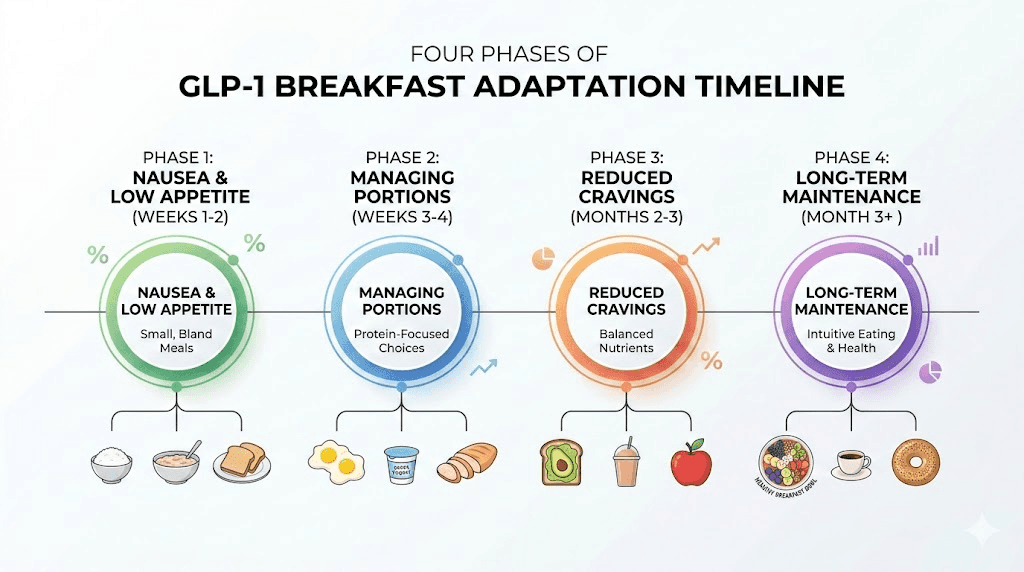
Weeks 1 to 2: the adjustment phase
This is when nausea and appetite suppression are usually strongest. Your body is encountering the medication for the first time, and everything feels different. Breakfast strategy: prioritize liquids and soft foods. A protein shake or yogurt bowl is enough. Aim for 20 to 25 grams of protein even if you cannot stomach more. Do not force large meals. Focus on tolerance first and optimization second.
During this phase, many people experience the most dramatic appetite suppression. It feels like you will never want to eat again. This passes. But while it lasts, getting some protein is far better than getting none.
Weeks 3 to 6: settling in
Nausea typically decreases. Appetite remains suppressed but becomes more predictable. You start to learn your patterns, which mornings are harder, which are easier, how injection day affects the next 48 hours. Breakfast strategy: introduce solid food options. Egg muffins, scrambles, overnight oats. Push protein to 25 to 30 grams. Start the meal prep system if you have not already.
This is also when people start noticing real results on the scale. The temptation is to eat even less since things are clearly working. Resist this. The weight loss is happening because the medication is functioning, not because you are starving yourself. Undereating protein now will catch up with you in months two and three as muscle loss accelerates.
Weeks 7 to 12: the optimization window
By now, your body has adapted significantly. Side effects are manageable or gone. You understand your appetite rhythms. This is when breakfast optimization really matters. Strategy: aim for 28 to 32 grams of protein at breakfast consistently. Rotate between 3 to 4 go-to breakfast options so you do not get bored. Add variety with seasonal fruits, different cheese types, and new smoothie combinations.
If weight loss has begun to slow, look at your breakfast first. Are you hitting protein targets? Are you relying on carb-heavy options out of habit? Small adjustments here, swapping toast for an extra egg, adding protein powder to oatmeal, choosing cottage cheese over regular yogurt, can restart progress without changing your medication dose. For those who feel their medication has stopped working, inadequate protein intake is often the overlooked factor.
Month 3 and beyond: the long game
This is maintenance territory. Your weight loss is progressing, your body has adapted, and breakfast should feel like a normal, sustainable part of your day rather than a clinical intervention. Strategy: 25 to 30 grams of protein remains the target. Focus on variety to prevent diet fatigue. Consider cycling between all 29 breakfast options in this guide to keep things interesting over months of treatment.
At this stage, many people also begin incorporating maintenance strategies alongside their medication. Breakfast habits built now will carry through to the post-medication phase when maintaining weight loss depends entirely on the nutritional foundations you have established.
Supplements that support GLP-1 breakfasts
Breakfast is also the ideal time to take certain supplements that complement your GLP-1 therapy. Taking them with food improves absorption and reduces the stomach irritation that some supplements cause on an empty stomach.
Vitamin B12. GLP-1 medications can reduce B12 absorption over time due to their effects on gastric acid production. Many compounded formulations now include B12 alongside semaglutide or B12 with tirzepatide for this reason. If your formulation does not include B12, consider a standalone supplement taken at breakfast.
Glycine. Some compounded GLP-1 formulations include glycine with semaglutide or glycine with tirzepatide to help with muscle preservation and collagen synthesis. Glycine is also available as a standalone supplement and can be mixed into protein shakes at breakfast.
Probiotics. Gut health matters enormously on GLP-1 medications since the entire mechanism of action involves the gastrointestinal system. Taking a probiotic at breakfast supports the microbiome during a time when medication side effects can disrupt digestive balance. Some GLP-1 users have explored products like Pendulum GLP-1 Probiotic Pro for targeted microbiome support.
Fiber supplements. If constipation is an issue and your breakfast does not include enough fiber naturally, a small dose of psyllium husk mixed into a protein shake can help. Start with a quarter teaspoon and increase gradually. Fiber and other supplements to take with tirzepatide should be introduced one at a time so you can identify what helps and what worsens symptoms.
Electrolytes. GLP-1 medications increase water loss through reduced food intake and, in some cases, mild diuretic effects. Electrolyte depletion contributes to the dizziness, headaches, and body aches that some users attribute to the medication itself. Adding an electrolyte packet to your morning water or smoothie is a simple fix that many people overlook.
Building a complete GLP-1 breakfast strategy
Individual recipes matter, but strategy matters more. The goal is not to find one perfect breakfast and eat it every day until you reach your goal weight. The goal is to build a flexible system that adapts to your changing appetite, your schedule, and the natural fluctuations that happen across a week of GLP-1 therapy.
Here is what that system looks like in practice:
Injection day and the day after: Stick to liquids and soft foods. Protein shake, yogurt, or overnight oats. Keep it simple. These are your hardest days for appetite, and forcing a large breakfast often backfires. Hit at least 20 grams of protein, even if that means sipping a premade shake over an hour.
Mid-week (appetite returning): Egg-based breakfasts shine here. Scrambles, egg muffins, frittata slices. You have more appetite, so take advantage of it and aim for 28 to 32 grams of protein. Add vegetables for fiber and micronutrients.
Weekends (more time): Try the more involved options. Breakfast burritos, smoked salmon toast, protein-packed oatmeal bowls. Use weekends to meal prep for the week ahead. Cook the egg muffins. Prepare the overnight oats jars. Boil the eggs.
This approach prevents breakfast fatigue, accounts for appetite fluctuations, and ensures you hit protein targets even on the worst days. People who follow this kind of structured approach consistently report better results than those who try to eat the same thing every day, which inevitably leads to breakfast becoming something they skip when motivation dips.
For researchers serious about optimizing their protocols, SeekPeptides offers comprehensive meal planning guides, protein tracking tools, and a community of experienced members who share what works in real-world practice across different GLP-1 medications and dosing schedules.
Frequently asked questions
Can I skip breakfast on a GLP-1 medication?
You can, but you should not. Skipping breakfast means missing one of three opportunities to hit your daily protein target, and falling short on protein accelerates the muscle loss that GLP-1 medications already promote. Even a small breakfast, like two hard-boiled eggs and a protein shake, is dramatically better than nothing. On days when appetite is truly absent, focus on liquid protein sources.
How much protein do I need at breakfast on semaglutide or tirzepatide?
Aim for 25 to 30 grams. This threshold maximally stimulates muscle protein synthesis in most adults and helps preserve lean mass during the rapid weight loss these medications produce. Older adults may benefit from pushing closer to 30 to 40 grams per meal. If you cannot reach 25 grams in one sitting, split breakfast into two smaller meals within 90 minutes of each other.
What if I feel too nauseous to eat breakfast?
Start with cold, liquid options. A chilled protein shake or cold yogurt is easier to tolerate than hot, aromatic foods. Sip slowly over 15 to 20 minutes. Ginger tea before eating can help settle the stomach. Avoid lying down immediately after eating. If nausea is severe and persistent, discuss side effect management with your healthcare provider, as dose adjustments or splitting your dose may help.
Is coffee okay at breakfast on GLP-1 medications?
Black coffee or coffee with a splash of unsweetened milk is fine for most people. Caffeine can temporarily increase nausea in some GLP-1 users, so monitor your response. Avoid large sugary coffee drinks, which contain 30 to 50 grams of sugar and effectively replace a nutritious breakfast with liquid candy. If coffee worsens your GI symptoms, try switching to tea. For guidance on beverages while on tirzepatide, that guide covers caffeine, alcohol, and other drinks in detail.
When should I eat breakfast relative to my injection?
Most providers recommend taking your GLP-1 injection at a consistent time each week, not necessarily in the morning. If you inject in the morning, eat a light breakfast 30 to 60 minutes before your injection or wait 2 to 4 hours after. Many users find that the best time to take semaglutide is in the evening, which keeps the peak nausea period during sleep rather than during breakfast.
Do these breakfast ideas work for both semaglutide and tirzepatide?
Yes. The nutritional principles, high protein, moderate fiber, low sugar, adequate healthy fats, apply to all GLP-1 medications including semaglutide, tirzepatide, and newer options. Tirzepatide users may experience more pronounced appetite suppression, so the liquid and grab-and-go options may see more use. The specific food choices remain the same regardless of which GLP-1 medication you take.
In case I do not see you, good afternoon, good evening, and good night. May your protein targets stay consistent, your mornings stay nourishing, and your GLP-1 results stay strong.