Feb 10, 2026
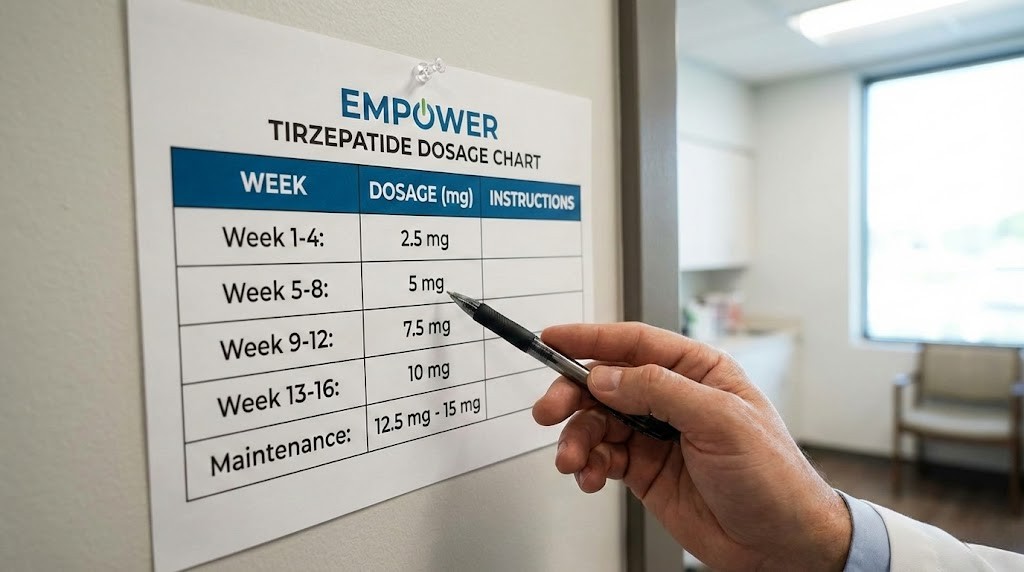
Drawing up the wrong volume from a compounded tirzepatide vial is not a minor mistake. It is a costly one. Patients who miscalculate their injection from an Empower pharmacy tirzepatide vial waste medication that cannot be recovered. Worse, they either underdose and stall their progress or overdose and trigger side effects that could have been avoided entirely. The math seems simple on the surface. Divide milligrams by concentration, convert to milliliters, translate to syringe units. But when Empower offers multiple concentrations, from 17mg/mL in a 4 mL vial to 8mg/mL in a 2.5 mL vial, the room for error grows fast. One misplaced decimal on a tirzepatide dosage chart in milliliters means 2.5mg could accidentally become 25mg. That is not a rounding error. That is a trip to the emergency room.
This guide exists because the standard titration charts floating around online were not built for Empower formulations specifically. They assume the branded Mounjaro pen concentrations. They assume auto-injector delivery. They do not account for the unique concentrations that a 503A compounding pharmacy like Empower provides, and they certainly do not walk you through the syringe math that compounded vials require. If you are filling an insulin syringe from a multi-dose vial, you need a chart built for exactly that scenario.
What follows is the most comprehensive Empower tirzepatide dosage reference available anywhere. Every concentration. Every dose level. Every unit conversion. Every week of the titration schedule mapped to injection volumes specific to Empower formulations. Whether you are a prescriber building protocols, a patient double-checking your draw, or a researcher studying compounded tirzepatide dosing, this is the resource you bookmark and return to every injection day. SeekPeptides built this guide because precision matters, and because getting the dose wrong is never worth the savings.
What makes Empower pharmacy tirzepatide different
Empower Pharmacy is not a retail pharmacy filling manufacturer prescriptions. It is a 503A compounding pharmacy, which means every prescription is mixed patient by patient, to order, based on a prescriber directive. This distinction matters for dosing because compounded tirzepatide arrives in multi-dose vials rather than pre-filled pens. There is no click mechanism to dial your dose. There is no auto-injector doing the math for you. You draw from a vial with a syringe, and the responsibility for accuracy shifts from the device to you.
The branded version, Mounjaro, comes in single-use auto-injector pens at fixed doses. Each pen delivers one exact amount. You press, inject, dispose. With Empower, you receive a vial containing enough tirzepatide for multiple injections at various dose levels. This flexibility is part of the appeal. A single 4 mL vial at 17mg/mL holds 68mg total, enough for weeks of treatment across several titration stages. But that flexibility demands precision.
Empower also adds niacinamide to their formulation. Every tirzepatide vial from Empower contains 2mg/mL of niacinamide, a form of vitamin B3 that serves dual purposes. First, it acts as a stabilizer, helping maintain peptide integrity throughout the vial life. Second, niacinamide may enhance absorption at the injection site. This addition is specific to Empower and a few other compounding pharmacies. It does not change the tirzepatide dosing math, but it does explain why the label reads "tirzepatide/niacinamide" rather than tirzepatide alone. For a deeper look at how B vitamins interact with GLP-1 medications, our guide to tirzepatide with B12 covers the synergies worth understanding.
Compounding also means the FDA has not reviewed these specific formulations for safety or efficacy in the way it reviews branded drugs. Empower operates under Section 503A of the Federal Food, Drug, and Cosmetic Act, which permits pharmacies to compound medications for individual patients with valid prescriptions. The tirzepatide molecule itself has extensive clinical backing through the SURMOUNT and SURPASS trial programs. The compounded version simply delivers that molecule in a different format, at concentrations optimized for flexible dosing from a vial.
Understanding this framework matters. When you look at a tirzepatide dose chart, the numbers only work if you know exactly which concentration you are drawing from. Empower offers three configurations, and each one produces completely different injection volumes for the same milligram dose.
Empower tirzepatide vial concentrations explained
Three vials. Three concentrations. Three completely different dosing calculations. This is where most of the confusion begins, and where most of the errors happen. Empower Pharmacy currently offers the following tirzepatide/niacinamide injectable formulations:
The 17mg/mL in 4 mL vial (68mg total)
This is the workhorse vial. At 17mg per milliliter across 4 mL of solution, this vial contains 68mg of total tirzepatide. For a patient on the standard titration, this single vial can cover the entire ramp from 2.5mg through 15mg weekly doses, with enough volume for multiple weeks at each tier. It is the most cost-effective option for patients who will progress through the full titration schedule. Because the concentration is high, injection volumes stay small. Even at the maximum 15mg dose, you draw less than 1 mL. That means less injection site discomfort and easier subcutaneous delivery.
The math for this vial is straightforward once you know the formula. Desired dose in milligrams divided by 17mg/mL equals your injection volume in milliliters. Multiply that by 100 to get insulin syringe units. Simple. But a calculator helps, and our peptide calculator can confirm your math before every draw.
The 8mg/mL in 2.5 mL vial (20mg total)
The lower concentration vial is designed for patients in the early stages of titration, typically the 2.5mg and 5mg dose levels. At 8mg per milliliter, injection volumes are larger than the 17mg/mL vial for any given dose. The total content of 20mg means this vial supports roughly four to eight injections depending on dose level. Patients starting at 2.5mg weekly will get eight doses from a single vial. Those at 5mg will get four doses.
One important caution with this concentration: at higher doses, the injection volume can exceed the capacity of a standard 1 mL insulin syringe. A 10mg dose from an 8mg/mL vial requires 1.25 mL, which is 125 units on a standard syringe. Most U-100 insulin syringes max out at 100 units (1 mL). If your dose calculation exceeds that limit, you either need a larger syringe or should switch to the 17mg/mL concentration. Understanding tirzepatide dosing in units prevents these kinds of practical problems.
The 17mg/mL in 2 mL vial (34mg total)
This mid-size vial offers the same high concentration as the 4 mL version but in a smaller package. It holds 34mg total, roughly half of the larger vial. The dosing calculations are identical to the 4 mL vial since the concentration per milliliter does not change. The difference is purely in how many total doses you extract before needing a new vial. This option works well for patients who prefer smaller quantities, who want fresher medication with each refill, or whose prescribers prefer shorter prescription intervals for closer monitoring.
Across all three vials, the niacinamide concentration remains constant at 2mg/mL. The tirzepatide/niacinamide naming convention reflects this consistent pairing. For those exploring how niacinamide complements peptide therapy, our complete tirzepatide niacinamide guide breaks down what this addition means for stability and absorption.
Vial configuration | Concentration | Total volume | Total tirzepatide | Best for |
|---|---|---|---|---|
Large vial | 17mg/mL | 4 mL | 68mg | Full titration, long-term use |
Small vial (lower conc.) | 8mg/mL | 2.5 mL | 20mg | Starting doses, early titration |
Small vial (higher conc.) | 17mg/mL | 2 mL | 34mg | Mid-titration, shorter refill cycles |
Complete dosage chart for the 17mg/mL concentration
This is the chart you print and tape to your refrigerator. For every standard tirzepatide dose level, here is exactly how much to draw from your 17mg/mL Empower vial. These numbers are precise, calculated using the formula: dose (mg) divided by 17 (mg/mL) equals volume (mL). Multiply volume by 100 for insulin syringe units.
Dose (mg) | Volume (mL) | Insulin syringe units | Titration phase |
|---|---|---|---|
2.5mg | 0.147 mL | 14.7 units | Weeks 1-4 (starting dose) |
5mg | 0.294 mL | 29.4 units | Weeks 5-8 |
7.5mg | 0.441 mL | 44.1 units | Weeks 9-12 |
10mg | 0.588 mL | 58.8 units | Weeks 13-16 |
12.5mg | 0.735 mL | 73.5 units | Weeks 17-20 |
15mg | 0.882 mL | 88.2 units | Week 21+ (maximum dose) |
Notice that even at the maximum dose of 15mg, you are drawing less than 0.9 mL. This keeps injection volumes manageable and well within the range of a standard 1 mL insulin syringe. That is a significant practical advantage of the 17mg/mL concentration. Every dose level fits comfortably in one syringe draw. No splitting injections across two sites. No fumbling with larger syringes. For detailed guidance on how many units equal 5mg of tirzepatide, the answer depends entirely on which concentration you are using, and the chart above makes that clear for the 17mg/mL formulation.
Rounding is a question that comes up frequently. Do you round 14.7 units to 15? Do you round 29.4 to 29 or 30? The answer depends on your syringe markings. Most U-100 insulin syringes have markings at every 1 or 2 units. Rounding to the nearest whole unit is acceptable for most clinical purposes. At the 2.5mg starting dose, the difference between 14 and 15 units on a 17mg/mL vial is approximately 0.17mg, a clinically insignificant amount. Your prescriber can confirm the acceptable rounding range for your protocol. The peptide reconstitution calculator on our site handles these conversions automatically.
How many total doses per vial at each level
The 4 mL vial at 17mg/mL contains 68mg total. Here is how many weekly injections you can extract at each dose level before the vial runs dry:
Dose level | Volume per injection | Injections from 4 mL vial | Injections from 2 mL vial |
|---|---|---|---|
2.5mg | 0.147 mL | 27 injections | 13 injections |
5mg | 0.294 mL | 13 injections | 6 injections |
7.5mg | 0.441 mL | 9 injections | 4 injections |
10mg | 0.588 mL | 6 injections | 3 injections |
12.5mg | 0.735 mL | 5 injections | 2 injections |
15mg | 0.882 mL | 4 injections | 2 injections |
At the starting dose of 2.5mg, a single 4 mL vial could theoretically last 27 weeks. In practice, vial expiration and sterility concerns mean most prescribers recommend using a vial within 28 days of first puncture. That makes the 2 mL vial a smarter choice for early titration when draw volumes are small and you will not use the full contents before expiration. For the broader context on how compounded medications maintain potency, our guide on tirzepatide fridge storage duration explains timelines specific to Empower vials.
Complete dosage chart for the 8mg/mL concentration
The 8mg/mL vial requires a completely different set of calculations. Lower concentration means larger injection volumes for the same milligram dose. This is where patients sometimes make dangerous errors, assuming the volumes from a 17mg/mL chart apply to their 8mg/mL vial. They do not. Using a 17mg/mL chart with an 8mg/mL vial would result in drawing less than half the intended dose. The reverse error would mean injecting more than double. Always verify your vial concentration before consulting any compound tirzepatide dosing chart.
Dose (mg) | Volume (mL) | Insulin syringe units | Syringe compatibility |
|---|---|---|---|
2.5mg | 0.3125 mL | 31.25 units | Standard 1 mL syringe (fits easily) |
5mg | 0.625 mL | 62.5 units | Standard 1 mL syringe (fits) |
7.5mg | 0.9375 mL | 93.75 units | Standard 1 mL syringe (tight fit) |
10mg | 1.25 mL | 125 units | EXCEEDS standard 1 mL syringe |
12.5mg | 1.5625 mL | 156.25 units | EXCEEDS standard 1 mL syringe |
15mg | 1.875 mL | 187.5 units | EXCEEDS standard 1 mL syringe |
The critical limitation is obvious. At doses of 10mg and above, the required volume exceeds 1 mL, which is the capacity of standard U-100 insulin syringes. This makes the 8mg/mL concentration impractical for patients who have titrated past the 7.5mg dose level. Most patients and prescribers transition to the 17mg/mL concentration before reaching 10mg for exactly this reason.
For the starting doses where the 8mg/mL vial works well, the larger injection volumes can actually be an advantage. Drawing 31 units is easier to measure precisely than drawing 15 units. The markings on an insulin syringe are more spread out, leaving less room for misreading. If accuracy at low doses is a concern, some prescribers deliberately start patients on the 8mg/mL vial for the first four to eight weeks, then switch to 17mg/mL for higher doses.
Total doses from the 8mg/mL vial
The 2.5 mL vial at 8mg/mL holds 20mg total tirzepatide:
Dose level | Volume per injection | Injections per vial | Weeks of treatment |
|---|---|---|---|
2.5mg | 0.3125 mL | 8 injections | 8 weeks |
5mg | 0.625 mL | 4 injections | 4 weeks |
7.5mg | 0.9375 mL | 2 injections | 2 weeks |
At 2.5mg, one vial covers the full four-week starting phase with four doses remaining. At 5mg, one vial covers exactly one titration tier of four weeks. The alignment is convenient. For patients wondering how many units equal 2.5mg of tirzepatide, the answer is 31 units from this concentration versus 15 units from the 17mg/mL. Same dose, completely different draw volumes. This is precisely why concentration-specific charts matter.
Understanding these differences is essential for anyone working with compounded formulations. Our tirzepatide conversion chart provides a comprehensive cross-reference between all common concentrations.
Standard titration schedule week by week
Tirzepatide follows a structured dose escalation that builds tolerance gradually. This is not optional. It is not a suggestion. Jumping to higher doses without completing each titration tier dramatically increases gastrointestinal side effects and provides no meaningful benefit in terms of weight loss speed. The body needs time to adapt to each dose level before moving to the next.
Here is the standard titration protocol:
Weeks | Weekly dose | 17mg/mL volume | 17mg/mL units | 8mg/mL volume | 8mg/mL units | Purpose |
|---|---|---|---|---|---|---|
1-4 | 2.5mg | 0.147 mL | ~15 units | 0.313 mL | ~31 units | Starting dose, establish tolerance |
5-8 | 5mg | 0.294 mL | ~29 units | 0.625 mL | ~63 units | First therapeutic dose |
9-12 | 7.5mg | 0.441 mL | ~44 units | 0.938 mL | ~94 units | Increasing effect |
13-16 | 10mg | 0.588 mL | ~59 units | N/A* | N/A* | Full therapeutic range |
17-20 | 12.5mg | 0.735 mL | ~74 units | N/A* | N/A* | Enhanced weight loss |
21+ | 15mg | 0.882 mL | ~88 units | N/A* | N/A* | Maximum dose |
*Doses of 10mg and above are impractical with the 8mg/mL concentration due to volumes exceeding standard syringe capacity.
The minimum time at each dose level is four weeks. Some patients stay longer. Not every patient needs to reach 15mg. Some achieve their goals at 5mg or 7.5mg and maintain there. Others require the full escalation to maximum dose before seeing significant results. The decision to escalate, hold, or reduce should always involve the prescribing clinician. For a broader look at how different patients respond across the full titration, our comprehensive tirzepatide dosing guide covers individual variation in detail.
What happens at each dose level
Weeks 1-4 (2.5mg): This is the introduction period. The body begins adapting to incretin receptor activation. Most patients notice reduced appetite within the first one to two weeks. Weight loss at this dose is modest, typically 2 to 5 pounds over the full four weeks. Gastrointestinal effects are usually mild. The primary goal is tolerance building, not dramatic results. Patience here pays dividends later. For perspective on early timelines, how fast tirzepatide works sets realistic expectations based on clinical data.
Weeks 5-8 (5mg): This is where most patients begin feeling a meaningful difference. Appetite suppression becomes more pronounced. Portion sizes shrink naturally. Cravings, particularly for high-calorie and high-sugar foods, begin to diminish. In the SURMOUNT-1 trial, the 5mg group averaged 16% total body weight loss over 72 weeks. That translates to roughly 35 pounds for a person starting at 220 pounds. Results at this stage are still building, but the trajectory becomes clear.
Weeks 9-12 (7.5mg): Appetite reduction deepens. Some patients report that they forget to eat, not out of nausea, but out of genuine absence of hunger signals. This is the dual GIP/GLP-1 mechanism working at full capacity, slowing gastric emptying, enhancing satiety signaling, and modulating reward pathways related to food. Weight loss accelerates noticeably for most patients during this tier.
Weeks 13-16 (10mg): The first dose level above the 8mg/mL syringe limit. At 10mg, clinical trials showed 21.4% average body weight loss, approximately 49 pounds from a 230-pound starting weight. Side effects may increase with this jump, particularly nausea during the first few days after each injection. Fatigue is another commonly reported effect at this tier, though it typically resolves within the first two weeks.
Weeks 17-20 (12.5mg): This dose represents the second-highest tier. Patients who have tolerated 10mg well and still have weight loss goals to achieve will progress here. The incremental benefit over 10mg is measurable but more modest. Some patients find their side effect profile worsens at this level and choose to step back to 10mg for maintenance.
Week 21 and beyond (15mg): Maximum dose. The SURMOUNT-1 trial recorded 22.5% average weight loss at this dose, roughly 52 pounds. Nine out of ten participants in the 15mg group lost weight. The question at this stage is whether the incremental benefit over 12.5mg justifies the increased side effect burden. For many patients, the answer is yes. For others, a lower maintenance dose achieves a better quality-of-life balance. Results from real patients using tirzepatide at various dose levels are documented in our before and after tirzepatide results collection.
How to calculate your exact injection volume
The formula is simple. The execution requires attention.
For any tirzepatide vial, the calculation follows three steps:
Step 1: Identify your vial concentration. Check the label. It will read either 17mg/mL or 8mg/mL. Do not guess. Do not assume.
Step 2: Divide your prescribed dose by the concentration.
For a 5mg dose from a 17mg/mL vial: 5 divided by 17 equals 0.294 mL.
For a 5mg dose from an 8mg/mL vial: 5 divided by 8 equals 0.625 mL.
Same dose. Completely different volumes. This is the single most important thing to understand about compounded tirzepatide dosing.
Step 3: Convert milliliters to insulin syringe units by multiplying by 100. So 0.294 mL becomes 29.4 units. And 0.625 mL becomes 62.5 units.
That is the entire process. Three steps. But those three steps must be correct every single time. For patients who want a tool that handles this automatically, the SeekPeptides peptide calculator eliminates manual math entirely. Enter your concentration and desired dose, and the calculator returns your exact draw volume in both milliliters and units.
Common calculation mistakes
The most dangerous error is concentration confusion. Patients receive a new vial at a different concentration than their previous one and use the old draw volume. This is especially common when transitioning from the 8mg/mL starter vial to the 17mg/mL vial for higher doses. If you were drawing 31 units for 2.5mg from the 8mg/mL vial and switch to 17mg/mL without recalculating, 31 units from the new vial would deliver approximately 5.3mg instead of 2.5mg. That is more than double your intended dose.
Another frequent mistake involves unit versus milliliter confusion. A syringe marked in "units" uses the U-100 standard, where 100 units equals 1 mL. Some patients confuse their dose in milligrams with units and attempt to draw 5 units for a 5mg dose. From a 17mg/mL vial, 5 units would deliver only 0.85mg, not 5mg. The milligram number on your prescription and the unit number on your syringe are not the same thing. They never are. Our guide to calculating peptide dosages walks through these conversions step by step for any peptide, not just tirzepatide.
A third error is failing to account for dead space in the syringe. Insulin syringes have a small volume of liquid that remains in the needle hub after injection. This dead space is typically 0.02 to 0.05 mL, depending on the syringe brand. For higher-volume injections, this amount is negligible. For the smallest draws, like the 0.147 mL needed for 2.5mg from a 17mg/mL vial, dead space can represent a meaningful percentage of the dose. Low dead-space syringes are available and recommended for precision dosing at low volumes.
Unit conversion reference for insulin syringes
Insulin syringes come in three standard sizes: 0.3 mL (30 units), 0.5 mL (50 units), and 1 mL (100 units). Choosing the right syringe for your dose improves accuracy because the graduation marks are more spread out on smaller syringes, making precise measurement easier.
Syringe size | Maximum capacity | Graduation marks | Best for doses |
|---|---|---|---|
0.3 mL (30 unit) | 30 units / 0.3 mL | Every 0.5 or 1 unit | 2.5mg from 17mg/mL (~15 units) |
0.5 mL (50 unit) | 50 units / 0.5 mL | Every 1 unit | 2.5-7.5mg from 17mg/mL |
1 mL (100 unit) | 100 units / 1 mL | Every 1 or 2 units | All doses from 17mg/mL, low doses from 8mg/mL |
For the 17mg/mL concentration, a 0.5 mL syringe works perfectly for doses up to 7.5mg (44 units). Above that, switch to a 1 mL syringe. For the 8mg/mL concentration, a 1 mL syringe is necessary for any dose above 2.5mg. Understanding syringe selection is part of the broader skill set covered in our complete peptide injection guide.
One detail that trips people up: the "unit" markings on an insulin syringe are calibrated for U-100 insulin, meaning 100 units per milliliter. When used for non-insulin medications like tirzepatide, these markings simply indicate volume fractions. One unit on the syringe equals 0.01 mL. That is all. The "units" have nothing to do with medication potency or international units. They are purely a volume measurement. If this distinction confuses you, our tirzepatide dosage in units guide breaks it down with visual examples.
Quick reference: units to milligrams for both concentrations
Syringe units drawn | Volume (mL) | Dose from 17mg/mL vial | Dose from 8mg/mL vial |
|---|---|---|---|
10 units | 0.10 mL | 1.7mg | 0.8mg |
15 units | 0.15 mL | 2.55mg | 1.2mg |
20 units | 0.20 mL | 3.4mg | 1.6mg |
25 units | 0.25 mL | 4.25mg | 2.0mg |
30 units | 0.30 mL | 5.1mg | 2.4mg |
40 units | 0.40 mL | 6.8mg | 3.2mg |
50 units | 0.50 mL | 8.5mg | 4.0mg |
60 units | 0.60 mL | 10.2mg | 4.8mg |
70 units | 0.70 mL | 11.9mg | 5.6mg |
80 units | 0.80 mL | 13.6mg | 6.4mg |
90 units | 0.90 mL | 15.3mg | 7.2mg |
100 units | 1.00 mL | 17.0mg | 8.0mg |
This table works in both directions. If you know how many units you drew, read across to find the milligram dose. If you know the milligrams prescribed, find the closest unit count for your concentration. For any value between the listed entries, the peptide calculator provides exact interpolation. People frequently ask questions like how many mg is 40 units of tirzepatide or how many mg is 20 units, and the answer always depends on your vial concentration.
How tirzepatide works at the molecular level
Tirzepatide is not just another GLP-1 drug. It is a first-in-class dual agonist that simultaneously activates two distinct hormone receptors: the glucose-dependent insulinotropic polypeptide (GIP) receptor and the glucagon-like peptide-1 (GLP-1) receptor. This dual mechanism is why tirzepatide consistently outperforms single-target GLP-1 medications like semaglutide in head-to-head comparisons. For a detailed side-by-side comparison, our semaglutide vs tirzepatide comparison lays out the differences across every metric that matters.
The molecule itself is a synthetic linear peptide containing 39 amino acids. It was engineered by Eli Lilly to bind both receptors with carefully calibrated affinities. Tirzepatide shows a greater relative affinity for the GIP receptor than for the GLP-1 receptor. This imbalance is deliberate. Research suggests that GIP receptor activation contributes significantly to fat metabolism and energy expenditure in ways that GLP-1 alone does not address.
The GLP-1 pathway
When tirzepatide binds the GLP-1 receptor, several downstream effects occur. Insulin secretion increases in a glucose-dependent manner, meaning insulin rises only when blood sugar is elevated. This glucose dependency is a safety feature, making hypoglycemia rare. Glucagon secretion decreases, reducing the liver output of glucose into the bloodstream. Gastric emptying slows, which means food stays in the stomach longer and you feel full sooner and for a longer period. Appetite centers in the brain receive stronger satiety signals, reducing the desire to eat. These are the same mechanisms that all GLP-1 based peptides leverage, but tirzepatide adds an entire second pathway on top.
The GIP pathway
GIP receptor activation is where tirzepatide separates from the pack. GIP, historically associated only with insulin secretion after meals, has proven far more complex than researchers initially understood. Activation of GIP receptors in adipose tissue appears to enhance fat metabolism and improve lipid profiles. GIP signaling may also modulate energy expenditure independently of appetite changes, meaning your body burns more calories even without eating less. The combined effect of GIP and GLP-1 receptor activation is synergistic, producing results greater than what either pathway achieves alone.
This dual mechanism explains the unprecedented weight loss numbers from clinical trials. Where semaglutide, a GLP-1-only agonist, produces roughly 15% body weight loss on average, tirzepatide pushes past 20%. The difference is not marginal. For a 220-pound person, that gap represents an additional 10 or more pounds lost. Those interested in the evolving science behind multi-receptor agonists should also explore retatrutide, which adds a third receptor target (glucagon) to the equation, and mazdutide, another emerging dual agonist.
For anyone weighing their options between GLP-1 medications, understanding these mechanisms is not academic. It is practical. The mechanism dictates which side effects to expect, how quickly appetite changes occur, and what maintenance dose provides the best long-term outcome. SeekPeptides members gain access to detailed protocol builders that account for these pharmacological differences when constructing personalized treatment plans.
Clinical trial results by dose level
The data behind tirzepatide is not subtle. The SURMOUNT clinical trial program is one of the largest and most rigorous weight management study programs ever conducted. The results reshaped expectations for what pharmaceutical intervention could achieve in obesity treatment. Here is what the numbers actually show.
SURMOUNT-1: the landmark obesity trial
This 72-week, randomized, double-blind, placebo-controlled trial enrolled 2,539 adults with obesity or overweight with at least one weight-related comorbidity. None had diabetes. Participants received either tirzepatide at 5mg, 10mg, or 15mg, or placebo, once weekly for 72 weeks.
Results by dose:
Dose | Average weight loss (%) | Average weight loss (lbs) | Lost 5% or more | Lost 20% or more |
|---|---|---|---|---|
5mg | 16.0% | ~35 lbs | 85% | 32% |
10mg | 21.4% | ~49 lbs | 89% | 50% |
15mg | 22.5% | ~52 lbs | 91% | 57% |
Placebo | 2.4% | ~5 lbs | 35% | 3% |
Those numbers bear repeating. At the 15mg dose, more than half of all participants lost 20% or more of their body weight. For a 250-pound individual, 20% means 50 pounds. That approaches the range historically associated only with bariatric surgery. And 91% of participants at the 15mg dose lost at least 5% of their body weight, a threshold that confers meaningful metabolic health benefits. Nine out of ten people responded. The publication appeared in the New England Journal of Medicine, the most prestigious medical journal in the world.
SURMOUNT-2: tirzepatide with type 2 diabetes
The second trial focused on adults who had both obesity and type 2 diabetes, a population that traditionally loses less weight with GLP-1 medications because insulin resistance and metabolic dysfunction create additional barriers. Even so, tirzepatide delivered up to 15.7% body weight loss in this more challenging population. That performance exceeds what most GLP-1-only agents achieve in patients without diabetes. For patients managing both conditions, the weight loss dosing approach needs to balance glycemic control with fat reduction goals.
SURMOUNT-4: the maintenance question
Perhaps the most important trial for long-term users. SURMOUNT-4 examined what happens when patients continue treatment versus stop. Participants first received tirzepatide for 36 weeks, achieving an average 20.9% weight loss. They were then randomized to either continue tirzepatide or switch to placebo for another 52 weeks. Those who continued maintained their weight loss and reached 25.3% total reduction from baseline by week 88. Those who switched to placebo regained a significant portion, ending with only 9.9% loss from baseline. The message is clear. Tirzepatide works, but stopping it reverses the gains. This trial underscores the importance of viewing tirzepatide as a long-term treatment rather than a short-term intervention. Detailed outcome data from real users is available in our tirzepatide before and after collection.
How Empower doses map to trial outcomes
The Empower titration schedule mirrors the doses studied in clinical trials. The 2.5mg starting dose is the initiation dose used in all SURMOUNT trials. The 5mg, 10mg, and 15mg maintenance doses correspond exactly to the trial arms. The 7.5mg and 12.5mg intermediate doses were included in clinical protocols as transitional steps to improve tolerability but were not separate study arms in SURMOUNT-1. Regardless, the dose-response relationship is consistent: higher doses produce more weight loss, with diminishing incremental returns at the top end. The jump from 5mg to 10mg produces a larger incremental benefit than the jump from 10mg to 15mg.
For anyone tracking their own progress against these benchmarks, understanding why some people do not lose weight on tirzepatide can identify correctable factors before assuming the medication is not working.
Managing side effects at each dosage tier
Side effects follow the dose. That is the central principle. Higher doses produce more frequent and more intense gastrointestinal effects. But the pattern is also predictable, and knowing what to expect at each tier allows for proactive management rather than reactive suffering.
Side effect rates by dose from clinical data
Side effect | 5mg rate | 10mg rate | 15mg rate | Placebo rate |
|---|---|---|---|---|
Nausea | 13.3% | 17.9% | 24.1% | ~4% |
Diarrhea | 13.2% | 17.2% | 20.8% | ~6% |
Vomiting | 5.7% | 8.3% | 14.0% | ~2% |
Constipation | 6-8% | 6-8% | 6-8% | ~4% |
Decreased appetite | ~7% | ~10% | ~12% | ~2% |
Nausea is the most common complaint, affecting roughly one in four patients at the 15mg dose. But context matters. Most nausea occurs during the first few days after dose escalation and diminishes significantly by weeks two and three at the new level. Persistent, severe nausea that does not improve within two weeks suggests the dose increase was too aggressive, and stepping back to the previous level for an additional four weeks is standard practice.
Tier-by-tier management strategies
At 2.5mg (starting dose): Most patients experience minimal side effects. Mild nausea, if present, typically resolves within the first week. No special dietary modifications are usually necessary. This is the observation phase. If side effects are significant even at this dose, it may indicate the need for a slower escalation plan.
At 5mg: The first dose where GI effects become noticeable for many patients. Eat smaller, more frequent meals. Avoid greasy, fried, and heavily spiced foods during the first week after each injection. Stay well hydrated. Ginger tea and peppermint can help with mild nausea. These are the same strategies that help with general peptide side effect management.
At 7.5mg: This is where the titration separates from the branded Mounjaro schedule, which jumps from 5mg directly to 10mg. The intermediate 7.5mg step, available specifically because compounding allows flexible dosing, gives the body an additional adaptation period. Patients who struggled at 5mg often tolerate 7.5mg better than expected because their GI system has had eight weeks to adjust.
At 10mg and above: Side effects at these doses are more likely and more pronounced. Some patients experience anxiety as a less common but documented side effect, likely related to appetite suppression affecting energy intake and blood sugar patterns. Fatigue is another consideration at higher doses. Maintaining adequate protein intake and caloric baseline despite reduced appetite becomes critical. The medication reduces hunger but does not reduce nutritional requirements. Severe caloric restriction on top of tirzepatide can lead to muscle loss, metabolic slowdown, and nutrient deficiencies.
If side effects are intolerable at any dose, the standard approach is to reduce back to the last tolerated dose and remain there for an additional four weeks before attempting escalation again. Some patients find that a slower titration schedule, increasing every six to eight weeks instead of four, eliminates most GI problems. The compounded format from Empower supports this flexibility because you can adjust volumes continuously rather than being locked into fixed pen doses.
For people who find injectable side effects particularly challenging, oral tirzepatide represents an emerging alternative delivery method worth discussing with a prescriber.
Storage and handling for Empower vials
Proper storage directly affects potency. Store it wrong, and you are injecting degraded medication at reduced effectiveness while paying full price. Store it right, and every draw from the vial delivers the concentration printed on the label.
Temperature requirements
Empower tirzepatide vials should be refrigerated at 36 to 46 degrees Fahrenheit (2 to 8 degrees Celsius). This is standard refrigerator temperature. Place the vial in the main compartment, not in the door where temperatures fluctuate with opening and closing, and not near the freezer compartment where temperatures can drop below the acceptable range. Never freeze tirzepatide. Freezing destroys the peptide structure and renders the medication ineffective.
If the vial is removed from refrigeration, it can remain at room temperature for up to 21 days. After 21 days at room temperature, the vial should be discarded even if volume remains. This grace period accommodates travel, shipping, and brief periods outside the cold chain. But it is a maximum, not a recommendation. Return the vial to refrigeration as soon as practical. For a deeper look at stability considerations, our guide to compounded tirzepatide out-of-fridge stability covers the science behind these timelines.
Vial handling best practices
Before each draw, inspect the vial visually. The solution should be clear and colorless. If you see particles, cloudiness, or discoloration, do not use the vial. These signs indicate potential contamination or degradation.
Clean the rubber stopper with an alcohol swab before every needle puncture. This is not optional. Multi-dose vials are punctured multiple times, and each puncture is an opportunity for microbial introduction. Use a new, sterile needle for every draw. Never reuse needles. Never share vials between patients.
After drawing your dose, return the vial to the refrigerator immediately. Leaving it on the counter while you prepare, inject, and clean up adds unnecessary room temperature exposure. Some patients keep a small insulated bag in the refrigerator with their vial, syringes, and alcohol swabs so the entire process is streamlined.
For the general principles of peptide vial management, our peptide storage guide covers best practices that apply across all injectable peptides. And our dedicated tirzepatide refrigeration article addresses the most common storage questions.
Missed dose protocol
If you miss your scheduled injection day, you have a four-day window. Take the dose as soon as you remember, provided it has been four days or fewer since the missed day. If more than four days have passed, skip the missed dose entirely and resume on your next regularly scheduled day. Do not double the dose to compensate. Do not take two injections in the same week to "catch up." The half-life of tirzepatide is approximately five days, which means a single missed dose does not completely eliminate the medication from your system. Missing one dose in an otherwise consistent schedule has minimal impact on long-term results.
Switching between Empower concentrations
There comes a point in many patients treatment where switching from the 8mg/mL vial to the 17mg/mL vial is necessary. This transition usually coincides with the dose escalation past 7.5mg, when the injection volume from the lower concentration exceeds practical syringe limits. But the switch can happen at any dose for any reason, including cost optimization, convenience, or prescriber preference.
The critical rule: recalculate everything. Do not assume that the number of units you were drawing from one concentration applies to the other. It does not. A complete recalculation is mandatory every time the vial concentration changes.
Transition checklist
1. Confirm the new vial concentration. Read the label twice. 17mg/mL and 8mg/mL vials from Empower look similar. The label is your source of truth.
2. Recalculate the draw volume. Use the formula: dose (mg) divided by new concentration (mg/mL) equals volume (mL). Multiply by 100 for syringe units.
3. Verify with a reference chart. Cross-check your calculation against the tables in this guide or use the peptide calculator.
4. Consider syringe size. If switching from 8mg/mL to 17mg/mL, your injection volume drops dramatically. A smaller syringe (0.3 mL or 0.5 mL) may now be more appropriate for improved precision.
5. Dispose of unused medication properly. If switching concentrations means abandoning a partially used vial, do not store it for later. The expiration clock started at first puncture. Follow local guidelines for medication disposal.
The practical impact of switching concentrations is significant. At 5mg, moving from 8mg/mL to 17mg/mL cuts your injection volume from 0.625 mL (62.5 units) to 0.294 mL (29.4 units). That is less than half the fluid injected subcutaneously. Less volume typically means less injection site reaction, less post-injection discomfort, and faster absorption. For detailed volume comparisons across concentrations, our tirzepatide dosage chart in mL provides a visual cross-reference.
Empower tirzepatide ODT as an alternative
Not everyone wants to inject. Needle phobia is real. Injection site reactions can be persistent. Travel with syringes creates hassle at airport security. For these patients, Empower offers tirzepatide ODT, an oral disintegrating tablet that dissolves on the tongue without water.
The ODT format works differently from injectable delivery. The tablet is placed on the tongue and dissolves within 30 to 60 seconds. Absorption occurs through the oral mucosa. This route bypasses the first-pass liver metabolism that limits conventional oral peptide delivery, though the pharmacokinetics differ from subcutaneous injection. Bioavailability, onset time, and dose-response relationships for the ODT have not been established through the same rigorous clinical trial program as the injectable form.
That caveat is important. The injectable tirzepatide studied in SURMOUNT trials and approved by the FDA as Mounjaro and Zepbound is not the same as the compounded ODT. The ODT is a compounded formulation that has not undergone FDA review for safety or efficacy. Patients choosing the ODT should understand this distinction and discuss it with their prescriber. For those comparing the oral route to injections across the peptide space, our injectable vs oral peptides comparison covers the key tradeoffs.
The ODT follows a titration schedule conceptually similar to the injectable version, starting low and escalating gradually. Specific dose strengths and schedules should be determined by the prescribing clinician based on individual response. Because the absorption profile differs, directly converting an injectable dose to an ODT dose is not straightforward. A prescriber experienced with both delivery routes is essential for guiding this transition.
For a comprehensive look at oral delivery of GLP-1 peptides, our oral tirzepatide guide covers everything from bioavailability to practical administration tips.
Comparing Empower to other compounding pharmacies
Empower is one of several 503A compounding pharmacies that produce tirzepatide formulations. Knowing how they compare helps patients and prescribers make informed choices about where to source compounded medications.
Concentration options
Most compounding pharmacies offer tirzepatide at concentrations between 5mg/mL and 20mg/mL. Empower offering 17mg/mL hits a practical sweet spot: high enough to keep injection volumes small at maximum doses, but not so concentrated that measurement precision at starting doses becomes difficult. Some pharmacies offer 20mg/mL, which makes starting dose calculations even more challenging with standard syringes. Others offer 10mg/mL, which provides easy math but larger volumes at higher doses. The 20mg/mL dosing chart is available for patients using that concentration from other providers.
Stabilizer differences
Empower uses niacinamide (vitamin B3) as their peptide stabilizer. Other pharmacies use different approaches. Some add cyanocobalamin (B12). Others use varying preservative systems. The choice of stabilizer can affect injection site comfort and peptide stability. Niacinamide has anti-inflammatory properties that may reduce local injection reactions, which is part of why Empower selected it. For patients using B12-containing formulations from other pharmacies, our B12 tirzepatide guide explains the implications.
Other pharmacy dosing charts
Each pharmacy concentration requires its own dosing chart. Using an Empower chart for a different pharmacy vial, or vice versa, invites dosing errors. If your pharmacy is not Empower, confirm your specific concentration before referencing any chart. SeekPeptides provides concentration-specific charts for multiple providers. For those using Lavender Sky formulations, our Lavender Sky tirzepatide guide has dedicated charts. Patients exploring Peptide Sciences products can reference our Peptide Sciences tirzepatide review. And for the general principles that apply regardless of pharmacy, our compound tirzepatide dosage chart covers the universal calculations.
For those shopping for the most cost-effective option, our guide to affordable compounded tirzepatide compares pricing and value across multiple providers. The peptide cost calculator can help estimate per-dose costs based on vial size and concentration.
When to adjust your dosage
Not everyone follows the textbook titration. Real-world dosing requires flexibility, and the compounded format from Empower supports that flexibility far better than fixed-dose pens. Knowing when and how to adjust prevents both stalled progress and unnecessary side effects.
Signs you should increase your dose
You have been at the current dose for at least four weeks. Side effects have resolved or become minimal. Weight loss has plateaued for two consecutive weeks despite consistent adherence to the medication and reasonable dietary habits. Appetite suppression has diminished noticeably compared to the first weeks at this dose. These signals suggest your body has adapted to the current dose level and a higher dose may provide additional benefit.
But be honest with yourself. A plateau driven by caloric creep, where you are gradually eating more because the appetite suppression allows it, is not the same as a pharmacological plateau. Before assuming the dose needs to go up, evaluate whether your eating patterns have shifted. Sometimes the fix is behavioral, not pharmaceutical. Resources like understanding why you are not losing weight on tirzepatide can help distinguish between medication plateaus and lifestyle factors.
Signs you should stay at your current dose
Weight loss is still occurring, even if slowly. Side effects are manageable but present. You are meeting your interim goals. You feel good physically and mentally. There is no rule that says you must reach 15mg. Many patients achieve and maintain excellent results at 5mg, 7.5mg, or 10mg. Lower doses mean fewer side effects, lower medication costs, and easier long-term adherence. The best dose is the lowest effective dose, not the maximum available dose.
Signs you should decrease your dose
Side effects are persistent and interfering with daily life. Nausea extends beyond the first four to five days after injection. Vomiting occurs more than once per week. You are unable to maintain adequate nutrition because of appetite suppression. You feel weak, fatigued, or mentally foggy consistently. These signs indicate the dose exceeds what your body can comfortably process. Step back to the previous tier for at least four additional weeks. Some patients find their optimal dose is lower than where side effects peaked, and they maintain excellent results without the GI burden.
Microdosing considerations
Some clinicians explore sub-standard doses, sometimes called microdosing, for patients who are exquisitely sensitive to GLP-1 effects. This might mean starting at 1mg or 1.5mg rather than the standard 2.5mg. Compounded vials from Empower support this approach because you can draw any volume you choose. This level of dosing flexibility is impossible with fixed-dose pens. For an exploration of sub-threshold dosing approaches, our microdosing tirzepatide chart covers the calculations for ultra-low doses.
A broader perspective on tirzepatide in the context of other weight management peptides is available through our peptides for fat loss overview and our ranking of the best peptides for weight loss.
Reconstitution and preparation
Empower tirzepatide arrives as a ready-to-use solution. Unlike lyophilized (freeze-dried) peptides that require reconstitution with bacteriostatic water, Empower vials are pre-mixed and ready for direct withdrawal and injection. This eliminates a major source of error for many patients who struggle with the reconstitution process.
However, understanding the reconstitution process still matters for several reasons. If you ever switch to a lyophilized tirzepatide product from a different pharmacy, you will need to reconstitute. If you use other peptides alongside tirzepatide, many require reconstitution. And understanding what reconstitution involves helps you appreciate why pre-mixed solutions like Empower vials command a convenience premium.
For those who do work with lyophilized peptides, our reconstitution calculator makes the math simple. You enter the peptide mass, the amount of solvent added, and the calculator returns your concentration and draw volumes. Guidance on what solvent to use is covered in our bacteriostatic water guide and our guide on how much bacteriostatic water to use.
Empower vials also benefit from professional compounding quality control. The concentration listed on the label reflects pharmaceutical-grade preparation, with each batch tested for potency, sterility, and endotoxin levels. This consistency eliminates the variability that can occur with manual reconstitution, where small differences in solvent volume produce meaningful concentration changes. For general reconstitution charts across various tirzepatide products, our tirzepatide reconstitution chart provides a universal reference.
Comparing tirzepatide to semaglutide dosing
Many patients arrive at tirzepatide after trying semaglutide, or they are deciding between the two. The dosing structures are different, the concentrations from compounding pharmacies are different, and the clinical outcomes are different. A direct comparison helps frame what to expect.
Semaglutide (the active ingredient in Ozempic and Wegovy) operates through GLP-1 receptor activation alone. Its standard titration moves from 0.25mg to 2.4mg over 16 to 20 weeks, a much lower absolute dose range than tirzepatide. But milligram-to-milligram comparison is meaningless between these two molecules because their potencies differ. What matters is the clinical outcome at the respective maximum doses.
Factor | Tirzepatide (max dose) | Semaglutide (max dose) |
|---|---|---|
Maximum weekly dose | 15mg | 2.4mg |
Mechanism | Dual GIP + GLP-1 | GLP-1 only |
Average weight loss | 22.5% | ~15% |
Titration duration | 20 weeks to max | 16 weeks to max |
Injection frequency | Once weekly | Once weekly |
The weight loss advantage of tirzepatide over semaglutide is consistent across every study that has compared them. For a detailed head-to-head analysis, our tirzepatide vs semaglutide dosage chart comparison lays out the numbers. Patients considering a switch between the two should review our switching from semaglutide to tirzepatide guide and the dose conversion chart that maps equivalent dosing between the two medications.
For those moving in the other direction, our guide to switching from tirzepatide to semaglutide covers that transition as well. And for semaglutide-specific dosing references, we maintain comprehensive guides including the semaglutide 5mg/mL dosage chart, the semaglutide mixing chart, and semaglutide dosing in units.
The semaglutide dosage calculator is available free on our site for anyone navigating the other side of this comparison. And for the broader context of GLP-1 medications, those exploring alternatives beyond both tirzepatide and semaglutide can review our Ozempic alternatives guide.
Building your complete protocol
A dosage chart is just numbers on a page without a protocol to wrap around it. The injection itself takes 30 seconds. Everything else, the timing, the preparation, the dietary adjustments, the monitoring, is what separates successful outcomes from mediocre ones.
Weekly injection timing
Choose the same day each week. Consistency matters for maintaining steady blood levels of tirzepatide, which has a half-life of approximately five days. Most patients prefer injecting in the evening because any nausea or GI effects tend to peak four to eight hours post-injection, meaning they occur during sleep. Others prefer morning injections so they can monitor their response throughout the day. Neither timing is objectively superior. Pick the schedule you will maintain consistently.
Injection site rotation
Rotate between three areas: abdomen (at least two inches from the navel), front of the thigh (middle third), and upper arm (back of the arm). Rotating sites prevents lipodystrophy, which is tissue changes that can alter absorption patterns over time. Mark a simple rotation in your phone calendar. If you do not rotate, absorption becomes unpredictable, and the dosage chart loses its accuracy. For step-by-step injection technique, our peptide injection overview covers the fundamentals.
Dietary framework
Tirzepatide reduces appetite. It does not optimize nutrition. Eating less food means every bite needs to carry more nutritional value. Prioritize protein at 0.8 to 1 gram per pound of goal body weight daily. This protects lean muscle mass during weight loss. Adequate hydration matters even more on tirzepatide because reduced food intake means less water from food sources. Fiber from vegetables and whole grains supports the GI system, which is already under stress from slowed gastric emptying. A multivitamin provides insurance against micronutrient gaps.
For those stacking tirzepatide with other interventions, our peptide stack calculator helps evaluate compatibility and timing. Understanding general peptide dosage principles and peptide dosing fundamentals provides context for how tirzepatide fits into broader peptide protocols.
Monitoring milestones
Track weekly weight at the same time, same day, same conditions (morning, fasted, after bathroom). Weekly fluctuations are normal. Look at the four-week moving average to assess true progress. Take monthly body measurements: waist, hips, chest, arms, thighs. Scale weight alone does not capture body composition changes. Some patients lose inches while the scale barely moves, especially if they are simultaneously gaining muscle through exercise.
Blood work at baseline, 12 weeks, and 24 weeks provides objective metabolic data. Request a comprehensive metabolic panel, HbA1c, lipid panel, and thyroid function. These markers help quantify the metabolic benefits of tirzepatide beyond weight loss. They also catch potential concerns early. For those who want personalized monitoring protocols, SeekPeptides members access detailed tracking frameworks built specifically for GLP-1 therapy.
Understanding cost per dose from Empower vials
Cost efficiency varies dramatically depending on which vial you choose and which dose you need. Understanding cost per injection helps optimize purchasing decisions without sacrificing treatment quality.
The math is straightforward. Total vial cost divided by the number of doses per vial equals cost per injection. The number of doses per vial depends on your dose level and the vial size. Earlier in this guide, we calculated exactly how many injections each vial provides at every dose level.
At starting doses, the smaller vials are often more cost-effective because you use the entire contents before the 28-day after-puncture expiration. At higher doses, the larger 4 mL vial provides better value because you use more of its contents within the window. The peptide cost calculator on our site lets you input vial price and configuration to determine your exact cost per dose and cost per month at any titration stage.
For broader context on treatment costs, our complete peptide therapy cost guide breaks down the full financial picture including prescriber visits, labs, syringes, and medication. And our overview of peptide pricing compares costs across different therapy categories.
Advanced dosing considerations
Beyond the standard titration, several dosing strategies merit discussion for patients and prescribers looking to optimize outcomes.
Split dosing
Some clinicians divide the weekly dose into two smaller injections, typically given three to four days apart. For example, instead of 10mg once weekly, a patient might inject 5mg twice weekly. The total weekly dose remains identical, but the pharmacokinetic profile changes. Smaller, more frequent doses can smooth out the peaks and troughs of drug levels, potentially reducing the post-injection side effect spike while maintaining consistent appetite suppression throughout the week. This approach requires twice the syringe preparation but may dramatically improve tolerability for patients who experience a predictable pattern of post-injection nausea followed by waning effect before the next dose.
Dose reduction for maintenance
Once a patient reaches their weight loss goal, the question becomes how to maintain results without continuing the maximum dose. The SURMOUNT-4 trial showed that stopping entirely leads to significant regain. But staying at 15mg indefinitely may not be necessary. Many clinicians step patients down gradually, perhaps from 15mg to 10mg to 7.5mg, monitoring weight stability at each level. The goal is finding the lowest dose that maintains the achieved weight loss. This maintenance approach can reduce side effects, lower costs, and potentially extend the treatment window for years without requiring maximum dosing. Understanding the full landscape of how long tirzepatide takes to work and how long appetite suppression takes to develop helps frame realistic maintenance expectations.
Combining with other peptides
Tirzepatide addresses weight through appetite suppression and metabolic enhancement. Other peptides target different mechanisms, including fat oxidation, lean muscle preservation, and recovery. Some patients explore combinations under medical supervision. The compatibility, timing, and dosing of multi-peptide protocols requires careful planning. For those interested, our best peptide stack for weight loss guide evaluates which combinations have evidence behind them and which are speculative. The stack calculator assists with the logistics.
Related weight loss peptide resources worth exploring include our general peptides for weight loss guide, peptides for weight loss specifically for women, peptides targeting belly fat, the best fat-burning peptides, and peptides for visceral fat loss. Each article explores different aspects of how peptides contribute to body composition changes.
Next-generation alternatives on the horizon
Tirzepatide represented a generational leap when it arrived. But the field is not standing still. Several newer molecules in development promise to push weight loss outcomes even further by adding additional receptor targets or improving pharmacokinetic profiles.
Retatrutide, a triple agonist targeting GIP, GLP-1, and glucagon receptors, has shown weight loss exceeding 24% in early trials. That third receptor target, glucagon, adds direct fat-burning effects that neither GIP nor GLP-1 provides alone. For those tracking this space, our retatrutide vs tirzepatide comparison covers the emerging data. Retatrutide dosing follows its own distinct schedule detailed in our retatrutide dose chart and retatrutide peptide dosage chart. And how retatrutide stacks up against semaglutide provides another comparison angle.
Cagrilintide, an amylin analog, is being studied both alone and in combination with semaglutide. The cagrilintide dosing guide, cagrilintide weight loss data, and cagrilintide combined with semaglutide explore this emerging approach.
Even the GLP-3 receptor is drawing research attention. For those interested in the theoretical foundations of next-generation weight management peptides, our GLP-3 peptide overview explores what is coming beyond the current generation.
For now, tirzepatide remains the gold standard among available weight management peptides. Its clinical data is the most robust, its safety profile is the most characterized, and its compounded availability through pharmacies like Empower makes it accessible at a fraction of branded medication costs.
Getting started safely
Tirzepatide, whether from Empower or any other source, requires a prescription from a licensed healthcare provider. This is not optional. This is not a legal gray area. Tirzepatide is a prescription medication, and obtaining it without a valid prescription is both illegal and dangerous.
The starting process typically follows these steps: consult with a healthcare provider who prescribes GLP-1 medications, undergo baseline labs and medical evaluation, receive a prescription specifying your starting dose and vial configuration, have the prescription sent to Empower Pharmacy, receive your vial with dosing instructions from your prescriber, and begin the titration schedule.
For those new to peptide therapy entirely, our getting started with peptides guide covers the foundational knowledge. Understanding what peptides are and how they work provides important context for anyone beginning GLP-1 therapy. And for those exploring whether online peptide therapy or in-person peptide therapy is the better fit, we have guides for both pathways.
Safety is paramount. The peptide safety and risks guide covers essential precautions. Common mistakes that beginners make are cataloged in our beginner mistakes article, and avoiding them saves time, money, and unnecessary discomfort. Tirzepatide legality falls under the broader regulatory framework discussed in our article on peptide legality.
Frequently asked questions
How many units is 2.5mg of tirzepatide from an Empower 17mg/mL vial?
For the 17mg/mL concentration, 2.5mg equals approximately 14.7 units (0.147 mL). Most patients round to 15 units on their insulin syringe. For the 8mg/mL concentration, the same 2.5mg dose requires 31.25 units (0.3125 mL). Always verify your vial concentration before drawing. The peptide calculator provides exact conversions for any concentration.
Can I use the same dosage chart for all Empower tirzepatide vials?
No. The 17mg/mL and 8mg/mL vials require completely different charts. The milligram dose is the same, but the volume you draw differs dramatically. Using the wrong chart for your concentration results in either severe underdosing or dangerous overdosing. Check your vial label, then reference the concentration-specific table in this guide or the tirzepatide dosage chart in units.
How long does an Empower tirzepatide vial last once opened?
After first puncture, use the vial within 28 days. This applies regardless of remaining volume. After 28 days, bacterial contamination risk increases beyond acceptable levels even with proper handling. The unused medication should be discarded. For storage specifics, our tirzepatide fridge storage guide provides detailed timelines.
What is the niacinamide in Empower tirzepatide for?
Niacinamide (vitamin B3) serves as both a peptide stabilizer and potential absorption enhancer. At 2mg/mL, the amount is pharmacologically modest and is not expected to produce systemic niacinamide effects. It helps maintain tirzepatide potency throughout the vial life and may reduce injection site irritation. For detailed information, our tirzepatide niacinamide guide explores the science.
Can I switch from Mounjaro pens to Empower compounded tirzepatide?
Yes, with prescriber guidance. The active molecule is the same. The dose stays the same. What changes is the delivery method (vial and syringe versus auto-injector pen) and the need to calculate draw volumes. Patients switching should recalculate their injection volume for the Empower concentration and practice the draw technique before their first self-administered dose. The tirzepatide dosing conversion chart helps map between delivery methods.
Do I need to reconstitute Empower tirzepatide vials?
No. Empower tirzepatide vials arrive as ready-to-use solutions. No mixing, no reconstitution, no bacteriostatic water. Draw directly from the vial into your syringe. This is different from lyophilized (freeze-dried) peptide products that require reconstitution. For comparison, our reconstitution guide explains the process for peptides that do require mixing.
What happens if I accidentally inject too much?
Contact your healthcare provider immediately. Symptoms of overdose may include severe nausea, vomiting, and potentially hypoglycemia. Do not attempt to "compensate" by skipping subsequent doses without medical guidance. The long half-life of tirzepatide (approximately five days) means elevated levels persist for an extended period. Medical monitoring may be appropriate depending on the degree of overdose.
Is there a hair loss risk with tirzepatide?
Some patients report hair thinning during rapid weight loss phases, which is not unique to tirzepatide but rather associated with significant caloric restriction and rapid body composition changes. This telogen effluvium is typically temporary and resolves as weight stabilizes. Adequate protein intake and nutritional supplementation can mitigate this risk. For a detailed discussion, our GLP-1 and hair loss guide covers prevention and management strategies.
External resources
For researchers serious about optimizing their GLP-1 protocols, SeekPeptides provides the most comprehensive resource available, with concentration-specific dosage calculators, evidence-based titration guides, and a community of thousands who have navigated these exact dosing questions. Membership unlocks personalized protocol access, detailed tracking tools, and expert guidance that goes far beyond what any static chart can offer.
In case I do not see you, good afternoon, good evening, and good night. May your vial concentrations stay clear, your syringe calculations stay accurate, and your titration schedule stay on track.