Feb 28, 2026
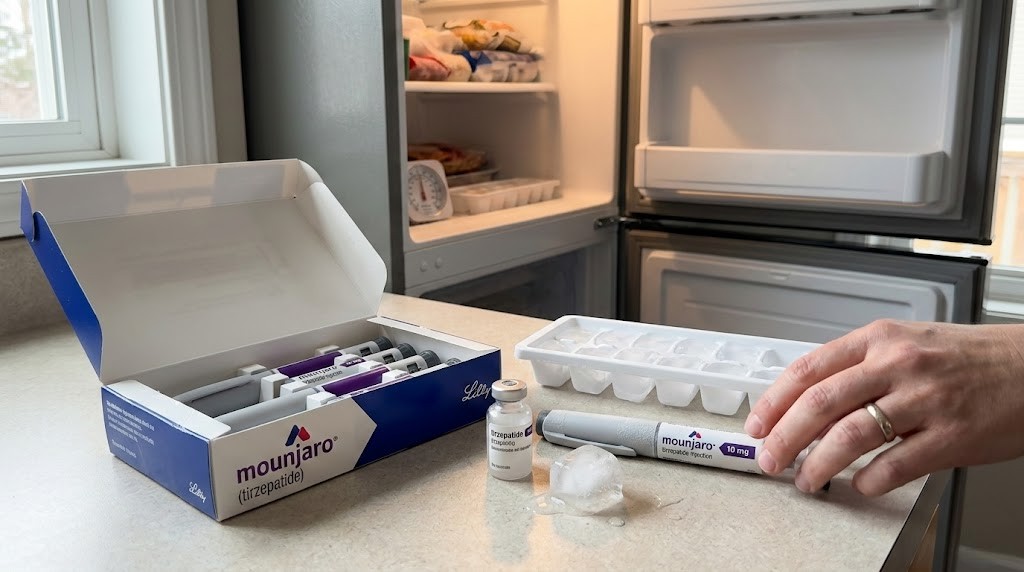
Before you put that vial in the freezer, stop. That single decision could destroy an entire month of medication. It could waste hundreds of dollars. It could set your weight loss progress back weeks without you even realizing it, because frozen tirzepatide does not always look different from tirzepatide that has been stored correctly.
This is one of those questions that seems straightforward. Can you freeze tirzepatide? The answer should be simple. But it is not. Brand-name tirzepatide and compounded tirzepatide follow completely different rules. Lyophilized powder and reconstituted solution behave differently at freezing temperatures. Some compounding pharmacies actually recommend freezing their product while Eli Lilly explicitly says never do it. And to make things even more confusing, the damage that freezing causes is often invisible to the naked eye.
This guide covers every angle. You will learn exactly what happens at the molecular level when tirzepatide freezes, which formulations can tolerate cold temperatures and which cannot, how to tell if your medication has been compromised, and the precise storage conditions that keep your tirzepatide dosing protocol on track. Whether you are using brand-name Mounjaro, Zepbound, or a compounded tirzepatide formulation with B12 and glycine, proper storage is not optional. It is the difference between a medication that works and expensive water.
The short answer on freezing tirzepatide
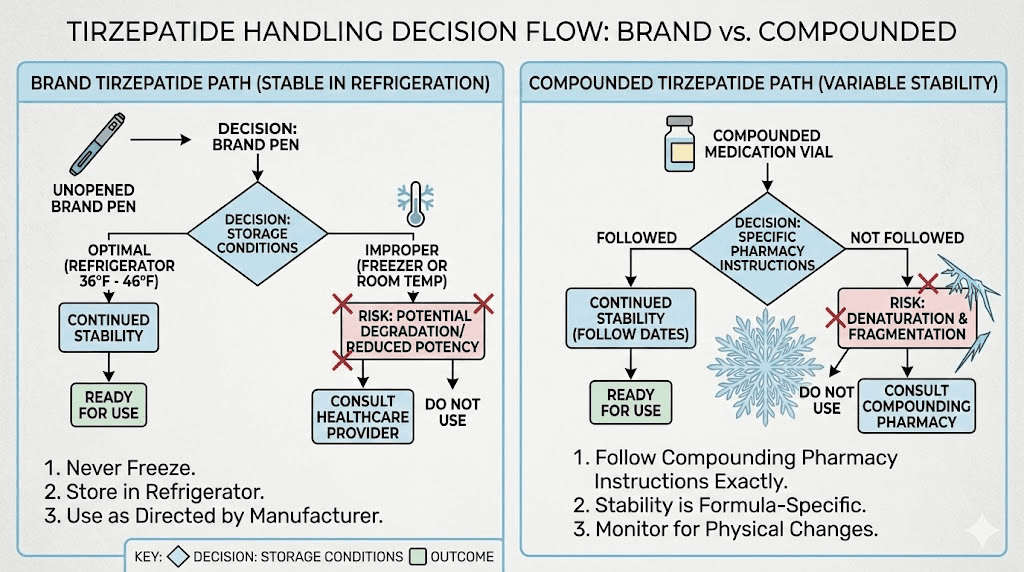
No. You should not freeze brand-name tirzepatide. Eli Lilly, the manufacturer of both Mounjaro and Zepbound, is clear on this point. Their prescribing information states that tirzepatide should never be frozen, and if it does freeze accidentally, it must be thrown away. Do not thaw it. Do not try to warm it back up. Do not assume it is fine because it looks the same.
This is not a suggestion.
It is a safety directive based on the molecular structure of the medication itself. Tirzepatide is a biologic drug, a 39-amino-acid peptide with a fatty acid modification that gives it its extended half-life. That structure is sensitive. Freezing disrupts it in ways that cannot be undone.
But here is where things get more nuanced. Compounded tirzepatide, the formulations prepared by compounding pharmacies, sometimes comes with different storage instructions. Some pharmacies ship their tirzepatide frozen and include instructions to thaw before use. This is not a contradiction. It reflects differences in formulation, concentration, preservatives, and stability testing that vary from one compounder to another.
The critical rule is simple. Follow the storage instructions that came with your specific medication. If your pharmacy says refrigerate, refrigerate. If they say freeze, freeze. If the manufacturer says never freeze, then never freeze. Guessing is not worth the risk.
What happens when tirzepatide freezes
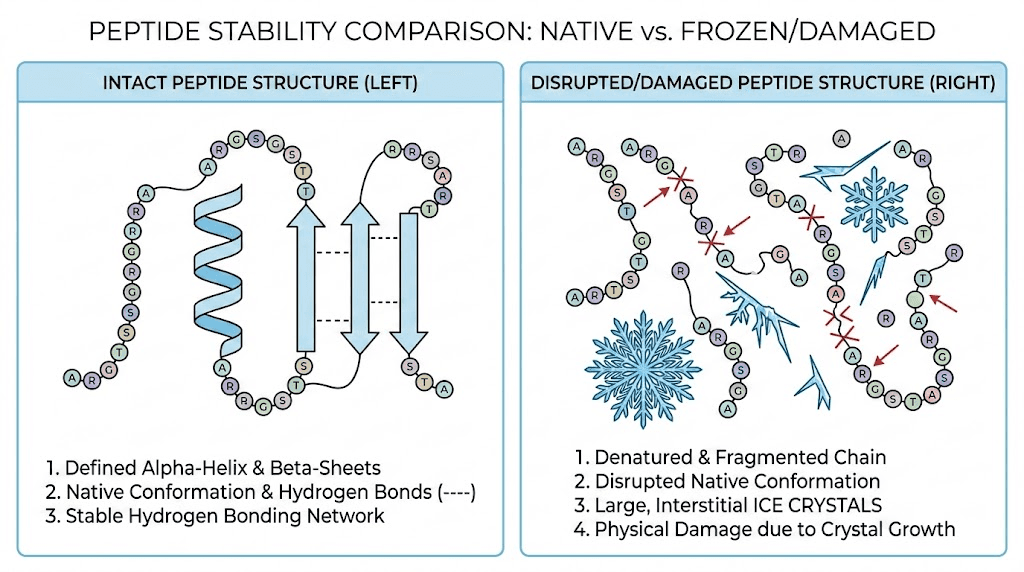
Understanding why freezing is destructive requires looking at what tirzepatide actually is. Unlike a simple chemical compound that can survive extreme temperatures, tirzepatide is a large peptide molecule. Its biological activity depends entirely on its three-dimensional shape, the specific way its amino acid chain folds and interacts with GIP and GLP-1 receptors in your body.
When water freezes, it forms ice crystals. These crystals are sharp, rigid structures that expand as they form. Inside a vial of reconstituted tirzepatide, those ice crystals push against the peptide molecules with physical force. They disrupt the hydrogen bonds and hydrophobic interactions that maintain the peptide folding pattern. They tear apart the delicate three-dimensional configuration that allows tirzepatide to bind to its target receptors.
Think of it like origami. A perfectly folded crane can sit on your shelf for years. But crush it, flatten it, and try to refold it? You will never get the same result. The creases are in the wrong places. The structure is fundamentally different even if you use the same piece of paper.
That is what happens to tirzepatide at the molecular level when ice crystals form and then melt.
The specific damage freezing causes
Freezing triggers several distinct types of damage in peptide solutions. Each one is independently capable of ruining the medication, and they typically happen simultaneously.
Protein aggregation is the most common outcome. Damaged peptide molecules lose their individual structure and clump together, forming larger inactive complexes. These aggregates cannot bind to GLP-1 receptors effectively. In severe cases, they can trigger immune responses at the injection site, causing redness, swelling, or other reactions that would not occur with properly stored medication.
Denaturation refers to the permanent unfolding of the peptide chain. Once the three-dimensional structure is lost, the amino acid sequence remains intact but the biological function is gone. The molecule still exists, but it cannot do its job. Research on peptide cold stability suggests that even a single freeze-thaw cycle can reduce potency by 30 to 50 percent. That means half your dose might be doing nothing at all.
Fatty acid chain damage is particularly relevant for tirzepatide. Unlike simpler peptides such as BPC-157 or TB-500, tirzepatide includes a C20 fatty acid modification (eicosanedioic acid) attached via a linker. This modification is what gives tirzepatide its long half-life by allowing it to bind to albumin in the bloodstream. Freezing can disrupt the fatty acid attachment or alter its orientation, which would shorten the effective duration of the medication and change its pharmacokinetic profile.
pH shifts occur as certain buffer components in the solution concentrate or precipitate during freezing. When the solution thaws, the pH may not return to its original level. Even small changes in pH can accelerate peptide degradation and reduce stability of the remaining intact molecules.
Brand-name tirzepatide storage rules
Mounjaro and Zepbound come in prefilled single-dose pens. Eli Lilly provides clear, non-negotiable storage requirements for these products. There is no room for interpretation here.
Refrigerator storage
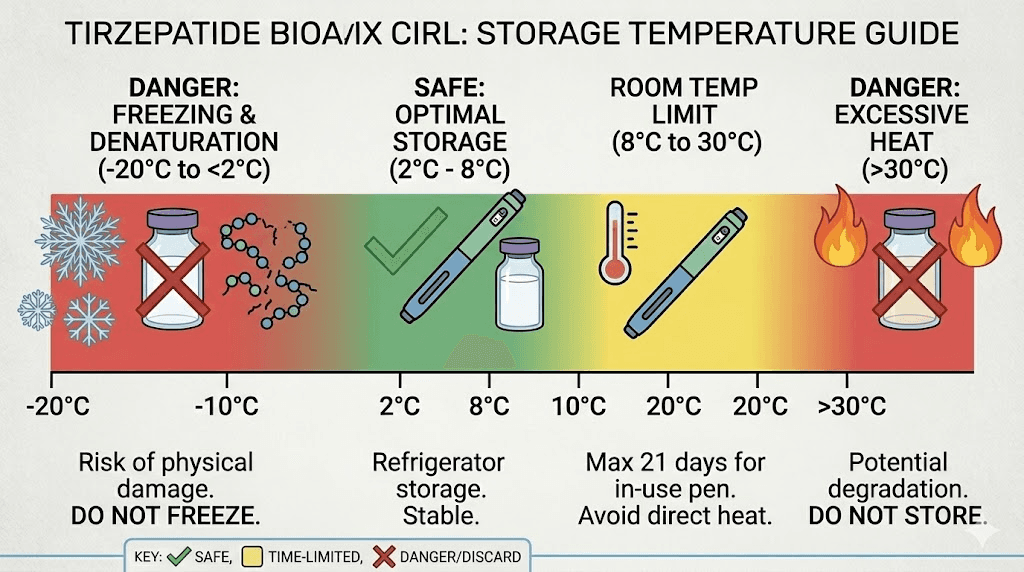
Before first use, store brand-name tirzepatide in the refrigerator between 36 and 46 degrees Fahrenheit (2 to 8 degrees Celsius). This is the standard tirzepatide refrigeration range. At this temperature, the medication maintains its full potency until the expiration date printed on the carton.
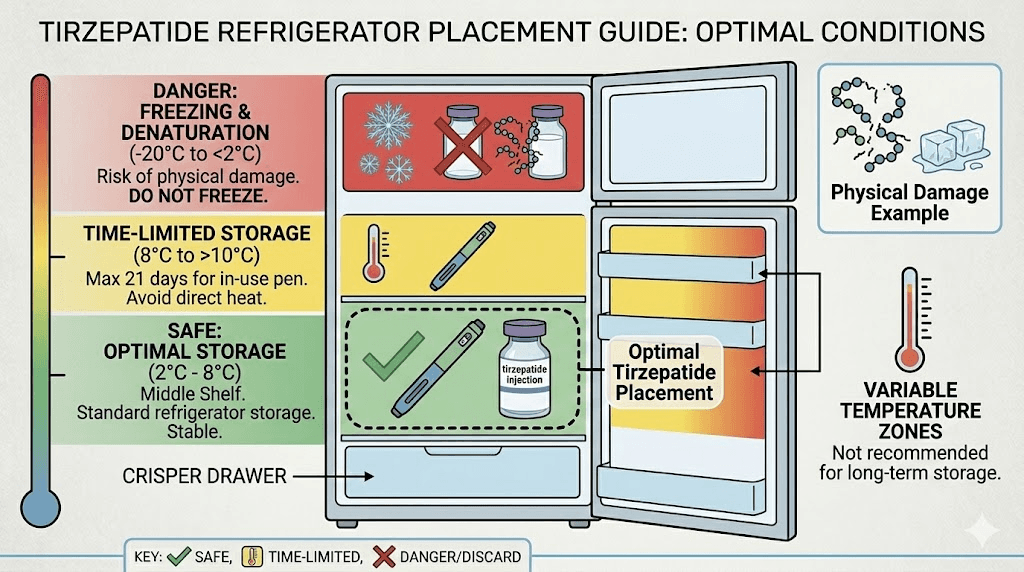
Keep the pens in their original carton. This protects them from light, which can also degrade peptides over time. Place them on a middle shelf, not near the back wall where temperatures fluctuate more, and definitely not in the door where temperature swings are most dramatic every time you open the fridge.
Room temperature allowance
Brand-name tirzepatide can be stored at room temperature below 86 degrees Fahrenheit (30 degrees Celsius) for up to 21 days. Once you remove it from the refrigerator, the 21-day clock starts. You cannot put it back in the fridge to pause the countdown. After 21 days at room temperature, discard the pen regardless of how it looks or whether the expiration date has passed.
This is relevant for travel situations and for people who prefer injecting at room temperature rather than dealing with the sting of a cold injection. But it requires tracking. Mark the date you removed the pen from the refrigerator so you know exactly when the 21 days end.
The freezing prohibition
Under no circumstances should brand-name tirzepatide be frozen. If you accidentally freeze a pen, if your refrigerator malfunctions, if you leave it in a car during winter, the pen must be discarded. Even if it has completely thawed and looks perfectly normal, the molecular damage has already occurred. You cannot see denatured peptides with your eyes. You cannot smell aggregated proteins. The medication will draw into a syringe the same way. It will inject the same way. But it will not work the same way, and using it means your weight loss timeline could stall without any obvious explanation.
Compounded tirzepatide storage: the exception that confuses everyone
This is where the conversation gets complicated. Compounded tirzepatide is not one product. It is hundreds of different products made by hundreds of different pharmacies, each with their own formulation, concentration, preservative system, and stability data. The storage rules for one compounded tirzepatide with B12 from one pharmacy might be completely different from the rules for a tirzepatide niacinamide formulation from another pharmacy.
Why some compounding pharmacies recommend freezing
Certain compounding pharmacies ship tirzepatide in prefilled syringes and instruct patients to store them in the freezer until ready to use. This sounds contradictory to everything above, but there are legitimate reasons.
First, some compounded formulations use different buffer systems and cryoprotectants that help the peptide survive freezing. These additives prevent ice crystal formation or protect the peptide structure during the freeze-thaw process. Brand-name tirzepatide does not contain these additives because it was never designed to be frozen.
Second, some compounded formulations are more concentrated. Higher concentration solutions can sometimes tolerate freezing better because the peptide-to-water ratio changes the dynamics of ice crystal formation.
Third, freezing can extend the beyond-use date of compounded formulations significantly. A refrigerated compounded tirzepatide might have a 28 to 90 day shelf life. Frozen, that same formulation might remain stable for six months or longer. For pharmacies shipping large quantities or for patients who want to stock up, this is a practical advantage.
How to handle frozen compounded tirzepatide
If your pharmacy ships frozen tirzepatide or instructs you to freeze it, follow these steps precisely.
When you are ready to use a dose, move it from the freezer to the refrigerator and let it thaw slowly. Do not use a microwave. Do not run it under hot water. Do not leave it on the counter in direct sunlight. Slow, gradual thawing in the refrigerator minimizes the formation of damaging ice crystal patterns during the transition.
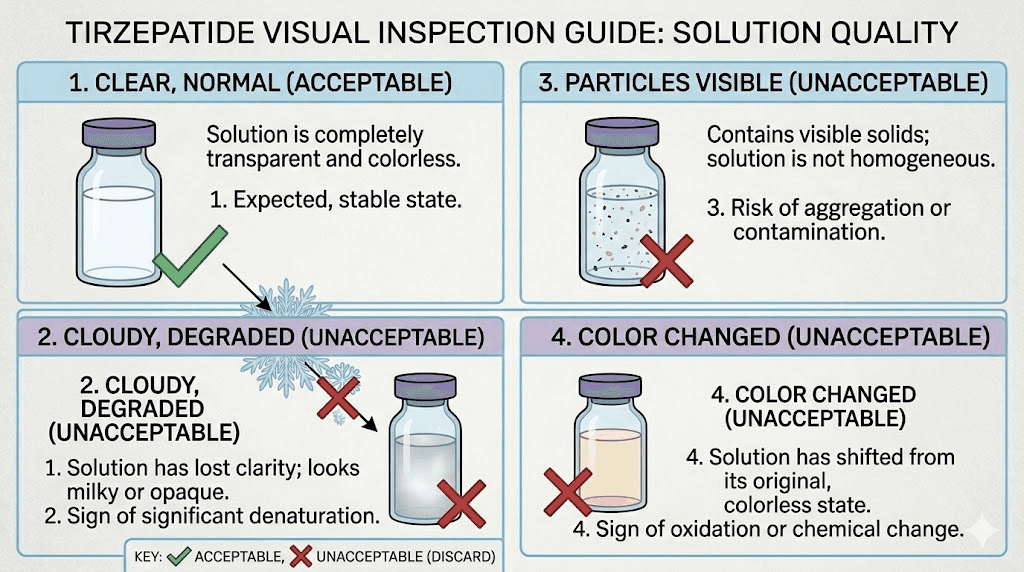
Once thawed, inspect the solution carefully. Check the color. For plain tirzepatide, the solution should be clear and colorless. For formulations with B12, expect a pink or reddish tint. For glycine formulations, expect clear to slightly tinted. Any cloudiness, visible particles, or unexpected discoloration means the medication may have degraded. Do not use it.
After thawing, do not refreeze. Once a frozen compounded dose has been thawed, it needs to be used within the timeframe specified by your pharmacy, typically within a few days if kept refrigerated.
Lyophilized tirzepatide and freezing
Lyophilized (freeze-dried) tirzepatide is a completely different story from liquid formulations. Understanding this distinction is essential because many researchers and patients encounter lyophilized peptides when working with research-grade compounds.
What lyophilized means
Lyophilization is a process where a solution is frozen and then subjected to a vacuum that removes the water content through sublimation. The result is a dry powder or cake that contains the peptide in a stable, dehydrated form. This process is specifically designed to create a product that can survive long-term storage, including storage at freezing temperatures and below.
When a peptide is lyophilized, there is no water present to form ice crystals. No ice crystals means no physical damage to the peptide structure. This is why lyophilized peptides can last for months or even years when stored properly, including at sub-zero temperatures.
Storing lyophilized tirzepatide
Unreconstituted lyophilized tirzepatide should be stored in the freezer at -4 degrees Fahrenheit (-20 degrees Celsius) or in the refrigerator at 36 to 46 degrees Fahrenheit (2 to 8 degrees Celsius). Freezer storage generally provides longer stability. Some lyophilized peptides can remain stable for years at -20 degrees Celsius when kept sealed and protected from moisture and light.
The key requirement is that the vial remains sealed. Moisture is the enemy of lyophilized peptides. If a seal is broken or damaged, humidity from the air can cause the powder to absorb water and begin degrading, even at cold temperatures.
After reconstitution the rules change
Once you reconstitute lyophilized tirzepatide with bacteriostatic water or sterile water, the rules change completely. You now have a liquid peptide solution, and all the freezing concerns discussed above apply. Reconstituted tirzepatide should be stored in the refrigerator between 2 and 8 degrees Celsius and used within the timeframe recommended for reconstituted peptide storage, typically 28 to 30 days for solutions mixed with bacteriostatic water.
Do not freeze reconstituted tirzepatide unless you have specific cryoprotectant additives and stability data that support doing so. Most standard reconstitution methods do not include cryoprotection.
How to tell if your tirzepatide has been damaged by freezing
This is the frustrating part. Freezing damage is not always visible. A vial of tirzepatide that froze overnight in a malfunctioning refrigerator might look completely normal after thawing. It could be the same color, the same clarity, the same consistency. But the peptides inside could be 40 percent degraded with no external sign.
That said, there are some visual indicators that can tell you something went wrong.
Visual signs of damage
Cloudiness is the most obvious sign. If your tirzepatide solution looks hazy, milky, or opaque when it should be clear, protein aggregation has likely occurred. Aggregated peptides scatter light, creating that cloudy appearance. This medication should not be used.
Particles floating in the solution or settled at the bottom indicate advanced degradation. These are clumps of denatured peptide that have become large enough to see. Sometimes they appear as tiny flecks. Sometimes they look like white strands or flakes. Either way, visible particles mean the medication is compromised.
Color changes can also indicate damage, though this is harder to assess with formulations that already have color. Plain tirzepatide should be clear and colorless. If it has turned yellow, brown, or any other color, degradation has occurred. For B12-containing formulations that are normally pink or red, watch for unexpected darkening, loss of color, or brownish tints.
Separation in the vial, where you can see distinct layers or a gradient of color from top to bottom, suggests that components have precipitated out of solution. This happens when freezing disrupts the balance of the formulation.
When damage is invisible
If your tirzepatide passes the visual inspection but you suspect it may have frozen, pay attention to its effectiveness. The most reliable indicator of compromised medication is reduced efficacy. If you notice a sudden decrease in appetite suppression, return of hunger between doses, or a plateau in weight loss that coincides with a possible storage incident, the medication may have lost potency.
Other signs include changes in side effect patterns. If you normally experience mild nausea on injection day and suddenly feel nothing, the medication may not be at full strength. If your usual response pattern changes without any other explanation, storage compromise is worth investigating.
Preventing accidental freezing in your refrigerator
More tirzepatide gets accidentally frozen by home refrigerators than by any other cause. Modern refrigerators are designed primarily for food, not medication, and their temperature distribution is not always as even as you might assume. Here is how to protect your tirzepatide in the fridge.
Understand your refrigerator temperature zones
The back wall of your refrigerator is the coldest spot. The cooling coils run behind or along this wall, and temperatures directly against it can dip below freezing even when the main compartment reads a safe 38 degrees Fahrenheit. Never store tirzepatide against the back wall.
The bottom shelf tends to be colder than the top shelf because cold air is denser and sinks. If your refrigerator runs on the cold side, avoid the lowest shelf.
The door shelves are the warmest area but also the most variable. Every time you open the door, the temperature in the door compartment swings. This fluctuation is not ideal for peptide storage either, even though it reduces freezing risk.
The middle shelf, toward the center of the refrigerator, provides the most consistent temperature. This is where your tirzepatide should live.
Use a refrigerator thermometer
The built-in temperature display on your refrigerator is an estimate, not a precise measurement. It measures air temperature near the sensor, which may not be where your medication sits. Buy an inexpensive refrigerator thermometer and place it next to your tirzepatide. Check it weekly.
If the thermometer ever reads below 36 degrees Fahrenheit (2 degrees Celsius), your refrigerator is running too cold. Adjust the temperature setting upward. The ideal range for tirzepatide refrigeration is 38 to 40 degrees Fahrenheit (3 to 4 degrees Celsius), which provides a safety buffer from both the freezing point (32 degrees) and the upper limit (46 degrees).
Watch for freezer proximity
In top-freezer refrigerators, the area directly below the freezer compartment can be significantly colder than the rest of the fridge. In side-by-side models, the wall shared with the freezer can create cold spots. In bottom-freezer models, the lowest shelf near the freezer can dip below safe temperatures.
Map your refrigerator by leaving the thermometer in different positions for a day each. Find the sweet spot and use it consistently.
Avoid ice packs directly against vials
If you use ice packs to keep medication cold during transport, never let them touch the vial or pen directly. Ice packs, especially gel packs straight from the freezer, can have surface temperatures well below freezing. Direct contact can freeze the medication locally even if the ambient temperature is safe. Always use a cloth barrier or insulated pouch between ice packs and tirzepatide.
Tirzepatide storage temperature quick reference
This chart summarizes the key temperature thresholds for every type of tirzepatide formulation. Bookmark it. Reference it any time you are unsure.
Formulation | Freezer (-20C) | Fridge (2-8C) | Room temp (up to 30C) | Above 30C |
|---|---|---|---|---|
Brand pen (Mounjaro/Zepbound) | Never | Until expiration | 21 days max | Discard |
Compounded liquid (standard) | Follow pharmacy | 28-90 days (BUD) | Varies by pharmacy | Discard |
Compounded liquid (frozen) | Per pharmacy instructions | Thaw then use within days | Not recommended | Discard |
Lyophilized powder | Yes, long-term | Yes, medium-term | Short-term only | Avoid |
Reconstituted from lyophilized | Not recommended | 28-30 days typical | Minimize exposure | Discard |
The pattern is clear. Liquid tirzepatide and freezing do not mix well unless the formulation was specifically designed for it. Dry powder handles cold temperatures without issue because there is no water to form crystals. And heat above 30 degrees Celsius (86 degrees Fahrenheit) is universally bad regardless of formulation type.
What to do if your tirzepatide accidentally freezes
Accidents happen. Your refrigerator thermostat fails overnight. A power outage followed by a power surge causes the fridge to overcool. Someone turns the temperature dial to maximum without telling you. A vial rolls to the back of the fridge against the coils. Here is what to do in each scenario.
Brand-name pen accidentally froze
Discard it. There is no recovery. Even if it looks perfect after thawing, the peptide structure has been compromised. Contact your prescriber or pharmacy for a replacement. Many insurance plans and manufacturer programs will replace medication damaged by storage accidents, especially if you report it promptly. Document the situation. Take photos of the pen, the thermometer reading, and any packaging.
Compounded tirzepatide accidentally froze (not intended for freezing)
Contact your compounding pharmacy. Explain what happened, how long the medication was frozen, and what temperature it reached. Some pharmacies may advise that brief partial freezing is acceptable for their specific formulation. Others will recommend discarding. Do not guess. The pharmacy knows their formulation chemistry and can give you an informed answer.
In the meantime, do a visual inspection. Check for cloudiness, particles, color changes, and separation. If any of these are present, do not use the medication regardless of what the pharmacy says, because visible degradation indicates severe damage.
Compounded tirzepatide got too cold but may not have fully frozen
If your refrigerator dipped to 30 or 31 degrees Fahrenheit (just above freezing) briefly, the tirzepatide may not have fully frozen. Peptide solutions do not always freeze at exactly 32 degrees because dissolved substances lower the freezing point slightly. In this situation, inspect the medication, monitor it at your next use for normal efficacy, and adjust your refrigerator temperature to prevent recurrence.
Lyophilized powder exposed to extreme cold
Not a concern. Lyophilized tirzepatide tolerates freezer temperatures by design. Even if temperatures dropped well below -20 degrees Celsius, the dry powder remains stable. Continue with normal storage and reconstitution procedures.
The science behind peptide cold storage
To understand why specific temperature ranges matter, it helps to know how peptides interact with their environment at a molecular level. This section goes deeper into the science for readers who want the full picture.
Water structure and peptide stability
In liquid solutions, water molecules form a structured shell around peptide molecules. This hydration shell is not random. It is an organized layer of water molecules that stabilize the peptide folding through hydrogen bonding and hydrophobic effects. When the solution is between 2 and 8 degrees Celsius, this hydration shell is stable and the peptide maintains its proper conformation.
As temperatures drop toward freezing, the water molecules begin reorganizing into ice lattice structures. This reorganization pulls water away from the peptide surface, destabilizing the hydration shell. The peptide, suddenly deprived of its stabilizing water coat, becomes vulnerable to structural changes. Amino acid residues that were safely buried inside the folded structure can become exposed, leading to irreversible misfolding.
Concentration effects during freezing
When a solution begins to freeze, pure water freezes first. The remaining unfrozen liquid becomes increasingly concentrated with dissolved substances, including the peptide, buffer salts, and preservatives. This concentration effect can be dramatic. A solution might see its salt concentration increase tenfold in the last fraction of liquid to freeze.
This hyper-concentrated environment exposes the peptide to extreme osmotic stress, pH changes, and ionic strength shifts. Any of these can trigger denaturation. This is why peptide solutions that freeze slowly (like in a malfunctioning refrigerator that gradually gets colder) often suffer more damage than solutions that are flash-frozen in liquid nitrogen, because slow freezing allows more concentration before complete solidification.
The fatty acid complication specific to tirzepatide
Tirzepatide is not just any peptide. It belongs to a class called acylated peptides, where a fatty acid chain is chemically attached to the peptide backbone. This fatty acid (specifically a C20 eicosanedioic acid connected through a gamma-glutamic acid and a mini-PEG linker) is what makes tirzepatide special. It allows the drug to bind to human serum albumin in the bloodstream, extending its half-life to approximately five days and enabling once-weekly dosing.
Freezing can disrupt the interaction between the fatty acid moiety and the rest of the peptide molecule. The fatty acid chain relies on hydrophobic interactions to maintain its orientation. During freezing, these interactions weaken as the local environment changes. If the fatty acid repositions or detaches partially, the pharmacokinetics of the entire molecule change. You might end up with a peptide that gets cleared from the body too quickly, requiring higher or more frequent doses that your dosage protocol does not account for.
Comparing tirzepatide storage with other GLP-1 medications
Tirzepatide is not the only injectable peptide medication with strict storage requirements. Understanding how it compares to semaglutide and other GLP-1 receptor agonists provides useful context, especially if you are switching between medications or using multiple compounds.
Semaglutide storage comparison
Semaglutide (Ozempic, Wegovy) follows very similar storage rules to brand-name tirzepatide. Refrigerate between 2 and 8 degrees Celsius. Never freeze. Room temperature storage below 30 degrees Celsius for up to 56 days (Ozempic) or 28 days (Wegovy) after first use. The longer room temperature window for Ozempic compared to tirzepatide is due to differences in the pen design and formulation stability.
Compounded semaglutide mirrors compounded tirzepatide in terms of variability. Storage instructions depend entirely on the specific pharmacy and formulation. Some compounded semaglutide products tolerate brief temperature excursions better than others. Always follow your specific pharmacy instructions.
If your semaglutide gets warm or gets left out overnight, the same cautious approach applies. Inspect it visually and contact your pharmacy if you have any concerns about whether it is still safe to use.
Key differences in storage sensitivity
Both tirzepatide and semaglutide are acylated peptides with similar structural vulnerabilities to temperature extremes. However, tirzepatide is a dual GIP/GLP-1 agonist with a slightly more complex structure, including its unique glucose-dependent insulinotropic polypeptide receptor activity. This additional complexity does not necessarily make it more fragile, but it does mean there are more potential points of structural disruption.
The practical takeaway is the same for both medications. Keep them cold but not frozen. Keep them away from heat and light. And when in doubt, replace rather than risk using compromised medication.
Travel and transport: keeping tirzepatide safe in transit
Traveling with tirzepatide introduces freezing risks that do not exist at home. Here are the specific scenarios to watch for and how to handle each one.
Flying with tirzepatide
Always carry tirzepatide in your carry-on luggage. The cargo hold of an aircraft is not temperature controlled and can reach temperatures well below freezing at cruising altitude. Your medication could freeze solid during a flight and you would never know until you try to use it.
In the cabin, temperatures remain comfortable, and your medication stays safe. TSA allows injectable medications through security. Bring your prescription label or a letter from your prescriber if you want to avoid questions, though most TSA agents are familiar with injectable medications.
Driving in cold weather
Cars parked in winter conditions can reach freezing temperatures within hours. If you are driving and stop for a meal, your tirzepatide sitting in the car could freeze. Bring it with you or use an insulated travel case. In extreme cold (below 0 degrees Fahrenheit), even the interior of a running car might not keep medication above freezing if it is stored in a bag on the floor or in the trunk.
During summer, the opposite problem applies. Cars in direct sunlight can exceed 140 degrees Fahrenheit inside. Never leave tirzepatide in a parked car in warm weather. This heat exposure will degrade the medication much faster than the 30 degree Celsius upper limit allows.
Using medical travel coolers
Invest in a medical-grade travel cooler designed for injectable medications. These products maintain temperatures between 2 and 8 degrees Celsius for 12 to 72 hours depending on the model and ambient temperature. They use phase-change material rather than ice, eliminating the risk of accidental freezing from direct ice contact.
If you use a standard cooler with ice packs, wrap the ice packs in a towel or cloth before placing them near your medication. Direct contact between a frozen gel pack and a tirzepatide pen can freeze the medication locally within minutes, even if the cooler interior temperature reads above freezing.
Beyond-use dates and expiration: how storage affects potency over time
Freezing is just the most dramatic form of storage damage. But even properly refrigerated tirzepatide degrades over time. Understanding expiration and beyond-use dates helps you maximize the potency of every dose.
Brand-name expiration dates
Eli Lilly assigns expiration dates to Mounjaro and Zepbound based on extensive stability testing. When stored continuously at 2 to 8 degrees Celsius, brand-name tirzepatide maintains at least 90 percent potency until the printed expiration date, typically 24 to 36 months from manufacture.
That 90 percent threshold is important. Even on the expiration date, properly stored brand-name tirzepatide should still be at least 90 percent as potent as it was when manufactured. Below 90 percent, the manufacturer cannot guarantee consistent clinical effects, which is why the date exists.
Compounded tirzepatide beyond-use dates
Compounded medications use beyond-use dates (BUDs) rather than expiration dates. These are shorter, typically 28 to 90 days from the date of compounding, though frozen formulations may have longer BUDs. The BUD is determined by the pharmacy based on USP (United States Pharmacopeia) guidelines and their own stability testing.
A compounded tirzepatide stored properly in the refrigerator should maintain adequate potency through its BUD. But if that same medication was exposed to even brief freezing, the actual potency could be lower than the BUD implies. This is another reason why preventing accidental freezing matters. It is not just about avoiding total medication failure. It is about maintaining the consistent potency that your dosing protocol depends on.
How temperature excursions accumulate
Every time tirzepatide is exposed to temperatures outside the 2 to 8 degree Celsius range, some degradation occurs. These excursions are cumulative. Five minutes above 30 degrees Celsius might cause 0.1 percent degradation. An hour might cause 0.5 percent. A full day might cause 2 percent. Individually, each event is trivial. But over the life of a vial that might last 30 days, dozens of small temperature excursions can add up to meaningful potency loss.
This is why consistency matters. It is not just about avoiding the one big mistake of freezing. It is about maintaining proper storage conditions every day, with every dose, for the entire duration of your protocol.
Reconstitution and storage best practices
For those working with lyophilized tirzepatide that requires reconstitution, proper handling during and after mixing is critical for preventing both freezing damage and general degradation.
Mixing with bacteriostatic water
Use the correct amount of bacteriostatic water for your tirzepatide concentration. The peptide reconstitution calculator can help determine exact volumes based on your desired concentration per unit. Bacteriostatic water contains 0.9 percent benzyl alcohol as a preservative, which helps prevent bacterial contamination and extends the usable life of the reconstituted solution to approximately 28 to 30 days when refrigerated.
Sterile water can also be used for reconstitution but provides a shorter usable window, typically 24 to 48 hours, because it lacks antimicrobial preservatives. Choose bacteriostatic water whenever possible for multi-dose vials.
After reconstitution storage protocol
Immediately after reconstituting, store the vial in the refrigerator. Do not leave it at room temperature longer than necessary. Do not shake the vial. Gentle swirling is sufficient to dissolve the lyophilized powder. Aggressive shaking creates air bubbles and can denature peptides through a process called interfacial stress, where the peptide is damaged at the air-liquid interface.
Label the vial with the reconstitution date. Mark the 28-day discard date clearly. Store it upright on the middle shelf of the refrigerator, away from the back wall and away from the freezer compartment. Use the same thermometer monitoring described earlier to ensure the temperature stays between 2 and 8 degrees Celsius.
When drawing doses, clean the vial stopper with an alcohol swab each time. Use a fresh, sterile syringe and needle for every draw. Minimize the number of times you puncture the stopper, as each puncture introduces a tiny pathway for contamination. If your syringe dosage requires precision, take your time and measure carefully.
Storage mistakes that people make (and how to avoid them)
After reading thousands of forum posts, community discussions, and patient questions about tirzepatide storage, certain mistakes come up repeatedly. Here are the most common ones and their solutions.
Mistake 1: storing tirzepatide in the refrigerator door
The door is the warmest and most variable temperature zone in any refrigerator. Every time you open the door, temperatures can swing 10 to 15 degrees. This constant fluctuation accelerates peptide degradation. Move your tirzepatide to the middle shelf.
Mistake 2: letting the vial touch the back wall
Refrigerator back walls can drop below freezing, especially older models or refrigerators set to lower temperatures. A vial resting directly against the back wall can partially freeze even when the rest of the fridge is at a safe temperature. Keep at least two inches of clearance between your medication and the back wall.
Mistake 3: using ice packs without insulation during travel
Direct contact with frozen gel packs can freeze medication in minutes. Always wrap ice packs in fabric or use a purpose-built medical cooler with integrated insulation.
Mistake 4: assuming clear means fine after a freezing incident
Clarity does not equal potency. Tirzepatide can lose significant biological activity from freezing while remaining visually indistinguishable from undamaged medication. If you know or suspect freezing occurred, replace the medication.
Mistake 5: putting tirzepatide back in the fridge after room temperature storage
For brand-name pens, once removed from refrigeration, the 21-day room temperature clock starts. Returning the pen to the fridge does not reset or pause this clock. The medication experienced temperature fluctuation during the transition, and the shelf life is now limited to those 21 days regardless of subsequent storage conditions.
Mistake 6: ignoring pharmacy-specific instructions for compounded formulations
Not all compounded tirzepatide is the same. A storage protocol that works for one pharmacy formulation might be wrong for another. The B12 and glycine compound from one pharmacy might require different handling than a niacinamide compound from another. Always read and follow the specific instructions included with your medication.
Cost implications of improper storage
Freezing tirzepatide is not just a potency problem. It is a financial problem. Understanding the cost impact can motivate better storage habits.
Brand-name tirzepatide (Mounjaro, Zepbound) costs roughly $1,000 or more per month without insurance. A single frozen pen represents a significant financial loss. Even with insurance or manufacturer coupons, replacement may require prior authorization, copays, or waiting for the next fill date.
Compounded tirzepatide is less expensive, typically $100 to $400 per month depending on the pharmacy and concentration. But wasting even one vial due to freezing means potentially missing doses while waiting for a replacement, which disrupts your weight loss progress and can cause rebound appetite.
The cost of a refrigerator thermometer? Under $10. The cost of an insulated medication travel case? $20 to $50. The cost of replacing frozen tirzepatide? Orders of magnitude higher. Prevention is the obvious financial choice.
Frequently asked questions
Can you freeze compounded tirzepatide to make it last longer?
Only if your compounding pharmacy specifically provides freezing instructions for their formulation. Some pharmacies design their tirzepatide to be stored frozen and thawed before use. Others do not. Freezing a formulation that was not designed for it will likely destroy the medication. Contact your pharmacy before freezing any compounded tirzepatide.
What happens if tirzepatide is left out overnight?
If the room temperature stayed below 86 degrees Fahrenheit (30 degrees Celsius), the medication is likely fine. Brand-name tirzepatide can tolerate up to 21 days at room temperature below 30 degrees Celsius. For compounded formulations, check with your pharmacy, but brief overnight room temperature exposure at normal home temperatures is usually not a concern. The bigger risk is extended time out of the fridge or exposure to heat sources.
Does tirzepatide go bad if not refrigerated?
Yes, eventually. Tirzepatide degrades faster at higher temperatures. Brand-name pens have a 21-day limit at room temperature. Compounded formulations may have shorter windows. At temperatures above 30 degrees Celsius, degradation accelerates significantly. The expiration timeline depends on the specific formulation and storage conditions.
Can you tell if tirzepatide has been frozen just by looking at it?
Not always. Severe freezing damage can cause visible cloudiness, particles, or color changes. But moderate damage, which can still reduce potency by 30 to 50 percent, may leave the solution looking perfectly normal. If you suspect freezing, err on the side of discarding the medication.
Is lyophilized tirzepatide safe to store in the freezer?
Yes. Lyophilized (freeze-dried) tirzepatide in powder form can be safely stored in the freezer at -20 degrees Celsius. The absence of water means no ice crystal formation and no structural damage. However, once reconstituted with water, the resulting liquid solution should not be frozen.
What is the ideal refrigerator temperature for tirzepatide?
Between 36 and 46 degrees Fahrenheit (2 to 8 degrees Celsius). Aim for 38 to 40 degrees Fahrenheit (3 to 4 degrees Celsius) to provide a buffer from both the freezing point and the upper limit. Use a thermometer placed next to your medication to verify the actual temperature rather than relying on the refrigerator display.
Can you use tirzepatide that was frozen and then thawed?
For brand-name tirzepatide, no. Eli Lilly states it must be discarded if frozen, even after thawing. For compounded tirzepatide, contact your pharmacy. If the formulation was designed for frozen storage, thawed medication is fine to use within the specified timeframe. If the formulation was not designed for freezing, discard it.
How should you transport tirzepatide in winter?
Use an insulated travel case designed for medications. Place the tirzepatide inside the case without direct contact with any frozen gel packs or ice. If driving, keep the case inside the vehicle cabin, not in the trunk where temperatures can drop below freezing. When flying, always use carry-on luggage since cargo holds can reach extreme cold temperatures.
External resources
For researchers serious about optimizing their peptide protocols, SeekPeptides provides the most comprehensive resource available, with evidence-based guides, storage protocols, dosing calculators, and a community of thousands who have navigated these exact questions. Whether you need help with compounded tirzepatide dosing, reconstitution guides, or understanding which supplements to pair with your protocol, SeekPeptides members get access to detailed protocols and expert guidance that takes the guesswork out of peptide research.
In case I do not see you, good afternoon, good evening, and good night. May your vials stay unfrozen, your refrigerator stay calibrated, and your tirzepatide stay potent from first draw to last.