Feb 25, 2026
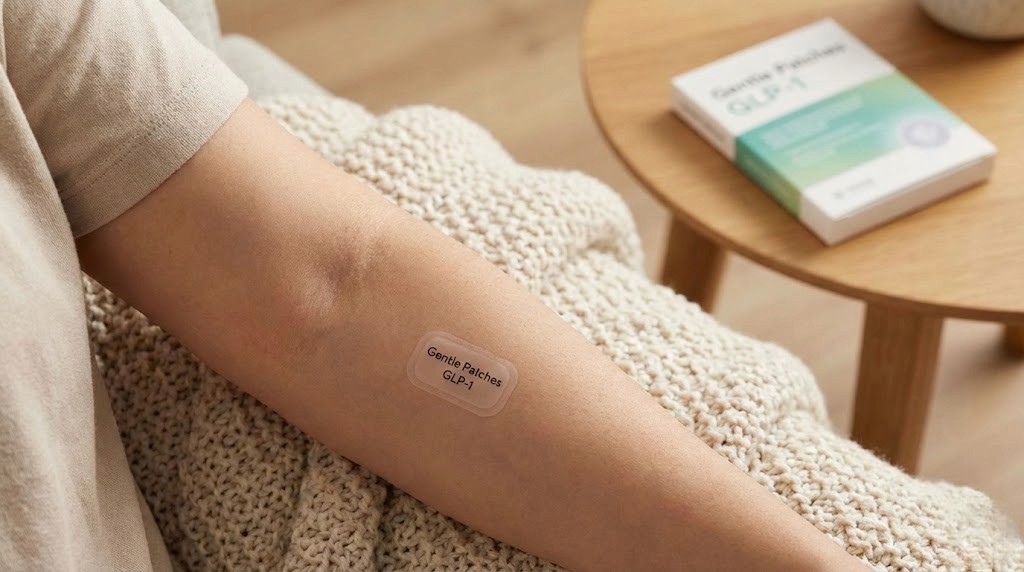
You have seen the ads. They are everywhere. On TikTok, Instagram, Facebook, and scattered across every weight loss forum on the internet. Gentle Patches GLP-1 patches promise an easy, affordable path to the same results that prescription semaglutide and tirzepatide deliver. Stick a patch on your arm, they say, and watch the weight melt off. No needles. No prescriptions. No doctor visits.
But here is the thing nobody in those sponsored posts will tell you.
Gentle Patches do not contain GLP-1. Not a single molecule of it. Not semaglutide. Not tirzepatide. Not any GLP-1 receptor agonist whatsoever. What you get instead is a blend of plant extracts, vitamins, and minerals delivered through a transdermal patch, a delivery method that has never been clinically tested for weight loss with these specific ingredients. The FDA has confirmed there are no approved GLP-1 patches on the market. Zero. And a peer-reviewed study published in early 2026 found that these transdermal "natural GLP-1" supplements actually violate federal dietary supplement law because the Dietary Supplement Health and Education Act requires supplements to be swallowed, not applied to skin. So the product you are buying may not even be legally classified as what the company claims it is.
This guide breaks down everything about Gentle Patches GLP-1 patches. The ingredients. The science, or lack of it. The Trustpilot reviews showing 34% one-star ratings. The billing complaints. The skin reactions. And how these patches compare to the actual GLP-1 medications that have clinical evidence behind them. Whether you are considering buying Gentle Patches or already using them and wondering why results are not matching the marketing, this is the complete picture the ads will never give you.
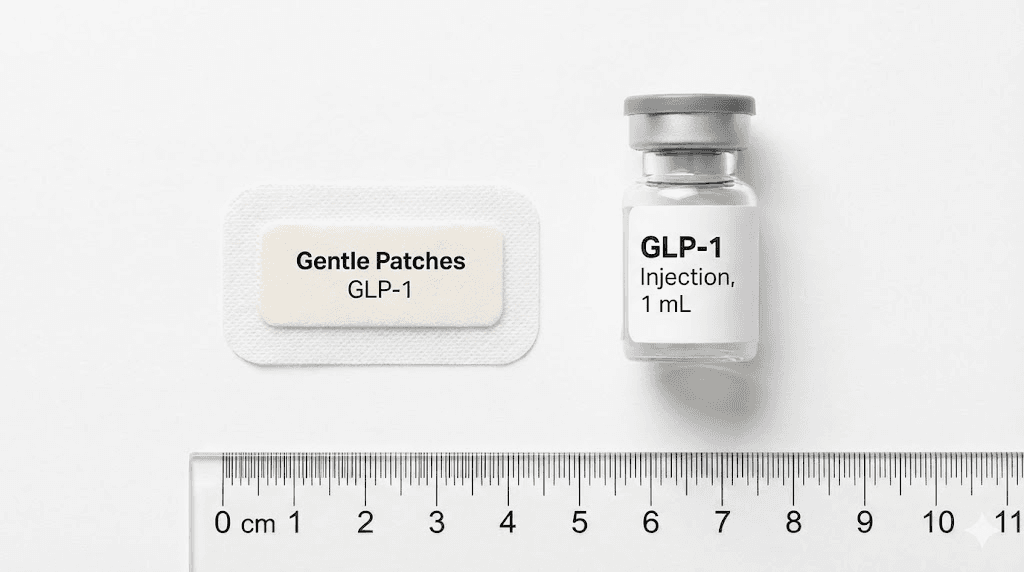
What are Gentle Patches GLP-1 patches?
Gentle Patches is a direct-to-consumer wellness brand that sells transdermal patches marketed as "GLP-1 patches" or "GLP-1 support patches." The company positions these patches as a natural, non-prescription alternative to GLP-1 receptor agonist medications like semaglutide (Wegovy, Ozempic) and tirzepatide (Mounjaro, Zepbound).
The basic concept is straightforward. You peel the patch off its backing, apply it to clean, dry skin on your arm, back, or abdomen, and leave it on for 8 to 12 hours. The company claims that ingredients absorb through the skin to support appetite control, metabolism, and weight management.
Sounds simple enough. But the name itself creates a fundamental problem.
By calling these "GLP-1 patches," Gentle Patches implies a connection to the GLP-1 drug class that does not exist. GLP-1 receptor agonists are a specific category of peptide medications that mimic the glucagon-like peptide-1 hormone in your body. These medications, including semaglutide and tirzepatide, have been tested in clinical trials involving tens of thousands of participants. They produce average weight loss of 15 to 25 percent of body weight.
Gentle Patches contain none of these medications. Not even close.
What the patches actually contain is a blend of botanical extracts and nutrients that the company claims can "support" the body natural GLP-1 pathways. This is a very different claim from actually providing GLP-1, and the distinction matters enormously when you are spending money on a product and expecting specific results. C. Michael White, head of pharmacy practice at the University of Connecticut, described the situation bluntly in an interview with NBC News: "The dietary supplement industry is the Wild West, but people have kicked it up another notch by borrowing the name GLP-1."
The product is not FDA approved. It is registered as a wellness device, not a medication. And that distinction changes everything about what the company can legally claim and what you should realistically expect.
Full ingredient breakdown
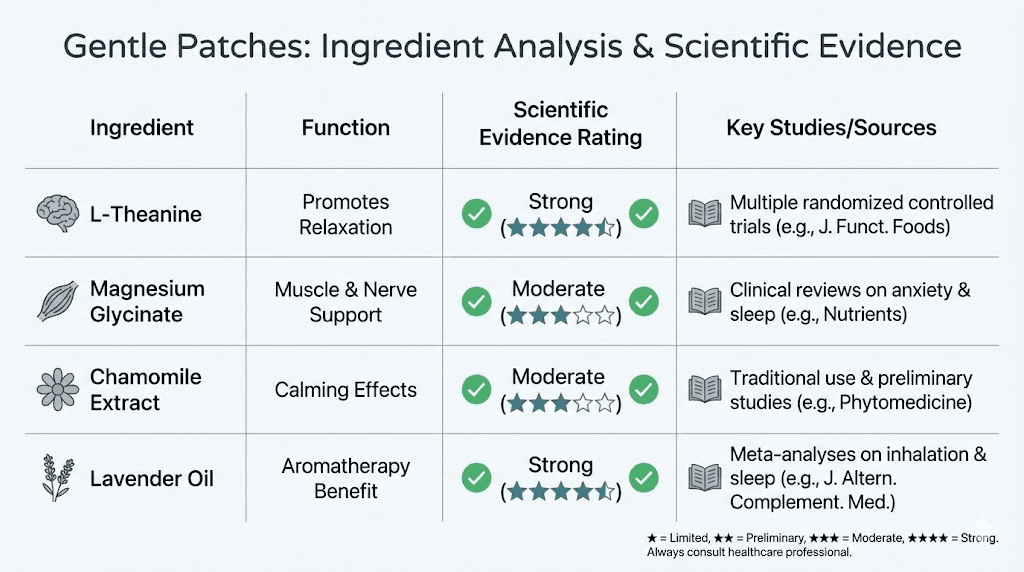
Understanding what Gentle Patches actually contain is critical to evaluating whether they could possibly work. The formula includes several ingredients, each with varying levels of scientific support when taken orally but virtually no evidence for transdermal delivery.
Berberine extract
Berberine is the star ingredient and the one with the most research behind it. This plant-derived alkaloid, found in goldenseal, Oregon grape, and barberry, has genuine scientific support for blood sugar management and lipid support when taken orally. Multiple studies show berberine can reduce fasting blood glucose and improve insulin sensitivity.
The problem? Oral bioavailability of berberine is already extremely low, less than 1% in both animal and human models, largely due to poor intestinal absorption and high levels of first-pass removal in the intestines and liver. Transdermal berberine research does exist, and one 2018 study published in PLOS ONE found that transdermal delivery actually achieved greater bioavailability than oral administration. But that study used carefully formulated pharmaceutical-grade transdermal preparations, not the type of adhesive patch you can buy online for under a dollar per unit.
There are no published studies examining berberine patches specifically for weight loss.
Garcinia cambogia
Garcinia cambogia contains hydroxycitric acid (HCA), which gained popularity as a weight loss supplement in the early 2000s. The theory is that HCA inhibits an enzyme called citrate lyase, which the body uses to make fat. In practice, clinical results have been deeply disappointing. A systematic review of garcinia cambogia studies found only modest effects on body weight, and several studies showed no significant difference from placebo.
Through the skin? No data whatsoever.
Green tea extract (EGCG)
Green tea extract contains catechins and caffeine, both of which have some evidence for modest metabolic effects when consumed orally. Epigallocatechin gallate (EGCG) is the most studied catechin, and research suggests it may slightly increase energy expenditure and fat oxidation. The key word is "slightly." We are talking about effects measured in single-digit calorie changes per day in most studies.
Transdermal absorption of EGCG from a simple adhesive patch has not been studied in any published clinical trial for weight management.
Cinnamon extract
Cinnamon has shown some promise for glucose control in oral supplement form. Some studies suggest it can improve insulin sensitivity and reduce fasting blood sugar levels, though results are inconsistent across trials. The amounts used in research are typically 1 to 6 grams of cinnamon per day.
A significant safety concern with cinnamon involves heavy metal contamination. C. Michael White noted in his NBC News interview that cinnamon can contain elevated heavy metal concentrations if improperly processed. In a transdermal product with no certificate of analysis posted, there is no way to verify purity.
B-complex vitamins
B vitamins play essential roles in energy metabolism. Deficiency in B12, for example, can cause fatigue and other symptoms. But unless someone is actually deficient, supplementing with extra B vitamins does not produce weight loss. Transdermal B vitamin patches do have some research support for absorption, but this is about correcting deficiency, not about weight management.
Chromium and potassium
Chromium is involved in insulin action and macronutrient metabolism. Some studies suggest chromium picolinate may have modest effects on body composition, though a Cochrane review concluded the evidence is not convincing. Potassium is an essential mineral for electrolyte balance. Neither has meaningful evidence for weight loss through transdermal delivery.
L-glutamine
L-glutamine is an amino acid involved in gut health and immune function. Some preliminary research suggests it may influence satiety hormones, but the evidence is limited and conflicting. Transdermal delivery of L-glutamine for appetite control has never been studied.
The overall picture is clear. Some of these ingredients have modest research support when taken orally at specific doses. None have been studied in combination as a transdermal patch for weight loss. And the dosages in the patch are not disclosed, which means there is no way to know if therapeutic amounts of any ingredient are actually present.
How Gentle Patches claim to work
The marketing from Gentle Patches centers on two core claims. First, that the ingredients in the patch can activate or support the body natural GLP-1 pathways. Second, that transdermal delivery bypasses digestion for better absorption and fewer side effects.
Both claims deserve scrutiny.
The "natural GLP-1 activation" claim
Your body does produce GLP-1 naturally. It is a hormone released by L-cells in the small intestine in response to food intake. Natural GLP-1 has a half-life of roughly 2 minutes before being broken down by the enzyme DPP-4. As Dr. Melanie Jay from NYU Langone explained, "Our natural GLP-1 lasts seconds to minutes in our bodies, whereas the prescription GLP-1 medications last over a week."
This is the fundamental issue. Even if berberine or another ingredient could somehow stimulate a tiny increase in natural GLP-1 secretion, that GLP-1 would be destroyed within minutes. Prescription GLP-1 drugs work because they have been chemically modified to resist DPP-4 breakdown, allowing them to stay active in the body for days. A berberine patch cannot replicate this effect. It is comparing a match flame to a furnace.
The transdermal delivery claim
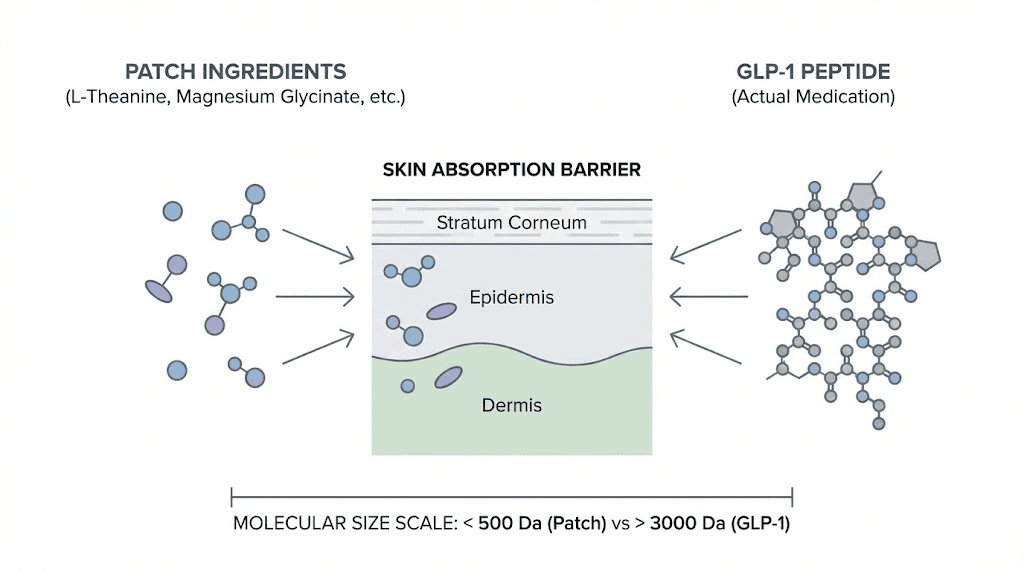
Transdermal drug delivery is a legitimate pharmaceutical technology. Nicotine patches, hormone patches, and fentanyl patches all demonstrate that certain molecules can cross the skin barrier and enter the bloodstream. But the science of transdermal delivery is highly specific.
The skin outermost layer, the stratum corneum, acts as an extremely effective barrier. Only molecules with specific properties can penetrate it effectively. Generally, molecules need to be small (under 500 Daltons), moderately lipophilic, and potent at low doses. Most of the ingredients in Gentle Patches do not meet these criteria, at least not in a simple adhesive patch format.
Pharmaceutical transdermal patches use sophisticated penetration enhancers, reservoir systems, and controlled-release technologies that took years of development and millions in research. A mass-market wellness patch priced under a dollar per unit is not using this level of technology.
The Gentle Patches website claims that transdermal delivery "bypasses digestive detoxification" for better results. Professor White flagged this claim as a genuine safety concern, noting that liver and intestinal enzymes normally neutralize foreign compounds before bloodstream absorption. Bypassing this protective mechanism, if the patch even could do so, would not necessarily be a benefit.
What the science actually says
There are zero published clinical trials on the Gentle Patches formula. None. Not a single peer-reviewed study has tested this specific combination of ingredients delivered transdermally for weight loss or appetite control.
That alone should give anyone pause.
But the broader scientific literature on GLP-1 patches tells an even more definitive story. A 2026 study published in the Annals of Pharmacotherapy by C. Michael White, Zeeya Tai, and Klaus Nuzi systematically analyzed 25 transdermal "natural GLP-1" supplement products. Their findings were damning.
The researchers found an average of 7 natural ingredients per product, with berberine, glutamine, cinnamon, and pomegranate being the most commonly listed. No certificates of analysis were posted for any product. Many products lacked the required FDA disclaimer. And critically, many products used deceptive advertising that could mislead consumers into believing they were getting actual GLP-1 medication.
The study also highlighted a fundamental legal issue. The Dietary Supplement Health and Education Act of 1994 specifies that dietary supplement products must be ingested, meaning swallowed. Transdermal patches, by definition, are not swallowed. This means every "GLP-1 patch" sold as a dietary supplement may be in violation of federal law.
The berberine research gap
Berberine does have legitimate research behind it. Oral berberine has shown effects on blood sugar regulation, cholesterol management, and modest weight effects. A meta-analysis of randomized controlled trials found that oral berberine supplementation was associated with reductions in body weight, BMI, and waist circumference.
However, the weight loss effects are modest. We are talking about 2 to 4 pounds in most studies, a fraction of what semaglutide produces in clinical trials. And these results come from oral administration at specific, studied doses, typically 500mg to 1500mg per day.
The transdermal berberine research that does exist is encouraging for bioavailability but says nothing about weight loss. A 2018 PLOS ONE study found that transdermal formulations of berberine and dihydroberberine achieved greater plasma concentration than oral administration. But these were pharmaceutical-grade formulations tested in controlled conditions, not consumer wellness patches. And the study measured blood levels, not weight loss outcomes.
What doctors and pharmacists say
The medical consensus is clear and consistent. GLP-1 receptor agonist medications are large peptide molecules that cannot penetrate intact skin. Period. The technology to deliver these molecules transdermally does not currently exist in any consumer product.
C. Michael White, PharmD, stated directly that GLP-1 drugs have molecular structures "too large to penetrate skin effectively," making transdermal absorption "very difficult, if not impossible." Researchers are exploring microneedle-based delivery systems, tiny needles embedded in patches that physically break the skin barrier, but these are experimental technologies years from market.
The Science-Based Medicine website analyzed GLP-1 patch products and concluded that none of the typical patch ingredients "have been shown to meaningfully contribute to weight loss, particularly when administered via a transdermal patch."
Gentle Patches reviews: what real users say
Understanding user experiences requires looking beyond the polished testimonials on the company website. Trustpilot, an independent review platform, provides a more balanced picture.
Trustpilot overview
As of early 2026, Gentle Patches holds a 3.1 out of 5 rating on Trustpilot based on 602 reviews. The distribution tells the real story.
5 stars: 218 reviews (36%)
4 stars: 81 reviews (14%)
3 stars: 65 reviews (11%)
2 stars: 32 reviews (5%)
1 star: 206 reviews (34%)
This is an extremely polarized distribution. Over a third of customers gave the maximum rating, while another third gave the minimum. There is very little middle ground. This type of pattern is common with products that have strong marketing but inconsistent real-world results, and it also raises questions about review authenticity on both ends of the spectrum.
What positive reviewers say
Customers who gave favorable reviews most commonly mention convenience and ease of use. One user noted that switching "from capsules to a patch has genuinely made my mornings easier." The patch format is described as discreet, travel-friendly, and low maintenance compared to taking multiple supplement pills.
Some users report modest appetite suppression. One reviewer described using the patches for three months and noticing that their urge to snack at night had stopped. Another reported losing 4 pounds over their usage period. A few users mentioned feeling more energetic.
It is worth noting that these results, when they occur, could be explained by placebo effect, general lifestyle changes, or the modest oral bioavailability of berberine (even through skin). A 4-pound loss over months of use is within the range of what studies show for oral berberine supplementation, though far below what actual GLP-1 medications produce.
What negative reviewers say
The complaints fall into four major categories, and some of them are serious.
Billing and subscription issues. This is the single most common complaint. Multiple customers report being charged far more than expected. One reviewer stated: "I only wanted 1 pack for 11.99 you took 104.10 out of my account." Others describe being unknowingly enrolled in subscription plans they did not consent to. Refund requests reportedly take weeks or months to process, with one customer waiting two months for resolution.
Ineffectiveness. Many one-star reviews simply state the patches had "absolutely no effect." No appetite changes. No weight changes. Nothing. Given the scientific evidence, or lack thereof, this outcome is not surprising for a significant portion of users.
Skin reactions. Some users report the patches blistered their skin painfully. Rashes, redness, and itchiness at the application site are mentioned in multiple reviews. Since the adhesive and ingredients are not pharmaceutical-grade tested for dermal safety, these reactions are a legitimate concern, especially for people with sensitive skin.
Customer service problems. Customers attempting to get refunds describe being given "every excuse in the book." The 30-day return policy only applies to unopened packages, which means anyone who actually tried the product and found it ineffective cannot get a refund.
The refund trap
This deserves its own mention because it represents a pattern that affects purchasing decisions. The company offers a 30-day return policy, but only for unopened packages. By the time you have used enough patches to determine they are not working, you are outside the return window for the used product. Combined with reports of unexpected subscription charges, this creates a financial trap that affects consumers who are already looking for affordable weight loss options.
Pricing, subscriptions, and the real cost
On the surface, Gentle Patches pricing looks attractive compared to prescription GLP-1 medication costs.
Single pack (30 patches): $29.99
Subscribe and save: 15% discount
Buy 2 get 1 free bundle
Buy 3 get 2 free bundle
Free worldwide shipping
At roughly one dollar per patch per day, this seems like a bargain compared to GLP-1 medications that can cost hundreds per month even with insurance. But there is a critical question the pricing comparison ignores.
What is the cost of a product that does not work?
If you spend $29.99 per month for six months on patches that produce no meaningful results, you have spent $180 on what amounts to an adhesive bandage with plant extracts. That same $180 could fund a telehealth consultation and initial prescription for a compounded GLP-1 medication with actual clinical evidence. The cheapest option is not always the most affordable one, especially when effectiveness is factored in.
The subscription model adds another layer of concern. Multiple Trustpilot reviewers describe being enrolled in auto-renewal subscriptions they did not explicitly authorize, or not realizing the bundle they purchased included recurring charges. Always check for pre-checked subscription boxes during checkout.
How Gentle Patches compare to real GLP-1 medications
This comparison is not even close. But it is important to lay it out clearly because the marketing deliberately blurs these lines.
Factor | Gentle Patches | Semaglutide (Wegovy) | Tirzepatide (Zepbound) |
|---|---|---|---|
Contains GLP-1 | No | Yes | Yes (GLP-1/GIP dual) |
FDA approved | No | Yes | Yes |
Clinical trials | None | STEP trials (10,000+ participants) | SURMOUNT trials (10,000+ participants) |
Average weight loss | Unproven (0-4 lbs reported anecdotally) | 15-17% of body weight | 20-25% of body weight |
Mechanism | Plant extracts via skin | GLP-1 receptor activation | GLP-1 and GIP receptor activation |
Prescription required | No | Yes | Yes |
Monthly cost | $25-30 | $300-1,350+ | $300-1,060+ |
Medical oversight | None | Required | Required |
Side effects documented | Skin irritation (user reports) | Nausea, fatigue, constipation (well-studied) | Nausea, diarrhea, fatigue (well-studied) |
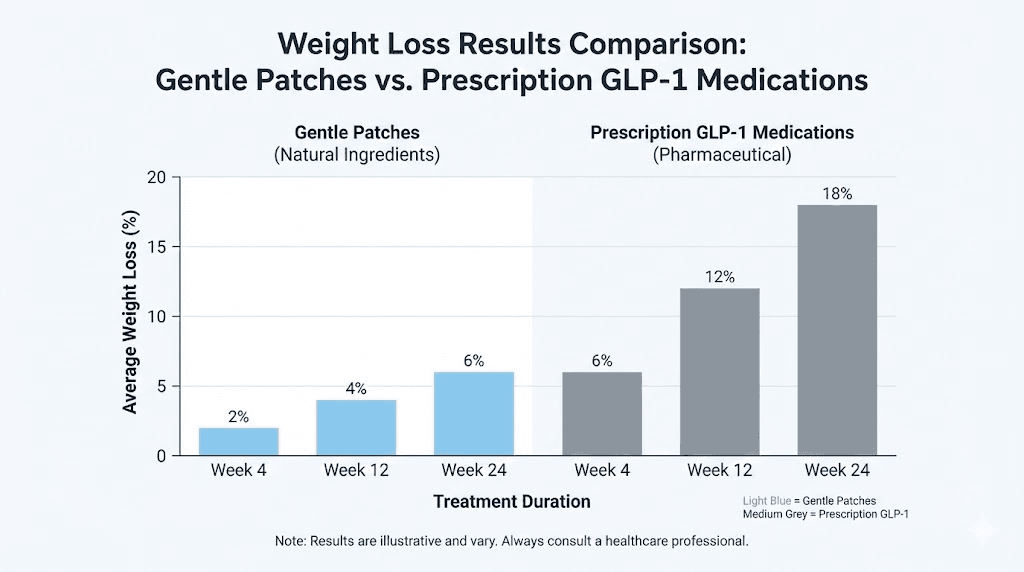
The cost difference is significant, and it is the primary reason Gentle Patches and similar products find a market. Real GLP-1 medications require prescriptions and medical oversight, and they carry higher price tags. But they also produce clinically proven results in the 15 to 25 percent body weight range, backed by trials involving tens of thousands of participants.
Gentle Patches cost less because they contain less. Less active ingredients. Less research. Less regulation. Less effectiveness. The appeal is understandable. Prescription GLP-1 treatments are expensive and require medical visits. But the answer to that problem is not a product that costs less because it does less.
What about compounded GLP-1 medications?
For people concerned about cost, compounded semaglutide and compounded tirzepatide represent a middle ground. These are actual GLP-1 medications prepared by licensed compounding pharmacies at lower prices than brand-name versions. They contain the same active ingredient, require a prescription, and come with medical oversight.
Compounded options through pharmacies like Empower Pharmacy or similar providers typically cost $150 to $400 per month, significantly less than brand name medications while still containing clinically proven active ingredients. The FDA has been increasing oversight of the compounding space, so working with established pharmacies that provide certificates of analysis is important.
The regulatory landscape for GLP-1 patches
Understanding the regulatory environment helps explain why products like Gentle Patches can exist in the market despite questionable claims.
FDA position
The FDA has been clear: there are no FDA-approved GLP-1 patches. The agency has also signaled intent to take action against non-FDA-approved GLP-1 products. In recent enforcement actions, the FDA has sent warning letters to more than 50 compounders and manufacturers of GLP-1 products, though these actions have primarily targeted compounded injectables rather than wellness patches.
The supplement industry operates under different rules than pharmaceuticals. Under the Dietary Supplement Health and Education Act (DSHEA), supplement manufacturers are responsible for ensuring their products are safe, but they do not need FDA approval before marketing. The FDA can only act after products are on the market if they are found to be unsafe or mislabeled.
However, as the 2026 study by White, Tai, and Nuzi pointed out, DSHEA specifically defines dietary supplements as products intended for ingestion. Transdermal patches are not ingested. This creates a legal gray area where these products may not qualify for the regulatory protections that dietary supplement manufacturers typically rely on.
FTC concerns
The Federal Trade Commission has authority over advertising claims. Products that make weight loss claims must have competent and reliable scientific evidence to support those claims. While the FTC has not specifically targeted GLP-1 patches yet, the deceptive marketing practices identified in the 2026 study could draw regulatory attention. State attorneys general have also begun stepping into the regulatory gap, with several states pursuing enforcement actions against misleading GLP-1 product marketing.
What "FDA registered" actually means
Some patch companies, including Gentle Patches, may use the term "FDA registered" in their marketing. This is fundamentally different from "FDA approved." FDA registration simply means a facility has notified the FDA of its existence. It does not mean the FDA has reviewed, tested, or approved the product. Every food manufacturing facility in the US is required to register with the FDA. Registration is a bureaucratic requirement, not an endorsement of quality or efficacy.
Side effects and safety concerns
Because Gentle Patches have not been through clinical trials, there is no systematic safety data. What we know comes from user reports and expert analysis.
Reported skin reactions
The most commonly reported side effect is skin irritation at the application site. Users have described rashes, redness, itching, and in some cases blistering. One Trustpilot reviewer reported the patch "blistered my skin painfully." These reactions could be caused by the adhesive, the active ingredients, or both.
Unlike pharmaceutical transdermal patches that undergo extensive dermatological testing, wellness patches may use adhesives and ingredient concentrations that have not been tested for skin safety. People with sensitive skin, eczema, or other dermatological conditions should be particularly cautious.
Unknown ingredient quality
The 2026 study found that no certificates of analysis were posted for any of the 25 transdermal GLP-1 products analyzed. This means consumers have no independent verification that the ingredients listed on the label are actually in the product, or that they are free from contaminants.
This matters more than you might think. The supplement industry has a documented history of products containing different amounts of active ingredients than listed, or containing unlisted ingredients entirely. Without third-party testing, there is no way to know what you are actually putting on your skin.
Drug interactions
Berberine, the primary active ingredient, does have known drug interactions. Oral berberine can interact with medications metabolized by cytochrome P450 enzymes, including some blood pressure medications, blood thinners, and diabetes drugs. If transdermal berberine achieves meaningful blood levels (a big if), these interactions could be relevant.
People taking any prescription medications, particularly diabetes medications or blood thinners, should consult a healthcare provider before using these patches.
The delayed treatment concern
Perhaps the most significant safety issue is not a direct side effect at all. It is the opportunity cost. People who use Gentle Patches instead of seeking evidence-based treatment may delay weight loss that could improve their health outcomes. Obesity-related conditions, including type 2 diabetes, cardiovascular disease, and joint problems, progress over time. Months spent on an unproven product are months not spent on treatments with clinical evidence.
This is the concern that medical professionals emphasize most. The danger is not just that the patches might not work. It is that relying on them prevents people from pursuing approaches that actually could help.
Gentle Patches vs other GLP-1 patch brands
Gentle Patches is not alone in this market. Several competing brands sell similar products, and understanding the landscape helps put Gentle Patches in context.
Kind Patches
Kind Patches is another popular brand, particularly on TikTok. Notably, Kind Patches has already renamed its "GLP-1 patches" to "berberine patches," though the formula remains identical. This rebranding suggests either regulatory pressure or a recognition that the GLP-1 branding is misleading. The product contains similar ingredients to Gentle Patches, including berberine, green tea extract, and B vitamins.
Onmorlo patches
Onmorlo is another brand in the GLP-1 patch space. Like the others, Onmorlo patches do not contain actual GLP-1 medications. The product uses a similar blend of botanical ingredients and makes similar marketing claims about supporting natural GLP-1 pathways. The same scientific limitations apply.
PatchMD GLP-1 patches
PatchMD has a longer history in the transdermal supplement space, offering patches for various vitamins and supplements. Their GLP-1 patch follows the same formula approach, with berberine and supporting ingredients. PatchMD does have some third-party testing for their products generally, which puts them slightly ahead of competitors on transparency, though the fundamental efficacy questions remain the same.
The common thread
Every single "GLP-1 patch" currently on the market shares the same fundamental limitation. None contain actual GLP-1 medications. None have been tested in clinical trials. None are FDA approved for weight loss. The branding varies. The ingredient ratios might differ slightly. But the core problem, which is that you are not getting what the name implies, is universal across the category.
Why the GLP-1 patch market exploded
Understanding why these products exist helps explain the broader context. The answer comes down to three converging factors.
GLP-1 medication shortages and cost
Prescription GLP-1 medications have experienced massive demand surges. Semaglutide and tirzepatide have been in shortage periods for much of the past two years. Even when available, the brand-name versions cost over $1,000 per month without insurance, and many insurance plans do not cover them for weight loss. This has created a massive population of people who want GLP-1 treatment but cannot access or afford it.
Social media amplification
TikTok and Instagram influencers have been instrumental in driving GLP-1 patch sales. Sponsored content, affiliate links, and paid reviews create the appearance of widespread positive results. The viral nature of social media means a single convincing testimonial can reach millions. Rolling Stone reported on the phenomenon of influencers selling GLP-1 patches, noting the disconnect between marketing claims and scientific reality.
Supplement industry loopholes
The regulatory framework for dietary supplements was designed for products like vitamin pills and herbal capsules. Transdermal patches that borrow pharmaceutical terminology and target prescription drug markets represent a novel category that existing regulations were not designed to address. This regulatory gap allows products to reach market with minimal oversight.
The combination of desperate demand, amplified marketing, and regulatory gaps has created a perfect storm for products like Gentle Patches. The market for GLP-1 patches is estimated to have surged particularly during "resolution season" in early 2026, as a GlobeNewsWire consumer analysis documented.
Evidence-based alternatives worth considering
If you are looking for weight management support and cannot access or afford prescription GLP-1 medications, there are options with actual scientific backing.
Compounded GLP-1 medications
As mentioned above, compounded semaglutide and compounded tirzepatide offer the same active ingredients at lower prices. These require a prescription and come with medical oversight. Various telehealth platforms now offer consultations and prescriptions for compounded GLP-1 medications, making access easier than ever.
Understanding proper semaglutide dosing and tirzepatide dosing is important if you go this route. SeekPeptides provides comprehensive dosing guides, calculators, and protocol information to help researchers understand these medications thoroughly.
Oral GLP-1 medications
For people who prefer not to inject, oral semaglutide is FDA approved and available by prescription. Oral tirzepatide is also in development. These are actual GLP-1 medications in pill form, not herbal supplements. The oral versions require specific administration protocols, like taking on an empty stomach, but they offer genuine GLP-1 activity without needles.
Tirzepatide tablets versus injections represent an evolving landscape, and tirzepatide drops are another format gaining attention. The key difference from patches is that these oral formulations contain actual GLP-1 medication and have clinical trial data supporting their use.
Oral berberine supplements
If berberine is the ingredient that interests you, taking it orally in capsule form is better supported by research than transdermal delivery. Oral berberine supplements at doses of 500mg to 1500mg daily have shown modest effects on blood sugar, cholesterol, and body weight in multiple clinical trials. The effects are small, typically 2 to 4 pounds of weight loss, but at least there is published data supporting the oral route.
Be aware that oral berberine commonly causes gastrointestinal side effects, including constipation, diarrhea, and stomach pain. It also has significant drug interactions. Consult a healthcare provider before starting berberine supplementation.
GLP-1 supporting probiotics
Some probiotic strains have shown ability to increase natural GLP-1 secretion from gut L-cells. Pendulum GLP-1 Probiotic Pro is one product that has some clinical research behind its specific strain formulation. While the effects are much more modest than prescription GLP-1 medications, this represents a more scientifically grounded approach to supporting natural GLP-1 production than a transdermal patch.
Lifestyle approaches that support natural GLP-1
Your body produces GLP-1 naturally in response to certain stimuli. While these approaches will not replicate the effects of prescription medications, they can support overall metabolic health.
High-protein meals stimulate GLP-1 release more effectively than high-carbohydrate meals. Protein shakes designed for GLP-1 users can support this approach. Fiber-rich foods, particularly soluble fiber, also promote GLP-1 secretion. Exercise, especially moderate-intensity aerobic activity, increases GLP-1 levels temporarily. And adequate sleep is essential for hormonal balance, including appetite-regulating hormones.
These approaches work best in combination and are backed by decades of metabolic research, far more evidence than any patch can claim.
What to do if you already bought Gentle Patches
If you have already purchased Gentle Patches and are wondering what to do, here is a practical guide.
Assess your results honestly
Have you experienced any meaningful changes in appetite, weight, or energy? Compare your experience to what the marketing promised versus what you actually got. Be honest with yourself. If you have been using the patches for more than 2 to 4 weeks with no noticeable effects, the patches are likely not working for you.
Check your subscription status
Log into your account on the Gentle Patches website and check whether you have been enrolled in an automatic subscription. If so, and you did not intend to subscribe, cancel immediately. If you were charged unexpectedly, document everything, including order confirmations, charge amounts, and correspondence, and dispute the charge with your credit card company if the company does not resolve it within a reasonable timeframe.
Consider a healthcare consultation
If weight management is a genuine health concern, speak with a healthcare provider about evidence-based options. Telehealth platforms have made this easier and more affordable than ever. A provider can discuss whether prescription GLP-1 medications, phentermine, or other weight loss medication options might be appropriate for your situation.
Monitor for skin reactions
If you are experiencing any skin irritation, redness, blistering, or rash at patch application sites, stop using the product immediately. These reactions can worsen with continued use. If symptoms do not resolve within a few days of stopping, consult a dermatologist.
How to spot misleading GLP-1 product marketing
The Gentle Patches experience offers valuable lessons for evaluating any weight loss product. Here are the red flags to watch for.
Red flag 1: borrowing pharmaceutical terminology
When a supplement uses the name of a drug class (like "GLP-1") in its branding, ask whether it actually contains that type of medication. If the answer is no, the name is designed to confuse, not inform. This applies to any product borrowing terms like "Ozempic alternative," "GLP-1 support," or "natural semaglutide."
Red flag 2: no clinical trials
Legitimate weight loss products, whether prescription or over-the-counter, have clinical trial data. If a company cannot point to published, peer-reviewed studies on their specific product, not just individual ingredients in different formulations, be skeptical.
Red flag 3: influencer-driven marketing
Products that rely primarily on social media influencers and affiliate marketing rather than clinical evidence should be approached with extreme caution. Influencer testimonials are paid endorsements, not scientific evidence.
Red flag 4: "FDA registered" claims
As discussed above, FDA registration is not FDA approval. If a company uses "FDA registered" prominently in its marketing, they are likely banking on consumer confusion between registration and approval.
Red flag 5: pricing that seems too good to be true
If a product claims to deliver the same results as a $1,000 per month prescription medication for $1 per day, the math does not work. Pharmaceutical development costs billions because creating molecules that work in the human body is extraordinarily difficult. Products that shortcut this process shortcut the results too.
The future of real transdermal GLP-1 delivery
While current GLP-1 patches are wellness products with no clinical backing, actual pharmaceutical research into transdermal GLP-1 delivery is underway. This research looks nothing like what Gentle Patches sells.
Microneedle technology
The most promising approach involves microneedle patches, arrays of tiny needles (typically less than 1 millimeter long) that painlessly penetrate the stratum corneum to deliver medications directly into the skin layers. A study published in Advanced Healthcare Materials described a "self-boosting microneedle" system for semaglutide delivery that demonstrated sustained weight control in animal models for up to one month from a single application.
Another study published in PMC in 2025 demonstrated that transdermal semaglutide administration in mice using advanced delivery technology reduced body weight by suppressing appetite and enhancing metabolic rate. These are genuine scientific advances, but they use pharmaceutical-grade delivery systems that are years from consumer availability.
What this means for consumers
Real transdermal GLP-1 delivery may eventually become a reality. But when it does, it will come as an FDA-approved pharmaceutical product, prescribed by doctors, tested in clinical trials, and priced accordingly. It will not look like a $30 wellness patch you can order on Instagram.
Until that technology reaches market, the only proven methods for GLP-1 administration remain injection and oral formulations of approved medications.
Understanding your GLP-1 options
For anyone researching GLP-1 treatments, it helps to understand the full landscape of what is available and what the evidence says about each option.
Injectable GLP-1 medications
Injectable semaglutide and tirzepatide remain the gold standard for GLP-1 weight loss treatment. These medications have the most extensive clinical trial data, showing average weight loss of 15 to 25 percent of body weight over 68-week treatment periods. Administration is typically once weekly via subcutaneous injection using insulin-type syringes or autoinjectors.
Side effects are well documented and include fatigue, dizziness, constipation, and diarrhea, particularly during the dose escalation phase. Most side effects improve over time as the body adjusts. Knowing where to inject and when to take your shot can help minimize discomfort.
Emerging GLP-1 medications
The GLP-1 drug class is expanding rapidly. Retatrutide, a triple receptor agonist targeting GLP-1, GIP, and glucagon receptors, has shown even more impressive weight loss results in phase 2 trials, with some participants losing over 24 percent of body weight. Survodutide and CagriSema represent additional pipeline medications that may offer different benefit profiles.
These medications are in various stages of clinical development, with some expected to reach market in the coming years. They represent the real future of GLP-1 weight loss treatment, not botanical patches.
Supporting your GLP-1 journey
Whether you are currently on a GLP-1 medication or considering one, having access to reliable information matters. SeekPeptides provides evidence-based guides on diet plans for semaglutide users, foods to avoid on tirzepatide, foods to eat while on semaglutide, and supplements that support GLP-1 treatment. Understanding the full picture of nutrition, supplementation, and protocol optimization can significantly improve outcomes on legitimate GLP-1 treatment.
For proper dosing guidance, SeekPeptides offers free calculators including the semaglutide dosage calculator and compounded tirzepatide dosage calculator, along with comprehensive dosage charts and tirzepatide dose charts for those working with compounded formulations.
Storage and handling: another area where patches fall short
One of the selling points of Gentle Patches is convenience. No refrigeration needed. No reconstitution. No syringes. Just peel and stick. And that convenience is real, but it also highlights the simplicity of the product.
Actual GLP-1 medications require specific storage conditions because they are biologically active compounds. Semaglutide storage requires refrigeration before first use, and tirzepatide has similar requirements. Compounded versions require even more careful handling, including proper reconstitution and refrigeration protocols.
The fact that Gentle Patches need none of this is not a feature. It is a reflection of the fact that the ingredients are shelf-stable plant extracts and vitamins, not fragile biological molecules that need protection to remain active. The convenience comes at the cost of potency.
For those working with actual GLP-1 medications, understanding proper storage is essential. Resources on how long compounded semaglutide lasts in the fridge, whether tirzepatide needs refrigeration, and what happens if semaglutide gets warm can prevent wasted medication and ensure effectiveness.
Dosing and conversion: why precision matters with real GLP-1
Gentle Patches offer a one-size-fits-all approach. One patch per day, regardless of body weight, health status, or individual response. There is no dose escalation. No personalization. No adjustment based on results or side effects.
This stands in stark contrast to how actual GLP-1 medications work. Semaglutide treatment begins at 0.25mg weekly and gradually escalates over 16 to 20 weeks to a maintenance dose of 2.4mg weekly. Tirzepatide follows a similar escalation pattern from 2.5mg to 15mg weekly. This gradual approach minimizes side effects and allows the body to adjust.
Understanding dosing conversions is critical for safety. Resources like semaglutide units to mg conversion guides, unit-to-milligram calculators, and tirzepatide syringe dosage guides help ensure accurate administration. The SeekPeptides peptide calculator can help with these conversions.
The precision required for GLP-1 dosing is part of what makes these medications effective, and it is something no one-size-fits-all patch can replicate.
Managing expectations: what weight loss really requires
Part of the appeal of Gentle Patches is the promise of effortless weight loss. But even real GLP-1 medications are not magic. They work best as part of a comprehensive approach.
People on semaglutide still benefit from dietary changes. What to eat on tirzepatide matters for both results and side effect management. Foods to avoid on semaglutide can significantly affect how well you tolerate the medication. Meal planning becomes important when appetite is reduced, because getting adequate nutrition in smaller quantities requires more intentional food choices.
Exercise, while not required for GLP-1 medications to produce weight loss, improves body composition outcomes. Studies show that combining GLP-1 treatment with resistance training helps preserve lean muscle mass during weight loss, leading to better long-term metabolic health. Losing weight on semaglutide without exercise is possible, but results improve with activity.
If GLP-1 medications require lifestyle support to optimize results, the idea that a herbal patch alone will produce meaningful weight loss becomes even harder to justify.
Common concerns when starting real GLP-1 treatment
Many people considering Gentle Patches are doing so because they have concerns about prescription GLP-1 medications. Addressing these concerns directly can help with informed decision-making.
Fear of injections
This is the most common barrier, and it is completely understandable. But modern GLP-1 injections use very small needles (typically 31-gauge) that most users describe as nearly painless. Learning proper injection technique and choosing the right injection site makes the process quick and comfortable. Many users report that the injection itself is the easiest part of their treatment.
For those who truly cannot tolerate injections, oral GLP-1 options exist and more are in development.
Side effect concerns
GLP-1 medication side effects are real but well-characterized. Comparing semaglutide and tirzepatide side effects can help people choose the medication most likely to suit them. Common side effects include nausea, fatigue, headaches, and digestive issues. Most side effects are temporary and occur primarily during dose escalation.
Specific concerns like GLP-1 and hair loss, effects on menstrual cycles, anxiety, insomnia, and muscle pain have all been documented and can be managed with proper protocols.
Cost barriers
Cost is a legitimate concern. But as discussed, affordable compounded options exist. Various pharmacy providers like Empower, Olympia, and BPI Labs offer compounded formulations. Understanding the landscape of grey market options versus legitimate pharmacy sources helps make informed purchasing decisions.
Pregnancy and breastfeeding
GLP-1 medications are not recommended during pregnancy or breastfeeding. For information on this topic, see our guides on GLP-1 and breastfeeding, tirzepatide while breastfeeding, and pregnancy on tirzepatide. Gentle Patches have not been studied in pregnant or breastfeeding women either, so safety in these populations is unknown for both product categories.
Troubleshooting weight loss stalls
Some people turn to products like Gentle Patches because their current weight loss approach, including GLP-1 medications, has stalled. If you are experiencing a plateau, the solution is almost certainly not adding an unproven patch on top of your current treatment.
Understanding why weight loss stalls on semaglutide or why tirzepatide stops working is the first step. Common causes include inadequate dosing, dietary drift, reduced physical activity, metabolic adaptation, or reaching a dose ceiling.
A semaglutide plateau or tirzepatide not working anymore situation typically requires medical evaluation and potential dose adjustment, not supplementation with unproven products. Options might include switching between medications or adjusting dosing protocols like microdosing approaches.
For those not yet on GLP-1 medication, stalled weight loss might indicate it is time to consult a healthcare provider about prescription options rather than continuing to experiment with unproven supplements.
The bottom line on Gentle Patches
Gentle Patches GLP-1 patches are a wellness product containing plant extracts and vitamins. They do not contain GLP-1. They have never been tested in clinical trials. They are not FDA approved. The "GLP-1" in the name is marketing, not a description of what the product contains or does.
The ingredients, particularly berberine, do have some scientific support for modest health effects when taken orally. But the transdermal delivery of these ingredients for weight loss is unproven. The dosages are undisclosed. And the overall formulation has zero published clinical data.
The Trustpilot ratings tell a story of extreme polarization, with over a third of users giving one star and citing billing problems, ineffectiveness, and skin reactions. The regulatory landscape is shifting against these products, with academic research identifying legal violations and the FDA signaling increased enforcement.
If you are seeking genuine GLP-1 treatment, prescription medications through qualified healthcare providers remain the only evidence-based option. Compounded versions offer more affordable access. SeekPeptides members get access to comprehensive dosing guides, protocol databases, reconstitution calculators, and a community of researchers navigating the GLP-1 landscape with evidence-based information.
The desire for an easy, affordable weight loss solution is completely understandable. But the answer is not a product that borrows the name of a drug class it does not contain. When your health is on the line, evidence matters more than marketing.
Frequently asked questions
Do Gentle Patches contain actual GLP-1?
No. Gentle Patches do not contain semaglutide, tirzepatide, or any GLP-1 receptor agonist medication. They contain plant extracts, vitamins, and minerals. The "GLP-1" in the name refers to the company claim that the ingredients "support" natural GLP-1 pathways, not that the product contains GLP-1 medication.
Are Gentle Patches FDA approved?
No. There are no FDA-approved GLP-1 patches on the market. Gentle Patches may be "FDA registered," which simply means the manufacturing facility has notified the FDA of its existence. This is fundamentally different from FDA approval, which requires clinical trials demonstrating safety and efficacy.
Can Gentle Patches cause skin irritation?
Yes. User reviews on Trustpilot report skin reactions including rashes, redness, itching, and blistering. Because the product has not undergone pharmaceutical-grade dermatological testing, the risk of skin reactions is not well characterized. People with sensitive skin should be particularly cautious.
How do Gentle Patches compare to Wegovy or Zepbound?
They are fundamentally different products. Semaglutide (Wegovy) and tirzepatide (Zepbound) are FDA-approved prescription medications with clinical trial data showing 15 to 25 percent body weight loss. Gentle Patches are unregulated wellness products with no clinical evidence of effectiveness for weight loss.
Why are GLP-1 patches trending on social media?
The combination of high demand for GLP-1 medications, limited supply, high prescription costs, and aggressive influencer marketing has created a market for cheaper "alternatives." Social media algorithms amplify content about trending topics, and affiliate marketing incentivizes influencers to promote these products regardless of scientific merit.
Is berberine an effective weight loss supplement?
Oral berberine has shown modest effects on body weight in some clinical trials, typically in the range of 2 to 4 pounds. These effects are far smaller than what prescription GLP-1 medications produce. Transdermal berberine for weight loss has not been studied. If berberine interests you, oral supplementation has more research support than patch delivery.
Can I use Gentle Patches while on GLP-1 medication?
There is no evidence suggesting dangerous interactions, but there is also no evidence suggesting any benefit. Berberine does have known drug interactions with medications metabolized by cytochrome P450 enzymes. If you are on any prescription medication, including GLP-1 drugs, consult your healthcare provider before adding any supplement.
What is the cheapest way to get actual GLP-1 treatment?
Compounded semaglutide and compounded tirzepatide through licensed pharmacies typically cost $150 to $400 per month, significantly less than brand-name versions. Telehealth platforms have made prescriptions more accessible. Use tools like the semaglutide dosage calculator and peptide cost calculator to estimate expenses.
External resources
Transdermal natural GLP-1 dietary supplements violate law (White et al., 2026)
Comparative pharmacokinetics of transdermal berberine (PLOS ONE, 2018)
For researchers serious about evidence-based GLP-1 protocols, SeekPeptides offers the most comprehensive resource available, with detailed dosing guides, reconstitution calculators, comparison tools, and a community of thousands who have navigated these exact questions with scientific rigor.
In case I do not see you, good afternoon, good evening, and good night. May your research stay evidence-based, your protocols stay effective, and your decisions stay informed.