Feb 20, 2026
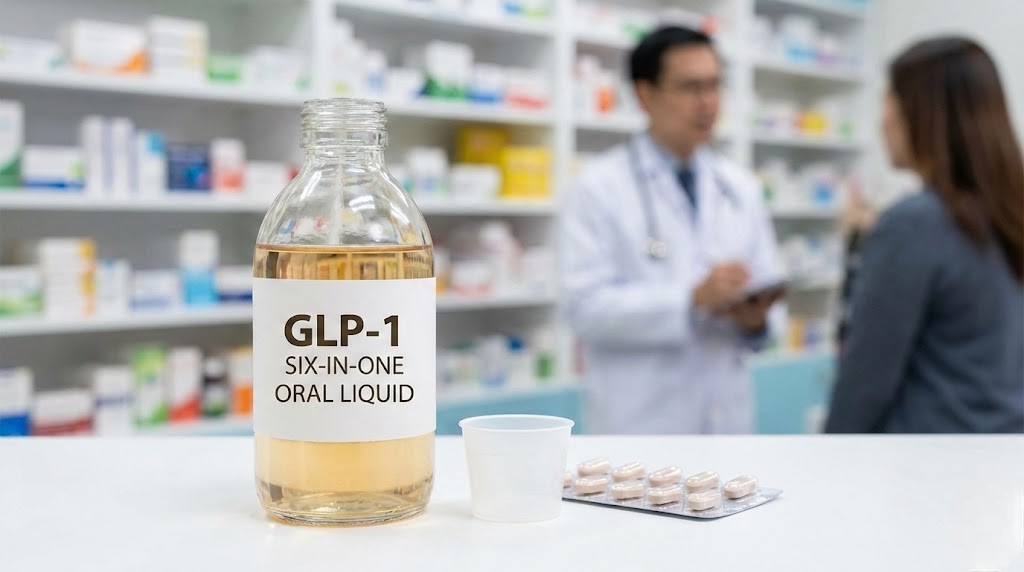
Before you drink that next bottle of GLP-1 oral liquid, stop. Read this first.
The GLP-1 supplement market has exploded. Products labeled "six-in-one," "9-in-1," and "all-in-one" oral liquids now flood Amazon, social media ads, and wellness websites, each promising the appetite-suppressing power of prescription GLP-1 medications like Ozempic in a convenient little bottle. Some claim to contain actual tirzepatide. Others list herbal ingredients that "naturally boost" your GLP-1 production. The prices look appealing. The before-and-after photos look convincing. And the reviews seem enthusiastic.
But here is the problem nobody selling these products wants you to understand.
The gap between what these supplements do and what actual GLP-1 medications do is not small. It is enormous. Prescription GLP-1 drugs circulate at levels 230,000 to 760,000 percent higher than natural GLP-1, according to analysis from the Center for Science in the Public Interest. A supplement that slightly nudges your natural GLP-1 production upward cannot compete with that pharmacological reality, no matter how many ingredients the label packs into one bottle.
That does not mean these products are worthless. Some contain ingredients with genuine metabolic benefits, and understanding what you are taking, how to take it properly, and what realistic results look like can mean the difference between wasting money and actually getting some value from these formulations. This guide covers everything: the exact instructions for using GLP-1 six-in-one oral liquids, a deep dive into what each ingredient actually does, what the clinical evidence shows, how these supplements compare to real GLP-1 medications, and what legitimate alternatives exist if you want genuine appetite suppression and weight loss. SeekPeptides breaks down the science so you can make an informed decision rather than an expensive mistake.

What is GLP-1 six-in-one oral liquid
GLP-1 six-in-one oral liquid refers to a category of over-the-counter supplements marketed as multi-ingredient formulations that claim to support weight loss through mechanisms similar to prescription GLP-1 receptor agonists. The "six-in-one" name comes from the marketing claim that these products combine six different health-supporting functions into a single liquid formula, typically covering appetite suppression, metabolism enhancement, blood sugar regulation, anti-inflammatory support, gut health, and immune function.
The most recognized product in this category is the EQVP GLP-1 Six-in-One Health Solution Oral Liquid. It costs between $15.99 and $40.90 per bottle depending on the package size. But EQVP is just one brand among dozens now flooding the market. Amazon alone lists hundreds of "GLP-1 oral solution" products, ranging from simple berberine liquids to elaborate multi-ingredient formulations.
What these products are not
This distinction matters more than anything else in this guide.
GLP-1 six-in-one oral liquids are dietary supplements. They are not prescription medications. They are not compounded semaglutide. They are not pharmaceutical-grade peptides. They do not contain actual GLP-1 receptor agonists in any clinically meaningful amount, despite what some product labels suggest.
Some products claim to contain "tirzepatide" or "GLP-1 technology." These claims raise serious red flags. Tirzepatide is a prescription medication that requires FDA approval, costs hundreds of dollars per dose at pharmaceutical quality, and cannot legally be sold as an over-the-counter supplement. If a $16 bottle truly contained effective amounts of tirzepatide, it would be both illegal and pharmacologically impossible at that price point.
The Center for Science in the Public Interest conducted detailed analysis of GLP-1 supplements and concluded that these products are "all about the marketing." Real GLP-1 drugs resist rapid breakdown and circulate at astronomically higher levels than anything a supplement can produce. The difference is not incremental. It is categorical.
The product landscape
Several products compete in this space, each with slightly different ingredient combinations and marketing angles. Understanding the landscape helps you evaluate what you are actually buying.
Product | Price Range | Key Ingredients | Administration | Notable Claims |
|---|---|---|---|---|
EQVP Six-in-One | $16-$41 | Moringa, ACV, turmeric, ginkgo, echinacea | Drink directly, 1 bottle/day | "6-8 lbs per week" weight loss |
Amazon 9-in-1 GLP Booster | $20-$35 | Berberine HCl, Ceylon cinnamon, eriocitrin | Oral liquid, daily | Metabolic support, GLP-1 boosting |
Generic GLP-1 Drops | $15-$50 | Varies widely by brand | Sublingual drops | Appetite control, fat burning |
Lemme GLP-1 Daily | $80/month | Eriomin, Supresa (saffron), Morosil | Capsule (not liquid) | Natural GLP-1 support |
Each product targets a different price point and audience. The cheapest options tend to have the most aggressive marketing claims, while higher-priced options like Lemme at least attempt to cite specific studies, though those studies come with significant limitations we will examine later.
If you are exploring how different oral GLP-1 delivery methods work, understanding the difference between supplements and actual sublingual prescription formulations is critical. Our guide on sublingual semaglutide covers the legitimate prescription alternative.
How to use GLP-1 six-in-one oral liquid
If you have already purchased one of these products, or plan to, here are the actual instructions for taking them properly. Different products have different directions, so always check the label on your specific product first.
EQVP six-in-one oral liquid instructions
The EQVP product provides straightforward directions. Drink one bottle per day, either before or after meals. No dilution needed. Just open and drink it directly.
That simplicity is part of the product appeal. No measuring syringes, no holding liquid under your tongue, no waiting periods. Open. Drink. Done.
However, some users report better results with slight modifications to the basic instructions. Taking the liquid 20-30 minutes before your largest meal of the day may help maximize whatever appetite-suppressing effect the ingredients provide. This timing aligns with how the herbal ingredients, particularly apple cider vinegar, interact with appetite signaling and gastric function.
General oral liquid supplement instructions
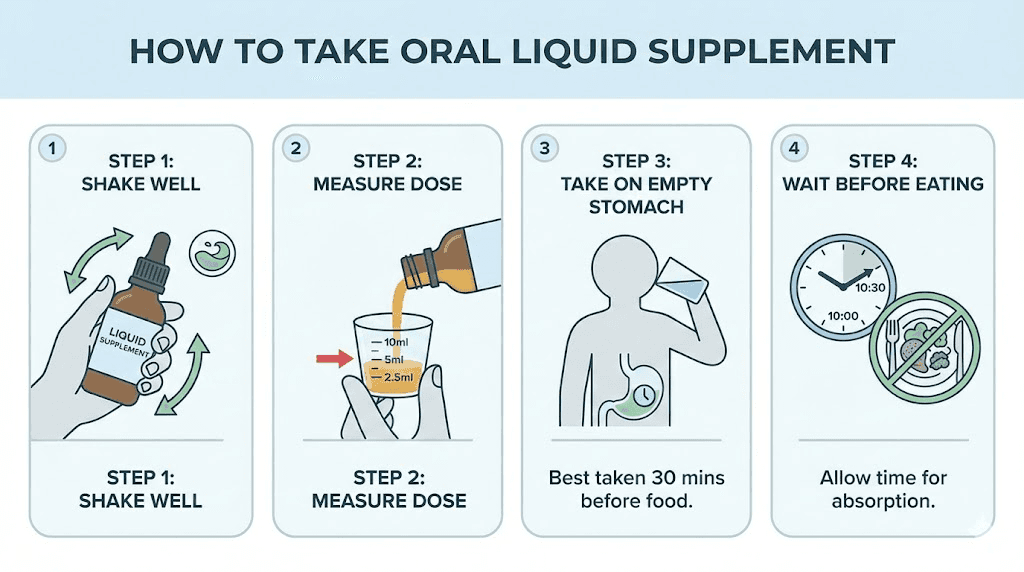
For other GLP-1 oral liquid products that use a dropper or syringe format, the process differs slightly. Here is the standard approach for most liquid supplement formulations:
Step 1: Prepare the bottle. Shake the bottle well before each use. Most liquid supplements contain ingredients that settle during storage. Failing to shake means you get an uneven distribution of active compounds, which affects potency from dose to dose.
Step 2: Measure your dose. If your product includes a measuring syringe or dropper, use it. Do not estimate. For products with an attached seal adapter, unscrew the cap, attach the adapter firmly, reseal, shake again, then insert the syringe tip into the adapter. Flip the bottle upside down and draw to the correct measurement line.
Step 3: Take on an empty stomach. Most GLP-1 products work better when taken before food. Aim for 20-30 minutes before breakfast or your first meal. An empty stomach improves absorption of most herbal and nutritional ingredients.
Step 4: Hold sublingual if directed. Some products, particularly those marketing themselves as "sublingual GLP-1 drops," direct you to place the liquid under your tongue and hold it for 60-90 seconds before swallowing. This bypasses stomach acid and allows direct absorption through the oral mucosa. If your product does not specify sublingual use, simply drink it.
Step 5: Wait before eating. After taking the supplement, wait at least 15-30 minutes before eating or drinking anything other than water. This gives the ingredients time to begin absorption without interference from food.
Timing and consistency tips
Consistency matters more than perfection with supplementation. Take your dose at the same time every day to establish a routine. Morning works best for most people because it aligns with the natural cortisol awakening response, which affects metabolism and appetite regulation throughout the day.
Some practical tips for getting the most from these supplements:
Store at room temperature, typically between 68 and 77 degrees Fahrenheit. Heat degrades many botanical extracts, particularly turmeric and probiotics. If you live in a hot climate or your house gets warm, consider storing in a cool, dark cabinet rather than on a sunny countertop. Similar storage principles apply to peptides and medications, as we cover in our guides on temperature sensitivity and shelf life considerations.
If you miss a dose, take it when you remember, but do not double up. Taking two doses to "catch up" will not accelerate results and may cause digestive discomfort, especially with ingredients like apple cider vinegar and turmeric that can irritate the stomach at high amounts. The same principle applies to any supplement or medication regimen. Consistency at the correct dose beats sporadic mega-dosing every time.
Track your experience for at least 4-6 weeks before deciding whether the product is working. Some ingredients like berberine take 2-3 weeks to show metabolic effects. If you are also tracking results from actual GLP-1 medications, the timeline comparison will be instructive.
What is inside GLP-1 six-in-one oral liquids
The ingredient lists vary by brand, but most GLP-1 oral liquid supplements pull from the same pool of botanical extracts, vitamins, and metabolic support compounds. Understanding what each ingredient actually does, backed by real research rather than marketing copy, helps you evaluate whether these products deserve your money.
Berberine
Berberine is the star ingredient in many GLP-1 supplements, and it is the one with the most legitimate scientific backing. This alkaloid compound, extracted from plants like goldenseal and barberry, has been studied extensively for blood sugar regulation and metabolic effects.
The GLP-1 connection is real but modest. Research published in Archives of Physiology and Biochemistry found that berberine stimulates GLP-1 secretion through multiple pathways, including bitter taste receptor activation and short-chain fatty acid production in the gut. A 2024 study in PubMed confirmed that berberine metabolites, specifically berberrubine and palmatine, increase GLP-1 production in intestinal cells.
But here is where the math falls apart for weight loss. Berberine produces approximately 2-4 kilograms (about 4.4 to 8.8 pounds) of weight loss in most studies, according to a comprehensive review in PMC. Compare that to the roughly 10-15 percent body weight loss seen with prescription GLP-1 drugs. For a 200-pound person, that is the difference between losing 5-9 pounds total with berberine versus 20-30 pounds with semaglutide.
UCLA Health notes that despite being called "nature is Ozempic," berberine evidence remains inconclusive for weight loss. Animal studies show GLP-1 stimulation, but this mechanism has not been confirmed in humans at clinically meaningful levels.
The blood sugar effects are more established. If you have prediabetes or insulin resistance, berberine may offer genuine value for glucose management, which could indirectly support weight management strategies you are already implementing. For context, prescription GLP-1 medications also improve blood sugar control, but they do so at a completely different magnitude while simultaneously driving significant weight loss. The berberine effect on glucose is real but modest by comparison.
Apple cider vinegar
ACV appears in most six-in-one formulations. The research shows modest benefits for blood sugar management when consumed before meals. A few small studies suggest 1-2 tablespoons before eating can reduce post-meal glucose spikes by 20-30 percent.
For weight loss specifically, the evidence is thin. The most cited study found participants lost about 2-4 pounds more than placebo over 12 weeks. That is real but minimal. ACV primarily works by slowing gastric emptying slightly and improving insulin sensitivity, both effects that overlap with but pale in comparison to what actual GLP-1 receptor agonists achieve.
The amount of ACV in a small supplement bottle is typically far less than what studies used. Most research used 15-30 milliliters of undiluted vinegar. A one-ounce supplement bottle containing ACV alongside five or six other ingredients delivers a fraction of that studied dose.
Turmeric and curcumin
Turmeric provides anti-inflammatory benefits through its active compound curcumin. This is well-established science. Chronic inflammation plays a role in obesity and metabolic dysfunction, so reducing inflammation can theoretically support weight management.
However, curcumin has notoriously poor bioavailability. Your body absorbs very little of it without specific enhancement strategies like piperine (black pepper extract) or lipid-based delivery systems. Most liquid supplements do not include these enhancers, which means the turmeric in your GLP-1 oral liquid may pass through your system largely unabsorbed.
For inflammation management alongside weight loss protocols, turmeric has value, but it works better in dedicated, properly formulated supplements rather than as one of six ingredients sharing space in a small bottle.
Moringa extract
Moringa oleifera is a nutrient-dense plant containing protein, vitamins, and antioxidants. Some preliminary research suggests it may support glucose regulation and reduce inflammation. A few animal studies have shown anti-obesity effects through mechanisms including lipid metabolism improvement.
Human evidence for weight loss is extremely limited. No large-scale clinical trials have demonstrated significant moringa-driven weight loss. It is a nutritious addition to any supplement, but calling it a weight loss ingredient stretches the available evidence considerably.
Ginkgo biloba
Ginkgo is primarily known for cognitive support and circulation improvement. Its inclusion in a weight loss product is unusual. The connection to GLP-1 or appetite suppression is essentially nonexistent in published research.
That said, ginkgo does improve blood flow, which theoretically supports nutrient delivery and metabolic function. Some users also report feeling more energetic and focused, which can indirectly support energy levels during caloric restriction. But this is a stretch as a weight loss ingredient.
Echinacea
Echinacea is an immune-support herb. It has zero direct connection to GLP-1 production, appetite suppression, or weight loss. Its inclusion in "six-in-one" formulations appears designed to add perceived value and justify the "multi-function" marketing rather than provide metabolic benefits.
If you are interested in immune support while managing GLP-1 related fatigue or side effects, standalone echinacea products would provide more meaningful doses than what these combination formulations deliver.
Other common ingredients
Depending on the specific product, you may also find:
Probiotics can support gut health and may indirectly influence GLP-1 production. Gut bacteria produce short-chain fatty acids that stimulate L-cells to release GLP-1. This is a real mechanism, but the probiotic strains and amounts in most supplements are insufficient to produce meaningful GLP-1 elevation. Probiotics also struggle to survive in liquid formulations stored at room temperature, raising questions about viability by the time you take them. Gut health matters significantly for anyone managing weight, as we discuss in our peptides for gut health resource.
Chromium appears in some formulations for blood sugar regulation. Limited evidence suggests chromium picolinate may improve insulin sensitivity slightly, but a comprehensive review found the effect is too small to produce meaningful weight loss on its own.
Ceylon cinnamon has mild blood sugar lowering effects, reducing fasting glucose by approximately 10-25 mg/dL in some studies. Not dramatic, but potentially helpful as part of a broader metabolic support strategy.
Collagen peptides, NAD, NMN, and omega-3 are sometimes included in premium formulations. These have their own legitimate health applications, but none are GLP-1 modulators, and their inclusion in a weight loss product is primarily about padding the ingredient list rather than driving appetite suppression.
Does the science actually support these products
Let us be direct. The evidence gap between what GLP-1 supplements promise and what they deliver is massive.
What the ingredient research shows
Ingredient | GLP-1 Connection | Weight Loss Evidence | Best-Case Result | Evidence Quality |
|---|---|---|---|---|
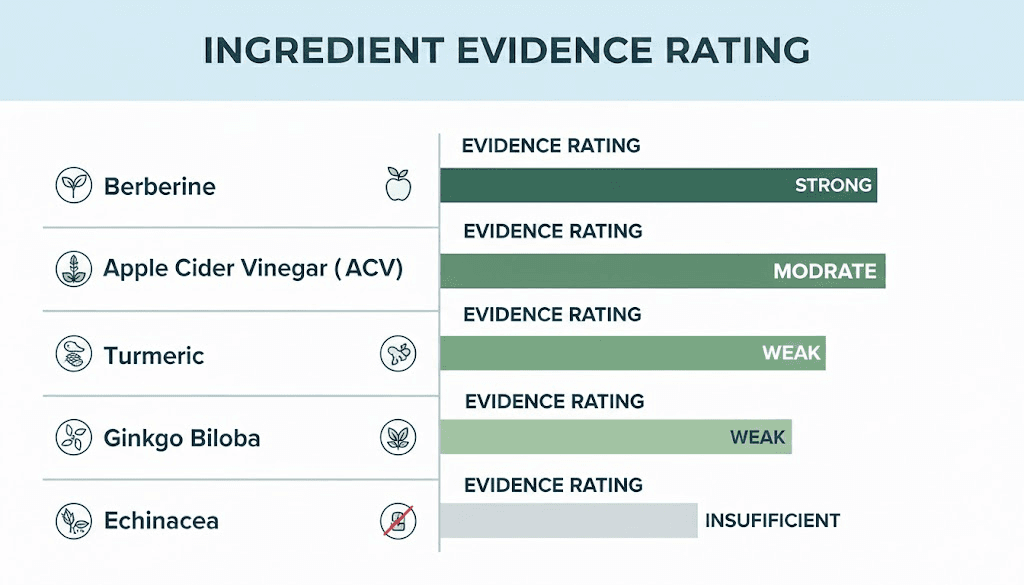
Berberine | Stimulates GLP-1 in lab/animal studies | 2-4 kg over 12+ weeks | Modest blood sugar improvement | Moderate (human studies exist) |
Apple cider vinegar | Slows gastric emptying slightly | 1-2 kg over 12 weeks | Reduced post-meal glucose | Low-moderate (small studies) |
Turmeric/curcumin | Anti-inflammatory (indirect) | Negligible directly | Reduced inflammation markers | Moderate (for inflammation, not weight) |
Moringa | None established | Minimal human data | Nutritional support | Very low |
Ginkgo biloba | None | None | Improved circulation | None for weight loss |
Echinacea | None | None | Immune support only | None for weight loss |
Only berberine and apple cider vinegar have any meaningful connection to appetite or metabolic regulation. And even their effects are modest compared to pharmaceutical interventions.
The dosing problem
Even if every ingredient in these formulations worked exactly as marketed, there is a fundamental dosing problem. Clinical studies on berberine use 900-1500 mg daily. Studies on apple cider vinegar use 15-30 ml. Turmeric research uses 500-2000 mg of standardized curcumin extract.
A single small bottle of oral liquid cannot physically contain effective doses of all six ingredients simultaneously. The math does not work. You either get sub-clinical doses of everything, or meaningful doses of one or two ingredients with trace amounts of the rest.
This is not unique to GLP-1 products. It is a fundamental limitation of any "all-in-one" supplement approach, and it is why dedicated single-ingredient or dual-ingredient products consistently outperform kitchen-sink formulations in clinical research.
What independent reviewers found
Independent product testing of EQVP and similar products reveals a consistent pattern. One reviewer at Ibisik tested the EQVP product for four weeks and reported only a "slight decrease in appetite" with no significant weight loss despite maintaining regular diet and exercise. Trustpilot reviews describe the product as "tasteless, expensive, and total bunk."
The claims of being "developed by The Obesity Society" or having "FDA approval" are unverifiable. Independent reviewers found no confirmation linking The Obesity Society to any of these products, and dietary supplements are not subject to FDA pre-market approval the way drugs are. The FDA only requires that supplements are not adulterated or misbranded, a much lower bar than drug approval.
NBC News reported that GLP-1 supplements are "older weight loss supplements that are rebranded" to capitalize on the popularity of medications like semaglutide and tirzepatide. The ingredients are not new. The marketing is.
The placebo factor
One detail from clinical trials on GLP-1 supplements is telling. In a study on Supresa (saffron extract), 69 percent of participants reported reduced hunger. Sounds impressive until you learn that 54 percent of placebo participants reported the same thing. The supplement barely outperformed sugar pills.
Studies on Eriomin (lemon extract) showed a 15-20 percent increase in GLP-1 levels, but zero weight loss over 12 weeks. Morosil (red orange extract) produced 4 percent weight loss versus 2 percent for placebo, a difference so small it falls within normal variation.
These numbers matter. They show that while some ingredients produce measurable biological effects, those effects rarely translate into meaningful weight loss. The gap between "statistically significant" and "clinically meaningful" is where most supplement claims live and where most consumer disappointment originates.
Real GLP-1 medications vs. GLP-1 supplements
This section exists because the marketing around GLP-1 supplements deliberately blurs lines that should be crystal clear. Understanding the difference could save you hundreds of dollars and months of frustration.
How prescription GLP-1 drugs actually work
Prescription GLP-1 receptor agonists like semaglutide and tirzepatide are synthetic peptides engineered to bind directly to GLP-1 receptors in the brain and gut. They are designed to resist the rapid enzymatic breakdown that destroys natural GLP-1 within minutes. This engineering allows them to circulate in the bloodstream at therapeutically active levels for days, not minutes.
Semaglutide has a half-life of approximately 7 days. Natural GLP-1 has a half-life of 2-3 minutes. That single difference explains why prescription drugs produce 10-15 percent body weight loss while supplements produce negligible changes.
The mechanism is direct receptor activation, not "supporting natural production." Your body produces a tiny amount of GLP-1 after eating. These drugs flood the system with synthetic GLP-1 that powerfully suppresses appetite through hypothalamic pathways, slows gastric emptying, and improves insulin sensitivity simultaneously.
The numbers tell the story
Metric | GLP-1 Supplements | Prescription Semaglutide | Prescription Tirzepatide |
|---|---|---|---|
Average weight loss | 0-4 lbs over 12 weeks | 15-35 lbs over 68 weeks | 25-52 lbs over 72 weeks |
Body weight % lost | 0-2% | 10-15% | 15-22% |
Appetite suppression | Mild, inconsistent | Strong, consistent | Very strong, consistent |
GLP-1 level increase | 15-20% above natural | 230,000-760,000% above natural | Dual GLP-1/GIP activation |
Clinical evidence | Small, manufacturer-funded | Large Phase 3 trials, FDA approved | Large Phase 3 trials, FDA approved |
Monthly cost | $15-80 | $300-1,300 | $300-1,000 |
Requires prescription | No | Yes | Yes |
FDA regulated as drug | No (supplement) | Yes | Yes |
The cost difference is real. Supplements are dramatically cheaper. But cost-per-pound-lost tells a different story. Spending $50 per month on a supplement that produces zero weight loss costs infinite dollars per pound lost. Spending $500 per month on a medication that produces 30 pounds of loss costs about $16.67 per pound. You can compare specific medication costs with our peptide cost calculator.
Why "boosting natural GLP-1" is not the same thing
The central marketing claim of GLP-1 supplements is that they "naturally support GLP-1 production" or "boost your body own GLP-1 levels." This sounds appealing. Work with your body, not against it. Natural is better than synthetic. Your body knows best.
The biological reality is less romantic.
Natural GLP-1 is produced by L-cells in your gut after eating. It peaks briefly, then enzymes called DPP-4 destroy it within 2-3 minutes. Even if a supplement doubled your GLP-1 production (which no supplement has been shown to do in humans), that doubled amount would still be destroyed within minutes and would still represent a tiny fraction of what prescription drugs deliver.
It is like comparing a garden hose to a fire hydrant. Both deliver water. One delivers enough to put out a house fire. The other waters your tomatoes. They are not interchangeable just because they both involve water.
This is why experts consistently emphasize that over-the-counter products cannot replicate prescription GLP-1 results. The pharmacological mechanisms are fundamentally different in magnitude, not just in degree. For detailed information on how quickly real GLP-1 medications work and tirzepatide onset timelines, we have comprehensive guides that cover the actual clinical data.
Compounded sublingual GLP-1 drops: the legitimate oral option
There is a middle ground between OTC supplements and branded prescription medications that many people confuse with GLP-1 oral liquid supplements. Compounded sublingual GLP-1 drops are actual semaglutide or tirzepatide formulated by compounding pharmacies into liquid form for sublingual (under the tongue) administration.
These are completely different products from the "six-in-one" supplements discussed above. Understanding the distinction is critical.
What compounded sublingual drops actually are
Compounding pharmacies take pharmaceutical-grade semaglutide or tirzepatide and reformulate it into liquid drops designed for absorption through the tissue under your tongue. This bypasses the digestive system, which would destroy the peptide, and allows the active ingredient to enter your bloodstream directly through the oral mucosa.
These products:
Require a prescription from a licensed healthcare provider. Contain actual semaglutide or tirzepatide in measured doses. Are prepared by licensed compounding pharmacies like Empower Pharmacy, Olympia Pharmacy, or other 503A/503B facilities. Cost significantly more than OTC supplements, typically $200-500 per month. Produce genuine appetite suppression and weight loss, though potentially less than injectable versions due to lower absorption.
Our complete guides on oral semaglutide drops and tirzepatide drops cover these products in detail, including dosing protocols, absorption considerations, and how they compare to injections.
How sublingual GLP-1 drops work
The administration process is more involved than drinking a supplement bottle. Here is how compounded sublingual GLP-1 drops are properly used:
Roll the bottle gently between your hands to mix the solution. Do not shake vigorously. Draw the prescribed dose using the included oral syringe. Place the liquid under your tongue. Hold it there for at least 90 seconds, ideally 2 minutes. Some practitioners recommend swishing around all parts of the mouth after the initial sublingual hold. Do not eat, drink, or brush teeth for 30 minutes afterward.
Absorption is estimated at roughly 5-10 percent of the dose, which is why sublingual formulations use higher concentrations than injectable versions. Even at this lower absorption rate, the actual active peptide entering your bloodstream dwarfs anything an OTC supplement can produce.
Compounded drops vs. supplements comparison
Factor | GLP-1 Supplements | Compounded Sublingual GLP-1 |
|---|---|---|
Active ingredient | Herbal extracts, vitamins | Actual semaglutide or tirzepatide |
Prescription required | No | Yes |
FDA-approved drug | No | Contains FDA-approved active ingredient |
Expected weight loss | 0-2% | 5-12% (variable absorption) |
Monthly cost | $15-80 | $200-500 |
Administration | Drink directly | Sublingual hold, 2 minutes |
Medical supervision | None | Physician oversight |
Side effects | Minimal (low potency) | Real GLP-1 side effects (nausea, etc.) |
If you are considering oral GLP-1 options, the compounded sublingual route delivers actual pharmaceutical benefit. It is not as effective as injectable administration, and absorption varies significantly between individuals, but it provides genuine GLP-1 receptor activation that supplements cannot match. Our guide on tirzepatide oral vs injection breaks down the trade-offs in detail.
For people who want to explore compounded options, understanding compounded semaglutide or specific pharmacy formulations is essential. SeekPeptides provides detailed pharmacy reviews and comparison guides to help you navigate these options safely.
Product-by-product breakdown: what each brand actually delivers
Rather than treating all GLP-1 oral liquids as identical, let us examine the most popular products individually. Each makes different claims, uses different formulations, and delivers different results.
EQVP GLP-1 six-in-one health solution
EQVP is the product most people find when searching for "GLP-1 six-in-one oral liquid." It retails for $15.99-$40.90 depending on package size and markets itself as being "developed by a team of over 30 experts in international endocrinology and diabetology after more than 3 years of research."
The ingredient list includes moringa, apple cider vinegar, turmeric, ginkgo biloba, echinacea, and what the label calls "metatrolide," a term that does not correspond to any recognized pharmaceutical compound. Some versions of the product listing also mention collagen peptides, NAD, NMN, omega-3, glucosamine, and probiotics.
The claim of "6-8 lbs per week" weight loss should raise immediate skepticism. Even the most powerful prescription GLP-1 medications rarely produce that rate of loss beyond the first week or two. Sustained loss at 6-8 pounds weekly would require a caloric deficit of 21,000-28,000 calories per week, which is physiologically impossible for most people regardless of medication.
Independent testing by Ibisik found "slight decrease in appetite" after four weeks of consistent use. No significant weight loss. No dramatic energy changes. The product provided a marginally noticeable effect that most users would struggle to distinguish from placebo.
The 180-day money-back guarantee sounds generous but comes with typical supplement-industry conditions: you must return unused product, pay return shipping, and navigate customer service processes that some reviewers describe as frustrating.
Amazon GLP-1 9-in-1 booster liquids
Multiple brands sell variations of this concept on Amazon, typically priced between $20-35. These products tend to feature berberine HCl as the primary ingredient alongside Ceylon cinnamon, eriocitrin (lemon flavonoid), green tea extract, and various supporting botanicals.
These formulations are actually more scientifically grounded than the EQVP approach because they lead with berberine, which has the strongest evidence base of any GLP-1 supplement ingredient. However, the amount of berberine in a liquid serving is typically 200-500mg, below the 900-1500mg daily dose used in most clinical studies.
If you are going to try a GLP-1 supplement, a berberine-forward formulation is the most rational choice. But you would get better results from a standalone berberine capsule at the proper dose. The liquid delivery format and additional ingredients add cost without adding proportional benefit.
Lemme GLP-1 daily (capsule, not liquid)
While technically a capsule rather than a liquid, Lemme deserves mention because it represents the premium end of the GLP-1 supplement market at $80 per month. Created by Kourtney Kardashian, the product contains Eriomin (lemon extract), Supresa (saffron extract), and Morosil (blood orange extract).
The studies cited by Lemme come exclusively from three small, manufacturer-funded trials lasting 12 weeks each. Eriomin studies showed a 15-20 percent increase in GLP-1 levels but zero weight loss. The Supresa hunger reduction was barely distinguishable from placebo. Morosil showed 4 percent weight loss versus 2 percent for placebo.
At $80 per month, Lemme costs more than basic berberine supplementation and produces comparable or lesser effects. The premium pricing reflects celebrity branding and marketing spend, not superior formulation or evidence.
GLP-1 patches and other delivery methods
Beyond oral liquids, some companies now sell GLP-1 patches containing ingredients like berberine, chromium, and B vitamins delivered transdermally. These products claim that skin absorption avoids digestive breakdown. No published studies support this delivery mechanism for the ingredients listed. Transdermal delivery works well for certain small molecules (nicotine, hormones) but poorly for the large botanical compounds these patches contain.
Other brands offer GLP-1 gummies, which are essentially flavored gelatin with the same herbal ingredients found in liquids. The gummy format further limits the amount of active ingredients per serving and adds sugar, which somewhat defeats the purpose of a weight loss supplement.
The dosing math: why all-in-one formulations fall short
This section matters more than almost anything else in this guide. Understanding why multi-ingredient formulations structurally cannot deliver effective doses explains the fundamental limitation of every "six-in-one" product on the market.
The volume constraint
A typical GLP-1 oral liquid bottle contains 30-60ml of liquid. That is roughly 1-2 fluid ounces. Into that small volume, manufacturers must fit all active ingredients, a liquid base (typically water or glycerin), flavoring agents, preservatives, and stabilizers.
Now consider what clinical research uses for each ingredient:
Ingredient | Studied Daily Dose | Likely Amount in 30ml Supplement | % of Effective Dose |
|---|---|---|---|
Berberine | 900-1500mg | 100-300mg | 10-33% |
Apple cider vinegar | 15-30ml (undiluted) | 2-5ml | 7-33% |
Curcumin | 500-2000mg standardized | 50-150mg (unstandardized) | 3-30% |
Moringa | 1000-3000mg | 100-200mg | 3-20% |
Ginkgo | 120-240mg standardized | 20-50mg | 8-42% |
Echinacea | 300-500mg | 50-100mg | 10-33% |
Even with generous estimates, most ingredients land at 10-33 percent of their studied effective doses. That is not a rounding error. It is a fundamental gap between what the label promises and what physics allows in a small bottle.
The stability problem
Liquid supplements face additional challenges that capsules and tablets do not. Many botanical extracts degrade faster in liquid form, particularly when exposed to oxygen (each time you open the bottle), light, and room temperature storage. Probiotics, which some formulations include, are especially vulnerable, with viability dropping significantly in non-refrigerated liquid environments.
The ingredient you take on day one may differ meaningfully in potency from the ingredient you take on day thirty, even from the same bottle. This degradation pattern mirrors what we see with peptide stability and temperature sensitivity in pharmaceutical products, but supplements rarely undergo the stability testing that prescription products require.
The alternative: targeted supplementation
If you believe the individual ingredients have value, and some of them do, you are better served by purchasing each separately at effective doses. A month supply of standalone berberine (500mg capsules, 3x daily) costs $15-20. Psyllium husk fiber costs $10-15 per month. A high-quality turmeric supplement with piperine for absorption costs $15-25 per month.
Total cost: $40-60 per month for ingredients at studied doses versus $15-80 per month for a formulation that provides sub-clinical doses of everything. The targeted approach costs slightly more at the upper end but delivers ingredients at concentrations that research actually supports.
This principle extends beyond supplements. When people ask us about peptide stacking strategies or combination approaches, the same logic applies: each component needs to be dosed correctly for the stack to work. Under-dosing everything produces a stack that does nothing well rather than doing multiple things effectively. Use our peptide stack calculator for precise multi-compound protocols.
Red flags and how to spot questionable products
The GLP-1 supplement market is ripe for exploitation. The popularity of Ozempic and Mounjaro has created enormous consumer demand, and bad actors are capitalizing on that demand with products designed to part you from your money rather than deliver results.
Warning signs that a product is not what it claims
Claims to contain actual tirzepatide or semaglutide at supplement prices. These are expensive pharmaceutical compounds. A $16 bottle cannot contain meaningful amounts of either. If a product claims to contain prescription peptides at supplement prices, it either contains none of what it claims, contains dangerous contaminants, or violates federal law. None of those outcomes is good.
Promises specific weight loss amounts. The EQVP product claims "6-8 lbs per week." No supplement achieves that. Even prescription GLP-1 medications typically produce 1-2 pounds per week on average. Any product promising faster results than prescription drugs is making claims it cannot support.
Claims FDA approval for a supplement. Dietary supplements do not receive FDA approval. The FDA regulates supplements under a completely different framework than drugs. Any supplement claiming "FDA approved" is either lying or misrepresenting the regulatory status of its manufacturing facility (GMP certification) as product approval.
Unverifiable endorsements. Claims of development by The Obesity Society, endorsement by specific medical institutions, or backing by teams of "30+ international experts" that cannot be verified through those organizations directly should be treated with significant skepticism.
No transparent ingredient amounts. Proprietary blends that list ingredients without specifying amounts prevent you from evaluating whether the product contains effective doses. Legitimate products disclose exact amounts for every ingredient. This transparency principle applies equally to peptide vendor evaluation, where third-party testing and transparent labeling separate reliable sources from questionable ones.
The Amazon marketplace problem
Amazon listings for GLP-1 products require particular caution. The platform has limited ability to verify health claims made by supplement sellers. Products frequently appear with:
Purchased reviews that inflate ratings. Before-and-after photos borrowed from unrelated sources. Marketing copy that mimics pharmaceutical language without pharmaceutical backing. Rotating brand names that make it impossible to track product history or complaints.
If you search "GLP-1 oral liquid" on Amazon, you will find dozens of nearly identical products with different brand names, similar ingredient lists, and suspiciously similar marketing copy. Many appear to be the same formulation sold under different labels, a common practice in the supplement dropshipping industry.
How to evaluate any GLP-1 supplement
Before purchasing, ask these questions:
Does the product specify exact amounts for each ingredient? Can you verify those amounts against published research for effective dosing? Are the studies cited on the label actually about this specific product, or about individual ingredients in isolation at different doses? Does the company provide third-party testing results? Can you find genuine independent reviews from verified purchasers, not just promotional content?
If the answer to most of these is "no," your money is better spent on evidence-based approaches. The same critical evaluation skills help when assessing specific peptide vendors or compounding pharmacies for legitimate products.
What actually works for GLP-1-based weight loss
If you found this guide because you want GLP-1-level appetite suppression and weight loss, here are the options ranked by evidence and effectiveness.
Tier 1: Prescription GLP-1 receptor agonists (strongest evidence)
Injectable semaglutide (Wegovy/Ozempic) and tirzepatide (Zepbound/Mounjaro) remain the gold standard. Clinical trials involving tens of thousands of participants consistently demonstrate 10-22 percent body weight loss with manageable side effects. These drugs directly activate GLP-1 receptors at pharmacologically effective levels.
Calculate your semaglutide dosage or explore tirzepatide dosing protocols if you are considering the prescription route. Understanding semaglutide dosage in units and tirzepatide dosage in units helps you work effectively with your prescriber.
For those concerned about cost, affordable tirzepatide options and compounded tirzepatide can reduce expenses significantly. Empower Pharmacy and Olympia Pharmacy are established compounding providers.
Tier 2: Compounded sublingual GLP-1 (good evidence, variable absorption)
As discussed above, sublingual semaglutide and tirzepatide drops offer a needle-free alternative with real GLP-1 receptor activation. Results vary due to absorption differences between individuals, but many users report meaningful appetite suppression and weight loss.
The key advantage is avoiding injections. Some people have needle phobia or simply prefer oral administration. The trade-off is less predictable absorption and potentially reduced efficacy compared to injections. Our comparison of tirzepatide tablets vs injections explores this trade-off thoroughly.
Tier 3: Oral GLP-1 medications (emerging evidence)
Pharmaceutical companies are developing true oral GLP-1 pills that survive stomach acid and achieve therapeutic blood levels. Orforglipron is a small-molecule oral GLP-1 agonist that showed approximately 14.7 percent weight loss in Phase 3 trials published in the New England Journal of Medicine. Unlike supplements, this is an actual pharmaceutical drug taken as a pill.
Oral tirzepatide is also in development. These represent the future of non-injectable GLP-1 therapy, true oral medications with drug-level potency rather than supplement-level hope.
Tier 4: Evidence-based supplements (modest support)
If prescription medications are not accessible or affordable, some standalone supplements offer modest metabolic support. These are not GLP-1 replacements, but they can support overall metabolic health:
Berberine (standalone, 500mg 3x daily): Modest blood sugar improvement, potential 2-4 kg weight support over months. Best taken as a dedicated berberine supplement at studied doses rather than in a multi-ingredient formulation that dilutes the dose.
Fiber supplementation: Soluble fiber increases natural GLP-1 secretion and improves satiety. Psyllium husk, glucomannan, and similar fibers have better weight loss evidence than most ingredients in six-in-one formulations.
Protein optimization: High-protein diets naturally increase GLP-1 and PYY (another satiety hormone). Our guide on protein shakes for GLP-1 users covers protein strategies that support satiety regardless of whether you use medications.
Tier 5: GLP-1 supplement formulations (weakest evidence)
Six-in-one oral liquids and similar multi-ingredient GLP-1 supplements fall here. They may provide minimal metabolic support from individual ingredients, but the combination formulation, sub-clinical dosing, and lack of rigorous clinical testing place them at the bottom of the evidence hierarchy for weight loss.
If you still choose to use them, combine with evidence-based nutrition strategies. Our guides on meal planning, foods that support weight loss, and foods to avoid apply to anyone trying to lose weight, regardless of which products they use.
Understanding the GLP-1 system: why the science matters
To truly evaluate any GLP-1 product, whether supplement or pharmaceutical, you need a basic understanding of how the GLP-1 system works in your body. This knowledge is your best defense against misleading marketing.
How your body naturally produces GLP-1
GLP-1 (glucagon-like peptide-1) is a hormone produced by specialized L-cells in your small intestine. When you eat, particularly foods high in protein and fiber, these L-cells secrete GLP-1 into your bloodstream. The hormone travels to your brain, where it activates receptors in the hypothalamus that signal satiety, telling you to stop eating.
Simultaneously, GLP-1 slows gastric emptying, keeping food in your stomach longer so you feel full. It also stimulates insulin release from the pancreas and suppresses glucagon, improving blood sugar control after meals. These are real, important physiological effects.
The catch: natural GLP-1 has a half-life of approximately 2-3 minutes. An enzyme called DPP-4 breaks it down almost immediately. Your body produces GLP-1 in tiny amounts, uses it briefly, then destroys it. This rapid turnover is normal and healthy. It prevents prolonged appetite suppression that would interfere with nutritional intake.
How prescription drugs exploit this system
Pharmaceutical GLP-1 receptor agonists like semaglutide are engineered to bind to the exact same receptors as natural GLP-1 but resist DPP-4 destruction. Semaglutide achieves a half-life of roughly seven days, compared to the 2-3 minute half-life of natural GLP-1. This means the drug activates your appetite-suppression receptors continuously rather than for brief moments after eating.
The difference in circulating levels is staggering. Prescription GLP-1 drugs maintain blood levels hundreds of thousands of times higher than natural GLP-1 production. This pharmacological flooding of the GLP-1 system is what produces the dramatic appetite reduction and weight loss results that have made these drugs so popular.
Tirzepatide goes further by activating both GLP-1 and GIP (glucose-dependent insulinotropic polypeptide) receptors simultaneously, producing even greater weight loss through dual pathway activation. Emerging drugs like retatrutide add a third receptor (glucagon), and mazdutide uses yet another combination approach.
Where supplements fit in this picture
GLP-1 supplements attempt to increase your natural GLP-1 production by stimulating L-cells more aggressively. Berberine does this through bitter taste receptors and short-chain fatty acid production. Fiber does it by feeding gut bacteria that produce GLP-1-stimulating metabolites. Protein does it through direct L-cell stimulation.
These mechanisms are real. The problem is scale. Even if a supplement doubled your natural GLP-1 production, which no supplement has been demonstrated to do in humans, that doubled amount would still be destroyed within minutes and would still register as essentially zero compared to pharmacological levels. It is the difference between doubling a whisper and using a megaphone. Both are louder than silence. Only one fills a stadium.
For anyone serious about understanding how these medications work at a deeper level, our guide on semaglutide appetite suppression timelines covers the pharmacokinetics in detail. Understanding the withdrawal effects when stopping GLP-1 medications also illustrates just how powerfully these drugs affect appetite regulation, something supplements cannot replicate.
Maximizing results if you choose supplements
Some people will choose GLP-1 supplements regardless of the evidence limitations. Budget constraints, prescription access barriers, medical contraindications to pharmaceuticals, or simple preference for non-pharmaceutical approaches are all valid reasons.
If that is you, here is how to extract maximum value from these products.
Optimize what you can control
Nutrition matters more than any supplement. A well-designed eating plan produces more weight loss than any GLP-1 supplement on its own. Focus on high protein intake (0.7-1g per pound of body weight daily), adequate fiber (25-30g daily), and reduced ultra-processed food consumption. These dietary changes naturally increase your GLP-1 production more effectively than any supplement can. Our tirzepatide diet plan and semaglutide diet plan provide structured meal plans applicable to anyone pursuing weight loss.
Movement amplifies everything. Resistance training preserves muscle mass during weight loss, which is critical for maintaining metabolic rate. Aerobic exercise improves insulin sensitivity independently of weight loss. Combined, exercise and nutrition create the caloric deficit and metabolic environment that supplements alone cannot.
Sleep and stress management are underrated. Poor sleep increases ghrelin (hunger hormone) by 15-25 percent and reduces leptin (satiety hormone) by 15-20 percent. These hormonal disruptions dwarf anything a supplement can counteract. Seven to nine hours of quality sleep does more for appetite regulation than any bottle of oral liquid. If sleep problems are an issue, addressing them should be priority one.
Stack strategically if supplementing
Rather than buying an all-in-one product with sub-clinical doses of everything, consider separate supplements at researched doses:
Berberine: 500mg three times daily with meals (studied dose for metabolic effects). Psyllium husk fiber: 5-10g before meals (proven satiety enhancement). Protein supplement: 25-40g per serving, targeting total daily protein of 100g+ (natural GLP-1 and PYY stimulation). Magnesium: 300-400mg daily for metabolic support, insulin sensitivity, and constipation prevention.
This stack costs roughly the same as a monthly supply of GLP-1 oral liquid but provides ingredients at doses actually supported by research. Each component has independent evidence for metabolic benefit, and together they address multiple pathways relevant to weight management.
Track everything
Whether using supplements or medications, tracking is essential. Weigh yourself at the same time daily (morning, after bathroom, before eating). Track food intake for at least the first month to establish baseline patterns. Note appetite levels, energy, and any side effects. Our GLP-1 plotter guide covers tracking methodologies that apply regardless of what you are taking.
After four weeks, evaluate honestly. If the supplement has produced no measurable change in weight, appetite, or energy despite consistent use, it is not working for you. Continuing to spend money on an ineffective product is not perseverance. It is waste.
Safety considerations for GLP-1 oral liquids
The safety profile of GLP-1 supplements is generally better than prescription medications, primarily because they are far less potent. Lower potency means fewer side effects but also fewer benefits.
Common side effects
Most users tolerate these products well. Reported side effects are typically mild:
Digestive discomfort from apple cider vinegar (burning sensation, reflux). Mild nausea, particularly on an empty stomach. Loose stools from herbal ingredients or probiotics. Headache, particularly during the first week. These effects generally resolve within a few days as your body adjusts.
If you experience side effects from GLP-1 supplements, they are far milder than the side effects common with prescription GLP-1 drugs, which include significant nausea, constipation, fatigue, and headaches at rates of 20-50 percent.
Drug interactions to watch
Berberine interacts with several medications. It can increase the effects of blood sugar lowering drugs, potentially causing hypoglycemia. It competes with some medications for the same liver enzymes (CYP450 pathway), which can alter drug metabolism. If you take prescription medications, especially for diabetes, blood pressure, or blood thinning, consult your healthcare provider before adding berberine-containing supplements.
Apple cider vinegar can lower potassium levels and may interact with diuretics or insulin. Turmeric may increase bleeding risk in people taking blood thinners. Ginkgo biloba also has blood-thinning properties and should not be combined with anticoagulants.
This is one area where the "six-in-one" approach creates genuine risk. Multiple ingredients with overlapping interaction profiles increase the chance of adverse effects that would not occur with any single ingredient alone. Anyone using medications for diabetes management should be particularly cautious, as several ingredients in these formulations affect blood sugar through different mechanisms simultaneously.
Pregnancy, breastfeeding, and medical conditions
GLP-1 supplements lack safety data for pregnant or breastfeeding women. Most manufacturers include standard disclaimers recommending against use during pregnancy and lactation. This is not unique to these products, nearly all supplements carry similar warnings due to insufficient testing rather than known risks. For those with specific concerns about GLP-1 products and pregnancy, our guide on GLP-1 and breastfeeding covers the broader considerations.
People with liver disease, kidney disease, or autoimmune conditions should consult healthcare providers before using any multi-ingredient supplement, as some herbal extracts require hepatic or renal metabolism that may be compromised in these conditions.
The bigger picture: GLP-1 products and the supplement industry
The explosion of GLP-1 supplements represents a pattern the supplement industry has repeated many times. A breakthrough pharmaceutical treatment generates massive public interest. Consumer demand outpaces prescription access and affordability. Supplement companies rebrand existing ingredients to capitalize on the trend. Marketing suggests equivalence that the science does not support.
We saw this with testosterone boosters capitalizing on TRT popularity. With "natural" growth hormone supplements riding the HGH wave. With "nootropic" supplements following the rise of prescription cognitive enhancers. The pattern is consistent: take ingredients with modest, tangential evidence and market them as natural alternatives to powerful pharmaceuticals.
What this means for consumers
Being a smart consumer means accepting uncomfortable realities.
If a supplement could replicate prescription drug results, it would be regulated as a drug. The reason these products can be sold without prescriptions is precisely because they lack the potency that would trigger pharmaceutical regulation. That is not a feature. It is the defining limitation.
That does not mean all supplements are useless. Berberine genuinely helps with blood sugar regulation. Fiber genuinely increases satiety. Protein genuinely stimulates GLP-1 production. But these benefits work best when consumed at studied doses in appropriate forms, not when diluted into all-in-one formulations marketed with claims that exceed their evidence.
SeekPeptides exists to help you navigate exactly this kind of complexity. Whether you are evaluating supplements, compounded formulations, or prescription peptide protocols, having access to evidence-based analysis rather than marketing copy makes the difference between informed decisions and expensive mistakes. Our members access detailed protocol databases, dosing calculators, and expert guidance for every peptide and GLP-1 option available.
The market is evolving
The GLP-1 oral liquid landscape will continue to change. Orforglipron and other true oral GLP-1 drugs will eventually provide legitimate pill-based alternatives to injections. Compounded sublingual formulations will improve as pharmacies refine their delivery systems. And supplement companies will continue developing new formulations, some of which may eventually achieve meaningful efficacy.
For now, the honest assessment is that six-in-one GLP-1 oral liquids provide modest metabolic support at best and expensive disappointment at worst. The ingredients are not harmful in most cases, but the gap between marketing claims and clinical results remains vast.
Exploring next-generation options like GLP-1 patches, oral tirzepatide formulations, and emerging dual agonists gives you a glimpse of where legitimate non-injectable GLP-1 therapy is heading. The future is coming, but it is not here in a $16 supplement bottle.
Frequently asked questions
Does GLP-1 six-in-one oral liquid actually contain GLP-1?
No. Despite the name, these products contain herbal extracts and nutritional ingredients that are marketed as supporting your natural GLP-1 production. They do not contain synthetic GLP-1 receptor agonists like semaglutide or liraglutide. Some products claim to contain tirzepatide, but independent reviewers have found no verifiable evidence supporting these claims, and selling prescription peptides as OTC supplements would violate federal regulations.
How long does it take for GLP-1 oral liquid supplements to work?
Most manufacturers recommend 4-8 weeks of consistent use before evaluating results. Independent reviewers who tested EQVP for four weeks reported only slight appetite reduction with no meaningful weight loss. If you are comparing to how fast prescription GLP-1 drugs work, most people notice appetite suppression within the first week of injectable semaglutide and measurable weight loss within 2-4 weeks.
Can I take GLP-1 oral liquid with prescription medications?
Exercise caution. Berberine, the most active ingredient in many formulations, interacts with diabetes medications, blood thinners, and drugs metabolized by CYP450 liver enzymes. Apple cider vinegar may lower potassium when combined with diuretics. Ginkgo biloba has blood-thinning properties. Always consult your healthcare provider before combining these products with prescription drugs, especially weight loss medications or diabetes treatments.
Is GLP-1 oral liquid the same as compounded semaglutide drops?
Absolutely not. Compounded semaglutide drops are prescription medications containing actual semaglutide peptide, prepared by licensed compounding pharmacies, and requiring physician oversight. GLP-1 oral liquid supplements are over-the-counter herbal formulations that do not contain prescription peptides. The price difference reflects this: compounded drops cost $200-500 per month while supplements cost $15-80. The effectiveness difference is even larger.
Are EQVP GLP-1 products FDA approved?
No. Dietary supplements are not subject to FDA pre-market approval. The FDA regulates supplements under the Dietary Supplement Health and Education Act, which requires only that products are not adulterated or misbranded. This is a fundamentally different standard than the rigorous clinical trial process required for drug approval. Any supplement claiming "FDA approved" status is misrepresenting its regulatory classification.
What is the best way to lose weight without injectable GLP-1 drugs?
Emerging oral GLP-1 pharmaceuticals like orforglipron show genuine promise for non-injectable GLP-1 therapy. In the meantime, sublingual semaglutide offers a needle-free prescription option. For non-pharmaceutical approaches, high-protein nutrition (stimulates natural GLP-1), standalone berberine at studied doses (500mg 3x daily), fiber supplementation, and structured exercise programs produce more reliable results than multi-ingredient GLP-1 supplements.
Can I take GLP-1 oral liquid while drinking alcohol?
Most GLP-1 supplements do not have specific alcohol contraindications, but alcohol interferes with blood sugar regulation and appetite signaling, which undermines the goals these products target. If you are serious about weight loss, moderating alcohol intake will do more than any supplement. For those using prescription GLP-1 medications, our guides on drinking on semaglutide and alcohol with tirzepatide cover the specific risks.
Why do some people report GLP-1 supplements working for them?
The placebo effect is powerful. In GLP-1 supplement trials, 54 percent of placebo participants reported reduced hunger. Additionally, the act of starting any supplement often coincides with increased health consciousness, better eating habits, and more attention to portion sizes. These behavioral changes drive results that get attributed to the supplement. Some ingredients like berberine do provide modest metabolic benefits, but the degree of weight loss typically attributed to supplements in testimonials exceeds what clinical trials demonstrate.
Should I try GLP-1 supplements before committing to prescription medications?
Many people use supplements as a "test run" before considering prescription GLP-1 drugs. While there is no harm in this approach if you choose safe products, understand that your experience with supplements will tell you nothing about how prescription medications would work. The mechanisms, potency, and results are so different that supplement experience does not predict medication response. If you are interested in starting with lower-commitment options, microdosing protocols for actual GLP-1 medications offer a pharmacologically meaningful starting point with lower side effect risk than full therapeutic doses.
What foods naturally boost GLP-1 production?
High-protein meals stimulate the most GLP-1 release. Whey protein, eggs, fish, and lean meats all trigger significant L-cell secretion. High-fiber foods, especially fermentable fibers like oats, barley, and legumes, feed gut bacteria that produce short-chain fatty acids which in turn stimulate GLP-1 release. Healthy fats from avocados, nuts, and olive oil also contribute. Our comprehensive food guide and meal planning templates optimize nutrition for maximum natural GLP-1 support regardless of whether you use medications or supplements.
Are there any GLP-1 supplements that doctors recommend?
Most physicians do not recommend GLP-1 supplements as weight loss tools. However, some endocrinologists recommend standalone berberine for blood sugar management in patients with mild insulin resistance who do not yet need medication. If your primary care provider is unfamiliar with the GLP-1 supplement landscape, bringing them this article or the CSPI analysis can facilitate an informed conversation about your options. For people who want medical oversight of their GLP-1 journey, working with a weight management specialist is far more effective than self-selecting supplements.
External resources
Center for Science in the Public Interest: GLP-1 Supplements Analysis
NBC News: What to Know About GLP-1 Supplements for Weight Loss
PMC: Berberine as a Multi-Target Therapeutic Agent for Obesity
For researchers serious about optimizing their weight loss protocols, SeekPeptides offers the most comprehensive resource available, with evidence-based guides, proven protocols, and a community of thousands who have navigated these exact questions.
In case I do not see you, good afternoon, good evening, and good night. May your supplements stay honest, your expectations stay realistic, and your weight loss strategy stay evidence-based.