Feb 4, 2026
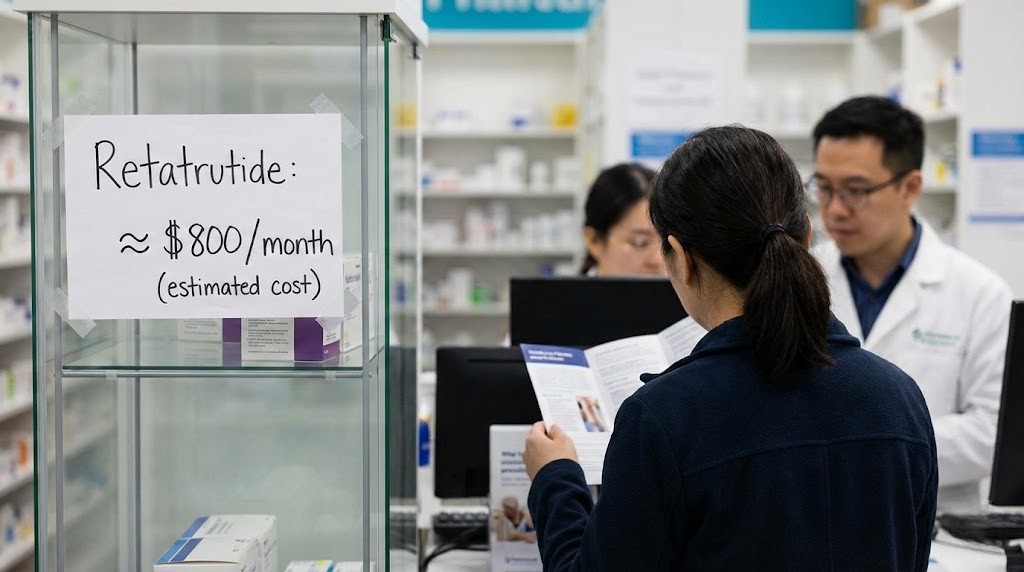
You are about to overpay for retatrutide. Not because you want to, but because the pricing landscape is deliberately opaque. Some clinics charge $450 per month. Others demand $2,400 for the same compound at the same dose. The difference between these numbers is not quality. It is not purity. It is information asymmetry, and it costs researchers thousands of dollars every year. Understanding retatrutide pricing separates informed researchers from those who get scammed by grey market peptide vendors or overpriced telehealth clinics. The price you pay reflects your knowledge of peptide therapy economics, manufacturing realities, and regulatory positioning. This guide breaks down every cost factor, from raw material synthesis to clinic markup structures, so you understand exactly what you are paying for. SeekPeptides members access detailed pricing databases that track peptide vendor pricing across dozens of suppliers, but this analysis gives you the foundation to evaluate any retatrutide source. The wild price variation is not random. It follows predictable patterns based on supplier type, regulatory status, and market positioning.
What retatrutide actually is (and why it costs more than other peptides)
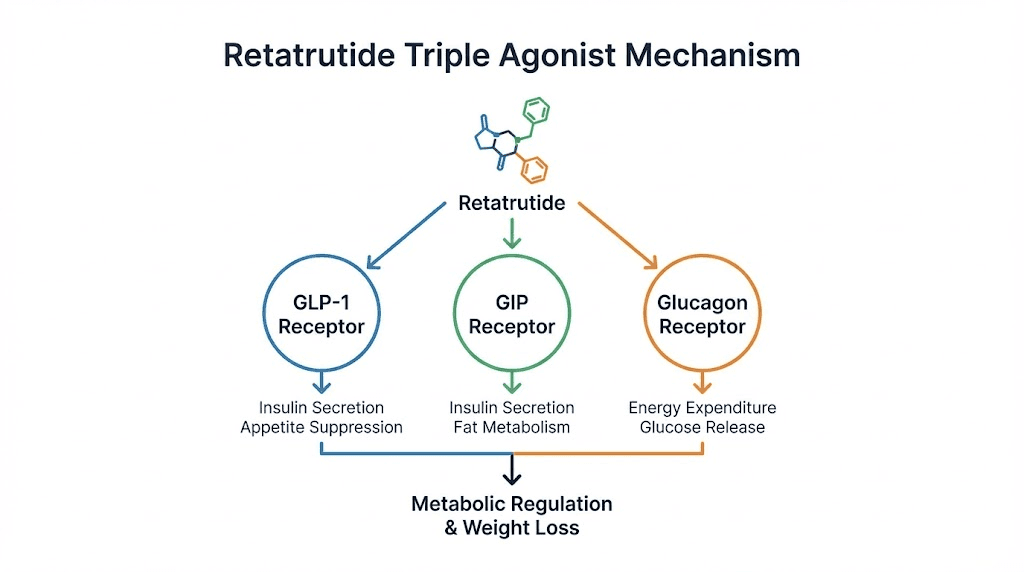
Retatrutide is a triple agonist peptide. It activates three distinct receptor pathways simultaneously: GLP-1, GIP, and glucagon receptors. This is not incremental improvement over existing therapies. It is a fundamentally different approach to metabolic regulation.
The compound is a 39-amino acid synthetic peptide with the designation LY3437943, developed by Eli Lilly. Current status: Phase 3 TRIUMPH clinical trials. Not FDA-approved. Not commercially available through legitimate pharmaceutical channels. Any source claiming to sell "pharmaceutical grade" retatrutide is misleading, because that category does not yet exist for this compound.
Compare the mechanism to GLP-1 peptides like semaglutide, which activate only one receptor pathway. Or tirzepatide, which activates two pathways as a dual agonist. Retatrutide adds glucagon receptor activation to the mix, which drives additional lipolysis and energy expenditure beyond what GLP-1 and GIP agonism provide alone.
The clinical results justify the hype. Phase 2 trials demonstrated 24% average weight loss at 48 weeks. Some participants achieved 29% total body weight reduction. An 82% reduction in liver fat was observed in NAFLD patients. These numbers exceed every other obesity medication currently available or in development.
Why does this matter for cost? Because triple receptor specificity requires significantly more complex synthesis than single or dual agonist peptides. The molecular structure must maintain binding affinity for three distinct receptor types without cross-reactivity or off-target effects. This is not a simple modification of existing peptide structures. It is a ground-up design that took Eli Lilly years to optimize.
The 39-amino acid chain is longer than most therapeutic peptides. Compare to semaglutide at 31 amino acids. Each additional amino acid increases synthesis complexity exponentially, not linearly. More steps mean more purification cycles, more quality control checkpoints, and more opportunities for synthesis to fail.
Understanding how peptides work at the receptor level explains why retatrutide cannot simply be manufactured using existing GLP-1 production infrastructure. The binding domains for each receptor require specific amino acid sequences in precise configurations. Manufacturing facilities must validate that all three receptor interactions function correctly, which triples the testing burden compared to single agonist peptides.
For context on therapeutic positioning, reviewing peptides for weight loss shows where retatrutide fits in the hierarchy of metabolic interventions. It sits above tirzepatide, which itself outperforms semaglutide. The progression from single to dual to triple agonism represents genuine innovation, not marketing hype. That innovation costs money to develop and manufacture.
Researchers comparing the best peptide for weight loss increasingly focus on retatrutide despite its higher cost, because the efficacy gap justifies the price premium. A 24-29% weight loss result in 48 weeks dwarfs the 15-17% achieved with semaglutide or the 18-22% seen with tirzepatide. When evaluating peptides for fat loss specifically, the glucagon receptor activation provides direct lipolytic signaling that GLP-1-only compounds lack.
Anyone considering retatrutide should review retatrutide dosage protocols and the 20mg dosing guide to understand the actual quantities required. This determines your monthly cost, because pricing scales with dose. Most protocols escalate from 2mg weekly up to 12mg weekly over six months. That dose range is where the $450-$2,400 monthly pricing spread becomes critical.
Current retatrutide pricing breakdown
Clinic and compounding pharmacy pricing
Most telehealth clinics price retatrutide between $450 and $700 per month. This covers the compound itself, clinical oversight, and administration supplies. Some charge $800 to $2,400 monthly depending on the dose tier and business model.
Here is how tiered pricing typically works:
Month | Dose | Price |
|---|---|---|
Month 1 | 2mg weekly | $500 |
Month 2 | 4mg weekly | $550 |
Month 3 | 6mg weekly | $600 |
Month 4 | 8mg weekly | $650 |
Month 5 | 10mg weekly | $700 |
Month 6 | 12mg weekly | $750 |
The dose escalation is clinically necessary for tolerance and efficacy. But the pricing structure means your six-month protocol costs $3,750 if you follow the standard titration schedule. Some clinics front-load pricing at higher doses. Others maintain flat monthly pricing regardless of dose, which benefits patients who reach higher doses but penalizes those who remain at lower doses.
Compounding pharmacies source retatrutide from chemical suppliers, reconstitute it under sterile conditions, and ship it to clinics or directly to patients under prescriber oversight. The quality varies wildly. Some compounding pharmacies maintain cGMP facilities with rigorous testing. Others operate in regulatory grey zones with minimal quality control.
The clinic markup over raw material cost is substantial. A 10mg vial that costs the clinic $200-$300 to acquire might be billed at $600-$800 to the patient. This markup covers prescriber fees, telehealth infrastructure, liability insurance, and profit margin. It is not inherently exploitative, but understanding the cost structure helps you evaluate whether a given clinic offers fair value.
Grey market and research peptide pricing
Research peptide vendors sell retatrutide vials at prices ranging from $150 to $500 per 10mg vial. These are not pharmacies. They are chemical suppliers selling research-grade compounds explicitly labeled "not for human use." The legal distinction matters, but many researchers ignore it.
The problem is not just legal risk. It is quality risk. A study of grey market peptides found that 68% of discount retatrutide samples were dangerously underdosed. Some contained less than 30% of the labeled amount. Others contained no retatrutide at all, just filler peptides or cheaper compounds like semaglutide.
Why would vendors ship semaglutide labeled as retatrutide? Because 62% of discount suppliers have been caught doing exactly that. Semaglutide costs $79 per 10mg to manufacture. Retatrutide costs $185 per 10mg. If you can ship the cheaper compound and charge retatrutide prices, the profit margin is enormous. Most buyers never test what they receive.
The raw material cost of $185 per 10mg makes sub-$100 pricing mathematically impossible for legitimate suppliers. If a vendor sells 10mg vials for $80, they are either losing money on every sale or shipping something other than retatrutide. There is no third option. Manufacturing, testing, packaging, and shipping add overhead beyond raw material cost. Anyone claiming to sell genuine retatrutide below $150 per 10mg is not being truthful.
Researchers serious about peptide vendor selection use third-party peptide testing labs to verify purity and identity before use. This adds $150-$300 per test, but it eliminates the risk of injecting an unknown substance. The cost of testing is trivial compared to the health risk of using untested compounds.
Understanding the difference between research versus pharmaceutical peptides is critical here. Research peptides are manufactured to lower standards with no regulatory oversight. Pharmaceutical peptides must meet FDA cGMP requirements. The price gap reflects this quality difference.
The peptide vial research landscape includes dozens of suppliers with wildly varying reputations. Some have consistent quality and accurate dosing. Most do not. Anyone exploring peptide safety and risks must account for the fact that grey market sourcing introduces risks that pharmaceutical channels eliminate.
Legal status complicates everything. Reviewing peptide legality and current regulation news reveals that retatrutide occupies a grey zone. It is not a controlled substance, but it is also not approved for human use. Selling it "for research purposes" provides legal cover for vendors, but it does not change the fact that most buyers use it off-label for weight loss.
Expected retail pricing after FDA approval
When retatrutide receives FDA approval, expect wholesale pricing between $1,200 and $1,600 per month. This is the list price before insurance, discount programs, or savings cards. For context, Wegovy costs approximately $1,350 per month at list price. Zepbound, the Eli Lilly tirzepatide brand, lists at approximately $1,000 per month.
Eli Lilly has already demonstrated willingness to offer aggressive discount programs. LillyDirect, their direct-to-consumer telehealth platform, offers tirzepatide at $349 to $499 per month depending on dose. This is a 50-70% discount off list price. Expect similar programs for retatrutide after launch.
Medication | List Price | With Discount Program |
|---|---|---|
Semaglutide (Wegovy) | $1,350/month | $25-$500/month |
Tirzepatide (Zepbound) | $1,000/month | $349-$499/month |
Retatrutide (projected) | $1,200-$1,600/month | $400-$600/month (estimated) |
Insurance coverage will determine real-world cost for most patients. Medicare does not cover obesity medications, which means millions of Americans on Medicare pay full price or use discount programs. Commercial insurance coverage varies widely. Some plans cover GLP-1 agonists with prior authorization. Others exclude them entirely.
The savings card program Eli Lilly will likely launch for retatrutide typically caps out-of-pocket costs at $25-$150 per month for commercially insured patients. Uninsured patients receive partial discounts, but not the same level as those with commercial insurance. This is standard pharma economics, not unique to retatrutide.
Understanding peptide therapy cost structures helps contextualize where retatrutide fits in the broader landscape. Comparing peptide pricing across categories shows that metabolic peptides command premium pricing because they address chronic conditions with enormous markets. Growth hormone peptides like sermorelin cost $200-$400 monthly, significantly less than GLP-1 agonists, because the market is smaller and manufacturing is simpler.
Anyone researching alternatives to branded GLP-1 medications should understand that retatrutide will not be cheaper than semaglutide or tirzepatide at launch. It will be more expensive due to higher manufacturing cost and patent exclusivity. The question is whether the superior efficacy justifies the premium.
For researchers exploring online peptide therapy options, the FDA approval of retatrutide will shift the landscape significantly. Currently, compounding pharmacies and research vendors dominate supply. After approval, pharmaceutical distribution will take over for patients with prescriptions and insurance. The grey market will shrink but not disappear, because cash-pay pricing will remain prohibitive for many.
Why retatrutide costs more than semaglutide
Manufacturing retatrutide requires 17 distinct purification steps. Semaglutide requires 9 steps. Each purification cycle adds cost, time, and risk of batch failure. The additional complexity is not arbitrary. It is necessary to achieve the purity and stability required for a triple agonist peptide with three distinct receptor binding domains.
Raw material cost tells the story clearly. Producing 10mg of retatrutide costs $185 in base materials. Producing 10mg of semaglutide costs $79. This is the floor price before any manufacturing overhead, testing, or distribution. The 134% higher raw material cost flows through to every pricing tier.
The molecular structure drives this cost difference. Retatrutide contains 39 amino acids arranged in a specific sequence that maintains binding affinity for GLP-1, GIP, and glucagon receptors simultaneously. Semaglutide contains 31 amino acids with binding specificity for only GLP-1 receptors. More amino acids mean longer synthesis time and higher reagent costs.
Quality control testing is substantially more complex for retatrutide. Each batch must be validated for binding affinity at three receptor types, not one. This triples the assay work required. Purity standards are the same, but achieving those standards with a 39-amino acid chain is harder than with a 31-amino acid chain. Longer peptides have more opportunities for synthesis errors, degradation, and aggregation.
Manufacturing capacity is currently limited because only a handful of facilities can produce retatrutide at scale. Semaglutide manufacturing is distributed across multiple continents with established supply chains. Retatrutide is still ramping up production infrastructure. Limited supply and high demand create pricing pressure that will persist until more manufacturers enter the market.
Anyone studying peptide formulation understands that longer amino acid chains create stability challenges. Retatrutide must remain stable in solution for weeks after reconstitution. This requires excipients and pH buffers that add cost. The reconstitution process for retatrutide is more sensitive to technique than semaglutide, which is why some researchers experience degradation after reconstitution.
The research backing retatrutide required significantly more investment than semaglutide development. Eli Lilly spent years optimizing the triple agonist design through peptide research and clinical studies. That R&D cost must be recouped through pricing, which is standard pharmaceutical economics.
Sourcing also matters. Most research peptides come from Chinese peptide manufacturers where production costs are lower but quality control is inconsistent. Pharmaceutical-grade retatrutide must be manufactured in FDA-inspected facilities with full traceability and cGMP compliance. This eliminates the cost advantage of overseas manufacturing.
The difference between lyophilized and liquid peptide formulations also affects retatrutide pricing. Most suppliers ship lyophilized powder because it is more stable during shipping and storage. But lyophilization adds a processing step and requires specialized equipment. Liquid formulations are cheaper to produce but degrade faster, which is why they are rarely used for high-value peptides like retatrutide.
Retatrutide cost vs results: is it worth the price?
The question is not what retatrutide costs. The question is what it delivers per dollar spent.
Let us calculate the cost per pound of weight loss, because that is how you measure value in this space. Retatrutide at 12mg produces an average of 28.7% total body weight reduction over 48 weeks in clinical trials. For a 248-pound individual, that equals 71.2 pounds lost. Peptide transformation results like these represent the most dramatic outcomes documented in obesity pharmacotherapy to date.
If retatrutide costs $700 per month for 12 months, that is $8,400 total for 71 pounds lost. That works out to approximately $118 per pound.
Compare that to semaglutide. At 2.4mg weekly, semaglutide produces roughly 15% total body weight reduction, translating to about 37 pounds for the same 248-pound person. If semaglutide costs $499 per month for 12 months, that is $5,988 for 37 pounds lost, or approximately $162 per pound. Weight loss peptides vary dramatically in their cost-effectiveness ratios when analyzed this way.
Tirzepatide sits between them. At 15mg weekly, tirzepatide delivers approximately 22.5% body weight reduction, about 56 pounds for our 248-pound baseline. At $499 monthly for 12 months, that is $5,988 for 56 pounds, or roughly $107 per pound. Visceral fat targeting peptides like tirzepatide show strong metabolic benefits beyond simple weight reduction.
Peptide | Monthly Cost | 12-Month Total | Avg Weight Loss (248 lb baseline) | Cost Per Pound Lost |
|---|---|---|---|---|
Retatrutide 12mg | $700 | $8,400 | 71.2 lbs (28.7%) | $118/lb |
Tirzepatide 15mg | $499 | $5,988 | 56 lbs (22.5%) | $107/lb |
Semaglutide 2.4mg | $499 | $5,988 | 37 lbs (15%) | $162/lb |
But weight loss is not the only metric that matters. Liver fat reduction tells another story entirely. Retatrutide reduces hepatic fat content by 82% on average. That is compared to approximately 55% for tirzepatide and 45% for semaglutide. For individuals with metabolic dysfunction-associated steatotic liver disease, formerly called non-alcoholic fatty liver disease, that difference could mean the gap between disease progression and reversal. Abdominal fat reduction peptides that also target visceral and hepatic fat provide compounding metabolic benefits beyond cosmetic weight loss.
The metabolic health improvements matter. They reduce cardiovascular disease risk. They lower insulin resistance. They may prevent type 2 diabetes progression or even induce remission in early-stage cases. Fat-burning peptides for metabolic optimization offer systemic benefits that extend well beyond the number on a scale.
So when you ask whether retatrutide is worth the price, the answer depends on what you are comparing it to and what outcomes you value most. If you measure purely by cost per pound lost, tirzepatide currently offers slightly better value at $107 per pound versus retatrutide at $118 per pound. But if you factor in the superior liver fat reduction, the greater total weight loss, and the potential for more comprehensive metabolic improvement, retatrutide begins to justify its premium. Women using weight loss peptides may find particular value in retatrutide metabolic benefits given higher rates of metabolic syndrome in postmenopausal populations.
There is also the time value to consider. Losing 71 pounds instead of 37 pounds means reaching your goal weight faster. That is fewer months of medication costs. Fewer months of living with obesity-related health risks. Faster improvement in quality of life metrics. Peptides for menopause-related weight work faster when triple-agonist mechanisms accelerate fat mobilization beyond what single-agonist therapies achieve.
And for those considering combination peptide protocols, retatrutide superior efficacy may eliminate the need for stacking multiple compounds, potentially simplifying treatment and reducing total protocol costs.
Use peptide dosing calculators to model expected results based on your baseline weight and target outcomes. The math matters here. Run the numbers for your specific situation before committing to a 48-week treatment cycle.
How to save money on retatrutide
Retatrutide costs what it costs, but how you access it determines what you actually pay. The difference between retail and optimized acquisition can reach thousands of dollars over a treatment course.
Insurance coverage strategies
Insurance approval for weight loss medications requires documentation. Precise documentation. Your BMI must exceed 30, or exceed 27 with at least one weight-related comorbidity such as type 2 diabetes, hypertension, dyslipidemia, or obstructive sleep apnea. Simply being overweight does not qualify you. You need the numbers and the diagnoses in your medical record.
Pre-authorization forms require specific information. Your prescribing physician must document previous weight loss attempts, including dates, methods, and outcomes. Most insurers want to see at least six months of medically supervised weight management that did not achieve sufficient results. Diet and exercise programs count. Previous weight loss medications count. Bariatric surgery consultations count. Document everything.
If your initial request gets denied, appeal immediately. First-level denials are routine. They do not mean your case lacks merit. They mean the insurer default position is to deny, and you must demonstrate medical necessity through the appeals process. Online peptide therapy programs often provide appeal letter templates and documentation support as part of their services.
Include comorbidity documentation in your appeal. Lab values showing elevated hemoglobin A1c. Blood pressure readings demonstrating hypertension. Lipid panels showing dyslipidemia. Sleep study results confirming apnea. The more documented complications of obesity you present, the stronger your medical necessity argument. Local peptide therapy providers familiar with insurance processes can help structure appeals for maximum approval probability.
Manufacturer savings programs
Eli Lilly has not yet launched retatrutide commercially, so no manufacturer savings program currently exists. But we can look at their tirzepatide savings program as a probable model for what retatrutide support will look like post-approval.
LillyDirect currently offers tirzepatide through its direct-to-consumer platform at prices ranging from $349 to $499 per month depending on dose and whether you qualify for additional savings. This program bundles medication, shipping, and clinical support into a single monthly fee. No insurance required. No prior authorization forms. Just eligibility screening and ongoing medical oversight.
When retatrutide launches, expect a similar structure. Eli Lilly has strong financial incentive to make the medication accessible, because broader adoption drives revenue far more effectively than keeping prices artificially high and limiting the patient pool.
Telehealth and online clinic programs
Telehealth platforms specialize in reducing overhead, and those savings typically flow through to patients in the form of lower all-inclusive pricing. Many online peptide therapy clinics offer bundled programs that include initial consultation, ongoing medical supervision, medication sourcing, and shipping for a single monthly fee ranging from $400 to $700.
These programs eliminate separate consultation fees, follow-up appointment charges, and pharmacy dispensing fees. You pay one price. Everything is included. For patients who value convenience and predictable costs, bundled telehealth programs often represent the most cost-effective access route. Regional peptide therapy options may offer competitive pricing, but telehealth removes geographic limitations and often provides faster access.
Compare total program costs, not just medication costs. A clinic charging $600 per month all-inclusive may actually cost less than a clinic charging $499 for medication plus $150 for monthly consultations plus $75 for shipping. Run the complete numbers. Peptide clinic comparison guides can help you evaluate total cost of treatment across different provider models.
Dose optimization to prevent waste
Every drop of retatrutide that goes down the drain represents wasted money. Proper reconstitution technique prevents loss. Correct peptide reconstitution methods ensure you extract maximum doses from every vial without degrading the peptide or losing solution to improper mixing.
Use reconstitution calculators to determine exact bacteriostatic water volumes needed to achieve your target concentration. Guessing leads to dosing errors that either waste medication through excessive dilution or require premature vial replacement due to insufficient volume.
Inject with the right syringes. Low dead space syringes minimize medication left in the barrel after injection. Standard insulin syringes can leave 0.05ml to 0.08ml behind per injection, which adds up quickly over a 48-week treatment course. Low dead space syringes reduce waste to under 0.01ml per injection. That difference saves multiple vials worth of medication over a full treatment protocol.
Store reconstituted peptides correctly. Temperature matters. Light exposure matters. Following proper peptide storage protocols extends shelf life and prevents premature degradation that forces early vial replacement. Refrigerated peptide stability timelines depend heavily on storage conditions, and optimizing those conditions directly impacts how much usable medication you extract from each vial.
Understanding bacteriostatic water mixing techniques prevents common errors that degrade peptides or introduce contamination. Proper mixing is not complicated, but doing it wrong costs money.
Proper storage to maximize every dollar
Lyophilized retatrutide powder remains stable at refrigerated temperatures for 18 to 24 months when stored properly. Once reconstituted, stability drops to 28 days under optimal conditions. That 28-day window determines how much medication you can safely use from each vial before degradation becomes a concern.
Peptide powder shelf life depends on storage temperature and light protection. Keep lyophilized vials refrigerated between 36 and 46 degrees Fahrenheit. Never freeze peptides. Freezing causes ice crystal formation that damages peptide structure. Store vials in their original packaging or wrap them in aluminum foil to block light exposure, which accelerates degradation.
Once reconstituted, peptides must remain refrigerated at all times except during the brief period needed for injection. Never leave reconstituted vials at room temperature for extended periods. Room temperature peptide stability drops dramatically, with significant degradation occurring within hours rather than weeks.
Mark reconstitution dates clearly on each vial. Use the medication within 28 days. Some peptides remain stable longer, but retatrutide-specific stability data is still limited since the compound is not yet commercially available. Conservative 28-day limits prevent using degraded medication that delivers suboptimal results. Peptide expiration science shows that using medication past its stability window reduces efficacy and potentially increases side effect risk as degradation byproducts accumulate.
Always use pharmaceutical-grade bacteriostatic water for reconstitution. Bacteriostatic water contains 0.9% benzyl alcohol, which inhibits bacterial growth and extends the safe use window for multi-dose vials. Sterile water lacks this preservative and only remains safe for single-use applications.
Red flags when shopping for retatrutide
The retatrutide market attracts fraudulent suppliers as the compound gains mainstream attention. This pattern repeats with every high-demand peptide. Semaglutide counterfeits flooded the market within months of Wegovy approval. Tirzepatide fakes appeared even faster. Retatrutide is no different.
The discount retatrutide problem
FDA testing of seized "discount" GLP-1 medications revealed that 68% of samples were dangerously underdosed or contained no active ingredient whatsoever. Another 62% of products marketed as premium peptides actually contained cheaper alternatives or no peptide at all. The economics explain why.
Raw retatrutide synthesis costs approximately $185 per 10mg when produced at pharmaceutical quality standards. Add sterile manufacturing, quality testing, vial filling, packaging, distribution, and regulatory compliance, and the absolute minimum cost to deliver legitimate retatrutide approaches $250 to $300 per 10mg vial. Any supplier offering prices dramatically below this threshold is either selling counterfeit product, severely underdosed formulations, or operating outside regulatory frameworks that ensure safety and potency.
A supplier advertising "pharmaceutical-grade retatrutide" for $99 per vial is not selling what they claim. The math does not work. The raw materials alone cost more than that. You are either buying fake product, contaminated product, or dramatically underdosed product.
Signs of fake or underdosed product
No third-party testing documentation. Legitimate suppliers provide certificates of analysis from independent laboratories showing peptide purity, concentration, and absence of contaminants. These COAs should include the testing laboratory contact information so you can verify authenticity. Suppliers who refuse to provide third-party testing or only offer their own in-house testing should be avoided.
Prices dramatically below market average. If everyone else charges $600 to $800 per month and one supplier offers $200 per month, that supplier is not running a charity. They are selling inferior or fake product.
Claims of being a "direct manufacturer" without verifiable evidence. Legitimate pharmaceutical manufacturing requires extensive regulatory licensing, inspection records, and public documentation. If a supplier claims to manufacture peptides but cannot provide facility registration numbers, inspection reports, or licensing verification, they are not actually manufacturing anything.
Generic or unverifiable certificates of analysis. Some fraudulent suppliers create professional-looking COAs using fake laboratory names or real laboratory names without authorization. Always verify COAs directly with the testing laboratory before trusting results.
How to verify quality
Third-party laboratory testing using HPLC and mass spectrometry provides definitive peptide identification and purity analysis. Peptide testing laboratory directories list facilities that perform independent peptide analysis for consumers who want to verify product quality before use.
Purchase only from verified peptide suppliers with documented track records, customer reviews, and transparent business practices. Established suppliers have reputation incentive to maintain quality, while anonymous websites and new vendors have no reputational capital to lose from selling fake products.
Understand the difference between research-grade and pharmaceutical-grade peptides. Research-grade peptides are not manufactured under the same quality standards as pharmaceutical-grade compounds and are not intended for human use.
Learn about grey market peptide risks before purchasing from unregulated sources. The grey market exists, and some people use it, but understanding the risks allows informed decision-making rather than blind trust in suppliers with no accountability.
Verify that suppliers provide proper vial labeling and documentation. Legitimate pharmaceutical peptides come with lot numbers, expiration dates, storage instructions, and manufacturer information.
Ask whether your prescribing physician can verify supplier legitimacy. Doctors who specialize in peptide therapy typically maintain relationships with trustworthy compounding pharmacies and can guide you toward legitimate sources while steering you away from known problematic suppliers.
Understand peptide safety fundamentals before starting any therapy. Knowing what safe, properly manufactured peptides should look like, how they should be stored, and what documentation should accompany them helps you identify red flags when evaluating potential suppliers.
Question whether physicians can legally prescribe research-grade compounds. Prescribing regulations for research peptides vary by jurisdiction, but in most cases, doctors cannot legally prescribe research-grade compounds for human therapeutic use.
Retatrutide dosing schedule and how it affects your total cost
The retatrutide dosing schedule follows a carefully structured titration protocol that spans four to six months. This approach is not arbitrary. It exists to minimize side effects while maximizing adherence. Understanding this schedule is essential because your monthly cost will increase as your dose escalates, and rushing the process can actually cost you more in wasted medication and treatment interruptions.
Most clinics follow a standardized titration schedule that increases the dose every four weeks. You start at 2mg weekly and gradually work your way up to a maintenance dose of 8mg, 10mg, or 12mg depending on your response and tolerance. Each dose increase brings a corresponding price increase.
Week Range | Weekly Dose | Estimated Monthly Cost |
|---|---|---|
Weeks 1-4 | 2mg | $450-$500 |
Weeks 5-8 | 4mg | $500-$550 |
Weeks 9-12 | 6mg | $550-$600 |
Weeks 13-16 | 8mg | $600-$650 |
Weeks 17-20 | 10mg | $650-$700 |
Weeks 21+ | 12mg | $700-$750 |
The total cost for a complete six-month titration period ranges from approximately $3,000 to $3,600. This assumes you follow the standard protocol without any dose reductions or pauses. Many people see this number and wonder if they can skip steps or accelerate the schedule to save money. The answer is no, and attempting to do so typically costs more in the long run.
When you increase your dose too quickly, you dramatically increase the likelihood of experiencing severe gastrointestinal side effects. Nausea, vomiting, and diarrhea are not just unpleasant. They can be severe enough to force you to skip doses or reduce your dose back to a previous level. Every missed dose is wasted money. Every dose reduction means you purchased medication you cannot use.
Proper titration also affects your long-term results, which impacts the overall value proposition. Research participants who followed the gradual escalation protocol in clinical trials achieved an average of 24% total body weight loss by week 48. Those who experienced dose reductions due to side effects achieved significantly less weight loss while still incurring similar costs.
Your retatrutide dosage chart should account for individual variation in tolerance. Some people need to spend six weeks at the 4mg dose instead of four weeks. Others can move through the early doses more quickly but need more time adjusting to the 8mg to 10mg transition. Working with a knowledgeable provider who understands these individual differences can help you optimize both your results and your spending.
The retatrutide peptide 20mg dosing guide provides detailed information on how to structure your titration when using research-grade peptides that come in 20mg vials. This format requires careful calculation because you need to ensure you have enough medication to complete each phase without running out mid-week.
Understanding general peptide dosage principles helps contextualize why the retatrutide schedule is structured as it is. Most peptides that affect metabolic function require gradual introduction to allow your body to adapt. The same principles that guide peptide dosing strategies across multiple compounds apply here: start low, increase slowly, and pay attention to response rather than rushing to an arbitrary target dose.
Learning how to calculate peptide dosages accurately is crucial for cost control. Dosing errors waste expensive medication and can compromise your safety. A single calculation mistake at the 12mg dose level could mean injecting 15mg instead, which not only increases side effect risk but also means you will run out of medication before your next shipment arrives.
Your broader peptide cycle planning approach should account for the extended timeline that retatrutide requires. This is not a 12-week cycle. Most people need to plan for at least 48 weeks of treatment to achieve and stabilize significant weight loss. Many of the common peptide mistakes beginners make involve underestimating the duration and total cost of effective treatment protocols.
The full cost of retatrutide treatment (beyond the peptide itself)
When people ask about retatrutide cost, they usually focus solely on the price per vial or the monthly medication expense. This narrow focus misses approximately 20 to 30 percent of the actual financial commitment. A complete understanding requires accounting for supplies, monitoring, consultations, and the less obvious expenses that accompany any serious medical intervention.
Direct medication costs
The medication itself runs $450 to $750 per month depending on your dose level and source. At the lower end, you are likely using a compounding pharmacy and are still in the early titration phases. At the higher end, you are at maintenance doses from a premium clinic with full medical oversight. This cost is the foundation of your budget, but it is far from the complete picture.
Supplies and accessories
Insulin syringes designed for subcutaneous injection cost $15 to $25 for a box of 100. If you inject once weekly, a single box lasts almost two years. Alcohol swabs for injection site preparation cost $5 to $10 for a box of 100 to 200. A sharps container for safe disposal of used syringes costs $10 to $15 and needs to be replaced once or twice per year. Bacteriostatic water for reconstitution runs $8 to $15 per vial if you are using research peptides that come in lyophilized form.
Lab work and monitoring
Baseline bloodwork before starting retatrutide costs $100 to $300 depending on which tests your provider orders and whether you use insurance. Most responsible providers want to see a comprehensive metabolic panel, lipid panel, liver function tests, kidney function markers, hemoglobin A1c, and thyroid function before prescribing.
Follow-up labs every three months cost $75 to $200 each. These typically include a metabolic panel, liver function tests, lipid panel, and hemoglobin A1c. Over a 12-month treatment period, you will have baseline labs plus three follow-up sets, totaling $325 to $900 in lab costs for the year.
Consultation fees
The initial consultation with a provider who can prescribe retatrutide costs $150 to $350. Follow-up appointments cost $75 to $200 each and typically occur monthly during the titration phase, then every three months during maintenance. Over a 12-month period, you might have an initial consultation plus six to eight follow-ups, totaling $600 to $1,950 in consultation fees.
Cost Category | Annual Low Estimate | Annual High Estimate |
|---|---|---|
Medication (average $600/month) | $7,200 | $7,200 |
Supplies (syringes, swabs, sharps, bac water) | $75 | $150 |
Lab work (baseline plus 3 follow-ups) | $325 | $900 |
Consultations (initial plus 6-8 follow-ups) | $600 | $1,950 |
Total Annual Cost | $8,200 | $10,200 |
This comprehensive view reveals that the medication represents 70 to 85 percent of total costs, but the remaining 15 to 30 percent still amounts to $1,000 to $3,000 annually. Peptide injection techniques you use can affect supply costs. Learning what peptide injection involves before starting treatment helps you budget more accurately. Some people prefer peptide injection pens for convenience, though these typically cost more upfront.
Understanding how much bacteriostatic water to add to peptides prevents waste and ensures accurate dosing. The broader context of peptide therapy costs and how much different peptides cost helps you evaluate whether retatrutide represents good value compared to other interventions. For those just beginning to explore this area, getting started with peptides provides foundational information that applies across multiple compounds and protocols.
Retatrutide vs alternatives: full cost comparison
Retatrutide vs semaglutide cost analysis
Semaglutide costs approximately $499 per month through the manufacturer assistance program for uninsured patients. With commercial insurance, copays typically range from $25 to $250 per month. Clinical trials show semaglutide achieves an average of 15% total body weight loss over 68 weeks. For a 200-pound person, that means 30 pounds lost. The total cost over 68 weeks at $499 per month is approximately $7,850, or roughly $262 per pound.
Retatrutide costs $450 to $750 per month through clinics. Clinical trial data shows 24 to 29 percent weight loss by week 48. For a 200-pound person at 24 percent, that represents 48 pounds lost. Total cost over 48 weeks at an average of $600 per month is approximately $7,200, or roughly $150 per pound lost.
Despite the higher per-month cost at the upper end, the cost per unit of result is actually better with retatrutide. You achieve more weight loss in less time for similar or lower total spending.
Retatrutide vs tirzepatide cost analysis
Tirzepatide costs $349 to $499 per month through the Lilly Direct program for uninsured patients. Clinical trials demonstrate approximately 22% total body weight loss over 72 weeks. For a 200-pound person, that represents 44 pounds lost. Total cost at $399 per month is approximately $7,180, or roughly $163 per pound.
Retatrutide achieves 24 to 29 percent weight loss by week 48, which is both faster and more effective. However, tirzepatide has the significant advantage of FDA approval, which opens the door to insurance coverage.
Retatrutide vs other peptide options
Several other peptides are marketed for weight loss at lower price points. AOD-9604, tesofensine, and 5-amino-1MQ cost $150 to $300 per month. The challenge is the lack of robust clinical data backing these alternatives.
Medication | Monthly Cost | Average Weight Loss | FDA Approved | Insurance Coverage |
|---|---|---|---|---|
Semaglutide (Wegovy) | $499 (uninsured) | 15% | Yes | Sometimes |
Tirzepatide (Zepbound) | $349-$499 | 22% | Yes | Sometimes |
Retatrutide | $450-$750 | 24-29% | No | No |
AOD-9604 | $150-$250 | Limited data | No | No |
Tesofensine | $200-$300 | 10-12% (limited) | No | No |
5-Amino-1MQ | $150-$250 | Limited data | No | No |
The semaglutide vs tirzepatide comparison provides deeper insight into how these two FDA-approved options stack up. Understanding compounds like cagrilintide for weight loss and the cagrilintide and semaglutide combination helps contextualize where retatrutide fits in the broader landscape.
People searching for Ozempic alternatives or HGH alternatives often stumble upon retatrutide without fully understanding how it compares. Knowing what represents the best peptide for fat loss depends entirely on your individual circumstances, risk tolerance, and budget. The peptides vs steroids comparison is also relevant for people considering more aggressive interventions.
Hidden costs most people forget
Nutritional changes
Retatrutide causes significant appetite suppression and increases nausea risk, particularly with fatty or heavily processed foods. Many people find they need to shift toward higher-quality, easier-to-digest foods to maintain adequate nutrition without triggering gastrointestinal distress. This shift typically increases grocery costs by $50 to $150 per month.
The flip side is that your total food volume decreases substantially. Eating 40 to 60 percent less food means you are purchasing less overall. For many people, these two effects roughly cancel out, with spending shifting from quantity to quality rather than increasing dramatically.
Maintenance phase
Weight regain after stopping retatrutide is common, though not universal. Clinical trial extension data shows that people who discontinue treatment typically regain about two-thirds of their lost weight within one year. This reality means that retatrutide is not a one-time cost but an ongoing expense if you want to maintain results.
Some people stay on a lower maintenance dose indefinitely. Others cycle on and off, accepting some regain and then doing another treatment course. Still others use retatrutide to achieve major weight loss and then transition to lifestyle changes or cheaper maintenance medications.
Healthcare cost savings
The hidden savings are as important as the hidden costs. Significant sustained weight loss reduces or eliminates the need for multiple expensive medications. Diabetes medications cost $300 to $900 per month. Blood pressure medications cost $50 to $200 per month. Joint replacement surgeries cost $30,000 to $50,000 each. Avoiding a single knee replacement surgery would pay for nearly seven years of retatrutide treatment.
Understanding peptides for weight loss and muscle gain helps optimize body composition during treatment. The best peptides for muscle growth can support lean mass preservation during caloric deficit. Broader applications of longevity peptides and energy-boosting peptides provide additional health benefits. For men specifically, peptides for men covers considerations around hormone optimization during weight loss.
For researchers committed to understanding the full retatrutide cost picture and making informed decisions about their peptide protocols, SeekPeptides offers the most comprehensive resource available, with evidence-based guides, proven protocols, and a community of thousands who have navigated these exact questions.
Frequently asked questions
How much does retatrutide cost per month?
Retatrutide costs $450 to $750 per month depending on your dose level and source. The lower end applies to early titration doses of 2mg to 4mg per week, while the higher end applies to maintenance doses of 10mg to 12mg per week. Use the peptide cost calculator to estimate your specific monthly expense based on dose and supplier pricing.
Is retatrutide covered by insurance?
No insurance plans currently cover retatrutide because it does not have FDA approval. Even after eventual FDA approval, coverage is not guaranteed, as many insurance plans exclude weight loss medications. Anyone considering retatrutide should assume they will be paying entirely out-of-pocket. Review the complete peptide therapy cost guide for strategies to manage expenses.
Why is retatrutide more expensive than semaglutide?
Retatrutide requires 17 purification steps during manufacturing compared to 9 for semaglutide. Raw material costs are $185 per 10mg versus $79 per 10mg for semaglutide. The triple-agonist structure targeting three receptors instead of one makes synthesis significantly more complex. Compare both medications in detail with our semaglutide vs tirzepatide comparison.
Can I get retatrutide for less than $500 per month?
Some compounding pharmacies offer retatrutide at $450 to $500 per month during early dose phases. Research peptide suppliers offer lower prices but with significant quality and legal risks. Be cautious of any price below $400, as raw materials alone make ultra-low pricing impossible for legitimate products. Review trusted peptide vendors for reputable options.
What is the cheapest way to get retatrutide?
The cheapest legitimate option is a compounding pharmacy working with a telemedicine provider at $450 to $550 per month. This keeps you within legal boundaries while minimizing costs. Research peptide suppliers are cheaper but carry significant safety risks around purity, sterility, and legality.
How much does a full retatrutide treatment program cost?
A complete 12-month program including medication, supplies, lab work, and consultations costs $8,200 to $10,200. This assumes standard titration reaching 8-10mg weekly maintenance doses through a mid-range provider. Budget approximately $9,000 for the first year. Learn about all the costs in our peptide pricing guide.
Will retatrutide price drop after FDA approval?
Retail list prices will likely be $1,200 to $1,600 per month, higher than current compounding pharmacy pricing. However, manufacturer assistance programs, insurance coverage, and the Lilly Direct model could bring out-of-pocket costs down to $400 to $600 for many patients. The net effect depends entirely on your insurance situation. Explore alternatives to branded medications for other options.
Is retatrutide worth the cost compared to other weight loss options?
For people with significant obesity and metabolic health conditions, retatrutide delivers the best cost-per-result ratio at approximately $118 per pound lost. Semaglutide costs more per pound at $162 per pound, while tirzepatide offers slightly better value at $107 per pound. The right choice depends on your specific weight loss goals and metabolic health needs.
External resources
For researchers serious about navigating the retatrutide cost landscape and optimizing their peptide protocols, SeekPeptides provides comprehensive cost calculators, evidence-based dosing guides, and a community of experienced researchers who have navigated these exact decisions.
In case I do not see you, good afternoon, good evening, and good night. May your protocols stay cost-effective, your peptides stay potent, and your results stay worth every dollar.