Mar 25, 2026
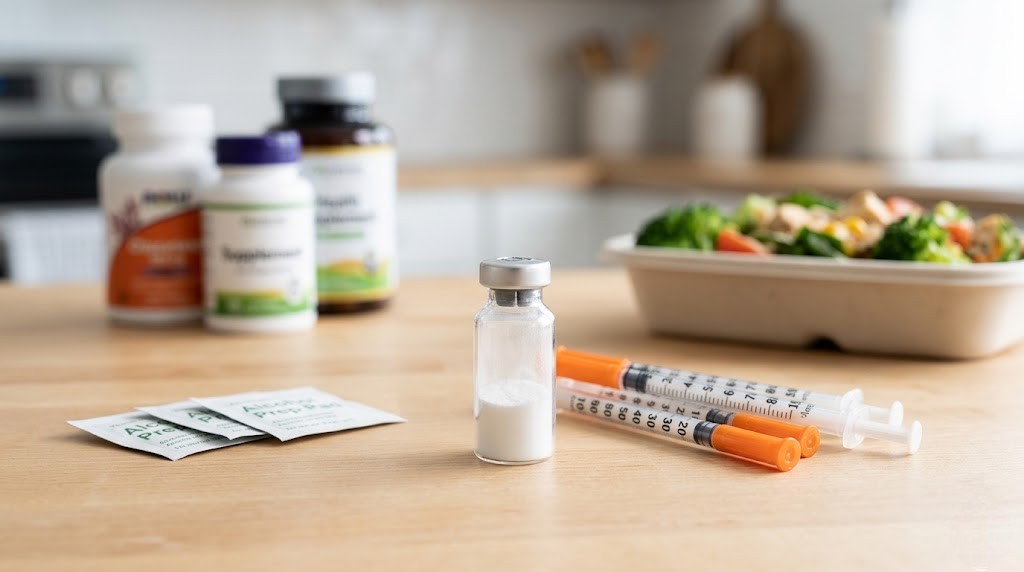
Before you order semaglutide from one more research peptide vendor, stop. Read this first. Because the difference between a reliable source and a gamble is not branding or pricing or slick packaging. It comes down to what independent labs find when they crack open a vial and run the numbers. Amino Amigos has earned an A rating from Finnrick for their semaglutide specifically, with seven samples tested between January and March of this year. That sounds great on paper. But the full vendor picture tells a more complicated story, one that every serious researcher needs to understand before placing an order.
The research peptide market is growing fast, and with it comes an uncomfortable truth. Not every company selling compounded semaglutide maintains the same standards across their entire product line.
Some vendors excel with one compound and fall short with others. Some pass third-party testing with flying colors while their customer service crumbles. And some look perfect until you dig into the details that most review sites never bother checking. This guide covers all of it. Every test result. Every red flag. Every green flag. SeekPeptides members know that informed sourcing decisions start with data, not marketing claims, and that is exactly what you will find here.
What is Amino Amigos?
Amino Amigos is a research peptide supplier based in Albuquerque, New Mexico. The company operates from 1209 Mountain Road PL NE, Suite H, and positions itself as offering "the most rigorously tested research peptides at unbeatable prices." Their product catalog spans several categories including GLP-1 compounds, skincare peptides, blends, releasing hormones, regeneration compounds, amino acids, vitamins, and therapeutic peptides.
The company maintains a clear legal disclaimer that all products are "for laboratory research purposes only" and not intended for human consumption. This is standard across grey market peptide vendors. They provide certificates of analysis for their products and claim rigorous third-party testing.
Contact information is readily available. Email at info@aminoamigos.com, phone at 505-309-6441. This transparency in contact details is a baseline expectation, but you would be surprised how many vendors hide behind anonymous web forms and nothing else.
Amino Amigos semaglutide product lineup
Amino Amigos offers semaglutide in two primary vial sizes: 5mg and 10mg. Both formulations come as lyophilized powder, which is the standard format for research peptides in powder form. The lyophilized format offers superior stability compared to pre-reconstituted solutions, giving researchers more control over their reconstitution process and storage timeline.
The 5mg semaglutide vial
This is the more commonly tested product from Amino Amigos. All seven Finnrick samples were drawn from 5mg vials across two batch numbers: 6S5G1 and S5A25B1. The measured quantities ranged from 4.65mg to 6.96mg per vial, which means some vials contained more product than advertised while others contained slightly less. For context, a 5mg semaglutide vial dosage chart relies on accurate fill weights, so understanding variance matters.
Purity across all tested 5mg vials ranged from 99.73% to 99.96%. Those numbers are strong. Extremely strong, actually. When you are calculating your semaglutide dosage, knowing the purity exceeds 99.7% means the compound itself is clean. The question becomes whether the fill weight matches the label, and that is where the story gets more interesting.
The 10mg semaglutide vial
Amino Amigos also offers a 10mg formulation. Their own certificate of analysis for this product showed a measured quantity of 12.74mg per vial, which is roughly 27% over the labeled amount. While overfilling is generally preferable to underfilling, significant variance in either direction raises questions about accurate dosing. If you are using a 10mg semaglutide dosage chart, you need to account for the possibility that your vial contains more than expected.
Their certificate of analysis for the 10mg vial showed 99.87% purity using HPLC-UV-MS analysis. That aligns with the quality seen in the 5mg vials.
Specialty blends
Beyond standalone semaglutide, Amino Amigos also offers combination products. One notable listing is a cagrilintide plus semaglutide plus tirzepatide blend at 15mg/10mg pricing of $185. Research blends like these are increasingly popular among researchers studying semaglutide and tirzepatide together, though multi-compound vials introduce additional complexity in calculating peptide dosages and verifying individual compound purity.
Finnrick third-party test results for Amino Amigos semaglutide
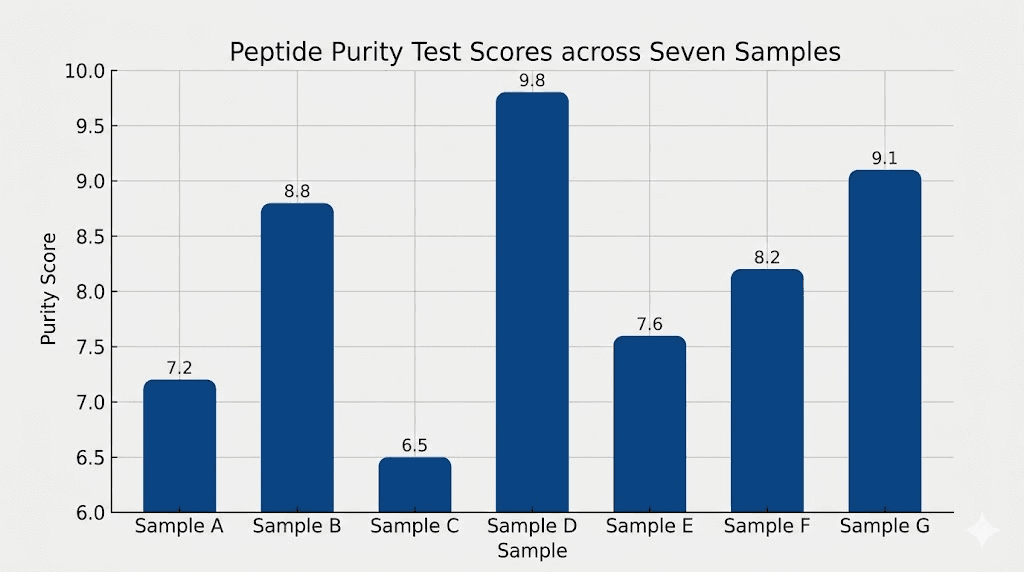
This is where the data gets specific. Finnrick, an independent peptide testing and supply chain transparency platform, tested seven samples of semaglutide from Amino Amigos between January 14 and March 20 of this year. The overall Finnrick Rating came back as A, which they classify as "Great."
Here is the full breakdown of every test result.
Complete test result table
Date | Score | Label | Measured | Difference | Purity | Batch | Lab |
|---|---|---|---|---|---|---|---|
March 20 | 9.8 | 5mg | 4.78mg | -4.4% | 99.80% | S5A25B1 | Lab B |
February 28 | 7.5 | 5mg | 5.81mg | +16.2% | 99.96% | S5A25B1 | Lab C |
February 28 | 7.2 | 5mg | 5.91mg | +18.2% | 99.93% | S5A25B1 | Lab C |
February 27 | 7.1 | 5mg | 5.8mg | +16.0% | 99.75% | S5A25B1 | Lab A |
February 27 | 8.4 | 5mg | 5.44mg | +8.8% | 99.73% | S5A25B1 | Lab A |
January 23 | 6.5 | 5mg | 6.58mg | -14.0% | 99.80% | 6S5G1 | Lab B |
January 14 | 7.3 | 5mg | 6.96mg | -9.0% | 99.74% | 6S5G1 | Lab A |
Average score: 7.7 out of 10. Score range: 6.5 to 9.8. No score below 6.5, which is the threshold Finnrick uses for a confident rating.
What the numbers actually mean
Two things stand out immediately.
First, purity is exceptional. Every single sample tested above 99.73%, with the highest hitting 99.96%. For researchers concerned about peptide safety and risks, high purity means fewer contaminants, fewer unknowns, and more predictable outcomes. When you are following a semaglutide dosage chart in units, knowing the compound is actually semaglutide (and not degraded or contaminated) is foundational.
Second, fill weight variance is notable. The measured quantities ranged from 4.65mg to 6.96mg across vials labeled at 5mg. That is a swing from roughly 7% under to nearly 40% over the labeled amount. The newer batch (S5A25B1) showed measured quantities between 4.78mg and 5.91mg, which is tighter variance than the older batch (6S5G1) that measured between 6.58mg and 6.96mg. This suggests Amino Amigos may have improved their fill weight consistency over time, or the older batch had a different fill target.
For practical purposes, this means researchers using a 5mg semaglutide dosage chart should consider the possibility that their actual vial content may differ from the label. Using a peptide reconstitution calculator with the measured weight (if available from your own testing) rather than the labeled weight would provide more accurate dosing in units.
How these scores compare to other vendors
An A rating from Finnrick places Amino Amigos semaglutide in the top tier of tested vendors for this specific compound. Not all vendors achieve this. Many research peptide suppliers score in the B to D range for semaglutide, with some failing outright due to underfilling or purity issues. If you have been comparing options through guides like our Direct Meds semaglutide review or Empower Pharmacy semaglutide guide, the Amino Amigos semaglutide testing data is among the stronger results available.
But semaglutide quality alone does not tell you everything about a vendor. And this is where the conversation gets uncomfortable.
The full vendor picture: beyond semaglutide
Here is the part most vendor review sites skip. Amino Amigos earned an A rating for semaglutide. Great. But Finnrick tested 37 total samples across six different products from this vendor, and the results vary dramatically.
Product | Rating | Tests | Avg Score | Range |
|---|---|---|---|---|
Semaglutide | A | 7 | 7.7 | 6.5 to 9.8 |
Melanotan II | B | 5 | 7.2 | 5.9 to 8.3 |
Retatrutide | C | 2 | 6.7 | 4.0 to 9.4 |
BPC-157 | D | 8 | 5.8 | 3.6 to 7.0 |
CJC-1295 | E | 7 | 3.8 | 2.7 to 5.7 |
Tirzepatide | E | 8 | 4.0 | 3.7 to 4.6 |
Read that again. Their tirzepatide received an E rating across eight samples. Their CJC-1295 also received an E. Their BPC-157 scored a D across eight tests. The overall average score across all 37 tests was just 5.6 out of 10.
This is not a minor detail. It is the most important finding in this entire review.
A vendor who scores an A on one product and an E on another does not have a quality problem with a single compound. They have a consistency problem across their supply chain. Maybe they source semaglutide from a reliable manufacturer but cut corners elsewhere. Maybe their quality control processes vary by product. Whatever the reason, the overall vendor profile from Finnrick shows "poor consistency across products" with "significant variance suggesting quality control issues."
For researchers who only need semaglutide, this data is reassuring. The semaglutide itself tests well. But if you are considering ordering BPC-157 or TB-500 stacks, tirzepatide, or CJC-1295 from Amino Amigos, the test data suggests significant caution. Those products scored poorly enough to warrant looking at alternative vendors for anything beyond semaglutide.
Shipping, delivery, and packaging
Amino Amigos offers free shipping on all orders with a stated delivery window of 2 to 3 business days. They currently run a promotional discount code (AMIGO15) for 15% off orders. Based in New Mexico, domestic shipping within the United States appears to be their primary focus.
Fast shipping matters for peptide stability at room temperature. Research peptides in lyophilized form are relatively stable during transit, but extended time in hot delivery trucks can still degrade compounds. A 2 to 3 day delivery window is reasonable. However, researchers in warmer climates should be aware that semaglutide arriving hot is a real concern during summer months. Cold pack shipping is standard among reputable vendors, though the Amino Amigos website does not explicitly mention their packaging methods.
If your order does arrive warm, understanding what happens when semaglutide gets warm and how to assess potential degradation is critical. Lyophilized powder is more forgiving than reconstituted solution, but prolonged heat exposure can still affect potency.
Customer reviews and reputation
This section requires honest context. Amino Amigos had a Trustpilot profile, but it has been removed from the platform. The removal notice states: "This profile has been removed. The business you are trying to find goes against our guidelines and is no longer visible on Trustpilot."
A removed Trustpilot profile is a notable data point. There are several possible reasons for removal. The most common include violations of Trustpilot guidelines around product types (research peptides are a grey area for many platforms), fraudulent review activity, or business misrepresentation. Without specific details from Trustpilot, it is impossible to know the exact reason. But researchers should be aware of this fact.
Before the profile was removed, cached data showed approximately 3 reviews with a 2.9 out of 5 rating. The distribution was reportedly 33% five-star, 33% two-star, and 34% one-star, with at least one review calling the products ineffective. Three reviews is not a statistically meaningful sample, but the mixed sentiment combined with a removed profile is worth noting.
On social media, Amino Amigos peptide reviews appear on platforms like TikTok, where vendor discussions tend toward anecdotal rather than data-driven. For researchers who prefer evidence-based evaluation, the Finnrick testing data provides far more reliable insight than social media commentary. For understanding what good peptide testing looks like and why it matters, third-party lab data should always outweigh user reviews alone.
How to reconstitute Amino Amigos semaglutide
The reconstitution process for Amino Amigos semaglutide follows the same protocol as any lyophilized semaglutide vial. The compound arrives as a freeze-dried powder that needs to be mixed with bacteriostatic water before use. Getting this step right determines your dosing accuracy for the entire vial.
Step-by-step reconstitution for the 5mg vial
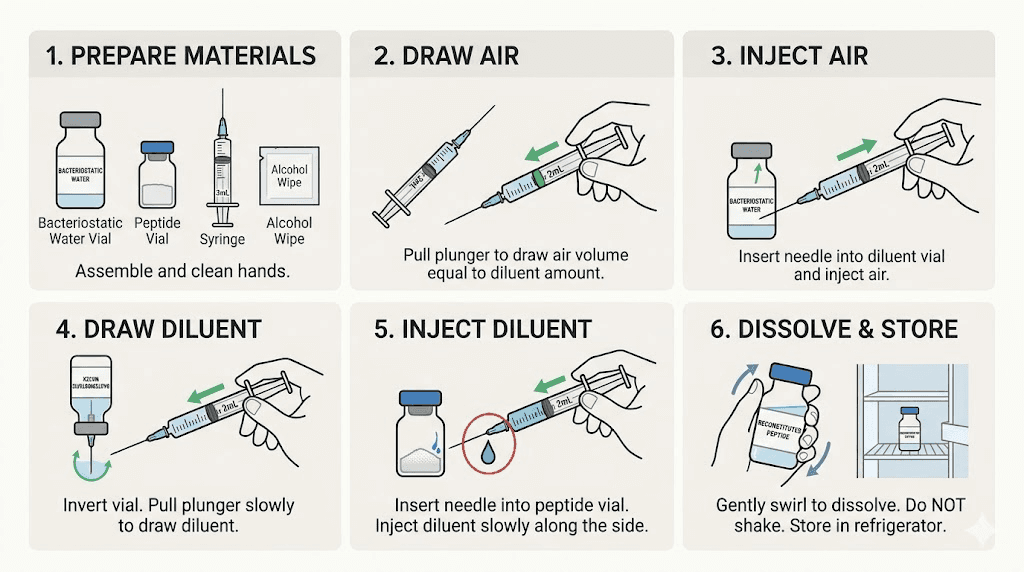
Start by gathering your supplies. You need the semaglutide vial, bacteriostatic water, a reconstitution syringe (2ml or 3ml), and alcohol swabs. Everything should be clean. Your workspace should be clear. Contamination at this stage compromises the entire vial.
The standard approach for a 5mg vial is to add 2ml of bacteriostatic water. This creates a concentration of 2.5mg per ml, which makes dosing in milliliters straightforward. For a detailed walkthrough, our guide to mixing bacteriostatic water with 5mg semaglutide covers every nuance.
Pull air into the reconstitution syringe equal to the volume of bacteriostatic water you plan to add. Inject the air into the bacteriostatic water bottle to equalize pressure. Then draw back your desired volume. For 2ml, this gives you the 2.5mg/ml concentration.
Insert the needle into the semaglutide vial at an angle, letting the water run down the inside wall of the vial. Do not spray directly onto the powder. Do not shake. Gently roll the vial between your palms until the powder dissolves completely. The solution should be clear. If it is cloudy or contains particles, something went wrong. Our complete 5mg semaglutide reconstitution guide and reconstitution chart provide visual references for each step.
Reconstitution for the 10mg vial
For the 10mg vial, the standard approach is to add 2ml of bacteriostatic water, creating a 5mg/ml concentration. Some researchers prefer 3ml for a lower concentration of approximately 3.33mg/ml, which can make smaller doses easier to measure accurately. Our guide to mixing bacteriostatic water with 10mg semaglutide walks through concentration options and their practical implications.
Given the fill weight variance noted in Finnrick testing (the 10mg vial COA showed 12.74mg measured), your actual concentration may be higher than calculated if you are working from the labeled weight. This is why some researchers invest in independent testing for high-precision work. For most protocols, the variance is manageable, but awareness is important.
The full 10mg semaglutide reconstitution chart provides concentration tables for different water volumes.
Important reconstitution notes
Always use bacteriostatic water, not sterile water. Bacteriostatic water contains 0.9% benzyl alcohol, which inhibits bacterial growth and extends the usable life of your reconstituted solution. Sterile water lacks this preservative, meaning your vial becomes vulnerable to contamination after the first draw.
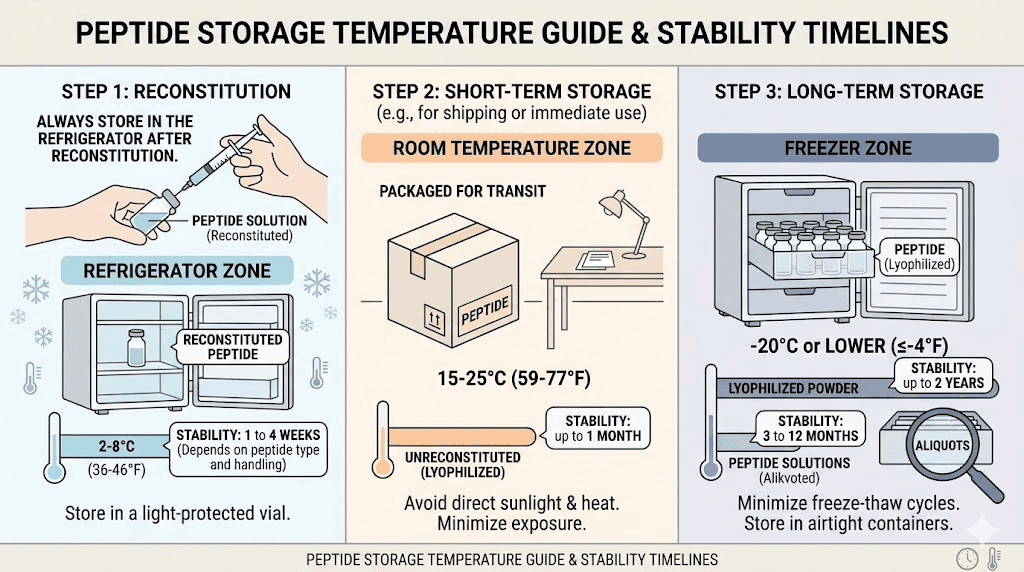
After reconstitution, refrigerate immediately. Compounded semaglutide in the fridge typically maintains potency for 4 to 6 weeks when stored properly at 36 to 46 degrees Fahrenheit. Our semaglutide mixing chart covers storage timelines alongside reconstitution ratios.
Semaglutide dosing from research vials
Once reconstituted, dosing semaglutide from research vials requires understanding the relationship between milligrams, units, and milliliters. This is where many researchers make critical errors, especially those transitioning from pre-filled pharmaceutical pens to research-grade vials. Our semaglutide dosage calculator automates these conversions, but understanding the math matters.
Understanding the concentration
If you reconstituted a 5mg vial with 2ml of bacteriostatic water, your concentration is 2.5mg per ml. On a standard 100-unit insulin syringe, each unit mark equals 0.01ml. So 10 units equals 0.1ml equals 0.25mg. Forty units equals 0.4ml equals 1mg. For granular conversions, our guides on 40 units of semaglutide in milligrams and semaglutide units to mg conversion provide quick reference tables.
The standard starting dose for semaglutide in weight management research is 0.25mg per week for the first four weeks. At the 2.5mg/ml concentration, that is 10 units on an insulin syringe. Simple enough. But here is where the fill weight variance matters. If your Amino Amigos 5mg vial actually contains 5.8mg (as one Finnrick test measured), your real concentration would be closer to 2.9mg/ml instead of 2.5mg/ml. That 10-unit draw would deliver approximately 0.29mg instead of 0.25mg.
A 16% overshoot at the starting dose is unlikely to cause problems. But as doses escalate toward the higher end of protocols, the cumulative effect of fill weight variance becomes more relevant. Researchers following a 5mg/ml dosage chart should be aware of this possibility.
Standard escalation protocol
Most semaglutide research protocols follow a gradual escalation pattern designed to minimize gastrointestinal side effects like constipation, burping, and dizziness. The typical schedule looks like this:
Weeks 1 through 4: 0.25mg once weekly
Weeks 5 through 8: 0.5mg once weekly
Weeks 9 through 12: 1.0mg once weekly
Weeks 13 through 16: 1.7mg once weekly
Week 17 onward: 2.4mg once weekly (maintenance)
At the full 2.4mg maintenance dose with a 2.5mg/ml concentration, you would draw approximately 96 units per injection. A single 5mg vial at this dose lasts roughly two weeks. The 0.25mg unit conversion and 2.4mg unit conversion guides break down each dose level in detail.
For a complete timeline of what to expect at each stage, our semaglutide results week by week guide covers the research literature alongside real-world observations. Many researchers also want to know how fast semaglutide works and whether it suppresses appetite immediately. The short answer is that appetite changes often begin within the first week, but significant body composition changes typically take 4 to 8 weeks to become measurable.
Choosing the right injection site and timing
Research suggests that subcutaneous injection in the abdomen, thigh, or upper arm all produce comparable absorption profiles. Our guide to the best injection site for semaglutide covers the nuances, including rotation strategies and areas to avoid. For detailed injection technique, see how to give a semaglutide injection with a syringe.
Timing also matters. The best time of day to take semaglutide depends on your schedule and how you tolerate potential side effects. Many researchers prefer evening injections to sleep through any initial nausea. Others inject in the morning. Consistency in timing matters more than the specific time chosen.
Storage and handling
Proper storage directly impacts how long your semaglutide remains potent and safe to use. This applies whether you ordered from Amino Amigos or any other vendor.
Before reconstitution
Lyophilized semaglutide powder should be stored in a refrigerator at 36 to 46 degrees Fahrenheit. It can tolerate room temperature for short periods during shipping and handling, but prolonged exposure to heat accelerates degradation. Our peptide storage guide provides comprehensive temperature management strategies.
Unreconstituted peptides are far more stable than reconstituted solutions. Lyophilized peptides in powder form can maintain potency for months when refrigerated and potentially years when frozen. This gives researchers flexibility in when they begin their protocols.
After reconstitution
Once mixed with bacteriostatic water, the clock starts. How long semaglutide remains good depends on storage conditions. In the refrigerator, reconstituted semaglutide with bacteriostatic water typically lasts 4 to 6 weeks. Our detailed guide on semaglutide shelf life in the fridge covers the factors that affect degradation rates.
Never freeze reconstituted semaglutide. Freezing and thawing cycles can cause protein aggregation and loss of biological activity. Store upright in the refrigerator, away from the back wall where temperatures fluctuate most.
If you accidentally leave your reconstituted vial out, do not panic. But understand the implications. Semaglutide left out overnight may still be usable depending on room temperature and duration, but potency is likely reduced. When in doubt, the conservative approach is to discard and reconstitute a fresh vial.
Expiration considerations
Amino Amigos semaglutide vials should include lot numbers and manufacturing dates on the certificate of analysis. Researchers should track these dates. The question of whether semaglutide expires after 28 days applies primarily to reconstituted solutions, not sealed lyophilized vials. And if you do end up using product past its intended date, understanding the implications of using expired semaglutide helps inform that decision.
How Amino Amigos compares to other semaglutide vendors
The research peptide market is crowded with options. Some vendors have been around for years with extensive testing histories. Others are newer entries with limited data. Here is how Amino Amigos semaglutide stacks up against some of the more commonly discussed alternatives.
Vendor comparison overview
When evaluating semaglutide sources, three factors matter most: purity, fill weight accuracy, and overall vendor reliability. Amino Amigos scores well on purity (99.73% or better) and decently on fill weight (tighter on newer batches), but their overall vendor reliability score is mixed due to inconsistent quality across other products.
For researchers who have been exploring other options, we have detailed reviews of multiple semaglutide vendors:
Amino USA semaglutide is a separate company despite the similar name. Do not confuse the two. Amino Asylum semaglutide is yet another vendor with "amino" in the name. The research peptide space has a naming convention problem, and it causes confusion regularly.
Empower Pharmacy operates as a compounding pharmacy rather than a research chemical supplier, which means their products go through a different regulatory framework. Olympia Pharmacy semaglutide falls into the same category. These compounding pharmacies typically require prescriptions and offer pre-mixed solutions rather than lyophilized powder.
On the research side, BPI Labs semaglutide, Precision Peptides semaglutide, and Research Chemicals semaglutide represent some of the alternative research vendors that researchers commonly consider. Each has their own testing profiles and track records.
For researchers on a budget, our guide to cheap compounded semaglutide covers how to balance cost with quality assurance. The cheapest option is rarely the best option, but neither is the most expensive. What matters is verified testing data.
Compounding pharmacies versus research vendors
This distinction matters. Compounding pharmacies like Belmar Pharmacy or Empower Pharmacy operate under state and federal pharmacy regulations. They are inspected. They maintain USP standards. They require prescriptions. The tradeoff is higher cost.
Research vendors like Amino Amigos operate outside the pharmacy framework. Products are labeled for research only. Third-party testing is voluntary, not required. Certificates of analysis come from the vendor or independent services like Finnrick. The tradeoff is lower cost but less regulatory oversight.
Understanding the difference between research and pharmaceutical peptides helps researchers make informed sourcing decisions. Neither path is inherently wrong. But they carry different risk profiles.
Semaglutide side effects and management
Regardless of the source, semaglutide produces consistent side effects that researchers should anticipate and prepare for. This section covers what to expect and how to manage common issues.
Gastrointestinal effects
Nausea, constipation, and digestive changes are the most common side effects. They tend to be worst during dose escalation and often improve with time. For detailed management strategies:
Semaglutide constipation responds well to increased fiber intake, hydration, and in some cases magnesium supplementation. Sulfur burps and excessive burping often relate to dietary choices and tend to improve with smaller meals. Acid reflux on semaglutide can be managed with meal timing adjustments and avoiding eating close to injection day.
Following a proper semaglutide diet plan and knowing which foods to avoid on semaglutide significantly reduces gastrointestinal discomfort. High-protein, moderate-fiber meals in smaller portions are the foundation. Our complete food list for semaglutide provides practical meal planning guidance.
Energy and fatigue
Semaglutide fatigue is reported by a significant percentage of users, particularly during the first few weeks and during dose increases. The reduced caloric intake contributes to this. Some researchers wonder whether semaglutide gives you energy, and the answer is nuanced. While some experience increased energy from weight loss and improved metabolic markers, the acute effect during active dose escalation often tilts toward fatigue.
Adequate protein intake on semaglutide helps maintain energy levels and preserve lean mass. Most protocols recommend 0.7 to 1.0 grams of protein per pound of body weight, which can be challenging when appetite is significantly suppressed.
Other considerations
Less common but still reported effects include dizziness, leg cramps, insomnia, and menstrual changes. Each of these has management strategies covered in our dedicated guides. The key principle across all side effects is that gradual dose escalation reduces severity, and most side effects are transient.
For researchers who find that compounded semaglutide is not working as expected, the issue may be sourcing related (degraded product, inaccurate fill weights) or protocol related (insufficient dose, dietary factors). Understanding why semaglutide may not be producing results requires systematic troubleshooting of both possibilities.
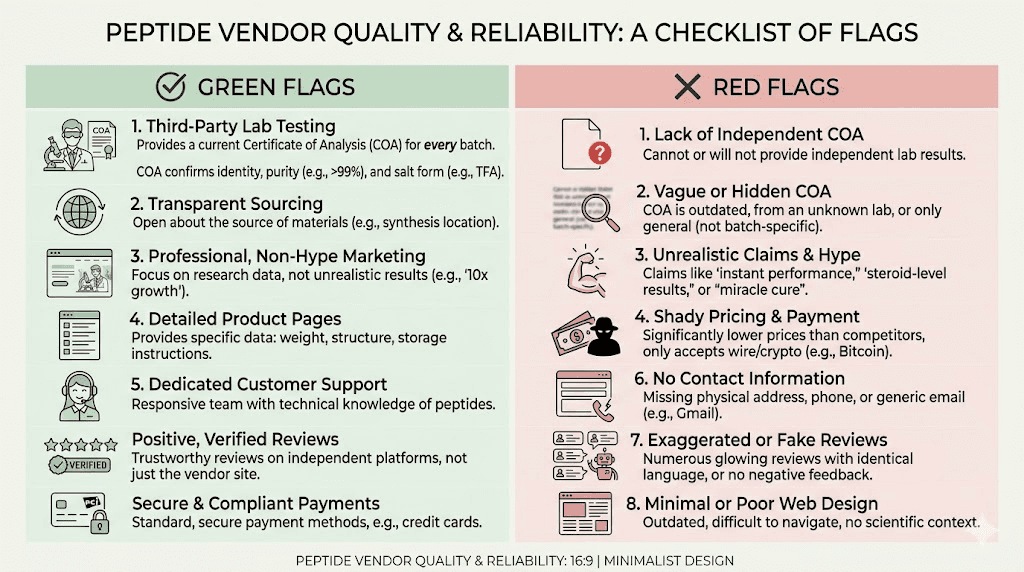
Red flags and green flags when evaluating any peptide vendor
The Amino Amigos analysis provides a useful framework for evaluating any peptide vendor. Here are the specific signals to watch for.
Green flags
Independent third-party testing. Amino Amigos semaglutide has been tested by Finnrick across multiple labs. This is a strong positive. Vendors who submit products for independent testing demonstrate confidence in their products. Look for testing from services that use multiple labs (Lab A, Lab B, Lab C) to reduce the risk of any single lab bias.
Certificates of analysis with lot numbers. Amino Amigos provides COAs with batch numbers, dates, and purity data. This creates traceability. If a problem arises with a specific batch, researchers can identify whether their vial is affected.
Physical address and contact information. A real address in Albuquerque, NM, a phone number, and an email address. Anonymous vendors with no verifiable location are significantly higher risk.
High purity numbers confirmed independently. The 99.73% or higher purity across all Finnrick tests is a strong indicator that the base compound is legitimate and clean.
Red flags
Inconsistent quality across products. An A on semaglutide but E on tirzepatide and CJC-1295 suggests either multiple sourcing channels with varying quality or inconsistent quality control processes. This is the biggest concern with Amino Amigos specifically.
Removed Trustpilot profile. While the reason is unknown, a removed review profile eliminates one avenue for independent customer feedback. Researchers should weigh this alongside the positive Finnrick data rather than dismissing it entirely.
Fill weight variance. While purity is excellent, the measured quantities ranging from 4.65mg to 6.96mg on 5mg vials represents notable variance. Newer batches show improvement, but this is still wider than pharmaceutical standards.
For a broader understanding of how to evaluate research peptide vendors, our grey market peptides guide and peptide testing labs guide provide comprehensive frameworks. Understanding peptide safety and risks in general helps researchers make better sourcing decisions regardless of the specific vendor.
Optimizing your semaglutide protocol regardless of source
Whether you ultimately choose Amino Amigos or another vendor, the fundamentals of an effective semaglutide protocol remain the same. This section consolidates the key principles.
Start low and escalate gradually
The temptation to jump to higher doses is real, especially when early results are modest. Resist it. The standard four-week escalation steps exist because GLP-1 receptor adaptation takes time, and aggressive dosing leads to worse side effects without proportionally better outcomes. Patience during the first week on semaglutide and through the initial month sets the foundation for the entire protocol.
If you hit a plateau, do not immediately increase your dose. Semaglutide plateaus often resolve with dietary adjustments, increased activity, or simply time. Our guide on four weeks on semaglutide with no weight loss walks through the most common causes and solutions.
Support with nutrition
Semaglutide reduces appetite dramatically. That is the point. But reduced appetite without nutritional strategy leads to muscle loss, nutrient deficiency, and metabolic adaptation. A well-designed semaglutide-friendly meal plan prioritizes protein, micronutrient density, and adequate hydration.
Consider supplements alongside GLP-1 compounds, particularly B vitamins, electrolytes, and fiber if constipation is an issue. Some researchers explore semaglutide with B12 combinations or semaglutide with glycine formulations to address specific nutritional needs during active protocols.
Track and adjust
Objective measurement beats subjective feeling every time. Track your results week by week. Record injection dates, doses, side effects, and body composition metrics. This data helps identify what is working, what needs adjustment, and when you have reached your target.
SeekPeptides members use protocol tracking tools and community support to optimize their research outcomes. Having access to people who have navigated the same protocol challenges makes a meaningful difference, especially when troubleshooting stalls or managing side effects that generic guides do not address.
Know when and how to stop
Semaglutide is not a permanent protocol for most researchers. Understanding how long to stay on semaglutide and how to maintain results afterward is as important as the protocol itself. Semaglutide withdrawal symptoms can include appetite rebound and weight regain if the transition is not managed properly. A gradual taper rather than stopping cold turkey is generally recommended.
Considering alternatives to Amino Amigos semaglutide
If the inconsistent vendor profile concerns you, there are several alternative paths worth exploring.
Other research vendors. BPI Labs, Precision Peptides, and Research Chemicals all offer semaglutide in research vial format. Each should be evaluated using the same framework: independent testing data, fill weight accuracy, purity, and overall vendor reliability.
Compounding pharmacies. For researchers who prioritize regulatory oversight, pharmacies like Empower Pharmacy, Olympia Pharmacy, or Belmar Pharmacy offer compounded semaglutide under prescription. Higher cost but greater regulatory assurance.
Alternative delivery methods. Oral semaglutide drops and sublingual semaglutide offer needle-free options, though bioavailability differs from injectable forms. Our guide on injectable versus oral peptides breaks down the tradeoffs.
Alternative compounds. For researchers open to different GLP-1 receptor agonists, semaglutide versus tirzepatide is the most common comparison. Tirzepatide targets both GIP and GLP-1 receptors, potentially offering greater efficacy in some contexts. However, note that Amino Amigos tirzepatide received an E rating from Finnrick, so if you do switch compounds, you would likely want a different vendor for tirzepatide. Emerging options like retatrutide and survodutide are also entering the research landscape.
Semaglutide formulation add-ons worth knowing about
Many vendors, including compounding pharmacies, offer semaglutide combined with other compounds. Understanding these formulations helps researchers evaluate whether add-ons provide genuine value or just inflate cost.
Semaglutide with B12 is one of the most common combinations. The rationale is that B12 supports energy levels during caloric restriction. Semaglutide with methylcobalamin specifically uses the bioactive form of B12, which some researchers prefer over cyanocobalamin for its superior absorption.
Semaglutide with glycine is another popular formulation. Glycine acts as a stabilizer that may extend shelf life and serves as a conditionally essential amino acid with roles in sleep quality and collagen synthesis. The semaglutide glycine B12 blend combines both approaches.
Semaglutide with L-carnitine targets fat metabolism specifically. Semaglutide with niacinamide adds NAD+ precursor support. And semaglutide with pyridoxine (B6) addresses nausea management, as B6 has antiemetic properties.
Amino Amigos offers some of these as blends. However, the critical point remains: third-party testing should verify not just the semaglutide component but the entire blend formulation. Finnrick testing for Amino Amigos focused on standalone semaglutide, not blends.
Legal and regulatory considerations
Research peptides occupy a legal grey area that every researcher should understand. The legality of peptides depends on jurisdiction, intended use, and the specific compound. Semaglutide is FDA-approved as a pharmaceutical under brand names like Ozempic and Wegovy, but research-grade semaglutide from vendors like Amino Amigos is sold under a different legal framework.
The research chemical designation means these products are not regulated by the FDA for quality, purity, or safety to the same extent as pharmaceuticals. Peptide regulation continues to evolve, and the landscape for compounded GLP-1 products specifically has seen significant regulatory attention in recent years.
Researchers should stay informed about grey market dynamics and understand the distinction between research and pharmaceutical grade peptides. This knowledge helps in making risk-informed decisions about sourcing.
Frequently asked questions
Is Amino Amigos a legitimate peptide vendor?
Amino Amigos is a real business with a physical address in Albuquerque, NM, verifiable contact information, and products that have been independently tested by Finnrick. Their semaglutide specifically earned an A rating across seven samples. However, their overall vendor profile shows inconsistent quality across different products, and their Trustpilot profile has been removed. Legitimacy and quality are not binary. The data suggests their semaglutide is genuine but their broader peptide vial quality varies significantly.
How pure is Amino Amigos semaglutide?
Independent Finnrick testing showed purity ranging from 99.73% to 99.96% across seven samples. This is excellent purity that exceeds most competitors. The compound itself is clean. Fill weight accuracy, however, varies more significantly, with measured quantities ranging from 4.65mg to 6.96mg on vials labeled at 5mg.
Should I buy other peptides from Amino Amigos?
The data suggests caution. Their BPC-157 received a D rating, CJC-1295 received an E, and their tirzepatide also received an E from Finnrick. Only semaglutide and Melanotan II (B rating) showed acceptable quality. For other compounds, consider alternative vendors with better testing profiles for those specific products.
How does Amino Amigos semaglutide compare to compounding pharmacy semaglutide?
Compounding pharmacies operate under pharmaceutical regulations with inspections and USP standards. Research vendors like Amino Amigos operate outside this framework. The tradeoff is cost versus regulatory oversight. Both can produce quality semaglutide, but the verification mechanisms differ. Compounding pharmacies like Empower or Belmar require prescriptions and cost more but provide greater assurance.
How should I store Amino Amigos semaglutide after reconstitution?
Refrigerate at 36 to 46 degrees Fahrenheit immediately after mixing with bacteriostatic water. Reconstituted semaglutide typically maintains potency for 4 to 6 weeks when stored properly. Never freeze reconstituted solution. Protect from light exposure. For detailed storage protocols, see our compounded semaglutide fridge storage guide.
What is the recommended starting dose for semaglutide from research vials?
The standard starting dose in research literature is 0.25mg once weekly for the first four weeks, then gradually escalating. Use our semaglutide dosage calculator to convert milligrams to units based on your specific reconstitution concentration. Account for possible fill weight variance by using the most conservative estimate.
Is Amino Amigos the same as Amino USA or Amino Asylum?
No. These are completely separate companies that happen to share similar naming conventions. Amino USA and Amino Asylum have their own product lines, testing histories, and reputations. Do not assume quality from one vendor transfers to another based on name similarity.
Can I travel with semaglutide from Amino Amigos?
Traveling with research peptides adds complexity. Our complete guide to traveling with semaglutide covers temperature management, legal considerations for crossing borders, and practical tips for maintaining cold chain integrity during transit.
External resources
For researchers serious about optimizing their peptide protocols, SeekPeptides offers the most comprehensive resource available, with evidence-based guides, vendor analysis tools, proven protocols, and a community of thousands who have navigated these exact questions. SeekPeptides members get access to detailed comparison databases, protocol builders, and expert guidance that turns research complexity into clear, actionable steps.
In case I do not see you, good afternoon, good evening, and good night. May your purity tests stay above 99%, your fill weights stay accurate, and your protocols stay on track.