Dec 17, 2025
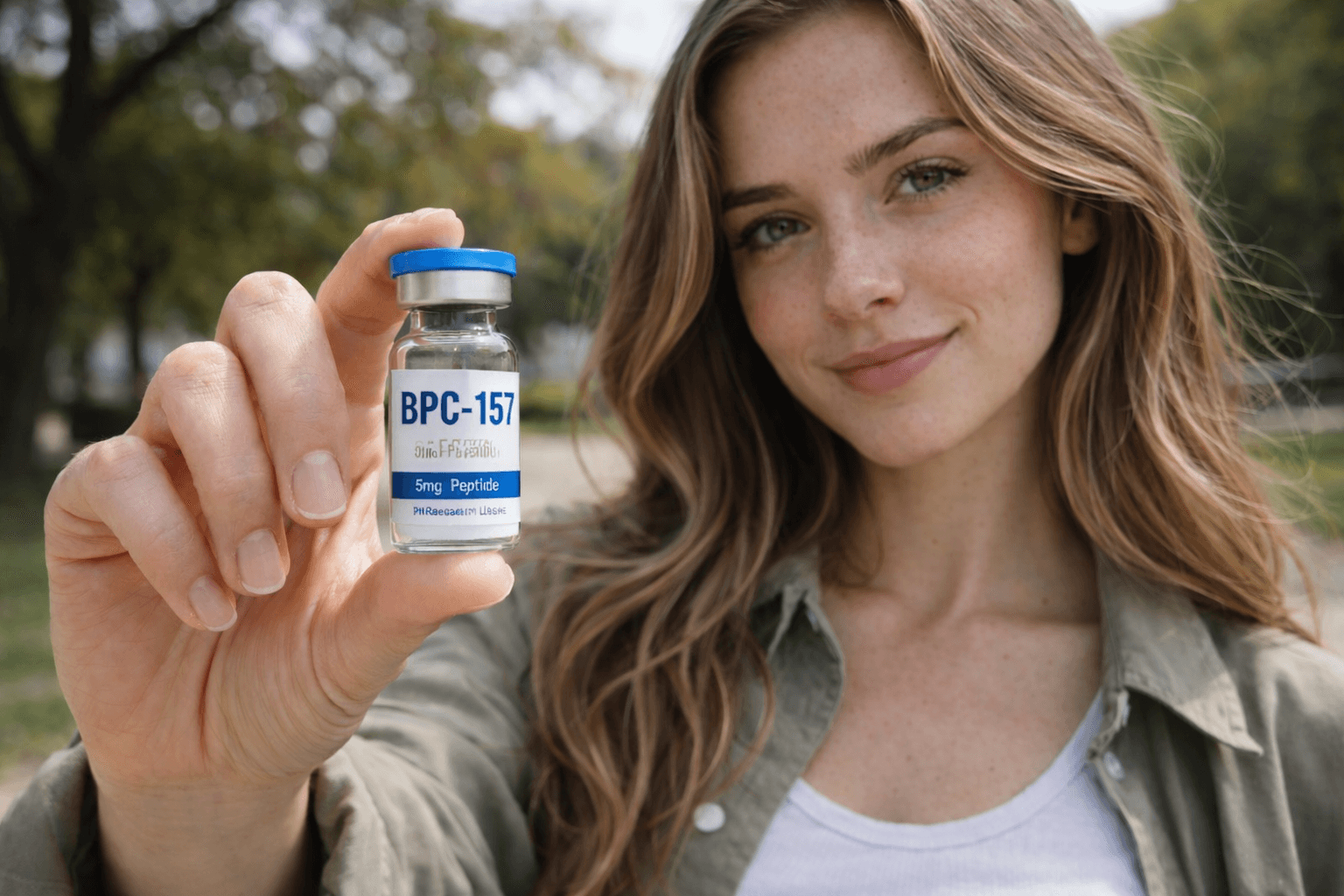
You heard about BPC-157 from a friend, or saw it mentioned on Reddit, or came across it while researching injury recovery.
Now you're wondering: what actually is this stuff?
Some call it a miracle healing peptide, others say it's overrated.
Let me give you the straight answer, with no BS.
What is BPC-157
BPC-157 stands for Body Protection Compound 157.
It's a synthetic peptide derived from a protective protein found in human stomach acid.
The simple version: It's a chain of 15 amino acids that tells your body to heal damaged tissue faster.
How it was discovered: Scientists studying stomach ulcers noticed a particular protein sequence that protected the gut lining. They isolated it, synthesized it, and called it BPC-157.
What it's made from: It's not extracted from animals or humans. BPC-157 is created synthetically in labs. The amino acid sequence mimics what your body naturally produces in your stomach.
Legal status:
Not FDA-approved for human use
Sold as a "research chemical"
Legal to buy and possess in most countries
Widely used despite research-only labeling
What BPC-157 does in your body
The mechanism is elegantly simple. BPC-157 promotes healing through several pathways.
Primary effects:
Increases blood flow to injured areas More blood = more oxygen, nutrients, and growth factors reaching damaged tissue. Healing accelerates.
Promotes new blood vessel formation (angiogenesis) Your body builds new capillaries to damaged areas. This creates permanent improved blood supply.
Accelerates fibroblast activity Fibroblasts are your body's repair cells. They rebuild damaged tissue. BPC-157 makes them work faster and more efficiently.
Reduces inflammation Not by suppressing your immune system like NSAIDs. By resolving the inflammatory cascade more quickly.
Protects gut lining The original purpose. BPC-157 heals ulcers, reduces leaky gut, and protects against NSAID damage.
For complete details on BPC-157's mechanisms, read our comprehensive BPC-157 guide.
What BPC-157 heals
This peptide has been studied primarily in animals. Human use is based on anecdotal reports and theoretical mechanisms.
Most effective for:
Tendon injuries
Achilles tendonitis
Patellar tendonitis
Rotator cuff issues
Tennis/golfer's elbow
Research shows BPC-157 accelerates tendon-to-bone healing in rats. Human users report 30-50% faster recovery.
Ligament damage
ACL/MCL sprains
Ankle sprains
Wrist ligament injuries
Ligaments have poor blood supply naturally. BPC-157's angiogenesis effect is particularly valuable here.
Muscle tears and strains
Hamstring tears
Calf strains
Shoulder muscle injuries
Promotes faster muscle fiber repair and reduces scar tissue formation.
Gut issues
Stomach ulcers
Leaky gut syndrome
IBS symptoms
NSAID-induced damage
This is what BPC-157 was originally studied for. The gut-healing effects are well-documented.
Joint inflammation
General joint pain
Osteoarthritis symptoms
Post-injury inflammation
Reduces swelling and improves mobility without suppressing immune function.
For injury-specific protocols, see best peptides for injury recovery.
How to use BPC-157
BPC-157 comes as lyophilized powder. You reconstitute it with bacteriostatic water, then inject subcutaneously.
Standard dosing protocol:
Dose: 250-500mcg per injection
Frequency: Twice daily (morning and evening)
Duration: 4-8 weeks depending on injury severity
Injection site: As close to injury as safely possible
Weight-based dosing: Some people dose by body weight: 2.5-4 mcg per kilogram.
Example: 80kg person = 200-320mcg per injection
Injection location matters: Unlike systemic peptides, BPC-157 works best when injected near the injury site. If your shoulder hurts, inject into the shoulder area.
If your knee is injured, inject around the knee.
This doesn't mean inject directly into the tendon or joint.
Subcutaneous injection (into fat layer) near the injury is ideal.
Use our BPC-157 dosage calculator to determine your exact dose based on body weight and injury type.
Reconstitution and preparation
BPC-157 ships as powder. You need to mix it before use.
What you need:
BPC-157 vial (typically 5mg)
Bacteriostatic water
Insulin syringes
Alcohol prep pads
Basic reconstitution:
Add 2ml bacteriostatic water to 5mg vial
Creates 2,500mcg/ml concentration
250mcg dose = 0.1ml (10 units on insulin syringe)
500mcg dose = 0.2ml (20 units on insulin syringe)
For complete step-by-step reconstitution instructions, read how to reconstitute peptides.
Use our peptide reconstitution calculator for exact mixing ratios and injection volumes.
Expected results timeline
Be realistic about timing. BPC-157 accelerates healing but doesn't work overnight.
From 1st week:
Reduced pain (noticeable within 3-7 days)
Decreased inflammation
Improved range of motion
Better sleep (reduced pain at night)
By week 2-3:
Significant pain reduction
Return to light activity possible
Improved tissue mobility
Reduced morning stiffness
Week 4-6:
Major healing progress
Return to normal activities for minor injuries
Continued improvement for moderate injuries
Tissue strength improving
Week 6-8:
Near complete recovery for minor injuries
Significant improvement for moderate injuries
Reduced risk of re-injury
Can increase activity level safely
Realistic expectations: BPC-157 might cut healing time by 30-50%.
A 6-week injury might heal in 3-4 weeks, while a 12-week injury might heal in 6-8 weeks.
BPC-157 vs TB-500
The two most popular healing peptides. How do they compare?
BPC-157:
Works locally at injection site
Fast pain relief (3-7 days)
Best for acute injuries
Inject near injury
More immediate results
TB-500:
Works systemically throughout body
Slower initial results (7-14 days)
Best for chronic injuries
Inject anywhere
Better long-term tissue quality
For most injuries, start with BPC-157. If not enough improvement after 3-4 weeks, add TB-500.
For complete comparison, read BPC-157 vs TB-500.
Use our peptide stack calculator to plan combined protocols safely.
Side effects and safety
BPC-157 is remarkably well-tolerated. Most users experience zero side effects.
Common side effects (rare):
Temporary fatigue in first 3-5 days
Mild headaches
Injection site redness
Increased appetite
Vivid dreams (uncommon)
Serious side effects (very rare):
Allergic reaction to peptide
Injection site infection (poor technique)
Dizziness or lightheadedness
Who shouldn't use BPC-157:
Pregnant or breastfeeding women
Active cancer diagnosis (promotes angiogenesis)
Recent retinal surgery (blood vessel growth in eye)
Known allergy to peptides
Drug interactions: BPC-157 doesn't interact with most medications, but combining with:
NSAIDs: BPC-157 protects against NSAID damage (actually beneficial)
Blood thinners: Monitor closely due to angiogenesis effects
Immunosuppressants: May reduce BPC-157 effectiveness
Dosing mistakes to avoid
Get the protocol right from the start.
Mistake #1: Underdosing Using 100-150mcg thinking it saves money. You're below therapeutic threshold. Waste of time and peptides.
Solution: Use at least 250mcg per injection. 500mcg for severe injuries.
Mistake #2: Stopping too early Feeling better after 2 weeks and stopping. Tissue isn't fully healed yet.
Solution: Complete full 4-8 week protocol even when pain subsides.
Mistake #3: Injecting too far from injury Injecting in abdomen for shoulder injury because it's easier.
Solution: BPC-157 works best locally. Inject near the injury site.
Mistake #4: Wrong reconstitution Adding wrong amount of water, calculating doses incorrectly.
Solution: Use our peptide reconstitution calculator and dosage calculator.
Mistake #5: Skipping doses Inconsistent injection schedule reduces effectiveness.
Solution: Set phone reminders. Twice daily means exactly that.
For complete dosing math and calculations, read how to calculate peptide dosages.
Storage and shelf life
Proper storage determines how long your BPC-157 remains effective.
Before reconstitution (powder):
Refrigerate at 36-46°F (2-8°C)
Shelf life: 12-24 months
Can handle short periods at room temp during shipping
After reconstitution (liquid):
Must refrigerate at 36-46°F
Shelf life: 28 days with bacteriostatic water
Never freeze (destroys peptide structure)
Label with date reconstituted
Signs your BPC-157 has degraded:
Solution becomes cloudy
Visible particles or flakes
Yellow or brown discoloration
Unusual smell
If you see any of these, discard the vial. Don't risk using degraded peptides.
Cost and vial calculations
BPC-157 is affordable compared to medical treatments for injuries.
Typical pricing (5mg vials):
Single vial: $30-45
3-pack: $85-120
5-pack: $140-200
Protocol cost examples:
4-week protocol (250mcg twice daily):
Daily dose: 500mcg
Total needed: 14,000mcg (14mg)
Vials: 3 x 5mg vials
Cost: $90-135
8-week protocol (500mcg twice daily):
Daily dose: 1,000mcg (1mg)
Total needed: 56,000mcg (56mg)
Vials: 12 x 5mg vials
Cost: $360-540
Use our peptide cost calculator to budget your complete protocol including supplies.
Oral vs injectable BPC-157
You'll see oral BPC-157 capsules advertised. Should you use them?
Injectable BPC-157 (recommended):
Direct bioavailability
Precise dosing
Proven effectiveness
Can target specific areas
Oral BPC-157 (questionable):
Degraded by stomach acid
Unclear bioavailability
Inconsistent dosing
No targeting ability
May still help gut issues
The verdict: Injectable is superior for injuries. Oral might help gut issues but evidence is limited.
If you want results, use injectable. Oral is unproven and likely less effective.
Comparing BPC-157 to alternatives
How does BPC-157 stack up against other options?
BPC-157 vs Physical Therapy:
PT is essential, BPC-157 accelerates it
Use both together for best results
BPC-157 enables more aggressive PT
BPC-157 vs NSAIDs:
NSAIDs: Reduce pain, slow healing
BPC-157: Reduce pain, accelerate healing
BPC-157 protects against NSAID damage
BPC-157 vs Corticosteroid injections:
Steroids: Mask pain, weaken tissue long-term
BPC-157: Heal tissue, strengthen long-term
BPC-157 is safer for repeated use
BPC-157 vs Surgery:
Try BPC-157 first for most injuries
May avoid surgery for moderate damage
Use post-surgery to accelerate recovery
For comparison with other performance enhancers, read peptides vs SARMs.
Can you stack BPC-157 with other peptides?
Yes, and it's often beneficial.
BPC-157 + TB-500: Most common stack for serious injuries. BPC-157 provides immediate local healing while TB-500 works systemically.
Protocol:
BPC-157: 250-500mcg twice daily near injury
TB-500: 2.5-5mg twice weekly anywhere
Duration: 8-12 weeks
Use our peptide stack calculator for combined protocols.
BPC-157 + Growth Hormone peptides: If you're training while injured, adding Ipamorelin or CJC-1295 helps maintain muscle and overall recovery.
BPC-157 + Semaglutide: You can use BPC-157 for injuries while on semaglutide for weight loss. No interaction concerns.
For weight loss peptide protocols, see best peptides for weight loss.
Where to buy BPC-157
Quality varies dramatically between vendors. Source carefully.
What to look for:
Third-party testing (batch-specific COAs)
Recent test results (within 3 months)
Clear labeling with lot numbers
Responsive customer service
Reasonable pricing ($30-45 per 5mg vial)
Red flags:
No testing available
Drastically cheap prices
No contact information
Poor packaging
For complete vendor evaluation guide, read best peptide vendors.
The bottom line on BPC-157
BPC-157 is a healing peptide that accelerates tissue repair, it's not FDA-approved but widely used.
Best for:
Tendon and ligament injuries
Muscle tears
Joint inflammation
Gut issues
Typical results:
30-50% faster healing
Noticeable improvement in 7-14 days
Best results with 4-8 week protocols
Standard protocol:
250-500mcg twice daily
Inject near injury site
Use for 4-8 weeks
Calculate your exact protocol:
BPC-157 dosage calculator - injury-specific dosing
Peptide reconstitution calculator - mixing instructions
Peptide cost calculator - budget planning
BPC-157 works. Not instantly, not miraculously, but measurably.
Give it 4-8 weeks and proper dosing.
Your injury will heal. Faster than it would naturally.
Related guides
BPC-157 complete guide - Detailed BPC-157 information
BPC-157 vs TB-500 - Compare both healing peptides
TB-500 guide - Complete TB-500 information
Best peptides for injury recovery - All healing peptide options
How to reconstitute peptides - Step-by-step mixing guide
How to calculate peptide dosages - Dosing math explained
In case I don’t see you, good afternoon, good evening, and good night. Take care of yourself.