Mar 23, 2026
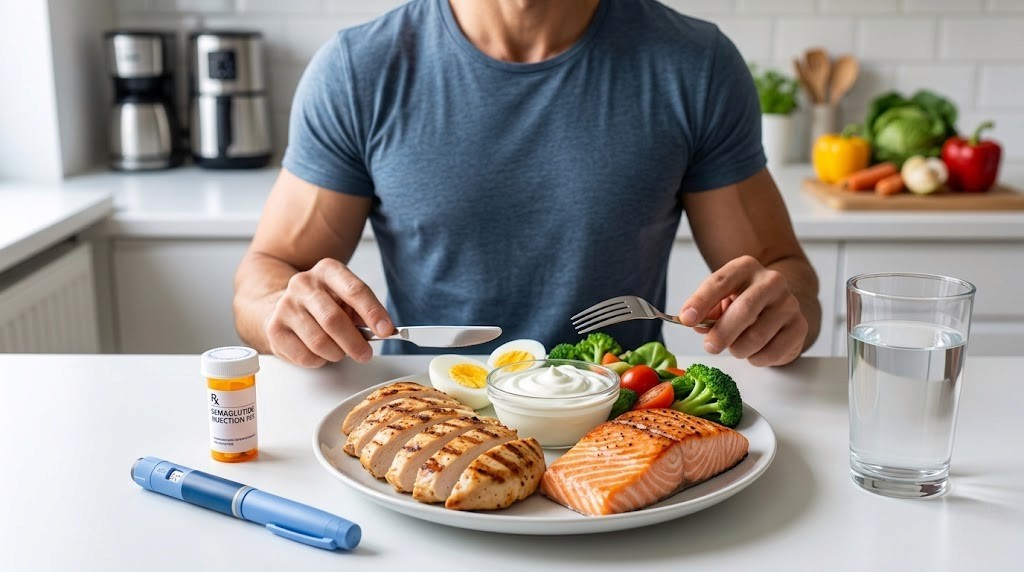
Some people lose 30 pounds on semaglutide and look incredible. Others lose the same 30 pounds and look deflated. The difference is not genetics. It is not luck. It is protein.
That single macronutrient, the one most semaglutide users accidentally neglect, determines whether your weight loss transforms your body or simply makes it smaller and weaker. Research from the STEP-1 clinical trial found that approximately 45% of total weight lost on semaglutide came from lean mass, not fat. Nearly half. That means someone losing 30 pounds could lose 13 to 14 pounds of muscle if they do not actively protect it through proper nutrition on semaglutide.
Here is the challenge. Semaglutide crushes your appetite. You are not hungry. Eating feels like a chore. And when you do eat, you fill up fast, often choosing whatever is convenient rather than what your body actually needs. This is where the protein problem begins, because your muscles do not care that you are not hungry. They still need fuel. They still need amino acids. And without those amino acids arriving consistently throughout the day, your body will break down its own muscle tissue for energy alongside the fat you are trying to lose.
This guide covers exactly how much protein you need on semaglutide, the best sources that work with your reduced appetite, meal-by-meal distribution strategies, and a complete protocol for preserving every pound of lean mass while the fat disappears. Whether you are in your first week on semaglutide or months into treatment, getting protein right changes everything about your results.
Why protein becomes critical on semaglutide
Protein matters during any weight loss effort. On semaglutide, it matters exponentially more.
Here is why. Semaglutide works by mimicking GLP-1, a hormone that signals fullness, slows gastric emptying, and reduces appetite at the brain level. It is remarkably effective at creating a calorie deficit. But that appetite suppression does not discriminate between reducing your intake of chips and reducing your intake of chicken breast. When total food intake drops by 30 to 40%, protein intake typically drops right alongside it unless you make a deliberate effort to prioritize it.
The body responds to calorie restriction by tapping stored energy. Fat gets burned. Good. But muscle tissue also gets broken down for amino acids and glucose. Without adequate dietary protein to supply those amino acids externally, the body raids its own lean tissue more aggressively. This process accelerates during rapid weight loss, exactly the kind of weight loss semaglutide produces.
A study presented at ENDO 2025 by the Endocrine Society confirmed what many clinicians had suspected: higher protein intake appears to protect against muscle loss in patients taking semaglutide. Being older, female, or consuming insufficient protein were all linked to greater lean mass reduction during treatment. The data is clear. Protein is not optional on semaglutide. It is the single most important dietary factor determining the quality of your weight loss results.
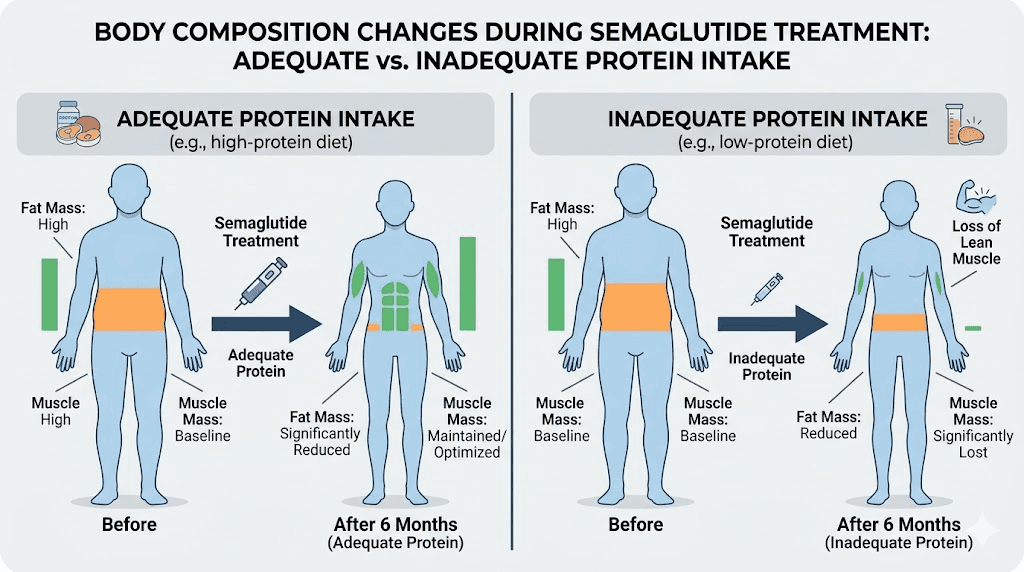
Think about what muscle actually does for you beyond aesthetics. It drives your metabolic rate and energy levels. It regulates blood sugar. It protects your joints. It keeps you functional and independent as you age. Losing significant muscle mass while losing weight can leave you lighter on the scale but metabolically worse off, a phenomenon researchers call "metabolically obese, normal weight." Your pants fit better, but your metabolism runs slower, your blood sugar control deteriorates, and you have less energy for daily activities.
The STEP-1 trial offers a more nuanced picture, however. While absolute lean mass decreased by about 9.7%, the proportion of lean mass relative to total body mass actually increased by 3 percentage points. That means semaglutide users lost far more fat than muscle proportionally. But, and this matters, those averages include people at both extremes. Some participants lost minimal muscle. Others lost considerably more. The difference almost certainly came down to protein intake and physical activity.
The science: what happens to muscle during semaglutide weight loss
Understanding the mechanism helps you protect against it.
When semaglutide creates a calorie deficit, your body enters a catabolic state where it breaks down stored tissues for energy. Fat is the primary target. Muscle is the secondary target. The ratio between fat loss and muscle loss depends on several controllable factors, and protein intake sits at the very top of that list.
Your muscles exist in a constant state of turnover. Old muscle fibers break down. New ones build. This process is called muscle protein synthesis, and it requires a steady supply of dietary amino acids, particularly leucine. When protein intake drops below threshold levels, muscle protein synthesis cannot keep pace with muscle protein breakdown. The result is net muscle loss.
Clinical data across multiple GLP-1 trials consistently shows that 25 to 40% of total weight lost comes from lean tissue. For context, during diet-only weight loss without medication, lean mass loss typically accounts for about 20 to 30% of total weight lost. The slightly higher range with semaglutide likely reflects the more dramatic calorie reduction and the tendency for users to eat less protein overall due to sustained appetite suppression.
A systematic review published in Diabetes, Obesity and Metabolism examined lean body mass changes across GLP-1 based therapies. The findings confirmed significant lean mass reductions in larger trials, though they noted that body composition improvements were generally favorable when looking at fat-to-lean ratios. The key takeaway from the researchers was that mitigation strategies, specifically higher protein intake and resistance exercise, should be recommended as standard practice for all patients on these medications.
Here is another layer most people miss. Losing muscle does not just affect how you look. Research from the same ENDO 2025 presentation found that greater muscle loss was linked to less improvement in HbA1c levels, the marker for blood sugar control. In other words, losing too much muscle may actually reduce the metabolic benefits of semaglutide treatment. Your weight goes down, but your metabolic markers do not improve as much as they should.
The message is unmistakable. Protein is not just about looking good after weight loss. It directly impacts the medical effectiveness of your semaglutide treatment.
How much protein you actually need on semaglutide
Numbers. You need specific numbers. Not vague advice like "eat more protein." Here are the evidence-based targets.
The general population recommendation for protein is 0.8 grams per kilogram of body weight per day. That number is designed to prevent deficiency in sedentary adults. It is not designed for someone actively losing weight on a GLP-1 medication. On semaglutide, you need substantially more.
Current research supports the following daily protein targets for semaglutide users:
Minimum target: 1.2 grams per kilogram of body weight per day
Optimal target: 1.4 to 1.6 grams per kilogram of body weight per day
Active/resistance training target: 1.6 to 2.0 grams per kilogram of body weight per day
A joint advisory from the American College of Lifestyle Medicine, the American Society for Nutrition, the Obesity Medicine Association, and The Obesity Society published in the American Journal of Clinical Nutrition recommends prioritizing protein as one of the top nutritional considerations during GLP-1 therapy. Their guidance aligns with the 1.2 to 1.6 gram per kilogram range for most patients.
Some clinicians frame the target differently, using goal body weight rather than current body weight. This approach recommends 0.7 to 1.0 grams of protein per pound of your target body weight. For someone aiming for 150 pounds, that translates to 105 to 150 grams of protein daily. For a 180-pound target, it is 126 to 180 grams daily.
Both frameworks arrive at similar numbers. The point is this: you need significantly more protein than you think, and almost certainly more than you are currently eating.
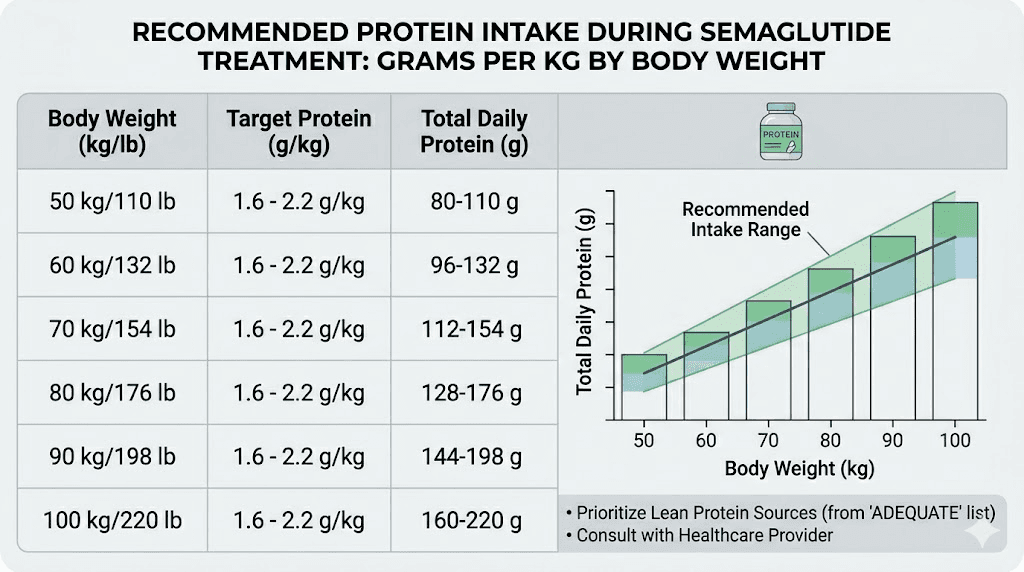
Protein targets by current body weight
Use this table to find your approximate daily protein target. These numbers use the 1.4 g/kg optimal range that most obesity medicine specialists recommend for semaglutide nutrition planning.
Current weight (lbs) | Current weight (kg) | Minimum protein (1.2 g/kg) | Optimal protein (1.4 g/kg) | Active target (1.6 g/kg) |
|---|---|---|---|---|
150 | 68 | 82g | 95g | 109g |
175 | 79 | 95g | 111g | 127g |
200 | 91 | 109g | 127g | 145g |
225 | 102 | 122g | 143g | 163g |
250 | 113 | 136g | 159g | 181g |
275 | 125 | 150g | 175g | 200g |
300 | 136 | 163g | 190g | 218g |
If you weigh over 250 pounds, some clinicians recommend calculating your target based on adjusted body weight rather than actual body weight. Adjusted body weight is calculated as ideal body weight plus 25% of the difference between actual and ideal weight. This prevents unrealistically high protein targets. Use the semaglutide dosage calculator to help dial in your overall treatment parameters, and pair it with these protein targets for a complete approach.
The goal weight method
An alternative calculation that many nutrition coaches prefer:
Goal weight (lbs) | Daily protein at 0.7g/lb | Daily protein at 0.85g/lb | Daily protein at 1.0g/lb |
|---|---|---|---|
130 | 91g | 111g | 130g |
150 | 105g | 128g | 150g |
170 | 119g | 145g | 170g |
190 | 133g | 162g | 190g |
210 | 147g | 179g | 210g |
Both methods work. Pick the one that gives you a clear, memorable number. Write it on a sticky note. Put it on your fridge. That number is your daily mission.
How to distribute protein across your meals
Total daily protein matters. But distribution matters almost as much.
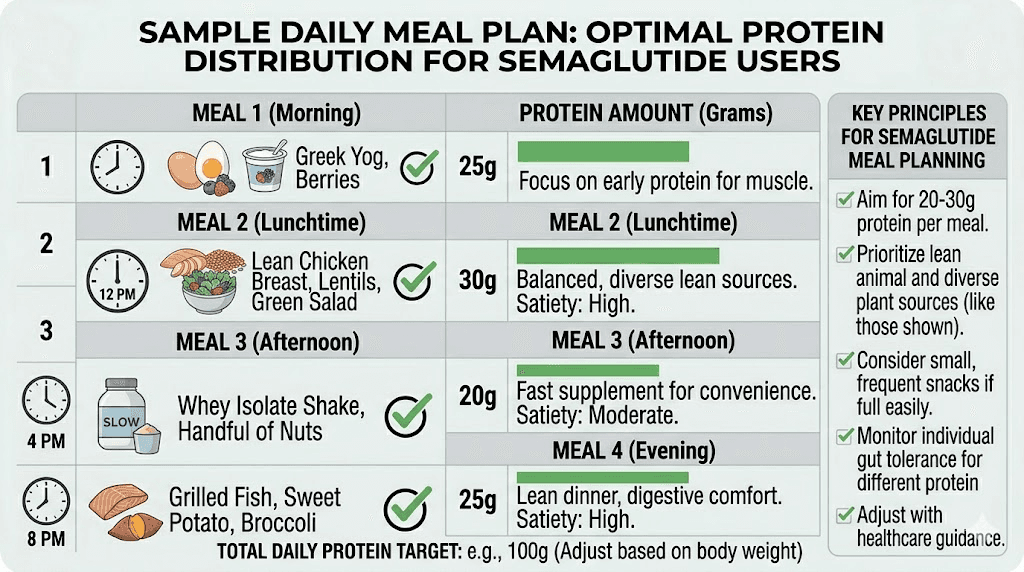
Research on muscle protein synthesis shows that your body can only use so much protein at one sitting for muscle building purposes. The threshold for maximally stimulating muscle protein synthesis is approximately 25 to 40 grams of high-quality protein per meal, depending on body size and age. Older adults need closer to 40 grams per meal to achieve the same anabolic stimulus that younger adults get from 25 grams.
This means eating 120 grams of protein in one giant dinner is far less effective than spreading 120 grams across four meals of 30 grams each. The first approach gives you one spike of muscle protein synthesis. The second gives you four.
Here is the challenge with semaglutide. Your appetite is suppressed. Many users naturally gravitate toward eating one or two meals a day because they simply do not feel hungry. While this works fine for calorie control, it is terrible for protein distribution. You end up with one massive protein dump that your body cannot fully utilize and long stretches without any amino acid input.
The optimal meal pattern for semaglutide users
For someone targeting 120 grams of protein daily:
Breakfast (7-8am): 30g protein, even if it is a protein shake. Check our GLP-1 breakfast ideas for inspiration.
Lunch (12-1pm): 30g protein from a lean protein source with vegetables
Afternoon snack (3-4pm): 20g protein from Greek yogurt, cottage cheese, or a small shake
Dinner (6-7pm): 40g protein from your main meal. See our GLP-1 dinner ideas for options.
If you can only manage three meals, aim for 40 grams at each. If you can only manage two meals, you are going to struggle to hit adequate protein targets, and a protein supplement between meals becomes essential.
The timing of your semaglutide injection also affects your meal pattern. Many users experience peak appetite suppression in the first 2 to 3 days after injection, with hunger gradually returning before the next dose. Plan your highest-protein meals for the days when your appetite is slightly more cooperative. Learn more about optimal semaglutide timing to align your eating schedule with your injection cycle.
One more critical point about distribution. Eat protein first at every meal. Not the salad. Not the bread. The protein goes on your fork first. When semaglutide makes you feel full after a few bites, you want those bites to be the high-protein ones. This single habit, protein first, can make or break your lean mass preservation on semaglutide.
Best protein sources for semaglutide users
Not all protein sources are created equal when you are on semaglutide. The medication slows gastric emptying, which means heavy, fatty proteins sit in your stomach longer and can trigger bloating, nausea, and discomfort. You need proteins that digest efficiently and pack maximum grams into minimum volume.
Tier 1: best tolerated proteins on semaglutide
These options work well even when nausea is present and appetite is minimal.
Eggs. Six grams of complete protein per egg. Extremely versatile. Scrambled, hard-boiled, poached, or blended into other dishes. Most semaglutide users tolerate eggs well even on high-nausea days. Two eggs at breakfast delivers 12 grams with almost zero prep.
White fish. Cod, tilapia, sole, and halibut provide 20 to 25 grams of protein per 4-ounce serving with minimal fat. Low-fat fish digests quickly and rarely triggers the gastric discomfort that fattier proteins cause. Baked or steamed fish is one of the most semaglutide-friendly protein options available.
Greek yogurt. Roughly 15 to 20 grams of protein per cup, depending on brand. Cold, smooth, and easy to eat even when nothing sounds appealing. Can be flavored with berries or a small amount of honey. An ideal afternoon snack protein source.
Cottage cheese. Around 14 grams per half cup. High in casein protein, which digests slowly and provides a sustained amino acid release. Great before bed or as a snack when you need protein but cannot face a full meal.
Protein shakes. This is often the most practical solution for semaglutide users struggling to eat solid food. A well-formulated whey or plant-based protein shake delivers 25 to 30 grams of protein in liquid form that many users tolerate well even during peak appetite suppression. Read our complete guide to protein shakes for GLP-1 users.
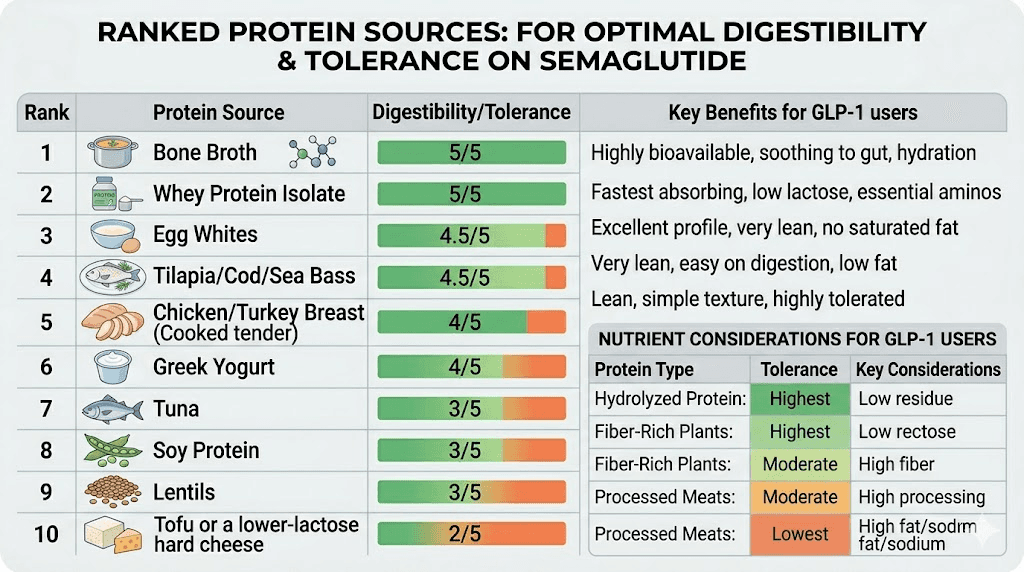
Tier 2: good protein sources with moderate tolerance
These work well for most users but may cause issues during the first few days after injection when appetite suppression peaks.
Chicken breast. The classic lean protein at 26 grams per 4 ounces. Baked, grilled, or shredded into soups and stir-fries. Some users find chicken dry and difficult to eat when nauseous, so moisture matters. Chicken in broth-based soups is often better tolerated than a plain grilled breast.
Turkey. Similar protein content to chicken. Ground turkey works well in sauces and casseroles where it absorbs flavors and moisture. Deli turkey slices provide a convenient, no-cook option for quick protein when you have zero motivation to prepare food.
Shrimp and shellfish. About 20 grams per 4-ounce serving. Quick to cook, easy to add to salads or grain bowls. The light texture works well for semaglutide users who find heavier proteins overwhelming.
Tofu. Around 10 grams per half cup of firm tofu. A solid plant-based option that absorbs flavors from sauces and marinades. Silken tofu blends smoothly into shakes and smoothies for an extra protein boost.
Tier 3: proteins to approach carefully
These are nutritionally excellent but may cause digestive issues on semaglutide.
Red meat. High in protein and iron, but the fat content slows digestion further. When gastric emptying is already delayed by semaglutide, fatty red meat can sit uncomfortably for hours. If you eat red meat, choose lean cuts like sirloin or 93% lean ground beef, and keep portions moderate.
Pork. Similar to red meat in that fattier cuts cause problems. Pork tenderloin is the leanest option at 22 grams per 4 ounces. Avoid bacon, ribs, and other high-fat preparations when acid reflux is a concern.
Beans and legumes. Good plant protein (7 to 9 grams per half cup cooked) but the fiber content can worsen GI symptoms in some semaglutide users. Introduce gradually and see how your body responds. Lentils tend to be better tolerated than larger beans.
Protein content reference chart
Food | Serving size | Protein (g) | Semaglutide tolerance |
|---|---|---|---|
Whey protein shake | 1 scoop | 25-30 | Excellent |
Eggs (whole) | 3 large | 18 | Excellent |
Greek yogurt (plain) | 1 cup | 15-20 | Excellent |
Cottage cheese | 1 cup | 28 | Excellent |
White fish (cod) | 4 oz | 20-24 | Excellent |
Chicken breast | 4 oz | 26 | Good |
Turkey breast | 4 oz | 24 | Good |
Shrimp | 4 oz | 20 | Good |
Tofu (firm) | 1/2 cup | 10 | Good |
Salmon | 4 oz | 23 | Moderate |
Lean beef (sirloin) | 4 oz | 26 | Moderate |
Lentils (cooked) | 1/2 cup | 9 | Moderate |
Black beans (cooked) | 1/2 cup | 7 | Variable |
For a complete guide to building meals around these proteins, see our detailed breakdown of the best foods to eat on semaglutide and foods to avoid on semaglutide.
Eating enough protein when your appetite disappears
This is the real challenge. You know you need 120 grams of protein. You understand the science. But you are sitting in front of a plate of chicken and the thought of eating it makes you want to gag.
Welcome to the protein paradox of semaglutide.
The medication is doing exactly what it is supposed to do: reducing your appetite and food intake. But your muscles did not get the memo. They still need the same amino acids they always needed. The gap between what your body needs and what your stomach can tolerate is where strategy becomes essential.
Strategy 1: drink your protein
Liquid protein is almost always easier to consume than solid protein during peak appetite suppression. A protein shake takes 30 seconds to drink and delivers 25 to 30 grams without requiring you to chew, taste, or think about food for very long. Keep pre-made shakes in the fridge. When you cannot eat, grab one. No negotiation, no willpower required.
Blend protein powder with almond milk, a frozen banana, and ice for a cold, smooth shake that most nauseous stomachs tolerate well. Cold beverages tend to sit better than warm ones when semaglutide-related nausea is active. Our guide to GLP-1 recipes for weight loss includes several shake recipes designed for maximum protein density with minimal stomach upset.
Strategy 2: protein first, always
When you sit down to eat, the first bites go to protein. Before the vegetables. Before the rice. Before anything else. Semaglutide makes you feel full quickly. If your first 200 calories are bread and salad, you might feel too full to touch the chicken. Flip the order. Eat the chicken first. If you still have room, add the vegetables and starches.
This simple habit ensures that even on days when you can only eat small amounts, the majority of your calorie intake is protein-dense. Some practical semaglutide tips can make a significant difference in daily protein totals without requiring heroic effort.
Strategy 3: eat on a schedule, not by hunger
Hunger-based eating does not work on semaglutide because you are rarely hungry. Instead, eat by the clock. Set alarms if you need to. Breakfast at 8. Lunch at 12. Snack at 3. Dinner at 6. Whether you feel hungry or not, something protein-rich goes in at those times.
The portions can be small. A hard-boiled egg and a cup of Greek yogurt at breakfast is only about 200 calories but delivers 26 grams of protein. Three of those small, protein-dense meals plus one shake hits your target with minimal stomach discomfort.
Strategy 4: high-density protein choices
When volume is the enemy, choose foods with the highest protein-to-volume ratio. Protein powder delivers 25 grams in a single scoop. Cottage cheese delivers 28 grams per cup. Jerky delivers 10 grams per ounce. These foods maximize protein per bite, which matters enormously when every bite feels like a battle.
Avoid protein sources that are mostly water or fiber with a little protein attached. A cup of milk has only 8 grams of protein but fills your stomach as much as a cup of Greek yogurt with 20 grams. Choose the yogurt. Every calorie counts differently on semaglutide, and protein calories should dominate your limited capacity.
Strategy 5: batch prep on good days
Appetite fluctuates throughout the semaglutide injection cycle. Most users experience stronger appetite suppression for 2 to 3 days after injection, with hunger gradually returning before the next dose. Use the days when you feel slightly more normal to batch-prepare protein-rich foods. Grill chicken breasts, hard-boil a dozen eggs, portion out containers of Greek yogurt. When the suppression peaks and cooking feels impossible, you grab a pre-made container instead of skipping the meal entirely.
Understanding how semaglutide makes you feel throughout the injection cycle helps you plan protein intake around your natural appetite patterns.
Protein supplements and shakes on semaglutide
For many semaglutide users, hitting protein targets without supplements is simply unrealistic. That is not a failure. It is a practical acknowledgment that when your appetite drops by 30 to 40%, you need efficient protein sources to close the gap.
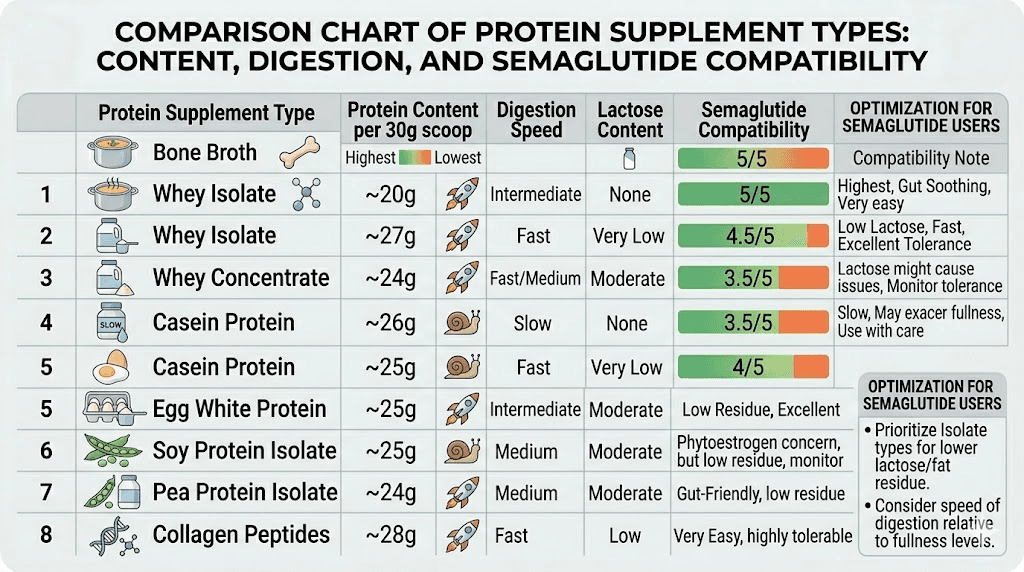
Whey protein
The gold standard for protein supplementation. Whey is fast-digesting, high in leucine (the key amino acid for muscle protein synthesis), and available in countless flavors. One scoop typically delivers 25 to 30 grams of complete protein with minimal carbs and fat.
Whey isolate is generally better tolerated than whey concentrate for semaglutide users because it contains less lactose. If dairy causes bloating on semaglutide, try an isolate or switch to a non-dairy option.
Casein protein
Slower-digesting than whey, making it ideal before bed. Casein forms a gel in the stomach that releases amino acids gradually over 6 to 8 hours. This sustained release supports muscle protein synthesis overnight, when your body does significant repair work. However, the slow digestion can conflict with semaglutide-delayed gastric emptying, so start with half a serving and assess tolerance.
Plant-based protein powders
Pea protein, rice protein, and blended plant proteins provide alternatives for those who do not tolerate dairy. Plant-based options typically have slightly lower leucine content than whey, but blended formulas that combine multiple sources (pea plus rice, for example) provide a complete amino acid profile. Choose options with at least 20 grams of protein per serving.
Collagen protein
Popular but not ideal as your primary protein supplement. Collagen is not a complete protein, lacking the amino acid tryptophan and being low in leucine. It has benefits for skin, hair, and joint health, but it does not drive muscle protein synthesis as effectively as whey or casein. Use collagen as a supplement to your primary protein source, not a replacement. If hair loss on GLP-1 is a concern, collagen can help, but do not count it toward your muscle-preserving protein goals.
Ready-to-drink protein shakes
Brands like Fairlife, Premier Protein, and Ensure Max Protein offer convenient, pre-made shakes with 25 to 42 grams of protein per bottle. These are lifesavers for semaglutide users. Keep a few in your fridge at all times. When you cannot face solid food, grab a bottle. No mixing, no blending, no effort required.
Resistance training: the other half of muscle preservation
Protein alone is not enough. You need to give your muscles a reason to stick around.
Resistance training sends a powerful signal to your body: this muscle tissue is being used, do not break it down for energy. Combined with adequate protein intake, regular strength training dramatically shifts the ratio of fat loss to muscle loss in your favor. Research consistently shows that the combination of higher protein intake and resistance exercise produces the best body composition outcomes during GLP-1 therapy.
You do not need to become a bodybuilder. You do not need a gym membership. You need to challenge your muscles with progressive resistance 2 to 4 times per week. This can mean bodyweight exercises at home, resistance bands, dumbbells, or a full gym setup. What matters is consistency and progressive overload, gradually increasing the challenge over time.
Minimum effective resistance training protocol
For semaglutide users focused on muscle preservation:
Frequency: 2-3 sessions per week minimum
Exercises: Focus on compound movements (squats, deadlifts, rows, presses, pull-ups)
Sets: 2-3 sets per exercise
Reps: 8-12 per set
Weight: Heavy enough that the last 2 reps are challenging
Duration: 30-45 minutes per session is sufficient
The relationship between exercise and semaglutide effectiveness extends beyond just muscle preservation. Physical activity can also help with some common side effects. Regular exercise improves GLP-1 constipation, reduces GLP-1 fatigue, and helps maintain energy levels on semaglutide.
Can you lose weight on semaglutide without exercise? Yes. Will you preserve muscle without it? Almost certainly not, regardless of how much protein you eat. The protein provides the building blocks. The training provides the stimulus. You need both.
Protein timing around workouts
Consume 20 to 40 grams of protein within 2 hours of completing a resistance training session. This post-workout window is when muscle protein synthesis is elevated and your muscles are most receptive to amino acids. A protein shake immediately after training is the most practical approach for semaglutide users who may not feel like eating a full meal post-exercise.
Pre-workout protein is also beneficial. Eating 20 grams of protein 1 to 2 hours before training ensures amino acids are circulating during the exercise session. If morning workouts leave you too nauseated for solid food, a half-serving of protein powder in water provides enough amino acids without overloading the stomach.
For semaglutide users who also use creatine alongside GLP-1 medications, combining creatine with your post-workout protein shake is a convenient way to get both supplements in one serving. Creatine supports muscle performance and retention during calorie restriction, making it a useful addition to a protein-focused muscle preservation strategy.
Signs you are not getting enough protein on semaglutide
Your body sends signals when protein intake drops too low. Recognizing them early prevents significant muscle loss.
Increased fatigue. Beyond the normal semaglutide fatigue that many users experience, protein deficiency creates its own distinct exhaustion. If you feel progressively more tired week over week, check your protein intake before blaming the medication.
Hair thinning or loss. Hair follicles require protein to function. When dietary protein drops, hair growth slows and shedding increases. This is one of the earliest visible signs of inadequate protein and is commonly reported in the GLP-1 hair loss literature.
Losing strength in the gym. If your weights are going down while your body weight goes down, you are losing muscle. Some strength reduction during calorie restriction is normal, but dramatic declines indicate excessive muscle loss likely driven by insufficient protein.
Brittle nails. Like hair, nails are protein-dependent structures. When protein intake is inadequate, nail growth slows and nails become thin, brittle, and prone to breaking.
Slow wound healing. Protein is essential for tissue repair. Cuts, bruises, and minor injuries that take unusually long to heal can indicate protein deficiency.
Persistent hunger despite semaglutide. Paradoxically, some users who eat too little protein feel hungrier than expected. Protein is the most satiating macronutrient. If you are not seeing results on semaglutide or experiencing unexpected hunger, a protein audit may reveal that your limited calories are going to carbs and fats instead of the protein your body is craving.
Feeling cold. Muscle tissue is metabolically active and generates heat. Losing significant muscle can make you feel colder than usual. If you already experience feeling cold on semaglutide, inadequate protein may be amplifying the effect.
Common protein mistakes on semaglutide
Even motivated users make these errors. Recognizing them helps you avoid setbacks.
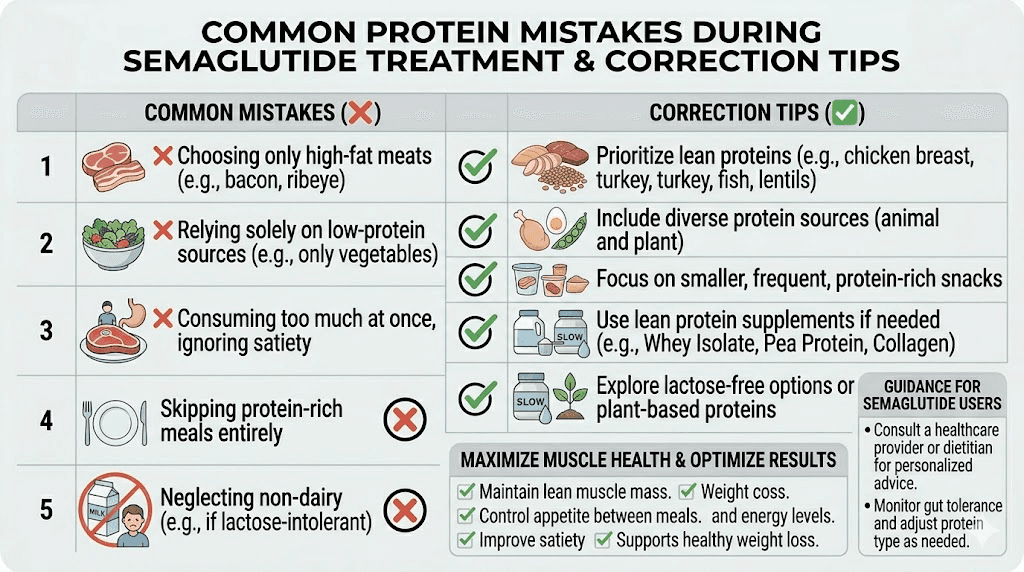
Mistake 1: counting total calories without tracking protein
Many semaglutide users track calories but not macronutrients. They stay within their calorie budget but fill it with low-protein foods like salads, fruit, and crackers. Meeting your calorie target on semaglutide is important, but within those calories, protein must take priority over everything else.
Mistake 2: relying on incomplete protein sources
Nuts, seeds, and grains contain protein, but they are primarily fat or carbohydrate sources. Counting the 5 grams of protein in a tablespoon of peanut butter the same as 5 grams from chicken is a mistake. The peanut butter comes with 8 grams of fat and delivers far fewer essential amino acids. Prioritize complete, high-bioavailability protein sources as the foundation, and treat plant-based proteins as supplements rather than primary sources.
Mistake 3: skipping breakfast protein
After an overnight fast of 8 to 12 hours, your body has been in a catabolic state, breaking down muscle for amino acids. Breakfast is the most important meal for protein on semaglutide, yet it is the meal most users skip because morning appetite is typically lowest. Even a small protein shake breaks the catabolic state and starts muscle protein synthesis for the day.
Mistake 4: front-loading all protein into dinner
Dinner tends to be the largest meal, and many semaglutide users try to cram their entire protein target into one evening meal. Your body simply cannot utilize 100 grams of protein in one sitting for muscle building. Much of it gets oxidized for energy or converted to glucose. Distribute protein across the day for maximum muscle preservation benefit.
Mistake 5: choosing protein sources that worsen side effects
Greasy burgers, fried chicken, and fatty steaks are high in protein but the fat content can dramatically worsen semaglutide side effects like acid reflux, sulfur burps, and nausea. This creates a negative association with protein foods, making users even less likely to eat enough. Choose lean, easily digested proteins that work with the medication rather than against it.
Mistake 6: not supplementing when food intake is too low
Some users resist protein supplements, wanting to get "all their nutrition from food." That is admirable in normal circumstances. On semaglutide, it is often unrealistic. When you physically cannot eat enough food to meet protein targets, a supplement is not a shortcut. It is a necessity. Two protein shakes per day can contribute 50 to 60 grams toward your target with minimal stomach discomfort.
Special considerations for different populations
Protein needs are not identical for everyone on semaglutide. Several factors shift your targets and strategies.
Adults over 50
Older adults face a double challenge. They are already experiencing age-related muscle loss (sarcopenia) at a rate of 1 to 2% per year, and adding semaglutide-induced weight loss on top accelerates the problem. Research presented at ENDO 2025 specifically flagged older age as a risk factor for greater muscle loss on semaglutide.
For adults over 50, protein targets should be at the higher end of the range: 1.6 to 2.0 grams per kilogram of body weight. Per-meal protein thresholds are also higher, with 35 to 40 grams per meal needed to maximally stimulate muscle protein synthesis in older muscle. Leucine supplementation (2 to 3 grams with each meal) can further enhance the muscle-building signal.
Resistance training is even more critical for this age group. The combination of age-related muscle loss plus calorie-restricted weight loss plus semaglutide-amplified appetite suppression creates a perfect storm for rapid muscle deterioration unless actively countered with protein and exercise.
Women
The ENDO 2025 data also identified female sex as a risk factor for greater lean mass loss on semaglutide. Women typically start with less muscle mass than men and may lose proportionally more during weight loss. Protein targets of 1.4 to 1.6 grams per kilogram are recommended, with emphasis on maintaining strength training throughout treatment.
Women on semaglutide should also be aware that hormonal changes during weight loss can affect menstrual cycles and energy levels, which may further complicate protein intake adherence. Planning protein-rich meals and having protein supplements available becomes even more important during hormonal fluctuations.
People with type 2 diabetes
Muscle preservation has extra significance for diabetic patients on semaglutide because muscle tissue is the primary site of glucose disposal. Losing muscle reduces the total amount of tissue available to absorb glucose from the bloodstream, potentially worsening insulin resistance. This is why the ENDO research found that greater muscle loss correlated with less improvement in HbA1c.
Diabetic patients should aim for at least 1.4 grams of protein per kilogram and pair protein-rich meals with moderate activity after eating to enhance glucose uptake. Monitoring blood work on semaglutide helps track whether metabolic improvements are on pace with weight loss.
Very active individuals
If you are maintaining a regular exercise program while on semaglutide, particularly one involving resistance training, your protein needs are at the highest end of the range: 1.6 to 2.0 grams per kilogram. Athletes and highly active individuals may even benefit from exceeding 2.0 grams per kilogram during active weight loss phases.
This population also benefits most from strategic protein timing around workouts, with 30 to 40 grams pre-workout and 30 to 40 grams post-workout. For those exploring additional muscle-supporting compounds, peptides for muscle growth provides an overview of research on complementary approaches.
Sample high-protein meal plans for semaglutide users
Theory is useful. Practical meal plans are better. Here are three sample days at different protein targets, designed specifically for people with reduced appetite on semaglutide.
Plan A: 100 grams of protein (smaller individuals or early treatment)
Breakfast: Protein shake with 1 scoop whey protein and almond milk (25g protein)
Lunch: 4 oz baked cod with steamed vegetables (22g protein)
Snack: 1 cup Greek yogurt with berries (18g protein)
Dinner: 4 oz grilled chicken breast with roasted vegetables and quinoa (30g protein)
Snack (if tolerated): 1 string cheese (7g protein)
Total: 102 grams of protein
Plan B: 130 grams of protein (moderate target for most users)
Breakfast: 3-egg omelet with spinach plus protein shake (30g + 25g = 43g protein... too much in one meal). Let me restructure.
Breakfast: 2-egg scramble with 1/2 cup cottage cheese (12g + 14g = 26g protein)
Mid-morning: Protein shake with almond milk (25g protein)
Lunch: 5 oz grilled chicken breast on a bed of greens with olive oil dressing (33g protein)
Snack: 1 cup Greek yogurt (18g protein)
Dinner: 5 oz baked salmon with asparagus and sweet potato (29g protein)
Total: 131 grams of protein
This plan works well as a semaglutide diet plan template. Adjust portion sizes based on your specific target and appetite level.
Plan C: 160 grams of protein (active individuals or larger body sizes)
Breakfast: Protein shake with 1.5 scoops whey, almond milk, and banana (38g protein)
Mid-morning: 1 cup cottage cheese with sliced almonds (30g protein)
Lunch: 6 oz turkey breast with avocado and vegetables (36g protein)
Snack: Ready-to-drink protein shake (30g protein)
Dinner: 5 oz lean beef sirloin with roasted vegetables (33g protein)
Total: 167 grams of protein
Notice how each plan uses at least one liquid protein source. This is intentional. For semaglutide users, liquid protein is often the difference between hitting targets and falling short. Browse our complete food list for semaglutide for more protein-rich options to rotate through your weekly meal prep.
Low-appetite emergency plan
For days when eating feels nearly impossible:
Shake 1 (morning): Protein shake, 25g protein
Shake 2 (afternoon): Protein shake, 25g protein
Small meal (evening): 4 oz chicken in bone broth soup, 26g protein
Bedtime: 1 cup cottage cheese, 28g protein
Total: 104 grams of protein on a bare minimum intake day
Even on your worst appetite days, this framework keeps you above the critical threshold for muscle preservation. It is not glamorous. It does not have to be.
Week-by-week protein adjustment protocol
Your protein needs evolve as your semaglutide treatment progresses. Here is how to adjust.
Weeks 1-4: the foundation phase
You are likely on a starting dose (0.25mg weekly for semaglutide). Appetite suppression may be mild. This is the easiest time to establish protein habits because hunger is still partially present. Use this window to:
Calculate your daily protein target using the tables above
Practice the protein-first eating strategy at every meal
Find 3-5 protein sources you tolerate well
Stock up on protein supplements
Build the habit of protein tracking (use any food tracking app)
Many users wonder how fast semaglutide works and whether they need to worry about protein this early. Yes. Start immediately. Habits formed during the foundation phase carry you through the harder months ahead.
Weeks 5-12: the challenge phase
Doses increase. Appetite drops further. This is when most protein shortfalls occur. Weight loss accelerates, and the temptation to ride the momentum without worrying about nutrition is strong. Resist it.
During this phase:
Expect to rely on 1-2 protein shakes daily to meet targets
Pre-prep protein-rich foods on your higher appetite days
If hitting your full target is impossible, aim for at least the minimum (1.2 g/kg)
Begin resistance training if you have not already
Monitor your semaglutide results week by week alongside protein intake
Weeks 13-24: the adaptation phase
Most users reach their maintenance dose during this period. Your body adapts somewhat to the appetite suppression, and eating becomes slightly easier. This is the time to optimize.
Aim for the optimal target (1.4-1.6 g/kg) consistently
Increase resistance training intensity and volume
Consider adding creatine to your supplement stack for additional muscle support
Track body composition changes, not just scale weight
If you hit a semaglutide plateau, reassess protein intake before making other changes
Months 6 and beyond: the maintenance phase
Whether you continue semaglutide or begin tapering off, protein remains critical. Users who reduce semaglutide dose or stop entirely often experience appetite returning. This can actually help protein intake because eating becomes easier. But it also increases the risk of weight regain if overall calories are not managed.
Maintain protein at 1.2 to 1.4 g/kg even after reaching goal weight. The muscle you preserved during active weight loss needs ongoing protein to remain. Users planning to stay on semaglutide long-term should treat protein targets as a permanent part of their routine.
Supporting supplements for muscle preservation
Beyond protein powder, several supplements can support muscle preservation during semaglutide weight loss.
Creatine monohydrate. The most researched sports supplement in existence. Creatine supports muscle performance, water retention within muscle cells, and may help preserve lean mass during calorie restriction. A standard dose of 3 to 5 grams daily is sufficient. See our full guides on creatine and GLP-1 and creatine and tirzepatide for detailed protocols.
Vitamin B12. Often combined with semaglutide in compounded formulations. B12 supports energy metabolism and nervous system function, both of which matter during calorie restriction. Many semaglutide with B12 formulations are available through compounding pharmacies.
Vitamin D. Deficiency is common in overweight individuals and can impair muscle function. Test your levels and supplement if below 30 ng/mL. Our GLP-1 vitamin guide covers all the micronutrients that matter during treatment.
Omega-3 fatty acids. May support muscle protein synthesis and reduce inflammation associated with rapid weight loss. Fish oil supplements providing 2 to 3 grams of combined EPA and DHA daily are commonly recommended.
Fiber supplements. While not directly related to protein, adequate fiber intake prevents the constipation that semaglutide causes and keeps the digestive system moving. A healthy gut absorbs protein more efficiently. Check our recommendations for the best fiber supplement for GLP-1 users.
For a comprehensive overview of all supplements worth considering, read our guide on supplements to take with GLP-1 medications.
How protein intake affects your semaglutide results
The connection between protein and outcomes extends beyond muscle preservation.
Weight loss quality. Two people can lose identical amounts of weight on semaglutide and end up with dramatically different results. The person who ate adequate protein loses mostly fat. The person who neglected protein loses a significant amount of muscle alongside the fat. Same scale number. Completely different body composition, metabolic health, and appearance.
Metabolic rate preservation. Muscle is metabolically expensive tissue. Each pound of muscle burns roughly 6 to 7 calories per day at rest, compared to 2 calories per pound of fat. Losing 10 pounds of muscle reduces your resting metabolic rate by 60 to 70 calories per day. Over months, this metabolic slowdown makes maintaining weight loss harder and increases the risk of regain after stopping semaglutide.
Energy and function. Users who maintain muscle mass report better energy levels, easier daily activities, and less of the fatigue that GLP-1 users commonly experience. Adequate protein also supports neurotransmitter production, immune function, and mood stability during weight loss.
Long-term weight maintenance. Perhaps the most important factor. Research consistently shows that people who preserve more lean mass during weight loss are more successful at maintaining their weight loss long-term. Muscle keeps your metabolism running higher, makes you more physically capable and active, and provides a metabolic buffer against regain. Understanding how to maintain weight loss after GLP-1 treatment starts with muscle preservation during treatment.
SeekPeptides members access detailed protocols for optimizing body composition during GLP-1 therapy, including personalized protein calculators, meal planning resources, and expert-reviewed guides that go beyond the generic advice most resources offer.
Protein and semaglutide side effect management
Adequate protein intake interacts with several common semaglutide side effects in ways you might not expect.
Nausea management. Eating smaller, protein-rich meals more frequently can actually reduce nausea compared to eating larger, carb-heavy meals less often. Protein stabilizes blood sugar, which helps prevent the blood sugar dips that can amplify semaglutide nausea. Many users find that the nausea worsens when they skip meals and then eat a large portion. Regular, small protein-rich meals create a more stable digestive environment.
Energy crashes. The dizziness on semaglutide that some users experience often relates to blood sugar fluctuations caused by irregular eating. Protein-rich meals every 3 to 4 hours prevent these crashes by providing steady amino acid and glucose availability.
Hair and skin health. Both hair and skin are protein-dependent tissues. Users who maintain adequate protein intake report significantly less hair thinning and better skin elasticity during weight loss. If GLP-1 related hair loss is a concern, protein adequacy should be the first thing you address.
Sleep quality. Protein contains the amino acid tryptophan, a precursor to serotonin and melatonin. Users who eat too little protein sometimes experience insomnia on semaglutide that improves when protein intake increases, particularly protein consumed at dinner.
Understanding when semaglutide side effects peak helps you anticipate the days when protein intake will be most challenging and prepare accordingly with easily tolerated options.
Tracking your protein: practical tools and methods
You cannot manage what you do not measure. At least for the first few weeks, tracking protein intake is essential to ensure you are hitting targets.
Simple tracking methods
Palm method. A palm-sized portion of protein (chicken, fish, meat) contains roughly 25 to 30 grams. Aim for 4 to 5 palm-sized protein portions per day. No app needed.
Food tracking apps. MyFitnessPal, Cronometer, and MacroFactor all allow you to log food and see protein totals instantly. Spend 5 minutes per day logging meals. The visual feedback of seeing your protein number in green or red creates accountability.
The protein jar. Put your target number of marbles (or coins) in a jar each morning, one for every 10 grams of protein you need. Remove a marble each time you eat 10 grams. By bedtime, the jar should be empty.
Whichever method you choose, track consistently for at least 2 weeks. Most users are shocked at how far below their targets they fall without deliberate effort. That awareness alone drives behavior change.
The peptide calculator on SeekPeptides can help you dial in the technical aspects of your GLP-1 protocol while you focus on the nutrition side of the equation.
Comparing protein needs: semaglutide vs tirzepatide vs retatrutide
If you are considering switching medications or are curious how protein needs differ across GLP-1 options, here is a quick comparison.
The protein requirements are functionally identical across all GLP-1 receptor agonists. Whether you take semaglutide or tirzepatide, the mechanism of appetite suppression, calorie reduction, and potential muscle loss is similar. The same protein targets (1.2 to 1.6 g/kg) apply regardless of which medication you use.
However, there are subtle differences worth noting. Tirzepatide (a dual GIP/GLP-1 agonist) may produce slightly different body composition changes than semaglutide alone, with some research suggesting modestly better lean mass preservation. But this does not mean you can be less vigilant about protein on tirzepatide. The tirzepatide diet plan and nutrition guidelines for tirzepatide mirror semaglutide recommendations in prioritizing protein.
Retatrutide, the triple agonist (GLP-1/GIP/glucagon), is still in clinical trials but shows similar patterns. Research on whether retatrutide causes muscle loss suggests that the same protein and resistance training strategies are needed across all GLP-1 class medications.
For those considering a transition between medications, our semaglutide to tirzepatide conversion guide and our comparison of semaglutide vs tirzepatide side effects can help you navigate the switch while maintaining your protein-focused nutrition approach.
Building a protein-first kitchen for semaglutide success
Set your environment up for success. When high-protein options are the easiest thing to grab, you eat more protein. Simple.
Always have these stocked
Fridge essentials:
Pre-cooked chicken breast (shredded or sliced)
Hard-boiled eggs (batch cook a dozen every Sunday)
Greek yogurt (plain, high-protein variety)
Cottage cheese
Pre-made protein shakes (ready-to-drink bottles)
Deli turkey or chicken slices
String cheese
Pantry essentials:
Whey or plant-based protein powder
Canned tuna or salmon
Beef or turkey jerky
Protein bars (20+ grams per bar)
Canned chicken
Freezer essentials:
Frozen shrimp (thaws quickly for last-minute meals)
Frozen fish fillets
Frozen edamame
Pre-portioned ground turkey
When your kitchen is stocked with protein-first options, the default choice becomes the right choice. You do not need willpower when the environment does the work. For a complete shopping list, check our guide to foods to eat while on semaglutide and complement it with our foods to avoid list to keep your kitchen optimized.
Frequently asked questions
How much protein do I need per day on semaglutide?
Most obesity medicine specialists recommend 1.2 to 1.6 grams of protein per kilogram of body weight daily for semaglutide users. For a 200-pound (91 kg) person, that translates to approximately 109 to 145 grams of protein per day. Active individuals doing resistance training should aim for the higher end of this range. Use our calorie and nutrition guide for semaglutide to put this in context with your overall dietary plan.
Can I get enough protein from food alone on semaglutide?
Some users can, particularly those with milder appetite suppression. However, most semaglutide users benefit from at least one protein supplement serving daily. When your total food intake drops by 30 to 40%, meeting protein targets through food alone requires extremely protein-dense meal planning. Protein shakes provide an efficient backup when solid food intake falls short.
What happens if I do not eat enough protein on semaglutide?
Inadequate protein leads to greater muscle loss during weight loss. Research shows that up to 45% of weight lost on semaglutide can come from lean mass without proper protein intake. This results in a slower metabolism, reduced functional capacity, hair thinning, fatigue, and less improvement in metabolic markers like blood sugar control. It can also contribute to the fatigue many semaglutide users experience.
Is whey protein safe to take with semaglutide?
Yes. Whey protein is safe and commonly recommended for semaglutide users. It is fast-digesting, high in leucine for muscle protein synthesis, and well-tolerated by most users. Whey isolate is preferable over whey concentrate if lactose sensitivity is a concern. Always consume protein supplements with adequate water.
Should I eat protein before or after my semaglutide injection?
Both. Maintain your regular protein intake schedule regardless of injection timing. However, be aware that appetite suppression typically peaks 1 to 3 days after injection. Having easy-to-consume protein options (shakes, yogurt, cottage cheese) available during high-suppression days ensures you do not fall behind on targets. Learn more about optimizing your semaglutide injection timing.
Does protein intake affect how well semaglutide works for weight loss?
Higher protein intake does not reduce the weight loss effect of semaglutide. In fact, it improves the quality of weight loss by shifting the ratio toward more fat loss and less muscle loss. Protein is also the most satiating macronutrient, which can enhance the appetite-suppressing effects of the medication. Your week-by-week results will reflect better body composition when protein is prioritized.
How do I get enough protein when I feel nauseous on semaglutide?
Focus on liquid proteins (shakes, smoothies), cold proteins (Greek yogurt, cottage cheese), and bland proteins (eggs, white fish). Eat small amounts every 3 to 4 hours rather than forcing large meals. Sip protein shakes slowly throughout the morning if a full serving at once is too much. The practical tips for semaglutide guide includes additional strategies for managing nutrition during nausea.
Is collagen protein enough for muscle preservation on semaglutide?
No. Collagen is an incomplete protein lacking the amino acid tryptophan and low in leucine, the primary driver of muscle protein synthesis. While collagen supports skin, hair, and joint health, it should not be your primary protein source for muscle preservation. Use whey, casein, or plant-based complete proteins as your foundation and add collagen as a supplementary source if desired.
External resources
American Journal of Clinical Nutrition: Nutritional priorities to support GLP-1 therapy for obesity
Endocrine Society: Protein may protect against muscle loss on semaglutide (ENDO 2025)
Impact of semaglutide on body composition in adults with overweight or obesity: STEP 1 study
For researchers serious about optimizing their peptide protocols and nutrition strategies during GLP-1 therapy, SeekPeptides offers the most comprehensive resource available, with evidence-based guides, proven protocols, personalized calculators, and a community of thousands who have navigated these exact questions.
In case I do not see you, good afternoon, good evening, and good night. May your protein stay plentiful, your muscles stay strong, and your semaglutide results stay transformative.